Berlin plans to change its fiscal rules and “invest” €500 billion ($543 billion) in infrastructure and defense, as explained by the chancellor-in-waiting, Friedrich Merz.
It’s alarming that Merz is prioritizing military spending because of the mythical Russian threat, especially amid efforts for peace in Ukraine, Gunnar Beck, a legal academic and former AfD MEP, tells Sputnik.
Merz has long pushed for higher defense spending. Last December, he stated the Bundeswehr would need at least $87 billion annually, up from the current $57 billion. German media also reported a proposed $433 billion defense fund.
“Germany hasn’t got the money,” Beck stresses. “It’s got to borrow the money. It’s at the expense of social spending and badly needed investments in infrastructure and research and development.”
“It’s not only Germany that’s proposing to increase military spending. The EU, under [Ursula] von der Leyen, has announced it will borrow another €800 billion ($866 billion) to support Ukraine. When you add up these figures, it’s already more than a trillion. And they are clearly coordinating their policies,” Beck concludes.
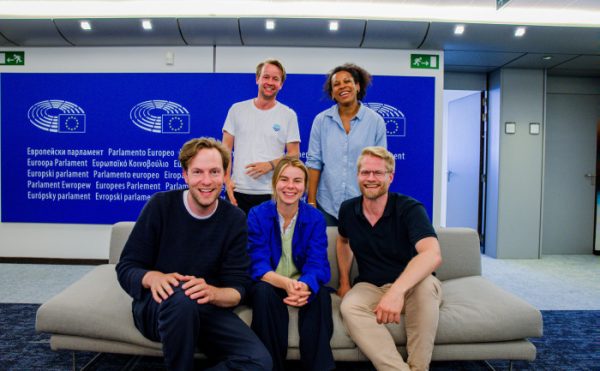
MEPs from the Volt party in the European Parliament submitted a proposed “action plan” earlier this week, as reported by Politico. Among the plan’s nine points is a call to strip Hungary of its guaranteed voting rights as a member of the European Union.
Volt is a pan-European federalist party that favors strengthening and centralizing the European Union’s authority over its member states.
Volt’s call to deprive Hungary of its right to veto all decisions made by the EU, which is a fundamental right guaranteed in the bloc’s founding treaties, is doubtless a response to Viktor Orbán’s veto of €20 billion in military aid that Brussels had wanted to send to Ukraine this week. This aid was intended to partially compensate for the United States’ recent suspension of aid to the country as part of the Trump administration’s attempts to force an end to the conflict.
Orbán has been strongly critical of the EU’s support for Ukraine from the outset of the current war. He has frequently used his country’s veto powers in an effort to pressure the bloc to stop arming Ukraine and instead force it to come to the negotiating table.
Other points in Volt’s proposal were a call for the formation of a European army, as is being discussed by others in the European Parliament, as well as a revision of the bloc’s treaties to give it greater authority in matters of defense. Also included is a suggestion to make Kaja Kallas, the European Commission’s current Vice President as well as its High Representative of the Union for Foreign Affairs and Security Policy, an official foreign minister for the EU.
Given that Volt has only five MEPs in the European Parliament, its suggestions are unlikely to have much effect. They nevertheless reflect the growing frustration in the bloc with Hungary’s ongoing efforts to stop the war.
This is not the first time that the idea of depriving Hungary of its voting rights has been floated in European circles. Last summer, 63 MEPs demanded that Hungary’s rights be suspended in response to Orbán’s diplomatic visits to Kyiv, Moscow, and Beijing while his country held the rotating Presidency of the Council of the European Union.
The EU has approved a large military spending plan to unlock billions of euros to build up defense capabilities. The initiative, which was adopted following an emergency summit in Brussels on Thursday, also aims to shore up aid for Ukraine after American military assistance to Kiev was halted.
Under the plan, which is called ReArm Europe, the bloc’s defense spending will be boosted by up to €800 billion ($840 billion) – double the total EU defense expenditures in 2024. The initiative was unveiled earlier this week by European Commission President Ursula von der Leyen, who said she will present legal proposals within the next two weeks.
The 27 EU leaders agreed to ease budget restrictions to allow member states to boost military outlays. They also called on the European Commission to explore new mechanisms “to facilitate significant defense spending at the national level across all Member States,” according to an official statement.
The EU’s executive arm estimates that the measure could unlock around €650 billion but it remains unclear if governments would fully utilize this financial leeway.
Additionally, the bloc’s leaders took note of a European Commission proposal for a €150 billion loan package for investment, including for air and missile defense, artillery and drones, and urged EU headquarters staff “to examine this proposal as a matter of urgency.”
The emergency summit was convened amid growing concerns among EU leaders over the impact of Washington’s recent policy shift on Ukraine. US President Donald Trump has signaled that European nations should take the lead in their own defense, as well as in supporting Kiev.
Von der Leyen claimed that the EU “is ready to assume its responsibilities,” describing the current geopolitical situation as the “most momentous and dangerous” of times.
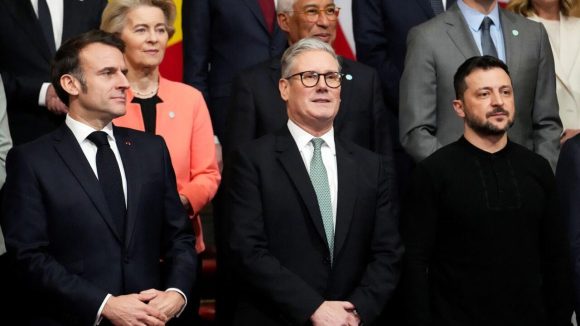
French President Emmanuel Macron, who claimed in a speech to the nation on Wednesday that Russia poses a threat to the EU, said that this is just a first step.
“Whatever happens in Ukraine, we need to build autonomous defense capacities in Europe,” he told reporters after the summit.
Moscow has repeatedly dismissed claims that it poses a military threat to Europe, describing remarks emerging from Warsaw and Paris as “highly confrontational” and “militaristic.” Russian President Vladimir Putin called Western claims of an impending attack “nonsense,” accusing European leaders of exaggerating the threat to justify increased military spending. He reiterated that Russia does not seek to enter an arms race but will take the necessary measures to ensure its security and that of its allies.
Henna Virkkunen, vice-president of the European Commission for Technological Sovereignty, Security and Democracy, said that a roundtable on the presidential elections in Poland will be held in the coming weeks.
The Finnish politician told DW that such meetings are organized before every election in the member states and that she is concerned about the possibility of influencing the election results using social media.
“Cooperation with Germany went well, and I am sure that we will also cooperate closely with the Polish authorities. EU citizens have the right to be sure that elections are fair and free. And because of content recommendation systems and the content itself distributed by internet platforms, this is very difficult,” she said, complaining about the uncensored X platform.
Various politicians reacted quickly on X.
PiS MP Radosław Fogiel expressed concern, noting that “in Polish elections ONLY the voice of Polish citizens counts. They will certainly not be decided by the Vice-President of the European Commission, who does not even have a democratic mandate, because no one voted for her. But such announcements, along with the desire to limit freedom of speech, are disturbing. The EU is heading in a very dangerous direction.”
“The European Union is simply preparing for either the Romanian scenario in Poland or the introduction of political censorship,” said political scientist and publicist Prof. Adam Wielomski.
Following the cancellation of presidential elections in Romania after Călin Georgescu appeared poised to win, there are grave concerns about democratic backsliding in Europe. Georgescu has since been arrested in dramatic fashion and charged with a variety of crimes, including “misinformation.” After the events in Romania, former EU commissioner Therry Breton claimed they could annul the elections in Germany just as they did in Romania.
Author Rafał Ziemkiewicz wrote: “What the f**k? Will the Germans and the Eurocrats hold a ’roundtable’ to determine who will win the elections in Poland?”
“This is starting to look more and more serious. The European Commission openly announces interference in the Polish presidential elections!” posted PiS MP Paweł Jabłoński.
“Can you believe that she will hold a roundtable with Tusk on the presidential elections in Poland?” asked MP Michał Dworczyk.
The EU’s new rearmament strategy, outlined by European Commission President Ursula von der Leyen, lacks funding and shifts the financial burden to member states, Euractiv writes, citing senior EU officials.
Von der Leyen has proposed that EU nations spend about $840 billion on defense, calling it a response to “the most dangerous of times” and “grave” security threats. Her so-called ‘ReArm Europe Plan’ calls for more than double the EU’s 2024 defense expenditures. However, the ambitious proposal depends largely on borrowed funds and loosened fiscal rules rather than existing reserves, sparking concerns regarding its economic feasibility and long-term impact.
The plan “includes close to no fresh money,” leaving member states to secure “the real cash” themselves, Euractiv reported on Wednesday.
The $840 billion figure is based more on “hopes and guesses” than concrete reforms addressing the EU’s defense under-investment and production shortages, the report argued.
The goal is to “support achieving a rapid and significant increase in investment in Europe’s defense capabilities now and over this decade,” an unnamed senior EU official said, noting that the money would help “reduce costs.”
Von der Leyen has proposed less controversial financial tools, including joint borrowing of up to $158 billion. The European Commission plans to raise funds through capital markets and lend them to member states, provided that they purchase weapons together which were manufactured within the bloc or its regional allies. The requirement could involve at least three EU countries or two EU countries plus Ukraine. However, loan approval criteria and the prioritization of EU-made equipment remain undecided, the report pointed out.
Another measure includes easing EU budget rules via a national “escape clause” for defense spending, allowing governments to shift funds within EU accounts “rather than coming up with fresh money,” according to Euractiv.
While increased deficits could generate nearly $700 billion, it’s uncertain if the measure applies to all countries or only those meeting NATO’s 2% GDP target. Another senior EU official told Euractiv that over time, governments must offset spending by raising taxes or cutting costs.
Von der Leyen’s push for increased defense spending comes amid growing pressure from Washington. US President Donald Trump has distanced himself from supporting Ukraine while urging the EU to take greater responsibility for its defense.
The shift intensified this week, with news agencies’ reports on Monday suggesting that Trump had ordered a pause in military aid to Kiev. The US president has repeatedly accused Ukrainian leader Vladimir Zelensky of refusing to negotiate peace with Russia and exploiting US support for his own gain.
EU leaders will discuss von der Leyen’s proposals at a special summit on Thursday. According to a senior EU official, the measures should work “very fast and very efficiently” and require only a majority vote for adoption.
Some experts, however, warn that increasing military spending could strain national budgets already under pressure.
You don’t have to be a genius to work out that if you exclude Russia and just look at the three groups who are vying for war, or whining for peace, that no one is being very honest about their intentions. Previously, I tackled head on how Trump is not being very honest when he talks of peace as he has the means to enforce it at the drop of a hat, but chooses to drag his feet and hold out for deals. This is not simply Trump Basic who we all know well – where’s the deal? – but also Trump playing out a longer game with Russia, looking at where the sweet spot could be. Trump’s tour de force is always to create a crisis and then position himself to be the only person on the planet who is capable or willing to resolve it. His personality is always paramount to everything.
And so the stunt in the White House needs to be seen in the correct context. Zelensky was not honest in coming to the White House in the first place as it was believed that he was to meet Trump and JD Vance to sign a mineral deal which he agreed to and retracted from signing a number of times leading up to the visit. This became apparent when he met with Trump behind close doors and so the Plan B was to lower Zelensky into a trap and make him look ungrateful, arrogant and entirely impossible to work with. But what’s the real story behind Zelensky’s decision? Again, we see the puppet Zelensky having his strings pulled by others. Is it a coincidence that just days earlier British PM Keir Starmer arrives in the White House where, just a matter of hours earlier he announces in the British parliament that defence spending will be increased, in line with Trump’s demands for European members of NATO? Was it merely that Starmer needed to show some goodwill to Trump even to get the meeting, or was Starmer preparing for choppier waters to come, when Trump would finally hear the rumours? According to some reports, Zelensky has sold all the mineral rights already to the UK, so he was playing a game with Trump all along.
But there are more lies and games to come.
If we look at Zelensky’s European partners can we honestly say they are being honest with the public which elected them? While Macron announces a no-fly zone rule, Starmer tells his own people that Britain will send its own troops to Ukraine. Has the world gone mad, or are these leaders actually serious about their intentions? How many of UK soldiers, airmen and sailors could Starmer actually send out of a total of barely 150,000 in uniform? In reality, probably only a third at best. And presumably this move would be without the support of the U.S., who would keep out of it? If that isn’t the craziest batshit idea, there is more madness to follow. Zelensky, since arriving in the UK for the emergency meeting of mostly EU leaders who support him – including Erdogan of Turkey – has started saying some very odd things to the press, while he picks up these huge checks for military support. He keeps talking about getting a peace deal with Russia.
As Starmer prepares to send British troops to Ukraine, he continues to jail people for posting nasty messages in Facebook, in particular when they slur his own party members – an irony that only Joe Stalin would appreciate, as it’s straight from the dictators’ handbook. Starmer preaches about supporting a free and democratic Ukraine while persecuting anyone who doesn’t agree with his views or uses social media to complain about the state of Britain. In reality it’s one despot supporting another and it’s hard to see how many days this could last with body bags coming back to the UK while pensioners get plain clothed policeman come to their houses and threaten them with imprisonment – or even more cuts to the poor. Of course the body bags will be hidden by a tawdry deal struck between the government and the British press, just as so many ‘no-go zones’ were agreed beforehand. But citizen journalism will call them out as the families won’t stay quiet. Starmer and Macron seem to think that just as Churchill pulled a few stunts to draw the U.S. into the Second World War, that European soldiers on Ukrainian soil will override any agreement that the U.S. and Russia could pull off. The move by Starmer is so idiotic that it leaves many wondering whether he is being controlled by Mossad or the Obamas, comes from the same camp which so fabulously made so many poor predictions from the beginning – namely Russian sanctions.
There is only one conclusion to it, although it leaves Trump and Putin with two options, neither particularly edifying. One, to let the Europeans go ahead with their stunt and watch the collapse of NATO as a credible organization worthy of its funding; or two, to pull the rug out from under the feet of Zelensky and force presidential elections, where of course Trump will install his own puppet to replace the incumbent one. The huge mistake Starmer is making is that he is assuming British troops need not be sent to the front line, but can encircle Kiev to show political support for Zelensky. Yet, each day Russian troops will gain ground and move closer to the Ukrainian capital. For Trump to attempt regime change will be harder of course with a strong contingent of European soldiers on the ground as the State Department and all its dirty tricks doesn’t normally encounter such resistance. Is Zelensky’s ‘we want peace’ mantra a trick so that time can be bought to re-arm? Likely. Monty Python would have had a lot of fun with these clowns. Blessed are the peace brokers.
I had the great pleasure of speaking with Karin Kneissl and Alexander Mercouris about Europe’s decline and tendency to double down on failed policies. Kneissl is the former Foreign Minister of Austria. We discussed why NATO’s defeat in the Ukraine proxy war will fragment the alliance, why the Europeans are no longer capable of engaging in diplomacy with Russia, how strategic thinking was replaced with ideological slogans, why unity and democracy within the EU is weakening, and why the economic decline will be difficult to reverse. Removing the dividing lines in Europe and restoring peace with Russia, as the largest state in Europe, would be an important part of reversing Europe’s growing irrelevance. However, the Europeans appear to be preparing for a showdown against Russia instead.
I had the great pleasure to discuss with Judge Napolitano the efforts by Trump to pressure Zelensky into starting negotiations to end the war. Trump is challenging the legitimacy of Zelensky and even cutting military support to push him to the negotiation table. It is very possible that Trump will also start to mount pressure on the Europeans as they are seen to also oppose his peace plan. By cutting military spending, Trump hopes to also deprive Zelensky and the Europeans of the alternative to keep the war going. The war summit in Paris organised by the Europeans demonstrates that they are not able to mobilise the political will and unity required to replace the US. The Europeans also do not have the money or military power to continue the war, yet they do not have the political imagination beyond doubling down on a failed war. If the Europeans continue to resist Trump’s peace efforts, then NATO itself could end up being dissolved.
European Commission President Ursula von der Leyen has proposed that member states spend about $840 billion on defense to strengthen their military self-sufficiency – an amount more than double total EU defense expenditure in 2024.
In a statement on Tuesday, the EU chief cited the “most dangerous of times” and the “grave” threats facing the bloc as reasons to assume greater responsibility for its own security.
“We are in an era of rearmament,” von der Leyen declared, adding that she had sent a letter outlining her ‘ReArm Europe Plan’ to member state leaders ahead of the European Council meeting later this week.
“ReArm Europe could mobilize close to €800 billion ($840 billion) for a safe and resilient Europe,” she said. “This is a moment for Europe. And we are ready to step up.”
Official data shows the bloc’s total defense spending reached an estimated $344 billion last year, marking an increase of more than 30% since 2021.
The new plan includes $158 billion in loans available to member states to invest in what von der Leyen described as “pan-European capability domains,” including air and missile defense, artillery systems, missiles and ammunition, drones, and anti-drone technology. It will also address other needs, from cybersecurity to military mobility.
The proposed five-part strategy is also designed to address the “short-term urgency” of supporting Ukraine, the EU chief said.
Von der Leyen did not specify a detailed timeline, but emphasized that defense spending must increase “urgently now but also over a longer period over this decade.”
Her announcement came just hours after news agencies reported on Monday that US President Donald Trump had ordered a pause on military aid to Ukraine. Trump has repeatedly accused Ukrainian leader Vladimir Zelensky of refusing to negotiate peace with Russia and exploiting US support for his own gain. Following Zelensky’s public clash with Trump and US Vice President J.D. Vance on Friday, the US president said America would no longer tolerate the Ukrainian leader’s attitude.
The EU has historically depended significantly on the US for its security, primarily through the North Atlantic Treaty Organization (NATO). However, the Trump administration has recently signaled a major policy shift, urging European nations to take the lead in their own defense, as well as Kiev’s. Last month, Pentagon chief Pete Hegseth said that Washington intended to refocus its military priorities on countering China, warning the EU not to assume that American forces would remain in the region indefinitely.
Trump has previously warned that under his leadership the US would not defend NATO countries that fail to meet their financial commitments. He has floated the idea of raising mandatory defense spending by members to 5% of GDP, though none – including the US – currently meet that threshold.
His push for increased defense spending has drawn mixed reactions, with some EU officials questioning its economic feasibility. European officials have occasionally raised concerns that Trump could pull the US out of the organization.
Russian Deputy Foreign Minister Aleksandr Grushko recently warned that NATO appears to be preparing for war with Moscow, arguing that its current course poses a threat both to Russia and to overall security architecture.
Friday night’s dramatic events at the White House, featuring Ukraine’s Vladimir Zelensky, have placed Western Europe in an extremely difficult position. Many of the region’s leaders, who range from moderate to intense skeptics of US President Donald Trump, have nonetheless attempted to preserve the traditional transatlantic alliance. They have pushed Washington to find a resolution to the Ukraine conflict that aligns with European interests. But the now-public rupture between Zelensky and Trump has stripped them of that opportunity.
Whether by design or by accident, Zelensky has forced the United States to clarify its stance: Washington is a mediator, not a combatant, and its priority is ending escalation, not taking sides. This marks a stark departure from the previous position, in which the US led a Western coalition against Russia in defense of Ukraine. The message is clear – American support for Kiev is not a matter of principle but merely a tool in a broader geopolitical game.
Western Europe’s Limited Options
The EU has loudly declared that it will never abandon Ukraine. But in reality, it lacks the resources to replace the United States as Kiev’s primary backer. At the same time, reversing course is not so simple. The price of trying to defeat Russia is too high, and the economic toll too severe, but a sudden shift in policy would force Western European leaders to answer for their past decisions. In an EU already grappling with internal unrest, such a reversal would hand ammunition to the political opponents of the bloc’s leaders.
Another key reason Western Europe remains on this path is its post-Cold War reliance on moral arguments as a political tool – both internally and in its dealings with external partners. Unlike traditional powers, the EU is not a state. Where sovereign nations can pivot and adjust policies with relative ease, a bloc of more than two dozen countries inevitably gets bogged down in bureaucracy. Decisions are slow, coordination is imperfect, and mechanisms often fail to function as intended.
For years, Brussels attempted to turn this structural weakness into an ideological strength. The EU, despite its complexity, was supposed to represent a new form of cooperative politics – a model for the world to follow. But it is now clear that this model has failed.
At best, it may survive within Western Europe’s culturally homogeneous core, though even that is uncertain. The world has moved on, and the inefficiencies remain. This makes the dream of an independent, self-sufficient “Europe” – one capable of acting without American oversight – an impossibility.
Adapting to Washington’s New Reality
Western Europe may attempt to endure the turbulence of another Trump presidency, just as it did during his first term. But this is not just about Trump. The shift in US policy is part of a deeper political realignment, one that ensures there will be no return to the golden age of the 1990s and early 2000s.
More importantly, Ukraine has become the catalyst for these changes. The EU does not have the luxury of waiting things out. Its leaders must decide – quickly – how to respond. Most likely, they will attempt to maintain the appearance of unity with Washington while adapting to new US policies. This will be painful, especially in economic terms. Unlike in the past, modern America acts solely in its own interests, with little regard for the needs of its European allies.
One indicator of Western Europe’s shifting posture may be the upcoming visit of German Chancellor Friedrich Merz to Washington. At present, Merz presents himself as a hardliner. But if history is any guide, he may soon shift positions, aligning more closely with Washington’s new direction.
The alternative: Europe vs. America?
There is, of course, another possibility – the EU could attempt to unify and resist Trump’s America. But given the lack of capable leadership and the deep divisions within the bloc, this seems unlikely. Ukraine could serve as a rallying point for European solidarity, but public sentiment within many EU nations makes this improbable.
At the same time, the aggressive way in which Washington now interferes in European domestic politics – actively supporting populist movements sympathetic to Trump – could create an unexpected effect. Western European elites may find themselves forced to consolidate in response, while nationalists, who have long railed against external influence, may struggle to position themselves against this new reality.
Regardless of the outcome, what we are witnessing is an internal crisis within the so-called “collective West.” The very notion of Western unity is at stake. Historically, the political West is a recent construct, largely a product of the Cold War. And even then, the relationship between the Old World and the New was often uneasy. In the 1940s and 1950s, despite its rivalry with the Soviet Union, the US actively encouraged the dismantling of European colonial empires, asserting its own dominance in the process.
The answer to Western Europe’s diminishing global influence back then was deeper integration. Trump now calls the European project a failure, but for decades, Washington saw it as a useful means of streamlining Western politics and economics under American leadership. Today, that calculus has changed. The US no longer views a strong, unified EU as an asset, and it is not shy about making that clear.
If Western European leaders do decide to confront America, it will mark the beginning of a new chapter – one that could signal the definitive end of the Cold War framework that has shaped Western politics for decades.
Russia’s perspective
For Russia, a unified and coordinated EU holds no strategic value. The era in which Moscow entertained the idea of continental integration – including Russia – is long gone. Experience, more than time, has put an end to those illusions.
Moscow’s focus is now on pragmatic opportunities. The internal struggle within the West should be viewed solely from the perspective of what tangible benefits can be derived. Long-term strategic plans are irrelevant in a time of such rapid geopolitical shifts. Right now, the priority is to act decisively, capitalize on the ongoing fractures, and secure Russia’s interests amid the changing global order.
Fyodor Lukyanov is the editor-in-chief of Russia in Global Affairs, chairman of the Presidium of the Council on Foreign and Defense Policy, and research director of the Valdai International Discussion Club.
This article was first published by the newspaper Rossiyskaya Gazeta and has been translated and edited by the RT team
And yet, look more closely, and they are not so different: They are all either inside the EU and NATO (Germany and Romania) or attached to these two organizations as an outside yet important strategic asset (the case of Moldova – despite and in de facto breach of its constitutionally anchored neutrality, as it happens). And also, all three have serious problems with conducting fair and clean elections. What a coincidence. Not.
Let’s take a quick look at each case: In Germany’s recent federal election, the Bündnis Sahra Wagenknecht (BSW) failed to cross the threshold to representation in parliament – 5% of the national vote – by the thinnest of margins: The party officially garnered 4.972% of the vote. In absolute numbers, almost 2,469,000 Germans voted for the BSW (with the decisive so-called “second vote”). Only 0.028% – about 13,000 to 14,000 votes – more and the party would have passed the 5% barrier.
Even extremely tight results can, of course, be real and legitimate. The problem in Germany now is that there is steadily accumulating evidence that the elections were compromised by serious flaws and repeated errors. What makes this even more urgent is the fact that there seems to be a clear pattern with mistakes occurring not randomly but mostly at the cost of the BSW.
We already know about two key problems, although not much more than one week has passed after the election on February 23: First, about 230,000 German voters live abroad, but many of them could not cast their vote because the necessary documents reached them too late, sometimes even only after the elections. Of course, we cannot tell how exactly these voters would have voted if given the chance. But that is not the point. The fact alone that they could not participate casts severe doubt on the legitimacy of the results. And especially in the case of the BSW where so few additional votes would have been enough to principally change the outcome, that is, secure seats – and probably two to three dozen – in the next parliament.
The second even more disturbing issue is that there is ever more evidence of actual BSW votes inside Germany being allocated to another party. In the case of the major city of Aachen, for instance, a result of 7.24% for the BSW was registered for the “Bündnis für Deutschland” (an entirely different and much smaller party with no chance of parliamentary representation to begin with). The BSW vote was erroneously registered as 0%. Only protests by local BSW voters brought the scandal to light.
German mainstream media are trying to depict what happened in Aachen as an exception. Yet by now there are reports of similar “errors” from all over Germany – and don’t forget that the process of looking for these cases has only just started. In sum, there are good reasons – and they are getting better by the day – for believing that, for the BSW, the difference between correct and incorrect election procedures actually amounts to the one between being and not being in parliament. That implies, of course, that all those citizens who have voted for the BSW may well have been deprived of their proper democratic representation as foreseen by law.
Is there a motive for foul play? You bet. The BSW, an insurgent party combining leftwing social with rightwing cultural and migration-policy positions, has been hounded as too friendly toward Russia because it is demanding peace in Ukraine; it also has been outspoken about its opposition to basing fresh US missiles in Germany and to Israel’s crimes as well.
In Germany as it is now, these are all reasons for neo-McCarthyite smear campaigns and repression by – at least – dirty media tricks, all of which has already happened. It is entirely possible that a wave of deliberate local “mistakes” was added to that nasty tool box. And, a slightly different issue, asserting the BSW’s legal rights now will be especially difficult, in particular because a revision of the election result to include the party in parliament would immediately upset the complicated arithmetic of government coalition building. The BSW and its voters, in short, may well have been cheated, and they may be cheated again in case they seek redress.
The fact that one problem with those German elections has to do with voters living abroad rings a bell called Moldova, of course. There, last November, Maia Sandu narrowly won a presidential election that involved massively manipulating the outside-the-country vote. In essence, Moldovans abroad, especially in Russia, likely to vote against her were, in effect, disenfranchised by making it impossible for them to actually cast their vote; Moldovans more likely to vote for her, in the West, faced no such problems.
This crude trickery was decisive: Without it Sandu would have lost and her left-wing rival Alexandr Stoianoglo would have won. In the West, whose candidate Sandu has been, this outcome was, of course, hailed as a victory for “democracy,” a pro-EU choice, and a defeat of “Russian meddling.” As so often, it is hard to decide what is more jaw-dropping: the Orwellian reversal of reality or the Freudian projection of the West’s own manipulation on the big bad Russian Other.
That projection, in any case, is also in play in Romania. Indeed, at this point, the Romanian case of electoral foul play is clearly the most brutal one. There, the gist of a long saga beginning last November, too, is simple: Calin Georgescu, an insurgent newcomer is very likely to win presidential elections. Yet he is being denounced as a far-right populist and – drum roll – as somehow in cahoots with Russia, too.
The consequences were not surprising, except in how drastic things have gotten: First, when Georgescu was close to winning one election, the Constitutional Court abused its power to cancel the whole exercise. The pretext was a file of pseudo-evidence cobbled together by Romania’s security services that, by now, even Western mainstream media admit is ridiculously shoddy.
As you would expect, this open assault on their right to vote has made Romanians support Georgescu more, not less, as polls show. Since the next try at elections is now due to take place in May and Georgescu is still the frontrunner, the authorities have followed up with even more ham-fisted repression. This time, Georgescu was temporarily and dramatically detained – on the way to registering his renewed candidacy – and then accused of half a dozen serious crimes. His access to social media has been curtailed; his team and associates are being raked with searches, charges, and, of course, media attacks. It is possible that he will be deprived of his right to stand for the election.
Georgescu’s supporters have held large demonstrations; he himself has appealed for help in his struggle against Romania’s “deep state” to the Trump administration in Washington. Trump’s de facto right-hand man, tech oligarch Elon Musk, has used his X platform to signal support for Georgescu. And not long ago, US Vice President J.D. Vance warned the Europeans over the first round of attacks on Georgescu.
Yet Romania’s key role in NATO strategies is certain to be a key reason the NATO-skeptic and sovereigntist Georgescu has run into such massive trouble, not only from Romanian mainstream elites but also, behind the scenes, those still running the EU. With Washington now revising its approach to both Russia and its NATO clients in Europe, Georgescu’s fate could well hinge on one of the greatest geopolitical shifts of this century. And that shift might favor him.
Maia Sandu’s crooked victory in Moldova is not up for revision. The chances for the BSW of finding redress should be good, but, in reality, they are not, unfortunately. Georgescu’s luck, though, may turn again. He already has massive electoral support; he may well get even more precisely because of the escalation of dirty tricks used against him, and he has the US de facto on his side.
What is certain, in any case, is one simple fact: the “garden” West, with its endless talk of “values” and “rules” does not, in practice, believe in real elections. Instead, geopolitics prevail. And, tragically, those geopolitics are not only overbearing but stupid. Driven by an obsession with fighting Russia (and China, of course; and the Trumpist US, too, if need be) and rejecting diplomacy as such, this is a West ready to sacrifice whatever little democracy it may have left to a delusion of grandeur that will be its downfall.
Tarik Cyril Amar ia a historian from Germany working at Koç University, Istanbul, on Russia, Ukraine, and Eastern Europe, the history of World War II, the cultural Cold War, and the politics of memory.
Now that Zelensky has been battered by Trump and abandoned by Starmer, he can fall back of Europe’s leading diplomat, Kaja Kallas. God help us all.
The earth is still shaking from President Trump and Vice President Vance’s tag team annihilation of Volodymir Zelensky at the White House. The 27 February meeting between Trump and Keir Starmer was a more convivial affair, with the British Prime Minister quiet on Ukraine while promoting the idea of much prized trade talks with America. That was the first signal of the UK getting real about its foreign policy disaster in Ukraine and recognising that it needs trade with America far more than it needs the huge cost of propping up an unwinnable war.
This leaves Zelensky’s fate in the hands of the European Union. And with Kaja Kallas, the current EU High Representative for Foreign Affairs and Security Policy, the omens aren’t promising.
Kallas’ problem is threefold.
First, she is not diplomatic.
If the biggest foreign policy challenge in Kallas’ in-tray right now is the war in Ukraine, then her ingrained hatred of Russia makes her a singularly bad choice as Europe’s lead diplomat.
Her worldview is carved out of her experience growing up in the Soviet Union the child of a woman who was deported to Siberia in 1949. She looks at Russia through a shattered lens of Estonia’s suffering during the so-called communist terror after the end of World War II.
How she sees events in Ukraine today is simply a continuum of the folklore of her life. Russia is the hated enemy, and, at some point, Russia will return to conquer Estonia once more. In her statements before war in Ukraine started, Kallas reaffirmed her view that Estonia could be the next country that Russia invades. As a NATO country, I have never seen any evidence that Russia has a plan to do this.
Kallas has called for NATO troops to be deployed to Ukraine, to ensure Russia’s total defeat. She has suggested that Russia be broken up into a series of smaller states. She once implied that Ukraine should inflict more civilian casualties on Russian citizens, to balance the number of casualties in Ukraine. Even as President Trump has said that NATO membership for Ukraine is unrealistic, she has continued to push for this to be kept on the table, despite it having been a redline for Russia for nineteen years.
Almost everything that she says is rooted in her unshakeable belief that defeating Russia is vital for the world to become a safer place.
The world is full of extremists, of course. However, she claims to be the leading diplomat of Europe. She seems singularly ill-suited to that role. But will nonetheless still support Zelensky, I’m sure.
Which ushers in her second problem, the absence of a democratic mandate.
Countries that are sceptical about the European project often express concerns about the lack of democratic accountability of EU institutions.
No one voted for Kallas to occupy her office in Brussels. While Zelensky has only been unelected since May of 2024, Kallas will only ever be an unelected apparatchik.
When the European Union’s role was focussed on creating a united economic, social and cultural space among nations after the ravages of World War II, it found peace by opening up borders. However, as it has grown, Europe has become increasingly bureaucratic. Following agreement of the Lisbon Treaty, the creation of a High Representative for Foreign Affairs and Security with a newly formed European External Action Service, continued this centralising trend.
Without any democratic mandate, occupants of the High Representative role have struggled for relevance. Outside of trade policy, individual Member States still manage their own bilateral diplomacy. And as the war in Ukraine has backfired on Europe through economic decline and political dissent, so Europeans countries have sought their divergent paths.
That has left ineffectual figures like Josep Borrel and ideologues like Kallas unable to play the sort of coordinating role that they yearn for.
So, in practice, Kallas’ influence on the actions of Member States is limited, although she has considerable power to cause harm through inflammatory public statements. This is a huge challenge when dealing with countries like Russia, where the leaders there understand fully the limitations on Kallas’ role and ignore her. Instead, Russia focusses its influencing efforts on key EU members states, especially in Central Europe.
Even though Kallas can call for the continued isolation of Russia as support for Zelensky rapidly crumbles, she has no real power to enforce that. She lacks a mandate.
So herein lies her third problem.
Kaja Kallas has no strategy.
There is a huge risk that Kallas is seen as a single-issue High Representative, as her main effort appears to be on the war in Ukraine.
She appears intent only on sustaining the decade-long European zeitgeist on non-engagement with Russia, whatever the economic cost. But in that regard, not only is she not bringing new ideas on foreign policy, her lack of flexibility will make her look out of touch at a time when Europe is facing significant economic and political challenges caused by the war. Arriving into the job in December, Kallas has brought plenty of heat, but no light.
Donald Trump has now arrived heralding a seismic shift in U.S. policy and she still thinks the earth is flat. She has criticised President Trump’s radical shift towards direct engagement with Russia without offering a compelling alternative vision.
The ‘Russia is coming for Europe next’ continues to be the rhetorical life-raft that she clings to as she tries desperately to help the now stranded Zelensky fight to the last Ukrainian.
Kallas is certainly not the author of the EU policy that has tried explicitly to isolate Russia on the world stage. But she has worked tirelessly to keep it alive, together with all the other tropes about how to handle Russia and why an end to the war can never be contemplated.
Of course, that position may have been sustainable while Joe Biden was still in power and the U.S. were arguably more gung-ho about pushing an unwinnable war in Europe.
But Donald Trump’s devastating take-down of Zelensky in the White House will force an immediate reckoning on the European policy establishment about what to do for Ukraine, and for Zelensky. Kaja Kallas has neither the skills, the mandate nor the plan to chart a credible way forward.
Since World War II, Russia and the US have been fierce rivals, but with Donald Trump’s re-election and Russia’s rise as a superpower, the US is now shifting toward fostering cordial ties.
Russia’s Resurgence and the Evolving US-Russia Relations
The Cold War resulted in the collapse of the Soviet Union, creating a unipolar world order led by the United States. Since the culmination of the Cold War, the US has been following a more hardline foreign policy towards its rivals and allies, tarnishing its soft image around the globe. However, its economic and military supremacy helped it to sustain its position as the sole superpower of the world for almost 3 decades. The United States has been alluring third-world countries through economic aid to achieve its geopolitical interests in different regions. It also coerced weak countries militarily to support its foreign policy interests.
Nonetheless, the rapid rise of Russia and China has provided third-world countries with new military and economic giants, transforming the global geopolitical landscape. Russia’s influence is rapidly rising among the Muslim and African countries. It is also known as the leading country of the BRICS organization. Moscow is also leading the de-dollarization movement under the banner of the BRICS. Global oil trade in non-US dollar currencies has already reached 20 percent in 2020-23 from a mere 2 percent in 2000-2010. More than 40 countries are demonstrating their interest in the BRICS membership, signaling the decline of the US-led unipolar world order. The rise of BRICS has significantly enhanced Russia’s diplomatic influence. Most third-world countries seek to establish cordial relations with Moscow due to its policy of noninterference and its inclusive foreign policy.
The Strain in US-Israel Relations and Russia’s Global Stature
On the other hand, the US support to Israel in its war crimes in Gaza and its veto of the UN ceasefire resolutions have ruptured its international image. Israel has been the largest recipient of US aid since its creation. Despite all international condemnations and appeals, the Biden administration provided billions of dollars of US aid, both military and financial, to Israel. It also provided diplomatic support to Israel, further deepening the international resentment against the United States. Meanwhile, the Putin administration proved to be a staunch supporter of human rights and justice by speaking for the rights of Palestinian citizens. In the past few years, President Putin has become one of the strongest voices against Islamophobia.
Due to his vision, Russia has regained its position as the superpower of the world. Russia’s soft image has risen to an unprecedented level under his presidency. Moreover, the failure of the US sanctions to bankrupt Russia is often attributed to his leadership skills. It is also due to his leadership that the United States has been unable to isolate Moscow diplomatically. The Biden administration’s policy of weakening Russia by ensnaring it in an invincible conflict with Ukraine also seems to be collapsing due to the victories of the Russian forces.
US and Russia’s Changing Relations
The incumbent US President Donald Trump has always admired the leadership skills and personality of President Putin. He has consistently criticized Ukraine’s unwarranted provocation of Russia. President Trump is aware that the U.S. is not in a position to defeat or compete with Russia’s rise. The recent summit between Sergei Lavrov, the Secretary of State of Russia, and his American counterpart, to lay a foundation for the meeting of the leaders of the two countries and Trump’s aggressive rhetoric towards Ukrainian President Volodymyr Zelensky is a big diplomatic win for Moscow. President Trump has also praised President Putin for his seriousness to end the Russia-Ukraine conflict. All these developments have further elevated the diplomatic stature of Russia internationally.
In a surprising move, the United States voted against a Ukrainian resolution, blaming Moscow for its invasion, in the United Nations, marking a significant shift in the US policy under President Trump. Instead, the U.S. introduced a new resolution, titled The Path to Peace, which featured neutral language and called for a lasting peace. This sent a chill down the spines of the European leaders, as they knew that Ukraine could not win against Russia without the US support. This development holds immense significance and can be seen as a diplomatic win for Russia and Washington’s acceptance of defeat as a global hegemon. It is this sense of defeat that encourages the US to foster ties with Moscow.
Although President Trump has repeatedly threatened the BRICS nations about the de-dollarization campaign, the growing interest of the middle powers in the BRICS membership and their tilt towards Russia indicates that the US needs to establish cordial ties with Moscow to avoid isolation in the new multipolar world order. Washington stood victorious in the first Cold War, but the current developments demonstrate that it has already lost the Cold War 2.0. Russia, as always, seems to be open to diplomatic negotiations with the United States and is also ready for a peaceful solution to its conflict with Ukraine, but it will never compromise on its sovereignty and territorial integrity.
Almost immediately after the proxy war erupted, ISIS-tier footage of the torture and murder of Russians in Ukrainian custody emerged.
On July 6th, the New York Times published an astonishing investigation: In Ukraine, Killings of Surrendering Russians Divide an American-Led Unit. The article documents in grim detail how Chosen Company, an international volunteer battalion for Kiev, routinely executes Russian prisoners of war. It is the very first mainstream admission that this practice – a brazen breach of the Geneva Conventions, and a grave war crime – is widespread among Ukraine’s fighters, both foreign and homegrown. … continue
This site is provided as a research and reference tool. Although we make every reasonable effort to ensure that the information and data provided at this site are useful, accurate, and current, we cannot guarantee that the information and data provided here will be error-free. By using this site, you assume all responsibility for and risk arising from your use of and reliance upon the contents of this site.
This site and the information available through it do not, and are not intended to constitute legal advice. Should you require legal advice, you should consult your own attorney.
Nothing within this site or linked to by this site constitutes investment advice or medical advice.
Materials accessible from or added to this site by third parties, such as comments posted, are strictly the responsibility of the third party who added such materials or made them accessible and we neither endorse nor undertake to control, monitor, edit or assume responsibility for any such third-party material.
The posting of stories, commentaries, reports, documents and links (embedded or otherwise) on this site does not in any way, shape or form, implied or otherwise, necessarily express or suggest endorsement or support of any of such posted material or parts therein.
The word “alleged” is deemed to occur before the word “fraud.” Since the rule of law still applies. To peasants, at least.
Fair Use
This site contains copyrighted material the use of which has not always been specifically authorized by the copyright owner. We are making such material available in our efforts to advance understanding of environmental, political, human rights, economic, democracy, scientific, and social justice issues, etc. We believe this constitutes a ‘fair use’ of any such copyrighted material as provided for in section 107 of the US Copyright Law. In accordance with Title 17 U.S.C. Section 107, the material on this site is distributed without profit to those who have expressed a prior interest in receiving the included information for research and educational purposes. For more info go to: http://www.law.cornell.edu/uscode/17/107.shtml. If you wish to use copyrighted material from this site for purposes of your own that go beyond ‘fair use’, you must obtain permission from the copyright owner.
DMCA Contact
This is information for anyone that wishes to challenge our “fair use” of copyrighted material.
If you are a legal copyright holder or a designated agent for such and you believe that content residing on or accessible through our website infringes a copyright and falls outside the boundaries of “Fair Use”, please send a notice of infringement by contacting atheonews@gmail.com.
We will respond and take necessary action immediately.
If notice is given of an alleged copyright violation we will act expeditiously to remove or disable access to the material(s) in question.
All 3rd party material posted on this website is copyright the respective owners / authors. Aletho News makes no claim of copyright on such material.