Managing the Narrative
Corporations and government use internet to control information

By Philip Giraldi • Unz Review • August 18, 2020
Some Americans continue to believe that when they go to the internet they will get a free flow of useful information that will guide them in making decisions or coming to conclusions about the state of the world. That conceit might have been true to an extent twenty years ago, but the growth and consolidation of corporate information management firms has instead limited access to material that it does not approve of, thereby successfully shaping the political and economic environment to conform with their own interests. Facebook, Google and other news and social networking sites now all have advisory panels that are authorized to ban content and limit access by members. This de facto censorship is particularly evident when using the internet information “search” sites themselves, a “service” that is dominated by Google. Ron Unz has observed how when the CEO of Google Sundar Pichai faced congressional scrutiny on July 29th together with other high-tech executives, the questioning was hardly rigorous and no one even asked how the sites are regulated to promote certain information that is approved of while suppressing views or sources that are considered to be undesirable.
The “information” sites generally get a free pass from government scrutiny because they are useful to those who run the country from Washington and Wall Street. That the internet is a national security issue was clearly demonstrated when the Barack Obama Administration sought to develop a switch that could be used to “kill it” in the event of a national crisis. No politician or corporate chief executive wants to get on the bad side of Big Tech and find his or her name largely eliminated from online searches, or, alternatively, coming up all too frequently with negative connotations.
Google, for example, ranks the information that it displays so it can favor certain points of view and dismiss others. Generally speaking, progressive sites are favored and conservative sites are relegated to the bottom of the search with the expectation that they will not be visited. In late July, investigative journalists noted that Google was apparently testing its technical ability to blacklist conservative media on its search engine which processes more than 3.5 billion online searches every day, comprising 94 percent of internet searching. Sites targeted and made to effectively disappear from results included NewsBusters, the Washington Free Beacon, The Blaze, Townhall, The Daily Wire, PragerU, LifeNews, Project Veritas, Judicial Watch, The Resurgent, Breitbart, Drudge, Unz, the Media Research Center and CNSNews. All the sites affected are considered to be politically conservative and no progressive or liberal sites were included.
One has to suspect that the tech companies like Google are working hand-in-hand with some regulators within the Trump administration to “purge” the internet, primarily by removing foreign competition both in hardware and software from countries like China. This will give the ostensibly U.S. companies monopoly status and will also allow the government to have sufficient leverage to control the message. If this process continues, the internet itself will become nationally or regionally controlled and will inevitably cease to be a vehicle for free exchange of views. Recent steps taken by the U.S. to block Huawei 5G technology and also force the sale of sites like TikTok have been explained as “national security” issues, but they are more likely designed to control aspects of the internet.
Washington is also again beating the familiar drum that Russia is interfering in American politics, with an eye on the upcoming election. Last week saw the released of a 77 page report produced by the State Department’s Global Engagement Center (GEC) on Russian internet based news and opinion sources that allegedly are guilty of spreading disinformation and propaganda on behalf of the Kremlin. It is entitled “Understanding Russia’s Disinformation and Propaganda Ecosystem” and has a lead paragraph asserting that “Russia’s disinformation and propaganda ecosystem is the collection of official, proxy, and unattributed communication channels and platforms that Russia uses to create and amplify false narratives.”
Perhaps not surprisingly, The New York Times is hot on the trail of Russian malfeasance, describing the report and its conclusions in a lengthy article “State Dept. Traces Russian Disinformation Links” that appeared on August 5th.
The government report identifies a number of online sites that it claims are actively involved in the “disinformation” effort. The Times article focuses on one site in particular, describing how “The report states that the Strategic Culture Foundation [website] is directed by Russia’s foreign intelligence service, the S.V.R., and stands as ‘a prime example of longstanding Russian tactics to conceal direct state involvement in disinformation and propaganda outlets.’ The organization publishes a wide variety of fringe voices and conspiracy theories in English, while trying to obscure its Russian government sponsorship.” It also quotes Lea Gabrielle, the GEC Director, who explained that “The Kremlin bears direct responsibility for cultivating these tactics and platforms as part of its approach of using information and disinformation as a weapon.”
As Russia has been falsely accused of supporting the election of Donald Trump in 2016 and the existence of alternative news sites funded wholly or in part by a foreign government is not ipso facto an act of war, it is interesting to note the “evidence” that The Times provides based on its own investigation to suggest that Moscow is about to disrupt the upcoming election. It is: “Absent from the report is any mention of how one of the writers for the Strategic Culture Foundation weighed in this spring on a Democratic primary race in New York. The writer, Michael Averko, published articles on the foundation’s website and in a local publication in Westchester County, N.Y., attacking Evelyn N. Farkas, a former Obama administration official who was running for Congress. In recent weeks, the F.B.I. questioned Mr. Averko about the Strategic Culture Foundation and its ties to Russia. While those attacks did not have a decisive effect on the election, they showed Moscow’s continuing efforts to influence votes in the United States…”
Excuse me, but someone writing for an alternative website with relatively low readership criticizing a candidate for congress does not equate to the Kremlin’s interfering in an American election. Also, the claim that the Strategic Culture Foundation is a disinformation mechanism is overwrought. Yes, the site is located in Moscow and it may have some government support but it features numerous American and European contributors in addition to Russians. I have been writing for the site for nearly three years and I know many of the other Americans who also do so. We are generally speaking antiwar and often critical of U.S. foreign policy but the contributors include conservatives like myself, libertarians and progressives and we write on all kinds of subjects.
And here is the interesting part: not one of us has ever been told what to write. Not one of us has ever even had a suggestion coming from Moscow on a good topic for an article. Not one of us has ever had an article or headline changed or altered by an editor. Putting on my ex-intelligence officer hat for a moment, that is no way to run an influencing or disinformation operation intended to subvert an election. Sure, Russia has a point of view on the upcoming election and its managed media outlets will reflect that bias but the sweeping allegations are nonsense, particularly in an election that will include billions of dollars in real disinformation coming from the Democratic and Republican parties.
Putting together what you no longer can find when you search the internet with government attempts to suppress alternative news sites one has to conclude that we Americans are in the middle of an information war. Who controls the narrative controls the people, or so it seems. It is a dangerous development, particularly at a time when no one knows whom to trust and what to believe. How it will play out between now and the November election is anyone’s guess.
Philip M. Giraldi, Ph.D., is Executive Director of the Council for the National Interest, a 501(c)3 tax deductible educational foundation (Federal ID Number #52-1739023) that seeks a more interests-based U.S. foreign policy in the Middle East. Website is https://councilforthenationalinterest.org, address is P.O. Box 2157, Purcellville VA 20134 and its email is inform@cnionline.org.
Facebook’s latest ‘hate speech’ update proves no censorship will ever be enough for social media thought police
By Helen Buyniski | RT | August 12, 2020
Facebook has expanded its already-prodigious list of banned content to include insults, blackface, and the notion that Jews control major industries. But even these new rules aren’t enough – and nothing ever will be.
The social media behemoth has bent the knee in spectacularly groveling fashion following a pro-censorship campaign disguised as an advertiser protest against Facebook’s supposed leniency toward “hate speech.” In a blog post on Tuesday, the platform announced a dramatic expansion of its Hate Speech policy along with the formation of a “Diversity Advisory Council” and a handful of “inclusivity” task forces.
Facebook has even volunteered to submit to an “independent, third-party audit in 2021,” issuing a call for proposals for would-be auditors to “grade its homework” – i.e. verify it’s not manipulating statistics to make itself look tougher on “hate speech” than it really is. In sum, Facebook has completely dropped its pretense of defiance and acquiesced to the demands of Stop Hate for Profit, the boycott campaign led by notorious censorship advocates the Anti-Defamation League.
Just as the ADL maintains its dominance by hyping up hate crimes to give the impression that Nazis and KKK members are lurking around every corner, triggering worried liberals to throw money at them to make the bad people go away, Stop Hate for Profit convinced large corporations that buying ads on Facebook was akin to endorsing the local chapter of the Hitler Youth – or Trump’s re-election campaign. Companies already walking on eggshells amid the racial reckoning triggered by the police killing of George Floyd in Minneapolis were in no position to oppose the ADL, especially when it had deputized social justice powerhouses like the NAACP and Color of Change to give its cause a patina of authenticity.
Never particularly well-defined, the concept of “hate speech” on Facebook already included not only “generalizations that state inferiority” (of the hygienic, mental, or moral variety), “expressions of contempt,” and “expressions of disgust,” but even “expressions of dismissal.” Yes, stating one does not care about [protected group] counts as hate speech on the world’s largest social media platform. “Mocking the concept, events or victims of hate crimes” is also outlawed, an interesting policy wrinkle given the ADL’s known propensity for flat-out inventing its own hate crime stats.
To the laundry list of oddly-specific no-nos (which includes both comparisons between “black people and apes or ape-like creatures” and “black people and farm equipment”), Tuesday’s update added blackface and comments about “Jewish people running the world or controlling major institutions such as media networks, the economy or the government.”
The latter is a touchy subject, given that Jewish Facebook CEO Mark Zuckerberg and Jewish Facebook COO Sheryl Sandberg once paid for propaganda images depicting Jewish currency speculator and infamous liberal megadonor George Soros as an octopus with his tentacles engulfing the earth. Presumably, the new policy prevents users from commenting that Jewish nonprofit the ADL underwrote the campaign to censor such talk in the first place, or that Soros has been publicly trying to unseat Zuckerberg from the CEO’s chair for months. Wouldn’t it be ironic if in knuckling under to the ADL, Zuckerberg walked right into a trap that would secure his own departure from the company? But that would be an antisemitic conspiracy theory that doesn’t bear thinking about. Perish the thought!
Even the blackface ban seems designed for overreach. Facebook acknowledged the measure would rule out portraying Black Pete, a traditional character seen at Christmas celebrations in the Netherlands who sports blackface, or morris dancers who happen to have painted their faces black, but might permit critical discussion of – for example – a politician discovered to have worn blackface at some point.
The amount of “collateral damage” done to organic human conversations on Facebook by algorithms removing content whose real meaning they’re unable to determine – given artificial intelligence’s inability to recognize sarcasm, nuance, or indeed anything less subtle than a blow to the head – is massive. By continuing to expand the “hate speech” category long past what anyone would consider “hate,” Zuckerberg’s platform has placed a fatwa on edgy humor. And if their “blackface enforcement” is anything like their “hate speech” enforcement, spray-tan users are likely to find their posts flagged as offensive.
In its quarterly Community Standards Enforcement Report, Facebook hyped a massive increase in hate speech enforcement for the last quarter, noting it had deleted 22.5 million “items” as opposed to 9.6 million during the previous period. While Zuckerberg revealed during last month’s Big Tech antitrust hearings that Facebook censors nearly 90 percent of so-called “hate speech” before it’s seen by anyone at all, the quarterly report proclaimed that percentage had actually risen to 95 percent – raising the question of who, if anyone, is complaining about much of this material, and who was offended enough to push for an advertiser boycott in the first place.
Mainstream media coverage of the new rules almost always includes a few malcontents opining that Facebook either hasn’t gone far enough, didn’t act soon enough, or isn’t really sincere in its desire to shield anyone possessing “protected characteristics” from mean comments (seriously, “profane terms or phrases with the intent to insult” are classed as hate speech, too).
Zuckerberg surely knows he’s going to be apologizing for the rest of his life – or the rest of his time as CEO, at least – and adding more and more types of naughty conversation to Facebook’s “hate speech” compendium. How soon will it be before they decide it makes sense to just release a list of approved opinions and allow users to select from these family-safe, pre-digested ideas?
Helen Buyniski is an American journalist and political commentator at RT. Follow her on Twitter @velocirapture23
Twitter labels RT & Sputnik but NOT BBC, NPR & VOA as it launches blitz on state media staff & govt officials
RT | August 6, 2020
Twitter has declared war on certain state-affiliated media entities, announcing accounts belonging to senior staff will be labeled and their tweets won’t be amplified or recommended. The BBC and US state-funded media are exempt.
The microblogging platform announced it will label accounts belonging to key government officials in countries on the UN Security Council, as well as accounts belonging to state-linked media outlets, their editors-in-chief and senior staff.
In a Thursday blog post, it warned it will no longer show tweets from state-linked media accounts on the home screen, notifications, or search.
Perhaps unsurprisingly, Twitter left a sizable loophole for the US and friendly nations, explaining that “state-financed media organizations with editorial independence, like the BBC in the UK or NPR in the US for example, will not be labeled.”
“We believe this is an important step so that when people see an account discussing geopolitical issues from another country, they have context on its national affiliation and are better informed about who they represent,” Twitter explained in the post, adding that it would not be labeling government officials’ personal accounts – just those associated with their offices.
Betraying a shockingly dim understanding of American media, Twitter explained that “unlike independent media, state-affiliated media frequently use their news coverage as a means to advance a political agenda.”
Perhaps attempting to fend off discrimination lawsuits, they added that the move had come after consultation with “a number of expert groups, including members of the Digital and Human Rights Advisory Group in Twitter’s Trust & Safety Council.”
That group includes notoriously censor-happy entities like the Anti-Defamation League, the Dangerous Speech Project, and Feminist Frequency.
Clicking on the new labels takes the viewer to a page explaining the policy, which hints it “will be expanded to include additional countries in the future.” The page refers to them as “election labels,” suggesting the policy is a response to ongoing baseless claims that Russian social media manipulation was responsible for President Donald Trump’s 2016 victory. With the November election less than 100 days away, social media platforms are scrambling to censor non-approved views, especially those they can link to un-American activities.
A Twitter spokesman declined to provide a full list of entities to be censored to Reuters, but mentioned RT, Sputnik, and Xinhua News by name. Facebook recently adopted a similar policy, complete with double standard for US and friendly state-controlled media organizations.
The real goal of the ‘Stop Hate for Profit’ campaign against Facebook has nothing to do with ‘hate speech’
By Helen Buyniski | RT | June 29, 2020
A deep-pocketed astroturf campaign has created the impression that Facebook users are up in arms about racism on the platform, but the ‘Stop Hate for Profit’ campaign is a naked political power-grab by the usual suspects.
The campaign emerged earlier this month and has gathered a huge amount of support from corporations eager to check the Black Lives Matter box and burnish their image. But it’s not clear if these companies have looked into who’s behind the initiative, or what their intentions are. Stop Hate for Profit’s organizers appear less concerned with stopping “hate” than they are with muscling their way into Facebook’s boardroom and seizing the power to permanently silence political opponents.
Stop Hate for Profit’s website is operated by the Anti-Defamation League, an advocacy group notorious for its heavy-handed censorship tactics that has bragged about its involvement in YouTube content purges and regularly smears critics of Israeli policy as froth-mouthed anti-Semites. Listed co-sponsors of the campaign include activist organizations Color of Change, the National Hispanic Media Coalition, and a “media freedom” group called Free Press, which according to its mission statement seeks to “change the media to transform democracy to realize a just society.” In practice, that apparently translates to lending “free press” cover to ideologically-motivated censorship campaigns.
Because make no mistake, Stop Hate for Profit is ideologically-motivated, and its intention is censorship. All three of the aforementioned groups have at least one common financial backer: billionaire currency speculator George Soros’ Open Society Foundations. Soros has made no secret of the fact that he wants Facebook CEO Mark Zuckerberg out of the top position, penning a series of increasingly unhinged op-eds earlier this year accusing the social media tycoon of colluding with US President Donald Trump to get the latter re-elected. Soros repeatedly demanded not only that Zuckerberg be removed from power, but that Facebook be stripped of its Section 230 legal protections, treated as a publisher and not a platform – and thus rendered liable for any and all user-generated content.
It’s not too surprising, then, that this group of Soros-backed organizations just happens to have set its sights squarely on Facebook’s profitability. By taking aim at the 99 percent of Facebook’s profits obtained through advertising, the campaign has already exacted a beating on the company’s stock price, which tumbled 8.3 percent on Friday. Facebook’s value has plummeted $56 billion since the campaign started, kicking Zuckerberg off the world’s three-richest-people list and making the platform’s investors very unhappy.
The more Facebook’s poor performance can be tied to the actions of the CEO, the more likely investors are to send him packing – and Soros likely laughing all the way to the bank.
Zuckerberg has stubbornly refused to fact-check political advertising on his platform, even as Facebook subjects all non-politicians’ speech to microscopic examination by ideological crusaders loaded down with their own baggage and conflicts of interest, allowing Trump and other conservative politicians to buy their way into voters’ hearts without fear that some Soros-funded fact-checker will ruin the moment. This – not some epidemic of “hate speech” – is the problem Stop Hate for Profit is most determined to fix.
The campaign’s answer to the question of “hate speech” on Facebook is multifaceted, but all the solutions it comes up with end with groups like the ADL gaining absurd levels of power within the immensely profitable platform. They demand Facebook submit to “regular, third party independent audits of identity-based hate and misinformation” – presumably to be conducted by the ADL or its affiliates – and refund money to advertisers whose content appeared next to material that was later yanked for violating terms of service.
And they want those terms of service to cover a lot more content – everything from “climate denialism” to “militia” are to be excised from the platform if Facebook wants its advertiser dollars back.
This isn’t the first time these same forces have united to demand Facebook preemptively shut down speech they don’t like under the guise of fighting “hate.” In 2018, the Southern Poverty Law Center – the ADL’s chief rival for the donations of wealthy liberals with enormous persecution complexes – urged tech platforms to allow “individuals and organizations” (like the SPLC, presumably) to “flag hateful activities” as well as “groups and individuals engaged in hateful activities” so that they might be speedily ushered off the platform. The SPLC’s partners in this endeavor? Color of Change, Free Press, and the National Hispanic Media Coalition.
Not everyone who’s signed on to Stop Hate for Profit is necessarily in it for the censorship, of course. Some corporations no doubt think they’re actually doing something good. But ironically, some of the participants don’t appear to actually be pulling their ads from Facebook at all, as Gizmodo discovered last week. Companies eager to be seen as taking a stand against Facebook have pulled their most obvious ads, but apparently left in place advertising deals through the Facebook Audience Network, which displays ads targeted based on Facebook activity across third-party apps, or continue to advertise with Facebook subsidiary Instagram.
It’s only fitting that a campaign that is at its heart a pantomime of caring about marginalized groups should be met by a pantomime of corporate activism from its real targets – Facebook’s investors. Soros has spoken, will Zuckerberg be pried loose from the CEO’s chair?
Helen Buyniski is an American journalist and political commentator at RT. Follow her on Twitter @velocirapture23
Read more:
Zuckerberg loses $7.2 BILLION after corporate ad boycott pressing Facebook to police ‘hate speech’
RT | June 27, 2020
Plummeting Facebook shares have wiped out billions of founder and CEO Mark Zuckerberg’s personal wealth. The impetus? Corporations such as Coca-Cola and Verizon have pulled their ads, demanding that Facebook censor hate speech.
Zuckerberg lost $7.2 billion, after Facebook’s shares fell by 8.3 percent on Friday, Bloomberg reported. The dive in value happened after Unilever, one of the largest advertisers in the world, joined the list of major companies that suspended their ad campaigns on Facebook and its subsidiary Instagram. At around the same time, Coca-Cola said it was also pulling all its social-media advertising for 30 days.
More than 120 corporations, including Verizon, Dove, Lipton, Hershey’s, and Honda joined the boycott organized by activists and civil-rights groups that demanded Facebook combat what they term hate speech and disinformation on its platform.
Responding to the criticism, Zuckerberg, whose remaining net worth is now being estimated at $82.3 billion by Bloomberg, has promised to ban ads with “hateful content.” The prohibited advertising will include materials that describe a specific demographic as “a threat to the physical safety, health or survival of others.” He also vowed to fight potential voter suppression, and to take down posts by politicians and government officials if the company deems them to be an incitement to violence.
While Zuckerberg did not explicitly mention the boycott, it was clear from the announcement he was trying to appease its critics. The US media landscape has been deluged by a wave of calls for advertiser boycotts that came in the wake of the ongoing Black Lives Matter protests. The action targeted primarily conservative outlets and speakers, and ended up being so widespread that it garnered the attention of US President Donald Trump, who considered making such behavior “illegal.”
Still, while Facebook has largely avoided explicit Twitter-style hounding of ‘wrong’ political opinions so far, the social-media platform has been frequently accused of censorship. Despite its proclaimed strive for “transparency,” Facebook is very vague on its policies about ‘forbidden’ content. It has been repeatedly caught flagging and removing certain posts for no obvious reason. One of the most recent scandals involved a colored version of an iconic World War II photo depicting a Soviet flag over the Reichstag – that was sanctioned on V-Day for showing “dangerous individuals and organizations.”
Other Silicon Valley giants, such as Twitter and Google-owned YouTube, have been waging an open war on comments deemed hateful or inflammatory. Twitter has been embroiled in a public spat with Trump, labeling several of his tweets as violating the company’s policy against “abusive behavior.”
SouthFront is Censored under Cover of Pandemic
By Rick Sterling | Dissident Voice | June 8, 2020
Censorship of alternative media is becoming more widespread in the COVID19 era. This article documents the case of SouthFront.
Introducing SouthFront
Where do you find daily news, videos, analysis and maps about the conflict in Syria? Detailed reports about the conflicts in Libya, Yemen and Venezuela? News about the rise of ISIS in Mozambique? Original analysis of events in the US and Russia? SouthFront is the place.
SouthFront is unique and influential, reaching a global audience of hundreds of thousands. They have opinion articles but their reports and videos are informational and factual. Their website says,
SouthFront focuses on issues of international relations, armed conflicts and crises…. We try to dig out the truth on issues which are barely covered by the states concerned and the mainstream media.
Censorship by Facebook and YouTube
A major disinformation and censorship drive against SouthFront was recently launched. On April 30 the SouthFront Facebook account with about 100,000 subscribers was deleted without warning or notice.
On May 1, SouthFront’s main YouTube account with over 150 thousand subscribers was terminated. The English language channel had 1,900 uploaded videos with 60 million views over the past 5 years.
While the SouthFront website continues as before, the above actions remove important distribution channels which SouthFront has painstakingly built up.
The censorship has been accompanied by a parallel disinformation campaign promoted by corporate, governmental and establishment “think tank” organizations. This is in the context where the US State Department’s Global Engagement Center (GEC) has a direct liaison with Silicon Valley companies and teams focused on “countering the propaganda” from Russia, China and Iran with a current budget of $60 million per year.
In a March 2020 hearing, Senator Chris Murphy (D – Conn) lobbied for increased funding and more censorship. He said, “It’s hard to chase one lie after another. You have to actually go after the source and expose the source as illegitimate or untrustworthy, is that right?” Lea Gabrielle, head of GEC, responded “That’s correct.”
When the Senator says “it’s hard to chase one lie after another,“ he is acknowledging that it’s often hard to show that it’s a lie. Even more so when it is not a lie. It is much easier for the authorities to simply say the source is untrustworthy- or better yet to eliminate them — as they have tried to do with SouthFront.
False Accusations by Facebook
The elimination of SouthFront’s Facebook account was based on a Facebook sponsored investigation titled “April 2020 Coordinated Inauthentic Behavior Report.” The 28 page report says:
We’re constantly working to find and stop coordinated campaigns that seek to manipulate public debate across our platforms…. We view influence operations as coordinated efforts to manipulate public debate for a strategic goal where fake accounts are central to the operation…. This month we removed eight networks of accounts, Pages and Groups….. Our investigation linked this activity to … two media organizations in Crimea – News Front and SouthFront. We found this network as part of our internal investigation into suspected coordinated inauthentic behavior.
First, SouthFront is not trying to “manipulate public debate”; they are providing news and information which is difficult, if not impossible, to find elsewhere. It seems to be the censors who are trying to manipulate debate by shutting out some voices.
Second, SouthFront does not have “fake accounts”; they have a public website plus standard social media outlets like Facebook and YouTube (until cancelled). Third, SouthFront has no connection to NewsFront nor operations in Crimea.
NewsFront and SouthFront are completely different organizations. They share the name “Front” but that is irrelevant. Does Facebook confuse the New York Times with Moscow Times? After all, they both have “Times” in their title.
Facebook has shut down SouthFront on the basis of misinformation and smears.
False Accusations by DFRLab
The Digital Forensic Research Lab (DFRLab) was created by the Atlantic Council, a “non partisan organization that galvanizes US global leadership.” It is another organization which is quick to label alternative foreign policy voices as “Russian propaganda.” DFRLab claims to have “operationalized the study of disinformation by exposing falsehoods and fake news”. They reported the censorship of SouthFront with a report titled “Facebook removes Russian propaganda outlet in Ukraine” with subtitle “The social network took down assets connected to NewsFront and SouthFront, propaganda websites supportive of Russian security services.” They reported that the two “demonstrated a close relationship by liking each other’s pages.” As anyone who uses Facebook is aware, it is common to “like” a wide variety of articles and publications. The suggestion that “liking” an article proves a close relationship is silly.
The DFRLab report says NewsFront and SouthFront “disseminated pro-Kremlin propaganda in an array of languages, indicating they were attempting to reach a diverse, international audience beyond Russia.”
First, NewsFront and SouthFront are completely distinct and separate organizations. Second, is there anything unusual about a website trying to expand and reach different audiences? Don’t all publications or outlets do that? This is a tactic of the new censors: to portray normal behavior as sinister.
Another censorship tactic is to assert that it is impermissible to question the veracity of certain findings. Thus DFRLab report says NewsFront posted “outright disinformation” when it published a story that “denied the culpability of Russian-backed separatists’ involvement in the shoot-down of Malaysia Airlines MH-17”. They suggest this proves it is Russian propaganda and false. However, the facts about the downing of MH-17 are widely disputed. For example. one of the foremost American investigative journalists, the late Robert Parry, came to the same conclusion that the MH-17 investigation was manipulated and the shoot-down was probably NOT as portrayed. Parry did many articles on this important event, confirming that it is not “Russian propaganda”.
The Atlantic Council is one of the most influential US “think tanks”. It appears they have created the DFRLab as a propaganda tool to disparage and silence the sources of alternative information and analysis.
Disinformation by European Council “Task Force”
The goals and priorities of the European Union are set by the European Council. They are also increasingly active in suppressing alternative information and viewpoints.
In 2015 the European Council created an East StratCom Task Force to “address Russia’s ongoing disinformation campaigns”. Their major project is called EUvsDISINFO. They say, “Using data analysis and media monitoring services in 15 languages, EUvsDISINFO identifies, compiles, and exposes disinformation cases originating in pro-Kremlin media.”
This organization is part of the disinformation campaign against SouthFront. In April 2019 they published an analysis “SouthFront – Russia Hiding Being Russian.” The story falsely claims that SouthFront “attempts to hide the fact it is registered and managed in Russia.” The SouthFront team is international and includes Russians along with numerous other nationalities. Key spokespersons are the Bulgarian, Viktor Stoilov, and an American, Brian Kalman. They do not hide the fact that the website is registered in Russia or that PayPal donations go to an account in Russia. The website is hosted by a service in Holland. It is genuinely international.
EUvsDISINFO demonstrates the disinformation tactic of falsely claiming to have “exposed” something that is “hidden” when it is public information. There is nothing sinister about collaboration between different nationalities including Russia. EUvsDISINFO suggests there are sinister “pro-Kremlin networks.” In reality, SouthFront is a website run by a dedicated and underpaid staff and lots of volunteers. While the European Council gives millions of dollars to EUvsDISINFO, SouthFront operates on a tiny budget without government support from Russia or anywhere else.
False accusations by US Department of Defense
On April 9, the Deputy Assistant Secretary of Defense, Laura Cooper, spoke at a press briefing. She identifies SouthFront by name and accuses them of “reporting that there actually was no pandemic and that some deaths in Italy might in fact have been from the common flu.”
The first accusation is because of the SouthFront article “Pandemic of Fear.” In contrast with the accusation, the article says, “The COVID-19 outbreak is an apparent threat which cannot be ignored.” The article also discusses the much less reported but widespread pandemic of fear.
The second false accusation is regarding the high death toll in Italy. SouthFront reported the findings of a report from the Italian Ministry of Health which suggested the previous mild winter and flu season had “led to an increase in the pool of those most vulnerable (the elderly and those with chronic illnesses) that can increase the impact of the epidemic COVID-19 on mortality and explain, at least in part, the increased lethality observed in our country.” This is very different than saying the deaths were caused by the common flu. In any case, the findings came directly from Italian health authorities not SouthFront.
In the same press conference, the Deputy Assistant Secretary of Defense says she wishes to “reign in malign actors that are spreading misleading disruptive information”. The censors claim the higher ground but engage in misinformation and falsehoods as they seek to silence discussion and debate.
Conclusion
There is a coordinated effort to manipulate and restrict what the public sees and hears in both North America and Europe. Under the guise of “fact checking” and stopping “Russian propaganda,” the establishment has created private and government sponsored censors to distort and diminish questioning media. They label alternative media “Russian” or “pro Kremlin” even though many of the researchers and writers are from the West and have no connection or dependency on the Russian government.
SouthFront is an example of a media site doing important and original reporting and analysis. It is truly international with offices in several countries. The staff and volunteers include people from four continents. The censorship and vilification they are facing seems to be because they are providing information and analysis which contradicts the western mainstream narrative.
In recent developments, SouthFront is posting videos to a secondary YouTube channel called SouthFront TV. When that was also taken down on May 16, they challenged the ruling and won. The channel was restored with the acknowledgment “We have confirmed that your YouTube account is not in violation of our Terms of Service.”
SouthFront is still trying to have their main channel with 152K subscribers restored. Their Facebook account is still shut down and attempts to disparage their journalism continues. The censorship has escalated during the Covid-19 crisis.
Rick Sterling is an investigative journalist who has visited Syria several times since 2014. He lives in the SF Bay Area and can be reached at rsterling1@gmail.com.
Big Tech Pandemic
By Leo Goldstein | Watts Up Wth That? | June 8, 2020
Patients in Wuhan, China, are being saved with high-dose vitamin C. In the U.S., you can get your Twitter or Facebook account deleted or your video scrubbed for even talking about it. – American Association of Physicians and Surgeons
The Statistics
Strikingly, the 10 countries with the highest COVID-19 mortality rates are large Western countries, including the US, UK, France, Spain, and Italy. The non-Western country with the highest mortality rate is Ecuador, ranked at #13. Ecuador only has 195 deaths/million, however, compared with the median of around 450 deaths/million in the “top 10”. No Asian countries make the top-20 list despite being close to the epicenter of the epidemic and having high population densities. No African country makes the list despite many having much traffic from China.
Table 1. The 20 countries with the highest COVID-19 mortalities (2020-06-03)
| Country | Cases/M | Deaths/M | Population | |
| 1 | Belgium | 5,065 | 822 | 11,585,802 |
| 2 | Spain | 6,139 | 580 | 46,753,443 |
| 3 | UK | 4,097 | 580 | 67,858,826 |
| 4 | Italy | 3,862 | 555 | 60,468,295 |
| 5 | Sweden | 4,042 | 450 | 10,094,432 |
| 6 | France | 2,319 | 443 | 65,262,729 |
| 7 | Netherlands | 2,728 | 349 | 17,132,042 |
| 8 | Ireland | 5,081 | 336 | 4,933,409 |
| 9 | USA | 5,693 | 327 | 330,854,064 |
| 10 | Channel Islands | 3,223 | 265 | 173,737 |
| 11 | Switzerland | 3,572 | 222 | 8,649,729 |
| 12 | Canada | 2,450 | 196 | 37,716,316 |
| 13 | Ecuador | 2,293 | 195 | 17,621,217 |
| 14 | Luxembourg | 6,431 | 176 | 625,142 |
| 15 | Brazil | 2,628 | 147 | 212,442,762 |
| 16 | Peru | 5,310 | 145 | 32,934,728 |
| 17 | Portugal | 3,261 | 142 | 10,198,850 |
| 18 | Germany | 2,198 | 104 | 83,763,806 |
| 19 | Denmark | 2,033 | 100 | 5,790,665 |
| 20 | Iran | 1,915 | 95 | 83,906,701 |
Worldometers, 06/03/2020, 9:30 am CT
*Eliminated from the comparison are countries with less than 100k population (San Marino, Sint Maarten, Montserrat, Monaco, Bermuda, Isle of Man, and Andorra).
Possible Explanations
The popular hypotheses, such as the use of anti-malarial drugs in some countries and anti-tuberculosis vaccination of children in others, do not explain these differences.
Chloroquine and similar drugs are not widely used for malaria prevention in India and other malaria-affected countries. Travelers do take anti-malarials for prophylaxis, but locals acquire some immunity from exposure to it in childhood. If they do contract malaria, they are treated with chloroquine or artemisinin combo for a few days. India uses less HCQ per million population than the US.
One observational hypothesis posits that full national anti-tuberculosis vaccination (BCG) correlates with lower COVID-19mortality. BCG is typically given to babies at birth, sometimes with boosters in late childhood. This hypothesis suggests that BCG provides some degree of long-term immunity to COVID-19. Even if there is correlation, however, it is not relevant here. The UK had full BCG from 1953–2005. Belgium had it from about 1953–1995 and France from 1950–2007. Ireland started mandatory BCG vaccination in the 1950s and still has it.
Other factors exist. Less developed countries might not detect and report cases and deaths from COVID-19 as completely as more developed countries. They also have lower ratios of older people and have low urbanization.
Amplifying Factors
On the other hand, population density in the cities of non-Western countries is typically higher than in Western ones. Mumbai has 32 thousand persons per km2, while New York City has just 10,000 persons per km2. People in non-Western countries also tend to have less physical distance between them. There are more persons per area at work and home, and multiple generations often live together in the same households. Even in developed Russia and Ukraine, the typical physical distance between persons is about three times less than in the US, which should translate to a much higher transmission speed, and exponentially higher rates of cases and deaths.
Many non-Western countries also have low hygienic standards. Many suffer from bad nutrition, cold weather, lack of UVB sunlight, and other immunity-compromising factors. Less developed countries also have much lower capacities to hospitalize and treat those who are severely ill.
Google, Facebook, Twitter, etc.
The top dozen Western countries share another distinguishing factor: information flow dominated by Google, Facebook, Twitter, and their accomplices (here, Masters of the Universe or “MOTUs”). The media are downstream of them, depending on information, clicks, and even cash handouts from them. These companies collaborated with the WHO, spread panic (like Google’s SOS Alert), misled government health agencies and the public about coronavirus mortality (e.g., calling COVID-19 a pandemic was wrong). They have been removing helpful medical advice and even opinions simply because they were not endorsed by the WHO or confused government agencies. Notice that this debate ban prevents scientists and clinicians from communicating helpful information to government agencies, and even communicating among themselves. Many governments censor information, such as the Soviet Union. With all the inferiority of such a model, the Soviet government developed and possessed all the anti-epidemic expertise and capacities it wanted. In the US, most expertise and capacity in this and other fields is with its citizens, from whom the government can receive help and advice when needed. Citizens do provide such help and advice, but the MOTU use their physical control of the communications channels to block and remove information helpful to fight the epidemic. For example, Google blocked access to the scientific paper An Effective Treatment for Coronavirus (COVID-19) by James Todaro and Gregory Rigano, which made a case for CQ and HCQ on March 13–15.
Effects of COVID-19 Misinformation in the US
In the US, most COVID-19 deaths happened in the New York cluster. NYC also spread COVID-19 nationally and internationally. These are some main mistakes made by NYC in handling the epidemic:
- It blocked early HCQ treatment of COVID-19 victims.
- It failed to recommend and, where relevant, implement nutritional and environmental mitigation measures to slow the epidemic.
- It allowed COVID-19 patients to mix with other patients and unprotected healthcare personnel in hospitals.
- It sent young COVID-19 patients to nursing homes.
None of these mistakes was caused by material factors or a lack of knowledge in the public domain. None of these are obvious only in hindsight. All were caused by incorrect assumptions about COVID-19 and/or by panic, both of which were spread by the MOTUs (General incompetence and the politics of NYC have just aggravated these mistakes, I hope).
The resistance to recommending vitamin C, which was caused by misinformation spread by the MOTU directly and through their proxy “fact-checkers,” is an example of how much damage they inflicted.
Vitamin C
Vitamin C has always been recommended as safe and helpful for many health conditions, including the prevention and treatment of respiratory infections. An abundance of evidence and studies supports the use of vitamin C to prevent and alleviate respiratory diseases.
Despite this, in February, the WHO published a Q&A on COVID-19 advising against taking vitamin C, even comparing taking vitamin C to smoking:
“The following measures ARE NOT specifically recommended as 2019-nCoV remedies as they are not effective to protect yourself and can be even harmful:
* Taking vitamin C
* Smoking
* Drinking tradition herbal teas
* Wearing multiple masks to maximize protection
* Taking self-medication such as antibiotics
With all the incompetence and power hunger of the WHO, this is bad copywriting rather than bad judgment. An ordinary person can easily recognize that. However, the MOTU “fact-checkers” interpreted it in the worst conceivable way.
Apparently, it started in the article “These are false cures and fake preventative measures against coronavirus. Help fact-checkers spread the word” (February 13) published by the Poynter Institute (the entity that certifies the fact-checkers used by Google, Facebook, and Microsoft):
Aos Fatos reported that the World Health Organization says on its website that taking vitamin C is not recommended as a way to prevent coronavirus. It is actually dangerous, just like smoking and taking antibiotics without a prescription.
The linked Aos Fatos article did not say that. The Poynter Institute omitted the “not specifically recommended” clause. “Fact-checkers” are in the clickbait business, too. This “advice” went beyond Google and Facebook: the New York Times (NYT) article “Coronavirus Myths” (March 17) said:
You might be tempted to bulk order vitamin C or other supposedly immune-boosting supplements, but their effectiveness is a long-standing fallacy. Even in the cases of colds or flus, vitamin C hasn’t shown a consistent benefit.
Unlike Google, the NYT is supposed to have human editors. Where were they? Its other article with the strange title “Supplements for Coronavirus Probably Won’t Help, and May Harm” (March 23) called vitamin C “a purported immune booster.”USA Today was even worse: “We rate the claim that vitamin C can help cure or prevent the novel coronavirus FALSE because it is not supported by our research”—as if it conducted research.
It seems that Google and Facebook forgot that these fact-checkers were intended as proxies to justify their politically motivated editorializing by pretending it was third-party information. They started using them as authoritative sources. By May 20, it was easier to find “stabilized oxygen” than vitamin C in Google searches including the word COVID-19.
The MOTU financially benefited from their misdeeds. More people were forced to use Facebook, Twitter, Google Docs, YouTube, and Microsoft Skype instead of meeting face-to-face.
Facebook and Twitter Examples
The MOTU have been collaborating and colluding with the WHO to misinform the public and government in the US and other countries since early February. The NYT article “W.H.O. Fights a Pandemic Besides Coronavirus: an ‘Infodemic’” (Feb 6) wrote
Google launched what it calls an “SOS Alert,” which directs people who search for “coronavirus” to news and other information from the W.H.O., including to the organization’s Twitter account . . .
The health agency has worked especially closely with Facebook. The company has used human fact-checkers to flag misinformation, which can come to their attention through computer programs that identify suspicious keywords and trends. Such posts can then be moved down in news feeds, or, in rare cases, removed altogether.
These are some results of this close work. “Coronavirus: World leaders’ posts deleted over fake news” (BBC, 2020-03-31),
Facebook and Twitter have deleted posts from world leaders for spreading misinformation about the coronavirus. Facebook deleted a video from Brazilian President Jair Bolsonaro that claimed hydroxychloroquine was totally effective in treating the virus.
Brazil is the sixth-largest country of the world by population. By that time, the use of CQ or HCQ for COVID-19 had been endorsed to some degree by the governments of China, India, and the US. Did Facebook and Twitter executives think they knew better?
Facebook: Combatting COVID-19 Misinformation
We regularly update the claims that we remove based on guidance from the WHO and other health authorities.
Once a post is rated false by a fact-checker, we reduce its distribution so fewer people see it, and we show strong warning labels and notifications to people who still come across it, try to share it or already have.
Facebook: An Update on Our Work
Informing People Who Interacted With Harmful COVID-19 Claims
We’re going to start showing messages in News Feed to people who have liked, reacted or commented on harmful misinformation about COVID-19 that we have since removed. These messages will connect people to COVID-19 myths debunked by the WHO …
Twitter: An update on our continuity strategy during COVID-19
Broadening our definition of harm to address content that goes directly against guidance from authoritative sources of global and local public health information. . . . [W]e will require people to remove tweets that include:
* Denial of global or local health authority recommendations to decrease someone’s likelihood of exposure to COVID-19 . . .
* Description of alleged cures for COVID-19, which are not immediately harmful but are known to be ineffective . . .
* Denial of established scientific facts . . .
* [The list is going on and on]
It is incredible: denial of recommendations … global health authority … alleged cures … denial of established scientific facts. “Require people to remove tweets” means temporary disabling their accounts until they remove the tweets that Twitter dislikes.
The global conversation about COVID-19 and ongoing product improvements are driving up total monetizable DAU (mDAU), with quarter-to-date average total mDAU reaching approximately 164 million, up 23% from 134 million in Q1 2019 . . .
… manufacturing delays in China have compromised the supply chain, resulting in delays in deliveries to our data centers.
Have they de-platformed critics of the Chinese government to avoid “manufacturing delays” or something else?
Most people would think that if Google, Facebook, or Twitter deleted information related to treatment or prevention of the pandemic, they were 100% sure it was false and harmful. Few would believe that they did that on a whim or based on the opinion of entities like Snopes. And they would be branded “conspiracy theorists.”
Remarks
Other Possible Factors
Anti-tuberculosis vaccines and their administration schedules vary by country, and some countries might have COVID-19 protective effects from them.
Another hypothesis is put forward in the following papers:
“Have the malaria eradication measures been behind the COVID-19 pandemic?” Elnady Hassan M., Sohag Medical Journal, opinion article
“Parasites and their protection against COVID-19—Ecology or Immunology?” Ssebambulidde et al., preprint:
One plausible hypothesis for the comparatively low COVID-19 cases/deaths in parasite-endemic areas is immunomodulation induced by parasites.
I consider these hypotheses too exotic to discuss here and just mention them. Many confounding factors remain when comparison among countries is done.
Miscellaneous
- Another commonality among the highest-mortality countries is climate alarmism taking over the scientific community.
- The “fact-checkers” seem to be the original sources of some of the worst hoaxes on the Internet.
- Yes, the MOTUs used artificial intelligence to misinform the public and governments about COVID-19.
- Besides the direct effects of bans, removals, and the deplatforming of information and speakers who knew more about COVID-19 than the WHO, these actions had chilling effects on discussions related to COVID-19.
- Coughing into one’s elbow is outright harmful advice because it makes the sleeve a virus-spreader.
FBI launches open attack on ‘foreign’ alternative media outlets challenging US foreign policy
By Gareth Porter | Grayzone Project | June 5, 2020
The FBI has publicly justified its suppression of dissenting online views about US foreign policy if a media outlet can be somehow linked to one of its adversaries. The Bureau’s justification followed a series of instances in which Google and other social media platforms banned accounts following consultations with the FBI.
In a particularly notable case in 2018, the FBI encouraged Facebook, Instagram and Google to ban the American Herald Tribune (AHT), an online journal that published critical opinion articles on US policy toward Iran and the Middle East. The bureau has never offered a clear rationale, however, despite its private discussions with Facebook on the ban.
The FBI’s first step toward intervening against dissenting views on social media took place in October 2017 with the creation of a Foreign Influence Task Force (FTIF) in the bureau’s Counterintelligence Division. Next, the FBI defined any effort by states designated by the Department of Defense as major adversaries (Russia, China, Iran and North Korea) to influence American public opinion as a threat to US national security.
In February 2020, the FBI defined that threat in much more specific terms and implied that it would act against any online media outlet that was found to fall within its ambit. At a conference on election security on February 24, David K. Porter, who identified himself as Assistant Section Chief of the Foreign Influence Task Force, defined what the FBI described as “malign foreign influence activity” as “actions by a foreign power to influence US policy, distort political sentiment and public discourse.”
Porter described “information confrontation” as a force “designed to undermine public confidence in the credibility of free and independent news media.” Those who practice this dark craft, he said, seek to “push consumers to alternative news sources,” where “it’s much easier to introduce false narratives” and thus “sow doubt and confusion about the true narratives by exploiting the media landscape to introduce conflicting story lines.”
“Information confrontation”, however, is simply the literal Russian translation of the term “information warfare.” Its use by the FTIF appears to be aimed merely at justifying an FBI role in seeking to suppress what it calls “alternative news sources” under any set of circumstances it can justify.
While expressing his intention to target alternative media, Porter simultaneously denied that the FBI was concerned about censoring media. The FITF, he said “doesn’t go around chasing content. We don’t focus on what the actors say.” Instead, he insisted that “attribution is key,” suggesting that the FTIF was only interested in finding hidden foreign government actors at work.
Thus the question of “attribution” has become the FBI’s key lever for censoring alternative media that publishes critical content on US foreign policy, or which attacks mainstream and corporate media narratives. If an outlet can be somehow linked to a foreign adversary, removing it from online platforms is fair game for the feds.
The strange disappearance of American Herald Tribune
In 2018, Facebook deleted the Facebook page of the American Herald Tribune, a website that publishes commentary from an array of notable authors who are harshly critical of US foreign policy. Gmail, which is run by Google, quickly followed suit, along with the Facebook-owned Instagram.
Tribune editor Anthony Hall reported at the time that the removals occurred at the end of August 2018, but there was no announcement of the move by Facebook. Nor was it reported by the corporate news media until January 2020, when CNN elicited a confirmation from a Facebook spokesman that it had indeed done so in 2018. Furthermore, the FBI was advising Facebook on both Iranian and Russian sites that were banned during that same period of a few days. As Facebook’s chief security officer Alex Stamos noted on July 21, 2018, “We have proactively reported our technical findings to US law enforcement, because they have much more information than we do, and may in time be in a position to provide public attribution.”
On August 2, a few days following the removal of AHT and two weeks after hundreds of Russian and Iranian Pages had been removed by Facebook, FBI Director Christopher Wray told reporters at a White House briefing that FBI officials had “met with top social media and technology companies several times” during the year, “providing actionable intelligence to better enable them to address abuse of their platforms by foreign actors.” He remarked that FBI officials had “shared specific threat indicators and account information so they can better monitor their own platforms.”
Cybersecurity firm FireEye, which boasts that it has contracts to support “nearly every department in the United States government,” and which has been used by Department of Homeland Security as a primary source of “threat intelligence,” also influenced Facebook’s crackdown on the Tribune. CNN cited an unnamed official of FireEye stating that the company had “assessed” with “moderate confidence” that the AHT’s website was founded in Iran and was “part of a larger influence operation.”
The CNN author was evidently unaware that in US intelligence parlance “moderate confidence” suggests a near-total absence of genuine conviction. As the 2011 official “consumer’s guide” to US intelligence explained, the term “moderate confidence” generally indicates that either there are still differences of view in the intelligence community on the issue or that the judgment ”is credible and plausible but not sufficiently corroborated to warrant higher level of confidence.”
CNN also quoted FireEye official Lee Foster’s claim that “indicators, both technical and behavioral” showed that American Herald Tribune was part of the larger influence operation. The CNN story linked to a study published by FireEye featuring a “map” showing how Iranian-related media were allegedly linked to one another, primarily by similarities in content. But CNN apparently hadn’t bothered to read the study, which did not once mention the American Herald Tribune.
Finally, the CNN piece cited a 2018 tweet by Daily Beast contributor Josh Russell which it said provided “further evidence supporting American Herald Tribune’s alleged links to Iran.” In fact, his tweet merely documented the AHT’s sharing of an internet hosting service with another pro-Iran site “at some point in time.” Investigators familiar with the problem know that two websites using the same hosting service, especially over a period of years, is not a reliable indicator of a coherent organizational connection.
CNN did find evidence of deception over the registration of the AHT. The outlet’s editor, Anthony Hall, continues to give the false impression that a large number of journalists and others (including this writer), are contributors, despite the fact that their articles have been republished from other sources without permission.
However, AHT has one characteristic that differentiates it from the others that have been kicked off Facebook: The American and European authors who have appeared in its pages are all real and are advancing their own authentic views. Some are sympathetic to the Islamic Republic, but others are simply angry about US policies: Some are Libertarian anti-interventionists; others are supporters of the 9/11 Truth movement or other conspiracy theories.
One notable independent contributor to AHT is Philip Giraldi, an 18-year veteran of the CIA’s Clandestine Service and and an articulate critic of US wars in the Middle East and of Israeli influence on American policy and politics. From its inception in 2015, the AHT has been edited by Anthony Hall, Professor Emeritus at University of Lethbridge in Alberta, Canada.
In announcing yet another takedown of Iranian Pages in October 2018, Facebook’s Gleicher declared that “coordinated inauthentic behavior” occurs when “people or organizations create networks of accounts to mislead others about who they are what they’re doing.” That certainly doesn’t apply to those who provided the content for the American Herald Tribune.
Thus the takedown of the publication by Facebook, with FBI and FireEye encouragement represents a disturbing precedent for future actions against individuals who criticize US foreign policy and outlets that attack corporate media narratives.
Shelby Pierson, the CIA official appointed by then director of national intelligence in July 2019 to chair the inter-agency “Election Executive and Leadership Board,” appeared to hint at differences in the criteria employed by his agency and the FBI on foreign and alternative media.
In an interview with former acting CIA Director Michael Morrell in February, Pierson said, “[P]articularly on the [foreign] influence side of the house, when you’re talking about blended content with First Amendment-protected speech… against the backdrop of a political paradigm and you’re involving yourself in those activities, I think that makes it more complicated” (emphasis added).
Further emphasizing the uncertainty surrounding the FBI’s methods of online media suppression, she added that the position in question “doesn’t have the same unanimity that we have in the counterterrorism context.”
Gareth Porter is an independent investigative journalist who has covered national security policy since 2005 and was the recipient of Gellhorn Prize for Journalism in 2012. His most recent book is The CIA Insider’s Guide to the Iran Crisis co-authored with John Kiriakou, just published in February.
‘System glitch’: Facebook admits RT Deutsch story was WRONGLY labeled ‘fake’ but damage to traffic is already done
RT | June 4, 2020
Facebook fact checkers have labeled a video published by RT’s German-language branch RT Deutsch ‘fake news,’ after the outlet reported a viewership spike. They later blamed a ‘technical glitch’ but the damage was already done.
An innocent post about a hospital being built in Russian city of Ufa to treat people suffering from Covid-19 had somehow incurred the displeasure of Facebook’s ever-watchful fact checkers. It is trivial to discover lots of stories about the project in Russia’s regional and national media, as well as a plenty of videos of the hospital under construction on platforms such as YouTube.
Yet Facebook’s guardians of truth still declared that video of the hospital was false and labelled it as such in mid-May, just a day after it was published. When RT sought to find out the reasons for such a move, it emerged that the fact-checker involved was Fatabyyano, a platform normally verifying Arabic-language stories about the Middle East and North Africa.
In what came as an even bigger surprise, the link attached to the RT Deutsch video as proof of its alleged falsehood led to a post analyzing an entirely different story about some quotes on Covid-19 falsely attributed to the former French minister and ex-UN Under-Secretary-General, Philippe Douste-Blazy.
When RT attempted to contact the fact checkers and point out the discrepancy, it received no reply. Only a message to Facebook administration set things into motion. Fatabyyano CEO Moath Altheher apologized to RT and said that his agency never rated any German-language content, let alone the specific RT post. He blamed the whole incident on an alleged “technical problem with the system” or an email glitch.
The “false” tag has since been removed from the video in question, but the damage has already been done, since RT Deutsch reported a steep downfall in the number of ‘likes’ and shares of its content following the incident. The tag also caused RT Deutsch to temporarily lose access to Facebook’s Instant Articles service, as well as to content monetization options. Facebook algorithms limit the spread of content from sources it deems ‘fake news factories’, meaning that fewer people could actually see RT Deutsch posts.
The “glitch” took place right after RT Deutsch reported that it became the fifth most popular German-language outlet on Facebook, citing video viewership data from March 2020.
China urges Facebook to drop ‘ideological bias’ after it slaps warning labels on ‘state-controlled media’ pages
RT | June 5, 2020
The Chinese government has accused Facebook of “ideological bias” after the social media giant announced plans to put warning labels on Chinese “state-controlled” media pages including Xinhua and CCTV.
The Chinese news agency and TV channel are among the outlets which Facebook has designated as “wholly or partially under editorial control of a state”, based on the opinion of unnamed experts. Beijing criticized the change on Friday, saying social media platforms should not create obstacles for traditional media.
“We hope that the relevant social media platform can put aside the ideological bias and hold an open and accepting attitude towards each country’s media role,” Chinese Foreign Ministry spokesman Geng Shuang said during a daily briefing.
Facebook started labeling media pages on Thursday. Outlets associated with countries including China, Russia or Iran are described as “state-controlled”.
However, public broadcasters in nations allied with Washington, have been given softer markers. The BBC in Britain has the label: “Confirmed Page Owner: British Broadcasting Corporation”. The Facebook page of the US government news channel Radio Free Europe/Radio Liberty had no label at the time of writing.
The labeling spree has coincided with an embarrassing failure to police content on Facebook. The network’s “fact checkers” flagged as fake a report by RT Deutsch about the construction of a hospital in a Russian city. Facebook claimed it was false, and provided a link to an unrelated check of quotes wrongly attributed to a former French minister. This was explained as a “glitch” by the company.
Zuckerberg won’t censor Trump, but don’t mistake Facebook for a bastion of free speech
By Helen Buyniski | RT | June 2, 2020
Facebook CEO Mark Zuckerberg has taken heat over refusing to hide a post from US President Donald Trump that Twitter claimed “glorified violence.” But his reasons are more about placating power than defending free speech.
Zuckerberg’s decision to leave up a Trump post condemning the riots in Minneapolis that warned “when the looting starts, the shooting starts” upset Facebook employees, a few of whom even threatened to appeal to the company’s newly-appointed oversight board – notoriously larded with anti-Trump voices.
But the CEO’s reasoning – “people should be able to see this for themselves, because ultimately accountability for those in positions of power can only happen when their speech is scrutinized out in the open” – had little in common with the fiery rhetoric of free speech activism. In fact, it was so mind-numbingly obvious it would likely have gone unremarked-upon in any other era. How, indeed, are Americans supposed to hold their leaders accountable if they don’t know what those leaders are saying?
It’s not clear if anyone would even have expected Facebook to take action on Trump’s post, had Twitter not already done so, hiding the message behind a warning that it violated the platform’s rules about “glorifying violence.” And it’s unlikely that Twitter would have taken action on that particular message had the president not been needling the platform for weeks with envelope-pushing tweets, starting with accusing MSNBC host Joe Scarborough of murdering an intern nearly 20 years ago.
While Scarborough and co-host Mika Brzezinski demanded Trump be kicked off Twitter for the smears, it was a post about mail-in voting that finally brought down Twitter’s fact-check hammer. Still, that was enough of a rationale for Trump to unveil an executive order proposing to strip social media platforms of their cherished Section 230 immunity, which protects them from lawsuits based on user-generated content but also forbids them from selectively curating that content. Checkmate?
Silicon Valley is hurtling into a future whose ever-shrinking boundaries are dictated by censorship algorithms and all rough edges are sanded off (literally, in Twitter’s case) lest any comment wound another user’s feelings. Facebook is as guilty of this as anyone, alerting Instagram users when they’re about to post a “bullying” comment and banning “sexual” emojis. Even as social media styles itself the “new public square,” platforms find themselves in the surreal position of trying to outdo each other in silencing their users: if Facebook exiles conservative performance artist Alex Jones, declaring him a “dangerous individual,” Youtube and Twitter follow suit.
However, while Twitter CEO Jack Dorsey has attempted to apply the platform’s increasingly absurd restrictions across the board, subjecting even the president of the US to Kafkaesque limitations that seem to shift from day to day, Zuckerberg knows on which side his bread is buttered. While his competitors in Silicon Valley wore their anti-Trump politics on their sleeves, the Facebook founder met with Republican congressmen and took care to include Breitbart in the rollout of Facebook News, triggering howls of outrage from liberals.
While Dorsey exiled political advertising from his platform completely earlier this year, Zuckerberg has clung to his promise not to fact-check the speech of politicians – ensuring a steady flow of advertising dollars from both parties’ campaigns, even as Democratic politicians condemn Facebook’s hands-off approach.
This doesn’t make Zuckerberg a free speech hero, or Facebook a bastion of political enlightenment. “Regular” users will still find themselves shadow-banned or exiled entirely if they post too much “wrongthink,” as even popular pages like PragerU have discovered recently. The Facebook CEO’s equal-opportunity pandering merely makes him a competent businessman, and means he’ll almost certainly survive whatever Section 230-related crackdown is coming.
It also makes it vanishingly unlikely Zuckerberg’s platform will face anything like a takeover bid from formidable Republican “vulture capitalist” and rabidly pro-Israel Trump donor Paul Singer. The notorious hedge-funder reportedly sought to oust Dorsey from Twitter earlier this year when the CEO suggested he’d be stepping back from full-time management of the company to spend six months of the year in Africa. While Singer was apparently rebuffed with the help of loyal Twitter employees and fellow billionaire Elon Musk, he still has four directors on the company’s board and may still be circling overhead looking for signs of weakness.
Twitter has fallen a long way from the days when it referred to itself as “the free speech wing of the free speech party” and now competes with Facebook and YouTube for the title of Silicon Valley’s Ministry of Truth. The future of social media looks bleak indeed when Zuckerberg is cast as the defender of free speech. But ordinary Facebook users shouldn’t mistake his indulgence of Trump for standing on principle. His legendarily low opinion of the platform’s users – “dumb f***s” – is more pertinent now than ever.
Helen Buyniski is an American journalist and political commentator at RT. Follow her on Twitter @velocirapture23
Featured Video
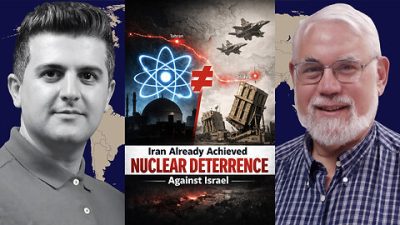
Prof. Ted Postol: Iran Already Achieved Nuclear Deterrence Against Israel
or go to
Aletho News Archives – Video-Images
From the Archives
How the occupied mentality syndrome works
Saudi Arabia on the American chessboard – Part 3
By B. J. Sabri | American Herald Tribune | June 27, 2016
Read part 2: “The occupied mentality Syndrome“
Previously I argued whether Saudi Arabia’s repeated involvements in U.S. interventions and wars stem from free national will or in response to a specific condition. For starters, in Saudi Arabia there is no national will. In Saudi Arabia, the national will is the will of the Al Saud clan. Still, when a major Arab state allies itself with a superpower that committed unspeakable crimes against humanity in almost every Arab country, then something is wrong. This fact alone should compel us to examine the U.S.-Saudi relation for one exceptional reason. As a result of the U.S.-Saudi wars, hundreds of thousands of people in Afghanistan, Iraq, Iran, Libya, Syria, Yemen, and Somalia have lost their lives. Millions became displaced in their own homelands. And millions more rendered refugees.
Attributing the Saudi policies to the bonds of “partnership” with the U.S. is frivolous. There are no bonds between these two thugs except those of business, military deals, secret plots, and wars. Proving this point, bonds such as these have no space for the American and Saudi peoples to share significant cultural or societal exchanges. If partnership is not the reason for the Saudi contribution to the U.S. strategy of empire and imperialism, then another reason must exist.
This leads to three possibilities. … continue
Blog Roll
 Aletho News
- NIAID/NIH and USDA Fund Bioengineered Chimeric Influenza Viruses Built Using Pandemic H1N1 Components: Journal ‘Science Advances’
- Hezbollah hits Israeli warship off Lebanon’s coast, sets it aflame
- Iran slams US strikes on B1 bridge, Mahshahr petrochemical plants as ‘blatant acts of state terrorism’
- In letter to UN chief, Araghchi warns of dire consequences of US-Israeli attacks on Iran’s nuclear facilities
- Why the CIA conspiracy to invade Iran with Kurdish militias failed
- Why Are Upbeat US Claims About Mission to Rescue Pilot ‘Highly Questionable’?
- Aircraft destroyed during US ‘rescue’ of downed F-15 pilot cost more than $100 million each
- Washington University removes professor who condemned US-Israeli war on Iran
- Russia Warns of Retaliation as UK Authorizes Seizure of Vessels
- Serbia thwarts plot to bomb Russia-Hungary gas pipeline – Vucic
- If Americans Knew
- In Iran, Israel-US take aim at “reason, research, and freedom of thought” – Daily Update
- US loses planes over Iran, Israel downgrades Lebanon war goals – Daily Update
- Israel Is Blocking Palestinians from Easter at Church Where Jesus Resurrected
- Plot to assassinate Palestinian activist follows harassment campaign promoted by Zionist groups and elected officials
- Prominent New York synagogue hosts presentation on why U.S. Jews should support the ethnic cleansing of Gaza
- Tapper vs. Piker: Is the CNN Anchor Auditioning for David Ellison?
- Shouldn’t Democrats Be Able to Condemn Genocide?
- Israel-US kill negotiators, destroy civilian structures, but Iran’s military capabilities still largely intact – Daily Update
- ‘War crime’: Global condemnation as Israeli ministers celebrate death penalty law targeting Palestinian prisoners
- 7 Ways Israel Is Turning Lebanon Into Gaza
- No Tricks Zone
- An Inconvenient Tree: Uncovered In Alps… Europe Much Warmer Than Today 6000 Years Ago
- New Study Reports A 60% Slowdown In Greenland’s Ice Loss Rate In The Last Decade
- Low Intensity Tornado Wrecks Major Solar Farm, Creating A Potential Toxic Dump
- New Study Finds Warming Saves Lives…Cold Temperatures 12 Times More Deadly Than Excess Heat
- German Science Blog Accuses PIK Climate Institute Of Hallucinating Climate Tipping Points
- Devastating Assessment Of Comirnaty Vaccine By Former Senior Pfizer Europe Toxicologist
- New Study: CO2 Is ‘Effectively Negligible’ As An Explanatory Climate Change Factor Since 2000
- Former Pfizer Toxicologist Dr. Helmut Sterz Tells Bundestag Hearing Pfizer Vaccine Should Have Never Been Approved
- Energy Expert: Germany’s Nuclear Phaseout Was A “500 Billion Euro Mistake”
- New Research: South Australia’s Mid-Holocene Sea Surface Temperatures Were 4°C Warmer Than Today
 Aletho News