Delay at Finland’s New Nuclear Reactor Imperils Country’s Power Supply
Samizdat – 23.11.2022
Finland’s new Olkiluoto 3 reactor will remain offline longer than expected, and full-scale electricity production will not commence before 2023.
Its owner Teollisuuden Voima announced that an investigation into damage at the already much-delayed reactor’s feedwater pumps will continue for a number of weeks, with a knock-on effect on the schedule of regular electricity production. Due to the ongoing investigation, the exact timeframe for the launch of the reactor remains unknown, but was estimated as the end of January 2022 at the earliest.
During the ongoing investigation, maintenance work will continue at the plant unit’s turbine.
Further delays to regular electricity production at Olkiluoto 3 will have a significant impact on Finland’s electricity self-sufficiency. Since the reactor won’t be operational by winter, energy prices, already elevated as a result of Europe’s energy pinch, are likely to rise even further.
The damage to the reactor is thus a major setback for the cold Nordic nation, whose authorities had already warned of an elevated risk of shortages and even blackouts unless the reactor provides a reliable supply of electricity.
The latest delay increases uncertainty over the country’s power supply this winter, especially in January, national grid operator Fingrid stressed. Earlier this autumn, it predicted a peak electricity consumption in Finland of 14,400 megawatts for this winter, whereas domestic production, even with Olkiluoto 3 included, would only cover 12,900 megawatts.
Olkiluoto 3, a 1,900-megawatt European Pressurized Water Reactor (EPR), was granted a construction permit in 2005 and was originally scheduled for completion in 2009. The order made Finland the first Western European nation in 15 years to order a new nuclear reactor, following a protracted nuclear scare driven by the Three Mile Island accident in 1979 and the Chernobyl catastrophe in 1986.
However, the project has faced a long stream of delays, technical issues, cost overruns and legal disputes. With a breathtaking price tag of $11 billion already in 2018. Olkiluoto-3 has long been touted as the “flagship of European nuclear energy,” but has taken more than 15 years to complete, cost the Nordic nation dearly and ranks among the world’s most expensive buildings.
Europe’s energy crisis has been aggravated by Brussels’ ill-conceived energy sanctions against Moscow over its special operation in Ukraine. The EU in general has been heavily reliant on Russian fossil fuels, with Moscow supplying some 40 percent of its natural gas and some 27 percent of its imported oil before the conflict.
Nevertheless, despite this substantial level of dependence, the EU issued a blank ‘no’ to Russian fossil fuels as part of its massive sanctions campaign in a bid to “punish” Russia. However, as trouble with finding alternative sources arose, numerous EU nations are now resorting to austerity measures to conserve energy, with authorities issuing grave warnings about rolling blackouts.
Finland to Allow for Deployment of NATO Nuclear Weapons on Its Territory, Reports Say
Samizdat – 26.10.2022
HELSINKI – Finland’s draft legislation on the country’s accession to NATO, which is almost prepared, does not contain any restrictions on establishment of military bases and deployment of nuclear weapons on the its territory, local newspaper reported on Wednesday, citing sources.
The legislation will allow for deployment of nuclear weapons of NATO countries and establishment of the alliance’s military bases on the territory of Finland putting no limits on NATO’s military presence in the country, according to the newspaper.
The draft legislation is expected to be considered by the Finnish parliament in two weeks, newspaper said.
The newspaper also noted citing its sources in the Finnish government that during negotiations with the bloc in July Foreign Minister Pekka Haavisto and Defense Minister Antti Kaikkonen pledged to avoid any restrictions regarding the country’s participation in military activity of the alliance in the national legislation.
On May 18, three months after Russia launched its military operation in Ukraine, Finland and Sweden submitted their NATO membership applications, abandoning decades of neutrality. With 29 out of 30 NATO members having formally ratified the agreements on Finland and Sweden’s accession, both countries are now in talks with Turkey to allay concerns over their alleged support of organizations designated as terrorist by Ankara.
Energy crisis worsening in Finland
Government declares “war economy” due to consequences of unnecessary anti-Russian sanctions
By Lucas Leiroz – September 2, 2022
The side effects of anti-Russian sanctions are becoming increasingly unbearable for Western countries. Finland has activated maximum alert levels due to the energy crisis, initiating exceptional measures to manage supply difficulties. The head of government even stated that the country would be experiencing a “war economy”, despite the fact that Finland is obviously not at war with any other state. This scenario reveals the disastrous path that the West chose to follow by its own decision.
On 1 September, Finnish Prime Minister Sanna Marin described the economic situation in her country in the midst of the gas supply crisis as a “war economy”. Interestingly, in her speech, Marin blamed Russian President Vladimir Putin for the crisis, despite the fact that the decision to sanction Moscow was taken unilaterally by Western countries. According to her, the gas crisis is occurring because the Russian government is using energy as a weapon in the current conflict.
“We seem to be living in a war economy. This is not a normal economic situation”, she said during a press conference.
She also added that this is the third calamity her country has faced since she took power in 2019:
“The first [crisis] was the pandemic, the second was the tide of war coming in Europe, and the third is the energy crisis, which both Finland and all other European countries in the grip of, due to the war and the fact that Putin is using energy as a weapon against Europe”.
Marin did not explain exactly how the gas was being used as a weapon by the Russians. She just blamed Putin in a generic and unjustified way. In fact, her words sounded like a desperate attempt to make a kind of scapegoat for the impending crisis that will damage her country. Marin just tried to evade her responsibility as the Finland’s head of government, pointing to the president of a foreign country as the cause of the problems.
However, it is necessary to emphasize that there is no validity in Marin’s rhetoric. Russia initially had no intention of using energy as a strategic point in its international disputes. On the contrary, it was the West itself that imposed a series of sanctions to which Moscow was forced to respond with some measures, such as demanding payment in rubles, controlling prices and even banning sales in some more serious cases.
If the West had not taken the initiative to try to “punish” Russia for starting the special operation in Ukraine, Moscow would certainly have kept the European energy supply intact. All Russian actions arose in response to Western provocations. The problem is that European countries do not seem to have acted with prudence and strategy, they simply adhered to the American plan to sanction Russia even though they are dependent on Russia’s energy resources and lacking alternative sources of gas. Now, Marin tries to “blame” the Russians, but imposing sanctions and even asking for NATO membership was her government’s unilateral initiative.
The Finnish case is quite emblematic and sums up well the abyss that Europe has chosen for itself. Before the escalation of the Ukrainian conflict, the Nordic country depended on Moscow for the supply of 70% of its natural gas and 35% of its oil, in addition to 14% of its electricity. Without the partnership with Moscow, Helsinki would simply not have been able to meet the energy demands of the production chains and the population, but even so, the country chose to sanction Russia, ban imports and denied any form of dialogue. There is no way to analyze these facts and conclude that Russian President Vladimir Putin is the one “to blame” for the crisis. The responsibility undoubtedly lies with the Finnish government itself.
On the “war economy” situation, in fact, an unprecedented crisis threatens Helsinki. And the most curious thing is that the government takes measures that will only worsen the situation even more, instead of seeking improvement. Finland was one of the first states to impose restrictions on the entry of Russian tourists, halving the number of visas. Under the recently announced new rules, only 500 visas can be granted per day to Russian citizens, 100 of which are reserved for tourists and 400 for work, study and family trips. It is important to remember that more than 20% of all Finnish tourism income comes from Russian citizens. According to official sources, the country will lose more than 600 million euros with the new visa rules.
In addition, Finland remains firm in its application to join the Western military alliance. In fact, the more the country is affected by tensions with Russia, the more it seems to be willing to worsen these tensions. Moscow at no time showed any sign of threat to Helsinki, but the Nordic country appears to be absolutely influenced by the fallacious Western rhetoric that the operation in Ukraine will “expand” throughout Europe, so it prefers to go into recession and economic crisis instead of simply being diplomatic with Russia.
For now, Marin will certainly continue to try to make Putin the scapegoat for her administration’s mistakes. But that won’t convince the public for long. The PM has been heavily criticized for both mismanagement and scandals in her private life. Her popularity is likely to drop further as the country sinks into a “war economy” without being at war.
Lucas Leiroz is a researcher in Social Sciences at the Rural Federal University of Rio de Janeiro; geopolitical consultant.
Finnish Prime Minister Declares Transition to ‘War Economy’ Amid Energy Crunch
By Ilya Tsukanov – Samizdat – 01.09.2022
Finland has joined its European Union allies in shooting itself in the foot economically by unilaterally slashing energy purchases from Russia. Helsinki added to its troubles by restricting visas for Russians – who ordinarily make up a big chunk of the country’s income from tourism.
Finnish Prime Minister Sanna Marin has compared the exceptional energy crisis being faced by her country to a “war economy.”
“We seem to be living in a war economy. This is not a normal economic situation,” Marin said, adding that the current crunch is the third calamity faced by her government since she came into office in 2019.
Marin laid the blame for the crisis at Russian President Vladimir Putin’s feet.
“The first [crisis] was the pandemic, the second was the tide of war coming in Europe, and the third is the energy crisis, which both Finland and all other European countries in the grip of, due to the war and the fact that Putin is using energy as a weapon against Europe,” Marin said.
The Finnish prime minister did not elaborate on how the Russian president, who has repeatedly said that Moscow remains ready to sign new long-term gas contracts with European countries, is responsible for the energy crunch pummeling the Nordic nation.
Economists expect the Finnish economy to slide into a recession in 2023 amid a downturn caused in part by a spike in energy prices and the country’s rejection of low-priced and reliable Russian supplies after refusing to pay in rubles.
Before the escalation of the Ukrainian crisis, Finland depended on Russia for nearly 70 percent of its natural gas and 35 percent of its oil, as well as 14 percent of its electricity. Along with the halt in imports of Russian gas, Helsinki joined its EU partners in banning Russian oil.
Tourism Losses
Helsinki poured salt on its economic wounds by placing restrictions on Russian tourists by cutting visa applications in half from an average of 1,000 per day to 500 per day starting September 1, and setting quotas on tourism visas to about 100, with the rest reserved for family ties, work and study.
Finnish authorities sounded the alarm about the potential implications of the loss of Russian tourists at the beginning of the summer. Russians typically make up about 20 percent of the country’s tourism earnings and its 15 billion euros-a-year in revenue. Earlier this year, Travel/Visit Finland director Kristiina Hietasaari estimated that the sector could lose over 600 million euros without Russian travelers.
In addition to curbing Russian energy purchases and cutting access to Russian tourists, Finland has applied for NATO membership, and is expected to become a formal member of the bloc together with Sweden if and when all 30 of the alliance’s current members ratify the Nordic nations’ bids for entry. Russian officials have emphasized that Moscow has no qualms with either Finland or Sweden when it comes to security matters, but warned that if NATO infrastructure was deployed near Russia, Moscow would respond in kind to “create the same threats in the territories from which they threaten us.”
Canada, Sweden and Finland announce dispatch of military instructors to Ukraine
By Lucas Leiroz | August 15, 2022
The West continues to insist on indefinitely prolonging the suffering of the Ukrainian people. The policy of sending military aid seems to have no limits. In addition to financial remittances and arms shipments, Western countries are also mobilizing to give military instructions to Kiev. Considering the war crimes and human rights violations repeatedly committed by Ukrainian forces, supporting Kiev militarily means co-participating in the crimes – and the West must be judged responsible for that.
On 12 August, Canada and Sweden announced that they had sent teams of military instructors to participate in a joint program with the UK to train Ukrainian troops. Currently, London leads a project of military assistance to Ukraine by training soldiers with Western instructors. The objective is to pass on the technical and practical knowledge necessary for the Ukrainians to use the military equipment received from the West in the best possible way, thus helping Kiev to continue its “resistance” against the Russian special military operation.
Canadian Defense Minister Anita Anand said that 225 Canadian Armed Forces (CAF) officers will be sent to the UK to participate in the project. The first phase of participation would consist of a four-month period of joint military actions, in which Ukrainian combatants would be instructed in knowledge “related to frontline combat, weapons handling, first aid, field craft, patrol tactics, and include the law of armed contact”. She also made it clear that, in addition to training soldiers, Ottawa will also be contributing by sending 39 armored vehicles to Kiev.
On the same day, the Swedish government also made it clear that it intends to actively participate in this London-led international mobilization. Stockholm announced the deployment of 120 military instructors to participate in the program. The act follows a previous announcement, in which Finland also committed to act in the training, albeit in a more moderate way, sending about 20 instructors. This is just another step towards militarization, revealing the bellicose turn that both countries have taken since the beginning of the Russian special military operation in Ukraine, when Sweden and Finland started to react irrationally to Moscow’s measures, even asking for NATO membership.
In fact, it must be noted that countries like Canada, Sweden and Finland are historically weak nations from a military point of view, whose security has always depended on two key factors: neutrality or automatic alignment. In the case of the Scandinavian nations, neutrality has always been a central factor, which began to be reversed as local governments adopted more favorable stances towards NATO – culminating in the current application for membership. In the Canadian case, however, the pillar of defense policy has always been automatic alignment with the US, complying with all decisions taken by Wasington in exchange for a place in the security umbrella.
These countries remain militarily weak. Their participation in the program does not imply real changes. Most Canadian, Swedish and Finnish military officers do not even have real war experience, which shows the practical irrelevance of being participants in the UK-led project. More than that: the very existence of a training program is of questionable relevance. Although the UK and other NATO countries have great military expertise and undoubtedly have qualified instructors to train their allies, the short training time makes it almost impossible for soldiers to prepare properly.
British military assistance to Kiev with training of personnel is not new. Since 2014 London has been assuming projects to train Ukrainian soldiers. Some of these programs took place publicly, while others were conducted secretly – such as the clandestine “Operation Orbital”, in which more than 22,000 Ukrainian troops were trained by British agents. What the UK is doing now is simply continuing its actions of the last eight years, with the only difference that now NATO’s plans for Ukraine have already failed. The aim is no longer to arm Kiev so that it can become a local power against Russia – it is simply to prolong the conflict indefinitely in order to “postpone” Russian victory.
For the UK, continuing the instruction is an opportunity to encourage the use of Western military equipment and thus trying to extend the conflict. For Canada, Sweden and Finland, it is a mere gesture of “political goodwill”, without any relevance. But, above all, those involved in this training and in all forms of military aid to Kiev share in becoming co-responsible for the Ukrainian atrocities. Since it is proven that Western-trained Ukrainian soldiers use Western weapons against civilians in Donbass, then the West itself is a participant in these crimes and should be sanctioned for doing so.
Lucas Leiroz is aresearcher in Social Sciences at the Rural Federal University of Rio de Janeiro; geopolitical consultant.
Turkey, NATO joined at hips but think differently
BY M. K. BHADRAKUMAR | INDIAN PUNCHLINE | JULY 3, 2022
Turkey has had an uneasy history as a NATO member country. The push and pull of strategic autonomy constantly grated against a security guarantee the alliance offered and also a way of reinforcing its Western identity. The West wanted Turkey because of the Cold War.
The enigma still continues: Was Turkey’s shift from neutrality to alignment a real necessity in 1951? Did Stalin indeed cast an evil eye on Turkish lands? Would any other Kemalist leader than Ismet Inounu, an unvarnished Euro-Atlanticist whose conception of modernisation implied cooperation with the West, have succumbed to the Anglo-American entreaties?
The relations between Turkey and the Soviet Union remained relatively calm during the period of Turkey’s admission to NATO. In November 1951, Moscow actually directed a note to the Turkish Government protesting the latter’s decision to participate in NATO, which asserted that “it is quite obvious that the initiation to Turkey, a country which has no connections whatever with the Atlantic, to join the Atlantic Bloc, can signify nothing but an aspiration on the part of imperialist states to utilise Turkish territory for the establishment of military bases for aggressive purposes on the frontiers of the USSR.”
The ideological aspirations in becoming an integral part — at least within the framework of a military alliance — of the Western world played a decisive role in Turkey’s decision in 1951, whereas, in reality, there was no imminent or explicit Soviet threat to Turkey. On the other hand, Turkey’s geographical importance to both the West and to the Soviet Union gave her a particular value in an East-West context, which, to her credit, Ankara would successfully leverage to its advantage through subsequent decades.
Curiously, this complex inter-locking in some ways bears an uncanny resemblance to the current accession of Sweden and Finland to NATO. Russian President Vladimir Putin must have alluded to it obliquely when he told the media Thursday on the sidelines of the Caspian Summit in Ashgabat:
“NATO is a relic of the Cold War and is only being used as an instrument of US foreign policy designed to keep its client states in rein. This is its only mission. We have given them that opportunity, I understand that. They are using these arguments energetically and quite effectively to rally their so-called allies.
“On the other hand, regarding Sweden and Finland, we do not have such problems with Sweden and Finland as we have, regrettably, with Ukraine. We do not have territorial issues or disputes with them. There is nothing that could inspire our concern regarding Finland and Sweden’s accession to NATO. If they want it, they can do it,… let them do it. You know, there are rude jokes about stepping into unsavoury things. That is their business. Let them step into what they wish.”
While returning from NATO’s Madrid Summit, Turkish President Recep Erdogan underscored that by lifting Ankara’s reservations about Sweden’s and Finland’s membership, he advanced Turkish interests and he added the caveat that their accession is far from a done deal yet, and future developments would depend on their fulfilment of commitments under the memorandum of understanding they signed in Madrid with Turkey.
Indeed, both Sweden and Finland have bent over backward to give Turkey extensive anti-terrorism assurances that require changes in domestic legislation in return for Ankara withdrawing its veto against accession talks. Erdogan insists that what matters are not their pledges but the delivery of those pledges.
It is a tough sell domestically for both Sweden and Finland, since one of the pledges is the extradition of 76 Kurds, deemed as terrorists by Turkey. This is easier said than done, as the courts in Stockholm and Helsinki may have their own definition of a “terrorist”.
The Turkish National Assembly’s ratification is a must for the Nordic countries’ admission to be formalised at NATO level. There is some speculation that US President Joe Biden incentivised Erdogan to compromise, but, make no mistake, the latter’s warning about compliance by Sweden and Finland — as also the audible rumblings already on the left in Sweden — are reminders that the issue is still wide open.
After all, North Macedonia had been a NATO partner country since 1995 but could become a NATO member only in March 2020. And Greece’s reservation was that the newly independent former Yugoslav republic wanted to be known as Macedonia whereas Athens saw the name as a threat to its own region of Macedonia — and ultimately, Greece won. In comparison, Turkey’s concerns are tangible and directly impinge on its national security.
Turkey was never a “natural ally” of NATO. How far Turkey subscribes to NATO’s latest strategic concept of Russia being a “most significant and direct threat” is debatable. Arguably, Turkey would feel more at home with the alliance’s 2010 doctrine that called Russia a “strategic partner.” This would need some explanation.
Professor Tariq Oguzlu, a leading exponent of the changing dynamics of Turkish foreign policies in recent years from a structural realist point of view, wrote an analysis last week titled Madrid Agreement and the balance policy in Turkish foreign policy, which was interestingly featured by Anadolu, Turkey’s state news agency. Oguzlu explained the rationale behind Turkey’s decision not to veto the two Nordic countries’ accession:
“Turkiye began to change its perspective on NATO a long time ago due to its strategic autonomy and multilateral foreign policy understanding… Considering the realist turnaround in Turkish foreign policy in the last three years, it is quite meaningful that Türkiye did not veto NATO enlargement.
“On the one hand, the second Cold War between the West and Russia narrows the room for maneuver in Turkish foreign policy, while on the other hand, it increases Türkiye’s strategic importance. The most important challenge for Turkish foreign policy in the coming years will be the successful continuation of Türkiye’s strategic autonomy-oriented multi-faceted foreign policy practices in an environment of deepening international polarisation.
“The balance policy pursued between the West and Russia is one of the most important strategic legacies left to the Republic of Türkiye from the Ottoman Empire. It is a strategic necessity for Türkiye, which has a medium-sized power capacity, to follow a policy of balance in order to achieve national interests. The policies adopted by Türkiye since the start of Russia’s war on Ukraine until now and the stance displayed at the last NATO summit in Madrid show that this historical heritage is embraced and successfully executed.”
To put matters in historical context, in 1920, Mustafa Kemal formally approached Vladimir Lenin with a proposal for mutual recognition and a request for military assistance. The Bolsheviks not only responded positively but by throwing in their lot with the growing movement of Turkish nationalists, they helped shore up the new Turkish state’s southern borders. In the period from 1920 to 1922, Soviet Russia’s military help to Ataturk was almost 80 million lire — twice Turkey’s defence budget!
In 1921 in Moscow, the two sides concluded the “Treaty of Friendship and Brotherhood”, which resolved the territorial disputes between the Kemalists and the Bolsheviks. The north-eastern border of Turkey established then remains unchanged to this day.
However, both Moscow and Ankara understood that cooperation between Turkish nationalists and Russian communists would be short-lived. Soon afterward, Turkey deserted Moscow’s camp, banned the communist party, and, during the Nazi invasion, looked for an opportunity to invade the Soviet Caucasus if the Red Army collapsed. Nevertheless, Ataturk never forgot the help that Soviet Russia provided in his hour of need.
A historical perspective is needed to understand the US’ manipulation of Turkey — and of Sweden and Finland in the present-day context. Biden is following President Harry Truman’s footfalls. Washington has used the very same Cold-War tactic to draw Sweden and Finland into the NATO fold as it employed 70 years ago with regard to Turkey.
Turkey reaches NATO deal with Finland and Sweden

Samizdat | June 28, 2022
Turkey will support inviting Finland and Sweden into NATO at the alliance’s upcoming summit in Spain, Finnish President Sauli Niinisto announced on Tuesday after a meeting with his Turkish counterpart Recep Tayyip Erdogan and Swedish Prime Minister Magdalena Andersson.
The three countries signed a memorandum of understanding at the meeting, organized with the support of NATO Secretary General Jens Stoltenberg.
“The concrete steps for our accession to NATO will be agreed among NATO allies over the next two days, but that decision is now imminent,” said Niinisto. “I am pleased that this stage on Finland’s journey towards NATO membership has been completed.”
According to Turkey, Finland and Sweden pledged to “condemn terrorism in all its forms” and end their support for organizations Ankara has designated as terrorist – including the Kurdish groups PKK and YPG, as well as the movement led by the exiled cleric Fetullah Gulen, which the Turkish government refers to as “FETO.”
“Turkey got what it wanted,” Erdogan said in a statement after the deal was announced.
Speaking at a press conference after the meeting, Stoltenberg said that Finland and Sweden will become observers in NATO at the upcoming summit. He added that the memorandum includes provisions on fighting terrorism and arms exports, including adopting stricter national legislation.
Finland and Sweden imposed an arms embargo against Turkey in 2019, over Ankara’s intervention in Syria. Turkey also reportedly demanded that Stockholm and Helsinki shut down the offices and ban the publications belonging to FETO, freeze the assets related to groups it has designated as terrorists, and even ban them from demonstrating in public.
Ankara’s opposition threatened to derail NATO’s plan to invite Sweden and Finland at the summit in Madrid which began on Tuesday. The two traditionally neutral Scandinavian countries declared their desire to join the US-led alliance in April, citing the current conflict in Ukraine.
Finnair is nearly broke after ban from Russian skies
Samizdat | June 26, 2022
Finland’s flag carrier Finnair has reportedly become the latest casualty of the sanctions war between Russia and the West. The airline suffered heavy financial losses due to the forced necessity to fly around Russia, after the country closed its airspace in retaliation to Western sanctions.
Since the beginning of 2022, the operating loss of one of the world’s oldest airlines amounted to €133 million, of which €51 million in expenses fell on fuel costs, the Finnish newspaper Helsingin Sanomat reports.
EU countries and a number of other Western states closed their airspace to Russian flights after Moscow launched its military operation in Ukraine in late February. Russia responded in kind, banning the airlines of 36 states and territories from its skies and, in so doing, closing the traditional routes from Europe to Asia to Western carriers.
The tit-for-tat restrictions have forced airlines in Europe to re-route flights, and have deprived some nations of the monthly air navigation fees that they used to receive when flights from neighboring states passed through their airspace.
Since December 2021, Finnair’s fuel costs have reportedly surged from 30% to 55% of its total expenses. Apart from a nearly twofold increase in prices, the Finnish airline has faced the need to change air routes.
As a result of closing skies Helsinki has lost a key advantage over other Scandinavian countries – the shortest distance to China, Japan and South Korea. Some flights to the Asia-Pacific region, which had been generating for Finnair up to 50% of its profit, were canceled. The journey to Japan that previously took about nine hours now takes 13 hours.
Moreover, the loading of Finnair planes has also significantly dropped due to the absence of Russian tourists, who used to make up about 20% of its passenger traffic. Meanwhile, EU residents have slashed their travel spending amid increased economic instability, with a reluctance to fly exacerbated by constantly rising cost-of-living expenses.
Arctic Council Decisions Made Without Russia to Be Illegitimate – Ambassador to US Antonov
Samizdat – 09.06.2022
WASHINGTON – Russia is concerned about plans to resume the work of the Arctic Council without its participation and warns that decisions made in this format will be illegitimate, Russian Ambassador to the United States Anatoly Antonov said.
Canada, Denmark, Finland, Iceland, Norway, Sweden and the United States earlier announced their intention to resume work in the Council on a limited basis – within the framework of projects that do not involve Russia.
“Such a step cannot but cause concern not only for Russia as the current chairman of the Council, but also for the entire international community interested in the further sustainable development of this region. We state that this unique format of interstate interaction continues to be politicized,” Antonov said.
“Decisions on behalf of the Arctic Council, made without our country, will be illegitimate and violate the principle of consensus stipulated by its governing documents,” he warned.
The work of the Council was suspended on March 3 in light of the events in Ukraine.
Finland to Build New Air Base in Lapland for Its F-35 Fighters
By Igor Kuznetsov | Samizdat | May 31, 2022
The first of the 64 US-made F-35 fighter jets that will arrive in Finland in 2026 will be placed at a new air base in Lapland, its northernmost county. Its construction will begin this year and will cost the Nordic country 150 million euros ($161 million), the national broadcaster Yle reported.
According to the commander of the Lapland air base, Colonel Tuukka Karjalainen, the location was chosen based on its proximity to Norway, a NATO member which already uses F-35s. As of now, Finland’s northernmost air force base, in Rovaniemi, stages regular training missions with the Swedish and Norwegian air forces. To begin with, the new base will receive two to six new aircraft.
“The hope is that this will create opportunities for cooperation and facilitate the implementation of the technology,” Tuukka Karjalainen told Yle. “We are very pleased. We are proud to be adopting new equipment. The jobs at the Lapland air base will certainly attract many,” he added.
According to Karjalainen, auxiliary buildings, fences and roads will be built by the end of this year. The main construction will begin in the first half of 2023. Over the past two years, the cost estimate has soared by tens of millions of euros, with Karjalainen blaming stricter technical requirements and increased prices.
Pilots, mechanics and maintenance personnel will be trained in the US. According to Karjalainen, 18 pilots and about 50 technicians will go to the US for training in 2025. Later, they themselves will train specialists in Finland.
The Finnish Air Forces announced the purchase of 64 Lockheed Martin F-35 multi-role fighters back in February in an 8.4 billion euro ($9 billion) deal with the US defence contractor. The new fighters will replace Finland’s ageing fleet of F-18 Hornets, which is planned to be phased out by 2030.
Previously, Finland’s neighbours Norway and Denmark opted to make the F-35 the backbone of their air forces, procuring 52 and 27 fighter jets respectively.
15,000 NATO troops from 14 nations, including the US, Sweden, Finland and Ukraine, start drills near Russia
Samizdat | May 16, 2022
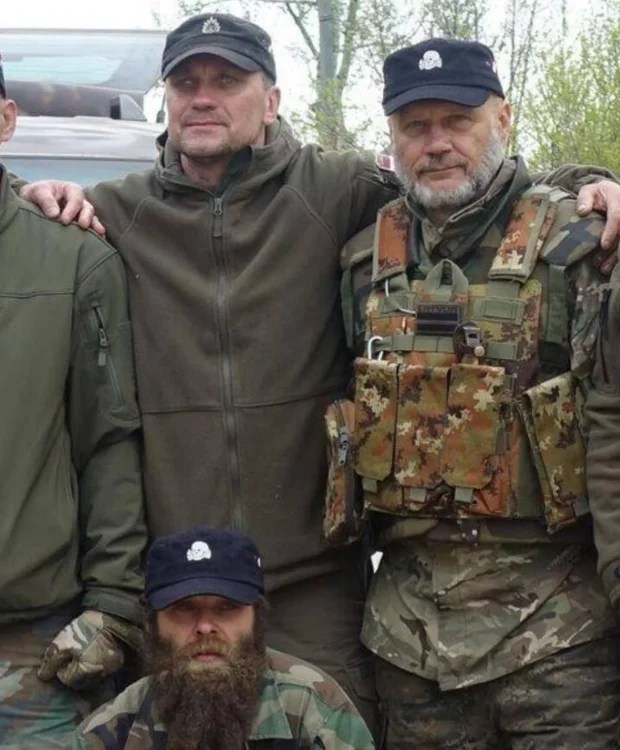
Large-scale NATO military drills started in Estonia on Monday. The exercise dubbed ‘Hedgehog 2022’ is one of the largest in the Baltic nation’s history, according to the military bloc. The drills will involve some 15,000 troops from 14 nations, including both military bloc members and their partners.
Soldiers from Finland, Sweden, Georgia and Ukraine are among those that will take part in the exercise, Finnish public broadcaster Yle reported. The drills will include all branches of the armed forces and will involve air, sea and land exercises, as well as cyber warfare training, according to the broadcaster.
According to a NATO statement, the drills will also see the US Navy Wasp-class landing ship ‘Kearsarge’ take part in the exercises. Both the military bloc and Estonian Defense Forces deputy commander, Major General Veiko-Vello Palm, have denied that the drills just over 60km from the Russian border have anything to do with Moscow’s ongoing military action in Ukraine.
The drills started just a day after Finland and Sweden officially announced their plans to join NATO, and were planned long before the conflict in Ukraine broke out, Western officials have said.
The exercises in Estonia are, however, just one part of NATO’s large-scale military activities near the Russian border. Another Baltic state, Lithuania, is hosting the ‘Iron Wolf’ exercise, which involves 3,000 NATO troops and 1,000 pieces of military equipment, including Germany’s Leopard 2 tanks.
Two of NATO’s biggest exercises – ‘Defender Europe’ and ‘Swift Response’ – are taking place in Poland and eight other countries, involving 18,000 troops from 20 nations, according to NATO’s statement on Friday.
“Exercises like these show that NATO stands strong and ready to protect our nations and defend against any threat,” the military bloc’s spokesperson, Oana Lungescu, said, adding that the drills “help to remove any room for miscalculation or misunderstanding about our resolve to protect and defend every inch of allied territory.”
The NATO Response Force is currently taking part in the 7,500-strong ‘Wettiner Heide’ drills in Germany. The Mediterranean Sea is about to witness ‘Neptune series’ naval drills involving the USS ‘Harry S. Truman’ carrier strike group that will be placed under NATO command. This will only be the second time since the end of the Cold War that a US carrier group has been transferred under the military bloc’s command, NATO has said.
In June, the Baltic States and Poland will host what NATO describes as “Europe’s largest integrated air and missile defense exercise,” which would involve 23 nations.
In late April, Finland hosted NATO naval drills. Now, it is also hosting a joint land exercise, in which troops from the US, the UK, Estonia and Latvia are participating.
The massive military wargames are taking place amid heightened tensions between Russia, NATO and some of the military bloc’s partners. Finland, which shares a long border with Russia, and Sweden decided to reconsider their long-standing policy of non-alignment following a major change in public opinion after the launch of Russia’s attack on Ukraine.
The development sparked a wave of criticism from Moscow, which warned that it would have to respond if Finland and Sweden join NATO. Moscow also maintains that it considers NATO’s expansion as a direct threat to its own security.
‘Finns & Swedes won’t benefit from NATO’
Samizdat | May 16, 2022
NATO membership won’t make Finland and Sweden more secure, but would likely see them fighting somebody else’s wars and hosting American bases, Dr. Jan Oberg, director of the Transnational Foundation for Peace and Future Research, has told RT.
“It’s a disastrous decision,” Oberg said on Sunday, following an official declaration by the Finnish government that it is planning to join the US-led military bloc. Hours later, a similar announcement was made by the ruling party in Sweden. The two Nordic nations stayed out of NATO during the Cold War, but their governments said Russia’s military operation in Ukraine has become a game-changer.
Finland and Sweden have failed to carry out “long-term consequence analysis,” he added. “Nobody seems to ask whether NATO is the right thing to join. After all these years since 1945, NATO has proven that it’s not able to deliver what taxpayers are paying for, namely stability, peace and security… and then Finland and Sweden say: ‘We’ll join this failed organization,’” he remarked.
“We have to ask ourselves: ‘Who caused the conflict [between Moscow and Kiev]?’ Everybody talks about the Russian invasion, which I deplore too, but underlying that is the conflict, which has to do with the NATO expansion,” the peace researcher said.
Making sure Ukraine becomes a neutral country that will never join NATO has been cited by Moscow as one of the main reasons for its ongoing military operation.
Oberg said he understood Russia’s concerns about the expansion of the bloc towards its borders. “If I was sitting in Moscow, I would feel that this was threatening,” he observed, referring to Finland and Sweden’s possible membership. “When you move troops up to the very border on both sides you increase tension; you decrease reaction time; you do all the things you shouldn’t do strategically if peace was your goal. Peace is not the goal of these people.”
The military-industrial complex – “those who sell weapons and profit from wars” – will gain from NATO adding two new members, he said. “The Swedish people and the Finnish people will not benefit from this. It’ll be completely new for them that they are now supposed to participate… in somebody else’s wars.”
With the US pushing for bases in Denmark and Norway, “are we to believe that there will not be American bases or American troops or something, you know, more permanent in Sweden and Finland?” he wondered.
NATO membership would also be “opening these countries for potential nuclearism that should never have been done in this particular area,” the peace researcher added.
Oberg said it was “appalling” that the governments in Helsinki and Stockholm didn’t put the issue to a referendum. “This is unheard of with such an important decision as joining NATO.”
While opinion polls have shown an overwhelming support for NATO membership in Finland, in Sweden the idea was backed by less than 50% of the public, he noted. “I’m amazed that there’s so little public discussion, so little uproar in terms of huge demonstrations in large cities in Sweden,” the scholar said.
He blamed the media, of which “80% to 90% is pro-NATO,” for this situation. “It’s very difficult to get into the media today with an alternative view… There’s no democracy and free media practice in this,” Oberg insisted.
Jan Oberg is a Danish-Swedish peace researcher, who received his doctorate from Lund University in Sweden. He taught courses in several countries, including Japan, Austria and Switzerland.
In 1986, the scholar co-founded the Transnational Foundation for Peace and Futures Research (TFF), an independent think tank aimed at promoting conflict-mitigation and achieving peace through peaceful means around the globe. He assisted on-the-ground work in ex-Yugoslavia, Georgia, Burundi, Iraq, Iran and Syria. In 2013, Oberg and TTF were nominated for the Nobel Peace Prize for their activities.
Featured Video
Seyed M. Marandi: U.S. Military DIVIDED? Iran’s Secret Defense EXPOSED
or go to
Aletho News Archives – Video-Images
From the Archives
‘Israel sees Iran as obstacle to its policies’
Press TV – August 25, 2017
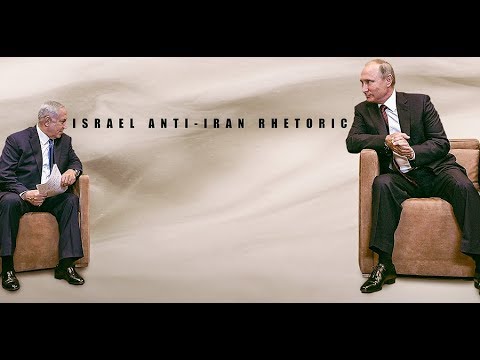
Prime Minister Benjamin Netanyahu has said that Israel felt threatened by Iran’s growing influence in the Middle East. Netanyahu expressed his Iranophobic view in a meeting with Russian President Vladimir Putin in Russia’s Black Sea resort of Sochi on Wednesday. Press TV has asked Scott Rickard, former American intelligence linguist from Tampa, Florida, and Brent Budowsky, a columnist at The Hill from Washington, to give their thoughts on the issue.
Rickard said Tel Aviv is concerned about the fact that the regime could not carry out its old project to spread sectarian divisions and pave the way for dismemberment of the countries in the Middle East region because of the Iranian-led resistance against Israeli policies, not only in the occupied territories of Palestine but also in the whole region.
“Iran is not a threat to Israel whatsoever. The threat that Israel sees is the fact that their Oded Yinon Plan is being put to a hold by Iran,” the intelligence linguist said on Thursday night.
“They (the Israelis) look at Iran as a threat only because they have no influence on their governments and Iran is autonomous and is not under the Zionist influence,” he added.
Since the victory of the Islamic Republic of Iran in 1979, Tehran has been critical of Israel’s policies in the region, whereas “no leaders [of other states] even dared to speak out against Zionism,” Rickard argued. … continue
Blog Roll
 Aletho News
- Striking Iran’s Infrastructure Would Have Little Military Impact – Report
- What’s Behind U.S./Israeli Strikes On Iranian Pistachio Factories?
- Seyed M. Marandi: U.S. Military DIVIDED? Iran’s Secret Defense EXPOSED
- How I fell foul of the BBC thought police
- The End of NATO
- 37 days of war on Iran cost US staggering $42bln, tracker shows
- Baghdad tells Asian refiners, traders to begin loading Iraqi crude amid Iranian exemption
- Under fire, Moscow and Tehran close ranks
- Iran, US receive Pakistan-mediated plan for ceasefire then final deal
- Iran submits demands for end to war as mediators scramble ahead of Trump deadline
- If Americans Knew
- U.N. experts demand Israel release prominent Gaza doctor after reports of ‘severe torture’
- Israel’s Latest Genocide Is Against the Shias of Lebanon. Why Is the World Silent?
- How Eliot Cohen’s influence over U.S. war-making paved the way for Trump’s war crimes in Iran
- Israelis don’t pay for the weapons we ‘sell’ to them — US taxpayers do
- While Distancing from AIPAC, Most 2028 Democratic Hopefuls Are Still Embracing Israel
- A brief history of the Israeli nuclear program, the open secret at the heart of the Iran war
- Israeli Settlers Killed a Palestinian Farmer on His Own Land, in Front of His Father. Yes, Again
- The US-Israeli War on Science is an Assault on our Future
- 100+ International Law Experts Say US Strikes on Iran Violate UN Charter, Could Be War Crimes
- ‘Vile, Horrifying, Evil’: Trump Threatens to Bomb Nation of 90 Million People ‘Back to the Stone Ages’
- No Tricks Zone
- An Inconvenient Tree: Uncovered In Alps… Europe Much Warmer Than Today 6000 Years Ago
- New Study Reports A 60% Slowdown In Greenland’s Ice Loss Rate In The Last Decade
- Low Intensity Tornado Wrecks Major Solar Farm, Creating A Potential Toxic Dump
- New Study Finds Warming Saves Lives…Cold Temperatures 12 Times More Deadly Than Excess Heat
- German Science Blog Accuses PIK Climate Institute Of Hallucinating Climate Tipping Points
- Devastating Assessment Of Comirnaty Vaccine By Former Senior Pfizer Europe Toxicologist
- New Study: CO2 Is ‘Effectively Negligible’ As An Explanatory Climate Change Factor Since 2000
- Former Pfizer Toxicologist Dr. Helmut Sterz Tells Bundestag Hearing Pfizer Vaccine Should Have Never Been Approved
- Energy Expert: Germany’s Nuclear Phaseout Was A “500 Billion Euro Mistake”
- New Research: South Australia’s Mid-Holocene Sea Surface Temperatures Were 4°C Warmer Than Today
 Aletho News