Turkey, NATO joined at hips but think differently
BY M. K. BHADRAKUMAR | INDIAN PUNCHLINE | JULY 3, 2022
Turkey has had an uneasy history as a NATO member country. The push and pull of strategic autonomy constantly grated against a security guarantee the alliance offered and also a way of reinforcing its Western identity. The West wanted Turkey because of the Cold War.
The enigma still continues: Was Turkey’s shift from neutrality to alignment a real necessity in 1951? Did Stalin indeed cast an evil eye on Turkish lands? Would any other Kemalist leader than Ismet Inounu, an unvarnished Euro-Atlanticist whose conception of modernisation implied cooperation with the West, have succumbed to the Anglo-American entreaties?
The relations between Turkey and the Soviet Union remained relatively calm during the period of Turkey’s admission to NATO. In November 1951, Moscow actually directed a note to the Turkish Government protesting the latter’s decision to participate in NATO, which asserted that “it is quite obvious that the initiation to Turkey, a country which has no connections whatever with the Atlantic, to join the Atlantic Bloc, can signify nothing but an aspiration on the part of imperialist states to utilise Turkish territory for the establishment of military bases for aggressive purposes on the frontiers of the USSR.”
The ideological aspirations in becoming an integral part — at least within the framework of a military alliance — of the Western world played a decisive role in Turkey’s decision in 1951, whereas, in reality, there was no imminent or explicit Soviet threat to Turkey. On the other hand, Turkey’s geographical importance to both the West and to the Soviet Union gave her a particular value in an East-West context, which, to her credit, Ankara would successfully leverage to its advantage through subsequent decades.
Curiously, this complex inter-locking in some ways bears an uncanny resemblance to the current accession of Sweden and Finland to NATO. Russian President Vladimir Putin must have alluded to it obliquely when he told the media Thursday on the sidelines of the Caspian Summit in Ashgabat:
“NATO is a relic of the Cold War and is only being used as an instrument of US foreign policy designed to keep its client states in rein. This is its only mission. We have given them that opportunity, I understand that. They are using these arguments energetically and quite effectively to rally their so-called allies.
“On the other hand, regarding Sweden and Finland, we do not have such problems with Sweden and Finland as we have, regrettably, with Ukraine. We do not have territorial issues or disputes with them. There is nothing that could inspire our concern regarding Finland and Sweden’s accession to NATO. If they want it, they can do it,… let them do it. You know, there are rude jokes about stepping into unsavoury things. That is their business. Let them step into what they wish.”
While returning from NATO’s Madrid Summit, Turkish President Recep Erdogan underscored that by lifting Ankara’s reservations about Sweden’s and Finland’s membership, he advanced Turkish interests and he added the caveat that their accession is far from a done deal yet, and future developments would depend on their fulfilment of commitments under the memorandum of understanding they signed in Madrid with Turkey.
Indeed, both Sweden and Finland have bent over backward to give Turkey extensive anti-terrorism assurances that require changes in domestic legislation in return for Ankara withdrawing its veto against accession talks. Erdogan insists that what matters are not their pledges but the delivery of those pledges.
It is a tough sell domestically for both Sweden and Finland, since one of the pledges is the extradition of 76 Kurds, deemed as terrorists by Turkey. This is easier said than done, as the courts in Stockholm and Helsinki may have their own definition of a “terrorist”.
The Turkish National Assembly’s ratification is a must for the Nordic countries’ admission to be formalised at NATO level. There is some speculation that US President Joe Biden incentivised Erdogan to compromise, but, make no mistake, the latter’s warning about compliance by Sweden and Finland — as also the audible rumblings already on the left in Sweden — are reminders that the issue is still wide open.
After all, North Macedonia had been a NATO partner country since 1995 but could become a NATO member only in March 2020. And Greece’s reservation was that the newly independent former Yugoslav republic wanted to be known as Macedonia whereas Athens saw the name as a threat to its own region of Macedonia — and ultimately, Greece won. In comparison, Turkey’s concerns are tangible and directly impinge on its national security.
Turkey was never a “natural ally” of NATO. How far Turkey subscribes to NATO’s latest strategic concept of Russia being a “most significant and direct threat” is debatable. Arguably, Turkey would feel more at home with the alliance’s 2010 doctrine that called Russia a “strategic partner.” This would need some explanation.
Professor Tariq Oguzlu, a leading exponent of the changing dynamics of Turkish foreign policies in recent years from a structural realist point of view, wrote an analysis last week titled Madrid Agreement and the balance policy in Turkish foreign policy, which was interestingly featured by Anadolu, Turkey’s state news agency. Oguzlu explained the rationale behind Turkey’s decision not to veto the two Nordic countries’ accession:
“Turkiye began to change its perspective on NATO a long time ago due to its strategic autonomy and multilateral foreign policy understanding… Considering the realist turnaround in Turkish foreign policy in the last three years, it is quite meaningful that Türkiye did not veto NATO enlargement.
“On the one hand, the second Cold War between the West and Russia narrows the room for maneuver in Turkish foreign policy, while on the other hand, it increases Türkiye’s strategic importance. The most important challenge for Turkish foreign policy in the coming years will be the successful continuation of Türkiye’s strategic autonomy-oriented multi-faceted foreign policy practices in an environment of deepening international polarisation.
“The balance policy pursued between the West and Russia is one of the most important strategic legacies left to the Republic of Türkiye from the Ottoman Empire. It is a strategic necessity for Türkiye, which has a medium-sized power capacity, to follow a policy of balance in order to achieve national interests. The policies adopted by Türkiye since the start of Russia’s war on Ukraine until now and the stance displayed at the last NATO summit in Madrid show that this historical heritage is embraced and successfully executed.”
To put matters in historical context, in 1920, Mustafa Kemal formally approached Vladimir Lenin with a proposal for mutual recognition and a request for military assistance. The Bolsheviks not only responded positively but by throwing in their lot with the growing movement of Turkish nationalists, they helped shore up the new Turkish state’s southern borders. In the period from 1920 to 1922, Soviet Russia’s military help to Ataturk was almost 80 million lire — twice Turkey’s defence budget!
In 1921 in Moscow, the two sides concluded the “Treaty of Friendship and Brotherhood”, which resolved the territorial disputes between the Kemalists and the Bolsheviks. The north-eastern border of Turkey established then remains unchanged to this day.
However, both Moscow and Ankara understood that cooperation between Turkish nationalists and Russian communists would be short-lived. Soon afterward, Turkey deserted Moscow’s camp, banned the communist party, and, during the Nazi invasion, looked for an opportunity to invade the Soviet Caucasus if the Red Army collapsed. Nevertheless, Ataturk never forgot the help that Soviet Russia provided in his hour of need.
A historical perspective is needed to understand the US’ manipulation of Turkey — and of Sweden and Finland in the present-day context. Biden is following President Harry Truman’s footfalls. Washington has used the very same Cold-War tactic to draw Sweden and Finland into the NATO fold as it employed 70 years ago with regard to Turkey.
Turkey reaches NATO deal with Finland and Sweden

Samizdat | June 28, 2022
Turkey will support inviting Finland and Sweden into NATO at the alliance’s upcoming summit in Spain, Finnish President Sauli Niinisto announced on Tuesday after a meeting with his Turkish counterpart Recep Tayyip Erdogan and Swedish Prime Minister Magdalena Andersson.
The three countries signed a memorandum of understanding at the meeting, organized with the support of NATO Secretary General Jens Stoltenberg.
“The concrete steps for our accession to NATO will be agreed among NATO allies over the next two days, but that decision is now imminent,” said Niinisto. “I am pleased that this stage on Finland’s journey towards NATO membership has been completed.”
According to Turkey, Finland and Sweden pledged to “condemn terrorism in all its forms” and end their support for organizations Ankara has designated as terrorist – including the Kurdish groups PKK and YPG, as well as the movement led by the exiled cleric Fetullah Gulen, which the Turkish government refers to as “FETO.”
“Turkey got what it wanted,” Erdogan said in a statement after the deal was announced.
Speaking at a press conference after the meeting, Stoltenberg said that Finland and Sweden will become observers in NATO at the upcoming summit. He added that the memorandum includes provisions on fighting terrorism and arms exports, including adopting stricter national legislation.
Finland and Sweden imposed an arms embargo against Turkey in 2019, over Ankara’s intervention in Syria. Turkey also reportedly demanded that Stockholm and Helsinki shut down the offices and ban the publications belonging to FETO, freeze the assets related to groups it has designated as terrorists, and even ban them from demonstrating in public.
Ankara’s opposition threatened to derail NATO’s plan to invite Sweden and Finland at the summit in Madrid which began on Tuesday. The two traditionally neutral Scandinavian countries declared their desire to join the US-led alliance in April, citing the current conflict in Ukraine.
Finnair is nearly broke after ban from Russian skies
Samizdat | June 26, 2022
Finland’s flag carrier Finnair has reportedly become the latest casualty of the sanctions war between Russia and the West. The airline suffered heavy financial losses due to the forced necessity to fly around Russia, after the country closed its airspace in retaliation to Western sanctions.
Since the beginning of 2022, the operating loss of one of the world’s oldest airlines amounted to €133 million, of which €51 million in expenses fell on fuel costs, the Finnish newspaper Helsingin Sanomat reports.
EU countries and a number of other Western states closed their airspace to Russian flights after Moscow launched its military operation in Ukraine in late February. Russia responded in kind, banning the airlines of 36 states and territories from its skies and, in so doing, closing the traditional routes from Europe to Asia to Western carriers.
The tit-for-tat restrictions have forced airlines in Europe to re-route flights, and have deprived some nations of the monthly air navigation fees that they used to receive when flights from neighboring states passed through their airspace.
Since December 2021, Finnair’s fuel costs have reportedly surged from 30% to 55% of its total expenses. Apart from a nearly twofold increase in prices, the Finnish airline has faced the need to change air routes.
As a result of closing skies Helsinki has lost a key advantage over other Scandinavian countries – the shortest distance to China, Japan and South Korea. Some flights to the Asia-Pacific region, which had been generating for Finnair up to 50% of its profit, were canceled. The journey to Japan that previously took about nine hours now takes 13 hours.
Moreover, the loading of Finnair planes has also significantly dropped due to the absence of Russian tourists, who used to make up about 20% of its passenger traffic. Meanwhile, EU residents have slashed their travel spending amid increased economic instability, with a reluctance to fly exacerbated by constantly rising cost-of-living expenses.
Arctic Council Decisions Made Without Russia to Be Illegitimate – Ambassador to US Antonov
Samizdat – 09.06.2022
WASHINGTON – Russia is concerned about plans to resume the work of the Arctic Council without its participation and warns that decisions made in this format will be illegitimate, Russian Ambassador to the United States Anatoly Antonov said.
Canada, Denmark, Finland, Iceland, Norway, Sweden and the United States earlier announced their intention to resume work in the Council on a limited basis – within the framework of projects that do not involve Russia.
“Such a step cannot but cause concern not only for Russia as the current chairman of the Council, but also for the entire international community interested in the further sustainable development of this region. We state that this unique format of interstate interaction continues to be politicized,” Antonov said.
“Decisions on behalf of the Arctic Council, made without our country, will be illegitimate and violate the principle of consensus stipulated by its governing documents,” he warned.
The work of the Council was suspended on March 3 in light of the events in Ukraine.
Finland to Build New Air Base in Lapland for Its F-35 Fighters
By Igor Kuznetsov | Samizdat | May 31, 2022
The first of the 64 US-made F-35 fighter jets that will arrive in Finland in 2026 will be placed at a new air base in Lapland, its northernmost county. Its construction will begin this year and will cost the Nordic country 150 million euros ($161 million), the national broadcaster Yle reported.
According to the commander of the Lapland air base, Colonel Tuukka Karjalainen, the location was chosen based on its proximity to Norway, a NATO member which already uses F-35s. As of now, Finland’s northernmost air force base, in Rovaniemi, stages regular training missions with the Swedish and Norwegian air forces. To begin with, the new base will receive two to six new aircraft.
“The hope is that this will create opportunities for cooperation and facilitate the implementation of the technology,” Tuukka Karjalainen told Yle. “We are very pleased. We are proud to be adopting new equipment. The jobs at the Lapland air base will certainly attract many,” he added.
According to Karjalainen, auxiliary buildings, fences and roads will be built by the end of this year. The main construction will begin in the first half of 2023. Over the past two years, the cost estimate has soared by tens of millions of euros, with Karjalainen blaming stricter technical requirements and increased prices.
Pilots, mechanics and maintenance personnel will be trained in the US. According to Karjalainen, 18 pilots and about 50 technicians will go to the US for training in 2025. Later, they themselves will train specialists in Finland.
The Finnish Air Forces announced the purchase of 64 Lockheed Martin F-35 multi-role fighters back in February in an 8.4 billion euro ($9 billion) deal with the US defence contractor. The new fighters will replace Finland’s ageing fleet of F-18 Hornets, which is planned to be phased out by 2030.
Previously, Finland’s neighbours Norway and Denmark opted to make the F-35 the backbone of their air forces, procuring 52 and 27 fighter jets respectively.
15,000 NATO troops from 14 nations, including the US, Sweden, Finland and Ukraine, start drills near Russia
Samizdat | May 16, 2022
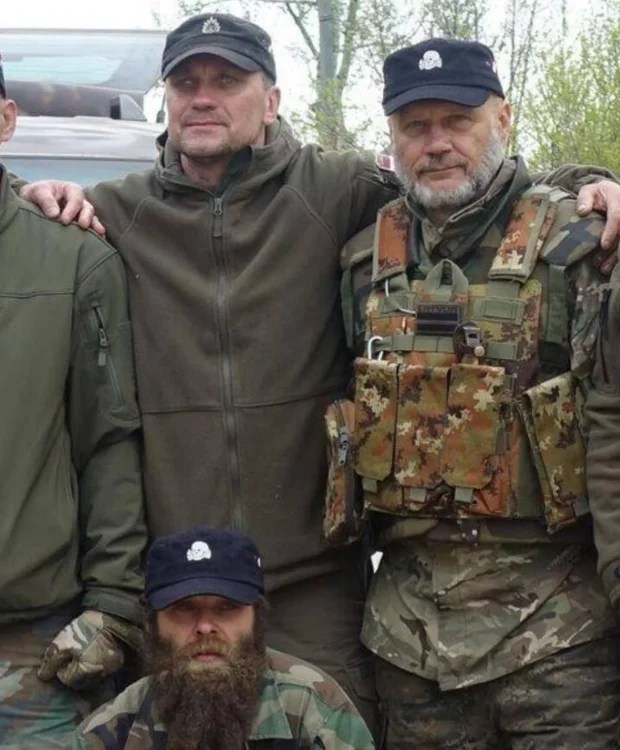
Large-scale NATO military drills started in Estonia on Monday. The exercise dubbed ‘Hedgehog 2022’ is one of the largest in the Baltic nation’s history, according to the military bloc. The drills will involve some 15,000 troops from 14 nations, including both military bloc members and their partners.
Soldiers from Finland, Sweden, Georgia and Ukraine are among those that will take part in the exercise, Finnish public broadcaster Yle reported. The drills will include all branches of the armed forces and will involve air, sea and land exercises, as well as cyber warfare training, according to the broadcaster.
According to a NATO statement, the drills will also see the US Navy Wasp-class landing ship ‘Kearsarge’ take part in the exercises. Both the military bloc and Estonian Defense Forces deputy commander, Major General Veiko-Vello Palm, have denied that the drills just over 60km from the Russian border have anything to do with Moscow’s ongoing military action in Ukraine.
The drills started just a day after Finland and Sweden officially announced their plans to join NATO, and were planned long before the conflict in Ukraine broke out, Western officials have said.
The exercises in Estonia are, however, just one part of NATO’s large-scale military activities near the Russian border. Another Baltic state, Lithuania, is hosting the ‘Iron Wolf’ exercise, which involves 3,000 NATO troops and 1,000 pieces of military equipment, including Germany’s Leopard 2 tanks.
Two of NATO’s biggest exercises – ‘Defender Europe’ and ‘Swift Response’ – are taking place in Poland and eight other countries, involving 18,000 troops from 20 nations, according to NATO’s statement on Friday.
“Exercises like these show that NATO stands strong and ready to protect our nations and defend against any threat,” the military bloc’s spokesperson, Oana Lungescu, said, adding that the drills “help to remove any room for miscalculation or misunderstanding about our resolve to protect and defend every inch of allied territory.”
The NATO Response Force is currently taking part in the 7,500-strong ‘Wettiner Heide’ drills in Germany. The Mediterranean Sea is about to witness ‘Neptune series’ naval drills involving the USS ‘Harry S. Truman’ carrier strike group that will be placed under NATO command. This will only be the second time since the end of the Cold War that a US carrier group has been transferred under the military bloc’s command, NATO has said.
In June, the Baltic States and Poland will host what NATO describes as “Europe’s largest integrated air and missile defense exercise,” which would involve 23 nations.
In late April, Finland hosted NATO naval drills. Now, it is also hosting a joint land exercise, in which troops from the US, the UK, Estonia and Latvia are participating.
The massive military wargames are taking place amid heightened tensions between Russia, NATO and some of the military bloc’s partners. Finland, which shares a long border with Russia, and Sweden decided to reconsider their long-standing policy of non-alignment following a major change in public opinion after the launch of Russia’s attack on Ukraine.
The development sparked a wave of criticism from Moscow, which warned that it would have to respond if Finland and Sweden join NATO. Moscow also maintains that it considers NATO’s expansion as a direct threat to its own security.
‘Finns & Swedes won’t benefit from NATO’
Samizdat | May 16, 2022
NATO membership won’t make Finland and Sweden more secure, but would likely see them fighting somebody else’s wars and hosting American bases, Dr. Jan Oberg, director of the Transnational Foundation for Peace and Future Research, has told RT.
“It’s a disastrous decision,” Oberg said on Sunday, following an official declaration by the Finnish government that it is planning to join the US-led military bloc. Hours later, a similar announcement was made by the ruling party in Sweden. The two Nordic nations stayed out of NATO during the Cold War, but their governments said Russia’s military operation in Ukraine has become a game-changer.
Finland and Sweden have failed to carry out “long-term consequence analysis,” he added. “Nobody seems to ask whether NATO is the right thing to join. After all these years since 1945, NATO has proven that it’s not able to deliver what taxpayers are paying for, namely stability, peace and security… and then Finland and Sweden say: ‘We’ll join this failed organization,’” he remarked.
“We have to ask ourselves: ‘Who caused the conflict [between Moscow and Kiev]?’ Everybody talks about the Russian invasion, which I deplore too, but underlying that is the conflict, which has to do with the NATO expansion,” the peace researcher said.
Making sure Ukraine becomes a neutral country that will never join NATO has been cited by Moscow as one of the main reasons for its ongoing military operation.
Oberg said he understood Russia’s concerns about the expansion of the bloc towards its borders. “If I was sitting in Moscow, I would feel that this was threatening,” he observed, referring to Finland and Sweden’s possible membership. “When you move troops up to the very border on both sides you increase tension; you decrease reaction time; you do all the things you shouldn’t do strategically if peace was your goal. Peace is not the goal of these people.”
The military-industrial complex – “those who sell weapons and profit from wars” – will gain from NATO adding two new members, he said. “The Swedish people and the Finnish people will not benefit from this. It’ll be completely new for them that they are now supposed to participate… in somebody else’s wars.”
With the US pushing for bases in Denmark and Norway, “are we to believe that there will not be American bases or American troops or something, you know, more permanent in Sweden and Finland?” he wondered.
NATO membership would also be “opening these countries for potential nuclearism that should never have been done in this particular area,” the peace researcher added.
Oberg said it was “appalling” that the governments in Helsinki and Stockholm didn’t put the issue to a referendum. “This is unheard of with such an important decision as joining NATO.”
While opinion polls have shown an overwhelming support for NATO membership in Finland, in Sweden the idea was backed by less than 50% of the public, he noted. “I’m amazed that there’s so little public discussion, so little uproar in terms of huge demonstrations in large cities in Sweden,” the scholar said.
He blamed the media, of which “80% to 90% is pro-NATO,” for this situation. “It’s very difficult to get into the media today with an alternative view… There’s no democracy and free media practice in this,” Oberg insisted.
Jan Oberg is a Danish-Swedish peace researcher, who received his doctorate from Lund University in Sweden. He taught courses in several countries, including Japan, Austria and Switzerland.
In 1986, the scholar co-founded the Transnational Foundation for Peace and Futures Research (TFF), an independent think tank aimed at promoting conflict-mitigation and achieving peace through peaceful means around the globe. He assisted on-the-ground work in ex-Yugoslavia, Georgia, Burundi, Iraq, Iran and Syria. In 2013, Oberg and TTF were nominated for the Nobel Peace Prize for their activities.
Will Sweden and Finland feel safer after joining NATO?
By Drago Bosnic | April 20, 2022
NATO expansion has been the main culprit behind all instability in Europe for the last 30+ years. Of course, NATO’s aggression against many countries, either as an organization, or separately, by each of its member states resulted in the deaths of millions, with orders of magnitude more of those whose lives may not have been physically lost, but they certainly have been ruined by the Alliance’s actions. The absolute havoc and the trail of death and destruction left in the wake of NATO invasions across the Middle East, always euphemistically dubbed “humanitarian interventions“, stand as a grisly testament to that.
The expansion of this supposedly “defensive alliance” which has not conducted a single truly defensive operation in well over 70 years of its existence, has first destroyed the relatively prosperous Yugoslavia, which was subjected to nearly a decade-long siege throughout the 1990s. During the 2000s, Russia’s attempts to create an atmosphere of trust and cooperation with the North Atlantic Alliance have been futile. No matter what Russia did, the alliance kept creeping closer to its borders. By the early 2010s, it was clear that NATO had no intention of stopping. The conflict in Ukraine is NATO’s latest brainchild, although there has hardly been any actual thinking behind it. It has been more like bulldozing its way towards Russia.
The last 8 years have shown where all this leads to, with the last nearly 2 months reaching a boiling point between the Russian Federation and the ever increasingly belligerent alliance. A recent announcement by both Sweden and Finland that they feel supposedly “threatened” and that they are very likely to enter NATO seems rather strange, especially given that they did not officially join NATO during the Cold War, when the USSR had undisputed control over the Baltic region.
An obvious question arises, why would Sweden and Finland feel threatened now, when the strategic situation has all but reversed, with Russia’s presence in the Baltics limited to relatively tiny areas around Saint Petersburg and Kaliningrad? It’s quite obvious that this can only be seen as another encroachment on Russia’s borders, another part of NATO’s larger geopolitical offensive. Still, although it may seem that NATO’s further expansion into Scandinavia is going to jeopardize Russia’s northwestern areas, Russia doesn’t seem particularly fazed by this prospect. While certainly not happy with this turn of events, Russia’s decision makers and strategic planners aren’t exactly pulling their hair out and running in circles over this.
First, it should be understood that both Sweden and Finland are neutral countries in name only. During the Cold War, both Scandinavian countries served as a hotbed of NATO intelligence activities, with the CIA and MI6 operating extensively in both countries. Soviet and later Russian intelligence were well aware of this.
During the 1990s, this became even more prominent, when both countries entered the EU, but also increased their official cooperation and interoperability with NATO. Naturally, over the years, this cooperation grew to unprecedented levels and the Russian military acted accordingly. The strategic military command structures in the Kremlin have treated both countries as de facto NATO member states for decades.
This is especially true for Finland, particularly after it announced it will be acquiring at least 65 F-35A fighter jets from the US military industrial giant Lockheed Martin. This jet, despite hundreds if not thousands of critical flaws and other shortcomings, is a serious ISR (intelligence, surveillance and reconnaissance) asset. The jet is bristling with sensors, all of which are connected to a massive network-centric warfare system, the center of which is located in the Pentagon. By operating this jet, Finland is effectively giving up on the sovereignty over its own air force and ceding it to the United States.
The Russian military is perfectly aware of this and has already made plans to react accordingly. Earlier, Finland’s official neutrality from a military standpoint complicated this. But now, rather ironically, the Scandinavian country might even make things easier for Russia’s strategic military planning by joining the ever expanding “defensive” alliance.
However, does this change anything for Finland and Sweden? Will NATO really make both countries safer? The short answer is simply no. By joining the North Atlantic Alliance, countries effectively cede much of their sovereignty to the US. Given the US’ strategic obsession with encircling Russia, the Kremlin feels strongly about this matter and it simply doesn’t take any chances.
Thus, the only “benefit” Sweden and Finland get is becoming meat shields for the US in the case of a nuclear exchange, because Russia is simply going to dedicate a portion of its thermonuclear arsenal to these countries. And if Russia doesn’t have a shortage of something, it’s nuclear weapons. Given the US’ and NATO’s track record, who is to blame then?
Le Pen promises to pull France out of NATO
By Uriel Araujo | April 15, 2022
NATO now has become one of the most important issue in Europe, with the new developments in Sweden and Finland, and electoral impacts in France. French Presidential candidate Marine Le Pen (who heads for the second round to be held on April 24) has vowed to pull France out of NATO’s military command. It would not be unprecedented, as the country did it in 1966. Le Pen claims the alliance structure “perpetuates the anachronistic and aggressive logic of the Cold War bloc”.
France was one of the Alliance’s founding members in 1949 and even hosted it for 15 years. This was a major event in French history. To help French ordinary citizens to accept the presence of foreign troops on their territory in times of peace, films like À votre service were shown in movie theaters, as part of a NATO PR campaign, so to speak. France’s relationship with the Anglo-Saxon structure (which is hegemonic within NATO), and with the alliance itself has always been complex, and Le Pen’s promise should be understood in this context and not necessarily as mere “extremism”.
In doing so, if elected, Le Pen would be in fact following the steps of general Charles de Gaulle (who ruled the country 1940-46 and 1958-1969). The conservative French leader wanted a truly independent nuclear France who would engage with Washington on more equal terms, becoming perhaps a kind of third force in the then Cold War’s bipolar world and even possibly reaching a détent with the USSR. The British-American “special relationship” was seen by him as detrimental to Europe.
Moreover, the US veto power regarding nuclear weapons also prevented Paris from pursuing its own atomic goals. Unable to place France in the tripartite directorate he proposed in his 1958 memorandum to US President Dwight Eisenhower and UK Prime Minister Harold Macmillan, de Gaulle refused to sign the 1963 agreement against nuclear testing – and, by 1969, France was already a fully fledged nuclear power. He also vetoed British entry into the European Union in the same year and, in 1964, told West Germany it should cease to follow a policy subordinated to Washington and adopt one for European independence (albeit not hostility). Of course, no NATO country followed his lead.
Isolated, France went on to withdraw from the Alliance’s so-called integrated military structure in 1966 (although not completely leaving the Treaty) and expelled all of its headquarters and units on French territory. It was President Nicolas Sarkozy who finally ended Paris “estrangement” from the organization in 2009 – so it took 43 years for Paris to change its course.
Even though Paris still hosted some NATO meetings and civilian structures, the spirit of Gaullism still shaped to some degree French strategic thinking during the Cold War, and the NATO-France relationship alternated between phases of rapprochement and tension. It was President Miterrand who started to bring France back into the Alliance’s integrated military command. And even so, it has been a kind of “flexible membership” (as it is often described).
Charles de Gaulle was one of the most important political leaders of the 20th century and even so, France remained relatively isolated in the European continent pertaining to its stance on NATO during the time of his leadership. He also faced several challenges, as the European countries acted in concert to try to neutralize many of his efforts. One cannot really tell whether Le Pen would be up to such a task, and estranging from NATO in any case is obviously not so simple, but the current situation on the other hand is also full of contradictions from a French and European perspective.
Meanwhile, on April 13 both Finland and Sweden took a major step towards joining NATO. In their joint press conference, the Prime Ministers Sanna Marin (Finland) and Magdalena Andersson (Sweden) both claimed that the security landscape in the continent has changed. Marin stated that Finland which shares a border with Russia will decide within weeks whether to join the Alliance. While a tight majority in Sweden now are in favor of joining the Atlantic Alliance, according to a recent poll, about 70% of Finnish people back it and this figure has more than doubled since the current Russian-Ukrainian war started.
Currently, both Nordic countries are NATO partners, since they abandoned their previous neutral stance by joining the European Union in 1995 and thus take part in military exercises and intelligence exchange, but they are not full-fledged members. Both countries were publicly assured by NATO secretary general Jens Stoltenberg that their applications would indeed be welcome, and they also received public support from Germany, France, and the UK. Joining or leaving the Alliance is not so simple – an application to join it must be accepted by all 30 member states, and this should take a minimum of four months and probably at least a whole year to be processed. In any case, it will be seen by Moscow as yet another provocation, amid a situation of escalating tensions.
Experts such as University of Chicago political scientist John Mearsheimer have been warning since 2014 that the ongoing Ukrainian war was mainly the West’s fault and Mearsheimer maintains it remains the West’s fault to this day. NATO’s constant expansion breaking the 1990 promises that were made during the fall of the Soviet Union as well as Washington’s policy of “encircling” and “containing” Moscow have cornered it to its limits. As Russian President Vladimir Putin said in December 2021: “What would Americans do if we went to the border between Canada and the U.S. or to the border with Mexico and deploy our missiles there?” Mearsheimer also warns that should tensions escalate, there is a real risk of a nuclear war.
Today the world faces the risks of a global food crisis and hunger, as well as on-going international energy crises, and a migration crisis in Europe. It is up for responsible Western leaders to open communication and dialogue channels with the Kremlin. Further provoking Moscow at this point is simply irresponsible and not in Europe’s best interests. France could thus play a key role in the continent. The EU in fact now faces the hard choice between being a self-dependent Europe or an Atlantic Europe.
Uriel Araujo is a researcher with a focus on international and ethnic conflicts.
Should We Commit to Fight Russia — for Finland?
BY PAT BUCHANAN • UNZ REVIEW • APRIL 15, 2022
The prime ministers of Sweden and Finland, Magdalena Andersson and Sanna Marin, both signaled Wednesday that they will likely be applying for membership in NATO.
The “prospect” is most “welcome,” says The Washington Post: “Finland and Sweden Should Join NATO.”
The editorial was titled “A Way to Punish Putin.”
Before joining the rejoicing in NATO capitals, we might inspect what NATO membership for these two Nordic nations would mean for the United States.
Finland is a nation the size of Germany, but with a population only 4% of that of Russia and a border with Russia that is 830 miles long.
Should Finland join NATO, the United States, under Article 5 of the NATO treaty, would be obligated to go to war with the world’s largest nuclear power to retrieve Finnish lands that an enraged Russia might grab.
Moscow has already indicated that, should Sweden and Finland join NATO, Russia will introduce new nuclear weapons into the Baltic region.
Why is it wise for us to formally agree, in perpetuity, as NATO is a permanent alliance, to go to war with Russia, for Finland?
Given the war in Ukraine and concomitant crisis in Eastern Europe, it is understandable why Stockholm and Helsinki would seek greater security beneath the U.S. nuclear umbrella.
But why would we voluntarily agree to give Sweden and Finland these war guarantees? Why would we commit to go to war with Putin’s Russia, a war that could, and likely would, escalate to the use of tactical nuclear weapons, especially if Russia were losing?
Finland was neutral during the Cold War. Sweden has been neutral since the Napoleonic wars of the early 19th century.
How did we suffer from their neutrality?
In Helsinki and Stockholm, the benefit of a U.S.-NATO commitment to go to war for Finland or Sweden is understandable.
But how does it benefit our country, the USA, to be obligated to go to war with a nation that commands the world’s largest stockpile of nuclear weapons — over some quarrel in the Baltic Sea or Gulf of Finland that does not affect us?
Asked for his view on Sweden and Finland’s campaign to join NATO, Putin spokesman Dmitry Peskov had a note of warning:
“We have repeatedly said that the (NATO) alliance remains a tool geared towards confrontation and its further expansion will not bring stability to the European continent.”
Should Putin’s Russia clash with Finland or Sweden today, the U.S. is free to respond, or not to respond, as it sees fit, depending on our own assessment of risks and rewards.
Why not keep it that way? Why surrender our freedom of action in some future collision involving our main adversary?
History holds lessons for us here.
In March 1939, six months after Munich, when Czechoslovakia disintegrated into its ethnic components, Britain issued an unsolicited war guarantee to Poland, then negotiating with Germany over the port city of Danzig taken from Germany by the victorious Allies after World War I.
When Germany, on Sept. 1, 1939, invaded Poland, Britain was obligated to declare war on Germany over a matter that was not a vital interest of Great Britain or its worldwide empire.
Lest we forget, it was the Bucharest Declaration of 2008, opening the door to membership in NATO for Ukraine and Georgia, that led to the recent crises in Eastern Europe and the current war.
The Russia-Georgia War of August 2008, the U.S.-backed coup in Ukraine in 2014, and Putin’s annexation of Crimea, Luhansk and Donetsk in eastern Ukraine all proceeded from NATO’s decision in 2008 to open the door to membership for Georgia and Ukraine.
Russia’s invasion of Ukraine today is partly due to the U.S. and Ukraine’s refusal to rule out NATO membership for Kyiv.
No NATO nation today has a border with Russia nearly as long as that of Finland. If Finland joins NATO, will we put U.S. boots on the ground along that 830-mile border with Russia? Will U.S. warplanes fly in and out of Finnish airfields and air bases up to the border of Russia?
Collective security is said to be a good idea.
But the core of NATO security is provided by U.S. war guarantees, while most of the collecting is done by our 29 NATO allies, which could become 31 by summer’s end.
Otto von Bismarck predicted that the Great War, when it came, would be ignited by “some damn fool thing in the Balkans.”
And World War I was indeed triggered by the assassination of the Austrian archduke in Sarajevo in June 1914. The Germans came in in part because the kaiser had given Austria a “blank check” for war.
What enabled America to stay out of both world wars for years after they began was our freedom of “entangling alliances” when they began.
But today we not only lead an alliance of 30 nations, but we are adding two more members, one of which has a border of 830 miles with Russia.
How long does our luck last?
Denmark is First EU Country to Scrap All COVID Restrictions
21st Century Wire | January 29, 2022
Later this week, England is scheduled to drop its problematic mask mandate for shops and public transport, along with its highly unpopular vaccine passport regime. Up north, Scotland says it will “relax” so-called ‘work from home guidance,’ and reopen nightclubs, as well as ending venue capacity limits.
While the UK and Ireland gingerly roll-back their highly disruptive COVID restriction policies, other European countries are now leading the way by scrapping the entire ‘pandemic’ regime altogether.
Financial Times reports…
Denmark said it would lift almost all Covid-19 restrictions and stop designating it a “societally critical” disease on Wednesday in the latest sign that western European countries are easing or even eradicating strict measures brought in to combat the Omicron coronavirus variant.
Magnus Heunicke, Denmark’s health minister, wrote to parliament on Wednesday saying that he would remove all Covid-19 restrictions on February 1, except for testing on arrival from abroad. Just as the Danish government did in September, when it lifted all restrictions, it will also stop calling Covid-19 a “societally critical disease”, meaning that it will no longer have the legal basis to introduce wide-ranging curbs.
“Tonight we can begin to lower our shoulders and find our smiles again,” said Mette Frederiksen, Danish prime minister, on Wednesday evening. “The pandemic is still here, but with what we know now, we can dare to believe we are through the critical phase.”
Denmark is the latest European country in recent days to announce it is dropping most or nearly all measures as it follows in the footsteps of the UK, Ireland and the Netherlands…
Meanwhile, mainstream media outlets like Politico report this latest development with the accompanied fear-mongering over the latest “subvariant” – allegedly on the loose:
The announcement comes as a new subvariant of Omicron, BA.2, is gaining a foothold in Denmark and driving infections up, with 46,000 new COVID-19 cases recorded on Wednesday.
“Recent weeks have seen very high infection rates, in fact the highest in the entire pandemic,” Frederiksen said. “Therefore, it may seem strange and paradoxical that we are now ready to let go of the restrictions.”
Some 82 percent of Denmark’s population is fully vaccinated with two doses, of whom 50 percent are boosted with a third dose, according to the Danish Health and Medicines Authority.
However, as the FT points out, with this alleged rise in “cases” (aka PCR positive tests) promoted in the media – there is no corresponding rise in serious illness as a result COVID-19:
Denmark still has one of the highest number of Covid-19 cases per capita in the world, currently more than 10 times its previous peak as Omicron causes tens of thousands of daily infections. But the number of patients in intensive care continues to fall and, even with Omicron, never hit the peaks reached from April 2020 and January 2021.
Elsewhere in Scandinavia, Sweden, Norway and Finland have all announced they will also be easing their restrictions in the coming weeks.
Featured Video

Iran’s Next Strike May Not Explode. It Could Shut You Down
or go to
Aletho News Archives – Video-Images
From the Archive
Zionism’s Violent Legacy
By Donald Neff | Washington Report On Middle East Affairs | January 1996
On January 4, 1948, Jewish terrorists drove a truck loaded with explosives into the center of the all Arab city of Jaffa and detonated it, killing 26 and wounding around 100 Palestinian men, women and children.[1] The attack was the work of the Irgun Zvai Leumi – the “National Military Organization,” also known by the Hebrew letters Etzel – the largest Jewish terrorist group in Palestine. The Irgun was headed by Revisionist Zionist Menachem Begin and had been killing and maiming Arabs, Britons and even Jews for the previous ten years in its efforts to establish a Jewish state.
This terror campaign meant that at the core of Revisionist Zionism there existed a philosophical embrace of violence. … continue
Blog Roll
 Aletho News
- Trump’s Iran war is on an Israeli leash
- Saudi oil boss issues global supply warning
- Riyadh Says Its Oil System Is Intact. The Numbers Say Otherwise.
- Trump and Netanyahu Want to “Finish the Job” on Iran
- US ‘one-sided dictation’ not Iran’s beliefs makes rational talks impossible: Baghaei
- Iran’s Next Strike May Not Explode. It Could Shut You Down /Col Doug Macgregor
- Iran: US political targets legitimate if assassinations return
- Iraq shuts key border crossing with Iran under US pressure: Report
- Undersea Internet cables could be targeted in retaliation for attacks on Iran: IRGC deputy chief
- EU sending ‘biased’ observers to interfere in Serbian election – president
- If Americans Knew
- The Israel Lobby’s Changing Fortunes
- AIPAC has become such a political liability that it’s shifting to a more “nimble” approach to buying politicians
- At least 160 Israeli settler attacks in 2 weeks
- Will Gaza’s Ancient Christian Community Disappear Forever?
- Israel’s vision of regional security rests on keeping Arab states weak
- Heidi Levine recounts how Palestinian youths helped save her in settler attack
- DAILY UPDATE: Latest essential news on Palestine, Israel, & region
- Trump’s Intensifying Sabotage of the ICC, for Israel’s Sake
- Israeli military detain US and UK volunteers in West Bank including Democratic NY politician Brad Lander
- Americans at National Conservatism Conference held in Israel this year criticize Israel
- No Tricks Zone
- E-Cars Reduce CO2 Emissions By Only 41% Compared To Internal Combustion Engine Vehicles
- Predictions Made By Renowned Climate Professor Over Past Decades Have Been Proven To Be Poor
- New Study Suggests Large Regions Of The Pacific Ocean Have Been Cooling For The Last 80 Years
- Germany’s Green Energy Debacle: High Energy Costs Force Kahla Porzellan to Close After 182 Years!
- New Study: 50 Years Of The Most Aggressive ‘Net Zero’ Policies Can Only Affect The Global Climate By 0.03°C
- US September “Heat” Was No Record…Many Records Set Decades Ago
- Latest European Green Energy Debacle; Portugal’s Largest Flagship Solar Park Insolvent!
- Green Energy Debacle: German Expert Professor Fritz Vahrenholt Warns Of Severe Economic And Social Consequences
- Two More Paleo Reconstructions Affirm Meters-Higher Sea Levels Across Ireland, Brazil 7000-6000 Years Ago
- New Study: Earth And Venus Surface Warmth Largely Explained By Convection And Lapse Rate, Not CO2 Or Radiation

