The Nigerien Coup Prompted A Long-Overdue Discussion About Sovereignty In West Africa
BY ANDREW KORYBKO | AUGUST 27, 2023
It was earlier assessed that “The AU-ECOWAS Rift Over Niger Was Predictable” due to their differing approaches towards the continent’s latest regime change. The AU believes that its ousted leader should be returned to power via peaceful means while ECOWAS’ active members are in favor of forcefully reimposing his rule. Neither of them support the interim authorities’ three-year transitional plan, however, with ECOWAS rejecting it outright and the AU suspending Niger right afterwards.
The AU also “called upon all Member States of the AU and the international community including bilateral and multilateral partners, at large to reject this unconstitutional change of government and to refrain from any action likely to grant legitimacy to the illegal regime in Niger.” This came shortly after reports began circulating that neighboring Burkina Faso and Mali, which are also run by interim military-led governments, stationed warplanes in Niger to deter a French-backed Nigerian-led ECOWAS invasion.
Late last week, those three countries’ Foreign Ministers met in Niamey, where they issued a joint statement that importantly declared the following:
“The three countries have agreed to grant each other facilities for mutual assistance in matters of defense and security in the event of aggression or terrorist attacks. They have decided to set up a consultation framework that allows them to coordinate their actions in order to deal with the multiple situations and challenges to which they are exposed. This consultation framework remains open to countries wishing to participate in this dynamic in order to respond to the concerns and needs of their populations in terms of peace, security and economic and monetary development. To this end, they agreed to set up a Joint Secretariat.”
Simply put, they’ve established a regional mutual defense alliance (“Sahelian Alliance”) that’ll also aim to accelerate political and economic-financial integration between them.
Before delving into a discussion about which of the three organizations involved in the West African Crisis – the AU, ECOWAS, and the Sahelian Alliance – truly represent the Nigerien people’s sovereign will, Russian Foreign Minister Lavrov’s detailed reaction to that country’s regime change is worth mentioning. It can be read in full here, but he basically concluded that the region’s interim military-led governments sought to rebalance their prior leaderships’ relations with the West for the betterment of their people.
That observation segues into the subject of this analysis since it lends credence to the views shared by Burkinabe leader Ibrahim Traore during late July’s Second Russia-Africa Summit in St. Petersburg. While speaking among those of his fellow African leaders who were brave enough to resist Western pressure to attend, he still lambasted many of them for being imperialist puppets due to their opposition to his interim military-led government after it was suspended from the AU and ECOWAS.
His country’s people and those of similarly military-ruled Guinea, Mali, and now Niger all rallied behind their armed forces after they overthrew their French puppet leaderships, yet each were still punished by those two organizations to different extents, with Niger now facing the threat of invasion. It stands to reason that all of these interim military-led governments genuinely enjoy grassroots support otherwise there’d be Color Revolution attempts and even anti-state rebellions/insurgencies/terrorist campaigns.
To be sure, Burkina Faso, Mali, and Niger – which have now joined forces to become the Sahelian Alliance – are indeed facing terrorist threats, but they’re derived from a radical ideological virus that predates their respective military coups and aren’t a result of those regime changes. The AU represents the African Establishment, however, whose members fear being overthrown by their own armed forces. For that reason, it always opposes coups even if they’re popular among the people.
The same can be said about ECOWAS’ stance since it’s pretty much just a regionally focused version of the AU that represents the West African Establishment more so than the West African people. Since the Nigerien coup is the fourth one to take place in the ambit of its influence, the non-suspended members of the group are more worried than the distant AU is about the possibility of a so-called “domino effect”, ergo why they’re threatening the use of force to reverse the situation while the AU remains against it.
Both organizations prioritize the interests of their elite members, the African Establishment as a whole in the AU’s case and the West African one in ECOWAS’, over those of the people that they claim to represent. This explains why they’re not only against the Nigerien coup, but why the AU told others not to legitimize it while ECOWAS is threatening an invasion. Although Russia is formally opposed to it and any anti-constitutional regime change too, Moscow’s stance is much more pragmatic than theirs.
Post-coup Mali became one of Russia’s closest military partners on the continent behind the Central African Republic, while Burkina Faso is considering following in its neighbor’s footsteps after Interim President Traore declared earlier this spring that he considers Russia his country’s strategic ally. These two Sahelian security relationships are flourishing in spite of Moscow having opposed their anti-constitutional regime changes since it believes in cooperating with them during their transitions.
By contrast, the AU and ECOWAS are against third parties legitimizing the post-coup leaderships of those countries who they’ve suspended even though the aforesaid could advance everyone’s objective interests like in the Russian example of helping Mali and Burkina Faso fight transnational terrorists. Once again, it’s important to remind the reader that neither those two, Guinea, or Niger experienced any Color Revolution attempts or serious anti-state violence, thus confirming popular support for their rulers.
All factors considered, the AU and ECOWAS are arguably against the sovereign will of the Nigerien people whereas that country’s interim military-led authorities, the newly formed Sahelian Alliance, and Russia all embody it on the national, regional, and international levels. The first of those three carried out their coup for patriotic reasons aimed at realizing their people’s desire for true sovereignty after languishing under France’s neo-colonial occupation for decades as de facto slaves.
The second’s allies experienced their own patriotic military coups for the same reason and then sought to pool their forces to deter imperialist puppets like ECOWAS’ remaining members. As for Russia’s interests, it pragmatically decided to help these post-coup countries’ leaderships fight transnational terrorism since it’s in their own people’s, the region’s, and all of Africa’s interests. These three – Niger’s new authorities, the Sahelian Alliance, and Russia – are the true vanguards of sovereignty in West Africa.
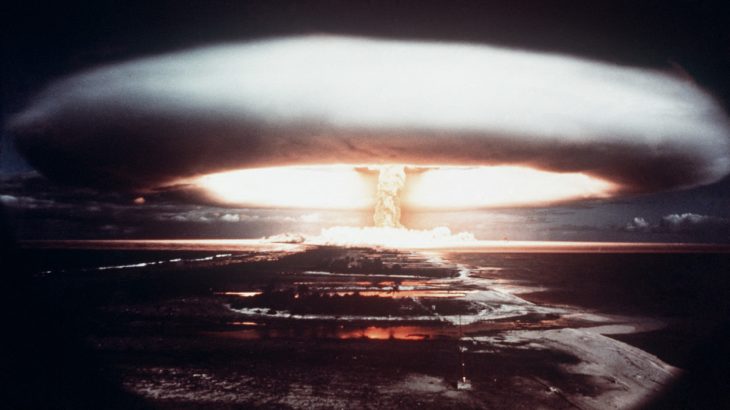
Pacific leader blasts Macron over nuclear tests snub
RT | August 23, 2023
French Polynesian President Moetai Brotherson has condemned French President Emmanuel Macron for failing to offer even a “symbolic” apology for decades of nuclear weapons tests on the Pacific archipelago.
Speaking to Russia’s RTVI in an interview published on Tuesday, Brotherson said: “193 nuclear tests were carried out on our soil – tests that we did not ask for, and about which we were not even properly informed, because at that time the inhabitants of Polynesia did not know about the level of danger.”
“Today we are still dealing with dire consequences [and] there are people who get sick and die because of nuclear tests,” he continued. “Therefore, such a symbolic action as Emmanuel Macron’s apology was so important [and] we wondered why he did not do this.”
After detonating nearly two dozen atomic bombs in Algeria during the early 1960s, France shifted its nuclear testing to its overseas territories in the Pacific, namely the French Polynesian atolls of Mururoa and Fangataufa. In total, 193 tests were carried out around the coral islands, causing a spike in thyroid cancer cases and exposing more than 100,000 inhabitants to high radiation levels, according to a 2021 review of government documents by Disclose, an investigative news site.
Both atolls remain uninhabitable to this day, and the French government has paid compensation to only 63 civilians for radiation exposure.
Macron visited French Polynesia in 2021 and declared that France owed residents of the archipelago a “debt” for the decades-long testing program. However, he did not offer an apology, and did not address the issue when he met with Brotherson in Paris earlier this summer.
“We did not expect an apology from President Macron in person, as a private individual,” Brotherson told RTVI. However, the Polynesian leader said that he would have been satisfied with “an expression of the political position of France as a state in relation to what happened, expressed by its president.”
French Polynesia’s 121 islands and atolls are a part of France’s overseas territories, a group of 13 lands under direct or semi-direct French administration that make up the remnants of its former colonial empire.
French Polynesia is semi-autonomous, and although Brotherson is a proponent of full independence, he told RTVI that he doesn’t predict any change to the status quo in the near future.
“I believe that if we held an independence referendum tomorrow, the majority would vote against it,” he said. “The people are not ready yet. Today all teachers in Polynesia are paid by France. Part of the healthcare system is financed, of course, by Paris. The communes are partly financed by France. Therefore, such questions about the future are quite natural.”
Western calls for Ukraine peace talks a ‘tactical ploy’ – Moscow
RT | August 19, 2023
The US and its allies do not want the Ukraine conflict to end and their purported peace initiatives are merely attempts to buy Kiev time, Russian Foreign Minister Sergey Lavrov said in an interview published on Saturday.
Geopolitical issues need to be discussed “not with [Ukrainian President Vladimir] Zelensky, who is a puppet in the hands of the West, but directly with his masters,” Lavrov said earlier this year. Negotiating directly with the Americans would make sense, he told the magazine International Affairs when asked about the idea.
“The problem, however, is that the United States has no intention of ending the conflict,” Lavrov explained, noting that “their officially declared objective is to inflict a ‘strategic defeat’ on Russia.”
Prospects for negotiations between Russia and the West “are non-existent at this stage,” Lavrov said, while Kiev “Western sponsors are constantly pushing them to up the ante.”
Insisting on Ukrainian President Vladimir Zelensky’s so-called ‘peace formula’ at meetings in Copenhagen and Jeddah – to which Russia was not invited – “hardly demonstrates an intention by the West to negotiate with Russia,” Lavrov said. Moscow has dismissed Zelensky’s ten-point list of demands as an unacceptable ultimatum unrelated to reality.
Russia has repeatedly tried to negotiate, from the 2014 and 2015 Minsk agreements to the “drastic attempt to convey our concerns to Western capitals” in December 2021, Lavrov noted. The West “arrogantly rejected” Moscow’s initiative and ramped up deliveries of weapons and ammunition to Kiev instead.
“We regard the Westerners’ hypocritical calls for talks as a tactical ploy to buy time once again giving the exhausted Ukrainian troops a respite and the opportunity to regroup, and to send in more weapons and ammunition,” Lavrov said, adding that “this is the path of war, not a peaceful settlement process.”
Angela Merkel, the former chancellor of Germany, admitted last December that the 2015 Franco-German proposal in Minsk was “an attempt to give Ukraine time” to build up its military. This was then confirmed by former French President Francois Hollande.
West has shown its ‘true Russophobic face’ – Lavrov
RT | August 18, 2023
Washington and Brussels have openly unleashed a hybrid war against everything Russian, dropping their masks after decades of pretending to be civilized and adequate international partners, Foreign Minister Sergey Lavrov said in an interview with International Affairs, published on Saturday.
“Many of our former partners have been concealing their Russophobic nature under the veil of hypocrisy, but have now shown their true face in all its glory,” he said. “However, there is also the flip side of the coin here, since the Global Majority saw the true face of those who went as far as [to] aspire to a monopoly in defining the so-called universal values.”
“Today’s West is steered by people like Josep Borrell who divide the world into a blooming ‘garden’ and ‘the jungle,’ where the latter clearly applies to most of humanity,” Lavrov added.
The West has spent decades cynically transforming neighboring Ukraine into a “hostile military bulwark against Russia by nurturing an entire generation of politicians ready to declare war on our shared past, culture and everything Russian,” according to Lavrov.
Western capitals even openly admitted that reaching a peaceful settlement in Ukraine was never part of their plan, and that the Minsk agreements were originally designed to “buy some time to prepare a military scenario and deliver weapons to Kiev.”
“I think that the essential thing we must understand in this regard is that the West wants to do away with our country as a serious geopolitical rival,” the top Russian diplomat said “They have not hesitated to use subversive methods and perform acts of sabotage, as was the case with the explosion of the Nord Stream pipelines under the Baltic Sea.”
Lavrov also accused Washington and its allies of using all possible coercive means to prevent Russia’s partners from engaging in economic and other kinds of cooperation, while also “making outrageous efforts to disconnect Russia from international cooperation mechanisms in culture, education, research, and sports.”
One thing that the West fails to understand, according to Lavrov, is that “Russia will use all means to defend its people and its vital interests,” and thus would be better for the opponents to realize that “confrontation with Russia is futile and switch to more civilized” means for achieving a balance of interests.
Diplomacy with Russia necessary for Europe – former French President
By Lucas Leiroz | August 18, 2023
Showing realism and willingness for dialogue, former French President Nicolas Sarkozy strongly criticized the West’s stance on the Ukrainian crisis and demanded more diplomatic efforts. For the former politician, it is necessary for Europeans to live peacefully with Russia, as it is not possible to continue a policy of confrontation and aggression in the long term.
Sarkozy’s criticisms were made during an interview with the French newspaper “Le Figaro”. He spoke with journalists about possible solutions to the current conflict in Ukraine and endorsed the need to pursue peace through diplomacy. Sarkozy condemned the policy of prolonging the war through unlimited military assistance to Kiev, which has been one of the main points of Emmanuel Macron’s foreign policy.
For Sarkozy, Macron failed to continue to deal with the reality of the conflict mainly “due to pressure from [some] eastern Europeans”. Last year, Macron was severely slammed by Polish leader Mateusz Morawiecki because he was trying to negotiate with Moscow in the early weeks of the special military operation. In May 2022, Morawiecki compared Macron’s stance to an “attempt to negotiate with Hitler”. Sarkozy sees this event as an important point of international pressure, boosting Macron’s decision to adhere to the policy of unlimited support to Kiev.
The former president also negatively assessed the project of Ukrainian membership in the European Union. For him, these plans are merely “fallacious promises that will not be held”. Sarkozy compared the Ukrainian access to the Turkish one, making it clear that in both cases the projects are unlikely to succeed.
Also, Sarkozy emphasized the importance of maintaining good relations with Russia due to the geographical factor. Considering the proximity between the EU and Russia, it is necessary that both sides are diplomatically close, without friction and conflicts. Sarkozy admits that the confrontation with Russia is only of American interest, not European, and therefore there must be a reformulation of Europe’s Ukraine policy.
“Russia is a neighbor of Europe and will remain so (…) In this regard, European interests are not aligned with American interests. We cannot stick to the strange idea of ’fighting a war without fighting”, he said.
Another subject commented by Sarkozy was the territorial issue. For him, peace negotiations will have to deal rationally with the possibility of recognizing Crimea and Russian historic territories. Sarkozy states that with Ukraine’s impossibility to win the war, there are only two alternatives: freeze the conflict or recognize the territorial loss. The first option seems inadequate because a new war situation would arise in the future, while on the other hand the recognition of territories can be legitimate, if done by referendum with international observers.
“When it comes to this territory (Crimea), which was Russian until 1954 and where a majority of the population has always felt Russian, I think any step back is illusory (…) If the Ukrainians do not completely manage to win them back, then the choice will be between a frozen conflict – which we know will inevitably lead tomorrow to a new hot conflict – or we can come out on top by resorting, again, to referendums strictly supervised by the international community to settle these territorial questions in a definitive way”, he added.
It is necessary to note that Sarkozy does not adopt a “pro-Russian” opinion. He echoes the Western “consensus” of criticizing Russia’s decision to intervene militarily in Ukraine, even referring to the special military operation by the biased word “invasion”. The very proposal to redo the referendums in Crimea and other regions shows Sarkozy’s distrust of Russia, since Moscow has already held referendums that have been widely verified by invited international observers, having no need to redo them. So, the former president’s opinion is undoubtedly aligned only with European interests, with no pro-Russian bias.
The problem is that Europe is now conditioned to believe that American interests are its own. And this is precisely what Sarkozy is criticizing. He reminds how geography is a basic principle of international politics. Neighboring regions must strive to maintain friendship and respect so that there are no conflicts, as they will always be close and have to deal with each other, rationally overcoming disagreements. And this is what Sarkozy advocates for EU-Ukraine-Russia relations – that, despite disagreements, a peaceful [and realistic] solution is found as soon as possible.
Obviously, the Ukrainian neo-Nazi regime rejected Sarkozy’s proposal. Zelensky’s aide Mikhail Podoliak accused the former French leader of “deliberately participating” in “genocide and war” by simply advocating diplomacy. For the Ukrainian official, Sarkozy’s ideas are “fantastic” and “criminal”, as Crimea and Donbass are supposedly “unconditional territories of Ukraine”. In fact, this type of position on the part of Kiev is not surprising, since in addition to being one of the sides directly involved in the conflict, the regime works as a proxy for Washington, completely adhering to American anti-Russian narratives.
What really matters is whether French and European politicians will be attentive to Sarkozy. The former president is denouncing an obvious reality: to satisfy American interests, Europe is destroying itself and harming its relations with a neighboring power. Current politicians need to be aware of this scenario and reverse it. However, unfortunately, it seems the current generation of heads of state does not have the same strategic understanding as Sarkozy.
Lucas Leiroz, journalist, researcher at the Center for Geostrategic Studies, geopolitical consultant.
Why’s US Media Talking About Nigerien General Moussa Barmou All Of A Sudden?
From Bazoum To Barmou
BY ANDREW KORYBKO | AUGUST 15, 2023
American media’s narrative about last month’s regime change in Niger has conspicuously shifted since Acting Deputy Secretary of State Victoria Nuland’s trip to Niamey last week. Prior to then, most information products aggressively supported Nigerian-led ECOWAS’ threatened invasion aimed at reinstalled ousted leader Mohamed Bazoum. Ever since she revealed that the US is “pushing for a negotiated solution”, however, attention has turned towards General Moussa Barmou.
NBC News’ Report
The Wall Street Journal began the trend two days after her visit in a paywalled article here, but it wasn’t until NBC News’ piece on Monday headlined “Blindsided: Hours before the coup in Niger, U.S. diplomats said the country was stable” that the public at large was introduced to him. Its subtitle about how “An American-trained general whom U.S. military officials considered a close ally backed the overthrow of the country’s democratically elected president” was a reference to Barmou. Here’s what they reported:
“U.S. military officials believed that the head of the Nigerien Special Forces, Gen. Moussa Salaou Barmou, their close ally, was going along with the other military leaders to keep the peace. They noted that in a video showing the coup leaders on the first day, Barmou was in the back of the group with his head down and his face mostly hidden.
Less than two weeks later, Barmou met with a U.S. delegation in Niamey, led by acting Deputy Secretary of State Victoria Nuland, and expressed support for the coup and delivered a sobering message: If any outside military force tried to interfere in Niger, the coup leaders would kill President Bazoum. ‘That was crushing,’ said a U.S. military official who has worked with Barmou in recent years. ‘We were holding out hope with him.’
Not only had Barmou worked with top U.S. military leaders for years, but he was also trained by the U.S. military and attended the prestigious National Defense University in Washington, D.C. Last week, sitting across from U.S. officials who had come to trust him, Barmou refused to release Bazoum, calling him illegitimate and insisting that the coup leaders had the popular support of the Nigerien people. Nuland later said the conversations were ‘quite difficult.’”
The unnamed US military source who said that “We were holding out hope with him” spilled the beans about the way in which their country intended to control Niger by proxy. The Pentagon thought that cultivating the chief of that country’s special forces would be sufficient for preventing a coup, but Barmou decided to go along with it because he knew better than they did how genuinely popular it was. His “defection” from American proxy to patriot ensured this surprise regime change’s success.
Politico’s Report
The next US media report of relevance was published the day later by Politico and was about how “The U.S. spent years training Nigerien soldiers. Then they overthrew their government.” It builds upon Barmou’s biography that was introduced by NBC News and can therefore be conceptualized as the second step of an ongoing information campaign intended to inform Americans more about him. Here’s what they had to say about this top Nigerien military official:
“Brig. Gen Moussa Barmou, the American-trained commander of the Nigerien special operations forces, beamed as he embraced a senior U.S. general visiting the country’s $100 million, Washington-funded drone base in June. Six weeks later, Barmou helped oust Niger’s democratically elected president.
…
Retired Maj. Gen. J. Marcus Hicks, who served as the commander of U.S. Special Operations Forces Africa from 2017 to 2019, says he was instantly impressed by Barmou. The Nigerien general speaks perfect English, and attended multiple English language and military training courses at bases in the United States over nearly two decades, including at Fort Benning, Georgia, and the National Defense University.
Hicks and Barmou developed a friendship. They had many long conversations over dinner about the influx of extremists into Niger, and how difficult it was for Barmou to see his country deteriorate in recent years, said Hicks. ‘He’s the kind of guy that gives you hope for the future of the country, so that makes this doubly disappointing,’ said Hicks. It was ‘disheartening and disturbing’ to learn that Barmou was involved in the coup.
As its neighbors fell like dominos to military coups over the last two years, Niger — and Barmou himself — remained the last bastion of hope for the U.S. military partnership in the region. He ‘was a good partner, a trusted partner,’ said a U.S. official familiar with the U.S.-Niger military relationship. ‘But local dynamics, local politics, just trump whatever the international community may or may not want.’
It’s not clear whether Barmou was initially involved in plotting the coup, which is believed to have been spearheaded by Gen. Abdourahamane Tchiani, the head of Bazoum’s presidential guard. Tchiani and his men reportedly took the president captive because Tchiani believed he was going to be pushed out of his job. But soon after, Nigerien military leaders including Barmou endorsed the putsch.”
Politico’s piece serves to raise maximum awareness of just how much the Pentagon trusted Barmou, which humanizes him in the eyes of their targeted audience, who likely hitherto thought that he was either a greedy wannabe despot or a pro-Russian anti-Western ideologue. Upon learning that he was America’s closest ally in Niger, they’ll be more inclined to support Nuland’s diplomatic efforts to resolve the crisis via some sort of compromise than back the use of force at the risk of sparking a regional war.
Le Figaro’s Report
NBC News and Politico’s back-to-back pieces about Barmou were published a week after Nuland returned from Niger, which gave the US’ permanent policymaking bureaucracies enough time to decide their next move. During that time, an unnamed diplomatic source told Le Figaro in an article published on Sunday the day before NBC News’ that they feared the US might backstab France. According to them, the US could tacitly recognize the interim military-led government if they get to retain their bases.
The next day on Monday, which coincided with the release of NBC News’ report about Barmou that was conceptualized in this analysis as the first step of an ongoing information campaign intended to inform Americans more about him, the US publicly balked at the ECOWAS invasion scenario. State Department principal deputy spokesman Vedant Patel said that “military intervention should be a last resort”, thus extending credence to Le Figaro’s report after its diplomatic source correctly foresaw the US’ new stance.
From “Francafrique” To “Amerafrique”
This sequence of events suggests that the US might offer Niger’s interim military-led government a deal whereby they’d tacitly recognize these new authorities and order ECOWAS to call off its invasion in exchange for that country retaining its bases and declining to embrace Russia/Wagner as explained here. In this scenario, the US’ backtracking on its prior demands to reinstall Bazoum could be attributed to its trust of Barmou’s assessment that the coup truly channeled the will of the Nigerien people.
NBC News and Politico’s pieces also included information about Niger’s importance for the US’ African strategy, which preconditions the public to expect that the White House could resort to the national security exception for not cutting off military aid to that post-coup state per its domestic legal obligation. In that event, the US would seamlessly replace France’s traditional security role there while preventing the emergence of a void that could have otherwise been filled by Russia/Wagner.
If post-coup Niger successfully transitions from France’s “sphere of influence” in Africa (“Francafrique”) to America’s (“Amerafrique”), then the US might weaponize the model that it opportunistically improvised after the latest surprising turn of events to export it to other former French colonies. Those that experience a grassroots surge of anti-French sentiment might also undergo coups by former US-trained military leaders, who’d then negotiate similar deals as the previously mentioned one.
The US could offer to replace France’s scandalous security role in their countries together with preventing an ECOWAS invasion in exchange for their new interim military-led governments offering it a share of the previously French-dominated market and declining to embrace Russia/Wagner. In this way, the US could manage revolutionary trends in the region and actually benefit from them if it replicates the model that it’s presently experimenting with in Niger via Barmou’s envisaged bridge role.
This insight answers the question of why US media is talking about him all of a sudden in the week after Nuland’s trip to Niamey. They’re warming average Americans up to the scenario of Barmou functioning as a bridge between their countries after the coup. Since he chose to go along with the regime change instead of stop it, the US’ new hope is that he’ll convince his superiors to accept the deal that was described, which could then form the basis for a model that might later be exported across the region.
The Latin American Precedent
The US would prefer for France to manage Africa on the West’s behalf per the “Lead From Behind” stratagem of “burden-sharing” in the New Cold War, but if its military-strategic withdrawal is inevitable due to rising anti-imperialist trends, then it’s better for America to replace its role than Russia/Wagner. To that end, it might soon support anti-French coups by US-trained military leaders in order to corral populist sentiment in a geostrategically safe direction that avoids creating space for its rivals.
This is similar to what it’s recently begun doing in Latin America after the Democrats started supporting leftist-liberal movements like those in Brazil, Chile, and Colombia, which led to Lula’s PT becoming the posterchild of this so-called “compatible left” project, in order to not lose control of regional processes. It’s precisely this precedent that’s arguably influencing the formulation of America’s new “bait-and-switch” approach towards seemingly inevitable socio-political changes in “Franceafrique” as well.
Concluding Thoughts
Circling back to the lede, Americans are suddenly learning more about Barmou because the US is likely exploring the possibility of employing this trusted pre-coup partner as a bridge with Niger in the hope that he convinces his superiors to agree to a “negotiated solution”. If the Latin American model for corralling populist sentiment is replicated by the US in Niger, albeit accounting for “Francafrique’s” coup-prone conditions, then this modified method might eventually be weaponized across the entire region.
Niger rejects rules-based order
BY M. K. BHADRAKUMAR | INDIAN PUNCHLINE | AUGUST 8, 2023
The coup in the West African state of Niger on July 26 and the Russia-Africa Summit the next day in St. Petersburg are playing out in the backdrop of multipolarity in the world order. Seemingly independent events, they capture nonetheless the zeitgeist of our transformative era.
First, the big picture — the Africa summit hosted by Russia on July 27-28 poses a big challenge to the West, which instinctively sought to downplay the event after having failed to lobby against sovereign African nations meeting the Russian leadership. 49 African countries sent their delegations to St. Petersburg, with seventeen heads of states traveling in person to Russia to discuss political, humanitarian and economic issues. For the host country, which is in the middle of a war, this was a remarkable diplomatic success.
The summit was quintessentially a political event. Its leitmotif was the juxtaposition of Russia’s long-standing support for Africans resisting imperialism and the predatory nature of western neo-colonialism. This works brilliantly for Russia today, which has no colonial history of exploitation and plunder of Africa.
While every now and then skeletons from the colonial era keep rolling out of the Western closet, dating back to the unlamented African slave trade, Russia taps into the Soviet legacy of being on the ‘right side of history’ — even resurrecting the full name of Patrice Lumumba Peoples’ Friendship University of Russia in Moscow.
Yet, it wasn’t all politics. The summit deliberations on Russia-Africa partnership helping the continent achieve ‘‘food sovereignty,’’ alternatives to the grain deal, new logistics corridors for Russian food and fertilisers; enhancement of trade, economic, cultural, educational, scientific, and security cooperation; Africa potentially joining the International North–South Transport Corridor; Russia’s participation in African infrastructure projects; Russia-Africa Partnership Forum Action Plan to 2026 — these testify to the quantifiable outcome.
Enter Niger. The most recent developments in Niger underscore the leitmotif of the Russia-Africa summit. Russia’s prognosis of the African crisis stands vindicated — the continuing ravages of Western imperialism. This is evident from the reports of Russian flags seen at demonstrations in Niamey, Niger’s capital.
The rebels who seized power lost no time to denounce Niger’s military-technical cooperation agreements with France, which has been followed up with the demand that France withdraw its troops within 30 days. On its part, France has spoken ‘‘firmly and resolutely’’ in favour of foreign military intervention ‘‘to suppress the coup attempt.’’ The French authorities made it clear that they have no plan to withdraw their armed contingent of 1,500 people who are in Niger “at the request of the legitimate authorities of the country on the basis of signed agreements.”
France’s stance comes as no surprise – Paris does not want to lose its position in Sahel region and the cheap source of resources, especially uranium. But France miscalculated that the coup didn’t enjoy the support of the Nigerien military or had a social base, and all that was needed to roll it back would be a limited demonstration of force that would compel the elite presidential guard to begin direct negotiations with France.
France and the US coordinate their actions with the Economic Community of West African States [ECOWAS]. The ECOWAS initially did some sabre-rattling but has piped down. Its deadline for intervention has passed. The ECOWAS simply does not have a mechanism for the rapid gathering of troops and the coordination of hostilities, and its powerhouse Nigeria has its hands full tackling internal security. The Nigerian public opinion feels wary about a blowback — Niger is a large country and has a 1500-kilometre long porous border with Nigeria. An unspoken truth is, Nigeria is hardly interested in increasing the French military presence in Niger or on being on the same side with France, which is extremely unpopular throughout the Sahel.
The mother of all surprises is that the military coup enjoys a groundswell of popular support. Under the circumstances, the strong likelihood is that the French troops may be forced to leave Niger, its former colony. Niger is a victim of neo-colonial exploitation. Under the guise of fighting terrorism, which is, ironically, a spillover from the NATO intervention in Libya in 2011 spearheaded by none other than France into the Sahel region, France ruthlessly exploited Niger’s mineral resources.
A noted Nigerian poet and literary critic Prof. Osundare wrote last week, ‘‘Probe the cause, course, and symptoms of the present resurgence of military coups in West Africa. Find a cure for this pandemic. More important, find a cure for the plague of political and socio-economic injustices responsible for the inevitability of its recurrence. Remember the present brutish anarchy in Libya and the countless repercussions of the destabilisation of that once blooming country for the West African region.’’
The only regional state that can afford effective military intervention in Niger is Algeria. But Algeria has neither any experience in conducting such operations on a regional scale nor has any intention to depart from its consistent policy of non-interference in the internal politics of a sovereign country. Algeria has warned against any external military intervention in Niger. ‘‘Flaunting military intervention in Niger is a direct threat to Algeria, and we completely and categorically reject it… Problems should be solved peacefully,” said Algerian president Abdelmadjid Tebboune.
At its core, without doubt, the coup in Niger Republic narrows down to a struggle between Nigeriens and the colonial powers. To be sure, the growing trend of multipolarity in the world order emboldens African nations to shake off neo-colonialism. This is one thing. On the other hand, the big powers are being compelled to negotiate rather than dictate.
Interestingly, Washington has been relatively restrained. President Biden’s espousal of ‘’values’’ fell far short of the diktat on ‘‘rules-based order’’ — although America reportedly has 3 military bases in Niger. In the multipolar setting, African nations are gaining space to negotiate. Russia’s pro activism will spur this process. China also has economic stakes in in Niger.
Notably, the coup leader Abdurahman Tchiani is on record that “the French have no objective reasons to leave Niger,” signalling that a fair and equitable relationship is possible. Russia has been cautious that the key task at the moment is “to prevent further degradation of the situation in the country.” Foreign Ministry spokesperson Maria Zakharova said, ‘‘We consider it an urgent task to organise a national dialogue to restore civil peace, ensure law and order… we believe that the threat of the use of force against a sovereign state will not contribute to defusing tensions and resolving the situation in the country,” .
Clearly, Niamey will not succumb to pressure from outsiders. “Niger’s armed forces and all our defence and security forces, backed by the unfailing support of our people, are ready to defend the integrity of our territory,” a junta representative said in a statement. A delegation from Niamey went to Mali asking for Russian-affiliated Wagner fighters to join the fight in the event of a Western-backed intervention.
An early resolution of the crisis around Niger is not to be expected. Niger is a key state in the fight against the jihadi network and is linked strategically and structurally to neighbouring Mali. And the situation in the Sahel region is escalating. This has profound implications for the crisis of statehood in West Africa as a whole.
American exceptionalism is not a universal panacea for existing ills. The Pentagon helped train at least one of the coup leaders in Niger — and those in Mali and Burkina Faso, which have promised to come to Niger’s defence. Yet, speaking from Niamey on Monday, the visiting US acting deputy secretary of state Victoria Nuland lamented that the coup leaders refused to allow her to meet with the ousted president Mohamed Bazoum and were unreceptive to US calls to return the country to civilian rule.
Nuland’s mission aimed at dissuading the coup leaders from engaging with the Wagner group but she was unsure of success. Nuland was not granted a meeting with General Tchiani.
How long before all browsers are required by law to prevent users from opening allegedly infringing sites?
BY GLYN MOODY | WALLED CULTURE | AUGUST 4, 2023
Mozilla’s Open Policy & Advocacy blog has news about a worrying proposal from the French government:
In a well-intentioned yet dangerous move to fight online fraud, France is on the verge of forcing browsers to create a dystopian technical capability. Article 6 (para II and III) of the SREN Bill would force browser providers to create the means to mandatorily block websites present on a government provided list.
The post explains why this is an extremely dangerous approach:
A world in which browsers can be forced to incorporate a list of banned websites at the software-level that simply do not open, either in a region or globally, is a worrying prospect that raises serious concerns around freedom of expression. If it successfully passes into law, the precedent this would set would make it much harder for browsers to reject such requests from other governments.
If a capability to block any site on a government blacklist were required by law to be built in to all browsers, then repressive governments would be given an enormously powerful tool. There would be no way around that censorship, short of hacking the browser code. That might be an option for open source coders, but it certainly won’t be for the vast majority of ordinary users. As the Mozilla post points out:
Such a move will overturn decades of established content moderation norms and provide a playbook for authoritarian governments that will easily negate the existence of censorship circumvention tools.
It is even worse than that. If such a capability to block any site were built in to browsers, it’s not just authoritarian governments that would be rubbing their hands with glee: the copyright industry would doubtless push for allegedly infringing sites to be included on the block list too. We know this, because it has already done it in the past, as discussed in Walled Culture the book (free digital versions).
Not many people now remember, but in 2004, BT (British Telecom) caused something of a storm when it created CleanFeed:
British Telecom has taken the unprecedented step of blocking all illegal child pornography websites in a crackdown on abuse online. The decision by Britain’s largest high-speed internet provider will lead to the first mass censorship of the web attempted in a Western democracy.
Here’s how it worked:
Subscribers to British Telecom’s internet services such as BTYahoo and BTInternet who attempt to access illegal sites will receive an error message as if the page was unavailable. BT will register the number of attempts but will not be able to record details of those accessing the sites.
The key justification for what the Guardian called “the first mass censorship of the web attempted in a Western democracy” was that it only blocked illegal child sexual abuse material Web sites. It was therefore an extreme situation requiring an exceptional solution. But seven years later, the copyright industry were able to convince a High Court judge to ignore that justification, and to take advantage of CleanFeed to block a site, Newzbin 2, that had nothing to do with child sexual abuse material, and therefore did not require exceptional solutions:
Justice Arnold ruled that BT must use its blocking technology CleanFeed – which is currently used to prevent access to websites featuring child sexual abuse – to block Newzbin 2.
Exactly the logic used by copyright companies to subvert CleanFeed could be used to co-opt the censorship capabilities of browsers with built-in Web blocking lists. As with CleanFeed, the copyright industry would doubtless argue that since the technology already exists, why not to apply it to tackling copyright infringement too?
That very real threat is another reason to fight this pernicious, misguided French proposal. Because if it is implemented, it will be very hard to stop it becoming yet another technology that the copyright world demands should be bent to its own selfish purposes.
GLYN MOODY, journalist, blogger on openness, the commons, copyright, patents and digital rights.
Follow me @glynmoody on Mastodon.
Watchdog or lapdog? West’s blatant hypocrisy on media freedom
By Shabbir Rizvi | Press TV | August 7, 2023
The last few weeks have seen dramatic shifts in geopolitical alignment in Africa, especially in Niger. Growing resentment over Western meddling has led to the overthrow of West-friendly President Mohamed Bazoum and the establishment of a military junta.
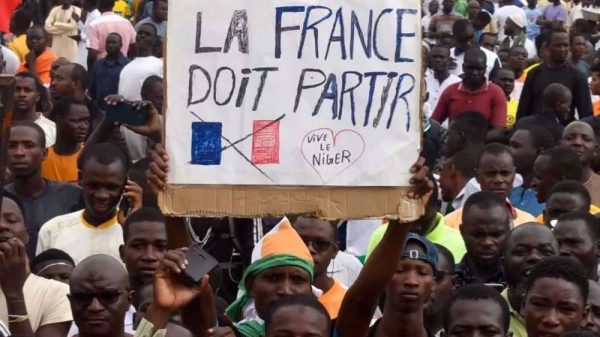
But that’s not all. Anti-Western sentiment has grown with demonstrators burning French flags and chanting slogans outside the French embassy in Niger’s capital Niamey.
The West has condemned the country’s junta takeover. For centuries, France has maintained colonial control over countries such as Niger. A vast amount of resources are extracted from the landlocked West African country and brought to France, fueling its economy while keeping Niger’s stagnant.
The military junta has now banned the movement of these precious resources to France.
France is naturally furious – the EU is already suffering a major economic setback due to its dogged insistence to let the Ukraine war drag on, throwing billions of dollars into weapons and resources.
Now, it’s facing the additional burden of keeping its crisis-hit industries running – a glaring admission of the country’s colonial practices to this day.
With Niger banning the export of key natural resources like Uranium to France – French and other Western media are taking to the internet and airwaves to smear the junta.
The anti-Western sentiment has come to a boiling point from decades of Western abuse and hyper-exploitation of African countries. It is a completely organic phenomenon, and so the West will need to use its media apparatuses to counter and stifle the sentiments.
Western media outlets have unleashed an aggressive campaign to accomplish this task. Parroting the narratives of Western regimes, French media such as France 24 and Radio France Internationale condemned the junta while using fear-mongering tactics to draw support for Western intervention.
They also sought to reaffirm support for French and other colonial structures within Niger – all while threatening the very people wishing to break the shackles of colonialism with military intervention.
In response, the junta leadership in Niger moved to ban the hostile French media outlets.
French officials blasted the move: “France reaffirms its constant and determined commitment to press freedom, freedom of expression, and the protection of journalists,” the French foreign ministry stated.
A European Union spokesperson joined in: “This step is a serious violation of the right to information and freedom of expression. The EU strongly condemns these violations of fundamental freedoms.”
These statements should be a textbook study of hypocrisy. Time and time again, the EU and the collective West have unleashed mass censorship campaigns, banned outlets, and arrested journalists.
It was only last year when the EU outright banned Russia’s RT and Sputnik news.
European Union satellite providers have also directly collaborated in media censorship campaigns. It has been less than a year since French satellite company Eutelsat removed Press TV from the air.
Western countries brazenly allow media outlets that affirm their own imperialistic goals to remain on air and uncensored. This includes outlets that outwardly promote foreign meddling and violence.
“Iran International” – which has significant funding from Saudi Arabia – played a large role in drumming up Western support during the failed foreign-backed riots in Iran last year.
Based in Washington D.C, the outlet pushed anti-Iran narratives, reporting misleading information or withholding context. It is an open-propaganda outlet created specifically to attack a sovereign country.
However, it is welcomed by the West with open arms. Not a single sanction has been placed on it.
If an outlet carries water for the US and EU, it will be allowed to operate without a single hurdle. If you criticize the goals of the empire in any way, you may be sanctioned. Shadowbanned. Censored. Labeled “state media.” Your very website may be seized entirely, as has been the case with Press TV.
For the crime of journalism in the West, you can be locked up in horrific conditions, fearing for your life.
Does the West seem to have completely forgotten about their ongoing treatment of Julian Assange, who exposed the war crimes of the United States – only to be smeared and pushed into solitary confinement?
If you are aligned with the American Empire’s goals, then you can even get away with killing journalists – and Western officials will try to brush it under the rug.
When Israeli occupation forces deliberately murdered Palestinian journalist Shireen Abu Akleh, the US dragged its feet to release a statement, ultimately claiming they can’t say for certain how the shooting death occurred – though all evidence affirms that she was targeted by regime soldiers.
And who can forget Jamal Khashoggi, an American journalist who actually did carry water for the West – only that he angered Saudi Arabia, so he was tortured, murdered, and dismembered on the orders of Saudi Crown Prince Mohammad Bin Salman (MBS).
Instead of demanding any explanation or even condemning the act, the US granted the Saudi leader immunity over the killing.
“Freedom of the Press” is a mockery in the West. A joke with no punchline. Freedom of the press in the EU and the US does not exist – not really. Through loopholes, shadowy dealings, and outright hypocrisy Western regimes always have the final say in what media can operate and what can’t.
It boils down to the simple goal of advancing its own interests.
Knowing this, it should come as no surprise that Niger banned France’s colonial media outlets. Their specific function is to carry France’s interests in foreign lands. Their goal is not honest and objective journalism or asking difficult questions. Their goal is to maintain and push public opinion of their own regime. A more honest classification of their work would be regime stenography.
France and the rest of the EU can condemn Niger’s actions all they want, but ultimately they have set the precedent of banning media outlets. The West will go as far as killing journalists, and then point a finger using that same bloodied hand at countries that refuse to give them a podium.
Ultimately, the world can expect more of the same double standards from the West.
The question is: if Western media’s role is to carry out its imperialistic missions rather than question and report, then why should anyone allow hostile media to operate in their country?
Shabbir Rizvi is a Chicago-based political analyst with a focus on US internal security and foreign policy.
France Declared That It Won’t Let The Nigerien Junta Kick It Out Of The Country
BY ANDREW KORYBKO | AUGUST 3, 2023
Speculation is swirling about whether Niger’s patriotic military junta will follow its reported ban on uranium and gold exports to France with a demand for that country’s troops to leave the country after the example that was recently set by the de facto Burkinabe-Malian federation. That would be a risky move to make, however, since France just declared that it won’t take orders from them. Here’s what PBS reported about this on Thursday:
“Even if Niger’s military rulers demand the withdrawal of French troops — as happened in neighboring Mali and Burkina Faso — it wouldn’t make a difference, said Anne-Claire Legendre, a spokesperson for the French foreign minister during a press briefing on Wednesday. ‘We don’t answer to the putschists. We recognize one constitutional order and one legitimacy only, that of President Bazoum,’ she said.”
Considering this, the junta would either discredit itself by making a major demand that France confirmed it will defy or risk being ousted from power by its former colonizer in the event that it tries to impose its will, both scenarios of which aren’t in their objective interests. French President Emmanuel Macron warned last week that “The President will not tolerate any attack against France and its interests”, hence the reason to expect it to resolutely respond in the second-mentioned scenario.
Nevertheless, not directly addressing the issue of French troops in Niger will likely prove impossible for the junta since these forces will eventually require supplies once their existing ones at their air base in the capital start running low, which will lead to them breaking the closed border regime unless it’s lifted before then. They already did so on at least one occasion so far as admitted by the junta shortly after they seized power and issued that decree, but repeated violations would prompt a dilemma.
On the one hand, letting them flout this rule would deprive Paris of the pretext that it might be trying to provoke for directly attacking the junta in the unlikely event that the planned NATO-backed Nigerian-led ECOWAS invasion of Niger is called off, but its new military rulers would be discredited. On the other hand, while firing on them would be a strong reaffirmation of Niger’s sovereignty, it would also almost certainly lead to an overwhelming French response that could escalate to a Libyan-like regime change.
Unlike in Syria where the US’ military forces are based in far-flung but still strategically positioned parts of the country, France’s military forces in Niger are located in the capital, which means that they can’t be ignored. The junta also recently accused them of plotting airstrikes on the presidential palace in order to free ousted President Mohamed Bazoum who’s being held there, thus making their continued presence a potentially imminent threat to national security.
France’s preemptive refusal to withdraw from Niger if the junta demands that it do so on the pretext that they’re illegitimate putschists contrasts with its compliance with Mali’s and Burkina Faso’s earlier such demands that were made by their own military-led interim governments. This suggests that France has decided to draw a line in the sand signaling that it’ll fight to preserve its last regional bastion, which bodes ill for the future of the Nigerien junta.
None Of Nigeria’s Objective National Interests Are Served By Invading Niger
BY ANDREW KORYBKO | AUGUST 3, 2023
West African military chiefs met in the Nigerian capital of Abuja on Wednesday to discuss ECOWAS’ potential NATO-backed invasion of Niger, but they stressed that this scenario is supposedly only a “last resort”. Their rhetoric aside, the reality is that “West Africa Is Gearing Up For A Regional War” between NATO-backed ECOWAS and the informally Russian-backed de facto Burkinabe-Malian federation, which recently said that an invasion of Niger would be regarded as an act of war against them both.
None of Nigeria’s objective national interests are served by invading Niger. Rather, only NATO’s subjective interests would be advanced in that scenario, and particularly France’s. This Western European Great Power is struggling to retain its neocolonial influence in the countries that it used to rule. Niger’s patriotic military coup risks leading to France’s expulsion from its last regional bastion after Mali and Burkina Faso kicked its troops out of their countries.
Moreover, France is largely dependent on Nigerien uranium for fueling its nuclear power plants that generate the majority of its electricity. Taken together, this major NATO member has self-interested military, economic, and strategic reasons for tasking Nigeria with leading an ECOWAS invasion of that country aimed at reinstalling its ousted leader on the pretext of defending democracy. In pursuit of that goal, the Mainstream Media (MSM) is spinning the narrative that Nigeria would gain from this as well.
Voice of America, The Economist, and the Associated Press all recently claimed that Niger is now a global epicenter of terrorism, which isn’t true but is intended to mislead the public into thinking that Nigeria’s potentially impending invasion of that country is supposedly in the world’s interests. This information warfare narrative asks those who fall for it to assume that everyone has hitherto ignored this allegedly imminent threat to them all, which isn’t rational to imagine.
Additionally, some of those MSM outlets are also implying that peaceful pro-democracy protesters will suddenly become so radicalized by only a week of military rule that they’ll transform en masse into violent extremists, but this also doesn’t make any sense. Even so, these false claims are being repeated ad nauseum in an attempt to convince average people that there’s some degree of credence to them by dint of so many “experts” and officials warning about these dangers, though it’s all just a psy-op.
The public isn’t being properly informed of the Nigerien junta’s justification for seizing power. They declared that the prior regime was removed due to its failure to improve their country’s economic and security conditions. Additionally, not enough attention is being given to White House Press Secretary Karine Jean-Pierre words that “We have not seen indications of Russian or Wagner involvement” nor to National Security Council spokesman John Kirby’s confirmation of her assessment a few days later.
Instead, people are being made to think that some power-hungry military officials overthrew one of the Global South’s democratic icons with Russian support in order to spread terrorism across the world. This artificially manufactured impression misleads folks into thinking that Nigeria’s potentially impending invasion would be a service to the international community, but Al Jazeera and Politico suggested that newly inaugurated President Bola Tinubu has ulterior motives that have nothing to do with terrorism.
Reading between the lines of their skeptical pieces on this subject, it becomes apparent that he might do the West’s geopolitical bidding in his region in a desperate attempt to distract his compatriots from growing economic and political problems at home. As leading American officials have publicly confirmed, there’s no reason to suspect that Russia or Wagner were behind the Nigerien coup, plus its interim military government declared that it wants to ramp up its antiterrorist operations.
Although it’s everyone’s right to think whatever they want about the merits of this latest regime change, there are no plausible grounds for considering it a threat to Nigeria’s objective national interests. To the contrary, the aforesaid would arguably be advanced if the junta succeeds in improving the economic and security situation. That’s regrettably going to be very difficult, however, after Nigeria just cut off electricity to Niger in compliance with ECOWAS’ sanctions against its northern neighbor.
Only one in seven people there had access to this amenity before that happened, but now even fewer will enjoy its benefits since Nigeria used to provide a whopping 70% of Niger’s electricity. Making matters even worse for its people is Benin’s closure of the border. Niger used to depend on imports from the Atlantic port of Cotonou so now it’s basically cut off from most of the world. Reopening its borders with friendly neighbors won’t help much since those trade routes are threatened by terrorists.
Niger is already the world’s third poorest country but its people’s plight is expected to worsen even further due to that bloc’s sanctions, which could soon create a major socio-economic crisis with very serious humanitarian implications for the region. That cynically seems to be the point, however, since Nigeria might exploit large-scale refugee flows as the national security pretext for invading Niger even though ECOWAS’ crippling sanctions that Abuja itself is leading would be entirely responsible for this.
If Nigeria would have given the Nigerien junta a chance to make good on its promise to improve their country’s economic and security conditions, then it wouldn’t have anything to worry about, which reveals that Tinubu’s policies actually threaten his country’s objective national interests. He likely won’t relent on them though since his country’s Western-aligned military-political elite are intoxicated with the praise that the MSM is heaping on their country for doing that bloc’s bidding in Niger and won’t let him.
A self-fulfilling prophecy is therefore in the process of transpiring whereby Niger is indeed becoming a national security threat to Nigeria but solely due to the latter’s Western-dictated policies catalyzing a humanitarian crisis there that threatens to spill over its borders and prompt an invasion on that basis. Other pretexts will include the discredited anti-Russian and terrorist ones alongside the “rules-based order’s” mantra of defending democracy to complement the core humanitarian intervention claim.
The public should thus expect more fearmongering about all of the above ahead of ECOWAS’ ultimatum for installing the ousted Nigerien leader expiring this Sunday. Although the bloc’s military chiefs stressed that armed force will only be a “last resort”, the humanitarian crisis that their group’s policies are creating could soon lead to this being a fait accompli if a lot of people start flooding into Nigeria. The MSM will then likely spin this to claim that they’re “fleeing their Russian-backed and pro-terrorist junta”.
The narrative stage would therefore be set for justifying the NATO-backed Nigerian-led ECOWAS invasion of Niger on multiple pretexts connected with the “rules-based order’s” worldview, thus enabling the aggressors to reverse the roles of victim and villain to misrepresent themselves as “heroes”. This is nothing but a psy-op though since the only threats that could conceivably emanate from Niger are entirely due to foreign meddling in its internal affairs and would disappear if this interference stopped.
French invasion of Niger could turn into all-out Franco-African war
By Drago Bosnic | August 3, 2023
Ever since the Nigerien military under the command of General Abdourahamane Tchiani took power on July 26, there has been an exponential increase in tensions between Niamey and its former colonial masters in Paris. This has gone to the point where France is now seriously considering invading the West African country. The exploitation of “former” French colonies has continued unabated for over half a century even after they were granted a semblance of independence and Paris has been the main beneficiary of this one-sided relationship. Combined with France’s inability to deal with various terrorist insurgencies in the region, this unadulterated neocolonial theft has been the primary reason behind a series of popular uprisings in the Sahel.
Paris is now faced with a strategic dilemma. If it lets Niger continue its path toward actual independence, France will be unable to continue exploiting the country’s natural resources. Namely, several of its former colonies have served as a source of massive wealth extraction and given the recent troubles Paris is facing, these resources might be more important than ever. On the other hand, recent geopolitical changes in the area have left France largely impuissant. After the defeat of its nearly decade-long intervention in Chad last year, Paris has been left with bases in Ivory Coast, Senegal and Gabon. Neither of these can be used effectively as a staging ground for an invasion due to the limited number of troops stationed there.
However, even if France was to somehow find enough soldiers to launch the invasion, none of the three countries border Niger. Gabon is the least logical option, as Cameroon and Nigeria stand between it and Niger, leaving only bases in Senegal and Ivory Coast as viable possibilities. And yet, this is where the issues of basic geography for Paris stop and actual geopolitical ones start. Namely, in order to effectively use its forces from both countries to reach Niger, France needs to go through Mali and Burkina Faso, both of which have already stated that any military action against Niamey will be tantamount to aggression against them. In other words, if France wants to attack Niger, it will also need to attack two more African countries.
A possible alternative for Paris could be the use of its neocolonial influence in the ECOWAS (Economic Community of West African States, also known as CEDEAO in French and Portuguese). However, this leaves its members at risk of more anti-Western uprisings, as the belligerent power pole is deeply unpopular in the area. Some members of the ECOWAS, such as Nigeria, might be the best geographical option, but given the fact that Paris has little to no influence in Abuja, this is extremely unlikely. Not to mention the fact that Nigeria has more than enough problems of its own and the last thing it needs is to serve as the staging ground for a neocolonial invasion. Logically, this leaves Chad as the only option, but this too is a very long shot.
To make matters worse for France, Algeria has joined the chorus of Niger’s allies. The French archrival that spearheaded the independence of many of its “former” colonies in the 1960s is effectively an African superpower, heavily armed and highly motivated to never allow Paris or any other Western (neo)colonial power to establish a firm foothold in the region. This still leaves Chad as the only viable option for an invasion, as the country was an instrumental staging ground for virtually all French military operations in the area, including the illegal invasion of Libya. However, reaching Chad at this point is easier said than done and this still leaves most of the geopolitical issues unresolved. Also, all geographical considerations remain.
Namely, the Nigerien capital of Niamey is located in the southwestern corner of the country, close to the border with Burkina Faso. Thus, even in the unlikely case that none of its neighbors intervene, Niger is still left with a comfortable window of opportunity to resist the invasion. This could end in a disaster for France, as yet another military defeat in the area would inevitably lead to a complete collapse of the neocolonial system it left in place in the 1960s. On the other hand, if Paris doesn’t intervene, this will happen anyway, albeit at a somewhat slower pace. Either way, the dilemma inevitably results in a geopolitical catch-22, as leaving things as they are could also encourage others to revolt against Western neocolonialism elsewhere in Africa and possibly beyond.
As for France’s NATO allies, they’ve been largely quiet and non-militant, including the United States (a rather uncommon feature in their usually belligerent foreign policy). Washington DC has a military base in the central part of the country, the Niger Air Base 201, run by US AFRICOM (African Command), but its operational capabilities are mostly limited to drone strikes, with the troops deployed there largely composed of a skeleton crew that provides basic security. Coupled with the recent cooling of US-French relations, this makes it highly unlikely that the Pentagon would give the go-ahead for any sort of American involvement in a possible French invasion, even though it’s in Washington DC’s interest to keep Western neocolonialism in Africa alive for as long as possible.
Drago Bosnic is an independent geopolitical and military analyst.
Featured Video
Laith Marouf: Hezbollah’s position on US-Iran ceasefire
or go to
Aletho News Archives – Video-Images
From the Archives
Is Israel to blame for the Iraq War?
American Goy | March 10, 2008
I am so tired of this old canard that “Israel had nothing to do with USA’s war with Iraq – in fact, it officially advised America against it”.
Bullshit. … continue
Blog Roll
 Aletho News
- Laith Marouf: Hezbollah’s position on US-Iran ceasefire: What you’re not being told
- Israel’s priority lies in destroying chances of peace between Iran, US: Ex-UN nuclear chief
- Ceasefire for all or for none: Iran shuts Hormuz over Lebanon attacks
- Strait of Hormuz is Iran’s ‘nuclear weapon’ that forced US retreat: Medvedev
- Energy crisis will last for months – Kremlin envoy
- Europe’s quiet role in the war on Iran
- Forty days that shook the Empire: How Iran turned the tables on US and prevailed
- Netanyahu unilaterally declares Lebanon outside of ceasefire deal
- Israeli leaders: ‘Not a single goal’ achieved in war with Iran
- What on earth just happened? Trump, Iran, and the unlikely ceasefire
- If Americans Knew
- Gazans face a triple crisis: severe shortages of water and bread, healthcare in tatters
- NY Times reports how Netanyahu took the US into Iran War
- A sigh of relief over Iran, but Gaza and Lebanon in dire straits – Daily Update
- Thousands dead and neighborhoods razed to the ground: Aid agencies fear southern Lebanon is becoming the new Gaza
- The war the US is fighting for Israel could cost trillions
- ‘Cigarette Burns, Nail Wounds’: Toddler Tortured in Gaza to Coerce Father
- Trump Says US Sent ‘a Lot of Guns’ to Protesters in Iran
- Israeli forces destroy 17 UN peacekeeper cameras in south Lebanon
- US-Israeli strikes ‘completely destroy’ synagogue in Tehran
- Archbishop for US Military Says Iran War Is Unjust Under Catholic Teaching
- No Tricks Zone
- An Inconvenient Tree: Uncovered In Alps… Europe Much Warmer Than Today 6000 Years Ago
- New Study Reports A 60% Slowdown In Greenland’s Ice Loss Rate In The Last Decade
- Low Intensity Tornado Wrecks Major Solar Farm, Creating A Potential Toxic Dump
- New Study Finds Warming Saves Lives…Cold Temperatures 12 Times More Deadly Than Excess Heat
- German Science Blog Accuses PIK Climate Institute Of Hallucinating Climate Tipping Points
- Devastating Assessment Of Comirnaty Vaccine By Former Senior Pfizer Europe Toxicologist
- New Study: CO2 Is ‘Effectively Negligible’ As An Explanatory Climate Change Factor Since 2000
- Former Pfizer Toxicologist Dr. Helmut Sterz Tells Bundestag Hearing Pfizer Vaccine Should Have Never Been Approved
- Energy Expert: Germany’s Nuclear Phaseout Was A “500 Billion Euro Mistake”
- New Research: South Australia’s Mid-Holocene Sea Surface Temperatures Were 4°C Warmer Than Today
 Aletho News