Expansion of US Drone Ops in Africa Comes Amid Rising Opposition to Foreign Military Presence
Sputnik – 04.01.2024
Nearly two and a half years after the United States’ campaign in Afghanistan ended in an inglorious rout, the US seems poised to expand its military operations in another part of the globe.
The United States is attempting to convince several West African states to allow them to use their airfields to carry out drone operations, according to a report by the Wall Street Journal.
This move is ostensibly aimed at curbing the spread of Islamist terrorist groups in Ghana, Benin and the Ivory Coast, the media outlet claimed, adding that US drones might purportedly “conduct aerial surveillance of militant movements along the coast and provide over-the-shoulder tactical advice to local troops during combat operations.”
The United States’ drone initiative, however, takes place amid a “shift in public sentiment and attitude” in African states “against foreign military presence,” argued Ovigwe Eguegu, a Nigerian policy adviser at the Development Reimagined consultancy.
“The attitude that we are seeing that is very much against foreign military presence, particularly of major power like the US, is because of the concern that we’re now in an era of good power competition and the risk of proxy conflict is quite high,” Eguegu said. “Citizens knowing what happened during the Cold War [are] very much averse to foreign troops present.”
He also observed that the US and French military missions in Africa, as well as the UN MINUSMA peacekeeping force, did little to improve the security situation in the countries they were deployed in, while the “successes that are being achieved in counterterrorism” in the region were primarily achieved by the Multinational Joint Task Force comprised of military units from Niger, Nigeria, Chad, Cameroon and Benin.
“While there is room for foreign military cooperation, there is no need for foreign military presence on the continent, because that is what regional armies are there for in the first place,” Eguegu remarked.
He also suggested that further “militarization of security solutions” is unlikely to improve the security situation in Africa and argued for a different approach.
According to Eguegu, the “solution to the Africa security challenges, in West Africa in general, can come in the form of funding support,” where the foreign support essentially amounts to providing weapons and training to local forces and does not necessarily involve “direct military operations” by foreign forces.
French Researchers Identify ‘Improbably High Rate of Deaths’ in Newborns Who Received New RSV Shot
By Michael Nevradakis, Ph.D. | The Defender | January 2, 2024
French researchers identified possible safety signals in babies coinciding with the rollout of Beyfortus, a recently approved monoclonal antibody treatment for respiratory syncytial virus (RSV) in newborns.
The discovery comes as public health authorities ramp up warnings about the spread of respiratory viruses and step up their promotion of the drug.
In interviews with The Defender, the researchers — French independent scientist and author Hélène Banoun, Ph.D., and French statistician Christine Mackoi — explained that data from France’s National Institute of Statistics and Economic Studies (INSEE) indicates an improbably high rate of deaths of babies between 2 and 6 days old in France during September and October 2023.
INSEE is the authority that compiles official birth and death data in France.
This increase, the researchers said, coincides with the introduction of Beyfortus in French hospitals, which began on Sept. 15, 2023. In an interview with cardiologist Peter McCullough, M.D., MPH, Banoun said that over 200,000 newborn babies in France have been injected with Beyfortus since that date.
The Centers for Disease Control and Prevention (CDC) recommended Beyfortus in August 2023, while the European Medicines Agency (EMA) authorized the drug in September 2022.
Beyfortus was developed jointly by AstraZeneca and Sanofi.
The drug is offered as a “one-time shot for infants born just before or during the RSV season and for those less than 8 months old before the season starts,” and for some high-risk 8- to 19-month-old infants.
According to The Associated Press, “In the U.S., about 58,000 children younger than 5 are hospitalized for RSV each year and several hundred die.” CNBC reported that “RSV is the leading cause of hospitalization among infants in the U.S.” According to the CDC, nearly all children are infected with RSV before the age of 2.
But the French researchers and other medical experts who spoke with The Defender warned that no long-term studies have been conducted involving Beyfortus and newborns and that the administration of monoclonal antibodies on this population is unprecedented. They also pointed to data indicating RSV’s low risk to babies.
Dr. Meryl Nass, an internist, biological warfare epidemiologist and member of the Children’s Health Defense (CHD) scientific advisory committee, told The Defender, “Giving newborns any drug or biologic should be done with extreme caution, let alone a novel, injected monoclonal antibody. You cannot tell if the infant is damaged by the shot, when you don’t yet know how healthy the newborn is and how it normally behaves. This should be a huge red flag for manufacturers as well as parents.”
According to Banoun, “The French government is recommending that Beyfortus be injected into newborns before they leave the maternity ward, from Sept. 15, 2023, even though the product has not been tested on this age group,” Banoun said.
Nass pointed out that the CDC published a paper in 2021 on all U.S. RSV deaths over the preceding 12 years. The CDC reviewed death certificates, and found there were only 26 deaths per year with RSV, and only 17 deaths per year in the entire U.S. caused by RSV in babies under one year old.
According to McCullough, “Among the 22.4 million children under age 5 years, the annual risk of RSV hospitalization is well under 1%.”
Excess deaths among newborns ‘alarming,’ ‘disturbing’
Mackoi told The Defender, “There is an excess of deaths for the months of September and October. The excess deaths in October are very alarming. It is very worrisome that this happened in two consecutive months.”
According to Mackoi, the increase in these excess deaths coincides with the introduction of Beyfortus in France.
“There is a strong concomitance with the Beyfortus injection since Sept. 15, 2023,” she said. “In France, babies receive injections of Beyfortus before leaving the maternity hospital. They leave the maternity hospital three or four days after their birth … These excess deaths are abnormal.”
According to Mackoi, the data show “a 50% increase in deaths of babies between 2 and 6 days of life compared with what would be expected,” noting that “the reference is obtained by dividing the number of deaths by the total number of births in 2018 and 2019; the result is 0.69 deaths between 2 and 6 days per 1,000 births.”
In September, the observed mortality rate was 0.97 deaths per 1,000 births, and in October, it was 1.05 deaths per 1,000 births, Mackoi said. “It is anomalous that this very significant increase should be found two months in a row. It may well be due to the injection of Beyfortus since Sept. 15, 2023.”
“Although of no scientific value, I have received testimonials from relatives and via the internet from families of healthy babies who were hospitalized in intensive care with respiratory distress syndrome immediately after the injection,” Banoun added.
Mackoi said that using the official INSEE data, which she described as “reliable [but] underestimated,” she “calculated for each month, the rate of babies born the month in question and died between 2 and 6 days of life,” and used a Poisson distribution to identify abnormal mortality rates, compiling the findings on her website.
According to the INSEE data, 54 deaths were recorded for 55,489 births in France in September 2023, despite the average number of expected deaths being 38, based on historical averages.
For October 2023, the data showed 61 deaths out of 57,940 births, despite the average number of expected deaths being 40.
Mackoi said that the probability of the September 2023 death figure occurring by chance is 0.9%, while the probability of the increased mortality in newborns in October 2023 is even lower, at 0.1%. She also noted that “there are no excess deaths less than 48 hours after birth,” and that this is “one more indication” that Beyfortus is causing the deaths, because they are not receiving the monoclonal for the first 48 hours of life.
“The coincidence of Beyfortus injections with excess infant deaths is disturbing,” Mackoi said.
Monoclonal antibodies may exacerbate symptoms rather than prevent them
These revelations came as the White House announced on Dec. 14, 2023, that it would make 230,000 additional doses of Beyfortus available last month, in addition to 77,000 doses that were released in November 2023.
A study published in the New England Journal of Medicine (NEJM) on Dec. 28 concluded, “Nirsevimab protected infants against hospitalization for RSV-associated lower respiratory tract infection and against very severe RSV-associated lower respiratory tract infection in conditions that approximated real-world settings.”
The study was funded by AstraZeneca and Sanofi.
According to Banoun, official data do not indicate that Beyfortus is effective. The data do, however, indicate a high prevalence of adverse reactions — including bronchiolitis — even though the treatment is supposed to protect recipients from respiratory illness.
“The most frequently reported adverse events are upper respiratory tract infections, including bronchiolitis,” she said.
Banoun added that data from the French National Authority for Health (HAS) do not “support a possible impact of Beyfortus in terms of reduced length of hospital stay, transfer to intensive care units, and mortality.”
“According to HAS, in the trials, the absolute risk of RSV infection was reduced by 3.8% in the five months following injection, and the absolute risk of hospitalization was reduced by 1% to 2% over the same period,” she said.
Banoun said the trials were not conducted on newborns, whereas the French government recommends injection from the first days of life in the maternity ward.
According to EudraVigilance, as of Dec. 24, 2023, there were 64 adverse events related to Beyfortus in those 1 month old or younger, and 68 for those between 2 months and 2 years of age. One death, that of a baby below 1 month old, was recorded, as were 60 records containing the word bronchiolitis. And according to VigiAccess, there were 104 adverse events reported, including 57 infections and respiratory disorders.
Another study, concerning premature babies and newborns suffering from heart or lung disease that compared Beyfortus with monoclonal antibodies previously used on high-risk babies, recorded six deaths — five due to bronchiolitis. Of the six babies that died, five had been treated with Beyfortus.
Yet, “these bronchiolitis cases are not attributed to the treatment by the investigator, who is also the manufacturer of the products,” Banoun said. “All this suggests that nirsevimab [generic name for Beyfortus] could facilitate and aggravate bronchiolitis: these injections take place during periods when the virus is circulating.”
“Let’s not forget that this whole bronchiolitis ‘prevention’ campaign is supposed to avoid overcrowding hospitals with babies suffering from the disease,” Banoun said. “If this product doesn’t significantly reduce hospital admissions, what’s the point?”
According to NTD, “Monoclonal antibodies are copies of an antibody that seek out foreign material to destroy them,” but the treatments come with a “risk that the body might trigger a strong reaction to the antibodies.”
Complications may be serious and can include “acute anaphylaxis or life-threatening massive allergic reactions and cytokine release syndrome that can result in organ damage.” This phenomenon is one of the adverse effects of Beyfortus.
In his interview with Banoun, McCullough said, “Antibody-dependent enhancements [ADE] have always been something we’ve been worried about because if antibodies bind the virus but not very tightly, that means they don’t neutralize the virus. And then, [a] fragment [Fc] of the antibody binds to a cell receptor. In a sense, the antibody can bring the virus into the cell.”
McCullough told The Defender, “The antibodies will invariably affect the development of natural immunity with repeated exposures to RSV during childhood. Beyfortus-resistant strains can be expected with indiscriminate use.”
Banoun cited a study in which “two of the 25 subjects in the nirsevimab group with RSV … had an RSV isolate containing substitutions associated with resistance to nirsevimab,” while “No subject in the placebo group had an RSV isolate containing substitutions associated with resistance to nirsevimab.”
Banoun also referred to a September 2022 EMA report, which found that during failed RSV vaccine trials in the past, children died of severe bronchiolitis in the vaccinated groups, but none from the control groups died.
“This ADE is due to the deleterious effect of antibodies which, instead of neutralizing the virus, facilitate its entry into the cell via the receptor of the Fc fragment of immunoglobulins. And it’s precisely this Fc region of nirsevimab … that industry has seen fit to modify,” Banoun said.
“Manufacturers are looking for the beneficial effects of this phenomenon and are wary of deleterious effects, which is why they have investigated the risk of ADE with Beyfortus in animal models,” Banoun added. “They claim not to have detected it, but the EMA points out, unmoved, that no histopathological evaluation of rats was carried out after treatment and infection with RSV: This is the only recognized marker of ADE.”
On his Substack, McCullough wrote that this effect may be triggered by aerosolized RSV virions present in hospitals.
“This means as ambient aerosolized RSV virions are present in hospitals, clinics, and home, the monoclonal antibody may backfire and enable the inhaled virion to gain access to the bronchial epithelial lining and cause worse bronchiolitis than the baby would have with their own developing natural immunity,” he wrote.
Beyfortus administered on newborns despite being tested on older babies
During the clinical trial leading up to approval of Beyfortus by the CDC and the U.S. Food and Drug Administration (FDA), a total of 12 infant deaths were recorded. However, the FDA claimed the deaths were “unrelated” to the antibody.
CNBC reported in June that of the 12 infants, “Four died from cardiac disease, two died from gastroenteritis, two died from unknown causes but were likely cases [of] sudden infant death syndrome, one died from a tumor, one died from COVID, one died from a skull fracture, and one died of pneumonia.”
“Fact-checkers” were quick to respond to any stories indicating that the infants’ deaths were related to Beyfortus, with factcheck.org writing in August 2023, “There isn’t evidence the [Beyfortus] shots have killed any babies, contrary to social media claims.”
But according to Banoun, “According to the HAS and EMA, 11 deaths were reported in the nirsevimab groups, one death in the pavilizumab (former equivalent drug) group and three deaths in the placebo groups. The FDA counted 12 deaths in all treated groups versus three in the placebo groups, not including the one that occurred after the follow-up period.”
“It should be noted that all deaths in the placebo groups concerned premature babies in the Griffin study,” Banoun said. “In trials involving full-term babies, all deaths involved treated subjects.”
Banoun said:
“The FDA has added one death in the placebo groups which occurred after the end of follow-up, but no mention is made of any deaths in the treated groups which occurred after this same period. Similarly, a significant number of babies are withdrawn from the trials and therefore no longer followed up after their withdrawal. This imbalance is therefore potentially more serious than published.”
Other studies also showed infant deaths connected to Beyfortus. McCullough told The Defender, “I am concerned about 3 versus 0 deaths with Beyfortus and placebo respectively in the MELODY trial published in NEJM, 2022.”
Nass pointed out another such anomaly in clinical trial results where “The deaths were said to be disproportionate between the placebo and nirsevimab groups.”
“I don’t trust the data as being reliable,” Nass said, “For instance, in this NEJM-published trial, 9.5% of babies who did not receive nirsevimab wound up with pneumonia and ‘lower respiratory tract’ RSV infections.”
“This seems awfully high,” Nass continued, “Especially when the CDC’s own study showed only 17 babies per year die from RSV. I find it hard to rely on the NEJM data.”
“The problem is that, with potentially billions of dollars riding on the outcome of a few clinical trials, there may be tremendous pressure to come up with the desired results. And there are many ways in which the desired results can be achieved,” she added.
Banoun also pointed out that while Beyfortus is administered to newborns, clinical studies tested the drug on older babies.
If we refer to the descriptions of the deceased babies, in the Domachowske study, “Only 1 was less than a month old at the time of injection (23 days), while all the others were between 1 and 7.5 months old,” she said. “We find the same panel of babies in all the other studies … in the Griffin study, the babies have a median age of over 6 months, in the Hammitt and Domachowske studies, only half the babies are under 3 months old … in the Hammitt study, the median age is 2.6 months (range 1.05 to 4.5 months).”
According to Banoun, public health authorities are aware of this discrepancy, noting that in the HAS Transparency Commission’s report on Beyfortus, Sylvie Chevret, M.D., Ph.D., professor of public health and biostatistics at France’s Université Paris Cité, said:
“In these trials, they included children who were essentially said to be in good health, so tomorrow, do you intend to give this drug to all newborns, bearing in mind that the studies did not include newborns?
“They included children who were less than three months old, of course, but up to more than 6 months.”
“The FDA and the American Association of Pediatrics jumped the gun in 2023 and were reckless in the approval and recommendation of Beyfortus for mass deployment in babies without carefully considering these issues,” McCullough told The Defender.
‘Expectant mothers should be prepared to resist’ Beyfortus for their babies
Despite these indications and possible safety signals, Banoun said that there has been no reaction so far from public health authorities in France or elsewhere.
“The only reaction to my posts was censorship and a video that was supposed to debunk my claims but actually confirmed them,” she said. “Like all critical scientists, I am censored: strict control over social networks, in particular Twitter, where we have been rendered virtually invisible since December 2023, when the European Digital Commissioner threatened Twitter with heavy fines.”
“When all debate is censored, all criticism discredited, even penalized and ostracized, can we still speak of ‘science’?” Banoun questioned, tying the censorship she’s experienced and the promotion of drugs such as Beyfortus to the concept of biopolitics.
Banoun explained that biopolitics was theorized by French philosopher Michel Foucault “to explain how power is exercised over human populations … on a global level” and “which, in our time, tends to impose health standards on all human populations [and] increasingly relies on vaccination as an alternative to care in infectiology.”
“Biopower today is exercised by an alliance of governments and health agencies with big industry. Biopolitics [also] concerns the control of populations in fields other than health: digital identity and climate,” she added.
For Banoun, financial interests are a key reason for this stance on the part of public health authorities and pharmaceutical companies.
“The market for bronchiolitis prevention will therefore represent several billion dollars for Big Pharma in the years to come. Why such a large market for a disease that is benign in the vast majority of cases? … The giants of the pharmaceutical industry are in permanent financial difficulty because of the fines and compensation they have to pay.”
“To compensate for these fines, manufacturers have to launch ‘blockbusters’ — highly profitable products that sell very well,” Banoun said, adding that the vaccine liability shield afforded to vaccines by laws such as the National Childhood Vaccine Injury Act of 1986 may be extended to treatments and drugs other than vaccines.
“It is feared that this exemption from liability will be extended to preventive therapies such as Beyfortus,” Banoun said, pointing out that U.S. and European authorities have mixed the classification of Beyfortus, considering it a vaccine in some instances and not in others.
In the U.S., the CDC’s Advisory Committee on Immunization Practices recommended adding Beyfortus to the childhood vaccine schedule, providing its manufacturers with a waiver of liability, but also recommended coding it as a drug for insurance purposes and leaving it out of the National Vaccine Injury Compensation Program (NVICP).
In addition to this liability shield, Banoun said that, in France, midwives and nurses reportedly “receive a bonus for each injection — Sanofi pays a sum to each hospital, which is then redistributed to the injectors.”
Experts advised parents and physicians to be wary of Beyfortus.
“Physicians and parents should be conservative in deciding on Beyfortus. I do not recommend it for parents who are expecting healthy newborns or babies without severe pulmonary disease,” McCullough told The Defender.
Banoun said “Expectant mothers should be prepared to resist,” noting the White House’s and CDC’s efforts to promote Beyfortus and pressure placed on new mothers in French hospitals, where “nursing staff insist on giving it to the mother up to four or five times during her stay in the maternity ward.”
Michael Nevradakis, Ph.D., based in Athens, Greece, is a senior reporter for The Defender and part of the rotation of hosts for CHD.TV’s “Good Morning CHD.”
This article was originally published by The Defender — Children’s Health Defense’s News & Views Website under Creative Commons license CC BY-NC-ND 4.0. Please consider subscribing to The Defender or donating to Children’s Health Defense.
Kremlin Warns of Potential Retaliatory Steps Against Assets of Foreigners
Sputnik – 29.12.2023
MOSCOW – Russia has a list of the assets of foreigners that can be taken as a reciprocal measure, Kremlin spokesman Dmitry Peskov said on Friday.
On Thursday, the Financial Times newspaper reported, citing sources, that Germany, France, Italy and the European Union have expressed reservations regarding Washington’s idea to confiscate Russian assets worth $300 billion and consider it necessary to first assess the legality of the measure.
“Of course there is [a list of foreign assets that Russia can take]. Understanding the unpredictability of our counterparts, let us say, complete unpredictability and, understanding their tendency to violate international law and other laws, including their own national ones, understanding their tendency to self-destruction, I mean the destruction of the modern economic system, undermining confidence in the basic postulates of the world economic system, I mean, the main reserve currency, the principle of inviolability of property and so on, then, of course, we analyzed possible retaliatory steps in advance, and we will do everything like this, so that it would best suit our interests … Therefore, such actions are fraught with very, very serious consequences,” Peskov said, answering the question whether Russia can withdraw foreign assets.
The seizure of Russian assets abroad is illegal and can cause serious harmful consequences, including becoming another blow to the global economy, the spokesman added.
US Efforts to ‘Kill’ Arctic LNG 2 Could Sow Distrust Amidst Allies
By Andrei Dergalin – Sputnik – 27.12.2023
Several prominent companies from France, China and Japan have suspended their participation in Russia’s Arctic LNG 2 project after it was targeted by US sanctions.
US Assistant Secretary of State for Energy Resources Geoffrey Pyatt openly stated earlier this year that the United States’ goal is to “kill” the Arctic LNG 2 project, and that the US is “doing that through our sanctions, working with our partners in the Group of Seven and beyond.”
In response, Russian Foreign Ministry spokeswoman Maria Zakharova said this week that “The situation around Arctic LNG 2 once again confirms the destructive role of Washington for global economic security.”
US sanctions against Arctic LNG 2 may be an attempt by the Biden administration to garner support, argued Thomas W. Pauken II, a geopolitical commentator and consultant on Asia-Pacific affairs. Biden’s approval ratings in the US have been sagging amid the prospects of the American economy heading for a “downturn.”
“If he can get the energy exporters, the producers from the US to somehow support Biden, this could prove helpful. So it’s just politics more than anything else,” Pauken elaborated. “The US is headed in the direction of more trade protectionist measures. And this is just yet another example of that.”
According to Pauken, the Arctic LNG 2’s foreign stakeholders apparently participated in the project under the impression that their involvement would not incur repercussions in the form of US sanctions.
Now that the US imposed such sanctions, this is going to sow “mistrust” between the United States and the parties involved in the project, and this situation is going to “harm the US image.”
“This is a big story, that you have friends of America who are losing out big money in this deal,” Pauken observed.
He also suggested that as Russia realizes that it cannot rely on Europe and Japan for business partnership in light of the US sanctions pressure, it will likely forge closer economic relations with other countries such as India, Mongolia and Central Asian states, not to mention deepening its already close ties with China.
“I think the problem is Washington keeps thinking that they can do these things and sets sanctions and pushes these measures and thinks that everything’s going to have good results from them in the long run. But in reality, it just forces other countries to adapt to these circumstances in order to make new solutions. And Washington is very slow to figure it out,” Pauken mused.
Meanwhile, Nikita Lipunov, an analyst at the Institute for International Studies, pointed out that Arctic LNG 2 foreign stakeholders have so far only suspended their participation in the project and are now mulling the associated risks. US sanctions are expected to come into effect on January 31.
“Foreign participants of Arctic LNG 2 [deem] there will be losses either way: if they give up their share in the venture and future LNG shipments or if they ignore the US’ secondary sanctions and suffer the consequences,” he said.
Lipunov also deemed as “unlikely” the odds of the US destroying the Arctic LNG 2 project, considering Russia’s “vast experience in running large international economic projects while under sanction pressure.”
He noted that, while the French and Japanese participants of the project may end up pulling out of the venture under pressure from the US, there is still a chance that the Chinese companies involved may not follow suit.
“In light of the 12th package of the EU sanctions that, among other things, include a ban on liquefied petroleum gas imports from Russia, Moscow should reorient shipments to the east where the demand is growing, and to seek new markets in other regions. That will take time, but Russian commodities will definitely find their buyers,” Lipunov added.
Russian Forces Wipe Out First French-Donated Crotale NG Missile System in Ukraine
By Svetlana Ekimenko – Sputnik – 25.12.2023
In the course of the ongoing special military operation in Ukraine, the Russian Armed Forces have been successfully delivering high-precision strikes targeting foreign equipment and ammunition provided to the Kiev regime by Washington and its NATO allies, obliterating the much-touted sophisticated weaponry.
Russia’s Armed Forces operating in the special military operation zone have destroyed several Norwegian-made NASAMS (National Advanced Surface-to-Air Missile System) and one French Crotale NG short-range air defense system that the Kiev regime received from its Western patrons, the Russian Defense Ministry said on Sunday. The NATO-donated weapons systems were stationed at the Starokonstantinov Airfield in the Khmelnitsky region.
This is believed to be the first recorded instance of a Crotale NG being obliterated in combat, and serves as further proof that NATO’s state-of-the-art equipment is fair game for Russia’s military.
The Russian military carried out a coordinated assault that involved tactical aircraft, missile troops, artillery units, and unmanned aerial vehicles (UAVs). Besides neutralizing the air defense systems, the attack inflicted damage on the Kiev regime’s aircraft equipment, flight navigation sysems, and aviation ammunition stored at the airfields in Kanatovo, Kirovograd region, and Dnepr, Dnepropetrovsk region. Furthermore, military personnel and equipment of the Ukrainian Armed Forces was destroyed in 127 districts.
The strategic impact of Russian strikes on Ukraine’s air defense capabilities is expected to be significant, Army Recognition, an online Western military outlet, acknowledged, commenting the MoD announcement. It clarified that the destruction of enemy air defense capabilities enables Russia’s military to gain even greater control over the airspace. While reducing the risk to their own aircraft, it boosts their ability to carry out air operations such as strategic bombing, providing close air support to ground forces, and conducting reconnaissance missions.
As part of NATO’s ongoing proxy war against Russia in Ukraine, France has supplied Ukraine with two Crotale NG air defense batteries, the military outlet underscored.
The French Crotale NG (New Generation) missile system is a modernized version of the Crotale air defense system designed for short-to-medium range air defense. Equipped with the VT1 missile with an engagement range of around 11 kilometers (6.8 miles), it is touted as providing effective defense against aircraft, helicopters, various precision-guided weapons, and unmanned aerial vehicles (UAVs). The system can engage targets at altitudes up to 6,000 meters.
As far as NASAMS are concerned, a number of countries have delivered these systems to Ukraine. Thus, Belgium has purportedly contributed an undisclosed number of AIM-120 NASAMS missiles, Lithuania has delivered two launchers, while Canada has supplied Kiev with one NASAMS air defense battery along with AIM-120 missiles.
The NASAMS utilizes the AIM-120 Advanced Medium-Range Air-to-Air Missiles (AMRAAM), capable of engaging targets at distances of up to 25 kilometers. This renders the NASAMS effective for medium-range air defense scenarios.
The United States reportedly sent eight NASAMS batteries as part of its billions’ worth of military assistance to Ukraine, while the UK has donated NASAMS missiles.
Despite the vast amounts of military aid being provided by the West, Ukraine’s much-hyped 2023 counteroffensive that began in June of this year failed to produce any tangible battlefield results. As the country’s military losses have mounted, public support for Ukrainian President Volodymyr Zelensky has also waned in recent months.
Political developments have suggested that support for Ukraine is dwindling in the United States as well, where President Joe Biden’s massive funding package for Kiev has stalled in Congress. Republicans have insisted on incorporating funding for border security. In Europe, “Ukraine fatigue” is also gaining momentum, as EU states face depleted stocks from funneling military aid to Kiev, and repercussions from self-harming anti-Russia sanctions.
Since Western countries ramped up military support for the Kiev regime, Moscow officials have consistently warned that such moves do not bode well for Ukraine, and only prolong the conflict. NATO weaponry, no matter how sophisticated, will eventually be destroyed, the Kremlin underscored, and vehicles carrying supplied weapons are a legitimate target for the Russian army.
Russia warns West against seizing assets
RT | December 22, 2023
The seizure of Russian assets by Western countries would be “illegal” and “extremely dangerous” for the global finance system, Kremlin spokesman Dmitry Peskov warned on Friday.
The US and EU are reportedly considering using Russian assets frozen in the West to rebuild Ukraine, or even fund Kiev’s ongoing military efforts. According to the New York Times, the administration of US President Joe Biden is said to have made the latest proposal to do so as the White House struggles to greenlight a new $60 billion aid package for Ukraine.
An estimated €260 billion ($285 billion) in Russian central bank assets was immobilized in G7 countries, the EU, and Australia following the launch of Moscow’s offensive in Ukraine in February 2022, with most of the reserves being held in Europe.
Speaking to journalists on Friday, Peskov noted that the issue of confiscating the frozen funds continued to be raised in both Europe and the US.
“This topic is, first of all, unacceptable,” Peskov said, adding that the potential seizure of Russian assets would deal “a very serious blow to the international financial system.”
The Kremlin spokesman stressed that any country considering the move must understand that Russia would “never leave those who did this alone,” and would take wide-ranging legal steps.
The EU and US must also understand that the seizure of Russian assets would be followed by a proportionate response from Moscow, Peskov added. “If something is confiscated from us by someone, then we will see what we can confiscate in response. And if this something is found, we will, naturally, [confiscate] it immediately,” the spokesman said.
Russian Finance Minister Anton Siluanov previously issued a similar warning to the West, promising a tit-for-tat response, while State Duma Speaker Vyacheslav Volodin claimed last month that the G7’s assets in Russia were “more numerous than Russia’s frozen funds [in the West].”
The Financial Times reported on Wednesday that a number of EU members, including France, Germany and Italy, have been “extremely cautious” over the idea of seizing Russian assets. According to the newspaper, these countries are worried that the move would be seen as “cross[ing] a line,” and may cause concern in Asia and the Middle East that sovereign assets held in Western currencies are not safe.
Ex-Soviet state summons Western envoys over funding of local media
RT | November 29, 2023
Azerbaijan has filed complaints with the US, Germany and France over the illegal funding of a local media outlet, which has published investigations into government corruption. Three of its journalists were recently arrested on accusations of currency smuggling.
On Tuesday, the Azerbaijani foreign ministry issued a statement saying the ambassadors of the three Western countries had been summoned to a meeting. They were informed that the AbzasMedia portal was conducting unlawful financial operations with the participation of organizations registered in those states. They were also told that their embassies were involved in such activities.
Azerbaijani legislation prohibits the allocation of funds to unregistered projects. However, according to the foreign ministry, the US Agency for International Development (USAID), FreedomNow, New Democracy Foundation, and other organizations illegally transferred funds to the country, violating the rules of grant allocation and illegally facilitating the activities of the unregistered media portal AbzasMedia.
AbzasMedia said in a statement that, several days ago, three of its journalists were arrested on charges of “currency smuggling” and sentenced to four months in custody, linking the case to its corruption investigations. The outlet also reported that, according to police, €40,000 ($44,000) in cash was found in the office, and accused officers of “deliberately putting money in the office to justify arrests.”
Last month, the government of neighboring Georgia raised the alarm over the actions of the USAID-funded Center for Applied Nonviolent Strategies (CANVAS), saying it was planning to unleash a violent color revolution. The US Embassy in Tbilisi claimed the accusations against CANVAS were “false and fundamentally mischaracterize the goals of our assistance to Georgia.”
On its website, USAID states that it is “investing in democracy work to advance a free, peaceful, and prosperous world.”
USAID activities have been banned in Russia since 2012. According to the Russian Foreign Ministry, this decision was mostly due to the fact that the nature of the agency’s work in the country did not always comply with the stated goals, including their “attempts to influence the political process” through the distribution of grants.
Western embassies receive ‘suspicious’ arms deliveries in Lebanon: Al-Akhbar Report
The Cradle | November 20, 2023
Lebanon has been witnessing a “suspicious security movement,” Al-Akhbar reported on 18 November, as several Western military planes carrying weapons have arrived at Beirut International Airport since the outbreak of the Gaza-Israel war last month.
According to the Lebanese daily, some of these planes have also landed at a decommissioned airstrip in the Hamat military base.
The deliveries reportedly come in the wake of “requests sent by foreign countries to Lebanon to allow the entry of weapons and ammunition, under the pretext of enhancing the security of its embassies and evacuating its nationals and diplomats.”
Aircraft recently landed in Lebanon include US, British, French, and Canadian planes. The report adds that some of these planes came from Israel.
Sources told the newspaper that Lebanon recently rejected a French request to “agree on the entry of a ship carrying about 500 soldiers and approximately 50 vehicles.”
The Lebanese Foreign Ministry also received a request to grant two permits for a Canadian plane and a Belgian plane to arrive at Beirut airport, which was rejected.
However, Al-Akhbar’s sources say that “the Canadian plane had already landed at Beirut Airport and was found to be carrying various types of weapons (including silencers and detonators).”
Caretaker Prime Minister Najib Mikati listed these western requests on the agenda of the last cabinet meeting. However, nothing was decided on.
Western and Arab states reportedly sent requests to Lebanese security services expressing “fear that their employees or nationals would be exposed to attacks against the backdrop of what is happening in Gaza.”
Western embassies have not answered any questions about these shipments, the report says, adding that diplomats have referred all questions to military attaches “who coordinate all steps with the Lebanese army and security forces.”
In a statement last week, the Lebanese army command claimed these movements aligned with the routine transport of military aid.
However, Al-Akhbar’s sources say there are “suspicions regarding the aircraft entering and unloading their cargo, as it is not known to whom this equipment is going, and whether the destination is actually limited to the army.”
“What is happening has put the current army commander, Joseph Aoun, under the microscope … and has put question marks about the extent of his cooperation with Westerners nations,” the sources added, highlighting a possible “attack on the principle of sovereignty” in Lebanon.
Aoun has often been accused of having a very close relationship with the US embassy and Ambassador Dorothy Shea.
EU retail giant explains ‘mislabelling’ Israeli products
RT | November 14, 2023
Lidl supermarkets have come under fire in France for allegedly trying to disguise the origin of products from Israel, local media reported over the weekend.
According to the reports, French netizens have spotted Lidl labeling Israeli avocados and pomegranates as being of African or even Spanish origin. A number of users posted photos featuring the products and their labels, both the original and those added by the store, on X (former Twitter) as proof of the misrepresentation, calling the situation “a scandal at Lidl.”
“The item is supposed to come from Morocco according to its label, but after examining it, it turns out that the real origin is Israel,” wrote one user.
“Same thing [happened to me] this morning at the Lidl in Vallauris – avocados from Morocco on the store label, and on the avocado, an Israeli label… I think there are plenty of stores doing this to sell their stocks,” another X user recounted. Similar discrepancies have also reportedly been sighted in Auchan and Carrefour stores.
Commenting on the reports, Schwarz Group, which owns Lidl stores, said that the supposedly intentional mislabeling was nothing more than “a display error, due to the fact that we regularly have avocados and pomegranates from different sources on the shelves.”
While some alleged instances of mislabeling predated the Israel-Hamas conflict, their number reportedly surged when the hostilities began in early October and calls from pro-Palestinian activists to boycott Israel-linked goods became more frequent. Some users believe that these calls prompted the stores to intentionally misrepresent products of Israeli origin so that customers would continue to buy them.
“In view of the recent events in the Middle East, we are dismayed by what is hap-pening [in our stores] and are observing the situation with great concern. Schwarz Group companies reject all forms of violence. Our thoughts are with the victims of the conflict,” the company’s press service told the news outlet.
According to the news outlet Actu Strasbourg, France’s Directorate General for Competition Policy, Consumer Affairs and Fraud Control (DGCCRF) has been aware of the complaints and is currently investigating the situation.
“These incidents were the subject of a small number of reports to our services, spread over several months. These, like any consumer report, are taken into account by DGCCRF investigators,” the organization told the news outlet.
Why a global anti-Hamas coalition pushed by Macron is a bad idea
By Rachel Marsden | RT | November 2, 2023
Last week, standing beside Israeli Prime Minister Benjamin Netanyahu during a visit to Jerusalem, French President Emmanuel Macron suggested recycling the global coalition of 86 nations against Islamic State (IS, formerly ISIS) to focus on Hamas.
“Hamas is a terrorist group, whose objective is the destruction of the state of Israel. This is also the case of ISIS, of Al-Qaeda, of all those associated with them, either by actions or by intentions,” Macron said, betraying a short and selective memory. The stated goal of IS wasn’t to eradicate Israel – it was to establish a caliphate in Syria and Iraq, then broaden it into Arab countries. IS was first and foremost a threat to the stability of Syria – the same country whose government the US and its Western allies actively hindered in its fight against terrorism by making a failed attempt at overthrowing President Bashar Assad through Pentagon and CIA-backed training and equipping of “Syrian rebel” jihadists. As for Al-Qaeda, Israel was even reportedly at one point helping treat wounded militants from the group who were fighting their common enemy, the Iranian-backed Hezbollah, in Syria – in turn effectively hindering the fight against IS, as Syria and Hezbollah worked to destroy it.
The Global Coalition against Daesh (another name for IS), founded in 2014, explicitly excluded Russia, whose invitation by Damascus to help it eradicate the terrorist threat can be largely credited for Syria’s stabilization, and the fact that it’s rare to even hear any talk of IS anymore. Russia’s involvement in neutralizing the terrorist group, coupled with former US President Donald Trump’s refusal to continue funding Washington’s incursion into Syria, beyond hunkering down in the oil-rich Kurdish part, was the ultimate key to IS’ defeat. So with apparently little left for it to do now, Macron recommends that the coalition that mostly sat and watched – while Russia, Iran, and Syria did the heavy lifting – take on Hamas. Who does he think is going to do the work this time? Russia, which is still excluded from the coalition? Syria, which has recently taken incoming missile fire from Israel? Iran’s Hezbollah allies, who lost 1,000 men fighting IS in Syria – and whom Netanyahu has placed in the same basket as Hamas as an enemy of Israel? Good luck with that.
So with the most effective anti-IS fighters excluded from fighting Hamas, who’s left in Macron’s proposed coalition? There’s the Global South, including some African countries that just kicked out French troops for their own failed counterterrorism missions which had led to multiple coups and the flourishing of jihadism. It’s doubtful these nations will now be keen to embark on yet another counterterrorism mission alongside the same forces that they just expelled.
Then there are all those members of the international community who are quietly thinking what United Nations Secretary General Antonio Guterres dared to say aloud last week – that Hamas’ brutal attack on October 7, which left close to a thousand civilians and hundreds of military and security personnel dead, “did not happen in a vacuum.” He was, of course, hinting at Israel’s longstanding, UN-recognized oppression of civilians in Gaza. His statement begs yet another question: Is Hamas really a global threat? Or is it just Israel’s problem?
Anti-Israel unrest has reverberated outside of the immediate conflict zone, including in Western Europe and the US, but these protests have nothing to do with Hamas. Instead, citizens elsewhere in the world are merely reacting to perceived injustices, particularly in light of what they consider to be an overwhelmingly pro-Israel bias on the part of the Western establishment, which initially and drastically minimized concerns over the protection of Palestinian civilians. So any global action against Hamas seems futile.
The anti-IS coalition targeted the terror group’s propaganda, with its website stating that IS’ “use of social media tied to acts of terrorism is well-documented. In response, Coalition partners are working together to expose the falsehoods that lie at the heart” of its ideology. They’re free to do that, but why bother when there’s already open debate among those who have the opportunity to see reports from the ground and assess the situation for themselves? Governments can’t be trusted not to promote their own propaganda under the guise of combating it – all to secure an advantage for their preferred narrative.
Just consider the recent example of propaganda emitted by one of the self-styled gatekeepers of truth: European Commission President Ursula von der Leyen. “Russia and Hamas are alike… their essence is the same,” she said. Nah, actually they aren’t the same at all. And not even Israel has been saying that, but still, “Vladimir Putin wants to wipe Ukraine from the map. Hamas, supported by Iran, wants to wipe Israel from the map,” von der Leyen explained. Besides the hot take on Putin’s intentions regarding Ukraine, that’s like saying that since Warren Buffet has a bank account, and I have a bank account, then I’m also a billionaire. This is exactly the kind of nonsense that Western anti-propaganda campaigns end up spewing.
The anti-IS coalition was made to tackle IS. If that’s no longer an issue, then just toss it in the trash. How many interventionist entities does the West need to spearhead, anyway? There are already more than enough vehicles and coordination mechanisms for intelligence sharing, propagandizing, and security operations. Besides, there’s no proof that better intelligence could have helped Israel when Egyptian and American officials have claimed that Netanyahu had warning of the impending Hamas attack. About the only thing that more useless Western-led bureaucracy would help is the West’s own hunger for more of it.
Rachel Marsden is a columnist, political strategist, and host of independently produced talk-shows in French and English.
Algeria and Tunisia condemn Macron’s call for coalition against Palestinian resistance
MEMO | October 26, 2023
Algeria and Tunisia condemned on Wednesday evening French President Emmanuel Macron’s call for an international coalition against the Palestinian resistance. Their joint statement also stressed the legitimacy of resistance against the Israeli occupation of Palestine.
The statement on the situation in Palestine was issued by the People’s National Assembly (the lower house of the Algerian Parliament) and Tunisia’s Assembly of the People’s Representatives during the visit of its head, Ibrahim Bouderbala, to Algeria.
“We condemn the calls to form an international coalition to eliminate the Palestinian resistance. The Palestinian struggle to resist the occupation is legitimate, as is the right of the Palestinian people to establish their independent state with Jerusalem as its capital,” they said. “We also strongly denounce the positions of countries and bodies that support the Israeli war government and deplore the double standards being applied in clear violation of international law and human rights, especially with regard to the rights of civilians during war.”
The Algerians and Tunisians also rejected Israeli immunity from accountability, monitoring or sanctions. “This gives it the green light to target innocent and defenceless Palestinians, including women and children, and to carry out its crimes against humanity.”
The Zionist occupation state bears “full responsibility” for this escalation, the two sides announced. “This has arisen as a result of its continued crimes against the Palestinian people and its policies aimed at displacing them from their land, in light of the international disregard for UN Security Council resolutions related to the Palestinian issue and the rights of the Palestinian people in accordance with UN resolutions.”
The two parties called for an immediate ceasefire and efforts to produce a “just and comprehensive” solution to the Palestinian issue.
Russia, China veto US-drafted resolution backing Israeli offensive
Press TV – October 25, 2023
Russia and China have prevented the passage of a US-drafted UN Security Council (UNSC) resolution that had said Israel, which has killed more than 6,500 people as part of its underway war on Gaza, has been acting in “self-defense.”
The draft was put to vote on Wednesday. The United Arab Emirates also voted no, while 10 members voted in favor and Brazil and Mozambique abstained.
Israel launched the devastating war on October 7 after the Gaza Strip-based Palestinian resistance groups staged Operation al-Aqsa Storm, a surprise attack on the occupied territories, in response to the Israeli regime’s intensified crimes against the Palestinian people. The war has killed 6,546 Palestinians, including 2,704 children, according to the Palestinian health ministry.
The Council then voted on a Russian-drafted resolution that had called for a humanitarian ceasefire and urged Tel Aviv to immediately cancel its orders on Palestinian civilians to head into southern Gaza.
Only Russia, China, the UAE, and Gabon voted in favor of the draft, while nine members abstained and the United States and Britain voted no.
A resolution needs at least nine votes and no vetoes by the US, France, Britain, Russia or China to be adopted.
Also on Wednesday, Russia’s foreign ministry spokeswoman Maria Zakharova said the death of thousands of children in the Gaza Strip had not been enough to get the West behind a resolution demanding a ceasefire in the besieged coastal territory.
“This is the most obvious and rather simple thing to do in this situation: Simply to produce a statement, a resolution, a document with a unified call for a ceasefire, settling the situation and so on,” she said in an interview with Sputnik Radio.
“Even these numbers (the fatality count among the Palestinian minors) cannot compel certain political forces in the West to come to their senses and realize what is going on,” Zakharova regretted.
Featured Video
Trita Parsi: Iran War Ends Today? Threats of Deporting Trita Parsi
or go to
Aletho News Archives – Video-Images
From the Archives
Iran UN ambassador calls for destruction of all nuclear weapons
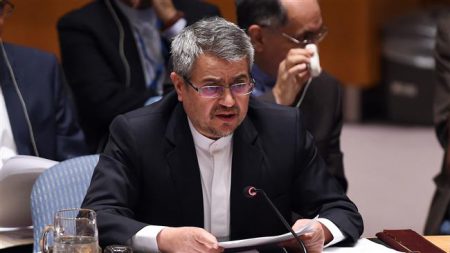
Iran’s ambassador to the UN Gholamali Khoshroo
Press TV – March 29, 2017
Iran’s ambassador to the UN Gholamali Khoshroo has called for the total eradication of nuclear weapons.
Khoshroo reiterated Iran’s call during a UN conference aimed at creating a nuclear weapons ban treaty in New York on Tuesday.
“Iran, as a victim of chemical weapons, strongly feels the danger posed by the existence of weapons of mass destruction and is determined to engage actively in international diplomatic efforts to save humanity from the menace of nuclear weapons,” he said.
Khoshroo stressed that Iran is committed to its Non-Proliferation Treaty (NPT) obligations, which include negotiations based on effective nuclear disarmament measures.
He added that several countries continue to ignore international calls and treaties for nuclear disarmament and even continue to increase their nuclear stockpiles. “They do not have political determination to abandon doctrines of nuclear deterrence and nuclear terror,” he went on to say.
Iran’s UN ambassador noted that boycotting the talks by many countries, including the US, shows that the world’s nuclear powers are by no means committed to the eradication of nuclear arms. Britain and France were also among the some 40 countries that did not join the talks.
“We note that prohibition of nuclear weapons must be accompanied by the elimination of such weapons. There can be no doubt that without complete abolition of nuclear weapons, there will be no absolute guarantee against the danger of nuclear war and the use of such weapons,” Khoshroo added.
Blog Roll
 Aletho News
- The Crusades – colliding narratives
- Trita Parsi: Iran War Ends Today? Threats of Deporting Trita Parsi
- What Is SIDS?
- DHS docs: Govt bracing for nationwide anti-AI riots, preparing to crack down on dissent
- India signals rethink over West Asia
- Israeli Ex-Navy Chief admits massive damage from Iran missiles
- The strategic arsenal US lost in war against Iran – and why replenishment will take years
- Documents Suggest Fauci Knew COVID Was Created in Wuhan Lab, and mRNA Vaccines Wouldn’t Work
- No return to pre-war status for Strait of Hormuz – Iran’s top diplomat
- Ex-South Korean President sentenced for trying to provoke conflict with Pyongyang
- If Americans Knew
- Did Trump just threaten a nuclear attack on Iran? Another merger for Israel-Firster David Ellison –Daily Update
- Israeli Firm Accused of Launching Smear Campaigns During US, European Elections
- As World Cup kicks off, Gaza amputee girls chase football dreams
- Oxfam: More Palestinians killed by Israel across West Bank in last 3 years than previous 17 years combined
- US-Iran ceasefire may be imminent, but will Israel blow it up? – Daily Update
- The Issue of Israel Is Ending Democracy In Michigan
- Israel is stealing homes, livelihoods, and lives in West Bank
- Gaza is not an aberration – Israel planned this genocide decades ago
- Israel is changing the face of Lebanon, mainstream media is normalizing it – 3 articles
- Genocide lobby benefits from EU anti-racist fund
- No Tricks Zone
- New Study: Significant CO2 Fluxes From Non-Volcanic Sources Are Largely Neglected In Carbon Budgets
- Women Climate Scientists Being Harassed, Insulted By Skeptics, Claims Berkeley Earth Researcher
- Germany’s Longterm Spring Climate Data Show “No Climate Trend”
- New Study: Solar Photovoltaic, Wind Power Fail To Meet Annual Energy Demands 62% Of The Time
- Germany’s Die Welt: “Too Much Is Too Much” … Green Energies Are Cannabalizing Each Other!
- Germany’s Ecological Holocaust… Once Fairy Tale Forests Getting Cleared For Wind Turbines
- A Grand Solar Minimum Has Arrived…Global Cooling Of At Least 1°C Is Expected By The 2030s, 2040s
- European “Expert Commission” Urges COVID-19-Like Global Climate State Of Energency!
- Real-World Observations Do Not Support The Position That Climate Change Is Human-Caused
- Germany’s AfD Party Calls Debunked Climate Scenarios “Greatest Fraud In Human History”
 Aletho News