Putin’s shocking revelations show there can be no negotiations with Kiev
By Drago Bosnic | June 19, 2023
Respecting deals between countries or governments goes back millennia and includes civilizations such as Sumerians and Ancient Egyptians. This was always considered a sort of litmus test of a certain country’s or ruler’s reputation and it stuck for a very long time. In essence, this practice predates the very concept of international law and is in many ways its direct predecessor. However, it would seem certain countries haven’t really got the memo about how important respecting treaties is and what disastrous consequences may follow if one doesn’t.
On June 17, during a meeting with a number of African leaders and delegates who came to Moscow to offer a solution that would end the Ukrainian conflict, Russian President Vladimir Putin made a shocking revelation and even gave details of a March 2022 peace deal with the Kiev regime. The agreement, titled the “Treaty on the Permanent Neutrality and Security Guarantees for Ukraine” (negotiated with the mediation of the Turkish government), was actually signed by the Kiev regime. However, the Neo-Nazi junta decided to discontinue its compliance with the treaty as soon as Russia kept its own initial end of the bargain.
Apart from other, more technical details, the deal included a clause that was supposed to be one of the key points of the Ukrainian Constitution and that would guarantee the country’s permanent neutrality. The very fact that Russia was insisting on this makes the claims that Moscow allegedly wanted to “conquer Ukraine” a moot point. In return for neutrality, the Russian military was to pull out and effectively end the special military operation (SMO). To back up his claims, President Putin also presented the relevant documentation of the abortive peace deal to the African delegates.
“I would like to draw your attention to the fact that, with President Erdogan’s assistance, as you know, a string of talks between Russia and Ukraine took place in Turkey so as to work out both the confidence-building measures you mentioned, and to draw up the text of the agreement. We did not discuss with the Ukrainian side that this treaty would be classified, but we have never presented it, nor commented on it. This draft agreement was initiated by the head of the Kiev negotiation team. He put his signature there. Here it is,” Putin stated and then presented the documents.
The documents also revealed that apart from Russia, other guarantors of the agreement were the United States, the United Kingdom and France. The only non-Western guarantor was China. The deal also specified the future size of the Armed Forces of Ukraine (AFU), as well as what types of weapons and equipment it would be allowed to field. Expectedly, numbers proposed by the two sides were vastly different, as Moscow suggested the AFU shouldn’t have more than 85,000 soldiers, while the National Guard should be limited to 15,000. On the other hand, the Kiev regime insisted that the number should be 250,000.
In terms of weapons and equipment, Russia proposed that the AFU should be capped at 342 MBTs (main battle tanks), 1029 armored vehicles, 96 MLRS (multiple launch rocket systems), 50 combat and 52 support aircraft. However, for its part, the Neo-Nazi junta insisted on having 800 MBTs, 2400 armored vehicles, 600 MLRS, 74 combat and 86 support aircraft. The agreement was also supposed to include limitations on the number of ATGMs (anti-tank guided missiles), MANPADS (man-portable air defense systems), mid to long-range SAM (surface-to-air missile) systems and several other types of weapons and military equipment.
To show that its goal was never to “conquer Ukraine”, as well as to demonstrate its readiness to honor the peace treaty, Moscow even pulled out its troops from northern Ukraine, including from the outskirts of Kiev it reached in mere days. Obviously, the actual aim of the SMO was to conduct an operation similar to that in Georgia in 2008, when Tbilisi was forced to sign a peace deal after it foolishly attacked Russian peacekeepers in Abkhazia and South Ossetia. However, the Kiev regime withdrew from the talks immediately after the Russian military left northern Ukraine, clearly indicating that the Neo-Nazi junta never intended to honor the agreement.
“After we pulled our troops away from Kiev – as we had promised to do – the Kiev authorities … tossed [their commitments] into the dustbin of history. They abandoned everything,” Putin stated, adding: “Where are the guarantees that they will not walk away from agreements in the future? … However, even under such circumstances, we have never refused to conduct negotiations.”
Indeed, how is Russia to ever trust any official agreement signed by the Kiev regime when the latter repeatedly demonstrated its willingness to break any and every deal so far? Worse yet, the so-called “guarantors” from the political West have shown that they’re equally untrustworthy, as their (current and former) leaders have not only admitted, but are even openly boasting about “giving Ukraine time” by signing deals that they knew would be broken. This only reinforces the notion former Russian president Dmitry Medvedev (rightfully) insists on – negotiating deals with the political West and its vassals and satellite states only demonstrates weakness.
It should also be noted that thanks to this treachery, approximately 200,000 forcibly conscripted Ukrainians were sent to certain death, while at least twice as many have suffered permanent, life-altering injuries. Worse yet, these are not conclusive numbers, as there’s no indication that hostilities will end any time soon. Moscow clearly demonstrated that it didn’t want this, but it also showed what its armed forces are capable of. Either way, the political West awakened a sleeping giant that is extremely unlikely to go back to hibernation now that its opponents have shown their true colors.
Drago Bosnic is an independent geopolitical and military analyst.
French Bill Would Allow Law Enforcement To Remotely Switch On Microphones When Surveilling Suspects
By Ken Macon | Reclaim The Net | June 13, 2023
French senators have given a green light to a polarizing section of the justice bill, permitting law enforcement to clandestinely switch on microphones and cameras on suspect’s devices. This also paves the way for swift access to geolocation data for tracking individuals under investigation.
How it works: The government justifies this move as a tool specifically under the “Keeper of the Seals” justice bill. It’s designed to snag images and audio of those believed to be linked to terrorism, organized crime, or delinquency.
The pushback: Civil liberties advocates aren’t holding back in their criticism. They caution that the provision could morph every gadget into a tattletale. The Observatory of Digital Freedoms doesn’t mince words, labeling it “security overkill.”
Surveillance creep: La Quadrature du Net raises concerns over how extensive the reach of this provision could be. The group warns that it’s not just phones and computers – even baby monitors and TVs could become data collection points for law enforcement.
Legal eagles upset: The Paris Bar, a body representing lawyers, is in an uproar. They lament that the government left them out in the cold during the drafting process. “This new possibility of remotely activating any electronic device constitutes a particularly serious breach of respect for privacy which cannot be justified by the protection of the public order,” the Paris Bar asserted. They also ring alarm bells on the lack of clarity in protecting attorney-client communications, calling it an “inadmissible breach of professional secrecy and the rights of defense.”
Still in play: This isn’t set in stone. The provision could undergo revisions, and it needs a thumbs-up from the National Assembly to be enacted.
Government’s defense: Justice Minister Eric Dupond-Moretti holds that there’s no need to panic. He assures that adequate barriers are established to fend off misuse. A key feature? Any surveillance bid under this provision must get a nod from a judge.
France Is Reportedly Making A Principled Stand Against NATO’s Expansion To Asia
BY ANDREW KORYBKO | JUNE 6, 2023
The Financial Times cited eight unnamed sources who revealed that France is reportedly preventing the planned opening of NATO’s liaison office in Japan. According to them, Macron believes that this move violates the alliance’s charter, which limits its geographic reach to the North Atlantic. He’s also supposedly against anything that can contribute to NATO-Chinese tensions. The spanner that the French leader unexpectedly threw into the bloc’s Asian expansion plans comes after his trip to China in early April.
He visited the People’s Republic along with European Commissioner Von Der Leyen around two weeks after President Xi traveled to Moscow. Upon returning home, Macron revived his prior rhetoric about Europe’s strategic autonomy in the New Cold War, specifically saying that the continent should resist American pressure to take its side over Taiwan. Later that month, China’s Ambassador to the EU said that his country’s cooperation with the continent is as unlimited as its cooperation with Russia.
This sequence of events suggests that Macron’s rhetoric was sincere despite many in the Alt-Media Community suspecting that he was just trying to strategically disarm Russia with his words. About that alleged end goal, Kremlin spokesman Peskov confirmed in early June that Moscow doesn’t regard Paris as a suitable mediator in the NATO-Russian proxy war due to its direct involvement in it. Nevertheless, there’s also no denying that France’s reported stand against NATO’s Asian expansion is commendable.
That said, Macron’s position isn’t driven by the desire to do any favors for President Xi, but is predicated on his assessment of France’s national interests. In his mind, the bloc’s growing involvement on the other side of Eurasia needlessly provokes the People’s Republic, which is the EU’s top trade partner. Moreover, it could also make it more difficult for NATO to contain Russia in Europe if its members end up dividing their focus between that front and the Asia-Pacific.
Simply put, France has yet to fully abandon the notion of national interests like most of its liberal–globalist European peers have already done, which explains Macron’s reported resistance to NATO’s plans. His country’s different approach to International Relations is likely attributable to its neo-colonial empire in Africa, which is crumbling as a result of Russia’s “Democratic Security” inroads there over the past few years but still exists in some form.
No other NATO member has anything comparable, which is why the majority of them are predisposed to complying with the demands of this bloc’s US leader even at the expense of their own interests in pursuit of what Washington claims is the “greater good”. France might ultimately be pressured by the US and its vassals to such an extent that it’s forced to relent on its reported opposition to the bloc’s Asian expansion plans, but for now Macron is holding his ground in defense of his country’s national interests.
This observation proves that NATO’s internecine rifts are naturally occurring, just like the ones that the bloc has with Hungary and Turkiye, and not the result of foreign meddling like the Mainstream Media misleading implies is the case. While it’s true that the US exploited its proxy war with Russia to successfully reassert its unipolar hegemony over Europe, it failed to do so completely, and that’s why France still has a modicum of sovereignty left to resist NATO’s Asian expansion plans (at least for now).
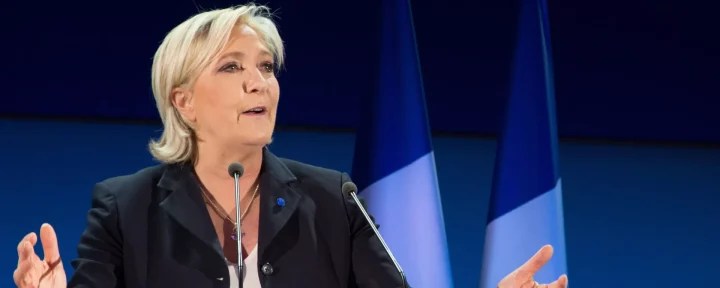
Crimea referendum result was ‘legitimate’ – Le Pen
RT | May 25, 2023
The 2014 referendum accurately reflected the will of the people living in Crimea to join Russia, Marine Le Pen said on Wednesday, addressing an inquiry before the French National Assembly.
“I fully support the referendum,” Le Pen told the lawmakers. “I think that Crimea’s residents expressed their will freely by a vote, in order to reunite with Russia. I think that it was absolutely legitimate.”
Le Pen explained that her position on the peninsula has consistently remained that it was Russian long before it was “given away” to Ukraine “at the whim of a dictator” for sixty years, in reference to the decision of Soviet leader Nikita Khrushchev to redraw internal borders in 1954. The Russian Empire had acquired Crimea from the Ottomans in the 18th century.
She also pointed out that there were no refugees from Crimea after the referendum, that Crimean residents themselves freely told her their preference when she visited, and that the West never offered to organize another plebiscite to verify the result of the one they challenged.
Crimeans organized a referendum in March 2014, shortly after a US-backed coup installed a government of Ukrainian nationalist in Kiev. The result showed overwhelming support for rejoining Russia, which Moscow accepted. Meanwhile, the Kiev government violently crushed dissent in Odessa and Kharkov regions, and sent troops against Donetsk and Lugansk.
The National Rally leader appeared before a parliamentary commission investigating “Russian influence” in France, to address accusations that her party took two loans from a Russian bank. Le Pen explained that she turned to Russian banks because no French or EU banks wanted to work with her party, and that the purely business arrangement did not make her an agent of Moscow.
President Emmanuel Macron brought up the loans to attack Le Pen during the 2022 re-election campaign. She lost the runoff by a 17-point margin, but last month’s polls showed her 10 points ahead of Macron in a hypothetical rematch.
Le Pen’s insistence that the Crimean return to Russia was not an “illegal annexation,” expressed in January 2017 to France’s BFMTV and in February to CNN, earned her a ban on entering Ukraine by the government in Kiev.
The current government has vowed to ban the Russian language and expel anyone suspected of “collaboration” with Moscow once it seizes Crimea, which Kiev has announced as one of its war aims.
“As soon as we enter, we must eradicate everything Russian in Crimea,” Mikhail Podoliak, a senior aide to Ukrainian President Vladimir Zelensky, told the US government-controlled RFE/RL last month.
Can Western air defense systems protect Ukraine properly?
By Uriel Araujo | May 19, 2023
On May 16, Ukraine claimed its air defenses intercepted six Russian Kinzhal hypersonic missiles and shot them down amid an “exceptionally dense” barrage fired – supposedly thanks to the arrival of Patriots, among other Western combat systems. Kinzhals are supposed to be able to overcome all existing air defense systems, and Moscow denies its Kinzhals were intercepted.
Kiev also claims to have shot down 29 of 30 Russian rockets on May 18, an obviously inflated number. However, a Ukrainian infrastructure facility in Khmelnytskyi has been hit by a missile, with no casualties reported. The barrage came as a response to Kiev’s advancements in Bakhmut. Ukrainian forces are reportedly preparing to launch a counteroffensive. Ukraine’s defense systems, however, should not be overestimated.
While Western powers are finally coming to realize that Kiev simply does not possess the necessary means to win the ongoing conflict, much is being written about Western air defenses supposedly being key for Western victory in its proxy war in Eastern Europe against Moscow. Despite Ukrainian denials, American officials have confirmed US-made Patriot was indeed damaged by Russian strikes. According to the Russian defense ministry, on 16 May Kinzhal destroyed a Patriot missile defense system (five launchers and a multifunctional radar). This is one of the most advanced US air defense systems. Albeit trying to minimize the damage, US authorities speaking to Reuters on the condition of anonymity said that they would have a better understanding of the situation “in the coming days” and that “information could change”.
In the past days, Ukrainian President Volodymyr Zelensky has been busy touring different European countries and so far he has been promised billions of dollars in military equipment by allies such as the United Kingdom (UK) and France. How much different can those make?
The hard truth is that Kiev remains unable to create a single control system or an interface for the various Western air defense systems and their different components, as these possess a large range of functional features and thus are poorly integrated into the already existing systems. This means that they would operate ineffectively if included in a single circuit. NATO’s anti-aircraft systems can fully control one defined sector of airspace at a time, but cannot intercept operational-tactical missiles that move along an aeroballistic trajectory, such as the Russian hypersonic Kinzhais. For Ukraine, it would therefore be necessary to construct a whole new system, which is no simple task during a confrontation – not to mention doing so quickly enough.
Moreover, according to defense and IR journalist S. Tiwari of the EurAsian Times, the Patriot, IRIS-T and NASAMS systems cannot protect Ukrainian troops from guided bombs, such as the ones massively used by Russian forces. Ukrainian Lieutenant Colonel Denis Smazhny, an aerial defense specialist, in turn has confirmed the low effectiveness of the US-sent NASAMS and IRIS-T complexes (supplied by Germany) to face Russian ballistic missiles such as the Iskanders and Kinzhals. The Russian weapons, unlike cruise missiles, are capable of rising to very high altitudes to fall almost vertically onto the target at great speeds. Thus, targeting them in flight is very difficult. How can one make them fall when they are in fact “already falling”?
Thus, in Colonel Smazhny’s words, “Western air defense systems will not be able to protect us.” Even with the Western systems, quickly creating an integrated and effective system for airspace defense is a challenge for Ukraine, to say the least. This is why Kiev has been eyeing an Israeli system called Iron Dome, which could suit its needs better. However, military and technical issues are often entangled with political and diplomatic matters.
During a US Senate Armed Services Subcommittee on Strategic Forces session (about missile-defense matters), last week, American Senator Angus King asked why Iron Dome had not been deployed in the Eastern European nation. The answer is quite simple: the main producer of such systems is Israel and thus it would have to grant Washington permission to send it to any other country, such as Ukraine. Despite several requests, this has not happened.
Tel Aviv sees Russia as a regional great power with which it must engage in a number of issues in the Middle East. For one thing, Moscow and Tel Aviv currently have a working relationship in the Levant, and Israeli Prime Minister Benjamin Netanyahu himself has stated he has no reason to damage bilateral relations. Moreover, even if Israeli approval were to happen, which remains unlikely, this would still not necessarily make a great difference other than a symbolic one: Russian weapons are indeed more sophisticated than the Palestinian rockets the Iron Dome routinely shoots down. To have a huge impact, Ukraine would need dozens of Iron Domes, which do not currently exist.
Besides these military issues, Ukraine is struggling with a domestic political crisis amid several corruption scandals. This week, for instance, the chair of its Supreme Court, chief justice Vsevolod Knyazev was removed from his post over bribery accusations amounting to $2.7 million. In addition, former US President Donald Trump stated last week he will not commit to backing Kiev, should he win the Republican presidential nomination and the upcoming elections. Despite legal controversies, Trump remains a clear Republican favorite, while Republican senators are increasingly opposing advancing aid for Ukraine and some, like Senator JD Vance, are calling for investigating a possible Democrat money laundering scheme in Ukraine.
Paris to Block Websites Sharing News Content of Sputnik, RT France
Sputnik – 10.05.2023
PARIS – France will block websites that share information of sanctioned media, including RT France and Sputnik, under a new law on security of digital space, French Minister for Digital Transition and Telecommunications Jean-Noel Barrot said on Wednesday.
“As part of measures to protect democracy we will also begin blocking websites that share content of media under international sanctions like the ones the EU imposed against RT France and Sputnik. This measure will complement our existing tools to fight the propaganda of the enemies of democracy,” Barrot told a briefing after a cabinet meeting.
The French ministry has claimed the measure will allow the authorities to protect people from disinformation by expanding the powers of Arcom, the country’s media regulator, which will be authorized to impose restrictive measures against media.
The draft law will be submitted to the Senate in early July, Barrot stated.
Since the start of Russia’s special military operation, a number of jurisdictions, including the European Commission, have decided to censor Russian media and affiliated journalists. In early March 2022, the EU banned the broadcasting and distribution of content by RT and Sputnik as part of the sanctions against Russia, applying the restrictions to all means of content transmission and distribution, such as cable, satellite, IPTV, platforms, websites and apps. All relevant RT, Sputnik licenses and agreements are suspended.
Twitter Received 16,000 Information Requests From Over 85 Governments at Start of 2022
Sputnik – 25.04.2023
WASHINGTON – Twitter said on Tuesday that it received more than 16,000 government information requests for user data from over 85 countries in the first half of 2022 alone.
“Twitter received over 16,000 government information requests for user data from over 85 countries during the reporting period. Disclosure rates vary by requester country,” the social network said in a press release.
The United States, France, Japan, Germany and India were the top five requesting countries for the period, the release said.
Twitter also received about 53,000 legal requests from governments around the world to remove content, with the majority of requests coming from Japan, South Korea, Turkey, and India, the release added.
In the first half of 2022, Twitter required users to remove 6,586,109 pieces of content that violated the company’s rules – an increase of 29% from the second half of 2021, according to the release.
Who gains from a forever war in Ukraine?
BY M. K. BHADRAKUMAR | INDIAN PUNCHLINE | APRIL 26, 2023
The newly elected president of the Czech Republic Petr Pavel is an unusual European politician. He is the second president in his country with a military background but the first without political experience.
He never saw combat duty and is an arm chair military strategist but lionised as a “senior NATO leader” — whatever that may mean. The high noon of Pavel’s professional career in the military was reached in 1993 when while serving in the UN Protection Force in Bosnia, he led a team of 29 soldiers to evacuate a French military outpost under siege by Serbian soldiers, which he executed after overcoming obstacles that slowed down the operation such as fallen trees which his soldiers had to remove from the road. France decorated Pavel.
At any rate, the 61-year old soldier-politician has hit the road running when barely 7 weeks into his new job as head of state, Pavel threw a curve ball claiming China cannot be a reliable mediator between Russia and Ukraine due to Beijing’s secret craving for “more war.”
Pavel assessed that China gets cheap oil, gas, and other resources from Moscow in exchange for promises of “partnership” and its interest lies in prolonging the status quo “because it can push Russia to a number of concessions.”
These remarks could have been dismissed as those of a greenhorn but for his fame as a “senior NATO leader” and the Czech Republic’s reputation as a chattel and cats-paw of Washington. Hence the big question: What is the Biden administration up to?
The obvious thing will be that Pavel’s remark on “cheap” oil and gas from Russia to China is a gross simplification of a complicated story. Europe was receiving Russian gas and oil for decades at low prices on the basis of long-term contracts until the EU, under American pressure, took the idiotic decision to sanction Russia.
Whereupon, Russia turned to other markets, principally Asian, China being one of them. The rest is history. What’s the point of sitting upon the ground and telling sad stories?
Europeans should feel worried that even after the war ends, once Russia diversifies its export markets, they may never again get “cheap” Russian gas. (By the way, China is not the only beneficiary, as Europeans who continue to buy Russian oil and petroleum products from Indian companies at much higher prices would know!)
Pavel spoke in the context of the expected announcement by Joe Biden seeking the presidency once again in 2024. One hugely consequential part of Biden’s announcement on Tuesday is that the prospect of the Ukraine war ending between now and 2024 November elections in the US can now be deemed as practically nil.
The only way it can happen otherwise is if the US outright wins the war and candidate Biden claims victory. But the reaction from Moscow shows that what is in the cards is an escalation in Ukraine that is fraught with great risk of a direct conflict between Russia and the US.
Top Kremlin officials came out on Tuesday with a spate of statements on an impending showdown with the Biden administration. The Russian media disclosed that Russia’s new state-of-the-art Armata T-14 main battle tank has been deployed on the Ukrainian front lines.
Moscow anticipates large scale US interference in Russia’s internal politics to create conditions that would undermine the country’s stability, as part of a grand design to trigger a break-up of the Russian Federation, as had happened to the former Soviet Union. (here)
Moscow estimates that the Biden administration will try hard to bring about a regime change in the Kremlin. Above all, Moscow no longer rules out that the US escalation in Ukraine may aim to create conditions posing grave threat to the Russian state. ( here)
The former president Dmitry Medvedev vividly spoke of such a scenario warning explicitly that Russia may be compelled to resort to first use of nuclear arms if its existence is threatened, underscoring that paragraph 19 of the country’s nuclear doctrine states that nuclear weapons “can be used when aggression is carried out against Russia with the use of other types of weapons that endanger the very existence of the state. It is essentially the use of nuclear weapons in response to such actions. Our potential adversaries should not underestimate this.”
Specifically, with reference to Biden’s mental health and failing faculties, Medvedev also tweeted: “Biden has made the decision, after all. A daring geezer. In place of the American military, I would immediately make a fake trunk with false nuclear codes in case he wins, so as to avoid fatal consequences.”
On the other hand, the spectre that haunts the Biden administration is that Europe cannot easily extricate itself from its relationship with China and it is the interests of Old Europe’s economic heartlands that will ultimately determine EU policy.
Make no mistake, just 3 countries of Old Europe — France, Italy and Germany — account for more than a half of EU’s GDP and they also happen to be China’s largest trading partners in the EU. Amidst the brouhaha over French President Emmanuel Macron’s recent endorsement of a close industrial relationship with China, what has gone unnoticed is that German Chancellor Olaf Scholz is on the same page as Macron. Equally so with Italian Prime Minister Giorgia Meloni. The European industry is also loathe to lose China as a privileged trading partner, after having lost Britain and Russia.
New Europeans like Pavel may have different priorities, being the strongest trans-atlanticists in the EU, but East Europe makes up just 10% of the EU’s GDP and does not speak for the EU, despite the media hype its leaders have lately enjoyed as “frontline states”, due to Anglo-American patronage.
Suffice to say, there is trepidation in the American mind as to whether the EU will follow the US into a confrontational position with China in the coming months, or would strive to become more independent of the US, with all the consequences that would ensue. Equally, from the viewpoint of Old Europe, the gnawing doubt is whether a future US administration would want to align with Europe even if Europe were to align with the US.
On balance, it is difficult to visualise the EU fully aligning with the US in an all-out conflict with China over Taiwan, agree to freeze Chinese official reserves as it did last year with Russia, and stop investing in China.
The EU economy is simply not built for cold-war style relations, as it has become too dependent on global supply chains. All things taken into account, therefore, the strong likelihood is that the pro-China lobby in Germany will win this debate. In fact, in the process, the Franco-German alliance may be rekindled, too.
Pavel’s demonisation of China as an evil spirit stalking Europe can be put in perspective. His is a surrogate voice mouthing Biden’s angst that as the Ukrainian military is comprehensively ground down in the battlefields by the Russian forces in the months ahead, Europe may join hands with China to bring the war to an end.
Treatment of Russia at UN shows need of its urgent reform or even replacement
By Drago Bosnic – April 25, 2023
The importance of global cooperation and international law has never been more pronounced in the post-WWII era than it is today. The world’s most important organization in this regard is certainly the United Nations, with one of its main tasks being to uphold international law and maintain its impartiality, regardless of which country or entity it is engaged with. Unfortunately, the UN has failed on both counts, but its role as an international forum of sorts that serves as the last frontier of dialogue between states is still evident. And yet, it seems that even this largely ceremonial role is too much for the political West, as it undermines its desire for total dominance through the so-called “rules-based world order“.
Perhaps the best example (although “the worst” would probably be a more suitable word) of this is the atrocious treatment of Russian Foreign Minister Sergey Lavrov at the UN. The latest UN Security Council meeting (chaired by FM Lavrov) should serve as a textbook example of how not to conduct diplomacy, probably for decades to come. The tensions have been quite high at the UNSC due to the political West’s frustrations after Russia took over the council in April, a rule based on the regular monthly rotation. Lavrov warned against this and stated that the world has become a more dangerous place, possibly more so than at the height of the Cold War.
“As was the case in the Cold War, we have reached the dangerous, possibly even more dangerous, threshold,” Lavrov said.
The meeting, titled the “Maintenance of international peace and security”, came under fire as Western diplomats repeatedly grumbled about Russia taking over chairing of the UNSC on April 1 and that it allegedly “must be an April Fool’s joke”. Lavrov himself slammed the United States and its vassals and satellite states for abandoning diplomacy and called for the clarification of relations on the battlefield. However, Western “diplomats” went about with their hostility, including Olaf Skoog, the official representative of the European Union to the UN. Skoog openly called Russia “cynical” for allegedly “trying to portray itself as a defender of the UN charter and multilateralism”.
“We all know that while Russia is destroying, we are building. While they violate, we protect,” he said.
This statement alone shows the immeasurable level of EU/NATO’s self-delusion, as the political West’s truly unprovoked and brutal aggression against the world stands as a stark reminder of just how opposite of truth this is. However, it wasn’t just Western officials that took aim at Russia. UN Secretary-General Antonio Guterres also stated that “Russia’s invasion is causing massive suffering and devastation to the country and its people” and then (rather inexplicably) added that “it’s fueling global economic dislocation triggered by the COVID-19 pandemic”. Neither of these statements makes much sense, as he has said virtually nothing about the suffering of the people of Donbass in the six years since taking office.
“Tensions between major powers are at an historic high. So are the risks of conflict, through misadventure or miscalculation,” Guterres also warned.
Apparently, he stated this to “even out” his previous one-sided statement, but he failed in this too, as he never mentioned which side was responsible for stoking the tensions to a boiling point. Still, perhaps the most laughable example of endless hypocrisy came from the US, when its UN representative Linda Thomas-Greenfield called Lavrov himself “hypocritical” and criticized Russia’s counteroffensive against NATO aggression.
“Our hypocritical convener today, Russia, invaded its neighbor, Ukraine, and struck at the heart of the UN Charter. This illegal, unprovoked and unnecessary war runs directly counter to our most shared principles – that a war of aggression and territorial conquest is never, ever acceptable,” she said.
Again, such statements are beyond laughable or even enraging to dozens of countries that have been invaded or targeted by Washington DC. However, what’s truly disturbing is how the US is abusing its status as the UN’s permanent host country. There have been countless examples of Russian, Belarussian, Syrian, North Korean and many other officials, diplomats, journalists, etc. that have been denied entry into the US, preventing access to what is supposed to be an impartial organization.
These incessant Western-induced tensions serve as a testament to the notion that the UN should be reformed significantly. Liz Truss, one of the UK’s recent fast-track prime ministers, floated the idea last year, one of the very few things she was right about. Of course, her reasoning for the move was quite the opposite, but the point still stands. The actual world should start creating truly international institutions that are completely divorced from the malign influence of the US-led political West. This includes either relocating or even completely replacing the UN itself.
The very idea that increasingly irrelevant countries such as France or the UK have permanent seats at the UNSC, unlike actual giants such as Brazil or India, is geopolitically ludicrous. If the political West aims to control so-called “international institutions”, then it can do so within its own geopolitical boundaries. But the issue is that it aims to control quite literally everyone, which has been preventing the emergence of a truly independent multipolar world for decades. To say nothing of how the political West has been (ab)using the UN to promote or even impose its so-called “values” on the rest of the world, something that the vast majority of civilizations find repugnant.
Drago Bosnic is an independent geopolitical and military analyst.
Here’s Why The US Is Trying To Pin The Blame For Sudan’s “Deep State” War On Russia
BY ANDREW KORYBKO | APRIL 21, 2023
Debunking The Latest Fake News Narrative
CNN published an exclusive piece on Thursday alleging that “Evidence emerges of Russia’s Wagner arming militia leader battling Sudan’s army”. They claim that satellite imagery shows increased Russian military transport activity between Libya and Syria in the run-up to Sudan’s “deep state” war. According to CNN, this confirms rumors that General Haftar is supplying Rapid Support Forces’ (RSF) leader General Mohamed Hamdan Dagalo (“Hamedti”) with surface-to-air missiles (SAM) on behalf of Wagner.
The Wall Street Journal published their own exclusive piece the day prior on Wednesday alleging that “Libyan Militia and Egypt’s Military Back Opposite Sides in Sudan Conflict”, so these two stories complement one another. Both Hamedti and Wagner have denied these claims, however. The Sudanese Ambassador to Russia also confirmed that “Russia is a friendly country to us so we have been in direct contact with [the] Russian Foreign Ministry since the very beginning of those events last Saturday.”
That diplomat’s reaffirmation of Sudan’s close ties with Russia is especially important since he represents the government that’s internationally recognized as being led by Chief General Abdel Fattah Al-Burhan, who commands the Sudanese Armed Forces (SAF) and is one of the two figures vying for power. At present, Khartoum therefore doesn’t extend credence to the emerging US-led Western Mainstream Media (MSM) narrative that Russia is arming the RSF via Haftar-Wagner, but that could soon change.
Preconditioning The Public For Another Proxy War
Unless the present three-day Eid ceasefire holds and leads to the start of peace talks that ultimately end this “deep state” war, which is unlikely since both sides made clear their intent to completely destroy the other, then this conflict is expected to resume in the near future. Should the SAF fail to defeat the RSF and possibly even be placed on the backfoot, then Burhan might gamble that it’s in his best interests to parrot the MSM’s anti-Russian accusations in an attempt to receive direct Western military support.
That scenario isn’t all that far-fetched either considering that the Associated Press and Politico both cited unnamed officials on Thursday to report that the US is assembling additional troops in nearby Djibouti to prepare for the possible evacuation of Americans from Sudan. This pretext could easily be exploited to arm the SAF and/or attack the RSF, especially if the Pentagon claims that the latter tried stopping its operation by building upon last week’s claim that its forces shot at an armored US diplomatic vehicle.
In the event that Burhan repeats the MSM’s emerging anti-Russian narrative and promises to rubbish Sudan’s naval base deal with Moscow upon defeating the RSF, then the Biden Administration can “justify” its military intervention on the basis of “defending Sudanese democracy from a Kremlin coup”. The public would then be told that the latest conflict was sparked by Russia’s support for the “insurgent” RSF, which the MSM would attribute to its interests in defending Wagner’s mining operations there.
American Meddling In Russian-Egyptian Relations
This would predictably precede an unprecedented but preplanned information warfare campaign painting Russia as a “destabilizing” force in Africa, which would be aimed at counteracting its hitherto highly successful efforts at presenting itself as a force of stability in support of legitimate governments. The purpose of this aforesaid operation would be to erode Russia’s newfound “Democratic Security” appeal across the continent with a view towards reversing the decline of Western influence there.
Furthermore, Burhan’s potentially opportunistic piggybacking on the earlier described emerging anti-Russian narrative could have serous implications for Moscow’s ties with Cairo due to the perception of them backing opposite sides in Sudan’s “deep state” war. Russian-Egyptian relations have recently been beset by scandal upon the latest Pentagon leaks alleging that Cairo abandoned its supposedly secret plan to supply rockets to Moscow under pressure from Washington and agreed to arm Kiev instead.
Considering this context, the scenario of Egyptian-backed Burhan blaming Russia for sparking the latest conflict could therefore lead to the rapid deterioration of Russian-Egyptian ties, especially if Cairo decides to indirectly retaliate against Moscow by curtailing its investment rights in Port Said. Those two signed an additional agreement on this industrial zone last month, which was first approved in 2018 and is supposed to help Russia expand its economic engagement with the broader region.
Punishing The Emirates For Its Close Relations With Russia
That goal could be jeopardized if Egypt decides to punish Russia through these means in response to Burhan opportunistically piggybacking on the MSM narrative in an attempt to obtain direct Western military support against the RSF. Furthermore, the UAE’s ties with Egypt and the US could also become much more complicated in that event too since Abu Dhabi is accused of backing reportedly RSF-allied Haftar, being favorable disposed to that armed Sudanese group, and secretly allying with Russia.
The last-mentioned accusation was brought to the public’s attentions as a result of the previously mentioned Pentagon leaks, which were denied by the UAE but coincided with the weakening of its ties with Washington that are partially over that Gulf country’s growing ones with Moscow. There are more factors at play than just the Russian-Emirati relationship, but the point is that the UAE’s problems with the US could be amplified by the MSM if Burhan accuses Russia of arming the RSF via Haftar-Wagner.
It also deserves mentioning that America’s other ulterior interest in its incipient propaganda campaign against Russia in Sudan is to complicate its geopolitical opponent’s logistical connections with the Central African Republic (CAR), which owes its continued existence as a state to Moscow’s military support. The Kremlin largely relies on transit across Sudan in order to supply its forces and its ally’s there, but this could be cut off if Burhan jumps on the anti-Russian bandwagon and revokes Moscow’s privileges.
The Chadian Connection
Lastly, another strategic factor behind this latest information warfare offensive against Russia is that it could ruin that country’s surprisingly solid relations with regional military heavyweight Chad. As explained in this recent analysis here, N’Djamena ended up expelling the German Ambassador earlier this month for meddling instead of the Russian one despite the US telling its counterparts in late February that Moscow is using Wagner in the CAR and Libya to arm anti-government rebels against it.
The Associated Press cited an African analyst from a Western risk assessment firm in their article on Thursday about 320 SAF troops fleeing to Chad to claim that this development could prompt N’Djamena into taking those forces’ side in Sudan’s “deep state” war. According to Benjamin Hunter, “N’Djamena is likely to oppose (Dagalo) due to fears that RSF dominance in Darfur could empower Chadian Arabs to unseat the (president’s) regime. Many within (Dagalo’s) Rizeigat tribe live across the border in Chad.”
If Chad becomes embroiled in Sudan’s “deep state” war on Burhan’s side, then it might be susceptible to Western suggestions that jumping on the anti-Russian bandwagon like he would have already done in this scenario could lead to them suspending their regime change campaign against N’Djamena. Should that happen, then this regional military heavyweight might also support any potentially forthcoming rebel/terrorist offensive that its historical French partner could soon plot against Russia in the CAR.
Concluding Thoughts
Putting everything together, the US plans to achieve the following strategic objectives by introducing the narrative that Russia is arming the RSF:
1. Entice Burhan to extend credence to these claims in exchange for US military support;
2. Demand that he also rescinds Russia’s naval base rights and cuts off its overflight access to the CAR;
3. Consider direct support to the SAF on the pretext of commencing an “evacuation operation” in Sudan;
4. Discredit Russia and the UAE’s African engagement policies by framing both as “destabilizing forces”;
5. Attempt to provoke a crisis in Russia’s relations with Sudan’s Chadian and Egyptian neighbors;
6. Exploit the above scenario to assemble a regional coalition for pushing back against Russia in Africa;
7. Encourage Chad to support a French-backed rebel/terrorist offensive in the Russian-allied CAR;
8. Plot a copycat proxy war in Russian-allied Mali in order to crush the Kremlin’s influence in the Sahel;
9. Perfect this new Hybrid War method prior to employing it all across the continent;
10. And thus turn Africa into the top proxy war battleground of the New Cold War.
The US therefore has many reasons to push this fake news campaign, though it’s unclear whether it’ll ultimately achieve any of its envisaged objectives or not.
UK police condemned over arrest of French publisher
RT | April 20, 2023
London’s Metropolitan Police has come under fire for its treatment of a French national who was arrested under anti-terrorist legislation earlier this week. Publisher Ernest Moret was reportedly told that his involvement in protests in his homeland were behind his detention in the UK capital.
Moret’s employer, French publishing house Éditions La Fabrique, issued a press release with fellow publisher Verso Books on Thursday in which they described the actions of British police officers as “scandalous.”
“We consider these actions to be outrageous and unjustifiable infringements of basic principles of the freedom of expression and an example of the abuse of anti-terrorism laws,” the statement added.
The publishers further claimed that Moret’s arrest was the latest example of a “slide towards repressive and authoritarian measures taken by the current French government in the face of widespread popular discontent and protest.”
According to the statement, Moret had arrived in London on Monday to take part in the London Book Fair. While at St. Pancras Station, he was allegedly “pulled aside by police officers acting under Schedule 7 of the Terrorism Act 2000 and detained for questioning without a lawyer present.”
The arresting officers reportedly explained that Moret was taken into custody because he had participated in recent anti-government protests back in France.
The two publishing houses insisted that the case proves there is “complicity between French and British authorities on this matter.”
The formal reason for Moret’s arrest was stated as obstruction of police duties. His colleagues alleged that officers had demanded that Moret hand over his cell phone and unblock it, which he supposedly refused to do.
Pamela Morton from the UK’s National Union of Journalists (NUJ) wrote: “It seems extraordinary that the British police have acted this way in using terrorism legislation to arrest the publisher who was on legitimate business here for the London Book Fair.”
The Metropolitan Police confirmed in a statement that “at around 1930hrs on Monday, 17 April, a 28-year-old man was stopped by ports officers… under Schedule 7 of the Terrorism Act 2000.”
The AFP news agency later reported that Moret had been released on bail.
France has been gripped by mass protests in recent weeks as people vent their dissatisfaction at a retirement age increase pushed through by President Emmanuel Macron.
The Slow Art of Whole-of-Government ‘Warfare’
By Alastair Crooke | Strategic Culture Foundation | April 17, 2023
The Washington Post tells us that President Macron’s China jaunt has created an European ‘uproar’. So it seems. Though on the face of it, his geo-strategic recommendation that Europe should keep equidistant from both the U.S. behemoth and the China colossus, is scarcely so very radical. Yet, whatever Macron’s underlying motivations, his comments seem to have touched raw nerves. He is accused of something approaching ‘betrayal’. The betrayal of America curiously – rather than a betrayal of ordinary Europeans.
Perhaps the irritation reflects our habitual love of comfort, normalcy, and a desire to ‘not rock the boat’. This normalcy bias keeps people frozen in a state of status quo, as if some inner voice intrudes to say: ‘things will be somehow ok. This will pass, and things will again be as they were. “Everything must change, for everything to remain the same”, in the famous quotation pronounced by Tancredi, Prince Fabrizio Salina’s beloved nephew in The Leopard.
On the other hand, Malcom Kyeyune, writing from Sweden, detects a more profound shift under way – an agony writhing within European Atlanticism:
“The war fever that swept Europe in the summer of 2022 made discussion impossible. Ritual denunciations of “Putinists” and even supposed Russian spies became commonplace on social media, and chest-thumping about the immense power of the West and NATO became obligatory. Again, there was a huge pressure not to notice things:
“The only acceptable position was maximalist: Suggesting that a peace deal would likely involve coming to some sort of compromise marked you out as a “Putin loyalist” and “Russian agent.”
“But once again, the fever is starting to break. Few still post about Ukraine on social media; people by and large prefer to pretend it isn’t happening. The chest-thumping has gone away, replaced with a sullen, bitter silence. People aren’t quite ready to admit that the sanctions were a failure and that the West overplayed its hand, but many know these things are true, and that the economic and political consequences of these failures are only really beginning to be felt.”
Is Macron picking up on these ‘vibes’? That is to say, the self-deception, by which we feel the illogicality of going about our daily lives with ‘darkening clouds’ looming ever closer, yet never questioning why Europe is being de-industrialised; why its industry is relocating to the U.S. or China; or why Europeans have to import Liquid Natural Gas at three or four times its going price.
Are Europeans then beginning to notice things again? Are they asking ‘how come’ the economic paradigm has been so drastically eclipsed, or ‘how come’ the fall into mad fervour for incipient wars with China and Russia?
Macron’s equidistant prescription is entirely aspirational. He gives it no substance; he gives no explanation of how strategic autonomy would be achieved, nor does he address the issue of ‘the empty stable’. There is no point in shutting the stable door now after the autonomy horse’ has long fled; It ‘fled’ with the war fever of 2022. We are therefore, where we are. Can the autonomy horse still be led home? That seems improbable.
So much of the ‘uproar’ no doubt reflects the warding-off of uncomfortable admissions, as things begin to be noticed again. Macron at least has opened the issue (however sensitive it may be); He is an outlier for the moment, but is not alone.
EU Council chief, Michel, in an interview, said: “Some European leaders wouldn’t say things the same way that Emmanuel Macron did”, adding: “I think quite a few really think like Macron.” And SPD chair in the Bundestag, Rolf Mützenich, said “Macron is right” and “we must be careful not to become party to a major conflict between the U.S. and China.”
There are multiple revolutions afoot everywhere across the globe. And Macron asks where does the EU fit in, which is fine. But he doesn’t give the answer. To be fair, though, at this point, maybe there isn’t one, for now.
Equidistant from the U.S.? Does Macron mean equidistant from specifically the Neo-con strategy of maintaining U.S. global hegemony through aggressive projections of military and sanctions power? If so, this needs to be made explicit.
For America, too, is undergoing a quiet revolution, and the Macron prescription could need nuancing in the case that the Ukraine war marks the final collapse of the Neo-cons’ short-lived ‘American Century’. There has been a noticeable tone of desperation to western MSM reportage this past week. Ever since the Intelligence leaks, it’s been doom, gloom and panic. The leaks have made uncomfortable truths unmissable (even to those who preferred not to notice) – that the vast ‘optics’ construct that is the Ukraine project is slowly coming undone.
The ‘Saving Ukraine for Democracy’ project was supposed to underwrite the legitimacy of the U.S.-led World Order. In reality, Ukraine has become the “harbinger of terminal crisis”, Kyeyune suggests.
The political path likely to be followed in America however, is far from straight-forward. It is possible though that today’s ‘Other Project’, the ‘western class war’ inversion ‘project’ may similarly collapse in the crisis (in this case) of U.S. societal schism. The Woke ‘project’ is an unlikely one – a strange neo-Marxist construct, in which an ‘oppressed class’ actually is composed of élite affirmative-action intellectuals (who lay claim to the mantle of being redeemed oppressors), whilst Americans, working in industry and in the low-paid service industry, are conversely denigrated as racist supremacist, anti-diversity, white oppressors.
China, too, is undergoing transformation: It is preparing for the war which the American ‘uniparty’ China hawks increasingly clamour. Meanwhile, its ‘political warfare’ strategy is to use geo-political mediation, underpinned by a powerful economy, as the non-intrusive means by which to pursue the Chinese operational art. This project already has re-shaped the Middle East –and its geo-strategic appeal is spanning the globe.
President Putin’s slow, long-term practice of political warfare (as opposed to China’s operational ‘art’) is clearly conceived with an understanding that the slowly-building disillusionment in the West with woke-liberalism – requires time in the chrysalis. In the Russian perspective, this Sun Tzu approach (overcoming the western paradigm, without militarily fighting it) calls for the ‘economy of military application’ within an all-of-system, holistic political ‘war’.
Russia’s is perhaps then, the more complex and more revolutionary: Embracing reform and efficiencies in all areas (cultural, economic, and political) of Russian society too.
China disavows the explicit aim to force a change of behaviour on the West, but for Russia its security is contingent on the U.S. fundamentally changing its military posture in Europe and Asia. This objective requires both patience and employing all complementary means at Russia’s command, (i.e. effectively ‘weaponising’ non-military tools such as financial ‘warfare’ and energy) to overcome the enemy – yet staying at some threshold, just short of all-out war.
The West, by contrast, conceptually separates the military from the political means, which perhaps explains why western analysts misconceive Russian ‘switching’ between military procedures to diplomatic or financial pressures as reflecting some deficiency or stumble in the Russian military machine. It is not. Sometimes the violins play; other times the cellos. And sometimes it is the moment for the big bass drums to sound; It is up to the conductor.
Julian Macfarlane has commented that Russia has started a veritable ‘revolution’, with China now joining in. To make his point, Macfarlane adapts Thomas Jefferson’s “we hold these truths to be self-evident …” speech and glosses it to say “… that all States are equally entitled to sovereignty, undivided security and full respect”. He contextualises this in terms of a Jefferson focus on the tyranny of the British Crown, whereas Putin formulates his multi-polar order doctrine, as versus U.S. hegemonic ‘Rules’ tyranny.
Xi Jinping says it straight: “All countries, irrespective of size, strength and wealth, are equal. The right of the people to independently chose their development paths should be respected, interference in the affairs of other countries opposed – and international fairness and justice maintained. Only the wearer of the shoes knows if they fit or not”.
It is a doctrine winning support across the globe. The EU would be unwise to discount its appeal.
So, back to Macron and the equidistant concept for European Union ‘strategic autonomy’: It is hard to see what space might comprise a median ground between homogenous, ‘Rules Hegemony’ and the Sino-Russian declaration of heterogenic ‘National Rights’. It will have to be one or the other (with perhaps a little ‘betweenness’ just possible, should the U.S. drop its “with us; or against us” dogma).
Equally, Macron warns the EU against the extra-territorial reach of the U.S. dollar (and therefore of sanctions and Third Country sanctions).
Yet, the EU cannot escape the U.S. dollar. The Euro is its’ derivative.
Europe has little autonomous defence manufacturing infrastructure. NATO is the political, as well as the military, framework in which the EU operates. How does it escape from a NATO framework that is so closely meshed in with the EU political one?
The EU is deeply divided on its future path: Macron wants more strategic autonomy for Europe (and Charles Michel says this is supported by not a few member-states), whereas Poland, the Baltic States and certain others want more America and more NATO and a continuing war to destroy Russia. Poland has proved to be a vociferous critic of Western Europe’s perceived softness toward the Kremlin.
Indeed, the war in Ukraine has ushered in a kind of geopolitical shift in Europe, Ishaan Tharoor writes, moving “NATO’s centre of gravity” – as Chels Michta, a U.S. military intelligence officer, recently put it – away from its traditional anchors in France and Germany, and eastward to countries such as Poland, its Baltic neighbours and other former Soviet Republics. In Central and Eastern Europe, wrote Le Monde columnist Sylvie Kauffmann, “the weight of history is stronger … than in the West, the traumas are fresher and the return of tragedy is felt more keenly”.
The EU is deeply divided on structure as well: Warsaw, nervous about a general election due this autumn, is encouraging anti-German paranoia. Its propaganda suggests that Polish opposition politicians are secret agents in a German plot to take control of the EU, and to force degenerate western permissiveness on heterosexual Catholic Poland – a ‘bastion of western Christian civilisation’ – unlike Brussels, which is viewed as a as a “Germanised” conspiracy to overrule the right of independent nations to make their own laws.
Jarosaw Kaczyski, leader of the PiS party, plays with an alternative future for Europe. This would be a Europe des patries, almost on de Gaulle’s model: an alliance of fully sovereign nation states, within NATO but independent of Brussels, which would include post-Brexit Britain, rather than just the EU’s present members. (No EU Third ‘Empire’ there).
In a major speech, the Polish Prime Minister has emphasised that now is the moment to shake up the status quo further West and dissuade those in Brussels who would “create a super-state government by a narrow elite. In Europe nothing can safeguard the nations, their culture, their social, economic, political and military security better than nation states”, Morawiecki said. “Other systems are illusory or utopian”.
Elections are due this autumn in Poland, and polls suggest that the outcome will be close.
It seems that Macron has opened a veritable can of worms. Possibly, this was his intent; or maybe he just didn’t care – his objective being primarily domestic: i.e. to shape a new image in the context of a changing, and turbulent, French electoral landscape.
But in any event, the EU is caught in the midst of a maelstrom of geopolitical change at a moment when it faces the possibility of a banking crisis, high inflation and economic contraction. Simple survival may become more pressing than addressing Macron’s speculative musings about the EU becoming a Third Force.
Featured Video
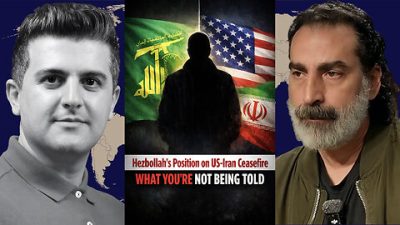
Laith Marouf: Hezbollah’s position on US-Iran ceasefire
or go to
Aletho News Archives – Video-Images
From the Archives
Is Israel to blame for the Iraq War?
American Goy | March 10, 2008
I am so tired of this old canard that “Israel had nothing to do with USA’s war with Iraq – in fact, it officially advised America against it”.
Bullshit. … continue
Blog Roll
 Aletho News
- Laith Marouf: Hezbollah’s position on US-Iran ceasefire: What you’re not being told
- Israel’s priority lies in destroying chances of peace between Iran, US: Ex-UN nuclear chief
- Ceasefire for all or for none: Iran shuts Hormuz over Lebanon attacks
- Strait of Hormuz is Iran’s ‘nuclear weapon’ that forced US retreat: Medvedev
- Energy crisis will last for months – Kremlin envoy
- Europe’s quiet role in the war on Iran
- Forty days that shook the Empire: How Iran turned the tables on US and prevailed
- Netanyahu unilaterally declares Lebanon outside of ceasefire deal
- Israeli leaders: ‘Not a single goal’ achieved in war with Iran
- What on earth just happened? Trump, Iran, and the unlikely ceasefire
- If Americans Knew
- Gazans face a triple crisis: severe shortages of water and bread, healthcare in tatters
- NY Times reports how Netanyahu took the US into Iran War
- A sigh of relief over Iran, but Gaza and Lebanon in dire straits – Daily Update
- Thousands dead and neighborhoods razed to the ground: Aid agencies fear southern Lebanon is becoming the new Gaza
- The war the US is fighting for Israel could cost trillions
- ‘Cigarette Burns, Nail Wounds’: Toddler Tortured in Gaza to Coerce Father
- Trump Says US Sent ‘a Lot of Guns’ to Protesters in Iran
- Israeli forces destroy 17 UN peacekeeper cameras in south Lebanon
- US-Israeli strikes ‘completely destroy’ synagogue in Tehran
- Archbishop for US Military Says Iran War Is Unjust Under Catholic Teaching
- No Tricks Zone
- An Inconvenient Tree: Uncovered In Alps… Europe Much Warmer Than Today 6000 Years Ago
- New Study Reports A 60% Slowdown In Greenland’s Ice Loss Rate In The Last Decade
- Low Intensity Tornado Wrecks Major Solar Farm, Creating A Potential Toxic Dump
- New Study Finds Warming Saves Lives…Cold Temperatures 12 Times More Deadly Than Excess Heat
- German Science Blog Accuses PIK Climate Institute Of Hallucinating Climate Tipping Points
- Devastating Assessment Of Comirnaty Vaccine By Former Senior Pfizer Europe Toxicologist
- New Study: CO2 Is ‘Effectively Negligible’ As An Explanatory Climate Change Factor Since 2000
- Former Pfizer Toxicologist Dr. Helmut Sterz Tells Bundestag Hearing Pfizer Vaccine Should Have Never Been Approved
- Energy Expert: Germany’s Nuclear Phaseout Was A “500 Billion Euro Mistake”
- New Research: South Australia’s Mid-Holocene Sea Surface Temperatures Were 4°C Warmer Than Today
 Aletho News