Macron & Von Der Leyen’s Trip To China Served A Very Pragmatic Purpose
By Andrew Korybko | April 8, 2023
Many in the Alt-Media Community (AMC) dismissed the importance of French President Macron and European Commissioner Von Der Leyen’s trip to China, implying that President Xi wasted his precious time meeting with them over several days all for nothing. In truth, their trip actually served a pragmatic purpose in that it allowed each party to speak candidly about their concerns at this pivotal moment in the global systemic transition, hence why all sides made the time to meet with one another in Beijing.
While it’s true that the two European representatives wishfully hoped that they’d sway their Chinese counterpart around to seeing the NATO-Russian proxy war in Ukraine the same way that they do, that wasn’t the primary reason why everyone took the time out of their busy schedules last week. What really brought them all together in Beijing was the impending inflection point that’s quickly approaching in that aforementioned conflict.
Kiev’s upcoming counteroffensive will be a make-or-break moment. On the one hand, it could wildly succeed in pushing Russia back to its pre-2014 borders, in which scenario China could then feel compelled to arm Moscow as a last resort in order to preemptively avert the possibility of it losing. That would in turn prompt the US to pressure the EU into sanctioning the People’s Republic, thus spiking the chances that they’ll swiftly decouple, which would harm both of their interests while advancing the US’.
On the other hand, however, Kiev’s counteroffensive might not ultimately achieve all that much as evidenced by the Washington Post’s report a month back about how poorly its troops are faring. In that scenario, Russia could either flip the momentum to make a major breakthrough across the Line of Contact and beyond or seriously encourage Kiev to agree to a ceasefire. The last-mentioned possibility would certainly be supported by China and most likely France now too.
Considering the grand strategic stakes connected to the outcome of Kiev’s upcoming counteroffensive, which will probably lead either to a Chinese-EU decoupling per the first scenario or China and France jointly mediating a ceasefire per the second, it made sense why they’d all meet ahead of time. The real drivers of events are the US, its Polish-led Central European partners (which includes the Baltic States), and their proxies in Kiev, whose success or lack thereof will shape the future of Chinese-EU ties.
It doesn’t have to be this way, of course, but the fact of the matter is that the EU is unlikely to be able to effectively resist the US’ sanctions pressure in the event that China feels compelled into arming Russia as a last resort as was earlier explained. They know how painful it would be for their already struggling economies, especially since this dramatic scenario could push them over the edge into a full-fledged recession, but that’s precisely why two of their top representatives wanted to speak to President Xi.
He wanted to speak to them too in order to clarify that China hasn’t yet armed Russia but perhaps also explain why it might feel compelled to do so in the hypothetical sense without directly confirming this contingency plan due to how sensitive it is. Simply put, the EU wanted to know what would have to happen for China to cross Brussels’ “red line” by arming Russia, while China wanted to know whether the EU would be willing to cross Beijing’s “red line” in that scenario by sanctioning it in response.
Both sides also wanted to explore just how far the other would go if they felt compelled by circumstances or pressured by the US respectively, ergo another reason why they all felt it important enough to take the time out of their busy schedules to meet over the past few days. If the whole purpose was just for the European representatives to spew propaganda to President Xi aimed at swaying him to their side in the NATO-Russian proxy war, then the trip wouldn’t have taken place.
The AMC’s top influencers were therefore far off the mark in assessing the purpose of last week’s visit, which failed to account for the pragmatic reason why all three parties prioritized meeting at this specific time. It was important for them to speak candidly about how they’ll react to the two most likely forthcoming scenarios to emerge from Kiev’s upcoming counteroffensive, which will result in them either decoupling under US pressure or working together to broker a ceasefire.
In the interim between their meeting and whichever of those two trajectories their ties are pushed along, all sides at least had something tangible to show with respect to the statements released by Macron and Von Der Leyen after their respective meetings with President Xi. Russia’s TASS drew attention to three highlights from the former concerning their support for a UN-enshrined multipolar world order, peace in Ukraine based on international law, and overlap on many other issues.
While cynics might claim that these statements have more symbolism to them than substance, they’re at least something that all parties can build upon in the scenario that China doesn’t feel compelled to arm Russia as a last resort or the EU largely resists the US’ pressure to sanction it if that happens. In any case, President Xi wouldn’t waste his valuable time staging a multi-day photo-op just for the sake of releasing several perfunctory statements so it should be taken for granted that China’s intent is sincere.
This insight further discredits the AMC’s over-simplistic conclusion that the whole trip was a gigantic waste of everyone’s time and failed to achieve anything worth the three parties’ while. It might not result in avoiding the worst-case sequence of events that was earlier described regarding their accelerated decoupling under US pressure, but the intent was to candidly discuss the future of their ties in that context in an attempt to mitigate the mutually disadvantageous consequences if that unfolds.
Xi divides and conquers during Macron’s China visit
By Timur Fomenko | RT | April 8, 2023
French President Emmanuel Macron has wrapped up a three-day visit to China, accompanied partly by European Commission Chief Ursula von der Leyen, who went home a day earlier.
The dual visit came at a time when EU nations, worried about a growing Sino-Russian partnership, are looking for ways to strengthen their own diplomatic engagement with Beijing.
Von der Leyen’s presence on the trip was widely seen as a “check” on Macron, there to ensure he complied with “European unity” on the matter of the EU’s relationship with China. Before the visit, she gave a hawkish address warning China against supporting Russia in the Ukraine conflict and slamming Beijing for becoming “more repressive at home and more assertive abroad.”
While she urged the bloc to reduce “dependencies” on China, she also opposed full “decoupling” of economies, as called for by the US. Enduring trade relations were made abundantly clear by the fact that Macron was accompanied by a 50-strong delegation of business leaders who came to Beijing to sign deals.
It is unusual that Macron, an advocate of the EU’s so-called “strategic autonomy” in negotiating with other actors on the world stage, and von der Leyen, an ardent atlanticist who is reportedly in the wings to be the next NATO secretary general, were both in China together.
Despite their somewhat conflicting agendas, their visit was a net positive for Beijing and a net negative for US attempts to force the EU to fully take its side in its own geopolitical crusade against Beijing. The US looks upon all attempts by the EU to engage with China with disdain, and does its best to undermine it where possible.
Likewise, when it comes to the Ukraine conflict, China’s effort to open talks by presenting its 12-step peace plan was immediately dismissed by Washington, with US Secretary of State Antony Blinken accusing Beijing of providing “diplomatic cover” for what he called Russia’s attempts to “freeze the war.” However, Xi Jinping’s recent visit to Moscow has apparently shown EU leaders, who would prefer the war to end rather than drag on indefinitely, the potential consequences of “losing China” – and now Macron is urging Xi to mediate a return to the negotiating table by “bringing Russia to its senses.”
In other words, many EU leaders, bar the overzealous and fanatical ones in states such as Lithuania, now realize that they must pursue a diplomatic effort to “keep China on board,” which in turn illustrates the tactical shrewdness of Xi Jinping in preserving his partnership with Moscow without explicitly endorsing the Ukraine conflict. This has given China geopolitical leverage.
It should also be noted that China has never sought to oppose Europe, but its principal objective has been to try and keep Europe out of the American camp at all costs. The EU, after all, collectively represents the largest export market China has in the developed world and is therefore critical to China’s growth and development.
Of course, on the other hand, the US has long been pushing very aggressively to undermine China’s prospects in the EU. It has been waging a public opinion war against Beijing, using its own state-sponsored think-tanks, and pushing issues such as human rights to create negative sentiment and to block engagement, such as on the Comprehensive Agreement on Investment (CAI), which was proposed back in 2013 and is still pending ratification a decade later. Similarly, the US uses bilateral and unilateral diplomacy to undermine China’s relationships with specific European countries in a bid to wreck its attempts to engage with the bloc as a whole.
For example, the US explicitly supported Lithuania in undermining the ‘One China’ principle by opening a “Taiwan representative office.” It also forced the Netherlands to agree to new export controls on sending advanced lithography machines (used for making computer chips) to China. Similarly, because the EU could never agree to a comprehensive ban of Huawei’s application in 5G networks in 2020, the US simply resorted to bilaterally approaching countries one by one, making them agree to the ban until those states that were not on board, such as Germany, were effectively isolated and could not drive the EU agenda.
Ultimately, the EU is a bloc which can only operate by consensus between all of its member states, but if the US can undermine that consensus, it can throw a spanner in the works and break the entire machine. This is why it is so difficult for Europe to truly create an “autonomous” foreign policy capable of serving coherent “European interests.” This means when nations such as France and Germany declare their desire for engagement with China, they of course have influence, but the overall effect is never truly consistent. The bloc is being subjected to a constant tug of war in its foreign policy direction, which ultimately shows that Europe remains more of a passenger, rather than a player, in the world of US-China competition.
However, despite the traditional dominance of the US over Europe, Beijing is by no means out of the game, because as much as the US can play divide and conquer against EU countries, so can China – and the outcome of the visit demonstrates that very well. Having given von der Leyen and her message of “unity” a noticeably cooler reception, the Chinese hosted a cordial tea ceremony for Macron, after signing a joint communique that spoke at length about improving trade, economic and cultural ties, but made barely any mention of the main political sticking point between China and the EU – Beijing’s good relations with Moscow and Xi’s refusal to condemn Russian President Vladimir Putin over the Ukraine crisis.
For China, this is a clear win. For France, this is a win in terms of enduring business and economic relations with China, but a loss in that all of Macron’s attempt to change Xi’s mind on Putin and Ukraine were comprehensively stonewalled.
For von der Leyen, whose mission in Beijing was purely political, it was a complete failure. Not only did her message fall on deaf ears, the wooing of France continued unabated under her nose. But perhaps most importantly, the result of this visit dealt a blow to US agenda, showing that positive relations between China and the EU are worth working towards and Washington’s attempts to drive wedges between them are, so far, futile.
Yellow Vest Leader Says Movement Opposed to French Arms Supplies to Ukraine
Sputnik – 07.04.2023
PARIS – The French Yellow Vest movement is opposed to arms supplies to Ukraine, as it has significantly increased the share of France’s defense spending, Thierry Paul Valette, the leader of the movement’s political arm, told Sputnik on Friday.
“They [the Yellow Vests] are against [arms supplies to Ukraine], because it comes at a price. The budget of the French armed forces will be raised to 400 billion euros [$436 billion], and that is a significant increase,” Valette, who is often referred to as the coordinator of Yellow Vest protests in Paris, said.
The movement unites economically vulnerable groups of French society, who have trouble understanding why their government is increasing defense spending in order to support the military industry of another country, he said.
While solidarity with Ukrainians, especially with women and children, was high in France in the initial phase of hostilities in early 2022, today French people are growing increasingly puzzled by their government’s continuing to shower hundreds of millions of euros on Kiev regime while the economy in their own country is crumbling, Valette said.
“The growing misunderstanding is prompting the rise of populist opinions [in France],” he said.
Valette added that “the support of Ukraine are causing more and more disapproval.”
Neither did the French people choose to sanction Russia at the cost of soaring prices and inflation at home, Valette said, going on to argue that imposing sanctions against Moscow was not a fully sovereign decision of the French government, with French President Emmanuel Macron having made that step at the instructions of Brussels.
Among the consequences of Russia sanctions in France, the Yellow Vests leader listed energy insecurity, price hikes and logistical disruptions.
The European Union has imposed 10 packages of sanctions against Russia over the Ukraine crisis to date. Russian President Vladimir Putin said that the policy of deterring and weakening Russia is the West’s long-term strategy, and sanctions have inflicted serious damage to the global economy.
Why Most of the World Isn’t on Board with the NATO-Russia War
By Weimin Chen | Mises Wire | March 28, 2023
As the war in Ukraine drags on into its second year, protest demonstrations have been taking place in major European cities. They express the growing sentiment that the people are tired of the protracted conflict and fearful of what could come should the war continue even longer. Memories of the catastrophic world wars that ravaged Europe in the first half of the last century and the terrible threat of nuclear annihilation that divided the continent in the second half of the century form the traumatic foundation from which Europeans are voicing their aversion to this conflict, which has the potential to spiral out of control and bring a major war to Europe and the world again.
Broad Opposition to War
There have been protest demonstrations occurring in Germany, France, the Czech Republic, Greece, Spain, Great Britain, Belgium, Austria, Italy, Albania, Moldova, and others. European protests surrounding the anniversary of the start of the conflict notably span the Left-Right spectrum in opposing US-led North Atlantic Treaty Organization (NATO) imperialism as well as the economic hardships that have befallen ordinary Europeans against the backdrop of sanctions on Russia and the funding of Ukraine.
Italian port workers aligned with the Left protested in Genoa specifically to resist the use of Italian ports to supply arms deliveries to Ukraine. Meanwhile in France, demonstrations organized by the right-wing Les Patriotes party in various locations across the country called for France’s withdrawal from both NATO and the European Union.
In all cases, the people on the streets at these events identify involvement in the war as harmful to general economic well-being and have been expressing frustration with their countries’ acquiescence to these intergovernmental and supranational organizations in fueling the violence while simultaneously discouraging dialogue. Feelings of skepticism toward NATO, the European Union, and the United States have become increasingly vocal in Europe due to the way that western countries are handling the war. In the minds of many Europeans, their governments are recklessly following the will of Washington, which could lead them into a serious escalation to a wider war.
German Memory
Germany suffered tremendously during the two World Wars and continued to endure the pressures of division and foreign occupation during the Cold War. A century of pain and turmoil brought about by militarism and intervention still informs the collective consciousness of the country. As part of the anniversary protests, thousands of people gathered around the iconic Brandenburg Gate in Berlin for an event called the “Uprising for Peace,” organized by prominent Left party member Sahra Wagenknecht and the feminist journalist Alice Schwarzer. The rally was a show of support for a “manifesto for peace,” which had already received well over half a million signatures by the time of the rally. It calls for the end of military exports to Ukraine and for negotiations between Kyiv and Moscow. Demonstrations have also taken place in Nuremberg (in response to the German government’s plan to send tanks to Ukraine), in Munich (during the Munich Security Conference), and outside of the prominent US air base in Ramstein where important matters regarding the Ukraine conflict are discussed among Western leaders.
At the rally in Nuremberg, one demonstrator recalled the historical record, explaining that if Germany gets involved in another war with Russia, then “based on history, it is the worst sign that we can send.” He emphasized that “no war must go through Germany, neither with arms deliveries nor anything else, because otherwise, Germany will be in the middle of it again.”
The last time war broke out in Europe between the two countries, it was one of the most catastrophic events in human history. This view echoes the glimmer of hope from just a few months before the start of Russia’s invasion that the completion of the Nord Stream 2 pipeline could have strengthened ties and prevented conflict in Europe, especially with regard to Russia and Germany. Of course, the mysterious destruction of Nord Stream a year later and the report by Seymour Hersh identifying US and allied hands in the sabotage mission completely turned that hope on its head. Those who strive for peace and an end to the bloodshed are understandably disheartened, yet they are motivated to vocally speak out to European leaders to push for peace.
Across the Atlantic and Beyond
These gatherings have run parallel to the Rage Against the War Machine rally in Washington, DC, where Americans protested against the US’s funding and arming of Ukraine as well as the diplomatic negligence in preventing the negotiation of an end to the fighting. Those speaking and demonstrating against US involvement in Ukraine have parallel grievances toward their government and echo those in Europe.
Voices spanning the political spectrum from socialists to libertarians have found common ground in opposing the many rounds of weapons packages and financial aid to Ukraine, as well as the lack of diplomatic responsibility on the part of Secretary of State Antony Blinken in communicating with his counterpart, Russian foreign minister Sergey Lavrov. Since the rally, President Joe Biden has included $6 billion in Ukraine and NATO funding as part of his $842 billion defense-budget request for 2024. Meanwhile, Blinken met briefly with Lavrov on the sidelines of a G20 meeting in New Delhi with no tangible progress on the subject of ending hostilities in Ukraine. While hopes from the American side remain dim, perhaps the protests in Europe may influence decisions at the levels of leadership in their respective countries.
The West’s commitment to Ukraine has also struck opposition from other regions. At this year’s Munich Security Conference, leaders from non-Western countries expressed the necessity of finding peaceful solutions. Brazil’s foreign minister Mauro Viera called upon the world to “build the possibility of a solution,” while Colombia’s vice president Francia Marquez said, “We don’t want to go on discussing who will be the winner or the loser of a war. We are all losers, and, in the end, it is humankind that loses everything.”
Namibia’s prime minister Saara Kuugongelwa-Amadhila stressed the waste of money and resources in the name of hostility which “could be better utilized to promote development in Ukraine, in Africa, in Asia, in other places, in Europe itself, where many people are experiencing hardships.” China went so far as to outline a political settlement to the Ukraine crisis on the anniversary of the invasion.
These statements and efforts show their acknowledgment of the much poorer state of affairs the world finds itself in as the war drags on. The Russian war in Ukraine must come to an end one day, and more people around the world are demanding a solution now.
Paris votes to ban rental e-scooter ‘nuisance’
RT | April 4, 2023
Nine out of ten Parisians have voted in favor of banning rental electric scooters from the city’s streets. Once seen as a pioneering form of green transport, the vehicles rapidly became a scourge as users flouted traffic laws and caused crashes and injuries.
Voters chose to ban the scooters by 89% to 10% in a “public consultation” on Sunday organized by Mayor Anne Hidalgo. Though the vote was non-binding, Hidalgo has vowed to implement the ban from September onwards.
The measure covers scooters rented to tourists and visitors by companies such as Lime, Dott, and Tier. These three firms own nearly 15,000 e-scooters, which users book via smartphone apps. The ban will not affect privately-owned scooters.
Hidalgo welcomed scooter rental firms to the city in 2018, claiming that the motorized two-wheelers would relieve traffic congestion and lure people out of carbon-emitting cars. More than a dozen companies moved into the rental market, but residents soon complained about riders weaving precariously in between traffic, mounting sidewalks, and abandoning the scooters on roads, in parks, and even in the River Seine.
A rider was hit by a car and killed in Paris’ first e-scooter accident in 2019. Last year saw 34 people killed and 600 others seriously injured across France while riding e-scooters or similar mobility devices, according to France’s national road safety agency. Pedestrians have suffered too, with an Italian woman killed in 2021 after she was hit by a scooter carrying two passengers.
In the five years since she opened Paris up to the scooter rental companies, Hidalgo has changed her tune. “Self-service scooters are a source of tension and worry” for locals, she told the AFP last week, claiming that a ban would “reduce nuisance” on the streets.
Following the vote, Paris will become the first EU capital to ban rental e-scooters entirely. Copenhagen outlawed the devices in 2020, but allowed them to return the following year with some stiffer restrictions. After a string of accidents in 2021, Moscow authorities imposed a 15kph (9mph) speed limit on e-scooters in the center of the Russian capital.
France prepares to take militarization measures
By Lucas Leiroz | April 6, 2023
France is preparing for a conflict in the near future. The country is about to implement a new measure to raise the age of military reservists. The expansion of the number of active troops is also supposed to be announced at any moment. The declarations come amid a serious moment of internal crisis in France, with protests and police violence being reported every day due to the unpopular and authoritarian policies of the Macron government. At the same time that Paris could be seeking to improve its defense capacity in the midst of a world in tensions, the action could also be aimed at resolving the effects of the critical domestic scenario.
According to Defense Minister Sebastien Lecornu, Paris will raise the maximum age for military reservists to 70 years. He also told an important French media outlet that “certain specialists” will be allowed to remain as reservists until the age of 72 – without, however, specifying in detail which would be such particular cases. The measure represents a radical change, since more than ten years are added to the current age limits. Lecornu believes that the current law is an unnecessary limit and that it prevents qualified professionals from contributing to the French forces for a longer time.
“A lot of people of quality find themselves ejected because of this age limit, which makes no sense (…) We will increase the age limits (…) People will be able to be a reservist in the French military until they are 70 years old and until they are 72 years old for certain specialists”, he told RTL during an interview.
Currently, professionals up to 60 years old can be reservists, with some special authorizations for people up to 65 years old. As we can see, it is therefore a large-scale reform, which will have a wide impact, as ten years are added to the age limit. It is estimated that with this it will be possible to double the number of reservists, jumping from 40 thousand soldiers to more than 80 thousand ones. However, this is just one of the militarization measures involved in an apparent interest on the part of Paris to focus on military matters at the current time.
New substantial defense spending is expected for the future. As previously announced by President Emmanuel Macron himself, the government plans to raise the military fund to 69 billion euros a year by 2030 – currently such spending is estimated at an amount of 43 billion euros a year. Lecornu believes that these actions are essential for his country to deal efficiently and effectively with the “threats” and “challenges” of the contemporary world.
“There are several objectives with this unprecedented budget package: to continue to repair what has been damaged, a certain number of budget cuts have affected our army model (…) and we have a succession of threats that are all adding up,” he told media.
In fact, there are a series of factors to be analyzed in order to understand the decisions being taken by the French government. First, the measure meets NATO’s recent demands for combat readiness in the entire alliance. France is one of the most relevant military powers of the bloc and its combat strength is extremely important for the alliance to have its objectives achieved in a conflict scenario. So, in a way, it is possible to say that Paris is fulfilling Western war plans when it implements militarization measures.
But this is certainly insufficient to entirely understand the case. On the domestic scenario, France is absolutely chaotic. Recently, a social security reform that increases the retirement age in the country was illegally implemented, which generated a serious crisis of legitimacy. By ordinary procedure, the reform should not have taken place, as it did not receive sufficient legislative support, however it was adopted with the government resorting to legal maneuvers and distorted interpretations of the national constitution in what appeared to be a kind of “internal lawfare”.
The popular reaction to these maneuvers is being manifest through mass protests in main French cities. The country’s chaos can be easily seen in the newspapers as well as with videos circulating on the internet showing clashes between demonstrators and police. Law enforcement forces have acted repressively and abusively against ordinary citizens, who are simply protesting against the government’s illegal actions.
What few analysts seem to understand is that these measures also serve NATO’s war interests. France has already sent large sums of money and arms packages to Kiev since the beginning of the special military operation, both on its own initiative and through the European fund, to which the country actively contributes. Obviously, the more money that is used to support NATO’s war machine, the more money the public reserves will lack to pay its own pensioners, which create the demands for reforms. Hence, not just in France but throughout the entire West, the trend is for neoliberal reforms against pension systems to become even more common.
The case thus reflects the contemporary Western inclination of neoliberal militarization. The aim is to reduce labor and social guarantees and increase military spending to make the Atlantic alliance an anti-Russian war machine, prepared for a world conflict, while ignoring the necessities of ordinary citizens. Specifically with regard to France, there is also the rhetorical use of the narrative about the security “threats” to try to distract the population and convince citizens to accept that their rights are diminished.
It remains to be seen whether the French will really adhere to the official rhetoric and abdicate their claims for social rights, or whether they will continue to protest in the streets.
Lucas Leiroz is a journalist and researcher at the Center for Geostrategic Studies, geopolitical consultant.
Le Pen tops French presidential poll
RT | April 5, 2023
National Rally leader Marine Le Pen would comfortably defeat President Emmanuel Macron if France’s 2022 presidential election were held today, a poll published on Wednesday found. Macron is currently facing a torrent of public anger over his efforts to raise the retirement age for most French workers.
The BFMTV poll found that Le Pen would emerge from a first electoral round with 31% of the vote, ahead of Macron with 23% and leftist Jean-Luc Melenchon with 18.5%. Such a result would be an eight-point improvement for the National Rally leader, who finished the first round last year with 23% to Macron’s 28%.
French presidential elections take place over two rounds if no one candidate receives more than 50% of the vote, with the top two candidates from the first round advancing. This has always been the case under the Fifth Republic, and 2022 saw Macron defeat Le Pen by 59% to 41% in the head-to-head runoff.
Today, however, Le Pen would dispatch Macron by 55% to 45%, the poll found. While Macron counted on Republican, Green, and some leftist votes to win the second round last year, far fewer of these voters would switch to backing the president today. For example, while 68% of Green candidate Yannick Jadot’s supporters voted for Macron in the second round last year, 52% would do so today.
Furthermore, 27% of Macron’s voters in 2022 would either abstain or vote for Le Pen if given a rerun, the poll found.
Macron’s government invoked special constitutional powers to pass a controversial pension reform bill without a parliamentary vote last month. The bill raised the retirement age for most French workers from 62 to 64, and its passage triggered a nationwide wave of protests and riots. The largest demonstration saw more than a million people take to the streets across the country, and hundreds were arrested in a single day in Paris for lighting fires and clashing with police officers.
Raising the retirement age has long been one of Macron’s key goals, with the president describing the move as a “just and responsible” way to keep France’s social security system afloat. Le Pen, who is best known for her opposition to Islamic immigration, focused her 2022 campaign on opposing the pension reforms and hammering Macron for France’s rising cost of living.
Le Pen has continued to oppose the reforms, while condemning some acts of vandalism by protesters. France, she told the AFP news agency last week, “has been governed against its wishes. The way [Macron] is ruling will enable political forces with the exact opposite approach to his to gain power.”
US ‘obviously’ blew up Nord Stream – French politician
RT | March 17, 2023
French political party leader Florian Philippot believes it has long been obvious that the United States was behind last year’s sabotage of the Nord Stream pipelines, which were built to deliver Russian natural gas to Western Europe.
“Even before the war in Ukraine, the US for years fought against Nord Stream, it was a permanent part of their policy,” he told RIA Novosti in an interview published on Friday.
“In early February 2022, [US President Joe] Biden said the Americans could make it so that the pipeline was no more. That’s what happened. And it was in the interest of the Americans,” according to Philippot, who heads the right-wing The Patriots party in France.
Last month, veteran investigative journalist Seymour Hersh reported that Biden personally ordered the bombing of the pipelines, and that Norway assisted in the sabotage. He cited an unnamed source and supported his case using some of the same arguments as Philippot.
Biden remarked that “there will be no longer a Nord Stream 2” during a joint press conference with German Chancellor Olaf Scholz in early February 2022. Hersh also claimed that Biden allowed US special services to classify the operation in a way that justified not informing the US Congress about it beforehand.
Nord Stream 2 is the name of the second, newer pipeline, which was meant to greatly expand the capacity of the original Nord Stream, but was never operational. Both were disabled by sabotage.
Philippot said he considered US culpability “obvious” even before Hersh’s revelations, but was not sure about Norway’s role. He reasoned that Oslo had a motive since it “competes with Russia in gas trade, and many European nations replaced the Russian gas with Norwegian.” Both the US and Norway have denied any responsibility.
Philippot also urged France to leave NATO, saying the military alliance “needs to be disbanded because it has no reason to exist.”
“We have to stop this agenda of world war against Russia and China, it is absolutely insane,” he told the Russian news outlet, blaming the US for increasing global tensions.
He also called French President Emmanuel Macron a deceitful leader. His government “prioritizes the US, and not its own people,” Philippot stated.
He cited Macron’s decision to send billions of dollars worth of weapons and ammunition to Kiev, even as he is pushing through an unpopular pension reform, claiming a lack of money to fund social programs.
Is France going to be able to maintain its position in Africa?
By Pogos Anastasov – New Eastern Outlook – 15.03.2023
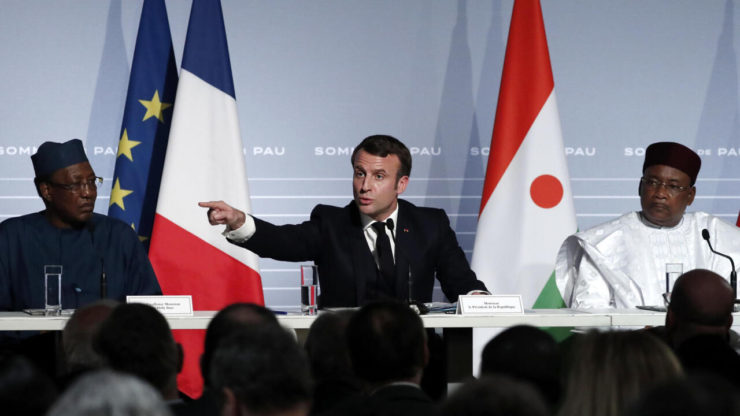
On March 1-5, French President Macron visited a number of African countries, leaving observers with a bitter taste in their mouths. Conceived with great fanfare as a presentation of Paris’ ostensibly new course aimed at “equal cooperation” with the African continent, it was remembered only for scandals, public spats with African presidents, and taunts from them that reflected the obvious disadvantage in bilateral relations.
Overall, the visit did not boost Paris’ credibility or strengthen its ties with Africa. Following the significant losses that France has suffered in Africa in recent years, the Elysée Palace should focus on preserving the African diamonds that remain in its crown rather than expanding its influence. And there aren’t many of them anymore. After Mali and Burkina Faso defected from Paris, Morocco is now gradually but steadily shifting from the French to the American camp, further narrowing the maneuvering field for Paris, which must look around and consider how to save what is left. What does it have in its piggy bank?
The richest “chest” in which the French keep the wealth looted from Africans is … the French treasury itself. The scheme of collecting money through the sub-regional economic cooperation organization of West Africa, ECOWAS (almost all its 15 members are former French colonies) is well established and allows almost half their economic potential to be at the service of the French economy.
ECOWAS itself was founded in 1975 on the basis of the Lagos Treaty and initially included 16 countries, but later the only Arab country in its composition, Mauritania, withdrew from it, remaining an associate member. When the organization was founded, the most noble goals were declared – the economic integration of the region, its self-sufficiency with the subsequent transition to a federation, a single citizenship and a single currency. But somehow it so happened that the most advanced element of integration was the creation of its own single currency – the West African CFA franc, which combines the currencies of the eight countries of this association, members of the West African Economic and Monetary Union, formed in 1994 (a number of other countries also use this currency). And “quite by chance” this currency is pegged to the euro, and 50% of foreign exchange reserves of these countries are stored in the French Central Bank, which completely deprives these countries of economic independence. Moreover, attempts by some of these countries to transfer their gold reserves to other jurisdictions are repeatedly unsuccessful, which naturally causes discontent among member countries.
Paris is forced to respond to this and in 2020 proposed a bill to this effect in the French National Assembly, according to which the CFA franc should be replaced by the “eco” already without being tied to the mandatory deposit in France. The draft was approved and ratified. However, it turned out that the pandemic buried it for a long time. In June 2021, ECOWAS revisited it, and a summit of member countries agreed on a five-year “currency convergence” pact, as well as a road map to launch a new monetary unit, now a region-wide one, by 2027.
More recently, on 24 January 2023, the President of Guinea-Bissau, who as of June 2022 is the current President of ECOWAS, pledged to revive the project, while also strengthening internal trade among ECOWAS countries, which currently represents less than 10% of total trade. To what extent this will work is not yet clear. Many suspect Paris that the reform of the CFA franc will be cosmetic and will not change the essence of economic relations between the member countries of the association and France, which actively uses the West African currency in the interests of French and multinational corporations based in its territory, which hold the markets of these states under their control and pump them for profit, including natural resources. Paris’ “Trojan horse” in ECOWAS is Côte d’Ivoire and the puppet regime put there by Paris, which implements French interests in the organization under the guise of African interests.
Whether or not Paris can pull off another trick with currency “reform” is not yet clear. Again, at the instigation of Paris, the membership of ECOWAS member countries where there have been recent coups, such as Guinea, Mali and Burkina Faso, is suspended, and important reforms that affect their core national interests can be carried out by regional organizations without their participation and taking their position into account by allies or, rather, satellites of France, such as Côte d’Ivoire. We can hardly believe that the Elysée Palace will not take advantage of these opportunities.
The other two countries where Paris will try by all means to maintain its influence are Chad and Niger, where strategic reserves of uranium, gold and other minerals are concentrated. In addition, Chad occupies an important strategic position, bordering Libya in the north and Sudan in the east, which makes it an important transit zone involved in both arms and migrant traffic. Chad, too, has a leadership that is questionable in terms of Western democracy — the son of President Idriss Déby, killed two years ago, Mahamat Déby, who heads the Transitional Military Council. But Paris, so sensitive to the issue in Mali and Burkina Faso, pays little attention in this case, because it is “our son of a bitch.”
Even more important for Paris is Niger, where uranium reserves, critical for the French nuclear industry, are being actively exploited. Paris is covered there by Washington, which has a chain of military bases, airfields and reconnaissance centers with UAVs. Of course, Paris will fight for this strategic region of Africa to the end, which, however, does not guarantee success.
In fact, Paris now has only one direction to go in Africa – to further lose its weight and influence. There are more and more reasons for this. France is increasingly uninterested in African states. Its military capabilities are shrinking, the effectiveness of its participation in solving the security problems of the continent is extremely low, which leads more and more states to refuse its assistance. France’s socio-political model is also losing its attractiveness against the background of increasing economic problems of the country, and with them the protests against the internal political and economic line of the Rothschild-appointed Macron. Constant arrogant lectures about the need to comply with democratic norms on the background of the suppression of citizens’ rights and the increasingly police nature of the French state, hits the eyes of Africans, as well as the growing propaganda of LGBT values. In this light, the storage of West African reserves in the Paris treasury looks increasingly anachronistic.
In Africa, they cannot fail to see Paris’s almost complete loss of sovereignty in European affairs, where it has demonstrated its absolute servility and dependence on the course of Washington, in particular with regard to the conflict in Ukraine. In this context, the attempts of Paris to fix the situation by loud slogans about “change of course”, belated repentance for the sins of the times of colonialism, as well as blaming the Wagner PMC for its problems look rather pathetic. The day is not far when France, like other colonialists, will be kicked off the continent as unable to cope with the challenges of the new era. In their place will come other forces that advocate real equal cooperation and its mutually beneficial nature based on the principles of a multipolar world, as well as unambiguously interpreted norms of international law.
‘An Injustice & A Disgrace’: Outrage Surges Over ‘Shameful’ Corsican Language Ban on French Island
By Svetlana Ekimenko – Sputnik – 11.03.2023
The French island of Corsica has for many years been trying to achieve autonomy, seeking legislative powers in economic and social fields, as well as recognition of the Corsican language as the official lingua franca.
Public outrage has been triggered by a “shameful” court decision in France’s Corsica to ban use of the Corsican language in its local parliament, according to reports from the capital, Ajaccio.
A verdict issued on 9 March in the Corsican city of Bastia ruled that French is the only language allowed to be used in official communications on the Mediterranean’s fourth-largest island which is a “territorial collectivity” of France. Furthermore, use of the Corsican language in debates – something that had been commonly practiced by the Assembly (unicameral legislative body of Corsica) – was pronounced as being against the French constitution.
Referred to as Corsu, or Lingua Corsa, the Corsican language is closely related to the type of Italian spoken in Tuscany. The language is spoken and written not only on the French island of Corsica, but also in northern Sardinia – an Italian island. The language has been classified as “definitely endangered” by UNESCO.
Also deemed a violation of the constitution by the court were local rules in support of “the existence of a Corsican people”.
The present ruling has come in the wake of a lawsuit introduced by Amaury de Saint-Quentin, the prefect of Corsica, according to reports. De Saint-Quentin is the highest-ranking official on the island and is appointed by the central French government.
The court ruling prompted an immediate backlash from pro-autonomy politicians on Corsica, with the pro-Corsican independence party Core in Fronte going on Twitter to lambaste the “shameful” verdict.
“This decision amounts to stripping Corsican parliament members of the right to speak their language during debates. Accepting this state of affairs is unthinkable for us,” a joint statement by the island’s executive council president Gilles Simeoni, and Corsican Assembly president Marie-Antoinette Maupertuis said.
Emphasizing that the Corsican language needed to be granted official status alongside French if it were to have any chance to “survive and develop”, they vowed to lodge an appeal against the verdict.
Jean-Christophe Angelini, leader of the Party of the Corsican Nation, tweeted to say the court ruling was “an injustice and a disgrace”, and “sounds to us like an insult”.
Corsica has for years been seeking autonomy from France, and – as well as a whole slew of issues – recognition of the Corsican language as official has always been top of the agenda.
In February 2018, during his first visit to the island, French President Emmanuel Macron spoke out against granting Corsica special status or recognizing its language as official, insisting that Corsica was an integral part of the French Republic.
However, this February Macron reportedly told members of parliament that he had neither red lines nor a predetermined decision regarding Corsica when it comes to the draft constitutional reform, which he hopes to carry out after the summer and put up for debates in 2023-24. However, the option for Corsica to secede from France is off the table, according to the report.
Featured Video

Trita Parsi: Iran War Ends Today? Threats of Deporting Trita Parsi
or go to
Aletho News Archives – Video-Images
From the Archives
Iran UN ambassador calls for destruction of all nuclear weapons
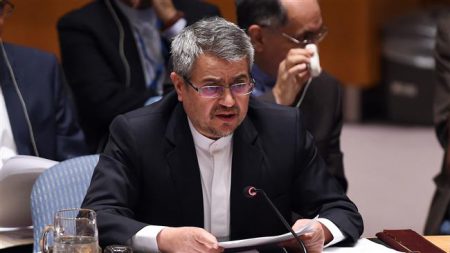
Iran’s ambassador to the UN Gholamali Khoshroo
Press TV – March 29, 2017
Iran’s ambassador to the UN Gholamali Khoshroo has called for the total eradication of nuclear weapons.
Khoshroo reiterated Iran’s call during a UN conference aimed at creating a nuclear weapons ban treaty in New York on Tuesday.
“Iran, as a victim of chemical weapons, strongly feels the danger posed by the existence of weapons of mass destruction and is determined to engage actively in international diplomatic efforts to save humanity from the menace of nuclear weapons,” he said.
Khoshroo stressed that Iran is committed to its Non-Proliferation Treaty (NPT) obligations, which include negotiations based on effective nuclear disarmament measures.
He added that several countries continue to ignore international calls and treaties for nuclear disarmament and even continue to increase their nuclear stockpiles. “They do not have political determination to abandon doctrines of nuclear deterrence and nuclear terror,” he went on to say.
Iran’s UN ambassador noted that boycotting the talks by many countries, including the US, shows that the world’s nuclear powers are by no means committed to the eradication of nuclear arms. Britain and France were also among the some 40 countries that did not join the talks.
“We note that prohibition of nuclear weapons must be accompanied by the elimination of such weapons. There can be no doubt that without complete abolition of nuclear weapons, there will be no absolute guarantee against the danger of nuclear war and the use of such weapons,” Khoshroo added.
Blog Roll
 Aletho News
- Trita Parsi: Iran War Ends Today? Threats of Deporting Trita Parsi
- What Is SIDS?
- DHS docs: Govt bracing for nationwide anti-AI riots, preparing to crack down on dissent
- India signals rethink over West Asia
- Israeli Ex-Navy Chief admits massive damage from Iran missiles
- The strategic arsenal US lost in war against Iran – and why replenishment will take years
- Documents Suggest Fauci Knew COVID Was Created in Wuhan Lab, and mRNA Vaccines Wouldn’t Work
- No return to pre-war status for Strait of Hormuz – Iran’s top diplomat
- Ex-South Korean President sentenced for trying to provoke conflict with Pyongyang
- US publishes docs on ‘dangerous’ Ukrainian biolabs
- If Americans Knew
- Israeli Firm Accused of Launching Smear Campaigns During US, European Elections
- As World Cup kicks off, Gaza amputee girls chase football dreams
- Oxfam: More Palestinians killed by Israel across West Bank in last 3 years than previous 17 years combined
- US-Iran ceasefire may be imminent, but will Israel blow it up? – Daily Update
- The Issue of Israel Is Ending Democracy In Michigan
- Israel is stealing homes, livelihoods, and lives in West Bank
- Gaza is not an aberration – Israel planned this genocide decades ago
- Israel is changing the face of Lebanon, mainstream media is normalizing it – 3 articles
- Genocide lobby benefits from EU anti-racist fund
- Watching the World Cup from Gaza
- No Tricks Zone
- New Study: Significant CO2 Fluxes From Non-Volcanic Sources Are Largely Neglected In Carbon Budgets
- Women Climate Scientists Being Harassed, Insulted By Skeptics, Claims Berkeley Earth Researcher
- Germany’s Longterm Spring Climate Data Show “No Climate Trend”
- New Study: Solar Photovoltaic, Wind Power Fail To Meet Annual Energy Demands 62% Of The Time
- Germany’s Die Welt: “Too Much Is Too Much” … Green Energies Are Cannabalizing Each Other!
- Germany’s Ecological Holocaust… Once Fairy Tale Forests Getting Cleared For Wind Turbines
- A Grand Solar Minimum Has Arrived…Global Cooling Of At Least 1°C Is Expected By The 2030s, 2040s
- European “Expert Commission” Urges COVID-19-Like Global Climate State Of Energency!
- Real-World Observations Do Not Support The Position That Climate Change Is Human-Caused
- Germany’s AfD Party Calls Debunked Climate Scenarios “Greatest Fraud In Human History”
 Aletho News