Iran: What is the Future of the Nuclear Deal?
By Viktor Mikhin – New Eastern Outlook – 22.09.2022
While many around the world hoped for a positive reaction from the United States to Iran’s latest response, the European trio at the talks in Vienna (E3 – the UK, Germany, France) have separately issued a statement that could undo all the positive results of a year of painstaking negotiations. After Tehran responded to an American text submitted through the European Union’s coordinator for the Vienna talks, Josep Borrell, the latter passed it on to Washington. The Biden administration called the latest Iranian response “unconstructive” but refrained from responding formally, prompting speculation about the impact of the US midterm elections on negotiations in Vienna over the resumption of the 2015 Iran nuclear deal, officially called the Joint Comprehensive Plan of Action (JCPOA).
Still, after days of guesswork and speculation, a response was given, but not from the American side, which had intended to do so. E3 released a joint statement that seems only to have delighted opponents of the JCPOA and caused bewilderment around the world. “As we move closer to an agreement, Iran has reopened separate issues, related to its legally binding international obligations under the Treaty on the Non-Proliferation of Nuclear Weapons (NPT) and its safeguards agreement under the NPT concluded with the International Atomic Energy Agency (IAEA). This latest demand raises serious doubts as to Iran’s intentions and commitment to a successful outcome on the JCPOA. Iran’s position contradicts its legally binding obligations and jeopardizes prospects of restoring the JCPOA,” the E3 statement said demagogically and with no good reason.
This is despite the fact that Iran has long claimed that the IAEA has lost all credibility by making unfounded accusations that are politically motivated and emanate from the anti-JCPOA camp. In other words, and this fact has now become clear, the IAEA is simply a tool in the hands of the West, not an independent UN body. The E3 countries also seemed keen to make a poorly veiled threat against Iran, stating, “Given Iran’s failure to conclude the deal on the table, we will consult, alongside international partners, on how best to address Iran’s continued nuclear escalation and lack of cooperation with the IAEA regarding its NPT (non-proliferation treaty) safeguards agreement.”
The E3 joint statement was seen by experts around the world as an irresponsible move and a servile, obsequious submission to its master, the US. Reading this statement, one gets the impression that it is the E3 that is the aggrieved party that has lost over 300 billion dollars and 1,000 lives in the last 3 years because Iran withdrew from the JCPOA. Apparently, Brussels wants everyone to believe that Iran, not the US, has blatantly violated and completely reneged on all its obligations, subsequently violating all 11 commitments it had made to rectify the situation. After all, it is both well known and not disputed by anyone in the world that it was the US that unreasonably withdrew from the JCPOA and imposed further brutal sanctions on Iran, causing the Iranian people to suffer.
In addition to the separatist actions disregarding the views of Russia and China and the utter irresponsibility, the statement also undermined the ongoing and subsequent negotiations, deepening the atmosphere of distrust. Moreover, and quite obviously, the E3 countries have only strengthened the position of the opponents of the JCPOA, which is apparently what they were aiming for. “It is regrettable that by [issuing] such an ill-considered statement, the three European countries have followed in the footsteps of the Zionist regime down a path that will lead to the failure of negotiations. It is obvious that if such an approach continues, the E3 should also accept responsibility for its consequences,” Iranian Foreign Ministry Spokesman Nasser Kanaani said bluntly.
German Chancellor Olaf Scholz, trying to justify his loyalist position to the US, demagogically signaled a lack of expectation on his part that an agreement with Iran would in the near future restore Tehran’s shattered nuclear deal with world powers. Then, realizing that the best defense is a good offense, he unceremoniously declared that Iran had no reason not to sign and that European countries would remain “patient.” And what else could the 9th Federal Chancellor say after meeting in Berlin with Israeli Prime Minister Yair Lapid, who insisted that restoring the 2015 agreement would be a “critical mistake”? Incidentally, Germany still pays reparations to those Jews who were forced by Nazi Germany to leave as evacuees.
It appears that provocative pressure from Israel as well as other factors have managed to halt or delay Washington’s progress towards a return to a nuclear deal with Iran. This is clear from statements by senior Israeli officials, analysis by Israeli research centers and the media. There was a real celebration in Israel, as officials could not hide their joy at the E3 statement. “Following the Americans, yesterday the E3 countries announced that a nuclear agreement with Iran will not be signed in the near future, that the IAEA’s files opened on Iran will not be closed,” Israeli Prime Minister Yair Lapid cheerfully told a cabinet meeting. He thanked the leaders of France, Britain and Germany for their “strong position” on the issue. Then a wave of boasting and bravado swept over the Prime Minister and he took all credit for the collapse of the nuclear deal, saying, “In recent months, we held a discreet and intensive dialogue with them, and presented them with up-to-date intelligence information about Iranian activity at nuclear sites.” And further: “Israel is conducting a successful diplomatic campaign to stop the nuclear agreement and prevent the lifting of sanctions on Iran.”
It may be recalled that as the negotiations approached a crucial milestone, Israel began to take active steps to counter this, including visits to Washington by Mossad director David Barney, Israeli National Security Advisor Eyal Hulata and Minister of Defense Benny Gantz. Israel said the diplomatic onslaught was aimed at preventing the renewal of the nuclear agreement, which Tel Aviv sees as a threat to its security. Israeli Prime Minister Yair Lapid said he would visit the US this month to meet US President Joe Biden ahead of the UN General Assembly meetings to discuss the Iranian issue. “Israel is conducting a successful diplomatic campaign to stop the nuclear agreement and prevent the lifting of sanctions on Iran,” World Israel News stressed. Apparently, Israel and its leadership have decided that they are above the UN, and only they should solve the world’s problems and only in their own interests. That is why now more than ever, the challenge of transforming our world from a unipolar to a multipolar one, where all countries have equal rights and resolve issues in the common interest, is relevant.
Lapid, who visited Germany to discuss his country’s concerns about the agreement, said that “it is not over yet – there is still a long way to go, but there are encouraging signs.” He was referring to Israel’s success in dissuading the US administration from returning to the agreement. The Times of Israel quoted an unnamed senior Israeli official as saying that during recent talks with Biden, the Israeli Prime Minister was told that the nuclear deal was not being discussed and would not be signed anytime soon. According to the website, Lapid has recently become increasingly convinced that Washington’s return to the nuclear deal is unlikely. Iran’s 2015 nuclear deal with world powers is “in the ER room” and unlikely to be extended any time soon, if at all, Israeli Minister of Defense Benny Gantz said after European leaders expressed doubts about Tehran’s willingness to revive the pact.
“We cannot predict when the deal will be signed by major world powers and Iran,” Aleef Sabbagh, a political analyst, told Al-Ahram Weekly. “Right now, it’s not even close.” He noted that pressure from Tel Aviv appears to have delayed the signing of the agreement, and Israel’s diplomatic war against the deal has so far achieved some of its goals. However, several Israeli analysts point out that the delay in finalizing the agreement is linked to some of its details, in particular the IAEA’s investigation into traces of uranium at three sites that Tehran has not previously disclosed. Iran at the same time is demanding the cessation of this investigation as a precondition for a deal, and is apparently not about to back down. Israel, for its part, will continue to apply pressure until the last minute to prevent the signing of the agreement, focusing its attention on organizing a tough international stance in support of the IAEA investigations. This would require the establishment of a mechanism to control the funds Iran gains access to in order to ensure that they do not fall to Tehran’s allies in the region.
The Israeli opposition, led by former Prime Minister Benjamin Netanyahu, claims that the US administration has decided to return to the agreement, but insists on more favorable terms. He also accuses the incumbent Lapid government of failing to convince Washington of Tel Aviv’s security demands, which would be harmed by the agreement. However, the current Prime Minister argues that his cabinet is working quietly and diligently and has so far succeeded in blocking the agreement. Israel often repeats that it will not be bound by the agreement if it is signed, and reserves the right not to allow Iran to become a nuclear power. Tel Aviv has also frequently threatened to resort to the military option to achieve this goal if “Israel’s security needs” demand it, despite all the peace treaty efforts of many countries around the world.
The Green New Deal in Europe is quickly turning into a House of Horrors
By P Gosselin | No Tricks Zone | September 16, 2022
One excellent site with all the late latest energy crisis developments in Germany and Europe is Blackout News. Here are some of the more notable headlines of the past week:
Europe’s largest aluminum plant cuts production by 22% due to energy costs
Deindustrialization
Europe’s largest aluminum smelter, Aluminum Dunkerque Industries France, will cut production by 22% due to rising electricity prices, thus putting the industry’s existence at risk and increasing Europe’s dependency on foreign suppliers.
High energy prices: Municipal utilities running into payment difficulties
Struggling utilities
German municipal utilities, who supply gas and power to their communities, are running into liquidity problems as suppliers of electricity and gas demand large sums as security guarantees before deliveries. Around 200 of the 900 German municipal utilities are affected.
The municipal utilities also “have to reckon with payment defaults by their customers on an unprecedented scale. Consumers have to cope with price increases of over 50% in some cases, which many will not be able to cope with”
Eight to 15% of consumers are expected to not to be able to pay.
It’s a serious danger signal because if they get into trouble, an economic crisis is usually not far away.
Exploding energy costs: economists sound the alarm
Hostile business environment in Germany
The German economy is reeling from exploding energy costs as insolvencies escalate and even once robust companies collapse. A number of industrial companies have imposed production stops or drastically reduced production – because of the skyrocketing energy costs. BDI industry association president Siegfried Russwurm warns that the spiraling energy prices are driving companies away.
In the latest BDI survey, 90% of all companies are severely challenged by the sharp rise in energy and raw material prices. In February 2022, the figure was just 23%.
France plans rolling blackouts this coming winter
Extreme power shortages in France
France normally generates a good 70 percent of its electricity from nuclear power plants but its power supply is massively at risk as 24 of the 56 reactors are off the grid due to repairs and maintenance. The country is now planning rolling blackouts should there be corresponding supply problems.
French utility RTE reports “it is clear that the country will not be able to produce enough electricity during the winter months unless consumers drastically reduce their power consumption.” As a result, the utility expects there may be rolling blackouts during the winter.
==========================
If this keeps up, Europe might quickly turn into a continent of starving and freezing beggars. Watch for Europe to be looking at a new Enabling Act.
Willkommen and bienvenue! Welcome to the Green New Deal!
US, E3 untrustworthy; Iran pursues an agreement to secure its interests: Marandi
Press TV – September 11, 2022
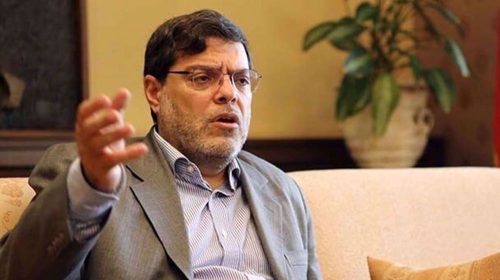
An advisor to the Iranian negotiating team has described the US government and the three European signatories to the 2015 nuclear deal as “untrustworthy”, stating that Tehran pursues an agreement that best secures its national interests.
During an interview on Saturday night, Mohammad Marandi said Iran was not the party that withdrew from the 2015 deal, officially known as the Joint Comprehensive Plan of Action (JCPOA), emphasizing that the three European countries (France, Britain, and Germany) obediently follow the policies of whoever is in the White House.
He added that Iran knows that any possible accord will fail unless the Western countries put an end to their false accusations against Tehran.
Marandi noted that the European troika and Washington are aware of the peacefulness of the Iranian nuclear program, stressing that Iran wants to reach an agreement that would secure its rights.
During the interview with the Lebanese Arabic-language al-Mayadeen television news network, he continued, “We cannot trust the Americans and Europeans,” highlighting that “the three European countries are all allies of the United States. They are not neutral, and we should not be deceived by their propaganda.”
Marandi also took a swipe at Director General of the International Atomic Energy Agency (IAEA) Rafael Grossi, stating that he “stands with Europeans and Americans, and is submissive to them.”
The advisor to the Iranian negotiating team went on to say that a European official once confirmed during the course of JCPOA revival negotiations in the Austrian capital of Vienna that Iran’s demands are rightful, but “the Americans are the ones who are delaying and procrastinating” the talks.
Marandi stressed that Iran is “ready to sign the agreement,” noting that “the Europeans need the agreement more than Iran, because of their need for gas.”
On the issue of Iranian natural gas, he told al-Mayadeen that “Iran sells its gas and oil, and is able to obtain financial revenues,” adding that “the longer the agreement is delayed, the bigger the problem for Europe would be because it wants gas as the winter is approaching.”
The European energy crisis comes as tensions persist between Russia and the West over Moscow’s offensive in Ukraine. Natural gas prices have soared in Europe to all-time highs since the West began unleashing waves of sanctions against Moscow.
Ever since, Russia’s Gazprom has drastically reduced its gas deliveries to Europe, saying that the anti-Russia sanctions have blocked the delivery of a turbine needed to stream gas to Europe via pipeline.
‘A weak Biden’
As for the United States, Marandi said, “US President Joe Biden is weak, and suffers from internal and economic problems before the midterm elections.”
Marandi added that “the Europeans have no problem in reaching an agreement, but rather the problem lies with weak Biden [administration].”
On Saturday, Iran slammed the latest “unconstructive and ill-considered” statement issued by the three European signatories to the JCPOA, saying they must accept the consequences if it continues to follow Israel’s lead.
“It is regrettable that by [issuing] such an ill-considered statement, the three European countries have followed in the footsteps of the Zionist regime down a path that will lead to the failure of negotiations,” the Iranian Foreign Ministry Spokesman Nasser Kan’ani said.
‘US’s support for terrorists’
Marandi also condemned Washington over its support for the terrorist Mujahedin-e-Khalq Organization (MKO) that has been hosted by Albania since 2016, stating that its members have been carrying out attacks against Iran.
On Wednesday, Albania, which has for years hosted the anti-Iran MKO terrorists in collusion with the US, severed diplomatic ties with Tehran, accusing it of orchestrating a July “cyberattack” against Tirana.
Kan’ani identified the United States, the Israeli regime, and the MKO as the “third parties” that have propelled Tirana into taking the decision.
Russia’s Permanent Representative to the International Organizations in Vienna, Mikhail Ulyanov, described the latest statement issued by three major European powers about Iran as “very untimely”.
“Very untimely indeed. Right at a critical moment at the #ViennaTalks and on the eve of the session of the #IAEA Board of Governors,” Ulyanov, who also leads the Russian delegation at the Vienna talks on Iran nuclear deal, wrote in a tweet.
In a press release on Saturday, France, Britain, and Germany raised serious doubts as to Iran’s intentions and commitment to a successful outcome on the JCPOA, claiming that Tehran’s position contradicts its legally binding obligations and jeopardizes prospects of restoring the nuclear deal.
The European trio said they have “negotiated with Iran, in good faith, since April 2021, to restore and fully implement” the JCPOA, along with other participants to the deal and the United States.
The United States, under former president Donald Trump, abandoned the agreement in May 2018 and reinstated unilateral sanctions that the agreement had lifted.
The talks to salvage the agreement kicked off in the Austrian capital city of Vienna in April last year, months after Joe Biden succeeded Trump, with the intention of examining Washington’s seriousness in rejoining the deal and removing anti-Iran sanctions.
Despite notable progress, the US indecisiveness and procrastination caused multiple interruptions in the marathon talks.
The West is poised to throw Yemen under the bus again to fuel its economic war on Russia
By Robert Inlakesh | Samizdat | September 11, 2022
Strained by the consequences of the ongoing conflict between NATO and Russia over Ukraine, France may be destroying all prospects for peace in Yemen, in a bid to secure energy resource from the United Arab Emirates.
Considered to be home to the worst humanitarian crisis in modern history, according to the United Nations, earlier this year, its people saw glimmers of hope towards ending its seven-year long war. A ceasefire truce, which has largely held since April, has been viewed as the first step towards reaching a UN-mediated solution for peace between the Ansarallah government in Sanaa and the Saudi-led coalition forces which claim to represent the internationally backed Yemeni government in exile.
According to UN estimates, the total number of people killed in Yemen’s war already reached 377,000 by the beginning of 2022. The civilian death rate is said to have doubled, according to the Norwegian Refugee Council (NRC), since the controversial withdrawal of UN human rights monitors last October.
Although Saudi coalition forces and Ansarallah, popularly referred to in Western media as the “Iran-backed Houthi rebels,” have managed to keep fighting to a minimum during the past months, another major player in the south of Yemen has recently decided to go on the offensive. The Southern Transitional Council (STC), often called Yemen’s southern separatists, are backed by the United Arab Emirates (UAE) and declared the start of a new military operation in the Abyan province “to cleanse it of terrorist organisations.” This follows territorial gains by the STC, in neighboring Shawba province, against the Muslim Brotherhood aligned Islah Party and others. The offensives launched by the UAE-backed STC have been regarded as a major challenge to UN efforts to end the conflict in Yemen, as well as having imperiled the Saudi initiative, which it calls the ‘Yemen Presidential Council,’ aimed at solidifying the legitimacy of the alternative Yemeni leadership in exile.
Where France Comes In
Although its role is little known to the Western public, Paris is the third largest arms supplier to the UAE and Saudi Arabia for their war efforts in Yemen, ranking just behind the US and UK. In fact, Germany, Spain and Italy have also sold weapons that have been used in the devastating war. Despite criticism, from human rights groups, of French weapons being used by Abu Dhabi and Riyadh to commit war crimes, the sale of weapons has continued from France.
April 15, 2019, French investigative magazine, Disclose, published an expose on Paris’s role in Yemen’s war. The information presented was based on a leaked French Military Intelligence (DRM) report dating back to September, 2018, clearly proving that the country had sold offensive weapons that were used in civilian areas, a charge that the French government has denied. As far back as June, 2018, credible reports began to emerge that French special forces units were operating on the ground in Yemen, alongside forces belonging to the UAE. Last December, Paris decided to further tighten its relationship with Abu Dhabi, signing its largest ever weapons sale to the UAE, worth 19.23 billion US dollars according to a report from Reuters.
France first turned to the US
France is now desperately in need of alternative energy suppliers to Russia, in order to meet its required needs, fearing that as the winter hits, Moscow may strategically cut off its natural gas completely. As part of NATO, Paris is backing a US-led initiative which seeks to make Russia pay an economic and military price for its offensive in Ukraine, however, this strategy has majorly backfired economically.
US President Joe Biden made two major foreign policy pledges when running for office in 2020, which are relevant to the current French predicament. The first being to revive the Obama-era Iran nuclear deal and the second being to find a diplomatic solution to the war in Yemen. Due to the ongoing NATO-Russia conflict, seeking a revival of the Iran nuclear deal has re-emerged on the political agenda of his administration in a major way. Iran, free from sanctions, could become an alternative source to fill the energy needs of Europe in the future, yet it could take some time for this to actually happen.
On the issue of the war in Yemen, Joe Biden pledged as part of his first speech on his government’s foreign policy goals, that he would hold Saudi Arabia to account and seek to find a solution to the crisis in Yemen. However, the war in Ukraine clearly changed his approach to Riyadh, so much so that Washington signaled in the review a decision to not sell offensive weapons to the Saudi government. The US President was heavily criticized by Human Rights Watch for traveling to Saudi Arabia in July.
Despite US attempts to have Gulf Cooperation Council (GCC) states increase their oil production, none have yet complied in the manner that Washington had hoped for. Specifically in the cases of the UAE and Saudi Arabia, it is clear that both are seeking to fast track their journey to diversify their economies. That has meant them hanging onto their strategic reserves of oil and gas, during a global energy crisis, which has made fiscal sense for them. In the cases of Venezuela and Iran, despite the US having seemingly reached out to both, neither seem to be a real replacement to Russia in the near future.
All Bets On Yemen
France is now looking for alternatives on its own. In June, the European Union announced that it had signed an agreement with Israel and Egypt. Under the deal, Israel will send gas through pipelines to Egypt, where it will then be transported to Europe. Although this may work, Tel Aviv does not have the capacity to replace Moscow as Europe’s main supplier of gas. Israel seeks to double its gas output, but in doing so is already running into potential problems over its maritime border dispute with Lebanon and its planned extraction of gas from the ‘Karish field’ in September, considered to be located in a disputed area. Lebanese Hezbollah has even threatened to strike all of Israel’s gas facilities in the event that Beirut is not given a fair deal to access its own resources.
French President, Emmanuel Macron, has attempted to persuade resource rich Algeria to become part of the EU’s solution, also going on a three-day trip to Algiers in order to mend ties. Algeria, which maintains close relations with Moscow, withdrew its ambassador from Paris for three months last year, during a diplomatic row. Macron had accused the Algerian President Abdelmadjid Tebboune’s government of “exploiting memory” and “rewriting history” of the colonial era and even questioned the legitimacy of Algeria as a State prior to French settler-colonial rule there. Around 1.5 million Algerians were killed in the battle for independence from France, which its resistance eventually managed to win in 1962. The tone of the French president has now dramatically changed from that of last year, with Macron remarking that both nations “have a complex, painful common past. And it has at times prevented us from looking at the future.”
The other major alternative path that France seems to be now seeking, is through its close alliance with the UAE. As mentioned above, it has been clear for some time that Paris has been involved in supplying weapons, logistical support and even boots on the ground to its allies in Abu Dhabi and Riyadh, aiding their fight in Yemen. However, it is also clear that the UAE has not been interested in cutting into its strategic oil reserves to meet the demands of Europe.
In July, as President Macron hosted the Emirati President, Mohammed bin Zayed al-Nahyan, in Paris, the French ministry of economy announced a new strategic energy agreement between the UAE and France. An aide to the French president noted that France was eager to secure diesel fuel from the UAE, hinting that the cooperation agreement involving France’s ‘Total Energies’ and the UAE’s ‘ADNOC’ may be linked. Although it is unknown as to what the specifics of the “strategic agreement” are, it has been speculated that the deal could potentially be worth billions.
Then, in August, the UAE-backed STC suddenly began new offensive operations in both the Shabwa and Abyan provinces. It just so happens that the STC forces decided to take over the energy sites in the Shabwa province too. Leading human rights NGOs had urged Paris to keep in mind Abu Dhabi’s human rights abuses in the advent of the signing of the strategic energy agreement, calls clearly not heeded. On August 21st, when UAE-backed forces seized the oil facilities in Yemen’s south, it may have been with the French deal in mind. Yemen’s former foreign minister, Dr. Abu Bakr al-Qirbi stated on Twitter that “preparations are being made to export gas from the Balhaf facility in light of increased international gas prices.” This was then followed by an announcement from the parliament of the Sana’a-based National Salvation Government, warning of suspicious movement from both US and French forces.
The key Balhaf facility, in Yemen’s Shabwa province, has reportedly been turned into a base for forces belonging to the UAE, with allegations suggesting that Paris could “provide protection for the facility through the French Foreign Legion.” There are also countless reports of the UAE looting resources from Yemen, which would seem to support the idea that they could be attempting to extract them to send to France. The latest reported looting of Yemen’s resources, from June, quotes Yemeni officials as having alleged that a Gulf Aetos tanker, carrying 400,000 barrels of Yemeni crude oil, had departed from Rudum port and was being operated by the UAE.
What these offensive moves by the STC also mean, is that the Saudi-backed forces in Yemen and Ansarallah will likely also get involved in the combat too. This could mean the dissolution of the ceasefire truce between the two sides, the renewal of the Ansarallah offensive to take the oil rich Marib province from the Saudi-backed forces and the death of any potential peace initiative to end the war.
It is unlikely that Ansarallah will stay silent, if the STC are aiding in the theft of Yemen’s resources for the sake of France. One of the major reasons behind the dramatic escalation of violence last year, was the Ansarallah offensive, launched with the aim of taking out the last northern stronghold of the Saudi-led coalition, Marib. The purpose of taking the resource rich area would be to stop the looting of Yemen’s resources, which according to reports is amounting to the theft of millions of barrels per year. Some sources claim that an unofficial agreement is in place between the US and Saudi governments, to purposefully keep the resources of Yemen away from its people and instead, divert the profits to Saudi banks.
Part of the reason why there was a Yemeni revolution in 2011, then a seizure of power in 2015 by Ansarallah in conjunction with the country’s military, was the popular belief that the past two Presidents of Yemen, Ali Abdullah Saleh and Abdrabbuh Mansour Hadi, were corrupt. The people of Yemen were fed up with Saleh for a multitude of reasons, primarily that he mismanaged resources, had sold out to the United States and was corrupt. President Hadi was later to be seen as a stooge, controlled completely by the Saudis.
Perhaps the biggest problem here however, is not just that Yemen is a resource rich country, with a starving population, being torn apart by foreign powers, but also that nobody even knows what their governments are involved in. On August 25, then British prime minister, Boris Johnson, stated, about rising energy bills, that “While people are paying energy bills, people in Ukraine are paying with blood”. Yet, it may turn out that for Europe to keep the lights on, the people of Yemen will pay with their blood. Except in this case, the UK, US and France can’t blame that bloodshed on Moscow, this is their own doing.
Robert Inlakesh is a political analyst, journalist and documentary filmmaker currently based in London, UK. He has reported from and lived in the occupied Palestinian territories and currently works with Quds News.
Dominique Strauss-Kahn Revisited
BY LARRY ROMANOFF • UNZ REVIEW • SEPTEMBER 2, 2022
Introduction
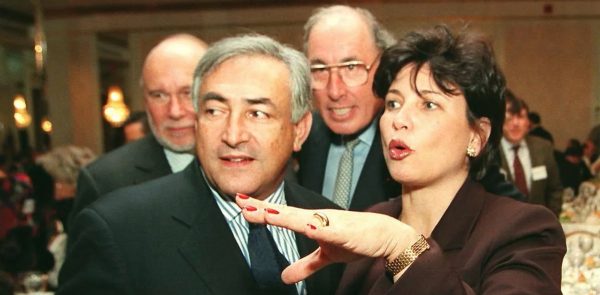
Dominique Strauss-Khan (DSK) was a former minister in various French governments and most latterly the Managing Director of the IMF. In 2011 he was involved in a sexual scandal in New York, eventually exonerated but ruined nonetheless. This story is of vital importance in understanding and making sense of our current geopolitical circumstances, important not because the event happened but because it was possible for such an event to happen, and that there are people with the power to make it happen.
The conspiracy theorists should have had a field day with this one, and all indications are that they would have been correct. The general rule is that if a story doesn’t make sense, it’s usually not true. As with most fabricated stories, this one has many gaps that cannot easily be plugged, and serious questions that were either not addressed or were riddled with implausible explanations.
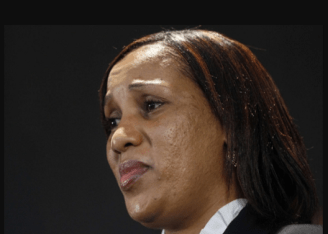
This episode began on May 14, 2011, at the Sofitel Hotel in NYC. Around noon, a hotel maid, Nafissatou Diallo, a ~35-year-old immigrant from Guinea, entered DSK’s room to clean it. Initial reports were that the man emerged naked from the bathroom and sexually assaulted the maid who eventually broke free and notified the authorities. In the meantime, DSK checked out of the hotel and left for the airport to take a flight to Germany. The NYC police took him off the plane, arrested and charged him with seven criminal acts that included four felony charges of attempted rape and sexual abuse, plus misdemeanor offences including unlawful imprisonment.[1] DSK was denied bail on the grounds of being a flight risk, and was incarcerated at Rikers Island. The following day, he was offered bail on condition that he resign his position as Managing Director of the IMF; he agreed a day later and was released into house arrest pending a hearing.
On 19 May, DSK was indicted by a grand jury on all seven charges, and ordered to stand trial. He was required to post a $1 million cash bail, wear an electronic monitoring device, surrender all his passports, and hire armed guards to ensure he didn’t violate his house arrest. He was also required to post a $5 million bond.[2]
The prosecution’s case began to fall apart almost immediately, progressively disintegrated over the following six weeks, and by July 1 prosecutors told the judge that they had “reassessed the strength of their case in the light of the housekeeper’s diminished credibility”, and sent a letter to DSK’s lawyers admitting serious inconsistencies in the maid’s tale.[3] [4] Also on July 1, DSK was freed from house arrest and had his bail dropped because the circumstances of the case had “changed substantially”.[5]
However, further hearings were still necessary to determine the extent of the charges to be prosecuted, with the next hearing date set for July 18, an important date as we will see. These hearings lingered until August 23 when all charges against DSK were finally dropped and he was free to return home to France.[6][7] [8]
However, the man’s problems weren’t over. Almost immediately upon his return to France, a young woman named Tristine Bannon attempted to file charges against DSK for an “attempted rape” that had occurred some 9 years earlier. In October, after much media publicity, the French prosecutors dropped the investigation from a lack of evidence.[9][10]
But a few months later, in March 2012, French prosecutors announced another investigation on DSK about his “possible connection” to a gang rape that supposedly occurred in Washington, D.C. At about the same time, authorities began yet another investigation in France, this time with allegations about his supposed involvement in hiring prostitutes for sex parties at hotels in Lille, Paris and Washington.[11] [12]
By October of 2012, prosecutors announced that they were discontinuing the investigation of the gang rape allegations,[12] but troubles remained. Amid a continuing media frenzy, in July of 2013 French prosecutors announced that DSK was to stand trial on allegations of “aggravated pimping” at the Carlton hotel in Lille.[13]
The accusations were that orgies had been held at this hotel and DSK had been instrumental in hiring prostitutes for the events. This court case dragged on for two years, the French media providing weekly details with very specific references to DSK and his conduct, some claiming “he had sex with every girl in the room”.[14] DSK was acquitted of all these charges in June of 2015.[15]
Still more. While the French media were hyperventilating over the juicy details of DSK’s real or imagined sexual exploits, Able Ferrara produced a feature film titled “Welcome to New York“, starring Gérard Depardieu as DSK and Jacqueline Bisset as his wife Anne Sinclair.[16] The film was built around the story in the Sofitel hotel and apparently “portrayed both characters in an unforgiving light”. Ms. Sinclair, who is by all accounts a thoroughly lovely person, said the film was “disgusting”, and DSK sued the film’s producers for libel. Then still more. In 2020, there was a Netflix “documentary” titled “Room 2806: The Accusation“, based on the Sofitel event and the other alleged accusations against DSK.[17]
By this time, after months of unfavorable exposure in the US and nearly four years of the same in France, it could be truly said that Strauss-Khan’s political, public, and social careers were at an end. After years of publicity, investigations and trials, DSK had been acquitted on all charges in all countries. It appears there never was sufficient evidence to support any of the allegations made against him, but the man would never again hold any international positions and was by this time much too toxic to ever re-enter French politics. DSK has since remarried and is doing “financial consulting” and giving speeches. The end. Well, almost the end.
The Handmaid’s Tale – a Futuristic Dystopian Novel (with due apologies to Margaret Atwood)
 According to her claims to the police and her testimony at the Grand Jury hearing, and according to the New York Times, the New York Post, the New York Daily News, the Wall Street Journal and many others:
The maid inserted her card-key, opened the door, and called aloud several times to learn if the room were occupied. Receiving no response, she entered and began her tasks. Then, “the married Strauss-Kahn” emerged naked from the bathroom, chased the maid around his suite, “locked the door” so she couldn’t escape, then dragged her into a bathroom and “engaged in a criminal sexual act”. There was much confusion as to whether the criminal sexual act was anal, oral, or none of the above. However, while chasing and dragging her around the suite, DSK was apparently yelling “Don’t you know who I am? Don’t you know who I am?” When the maid begged the man to desist on grounds she could lose her job, DSK comforted her by saying “Oh, baby, don’t worry baby. You won’t lose your job”. There was also confusion as to injuries incurred by both parties, the maid apparently suffering “a torn shoulder ligament” in her struggles, while DSK was reported to have suffered severe bruises on his back when the maid forcefully shoved him into some furniture.
The maid then fled the man’s suite and cowered in fear in a hallway until a maintenance supervisor discovered her, after which they notified hotel security who performed an investigation, confirmed the torn pantyhose, discovered DSK’s DNA and semen on the walls and carpet, and eventually notified the police. In the meantime, DSK had dressed, packed his things, checked out of the hotel, and took a taxi to the airport in an attempt to flee the country.
But justice never sleeps. It seems that in his haste to flee the country DSK left behind one of his mobile phones. Taking a great risk, being as guilty as he was, he nevertheless called the hotel to ask if the phone had been left in his room; after some discussion, the hotel staff called him to say they had indeed found his phone and would deliver it to the airport. The NYPD then escorted DSK off the plane as the doors were closing for departure, and arrested him. You know the rest, except that none of “the rest” was as it appeared to be.
Some Chinks in the Armor
Ancillary Hotel Services, Turn-Downs Included
At the outset of this event, before all the wagons had been properly circled, the hotel security staff and the NYPD independently confirmed to DSK’s lawyers that the woman was known to act as a prostitute in the hotel, offering special services and “turn-downs”. That much appears certain, but when the claims became public too quickly, everyone rushed to deny them and a hotel representative said, “We have no knowledge about that”.
The Crime Scene: DNA “linked to Maid”
The first rule of criminal investigations is that you don’t contaminate the crime scene. Yet the maid returned to clean the room, no doubt doing so immaculately as is the standard with Accor Hotels everywhere. And she wasn’t the only one. Syed Haque, a room service employee, came to pick up the breakfast dishes which had already been collected several hours prior. Renata Markozani, the head of housekeeping, entered the room to examine the situation, and also Brian Yearwood, the hotel’s chief engineer, with no explanation as to his purpose. Then the hotel security staff who, with little or no training in criminal investigations, went to the room to perform such. Between all of these, any evidence actually existing would have been either contaminated, destroyed – or planted.
It should be noted that anyone with access to a hotel guest’s clothing, toiletry, bedding, linen or laundry, has access to everything necessary to spread that guest’s DNA (possibly including sperm and other body secretions) on any surface or clothing anywhere. In this context, it is not irrelevant that DSK apparently had a woman spend the night with him in that room. The simple fact is that nothing found in that room later by police investigators could possibly have qualified as “evidence” of the crime in question.
The mass media flooded the nation with news that DSK’s DNA had been found (almost) everywhere, linking it to ‘the maid’ without noting the method of linkage.[18][19][20]
The New York Times was there first, citing “a person briefed in the matter“, stating DSK’s DNA and semen were found on the maid, on her clothing, on the walls, on the carpet, and perhaps on the ceiling. After this information had been duly digested by the public, the police and prosecutors stated that no such evidence had actually been obtained or released. “A prominent US defense lawyer claimed that there was substantial doubt . . . [about] the so-called DNA evidence and the match . . . since accurate DNA testing normally takes several weeks.” However, the DNA linked to the maid was headline material, the denials not so much . The Wall Street Journal reported that DSK’s DNA sample and semen were found on the woman’s shirt, quoting “sources close to the investigation” and citing “law enforcement officials” who immediately stated they had never said any such thing.[21]
In fact, there was never actual confirmation of any of this, and the investigators claimed to have found no traces of semen in the sink where the maid claimed it had been spit. The NYPD and the prosecutors simply let media speculation run wild and did nothing to combat it. All of the claims were based on leaked rumors.
Hotel security officers “conducted an investigation” and claimed to have found semen on the floor and wall. They then called the police, setting off the chain of events that led to the arrest at the airport. We are to believe that the mall-cop wannabes comprising hotel security were competent to perform a criminal investigation, and equipped and able to perform lab tests.
The Perpetrator Flees, Leaving Behind ‘Valuable Items”
The US media, led by the NYT, led us to believe that DSK attacked this woman, then fled to the airport in a panic, evidenced by his leaving behind a mobile phone and “other valuables”, the authorities apprehending him during the last seconds before his “fleeing the country”. But DSK didn’t flee; on the contrary, we have a witness account from a woman who used the elevator with him who said that she found him pleasantly calm. He waited patiently in line and checked out without anybody noticing anything wrong, took a cab to a restaurant where he had lunch with his daughter and then went to the airport to take a flight with a ticket that had been purchased days earlier. DSK was leaving the US for Germany where he had an arranged appointment with Angela Merkel. And, for the record, nothing was “left behind” including “other valuables”. What did happen was that one of his mobile phones was lifted from his room.
The NYT led us to believe DSK was arrested on, and then removed from, the airplane, just as the doors were closing for departure. But that description was a bald lie. The truth was that the hotel, on instruction, called DSK to tell them they had found his missing phone. Apparently, it was the police who then called to tell him that his phone was at the gate desk, and asked him to exit from the plane to retrieve it. When he deplaned, he was arrested. Leaving the Air France plane to recover the phone was a strong indication of a lack of guilt since while on the aircraft he was technically on French sovereign territory and could not have been taken into custody. If he were concerned, he could have asked a stewardess to get his mobile phone for him or the detectives to deliver it to the steward. All of his behavior suggests the acts of an innocent man.
The NYT seemed eager to leave the impression that DSK left the hotel in a panic, overcome with fear and anxiety, and was in a headlong rush to flee the country. We have this almost certainly fictitious account: “A guest at the hotel, . . . said the livery driver who drove Mr. Strauss-Kahn to Kennedy Airport was also his driver on Saturday night. “He said Strauss-Kahn was in a huge hurry, . . . He wanted to leave as soon as possible. He looked upset and stressed.”[22] The BBC claimed this “was not the first time Mr. Strauss-Kahn had been involved in such an incident” (even though it was the first time), and further that “he had been arrested attempting to flee the country”, which of course was not true.[23]
The Mysterious Telephone Call
“Investigators with the Manhattan district attorney’s office learned that the woman made a recorded call to a prison inmate on May 15, the day after DSK’s arrest, with words to the effect of, “Don’t worry, this guy has a lot of money. I know what I’m doing”.[24] This would seem to confirm claims by DSK’s lawyers that the encounter (if indeed there had been an encounter) was consensual and that the woman was attempting extortion. The woman later claimed her words had been “mistranslated”. In a 3-hour interview with Newsweek, the woman said she hopes God punishes him. “We are poor, but we are good,” she said. “I don’t think about money.”[25] Diallo’s lawyer said she mentioned Strauss-Kahn’s money in the telephone call only to say that her alleged attacker was influential.[26]
More interesting was that the authorities required a full 6 weeks to translate the conversation because, according to them, it was in a “unique dialect of Fulani,” a language from the woman’s native country, Guinea. But there are no ‘unique dialects’ of the language, Fulani being one of the three major West African languages and extremely common, with the NYC area having more than 100,000 Fulani speakers. Moreover, the courts knew this, the police knew it, and local interpreting agencies claimed they had many occasions to provide Fulani interpreters, often on a daily basis. The New York Times was one of the principal promoters of this falsehood (and of many more). It is obvious the authorities lied about needing 6 weeks to arrange the translation, and it is just as obvious that they withheld the information until DSK was out of the running for the French Presidential Primaries.
The Money and the Phones
One of the threads running through the media presentations was that the prosecutors discovered flaws in the woman’s testimony and evidence of criminal activity, immediately notifying DSK’s lawyers. The NYT particularly pushed this narrative, stating “Still, it was the prosecutor’s investigators who found the information about the woman.”[27] Their claim appeared to have been almost entirely untrue. DSK’s legal team hired a private investigation company, Guidepost Solutions, which uncovered the claimant’s criminal background and reported that to the DA’s office, and which eventually exonerated DSK. Such investigations are rarely if ever done by police to help a defendant who has already been indicted.
The first discovery made by the private investigators was that someone had opened five different bank accounts in the woman’s name, with five different banks, in five different states (Arizona, Georgia, New York, Pennsylvania, and one unidentified)[28]
and had deposited US$20,000 in each one. Standard CIA practice for payoffs.[29][30][31]
Given that the woman’s ‘friend’ was in prison for minor drug offenses, the US media, led by the NYT at full volume, tried to relate the payments partially to her friend’s drug dealing, but the depositors were never identified, another sure sign of a CIA payoff. This apparently wasn’t enough of an issue for the media to question. We will never know where the money came from, but the simple fact that the media refused to touch this part of the story makes the conclusion almost certain. The NYT made a small concession to reality, stating there had been “unusual activity in her bank accounts”.[32]
The private investigators also discovered that the woman had at least 3 mobile phones with three different phone companies and was spending over $500 every month on calls. On a maid’s salary? On calls to whom? As a reporter, that’s the first question I would ask. Another almost sure sign of CIA involvement. The media reported every other trivial detail but weren’t interested in this one.
The Timeline
The maid’s account and the prosecution’s case began to unravel in many other directions at the same time. The maid initially told investigators she had hidden after the attack until she saw her alleged attacker leave, after which she reported the assault to a supervisor. But the hotel’s card key register proved that she first mysteriously entered another room for a few minutes, then cleaned a nearby room, then returned to the room in which the alleged attack took place, cleaned it, then spoke to supervisors.[33]
There is another curiosity here: the maid’s cleaning assignments until that day had always involved rooms scattered on various floors, but on this day was given the 28th floor exclusively, so there would be no other hotel staff on that floor that day. The story was that she assumed duties of a colleague on leave, but the lawyers believed this was a method to give her access to DSK “for some nefarious reason.”
According to the card key records, the maid entered another room adjacent to that of DSK three times prior to entering his room, and again immediately when leaving his room after the alleged assault occurred. This information was omitted from her police reports and her Grand Jury testimony. The hotel refused to identify the (probably CIA) occupant of that room. All indications are that she was reporting to her handlers for last-minute instructions, then reporting her success afterward. The media omitted the fact of the second hotel employee entering the room while the maid was still there. This appears to be when DSK’s mobile phone went missing.
Edward Jay Epstein wrote an excellent article that was published in the NYT’s Review of Books.[34] The full version is available here on the Financial Times;[35]
I urge you to read it; it contains scores of questionable details, excellently-researched and documented, that cast a very dirty light on everything that occurred. Also, an article in the Business Insider[36] is excellent, asking “So is Strauss-Kahn the target of some form of political plot? Even if the alleged victim isn’t a witting part of a honey trap, what has been released so far by the New York police looks like railroad job, with a rush to discredit the target for the rest of his life. Even the latest pictures are designed to make the Frenchman look guilty?” The Guardian[37] and Forbes[38] also have excellent articles that identify the inconsistencies. And two others you may care to read.[39][40]
A Few More Inconsistencies
The woman’s account is riddled with inconsistent statements. She told the grand jury in sworn testimony that she left the room, waited in the corridor until DSK left and then reported the incident, and only when confronted with electronic card key evidence, did she admit she cleaned another room and then returned to the scene of the crime before reporting the incident. She told investigators that she fled the room as soon as she could, but she told the rape counselor at the hospital that she waited in the room for DSK to get dressed. Why would she do that, after having been raped? She claimed in testimony that the two never spoke, then told ABC-TV anchor Robin Roberts that they spoke at some length. In fact, she had three completely different versions of the events that transpired and of her activity following.
If the woman had sustained injuries – including a “torn shoulder ligament” as authorities claimed, how would she then proceed to clean rooms? If the woman had been raped and injured, why wouldn’t she seek help and medical attention immediately? A “torn ligament” would be painful and require immediate treatment.
There was much more. It was discovered that the woman had “had practice at this kind of storytelling before”. “Further investigation revealed that the [maid] had lied on her 2004 asylum claim about being gang-raped in her home country of Guinea. More damaging still, she had rehearsed the narrative of lies for asylum so often, listening to them over and over on an audiotape supplied by a male accomplice, that even years later she would break down crying as she told the story—until, finally, under very tough questioning by assistant district attorneys, she admitted the asylum narrative was a fabrication.”[41] Her stories were apparently so well-told that listeners would often be driven to tears as well.
“The most seasoned professionals in the office working on this case were brought to tears by this woman’s life story. I mean literally brought to tears,” says Linda Fairstein, former chief of the Sex Crimes Prosecution Unit. “She was so convincing that cops, advocates, professionals, bought the story. And then the prosecutors got to work.” But with the Arizona phone call and the asylum stories as background, the more investigators examined the accuser’s story, the more anomalies began to multiply.”[42][43][44][45][46][47]
There were also questions raised about the physical possibilities of such an assault being able to take place. The maid was young with DSK in his 60s, at 5’10” much taller than DSK and more heavily-built, with one observer stating “She could have kicked the crap out of him”. “. . she’s a big woman, how could he have overpowered her?”[48] Many news reports from Europe claim the woman agreed (or offered) to perform oral sex, then attempted blackmail and extortion. Olivier Mazerolle, a senior political journalist at France’s BFM television, claimed to have obtained details from sources in the US, and maintains this is what actually occurred.[49]
“Is it reasonable to believe that a 62-year-old man, even one as oversexed as DSK is supposed to be, would emerge naked from the bathroom of his hotel suite sexually to confront a maid whom he had never met before, and whom he did not expect? Is it reasonable to believe that stark naked and wielding no weapon he could have forced a taller, younger and more muscular woman to commit oral sex twice [in 6 minutes], and that the transaction would have resulted without some level of participation on her part? And is it believable that she didn’t offer any resistance, cry out or flee when she presumably knew where the door was, having worked in the hotel for three and one-half years?”[50]
“It strains credulity to think an internationally respected financial leader would hurl himself naked from his hotel bathroom onto a decidedly unattractive maid who happened to be cleaning his room, then force her to perform oral sex on him. It’s all made to sound like the actions of a psychopath more than a lustful Frenchman.” It would seem absurd for a man who can hire young models or woo women from higher brackets, to forcibly rape a woman, then have a leisurely lunch with his daughter and finally get caught only because he himself gave away his whereabouts in multiple calls when trying to recover his mobile phone.
In the final version of events, the alleged victim committed multiple counts of perjury, tax fraud, visa and passport fraud, conspiracy to commit extortion, possible drug-related offenses, but neither the police nor the media appear to have any interest in pursuing these details. Nor was there any interest in the five bank accounts. The woman told 37 substantial lies, mostly under oath but, according to her lawyer, “She made some mistakes here, but that doesn’t mean she is not a rape victim.” Mistakes? It will be almost certain proof that this entire bizarre event was a political fraud organised at the highest levels, when we realise that no action was ever taken against the woman for her string of crimes and the unexplained cash.
The Missing Blackberry
This is exceptionally curious and one of the keys to the entire entrapment process. One of DSK’s mobile phones, a Blackberry that he used for IMF work and very personal calls, went missing. It seems that DSK had already packed his things, including his phones, prior to taking a shower and dressing to leave the hotel. After the encounter with the maid, he used this phone to call his daughter and confirm their lunch appointment. The maid admitted to remaining in the room at that time, and perhaps the other hotel employee was there at the same time. DSK then apparently placed the phone in his briefcase, after which it disappeared, and was never found.[51]
DSK had already been warned that his phone had been hacked. A friend working in Sarkozy’s election office notified him that personal messages sent to his wife from that phone had been intercepted and read at Sarkozy’s office. The records obtained from BlackBerry show that the missing phone’s GPS circuitry was disabled at 12.51, preventing the phone from sending out signals identifying its location. It appears the phone never left the Sofitel. “Evidently unaware of what was happening at the Sofitel, he called the hotel from the taxi, asking if his phone had been found. When he was called back 13 minutes later, he told a hotel employee that he was at JFK airport. The police rushed there and, at 4:45, called him off the flight and took him into custody.”[52] Blackberry could not explain how the phone had been disabled, being something requiring extreme technical knowledge.
The “Dancing Israelis”
After the maid alleged that DSK sexually harassed her, the security team called John Sheehan, the security director for Accor, the French company that owns the Sofitel. His boss has ties to Ange Mancini, who was then Sarkozy’s coordinator for intelligence. Sheehan was seen on surveillance footage with an unidentified man who accompanied Diallo to the hotel security celebrating shortly before the police arrived: “The two men high-five each other, clap their hands, and do what looks like an extraordinary dance of celebration that lasts for three minutes.” One of DSK’s attorneys, William Taylor, who claims to have seen the footage, tells the Post, “They could have won the lottery. It seems directly related to speaking with Diallo and calling the police.”[53][54][55]
Media Frenzy and Speculation
“When police and prosecutors convict a suspect in the media before he is even charged, it typically means that there is no evidence against him and that demonisation is serving as the substitute.” Everything about this story has a stink of conspiracy, of sexual entrapment of the kind that got Julian Assange, Mordechai Vanunu and many others. Even more curious was that none of the mainstream media cared to connect the dots to see where they led.
When reviewing the accounts of this tale, I couldn’t shake the feeling that the mass media, at least in the English-speaking world, had been instructed to speculate as wildly as possible and to fabricate any details they considered useful or titillating. “James Cox, law professor at Duke University, said: he was surprised that the prosecution had not done more homework on their witness before making such strong statements about the case and the strength of its witness.”[56] There were many serious questions over their handling of the case, especially the notorious “perp walk”, which saw DSK paraded in front of press cameras.
The media focus centered on the story of the alleged victim rather than on who was pulling the strings behind the scenes in what visibly appears to have been a political frame-up. The NYPD, the prosecutor, the CIA, were letting the media speculate publicly. The entire story, based only on speculation and a complete absence of facts, has the look and feel of giving the gullible public just enough information to come to the wrong conclusion.
The NYT
In fact, the most likely hypothesis, which is that DSK was deliberately set up, was not only totally avoided by the mainstream media, but any reader comments at the time were either not posted (NYT ) or were deleted immediately after posting. There is ample evidence that the media – especially in the US – had been instructed to monitor and control all comment on this issue.
At the time, it was fascinating to watch the NYT during the three months of this episode. There was no way to avoid the conclusion that the editors were firmly controlling the reader comments on all their DSK articles. Not even a hint of a suggestion of a setup was permitted until one article on July 6, long after all the damage had been done. The comment threads were constantly led to topics like “rich white man, poor black woman”, or the US legal system, or how money can buy freedom or how even liars can be raped. Whenever a comment was posted that was “off-topic”, more correct ones were inserted to bring readers back into focus.
There seemed little doubt that the NYT was on the same page as the NYPD, the DA and, we must assume, the CIA and the City of London. Not only did the editors control the posts, they added some of their own, to the “Highlights”, to help readers focus. Among them was this gem: “While France will now criticize us, we should remember that French people enjoy few of the rights we do when accused. French “authorities” can hold people for up to one year without charges in an attempt to pressure them for cooperation in a criminal case. In Europe, the presumption generally is that the person accused is guilty and he must prove otherwise.”
It is astonishing that the Times had the gall to do this. France can retain a person for no more than 24 to 48 hours before release, and the NYT editors would surely be aware of this.[57] No newspaper would make such a claim without checking its accuracy, so we must conclude they knowingly made a false statement, seriously maligning France in the process and leaving a disturbingly dishonest impression on the 80% of Americans who are sufficiently uninformed and gullible to believe anything.
The “Settlement”
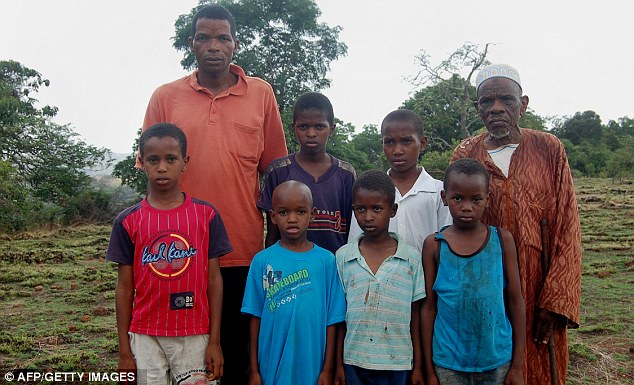
The New York Times first reported that DSK had agreed to pay the maid $6 million as a settlement, attributing the news to “French media sources”,[58] while the same French media sources attributed the claim to the NYT. Other media claimed that “friends of Strauss-Kahn” offered the chambermaid’s impoverished family in Guinea, West Africa, a ‘seven-figure’ sum to convince her to drop the charges. Then almost everyone joined in with the identical claim,[59][60][61] even posting a (surely) fictitious photo of the maid’s “family”.[62]
It became a circus, with DSK’s lawyers stating the claims as “flatly false”.
Perhaps another WHO Worldwide Pandemic
One of the more entertaining bits of the media having fun was the “evidence” suddenly surfacing from every corner that DSK was only one of perhaps thousands of such. My favorite was the UK Daily Mail’s claim that maids at the New York Hilton and “in various other hotels around the U.S.” were having to hide from male guests running around naked in the hotel corridors, screaming “I need sex”.[63] The newspaper helpfully suggested all hotel maids needed to wear ‘panic buttons’.
The Question of Diplomatic Immunity
This was curious. As Managing Director of the IMF, DSK should have had full diplomatic immunity, not that the US would honor it, and in fact the judge in the hearing dismissed this. But it appears the IMF had the power to demand immunity for its CEO, and in fact the IMF Board had at least one meeting to discuss the matter.[64][65]
No information was released, but IMF rules stipulate an 85% agreement on all decisions and, with the US controlling 18% of the vote, we can assume the US exercised its veto and killed DSK’s one chance to escape the trap. He would still have full immunity from civil suits, however. This aspect was totally ignored by all the media, and should not have been.
Rikers Island
Rikers Island is widely-known as one of the most brutal and dangerous prisons in the world. It “has always been a place of exceptional violence”, with weapons everywhere, with rival gangs ruling the cellblocks, a place notorious for the brutality of the prison guards and the deranged mental instability of most inmates, 1,000 of which are stabbed or killed each year.[66][67]
Only the dregs of society are sent there, and incarceration for a civilised person would be terrifying to say the least – which would have been the entire point of sending DSK there. The prospect of remaining there for months until trial, coupled with the slim prospects of survival, would encourage a man to comply with any conditions demanded for bail and removal – including resigning his job as MD of the IMF. DSK was sent to Rikers on May 17, presented with his options the next morning, and his official resignation processed on the following day, May 19, when he was released on bail.
Persons of Interest
In order to properly connect the dots, we need to identify some of the main players and their relations to each other.
Frank G. Wisner Sr.
Frank Wisner has been described as a “master diplomat” (Deputy Assistant Secretary of State under Dean Acheson) and also a “master spy”, (America’s least-known but most famous spy). He was none of those things. Wisner was a criminally-insane Jewish psychopath,[68] the co-founder of the CIA and the designer and operator of Operation Gladio in Europe[69] which he ran together with Allen Dulles (then head of the CIA), and which was one of the bloodiest terror programs ever inflicted on the world. He was largely responsible for the American coup that removed Mohammed Mossadegh as Prime Minister in Iran in 1953, and also primarily responsible for the overthrow of Jacobo Arbenz Guzmán in Guatemala in 1954, one of the dirtiest, bloodiest, and most unjust of such US government atrocities.
Frank G. Wisner Jr.
Young Frank, also seconded into the US Foreign Service, was an American Ambassador to several countries as well as Under Secretary of State for International Security Affairs under Bill Clinton. He also served as Deputy Executive Secretary of the Department of State under Cyrus Vance. Wisner Jr. was heavily involved in the tragedy in Yugoslavia and primarily behind the push for the independence of Kosovo to help Madeline Albright and George Soros “take over” the communications infrastructure there (an $800 million gift). However, Wisner Jr. is best known for his financial crimes for which the term “unscrupulous” would be something of an understatement. Wisner was part of the inner circle at Enron whose financial manipulations ruined countless thousands of investors, and he was the Vice-Chairman of AIG when its share prices collapsed by 95%, prior to the Khazar-dictated taxpayer bailout.[70]
Pál (Paul) Sarközy de Nagy-Bocsa
This man, a Greek-Hungarian Jew, was the father of Nicolas Sarkozy who became the President of France. Paul married several times, Nicholas resulting from the first marriage with Andrée Mallah. His father and birth mother both abandoned Nicholas and he was taken in by Paul’s third wife Christine de Ganay after her divorce with Paul. Christine de Ganay subsequently married Frank Wisner Jr, who more or less raised Nicholas and taught him everything he knew (at least all the dirty parts of American and French politics and finance). “It was [Wisner] who introduced then-teenage Sarkozy to CIA insiders and facilitated his entry into French political circles”, and one of Wisner’s sons was Sarkozy’s campaign manager.
Cyrus Vance Sr.
Cyrus Roberts Vance Sr. was an American lawyer and Secretary of State under President Jimmy Carter. He was also Deputy Secretary of Defense, Secretary of the Army, and General Counsel of the Department of Defense.
Cyrus Vance Jr.
 This is where things become interesting. Cyrus Vance was the Manhattan District Attorney, conveniently appointed just in time to handle the three most notorious sexual scandal cases in recent memory (all involving Jews): Jeffrey Epstein, Harvey Weinstein, and Dominique Strauss-Kahn. In the case of Jeffrey Epstein, Vance’s office argued in court for dismissal of charges and his removal from a sex offender’s list, claiming “there are no real victims here.”[71]
Vance would later argue that his “assistant DA” made these court representations without his knowledge. We are to believe that in the most spectacular sexual abuse and sexual-entrapment scheme ever recorded, and certainly the biggest case in his career, Vance had no idea what his own assistant was proposing in court. It was Vance (in an arranged plea bargain) who managed to free Epstein from a life sentence and give him only 13 months in prison where he was allowed out during the day (to look after business) and only slept in the prison at night.
Does anyone recall Epstein being given a ‘perp walk’? Was he incarcerated at Rikers Island? Did he have to post millions in bail, wear a bracelet and have to hire armed guards at his own expense ($240,000 per month for DSK)? Was Jeffrey Epstein denied bail because he was a flight risk? No.
Something similar occurred with Harvey Weinstein, with Vance declining to prosecute the Hollywood producer in spite of the huge amount of evidence against him. But it wasn’t all bad. Vance did manage to obtain a sentence of 428 years against another serial rapist who had the misfortune of not having been born Jewish.
Let’s review some connections. Nicholas Sarkozy, our Jewish-Hungarian midget, was raised by the Jew Frank Wisner who worked for Cyrus Vance Sr., and who introduced Sarkozy to the (Jewish-created) CIA and to US and French politics. Sarkozy and Cyrus Vance Jr. were of the same age (one year apart) and certainly knew each other well since their fathers worked together and their families socialised together. And who was appointed as the lead prosecutor against DSK? Cyrus Vance Jr. In what was clearly one of the most egregious set-ups in recent memory, Vance was later loudly applauded by the New York Times, the Wall Street Journal, and other US media, as well as by multiple government officials for “acting with integrity” in a case where a poor woman made “a credible accusation against a very powerful man”.
Sarkozy and Mossad
Nicholas Sarkozy was confirmed as a Mossad agent, the details revealed in articles by Le Figaro, an influential French daily, providing evidence of Sarkozy having been recruited as an Israeli spy, “one of the thousands of Jewish citizens of countries other than Israel who cooperate with the Mossad”. This information was apparently given to the French police in detail prior to Sarkozy’s election as president, but suppressed until the scandal emerged. “This was so important an issue that within 24 hours after Le Figaro’s exposé, Israeli Prime Minister Ehud Olmert was on a state visit to France” – ostensibly to discuss Iran’s nuclear agenda, but in fact an attempt to deal with the fallout.
According to media reports, the French police were investigating documents concerning Sarkozy’s alleged espionage activities against France on behalf of Mossad, which Le Figaro claimed dated as far back as 1983, which was when Israeli prime minister Menachem Begin recruited the “young and promising” Sarkozy as part of the ordered infiltration of the French ruling Gaullist Party.
Tristane Banon
Tristane Banon, a 32-year-old journalist, claimed that DSK sexually assaulted and tried to rape her a decade earlier. She is “the daughter of one of Strauss-Kahn’s discarded mistresses and the goddaughter of his second wife.”[72] This woman, with her lingering memory of an encounter with DSK from 9 years prior, chose the correct moment to bring it to the public. And this latter is also surpassingly strange; the mother came to the defense of her daughter by “confessing” that she also had an affair with DSK at around the same time. How this would help her daughter’s case was not made clear. At least, not to me.
Her case was so weak (and 9 years too late) that there was no chance for it to lead anywhere, but it would help to keep DSK out of the Presidential Palace. Mrs. Banon worked for atlantico.fr, a pro-Sarkozy website which was co-founded by Arnaud Dassier, the man behind Sarkozy’s web campaign of 2007, and the man who started the smear campaign against DSK a few weeks before May 15th. Of interest is Banon’s claim that “politics played no part” in her decision to air this old issue again, that she “was not approached by the Right” to fire another torpedo into DSKs political career.[73][74]
Christine Lagarde

Christine Lagarde is a Jew.[75] Both the City of London and Israel wanted her as the new IMF head, which was why she had beforehand declared her availability and “eagerness to serve”. Lagarde was a hard-headed “corporatist” member of the Bilderberg Group and the WEF, and definitely in favor of the new world order intended to preserve Khazarian Jewish hegemony worldwide. The IMF Executive Board issued a press release on June 28 2011, confirming her appointment as IMF Managing Director.[76][77]
The report from the prosecutor was released to the media June 29, and presented to the court on July 1. Lagarde’s succession to the IMF occurred a few days prior to a New York Court ruling which completely exonerated Dominique Strauss Khan on the basis of lack of evidence. It apparently wasn’t of concern that Lagarde was under criminal investigation at the time for an illegal application of some $400 million in funds.
French Media Reports: Who Told Who What When?
One indication that DSK’s political enemies were implicated is the fact, made public by the French press, that Sarkozy’s political team in France knew about DSK’s arrest not only before the NYC police announced it, but before the actual arrest had occurred. In fact, Sarkozy’s office and the French media reported DSK’s arrest while he would still have been in a taxi on the way to the airport. No one has attempted to explain this. The evidence is that the NYC Hotel Manager called France’s Presidential Palace over an hour before the news was released in NYC, which is how the French media knew that DSK was going to be arrested before the arrest actually took place.
The first person in France to announce the arrest was Jonathan Pinet, a campaigner for Sarkozy’s party, who apparently tweeted the info at the time DSK was in the taxi to meet his daughter for lunch. And he apparently made other posts only minutes after the arrest itself. Shortly after, Arnaud Dassier, Sarkozy’s campaign director, was also commenting on the event, sooner than any journalist in the US. Confronted with this strange coincidence, he said he got the information from a friend who knew someone working in the NYC Sofitel hotel. How would anyone at the Sofitel know whether or when an arrest was made? Why would the NYPD report to the Sofitel, and why was all this information crossing the Atlantic in real time?
More interesting, Xavier Graff, the duty officer at Accor in Paris, sent e-mails several weeks after DSK’s arrest claiming full credit for “bringing down” the IMF chief.[78] Also worthy of note is that the top management of the ACCOR Hotel group in France was known to have close ties to Claude Gueant, Sarkozy’s closest advisor and his Minister of the Interior. The hotel’s Director of Security was a former agent of DGSE (French CIA), who had worked under Sarkozy personally. And finally, Ray Kelly, the head of the NYPD, had been decorated “Chevalier de la Legion d’Honneur” by Sarkozy himself, the two men having had a close personal relationship with much contact since that time.
The French Presidential Election
DSK survived the first assault (in the US) because the widespread public feeling in France was that it was clearly a staged event, a “set-up”, and still leaving him as the favorite and with a strong political base. Thus, he was wounded but not destroyed, so the charade proceeded to Plan B, with accusations of rape or attempted rape, and of arranging the hire of prostitutes for orgies. Just as in the US, all charges were eventually dropped because there had never been any supporting evidence for those allegations, but the court cases continued until the man’s name had been sufficiently blackened that his political career descended to ground zero.
Ruining DSK would not have raised Sarkozy’s standing in the polls; he was still widely disliked and considered “crazy”. But this would have removed his most dangerous opponent, leaving no one else with sufficient public status to challenge him. So, one clear purpose of the entire event was to ensure Sarkozy’s re-election by destroying his only credible opponent. Sarkozy was definitely running scared; not only being attacked on the streets in France, but in a then-recent appearance in Algeria the crowds were all yelling “Get out! F*** off, Sarkozy”.
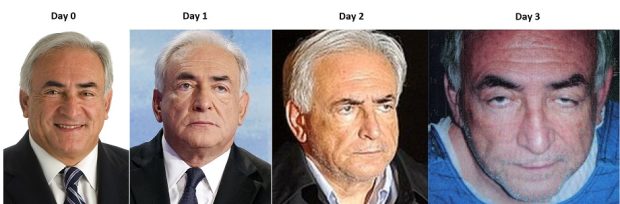
A former justice minister, Robert Badinter, called DSK’s treatment “a lynching, a murder by media.” The “perp walk”, the unshaven pervert-in-a-trench-coat photos, is a perverted and sadistic US tradition resurrected from the medieval era, and forms an inexcusable and humiliating breach of the principle of the presumption of innocence. Besides that, we had the “suicide watch”, the grossly unreasonable bail conditions that included from the first day his resignation from the IMF.
It was all designed to inflict the maximum possible public humiliation to forestall any chance of DSK’s return to politics. Also, the charges were not dropped, nor his passport returned, until after the French election primaries. To represent the Socialist Party and be their leader, he would have had to have been in France for the primaries which closed on July 13. However, his court date was set for July 18. This was not a mere unfortunate coincidence.
You don’t need to be a conspiracy theorist to smell something fishy here; in fact, it requires a leap of faith to not smell the odor. The proverbial elephant in the room should be obvious to all readers. There appears to be little question that one of two pillars of Strauss-Kahn’s demise was a perceived necessary “regime change” at the IMF. The other would appear to be desperation on the part of Israel and the City of London to remove Strauss-Kahn from French Presidential contention in order to preserve Sarkozy – their “man in Paris”. The Jews and Zionists in Israel were desperate to maintain Sarkozy in power because he would ensure the protection of Israel’s practices and the status of French Jews, while containing the anti-Israel sentiment in France. Israel’s government and French Jews and Zionists were among Sarkozy’s strongest electoral support. “We can refer to Israel’s conceited triumphalism with which they greeted Sarkozy’s election: “we are persuaded that the new president will continue eradicating anti-Israeli resistance”.
“The arrest of [DSK] has all the appearances of a frame-up ordered by powerful members of the financial establishment, in liaison with France’s Nicolas Sarkozy, whose presidency has served the interests of the US and Israel at the expense of those of France and the European Union. Immediately following Strauss Kahn’s arrest, pressures were exerted . . . to speed up his replacement as Managing Director of the IMF.”
The IMF and the Dollar
As head of the IMF, DSK was far from a saint in dealing with indebted countries. It was he who oversaw the destruction and permanent colonisation of Greece – an enormous sovereign disaster of which too few people seem aware. And in this, he was definitely following the instructions and template of the Khazarian mafia in the City of London. If you don’t know the details, you may care to read this: Humanity at the Crossroads.[79] You need reference only the brief paragraphs on Greece.
One of the circumstances that many considered a precipitating cause of DSK’s removal, was his conviction of the need for a new world currency, suggesting that SDRs be used much more broadly instead of the US dollar for international trade and payments,[80] leading to a prevailing theory that the US$ be removed. Thierry Meyssan wrote a scholarly article on this,[81]and Mike Whitney wrote an opinion piece claiming “Dominique Strauss-Kahn Was Trying to Torpedo the Dollar.”[82]
But DSK was in no way arguing for the elimination of the US$ in international settlements as for the creation of more stability since poor nations were easily whipsawed by borrowing in US$ at low rates then subjected to bankruptcy when rates rose. It’s true this wouldn’t have earned him many friends since the bankruptcies were part of the plan. But in any case, no changes to the world system could have been made without the cooperation of the US. It doesn’t seem widely-known, but changes to IMF protocols require an 85% approval vote while the US controls 17% of the votes – giving the US a de facto veto on everything.
A larger part of the problem was that the IMF (under DSK) was pushing hard for other nations like China and Russia to obtain a larger and more realistic representation at the IMF. DSK tried to push through reforms that would have considerably increased the share of emerging countries, and that would have produced enemies in all the entrenched Western countries who would be loath to surrender their financial power over the rest of the world.
But much worse than this, DSK was strongly recommending that nations abandon much of their income tax regime and draw their revenue from inheritance taxes on the extremely wealthy. A suggestion like this to the same nations that house the Rothschilds, Sassoons, Warburgs and Sebag-Montefioris would be equivalent to a declaration of war. Almost as bad, DSK was also on record as stating that the FED’s excessively loose monetary policies (directed from the City of London) were responsible for the massive transfers of wealth to the top 1% in each economic cycle. He stated flatly that it was the FED’s excess liquidity that causes the sharp rises in inequality “because that liquidity does not fall into every pocket”.
And worse again, he also stated that the nationalisation of infrastructure, land, and even corporate interests, were “indispensable” for “national independence”. In his words, “The exhaustion of the traditional tools of social democracy, notably redistribution, has led us to redefine a new socialism . . . That rests on the correction of innate market inequalities at root. That leads to a society which permits each person to develop their talents independently of their social conditions at birth. That’s a new humanism which I think we need.”
Suggesting socialism, inheritance confiscations, nationalisations and wealth redistribution to the Satanist trillionaire capitalists who are at the pinnacle of world financial power, is not a way to win friends. Nor is any suggestion of “humanism”. I suspect this latter point alone would have caused his demise, since the template of the Khazar Jews for the past 100 years has been to push small countries into unpayable debt traps and then confiscate all the nation’s infrastructure, arable land, and water aquifers in lieu of cash payment. In these three items, I believe DSK signed his own death warrant three times.[83][84 One of his allies said: “Everyone knows that his weakness is seducing women. That’s how they got to him. . . the aim was to “decapitate the IMF”.
This is perhaps an aside, but where do you suppose the World Bank and IMF obtain their trillions to lend to undeveloped nations? They are not banks that have deposits to lend. The money comes from the Jewish financiers in the City of London, and it is they who direct the terms and who push for unrepayable loans, and it is they who confiscate the infrastructure and land.[85] This is so true that the Rothschilds recently established a new “bank” just to control all their holdings of arable land that has been confiscated from poor countries. In case you don’t know, the Jewish-controlled government of Ukraine, the “breadbasket of Europe”, amended its laws to permit huge swaths of the world’s most fertile soil to disappear forever into this Khazarian abyss.
Epilogue: Who Did This?
One fact I didn’t mention above is that DSK had been warned by friends in various positions that he would become the victim of a plot using some form of sexual entrapment. Also, the French media revealed from an interview with DSK’s wife that he had said to her several months prior, “They are out to get me“. Who were “they”? Certainly not the NYPD, who had neither cause nor leverage.
Why would NYPD detectives and prosecutors be so irresponsible as to set out, deliberately and apparently vengefully, to destroy the career of the second most relevant person in France, based solely on the word of a woman who was already known as a hotel prostitute? In a real world, they could have made a complete investigation and then arrested DSK on his return to the US. He would have to return, since the IMF offices are in Washington.
Nor could it have been the US State Department. The head of the World Bank is traditionally selected by the Jewish handlers of the US government, while the head of the IMF is traditionally filled by the Jewish financiers in Europe. Thus, the US administration also had no leverage, even if they felt they had cause.
It could not have been Nicholas Sarkozy and his election team. They might well have had considerable “cause”, but Sarkozy didn’t have the power to engineer something this vast, especially in the US where it required intense cooperation from the police, the prosecutors, the courts, the media – and the silence of the US government. Sarkozy’s team was clearly kept informed, on what would appear to be nearly a minute-by-minute basis, but they weren’t the engineers. There is no way the US government would give a (disliked) European politician the freedom and power to commit such an immense theatrical crime on US soil, merely to assist his own re-election. Nor would they permit him to use their police, courts and prosecutors to fraudulently force a rival’s resignation from an unrelated UN position.
If the US were concerned that DSK was trying to torpedo the dollar, it is conceivable the White House might have sent someone to the NYPD to say, “This guy is causing us trouble; give him a hard time”. But even the President of the United States hasn’t the power to approach the NYPD and the courts and instruct them to launch a trap based entirely on fraudulent charges and faked evidence to destroy the head of the IMF and force his removal. The President doesn’t have the power to engineer something that hugely illegal which would require participation from so many parties, including the obvious payment to the “victim” for her fraudulent testimony. Such a thing would be unprecedented and would leak. The US administration might well attempt to profit from such an event already in progress, but would never dare to plan and execute something of this nature.
The only people with the power to do this, to plan and execute all the portions of the US side of this theatrical performance, and to obtain the necessary silence from all participants, are the alphabet agencies. The (Khazar-controlled) CIA has the power to say, “This is a matter of the utmost national security. You will comply with our instructions in all details and, if you dare ever breathe a word of this, you will most likely disappear and your family along with you.” The CIA could enforce obedience from the NYPD, the hotel, the prosecutor’s office, the judges and the courts, the phone companies, the airport authorities, and could easily arrange the multiple bank accounts and mobile phones. They are skilled at creating and planting evidence, and they have the power to control media information and disinformation. That’s what they do, and their authority is more or less absolute.
This is an aside, but an important one. In an interview with the wife of Lee Harvey Oswald (JFK’s alleged assassin), she was quoted as saying, “The answer to the Kennedy assassination lies with the [Rothschild-controlled] Federal Reserve. It is wrong to blame it on only James Jesus Angleton and the CIA, per se. They are all fingers on the same hand. The people who control the money are above the CIA.”
The question then remains, from whom were the CIA taking their instruction? It would not have been from the US administration, and certainly not from Sarkozy’s election team. Who was it, who was “out to get” DSK? The answers to all the questions trace to the Jewish bankers in the City of London, the master to whom both Israel’s Mossad and the CIA ultimately report, and these are the people who, for their own reasons, wanted a final extermination of DSK, to utterly ruin the man for his disobedience, and remove him forever as a potential nuisance. DSK was released on bail (from Rikers Island) only on condition that he resign his position as MD of the IMF. This wasn’t the NYPD’s idea, nor the position of the US government. This could have emanated only from the Khazarian mafia in the City of London. It was they who wanted DSK removed from office.
DSK is a Jew, until recently one of the world’s most powerful men, yet still far removed from the “inner circle” of the Khazar mafia in London. If this is what these people will so freely do to one of their own, you can imagine the rickety scaffolding on which the rest of us stand. There is no shortage of unusual and suspicious deaths of those daring to reveal inconvenient truths – or threatening to reveal them. Think of Gary Webb, Michael Hastings and Anne Heche. Think of Robert Maxwell, the Jewish media mogul (real name: Ján Ludvík Hyman Binyamin Hoch) and Mossad’s ‘assisted suicide’ (see note 86) in helping him fall naked off his yacht in the middle of the night to drown in the Atlantic Ocean, shortly after boasting that “they can’t do anything to me because I know where all the bodies are buried.”
Lastly, it must not go unnoticed that the New York Times was a leader in this escapade, “setting the agenda for the nation”[87] and clearly being “a finger on the same hand” as the Khazarian mafia in the City of London. All the Western media lie to their readers and viewers, but the NYT carries a special responsibility for the power of its disinformation and misinformation practices. The day needs to come soon when the NYT is no longer respected as a source of information, but instead despised as a major link in the chain of fascism and fear that will soon bind all of us.
Mr. Romanoff’s writing has been translated into 32 languages and his articles posted on more than 150 foreign-language news and politics websites in more than 30 countries, as well as more than 100 English language platforms. Larry Romanoff is a retired management consultant and businessman. He has held senior executive positions in international consulting firms, and owned an international import-export business. He has been a visiting professor at Shanghai’s Fudan University, presenting case studies in international affairs to senior EMBA classes. Mr. Romanoff lives in Shanghai and is currently writing a series of ten books generally related to China and the West. He is one of the contributing authors to Cynthia McKinney’s new anthology ‘When China Sneezes’. (Chapt. 2 — Dealing with Demons).
His full archive can be seen at https://www.bluemoonofshanghai.com/ + https://www.moonofshanghai.com/
He can be contacted at: 2186604556@qq.com*
Notes
[1] Strauss-Kahn arrest: IMF head detained at Rikers Island
https://www.bbc.com/news/world-us-canada-13420440
[2] Strauss-Kahn indicted by grand jury, is granted $1 million cash bail
https://news.yahoo.com/news/strauss-kahn-indicted-grand-jury-granted-1-million-232344073.html
[3] Letter from prosecutors on Strauss-Kahn accuser’s story
https://www.reuters.com/article/us-strausskahn-accuser-idUSTRE76053W20110701
[4] Letter from prosecutors on the accuser of Strauss-Kahn
[5] Strauss-Kahn Is Released From House Arrest
https://www.npr.org/2011/07/01/137549786/strauss-kahn-sex-assault-case-may-be-crumbling
[6] Recommendation for Dismissal of Strauss-Kahn Case
[7] All charges against Dominique Strauss-Kahn dismissed
[8] Strauss-Kahn Drama Ends With Short Final Scene
https://www.nytimes.com/2011/08/24/nyregion/charges-against-strauss-kahn-dismissed.html
[9] French Strauss-Kahn sex assault probe dropped
https://www.reuters.com/article/us-strausskahn-france-inquiry-idUSTRE79C3JT20111013
[10] La plainte de Tristane Banon contre Dominique Strauss-Kahn classée sans suite
[11] French prosecutor drops Strauss-Kahn ‘gang rape’ probe
https://edition.cnn.com/2012/10/02/world/europe/france-strauss-kahn/index.html
[12] DSK investigated over prostitution allegations
https://www.abc.net.au/lateline/dsk-investigated-over-prostitution-allegations/3916424
[13] Dominique Strauss-Kahn to stand trial for pimping, French prosecutors say
https://www.theguardian.com/world/2013/jul/26/dominique-strauss-kahn-trial-pimping
[14] DSK’s extraordinary excuse: ‘I didn’t know I was sleeping with prostitutes at orgies because they were all naked at the time’
[15] French Court Acquits Dominique Strauss-Kahn in Case That Put His Sex Life on View
https://www.nytimes.com/2015/06/13/world/europe/dsk-acquitted-aggravated-pimping-charges.html
[16] Why D.S.K. Won’t Go Away
https://www.nytimes.com/2014/05/25/opinion/sunday/why-dsk-wont-go-away.html
[17] Room 2806: The Accusation
https://www.netflix.com/pt-en/title/81068760
[18] Strauss-Kahn DNA ‘linked to maid’
https://www.irishtimes.com/news/strauss-kahn-dna-linked-to-maid-1.877071
[19] Dominique Strauss-Kahn DNA ‘linked to maid’
https://www.bbc.com/news/world-us-canada-13519035.amp
[20] Strauss-Kahn’s lawyers complain about police leaks
https://www.reuters.com/article/us-strausskahn-leaks-idUKTRE74P57T20110526
[21] NYPD deny they are source of reports suggesting Strauss-Kahn’s DNA matched sample taken from alleged victim’s clothes.
https://www.aljazeera.com/news/2011/5/24/police-deny-leaking-strauss-kahn-dna-report
[22] Police Seek Evidence From I.M.F. Chief on Sex Attack
https://www.nytimes.com/2011/05/16/nyregion/maid-picks-imf-chief-as-attacker-in-lineup.html
[23] Strauss-Kahn arrest: IMF head detained at Rikers Island
https://www.bbc.com/news/world-us-canada-13420440
[24] The Dominique Strauss-Kahn Affair: To Proceed Or Not To Proceed?
[25] “DSK Maid” Tells of Her Alleged Rape by Strauss-Kahn: Exclusive
https://www.newsweek.com/dsk-maid-tells-her-alleged-rape-strauss-kahn-exclusive-68379
[26] Sex charges dismissed against Strauss-Kahn
https://www.aljazeera.com/news/2011/8/23/sex-charges-dismissed-against-strauss-kahn
[27] Strauss-Kahn Prosecution Said to Be Near Collapse
https://www.nytimes.com/2011/07/01/nyregion/strauss-kahn-case-seen-as-in-jeopardy.html
[28] Strauss-Kahn Prosecution Said to Be Near Collapse
https://www.nytimes.com/2011/07/01/nyregion/strauss-kahn-case-seen-as-in-jeopardy.html
[29] Dominique Strauss-Kahn released on recognizance after questions emerge about accuser’s story
[30] Dominique Strauss-Kahn freed as case details aired outside court room
https://www.theguardian.com/world/2011/jul/01/dominique-strauss-kahn-court
[31] Dominique Strauss-Kahn lawyers meeting with Manhattan prosecutors
https://www.silive.com/news/2011/07/dominique_strauss-kahn_lawyers.html
[32] Strauss-Kahn Is Released From House Arrest
https://www.npr.org/2011/07/01/137549786/strauss-kahn-sex-assault-case-may-be-crumbling ?
[33] Dominique Strauss-Kahn freed as case details aired outside court room
https://www.theguardian.com/world/2011/jul/01/dominique-strauss-kahn-court
[34] What Really Happened to Strauss-Kahn?
https://www.nybooks.com/articles/2011/12/22/what-really-happened-dominique-strauss-kahn/
[35] One afternoon in Manhattan: Dominique Strauss-Kahn: what happened in the New York hotel?
https://www.ft.com/content/11e061f0-1780-11e1-b157-00144feabdc0
[36] 10 Questions About Evidence In The Case Of The Chambermaid Versus Dominique Strauss-Kahn
https://www.businessinsider.com/fully-functioning-and-operational–ten-or-so-nave-questions-about-the-evidence-in-the-case-of-the-chambermaid-versus-dominique-strauss-kahn-2011-5
[37] Six out of 10 for the Dominique Strauss-Kahn conspiracy theory
https://www.theguardian.com/world/blog/2011/nov/28/dominique-strauss-kahn-conspiracy-theory
[38] The Dominique Strauss-Kahn Affair: To Proceed Or Not To Proceed?
[39] Investigative Journalist Implies DSK Was Set Up By Sarkozy’s Party
https://gothamist.com/news/investigative-journalist-implies-dsk-was-set-up-by-sarkozys-party
[40] The plot to destroy DSK
https://nypost.com/2011/11/27/the-plot-to-destroy-dsk/
[41] Christopher Dickey World News Editor Newsweek and The Daily Beast as Paris bureau chief
John Solomon Updated Jul. 13, 2017 6:57PM ET / Published Jul. 01, 2011 9:52PM ET
[42] https://www.theguardian.com/world/2011/jul/01/dominique-strauss-kahn-court
Dominique Strauss-Kahn freed as case details aired outside court room
[43] https://www.reuters.com/article/us-strausskahn-accuser-idUSTRE76053W20110701
Letter from prosecutors on Strauss-Kahn accuser’s story
[44] Letter from prosecutors on the accuser of Strauss-Kahn
[45] https://www.reuters.com/article/uk-strausskahn-prosecutors-idUKTRE77L6MK20110823
Strauss-Kahn accuser lies torpedo case
[46] Sex charges dismissed against Strauss-Kahn
https://www.aljazeera.com/news/2011/8/23/sex-charges-dismissed-against-strauss-kahn
[47] Strauss-Kahn Is Released From House Arrest
[48] Dominique Strauss-Kahn lawyers meeting with Manhattan prosecutors
https://www.silive.com/news/2011/07/dominique_strauss-kahn_lawyers.html
[49] Now disgraced ex-IMF chief Dominique Strauss-Kahn to get $250,000 ‘golden parachute’… funded by U.S. TAXPAYERS
https://www.dailymail.co.uk/news/article-1390651/Disgraced-banker-Dominique-Strauss-Kahn-250-000-golden-handshake–taxpayer.html
[50] The Dominique Strauss-Kahn Affair: To Proceed Or Not To Proceed?
[51] One afternoon in Manhattan: Dominique Strauss-Kahn: what happened in the New York hotel?
https://www.ft.com/content/11e061f0-1780-11e1-b157-00144feabdc0
[52] https://www.theguardian.com/world/blog/2011/nov/28/dominique-strauss-kahn-conspiracy-theorym
Six out of 10 for the Dominique Strauss-Kahn conspiracy theory
[53] One afternoon in Manhattan: Dominique Strauss-Kahn: what happened in the New York hotel?
https://www.ft.com/content/11e061f0-1780-11e1-b157-00144feabdc0m
[54] Investigative Journalist Implies DSK Was Set Up By Sarkozy’s Party
https://gothamist.com/news/investigative-journalist-implies-dsk-was-set-up-by-sarkozys-party
[55] The plot to destroy DSK
https://nypost.com/2011/11/27/the-plot-to-destroy-dsk/
[56] Dominique Strauss-Kahn freed as case details aired outside court room
https://www.theguardian.com/world/2011/jul/01/dominique-strauss-kahn-court
[57] Arrested in France – Legal Framework of Police detention
https://www.sba-avocats.com/criminal-defense-attorney-paris-france-police-custody.html
[58] Hotel Worker Settles Claim Strauss-Kahn Forced Sex
[59] Strauss-Kahn’s friends ‘secretly tried to pay off “raped” hotel maid’s family in Guinea’.
[60] Strauss Kahn ‘will pay $6m to settle hotel maid’s civil suit’
[61] Strauss-Kahn to pay hotel maid $6m
https://www.smh.com.au/world/strausskahn-to-pay-hotel-maid-6m-20121201-2anca.html
[62] https://www.aljazeera.com/news/2012/11/30/strauss-kahn-lawyers-deny-6m-maid-settlement
Strauss-Kahn lawyers deny $6m-maid settlement
[63] https://www.dailymail.co.uk/news/article-1390177/Call-New-York-hotel-maids-fitted-panic-buttons-horror-tales-dog-attacks-naked-men-emerge-Strauss-Kahn-attack.html
[64] 10 Questions About Evidence In The Case Of The Chambermaid Versus Dominique Strauss-Kahn
https://www.businessinsider.com/fully-functioning-and-operational–ten-or-so-nave-questions-about-the-evidence-in-the-case-of-the-chambermaid-versus-dominique-strauss-kahn-2011-5
[65] Former IMF boss claims immunity in civil case
https://www.aljazeera.com/news/2011/9/27/former-imf-boss-claims-immunity-in-civil-case
[66] What Is Rikers Island?
https://www.nytimes.com/2017/04/05/nyregion/rikers-island-prison-new-york.html
[67] Strauss-Kahn arrest: IMF head detained at Rikers Island
https://www.bbc.com/news/world-us-canada-13420440
[68] Clinton’s Jewish US. Ambassadors:
http://www.jewwatch.com/jew-occupiedgovernments-usa-ambassadors.html
[69] CIA: Frank G. Wisner arrived in Cairo
https://www.voltairenet.org/article168337.html
[70] CIA: Frank G. Wisner arrived in Cairo
https://www.voltairenet.org/article168337.html
[71] Cyrus Vance’s Office Sought Reduced Sex-Offender Status for Epstein
https://www.nytimes.com/2019/07/09/nyregion/cyrus-vance-epstein.html
[72] The Dominique Strauss-Kahn Affair: To Proceed Or Not To Proceed?
[73] How France hid the sleazy truth about the rutting chimpanzee
[74] Accused Rapist Dominique Strauss-Kahn To Settle With His Accuser
https://www.africanglobe.net/headlines/accused-rapist-dominique-strauss-kahn-settle-accuser/
[75] Promoting Peace, Tolerance, and Respect
https://www.imf.org/en/News/Articles/2018/09/30/sp092618-promoting-peace-tolerance-and-respect
[76] Strauss-Kahn arrest: IMF head detained at Rikers Island
https://www.bbc.com/news/world-us-canada-13420440
[77] Regime Change at the IMF: Christine Lagarde and The Frame-Up of Dominique Strauss-Kahn
https://www.globalresearch.ca/regime-change-at-the-imf-the-frame-up-of-dominique-strauss-kahn/24866
[78] The plot to destroy DSK
https://nypost.com/2011/11/27/the-plot-to-destroy-dsk/
Humanity at the Crossroads
[79] https://www.unz.com/lromanoff/humanity-at-the-crossroads-2/
[80] UK Telegraph – International Monetary Fund director Dominique Strauss-Kahn calls for new world currency
[81] Obama, financial war and the elimination of DSK
https://www.voltairenet.org/article170083.html
[82] Dominique Strauss-Kahn Was Trying to Torpedo the Dollar
https://www.ibtimes.com/dominique-strauss-kahn-was-trying-torpedo-dollar-285599
[83] Dominique Strauss-Kahn: This Crisis Is Harder To Handle Than The Great Depression
[84] Strauss-Kahn affair turns French politics upside down
https://www.bbc.com/news/13407908
[85] World Map of Privatisation
https://www.bluemoonofshanghai.com/politics/5634/
[86] According to Wikipedia who always tell the truth about everything, especially everything Jewish, Maxwell’s “standard practice” when he wanted to urinate was to remove all his clothing and pee over the rail of his yacht into the Mediterranean. Documented evidence of this “standard practice” is of course non-existent, but if we can’t trust Wikipedia who can we trust.
[87] Propaganda and the Media — Part 3 – Establishing and Controlling the Narrative
G7 unveils plan to enforce Russian oil price cap
Samizdat | September 2, 2022
The finance ministers of the Group of Seven influential nations announced on Friday their intention to ban maritime services transporting Russian oil if its price is not approved by ‘international partners.’
“We commit to urgently work on the finalization and implementation of this measure,” representatives from the US, Canada, Germany, France, Italy, the UK and Japan said in a joint statement seen by AFP, without specifying the cap level.
“We seek to establish a broad coalition in order to maximize effectiveness and urge all countries that still seek to import Russian oil and petroleum products to commit to doing so only at prices at or below the price cap,” they added.
The move is aimed at slashing Moscow’s revenues while maintaining a flow of its crude to the international markets, to avoid a price surge.
“We will curtail [Russian President Vladimir] Putin’s capacity to fund his war from oil exports by banning services, such as insurance and the provision of finance, to vessels carrying Russian oil above an agreed price cap,” British Finance Minister Nadhim Zahawi reportedly said, according to a tweet by a Sky News reporter.
According to the statement, the initial price cap will be based on a range of technical inputs, and the price level will be revisited as necessary. “We aim to align implementation with the timeline of related measures within the EU’s sixth sanctions package,” the ministers noted.
Western leaders agreed in June to explore a price ceiling to limit how much refiners and traders can pay for Russian crude. Moscow has made it clear that it would not comply, instead shipping its crude to countries not bound by the cap. Deputy Prime Minister Alexander Novak warned on Thursday that nations that support the price cap will not get Russian crude.
Macron Reportedly Asks Iran to Mediate in Ukraine War
Al-Manar | August 31, 2022
An Iranian news source on Wednesday reported that French President Emmanuel Macron wants Iran to mediate in Ukraine’s crisis.
Mohammad Jamshidi, the director of the Iranian president’s office for political affairs, early Wednesday in a tweet announced that one of the senior leaders of Western Europe had requested the Iranian President to help mediate the war in Europe.
After a series of consultations, a peace initiative was sent to Moscow along with an important message by the Iranian Foreign Minister Hussein Amir-Abdollahian, Jamshidi added.
After Jamshidi posted the tweet, ISNA News Agency reported that the senior European official who requested the mediation of the President of Iran is Emmanuel Macron, the President of France.
Amir-Abdollahian, who left for Moscow on Tuesday night to meet with Lavrov, held a meeting with the Russian Minister of Foreign Affairs on Wednesday.
Iranian Foreign Minister before his departure to Moscow said that trying to solve the crisis in Ukraine is the main purpose of his visit.
The main purpose of the trip to Moscow is to try to solve the crisis in Ukraine based on the request made from the Islamic Republic of Iran, he said, adding that some Western parties want Tehran to play an active role in this regard.
Russia cuts off gas supply to French energy giant
Samizdat | August 30, 2022
Russian state energy giant Gazprom has said it has cut off gas supplies to France’s utilities company Engie. The French side has failed to pay for the gas deliveries in July in full, the Russian company added.
Gazprom informed Engie that it would cease the gas deliveries starting September 1 until the moment it gets the payment for the already supplied gas in full, the energy giant said in a statement. It also noted that the French side had failed to make the payment by Tuesday evening, making any further gas deliveries impossible under the Russian law.
Earlier on Tuesday, Engie said that Gazprom informed it “of a reduction in gas deliveries” and cited “a disagreement between the parties on the application of some contracts,” according to Bloomberg. It did not provide any details about the nature of the disagreements and did not specify the level of delivery reductions.
French Energy Minister Agnes Pannier-Runacher accused Moscow of using its gas exports as a weapon on Tuesday. She also said that France “must prepare for the worst-case scenario of a complete interruption of supplies.” Her statement was made before the Gazprom announcement.
Engie maintained it “had already secured the volumes necessary to meet its commitments towards its customers and its own requirements,” adding that it would take measures to “significantly reduce any direct financial and physical impacts” of the potential supply interruption by Gazprom.
The developments come as the EU governments are trying to fill up their gas storages in the face of the approaching heating season and reduced supply from Russia – one of the continent’s major gas suppliers. Earlier on Tuesday, Gazprom also said that Nord Stream 1 would be completely stopped from August 31 to September 2 for maintenance since it has only one operational compressor.
On Monday, Engie Executive Vice President Claire Waysand said that France has had its storages filled up by 90% and added that it should be enough to get through the winter.
Germany and France want Tiktokers deployed against Russia – Bloomberg
Samizdat – August 30, 2022
TikTokers and YouTubers could help the EU drive a wedge between the Russian government and the people, Germany and France have reportedly told other members of the bloc.
Ideas on how its members could influence Russian citizens were formulated in a document circulated ahead of this week’s high-level EU meeting in Prague, Bloomberg reported on Monday. The plan is meant for discussion behind closed doors, but the news agency said it had studied the document.
Berlin and Paris suggested enrolling popular video bloggers on platforms including YouTube, Facebook, TikTok, Telegram, and VK to help disseminate EU-funded teaching courses on “media literacy,” according to Bloomberg. The courses will supposedly explain to Russians why they should dismiss “Russian propaganda” and trust “independent information” that counters what the Russian government says.
The EU should also target Russian-speaking minorities in other nations with content that serves the same goal, the report says. There is also a proposal for an “Internet Censorship Circumvention Hub” for Russians.
After Russia attacked Ukraine in late February, the EU significantly ramped up its efforts to silence Russian media within the bloc. Government-funded outlets RT and Sputnik were banned from broadcasting, while US-based tech giants such as Facebook stopped showing content from the news organizations on their platforms to EU residents. Brussels justified the censorship by the need to counter ‘Russian propaganda’.
Moscow also imposed restrictions on media, blacklisting some Western outlets in retaliation and introduced punishment for slander against Russia’s armed forces.
Macron says the end of abundance is here
By Thomas Lambert | The Counter Signal | August 24, 2022
President Emmanuel Macron has warned the French populace that the end of abundance is here, and they should get used to living with less.
“What we are currently living through is a kind of major tipping point or a great upheaval… we are living the end of what could have seemed an era of abundance… the end of the abundance of products of technologies that seemed always available … the end of the abundance of land and materials including water,” he said in an interview. [emphasis added]
“This overview that I’m giving, the end of abundance, the end of insouciance, the end of assumptions — it’s ultimately a tipping point that we are going through that can lead our citizens to feel a lot of anxiety,” he continued. “Faced with this, we have a duty, duties, the first of which is to speak frankly and clearly without doom-mongering.”
However, while it looks like Macron may be right when he proclaims the “end of abundance” for some people, this is not the case for everyone.
Macron’s statements come the same month that corporate profits hit record highs amidst a nationwide housing crisis.
As reported by the Daily Times, “France’s CAC 40 stock index, which includes the country’s largest companies, just reported its best quarter ever.”
“From a profit perspective, 73 billion euros represents a 26% increase over 2013. Record-breaking inflation, energy shortages, economic growth nearing recession, and the most difficult times for the average French household since the 2008 financial crisis have all contributed to this year’s record.”
Similarly, dividends paid out by large French companies in the second quarter reached a record 44.3 billion Euros (a 32.7% increase), which was significantly higher than the European average.
Clearly, not everyone is suffering from the same lack of “abundance.”
As for “doom-mongering,” which Macron said people should avoid, it’s not surprising that he sees this as an issue as it largely stems from statements made and actions taken in recent months.
In July, Macron told the public sector to cut down on its energy use and asked the private sector to do the same amidst an energy crisis that could’ve been avoided. This cut in energy use includes, amongst other things, turning off the streetlights at night and passing a new law regulating air conditioning.
Meanwhile, supermarkets have already begun cutting down on their energy use thanks to soaring prices, going so far as signing an agreement to reduce heating in their stores this winter.
Anyone can see why the average person would be concerned about the state of France and where things are going. And unfortunately for the French people, it doesn’t appear the government, nor the financial elite who have made record profits amidst the decline, are doing anything tangible to remedy the situation. Instead, the President is quite literally telling people that they should get used to never having the same quality of life that they used to enjoy.
France launches climate change police force
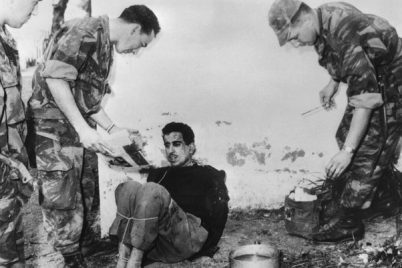
By Keean Bexte | The Counter Signal | August 23, 2022
Much like Canada, France has begun recruitment efforts to launch a new climate change police force to enforce strict climate laws.
As reported by Breitbart, French Interior Minister Gérald Darmanin is hiring 3,000 “green police” officers to go after those who violate “green-related criminal issues” to safeguard the country from disasters supposedly caused by human-related climate change.
In an interview with Le Journal du Dimanche, “Faced with this, we must improve the work of judicial investigation,” Darmanin said. “We have therefore decided to massively reinforce the resources of the Central Office for the Fight against Damage to the Environment and to launch 3,000 ‘green police’ posts.”
He continued, saying that the climate change police force “will be a revolution.”
The announcement comes after the EU crisis management tsar Janez Lenarcic called for the rapid creation of a Europe-wide “Civil Protection Force” to enforce climate laws across the EU.
What such a force would mean for the sovereignty of member states hardly needs to be mentioned, and the call for an international police force was heavily criticized.
“Handing these irresponsible and unaccountable bureaucrats even more power would just simply be irresponsible,” said MEP Cristian Terhes.
“What Europe needs is a rebirth of national and sovereign democracy, with creativity and power for local people rather than one size fits all bureaucratic control from the centre of Brussels.”
Of course, Europe isn’t the only place planning to create a police force that specifically handles offences related to climate change. Canada is getting in on the action, too.
As reported by The Counter Signal, it appears that the Ministry of Environment & Climate Change Canada (ECCC) is currently working on a building to house such officers.
And if that wasn’t enough evidence, ECCC has posted an ad on Indeed.com for an “Enforcement Officer – Environmental (pollution) enforcement.”
According to the ad, “Environment and Climate Change Canada’s Enforcement Branch ensures that organizations and individuals respect laws administered by Environment and Climate Change Canada that protect the natural environment, its biodiversity and the health of Canadians.”
Duties include “conducting inspections to ensure compliance with federal environmental laws,” as well as “conducting investigations into alleged violations of federal environmental laws, including taking statements from witnesses or accused persons, preparing and executing search warrants, reviewing and assessing evidence, and preparing court briefs.”
Officers will further be required to wear uniforms and carry safety equipment, including body armour, handcuffs, batons, and even prohibited weapons.
France’s climate change officers will likely be similarly equipped.
Featured Video

Deception – Submarines against Olof Palme
or go to
Aletho News Archives – Video-Images
From the Archives
Woolsey Fire started at Santa Susana Field Lab — where “radioactive materials released were never accurately measured”
By John Laforge | CounterPunch | November 30, 2018
In my Nov. 16 column, I reported on potential radiation risks posed by California’s Woolsey wildfire having burned over parts or all of the Santa Susana Field Laboratory—south of Simi Valley, Calif., 30 miles outside Los Angeles—site of at least four partial or total nuclear reactor meltdowns.
The field laboratory operated 10 experimental reactors and conducted rocket engine tests. In his 2014 book Atomic Accidents, researcher James Mahaffey writes, “The cores in four experimental reactors on site … melted.” Reactor core melts always result in the release of large amounts of radioactive gases and particles. Clean up of the deeply contaminated site has not been conducted in spite of a 2010 agreement.
Los Angeles’s KABC-7 TV reported Nov. 13 that the Santa Susana lab site “appears to be the origin of the Woolsey Fire” which has torched over 96,000 acres. Southern Calif. Public Radio said, “According to Cal Fire, the Woolsey Fire started on the afternoon of Thursday, Nov. 8 … on the Santa Susana site.” … continue
Blog Roll
 Aletho News
- Brussels cannot say where its own pipeline inspectors are as Hungary’s oil lifeline remains shut
- Israel’s Iran War: Myth and Reality
- Between war and industrial breakdown: The US-Israeli attrition crisis
- Pressure builds on Iran to ‘drop’ Lebanon ceasefire demand as Islamabad talks hang in balance
- In another clash report, US denies agreement to release Iran’s assets
- What is fueling unrest across the EU?
- Why no power can undermine Iran’s eternal dominance over the Strait of Hormuz
- Is The War Against Iran Over?
- Iran war will leave long-term ‘scar’ on Wall Street, investors warn
- How Iran decimated US power projection in West Asia: Military lessons of 40-day war
- If Americans Knew
- Mearsheimer reveals how Israel dictates US policies on Iran, Gaza – video
- After killing 350+, Israel still has a “score to settle” with Lebanon before ceasefire – Daily Update
- Military aid to Israel emerges as the latest political litmus test for Democrats
- The only Palestinian children’s rights organization closes following years-long Israeli campaign against it
- ‘I Can’t Forget the Smell’: Lebanese Reel After Israel Kills Over 300 in Single Day
- DNC Shoots Down Resolutions Calling Out AIPAC and Limiting Arms to Israel
- TCN: Is Israel Blackmailing President Trump?
- Israel killed at least 303 Lebanese yesterday – who were they? Daily Update
- Amnesty: Urgent – Protect Lebanese civilians from brutal escalation in Israeli attacks
- Is The War Against Iran Over?
- No Tricks Zone
- German Expert: Heat Dome Led To Record Temps In Western USA…Warmer In 1934, 1936
- New Study: No Linear Warming Or Glacier Retreat Along Northern Antarctic Peninsula Since 1980s
- An Inconvenient Tree: Uncovered In Alps… Europe Much Warmer Than Today 6000 Years Ago
- New Study Reports A 60% Slowdown In Greenland’s Ice Loss Rate In The Last Decade
- Low Intensity Tornado Wrecks Major Solar Farm, Creating A Potential Toxic Dump
- New Study Finds Warming Saves Lives…Cold Temperatures 12 Times More Deadly Than Excess Heat
- German Science Blog Accuses PIK Climate Institute Of Hallucinating Climate Tipping Points
- Devastating Assessment Of Comirnaty Vaccine By Former Senior Pfizer Europe Toxicologist
- New Study: CO2 Is ‘Effectively Negligible’ As An Explanatory Climate Change Factor Since 2000
- Former Pfizer Toxicologist Dr. Helmut Sterz Tells Bundestag Hearing Pfizer Vaccine Should Have Never Been Approved
 Aletho News