France increases hostilities against China in the South China Sea
By Paul Antonopoulos | February 25, 2021
The French Navy days ago announced that the Tonnerre amphibious assault ship and the Surcouf frigate departed from the port of Toulon on February 18 and would travel to the Pacific for a three-month mission. According to Naval News, the French warships will pass through the South China Sea twice and in May participate in joint military exercises with the U.S., Australia, India and Japan. China has strongly criticized this French move.
The fact that the French Navy sent the Surcouf and the multi-purpose landing craft Tonnere to patrol the South China Sea, which is over 10,000 kilometers away from France, proves that the disputed sea region is one of the most important geopolitical hotspots in the world. The French claim that attention is focused on ensuring navigational security as the South China Sea is a particularly important bridge between the Indian and Pacific Oceans, and has influence on geopolitics and geoeconomics, not only within Asia-Pacific and the Indo-Pacific region, but for the entire world.
By sending modern warships to Asia-Pacific, France proved that they have a new approach to Vietnam, a former French colony. The recent moves by Paris marks the return of the French to Southeast Asia, not as an invader like in the previous century, but as a country willing to challenge and provoke China in its own backyard. This is something that would also appeal to Vietnam as it has centuries long enmity with China that continues to this day and is far deeper compared to the relatively short-lived French colonial era of Indochina. Another point to note is that the French energy company Total is one of the most important partners for Vietnam in the oil and gas sector. The French company is currently cooperating with Vietnam and some other countries in the region to exploit resources.
Since 2018, France has built an Indo-Pacific strategy. France is the first European country to make this move. In addition, in 2015 and 2017, French warships also passed through the South China Sea. It is likely that France will now step up its position against Beijing’s claims in the South China Sea by increasing the frequency of its activities in the region, including military exercises.
Four permanent members of the United Nations Security Council send their fleets on irregular or periodic patrols in the South China Sea, proving how important this region is for the global economy and the world’s superpowers. It should be emphasized that having a major power from outside the region deploy its modern weapons in the South China Sea is a major provocation. France, whose closest territory to the South China Sea is New Caledonia over 6,500 kilometers away, has no business in being involved in the region’s problems. But none-the-less, the French are most likely motivated to be interested in South China Sea affairs to support Total’s business plans in the area.
In the words of French Defense Minister Florence Parly, the patrol of French warships in the South China Sea is “evidence of the French navy’s ability to deploy operations in remote areas in the long run with strategic partners,” making reference to the U.S., Japan and Australia. It can be seen that France is ready to strengthen cooperation with QUAD, a coalition consisting of the U.S., India, Japan and Australia whose aim is to challenge China in the Indo-Pacific region.
France is not a member of QUAD; however, the European country can strengthen its ties with the alliance on the basis of bilateral military agreements signed with the U.S. and the other three countries. On the other hand, France is an ally of the U.S. through NATO, in which Japan and Australia are also considered Major non-NATO allies. The dispatch of two important warships to the South China Sea shows that France is ready to stand alongside the U.S., Japan, India and Australia in Indo-Pacific geostrategic, political and military issues with a focus against China.
For the U.S., the introduction of French warships to the South China Sea is an important step towards establishing an anti-China alliance on a global scale, not just at a regional level. Although China has denounced these recent provocations emanating from non-regional powers, it has not yet revealed how they may respond.
Although the French Colonial Empire is long gone, Paris is still attempting to maintain its global influence through its former colonies, not only in Southeast Asia through countries like Vietnam, but also in Africa, the South Pacific, South America and the Caribbean. However, despite France’s antagonizations, Paris does not have the capabilities to be able to challenge China unilaterally in the South China Sea, hence why it is relying on former colonial possessions like Vietnam and partners like the U.S., Australia and India. For now, there is no indication that France will successfully deter China from pursuing its interests in the South China Sea.
Paul Antonopoulos is an independent geopolitical analyst.
France: Macron Government Looks to Outlaw More Anti-Immigration Activist Groups

By Eric Striker | National Justice | February 20, 2021
Two Jewish organizations in France, CRIF (Representative Council of French Jewish Institutions) and LICRA (International League Against Racism and Anti-Semitism), are lobbying the embattled Emmanuel Macron government into beginning the process of outlawing Generation Identitaire (GI), a group that uses art and symbolic gestures to protest against globalization and immigration.
According to French media, Macron and a wide variety of Jewish groups believe that outlawing GI and other “far-right” groups could be useful in undermining Marine Le Pen’s 2022 electoral prospects.
The government in France has been aggressively disbanding nationalist groups in recent years. In 2019, the CRIF pressured the Macron government into moving forward on banning Bastion Social, a patriotic group made up mostly of students that advocated for the ethnic French poor, after its members defended themselves from repeated attacks by criminals and anarchists. Bastion Social’s headquarters in Lyons, which sought to provide shelter to the homeless, was raided and closed down by the police.
While the media repeatedly links Le Pen to GI’s publicity efforts that bring attention to the immigration problem in Europe, she has prohibited members of her party, Le Rassemblement national (RN), from protesting in defense of GI’s right to advocacy. Her father, Jean Marie Le Pen, has publicly condemned her for the decision.
Starting in 2011, Le Pen has purged numerous members — including her own father — for opposing homosexuality, Zionism, or a variety of other positions. This has allowed her party to receive somewhat friendlier treatment in some circles of the French elite, most notably BFM TV which is controlled by the Jewish plutocrat Alain Weill.
Le Pen’s shift away from an ethnic grounded nationalism towards a more liberal type focused on the effects of Islamic culture has helped her party avoid banishment and state pressure, but Macron has cynically capitalized on this. Macron has been aggressively campaigning against Islam after the brutal murder of a liberal French teacher, leaving Le Pen vulnerable to being outflanked on her main issue in next year’s election.
As for GI, much of the commotion created around them is based on lies. The organization specifically bans “anti-Semites” from membership, but this did not stop Zionist groups from inventing a brazen lie, claiming that they were chanting “dirty Jews” at one of their events (video emerged showing that the people chanting this were counter-protesters).
While Macron and his supporters have recently condemned the influence of anti-white American culture in their educational system, there is no reason to believe they are sincere. In France, the native majority is regularly persecuted for advocating for their own interests, particularly when their interests clash with the local Jewish power structure.
A third French lockdown could drive fed-up French away from Macron towards rising Le Pen
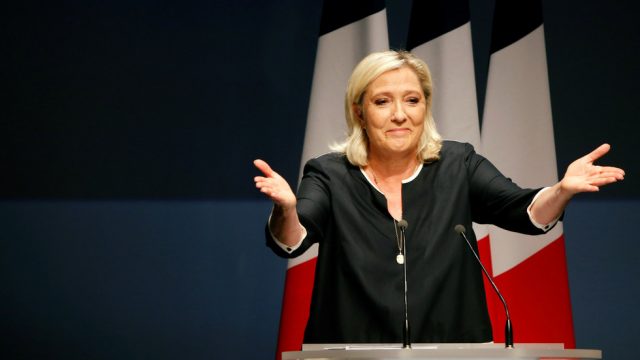
Marine Le Pen at an end of summer annual address in Frejus, France September 15, 2019 © REUTERS/Jean-Paul Pelissier
By Rachel Marsden | RT | January 28, 2021
A new poll shows that if the French presidential election was held today, populist National Rally leader Marine Le Pen would beat French President Emmanuel Macron – at least in the first round of voting.
While there’s no reason for Macron to start panicking, he’s nonetheless at a critical crossroads as he faces a decision over whether to lock down the country once again and risk triggering chaos.
Much is being made in the worldwide press of the new Harris Interactive poll indicating that Le Pen currently leads Macron by a score of 26-27 percent to 23-24 percent in a head-to-head, first-round presidential matchup.
It’s not exactly a shock poll, and closely mirrors the first round of the actual faceoff between Macron and Le Pen in 2017 that saw Macron lead Le Pen by only three percent. Macron still won massively in the second round, 66 percent to 34 percent, as voters who favored candidates in the first round all held their noses and voted for Macron in order to block Le Pen. And because of that phenomenon, conventional wisdom suggests that Le Pen simply can’t ever win a French presidential election.
Unless, of course, all hell breaks loose and voters decide that their priority is to get rid of those they perceive as destroying France, at any cost. It’s the same kind of sentiment that swept Donald Trump into the White House and has left permanent marks on American society in Trump’s wake via the radicalization of those who feel that the establishment spent his entire four-year term refusing to accept their electoral choice to the point that it wasn’t a stretch for them to believe that the same establishment would have rigged Trump’s reelection.
Macron finds himself staring down the possibility of what the French call a general “ras-le-bol” – that is, the French being totally fed up with him and his team, to the point of casting whatever vote would be required to replace him in the second round. That would still require a massive shift of 30 percent of Macron voters in the last election’s second round to choose Le Pen. But, given the increasingly dire economic and social crisis facing the country, anything seems possible.
A lot will depend on the next few weeks. Macron is under pressure from sanitary advisers who are encouraging him to adopt a preventative lockdown to avoid hospitals from being overwhelmed by Covid-19 patients. A third lockdown would mean that the economy would take yet another hit, while the French are growing increasingly fed up with nearly a year of government-imposed restrictions on their lives and livelihoods. Already under a 6pm curfew and with some businesses by now closed for months, Macron apparently feels that there’s a growing possibility of civil unrest. And he has good reason to fear, as 38 percent of French citizens are against a third national lockdown, according to an Elabe poll.
Macron can’t keep asking all of French society to fall on their swords for a virus that kills mainly the elderly and people with preexisting problems, all while watching the government roll out the vaccine at the pace of an escargot. The fact that hospitals still risk being overwhelmed a year into the pandemic is a sign of government ineptitude. They could have built hundreds more hospitals within the past year. Instead of offering any other solution, they prefer to just keep downloading their failures onto the backs of the citizens by asking them to lock themselves up at home and tolerate going broke and mad so the government can save face.
Into this breach storms Marine Le Pen, saying on FranceInfo this week: “Lockdown is the last solution when you’ve failed with all the others. Why did the government not take advantage of the last lockdown, which required a lot of sacrifices from the French, to test massively and get ahead of the epidemic?” She added: “We have the feeling that the government has nothing under control, that it spends its time chasing the virus. To be ahead of the game, certain systems need to be generalized, in particular the massive analysis of wastewater, or even sequencing.”
Le Pen echoes the frustration of the French with the government’s go-to solution to its own insufficiencies being repeated lockdowns. When the government handouts dry up – and they soon will – businesses that have been forced by the government to close for months under pandemic pretext will simply fail, and along with them so will the livelihoods of many voters.
And while Macron clearly has a sense that he’s needed to move further right to block a Le Pen rise by adopting measures to better control immigration and Islamist extremism, those measures will amount to pointless window-dressing if he allows the lockdown bulldozer to destroy the social and economic foundation of the country.
So Macron has a choice to make in the coming days. And it may very well decide his presidential fate.
Rachel Marsden is a columnist, political strategist and host of an independently produced French-language program that airs on Sputnik France. Her website can be found at rachelmarsden.com
French Government “Shocked” at Twitter Banning of Trump
By Paul Joseph Watson | Summit News | January 11, 2021
The French government has echoed Angela Merkel’s sentiment in saying it is “shocked” at Twitter’s banning of President Trump, asserting that Big Tech is a threat to democracy.
Junior Minister for European Union Affairs Clement Beaune said the decision to silence Trump proved the need for Big Tech platforms to be tightly regulated.
“This should be decided by citizens, not by a CEO,” he told Bloomberg TV on Monday. “There needs to be public regulation of big online platforms.”
Finance Minister Bruno Le Maire also said that “the digital oligarchy” was “one of the threats” to democracy and should be reigned in by the state.
As we highlighted earlier, the German government also warned that Big Tech’s deplatforming of Trump set a very dangerous precedent.
Communicating via a spokesman, Chancellor Angela Merkel called the move “problematic,” adding that social media giants shouldn’t have the power to decide who has the right to free speech.
“This fundamental right can be intervened in, but according to the law and within the framework defined by legislators — not according to a decision by the management of social media platforms,” said the statement.
While Republicans were completely toothless in their efforts to control Big Tech during Trump’s administration, Poland could be set to pass a law that would fine social media companies $2.2 million a pop for censoring lawful free speech.
“In the event of removal or blockage, a complaint can be sent to the platform, which will have 24 hours to consider it. Within 48 hours of the decision, the user will be able to file a petition to the court for the return of access. The court will consider complaints within seven days of receipt and the entire process is to be electronic,” reported Poland In.
French drone strike in Mali kills 19 civilians at wedding event
Press TV | January 8, 2021
A French military drone strike in Mali has reportedly killed civilians attending a wedding event in a remote village amid France’s persisting military intervention in its former African colony under the pretext of fighting rising militancy in the impoverished — though minerals-rich – nation.
The aerial strike in central Mali’s isolated Douentza area came at a moment of growing anti-French sentiment and armed resistance across the West African country in response to the eight-year military presence of the former colonial power.
An advocacy group for Fulani herders, known as Jeunesse Tabital Pulaaku, released a list on Thursday of 19 people it said were killed by the French airstrike, including the father of the groom, as well as seven others it said were injured in the attack while attending the wedding ceremony.
“Those who were killed were civilians,” said the group’s president, Hamadoun Dicko, as quoted in a Reuters report on Friday, noting: “Whether there were jihadists around at the moment of the raid or not, I don’t know.”
The report further cited a health worker, who spoke on condition of anonymity, as confirming on Tuesday that civilians had been “mistakenly hit in the strike.”
This is while on Thursday Mali’s Paris-sponsored government and the French military denied eye-witness accounts and other reports blaming the French air strike for the civilian fatalities in the area, claiming that only Muslim militants were targeted.
The French army further insisted that the targets were “Islamist fighters,” claiming that their identities were confirmed by its drones prior to the bloody attack and subsequent checks following the strike.
“No collateral damage, no sign of a festive gathering or a marriage,” the French army command declared in a statement, describing the targeted site as lightly wooded and claiming that “no women or children were observed” in the area.
According to the army statement, a group of nearly 40 men was monitored by the REAPER drone for more than an hour and a half before the strike, which was carried out over one kilometer from the nearest dwellings on the edge of the village of Bounti.
Repeating the French version of events, Mali’s Defense Ministry further cited surveillance images” to state, “the strike took place during a joint operation with French forces and killed about 30 militants.”
“There was no sign of a marriage, women or children,” it added in a statement.
France maintains a military force of more than 5,100 in Mali and other former colonies in West Africa in purported efforts to counter militants it claims are linked to the al-Qaeda and Daesh terrorist groups.
The military intervention, however, has come at a cost. Five French soldiers were killed in Mali in recent days and Malian citizens have protested France’s military presence in the streets as well as on social media platforms.
Two French soldiers were killed earlier this week as an explosion hit their armored vehicle during an “intelligence” gathering mission in Mali’s eastern Menaka region, bringing the number of French soldiers killed in the nation to fifty.
The attack came less than a week after three more French troops were also killed in its former colony by an improvised explosive device in the southern region of Hombori.
This is while France is still trying to maintain power with its significant military presence in Africa. It has thousands of soldiers spread in bases across the arid Sahel region of West Africa below the Sahara, purportedly waging “counter-insurgency” operations.
Violence, however, has steadily worsened in the region with militant groups using northern Mali to launch attacks on neighboring countries.
Last January, hundreds of people took to the streets in the capital of Mali to protest the presence of French troops in the Sahel region.
Protesters gathered in a square in the center of the capital Bamako, where they burned the French flag and carried banners reading slogans such as “Down with France.”
The protest came ahead of a summit in France on the country’s military interventions in Africa.
The latest French killing of Malian civilians came as Paris faces tough choices about how to deal with its purported moves to counter extremists in Mali and other African nations without getting bogged down in a potentially un-winnable war, according to an AFP report, which pointed to the growing number of French troops killed since it launched a campaign to rid northern Mali of militants in January 2013.
It further cited French military sources as saying that President Emmanuel Macron wishes to go further in reducing the number of French troops in the Sahel region before the country’s next presidential election in April / May 2022.
“So far, the French have not really questioned the role of France in the Sahel. But you have to be very careful. Public opinion can change very quickly,” said a government source as quoted in the report.
In a sign that the Sahel mission could become a national political football, some opposition politicians in France have already started to question the wisdom of staying the course.
“War in Mali: for how long?” questioned the country’s far-left party, France Unbowed, earlier in the week.
France Accused of ‘Hysteria Over COVID Variant’ After Nearly 15,000 Truckers Tested Negative
21st Century Wire | December 29, 2020
Before Christmas, sensational reports of a new COVID “variant” in the UK prompted European neighbors France, Netherlands and Belgium – to close their international borders for fear of a dangerous new viral wave. As a result, ferries were unable to leave the Port of Dover until Christmas morning, with some 6,000 hauliers remaining in Kent over the subsequent days, and with many spending Christmas Day and Boxing Day parked, waiting to cross the English Channel. What was all the fuss about? Is there really a new “mutant strain” which UK Health Secretary Matt Hancock claims is still ravaging through the British Isles?
As part of this bio-security theatre, military personnel were then deployed to Kent, including a massive cohort of 1100 British troops, 30 French firefighters, and 60 Polish soldiers – all to supposedly to provide aid and services to the drivers, and to “speed up testing to 600 per hour” carried out at nearby Manston airfield.
As it turns out, all of this was completely unnecessary.
UK Transport Secretary Grant Shapps tweeted: “Update on Kent lorry situation: 15,526 #Coronavirus tests now carried out. Just 36 positive results, which are being verified (0.23%). Manston now empty and lorries should no longer head there please.”
What the Government and Mainstream Media will not tell the public is that if the highly dubious PCR Testing was used, then that tiny reported number of 36 ‘positive cases’ could have easily fallen within the margin of false positive errors – meaning all 15,000 plus drivers may have been ‘COVID free’ – an incredible but very telling data point – all but proving that the virus is likely to be severely over-hyped right now in the UK.
As 21WIRE already reported last week, Hancock’s claims of a new ‘dangerous and more transmissible’ virus were totally unfounded and based on sloppy science from the UK government’s NERVTAG science advisory committee.
Because of the near nonexistent COVID cases within this giant trucker sample, critics are now railing against France and other European countries for panicking and closing their borders based on irrational fear of an non-existent “mutant strain” of COVID-19. But the UK authorities have no business pointing the finger at anyone….
MSN reported on Dec 25th…
The French authorities slapped restrictions on hauliers crossing the Channel following the [alleged] emergence of the VUi202012/01 coronavirus mutation which is believed to spread faster than other strains.
The UK and France agreed to a testing regime to allow trucks to start flowing again on the Dover-Calais link.
The Standard has been told that out of the first 1,500 tests none came back positive.
A Whitehall source criticised the “over hasty” action by the French authorities, adding: “All of this trouble – there have been 1,500 tests – no positives.”
The EU’s Transport Commissioner Adina VÄlean criticised Emmanuel Macron’s government over the weekend’s freight ban.
She tweeted: “I am pleased that at this moment, we have trucks slowly crossing the Channel, and I want to thank UK authorities that they started testing the drivers at a capacity of 300 tests per hour.
“I deplore that France went against our recommendations and brought us back to the situation we were in in March when the supply chains were interrupted.”
Mind you, that’s more than a bit rich for anyone in the UK Government-Media Complex to accuse France of over-reacting – when it was Matt Hancock and the fawning mainstream press who for weeks shamelessly pumped-out incessant fear-based claims of an allege COVID “mutant strain” – absent of any actual evidence to back-up their wild assertions. Lesson learned?
SEE MORE:
UK ‘Variant Fears’ Are Over-Hyped Says Leading US Microbiologist
China to strengthen military coordination with Russia
By M. K. BHADRAKUMAR | Indian Punchline | December 24, 2020
The joint aerial strategic patrol held by the air forces of Russia and China on December 22 over the Sea of Japan and the East China Sea makes a big statement in the geopolitics of the Asia-Pacific region. Chinese experts have hinted that such events could become “routine” in future.
The Chinese and Russian defence ministries made a joint announcement on the occasion Tuesday. China sent four nuclear-capable H-6K strategic bombers “to form a joint formation” with two of Russia’s famous Tu-95 bombers (NATO reporting name: “Bear”) to conduct the joint patrol as “part of annual military cooperation plan” between the two countries.
The announcement said the joint patrol “aims to further develop the China-Russia comprehensive strategic partnership of coordination in the new era, and enhance the level of the two militaries’ strategic coordination and joint operational capability to jointly safeguard global strategic stability.”
Curiously, only a month ago, on November 6, two Tupolev Tu-95MS strategic missile-carrying bombers of Russia’s Aerospace Force had performed a scheduled 8-hour flight over the neutral waters of the Sea of Japan and the north-western Pacific. Russia’s Defense Ministry said “At some sections of the route, the strategic missile-carrying bombers were escorted by Su-35S fighters.”

Russia’s Tu-95MS Strategic Bomber (Filephoto)
Clearly, the joint patrol with China was not an absolute must from the perspective of Russia’s national defence. But its optics and messaging mattered. This has everything to do with the regional setting with the US and its partners stepping up.
On Dec. 19, USS Mustin conducted a transit through the Taiwan Strait; on Dec. 20, Taiwan conducted a live-fire drill in the Pratas Islands (approx. 300 kms from mainland China) and plans to conduct another on Dec. 27. Pratas Islands are strategically located near the gateway to the South China Sea and are a waypoint for oil tankers and Chinese vessels en route to the Pacific Ocean.
Last week, Taiwan launched its first missile corvette, which the Taiwanese press described as an “aircraft carrier killer”, even as PLA Navy’s first Chinese-made aircraft carrier, the Shandong, completed its third sea trial in a 23-day transit in the Bohai Sea.
Also this month, a US Navy Amphibious Ready Group (ARG) consisting of the USS Makin Island and USS Somerset (LPD 25) patrolled the South China Sea and conducted “unscripted” live-fire drills. The Chinese state-run newspaper Global Times angrily called the ARG “US muscle-flexing actions” that “could damage regional stability,” and commented that “China should be prepared to confront the US in the South China Sea and the Taiwan Straits no matter who sits in the White House.”
Japan has bestirred itself lately, inviting like-minded Western countries to send military units to the Far East signalling that they are united in seeking a free and open Indo-Pacific region. The US, French and Japanese navies conducted integrated exercises in the Philippine Sea in December focusing on anti-submarine warfare; another joint military exercise is planned for May on an outlying Japanese island; the UK plans to send an aircraft carrier strike group to conduct joint exercises with the US Navy and Japanese Maritime Self-Defense Force (JMSDF) early next year.
The Japanese Defense Minister Nobuo Kishi held talks last week with his German counterpart Annegret Kramp-Karrenbauer where he “expressed hope that a German vessel” would join exercises with the JMSDF in 2021 and “suggested it would assist the international community’s efforts to ensure the right of passage of vessels through the South China Sea if the German warship would traverse waters” over which Beijing claims jurisdiction.
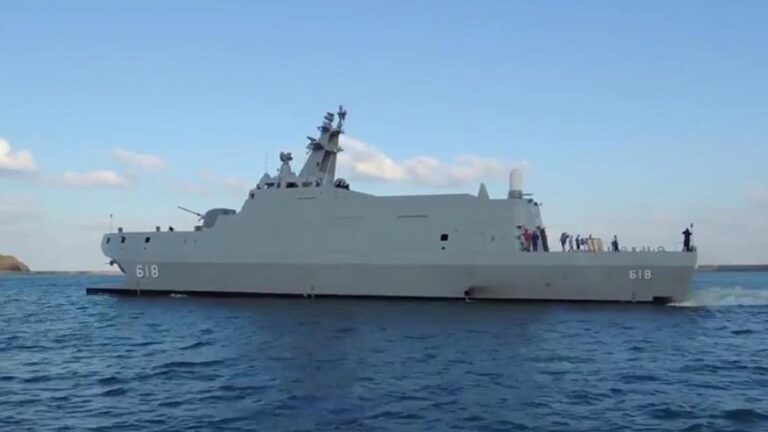
Taiwan Navy’s first stealth ‘carrier killer’ corvette Tuo Jiang
Amidst all this, the US’ Naval Service released an integrated maritime strategy designed to take a “more assertive (approach) to prevail in day-to-day competition (with China) as we uphold the rules-based order and deter our competitors from pursuing armed aggression.” Also, the US secretary of the Navy has called for the reestablishment of the 1st Fleet, a numbered Navy fleet, “in the crossroads between the Indian and the Pacific oceans.”
On Dec. 18, the US began building on the second Quad Foreign Ministers’ Meeting in October by organising a virtual “Quad” meeting of senior diplomatic officials from the US, Australia, India and Japan. The US State Department readout said the four countries discussed “practical ways … to coordinate efforts to support countries vulnerable to malign and coercive economic actions in the Indo-Pacific region.”
There is much speculation about how the [prospective] Biden administration will approach the Indo-Pacific. So far, Biden has not mentioned Quad, but he uses the phrase “Indo-Pacific.” But instead of discussing a “free and open” Indo-Pacific (as Trump does), Biden uses the phrase “secure and prosperous.”
To be sure, given the high stakes involved, China and Russia will not take chances. Their joint aerial patrol Tuesday reflects common concern over the region’s strategic stability. Both countries take note of growing interference by extra-regional powers inciting frictions, potentially posing a major threat to regional peace. Meanwhile, the US is deploying anti-missile systems and keeps talking about a NATO-like military alliance in Asia.
In sum, the joint patrol signals that China and Russia are “the linchpins of peace and stability in the Asia-Pacific region and Eurasia. They have no intention to challenge the regional order. They are propelled to respond to external powers which threaten regional security”, as a prominent think tanker at the Institute of Russian, Eastern European and Central Asian Studies under the Chinese Academy of Social Sciences, Yang Jin, put it.
Chinese pundits have discussed the pros and cons of a Sino-Russian military alliance, the consensus opinion being that in the prevailing security environment, the existing format of strategic partnership serves the purpose of meeting common challenges while giving flexibility to serve the self-interests each side. Having said that, military alliance also remains “a last option for the worst situation – when the US or another country launches a war that forces China and Russia to fight side by side” — to quote Yang.
An editorial in the Chinese Communist Party daily Global Times noted, “China and Russia have no intention of forming a military alliance because it cannot resolve the comprehensive challenges the two countries have to face” but the pressure from the US and its allies have “provided an important external impetus” to the strengthening of the comprehensive strategic cooperation as such, including military cooperation.
“As long as they cooperate strategically and jointly deal with challenges, they can generate effective deterrent, form a joint force to deal with specific problems, resist the attempts to suppress the two countries and curb the US’ international misconduct,” the editorial said.
The US-Russia-China triangle is sure to transform under the [prospective] Biden presidency if Washington sets sights on Moscow as the biggest threat to the US national security. Unsurprisingly, Beijing is signalling that the China-Russia strategic partnership should remain close and continue to be strengthened to handle increasing pressure from the US, even if Biden might ease tensions with Beijing.
This strategic emphasis is the leitmotif of an unusually lengthy report by Xinhua in the People’s Daily on the phone conversation between the State Councilor and Foreign minister Wang Yi with his Russian counterpart Sergey Lavrov on December 22.
France Forced To POSTPONE ‘Health Dictatorship’ Vaccine Legislation
Massive backlash against “vaccine blackmail” means delay in proposed legislation
By Steve Watson | Summit News | December 24, 2020
A radical bill proposed by the French Government that would see unvaccinated people refused basic services such as public transport has been put on ice after a massive backlash.
The proposed law mandates that citizens have proof of a negative COVID test or “preventative treatment, including the administration of a vaccine” in order to “access transport or to some locations, as well as certain activities.”
However, the government has been forced to delay the legislation after angry protests.
French Health Minister Olivier Véran publicly postponed the bill in an announcement Tuesday evening.
“Because there needs to be trust for the French people to go and get vaccinated of their own free will, because we’re still in a state of sanitary crisis … the government won’t present the text [to the National Assembly] for several months, before we’re out of the crisis,” Véran stated.
The bill was lambasted by political figures across the spectrum, with conservative MP Fabien Di Filippo labelling it “vaccine blackmail.”
RN leader Marine Le Pen branded the vaccine measure “essentially totalitarian.”
“In a backhanded way, this bill does not aim to make vaccinations mandatory, but will prevent anybody who doesn’t comply from having a social life,” she said.
RN party spokesman Sebastien Chenu called the plan a “health dictatorship,” while centrist senator Nathalie Goulet said the draft was “an attack on public freedoms.”
Guillaume Peltier, deputy leader of the center-right LR party, warned that the law would allow the government to “get all the power to suspend our freedoms without parliamentary control.”
France’s vaccination program, set to get underway on Sunday, will not be mandatory, but a majority of 55% of citizens say they will not get the shot.
As we previously highlighted, France has imposed some of the strictest lockdown measures in Europe, with citizens having to fill out a form every time they leave their home.
Accomplished pharma prof thrown in psych hospital after questioning official COVID narrative
By Jeanne Smits – LifeSiteNews – December 11, 2020
Early on December 10, Jean-Bernard Fourtillan, a French retired university professor known for his strong opposition to COVID-19 vaccines such as those presently being distributed in the U.K., was taken from his temporary home in the south of France by a team of “gendarmes” — French law enforcement officers under military command — and forcibly placed in solitary confinement at the psychiatric hospital of Uzès. His mobile phones were taken from him, and at the time of writing, he had not been allowed to communicate with the outside world. The order for his internment appears to have been issued by the local “préfet,” the official representative of the French executive.
The systematic use of psychiatric hospitals in order to silence or punish political opponents became widespread under communism, having started shortly after the Bolshevik revolution in Russia in 1917. The method developed under Stalin and then expanded as opposition to the “socialist paradise” came to be considered a sign of mental illness. Under the 1966 penal code of the USSR, repression of dissidents openly targeted those who “spread false propaganda defaming the Soviet State and its social system.”
Fourtillan, a longtime critic of vaccines that use dangerous adjuvants such as aluminum (the 11 compulsory vaccines for newborns in France contain 17 times the maximum dose of aluminum defined as toxic by the World Health Organization), has been vocal during the COVID-19 crisis. He offers “alternative” explanations and warnings regarding the apparition of the SARS-COV-2 virus and the ARN vaccines that work by injecting pieces of virus message ARN with nanolipids with the aim of causing human cells to start fabricating viral particles and to thus trigger an immunological reaction.
In particular, Fourtillan has accused the French Institut Pasteur, a private non-profit foundation that specializes in biology, micro-organisms, contagious diseases, and vaccination, of having “fabricated” the SARS-COV-2 virus over several decades and been a party to its “escape” from the Wuhan P4 lab — unbeknownst to the lab’s Chinese authorities — which was built following an agreement between France and China signed in 2004.
Relations between France and China regarding the project cooled over the years as China put its own interests first, but in 2017, France’s then–Interior minister, Bernard Cazeneuve, joined the official opening ceremony of the Wuhan Institute of Virology’s P4 lab, together with Yves Lévy, co-president of the steering committee. Lévy is the husband of Agnès Buzyn, who was France’s health minister when the COVID-19 crisis erupted. She was also responsible for signing the decree that banned over-the-counter sales of hydroxychloroquine in France in January 2020.
Is Jean-Bernard Fourtillan’s accusation true? While the Institut Pasteur has verbally announced that it would sue Fourtillan over the accusation, no judiciary action has been forthcoming on that front, and indeed, Fourtillan himself has since lodged a complaint against a spokesman of the Institute for “libel and lies that are prejudicial to the peoples of the world.”
Fourtillan himself has said he hopes legal proceedings will allow him to produce evidence he has built up: he is in fact anxious to debate the issues at stake. Now that he is in a psychiatric hospital, the possibility of this happening — in the interest of discovering the truth — is becoming more remote.
Among the public documents Fourtillan has analyzed and made public are patents for SARS-COV-1, which contains parts of the malaria virus, dating back to 2003. The patents were used by various labs to develop vaccines. Two thousand eleven saw the Institut Pasteur filing a further patent application for “SARS-COV-2,” which was identical to the previous one, according to Fourtillan, who says this was done because commercial exploitation of the first patent started in 2003 and would expire 20 years later, in 2023. According to Fourtillan, four sequences of the HIV virus — responsible for AIDS — were added to the virus, in view of creating further vaccines.
This point was also raised in France last April by Prof. Luc Montagnier, who won the 2008 Nobel Prize for medicine for having discovered HIV in 1983 together with another French scientist, Françoise Barré-Sinoussi. Last April, Montagnier stated that the SARS-COV-2 virus was the result of a human manipulation. He was ridiculed by the mainstream media, but in August, an Italian microbiologist reached the same conclusion: Prof. Joseph Tritto published a book calling the Wuhan virus a “chimera.”
Montagnier, who had worked with a mathematician, described his findings through an analogy. Imagine the coronavirus as a “puzzle” with 30,000 pieces, and then consider several other 9,000-piece puzzles representing HIV-1, HIV-2, and SIV (another retrovirus close to the AIDS virus but targeting monkeys). If three pieces coming from each one of these smaller puzzles were to be found next to each other in the 30,000-piece puzzle, the probability of this having happened naturally would be nil. This is analogous to the presence of parts of the HIV sequence in SARS-COV-2, according to Montagnier.
According to Fourtillan, the present virus causing COVID-19 is this artificial virus. Fourtillan — as well as other researchers of the present crisis — considers this indisputable evidence that the COVID-19 pandemic was planned. He believes that on October 13, 2015, a patent application was filed for a COVID-19 test; this was followed by commercialization in the whole world in 2017 for a whopping 10 billion dollars.
These claims are disputed on the grounds that the reference to the 2015 patent is only part of the later May 2020 patent, also filed by one Richard A. Rothschild, but was quoted as related to the remote diagnosis of COVID-19, enhancing the original patent as it were for the particular case of COVID-19.
Who is right? A sincere, public assessment and debate would lift any confusion or error, voluntary or not, but Fourtillan is now being treated as if he were both dangerous and insane.
Fourtillan gained widespread publicity when a recent film by Pierre Barnérias, giving a voice to critics of the official narrative, became viral in France. In Hold-Up, Fourtillan spoke of his concern that the COVID-19 crisis was fabricated and is being used to impose a dangerous vaccine on the world population.
Fourtillan is himself familiar with patenting procedures, as his résumé shows, having personally filed some 400 patents in the medical field. The French internet medium France Soir described him as follows: “Jean-Bernard FOURTILLAN, Ph.D., Chemical Engineer, Pharmacist, Hospital Pharmacist, Professor of Therapeutic Chemistry and Pharmacokinetics at the Faculty of Medicine and Pharmacology of the University of Poitiers, Expert Pharmacologist Toxicologist, specialized in Pharmacokinetics.”
Fourtillan’s forced internment made no mention of the COVID-19 controversy, which to date has led to no judicial proceedings, instead being officially linked to a lawsuit that has been opened against him for illegal practice of medicine because of his work on a hormonal patch against neuro-degenerative diseases such as Parkinson’s disease, Alzheimer’s, and others affecting motricity, balance, and memory, as well as sleep disorders.
His theory is that pollution, adjuvants such as aluminum in vaccines, and electro-magnetic interference destroy dark matter in the brain through lack of hormones, and he has — successfully, he claims — tested the administration of a hormone patch of valentonin and 6-Méthoxy-Harmalan (sleep and waking hormones), to compensate the damage, on 402 adults, himself included, who accepted the procedure under their sole responsibility and who were warned that the patch was not a drug, but a “technical sample, not for human use.” The procedure costs only a fraction of the price of newly developed drugs for these conditions.
Fourtillan had had a good rapport with the judge charged with the preliminary investigation of the case, Brigitte Jolivet of Poitiers. During his first interrogations at the end of 2019, she appeared to be convinced by his arguments, and the case was proceeding normally.
Last month, Fourtillan, who was staying in the south of France with his wife, was visited by four gendarmes coming from Marseille, who entered his rented cottage and asked for his computers. Although they had no search warrant, Fourtillan handed them over, saying he had nothing to hide, and that on the contrary, he was anxious to have his documents and methods assessed.
He saw the gendarmes leave and hand over his computers to a man in plain clothes in a car nearby.
Days later, his bank accounts and credit cards were suddenly blocked by an authority whose identity was not revealed to him. His pensions were also blocked.
Fourtillan had been summoned to a hearing in the lawsuit concerning his valentonin “treatment” on December 4 in Paris. He did not go, invoking the fact that he now had no way of paying for a train ticket to the French capital.
This information was given to LifeSite by a person who works with Fourtillan on the website http://verite-covid19.com/ and who knows him well — well enough to state that he “is certainly not insane,” having spent time with him recently.
Six days later, on Thursday morning, gendarmes once more came to Fourtillan’s home and asked him to accompany them in order to answer questions about his refusal to join the December 4 hearing in Paris.
Fourtillan agreed readily.
However, from the moment he left his home with the law enforcement officers, he was not able to communicate with his family. One of his lawyers, Marc Fribourg — who has since gone on record saying that Fourtillan is a “conspiracy theorist” — revealed that he was taken to the Uzès psychiatric hospital of Le Mas Careiron, where he has been held since. His other lawyer, who previously commended Fourtillan for the efficiency of his hormonal patches, was not reachable today.
See also:
World Bank approves $250m loan to Morocco
MEMO | December 16, 2020
The World Bank has agreed to grant Morocco $250 million to support local agricultural, as part of a joint operation with the French Development Agency.
This came in a statement issued by the World Bank on Wednesday, after its executive board approved the loan on Tuesday.
The loan aims to support the Generation Green programme, a government strategy for developing agriculture.
The statement announced: “The funding will also support the country’s economic response to the coronavirus pandemic.”
The loan will finance entrepreneurship and training programmes for villages’ youth, with a view to attracting private investments into the agricultural food products sector, and removing regulatory and financing obstacles to stimulate the creation of job opportunities.
According to official statistics, the agricultural sector contributes about 14 per cent of the gross domestic product (GDP). It presents an important source of employment for 75 per cent of the country’s villagers.
NATO says it is “United for a New Era” but is trying to resurrect 20th century policies
By Paul Antonopoulos | December 10, 2020
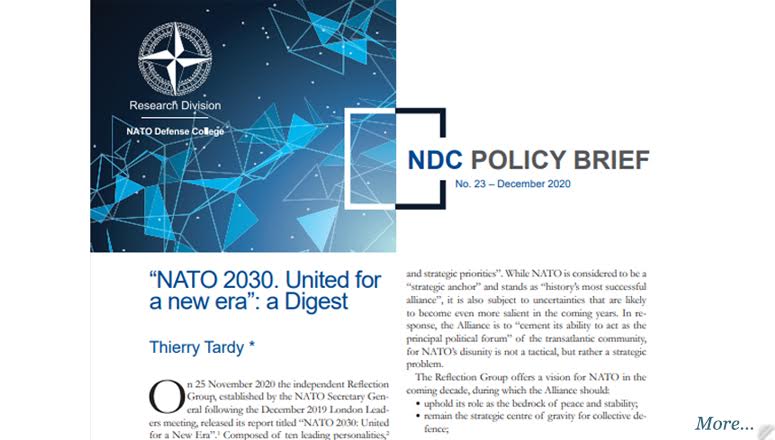
On December 3, Carnegie Europe hosted the public launch of the NATO 2030 Expert Group’s Report: “United for a New Era”. The report comes as U.S. President Donald Trump has many issues with NATO members for not committing to their military budget, Turkey continues its near daily military threats against fellow NATO member Greece, and French President Emmanuel Macron famously highlighted that NATO suffers from a “brain death.” NATO is struggling to find a reason for its existence since the collapse of European communism in 1991, but the report’s authors are confident that their suggestions can adapt NATO “for a New Era”.
What becomes evident from the report is that this “New Era” is not based on multipolarity. Rather it is an attempt to resurrect the U.S.-led unipolar world, suggesting that NATO actually has no strategy for the “New Era” of multipolarity.
But for NATO to justify its existence in the 21st century, they require a political consolidation of members who are divided. It appears that the authors hope that anti-Russian and anti-Chinese positions can unite NATO again towards a common goal.
“NATO must adapt to meet the needs of a more demanding strategic environment marked by the return of systemic rivalry, [and a] persistently aggressive Russia”, the authors said in their “Main Findings: Moving Toward NATO 2030”.
However, the old Russian enemy is also no longer a strong enough reason to justify the existence of NATO, which is why there is also a particular emphasis on China in the report.
“NATO must devote much more time, political resources, and action to the security challenges posed by China,” the report said, adding that NATO must “develop a political strategy for approaching a world in which China will be of growing importance through to 2030. The Alliance should infuse the China challenge throughout existing structures and consider establishing a consultative body to discuss all aspects of Allies’ security interests vis-à-vis China.”
The 67-page report however is mostly just theory, analytical considerations and suggestions. In practice, NATO is dominated by absolute indecision. Some so-called experts are not content with only Russia being the main focus of NATO in the 21st century and consider China a major enemy of the alliance. This is problematic as many NATO members, including countries like Greece that are traditionally subservient to the Alliance, are unwilling to jeopardize trade relations with China and are beginning to improve their ties with Moscow again.
NATO chief Jens Stoltenberg noted that important decisions will be taken in February during a meeting of defense ministers. This meeting will occur just weeks after we discover whether it will be Donald Trump or Joe Biden sitting in the White House on January 20.
A NATO emphasis against China or Russia will depend on whether it will be a Trump or Biden administration next year. For Trump, China is Washington’s main adversary. Biden certainly emphasizes China’s supposed threat, but in reality, the trade war will likely cool down as there are influential interest groups in both countries wanting to engage in business rather than a geopolitical struggle. However, a Biden presidency will certainly push NATO to become tougher against Moscow and encourage destabilization on Russia’s frontiers.
In support of destabilizing Russia’s borders and undermining its interests, the report urges NATO to “expand and strengthen partnerships with Ukraine and Georgia, seek to heighten engagement with Bosnia and Herzegovina”.
As the report states, NATO should “counter destabilization across the Western Balkans”. This is despite the fact that it was the Alliance that violently dissolved Yugoslavia in the 1990’s by supporting separatist forces in Kosovo, as well as jihadists from the Arab World and Chechnya to help break Bosnia off from Yugoslavia.
The fact that Russia is the main threat to Biden is very suitable for some NATO members and their allies like Ukraine, Georgia, Poland and Lithuania. If necessary, these countries could also turn against China if demanded so by NATO or Biden. These states will be more than satisfied as anti-Russian policies in today’s NATO is fanatically supported by Anglosphere and former Warsaw Pact countries.
Reading the new NATO report, which attempts to set a decade-long strategy for the Alliance, actually reveals the desperation to find relevance in the 21st century. Biden may say “America is back”, but that does not mean it will be able to return. Washington’s peak power occurred when the world became unipolar after the collapse of the Soviet Union. However, this short period has already passed and NATO is more obsolete than ever.
NATO, but especially the likes of the Anglosphere and former Warsaw pact states, tries to cling onto an inefficient past. It is for this reason that other NATO members are beginning to look outside of the Alliance to ensure their security without the cost of opposing Russia and China. An example of this is the emerging alliance between France, Greece, Cyprus, Egypt and the United Arab Emirates.
The 21st Century is incomparable to the previous century as new regional and global security threats have emerged under different geopolitical contexts. Insisting that Russia and China are the main adversaries to Anglo-American dominance, prevents NATO states from facing the reality that the 21st century is an era of multipolarity, thus limiting their own global influence as states are choosing to engage in new relations and alliances disconnected from demands made by third parties. NATO believes it can unite all member states “for a New Era” by opposing Moscow and Beijing, but this will only end in major disappointment and failure for the alliance as member states are becoming unwilling to adopt anti-Russian and anti-Chinese policies.
Paul Antonopoulos is an independent geopolitical analyst.
Featured Video

US IRAN TALKS: Who Are the Crazy Ones Here? /Lt Col Daniel Davis
or go to
Aletho News Archives – Video-Images
From the Archives
Woolsey Fire started at Santa Susana Field Lab — where “radioactive materials released were never accurately measured”
By John Laforge | CounterPunch | November 30, 2018
In my Nov. 16 column, I reported on potential radiation risks posed by California’s Woolsey wildfire having burned over parts or all of the Santa Susana Field Laboratory—south of Simi Valley, Calif., 30 miles outside Los Angeles—site of at least four partial or total nuclear reactor meltdowns.
The field laboratory operated 10 experimental reactors and conducted rocket engine tests. In his 2014 book Atomic Accidents, researcher James Mahaffey writes, “The cores in four experimental reactors on site … melted.” Reactor core melts always result in the release of large amounts of radioactive gases and particles. Clean up of the deeply contaminated site has not been conducted in spite of a 2010 agreement.
Los Angeles’s KABC-7 TV reported Nov. 13 that the Santa Susana lab site “appears to be the origin of the Woolsey Fire” which has torched over 96,000 acres. Southern Calif. Public Radio said, “According to Cal Fire, the Woolsey Fire started on the afternoon of Thursday, Nov. 8 … on the Santa Susana site.” … continue
Blog Roll
 Aletho News
- US IRAN TALKS: Who Are the Crazy Ones Here? /Lt Col Daniel Davis
- Talks with the US end without a deal over excessive US demands: Iran
- Feeling Better, Getting Worse: How Psychiatric Drugs Create the Illusion They Cure
- ‘Nobody Told Me’: Former Mental Health Patient Calls Out Dangerous Side Effects of Psychiatric Drugs
- Dr. Abu-Sitta: Beirut ‘felt like a day in Shifa Hospital’
- Iran Has Won the War, It Will Be Up to the US to Secure the Peace: Mohammad Marandi
- Iran condemns assassination threats against Iranian negotiators amid US talks
- Brussels cannot say where its own pipeline inspectors are as Hungary’s oil lifeline remains shut
- Israel’s Iran War: Myth and Reality
- Between war and industrial breakdown: The US-Israeli attrition crisis
- If Americans Knew
- Pro-Israel ‘Thinktanks’ and Individuals who Influence U.S. Foreign Policy
- Mearsheimer reveals how Israel dictates US policies on Iran, Gaza – video
- After killing 350+, Israel still has a “score to settle” with Lebanon before ceasefire – Daily Update
- Military aid to Israel emerges as the latest political litmus test for Democrats
- The only Palestinian children’s rights organization closes following years-long Israeli campaign against it
- ‘I Can’t Forget the Smell’: Lebanese Reel After Israel Kills Over 300 in Single Day
- DNC Shoots Down Resolutions Calling Out AIPAC and Limiting Arms to Israel
- TCN: Is Israel Blackmailing President Trump?
- Israel killed at least 303 Lebanese yesterday – who were they? Daily Update
- Amnesty: Urgent – Protect Lebanese civilians from brutal escalation in Israeli attacks
- No Tricks Zone
- German Expert: Heat Dome Led To Record Temps In Western USA…Warmer In 1934, 1936
- New Study: No Linear Warming Or Glacier Retreat Along Northern Antarctic Peninsula Since 1980s
- An Inconvenient Tree: Uncovered In Alps… Europe Much Warmer Than Today 6000 Years Ago
- New Study Reports A 60% Slowdown In Greenland’s Ice Loss Rate In The Last Decade
- Low Intensity Tornado Wrecks Major Solar Farm, Creating A Potential Toxic Dump
- New Study Finds Warming Saves Lives…Cold Temperatures 12 Times More Deadly Than Excess Heat
- German Science Blog Accuses PIK Climate Institute Of Hallucinating Climate Tipping Points
- Devastating Assessment Of Comirnaty Vaccine By Former Senior Pfizer Europe Toxicologist
- New Study: CO2 Is ‘Effectively Negligible’ As An Explanatory Climate Change Factor Since 2000
- Former Pfizer Toxicologist Dr. Helmut Sterz Tells Bundestag Hearing Pfizer Vaccine Should Have Never Been Approved
 Aletho News