Iran’s tango with Europe is rooted in its traditions and culture
By M. K. BHADRAKUMAR | Indian Punchline | September 24, 2019
The joint statement issued by the leaders of France, Germany and the United Kingdom on September 23 indicting Iran for the attacks on the Saudi Aramco plants two weeks ago is at once consequential and declaratory.
The joint statement may seem a serious diplomatic setback for Tehran, as the joint French-German-UK (E3) stance may transform as the European Union position. If that were to happen, only Russia and China, among world powers who are signatories to the 2015 Iran nuclear deal, continue to maintain that there isn’t evidence yet to establish Iran’s culpability.
Prima facie, Iran’s dependence on Russian and Chinese goodwill would further increase. Both Moscow and Beijing harbour misgivings about Iran’s nuclear and missile development programmes and some of its regional policies, and have so far played coy refraining from frontally assaulting the US sanctions against Iran, while rhetorically critical. It’s a set pattern.
Secondly, Iran’s diplomatic thrust projecting itself as a factor of regional stability suffers a PR setback if it is perceived as undermining regional security and risking a major conflict involving the US. Thirdly, the joint statement brings on board other related issues. These are, principally three.
One, the three E3 have repeated their call on Iran “to reverse its decisions to reduce compliance with the deal and to adhere fully to its commitments under it… [and] to cooperate fully with the IAEA.”
Two, the E3 underscored that Iran should “accept negotiation on a long-term framework for its nuclear programme as well as on issues related to regional security, including its missiles programme and other means of delivery.” Three, they have urged Iran to engage in “with all relevant partners interested in de-escalation of tensions in the Middle East” and “refrain from further provocation and escalation.”
Clearly, this is a one-sided statement. Tehran insists that its compliance with the 2015 deal is part of mutual commitments, but not only the US but also the E3 failed to fulfil their part of the commitments, which in turn compelled Iran to react in accordance with the stipulated provisions of the deal (which allow Tehran to take steps if other parties are defaulting.)
Again, Tehran has also repeatedly stated that its missile programme constitutes a “red line” and it is not open to discussions / negotiations. Suffice to say, the joint statement marks a calibrated distancing from Iran on the part of the European powers.
The joint statement smacks of the “Boris Johnson effect” — London acting as the US’ junior partner. It cannot be a coincidence that Britain pushed for a European stance critical of Iran at a juncture when the US and UK are stepping up efforts to assemble a politico-military coalition to address maritime security in the Persian Gulf (basically, to isolate and provoke Iran in its backyard.)
Britain is considering participation in the US-led military coalition alongside Saudi Arabia and the UAE. France and Germany remain lukewarm about the Anglo-American enterprise.
Having said that, the E3 are also highly vulnerable to pressure from petrodollar states of the Persian Gulf, and in this case Saudi Arabia and UAE have high stakes.
Conceivably, the Trump administration can derive satisfaction that the European stance on the Iran question has edged closer to its policies (although E3 do not subscribe to the maximum pressure approach.)
How Tehran perceives this E3 shift is important. Iran’s diplomacy is supple and Tehran will unlikely deny itself the diplomatic usages of the European conduit.
The point is, Iran greatly values its strategic autonomy and factors in that Russian and Chinese support comes with strings attached. Besides, Iran’s ambitions as a regional power demand the creation of an advanced economy with innovation, which is only possible if it has access to western technology and capital.
Therefore, while the “Look East” and multipolarity of the world order remain key templates of Iran’s world view, that cannot come at the cost of Iran’s integration into the western world.
Arguably, the mildly worded European statement leaves the door open still for further cogitations between France and Iran over the diplomatic negotiations initiated on the sidelines of the G7 summit in Biarritz recently.
Just a few hours before releasing the E-3 statement, French President Emmanuel Macron had warned that “one must be very careful in attributing responsibility” for the Aramco attacks.
“There are clusters of clues, but this bombardment is a new military event that changes the region’s ecosystem,” he said, stressing that caution was needed in apportioning blame for the attack. Since then, Macron also has had a meeting with Iranian President Hassan Rouhani in New York on September 23.
Given the “westernism” in Iran’s psyche and considering the European powers’ manifest keenness to have a productive relationship with Iran, both Iran and the E3 will ensure that life moves on.
Historically, Britain has a profound understanding of Iran’s politics, culture and traditions and it is hard to see even PM Boris Johnson identifying with US’ maximum pressure approach, although he has taken a position closer to Trump.
For the present, London feels somewhat humiliated over the “tanker war” with Iran, but it cannot be the new normal. Johnson is due to meet Rouhani today and may even be transmitting messages from Trump.
Damascus strongly condemns US-Turkish joint military patrols in northeastern Syria
By Sarah Abed | September 10, 2019
On Sunday, six military vehicles from Akcakale district in southeast Sanliurfa in Turkey, crossed the border into Syria and joined a US military convoy in carrying out joint military ground patrols from Tel Abyad, Al Raqqa governorate to Ras Al Ain, Al Hassaka governorate. Two helicopters flew overhead, and unmanned aerial vehicles were also used according to Turkey’s Defense Ministry.
The Kurdish People’s Protection Units (YPG) are leaving areas on Turkey’s border and uprooting fortifications as part of the US-Turkey “safe zone” agreement, which was the result of relentless pressure from Turkish President Recep Tayyip Erdogan, who had threatened to unilaterally proceed with his plans if the US dragged its feet. Turkey also threatened to carry out a military operation last month, against Kurdish militias east of the Euphrates, but US officials stopped the operation.
Under the “safe zone” initiative Erdogan wants to establish a “peace corridor” through which he can send back a million of the four to five million Syrian refugees currently in Turkey. Refugees would be forced to resettle in northern Syria on Turkey’s borders to create a buffer zone thereby changing the demographics of the area. It’s worth noting that many of these displaced refugees are not from the northern Syria.
Erdogan has threatened to “open the gates” and allow millions of refugees currently residing in Turkey to flood Europe and specifically Greece, if his requests are not met in Syria. Some have noted that these refugees are not even Syrian and came from dozens of other countries to fight alongside foreign-funded extremist groups in Syria.
Ankara has also been looking into Russian military equipment and threatened to build nuclear weapons.
In a statement made to the Syrian national news agency SANA an official source at the Foreign and Expatriates Ministry stated, “The Syrian Arab Republic condemns in the strongest terms launching joint patrols by the US administration and the Turkish regime in the Syrian al-Jazeera region in a flagrant violation of international law and the sovereignty and territorial integrity of the Syrian Arab Republic.”
Syria sees this as a form of aggression which is aimed at complicating and prolonging the crisis in Syria and to hinder significant progress made by the Syrian Arab Army against the remaining terrorist groups. Syria absolutely rejects the creation of a “safe zone” and affirms its determination to counter any attempts that put its safety and territorial integrity at risk.
The Syrian government has highlighted previously that Erdogan’s true intentions include “expansionist ambitions” and reviving the Ottoman empire, under the façade of protecting his borders from Kurdish terrorist groups.
In January 2018, Erdogan carried out Operation Olive Branch by invading Afrin and effortlessly defeating the YPG. In a matter of months more than 150,000 Kurds were displaced when they fled to neighboring areas and were replaced with refugees that had fled to Turkey. The demographics were changed and many of the residents who did stay complained about living under harsh extremist conditions enforced by the Turkish-aligned resettled refugees.
At that time, the Kurdish population in Afrin realized that the US will not defend them against an onslaught by NATO ally Turkey and had left them to fend for themselves. The mistake that separatist Kurds have made for the past four years during this war is relying on the United States to save and protect them. Thinking that Washington cares about their independence or political ambitions has put them in several embarrassing situations, including the one they are in now, east of the Euphrates river.
Ultimately, separatist Kurds are responsible for the illegal presence of foreign armed forces from the United States, France, Britain, and coming in at the eleventh hour, Denmark in northern Syria. Had they not turned against the Syrian government and sold their dignity for weaponry, training, and funds from the US led coalition, Turkey would not have had an excuse to invade. This does not take away from the blame that should be placed on all other parties that are impeding the Syrian military progress.
Before the war, Kurdish minorities lived peacefully alongside their fellow Syrian brothers and sisters and many were enlisted in the Syrian army fighting against terrorists. It was only when the United States started backing and providing them with funds, supplies, training, etc. did they turn to treason and treachery. This sort of behavior is not uncommon, Kurds with separatist ambitions have previously been used to create division and instability in the region, including during the Iraq/Iran war. They are closely allied with Israel and have worked with several terrorist groups during the eight-year war in Syria.
The SDF/YPG are seen by Turkey as the Syrian offshoot of the Kurdistan Workers Party (PKK) with whom they have been in conflict for over three decades.
The hostile environment created by the self-declared autonomous Kurdish administration has been rejected by not only the Syrian government and the non-Kurdish Syrian majority in Al Hassaka governorate but by Russia, Iran, and Turkey who’ve issued joint statements declaring their opposition to the autonomous regions set by the Kurdish-led SDF and the Kurdish People’s Protection Units in northern Syria saying they “reject… all attempts to create new realities on the ground under the pretext of combating terrorism.” On Sunday, Syrians held a massive rally in Deir Ezzor against the US-backed Kurdish militias calling for their expulsion from the area.
Last December, when U.S. President Donald Trump announced the withdrawal of US troops from Syria, separatist Kurds turned to Damascus for talks, but when Washington didn’t follow through with the withdrawal, the talks turned stale. There has been mention that talks are now resuming but as long as the Kurdish militias and their political mouthpieces continue receiving handouts from Western nations and direction from the US/Israel, negotiations will be futile.
Sarah Abed is an independent journalist and analyst.
Rights groups call for France to stop arms sales to Saudi Arabia and UAE
![A destroyed prison, in which Houthi Ansarullah movement members held its prisoners, is seen after coalition forces led by Saudi Arabia organised an airstrike over it in Dhamar, Yemen on September 01, 2019 [Mohammed Hamoud / Anadolu Agency]](https://i0.wp.com/www.middleeastmonitor.com/wp-content/uploads/2019/09/20190901_2_37999764_47216403.jpg?resize=1200%2C800&quality=75&strip=all&ssl=1)
A destroyed prison, in which the Ansarullah movement held prisoners, is seen after Saudi led coalition forces organised an airstrike on September 1, 2019
[Mohammed Hamoud / Anadolu Agency]
MEMO | September 7, 2019
Some 17 rights groups have renewed their call for France to immediately stop arms sales to Saudi Arabia and the UAE, after a new UN report confirmed their involvement in the killing of civilians in Yemen, Alkhaleejonline.net reported on Friday.
The 17 NGOs renewed their call for France to stop arming Saudi Arabia and the UAE, based on two incidents that took place last week.
“On Sunday, more than 100 inmates were killed in an airstrike in the west of Yemen,” the rights groups affirmed in a statement.
They also claimed that a reported issued by a group of UN experts found that Saudi Arabia and the UAE are carrying out violent attacks against civilian residents in Yemen.
The experts emphasised the importance of the countries selling arms to these two Arab states to stop their sales, in order to inhibit the encouragement of this conflict.
The group of UN experts which was formed in 2017, confirmed that there have been “many war crimes” throughout the year.
Macron starts pension rollback despite protests
By Ramin Mazaheri – Press TV – September 6, 2019
Paris – After being forced to delay because of the Yellow Vest anti-austerity movement, French President Emmanuel Macron has begun his right-wing pension reform which is already certain to provoke major protests this month.
Macron is pushing for a one-size-fits-all, universal system, to force workers to pay more and for employers to pay less, and to effectively raise the retirement age from 62 to 64 years old for many workers.
Every major union except one is opposed to the major change, and a poll this week showed nearly 70% of France has ‘no confidence’ in Macron’s reform. However, Macron has repeatedly ignored public opinion and even bypassed Parliament to force through neoliberal reforms by executive order.
Many say a universal pension system favors the highly educated and is inherently unjust to manual laborers. For example, how can a railway worker who has straightened train tracks in all types of weather since the age of 18 be compared with someone with an upper-level university degree who didn’t start their air-conditioned office job until the age of 26?
As has been the case since 2010, France’s government says the reforms are necessary for investor confidence and that they will eventually bear fruit.
France and the entire Eurozone has already endured a lost decade of economic growth, as their economies remained burdened by debt and compound interest in order to pay off the failures by corporate bankers in the previous decade.
New U.N. Report Highlights Human Rights Violations and Abuses in Yemen since 2014
By Sarah Abed | September 5, 2019
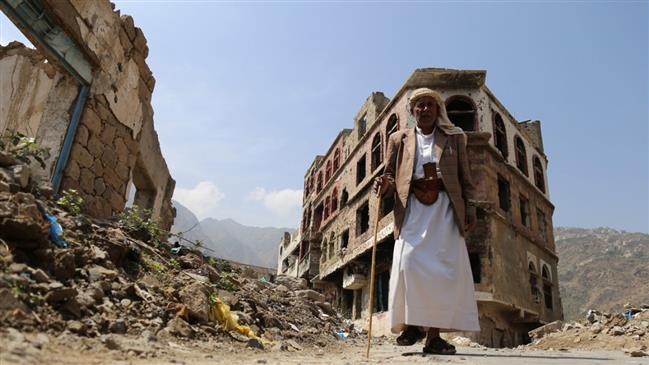
The second largest sovereign state in the Arabian Peninsula, Yemen, has been ravaged by war, deliberate starvation, and cholera for over four years. A 274 page U.N. report released on Tuesday, highlights the human rights situation including violations and abuses since September 2014.
According to the report, which took two years to complete, the United States, France, and Britain may be complicit in war crimes for their involvement in the war in Yemen by not only supplying the weapons being used by the Saudi and United Arab Emirate coalitions, but also providing them with intelligence and logistics support.
The report details the findings of the Group of Eminent International and Regional Experts on Yemen. It was submitted as a supplement to A/HR/42/17. U.N. investigators are recommending that all states impose a ban on arms transfers to the warring parties in order to prevent them from being used to commit serious violations and war crimes.
“It is clear that the continued supply of weapons to parties to the conflict is perpetuating the conflict and prolonging the suffering of the Yemeni people,” Melissa Parke, an expert on the independent U.N. panel, told a news conference. Parke continued, “That is why we are urging member states to no longer supply weapons to parties to the conflict.”
The report states, “The Group of Experts reiterates that steps required to address the human rights and international law violations in Yemen have been continually discussed, and there can no longer be any excuses made for failure to take meaningful steps to address them. The best way to protect the Yemeni population is to stop the fighting by reaching a political settlement which includes measures for accountability.”
Saudi Arabia and the United Arab Emirates are two of the largest purchasers of U.S. British and French weapons. These weapons are being used to fight against the homegrown Houthi movement which controls Yemen’s capital. The report states, “The legality of arms transfers by France, the United Kingdom, the United States and other States remains questionable, and is the subject of various domestic court proceedings.”
According to the U.N. report, Saudi and UAE coalitions are killing civilians in air strikes, and deliberately denying them food. The report put blame on all sides of the conflict, saying that no one has clean hands.
Kamel Jendoubi, chairperson of the Group of Experts on Yemen a creation of the U.N. Human Rights Council stated, “Five years into the conflict, violations against Yemeni civilians continue unabated, with total disregard for the plight of the people and a lack of international action to hold parties to the conflict accountable.” He also stated “This endemic impunity—for violations and abuses by all parties to the conflict—cannot be tolerated anymore.” Jendoubi concluded, “Impartial and independent inquiries must be empowered to hold accountable those who disrespect the rights of the Yemeni people. The international community must stop turning a blind eye to these violations and the intolerable humanitarian situation.”
Allegations of torture, rape, and murder of suspected political opponents detained in secret facilities by Emirati and affiliated forces have been received by the U.N. panel.
A secret list was sent by an independent panel to U.N. human rights chief, Michelle Bachelet, identifying “individuals who may be responsible for international crimes” the U.N. report states.
In the appendix, was a separate list identifying more than 160 “main actors” among Saudi, Emirati and Yemeni government and Houthi officials.
Concerns have been raised as to the impartiality and legitimacy of a Joint Incidents Assessment Team set up by Saudi Arabia to review alleged coalition violations, after it failed to hold anyone accountable for air strikes that killed civilians.
The U.N. report comes just a few days after a recent airstrike by the Saudi-led military coalition on a detention center in Yemen on Sunday, killed more than 100 people. The International Committee of the Red Cross (ICRC) said the attack may have amounted to a war crime. The coalition said it was targeting a drones and missiles facility but instead they leveled a building being used as a prison, in the city of Dhamar.
“The location that was hit has been visited by ICRC before,” Franz Rauchenstein, its head of delegation for Yemen, told AFP from Dhamar. “It’s a college building that has been empty and has been used as a detention facility for a while.” Rauchenstein continued, “What is most disturbing is that (the attack was) on a prison. To hit such a building is shocking and saddening – prisoners are protected by international law.” The remaining forty survivors are being treated in hospitals in the city south of the capital Sanaa for their injuries.
Last Thursday, airstrikes hit Yemeni government forces heading to Aden a southern port city, to fight UAE backed separatists. At least 30 troops were killed according to a government commander. The UAE has been known to arm and train separatist militias in southern Yemen. For weeks now, a rift between Saudi and UAE proxies has further complicated matters and civilians are paying the price.
A bipartisan group of lawmakers launched a new effort to end the U.S. government’s involvement in the Saudi-led assault on Yemen, shortly after the latest attacks. Lawmakers are also calling on the Senate to not remove an amendment to the annual defense policy legislation which would prohibit the U.S. from cooperating with Saudi airstrikes. Sanders stated, “We must use Congress’s power of the purse to block every nickel of taxpayer money from going to assist the Saudi dictatorship as it bombs and starves civilians in Yemen.”
Unfortunately, even with the release of this new U.N. report, the likelihood that nations perpetrating war crimes against innocent Yemeni civilians will be held accountable is highly unlikely.
Sarah Abed is an independent journalist and analyst.
UN calls out US, UK & France for complicity in Yemen war crimes
RT | September 4, 2019
The UN Human Rights Council slammed the US, UK and France for their complicity in alleged war crimes in Yemen by the Saudi-led coalition, warning that abetting such crimes by selling arms or other aid is also illegal.
“States that knowingly aid or assist parties to the conflict in Yemen in the commission of violations would be responsible for complicity in the relevant international humanitarian law violations,” the UNHRC’s Group of Eminent International and Regional Experts on Yemen declared in a lengthy report published on Tuesday.
“With the number of public reports alleging and often establishing serious violations of international humanitarian law no State can claim not to be aware of such violations being perpetrated in Yemen.”
The 274-page report enumerated possible war crimes committed by both sides in the conflict, including airstrikes and shelling, landmines, “siege-like tactics,” attacks on hospitals and other vital infrastructure, arbitrary arrests and executions, torture, and forced conscription of children into combat. The writers claimed to have forwarded the names of top military and political individuals from Saudi Arabia, the United Arab Emirates, Yemen, and the Houthi movement to the UN High Commissioner for Human Rights for further investigation and possible prosecution.
The UK and France fall under special scrutiny as signatories to the Arms Trade Treaty, which bars the sale of weapons if a country believes they will be used to commit “mass atrocities.” However, even non-parties to the ATT may face “criminal responsibility for aiding and abetting war crimes” since after five years of fighting “there can no longer be any excuses made for failure to take meaningful steps to address” the humanitarian crisis and international law violations taking place in Yemen.
The UK Court of Appeal ruled in June that the government had “made no attempt” to determine whether Saudi Arabia was using its weapons to violate international law, and while Secretary of State Liam Fox said he would suspend licenses for export to the Saudi coalition, the Department for International Trade said it would appeal the ruling. A rare bipartisan-supported bill to end weapons sales to Saudi Arabia by the US was vetoed in July by President Donald Trump, who complained it would “weaken America’s global competitiveness” and damage relationships with allies. And the French government hid the arms sales from its people entirely, then threatened the journalists who exposed the sales with arrest for publishing confidential information.
The UNHRC report also provided an update on the shocking scale of the humanitarian crisis, revealing that nearly a quarter of the Yemeni population was malnourished at the start of 2019, according to the Office of the Coordination of Humanitarian Affairs, with 230 of 333 districts at risk of famine and 24.1 million people in need of assistance merely to survive.
Also on rt.com:
‘Comical & tragic’ when US officials say arms sales to Saudis are about ‘exporting human rights’
Moratorium on US oil sanctions to open talks with Iran
By M. K. BHADRAKUMAR | Indian Punchline | September 2, 2019
The diplomatic manoeuvrings over the situation around Iran are entering a crucial phase with an Iranian delegation led by Deputy Foreign Minister Abbas Araqchi leaving from Tehran for Paris today to pick up the threads of the 3-way discussions involving France, Iran and the United States at Biarritz a week ago on the sidelines of the G7 summit.
Araqchi is Iran’s chief negotiator with the E3 — France, UK and Germany — on the nuclear issue. Interestingly, Araqchi openly acknowledged on Saturday that the US has “shown some flexibility on the licensing of Iranian oil sales.”
The formula that was tossed around in Biarritz that the US will not oppose income being generated for Iran through oil sales is being finessed and linked to the working of the European Union’s trade mechanism for legitimate trade with Iran known as INSTEX. In essence, the formula is based on the French proposal of “freeze for freeze” — US freezing oil sanctions against Iran while Iran will freeze its steady pullback from the JCPOA commitments.
Araqchi said Iran and its European partners in the nuclear deal faced “difficult and complex” talks towards salvaging the pact. But a note of cautious optimism is apparent in Foreign Minister Javad Zarif’s remark in Tehran following a meeting of the National Security and Foreign Policy Committee at the Iranian parliament on Sunday afternoon that Iran may review the decision to further reduce JCPOA commitments if the European countries take action on INSTEX to live up to their own obligations. Tehran expects the Europeans to take a final decision by Thursday.
In the above backdrop, Iranian President Hassan Rouhani telephoned French President Emmanuel Macron on Saturday to convey Tehran’s interest in resuming the discussions under the latter’s mediation. Macron welcomed the move. Rouhani also assured Macron that Iran is supportive of a political settlement in Yemen and is willing to guarantee the security of the shipping lanes in the Persian Gulf and the Strait of Hormuz.
Perhaps, in an indirect alert to the US President Trump, Rouhani conveyed to Macron Iran’s misgivings that Israel is pulling all stops to derail the current negotiations which are at a delicate stage. Rouhani specifically referred to the Israeli attempt to provoke a flare-up involving Iran somehow, as evident in its recent air attacks on Lebanon, Syria and Iraq successively. The Hezbollah retaliated on Sunday by attacking Israel’s military vehicles, leaving a number of Israeli forces reportedly dead or injured.
In a sure sign that a broad settlement of the situation around Iran is under discussion, Zarif has travelled to Moscow with a high-level delegation aimed at coordinating the Iranian and Russian positions. Iran’s special envoys for Afghanistan, Yemen, and Syria are accompanying him. (Interestingly, Zarif referred to “serious developments” in Afghanistan, hinting at imminent US-Taliban deal this week.) Indeed, Iran is across the board addressing the western disquiet over Iran’s role in the conflicts in Yemen, Syria and Afghanistan. Tehran’s diplomatic priority will be to underscore that it can be a factor of regional security and stability.
From all appearance, Macron is steering the negotiations along three parallel tracks: a) forestall any precipitate crisis in the implementation of the 2015 nuclear deal by enabling Tehran to generate income out of oil sales that helps alleviate the hardships in the Iranian economy; b) persuade the Trump administration to concede Iran’s prerogative to resume trade relations with Europe and generate income through oil sales; and, c) defuse and de-escalate the various ‘hotspots’ in the Middle East where Iran’s role is regarded as critical — principally, Yemen, Syria and Afghanistan.
A convergence of the three tracks can be expected to lead to a new understanding between Tehran and Washington, possibly even a near-future summit involving the US and Iranian presidents. The clock is ticking and there is urgency to generate momentum for Macron’s efforts, as Trump and Rouhani are due to attend the UN General Assembly in September. A meeting is entirely conceivable as things stand.
Indeed, a deeply troubled relationship such as the Iranian-American is bedeviled with a lot of signalling and grandstanding, especially on the part of Tehran where Rouhani has to overcome significant resistance to the very idea of engaging with the US. The Supreme Leader Ali Khamenei has not said a word so far on Zarif’s visit to Biarritz or the 3-way France-Iran-US discussions under way. Tehran keeps repeating the demand on the lifting of the US sanctions as a pre-requisite for a face-to-face meeting between Rouhani and Trump.
However, it is possible to discern that Tehran is open to negotiations without preconditions and to strive for a meaningful breakthrough by optimally resorting to creative and flexible diplomacy. This flexibility factors in the assessment that Washington too is in a chastened mood.
Trump will not brook disruption by “hardliners”. Several Israeli attempts to have a phone conversation between PM Benjamin Netanyahu and Trump at Biarritz failed to materialise. Trump understands that all attempts by the US to create an international coalition against Iran have failed.
The law of diminishing returns is at work. The maximum pressure strategy against Iran is opening the window for an unprecedented expansion of Russian and Chinese influence in Tehran which may damage American regional interests in the long-term. The planned first-ever naval exercises between Iran and Russia in the Persian Gulf has rattled the US.
All in all, we may expect a moratorium on US oil sanctions in exchange for Iran’s compliance with its JCPOA obligations, which would be followed by direct negotiations for a historic thaw in the US-Iran relations.
Washington’s Nord Stream 2 Sanctions May Have Boomerang Effect on US Interests – German Media Reports
By Svetlana Ekimenko – Sputnik – 27.08.2019
The US Congress has moved forward with legislation to impose sanctions on the Nord Stream 2 pipeline project in defiance of criticism from Washington’s allies in Europe, as the joint venture brings together Russia’s Gazprom, Germany’s Uniper and Wintershall, Austria’s OMV, France’s Engie, and Anglo-Dutch Royal Dutch Shell.
Possible US sanctions against companies involved in the construction of the Nord Stream 2 pipeline could potentially harm US oil and gas projects in the Gulf of Mexico, writes the German business newspaper Handelsblatt.
“From the point of view of Germany, the name of the US proposed sanctions bill, ‘Protecting Europe’s Energy Security Act’, is in itself an insolence”, writes the author.
The US is pushing to impose sanctions against Nord Stream 2 despite likely consequences that such restrictions may have.
Thus, European companies involved in laying the pipeline and targeted by Washington’s sanctions play a key role in the global energy market.
For a long time, these companies worked in the Gulf of Mexico as subcontractors of the American corporations Chevron and Exxon Mobil, recalls Handelsblatt.
Therefore, if they are included in the sanctions lists, projects in the Gulf of Mexico will be disrupted, since it is impossible to quickly replace such highly specialised firms.
Overall, the US economy views the proposed sanctions against Nord Stream 2 critically, the author points out. Such restrictions would also be likely to harm US gas exporters, prompting European buyers to reduce LNG imports from the United States and increase supplies from other countries.
Proposed US Sanctions on Nord Stream 2
The Nord Stream 2 project has long drawn opposition from a number of countries, with the United States, which is trying to sell more of its own liquefied natural gas to overseas allies, insisting that the project will make Europe dependent on Moscow – claims that Russia has repeatedly rebuffed.
Moscow has insisted that the pipeline project is strictly commercial, ultimately seeking to boost Europe’s energy security.
Nevertheless, in early August, the US Senate Foreign Relations Committee approved a bill on sanctions against companies providing vessels for the Nord Stream 2 pipeline project.
The document prohibits entry into the US for anyone involved in the “sale, lease, provision or assistance in providing” ships for laying Russian offshore pipelines at a depth of 30 metres or more, as well as the freezing of their assets in US jurisdiction.
Companies from Austria, Germany, the Netherlands, France, Finland, and Sweden may fall under the sanctions.
The project is being implemented by Nord Stream 2 AG, with Gazprom investing half of the funds, and the remainder being contributed by European partners: Germany’s Uniper and Wintershall, Austria’s OMV, France’s Engie, and Anglo-Dutch Royal Dutch Shell.
Germany has been strongly behind Nord Stream 2, emphasizing the commercial focus of the project.
German Chancellor Angela Merkel said that she supported the BDI’s (Federation of German Industries) stance that the Nord Stream 2 pipeline for delivering Russian natural gas to Europe is necessary given the German initiative to stop using nuclear and coal energy.
Austria, which is interested in reliable supplies of fuel, and Norway, whose government owns 30 percent of the shares of Kvaerner, one of the gas pipeline construction contractors, also spoke in favor of the project.
Nord Stream 2 Project
The 745-mile-long (1,200 km) Nord Stream 2 twin pipeline is set to run from Russia to Germany through the territorial waters or exclusive economic zones of Denmark, Finland, Germany, Russia, and Sweden to deliver Russian gas to European consumers.
The completed project will double the capacity of the existing Nord Stream pipeline network, allowing a total of up to 110 billion cubic metres of Russian natural gas to be transported to Western Europe via pipelines at the bottom of the Baltic Sea.
According to a statement made by project operator Nord Stream 2 AG on 26 August, the pipeline is 75 percent complete.
When your beverage of choice is tritium
Welcome to France
By Linda Pentz Gunter | Beyond Nuclear | August 11, 2019
The headline — Police probe opened into rumours of unsafe tap water in Paris — raised hopes that nuclear operators might finally be held accountable for what appears to be routine radioactive contamination of drinking water in France.
News stories had circulated after a French radiological testing laboratory published findings on June 17, 2019, that more than six million French residents were drinking water contaminated with tritium released by the country’s nuclear power plants and other nuclear installations.
The laboratory — L’association pour le contrôle de la radioactivité dans l’Ouest or ACRO — raised the alarm because, it said, the presence of tritium implied there could be other radioactive isotopes in the water as well. None of the tritium levels they measured on this occasion, exceeded those French health authorities have established as “safe”, but research in the past has found higher levels, especially in groundwater, rivers and streams.
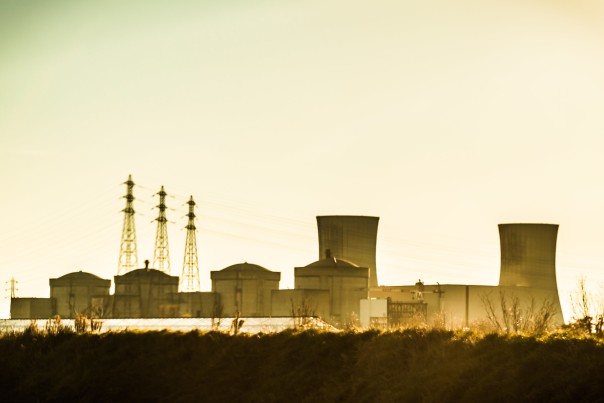
The Tricastin nuclear site — source of multiple leaks and radioactive releases over decades. (Creative Commons/xklima)
That “acceptable” level is 100 Becquerels per liter, not quite as arbitrary as the shocking 10,000 Bq/L level set by the World Health Organization, in thrall to the nuclear power-promoting International Atomic Energy Agency through a 1959 agreement.
The cities affected included Paris and its suburbs, and other large population areas in the Loire and Vienne regions of France such Orléans, Tours and Nantes.
Unsurprisingly, the story spread like wildfire, especially across social media, causing alarm among residents in the communities cited — 268 in all.
But the police investigation in Paris was not of EDF, the country’s chief nuclear facility operator. It was to root out fear-mongering purveyors of “fake news” among the citizenry who, according to the French state, were unnecessarily spreading panic among the populace by claiming drinking water containing tritium is unsafe.
It is.
The independent radiological testing lab CRIIRAD (Commission for Independent Research and Information on Radioactivity) denounced what it called the “trivialization of tritium contamination” and warned French citizens not to be lulled by the 100 Bq/L levels set by the authorities and especially not by the WHO’s 10,000 Bq/L standard. CRIIRAD said the level for tritium in drinking water should be set between 10 and 30 Bq/L.
For context, in our report, Leak First, Fix Later, we noted that the “naturally occurring” levels of tritium found in surface and groundwater is, at its highest, 1 Bq/l. Therefore, tritium is almost non-existent in water in nature.
To CRIIRAD, it is therefore all the more outrageous that that the levels for radiological contamination in France are set at “more than 100 times higher than the maximum allowed for chemical carcinogens.”
Tritium is radioactive hydrogen and is therefore assimilated by all living things as water. It has a half life of 12.3 years. It is produced in huge quantities in nuclear reactor cores, then released into the environment as a gas or in liquid discharges. Tritium cannot be filtered out of water and tritium released into the air can return in rainfall. All nuclear power plants release tritium, and nuclear reprocessing facilities — such as the one at La Hague on the French north coast — release even larger amounts.
These releases, including into rivers, streams and the sea, are regulated by authorities but, as CRIIRAD points out, at levels that are not so much safe as unavoidable, effectively granting nuclear installations “permission to pollute.”
“The liquid and atmospheric releases of tritium cause contamination of the air, water, the aquatic and terrestrial environment and the food chain,” wrote CRIIRAD in a statement put out after the tritiated drinking water news broke.
When rumors began to fly that drinking tap water had been banned, authorities quickly stepped in to “reassure” people that the levels of tritium in the water — already not actually safe according to CRIIRAD — were of no concern.
The criminality of nuclear plants across France releasing huge amounts of tritium into the environment was quickly turned on its head. Instead, in a sinister but not entirely unpredictable turn of events, given that France is a nuclear state, it would be ordinary citizens who would be committing a “crime” if they were found to be “publicizing, spreading and reproducing false information intended to cause public disorder,” according to an AFP article.
In reality, there was genuine cause for concern. ACRO had found levels of tritium in drinking water at 30 Bq/L on five occasions, then at 55 Bq/L and finally at 310 Bq/L in the Loire river.

Picture entitled “Water makes milk.” In France, is that milk radioactively contaminated? (Photo: Graham Knott/Creative Commons)
But drinking tritiated water is not the end of the story — or the danger. Even though tritiated water may pass through the human body in about 10 days, about 10% of it binds organically inside the body. Organically bound tritium remains in the body for far longer than free tritium. According to CRIIRAD, this means that beta radiation from tritium can endure inside the body for years, causing chromosomal mutations, cancers and genetic mutations.
Tritium also binds organically to organisms in the environment such as aquatic plants present in rivers and streams into which nuclear facilities release tritiated water, or crops irrigated using water contaminated with tritium. These are in turn ingested by animals and humans — setting in motion tritium’s journey up the food chain.
The CRIIRAD statement notes the systematic downplaying of these risks by the nuclear safety regulator and other French governmental authorities.
This was never more apparent than during a law suit brought by CRIIRAD, the Sortir du nucléaire network, Stop Nucléaire 26-07 and FRAPNA Drôme in 2013 after the huge multi-unit Tricastin nuclear site leaked tritium into the groundwater at levels as high as 700 Bq/L.
EDF, Tricastin’s operator, claimed then that “tritium is a completely harmless radioactive isotope.”
Of course there is no such thing as a “safe dose.” Even the august and certainly not anti-nuclear National Academy of Sciences agrees. And as CRIIRAD points out, every dose increases the risk. “Since all living matter is made up of hydrogen atoms, a part of any tritium released will eventually be found in the cells of living organisms, including in the DNA, creating long-term internal irradiation that increases cancer risks (among others),” said the lab.
What of course got forgotten in all the dismissal and downplay by authorities — and in the attempts to criminalize those who sounded the alarm — is that some members of the population are more vulnerable than others when it comes to radiation exposure.

There is an Europe-wide movement to abolish the Euratom Treaty. (Photo: PLAGE)
Even while a daily dose of tritiated drinking water is not good for anyone, it is far more dangerous for babies and young children and for women, especially pregnant women. But those already bad standards don’t take the most vulnerable into account.
So how did the 100 BQ/L limit come about? It is no surprise to learn that it was the influence of Euratom (no conflict there) that boosted it that high.
After CRIIRAD had pushed for a 10 Bq/L limit before the European Parliament in 2012-2013, that body settled on a 20 Bq/L limit. But its decision was swept aside after “experts” at Euratom insisted on the 100 Bq/L limit. That, among other issues, is what spurred a Europe-wide movement to abolish the Euratom Treaty.
Clearly, what should have happened in France is an investigation into the cause and source of the tritium in drinking water. Instead, there was a propaganda campaign to neutralize concern and vilify those who sounded the alarm on safety. In Nuclear France, it’s never plus ça change, but always la même chose.
Minister says Epstein’s French connections must be probed despite prison death
RT | August 12, 2019
Sex trafficker Jeffrey Epstein’s connections in France need to be investigated by the nation’s law enforcement, the French minister for gender equality said. Epstein died in US custody last week by alleged suicide.
The US investigation into Epstein’s alleged sexual abuses of minors was undermined by the disgraced financier’s death in a US jail. But it uncovered enough evidence involving France that merit a national investigation, Gender Equality Minister Marlène Schiappa said in a statement on Monday. Such a probe would be “fundamental for the victims” and will also help prevent sexual predation in the future, she argued.
Epstein died in what the authorities called an apparent hanging suicide while being held in custody at the Metropolitan Correctional Center in New York. He was charged with sexual exploitation of minors as young as 14.
The death may be a relief for many powerful people around the world, who allegedly partook in Epstein’s sexual predation dating back to at least 2002. Previously he was convicted for paying for sex with an underage girl and given an 18-month prison sentence.
Featured Video
US Blockade on Iran Just Triggered Iran’s HARSHEST Response Yet
or go to
Aletho News Archives – Video-Images
Book Review
On Herd Mentality
By Jeb Smith | April 14, 2026
I no longer trust “we the people,” because of the powers influencing them. Media and government schooling form their general ideas on reality and governance. Therefore, it’s not a case of the voter choosing the politicians. Instead, the system is conditioning and conforming the voter to the authorities’ desires.
In democracies, the people are kept occupied working and paying taxes, too busy to acquire information outside the approved sources. You will find they know and care far more about the next iPhone than political philosophy. Of those who hold some interest, 95% just toe the party line, holding the same opinion as the primary media source they listen to. They lack both the desire and time to expand their horizons.
Media’s purpose is to conform people’s thought to a preferred goal, which is why Republican and Democratic voters both firmly hold their parties’ general stances, reciting the same talking points. The people do not originate ideas; their thoughts are fed to them by the media so they can consume, digest, and parrot back whatever they are served. When it comes to politics, we rarely think for ourselves. We are told what to think.
Watch PBS, MSNBC and read your local newspaper for six months, and you will receive a particular view and understanding of the world. Then listen to The Mike Church Show, The Blaze, and The Daily Wire, and you will get not just another perspective but a whole different world of facts and events. The world people believe they live in can be entirely different depending on their news sources.
We enjoy seeing the enemy humiliated, which describes why those engulfed in politics love their preferred media sources; they keep returning for more like a drug addict. Networks ensure their “experts” align with the worldview they and their audience desire. The people who watch PBS, BBC, and so forth expect a specific perspective to be presented. Fox News watchers demand the same. In doing this, we both encourage and assure we are misled.
In their book Democracy for Realists: Why Elections Do Not Produce Responsive Government, professors Christopher H. Achen and Larry M. Bartels argue, based on substantial research, that voters do not decide the party platform and agenda. Instead, the parties control the “ideologies” of the voters. When the party the voter identifies with changes its position, the individuals also change theirs. They discovered the individual would quickly adopt the views of their group; they will ignore or change their own opinions over time to fit in with the collective they identify with. Achen and Bartels wrote “group memberships largely drove policy views, not vice versa.” … continue
Blog Roll
 Aletho News
- Seyed M. Marandi: US Blockade on Iran Just Triggered Iran’s HARSHEST Response Yet
- The new assault of the Zionist lobby in Brazil
- Italy suspends defense deal with ‘Israel’ over war on Iran, Lebanon
- Indonesia Agrees to Receive Oil, Gas Supplies From Russia – Indonesian Energy Ministry
- Saudi Arabia Urges US Back to Iran Talks as Other Oil Routes Face Risk
- Iran demands reparations from Arab states
- Tankers transit Strait of Hormuz amid US attempt to impose blockade, data shows
- US Strikes Kill Five in Alleged Pacific Anti-drug Campaign
- EU Defense Agency head says compulsory military service could be necessary
- France To Vote On Bill That Would Criminalize Criticism Of Israel
- If Americans Knew
- ‘Not Acceptable’: President of Iran Condemns Trump For His ‘Desecration of Jesus, the Prophet of Peace’
- We Are the Barbarians
- Netanyahu Says the Trump Administration Gives Him Reports on Iran Talks Every Day
- Second Contractor Steps Forward to Blow the Whistle on Israeli Attacks at Gaza Aid Site
- Mighty Israel wants all of its neighbors to be defenseless – Daily Update
- Emergency waivers move arms for Israel, UAE to speed lane
- Caitlin Johnstone: Nobody’s “Obsessed” With Israel — It’s Just A Uniquely Horrible Country
- Israel’s Ben Gvir says he feels like the ‘owner’ of Al-Aqsa Mosque
- History of flotilla campaigns to end Israel’s siege of Gaza
- Humanitarian Scorecard: Six Months In, Gaza Ceasefire is Failing
- No Tricks Zone
- Cave Discovery Reveals Today’s Desert Climates Were Recently Far Warmer, Wetter, Teeming With Life
- German Expert: Heat Dome Led To Record Temps In Western USA…Warmer In 1934, 1936
- New Study: No Linear Warming Or Glacier Retreat Along Northern Antarctic Peninsula Since 1980s
- An Inconvenient Tree: Uncovered In Alps… Europe Much Warmer Than Today 6000 Years Ago
- New Study Reports A 60% Slowdown In Greenland’s Ice Loss Rate In The Last Decade
- Low Intensity Tornado Wrecks Major Solar Farm, Creating A Potential Toxic Dump
- New Study Finds Warming Saves Lives…Cold Temperatures 12 Times More Deadly Than Excess Heat
- German Science Blog Accuses PIK Climate Institute Of Hallucinating Climate Tipping Points
- Devastating Assessment Of Comirnaty Vaccine By Former Senior Pfizer Europe Toxicologist
- New Study: CO2 Is ‘Effectively Negligible’ As An Explanatory Climate Change Factor Since 2000
 Aletho News