Brexit: Parliament Tethers Britain to a Failing Experiment
Europe is crumbling, & Britain’s elite desperately want to be part of the wreckage
By Kit Knightly | OffGuardian | October 20, 2019
Brexit isn’t going to happen. Left or Right – Lexit or Rexit – it’s over. It’s time to make peace with that idea.
Penned in by the absurd Benn Act, No Deal is off the table, which means Britain will be forced to either remain or accept a deal that’s Remain by another name.
The Letwin Ammendment and Johnson’s unsigned extension request are just morbid theatre. Unnecessary nails in a well-sealed coffin.
It’s all very Weekend at Bernies’ – A lame cast of characters, puppeteering Brexit’s corpse to keep up a tired joke that was never funny to begin with.
Parliament has become an absurd pantomime, where a clown Prime Minister – his majority willfully destroyed – sets up straw men that the “opposition” bayonet with increasingly maniacal glee. No thought is given to policy or consequences, only increasing the tally of Boris Johnson’s parliamentary defeats.
Labour, and the bedraggled, hysterical remainers in the Lib Dems/TIG/Green Party, have become nothing but contrarians – automatically gain-saying anything tabled by the government for the simple joy of humiliating the nation’s Court Jester in Chief.
Corbyn has been so successfully gaslighted by his remain-heavy PLP he doesn’t even realise he’s betraying his life-long principles, his mentor Tony Benn, and entire swaths of the Labour’s Northern heartlands, who all voted to leave.
When a general election does come, it will mean nothing.
Labour will likely be destroyed as working-class voters either flock to the Brexit Party or simply collapse into the apathy of the voiceless, and stay home.
If Labour scrapes together enough voters from Remain country in Scotland and London to claw their way to a small majority, well their socialist manifesto will be crippled by the EU’s austerity policy and restrictions on nationalisation.
In either event, Corbyn will be replaced by a New Labour non-entity of little renown and less worth. The papers will declare socialism dead (again), and maybe clap Corbyn on the shoulder for doing “well, considering” and “changing the conversation”.
We’ll be invited the celebrate the new (inevitably) female leader as a sign of “progress”, while society continues to slip backwards.
Whether the hardcore Remainers get their “People’s Vote” or not, and whichever of the carousel of undesirables happens to be Prime Minister when it all eventually wraps up, Brexit is dead. Parliament killed it.
This on-going, slow-burn sabotage is hard to watch – but it’s not what this article is about.
What it’s about is a question. An important question. One that should weigh heavily on the shoulders of Remainers on the eve of their – for want of a better word – victory:
Do we really want this? Does the EU, right now, really look like something we want to be a part of?
Let’s run down the situation on The Continent.
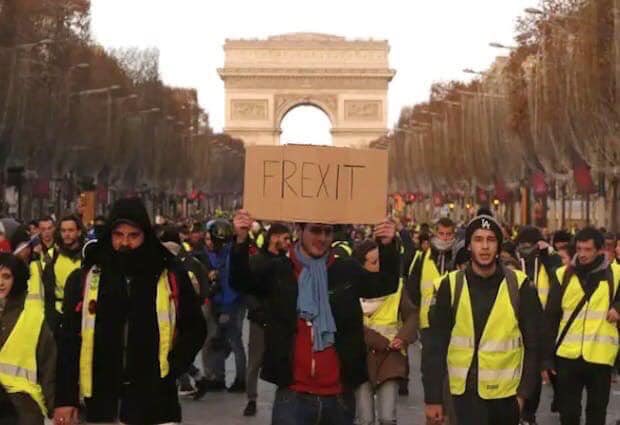
France is miserable, sick of austerity. Sick of spending cuts and falling standards and neo-liberal economics promising a trickle-down that never seems to come.
In Paris – and many other French cities – the Yellow Vests are nearing their fiftieth straight week of protests, and don’t seem to be slowing down (Hopefully they plan something nice for their first birthday).
People have lost eyes, hands, even lives. The Hong Kong protests – so long front-page news in the UK – have been a picnic in comparison.
In Hungary, an elected President is held hostage by the bureaucracy of the EU. Whatever you think of Orban, he was democratically elected to enact the political promises he made during his campaign. That Brussels can sanction him, and threaten to remove Hungary’s voting rights, is perverse. Anti-democracy in the name of democracy.
They say it’s about “protecting European values”, but is it?
That’s pretty hard to believe, considering the situation elsewhere in Europe…

Spain will join France in the flames soon. They already sent thirteen politicians to prison for sedition.
Take a moment to consider that – actual “sedition”.
This comes after sending in riot police to break up a peaceful referendum. Spanish police beat voters, arrested protesters and destroyed ballot boxes.
Madrid has faced no punishment, or even criticism, for this. They – unlike Orban – have escaped any sanction or censure. Police attack Catalonian independence protests on the streets of Barcelona…and Brussels’ silence is deafening.
(Imagine Russia had just jailed 13 opposition politicians for sedition. Imagine Maduro was blinding protestors with rubber bullets. The difference in coverage and attitude would be breathtaking.)
What is the difference between Budapest and Paris? Or Moscow and Madrid?
Well, Orban is anti-EU (as are the Gilets Jaunes). The governments of France and Spain are Pro EU, with a ferocity that fully justifies the capital P.
Follow a pro-EU agenda of austerity, uncontrolled immigration and globalisation and you can blind as many protesters as you want.
The harder you look, the more it seems “European values” is slang for “European power”.
The talk of the EU Army bubbles away on the back-burner, whilst the European Parliament merrily votes through massive funding for “StratCom” programmes to “counter misinformation”.
We hear about peace, but we don’t see it. We hear about prosperity, but we don’t feel it.
Austerity is choking the birthplace of democracy to death, and its – again, for want of a better word – “leaders” are spending tax revenues on propaganda and the military.
Is that going to help a single ordinary citizen out of poverty? Are these moves designed to make life fair, equal or easy for ordinary citizens? Or consolidate and enforce authority?
Look at Europe. Really look at it. It’s burning. And yet Remainers sit amongst the flames and say everything’s fine.
We are lectured on “European Values”, but that phrase has been meaningless for years, and every day edges closer and closer to full-on parody.
Europe is a sinking ship the rats in Parliament refuse to leave.
Kit Knightly is co-editor of OffGuardian. The Guardian banned him from commenting. Twice. He used to write for fun, but now he’s forced to out of a near-permanent sense of outrage.
Europe’s oldest political prisoner, Georges Abdallah, has served 35 years
By Ramin Mazaheri – Press TV – October 19, 2019
Georges Ibrahim Abdallah, known as the “Nelson Mandela of the Arab World”, has now marked 35 years in a French prison. The pro-Palestinian resistance leader remains Europe’s longest-held political prisoner.
In 1982, during Israel’s invasion of Lebanon, Abdallah headed a group which accepted responsibility for the death of Israeli and American agents in Paris. Abdallah has refused to express regret or remorse for defending his country, which was under military occupation.
Abdallah has become an immense inspiration to leftists and anti-imperialists worldwide, despite a Western media blackout on his case.
Abdallah has been eligible for release since 1999, but Washington and Tel Aviv put pressure on France to deny him parole. His own lawyer has admitted to working for French intelligence, and his trial and parole process has been marked by obvious political manipulation.
Abdallah, described as a model prisoner, reads daily in four different languages. He writes letters of support for just causes, and he remains in regular contact with the outside.
Despite his unjust incarceration Abdallah continues to fight for Palestine and against imperialism, and many activists around the world will continue to fight for his release.
US and EU Gang up to Demonize Iran Over Saudi Airstrikes
Strategic Culture Foundation | September 27, 2019
The European Union’s statement this week condemning Iran over the recent airstrikes on Saudi Arabia’s key oil industry sites was a tawdry piece of political cowardice. Not only tawdry, but dangerous as well.
For the EU is giving credence to Washington’s intensified attempts to demonize Iran, imposing ever-harsher economic sanctions and escalating tensions that could explode into an all-out war. Ironically, this is in spite of the EU claiming to be facilitating diplomacy to promote peace and security in the Middle East.
To be more precise, it wasn’t an EU joint statement issued at the United Nations general assembly this week. It was a statement formulated by only three members of the bloc: Britain, France and Germany. In practice, however, the biggest members of the EU were speaking on behalf of the others. (Full statement here.)
British Prime Minister Boris Johnson, French President Emmanuel Macron and German Chancellor Angela Merkel stated the following:
“We condemn in the strongest terms the attacks on oil facilities on Saudi territory on September 14, 2019 in Abqaiq and Khurais, and reaffirm in this context our full solidarity with the Kingdom of Saudi Arabia and its population. It is clear to us that Iran bears responsibility for this attack. There is no other plausible explanation. We support ongoing investigations to establish further details.”
Thus, the Europeans are repeating assertions made by the United States and Saudi Arabia by which they accuse Iran of being responsible for firing drones and cruise missiles at the vital Saudi oil installations. No credible proof has so far been presented to support such an assertion.
The European powers are engaging in a reprehensible blame game which will only embolden further Washington’s reckless aggression against Iran.
Tehran has categorically rejected all accusations that it was in some way involved in the airstrikes against Saudi Arabia. The Yemeni Houthi rebels have from the outset following the attacks claimed full responsibility.
Iran may support the Yemeni rebels and have at some time provided weapon technology, but the Houthis are capable of developing and deploying their own fire power.
By blaming Iran, the US and Europeans are giving political cover to Saudi Arabia and its nefarious role in starting and waging a genocidal war against Yemen for the past four years. It is arguably the right of the Yemenis to retaliate against Saudi Arabia in acts of self-defense. And it is in Iran’s right to support the Yemenis, just as the US, British and French support Saudi Arabia. Why should there be a double standard?
What is even more despicable is that the European trio (the so-called E3) have been massive weapons suppliers to Saudi Arabia, in particular Britain and France. The British and French (and Americans, of course) have made hundreds of millions of dollars in recent years from weaponizing the Saudi war on Yemen, even though that has led to nearly 100,000 civilian deaths. Why doesn’t the E3 issue condemnation, rather than “solidarity” to the Kingdom of Saudi Arabia, over this genocidal slaughter?
A further aspect to the joint statement issued by Britain, France and Germany is that these powers are signaling their support for US President Donald Trump’s efforts at sabotaging the international nuclear accord with Iran. That landmark deal was co-signed by the US, France, Britain, Germany, Russia and China back in July 2015.
Trump reneged on the UN-endorsed treaty when he unilaterally walked away from it in May 2018. It was typical American bad faith and backsliding whenever international agreements don’t suit their selfish interests.
Russia and China continue to support the Joint Comprehensive Plan of Action (JCPOA, as the nuclear deal is known formally as). Iran has recently begun to suspend certain commitments, such as increasing stocks of enriched uranium. The Iranian position of partial non-compliance is understandable. The US has trashed its obligations to the deal, and the Europeans have barely stepped up to the plate to implement sanctions relief for Iran, which is mandated by the JCPOA. Four years after the deal was done!
Britain, France and Germany claim to be still committed to the nuclear deal, according to a press statement by EU Foreign Affairs Commissioner Federica Mogherini at the UN this week.
But it is evident that, on the contrary, the E3 troika is instead moving to undermine the JCPOA. Blaming Iran with groundless accusations of attacking Saudi Arabia is part of the sinister shift by stealth. The day before the E3 issued their joint statement, Britain’s Boris Johnson was disparaging the nuclear as a “bad deal” and urged a renegotiation for what he sycophantically called a “Trump deal”.
Here is another weasel-worded section from the EU joint statement:
“Conscious of the importance of collective efforts to guarantee regional stability and security, we reiterate our conviction that the time has come for Iran to accept negotiation [sic] on a long-term framework for its nuclear program as well as on issues related to regional security, including its missiles program and other means of delivery… We urge Iran to engage in such a dialogue and refrain from further provocation and escalation.”
That is a clear – albeit with backhanded verbosity – attempt to pressure Iran into accepting Trump’s demand for the JCPOA to be replaced by further restrictions on Iran’s rights to pursue self-defense and normal regional and international relations. In weak-kneed fashion, the EU is augmenting Trump’s agenda of demonizing and criminalizing Iran so that it might succumb to subjugation.
Why the Europeans are acting with such cynicism is to conceal the glaring fact of their own weakness vis-a-vis Washington’s dictates and imperialist bullying. They should be admonishing the Americans for bad faith and reckless aggression; they should be condemning Saudi Arabia for a merciless slaughter in Yemen; they should be with-holding lucrative weapons sales to Saudi Arabia if they were really interested in peace; and if the Europeans really were genuine about non-proliferation and Middle Eastern stability, they should be whole-heartedly implementing the nuclear accord with Iran and providing the country the normalized economic trade that it is entitled to – just as Russia and China have done.
But no. And so to cover up their spinelessness, the Europeans are obliged to gang up with Washington to blame the victim of imperialist abuse – Iran. Such European cowardice is leading to more conflict.
Alain Soral Sentenced to 2 Years Jail for Sharing “Gilets-Jaunes” Anti-Rothschild Rap Video
He Could Pay Over €170,000 in Fines and Compensation

A French writer and publisher will be jailed for sharing this meme
By Guillaume Durocher • Unz Review • September 26, 2019
The French civic-nationalist and anti-Zionist intellectual Alain Soral was sentenced to two years prison last week for sharing a rap video entitled “Gilets-Jaunes.”
The music clip (watch it while you still can) is typical of the Yellow Vests in denouncing French media, political, and financial elites, and making a plea for direct democracy, notably the famous proposed Citizen’s Initiative Referendum (Référendum d’Initiative Populaire or RIC).
The video also argues for the abrogation of the banking law of June 1973 – known as the “Pompidou-Rothschild Act,” after the then French president and the investment bank he used to work for. Critics claim the law has reduced France to debt slavery by making her dependent on financial markets for loans rather than self-finance through the national bank.
The video also features a pyre where various figures are symbolically burned: President Emmanuel Macron, various media (TF1, Le Monde, BFMTV . . .), the Rothschild bank, and, most problematically, powerful elite Jews (Jacques Attali, Bernard-Henri Lévy, Patrick Drahi).
The rapper points out: “And if we talk about the media and Macron, we’ll have to talk about Drahi. His bank account is in Israel and he pays no taxes here.” Drahi, a Franco-Israeli-Portuguese oligarch born in Morocco and residing in Switzerland, has bought up large swathes of French media in recent years.
In case the denunciation of Jewish-globalist and Jewish-Zionist power elites in the financial and media spheres were not explicit enough, the video also states: “We’re not talking about a so-called oppressed minority. We’re talking about the deliberately neglected majority [of workers, farmers, and pensioners] . . . France has decided to free itself from the Rothschilds.”
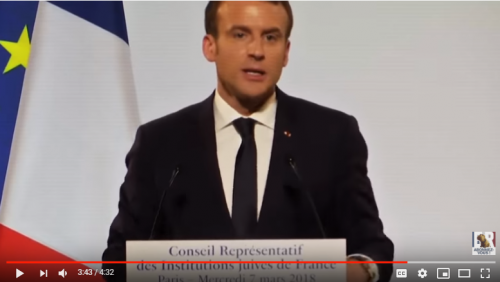
President Macron speaking before the powerless lobby you will be destroyed for criticizing
As the words “so-called oppressed minority” are uttered, images are flashed of the annual dinner of the CRIF – the influential official French Jewish lobbying organization – an event where the crème de la crème of the French politico-media elite regularly come to genuflect.
The rapper lauds the “prolo patriotes” (patriotic workers) who are rising up and denounces the oligarchic “parasites” who are enriching themselves all the while demanding austerity from the masses. The song concludes: “The French are fed up with these parasites. The French are fed up, it ain’t racist. National uprising!” The author is a certain “Rude Goy.”
There are various pro-Arab and pro-Muslim symbols included. Drahi is mentioned while a pro-Palestine hoody is flashed. The rapper wears a fashionable keffiyeh. As a mainstream journalist anxiously warns that the French State is bordering on collapse in the face of the protesters, the rapper answers: “Inshallah” (God willing in Arabic).
The video then artfully interweaves mainstream yellow-vest concerns about French democracy’s subversion by high finance with a denunciation of the specific role of Jewish elite power in this process. There is no blanket anti-Semitism or attack on day-to-day Jews.
The images of Jewish oligarchs and intellectuals being symbolically burned – along side mainstream media and the French president, mind you – angered a certain number of Jewish activist and (mostly Jewish-run) “anti-racist” organizations. I imagine these images felt downright Auschwitzian to them.
The groups sued Soral for “granting enormous visibility to this video by publishing it on his website” and thus promoting the anti-Semitic theory of a “Jewish conspiracy.”
Note Soral did not create the video: he merely shared it on his website, as he did innumerable other yellow-vest videos. One wonders if linking to the video is also considered a criminal act. Probably not, or only if your name is Alain Soral. This tells you something about the legal arbitrariness of these censorious laws and liberticidal ethnic lobbies.
Soral will also be required to pay a 45,000-euro fine and tens of thousands of euros in “compensation” to the various aggrieved Jewish and/or professional “anti-racist” activist organizations. That’s called good business.
Coincidentally, or not, the bank BNP Paribas simply closed the bank account of Égalité & Réconciliation, Alain Soral’s influential counter-cultural organization.
Presumably the court decision will be appealed. However, the noose is apparently tightening around Soral. Earlier this year, he was also sentenced to a year in jail for sharing a cartoon highlighting various holocaust hoaxes (lampshades, soap, etc).
Soral has always said that true intellectuals must inevitably come up against the authorities sooner or later. An intellectual who really stands up for his ideals “passera par la case prison” (will go to jail, do not pass-go), as Pierre-Joseph Proudhon and Charles Maurras did.
Whatever happens, more people than ever are being sensitized to a certain ethnic group’s considerable power and privilege by the very fact of jailing a French intellectual on their lobbying organizations’ behalf.
Iran’s tango with Europe is rooted in its traditions and culture
By M. K. BHADRAKUMAR | Indian Punchline | September 24, 2019
The joint statement issued by the leaders of France, Germany and the United Kingdom on September 23 indicting Iran for the attacks on the Saudi Aramco plants two weeks ago is at once consequential and declaratory.
The joint statement may seem a serious diplomatic setback for Tehran, as the joint French-German-UK (E3) stance may transform as the European Union position. If that were to happen, only Russia and China, among world powers who are signatories to the 2015 Iran nuclear deal, continue to maintain that there isn’t evidence yet to establish Iran’s culpability.
Prima facie, Iran’s dependence on Russian and Chinese goodwill would further increase. Both Moscow and Beijing harbour misgivings about Iran’s nuclear and missile development programmes and some of its regional policies, and have so far played coy refraining from frontally assaulting the US sanctions against Iran, while rhetorically critical. It’s a set pattern.
Secondly, Iran’s diplomatic thrust projecting itself as a factor of regional stability suffers a PR setback if it is perceived as undermining regional security and risking a major conflict involving the US. Thirdly, the joint statement brings on board other related issues. These are, principally three.
One, the three E3 have repeated their call on Iran “to reverse its decisions to reduce compliance with the deal and to adhere fully to its commitments under it… [and] to cooperate fully with the IAEA.”
Two, the E3 underscored that Iran should “accept negotiation on a long-term framework for its nuclear programme as well as on issues related to regional security, including its missiles programme and other means of delivery.” Three, they have urged Iran to engage in “with all relevant partners interested in de-escalation of tensions in the Middle East” and “refrain from further provocation and escalation.”
Clearly, this is a one-sided statement. Tehran insists that its compliance with the 2015 deal is part of mutual commitments, but not only the US but also the E3 failed to fulfil their part of the commitments, which in turn compelled Iran to react in accordance with the stipulated provisions of the deal (which allow Tehran to take steps if other parties are defaulting.)
Again, Tehran has also repeatedly stated that its missile programme constitutes a “red line” and it is not open to discussions / negotiations. Suffice to say, the joint statement marks a calibrated distancing from Iran on the part of the European powers.
The joint statement smacks of the “Boris Johnson effect” — London acting as the US’ junior partner. It cannot be a coincidence that Britain pushed for a European stance critical of Iran at a juncture when the US and UK are stepping up efforts to assemble a politico-military coalition to address maritime security in the Persian Gulf (basically, to isolate and provoke Iran in its backyard.)
Britain is considering participation in the US-led military coalition alongside Saudi Arabia and the UAE. France and Germany remain lukewarm about the Anglo-American enterprise.
Having said that, the E3 are also highly vulnerable to pressure from petrodollar states of the Persian Gulf, and in this case Saudi Arabia and UAE have high stakes.
Conceivably, the Trump administration can derive satisfaction that the European stance on the Iran question has edged closer to its policies (although E3 do not subscribe to the maximum pressure approach.)
How Tehran perceives this E3 shift is important. Iran’s diplomacy is supple and Tehran will unlikely deny itself the diplomatic usages of the European conduit.
The point is, Iran greatly values its strategic autonomy and factors in that Russian and Chinese support comes with strings attached. Besides, Iran’s ambitions as a regional power demand the creation of an advanced economy with innovation, which is only possible if it has access to western technology and capital.
Therefore, while the “Look East” and multipolarity of the world order remain key templates of Iran’s world view, that cannot come at the cost of Iran’s integration into the western world.
Arguably, the mildly worded European statement leaves the door open still for further cogitations between France and Iran over the diplomatic negotiations initiated on the sidelines of the G7 summit in Biarritz recently.
Just a few hours before releasing the E-3 statement, French President Emmanuel Macron had warned that “one must be very careful in attributing responsibility” for the Aramco attacks.
“There are clusters of clues, but this bombardment is a new military event that changes the region’s ecosystem,” he said, stressing that caution was needed in apportioning blame for the attack. Since then, Macron also has had a meeting with Iranian President Hassan Rouhani in New York on September 23.
Given the “westernism” in Iran’s psyche and considering the European powers’ manifest keenness to have a productive relationship with Iran, both Iran and the E3 will ensure that life moves on.
Historically, Britain has a profound understanding of Iran’s politics, culture and traditions and it is hard to see even PM Boris Johnson identifying with US’ maximum pressure approach, although he has taken a position closer to Trump.
For the present, London feels somewhat humiliated over the “tanker war” with Iran, but it cannot be the new normal. Johnson is due to meet Rouhani today and may even be transmitting messages from Trump.
Damascus strongly condemns US-Turkish joint military patrols in northeastern Syria
By Sarah Abed | September 10, 2019
On Sunday, six military vehicles from Akcakale district in southeast Sanliurfa in Turkey, crossed the border into Syria and joined a US military convoy in carrying out joint military ground patrols from Tel Abyad, Al Raqqa governorate to Ras Al Ain, Al Hassaka governorate. Two helicopters flew overhead, and unmanned aerial vehicles were also used according to Turkey’s Defense Ministry.
The Kurdish People’s Protection Units (YPG) are leaving areas on Turkey’s border and uprooting fortifications as part of the US-Turkey “safe zone” agreement, which was the result of relentless pressure from Turkish President Recep Tayyip Erdogan, who had threatened to unilaterally proceed with his plans if the US dragged its feet. Turkey also threatened to carry out a military operation last month, against Kurdish militias east of the Euphrates, but US officials stopped the operation.
Under the “safe zone” initiative Erdogan wants to establish a “peace corridor” through which he can send back a million of the four to five million Syrian refugees currently in Turkey. Refugees would be forced to resettle in northern Syria on Turkey’s borders to create a buffer zone thereby changing the demographics of the area. It’s worth noting that many of these displaced refugees are not from the northern Syria.
Erdogan has threatened to “open the gates” and allow millions of refugees currently residing in Turkey to flood Europe and specifically Greece, if his requests are not met in Syria. Some have noted that these refugees are not even Syrian and came from dozens of other countries to fight alongside foreign-funded extremist groups in Syria.
Ankara has also been looking into Russian military equipment and threatened to build nuclear weapons.
In a statement made to the Syrian national news agency SANA an official source at the Foreign and Expatriates Ministry stated, “The Syrian Arab Republic condemns in the strongest terms launching joint patrols by the US administration and the Turkish regime in the Syrian al-Jazeera region in a flagrant violation of international law and the sovereignty and territorial integrity of the Syrian Arab Republic.”
Syria sees this as a form of aggression which is aimed at complicating and prolonging the crisis in Syria and to hinder significant progress made by the Syrian Arab Army against the remaining terrorist groups. Syria absolutely rejects the creation of a “safe zone” and affirms its determination to counter any attempts that put its safety and territorial integrity at risk.
The Syrian government has highlighted previously that Erdogan’s true intentions include “expansionist ambitions” and reviving the Ottoman empire, under the façade of protecting his borders from Kurdish terrorist groups.
In January 2018, Erdogan carried out Operation Olive Branch by invading Afrin and effortlessly defeating the YPG. In a matter of months more than 150,000 Kurds were displaced when they fled to neighboring areas and were replaced with refugees that had fled to Turkey. The demographics were changed and many of the residents who did stay complained about living under harsh extremist conditions enforced by the Turkish-aligned resettled refugees.
At that time, the Kurdish population in Afrin realized that the US will not defend them against an onslaught by NATO ally Turkey and had left them to fend for themselves. The mistake that separatist Kurds have made for the past four years during this war is relying on the United States to save and protect them. Thinking that Washington cares about their independence or political ambitions has put them in several embarrassing situations, including the one they are in now, east of the Euphrates river.
Ultimately, separatist Kurds are responsible for the illegal presence of foreign armed forces from the United States, France, Britain, and coming in at the eleventh hour, Denmark in northern Syria. Had they not turned against the Syrian government and sold their dignity for weaponry, training, and funds from the US led coalition, Turkey would not have had an excuse to invade. This does not take away from the blame that should be placed on all other parties that are impeding the Syrian military progress.
Before the war, Kurdish minorities lived peacefully alongside their fellow Syrian brothers and sisters and many were enlisted in the Syrian army fighting against terrorists. It was only when the United States started backing and providing them with funds, supplies, training, etc. did they turn to treason and treachery. This sort of behavior is not uncommon, Kurds with separatist ambitions have previously been used to create division and instability in the region, including during the Iraq/Iran war. They are closely allied with Israel and have worked with several terrorist groups during the eight-year war in Syria.
The SDF/YPG are seen by Turkey as the Syrian offshoot of the Kurdistan Workers Party (PKK) with whom they have been in conflict for over three decades.
The hostile environment created by the self-declared autonomous Kurdish administration has been rejected by not only the Syrian government and the non-Kurdish Syrian majority in Al Hassaka governorate but by Russia, Iran, and Turkey who’ve issued joint statements declaring their opposition to the autonomous regions set by the Kurdish-led SDF and the Kurdish People’s Protection Units in northern Syria saying they “reject… all attempts to create new realities on the ground under the pretext of combating terrorism.” On Sunday, Syrians held a massive rally in Deir Ezzor against the US-backed Kurdish militias calling for their expulsion from the area.
Last December, when U.S. President Donald Trump announced the withdrawal of US troops from Syria, separatist Kurds turned to Damascus for talks, but when Washington didn’t follow through with the withdrawal, the talks turned stale. There has been mention that talks are now resuming but as long as the Kurdish militias and their political mouthpieces continue receiving handouts from Western nations and direction from the US/Israel, negotiations will be futile.
Sarah Abed is an independent journalist and analyst.
Rights groups call for France to stop arms sales to Saudi Arabia and UAE
![A destroyed prison, in which Houthi Ansarullah movement members held its prisoners, is seen after coalition forces led by Saudi Arabia organised an airstrike over it in Dhamar, Yemen on September 01, 2019 [Mohammed Hamoud / Anadolu Agency]](https://i0.wp.com/www.middleeastmonitor.com/wp-content/uploads/2019/09/20190901_2_37999764_47216403.jpg?resize=1200%2C800&quality=75&strip=all&ssl=1)
A destroyed prison, in which the Ansarullah movement held prisoners, is seen after Saudi led coalition forces organised an airstrike on September 1, 2019
[Mohammed Hamoud / Anadolu Agency]
MEMO | September 7, 2019
Some 17 rights groups have renewed their call for France to immediately stop arms sales to Saudi Arabia and the UAE, after a new UN report confirmed their involvement in the killing of civilians in Yemen, Alkhaleejonline.net reported on Friday.
The 17 NGOs renewed their call for France to stop arming Saudi Arabia and the UAE, based on two incidents that took place last week.
“On Sunday, more than 100 inmates were killed in an airstrike in the west of Yemen,” the rights groups affirmed in a statement.
They also claimed that a reported issued by a group of UN experts found that Saudi Arabia and the UAE are carrying out violent attacks against civilian residents in Yemen.
The experts emphasised the importance of the countries selling arms to these two Arab states to stop their sales, in order to inhibit the encouragement of this conflict.
The group of UN experts which was formed in 2017, confirmed that there have been “many war crimes” throughout the year.
Macron starts pension rollback despite protests
By Ramin Mazaheri – Press TV – September 6, 2019
Paris – After being forced to delay because of the Yellow Vest anti-austerity movement, French President Emmanuel Macron has begun his right-wing pension reform which is already certain to provoke major protests this month.
Macron is pushing for a one-size-fits-all, universal system, to force workers to pay more and for employers to pay less, and to effectively raise the retirement age from 62 to 64 years old for many workers.
Every major union except one is opposed to the major change, and a poll this week showed nearly 70% of France has ‘no confidence’ in Macron’s reform. However, Macron has repeatedly ignored public opinion and even bypassed Parliament to force through neoliberal reforms by executive order.
Many say a universal pension system favors the highly educated and is inherently unjust to manual laborers. For example, how can a railway worker who has straightened train tracks in all types of weather since the age of 18 be compared with someone with an upper-level university degree who didn’t start their air-conditioned office job until the age of 26?
As has been the case since 2010, France’s government says the reforms are necessary for investor confidence and that they will eventually bear fruit.
France and the entire Eurozone has already endured a lost decade of economic growth, as their economies remained burdened by debt and compound interest in order to pay off the failures by corporate bankers in the previous decade.
New U.N. Report Highlights Human Rights Violations and Abuses in Yemen since 2014
By Sarah Abed | September 5, 2019
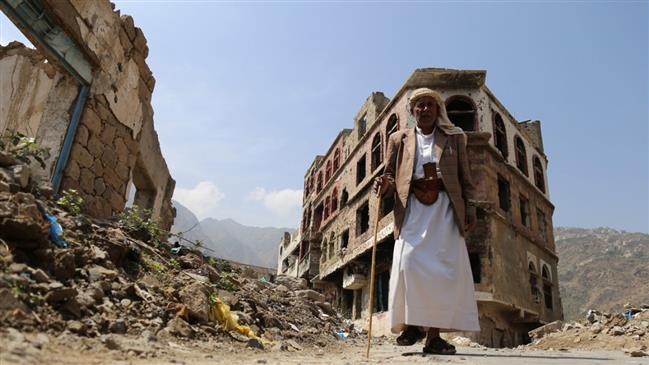
The second largest sovereign state in the Arabian Peninsula, Yemen, has been ravaged by war, deliberate starvation, and cholera for over four years. A 274 page U.N. report released on Tuesday, highlights the human rights situation including violations and abuses since September 2014.
According to the report, which took two years to complete, the United States, France, and Britain may be complicit in war crimes for their involvement in the war in Yemen by not only supplying the weapons being used by the Saudi and United Arab Emirate coalitions, but also providing them with intelligence and logistics support.
The report details the findings of the Group of Eminent International and Regional Experts on Yemen. It was submitted as a supplement to A/HR/42/17. U.N. investigators are recommending that all states impose a ban on arms transfers to the warring parties in order to prevent them from being used to commit serious violations and war crimes.
“It is clear that the continued supply of weapons to parties to the conflict is perpetuating the conflict and prolonging the suffering of the Yemeni people,” Melissa Parke, an expert on the independent U.N. panel, told a news conference. Parke continued, “That is why we are urging member states to no longer supply weapons to parties to the conflict.”
The report states, “The Group of Experts reiterates that steps required to address the human rights and international law violations in Yemen have been continually discussed, and there can no longer be any excuses made for failure to take meaningful steps to address them. The best way to protect the Yemeni population is to stop the fighting by reaching a political settlement which includes measures for accountability.”
Saudi Arabia and the United Arab Emirates are two of the largest purchasers of U.S. British and French weapons. These weapons are being used to fight against the homegrown Houthi movement which controls Yemen’s capital. The report states, “The legality of arms transfers by France, the United Kingdom, the United States and other States remains questionable, and is the subject of various domestic court proceedings.”
According to the U.N. report, Saudi and UAE coalitions are killing civilians in air strikes, and deliberately denying them food. The report put blame on all sides of the conflict, saying that no one has clean hands.
Kamel Jendoubi, chairperson of the Group of Experts on Yemen a creation of the U.N. Human Rights Council stated, “Five years into the conflict, violations against Yemeni civilians continue unabated, with total disregard for the plight of the people and a lack of international action to hold parties to the conflict accountable.” He also stated “This endemic impunity—for violations and abuses by all parties to the conflict—cannot be tolerated anymore.” Jendoubi concluded, “Impartial and independent inquiries must be empowered to hold accountable those who disrespect the rights of the Yemeni people. The international community must stop turning a blind eye to these violations and the intolerable humanitarian situation.”
Allegations of torture, rape, and murder of suspected political opponents detained in secret facilities by Emirati and affiliated forces have been received by the U.N. panel.
A secret list was sent by an independent panel to U.N. human rights chief, Michelle Bachelet, identifying “individuals who may be responsible for international crimes” the U.N. report states.
In the appendix, was a separate list identifying more than 160 “main actors” among Saudi, Emirati and Yemeni government and Houthi officials.
Concerns have been raised as to the impartiality and legitimacy of a Joint Incidents Assessment Team set up by Saudi Arabia to review alleged coalition violations, after it failed to hold anyone accountable for air strikes that killed civilians.
The U.N. report comes just a few days after a recent airstrike by the Saudi-led military coalition on a detention center in Yemen on Sunday, killed more than 100 people. The International Committee of the Red Cross (ICRC) said the attack may have amounted to a war crime. The coalition said it was targeting a drones and missiles facility but instead they leveled a building being used as a prison, in the city of Dhamar.
“The location that was hit has been visited by ICRC before,” Franz Rauchenstein, its head of delegation for Yemen, told AFP from Dhamar. “It’s a college building that has been empty and has been used as a detention facility for a while.” Rauchenstein continued, “What is most disturbing is that (the attack was) on a prison. To hit such a building is shocking and saddening – prisoners are protected by international law.” The remaining forty survivors are being treated in hospitals in the city south of the capital Sanaa for their injuries.
Last Thursday, airstrikes hit Yemeni government forces heading to Aden a southern port city, to fight UAE backed separatists. At least 30 troops were killed according to a government commander. The UAE has been known to arm and train separatist militias in southern Yemen. For weeks now, a rift between Saudi and UAE proxies has further complicated matters and civilians are paying the price.
A bipartisan group of lawmakers launched a new effort to end the U.S. government’s involvement in the Saudi-led assault on Yemen, shortly after the latest attacks. Lawmakers are also calling on the Senate to not remove an amendment to the annual defense policy legislation which would prohibit the U.S. from cooperating with Saudi airstrikes. Sanders stated, “We must use Congress’s power of the purse to block every nickel of taxpayer money from going to assist the Saudi dictatorship as it bombs and starves civilians in Yemen.”
Unfortunately, even with the release of this new U.N. report, the likelihood that nations perpetrating war crimes against innocent Yemeni civilians will be held accountable is highly unlikely.
Sarah Abed is an independent journalist and analyst.
UN calls out US, UK & France for complicity in Yemen war crimes
RT | September 4, 2019
The UN Human Rights Council slammed the US, UK and France for their complicity in alleged war crimes in Yemen by the Saudi-led coalition, warning that abetting such crimes by selling arms or other aid is also illegal.
“States that knowingly aid or assist parties to the conflict in Yemen in the commission of violations would be responsible for complicity in the relevant international humanitarian law violations,” the UNHRC’s Group of Eminent International and Regional Experts on Yemen declared in a lengthy report published on Tuesday.
“With the number of public reports alleging and often establishing serious violations of international humanitarian law no State can claim not to be aware of such violations being perpetrated in Yemen.”
The 274-page report enumerated possible war crimes committed by both sides in the conflict, including airstrikes and shelling, landmines, “siege-like tactics,” attacks on hospitals and other vital infrastructure, arbitrary arrests and executions, torture, and forced conscription of children into combat. The writers claimed to have forwarded the names of top military and political individuals from Saudi Arabia, the United Arab Emirates, Yemen, and the Houthi movement to the UN High Commissioner for Human Rights for further investigation and possible prosecution.
The UK and France fall under special scrutiny as signatories to the Arms Trade Treaty, which bars the sale of weapons if a country believes they will be used to commit “mass atrocities.” However, even non-parties to the ATT may face “criminal responsibility for aiding and abetting war crimes” since after five years of fighting “there can no longer be any excuses made for failure to take meaningful steps to address” the humanitarian crisis and international law violations taking place in Yemen.
The UK Court of Appeal ruled in June that the government had “made no attempt” to determine whether Saudi Arabia was using its weapons to violate international law, and while Secretary of State Liam Fox said he would suspend licenses for export to the Saudi coalition, the Department for International Trade said it would appeal the ruling. A rare bipartisan-supported bill to end weapons sales to Saudi Arabia by the US was vetoed in July by President Donald Trump, who complained it would “weaken America’s global competitiveness” and damage relationships with allies. And the French government hid the arms sales from its people entirely, then threatened the journalists who exposed the sales with arrest for publishing confidential information.
The UNHRC report also provided an update on the shocking scale of the humanitarian crisis, revealing that nearly a quarter of the Yemeni population was malnourished at the start of 2019, according to the Office of the Coordination of Humanitarian Affairs, with 230 of 333 districts at risk of famine and 24.1 million people in need of assistance merely to survive.
Also on rt.com:
‘Comical & tragic’ when US officials say arms sales to Saudis are about ‘exporting human rights’
Featured Video
Trita Parsi: Iran War Ends Today? Threats of Deporting Trita Parsi
or go to
Aletho News Archives – Video-Images
From the Archives
Iran UN ambassador calls for destruction of all nuclear weapons
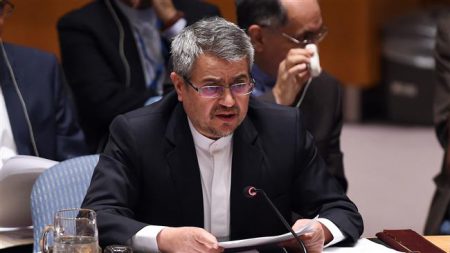
Iran’s ambassador to the UN Gholamali Khoshroo
Press TV – March 29, 2017
Iran’s ambassador to the UN Gholamali Khoshroo has called for the total eradication of nuclear weapons.
Khoshroo reiterated Iran’s call during a UN conference aimed at creating a nuclear weapons ban treaty in New York on Tuesday.
“Iran, as a victim of chemical weapons, strongly feels the danger posed by the existence of weapons of mass destruction and is determined to engage actively in international diplomatic efforts to save humanity from the menace of nuclear weapons,” he said.
Khoshroo stressed that Iran is committed to its Non-Proliferation Treaty (NPT) obligations, which include negotiations based on effective nuclear disarmament measures.
He added that several countries continue to ignore international calls and treaties for nuclear disarmament and even continue to increase their nuclear stockpiles. “They do not have political determination to abandon doctrines of nuclear deterrence and nuclear terror,” he went on to say.
Iran’s UN ambassador noted that boycotting the talks by many countries, including the US, shows that the world’s nuclear powers are by no means committed to the eradication of nuclear arms. Britain and France were also among the some 40 countries that did not join the talks.
“We note that prohibition of nuclear weapons must be accompanied by the elimination of such weapons. There can be no doubt that without complete abolition of nuclear weapons, there will be no absolute guarantee against the danger of nuclear war and the use of such weapons,” Khoshroo added.
Blog Roll
 Aletho News
- Trita Parsi: Iran War Ends Today? Threats of Deporting Trita Parsi
- What Is SIDS?
- DHS docs: Govt bracing for nationwide anti-AI riots, preparing to crack down on dissent
- India signals rethink over West Asia
- Israeli Ex-Navy Chief admits massive damage from Iran missiles
- The strategic arsenal US lost in war against Iran – and why replenishment will take years
- Documents Suggest Fauci Knew COVID Was Created in Wuhan Lab, and mRNA Vaccines Wouldn’t Work
- No return to pre-war status for Strait of Hormuz – Iran’s top diplomat
- Ex-South Korean President sentenced for trying to provoke conflict with Pyongyang
- US publishes docs on ‘dangerous’ Ukrainian biolabs
- If Americans Knew
- Israeli Firm Accused of Launching Smear Campaigns During US, European Elections
- As World Cup kicks off, Gaza amputee girls chase football dreams
- Oxfam: More Palestinians killed by Israel across West Bank in last 3 years than previous 17 years combined
- US-Iran ceasefire may be imminent, but will Israel blow it up? – Daily Update
- The Issue of Israel Is Ending Democracy In Michigan
- Israel is stealing homes, livelihoods, and lives in West Bank
- Gaza is not an aberration – Israel planned this genocide decades ago
- Israel is changing the face of Lebanon, mainstream media is normalizing it – 3 articles
- Genocide lobby benefits from EU anti-racist fund
- Watching the World Cup from Gaza
- No Tricks Zone
- New Study: Significant CO2 Fluxes From Non-Volcanic Sources Are Largely Neglected In Carbon Budgets
- Women Climate Scientists Being Harassed, Insulted By Skeptics, Claims Berkeley Earth Researcher
- Germany’s Longterm Spring Climate Data Show “No Climate Trend”
- New Study: Solar Photovoltaic, Wind Power Fail To Meet Annual Energy Demands 62% Of The Time
- Germany’s Die Welt: “Too Much Is Too Much” … Green Energies Are Cannabalizing Each Other!
- Germany’s Ecological Holocaust… Once Fairy Tale Forests Getting Cleared For Wind Turbines
- A Grand Solar Minimum Has Arrived…Global Cooling Of At Least 1°C Is Expected By The 2030s, 2040s
- European “Expert Commission” Urges COVID-19-Like Global Climate State Of Energency!
- Real-World Observations Do Not Support The Position That Climate Change Is Human-Caused
- Germany’s AfD Party Calls Debunked Climate Scenarios “Greatest Fraud In Human History”
 Aletho News