Two-thirds of Palestinians support Abbas departure
MEMO | September 23, 2015
An opinion poll has suggested that two-thirds of Palestinians believe that Palestinian Authority President Mahmoud Abbas should resign. They also think that his resignation from the PLO Executive Committee is not “real”.
The Palestinian Centre for Policy and Survey Research released the results of a poll on Monday that it conducted in the occupied West Bank and Gaza Strip between 17 and 19 September. The results show that the popularity of President Abbas has declined “significantly” in the occupied West Bank and has improved “slightly” in the Gaza Strip. Fatah’s popularity has declined in both the West Bank and the Gaza Strip.
The results revealed an increase in Hamas popularity in the occupied West Bank and a significant decrease in the Gaza Strip. The popularity of the deputy leader of the Islamic movement, Ismail Haniyeh, has improved in the West Bank but fallen slightly in Gaza.
“If Abbas does not participate in the next presidential elections,” said the research NGO, “the only viable candidates from Fatah to replace him are Marwan Barghouti followed, but with much less support, by Mohammad Dahlan and Saeb Erekat.” Among Hamas candidates, it added, Ismail Haniyeh and Khaled Meshaal are the most popular to replace Abbas, while among the independents the most popular is Rami Al-Hamdallah followed by Salam Fayyad.
“Two-thirds of the public support Hamas-Israel indirect negotiations about a long term Hudna, or truce, in return for ending the siege of the Gaza Strip. But a majority believes that these negotiations will not succeed. A majority rejects the belief that such negotiations, even if they succeed, would harm the chances for reconciliation.”
The results also reveal that the Palestinian public does not view the PLO or its Executive Committee positively and declines to give it a mandate to make important decisions on behalf of all Palestinians. Instead, the public prefers to give such a mandate to the PA, even if the decisions in question relate to the permanent agreement with Israel. “This, though, does not mean that the public has considerable trust in the PA,” said the centre. “On the contrary, a majority believes that it has become a burden on the Palestinian people and, for the first time since we started asking, a majority now demands the PA’s dissolution.”
Results also show that two-thirds of the public believe that the protection of Palestinians against settler terrorism is the responsibility of the PA, not the Israeli army. “Furthermore, two-thirds believe that the PA is not doing enough to protect Palestinian citizens. To protect Palestinian towns and villages targeted by settlers, the largest percentage has selected, from among several options, the deployment of the Palestinian security forces in those areas. The public believes that if the PA formally establishes civil guard units made up of volunteers in such areas, it would also help to provide protection. Indeed, half of West Bankers say that if such unarmed units were established, they would volunteer to join them.”
The survey was conducted on a random sample of 1,270 people in 127 locations in the West Bank and Gaza Strip.
Nearly 2,000 Palestinian children killed since 2000: Rights group
Press TV – September 17, 2015
An independent non-governmental organization (NGO) says nearly 2,000 Palestinian children have lost their lives at the hands of Israeli military forces and illegal settlers over the past 15 years.
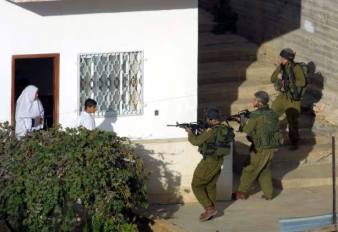 Defense for Children International-Palestine (DCIP), in a report released on Thursday, criticized the Israeli regime’s policy of land expropriation and consistent development of illegal settlements in the occupied East al-Quds (Jerusalem) and West Bank, warning that such practices are placing Palestinian children and their families against “expanding and often violent Israeli settler communities.”
The Geneva-based NGO further noted that Israel’s ongoing settlement expansion activities are increasingly creating a “hyper-militarized environment” for Palestinian children, where they are highly exposed to disproportionate violence from both Israeli forces and settlers.
The DCIP said Israeli soldiers killed 12 Palestinian children in East al-Quds and West Bank in 2014, and the majority of the fatalities were caused by ammunition.
It highlighted that there is “no evidence that any of the children killed in the West Bank posed a direct threat to Israeli troops or settlers.”
The rights group also revealed that 553 of the Palestinian children killed since 2000 died as a direct result of the Israeli military’s onslaught against the impoverished Gaza Strip in summer 2014, noting that around 68 percent of the victims were under the age of 12.
Israel started its military campaign against the impoverished Gaza Strip in early July 2014. The offensive ended on August 26, 2014. Nearly 2,200 Palestinians, including 577 children, lost their lives in the Israeli war. Over 11,100 others – including 3,374 children, 2,088 women and 410 elderly people – also sustained injuries.
More than half a million Israelis live in over 120 illegal settlements built since Israel’s occupation of the Palestinian territories in 1967.
Palestinians are seeking to create an independent state on the territories of the West Bank, East al-Quds, and the besieged Gaza Strip and are demanding that Israel withdraw from the occupied Palestinian territories.
Gaza water shortage catastrophic: ‘We can’t drink, cook or wash with it’

RT | September 6, 2015
More than 90 percent of the Gaza Strip’s water is undrinkable. The rest is quickly running out. A combination of factors is rapidly depriving the population of this most basic of needs. RT investigated day-to-day life under these conditions.
Just one fresh water source exists today, according to the locals – a coastal aquifer beneath the ground that is shared with Israel and Egypt. But Gaza is situated downstream from Israel, and Palestinians accuse the Jewish state of using the situation to its advantage, employing water deprivation as a tactic against the civilian population.
The grim water statistics are part of a recent UN report on Gaza, which says the strip will become uninhabitable by 2020. A number of reasons compound the problems, according to the document by the United Nations Conference on Trade and Development (UNCTAD).
The Gaza Strip’s GDP dropped 15 percent in 2014, with 72 percent of households suffering extremely low food security and unemployment at a record high of 44 percent. Further stress was added by relentless Israeli assaults. With three military operations in the last six years, coupled with eight years of economic blockade, prospects for recovery are looking very bleak.
The UN says that 500,000 people have been displaced in Gaza as a result of last year’s Israeli operation alone. More than 20,000 Palestinian homes were destroyed, and 148 schools and 15 hospitals and 45 primary health-care centers were severely damaged. Gaza is one of the most densely populated areas in the world.
But worse still is when the populace is deprived of the prime source of life – water. Without it, no reconstruction and no rebuilding of lives can take place. Medicine, sanitation, hygiene and crucial facilities that depend on water all suffer.
RT investigated the extent of the hardship under these conditions.
“We can’t drink it, cook with it, or wash in the kitchen with it… we are forced to buy all the clean water separately,” said Umm Ibrahim Amna Abdel’al, as she stood in her kitchen, little more four bare cement walls and a sink.
A delivery pickup truck trundled through the streets outside with a water tank sitting in the back.
“The last war on Gaza, of course, resulted in the destruction of some of the infrastructure, the water holes and the pumping stations were [heavily hit.] More than 50 percent of the water infrastructure could not be accessed,” said Mahmoud Elkhafif, UNCTAD’s special coordinator for assistance to the Palestinian people.
“Part, of course, vanished,” he added.
RT’s Lizzie Phelan tasted what remains of the Strip’s water for herself: “This coffee tastes like it has salt not sugar in it. That’s because the water that’s used to wash it – like much of Gaza’s water – is contaminated with sea water.”
The woman went on to describe how “tiny kids suffer from cramps and colic” – a syndrome commonly associated with stomach infections.
“See my hand?” she pointed to the irritated skin on her palm. “It is because of the salty water. I have a skin infection. The water is full of salt. It is like sewage.”
And salt isn’t the only problem. The water coming into homes is also full of nitrate – a carcinogen. The levels rose even higher last year, during Israel’s bombardment of sewage pipes and clean water pipes. Now, the two chemicals have mixed.
But even though the water is filthy, Gazans pay exorbitantly for it.
Elkhafif put it bluntly: “Gaza suffers a catastrophic issue with water quality and water supply. And it’s a shame on the world that they are still watching this.”
Unless the situation is resolved, the Strip stands on the brink of a full-scale humanitarian catastrophe much greater than any airstrikes can cause.
Over 100k sign UK online petition calling for Israeli PM’s arrest
Press TV – September 5, 2015
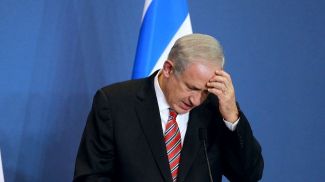 More than 100,000 people in the United Kingdom have now signed a petition demanding the arrest of Israeli Prime Minister Benjamin Netanyahu for war crimes against Palestinians when he visits London later this month.
The petition, which was published on the website of the British Parliament on August 7, calls upon the British government to apprehend the 65-year-old chairman of Israel’s Likud party upon arrival in London next Wednesday for the massacre of thousands of Palestinians during the Israeli military’s 50-day onslaught against the blockaded Gaza Strip last year.
The petition garnered 100,021 signatures as of Saturday morning.
“Under international law, he should be arrested for war crimes upon arrival in the UK for the massacre of over 2,000 civilians in 2014,” the petition says, referring to the Israeli prime minister’s scheduled September visit.
After 10,000 signatures, the British government must respond to the petition, and after 100,000 signatures, it will be considered for debate in the parliament.
The British government has, in return, stated that “under UK and international law, visiting heads of foreign governments, such as Prime Minister Netanyahu, have immunity from legal process, and cannot be arrested or detained.”
Israel started its military campaign against the impoverished Gaza Strip in early July 2014. The offensive ended on August 26, 2014. Nearly 2,200 Palestinians, including 577 children, lost their lives in Israel’s war. Over 11,100 others – including 3,374 children, 2,088 women and 410 elderly people – also sustained injuries.
Syrian Suffering vs. Palestinian Suffering
By Robert Fantina | Aletho News | September 4, 2015
The tragic photo of the body of a three-year old Syrian boy, Aylan Kurdi, drowned in the sea when attempting to flee that war-torn nation with his family, is seared on the minds of all but the most heartless of people who have seen it. Still wearing his little sneakers, he would seem to be only asleep, where he not lying alone, face down, on a Turkish beach, having been washed ashore by the tide. The unspeakable horrors that his desperate family fled, at great and, as it turned out, tragic risk, can only be imagined by anyone who has not experienced them. The entire world is crying out for a resolution to the problems that led to the death of this child, his brother, mother and countless other desperate refugees.
But the Syrian refugee crisis is not the only one that is leaving children dead and dying. Such publicity was not granted to Palestinian children, bombed to bits by apartheid Israel, using United States-provided weaponry. Over 500 innocent children were killed in a 51-day period last summer; some of them asleep in their own beds, others huddled in United Nations refugee centers, both places where any child should feel, and should be, safe and secure. Their mangled and bloody bodies were shown on social media, but somehow the corporate-owned media did not find them worthy of reporting.
It is impossible to imagine the horror of Aylan’s family, in the water in the black of night, when Aylan and his brother slipped from their father’s desperate grasp. How the children must have suffered! The feelings of panic and desperation experienced by their parents is nothing Hollywood’s best actors could ever mimic.
Why, then, were not the stories of any Palestinian children told? Their parents too struggled desperately to save them, and the photographs of those parents holding the battered, mangled, bloody bodies of toddlers and infants are no less moving than pictures of Mr. Kurdi, as he speaks of his tragic loss.
In April of this year, a devastating earthquake struck Nepal, killing over 8,000 people, and causing millions of dollars of damage. In response, local stores requested that their customers donate to relief programs. Fundraisers were held, donations solicited, and the world did what it could to help these beleaguered people.
In the summer of 2014, more than 2,000 people were killed in the Gaza Strip, with tens of thousands left homeless. Today, most of them are still homeless, some of them living with friends or relatives fortunate enough to have something left to live in, others living in makeshift shelters, built from the ruins of their homes. Children are attending classes in bullet-ridden schools, with some classrooms having huge holes in the walls or ceilings, evidence of the cruel and barbaric bombing of last summer. Yet there has been little news of this. This writer is not familiar with any local relief activities, or any such activities at all. The only donation solicitations that he has seen have been by Palestinian relief agencies with which he is familiar because he has sought for them.
Relief donations increase when people around the world, especially those in First World nations, see the suffering that the relief is designed to alleviate. Why, one wonders, is the acute suffering of the Palestinian people ignored? Even the unspeakable burning alive of a Palestinian toddler, the killing of his mother and the extremely serious burns experienced by his brother had only a brief moment in the public media.
The corporate-owned media, unfortunately, determines what it wants the world to know, and what it would prefer not to reveal. Zionism dictates that Palestinian suffering is not worth showing to the world. After all, Zionists with prominent cabinet positions in the Israeli government have stated that Palestinians are ‘beasts’, and all of them should be destroyed. Having a fundraiser to assist them is not in the plan.
In May of 2014, two Palestinian teens were videotaped being shot in the back by Israeli Defense Force (IDF) terrorists. Is that not newsworthy? One can only imagine how newsworthy the corporate elite who control the media would consider it if two Israeli teens were shot in the back by Palestinians. Yet the reverse is not true.
It is an age-old truism in the U.S. that the ‘enemy’ is less than human. From ‘gooks’ in Vietnam to ‘sand jockeys’ in the various Gulf wars, the U.S. teaches its own terrorists to view their victims as less than human. Since Israeli lobbies own the U.S. Congress, seeing Palestinians as ‘beasts’, whose suffering is not worthy of cluttering up the vacant minds of the typical U.S. news audience, is completely acceptable. A three-year-old Syrian boy washing up on a beach is tragic; a three-year old Palestinian boy, whose body was destroyed beyond recognition by bombs dropped by Israel, isn’t worth anyone’s notice.
This writer wonders what goes through the mind of a Palestinian parent who has lost one or more children to Israeli bombs, as he or she reads about little Aylan, and sees those heart-rending pictures. Certainly, empathy and sympathy for Mr. Kurdi is foremost in their mind. But do they also wonder why the tragic death of their own child or children was ignored? As they see the world demanding help for Syrian refugees, do they wonder why no one seems to be demanding help for them?
It is long past time for the nation of Palestine to be internationally-recognized by the remaining countries, most notably the United States and, to its great shame, Canada, that thus far do not. It is also long past time for the world to rush in with aid to Gaza, and to demand that Israel adhere to international law, or suffer the sanctions and other consequences that any other nation, violating law and abusing human rights, would experience. The trend is moving in the direction of human rights for Palestinians; their suffering at the hands of Israel and the United States must end.
Six Palestinian Journalists Kidnapped in August
IMEMC News & Agencies | September 3, 2015
The Union of Palestinian Radio and Television documented about 20 Israeli violations regarding the rights of Palestinian journalists and media staff working in Palestine this August.
 The Union stated, in the monthly report issued on Thursday, that Israeli forces detained six Palestinian journalists and two photojournalists, including Hazem Obaid, who works for Al-Quds TV.
According to Al Ray, Obaid was detained while he was en route to travel via Al-Karama crossing. Authorities later extended his detention.
The number of journalists, writers and media activists detained in the Israeli jails was up to19 prisoners, by this time, to include Nidal Abu Aker, the director of Bethlehem’s Al-Wehda Radio and presenter of “In Their Cells” programs. Abu Aker has staged a continued hunger strike since August 20th, in protest against the administrative detention policy.
Palestinians, this past month, have witnessed an escalation in the organized attack against Jerusalemite journalists during their coverage of the continued incursions of Al-Aqsa Mosque and the daily events in the city, in general.
During Israel’s latest military offensive on the Gaza Strip, 17 journalists were reported killed by Israeli forces. According to the Palestinian Center for Development and Media Freedoms (MADA), over 80 percent of Palestinian journalists were engaged in self-censorship by late October of 2014. In a dangerous precedent, Israeli police recently fined Palestine TV photojournalists and crew members of Russia Today TV, under the pretext of “obstruction” caused during their coverage to prevent the entry of worshipers to the Al-Aqsa Mosque from Al-Silsila gate.
Wars leave 13 million children without school in Mideast: UN
Press TV – September 3, 2015
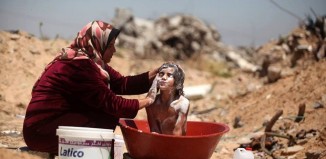
The United Nations has voiced alarm over the “destructive impact” of the deadly wars on children’s education in the Middle East and North Africa (MENA), saying violence has forced at least 13 million kids out of schools there.
In a report released on Thursday on threats to the education system in six violence-torn countries and territories across the region, the United Nation’s children fund UNICEF warned that “the hopes of a generation” would be dashed should kids fail to return to classrooms in conflict zones of both regions.
Syria, Iraq, Yemen and the Palestinian territories in the Middle East as well as Sudan and Libya in North Africa were the main countries the report focused on.
Over 8,850 schools are no longer usable due to the ongoing political instability and violence, said the report.
Peter Salama, the regional director for UNICEF in the MENA region, told AFP that “the destructive impact of conflict is being felt by children right across the region.”
“It’s not just the physical damage being done to schools, but the despair felt by a generation of schoolchildren who see their hopes and futures shattered,” he added.
According to the UN, one in four schools was closed this school year due to violence.
“Even those Syrian teachers who have ended up as refugees in other countries have faced obstacles which prevent them from working,” said the report, adding more than 52,000 teachers have left their posts.
UNICEF said that violence in Iraq has taken a heavy toll on the schooling of at least 950,000 children.
Iraq and Syria have been grappling with a spike in violence fueled by Takfiri terror groups, particularly Daesh, which controls swathes of land in both Arab states.
Elsewhere in the Middle East, the Saudi military has been pounding neighboring Yemen with fatal air raids over the past five months. Civilians as well as the country’s infrastructure have been the main target of Riyadh’s strikes.
The Saudi military campaign has led to the closure of hundreds of schools and colleges in Yemen since late March, according to the report.
UNICEF also said over 280 schools had been damaged and eight “completely destroyed” in the Tel Aviv regime’s 2014 war on the Israeli-blockaded Gaza Strip that left over 2,200 people dead.
In Libya, which is suffering from rising violence after the 2011 overthrow of former dictator Moamar Qaddafi, more than half of those displaced say their children cannot attend classes, while the conflict in Sudan’s Darfur and South Kordofan has also had a severe impact on the country’s creaking school infrastructure, the report said.
As Gaza Lies in Ruins, The NY Times Blames the Victims
By Barbara Erickson | TimesWarp | August 24, 2015
Israel’s attacks on Gaza ended a year ago, but the strip remains an expanse of rubble and devastation. Who’s to blame for this outrage? The New York Times has an answer: everyone but Israel.
Jodi Rudoren comes up with this response in a story that aims to whitewash Israel’s brutal treatment of Gaza by blaming the Palestinian victims along with the international community for the lack of rebuilding. It is all summed up in the story’s subhead, “Political Infighting and Lack of Funds Stymie a Reconstruction Mechanism.”
Her article takes pains to present the process as a collaborative project between the Palestinian Authority, Israel and the United Nations, and she is hazy about Israel’s role, describing it as nothing more than “involvement in approving projects and participants.”
Rudoren furthers her efforts in a single paragraph that absolves Israel completely: “[The Palestinian minister of housing], other Palestinian leaders and United Nations representatives all said that Israel had done its part in reasonable time and allowed cement into Gaza. Empty coffers, they said, are the primary problem.”
Times readers, however, never learn the direct quotes or the names of the “leaders” and “representatives” that would help substantiate this claim, nor does Rudoren explain what “Israel’s part” actually refers to here.
In fact, Israel controls everything that goes into Gaza, from people to foodstuffs to building material, and the agreed-on process for rebuilding the strip—the “reconstruction mechanism” referred to in the subhead—is built solely on Israeli demands. (Israel also blocks Gaza traffic by sea and has the full cooperation of the Egyptian government on that border as well.)
Although the United Nations and the Palestinian Authority have roles in the process, Israel determines who gets building materials, what they get and in what amounts. As Harvard-based Gaza expert Sara Roy notes, the two major documents outlining the reconstruction process “read like security plans, carefully laying out Israeli concerns and the ways in which the United Nations will accommodate them.”
Roy adds, “Israel will have to approve all projects and their locations and will be able to veto any part of the process on security grounds.” Moreover, she writes, “No mechanism for accountability or transparency will apply to Israel.”
Without doubt, Palestinian bureaucracy, donor fears of yet another attack on Gaza and other factors come into play in reconstruction efforts, but Rudoren ignores the major element, which is the Israeli blockade.
Her story, in fact, never refers to the eight-year blockade of Gaza and makes only vague mention of Israeli “control” of the enclave. Readers are left without any relevant context.
Rudoren’s article also omits other details that would place Israel’s role in a different light: the fact that by July of this year it had allowed the passage less than 1 percent of the construction materials needed to adequately house Gaza residents or that as of May, a total of 20 schools (kindergarten to college level) completely destroyed by Israel had yet to be repaired.
Readers never learn, for instance, that aid agencies in Gaza were forced to rely on temporary building materials as the Israeli-mandated process kept concrete, cement and steel supplies to a trickle. They also never learn the sequel to this chapter: that Israel stepped in to squelch the effort just as it was gaining momentum.
The project was run by Catholic Relief Services, which began using lumber to build temporary homes for the displaced residents this year, and media reports in February and March stated that 70 had been built and 40 families had moved into the new houses. CRS had plans to construct more than 100 additional wooden homes, but in April the program came to an end when Israel suddenly banned all lumber for housing.
Here we can see how Israel actually operates in the opaque rebuilding process mentioned in Rudoren’s piece. Times readers, however, never learn of this sad narrative nor of many others that would reveal how Israeli actions are destroying the economy and depressing the living conditions in Gaza.
And yet, the Times story would have us believe that Israel has “done its part” in the reconstruction of Gaza, ignoring the obvious: that Israel alone has complete control of its borders with the strip, and if Israel so willed, Gaza residents would have moved out of the rubble long ago.
Are Zionist terrorist settlers backed by the Israeli regime?
Press TV
After the burning alive of 18-month-old Ali Dawabsheh by a fanatical Zionist settler, the world has reacted with outrage.
The attack was so horrendous that even Israeli leader Benjamin Netanyahu distanced himself from it, calling it an act of terrorism.
But on today’s show we will be asking to what extent Israel is responsible for the activities of its extremists. Are these fanatical terrorists really just a few bad apples, as Netanyahu would have us believe?
Or are they the product of decades of deliberate Zionist policy to colonize stolen land?
Hamas members held hostage by Sinai militant group
Ma’an – August 20, 2015
CAIRO – Four Palestinians kidnapped at gunpoint in Egypt’s Sinai late Wednesday are members of Hamas, Egyptian security officials said, and are being held hostage by the Sinai Province militant group.
Egyptian officials told Ma’an that the four Hamas members were taken hostage by the IS-affiliated group as a bargaining chip to force Hamas to release some 50 Salafists currently imprisoned in Gaza.
The members were identified as Abd al-Basit Abd al-Dayim, Abdullah Said Abdullah Abu Jibbeen, Yasir Fathi Misbah Zanoun and Hussein Khamis al-Thabda.
Negotiations have reportedly begun between Hamas and the militant group, with the involvement of both Palestinian and Egyptian mediators.
Initial investigations suggest the Hamas members were taken to the al-Tuma village south of the city of Sheikh Zuweid.
Sources close to the Sinai Province group — which pledged allegiance to IS in November — have said the four kidnapped Hamas members would be killed if Hamas did not comply with the group’s demands.
The group has claimed responsibility for attacks on Egypt’s army which have killed hundreds of policemen and soldiers since 2013.
The attacks are allegedly in response to the bloody repression launched by the authorities under President Abdel Fattah al-Sisi’s control, which has seen at least 1,400 killed and thousands more jailed.
Since last summer’s devastating war between Hamas and Israel in the Gaza Strip, there have been growing signs of internal unrest between Hamas security forces and other militant groups in the strip, with a string of small-scale explosions.
In June, video footage alleged to be from an IS stronghold in Syria showcased a public challenge by the group against Hamas’ power in Gaza, accusing the Gazan leadership of failing to enforce stringent religious law in the strip.
Prior to the threat, Hamas had reportedly been increasingly challenged by Salafist militant groups in Gaza, with some taking credit for rocket fire into Israel.
Four Palestinians abducted in Sinai after passing Rafah Crossing
MEMO | August 20, 2015
Four Palestinians were abducted on Wednesday evening in Egypt’s Sinai Peninsula just a couple of minutes after passing Rafah Crossing, the Palestinian government in Gaza has reported.
An eyewitness who was on the same bus, said that one or two kilometres after passing the crossing, and just a couple of metres from the Egyptian army checkpoint, a number of masked armed men opened fire on the bus, entered it, called four men by their names and abducted them.
The eyewitness, who preferred to remain anonymous, said that there were 50 Palestinian passengers on the bus and insisted that there were no Egyptian security staff accompanying them.
Normally, Egyptian security staff accompany travellers’ buses from Rafah Crossing to Cairo Airport.
“Although the daily night curfew had started,” the eyewitness said, “the Egyptians insisted that the bus must begin its journey from Rafah to Cairo.”
Normally, Palestinian buses do not travel during the night curfew, which has been imposed on wide swathes of the Sinai Peninsula.
The spokesman of the Palestinian Interior Ministry in Gaza, Iyad al-Buzom, said that: “We are making urgent contacts with the highest levels of Egyptian authorities to follow up on the circumstances of what happened and we urge the Egyptian interior ministry to secure the lives of the kidnapped passengers and free them.”
Meanwhile, Salama Abu-Rbaa, the chief of an Egyptian tribe in Sinai, has accused the Egyptian intelligence services of manipulating the abduction of the Palestinians.
Speaking to a Palestinian news agency, he said that a number of his tribe’s members saw the masked men who abducted the Palestinians exiting an Egyptian armoured vehicle close to the place of the abduction.
He said that he has credible information about the four abductees and their whereabouts, insisting that they are in a military outpost near Al-Arish Sea.
Abu-Rbaa warned of a “demonised” agenda planned by the Egyptian security services, calling for the Palestinians to be careful about such plans.
Fish farms in Gaza counter Israeli restrictions on fishing limit
MEMO | August 17 2015
 Israel’s occupation of the Gaza Strip is ongoing, despite frequent reminders that it “withdrew” its settlers and army posts 10 years ago. Legally and practically it is still the occupying power and it remains inflexible.
For example, Palestinian territorial waters off the coast of the Gaza Strip as defined by the 1982 UN Convention on the Law of the Sea, should extend to 12 nautical miles (22.2 km or 13.8 miles) but the Israeli navy enforces a six mile limit, sometimes even five and a half miles, for Gaza’s fishermen. In addition, the Israeli occupation authorities often make petty and spiteful “security” excuses to reduce the already reduced fishing limit to three miles.
On top of that, Palestinian fisherman are harassed by the Israeli navy on a daily basis; their boats are fired upon, sunk and confiscated, and the fishermen themselves are often arrested if they are not killed or wounded in the process. All of this, of course, has an impact on the amount of fish caught off the Gaza coast, which should be a rich fishing ground. Catching more and larger fish requires sailing into international waters, as fishermen from other countries do.
Palestinian investors in Gaza have thus resorted to fish farming. Speaking to MEMO, Yasser Al-Haj said that he invested in this sector for personal gain as well as to ease the crisis in the Palestinian market. Although it is not regarded as a solution to the crisis, it can alleviate it.
Al-Haj’s newly-opened fish farm only produces one type of fish, sea bream. It is imported from Israel and then raised in this farm and others. He says that his farm produces 7 per cent of the Gaza Strip’s needs and sells about 250kg a day. One kilo of sea bream costs about $12.
For an ordinary middle-class citizen, this price is high, but for a poor citizen it is very expensive, given the average income in the Gaza Strip. The high price is set by many factors, including the price of fish feed from Israel, which is $1,850 per tonne, plus the issue of the power cuts suffered across the territory.
Fish farms require generators to keep the oxygen moving and water pumping continuously in the ponds. Yasser Al-Haj notes that he is unable to breed the fish in the sea because of pollution, which poses a danger to the fish and people who eat them. The sewage processing plants aren’t working due to the power cuts and lack of maintenance resulting from the Israeli blockade.
Images from MEMO photographer: Mohammad Asad
Featured Video

Racist Seinfeld Dances for Joy as Bibi Unveils His New Map
or go to
Aletho News Archives – Video-Images
TV Drama Review
Japanese drama projects Japan’s wartime atrocities onto Chinese characters

Global Times | October 25, 2026
By portraying Chinese characters as perpetrators of ruthless violence while casting Japanese Self-Defense Forces (SDF) intelligence operatives as defenders, the season 2 of the Japanese drama Vivant has recently drawn criticism from Chinese netizens, who argue that its depiction turns historical reality on its head while ignoring Japan’s wartime atrocities.
The TBS drama series – a spy suspense story in which an alleged unofficial intelligence unit of the SDF operates across the globe — has attracted a passionate fanbase. Its currently airing season 2 opened with a household rating of 18.8 percent, the highest for a TV drama this year, according toa commentary article by Japanese media Toyo Keizai.
What draws attention is the portrayal of the enemies in the series, the article noted. Scenes in which the Chinese organization subjects kidnapped members of the SDF unit to brutal torture are repeated with unrelenting intensity.
It is rare for Japanese TV dramas to explicitly portray a real-life country as the enemy, the article noted.
Japanese Prime Minister Sanae Takaichi also made a reference to the drama, saying that she has been recording Vivant and hopes to binge-watch it over the year-end and New Year holidays, according to Japanese media outlets.
China’s CCTV News report on Sunday revealed that the drama features scenes in which Chinese personnel cut off the fingers of and stab Japanese intelligence operatives in the abdomen. Such acts bear striking similarities to the torture inflicted on Chinese nationals by invading Japanese troops during the World War II.
The drama distorts the truth by attributing these atrocities to modern Chinese characters. Beneath the surface, it subtly glorifies Japan’s cross-border overseas operations, blurs the functional boundaries of the SDF and implicitly promotes an expansionist narrative, per CCTV News. … continue
Blog Roll
 Aletho News
- EU facing trillion-euro debt hole while seeking more cash for Kiev
- How US, Europe, Persian Gulf states exhausted missile stockpiles, splurged billions to defend Israel
- Up in arms… Koreans reject U.S. empire’s plan to make South Korea the next Ukraine
- Iran, Turkey, Pakistan, Saudi Arabia could advance region-led security framework in Tehran: FM spox
- Netizens condemn Japanese drama for projecting Japan’s wartime atrocities onto Chinese characters
- Racist Seinfeld Dances for Joy as Bibi Unveils His New Map
- A West Bank War for Netanyahu’s Election Campaign, Could It Backfire?
- Yemen denounces European Parliament’s ‘hypocritical’ push to blacklist Ansarullah
- Qalibaf: UAE’s UN bid aims to ‘clear the runway’ for ‘Greater Israel’, whitewash genocide
- Pakistan reopens Iran border after boosting security: Report
- If Americans Knew
- An error has occurred; the feed is probably down. Try again later.
- No Tricks Zone
- Sudden Stratospheric Warming, Powerful El Niño Combination May Lead To Extreme Europe Cold, Energy Crisis!
- Two New Studies Find Thwaites Glacier Melt Cannot Be Driven By Human Activity Or A Warming Ocean
- E-Cars Reduce CO2 Emissions By Only 41% Compared To Internal Combustion Engine Vehicles
- Predictions Made By Renowned Climate Professor Over Past Decades Have Been Proven To Be Poor
- New Study Suggests Large Regions Of The Pacific Ocean Have Been Cooling For The Last 80 Years
- Germany’s Green Energy Debacle: High Energy Costs Force Kahla Porzellan to Close After 182 Years!
- New Study: 50 Years Of The Most Aggressive ‘Net Zero’ Policies Can Only Affect The Global Climate By 0.03°C
- US September “Heat” Was No Record…Many Records Set Decades Ago
- Latest European Green Energy Debacle; Portugal’s Largest Flagship Solar Park Insolvent!
- Green Energy Debacle: German Expert Professor Fritz Vahrenholt Warns Of Severe Economic And Social Consequences

