Israel boycotts Carter’s visit over “his meetings with Hamas”
Palestine Information Center – April 21, 2015
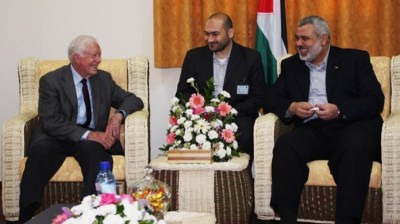
OCCUPIED JERUSALEM – Israel decided not to meet former US President Jimmy Carter and former Norwegian Prime Minister Gro Brundtland when they visit the region over their expected meeting with Hamas leader Ismail Haneyya and over their anti-Israeli views, Yediot Ahranot revealed.
Carter and Brundtlend will arrive on April 30 for a 3-day trip to Israel, the Palestinian Authority territories, and the Gaza Strip. Israel officially decided to boycott Carter’s visit, although it will not prevent him from entering Israel or entering the Gaza Strip through the Erez crossing, the newspaper said.
Israeli president Reuven Rivlin heeded the Foreign Ministry’s advice and decided not to meet former US President Jimmy Carter and former Norwegian Prime Minister Gro Brundtland when they visit the region.
Carter and Brundtland are both members of the Elders, an independent group of global former leaders who work together for peace and human rights. They were brought together in 2007 by Nelson Mandela.
Carter had earlier met with head of Hamas’s political bureau Khaled Mishaal and former Palestinian Prime Minister Ismail Haneyya.
Sources in the Israeli Foreign Ministry said the reason they were boycotting Carter’s visit was because “he consistently helps delegitimize Israel and that any meeting with an Israeli official would only contribute to this process.”
Carter will arrive in the region on an emergency mission, mainly intended to mediate between the Palestinian Authority and Hamas in Gaza, according to the newspaper.
Carter has been vocally critical of Israel in recent years. He has referred to Israeli apartheid numerous times.
The newspaper said that Carter has visited Israel in the last few years, but former Israeli president Shimon Peres would generally meet him even though Carter spent the meetings criticizing the former president’s views.
Report: Israel Willfully Targeted & Murdered Gaza Children

IMEMC | April 20, 2015
A new report by Defense for Children International-Palestine, titled “Operation Protective Edge: A War Waged On Gaza’s Children”, has displayed documented events proving that that Israel deliberately murdered Palestinian children during its last offensive on the Gaza Strip, this past summer.
According to the report, the number of children killed in the offensive on Gaza last summer hit 535, a majority of them under the age 12. Another 3,400 children were injured – over 1,000 maimed for life. They need vital medical care which is unavailable because of Israel’s lawless siege – ongoing aggression by any standard with full US-led Western support.
Operation Protective Edge was the sixth Israeli military offensive on Gaza in the past eight years, and raised the number of children killed in assaults on Gaza to 1,097 since 2006, the Palestinian News Network informs. Between December 2008 and January 2009 Israeli forces killed at least 353 children, as well as a further 33 children in November 2012.
According to the report, Israel considers all civilians legitimate targets. However, international law defines this as a war crime.
DCIP’s report said that “2014 was a year that brought violence, fear and loss (to Gaza).” The Israeli military offensive” lasting 51 days from early July to late August killed about 530 Palestinian children. Nearly 3,400 other children were wounded – many from illegal terror weapons. Over 2,200 Palestinians died – mostly defenseless civilians.
“Investigations undertaken by (DCIP) into Palestinian child fatalities during Operation Protective Edge found overwhelming and repeated evidence of international humanitarian law violations committed by Israeli forces. These included direct attacks on children, and indiscriminate and disproportionate attacks on civilian homes, schools, and residential neighborhoods.”
The report included stories and testimonies from witnesses of the war in Gaza, documenting targeting places that should have been provided children with shelter and safety were not immune from attacks from Israeli forces.
“Missiles fired from Israeli drones and warplanes, artillery shelling, and shrapnel scattered by explosions killed children in their homes, on the street as they fled from attacks with their families, and as they sought shelter from the bombardment in schools.”
One of many examples affected Rawya Joudeh and four of her five children. An Israeli drone attack murdered them in cold blood – “as they played together” in the family’s Jabalia refugee camp yard.
Around half the number of children Israel killed came from attacks on residential buildings. A nighttime and ground assault on the residential Gaza City Shuja’eyya neighborhood killed 27 children. It injured at least 29 others.
The report stated that Israeli occupation forces are “regularly implicated in serious, systematic and institutionalized human rights violations against Palestinian children living in the Occupied Palestinian Territory.”
The report looked back at the Israeli military offensive known as Operation Summer Rains, between June 28 and September 30, 2006, around “289 Palestinians were killed, of whom 65 per cent were children, and over 1,261 injured in the Gaza Strip, of whom 189 were children.”
Results show that Israeli military “incursions and shelling as well as direct military attacks have damaged school and health facilities.” Nearly eight years later, by simply updating the figures in these statements, the same language could be used in the Secretary-General’s next annual report to detail the situation for Palestinian children in 2015.
Evidence of Israel’s high crimes in the report was completely overwhelming. It shows repetitive unaccounted aggression against Palestinian children.
DCIP called for an immediate end to the current regime of collective punishment, targeted assassinations, and regular military offensives.
Defense for Children International Palestine is an independent, local Palestinian child rights organization based in Ramallah dedicated to defending and promoting the rights of children living in the West Bank, including East Jerusalem, and the Gaza Strip. For over 20 years, DCIP investigated, documented and exposed grave human rights violations against children; held Israeli and Palestinian authorities accountable to universal human rights principles; and advocated at the international and national levels to advance access to justice and protection for children. They also provide direct legal aid to children in distress.
Hands Off The Lancet
WRITING GROUP:
Professor Graham Watt MD FRCGP FRSE FMedSci, Professor of General Practice, University of Glasgow, UK
Sir Iain Chalmers DSc FFPH FRCP Edin FRCP FMedSci, Coordinator, James Lind Initiative, Oxford, UK
Professor Rita Giacaman, PharmD, MPhil, Professor of Public Health, Birzeit University, occupied Palestinian territory
Professor Mads Gilbert MD PhD, Professor of Emergency Medicine, University of Tromsø, Norway
Professor John S Yudkin MD FRCP, Emeritus Professor of Medicine, University College London, UK
Introduction
On 31 March 2015, 396 professors and doctors, led by Professor Sir Mark Pepys, submitted a complaint to the Senior Management and Board of Reed Elsevier concerning “egregious editorial misconduct at The Lancet that is unacceptable in general and also gravely violates your own published Editorial Policies”.
The signatories include 5 Nobel laureates, 4 knights and a Lord. 193 (49%) of the signatories are from the US, 95 (24%) from Israel, 33 (8%) from the UK, 26 from France, 19 from Canada, 12 from Australia with smaller numbers from Belgium (3), Brazil (3), Italy (2), Denmark (2), Mexico (1), Panama (1), South Africa (1), Sweden (1) and Switzerland (1).
The complaint makes brief mention of The Lancet’s publication of the paper by Wakefield, linking MMR vaccine to autism, which was shown subsequently to be fraudulent, but is chiefly concerned with The Lancet Editor-in-Chief, Richard Horton, and his alleged “persistent and inappropriate misuse of The Lancet to mount a sustained political vendetta concerning the Israel-Palestinian conflict, to promote his own well known personal political agenda”.
The centre of the complaint concerns “An open letter for the people of Gaza” by Manduca and 23 others, which was published online by The Lancet on 22nd July and in hard copy on 2nd August 2014, 14 days into “Operation Protective Edge”, Israel’s 50 day attack on Gaza.
The complainants consider that this letter, and The Lancet’s handling of the controversy it aroused, breached both the Journal’s own policies and the Code of Conduct and Best Practice Guidelines for Journal Editors issues by the Committee on Publication Ethics (COPE).
The complaint ends by requiring “Reed Elsevier to behave ethically by retracting the Manduca letter, apologizing for its publication and ensuring that any further editorial malpractice at The Lancet is prevented”.
Chronology of events
8 July 2014
Israel began a major military assault on the Gaza Strip, the fourth in eight years. It lasted 50 days and was more devastating than previous offensives. 2,220 Gaza residents were killed, of whom at least 70% were civilians, including over 500 children. More than 17,000 residents were wounded and over 100,000 made homeless (UN OCHAopt, 2014). According to Israeli official accounts, 73 Israelis were killed: 67 soldiers and 6 civilians, including one child and one migrant worker. 469 Israeli soldiers and 255 civilians were wounded (Bachmann et al. 2014).
15-22 July 2014
A report cited by the Sunday Telegraph newspaper records that 125 children were killed during the week 15-22 July 2014, including 59 on 20th July.
22 July 2014
On the 14th day of Israel’s 50-day assault ‘An open letter for the people in Gaza’, co-authored by 24 signatories from Italy, the UK and Norway, was published by the medical journal The Lancet, initially online and subsequently in print (Manduca et al. 2014a). One of the signatories provided eyewitness accounts of the medical consequences for the civilian population, while working clinically at the largest trauma centre in Gaza during the first weeks of the assault. The letter was endorsed online by more than 20,000 signatories.
9 and 16 August 2014
The Lancet published 20 letters in hard copy editions, divided equally between authors criticising and supporting the Open Letter. Some correspondents declared that medicine “should not take sides” and that those who speak out against the consequences of war for civilians incited hate or introduced politics “where there is no place for it” (see, for example, Konikoff et al. 2014). Others described the letter as “anti-Jewish bigotry, pure and simple” (Marmor et al. 2014), although at least one of the authors of the ‘Open Letter’ was Jewish, and the word “Jewish” did not appear in the letter. Similar charges were made in the lay press, both within Israel and elsewhere (see Simons 2014, for example).
One of the letters published in response to the ‘Open Letter’ was co-authored by seven Jewish health professionals in South Africa (London et al. 2014). They suggested that “remaining neutral in the face of injustice is the hallmark of a lack of ethical engagement typical of docile populations under fascism”. They had witnessed and exposed some of the worst excesses of state brutality under apartheid, and had been harassed, victimised or detained for being anti-apartheid activists. They pointed out that they did not have the opportunity to air their views in their national medical journal, which suppressed public statements made by concerned health professionals and labelled such appeals for justice and human rights as ‘political’.
They expressed support for The Lancet’s decision to permit a discussion of the professional, ethical, and human rights implications of the conflict in Gaza, emphasizing that it is appropriate for health professionals to speak out on matters that are core to their professional values.
30 August 2014
After 20 responses to the ‘Open Letter’ had been published, its authors accepted The Lancet’s invitation to reply (Manduca et al. 2014b). They denied any financial conflicts of interests, as had been alleged, and listed the variety of experiences and affiliations that had led to their support for Palestinian society.
They noted that the allegations by the Ministry of Health in Gaza that gas had been used by the Israeli military would need to be tested by an independent Commission of Inquiry set up by the UN Human Rights Council. They ended by recalling the context in which they had written their letter: during the preceding two days one Palestinian child was being killed, on average, every two hours, and the UN had made clear how serious the situation had become:
“The huge loss of civilian life, alongside credible reports about civilians or civilian objects (including homes) which have been directly hit by Israeli shelling, in circumstances where there was no rocket fire or armed group activity in the close vicinity, raise concerns about the principles of distinction and proportionality under international law.” (OCHA oPt 2014)
22 September 2014
Some were dissatisfied with The Lancet’s handling of the Open Letter. Two medical academics at University College London registered complaints with The Lancet Ombudsman (Simons 2014). One of them, Professor Sir Mark Pepys, was quoted in The Telegraph as having written that “The failure of the Manduca et al. authors to disclose their extraordinary conflicts of interest… are the most serious, unprofessional and unethical errors…The transparent effort to conceal this vicious and substantially mendacious partisan political diatribe as an innocent humanitarian appeal has no place in any serious publication, let alone a professional medical journal, and would disgrace even the lowest of the gutter press.”
Pepys suggested that the behaviour of Dr Horton, editor of The Lancet, was “consistent with his longstanding and wholly inappropriate use of The Lancet as a vehicle for his own extreme political views, which had greatly detracted from the former high standing of the journal.” (quoted in Simons 2014).
The article in The Telegraph also alleged that two of the authors of the Open letter – one of them Chinese – have sympathies with the views of “an American white supremacist” (Simons, 2014), following the mistaken forwarding of emails, for which both individuals subsequently apologised.
When one of the authors of the ‘Open Letter’, the Norwegian doctor Mads Gilbert, who has worked clinically in Gaza during every Israeli assault on the Strip since 2006, was voted “Norwegian Name of the Year” in a national poll in December 2014, Pepys and eight other doctors wrote to the largest Norwegian newspaper, VG, to complain about his silence on the ‘loathsome hatred and racism’ of his co-authors. They asked for his national award to be reconsidered (Cohn et al. 2015).
17 October 2014
The Lancet Ombudsman published her report online on 17 October (Wedzicha, 2014). She said that she had received many emails and letters, some supporting and others opposing the position expressed in the ‘Open Letter’, and that some of them had been inappropriate in tone and of a personal nature. She stated that it was “entirely proper that medical journals and other media should seek to guide and reflect debate on matters relevant to health, including conflicts”.
She was not persuaded by calls for retraction of the ‘Open Letter’, “I do not believe that sufficient grounds for retraction have been established, and this would make other letters referring to the publication in question difficult to interpret”.
The Ombudsman went on to address allegations of bias among the authors of the ‘Open Letter’. “Given the shocking images and statistics reported from Gaza at the time, the use by Manduca and colleagues of emotive language, in description of the ‘massacre in Gaza’ for example, can be understood. Where the letter is less successful is in its portrayal of the armed element of the conflict on the Palestinian side. Given the authors’ close association with the region they will have been aware that several thousand potentially lethal rockets and mortars were fired from Gaza into Israel during the conflict, leading to loss of life.”
The authors were criticised for not having disclosed at the time of submission “any financial or other relationships that could be perceived to affect their work”, and she indicated that she would be asking the journal’s editors to put a policy in place as soon as possible to rectify this. The Ombudsman criticised the authors for not referencing in their original letter the source for their statement about the possible use of gas in Gaza.
The Ombudsman’s most serious criticism of the letter was the “regrettable statement” that, because only 5% of Israeli academics had supported an appeal to the Israeli government to stop the military operation in Gaza (Gur-Arieh 2014), the authors had been “tempted to conclude that…the rest of the Israeli academics [had been] complicit in the massacre and destruction of Gaza”.
“In summary”, the Ombudsman concluded, “the letter by Manduca and co-authors was published at a time of great tension, violence and loss of life. Given these circumstances the letter’s shortcomings can be understood, as a measure of balance has been achieved by the publication of further letters from both sides of the debate.”
3 November 2014
The Ombudsman’s decision to reject calls for the letter to be withdrawn from the public record was supported by Dr Richard Smith, former editor of the British Medical Journal, former chair of COPE and author of COPE’s Code of Conduct for Editors (Smith 2014): The Lancet letter was “passionate, overstated in parts, inflammatory to some, and one sided; and the authors failed to declare competing interests and two of them had acted in an objectionable but not illegal way. But none of these are grounds for retraction.”
He ended his commentary on an historical note:
“The Lancet was made the great journal it is by Thomas Wakley, the founder and first editor, publishing articles that were so inflammatory that his critics burnt his house down. That radical tradition has not always shone brightly in the nearly 200 years since, but Horton has restored it strongly, establishing the Lancet as a world leader in global health, speaking truth to power and giving a voice to those who are not heard (like the children of Gaza). It’s against that radical tradition and leadership that the Gaza open letter must be viewed. It should and has been disputed, but it shouldn’t be retracted.”
Contrasting views of journal editors
Editors have disagreed on whether political issues should be addressed in scientific journals.
For example, the American Diabetes Association issued a statement, signed by several editors of leading diabetes and endocrine journals, indicating that they “will refrain from publishing articles addressing political issues that are outside of either research funding or health care delivery” (American Diabetes Association 2014).
In response, a commentary signed by the current and two previous editors-in-chief of the European Journal of Public Health, one of whom has longstanding and very extensive collaborations with Israeli colleagues (McKee et al. 2015), voiced strong support for The Lancet, arguing that medical journals cannot ignore the political determinants of health, including those arising from conflicts. They noted, “It seems strange that it was the diabetes community that feels it necessary to take this decision,” noting how the global epidemic of diabetes, fuelled by forcing markets open to energy-dense food, reflects a policy identified primarily with Republicans rather than Democrats in the United States.
Following the Ombudsman’s Report
Soon after Israel’s 2014 assault, Physicians for Human Rights-Israel (PHR-Israel) assembled a medical fact-finding mission (FFM) of 8 international medical experts, unaffiliated with Israeli or Palestinian parties. Four had expertise in the fields of forensic medicine and pathology; four others were experts in emergency medicine, public health, paediatrics and paediatric intensive care, and health and human rights. The FFM made three visits to Gaza between 18 August and November, 2014.
The principal conclusion in the report of the FFM (Bachmann et al. 2014) is as follows: The attacks were characterised by heavy and unpredictable bombardments of civilian neighbourhoods in a manner that failed to discriminate between legitimate targets and protected populations and caused widespread destruction of homes and civilian property. Such indiscriminate attacks, by aircraft, drones, artillery, tanks and gunships, were unlikely to have been the result of decisions made by individual soldiers or commanders; they must have entailed approval from top-level decision-makers in the Israeli military and/or government.
The FFM (pp 98-99) listed many examples “suggestive of several serious violations of human rights and international humanitarian law”, including disproportionality, attacks on medical teams and facilities, and denial of means of escape. They also reported (pp 53-55) evidence which suggested the use of anti-personnel weapons and gas during the conflict.
These accusations have also been made in reports by Amnesty International (Amnesty, 2014), Human Rights Watch (Human Rights Watch, 2014), B’Tselem (B’Tselem – The Israeli Information Centre for Human Rights in the Occupied Territories, 2015) and the United Nations (OCHA, 2014, 2015).
The FFM called on the UN, the EU, the US and other international actors to take steps to ensure that the governments of Israel and Egypt permit and facilitate the entry of investigative teams into Gaza, including experts in international human rights law and arms experts, and noted (in January 2015) that this had still not been done, months after the offensive. Specifically, the UN Commission of Inquiry has been denied entry to Israel, the West Bank and Gaza (See: United Nations Independent Commission of Inquiry on the 2014 Gaza Conflict).
The FFM recommended further urgent and rigorous investigation into the impact of this war, as well as the previous armed conflicts, on public health, mental health and the broader social determinants of health in Gaza, adding that, in its assessment, the implacable effects of the on-going occupation itself would have to be taken into account.
There have been subsequent accusations by Amnesty International of war crimes committed by both sides of the conflict (BBC 2014; Linfield 2015).
Further calls for retraction of the Open Letter
Dissatisfied with the Ombudsman’s report, critics of the Open letter continued to call for it to be withdrawn and for The Lancet editor to apologise for publishing it. In a new development, the authors of the Open letter, and the journal, are being accused of being anti-Semitic. The current complaint to Reed Elsevier now refers to the Open Letter as “stereotypical extremist hate propaganda, under the selective and hypocritical disguise of medical concern”. On 24 February 2015, its lead author Professor Sir Mark Pepys wrote to 58 Israeli academics (Pepys, 2015):
The Lancet under the editorship of Richard Horton has published, for more than the past 10 years, many disgracefully dishonest and unacceptable articles about Israel. Horton has made no secret of the fact that these pieces express his own very strongly held personal views which he has published elsewhere in detail.
Last July, at the height of the Gaza war, The Lancet published a piece by Manduca and others which was at an unprecedentedly low level. It combines outright lies and slanted propaganda viciously attacking Israel with blood libels echoing those used for a thousand years to create anti-Semitic pogroms. It completely omitted the Hamas war crimes which initiated and sustained the conflict. There was no historical or political background. Crucially there was no mention of any conflict of interest among the authors despite the fact that Manduca and all the co-authors have long participated enthusiastically in not just anti-Israel but frankly Jew hating activities. All these individuals are close colleagues and collaborators of Horton.
Many of us have been trying as hard as we can since the Manduca publication to get it retracted, to get an apology for it and to convince Elsevier, the owners of The Lancet to both sanction Horton and to prevent any repetition of such shameful and unacceptable behaviour. So far there has been no satisfactory response. Indeed Horton continues to stand by the Manduca piece and refuses to accept that it is not factual and correct.
The goal of the attached protest to Elsevier document is to get the [‘Open letter’] retracted. I hope that all of you will sign it. Meanwhile colleagues at the Rambam Hospital have, as you know, invited Horton to Israel and shown him the reality of Israeli medicine, as opposed to the vicious anti-Semitic fantasy he has promoted. They have engaged in long discussions with him. Despite his refusal to either retract or apologise for his publications some colleagues are apparently convinced that Horton has reformed. Others, including Professor Peretz Lavie, the President of the Technion, who met with him for one and a half hours, were unconvinced by Horton’s presumed change of heart.
My view is that the Manduca piece was written by dedicated Jew haters, though some choose to mask this by being overtly passionate only about hating Israel. But they all agree that a Zionist/Jewish lobby or power group controls the world and its destiny and must be brought down. The Manduca piece would have made Goebbels proud and Streicher would have published it in Der Stürmer as happily as Horton published it in The Lancet…… anybody who was not a committed anti-Semite would firstly not have published (the Open letter), and secondly would have retracted instantly when the first author’s long track record of blatant anti-Semitism were exposed. In Horton’s case he already knew and liked her and her co-authors well, fully aware of all their vicious anti-Israel and frank, overtly anti-Semitic backgrounds.
Pepys’ text was distributed widely beyond the Israelis to whom the initial text had been sent, including, on 30 March, to over 150 academics with the subject line amended to:
‘DO NOT CITE The Lancet in your work – Their content includes fraudulent data’ (Lewis 2015).
As a result of this correspondence, 396 people have co-signed the complaint, including the statement “The collaboration of the academic community with Reed Elsevier and its journals is based on trust in their maintaining high ethical and scientific standards. None of us is under any obligation to submit and review material for publication in their journals or to serve on their editorial or advisory boards”.
The long history of pro-Israel suppression of medical freedom of expression
The heavy-handed escalation of the dispute and the use of ad personam charges of anti-Semitism to suppress freedom of expression in medical journals are not new.
In 1981, a short article in World Medicine informed medical readers who were considering attending the ‘medical olympics’ in Israel that the event was going to be held on the site of a massacre ordered by the then prime minister of Israel (Sabbagh 1981). The pro-Israel protest led eventually to the demise of the journal (O’Donnell 2009).
In 2001, pro-Israel objections to the historical background in an article on ‘The origins of Palestinians and their genetic relatedness with other Mediterranean populations’ published in Human Immunology (Arnaiz-Villena et al. 2001) led Elsevier to remove it from the public record.
In 2004, an article entitled ‘Poverty, stress and unmet needs: life with diabetes in the Gaza Strip’ (Tsapogas 2004) published in Diabetes Voice was expunged from the public record and the editor resigned, again because of charges of political bias.
In 2004, there was an outcry from pro-Israel doctors when the British Medical Journal published a personal view entitled ‘Palestine: the assault on health and other war crimes’ (Summerfield 2004). The editor received nearly a thousand emails, many of them personally abusive and alleging anti-Semitism (Sabbagh 2009).
In 2009, commenting on several British Medical Journal papers exposing and discussing these issues, a senior British Medical Journal editor concluded that authors, editors, publishers, advertisers, and shareholders should ignore orchestrated email campaigns (Delamothe 2009). Citing another editor he suggested that the best way to blunt the effectiveness of this type of bullying is to expose it to public scrutiny.
Conclusion
The “Open letter to the People of Gaza” was written in deep concern and outrage during a military assault on the Gaza Strip, killing large numbers of civilians, including women and children, on a daily basis. The world was shocked and appalled. The content and tone of the letter were controversial, as shown by subsequent correspondence in The Lancet, for and against.
The Lancet Ombudsman criticised aspects of the letter but neither she nor a former Chair of COPE considered that it should be withdrawn.
The involvement of 396 senior researchers in a mass effort to force Reed Elsevier to withdraw the letter is the latest in a series of heavy-handed interventions to stifle media coverage of the Israel-Palestine issue and should be resisted.
Richard Horton should be supported as an exceptional editor of The Lancet, in the best traditions of the Journal.
The “unfinished business” of Operation Protective Edge is not whether the “Open Letter to the People of Gaza” should be retracted, but in the light of reports by Physicians for Human Rights-Israel, Amnesty International, Human Rights Watch, the United Nations and others, to determine whether and by whom, from either side of the conflict, violations of international human rights and humanitarian law were committed.
Will the 396 signatories of the complaint to Reed Elsevier give their support to that objective?
~
References and Supporting Signatories available at source.
If you wish to communicate with the Writing Group please email HandsOffTheLancet@Gmail.Com
If you wish to add your name to this list of supporting signatories please use the form here
Interview with Dr. Basman Alashi in Gaza
By Valeria Cortes | International Solidarity Movement | April 11, 2015
Occupied Palestine – The night of the 17th of July 2014 the Israeli occupation forces bombed the Al Wafaa Hospital, in Shijaia, Gaza Strip. The hospital´s speciality was the rehabilitation of paralyzed patients.
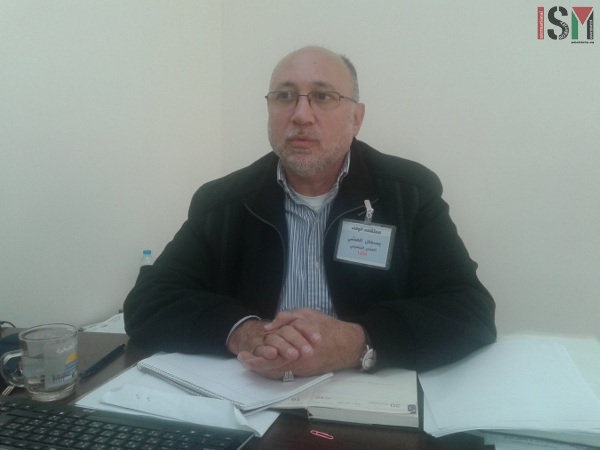
This is the moving testimony of Dr. Basman Alashi, its director:
Dr. Basman Alashi
How is it possible to reach the point of bombing a hospital full of patients and medical staff?
“The UN told me that, according to a report from the Israeli occupation forces, the bombing of the hospital was due to the fact that there were weapons within its facilities … I can assure you that this report is completely false; the hospital opened its doors to the international press and to all the foreigners who freely inspected our facilities without finding any weapons at all. Despite all the overwhelming evidence, our hospital was bombed in the middle of the night, with its patients, medical staff, and some international witnesses, still inside the buildings.”
What were the consequences of the bombing by the Zionist occupation forces?
“Whilst under Israeli fire, we evacuated the remaining 17 paralyzed patients that still were inside the hospital. We couldn’t take any medication or equipment; we evacuated them just with sheets. That’s why during a cease-fire we asked the Red Cross to take us to rescue some medicines that were vital for our patients. However the Red Cross refused and we had to go by ourselves. We were only able to stay 45 minutes at the ruins of what was the Al Wafaa Hospital. The bombings continued, and we could only recover a very small amount of medicine, as bombs had destroyed most of it.
Four members of our staff were injured during the bombing. Luckily these weapons of war injured none of the patients. However they did suffer a lot during the emergency evacuation. Four of the paralyzed patients needed oxygen and many of them breathe through tubes, that’s why it was so dangerous to move them from one hospital to another; under conditions of intense aggression, under the attack of lethal weapons used against a defenceless civil population.
We could have lost some of them. It was very hard because we had to evacuate them in regular vehicles, three or four in every vehicle. Luckily we were able to move them all without any loss, due to the heroic efforts of our nurses and hospital staff. Without them all would be dead.
The patients suffered a lot during the Israeli attack on the hospital, some of them still hear the explosions of the bombs and are afraid of the start of another bombing. One of our patients, just 19 years old, refuses to enter to another hospital “the Al Wafa Hospital was bombed, my house was bombed, this hospital will also be bombed” he explained to me, terrified.
We are here to survive, to improve the lives of our children, of our patients. I can’t stand to see a small girl of barely 6 years old, to whom I can’t give the medicines she needs to survive and who can not leave Gaza to receive them. The only thing we want is for them to live with the same freedom as kids from any other place in the world.”
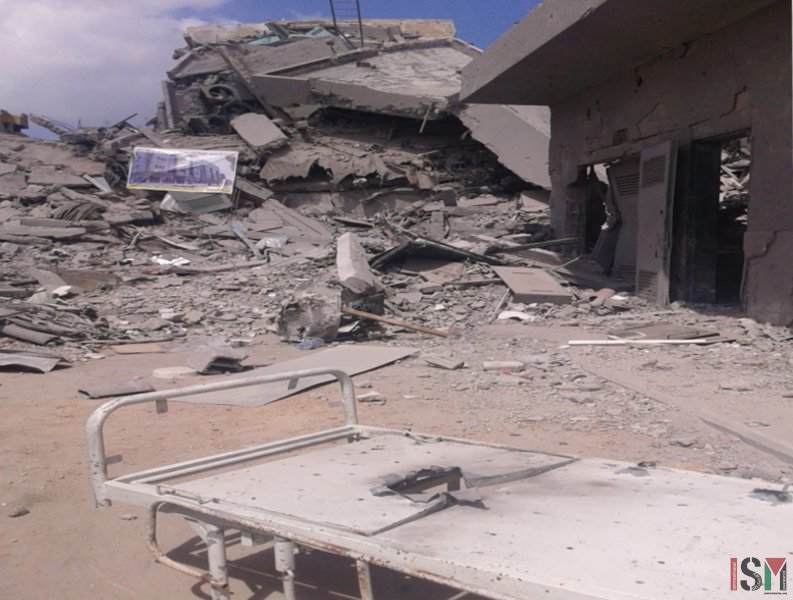
The Israeli occupation forces said that they bombed the hospital because there were weapons inside, this statement was firmly denied by many witnesses. In your opinion, what was the real reason for the attack that left a hospital as big and important as Al Wafaa reduced to rubble?
“The hospital was less than a kilometre from the fence that separates Gaza from the occupied territories. Our facilities had three big buildings, so it was just a military decision, given that those constructions blocked their way for a deeper land incursion. There wasn’t activity from the resistance inside or near the hospital installations.
I challenged the Israeli occupation forces to provide any proof of their reasons to bomb the hospital. They showed me a classified picture where, according to them, there was a rocket launcher from the resistance very near the hospital. However, the picture wasn’t from the hospital, it was from a place located almost five kilometres away. That proves that all the reasons provided by Israel were false. They just fabricated this story to justify the planned destruction of a hospital.
The Israeli occupation forces demanded we evacuate the hospital under fire and, as the facilities were under their control, it was Israel’s duty to protect the buildings. It was their obligation to preserve a hospital with 30 years history and an investment of more than 15 million dollars in equipment. Despite all this, far from protecting it’s medical facilities, they bombed them and destroyed it to the ground.”
The occupation forces point out that the attacks aren’t against the Palestinian people but against Hamas and the resistance. Do you have anything to say against the government of Gaza or the resistance?
“Against the resistance?” – asks the doctor with surprise – “We are the victims!” he clarifies. “In Gaza we have already had 8 years of suffering a terrible blockade by Israel. Our resistance is very basic. Israel has the lead, they have F16 planes, they have the tanks, war ships… they surround us! They deny us the right to defend our children, our women, our land, our homes, our own lives. It’s ridiculous. You corner me, you kill me, and you still ask me not to defend myself. Human beings in this world have the right to defend themselves. We, as Palestinians, have the right to defend our land and our families by all means available. The resistance is a way of defending our lives, it is our right.
Israel has the most powerful and destructive weapons; Israel is the one that the world should control.
Israel has committed genocide in Gaza while the world was looking. It assassinated children playing on the beach. Israel has killed children and women while they were sleeping in their homes and has bombed residential buildings without reason. Thousands of families have been left destroyed or without a home and all this took place before the eyes of the world. That’s why I blame Israel but also the international community.”
What is the situation now regarding the reconstruction of the hospital?
“There are many organizations and countries who want to help us. However, due to the Israeli and Egyptian blockade, they find themselves unable to provide the materials necessary for the reconstruction, or to send to the Gaza Strip the funds necessary for funding this reconstruction. That’s why we started to raise funds through local activities. Even so the amount collected doesn’t cover the 0,01% of the amount needed for the reconstruction of the hospital.
A lot of people all around the world have said to me that they are sorry about what happened to the hospital, and that’s good but we need much more than that to be able to attend our patients and move forward. The blockade is affecting our patients terribly, and it’s impossible for us to provide the medical treatment that they urgently need. They don’t need charity, blankets, or clothes… they need to have the stability to be self-sufficient.
The blockade seriously affects the hospital, as we find ourselves unable to go back to a full medical service like we had before and we are unable to support the rehabilitation and healthy recovery of our patients. Of the 11.000 injured from the last Israeli aggression against Gaza, more than the 50% need rehabilitation. If in one or two years the hospital is not working as it was in the past, there will be an important segment of this population that will be left unable to manage by itself and to contribute to our society, affecting it at all the levels.
What we need from the world more than anything else is an end to the blockade, to allow the entrance of materials for the reconstructions; to allow us to rebuild the homes of our families that were destroyed by Israel. This way there will be peace. But if the blockade continues, peace will be further away every day. We are human; we want a normal life as in every other place in the world. For our kids to be able to grow in a normal house, not in a shelter or a tent, suffering from the cold, without a single blanket to cover them”.
How do you see the current situation and the future of Gaza?
“The people of Gaza are resilient. They live in the most difficult conditions but still smile. The kids keep playing and adapt themselves to all the conditions, but the rest of the world must know that this situation is not normal and for this to end the only solution is to lift the blockade. The blockade must end. It’s not enough to give the people a tent, or some food or a blanket. People need a house, a job, and the possibility of giving their children a good education and to travel abroad if they wish to.
To have the possibility of going to a hospital abroad if their condition requires it. Give us the freedom that the rest of the world enjoys, because we are not different from any other population on the planet. We just want to live in peace if we are given the opportunity and doing it in freedom. But, if that right is denied to us, we will fight until we conquer it… Inshallah!”.
Life in jail for using, digging illegal border tunnels: Egypt
Press TV – April 12, 2015
Egyptian President Abdel-Fattah el-Sisi has issued a decree rendering the digging or using of illegal border tunnels punishable by life term.
“Anyone who digs or prepares or uses a road, a passage, or an underground tunnel in the country’s border areas with the purpose of connecting with a foreign entity or state, its citizens or residents… will face life in prison,” said the presidential decree published in the official gazette on Sunday.
According to the decree, those who are aware of such tunnels and refrain from informing authorities also face life in prison, which in Egypt amounts to 25 years behind bars.
The Egyptian government claims that it has destroyed vast numbers of such routes and has recently intensified efforts to demolish such underground passages which connect the restive Sinai Peninsula to the Palestinian Gaza Strip.
Palestinians use the underground tunnels to transfer essential supplies, including food and fuel into Gaza, which has been blockaded by Israel since 2007, a situation which has caused a decline in the standard of living, unprecedented levels of unemployment, and unrelenting poverty.
Israel not only defies international calls to lift the brutal siege, but also refuses to allow medication or construction materials into coastal enclave.
Israel refuses to probe bombing of civilians in Gaza
MEMO | April 10, 2015
Chief Military Advocate General Danny Efroni said he refuses to probe the bombing of civilians in the Gaza Strip during last summer’s war, but will probe potential acts of looting and robbery committed by Israeli soldiers.
Efroni said: “You will never hear me say, ‘The IDF is the most moral army in the world’.”
Nearly 2,200 Palestinians were killed during the air, naval and ground strikes on Gaza, the overwhelming majority of whom were civilians. A quarter of the victims were children.
In an interview with Haaretz newspaper, published yesterday, Efroni said: “We will not put soldiers on trial only in order to satisfy the media, which is disturbed by the large number of civilians killed in the war. I am not investigating in order to satisfy anyone. I will not file indictments in order to arrange the statistics of B’Tselem,” which criticised the small number of indictments in the past.
An indication of Efroni and the army’s general approach is the fact that despite the passing of over eight months since the end of the war, no decision has been made regarding whether or not a military probe into the incident in Rafah that has become known as “Black Friday” on 1 August, when the IDF implemented the Hannibal Directive after the abduction of Second Lt. Hadar Goldin.
This criminal and brutal operation involved the launching of very heavy artillery fire and intensive air, ground and naval strikes, resulting in the death of dozens of Palestinian civilians. Some estimates indicate that 150 Palestinians were killed in the attack, the vast majority of whom were civilians. The Israeli army has admitted that it did not warn the civilians in the Rafah area to leave their homes before they launched the intense strike.
Despite this, Efroni said that a Military Police probe is not an insurance policy for the IDF protecting them from being prosecuted at The Hague. “If the probe is a whitewash and not a true investigation, nothing will stop the ICC,” he added.
Israeli human rights organisations B’Tselem and Yesh Din claimed that the investigation system in the IDF is “a failure” and that Israel “is not interested and not capable of investigating violations of Palestinians’ human rights by the security forces.”
B’Tselem also claimed that the IDF investigations do not arrive at the truth, noting that of the 52 Military Police probes opened after Operation Cast Lead, carried out in late 2008 and early 2009, only three resulted in the filing of indictments – and the harshest punishment was for a soldier who stole a credit card.
Gaza returns to 8-hour electricity schedule
Ma’an – 06/04/2015
GAZA CITY – The Gaza Strip electricity distribution company said Sunday that the Gaza Strip would return to the 8-hour program for electricity, in which power is supplied and cut off in 8-hour intervals.
Jamal al-Dardasawi, a spokesman for the company, told Ma’an that it has started to receive the first batches of electricity generated by the local generation station which returned to work Sunday evening.
Al-Dardasawi said the first 24 hours of the new schedule would be confusing, but the schedule would be balanced in all areas with a day.
The return to the program comes after the government’s decision to exempt the station of tax on fuel for three months.
The plant, Gaza’s sole power station, was to be supplied with fuel on Sunday after more than a month-long closure when the Gazan energy authority ran out of funding.
Nathmi Muhanna, PA director of border crossings in the Gaza Strip, said that 10 trucks carrying 400,000 liters of fuel would be passing though the Kerem Shalom commercial crossing on Sunday, and that a regular supply of fuel would be resumed during the week.
On Mar. 2, the Hamas-run energy authority closed the plant after they were unable to afford the taxes demanded by the PA for importing fuel into besieged Gaza.
In December last year, Qatar stepped in and donated $10 million to the PA to cover the tax, effectively exempting Hamas from paying it, but by March that money dried up.
The plant requires 550,000 liters of fuel per day to produce at capacity, the energy authority says.
Even with the plant running, Gaza has only been able to supply about 12 hours of electricity to residents each day, and that it was believed that would fall to just 6 hours after the plant’s shutdown.
Gaza’s energy authority has been plagued by supply problems due to the Israeli blockade, in place since 2007 and upheld by Egypt, as well as devastation caused by war.
Last summer the plant was targeted during the 50-day Israeli offensive on Gaza, completely knocking it out of commission. The Gaza power authority said at the time that the damages from the attack could take up to a year to fix completely.
Both Israel and Egypt also feed electricity into Gaza, but the extent of this supply is severely limited as part of the blockade.
Many individual homes have their own generators, and households can purchase, expensively, fuel that comes into Gaza for private consumption.
Last summer’s Israeli aggression is sending Gaza back to the Middle Ages
Zionist colonisers destroy the tools for self-sufficiency of Palestinians in Gaza
By Miguel Hernández | International Solidarity Movement | March 31, 2015
Gaza, Occupied Palestine – Months after the last massive Israeli aggression against the Gaza Strip, thanks to the social and independent media, everyone has read news and seen pictures of the attacks from the Zionist regime against residential buildings, United Nations shelter-schools, hospitals, ambulances, mosques, churches and thousands of family homes.
However, little has been said about the almost complete destruction of Gaza’s industry and economy. As the Israeli Minister of Interior Eli Yishai said, the objective of the last operation was to “send Gaza back to the Middle Ages, destroying all of its infrastructure.” One of the more terrible blows committed towards this end has been the total destruction of the Beit Hanoun industrial area.
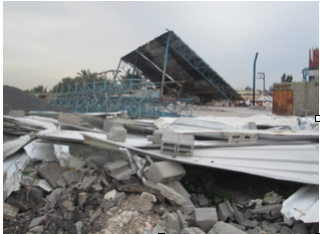 There were around 50 factories in Beit Hanoun, from which only three have been able to resume work seven months after the end of the assault.
 The factories in this industrial area provided work for 25% to 30% of Gaza’s population. Among the destroyed factories are those for paper, construction materials, clothing, medical equipment, plastic products, food and livestock products.
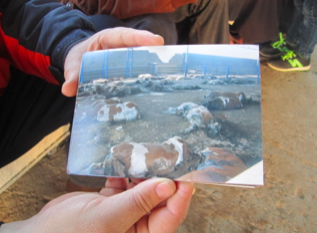 The agricultural industry has also been wounded by Israel’s summer attacks on Gaza. The owner of the Afanah Company showed us the pictures of his 800 cows killed by Israeli attacks during the last war on Gaza. Each cow was going to feed 7 families during the Eid holiday. Besides losing all his cows, Israel also destroyed the four fridges of the company, which contained 400 tons of meat.
Abu Fakhri Abu Ghais, from Beit Hanoun, explained how during the last massacre Israel killed his 17 sheep, and all his sons’ sheep, they destroyed all his farming equipment, worth over 15,000 US dollars. Israeli forces also destroyed the pumps for extracting the groundwater and the 20 tons of reserve of wheat seeds that Abu Fakhri had stored for the current year. The occupation also demolished the cabling that brought electricity to his village, Abu Safiya. He and his family now live in a tent without water or electricity, as his home was also destroyed.
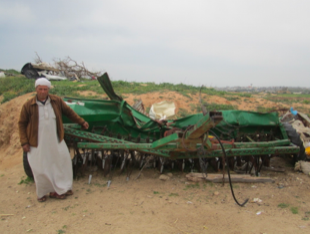 He and his family now live in a tent without water or electricity, as his home was also destroyed. Given the blockade imposed by Israel on the Gaza Strip, the struggling government of Hamas informed him that they don’t know when they’ll be able to restore the power supply, as they do not have available wire that is long enough.
In a Bedouin village located at the North of Beit Lahia, Hassan Sharadkha invited the author and his companions for a cup of tea in the wood cabin that he has built next to the rubble of his home. He showed us the pictures of everything he lost during the last summer at the hands of the Zionist occupation forces: 32 dunums of fruit and olive trees, 27 sheep and their stable, 2 cows, a 200 chicken farm, a horse, the water pump and the car he had just bought.
His older son, an electric engineer, was made unemployed because the solar panel company he worked for has also been bombed.
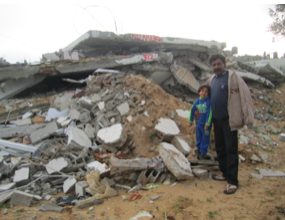 Ninety per cent of the Palestinian farmers in Gaza live in similar or worse circumstances.
 These attacks – against factories, farms, farming equipment and homes – were not by chance or accidental. These attacks demonstrate once again that the target of the genocidal Israeli colonialism is the Palestinian people itself, and that the war that Israel has been waging the last 66 years, under cover of Europe and the US, is against a nation, Palestine, that they seek to wipe off the map.
Israeli explosive artillery fired on Gaza up more than 500% in 6 years – UK study
RT | March 31, 2015
Civilians living under Israeli occupation in the besieged Gaza Strip face a greater risk to their lives in the wake of a recent shift in Israel’s “military rules of engagement,” a new study warns.
In a report released on Tuesday, British NGO Action on Armed Violence (AOAV) said theIsrael Defense Force’s (IDF) use of artillery on Palestinians is characterized by a“wide gap between public rhetoric and the reality on the ground.”
The think tank warned Gazan civilians face a greater risk of death from Israeli “artillery shelling” than they did prior to 2005.
As part of its research, AOAV examined regulations dictating where the IDF have deployed explosive weapons since 2005.
While Israel withdrew its ground troops from Gaza in 2005, the IDF’s air, land and sea blockade of the coastal strip remains steadfast.
AOAV’s research, ‘Under Fire’, examined suggestions made by Israeli officials that the IDF have greatly improved the protection of Palestinian civilians from the effects of its explosive artillery.
Israeli military experts often describe such artillery as ‘statistical weapons,’ according to AOAV. The think tank argues this terminology reflects the “inherent accuracy” of explosive weapons, which fire repeated rounds of “heavy, unguided shells.”
Because these explosive weapons lack accuracy, they require particularly robust rules to protect civilians from unintentional ‘collateral damage,’ AOAV says.
The think tank’s report reveals that rather than decreasing the risk of civilian deaths from Israeli explosive weapons, the IDF’s rules regulating such practices have been relaxed since its ground troops withdrew from Gaza in 2005.
As a result, Gazan civilians face a greater risk of dying from Israeli artillery shelling than they did nine years ago, AOAV said.
Director of policy at AOAV, Iain Overton, stressed unguided artillery shells are a “relic of a bygone day.”
He said there is no reason to prevent the IDF from scrapping its use of such dangerous and destructive weaponry in civilian populated areas.
The think tank’s research found 2014 was characterized by the heaviest use of “high-explosive artillery shells” in eight years.
Despite Israel’s investment in alternatives to the artillery it traditionally used, a minimum of 34,000 “unguided shells” were fired into Gaza last year, AOAV said.
This marks an increase on the number of unguided artillery shells launched in any IDF military campaign since the Lebanon War of 2006, it added.
The think tank’s report revealed the IDF launched almost five and a half times as many “high explosive artillery shells” during its military assault on Gaza in 2014 as it did during its military offensive against Gaza in 2008/09.
It added the IDF has dramatically reduced the distance that regulates how close artillery shells can land to residential homes in recent years. While this distance stood at 300 meters in 2005, the IDF shortened this limit to 100 meters in 2006.
AOAV said this policy shift puts civilians at greater risk because the estimated “casualty-producing radius of a 155mm artillery shell is close to 300 meters.”
The think tank’s report concluded the only policy to have yielded a clear improvement in the rate of civilian casualties in Gaza was a temporary suspension on artillery shelling implemented in December 2006. After 2008, however, this measure was scrapped.
“In recent years the IDF has shifted away from using other devastating weapons like multiple rocket launchers or globally-banned cluster bombs,” Robert Perkins, Senior Researcher at AOAV, said.
“It doesn’t seem like this shift has extended to unguided heavy artillery, but these wide-area effect weapons have no place in an urban populated area, where their effects cannot be controlled.”
A UN report published last week found more Palestinian civilians died as a result of the conflict with Israel in 2014 than in any year since 1967.
The report, published by the United Nations Office for the Coordination of Humanitarian Affairs (OCHA), claimed Israel’s Operation Protective Edge resulted in the death of over 2,220 Palestinians, 1,492 of whom were civilians.
In what the OCHA described as the “worst escalation of hostilities” since the Six-Day War in 1967, 71 Israelis were also killed, 66 of whom were soldiers.
Read more: Palestinian death toll in 2014 highest since 1967 – UN
Youth shot by Israel for waving flag and flashing V sign
Palestine Information Center – March 28, 2015
 Anas Qdeh, 21, had no idea that waving the Palestinian flag and flashing the V sign is a crime for which he will be shot by the Israeli Occupation forces (IOF) which fired explosive bullets directly at his legs while he was with scores of citizens about 10 meters away from the security fence separating Khan Younis from 1948 occupied lands.
We will never give up on our land
Qdeh told the PIC reporter: “On Friday March 20, I headed to our land east of al-Sanati in Greater Abasan where many youths gather every Friday to stress that this is our land and that we will never give up on it even if Israel isolated it.
The IOF imposed a buffer zone adjacent to the security fence along the borderline with the Gaza Strip stretching for distances ranging from 300-700 meters deep into the Strip and shoots whoever enters it.
Qdeh clarified the circumstances of his injury saying: “One of my friends wanted to take a picture of me waving the Palestinian flag with the V sign while we were in our land which the IOF is preventing us from reaching in Greater Abasan east of Khan Younis. However, the IOF soldiers started shooting at us and I was hit with an explosive bullet.”
Explosive bullet
The bullet hit one of the youth’s legs, and the shrapnel scattered to hit his other leg and his cousin Fawzi Qdeh who was nearby. Anas lied on the ground profusely bleeding before he was rushed to hospital to be urgently treated.
His cousin Fawzi Qdeh, 23, said with a smile drawn on his face that a piece of shrapnel is still lodged in his left shoulder and doctors told him that it is difficult to extract it at this stage.
He clarified that he was rearing his goats in al-Santai lush fields, and when he saw the youths gathering and chanting he joined them to see what was going on and to take photos.
Every Friday, scores of Palestinians spontaneously gather near the security fence waving flags and chanting anti-Israel slogans.
Hamas rejects Amnesty report on war crimes
Ma’an – 27/03/2015
GAZA CITY – The Hamas movement on Friday rejected a report by human rights group Amnesty International accusing the group of war crimes during last summer’s war with Israel.
While the report claims that Hamas killed both Israeli and Palestinian civilians using indiscriminate projectiles, Hamas criticized the findings as being unbalanced, adopting “the Israeli version of the story.”
In a statement, the group said that it is the right of Palestinians to defend themselves against both the ongoing Israeli occupation and Israeli military offenses.
“War crimes have clear specifications, according to the Rome Statute, that do not in any way apply to the Palestinian resistance, which was, is, and will defend its people.”
The report released by Amnesty International on Thursday said that Palestinian rocket fire during the 2014 summer war had killed more civilians inside the Gaza Strip than inside Israel.
The report said rocket attacks had killed six civilians inside Israel, including a child, but that other rockets aimed at Israel had fallen short inside Gaza, killing at least 13 civilians, 11 of them children.
It referred to one particular incident on July 28 in which 13 people were killed in deadly blast inside the beach-side Shati refugee camp in Gaza City.
Hamas took issue with Amnesty’s approach to the report, arguing that the rights group relied solely on Israeli information to compile the report, therefore missing a balanced review as Israel did not allow international investigation committees into Gaza.
Last summer’s war between Palestinian militant groups and Israel left more than 2,100 Palestinians dead, mostly civilians, according to Palestinian and UN officials. On the Israeli side, 66 soldiers and six civilians were killed. Over 100,000 Gazans lost their homes, and large swathes of the coastal territory were left in ruins.
Hamas said that Amnesty International’s report “purposely turned facts around to justify Israel’s crimes against humanity,” and called upon rights institutions to carry out impartial investigations into Israeli forces’ war crimes.
Senior UN officials slam Israeli human rights abuses
MEMO | March 24, 2015
Israel’s human rights abuses in the Occupied Palestinian Territory came under renewed attack by senior UN officials on Monday.
Addressing the Human Rights Council in Geneva, UN Special Rapporteur on the Situation of Human Rights in the Palestinian Territories Occupied since 1967 Makarim Wibisono heavily criticised Israel’s assault on Gaza last year.
“The ferocity of destruction and high proportion of civilian lives lost in Gaza cast serious doubts over Israel’s adherence to international humanitarian law principles of proportionality, distinction and precautions in attack.”
Wibisono described the “lack of respect for human rights” as having “permeated almost every aspect of the daily lives of Palestinians in the West Bank and Gaza”, touching upon Israel’s “excessive use of force”, as well as settlement construction, threats of “forcible transfer”, and more.
The UN official also noted that “treatment of Palestinians, including children in Israeli detention, was an issue of grave concern” and that Israel “had done too little to follow up on the report [two years ago] by the United Nations Children’s Fund” on the ill-treatment of children in military detention.
The Council was also presented with a report of the Secretary-General on Israeli settlements in the OPT and Syrian Golan, which he said continued to expand.
The Secretary-General described how “Israeli settlements and acts of violence committed by Israeli settlers against Palestinians continue to underpin a broad spectrum of human rights violations against Palestinians.”
The report urged Israel to “cease all settlement activity in the West Bank and East Jerusalem, as well as in the occupied Syrian Golan, and implement relevant United Nations resolutions.”
A second Secretary-General report on the broader human rights situation in the OPT, covering the period from May 2013 to October 2014, further noted that settlements “undermine Palestinian territorial integrity, contrary to international law, and Palestinians’ right to self-determination.”
Obstacles to peace and to Palestinians’ enjoyment of their human rights, including their right to self-determination, must be removed. That means the ending and reversal of all settlement activity in the West Bank, including East Jerusalem, the full lifting of the blockade on Gaza and the ending of the occupation of Palestinian land.
Mary McGowan Davis, Chairperson of the Commission of Inquiry on the 2014 Gaza Conflict, gave the Council an oral update on the progression of the Commission. Davis said that Israel had not responded to a request for access, and, that the written report would be presented in June.
Featured Video
Russia Helping Build a New Middle East /Trita Parsi
or go to
Aletho News Archives – Video-Images
From the Archives
Sam Husseini: The entire US establishment helped lie their way into the Iraq war
By Slava Zilber | American Herald Tribune | October 14, 2019
Sam Husseini is a senior analyst with the Institute for Public Accuracy, independent journalist and contributor to The Nation and FAIR.
Slava Zilber: Sam, three years ago, you appeared on Talk Nation Radio with David Swanson and spoke about the case of the GCHQ whistleblower Katharine Gun. You pointed out that the people involved in the spying on the UN and the people authorizing the Iraq War were not held accountable:
“Virtually everybody who went along with the war, whether it is Kerry or Clinton, of course, the Bush administration themselves has falsified their own records in terms of why, what they did, when they did, why they did it, to the extent that they’ve been scrutinised at all.”
You also address it in a recent article. And recently, Joe Biden has been lying about his position on the Iraq War. How can such an important issue escape meaningful scrutiny? … continue
Blog Roll
 Aletho News
- Russia Helping Build a New Middle East /Trita Parsi
- Barghouti: ‘Netanyahu has fallen,’ era of Smotrich, Ben-Gvir over
- China slams US policy on Iran as Russia rejects legality of nuclear meeting at UN
- The Mecca Pact Courts Iran: Containment Comes Full Circle
- Oman FM: Persian Gulf states, Iran, Iraq should form security pact excluding US
- Trump peddles fresh falsehoods, claims Iran ‘started the war’ as US aggression drags on
- Ukraine quagmire? Yes, but it’s for NATO, not Russia
- US intelligence hypes Chinese, Russian space threats while accelerating its own military buildup in orbit
- Iran FM Araghchi: “Hormuz Will No Longer Be the Same”
- EU facing trillion-euro debt hole while seeking more cash for Kiev
- If Americans Knew
- An error has occurred; the feed is probably down. Try again later.
- No Tricks Zone
- Sudden Stratospheric Warming, Powerful El Niño Combination May Lead To Extreme Europe Cold, Energy Crisis!
- Two New Studies Find Thwaites Glacier Melt Cannot Be Driven By Human Activity Or A Warming Ocean
- E-Cars Reduce CO2 Emissions By Only 41% Compared To Internal Combustion Engine Vehicles
- Predictions Made By Renowned Climate Professor Over Past Decades Have Been Proven To Be Poor
- New Study Suggests Large Regions Of The Pacific Ocean Have Been Cooling For The Last 80 Years
- Germany’s Green Energy Debacle: High Energy Costs Force Kahla Porzellan to Close After 182 Years!
- New Study: 50 Years Of The Most Aggressive ‘Net Zero’ Policies Can Only Affect The Global Climate By 0.03°C
- US September “Heat” Was No Record…Many Records Set Decades Ago
- Latest European Green Energy Debacle; Portugal’s Largest Flagship Solar Park Insolvent!
- Green Energy Debacle: German Expert Professor Fritz Vahrenholt Warns Of Severe Economic And Social Consequences

