Qatar’s support for Palestinians seems to be one of the key causes of the Saudi-led blockade on Doha, amid increasing convergence between Riyadh and Abu Dhabi, and the administration of US President Donald Trump – the president most supportive of Israel in recent decades.
On Tuesday, Adel al-Jubeir, the Saudi foreign minister, made it clear that a key demand of his government in return for restoring ties with Doha was for Qatar to end its “support” for Palestinian group Hamas, which champions armed resistance against Israel and was the winner of the last general election held in the occupied Palestinian territories.
Jubeir, for the first time in Saudi history, suggested Hamas was an “extremist” group. During Trump’s visit to Riyadh in late May, the US president proclaimed the group a terrorist outfit akin to the Islamic State group and al-Qaeda, and Riyadh did not object.
Saudi Arabia previously provided support to Hamas and welcomed its leaders as recently as 2015. However, on the back of the Iranian nuclear deal, both the kingdom and its ally, the UAE, have been making increasing offers of normalisation with Israel – with whom they share Iran as a common foe.
Since the events of the Arab Spring, both Saudi Arabia and the UAE have also become hostile to the Muslim Brotherhood, to which Hamas is affiliated, seeing it as an imminent threat to their regimes.
Qatar, by contrast, has maintained good relations with most Palestinian factions, including Hamas and Fatah, and invested tens of millions of dollars in the reconstruction of besieged Gaza, decimated by years of Israeli war.
Qatar, although closely allied to the United States, has maintained an independent policy on Palestine, which has often caused it problems with pro-Israel officials in the West.
Now, Qatar’s neighbours seem to have joined the fray, inching closer to fully endorsing Israel’s narrative on groups such as Hamas, in the name of fighting extremism and terrorism, without defining either.
It is worth noting that the UAE hosts and supports Hamas’ arch-rival, exiled Fatah leader Mohammed Dahlan, whom it hopes to install as the next Palestinian president.
“Qatar is being punished for its role and influence in the Palestinian arena, with both President Mahmoud Abbas and Hamas,” Ibrahim al-Madhoun, political analyst, told The New Arab.
“Qatar’s role is one of the causes of the Gulf crisis, as its balanced position and influence has become a source of annoyance for its rivals,” he added.
Taysir Muhaisen, political commentator, agrees. “All the parties, in light of the emergence of a new US administration, have decided to pressure Qatar, which has had a different approach to many issues including the Palestinian issue, dealing with Hamas and all Palestinian factions… and helping Gaza weather the blockade,” he said.
Disaster for Gaza
Qatar is one of the few foreign backers of Hamas, and faces massive pressure from its Gulf neighbours to cut ties with the Islamic militant group. If it does, the result could be disastrous for Hamas-ruled Gaza, according to an AP analysis.
Qatar has invested hundreds of millions of dollars in roads, housing and a major hospital in the tiny territory. Its infrastructure projects are one of the few job-creators in a devastated economy.
Gaza already suffers from an Israeli-Egyptian blockade, widespread destruction from a string of Israel-Hamas wars, economic misery and chronic electricity shortages. For Hamas, Qatar’s money pumping into the economy is a vital lifeline bolstering its rule.
The mere prospect of losing Qatari support prompted Hamas on Wednesday to issue rare criticism of Saudi Arabia, which has been leading the campaign against its tiny Gulf neighbour.
Hamas official Mushir al-Masri said the Saudi call for Qatar to cut ties with the Palestinian group was “regrettable”, and contradicts traditional Arab support for the Palestinian cause. He accused Saudi Arabia of siding with “American and Zionist calls to put Hamas on the terrorism list”.
Qatar has denied the allegations made against it by Riyadh. But its small size and reliance on food imports from Saudi Arabia could make it susceptible to pressure.
This could spell trouble for Hamas. The group – which calls for Israel’s destruction, even if it has offered long-term interim cease-fires – is considered a terrorist organisation by Israel and its Western allies. Israel and Hamas have fought three cross-border wars that caused large-scale damage in Gaza.
Qatar doesn’t support Hamas directly, but its large-scale projects have significantly eased the burden on Hamas authorities and given it some credit for bringing this money to Gaza.
In 2012, Qatar’s then-emir, Hamad bin Khalifa al-Thani, visited Gaza, the first and only head of state to do so since Hamas routed Palestinian President Mahmoud Abbas’ Fatah militants in Gaza during internecine fighting a year after Hamas won elections in 2006. The emir announced a grant of $407 million for humanitarian projects.
The grant is being used to build a housing complex of 3,000 units. Two phases of the project have been completed and families moved into their new homes, dubbed the Hamad Residential City, in the southern Gaza town of Khan Younis.
Last month, Palestinian contractors and Qatari envoys signed deals to start the third and final phase of Hamad City. Now, those deals could be in question.
Using that grant, Qatar also built a specialist prosthetic centre, the first of its kind in Gaza. Qatar paved roads, repaired or rebuilt mosques and oversaw dozens of other infrastructure projects.
Following a 50-day war between Israel and Hamas in 2014, Qatar was the largest single donor to the reconstruction of Gaza, pledging $1 billion at a Cairo-hosted international conference.
Qatar also helped pay for fuel and electricity deliveries from neighbouring Israel, which, despite its enmity to Hamas, supplies energy to Gaza for what it says are humanitarian reasons.
On Wednesday, bulldozers with Qatari flags were seen leveling land overlooking Gaza City’s coastal road. The spot is supposed to house the headquarters of Qatar’s Gaza reconstruction mission and a residence for an envoy.
In Hamad City, new shops and stores are opening, including a pharmacy named Qatar, barber shops and a video gaming cafe as more families move in. The complex is the largest in Gaza.
Wael al-Naqla, a contractor, has won a bid to build several buildings in the final phase. Thanks to Qatari money, he is one of the few business owners who can hire workers in today’s Gaza.
“Without these projects, we would have been idled a long time ago,” he said, voicing fears that the funding could soon dry up. “We are afraid I won’t be able to keep paying for my 20 workers and they will not be able to eat.”
The construction here is one of the few bright spots in Gaza.
The situation here is grim. The territory suffers from rolling power cuts, with just four hours of electricity at a time, followed by 14-18 hours of blackout. Tap water is undrinkable, youth unemployment is estimated at 60 percent. Thousands wait for a rare chance to exit the blockaded territory.
Mkhaimar Abusada, an independent Gaza political analyst, said the pressure on Qatar could increase Hamas’ political and financial isolation.
This week, a high-level Hamas delegation was summoned to neighbouring Egypt, which has had cooling relations with Hamas. “If these talks don’t lead to new understandings getting Hamas out of its difficult political situation, I think there will be more crises,” said Abusada.
Fifty years ago this month, Israel launched a war against its neighbours and took control of the parts of Palestine which it had failed to capture during its 1948 “War of Independence”.
What: The Palestinian Naksa (“Setback”)
When: 5 June 1967
Where: Palestine
What Happened?
On 5 June 1967, Israel launched a pre-emptive strike against Egypt, Jordan, Iraq and Syria. After knocking out the air defences of these countries, it occupied East Jerusalem, the West Bank and the Gaza Strip, as well as the Syrian Golan Heights and Egypt’s Sinai Peninsula. Thus, it had taken control of the final 22 per cent of historic Palestine that it wasn’t able to occupy in 1948.
Nearly 400,000 Palestinians were added to the hundreds of thousands of refugees displaced in 1948 and their homes and villages were razed to the ground by the Israelis. Around half were being displaced for the second time in less than 20 years. Israel’s ethnic cleansing of Palestine was ongoing (as it is to this day).
The number of Palestinian refugees in the camps operated by the UN Relief and Works Agency (UNRWA) in the West Bank, Gaza Strip, Jordan, Syria and Lebanon grew.
The Naksa commemorates this tragic setback in the Palestinian struggle for freedom and self-determination.
What Happened Next?
The outcome of the war launched by Israel was, for many of its citizens and supporters, the fulfilment of God’s promise. Adding 44 per cent of the territory allocated by the 1947 UN Partition Plan for a Palestinian state, to the 56 per cent set aside for a Jewish state, marked a new beginning for both Israel and stateless Palestinians.
Within 20 years of being recognised as an independent state, Israel began an occupation that would become the longest in modern history, at 50 years and counting. Palestinians in the “occupied Palestinian territories” were subjected to a brutal Israeli military occupation as well as the activities of armed, right-wing Jewish settlers, for whom Israel’s victory was God’s handiwork and a licence to colonise the land which they believed was promised to them and them alone.
Israel’s already repressive military rule over Palestinians living within its undeclared borders was transferred to the West Bank and Gaza. Very soon, a matrix of control and domination, that included checkpoints, permits and home demolitions, was imposed on the lives of millions of Palestinians under Israeli occupation.
For the Palestinians, the combination of the Arab defeat during the “Six-Day War”, the repeated failure of the international community to protect their human rights, and Israel’s total colonisation of Palestine, prompted a serious re-evaluation of their situation. Having witnessed the futility of relying on others to end the indignity from which they had suffered for decades, they began to organise politically in an attempt to reverse the losses of 1948 and end their misery and statelessness.
In the years following the Naksa, Palestinian communities in the refugee camps and diaspora began to organise themselves politically and socially. A number of setbacks against the Palestine Liberation Organisation (PLO) did not deter them. Such civil society activities led to the formation of the Islamic Resistance Movement (Hamas) in the late eighties; the popular uprising now known as the First Intifada; and the PLO under the control of the secular Fatah movement gaining recognition by Israel and its allies as the “sole representative of the Palestinian people”. This phase of the political process ended with the signing of the Oslo Accords in 1994, providing the Palestinians in the West Bank and Gaza Strip with “interim self-governing arrangements”.
The Palestinian Center for Human Rights documents crimes committed in the occupied Palestinian territories in weekly reports. We summarize their reports and stories from other news agencies with the goal of informing Americans of the ongoing violence that Palestinian families face each day under Israel’s occupation of their ancestral lands. The Israeli government receives $3 billion per year in direct military aid from U.S. taxpayers.
May 11, 2017 – May 17, 2017
West Bank
The Israeli military continued its 50-year long military occupation of Palestinian land in the West Bank, under which the 2.8 million Palestinians living there are subjected to a different set of laws and treatment than Jewish settlers (numbering 588,000) are.
An Israeli sharpshooter shot 22-year-old Saba’ Obeid in the heart at demonstration supporting the Palestinian mass hunger strike, killing him. Israeli soldiers shot other demonstrators with rubber-coated steel bullets and teargas canisters and prevented journalists from entering the area.
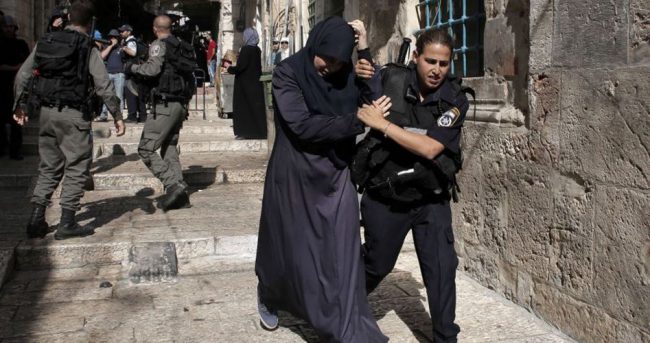
An Israeli police office killed Jordanian man Mohammad al-Kasaji, 57, in Jerusalem’s Old City after the man reportedly stabbed him. Palestinian sources said the officer is known for assaulting worshipers who come to Al-Aqsa Mosque (a Muslim holy site), including women.
Hundreds of Palestinian political prisoners in Israeli jails continued their hunger strike, which reached the 4-week mark. Many are now suffering life-threatening conditions, unable to move or stand, are vomiting blood, and and have had their salts confiscated by Israeli prison authorities. Many have been placed in solitary confinement, are being transferred from prison to prison, and are forced to stand to be counted or face severe fines in spite of their deteriorating health. Israeli officials continue to refuse to negotiate with them.
Israeli forces attacked demonstrations in support of the Palestinian hunger strikers and wounded 40 Palestinians, 13 of them children. Roughly half of the wounded were shot with live bullets or rubber-coated bullets. Israeli forces also damaged three ambulances.
Israeli forces attacked the weekly demonstrations against Israeli’s Separation Wall in Bil’in and Nil’in villages, dispersing the protesters with tear gas and live bullets, and beat some of them.
Israeli forces carried out 62 invasions of Palestinian communities, raiding and searching homes, and arrested 79 civilians, 9 of them children. One of those arrested and jailed was 67-year-old academic and writer Ahmad Qatamesh, who already spent 8 years of his life in Israeli jails without any charges or trial. A teenage girl was also arrested after soldiers invaded her family’s home at 2:00 in the morning.
Israeli authorities announced they planned to demolish four buildings in a Palestinian neighborhood because they were built too close to Israel’s illegal Apartheid Wall.
An Israeli police officer hit a Palestinian child with his vehicle in Jerusalem and fled the scene. In a different incident in the West Bank, a Jewish settler hit a Palestinian man with his vehicle and deserted the scene.
Israeli forces erected several temporary checkpoints, restricting movement for even more Palestinians. (There are 27 permanent checkpoints and hundreds of physical roadblocks placed by Israeli forces. Palestinians are prohibited from using 41 roads totaling 700 kilometers in the West Bank; only Israelis can travel on them.)
Gaza Strip
Israel continued its 10-year illegal land, sea, and air blockade of the Gaza Strip, strictly controlling the movement of all 2 million Palestinians living there.
Israeli navy forces killed Mohammad Bakr, a 23-year-old fisherman and married father of two, off the shores of Gaza on the 69th anniversary of the Palestinian Nakba. The Israeli gunmen chased the boat, opened fire on the four cousins on it, shot Mohammad in the stomach, and ordered his cousins to hand him over before taking him away. He died of his wounds later that day.
Israeli navy forces opened fire at fishing boats off the coast of the Gaza Strip most days. They arrested six Gaza fisherman, including two children, confiscated a boat, and damaged another.
At 1:00 am, Israeli forces raided and searched the home of Hamas leader Essa al-Jabari, 51, interrogated him, pointed weapons at his wife and daughters, and then arrested him and confiscated his car.
Israeli forces continued to prevent most Gazans from entering or exiting the Strip (via the Israeli-controlled Erez crossing), allowing less than 2,000 people to travel.
Israeli forces arrested a Palestinian patient who was on his way to the West Bank with his mother to receive medical care.
Israeli forces opened fire on Palestinian agricultural lands near the border.
Israeli forces continued to prevent most exports from Gaza, allowing only some produce items, fish and aluminum scraps. There is just one Israeli-controlled crossing (Kerem Shalom) for the movement of goods. Israel’s strict limits continue to severely cripple Gaza’s economy. Israeli officials told the U.S. that their goal is to keep Gaza “on the brink of collapse” and “‘functioning at the lowest level possible consistent with avoiding a humanitarian crisis.”
Read the full PCHR report, which also contains daily summaries. The UN Office for the Coordination of Humanitarian Affairs (UN-OCHA) also publishes a “Protection of Civilians” report on the occupied Palestinian territories every two weeks. Their latest report covers May 2 to May 15.
One hundred years of oppression have not diminished or erased the Palestinian hope for freedom. Throughout this year, 2017, they are marking the 100th anniversary of the Balfour Declaration, which started their tragedy. The occasion is about the past, as well as the future. And, it is in this context that the Islamic Resistance Movement Hamas has launched its new General Policies and Principles Document.
When Hamas issued its founding Charter in August 1988, the occupied territories were in the grip of the First Intifada (uprising). Both the content and tone of its message was then largely one for its followers and the “stone-throwing generation” who had risen up against the occupation. Thirty years on, things have changed drastically. The occupation has become more inhumane while transforming itself into a system of apartheid rule. A new political framework is, therefore, needed to give not just hope, but direction to the Palestinian people as well.
Politics aside, Hamas is plainly positioning itself to occupy the moral high-ground left vacant by other national forces. The leadership which brokered the ill-fated Oslo Accords two decades ago still remains in power; albeit now discredited and mistrusted by large sections of Palestinian society. Despite their best efforts, they seem incapable of shaking off the image of a self-serving and corrupt elite.
Rightfully, Palestinians yearn for an all embracing and inclusive leadership; one that honours their sacrifices, respects their will and pursues their legitimate rights. With this in mind Hamas has carefully framed its General Policies Document in a language that resonates with Palestinians of all political and religious persuasions. While affirming a willingness to recognise a Palestinian state within the 1967 borders, Hamas, nonetheless, remains committed to its declared objective of a free Palestine, from Naqurra in the north to Rashrash in the south, and from the Jordan River in the east to the Mediterranean Sea in the west.
No doubt, some may argue that this new document has been long overdue. The truth, however, is that Hamas has over the years shown a capacity to critique its political positions and explore options that were not mentioned in its founding Charter as long as they did not compromise national interests. Hence, while still in prison Sheikh Ahmad Yassin proposed a long-term cessation of hostilities (hudnah) with Israel for the first time in 1994. In 1997 he told the Associated Press that Hamas would accept a ten-year truce if Israel would withdraw its troops and settlers from all of the West Bank and Gaza.
Similarly, Dr Abdel Aziz Rantissi, another founding leader of the movement, told Reuters on 27 January 2004: “We accept a state in the West Bank, including Jerusalem, and the Gaza Strip. We propose a 10-year truce in return for [Israeli] withdrawal and the establishment of a state.” Two years later, in May 2006, these very ideas were adopted in the document that came to be known as the National Conciliation Document of the Palestinian prisoners. It was signed by representatives of the four largest Palestinian factions: Marwan Barghouthi of Fatah, Sheikh Abdel Khaliq Al-Natsche of Hamas, Sheikh Bassam Al-Saadi of Islamic Jihad and Abdel Rahim Malouh of the PFLP.
Many of the points embodied in the Prisoners Document such as the acceptance of a state within the 1967 borders, with Jerusalem as its capital, the right of return and the right to resist are all now asserted in Hamas’ new General Policies Document. Having signed up to the Prisoners Document Hamas has, furthermore, demonstrated a willingness to be part of a national project that secures the rights of all Palestinians and not only its supporters.
Since the Lebanese-based Al-Mayadeen TV station published a leaked draft copy of the new document cynics have wasted no time searching for contradictions and compromises. Apart from the issue of a state within the 1967 borders, they point to the fact that whereas the founding Charter identified the movement as an extension of the Muslim Brotherhood this new General Policies Document makes no such mention. Nor does it deny its ideological links with the Brotherhood. As for any supposed organisational connection and the co-ordination of political strategies within a unified leadership, that was never the case. Indeed, what Hamas does in its new General Policies Document is to identify itself as a national liberation movement.
Hamas of 2017 is a significantly different body from what existed in the late 20th century. Today, for better or worse, it finds itself in a position where it has to administer the Gaza Strip and provide jobs and social services for its two million people. Its regional and international standing has also changed. Hence it has to respond to all the challenges that these entail. Foremost among these is to maintain adherence to its strategic political positions such as the right to resist, non-recognition of Israel and adherence to the liberation of Mandatory Palestine. At the same time, it has to avoid being crippled by ideological dogma.
The new General Policies Document is an attempt to do just this. Its completion shows an honesty to acknowledge and correct errors. For example, in 1988 the founding Charter framed the conflict in these words; “Our struggle against the Jews is very great and very serious.” This is manifestly wrong. The conflict has always been one between the Palestinian people and the Zionist colonisers who conquered Palestine and now occupy it.
Hamas’ founding Charter was written in the last quarter of the 20th century. Politics is never static anywhere; and it certainly is not in Palestine. Conditions change rapidly. The wider region is itself in a state of continuous flux where alliances are formed and broken. By taking this audacious step to write this new General Policies and Principles Document Hamas is laying out its vision for Palestine in the 21st century. One that would guide and enable the Palestinian people to liberate their land and enjoy the security and freedom from oppression and discrimination that they richly deserve. It is a vision and framework to create opportunities that would ultimately lead to the control and development of their natural resources, as well as realise their full human potential.
Is there any justification to deny them these fundamental human rights?
Ahead of the May 7 French presidential runoff, Marine Le Pen chose defeated Debout la France (Arise France) presidential candidate Nicolas Dupont-Aignan as her prime minister if elected.
He’s ideologically right-wing like herself. With him at a Saturday news conference, she said “(w)e will form a government of national unity that brings together people chosen for their competence and their love of France.”
Both support abandoning the euro, what Dupont-Aignan called a “racket,” and restoring the franc as France’s currency, regaining control over its monetary and fiscal policies from Brussels.
Former UK Independence Party leader Nigel Farage called him an “utterly respectable Eurosceptic.” Dupont-Aignan said “I am and remain a free man. I have dared before history to build a government agreement.”
Unlike establishment figures throughout Europe and America, Dupont-Aignan is pro-Palestinian.
In July 2014, during Israeli aggression on Gaza, Dupont-Aignan said the following:
“Gaza: Nicolas Dupont-Aignan deplores the inertia of France in the conflict.
After the bombing, ground fighting and unacceptable collateral damage of the deaths of hundreds of innocent civilians, men, women and children, the Israeli-Palestinian conflict entered last night in a new phase with the invasion of the gang Of Gaza by the Israeli army (with) complicit silence of the UN, the West and France. The disproportion of the forces involved is blatant.
Whatever the responsibilities of the irresponsible leaders of Hamas in the outbreak of this new confrontation, the path chosen by Israel only pushes it into an impasse.
It is not by accumulating the ruins and the dead that Mr. Netanyahu will appease the tensions, passions and hatreds in this region of the world.
In this bloody context, the inertia of France is perfectly scandalous. We expect our government to finally take the initiative for international action to impose Israel’s compliance with UN resolutions, that is, the withdrawal and dismantling of settlements illegally settled in the territories The recognition of the Palestinian state.
It is only under these conditions that we will avoid importing the conflict into our country, and that the new massacre in progress will be stopped.
It is only under these conditions that lasting peace can finally return to the Middle East. Letting aggravate and aggravate an unbearable situation is not only stupid but criminal.”
Fact: On July 8, 2014, Israel launched premeditated aggression on Gaza. Hamas had nothing to do with initiating it – planned by Israel, waged until August 26.
Thousands were killed or wounded. Defenseless civilians were willfully targeted. Entire neighborhoods were destroyed. Entire families were annihilated. Schools, hospitals, mosques and UN shelters were attacked.
So were clinics, ambulances, healthcare workers, journalists and human rights supporters. During the war, Israeli forces rampaged throughout the territories, invading over 3,000 homes, terrorizing families, traumatizing children, making mass arrests, including Palestinian parliamentarians.
Nearly three dozen were lawlessly imprisoned. Israeli aggression went way beyond attacking Hamas.
It was war on Palestine, vicious collective punishment, the highest of high crimes against peace. More Israeli aggression could happen anytime, likely worse than 2014 if launched.
Dupont-Aignan supports Palestinian self-determination. Le Pen said they share a “common project (they’ll) promote together.”
Macron backs continuity, dirty business as usual. Le Pen wants France out of US-dominated NATO and EU membership.
Macron is the choice of the “oligarchy,” she said. She wants French sovereign independence restored – free from control by Washington, Brussels and Berlin.
The alleged chemical attack, reported yesterday, is the latest in a series of atrocities notionally carried out by the Syrian government (“The Regime”, in the partisan parlance of the press). There has not been time, as yet, to fully examine and analyse all the evidence – the claims and counter claims, the photographs and videos – but it would be a massive mistake to view it in a vacuum.
First, the situation on the ground needs to be considered. The Syrian government – with assistance from Iran and the Russian Air Force, have been making steady progress for months. Aleppo has fallen. Palmyra was retaken. The rebels are losing. So cui bono? What good does dropping chemical weapons on children do Assad, at this point? It is both strategically pointless, and a crushing blow to his international image. It would serve no purpose, unless he’s a comic-book style villain intent on being cruel for cruelty’s sake – and they don’t exist outside of cinema or the American press. Conversely, it would make all the sense in the world for cornered zealots and mercs to try to disrupt the upcoming talks (from which they are excluded).
Second, the timing. Much like a previous “chemical attack” (and subsequent BBC Panorama documentary) came on the eve of a commons vote on military intervention in Syria, this attack comes at a key moment. In two days there is a meeting in Brussels on the Syria peace process, and the future of the country. This attack will allow Western leaders – especially the European voices, increasingly separate from the US on this issue – to ride an artificial high-horse into those proceedings. Deals can be scuppered and progress refused in the wake of such “atrocities”.
Third, we have seen this all before. There was the chemical attack in Ghouta, initially pinned on the government (and still unquestioningly attributed to them in the MSM), that was revealed to be carried out by rebels. there was also the aforementioned napalm/chemical attack on a school – thoroughly debunked by Robert Stuart. We have seen the same girl rescued three different times by the White Helmets, and seen people in Egypt arrested for faking footage of bombings. The “last hospital in Aleppo” was knocked down everyday for a month, and the last doctors slaughtered bi-weekly. There is no reason, as yet, to think this is not just more of the same.
Real or not, false flag or not – No one can deny convenience of the timing. Given the conflict the UK/EU find themselves in with the new US administration re: Syria. During the campaign Trump, unlike Clinton, totally refused to countenance the idea of no-fly zones or any kind of American/NATO backed military action against Syria and their Russian/Iranian allies. The last few weeks have seen even a softening of America’s “Assad must go” mantra. Rex Tillerson, speaking in Turkey last week, said:
I think the… longer term status of president Assad will be decided by the Syrian people,”
And the American ambassador to the UN added:
You pick and choose your battles and when we’re looking at this, it’s about changing up priorities and our priority is no longer to sit there and focus on getting Assad out.”
Though she did later clarify these remarks, after being named-and-shamed in the media.
John McCain called Tillerson’s words “one of the more unusual statements I have ever heard”, stating it would be ridiculous to let Syrians decide the fate of Syrian government (probably because they would choose wrong).
The press, of course, have not referenced any of this. They continue to cite the partisan White Helmets and completely discredited “Syrian observatory for Human Rights” as if they are reliable sources. They continue to assert gossip and rumor as if it were fact. They continue to lie, but give themselves just enough room to manoeuvre should their lies be exposed.
The Guardian view on…, one of the Guardian’s anonymous editorials (that definitely don’t come straight from GCHQ, you cynics), is a classic example. The headline reads:
The Guardian view on Syria: Assad knows he acts with impunity
A sharp, hard-edged, statement of absolute certitude… and the only sentence of conviction in the whole piece. The rest is littered with uncertain, selective language. Weasel-words and guesses. I have added the emphasis:
Tuesday’s attack in rebel-held Idlib province has forced a reaction: it is one of the worst suspected chemical attacks in the six-year war
the symptoms suggest the use of a nerve agent, probably sarin
ascertaining the agents used, by whom, is always difficult – particularly given the problems experts will face in accessing the site.
The suspicion is that Tuesday’s strike, like another suspected sarin attack which killed 93 people in eastern Hama in December,
Some have already drawn a link between what seems to be the use of a more deadly agent and the US shift on Syria
That’s an awful lot of “seems” and “suspecteds” to cram into 700 words. It’s a suspected attack, that seems like it might be similar to other suspected attacks, which might have happened. As of right now, it appears, we don’t who attacked, how they attacked, what they attacked with or – indeed – if anyone attacked anything at all.
Nevertheless, the nameless and completely non-partisan and objective author reassures us that:
Nonetheless, the evidence so far points in one direction,
… he just neglects to mention exactly what that evidence is, or tell us where we can find it.
Just hours later we are treated to a longer variation on the exact-same theme, this time the author doesn’t feel ashamed to put his name to it… he probably should be. But years of writing about the Guardian teaches you that Jonathan Freedland is never ashamed of putting his name to anything.
Let’s not even condemn these attacks any more – because our condemnations ring so hollow.
… he says, before condemning the attacks – at interminable length and in trite manipulative language. That these condemnations “ring hollow” might be the only honest words in the article. The level of selective blindness, historical dishonesty, and flat-out hypocrisy is astounding. Even for him,
Assad has himself broken international law, indeed broken a set of precious, century-old conventions and agreements that ban chemical weapons.
… he says, as if a) It was a proven fact and b) It was the only example. No mention of American use of depleted Uranium, Agent Orange or napalm is made. No mention of Israeli White Phosphorus or of the cluster bombs we used in Iraq, and sold to Saudi Arabia to be used on Yemeni civilians. The use of any and all of those substances is illegal under International law. America and Israel cannot be charged with a breach of The Geneva Convention, of course, because they have never ratified protocols I and II, outlawing the targeting of civilians and infrastructure and banning certain weapons.
We are all too aware of the costs of action. But the dead of Khan Sheikhoun force us to make another calculation. They force us to see that inaction too can exact a terrible price.
This could be a straight copy-and-paste job from his many articles on Libya. He made the same arguments back then, and must take partial responsibility for post-apocalyptic wasteland that he (and his colleagues in the media) helped to create. Libya is destroyed, he knows this, and if he could excuse or downplay his role in that destruction… he would do so. To ignore it, and employ the same reasoning to encourage the same fate to yet another Middle-Eastern country, displays a callousness and vanity that belies is saccharine concern for “values”.
However, no amount of faux-moral agonising and dishonesty will ever trump this:
For more than a decade, we have rightly weighed the grave consequences of the 2003 invasion of Iraq, counting the toll in human suffering.
The tone mirrors the same tone ever-taken by members of the Western press when it comes to Iraq. “Our consciences are agony”, they scream at us. As if Iraq was all a tragic accident, fuelled by the fervor of our best intentions and naivety of our governments. They will never address the truth of it – that it was a cynical and brutal war of conquest, cheered on a by braying, controlled media, with more regard for their appearance of virtue, and their bank balances, than any idea of objective truth.
Now, the lame self-flagellation is one thing, but that it should appear alongside this:
Assad’s impunity is, at this very moment, being noted and filed away by the world’s most brutal regimes: the precedent is being set. This is what you can get away with.
… is quite another. The world is VERY aware “what you can get away with” in international law…and it’s not 70 dead in what “seems” like a gas attack. What you can “get away with” is walling up millions of people in a giant ghetto, and cutting off their water and power supply. It’s dropping carcinogens on villages, that give babies tumors 50 years later. It’s illegal sanctions that kill 500,000 children but are “worth it”.
“what you can get away with”, as the author so po-facedly admits, is the invasion of Iraq. An illegal war, a million dead, an ancient seat of civilisation reduced to a glass crater. Was anyone fired? Did anyone resign in disgrace? Has anyone faced charges in the Hague. No, the perpetrators walk free. They collect paychecks from the boards of the most powerful companies in the world, and are given column inches in the Guardianwhen ever they want them.
In terms of making an actual argument, he hits the exact same talking points as The Guardian view, uses the exact same phrases… and produces the exact same amount of evidence:
… we almost certainly know who did it. Every sign points to the regime of Bashar al-Assad.
He doesn’t say what these “signs” are. Or link to where we can see them.
We know that the poison spread after warplanes dropped bombs
We “know” no such thing. That’s just what the White Helmets said. The White Helmets are paid by the governments of several countries… including the US and UK. They are completely discredited as a source. But this article isn’t about making an evidence-based case, it is about harnessing created public outrage in order to further a specific political agenda.
So, what is the agenda? Well, it won’t be full-blown war in Syria. Number 10 was very quick to – shall we say – shoot-down that idea. It won’t be any kind of overt NATO or American backed intervention… if the PTB had wanted that, they would have pushed harder for a Clinton victory. And Freedland’s reference to Anne-Marie Slaughter’s suggestion is laughable:
Anne-Marie Slaughter, formerly of the Obama administration, suggests a single strike that would crater, say, a runway used by Assad’s warplanes – not an invasion, not a full-scale military operation, but some way of punishing Syria for what it has done.
No, the agenda being pushed here is two-fold, firstly an attack on the UN and its apparent impotence, and secondly a pre-emptive defense of the status quo.
To deal with the first point, the article launches a sidelong attack on the UN Security Council, most specifically the veto power:
In February, the UN security council considered imposing sanctions over the use of chemical weapons. Russia vetoed it, of course: it would never want to stay the hand of its murderous chum. But China vetoed it too.
This is not new material for the Guardian, they have been attacking the UN veto for years now – as have other liberal papers and news outlets. You don’t need to be a genius to understand the drive to undermine the only regulatory body that can put a hold on neo-liberal imperialism. But for the UNSC, Iraq would have been so much easier and Syria would have been levelled by now.
The second point is more subtle. For years the CIA et al have been seeking to remove Assad from government, most openly through supplying arms and money to the “moderate opposition” in order to wage a proxy war. Trump’s election, and his public undermining of the intelligence agencies, poses a threat to this on-going plan.
Now that this chemical attack has happened, of course, Trump’s administration can be condemned for being “soft”. Now, we can call on Trump and his cabinet to “act”… and when they refuse to change their policy, rightfully fearful of a conflict with Russia, they will be further derided and undermined in the press as “Russian agents” who are “easy on tyrants”.
All the while, the covert operations carried out by American and European alphabet agencies all over Syria will continue.
When the State Dept., the CIA and all their co-members of America’s (totally imaginary) “deep state” completely disregard the orders of their Commander-in-Chief, and continue to pursue their own agenda – continue to supply arms and funding to their mercenaries and proxies – they will be applauded in the press for their “bravery” and “resolution”.
We will be encouraged to be “thankful” that the mechanics of democracy and freedom cannot be impeded by the election of an autocratic buffoon. We will be told, with a bright smile, that our choice of leadership means literally nothing as it pertains to foreign policy.
It will be thrown in our faces that our elected officials have no real power, and we will be told to applaud the death of democracy… in the name of freedom.
A former British lawmaker and cabinet member has called for dozens of British nationals fighting for the Israeli military to be treated as foreign fighters and prosecuted on their return to the UK.
Sayeeda Warsi said in an interview with the Middle East Eye on Wednesday that the Israeli regime had committed war crimes and British nationals who volunteered to fight in the Israeli army should be legally prosecuted upon their return to the country.
Warsi, who was born in the UK to Pakistani parents and served as Britain’s first female Muslim cabinet minister, slammed the Israeli regime for committing war crimes in the Palestinian territories back when she was part of the UK government from 2010 to 2014.
The Israeli regime killed thousands of Palestinians and injured many more during the 51-day onslaught on the Gaza Strip in 2014.
The former foreign office minister and baroness, who resigned her cabinet post over the government’s failure to condemn Israel’s war on Gaza in 2014, said the UK had made little effort for the formal recognition of Palestine as a state.
Palestine, which is a legal sovereign state in the Middle East and is recognized by 136 members of the United Nations, has a status of a non-member observer state in the UN.
“If you go back to statements that [then-foreign secretary] William Hague made, at the time of the recognition of Palestine as a state, the government said not now, maybe in six months’ time…. we are four or five years forward. What’s changed? The settlements are still being built. There is no formal recognition [of Palestine], the peace process is no further forward. The reality on the ground is changing,” she warned.
Warsi, 45, also criticized British Prime Minister Theresa May for her lack of leadership and failing to integrate British Muslims.
“May’s government is disengaging with British Muslims”, she said, adding that, May lacks the “moral courage and leadership” to run the country.
GAZA – Spokesman for Hamas Movement Sami Abu Zuhri said Monday that Israel’s Army Minister Avigdor Lieberman’s recent threats to assassinate senior Hamas leader Ismail Haniyyah prove his government’s “terrorist nature”.
Abu Zuhri called in his Twitter account on all the free people around the world to unite their efforts in the face of “Israeli terrorism” and in support of the Palestinian people.
Earlier on Sunday, Lieberman renewed his earlier threats to assassinate Haniyyah before he leaves office.
In a live chat, Lieberman was asked about his promise before he was appointed Army Minister to eliminate senior Hamas leader Ismail Haneyyah. “It is wise to progress responsibly,” he answered.
“Speak with me about Haneyyah at the end of my term as Defense Minister,” he proclaimed.
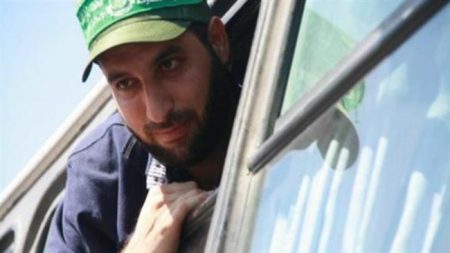
Lieberman’s statements came only few days after the assassination of al-Qassam commander Mazen Fuqaha outside his house in Gaza city by six bullets to the head.
Former Palestinian prisoner, released in the 2011 Wafa al-Ahrar prsoner exchange, Mazen Fuquha, was assassinated with four shots to the head with a silenced gun yesterday evening, 24 March, outside his home in Tal al-Hawa, south of Gaza City in the Gaza Strip, Palestine. Fuquha, 38, is from Tubas in the West Bank, and was forcibly displaced to Gaza after the prisoner exchange.
Fuquha was well-known as a leader in Hamas, and was sentenced to nine life sentences before his release, accused of participation in the armed Palestinian resistance. His father spoke with Asra Voice radio station, and said that the Israeli occupation army had broken into the family home in Tubas on multiple occasions and threatened his son, demanding the father tell his son to stop his activity.
Palestinian political parties and resistance factions condemned the killing of Fuquha and placed responsibility for the crime with the Israeli occupation forces. Internal security police in Gaza are investigating the killing and seeking evidence as to how the assassination was carried out.
Khalil al-Hayya of Hamas said that “the only beneficiary of this assassination is the occupation; the martyr Fuquha had no quarrels with anyone.” The Popular Front for the Liberation of Palestine denounced the killing as a “cowardly crime” of the occupation that attempts to target Palestinian resistance, emphasizing the importance of protecting Palestinian fighters. The Islamic Jihad movement said in a statement that the assassination is a “treacherous crime on the agenda of the occupation and carrying the fingerprints of its terror.”
Fuquha grew up in Tubas before attending An-Najah National University in Nablus, where he became involved with the Islamic Bloc and later the Hamas movement. He was arrested three times by Palestinian Authority security and by the Israeli occupation army on 5 August 2002 after a siege that lasted six hours. He was accused of organizing Palestinian armed actions and was sentenced to nine life sentences, and was one of the high-profile prisoners released in the Wafa al-Ahrar exchange. Nearly 60 prisoners released in the exchange, including the longest-serving prisoner Nael Barghouthi, have been targeted for re-arrest and the reimposition of their former sentences by Israeli occupation forces.
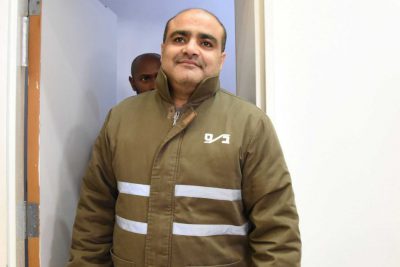
In yet another blow to the propaganda-driven case against Palestinian aid worker Mohammed al-Halabi, the Australian Department of Foreign Affairs and Trade reported on Tuesday, 21 March that “an internal review into World Vision funding in Gaza has uncovered nothing to suggest any diversion of government aid funding to Hamas.”
Al-Halabi was seized by Israeli occupation forces at the Beit Hanoun/Erez crossing and in August 2016, Israeli officials, including Prime Minister Benjamin Netanyahu, went on a propaganda offensive, claiming that Halabi had redirected World Vision funds to the Palestinian resistance organization, Hamas. Israeli occupation officials declared that he had diverted $43 million in charitable funds to the Palestinian resistance, including a video from Prime Minister Benjamin Netanyahu accusing Palestinians of not caring about their people. The amounts cited dwarfed the actual budget to which al-Halabi had access, by all accounts. These seemingly impossible claims were made after nearly a month of interrogation, during which Halabi was subjected to torture and inhumane treatment.
The claims against Halabi were accompanied by similarly touted claims against civil engineer Waheed Bursh, a contractor with the UN Development Program, also accused of redirecting resources to the Palestinian resistance – in his case, rubble from the Israeli bombing of Gaza. However, despite the large-scale publicity surrounding Borsh’s arrest, he was released seven months later, indicating that no serious charges were ever made. He was cited as a “witness” againat al-Halabi, and later confirmed that he completely denied any allegations against the aid worker.
“The news DFAT found no evidence of the misuse of World Vison funds comes as Mr Halabi’s trial continues in Israel. He has rejected a plea deal offered by Israeli authorities and has pleaded not guilty, claiming he is innocent of all charges,” reported the Australian Brodcasting Corporation. The plea agreement he rejected would have seen him imprisoned for three years, a short sentence which again indicates a lack of serious charges or evidence in the case.
Indeed, rather than presenting any evidence to back up the widely-publicized public claims against World Vision and Halabi, Israeli occupation officials have instead submitted additional, lesser charges against Halabi that have no relation to diverting funds or his work with World Vision; two such charges are those of “passing information to the enemy” and of “aiding and abetting the enemy in a time of war,” with the enemy in question being Palestinians in Gaza. Al-Halabi is, himself, of course, a Palestinian living under occupation and siege in Gaza.
He is also charged with giving small donations of his own money, rather than redirecting World Vision funds, to charities and mosques in Gaza. ABC notes that “One incident detailed accuses El Halabi of allegedly giving ‘300 Israeli shekels on a monthly base to a charity managed by Hamas’…Another says the defendant transferred ‘hundreds of shekels during 2015-2016 to a mosque managed by Hamas’… No details are given of the ‘millions’ of dollars Israeli intelligence officials initially accused El Halabi of diverting.” 100 NIS is approximately $26 USD.
“So far, our own ongoing forensic audit has not uncovered any money subverted and to hear DFAT say their investigation hasn’t either is consistent and is very good news,” said Tim Costello of World Vision.
Despite the severe lack of evidence or credibility for Israeli claims in this case, World Vision’s work in Gaza – and government funding from the Australian and German governments – have been shut down. Over 100 Palestinian workers for World Vision have lost their jobs in Gaza in an area already suffering from massive unemployment and poverty.
RAMALLAH – Israeli forces detained 420 Palestinians during the month of February, including 70 minors and 22 women and girls, according to a statement released on Saturday by the Palestinian Prisoners’ Center for Studies.
The center said in its monthly report that 12 of the detentions were carried out in the besieged Gaza Strip, including five fishermen whose boats were destroyed by Israeli forces before their detention, two who were detained at the Beit Hanoun crossing, and five who were detained after Israel alleged they attempted to cross the border fence between the besieged enclave and Israel.
A journalist was also among the detainees, identified by the center as Humam Muhammad Hantash from the southern occupied West Bank district of Hebron. He was sentenced to Israel’s widely condemned policy of administrative detention — imprisonment without charge or trial based on undisclosed evidence.
The center added that 88 administrative detention orders were issued by Israeli courts in the same period, 23 of which were issued for the first time, while 65 were renewed orders. Meanwhile, 32 administrative detention orders were issued against Palestinians from Hebron.
While Israeli authorities claim the withholding of evidence during administrative detention, which allows detention for three- to six-month renewable intervals, is essential for state security concerns, rights groups have instead claimed that the policy allows Israeli authorities to hold Palestinians for an indefinite period of time without showing any evidence that could justify their detentions.
Rights groups say that Israel’s administrative detention policy has also been used as an attempt to disrupt Palestinian political and social processes, notably targeting Palestinian politicians, activists, and journalists.
According to Addameer, as of January, 6,500 Palestinians were being held in Israeli prisons, 536 of whom were being held under administrative detention.
By portraying Chinese characters as perpetrators of ruthless violence while casting Japanese Self-Defense Forces (SDF) intelligence operatives as defenders, the season 2 of the Japanese drama Vivant has recently drawn criticism from Chinese netizens, who argue that its depiction turns historical reality on its head while ignoring Japan’s wartime atrocities.
The TBS drama series – a spy suspense story in which an alleged unofficial intelligence unit of the SDF operates across the globe — has attracted a passionate fanbase. Its currently airing season 2 opened with a household rating of 18.8 percent, the highest for a TV drama this year, according toa commentary article by Japanese media Toyo Keizai.
What draws attention is the portrayal of the enemies in the series, the article noted. Scenes in which the Chinese organization subjects kidnapped members of the SDF unit to brutal torture are repeated with unrelenting intensity.
It is rare for Japanese TV dramas to explicitly portray a real-life country as the enemy, the article noted.
Japanese Prime Minister Sanae Takaichi also made a reference to the drama, saying that she has been recording Vivant and hopes to binge-watch it over the year-end and New Year holidays, according to Japanese media outlets.
China’s CCTV News report on Sunday revealed that the drama features scenes in which Chinese personnel cut off the fingers of and stab Japanese intelligence operatives in the abdomen. Such acts bear striking similarities to the torture inflicted on Chinese nationals by invading Japanese troops during the World War II.
The drama distorts the truth by attributing these atrocities to modern Chinese characters. Beneath the surface, it subtly glorifies Japan’s cross-border overseas operations, blurs the functional boundaries of the SDF and implicitly promotes an expansionist narrative, per CCTV News. … continue
This site is provided as a research and reference tool. Although we make every reasonable effort to ensure that the information and data provided at this site are useful, accurate, and current, we cannot guarantee that the information and data provided here will be error-free. By using this site, you assume all responsibility for and risk arising from your use of and reliance upon the contents of this site.
This site and the information available through it do not, and are not intended to constitute legal advice. Should you require legal advice, you should consult your own attorney.
Nothing within this site or linked to by this site constitutes investment advice or medical advice.
Materials accessible from or added to this site by third parties, such as comments posted, are strictly the responsibility of the third party who added such materials or made them accessible and we neither endorse nor undertake to control, monitor, edit or assume responsibility for any such third-party material.
The posting of stories, commentaries, reports, documents and links (embedded or otherwise) on this site does not in any way, shape or form, implied or otherwise, necessarily express or suggest endorsement or support of any of such posted material or parts therein.
The word “alleged” is deemed to occur before the word “fraud.” Since the rule of law still applies. To peasants, at least.
Fair Use
This site contains copyrighted material the use of which has not always been specifically authorized by the copyright owner. We are making such material available in our efforts to advance understanding of environmental, political, human rights, economic, democracy, scientific, and social justice issues, etc. We believe this constitutes a ‘fair use’ of any such copyrighted material as provided for in section 107 of the US Copyright Law. In accordance with Title 17 U.S.C. Section 107, the material on this site is distributed without profit to those who have expressed a prior interest in receiving the included information for research and educational purposes. For more info go to: http://www.law.cornell.edu/uscode/17/107.shtml. If you wish to use copyrighted material from this site for purposes of your own that go beyond ‘fair use’, you must obtain permission from the copyright owner.
DMCA Contact
This is information for anyone that wishes to challenge our “fair use” of copyrighted material.
If you are a legal copyright holder or a designated agent for such and you believe that content residing on or accessible through our website infringes a copyright and falls outside the boundaries of “Fair Use”, please send a notice of infringement by contacting atheonews@gmail.com.
We will respond and take necessary action immediately.
If notice is given of an alleged copyright violation we will act expeditiously to remove or disable access to the material(s) in question.
All 3rd party material posted on this website is copyright the respective owners / authors. Aletho News makes no claim of copyright on such material.