Russia will take ‘tough measures’ against German media if Berlin impedes work of Russian journalists
RT | March 4, 2021
Moscow sees the closure of RT-affiliated companies’ accounts by a German bank as “political pressure” on Russia and will react in kind if the work of the Russian media in Germany is impeded, the Russian Foreign Ministry said.
“We consider such an openly hostile attitude … toward media, including the Russian ones, unacceptable,” Russia’s Foreign Ministry spokeswoman Maria Zakharova told a news briefing on Thursday. She referred to the decision of the German Commerzbank to close the accounts of RT’s video agency Ruptly and RT DE Productions GmbH which runs the German-language website by May 31.
Such actions are an “element of political pressure” on journalists and they constitute a “violation of Germany’s commitment to protect the freedom of speech,” Zakharova said.
The Commerzbank decision came just about a month after RT announced its plans to launch a German-language TV channel later this year.
Zakharova said that it is such plans that apparently sparked an angry reaction among the “anti-Russian” forces within the German media and establishment and have led to what she described as a “persecution” campaign.
“All actions of the Russian broadcaster were legally valid. Therefore, such a primitive approach apparently was chosen to obstruct its work.”
RT has been trying to find a replacement for Commerzbank, but several financial institutions have either ignored RT’s inquiries or refused to open accounts on its behalf.
The Russian Foreign Ministry has called on Berlin to stop obstructing the work of Russian journalists in Germany and lift all restrictions imposed against the Russian media. “Otherwise, we will have to take tough reciprocal measures against German media working in Russia,” Zakharova warned.
Russia has its own concerns about the work of the German media and German journalists on its territory, Zakharova noted. She added, though, that all such issues are resolved in accordance with the law and on the basis of “mutual respect” and dialogue.
“We would very much like to see Germany doing the same,” the Russian Foreign Ministry’s spokeswoman added.
Texas Power Freeze-Down Demonstrates Political Climate Craziness
By Larry Bell | PA Pundits – International | February 22, 2021
Texas just sent a very chilling message to the rest of the nation about what to expect your life to be like with President Biden’s “Build Back Better” plan AKA, “Green New Deal,” in order to save the planet from overheating.
It seems he’s already overachieving that goal.
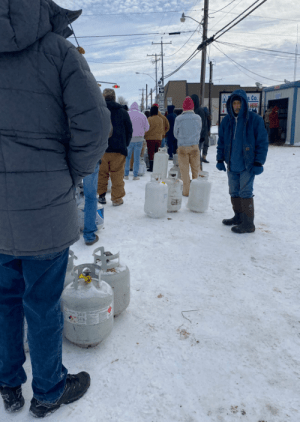
An unusual Arctic blast that spread across the state from the tip of the Panhandle all the way to the Rio Grande Valley has left millions of homes and businesses here without electricity.
A series of forced rolling blackouts were required to prevent power grid collapse as single-digit temperatures froze wind turbines and hobbled dozens of power plant operations.
How could this possibly happen here in Texas?
This isn’t supposed to be California, after all, where over-dependence on wind and solar power destabilized the grid during a record 2020 heat wave.
California already leads the nation with the least reliable power system and greatest number of annual outages … 4,297 were recorded between 2008 and 2017. And conditions will only become far worse as the state now requires that all new homes be nearly entirely electric.
More than 30 cities, including San Francisco, have already enacted bans on new gas appliance hookups. California plans to eventually outlaw gasoline and diesel cars.
Hey y’all… this is Texas, a land of far more savvy dudes in a state rightly famous for being awash in huge petroleum and natural gas resources.
Texas isn’t a place where we who live here ordinarily worry about freezing to death due to a lack of reliable fossil and nuclear power to heat our homes… unlike northern latitudes that routinely get really cold with iced-up failing power lines.
So, in addition to record low temperatures, what happened to change that?
I guess we got a little bit too woke.
The Electric Reliability Council of Texas (ERCOT) which oversees the state’s wholesale power market has shifted grid reliance away from reliable coal, nuclear, and natural gas toward heavily taxpayer-subsidized (no free lunch here) wind energy.
That wind generation now constitutes the second-largest electricity power source in Texas. According to ERCOT, it accounted for 23% of the state supply last year, behind natural gas which represented 45%.
Over the past decade, strict CO2 emission regulations have caused coal’s share of Texas’s electricity to plunge by more than half, to supply 18%.
A power crunch ensued, as bitter cold damp conditions caused wind turbines in West Texas to freeze at the same time it was causing residents to crank up their thermostats. Regulators did what they could to protect public safety by rationing gas for commercial and industrial uses to ensure fuel for power plants and household heating.
Some natural gas wellheads also froze, along with refining facilities in some locations, in turn bleeding natural gas needed for turbines that provide essential back-up “spinning reserve” power for – at best intermittent – wind and solar outputs.
And who could have possibly imagined what happened next?
The spot price of wholesale electricity on the Texas power grid spiked more than 10,000%, surging past $9,000 per MegaWatt-hour. Even during high demand summer months, $100 per MW-hr would be considered high.
On second thought, maybe Texas and every other state might have anticipated much of this occurring based upon Germany’s “Energiewende” (energy transition) experience, a policy established in 2000 to decarbonize its primary energy supply.
When the program was first launched, 6.6% of Germany’s electricity came from renewable sources, primarily solar and wind. By 2019, nearly two decades later, that share had reached 41%.
By 2019, average German household electricity costs during that same period have doubled to 34 U.S. cents per Kilowatt-hour. (Compare this with 22 cents per kWh in France, and 13 cents in the United States.)
Meager renewable energy supply conditions worsened dramatically this winter as the coldest western Europe weather in a decade have blanked millions of Germany’s solar panels with snow and ice and rendered 30,000 of its wind turbines idle. This left the greatest share of vital power coming from coal.
In January, the German RBB (Berlin-Brandenburg) public broadcasting network aired a report that sums up the consequences of continually shutting the country’s coal and nuclear energy capacities in favor of adding those “green renewable alternatives.”
Harald Schwarz, a professor of power distribution at the University of Cottbus, went straight to the point, saying: “die gesicherte leistung von wind + sonne = 0,” which means:
“The guaranteed output of wind + sun = 0.”
To be more charitable to those renewables, the actual benefit reportedly ranges between zero and two or three percent.
The RBB broadcast went on to warn that Germany’s futile attempt to replace reliable nuclear and coal-fired energy with wind and solar will extend the supply and demand gap dangerously wide.
The current trend leaves Germany with no real future alternative but to rely more on natural gas from Russia, coal power from Poland, and nuclear power from France.
And what about America, where wind and solar combined provide, at most, about four percent of our grid electricity (not total energy), versus about 80% from hydrocarbons?
The $2 trillion Biden “Equitable Clean Energy Future” agenda pledges to eliminate those hydrocarbon emissions from electricity by 2035, and then achieve “net-zero carbon” by 2050.
To prove he’s serious, on his very first day in the Oval Office, President Biden capped off the Keystone XL pipeline at the Canadian border along with about 11,000 jobs and 830,000 barrels of oil per day it would have delivered, which must now be transported by CO2-emitting rail and trucks.
On top of decimating our current energy supply infrastructure, the plan is for taxpayers to finance a half-million electric car chargers across the nation and add a humongous number of electricity-thirsty electric vehicles to further stress already precarious capacities.
Before buying into this political man-made climate crisis of lunacy, demand to know where sufficient energy will come from, and at what economic and social cost, to air condition fully-electrified Texas summer and New England winter homes – plus recharge millions of plug-in vehicles – on windless cloudy days and nights – especially during inevitable extreme weather demand periods.
Larry Bell contributes posts at the CFACT site. He heads the graduate program in space architecture at the University of Houston. He founded and directs the Sasakawa International Center for Space Architecture. He is also the author of “Climate of Corruption: Politics and Power Behind the Global Warming Hoax.”
Assigning Blame for the Blackouts in Texas
By Planning Engineer | Climate Etc. | February 18, 2021
The story from some media sources is that frozen wind turbines are responsible for the power shortfalls in Texas. Other media sources emphasize that fossil fuel resources should shoulder the blame because they have large cold induced outages as well and also some natural gas plants could not obtain fuel.
Extreme cold should be expected to cause significant outages of both renewable and fossil fuel based resources. Why would anyone expect that sufficient amounts of natural gas would be available and deliverable to supply much needed generation? Considering the extreme cold, nothing particularly surprising is happening within any resource class in Texas. The technologies and their performance were well within the expected bounds of what could have been foreseen for such weather conditions. While some degradation should be expected, what is happening in Texas is a departure from what they should be experiencing. Who or what then is responsible for the shocking consequences produced by Texas’s run in with this recent bout of extreme cold?
TRADITIONAL PLANNING
Traditionally, responsibility for ensuring adequate capacity during extreme conditions has fallen upon individual utility providers. A couple decades ago I was responsible for the load forecasting, transmission planning and generation planning efforts of an electric cooperative in the southeastern US. My group’s projections, studies and analysis supported our plans to meet customer demand under forecasted peak load conditions. We had seen considerable growth in residential and commercial heat pumps. At colder temperature these units stop producing heat efficiently and switch to resistance heating which causes a spike in demand. Our forecasts showed that we would need to plan for extra capacity to meet this potential demand under extreme conditions in upcoming winters.
I was raked over the coals and this forecast was strongly challenged. Providing extra generation capacity, ensuring committed (firm) deliveries of gas during the winter, upgrading transmission facilities are all expensive endeavors. Premiums are paid to ensure gas delivery and backup power and there is no refund if it’s not used. Such actions increased the annual budget and impact rates significantly for something that is not likely to occur most years, even if the extreme weather projections are appropriate. You certainly don’t want to over-estimate peak demand due to the increasing costs associated with meeting that demand. But back then we were obligated to provide for such “expected” loads. Our CEO, accountants and rate makers would ideally have liked a lower extreme demand projection as that would in most cases have kept our cost down. It was challenging to hold firm and stand by the studies and force the extra costs on our Members.
Fortuitously for us, we were hit with extreme winter conditions just when the plan went in place. Demand soared and the planned capacity we had provided was needed. A neighboring entity was hit with the same conditions. Like us they had significant growth in heat pumps – but they had not forecasted their extreme weather peak to climb as we had. They had to go to the overburdened markets to find energy and make some curtailments. The cost of replacement power turned out to be significantly greater proportionately than we incurred by planning for the high demand. They suffered real consequences due to the shortcomings of their planning efforts.
However, if extreme winter had not occurred, our neighbor’s costs would have been lower than ours that year and that may have continued many years into the future as long as we didn’t see extreme winter conditions. Instead of the praise we eventually received, there would have at least been some annoyance directed at my groups for contributing to “un-needed expenditures”. That’s the way of the world. You can often do things a little cheaper, save some money and most of the time you can get away with it. But sometimes/eventually you cut it too close and the consequences can be extreme.
The Approach in Texas
Who is responsible for providing adequate capacity in Texas during extreme conditions? The short answer is no one. The Electric Reliability Council of Texas (ERCOT) looks at potential forecasted peak conditions and expected available generation and if there is sufficient margin they assume everything will be all right. But unlike utilities under traditional models, they don’t ensure that the resources can deliver power under adverse conditions, they don’t require that generators have secured firm fuel supplies, and they don’t make sure the resources will be ready and available to operate. They count on enough resources being there because they assume that is in their owner’s best interests. Unlike all other US energy markets, Texas does not even have a capacity market. By design they rely solely upon the energy market. This means that entities profit only from the actual energy they sell into the system. They do not see any profit from having stand by capacity ready to help out in emergencies. The energy only market works well under normal conditions to keep prices down. While generally markets are often great things, providing needed energy during extreme conditions evidently is not their forte. Unlike the traditional approach where specific entities have responsibilities to meet peak levels, in Texas the responsibility is diffuse and unassigned. There is no significant long term motivation for entities to ensure extra capacity just in case it may be needed during extreme conditions. Entities that might make that gamble theoretically can profit when markets skyrocket, but such approaches require tremendous patience and the ability to weather many years of potential negative returns.
This article from GreenTech media praises energy only markets as do many green interests. Capacity markets are characterized as wasteful. Andrew Barlow, Head of the PUC in Texas is quoted as follows, “Legislators have shown strong support for the energy-only market that has fueled the diversification of the state’s electricity generation fleet and yielded significant benefits for customers while making Texas the national leader in installed wind generation. ”
Why has Capacity been devalued?
 Traditional fossil fuel generation has (as does most hydro and nuclear) inherent capacity value. That means such resources generally can be operated with a high degree of reliability and dependability. With incentives they can be operated so that they will likely be there when needed. Wind and solar are intermittent resources, working only under good conditions for wind and sun, and as such do not have capacity value unless they are paired with costly battery systems.
If you want to achieve a higher level of penetration from renewables, dollars will have to be funneled away from traditional resources towards renewables. For high levels of renewable penetration, you need a system where the consumers’ dollars applied to renewable generators are maximized. Rewarding resources for offering capacity advantages effectively penalizes renewables. As noted by the head of the PUC in Texas, an energy only market can fuel diversification towards intermittent resources. It does this because it rewards only energy that is fed into the grid, not backup power. (Side note-it’s typical to provide “renewable” resources preference for feeding into the grid as well. Sometimes wind is compensated for feeding into the grid even during periods of excess generation when fossil fuel resources are penalized. But that’s another article.)
Traditional planning studies might recognize that wind needs to be backed up by fossil fuel (more so under extreme conditions) such that if you have these backup generators its much cheaper to use and fuel them, than to add wind farms with the accompanying significant investment for concrete, rare earth metals, vast swaths of land … . Traditional planning approaches often have to go to get around this “bias” of favoring capacity providing resources over intermittent resources.
When capacity value is rewarded, this makes the economics of renewables much less competitive. Texas has stacked the deck to make wind and solar more competitive than they could be in a system that better recognizes the value of dependable resources which can supply capacity benefits. An energy only market helps accomplish the goal of making wind and solar more competitive. Except capacity value is a real value. Ignoring that, as Texas did, comes with real perils.
In Texas now we are seeing the extreme shortages and market price spikes that can result from devaluing capacity. The impacts are increased by both having more intermittent resources which do not provide capacity and also because owners and potential owners of resources which could provide capacity are not incentivized to have those units ready for backup with firm energy supplies.
Personal Observations
Wind and solar have value and can be added to power systems effectively in many instances. But seeking to attain excessive levels of wind and solar quickly becomes counterproductive. It is difficult to impossible to justify the significant amounts of wind and solar penetration desired by many policy makers today using principals of good cost allocation. Various rate schemes and market proposals have been developed to help wind and solar become more competitive. But they come with costs, often hidden. As I’ve written before, it may be because transmission providers have to assume the costs and build a more expensive system to accommodate them. It may be that rates and markets unfairly punish other alternatives to give wind and solar an advantage. It may be that they expose the system to greater risks than before. It may be that they eat away at established reliability levels and weaken system performance during adverse conditions. In a fair system with good price signals today’s wind and solar cannot achieve high penetration levels in a fair competition.
Having a strong technical knowledge of the power system along with some expertise in finance, rates and costs can help one see the folly of a variety of policies adopted to support many of today’s wind and solar projects. Very few policy makers possess anything close to the skill sets needed for such an evaluation. Furthermore, while policy makers could listen to experts, their voices are drowned out by those with vested interests in wind and solar technology who garner considerable support from those ideologically inclined to support renewables regardless of impacts.
A simpler approach to understanding the ineffectiveness of unbridled advocacy for wind and solar is to look at those areas which have heavily invested in these intermittent resources and achieved higher penetration levels of such resources. Typically electric users see significant overall increases in the cost of energy delivered to consumers. Emissions of CO2 do not uniformly decrease along with employment of renewables, but may instead increase due to how back up resources are operated. Additionally reliability problems tend to emerge in these systems. Texas, a leader in wind, once again is added to the experience gained in California, Germany and the UK showing that reliability concerns and outages increase along with greater employment of intermittent resources.
Anyone can look at Texas and observe that fossil fuel resources could have performed better in the cold. If those who owned the plants had secured guaranteed fuel, Texas would have been better off. More emergency peaking units would be a great thing to have on hand. Why would generators be inclined to do such a thing? Consider, what would be happening if the owners of gas generation had built sufficient generation to get through this emergency with some excess power? Instead of collecting $9,000 per MWH from existing functioning units, they would be receiving less than $100 per MWH for the output of those plants and their new plants. Why would anyone make tremendous infrastructure that would sit idle in normal years and serve to slash your revenue by orders of magnitudes in extreme conditions?
The incentive for gas generation to do the right thing was taken away by Texas’s deliberate energy only market strategy. The purpose of which was to aid the profitability of intermittent wind and solar resources and increase their penetration levels. I don’t believe anyone has ever advanced the notion that fossil fuel plants might operate based on altruism. Incentives and responsibility need to be paired. Doing a post-mortem on the Texas situation ignoring incentives and responsibility is inappropriate and incomplete.
No decision on any NATO withdrawal from Afghanistan: Stoltenberg
Press TV – February 18, 2021
NATO Secretary-General Jens Stoltenberg says defense ministers from the Western military alliance made no decision at a recent meeting in Brussels on whether or when to pull out of war-torn Afghanistan.
“At this stage, we have made no final decision on the future of our presence,” Stoltenberg said after a video conference with allied defense ministers on Thursday.
The defense ministers met to discuss the possibility of staying in Afghanistan beyond the May withdrawal deadline agreed between the Taliban militant group and the United States under the administration of former US President Donald Trump.
Key on the agenda at the two-day virtual conference in Brussels was the future of the US-led forces in the war-torn country.
The NATO chief said US Defense Secretary Lloyd Austin promised to consult with partners on the way forward.
“As the May 1 deadline is approaching, NATO allies will continue to closely consult and coordinate in the coming weeks. We are faced with many dilemmas, and there are no easy options,” Stoltenberg said.
“If we stay beyond the first of May, we risk more violence, more attacks against our own troops … But if we leave, then we will also risk that the gains that we have made are lost.”
The administration of President Joe Biden is reviewing whether to stick to the looming deadline to withdraw or risk a bloody backlash from the Taliban.
Other NATO members have signaled a desire within the alliance to stay in Afghanistan beyond the deadline. They are willing to remain in Afghanistan if Washington does so.
German Defense Minister Annegret Kramp-Karrenbauer said on Wednesday that the Taliban must do more to meet the terms of a 2020 agreement with Washington on the withdrawal of US.forces to allow a pullout of the foreign troops.
“We can already say that we are not yet in a position to talk about the withdrawal of international forces from Afghanistan,” the German minister said as she arrived for the meeting.
“This also means a changed security situation, an increased threat for the international forces, also for our own forces. We have to prepare for this, and we will certainly discuss this.”
Nearly two decades after the US-led invasion, Trump struck a deal with the Taliban in the Qatari capital of Doha early last year.
The former White House tenant reached the accord in February 2020, under which the US and its NATO allies are expected to withdraw all troops in 14 months in exchange for the Taliban to halt attacks on foreign forces.
President Biden, however, has said his administration would not commit to a full withdrawal by May.
The United Nations says more than 100,000 civilians have been killed or injured over the past decade across Afghanistan.
Involuntarily masked drivers BANNED from wearing sunglasses or hats: Germany’s Saxony state
RT | February 17, 2021
Drivers must still be identifiable by traffic cameras, even when they follow existing health protocols and wear masks, a new rule in Germany’s eastern region says.
According to the Bild newspaper, Saxony became the first region in Germany to ban hats and sunglasses on masked drivers.
“Wearing a hat and sunglasses in addition to a mask that covers the face and mouth makes [the driver] unrecognizable. So that’s not allowed,” Saxony’s Interior Minister Roland Woller said.
Woller explained that “general facial features” of the driver must still be visible to the road safety cameras. He added that officials responsible for handing out fines to drivers were advised to handle the new rule on a case-by-case basis.
Starting from Monday, people are required to wear masks in vehicles in Saxony if members of more than two households are traveling together.
Last month, Germans were mandated to wear medical-grade respirator-type masks on public transport and when going to supermarkets. Simple cloth or homemade masks are not allowed in such cases.
Whistleblower from Berlin nursing home: terrible dying after vaccination
2020News – February 14, 2021
For the first time, there is an eyewitness report from a Berlin nursing home on the situation after the vaccination. It comes from the AGAPLESION Bethanien Havelgarten retirement home in Berlin-Spandau. There, within four weeks after the first vaccination with the BioNTech/Pfizer vaccine Comirnaty, eight of 31 seniors, who suffered from dementia but were in good physical condition according to their age before the vaccination, died. The first death occurred after only six days, and five other seniors died approximately 14 days after vaccination. The first symptoms of the disease had already appeared shortly after the vaccination. From information available to 2020News the patients have not been duly informed about the risks of this vaccine. One reason being that no detailed information about the novelty of this mRNA vaccine which has only conditionally been certified in the European Union have been provided.
Attorney at Law Viviane Fischer and Attorney at Law Dr. Reiner Füllmich of the Corona Committee spoke in a video interview with the whistleblower about the closer circumstances of the vaccination, the symptoms that occurred and the different nature of the deaths in temporal connection with the vaccination.
On January 3, 2021, 31 female and male residents of the dementia ward “ground floor/protected area” had been vaccinated with Comirnaty. Relatives of another three seniors had objected to vaccination, and two residents were in terminal care, so no vaccination was given.
The residents of this ward are very active, “self defending” dementia patients who are physically in good condition. They are allowed to move around the ward all day without restriction. The day before the vaccination, the 31 vaccinated persons were all in good health. A few days earlier, all had tested negative for Corona, according to the whistleblower report.
According to the whistleblower, the first vaccination event with Comirnaty on January 3, 2021, took place in such a way that all residents were gathered in the recreation room of the first floor area. A vaccination team consisting of an aged vaccinator, three aides and two federal soldiers in camouflage uniforms performed the vaccinations. The home staff as well as the home physician assisted in the process. The role of the soldiers, who at no time moved away from the vaccine, has not been conclusively determined.
What the whistleblower was able to establish, however, was that the presence of the uniformed men greatly intimidated the seniors. The group, which normally shows a “strong defensive behavior” in the case of unfamiliar treatments, was hardly recognizable, so predominantly “lamblike” they had let the vaccination with Comirnaty pass over them. The whistleblower suspects that this could also be related to the fact that the elderly seniors, who had still experienced the war, could not properly assess the role of the soldiers and possibly felt reminded of war-traumatic circumstances.
During the first vaccination, a resisting senior citizen was detained by a nurse under the watchful eyes of the German soldiers, the eyewitness reported. A judicial decision for the detention, which as such represents a coercion and therefore requires in principle a judicial evaluation in the individual case, had not been issued.
According to the whistleblower’s account, the administration of the second vaccination dose took place without warning always on the spot where the person to be vaccinated was found. For example, an elderly lady lying unsuspectingly in bed who began to resist the second dose was restrained by two members of the nursing staff in order to overcome her resistance – again without the necessary court order. The swabbing for the PCR test, which some seniors tried to resist, is also regularly done with the use of physical force against the seniors resisting the unwanted treatment, the whistleblower said.
According to the whistleblower, the vaccination education of the caregivers and relatives – the seniors are unable to effectively consent to vaccination due to their dementia – was based on outdated information sheets from the RKI/Grünes Kreuze. In particular, the information required by Regulation (EC) No. 507/2006 on the fact the vaccine Comirnaty has only been granted conditional marketing authorization and why this is the case is missing. In particular, the information should have been provided that from the point of view of the regulatory authority EMA, the data situation still needs to be improved with regard to various aspects, e.g. the interaction of Comirnaty with other drugs.
Already on the day of vaccination, four of the vaccinated seniors began to show unusual symptoms. In the evening of that day they were fatigued and extremely tired, some of them fell asleep at the table during dinner. A sharp drop in blood oxygen saturation was noted. In the further course, the leaden fatigue continued, the oxygen saturation in the blood remained insufficient, in some cases gasping breathing occurred, and fever, edema, skin rash, a yellowish-gray discoloration of the skin, and a (characteristic) muscle tremor of the upper body and arms occurred.
The seniors also showed a change in demeanor, were partially unresponsive, and refused to eat or drink. One vaccinated senior, who had previously been “in great shape” for her age and suffered from no serious previous illnesses, died as early as January 9, 2021, just six days after vaccination. Deaths among vaccinated seniors and senior citizens occurred on January 15, January 16, January 19 (2 deaths), January 20, February 2, and February 8, 2021. The most recently deceased senior citizen was a former opera singer who had been playing the piano the day before vaccination. The whistleblower reports on the state of health that the old gentleman regularly went jogging, danced, played music and was otherwise very dynamic and active.
Of the seniors who tested negative before vaccination, various suddenly showed a positive test result after vaccination. However, all of these seniors did not show any of the known COVID-19 symptoms, i.e., symptoms of colds such as cough, cold, loss of sense of smell and taste, etc.
On January 24, 2021, the second dose of Comirnaty was applied to 21 seniors. After this vaccination, according to the whistleblower, eleven seniors are now showing persistent extreme fatigue, partially gasping for breath, partially edema, skin rash, and the yellowish-grayish skin discoloration. As of February 10, 2021, none of the seniors who received the second dose of Comirnaty has died, but the health of some of the seniors in this group is steadily deteriorating.
The whistleblower impressively describes the different nature of the dying process of the vaccinated. Normally, the person dying would eventually accept their approaching death and – perhaps after seeing a loved one for the last time – go in peace. Dying as after vaccination, however, was different, he said. It is “inhumane.” The old people he had seen dying had breathed heavily, trembled strongly, and seemed as if inwardly they had passed away already. It seemed to him like a lonely, futile struggle against death, as if “the people knew that their time had not yet come, and therefore they had not yet been able to let go.”
The AGAPLESION Bethanien Havelgarten senior citizens’ residential home was requested to comment on the events on February 3, 2021 by Attorney at Law Viviane Fischer, in the name and on behalf of two journalists researching the topic, but has still not received a response.
Attorney at Law Viviane Fischer filed a criminal complaint with the public prosecutor’s office on February 3, 2021, 12:04 a.m., and informed the police as well as Prof. Klaus Cichutek, the head of the Paul Ehrlich Institute, which is responsible for recording vaccination side effects, and the Senator for Health of Berlin, Dilek Kalayci, about the events. The health department was also informed, as well as the office of the senate administration responsible for nursing homes.
Lawyer Fischer requested the public prosecutor’s office to secure the body of the last deceased old gentleman, She alerted the officials to the imminent death of the eighth death victim, which was to be feared at that time promptly. In the meantime he succumbed to his illness.
Upon telephone inquiry on February 8, 2021, the file could not be found in the registry at the public prosecutor’s office. Such a registration, so it was communicated, can in Corona times take up to six weeks.
On February 8, 2021 Attorney a Law Fischer has therefore additionally filed a criminal complaint via the Internet guard of the Berlin police.
A press inquiry with view of initiated investigations, seizure of the corpses and possible similar occurrences in the past examined by the authorities, which Attorney at Law Fischer had placed again in agency of the two journalists on February 8, 2021, answered the police in the evening of February 9, 2021, as follows: “So far the Berlin police led no investigations in connection with the deaths described by you. Such investigations are always initiated when a doctor certifies a non-natural cause of death when issuing the death certificate. The two deaths you mentioned are also not known to the Berlin police. In this respect, no investigations were conducted nor has the body of the deceased been seized. The criminal charges filed by you are available to the Berlin police and are currently being investigated by a specialist department of the criminal police or by the Berlin public prosecutor’s office. Information for this can be received from the press office of the public prosecutor’s office in Berlin.”
The investigation behavior of the police presenting itself at present as little engaged stands in contrast to the legality principle and pursuit obligation for criminal offences, to which police and public prosecutor are subject, Attorney at Law Dr. Fuellmich states. A violation of this could justify the reproach of an obstruction of justice in the office pursuant to § 258 a StGB.§ Section 160 (I) sentence of the Code of Criminal Procedure stipulates: “As soon as the public prosecutor’s office becomes aware of the suspicion of a criminal offense through a report or by other means, it must investigate the facts of the case in order to decide whether to file a public complaint.” Section 163 (I) sentence 1 of the Code of Criminal Procedure stipulates: “The authorities and officers of the police service must investigate criminal offenses and issue all orders that do not permit any delay in order to prevent the case from becoming obscure.
It would therefore be contrary to current law for the police to take action only when the family doctor, emergency physician or even the vaccinator himself filling out the death certificate confirmed an unnatural cause of death. It was already questionable whether an external physician, who in case of doubt could not know the medical history in detail, would at all be able to assess the situation and the dying process correctly. According to Dr. Fuellmich, the lawyer, there is undoubtedly a considerable initial suspicion that the extraordinary accumulation of deaths – otherwise only one or two seniors die per month in the respective department of the nursing home – was not due to natural causes.
With regard to the eleven seniors whose health condition had deteriorated after administration of the second dose of Comirnaty, there was also imminent danger.
The police, the health offices and the senate administration have a guarantor position to avert danger for the population. If the persons installed to fend off danger from the public do not follow their obligation, a punishability of the acting persons because of active assistance and/or assistance by omission to the body injury (possibly even with death consequence) – committed while in office – comes into consideration, Attorney at Law Fischer states. Also a negligent act participation must be examined. In order to avoid dangers for possible future victims the police is obligated to immediately start professional investigations. Post-mortem examinations must be carried out. A retreat to a possible theoretical assessment of police experts, as this was indicated to Attorney at Law Fischer by the police department in charge (LKA 115, offenses against humans), could not be accepted. The question, which symptoms develop after a vaccination and possibly cause the death of the patient can at present not be answered by any expert simply because up-to-date no study exists for instance regarding the endangerment of old humans by the vaccine. In particular no interaction studies regarding other medicines have been performed. After deaths in Norway following the Corona vaccination, the vaccination of very old, fragile people is no longer recommended in Norway.
The causal relationship between vaccination and the accumulation of deaths, especially among the elderly, is such that government action is urgently needed to protect the health and lives of all those willing to be vaccinated and those who have already received a dose of Comirnaty. The precautionary principle may include temporarily suspending the use of this vaccine for the duration of a full and transparent investigation into any role it may have played in the deaths of the elderly whose fates are the subject of this article.
These governmental measures should also be taken, in particular, for the benefit of those who wish to visit vaccination centers, are residents of retirement or nursing homes, or have a job in health care with contact with patients.
Comirnaty seems by no means as safe as one might think based on the government’s vaccination campaign and the many public statements by politicians and experts who support the government’s lockdown course.
Comirnaty is a so-called mRNA (messenger ribonucleic acid) vaccine. The mRNA contains the “blueprint” for a protein on the surface of SARS-CoV-2. Through vaccination, this blueprint enters the body cells of the vaccinated person via tiny fat particles (fat nanobodies). These are then supposed to produce a protein that is found on the surface of the virus. This is intended to induce a response in the immune system that will in turn cause an appropriate immune response to occur in the event of subsequent infection with SARS-CoV-2.
Because of the unusually short duration of clinical testing on humans, it is obvious from the point of view of 2020news.de that not all possible negative effects of this vaccine could be researched. In particular, experts believe there is a risk of the formation of antibody-dependent enhancement (ADE). This is the term used to describe antibodies that bind to the surface of viruses but do not neutralize them, instead leading to enhanced uptake of the virus into a cell and thus promoting the spread and multiplication of the virus. Infection-enhancing antibodies promote immunopathogenesis and constitute a long-known potential hazard of certain vaccines.
The occurrence of this hazard has been well documented for previous unsuccessful attempts to develop vaccines against coronaviruses (such as SARS-CoV). In some preclinical animal studies, test animals became severely ill or even died after encountering the wild virus because of the appearance of infection-boosting antibodies.
Experts also fear that the occurrence of autoimmune diseases and an impairment or endangerment of fertility, pregnancy, unborn life, breastfeeding with breast milk and children whose mothers were vaccinated during pregnancy cannot be ruled out. In their view the probability of the occurrence of these negative consequences could not – or not sufficiently – be investigated due to the design of the clinical trials in humans, which BioNTech/Pfizer conducted before the conditional approval of Comirnaty.
According to the assessment of the Paul Ehrlich Institute, the polyethylene glycol (PEG)-containing lipid nanoparticles contained in Comirnaty may, too, be possible triggers of observed serious reactions in connection with the vaccination. This is also troubling because in numerous preclinical studies, PEG liposomes have been shown to transport substances across the blood-brain barrier. Certain liposomes have also been linked to the death of specific cells in the liver and lungs in animal studies. For more details, see the recording of Corona Committee Meeting #37 (starting at 03:55:00).
According to the EMA Dashboard, as of February 12, 2021, 54,828 adverse vaccine reactions have already been reported. As of January 31, 2021, there were 26,849.
Because of the multiple concerns about the vaccine, a withdrawal request against the approval has already been submitted to the EMA. According to lawyer Fischer, Attorney at Law Dr. Renate Holzeisen will file an action against this approval, including summary proceedings, with the European Court of Justice (ECJ) in due time on behalf of clients residing in Italy. Such an action and such an application is possible within a period of two months after the conditional approval of Cominarty had been granted. According to lawyer Fischer, these proceedings will now also be accompanied by an international network of lawyers and scientists, to which the members of the Corona Committee also belong. The judgment in the main proceedings and the decision in the summary proceedings will have an impact in all member states of the EU for which the conditional approval of Comirnaty has effect.
On February 12, 2021, the public prosecutor informed attorney Viviane Fischer in writing: “Your criminal complaint is already known here, but not yet recorded in our system, so I cannot provide you with any further information on this at present. However, within the scope of the permissible investigations, everything necessary will be arranged with the necessary acceleration.”
2020News will report on further developments.
The Mainstream Bubble
By Ralf Arnold, translation by S. Robinson | OffGuardian | February 6, 2021
At the beginning of the already memorable year 2020, a term forced its way into public and private consciousness, which should increasingly determine and overshadow all of our lives: The “novel corona virus”, also called SARS-CoV-2. The name was officially announced by the WHO on February 11th. After that everything happened in quick succession.
At first I saw the pictures of Chinese people with masks only in the Tagesschau (the flagship evening news program by ARD, one of the two main public broadcasters in Germany; S.R.), which was not an unusual sight, but soon corona also reached our newsroom.
On the day when the first suspected corona case surfaced in our region, I was urged by our news chief to use it as a “lead story”, i.e. as the first report in the next news program.
At that time I was already extremely skeptical and found it excessive to use a mere suspected case as the lead story. However, I couldn’t escape the general excitement around me and put the message on “one”. But a bad feeling remained and that should intensify massively over the next few weeks.
A dynamic set in that seemed unstoppable.
More and more suspected cases, then confirmed corona cases, at some point the first death in Germany, some time later the first in our region. And more and more I noticed that not only colleagues, but also people in my private environment let themselves be infected by a vague fear and even panic.
Not that I dismissed the deaths, the so-called “corona deaths”, but didn’t we have many deaths in every flu epidemic, especially among the elderly? I checked our archives and found that we had only a handful of reports in three months during the 2018 flu epidemic. More than 25,000 people are said to have died of the flu at that time.
The now famous Johns Hopkins University dashboard was quickly featured on all television and online news. The so-called “new infections” were simply accumulated on this. It became clear to me that the graph with the constantly rising curve contained more psychological effects rather than factual information. In this way the curve could never sink again, in the best case it would stay horizontal. But that didn’t seem to bother anyone.
Part of the basic training of a journalist is that he never reports figures without meaningful reference. He must always provide comparisons, references and proportionalities so that the viewer / listener / reader can contextualise the information. I stuck to it for many years, and it seemed a matter of course for other journalists too. However, I saw this basic principle practically vanish into thin air in the first weeks of the pandemic. Absolute numbers, always only absolute numbers, without any meaningful reference.
To this day, people like to say that the USA is the country most severely affected by corona, with mere reference to the absolute numbers of infections and deaths, regardless of the size of the population, to which the numbers are rarely put in relation.
AN OMINOUS ALLIANCE
Our newsroom also adopted all these counting methods with a sleepwalking naturalness. Everything that was communicated by the health authorities, the district administration and the regional government was adopted and reported without questioning and without doubt. Almost all critical distance disappeared, and the authorities became supposed allies in the fight against the virus.
I have to point out, however, that I have never been called or written to directly by politicians to influence me in any way. There were only the usual press releases from the ministries and offices, which are of course written from their point of view. Nor have I been pressured by superiors, at least not directly. The whole thing is far more subtle, as will be shown.
March was the start of the first restrictions: major events were banned and soon after the first lockdown was imposed. Almost all journalists of the “mainstream”, so the so-called “leading media”, including my editorial team, seemed to immediately develop an ‘inhibition to bite’ towards politicians and the authorities. Why this uncritical reluctance among journalists?
I can only explain it to myself that particularly the pictures from Bergamo and New York also put the experienced editors and reporters into an emotional state of shock, even if they might not admit it. But they, too, are only people who are afraid of illness and death, or who worry about elderly or sick relatives; this was repeatedly an issue in conversations with colleagues. They rallied around the government, the RKI (Robert-Koch-Institute; the German equivalent of the CDC; S.R.) and the health authorities, as if one really had to stick together now to combat this dire, external threat.
You couldn’t throw a club between the legs of those in charge, who were having a difficult time already, by fundamentally questioning their measures – that was how the attitude seemed to me.
In our conversations, too, it was said more and more frequently that “the government is really doing a good job”. Most were firmly convinced that the lockdown and the restrictions of our fundamental rights were necessary and certainly only temporary. I heard only a few skeptical voices.
And then there were the TV interviews with politicians. Esteemed journalists, who in conversation with politician XY eagerly nodded and verbally agreed when they presented their assessment of the situation and made their demands. I couldn’t believe my eyes and ears!
What was the motto of the legendary television journalist Hanns-Joachim Friedrichs?
“You can recognize a good journalist by the fact that he does not make common cause with anything, not even with a good cause; that he is everywhere, but doesn’t belong anywhere.”
There was nothing left of this guiding principle, and very little in the way of tough and critical inquiries. But even that didn’t seem to bother anyone, yes to not even attract attention.
A DECAY OF REPORTING LANGUAGE
In the news of all the leading media, including ours, important, little words like “alleged”, “supposed”, “apparently” suddenly died out. For example, the Tagesschau said that Twitter wanted to delete “false information about corona” in the future. There is clearly no “alleged” or “supposed” as an addition, because it is assumed that Twitter can judge without any doubt what is false and what is correct information in terms of the corona virus (or in general). Which of course is absurd.
Sometimes I made my colleagues in the newsroom aware of such things and sometimes even earned a nod of approval, but often just a helpless shrug.
In this day and age, news reports need to be short, easy to understand, and interesting. We have been trained to do this for many years. This has a lot of advantages, namely the ease of understanding on the part of the consumer. But there are also significant disadvantages, namely that the news reports are written more and more simplistically. Deeper connections and backgrounds or complicated differentiations are increasingly disappearing. The trick is to shorten and omit.
From early summer, one could increasingly observe the phenomenon that the corona virus and the measures against it were equated in the media. For example, it was said: “Because of the corona pandemic, the municipalities are collecting significantly less taxes” or: “The WHO fears that the corona pandemic will plunge one and a half million more people into poverty.”
This is wrong, because not the pandemic, but the lockdowns have this effect, regardless of whether they are justified and appropriate. By ignoring this distinction, however, the anti-corona measures of the governments are being turned into something inevitable and without alternative and are no longer called into question.
The cause and therefore the scapegoat is always the virus, not politics.
This practice also crept into our newsroom. Advice from me was kindly noted, but nobody really took it to heart. I had the freedom to formulate this differently, but again nobody seemed to notice the small but subtle difference.
It is also often said that Covid-19 patients in the intensive care units “have to be ventilated”. Have to? They are being ventilated, that’s the fact. The attending doctor has to decide whether this is really medically necessary, and this question is quite controversial. There are a number of well-known experts who warn against intubating too quickly. So here too, as a journalist, you should remain neutral.
THE DREADFUL NUMBER OF “NEW INFECTIONS”
In spring 2020 I began to increasingly question the counting method of the RKI and thus also of the government. I pointed out to my superiors that all numbers such as the “new infections” reported daily or the “R-value” were basically worthless if we did not relate them back to the number of tests performed. They took note of this, but thought no further verification or inquiries were necessary, because the trend of rapidly increasing numbers could not be misunderstood, regardless of how much was tested, it said.
The number of so-called “new infections” rose from week 11 to week 12 from 8,000 to 24,000. At the end of March, the RKI announced (after multiple inquiries by the online magazine Multipolar ) that the number of PCR tests had almost tripled from 130,000 to 350,000 during the same period. The relative increase in new infections was thus far less than the absolute. There had been no “exponential increase”.
When the number of “new infections” continued to fall in early summer, the politicians still constantly conjured up the risk of the “second wave” if one were to ease the efforts – that is to say, the restrictions contrary to fundamental rights. In fact, most of my colleagues also agreed with these fears, while to me – who was no less of a medical and epidemiological layperson – it was pretty clear that there would be no second wave in summer, but an even bigger in autumn / winter because that is when the number of respiratory diseases routinely increase sharply. It was easy to foresee.
The whole issue of the PCR tests and the alleged “new infections” has to this day not been questioned by the leading media. Although over time there have been more and more studies and statements by virological and epidemiological experts harshly criticising the PCR test and its particular use, hardly any of it has penetrated our mainstream bubble. The Cycle Threshold values that were probably far too high in the tests, which give ample room to possible manipulation, were not an issue at all.
I suspect a lot of my colleagues haven’t even heard of it.
In general, the terms continue to be mixed up in this context. Even after ten months of corona, many colleagues still do not seem to know the difference between the SARS-CoV-2 virus and the lung disease Covid-19. “Infected” (that is, those who have tested positive) are often equated with “sick”, regardless of whether they have symptoms or not.
The term “recovered” is also adopted uncritically by the authorities, although it implies that those affected were actually all sick, which is highly doubtful: On the one hand because there is most likely a proportion of false-positive test results that should not be underestimated, and, on the other hand, because many “infected” people do not develop any symptoms at all and it is therefore very dubious to call them sick.
SELECTIVE PERCEPTION AND HERD INSTINCT
In the meantime, all kinds of regulations have been introduced in our broadcasting corporation: mask requirements, physical distancing between desks, many colleagues have moved to home office, disinfectants everywhere and so on. This and the regular, ominous-sounding situation assessments by the management, of course, still exert a psychological influence and pressure on every employee. A subtle fear is built up here too, whether intentionally or unintentionally. There is literally an invisible threat in the air that is difficult to shield yourself from.
In addition, television screens are running in the newsroom and in other offices, on which reports about corona are broadcast almost continuously.
Everywhere reporters, pictures from intensive care units, running texts with the latest, ever higher numbers – it is almost impossible to avoid this influence. In addition, there are the newspapers and agency reports that also constantly report on corona, here a study, there another apocalyptic warning from a politician, and again and again sad individual stories which are particularly highlighted.
Although we continue to have daily conferences, now mostly by telephone, right from the start – at least during the conferences in which I participated – the current narrative of the national and regional government was never fundamentally questioned, namely that we have an extremely dangerous pandemic that can only be controlled, or at least slowed down, by tough government measures. Why is that?
Everyone probably knows the effect of “selective perception”. For example, if you or your wife are pregnant, you will most likely see more and more pregnant women on the street. Or if you fall in love with someone who drives a certain make of car, then you suddenly discover that make of car, in the same color, permanently on the streets. This effect also occurs in journalism.
Years ago, for example, there was a serious incident in Germany with several attack dogs biting a three-year-old girl to death. At that time there was great shock, a political discussion about the consequences was set in motion, a “character test” for dogs and stricter rules for dog owners were demanded, the media reported about it for days and weeks. And at the same time, suddenly more and more cases of dog attacks were reported. Sudden reports of even very minor incidents came from the police.
One would have thought that all dogs in Germany, like Hitchcock’s birds, would have agreed to meet for a general attack.
What happened? The general perception had become sensitised and extremely focused, on all levels. A dachshund bit someone in the calf in the park, they immediately reported this to the police and reported the owner, the police immediately passed the report on to the press, which turned it into a news report, although it was ultimately a triviality.
Due to the alarmed attitude and the narrowed perception of all those involved, however, the triviality that would normally have fallen under the table was given an oversized significance. And the readers, listeners or viewers noticed and thought: “Not again! This is piling up now.”
The same effect can of course also be observed in crime reporting. The media user can get the impression, for example, that the situation in the country is getting worse and more dangerous and that you can hardly dare go out in the streets. It might very well be that the pure statistics show that the total number of violent crimes continues to decline. That contradicts the subjective impression, but strangely enough, hardly anyone calms down. The pictures and reports of individual fates weigh far more than the sober numbers.
You can guess what I’m getting at.
In my opinion, in the corona crisis we are basically experiencing the same effect in a global, completely exaggerated and downright paranoid dimension. And that affects just about everyone: the common man, the police officer, the journalist, the politician and even the doctor and the scientist. Nobody is per se free from it. Unless he breaks free and dares to think for himself and think outside the box.
But there is a widespread journalistic herd instinct. Most journalists look at the daily newspapers that are delivered to the editorial office every day. And of course these are all newspapers that are mainstream: Welt, FAZ, Frankfurter Rundschau, Süddeutsche [the leading national papers; S.R.] and the regional newspapers.
In the evening, one watches “heute” [the evening news program of ZDF, the second of the two main public broadcasters in Germany; S.R.] and the “Tagesschau”, followed by the relevant talk shows, from Anne Will to Maischberger [two of the leading talk shows; S.R.] Mainstream almost always dominates there too. Real critics of the corona narrative are, with rare exceptions, categorically not invited.
Still, most of the journalists I know are of the opinion that the discussions there are quite controversial. But they do not notice – for lack of comparison – that these controversies are only fig-leaf discussions. It is only discussed when and to what extent the measures should be relaxed, but the corona narrative itself remains untouched.
All of this is not to say that there is no disease or death, but the perception of this is downright neurotically excessive. There are many reports on the Internet from the last few years that describe completely overcrowded hospitals, intensive care units at the limit and overburdened crematoria. With appropriate media support, one could have caused great panic in the population back then.
Another effect is that the media now also present their journalistic content online. There it is easier and faster for everyone to access than would be the case with hardcopy newspapers and broadcasts on radio or television. This means that this content can be easily copied and adopted.
As long as it is not personal, lengthy reporting or comments, but “only” news reports, it is easy to copy-paste these into your own reports, at least parts of them. Again and again you can find almost identical formulations and messages from different providers. Even if one does not copy-paste, one is tempted to orient oneself at the selection of topics by colleagues from other leading media.
A PERFIDIOUS FRAMING
I cannot say for sure whether the corona virus can be proven with the PCR tests, where it ultimately comes from, how dangerous it really is and what the right measures are to be taken against it. But this not what this is about. I do not deny that there is a bad illness, that people die from it and that you have to take it seriously.
And that brings us to the next emotive word, the so-called “corona denier” (Corona-Leugner). A term that has been gaining ground since the summer and is now regularly used by the mainstream media to label critics of the government’s anti-corona measures. The comparison with the “God denier” and the “Holocaust denier” is obvious.
While the term “God denier” has long been history, at least in our society, the term “Holocaust denier” is still relevant and it is no coincidence that the “corona denier” is involuntarily associated with it. There is now broad consensus that one cannot deny God at all, but only not believe in him. The “Holocaust denier” is the only generally recognized exception in which journalists use the word “deny”. Otherwise it is a taboo, at least it should be. Quite simply because it contains “lie” (lügen) in the stem of the word and thus implies a lie.
Responsible journalists know that defendants never deny the allegations in court, they contest them. This should be the case even after a final judgment, because courts can also be wrong and lawsuits can be reopened.
The term “corona denier” is now infamous in three ways. Firstly because of the linguistic similarity to the socially ostracized “Holocaust denier”, secondly because the corona critics are generally claimed to deny the existence of the virus (which is not the case with the vast majority of them) and finally because they are also accused of conscious lying. This is not just bad style, it is perfidious and ensures that the rifts in society are deepened even further.
An equally dubious term used as defamatory framing is that of the “conspiracy theorist”. It basically says everything and nothing. It can be someone who believes in chem trails or that the Americans’ moon landing was only staged, but it can also be someone who exposes a Watergate scandal or who claims (as happened) that Iraq did not hoard any weapons of mass destruction, and who is later confirmed in his assumptions.
Basically every investigative journalist has to be partly a conspiracy theorist, because of course the rulers of this world do not want to have all their activities published and therefore keep them secret. In this respect, it is somewhat grotesque that the media adopt the rulers’ fighting term and use it thoughtlessly.
Alleged conspiracy theorists are also made fun of internally. Many colleagues are joking that they are crazies, who believe that Bill Gates wants to open a vaccination station with Hitler on the back of the moon. Or similar childish nonsense.
A negative highlight was the reporting of the “leading media” about the large demonstrations in Stuttgart, Leipzig and especially Berlin in the summer. It started with the number of participants. Actually, it is common for journalists to name both the number of demonstrators as announced by the police and the number of demonstrators as announced by the organisers (which is naturally always higher) at rallies.
On August 1st 2020 in Berlin, however, these details diverged so widely that one had to become suspicious. The “leading media” solved the problem by only naming the small number from the police and ignoring the high numbers that the organisers and participants mentioned. How high the number actually was is still unclear today, but here too the media acted against journalistic practices.
Were a few right-wing radicals and Reich citizens among the demonstrators? Were there many or were they even dominating the action? Numerous video streams showed that a large, if not overwhelming, proportion of the demonstrators apparently came from the middle of society. On average a little older, educated and from a middle-class background. There are also surveys and studies that confirm this.
Of course, you can argue about it, but in our editorial team, too, the matter was clear: the focus of the reporting was clearly on the right-wing radicals and Reichsbürger.
One reason for this can be found in the increasingly important part of online media. In contrast to newspapers, television and radio, it is possible to analyse exactly how many hits an individual post has, or how many “likes” on the Facebook pages, which are now also operated by all leading media.
As a result, the spectacular, and the supposedly scandalous, comes more and more to the fore because it promises more attention and thus more clicks. Various media critics say that almost everything in our society is increasingly being scandalised, no matter how casual. If so, then it is surely largely due to the “leading media” (including their tabloids).
A SEALED BUBBLE
Why is the “mainstream media” a closed bubble? Because they always get their information from the same, pre-sorted sources – and that is largely the news agencies that belong to the same bubble. They are like the gatekeepers of published opinion. That has always been the case, of course, but in the corona crisis it has become clearer than ever.
The major agencies mainly report on what supports the official corona narrative and what is propagated and implemented by the vast majority of governments around the world.
For example, almost only studies from around the world are reported which highlight the danger of the virus and the effectiveness of tough government measures. A Chinese study of around ten million people in Wuhan, which found that non-symptomatic transmission of the virus (almost all government measures are based on this assumption) was as good as irrelevant, did not feature in the agencies. It could only be found in the alternative online media.
By contrast, a study by the US-American CDC, which had contrary results, was reported. Numerous studies that showed that government lockdowns have virtually no impact on the infection rate have also been ignored by the agencies so far.
For me personally in my work this means that I cannot use any studies or information that I have found by myself on the Internet, because I would almost certainly be accused of using an uncertain source. But if DPA, AP, AFP or Reuters reported the study, I would be more or less on the safe side and could report it. If there were inquiries, I would refer to the agency. This could still lead to discussions as to whether the study is credible and whether it is worth reporting, but that would be part of a normal journalistic decision-making process.
Yes, it does happen again and again that critical experts or politicians are interviewed in the leading media or that the RKI and the federal government are criticized. But mostly it’s just fig leaves and they don’t really get to the heart of the matter.
There are statements from leading editors-in-chief of the public services that say that people like Wolfgang Wodarg or Sucharit Bhakdi [two high-profile critics with an accomplished medical / research background; S.R.] are generally not to be invited to talk shows on the subject. The bubble should stay as tightly sealed as possible.
AN ATTEMPT AT AN EXPLANATION
Again and again I wonder why almost all of my colleagues so willingly and uncritically adopt this narrative from the government and from a few scientists (selected by the government) and disseminate it further. As already mentioned, concern for your own health or that of relatives certainly plays a role. But there is more.
In the last few years, something called “attitude journalism” has emerged. It is an intellectual and moralising arrogance that I think is spreading more and more. You simply belong to the “good guys”, to those who are on the “right side”. One believes that one has to instruct the mistaken citizen.
It is no longer a question of neutrality, but of representing the “right cause”, and surprisingly often this coincides with the interests of the government. The sentence by Hanns-Joachim Friedrichs mentioned above has even been completely reinterpreted in the meantime, in the sense of “attitude journalism”.
But this is increasingly alienating journalists from a good part of their clientele.
In the 1990s, the red carpet was rolled out to us reporters, editors, and presenters when we showed up anywhere in the country. Today we almost have to be happy when people don’t shout “Lying press!” [Lügenpresse; a term adopted by the Nazis in the Third Reich for the Jewish, communist, and foreign press; S.R.]. Of course, this term is wrong and should be rejected because of its history, but we journalists play a large part in the increasing alienation.
To be fair, the aforementioned “attitude journalism” only applies to some of the journalists, but mostly to their prominent representatives. Many of my colleagues seem to be overwhelmed by the complexity of the subject. Not intellectually, but rather because there is no time to dig into these things alongside the daily routine work. Close to impossible if you still have to do homeschooling with the children in the evening. Others simply lack interest in the subject.
In any case, one reason is the fear of attracting negative attention through overly critical statements. The self-reinforcing momentum of the mainstream bubble ensures that hardly anyone wants to swim against the current. Although a good number of the editors are on permanent contracts, there is great concern about the consequences. As I can observe in myself.
A fundamental problem with the mainstream bubble is that it either ignores or suppresses what is outside the bubble or perceives and interprets it from within that bubble. And so most mainstream journalists know the statements and positions of critical thinkers like Wodarg and Bhakdi (to name just two of many) only from reports in the mainstream media, which are of course biased accordingly. Hardly anyone takes the trouble to actually draw from the numerous alternative sources.
AN AFTERWORD
This report is of course only a subjective assessment. Most of my fellow journalists would see it completely differently. However, I am not so concerned here with assessing the danger of the corona virus or the appropriateness of government measures. My concern is that in the corona crisis, in my opinion, journalistic standards and principles have been increasingly thrown overboard, as I have tried to at least indicate.
This in turn ensures that the media have become virtually meaningless as a democratic corrective, which in turn plays into the hands of political aspirations to power.
George Orwell is reported to have said that journalism is when you publish something that someone does not want published. Everything else is propaganda. Measured against this claim, it has to be said that the mainstream media in the corona crisis to 99 percent only deliver propaganda.
I myself have the naive hope of still being able to make a difference, in whatever way, because freedom of the press is in and of itself an extremely important asset in a democratically free society. I still believe in that.
The author of the following text has been an editor and newscaster for public broadcasting for many years and writes here under a pseudonym. He reports from the inner workings of a newsroom during the corona crisis. The article was originally published by the German online magazine Multipolar. Culture-specific explanations have been added by the translator.
Biden Regime Puts The Brakes On Trump’s Germany Troop Draw Down
By Tyler Durden | Zero Hedge | January 29, 2021
Perhaps as expected, it didn’t take long for the Biden administration to begin putting the brakes on Trump’s previously ordered troop draw downs which occurred in the last two months of his presidency, particularly in Germany, Iraq, and Afghanistan.
The defense analysis and news site Military.com is reporting that new defense secretary under the Biden administration Lloyd Austin is reviewing the withdrawal of 12,000 US troops from Germany:
Defense Secretary Lloyd Austin has voiced his commitment to shoring up close ties with NATO ally Germany that were strained under the Trump administration, and suggested that the plan to withdraw 12,000 U.S. troops from the country is open to discussion.
The prior Trump plan to cut nearly one-third of total American military personnel from the country was predictably fought from Congressional corners known for being hawkish on Russia, with even some American and European security officials having called the move a “gift to Putin”.
Later in December the 2021 National Defense Authorization Act attempted to override the draw down order, and according to German officials early this year there’s yet to be significant movement of troops from the country.
Defense Secretary Lloyd Austin this week held phone calls with NATO allied officials in Europe. The Military.com report continues:
In a phone call to his German counterpart, Defense Minister Annegret Kramp-Karrenbauer, Austin “expressed his gratitude to Germany for continuing to serve as a great host for U.S. forces, and expressed his desire for a continued dialogue on U.S. force posture in Germany,” according to a Pentagon readout of the call released Wednesday.
He also sought “to reinforce the value the United States places on the bilateral defense relationship with one of our closest NATO Allies,” the readout from Pentagon Press Secretary John Kirby states.
By all appearances the some 36,000 total American troops in Germany have gone nowhere despite the plan initiated under Esper.
Recent polling of the German public also suggests half or more want to see US troops gone, after being there since World War II.
As the report concludes of Defense Secretary Austin’s phone call, it is “the latest sign of the Biden administration’s intent to reverse or water down the policies of former President Donald Trump, who repeatedly questioned NATO’s worth to the U.S. and rattled allies with demands for more defense spending.”
German opposition MPs bash Merkel government over refusal to disclose information on Navalny case
By Jonny Tickle – RT – January 21, 2021
MPs from Germany’s left-wing Die Linke party have accused the country’s government of acting suspiciously after it refused to answer most of their questions about legal assistance requested by Russia over the Navalny case.
In recent months, on multiple occasions, the Kremlin has demanded information from Germany about the alleged poisoning of Alexey Navalny. The opposition figure arrived in Berlin in a coma on August 22 and spent the next five months convalescing in the city. According to Moscow, its requests for details have been rejected, preventing a thorough investigation into the events surrounding the alleged attack.
A letter, written by parliamentarians Amira Mohamed Ali and Dr. Dietmar Bartsch on behalf of the party’s entire Bundestag representation, asked the federal authorities for information on what exactly Russia had asked for and how Berlin had responded. The questions came after Moscow accused the Germans of failing to fulfill their obligations under the 1959 European Convention on Mutual Assistance in Criminal Matters.
The government revealed that Russia had requested legal assistance on four separate occasions, but “essentially did not reply,” according to MPs Gregor Gysi and Alexander Neu. Ten out of a total of 16 questions were answered with “no comment.”
The answer received by the left-wing politicians cited the need to protect “state secrets” and “cooperation with foreign partners,” noting that these aspects are more important than keeping elected officials in the loop.
“Disclosure of the information requested would be particularly detrimental to the welfare of the state because there is a risk that details will become known that are particularly worthy of protection in the context of cooperation with foreign partners,” the government noted, pointing to the fact that the MPs’ right to ask questions is limited by interests deemed to be constitutionally protected.
“[By refusing to answer], the federal government exposes itself to suspicion,” Gysi and Neu wrote, highlighting that the government has no obligation to protect Russian state secrets. “What are Germany’s state secrets regarding the government’s handling of Russia’s requests for legal assistance? … The failure of the Federal Government to answer these questions is neither constitutional nor democratic.”
On Monday, Gysi condemned the imprisonment of Navalny, noting his hope that the anti-corruption activist would be released.
German MP suggests restrictions ‘similar’ to Covid-19 lockdowns to fight climate change
RT | December 28, 2020
Humanity should sacrifice “personal freedom” just as many nations did during the Covid-19 pandemic in order to successfully fight climate change, a German MP has said, adding that there will “never” be a vaccine against CO2.
Germany had barely started its coronavirus vaccination campaign when a Social Democratic MP, Karl Lauterbach, warned that his compatriots need to brace themselves for yet another challenge: global warming.
“We need measures to deal with climate change that are similar to the restrictions on personal freedom [imposed] to combat the pandemic,” the professor of health economics and epidemiology at the University of Cologne wrote in a guest piece for Die Welt newspaper. He added that he hoped climate change issues would play “a dominant role” during the upcoming election campaign ahead of the federal ballot scheduled for September 2021.
The politician said he “had an impression” that Germany, Europe, and particularly the US “would not have been able to defeat the Covid pandemic without the development of a vaccine.” All these nations are still quite far from defeating the virus, as their vaccination campaigns have only just started, and the number of new infections in these nations remains relatively high. But he appeared much more concerned about the fact “there will never be a vaccine against CO2.”
Lauterbach admitted he was rather skeptical about whether his dream future, in which humanity would beat climate change through the sacrifice of freedoms, would ever be achieved. “My experience of combating the coronavirus pandemic has unfortunately made me extremely pessimistic about whether we will be able to successfully stop climate change in time,” he admitted.
According to the MP, the problem lies with the fact that Germans have “underestimated” the pandemic and continue to do so. Now, as the vaccination campaign kicks off, some might be too tempted to throw off the shackles of yet another lockdown well before the time is right to ease the restrictions, he warned.
It is “necessary” for the lockdown to remain in place until the number of new cases falls “well below 50 per 100,000 people in a week,” the epidemiologist said, calling on fellow citizens to “have discipline, altruism and … patience to achieve this.”
However, many Germans seem unlikely to agree with such advice. The nation has repeatedly seen massive protests against coronavirus restrictions. The government’s decision to re-introduce a partial lockdown in early November sparked a new wave of demonstrations, some of which turned violent. Some of those opposing the lockdown went as far as to compare themselves with the anti-Nazi resistance, provoking a harsh rebuke from Germany’s Foreign Minister Heiko Maas.
The fact that Christmas parties in Germany were limited to close family members would have done little to brighten the nation’s mood. The ban on drinking alcohol in public and buying fireworks for use on New Year’s Eve probably came as unwelcome news too.
The nation launched its vaccination campaign on Saturday – a day ahead of the joint EU inoculation drive. Ensuring the German population is immune to the virus will likely still take some time, since each European country has so far received only around 10,000 doses. More are expected to be delivered in January.
Featured Video

The Truth About the Trump Shootings with Ken Silva
or go to
Aletho News Archives – Video-Images
From the Archives
Trans ‘milk’ as good as the real thing – NHS
RT | February 18, 2024
The drug-induced nipple secretions of trans women are as good as mothers’ breast milk for babies, the University of Sussex Hospitals NHS Trust claimed in a letter to campaigners made public in a report by British think tank the Policy Exchange on Sunday.
The healthcare trust’s medical director, Rachel James, argued that the off-label prescription drug cocktail men transitioning to female take in order to produce milk was “similar to the natural hormones which encourage lactation to develop when the baby is newly born.”
“The evidence which is available demonstrates that the milk is comparable to that produced following the birth of a baby,” James wrote in the letter, sent to Children of Transitioners last August.
Biological men who wish to lactate must first take hormones to grow milk glands and then take high doses of either domperidone or metoclopramide to stimulate milk production. Neither drug is approved for this use, though they are occasionally prescribed off-label to biological women who have trouble lactating.
However, domperidone’s own manufacturer, Janssen, warns patients the drug “may cause unwanted side effects affecting the heart in a breastfed baby” and “should be used during breastfeeding only if your physician considers this clearly necessary.” … continue
Blog Roll
 Aletho News
- Seyed M. Marandi: U.S. Strike Imminent – Toward Total War in the Middle East
- Russia Voted Under Fire. Washington Is Loading the Tankers.
- 12 Things Your Oncologist Was Trained Not to Tell You
- Anthrax Attacks Paved Way for COVID-Era ‘Junk Drugs and Vaccines’
- How Real Is the Impact of Western Sanctions on Israel?
- France, You Are Guilty: How Paris Turned Western Sahara into the Maghreb’s Powder Keg
- 2025 Nature Paper Claiming Worsening Global Drought Gets RETRACTED …Heavily Flawed
- Your Milk Is Not the Problem
- The Truth About the Trump Shootings with Ken Silva
- ARE PATIENTS BEING PROPERLY INFORMED ABOUT OZEMPIC?
- If Americans Knew
- An error has occurred; the feed is probably down. Try again later.
- No Tricks Zone
- 2025 Nature Paper Claiming Worsening Global Drought Gets RETRACTED …Heavily Flawed
- New Study: ‘Global Drought Shows No Detectable Recent Acceleration Under Climate Warming’
- Economic Masterminds: German Socialists Suggest Taxing Productivity Gains Stemming From Using AI
- The South China Sea Has Not Been Cooperating With The Climate Change Narrative
- Energy Crisis: Germany Enters Heating Season With Historically Low Gas Reserve Fill Levels
- New Study: The Antarctic Ice Sheet Gained Mass From 2020-2024 Due To Staggering Snow And Ice Accumulation
- Study: Ocean Heating Rates From Thousands Of Years Ago ‘Dwarf’ Modern Ocean Heating Rates
- Climate Extremists Target, Attack Large-Scale Power Grid Infrastructure In Germany!
- New Study: Antarctic Ice Melt Has Contributed Less Than 1 Centimeter To Sea Level Rise In The Last 30 Years
- Fear Of Debate: Alarmist German Climate Scientist Calls On Mainstream Media To Discredit Skeptic Voices
 Aletho News