Angela Merkel: Nation States Must “Give Up Sovereignty” To New World Order

Photo Credit: Abdülhamid Hoşbaş – Anadolu Agency
Tapainfo.com – 11/22/2018
“Nation states must today be prepared to give up their sovereignty”, according to German Chancellor Angela Merkel, who told an audience in Berlin that sovereign nation states must not listen to the will of their citizens when it comes to questions of immigration, borders, or even sovereignty.
No this wasn’t something Adolf Hitler said many decades ago, this is what German Chancellor Angela Merkel told attendants at an event by the Konrad Adenauer Foundation in Berlin. Merkel has announced she won’t seek re-election in 2021 and it is clear she is attempting to push the globalist agenda to its disturbing conclusion before she stands down.
“In an orderly fashion of course,” Merkel joked, attempting to lighten the mood. But Merkel has always had a tin ear for comedy and she soon launched into a dark speech condemning those in her own party who think Germany should have listened to the will of its citizens and refused to sign the controversial UN migration pact:
“There were [politicians] who believed that they could decide when these agreements are no longer valid because they are representing The People”.
“[But] the people are individuals who are living in a country, they are not a group who define themselves as the [German] people,” she stressed.
Merkel has previously accused critics of the UN Global Compact for Safe and Orderly Migration of not being patriotic, saying “That is not patriotism, because patriotism is when you include others in German interests and accept win-win situations”.
Her words echo recent comments by the deeply unpopular French President Emmanuel Macron who stated in a Remembrance Day speech that “patriotism is the exact opposite of nationalism [because] nationalism is treason.”
The French president’s words were deeply unpopular with the French population and his approval rating nosedived even further after the comments.
Macron, whose lack of leadership is proving unable to deal with growing protests in France, told the Bundestag that France and Germany should be at the center of the emerging New World Order.
“The Franco-German couple [has]the obligation not to let the world slip into chaos and to guide it on the road to peace”.
“Europe must be stronger… and win more sovereignty,” he went on to demand, just like Merkel, that EU member states surrender national sovereignty to Brussels over “foreign affairs, migration, and development” as well as giving “an increasing part of our budgets and even fiscal resources”.
US, Europe Suffer From Rampant Corruption at ‘Highest Levels of Power’ – Poll
Sputnik – 27.12.2018
A new IFOP opinion poll that was conducted on both sides of the Atlantic has revealed that residents of seemingly corruption-free countries may not always regard them as such.
The poll was conducted exclusively for Sputnik in the United States, the United Kingdom, France, and Germany – four countries which ranked among the top-25 in the Transparency International Corruption Perceptions Index for 2017.
However, when asked how they would evaluate “the extent of corruption at the highest levels of power in their country”, two-thirds of respondents in the United States and over a half of respondents in France described it as “high”.
Over a third of respondents in Germany, along with nearly a third of respondents in the UK and France, claimed that the extent of corruption is “medium”, and about one fifth of German respondents (and much fewer in the other countries) said it is “low”.
The survey was conducted for Sputnik in August by IFOP among a total of 4,033 respondents over 18 years old. The margin of error does not exceed 3.1 percent.
Berlin to Ban Iran’s Mahan Air Airline From Using German Airports – Reports
Sputnik – 21.12.2018
BERLIN – The German government is going to ban Iran’s Mahan Air airline from using German airports starting from 2019, local media reported on Friday.
According to the Bild newspaper, the decision was made after intensive discussions and followed the US intelligence services’ claims that German cooperation with Mahan Air would threaten US citizens in German airports.
The airline carries out six flights between Tehran and Germany per week: four flights from Duesseldorf and two more from Munich.
Mahan Air was sanctioned by the US Treasury Department in October of 2011. According to the US Treasury, the airline routinely transports fighters and equipment to Syria in order to support the government of Syrian President Bashar Assad.
Berlin should not be ‘drawn into war’ with Russia by Kiev over Kerch crisis – German ex-FM Gabriel
RT | December 2, 2018
Germany can’t afford being plunged into a war with Russia amid the Kerch Strait crisis, the country’s former Vice Chancellor alarmed, blasting Ukraine’s suggestion that Berlin deploy its warships to the troubled Azov Sea.
Former German Vice Chancellor and Foreign Minister Sigmar Gabriel has spoken out about the recent Kerch Strait incident, criticizing Kiev’s attempts to raise stakes in the political row with Moscow. At any rate, Germany “should not be drawn into a war against Russia,” Gabriel told Tagesspiegel newspaper.
He also denounced Ukraine’s call to shut international ports for Russian vessels based in Crimea, calling the suggestion “a new edition of gunboat diplomacy.”
In a separate interview with N-TV broadcaster, the retired politician also accused Ukraine of trying to ignite a direct confrontation between Russia and Germany. “I think that in no case should we let ourselves be drawn into a war through Ukraine,” Gabriel stressed, adding “this is what Ukraine has tried [to do].”
Gabriel’s remarks came after Ukrainian President Petro Poroshenko suggested that Berlin provide military assistance to Kiev. “We need increased presence warships from Germany and allied nations in the Black Sea to send a message and deter Russia,” he told Funke media group.
Berlin, however, ruled out a possibility of its warships being sent to Crimean shores. “We do understand Ukrainian concerns,” Foreign Minister Heiko Maas responded last week, adding, “but what we do not want is militarization of this conflict.”
Earlier, Poroshenko had also called NATO to deploy military vessels to the Crimean coast “in order to back Ukraine and ensure security.”
Kiev’s pleas for help had also apparently fallen on deaf ears as NATO provided a tight-lipped response, with the spokeswoman Oana Lungescu saying the bloc already has a sizeable naval presence in the Black Sea.
As the story developed, Russian President Vladimir Putin predicted the Ukrainian conflict will go on as long as “a party of war” stays in power in Kiev. Ukraine’s government is craving war to rip profits from it and to blame their own domestic failures on some “aggressors.”
Tensions between Russia and Ukraine soared after the incident in the Kerch Strait last weekend. At the time, several Ukrainian Navy ships tried to sail through the strait without seeking the proper permission, Moscow said. Responding to the border violation, Russia’s border guard have seized the vessels and detained their crews.
While Kiev branded the incident an act of “aggression” on Moscow’s part, Russia believes the whole affair to be a deliberate “provocation” which allowed Kiev to declare a so-called “partial” martial law ahead of Ukraine’s presidential election.
The Nuclear Lies of NATO’s Jens Stoltenberg. Brand New “Precision Guidance” Nukes Deployed All Over Europe
By Manlio Dinucci | Global Research | November 30, 2018
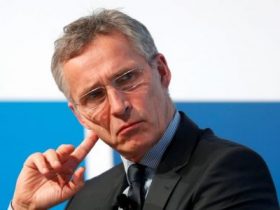 “Russian missiles are a danger” – the alarm was sounded by the Secretary General of NATO, Jens Stoltenberg, in an interview with Maurizio Caprara published in the Corriere della Sera*, three days before the “incident” in the Sea of Azov which added fuel to the already incandescent tension with Russia. “There are no new missiles in Europe. But there are Russian missiles, yes”, began Stoltenberg, ignoring two facts.
First: as from March 2020, the United States will begin to deploy in Italy, Germany, Belgium, and Holland (where B-61 nuclear bombs are already based), and probably also in other European countries, the first nuclear bomb with precision guidance in their arsenal, the B61-12. Its function is primarily anti-Russian. This new bomb is designed with penetrating capacity, enabling it to explode underground in order to destroy the central command bunkers with its first strike. How would the United States react if Russia deployed nuclear bombs in Mexico, right next to their territory? Since Italy and the other countries, violating the non-proliferation Treaty, are allowing the USA to use its bases, as well as its pilots and planes, for the deployment of nuclear weapons, Europe will be exposed to a greater risk as the first line of the growing confrontation with Russia.
Second: a new US missile system was installed in Romania in 2016, and another similar system is currently being built in Poland. The same missile system is installed on four warships which, based by the US Navy in the Spanish port of Rota, sail the Black Sea and the Baltic Sea close to Russian territory. The land-based installations, like the ships, are equipped with Lockheed Martin Mk41 vertical launchers, which – as specified by the manufacturer himself – are able to launch “missiles for all missions: either SM-3’s as defence against ballistic missiles, or long-range Tomahawks to attack land-based objective”. The latter can also be loaded with a nuclear warhead. Since it is unable to check which missiles are actually loaded into the launchers parked at the frontier with Russia, Moscow supposes that there are also nuclear attack missiles, in violation of the Intermediate-Range Nuclear Forces Treaty, which forbids the installation of intermediate- and short-range missiles on land bases.
On the contrary, Stoltenberg accuses Russia of violating the INF Treaty, and sends out a warning:
“We can not allow the Treaties to be violated without punishment”.
In 2014, the Obama administration accused Russia, without providing the slightest proof, of having tested a Cruise missile (SSC-8) from a category forbidden by the Treaty, announcing that “the United States are considering the deployment of land-based missiles in Europe”, in other words, the abandon of the INF Treaty. This plan, supported by the European allies of NATO, was confirmed by the Trump administration: in the fiscal year of 2018, Congress authorised the financing of a programme of research and development for a Cruise missile to be launched from a mobile platform.
Nuclear missiles of the Euromissile type, deployed by the USA in Europe during the 1980’s and eliminated by the INF Treaty, are capable of hitting Russia, while similar nuclear missiles deployed in Russia can hit Europe but not the USA. Stoltenberg himself, referring to the SSC-8’s that Russia had deployed on its own territory, declared that they are capable of reaching most of Europe, but not the United States. This is how the United States defends Europe.
And in this grotesque affirmation by Stoltenberg, who attributes to Russia “the highly perilous idea of limited nuclear conflict”, he warns:
“All atomic weapons are dangerous, but those which can lower the threshold for use are especially so”.
This is exactly the warning sounded by US military and scientific experts about the B61-12’s which are on the verge of being deployed in Europe:
“Low-powered, more accurate nuclear weapons increase the temptation of using them, even to using them first instead of as a retaliation”.
Why is the Corriere della Sera not going to interview them?
Source: PandoraTV
This article was originally published in Italian on Il Manifesto.
Translated by Pete Kimberley
Manlio Dinucci is a Research Associate of the Centre for Research on Globalization.
Note
*The Corriere della Sera is a historical Italian daily newspaper, founded in Milan in 1876. Published by RCS MediaGroup, it is the most important Italian daily in terms of distribution and the number of readers.
A European Army Obeying US Interests Will Only Incentivize More Imperialism and Military Corruption
By Federico PIERACCINI | Strategic Culture Foundation | 27.11.2018
The idea of creating a common army for the countries of the European Union has been repeatedly proposed by numerous advocates of the globalist elite for at least a decade. The latest example came from French President Macron, who took the opportunity during commemorations of the end of WWI in Paris to revive an idea that represents more a fantasy than a real possibility.
First the good news. Richard Shirreff, a retired senior British Army officer, stated: “I think we have got to be very careful about loose talk of a European army. An army is a legally constituted armed force operating under the authority of a sovereign Government. So, if you accept that definition, the notion of a European army is impossible until and unless there is a sovereign European Government, which is obviously not in existence. And I think it is some way off.”
The question then arises as to why Macron and Merkel are so interested in talking about something that seems unrealistic at the moment? The answer is simple and obvious. It is a strategy aimed at striking at Trump directly, as evidenced by the words of Merkel, who also voiced her support for the creation of a European army. The Chancellor has indeed stated that “[t]he times when we could rely on others are over”. By “others” she is clearly referring to the United States. Also, putting to one side the tense personal relationship between Macron and Trump, the Frenchman, like Merkel, is an exponent of globalism. The agreement between Berlin and Paris is intended to move Europe in a direction more agreeable to them, focussing on the need to attract more investment in European weapons, coupled with a desire to decrease dependence on US weapon systems. As Macron stated: “Europe must increase military spending, but the money should go to European, not American companies.”
The main issue, therefore, revolves around the economics of the import and export of arms in Europe and around the world, a business worth tens of billions of dollars a year. As SIPRI’s annual report reminds us, “The five largest West European suppliers – France, Germany, the UK, Spain and Italy – together accounted for 23 per cent of global arms transfers in 2013-17. The combined arms exports by European Union (EU) member states accounted for 27 per cent of the global total in 2013–17.”
Specifically, France and the UK increased their exports by 27% and 34% respectively, while Germany had a decline of 14% over the last 5 years. It should be remembered that the data is only up to 2017, and many agreements have since been concluded, especially between European countries, with France and Germany leading in exports. The SIPRI report presents us with a fairly clear picture of imports from countries like Greece and Italy,even as the US dominates market share, with 20 out of 40 importing countries having the US as their main supplier.
France, the fourth country to have increased exports from 2008-2017, has gone from 5.8% of world exports to 6.7%, increasing exports by 27%. The United Kingdom, the 18th largest importer in the world, imports about 80% from the US. Italy is the 22nd largest importer in the world, importing 55% from the US and about 28% from Germany. Italy is the European country that imports most arms from another European country (Germany), about 28%, about 55% from the US, and the remaining 8.4% from Israel. In terms of imports, Greece is the 28th in the world, importing 68% from Germany, 17% from the US, and 10% from France. Of the top 40 importers, the US is the leading supplier for 20 of the 40, followed by Russia with seven countries, China with three, and seven for the UK, France and Germany combined.
In addition to the creation of a conglomerate that would combine mainly French and Germany industries, Merkel emphasized that such a European army would not be for the purposes of ensuring greater sovereignty for the EU, but rather complement NATO, thereby strengthening the imperialist and ultra-neoliberal positions that have devastated the world in recent decades. As the German chancellor has emphasized, “This is not an army against NATO, it can be a good complement to NATO”, also pointing out the logistical difficulties Europe faces to integration, with more than 150 different weapons systems as opposed to the 50 to 60 of the US.
Such veiled wording indicates the desire of Merkel and Macron to further decrease the importation of arms from American companies, even if overall Germany and France import less than 100 million euros a year from the US. France and Germany will face a critical need to modernize their armed forces in the coming decade, given Europe’s relative backwardness when compared to recent strides made in Russia, China and even the United States. Macron stated that it is crucial to devote 2% of GDP to military spending within four to five years. The new French defense budget, Macron said, would allow for the acquisition of:
“1,700 armored vehicles for the Army as well as five frigates, four nuclear-powered attack submarines and nine offshore patrol vessels for the Navy… The Air Force would receive 12 in-flight refueling tankers, 28 Rafale fighter jets and 55 upgraded Mirage 2000 fighters … This year will see a €1.8 billion increase (US $2.1 billion) in the annual defense budget to €34.2 billion, of which €650 million is earmarked for overseas deployment of combat troops… The modernization strategy will not be just about numbers, as performance should be pursued and the equipment should meet the requirement for ‘balanced’ cooperation between the services and the Direction Générale de l’Armement procurement office.”
The idea of creating a European army also contributes towards budgetary planning, which will start mainly from 2022, as “a large part of the money would only be released in 2024 and 2025, after a budgetary review in 2021.”
This all represents the perfect excuse to increase defense budgets, aiming at a European army that will apparently establish some sort of independence from Donald Trump’s America while simultaneously warding off Vladimir Putin’s Russia. Both Trump and Putin are hated by the globalist elite, being seen as their absolute enemies, and are both used by Macron and Merkel as boogeymen threatening European security, as if Moscow were intent on invading the Baltic countries as NATO analysts constantly claim. Such analysts need to make such claims in order to justify the existence of NATO and their accompanying salaries, with the defense sector being among Europe’s main industries, accounting “for about half a million jobs directly (plus half that number indirectly), in more than 1,300 companies”. That pretty much sums up the reason behind an EU army.
The American and European military-industrial complexes are huge employers. This represents a pool of voters that Merkel and Macron need to keep onside, just as they need financial support from the CEOs of large arms manufacturers in exchange for billion-dollar contracts, something that would simply be called corruption if practiced in other parts of the world.
With the economic crisis of 2008, European spending on arms fell by 22%, But with the provocations in Ukraine in 2014, and then the aggression directed against the Donbass region, creating tensions between Russia and the EU, there was new justification for an increase in military spending, especially since 2017. For example, Poland, Romania and Sweden have each decided to acquire long-range air-defense systems from the US, and Lithuania ordered medium-range air-defense systems containing components coming from Norway and the US.
Thankfully the use of Trump and Putin as boogeymen to justify the creation of a European army is a bluff that will not lead to any concrete action. It all comes down to the money to be made in this multi-billion dollar market. Once again, SIPRI’s study reminds us that Washington is dominant in this field, especially in the private sector, with “[f]orty-four US-based companies accounted for over 60 percent of all arms sales listed by SIPRI. The 30 European companies on the list make up just under 30 percent. France and Germany lead the pack, followed by the United Kingdom.” This is while taking into account that EU member states “are not even legally obliged to declare what their companies sell. Their code has achieved neither transparency nor consistency.”
The question may arise as to how Europe is to be prevented from developing imperial ambitions. The simple if banal answer is that this is not possible so long as Europe remains dependent on the United States and her imperialist and ultra-capitalist ambitions. European countries would in the first instance need a sovereign central bank with their own currency, in addition to a national army that could defend European territory. European elites are in fact moving in the exact opposite direction, and this can be seen almost in the daily activities and statements by leaders like Merkel and Macron. The creation of a European army, instead of guaranteeing greater political freedom and distancing the EU from the US, would only actually serve to buttress the ideology of Washington as the only world superpower.
Contrary to what would in actual fact be needed – more military and economic sovereignty of EU member states – the EU leadership seems to be heading in the other direction. In a world that is becoming more multipolar, the abdication of any kind of political, economic and military sovereignty is a recipe for disaster. Macron and Merkel, instead of balancing Europe’s political weight with China, Russia and the US, are hoping and waiting for a new Obama after the 2020 presidential election, so as to subjugate the whole of Europe to Washington’s rule, with Paris and Berlin acting as local satraps, treating the remaining 25 states of the EU as provinces of the Franco-German sub-empire.
We Don’t Need EU Army, We Need a ‘European Home’ With Russia: Die Linke
Sputnik – November 17, 2018
Following years of floating within the bloc, the idea of Europe creating joint military forces is on the agenda after the French President and German Chancellor called on their EU allies to unite. While the EU leadership backed the initiative, it got a mixed response among European politicians.
Deputy Chair of left-wing Die Linke’s parliamentary group Heike Haensel has lambasted the idea of creating a European army, which was backed by French President Emmanuel Macron and German Chancellor Angela Merkel. In her article for the German outlet Der Tagesspiegel, the left-wing politician insists that European policy needs a radical new beginning.
“People in Germany and Europe do not need armoured roads, weapons and armies, but crisis-proof jobs, stable social systems and decent pensions. Instead of a “European army” we need a common “European home” with Russia. That would be a true vision of a peaceful union,” she wrote.
She stated that the EU and its members have more acute challenges to spend the taxpayers’ money resolving, which “will have catastrophic consequences, not only for Europeans.” The politician pointed at problems within the Union and its member states, including growing employment and utter futility, child poverty, housing shortages and welfare problems, which are successfully exploited. She lambasted the EU leadership for focusing on more deregulation, welfare cuts and militarization instead of solving these issues.
According to her, the militarization is prompting the EU states to increase their military spending. In addition to the NATO-prescribed target of 2 percent of GDP for military budgets, up to 5.5 billion euros of taxpayers’ money is to be spent annually by the “European Defence Fund” for arms technology.
“As if this was not enough, French President Emmanuel Macron, Chancellor Angela Merkel and German coalition politicians are pushing the creation of an EU army. According to Macron, the project is to withstand Russia, China and the United States. But it must be clear that military Eurochauvinism is not an alternative, or a reforming force in the existing world order. On the contrary, the upgrade of a “military-centred EU” around France and Germany wastes resources and increases the danger of conflict,” Haensel says.
She insists that billions of euros have flown into a senseless and dangerous arms race, and should be spent on social and ecological investments as well as fighting the causes of mass migration.
In early November, French President Emmanuel Macron called for creating a European army that would be independent of the US. The German Chancellor has backed his proposal, stressing recently that “Europe must take its fate in its own hands.” She also proposed the establishment of a “European security council” in order to coordinate the process. According to her, it could be a “good supplement to NATO.” Supported by the European Commission, the idea was branded “insulting” by Donald Trump.
However, the idea of a single EU army has been floated for at least several years. Since 2013, Berlin has overseen efforts towards closer EU defence integration through the Framework Nations Concept, which envisages that Germany should share its troops and capabilities with other European countries.
Germany, EU funding militants in Idlib: Report
Press TV – November 12, 2018
The German government and other EU members are funding militants still present in Idlib and involved in a conflict against the Syrian army, Germany’s Tagesspiegel newspaper has revealed.
According to the report cited by British daily the Telegraph on Sunday, “no less than 37.5 million euros” has been transferred to militant groups in Idlib by the German Ministry of Foreign Affairs.
In total, Berlin has paid nearly 49 million euros to militants fighting to topple the Syrian government and facilitated the transfer of similar funds by other EU members, it added.
Those funds included “11.3 million other sources, or 17 million euros from the European Union, for which Germany would have played an intermediary role.”
According to the report, the German government does not communicate the precise list of recipients of the funds for fear of angering Russia and other sides involved in the Syria war.
The information was revealed in an answer given by German Secretary of State for Foreign Affairs Walter Lindner to a question asked by Member of European Parliament Evrim Sommer, to which Tagesspiegel was able to have access.
The report comes after German Chancellor Angela Merkel met with Russian and Turkish leaders in Istanbul late last month to discuss a solution to the Syria conflict.
Ankara has long backed militants seeking to overthrow President Bashar al-Assad, while Moscow is a close ally of the Syrian government in its relentless fight against foreign-backed terrorists.
Merkel apparently rejected Russian President Vladimir Putin’s call to financially contribute to Syria’s reconstruction after they met outside Berlin in August.
Germany is a member of a US-led coalition which has been bombarding Syria since September 2014 without any authorization from the Syrian government or a UN mandate.
Just recently, Berlin said it was in talks with Washington and other allies about a possible involvement in airstrikes on Syria if it used chemical weapons.
Syria and Russia have warned of a “false flag” chemical attack by militants in order to give the US and its allies an excuse to target Syrian troops which have sought to evict terrorists from their last stronghold in Idlib.
Germany has reportedly deployed special forces to northern Syria to aid US-backed Kurdish militants. In September, Defense Minister Ursula von der Leyen said Germany would not reject a possible longer-term deployment of troops to the Middle East.
She made the remarks during a visit to the Azraq air base in Jordan where some 300 German troops are operating as part of the US-led coalition.
The US and its allies characterize their military presence in the region as part of their war on Daesh, but fiercely oppose a final push by Syrian troops against terrorists in Idlib.
Extremists from across Europe joined Daesh in droves in 2014, when the Takfiri terror group launched its campaign of bloodshed and destruction in Iraq and Syria.
Back then, many European leaders ignored repeated warnings that militants could return home one day and that they would pose a security challenge for years to come across the continent.
Last month, Germany said more than a hundred militants, who had been fighting in Iraq and Syria, had returned to the country, but among them only dozens were being investigated for possible terror links.
German Interior Ministry said in a statement that they knew of 124 people, who were part of at least 249 people who had traveled from Germany to Iraq and Syria.
Meanwhile, some 40 percent of at least 900 Britons who traveled to Syria to join Daesh had returned to the United Kingdom, but UK counter-terrorism chief Neil Basu said they were no longer considered a main threat.
Istanbul Summit on Syria Was a Success but Caveats Remain
By Melkulangara BHADRAKUMAR | Strategic Culture Foundation | 29.10.2018
The four-nation Turkey-Russia-Germany-France summit on Syria on October 27 in Istanbul had an impressive outcome. All participants – each with own interests – has some ‘takeaway’ from the summit, which itself is a measure of the success of the event. This is also important because the participants now have a reason to work together.
Such an outcome can be interpreted in the following ways. First and foremost, a major regional conflict impacting international security was addressed without US participation. A sign of our times?
Second, participants didn’t quarrel over President Bashar Al-Assad’s “fate”. The debate becomes pedantic today in terms of ground realities. The Syrian nation should decide on its future. That’s also been Assad’s demand.
Third, some serious thought has been given to the journey towards a Syrian settlement – ceasefire, drafting of new constitution followed by elections under UN supervision.
Four, the participants snubbed the US-Israeli plan to balkanize Syria into “spheres of influence” and have also squashed the Israeli dreams of getting international legitimacy for its illegal occupation of Golan Heights as part of any settlement.
Five, Germany and France have become amenable to the Russian demand pressing the urgency for rendering humanitarian aid to Syria and help in reconstruction. (The US made this conditional on Assad’s removal.) We’ll have to see how it pans out, but the summit also stressed the importance of the return of Syrian refugees (which is a key issue for European countries.)
Six, the participants recognized that the remaining terrorists in Syria must be destroyed – although, significantly, they also supported the Idlib ceasefire deal brokered by Turkey and Russia.
The bottom line is that it is the post-war Syrian order that is under discussion now. However, it must be understood as well that the proxy war is not ending but is rather morphing into the diplomatic war that lies ahead, which of course will be keenly fought, given the divergent interests of the foreign protagonists.
Generally speaking, Russia and Turkey are in command as of now. Their own equations are good but there are grey areas, too. The importance of close coordination between Russia and Turkey cannot but be stressed.
Iran cannot be happy that it has been excluded from the Istanbul summit. But it may prove an underestimation that Iran is in no position to assert its legitimate interests. The close consultations between Russia and Iran – not only regarding Syria – are of course the mitigating factor here.
Similarly, a “post-Khashoggi” Saudi attitude to Syria remains the “known unknown”. The US is in a position to blackmail Saudi Arabia to continue to bankroll its military presence in Syria, but the Saudis cannot have their heart in the overreach to project power abroad. Something has fundamentally changed – Saudis are not used to their prestige being dragged in the mud as in this past month and the traumatic experience cannot but have a sobering effect.
Besides, Saudis dare not cross swords with Turkey on the latter’s Syrian playpen. Above all, Saudis would not want to undermine Russian efforts to stabilize Syria, since Moscow’s goodwill and cooperation is extremely vital for Riyadh in the coming period, now that the raison d’etre of Riyadh’s “Look East” is beyond doubt.
Basically, France and Germany are lightweights in Syria. They had a limited agenda at the Istanbul summit. Russia must know fully well that in the final analysis, US involvement is crucial. It is entirely conceivable that at the forthcoming Russian-American summit in Paris on November 11, Syria will be a major topic of discussion.
The US policy in Syria is at a crossroad and will hinge greatly on the standing of President Trump in the aftermath of the November 6 mid-term elections in the US.
Clearly, this was far from a situation of three major allies of the US staging a mutiny on the NATO ship. Germany and France would have consulted Washington most certainly ahead of the Istanbul summit (which has been in the making for months.)
The big question is how the Turkish-American relations evolve. The Khashoggi affair has brought about certain US-Turkey “proximity”. Ironically, the Deep State in America and Trump are on the same page here – rediscovering the vital importance of Turkey for US regional strategies.
The spokesmen of the Deep State used to defame Turkish President Recep Erdogan for being “Islamist” and “authoritarian” and so on and probably even tried to overthrow him in the failed coup of 2016, but today, they laud him for espousing Islamic democracy as the panacea for the region.
Erdogan, in turn – or at least a part of him – had always hankered for recognition by the West when he sought Turkey’s historic leadership role in the Middle East and uniqueness to act as a bridge between the West and the region. Equally, Trump is eternally grateful to Erdogan to refrain from spilling the beans on the Khashoggi affair and for helping him finesse a major crisis for his presidency on the foreign-policy front.
Suffice to say, this “transition” in the US-Turkey tough love can profoundly affect the geopolitics of the Middle East – provided of course Washington plays its cards carefully in regard of Erdogan’s wish list on a host of pending issues, including some of great sensitivity.
Syria is somewhere at the top of Erdogan’s priorities. Howsoever unpalatable it may appear, Erdogan will expect the Americans to throw their Syrian Kurdish allies under the bus. Yesterday, the Turkish army bombarded Kurdish positions east of Euphrates.
Now, how Turkish policies play out in Syria is difficult to predict, since the variables are too many. A US-Turkey rapprochement is hard to reach. But then, Turks and Americans are also old allies and they have a way of knocking their heads together and start working together again.
Featured Video
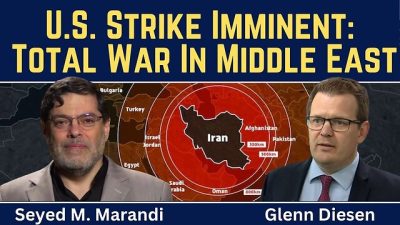
Seyed M. Marandi: Toward Total War in the Middle East
or go to
Aletho News Archives – Video-Images
From the Archives
The Geopolitics behind the War in Yemen (I)
By Mahdi Darius NAZEMROAYA | Strategic Culture Foundation | 30.03.2015
The United States and the Kingdom of Saudi Arabia became very uneasy when the Yemenese or Yemenite movement of the Houthi or Ansarallah (meaning the supporters of God in Arabic) gained control of Yemen’s capital, Sanaa/Sana, in September 2014. The US-supported Yemenite President Abd-Rabbuh Manṣour Al-Hadi was humiliatingly forced to share power with the Houthis and the coalition of northern Yemenese tribes that had helped them enter Sana. Al-Hadi declared that negotiations for a Yemeni national unity government would take place and his allies the US and Saudi Arabia tried to use a new national dialogue and mediated talks to co-opt and pacify the Houthis.
The truth has been turned on its head about the war in Yemen. The war and ousting of President Abd-Rabbuh Manṣour Al-Hadi in Yemen are not the results of «Houthi coup» in Yemen. It is the opposite. Al-Hadi was ousted, because with Saudi and US support he tried to backtrack on the power sharing agreements he had made and return Yemen to authoritarian rule. The ousting of President Al-Hadi by the Houthis and their political allies was an unexpected reaction to the takeover Al-Hadi was planning with Washington and the House of Saudi. … continue
Blog Roll
 Aletho News
- HE SAVED LIVES. NOW HE FACES PRISON.
- Israeli lobby seeks to bind US fate to ‘Israel’: Araghchi
- Pakistan-Iran talks secure LNG shipment to Islamabad through Hormuz
- Black Sea grain crisis puts global wheat supplies under pressure
- IRGC air defenses destroy another US MQ-1 drone over Strait of Hormuz
- Imran Khan’s entire immediate family detained in Pakistan ahead of mass protest demanding his release
- EU nation detains former presidential frontrunner
- Leaked: Britain’s Sham Conviction Of Hashim Thaci
- Seyed M. Marandi: U.S. Strike Imminent – Toward Total War in the Middle East
- Russia Voted Under Fire. Washington Is Loading the Tankers.
- If Americans Knew
- Israeli Attacks in Gaza Kill at Least Seven Palestinians Over Three Days, including Woman and Child
- Trump’s militarization of Washington DC as he pursues Israel’s war against Iran
- Why Israel Fears This Searing New Documentary
- Huckabee aide solicited cash gifts from Israelis
- This isn’t sci-fi, AI is already killing people
- ‘The Most Brutal Thing’: Investigation Reveals Execution of Elderly Woman in Rafah
- Inside Israel’s ‘soft’ ethnic cleansing plan for Gaza through the eyes of its victims
- New online database tracks pro-Israel political donations in the United States
- Israeli president pardons soldier convicted for killing wounded Palestinian
- Singer Ed Sheeran says his ‘heart broken’ by Gaza devastation, addresses Macklemore controversy
- No Tricks Zone
- 2025 Nature Paper Claiming Worsening Global Drought Gets RETRACTED …Heavily Flawed
- New Study: ‘Global Drought Shows No Detectable Recent Acceleration Under Climate Warming’
- Economic Masterminds: German Socialists Suggest Taxing Productivity Gains Stemming From Using AI
- The South China Sea Has Not Been Cooperating With The Climate Change Narrative
- Energy Crisis: Germany Enters Heating Season With Historically Low Gas Reserve Fill Levels
- New Study: The Antarctic Ice Sheet Gained Mass From 2020-2024 Due To Staggering Snow And Ice Accumulation
- Study: Ocean Heating Rates From Thousands Of Years Ago ‘Dwarf’ Modern Ocean Heating Rates
- Climate Extremists Target, Attack Large-Scale Power Grid Infrastructure In Germany!
- New Study: Antarctic Ice Melt Has Contributed Less Than 1 Centimeter To Sea Level Rise In The Last 30 Years
- Fear Of Debate: Alarmist German Climate Scientist Calls On Mainstream Media To Discredit Skeptic Voices
 Aletho News