RAMALLAH – A Gaza engineer kidnapped by Israel in the Ukraine last year is the last remaining prisoner held in solitary confinement, after the hunger-strike deal sought to end the practice, his lawyer said Tuesday.
Dirar Abu Sisi is still being held in an isolation cell in Ashkelon prison, while all others have been returned to normal wards, lawyer Karim Karim Ajwah said, noting his case was “kept secret in an unusual way.”
Abu Sisi disappeared in February 2011 while traveling on a train in Ukraine and Israel later announced that it was holding him in a southern Israeli jail.
A former head of the Gaza power plant, he is accused of working with Hamas to improve its rocket technologies.
Abu Sisi threatened to refuse food and water if promises to move him from solitary confinement are not fulfilled.
He asked his lawyer to contact Egypt to intervene in his case, after the country brokered a deal last Tuesday between Israeli authorities and Palestinian prisoners to end a mass hunger strike in Israeli jails.
The agreement included a commitment to move isolated prisoners to normal cells within 72 hours, according to prison representatives.
May 22, 2012
Posted by aletho |
Civil Liberties, Deception, Subjugation - Torture | Ashkelon, Gaza, Hamas, Israel, Palestinian prisoners in Israel, Solitary confinement |
Leave a comment
The problem facing the Palestinian leadership, as they strive to bring the millions living in the occupied territories some small relief from their collective suffering, amounts to a matter of a few words. A bit like a naughty child who has only to say “Sorry” to be released from his room, the Hamas government need only say “We recognise Israel” and supposedly aid and international goodwill will wash over the West Bank and Gaza.
That, at least, was the gist of Israeli Prime Minister Ehud Olmert’s recent speech during a visit to the Negev, when he suggested that his country’s hand was outstretched across the sands towards the starving masses of Gaza — if only Hamas would repent. “Recognise us and we are ready to talk about peace” was the implication.
Certainly the Palestinian people have been viciously punished for making their democratic choice early this year to elect a Hamas government that Israel and the Western powers disapprove of. An economic blockade has been imposed, starving the Palestinian Authority (PA) of income to pay for services and remunerate its large workforce. Millions of dollars in tax monies owed to the Palestinians have been illegally withheld by Israel, exacerbating the humanitarian crisis. A physical blockade of Gaza enforced by Israel has prevented the Palestinians from exporting their produce, mostly perishable crops, and from importing essentials like food and medicine. Israeli military strikes have damaged Gaza’s vital infrastructure, including the supply of electricity and water, as well as randomly killing its inhabitants. And thousands of families are being torn apart as Israel uses the pretext of its row with Hamas to freeze the visas of Palestinian foreign passport holders.
The magic words “We recognise you” could end all this suffering, so why not utter them? Is Hamas so filled with hatred and loathing for Israel as a Jewish state that it cannot make such a simple statement of good intent? Is the Palestinians’ recalcitrance not proof that they still want to drive the Jews into the sea?
It is easy to forget that, though conditions have dramatically deteriorated of late, the Palestinians’ problems did not start with the election of Hamas. Israel’s occupation is four decades old, and no Palestinian leader has ever been able to extract from Israel a promise of real statehood in all of the occupied territories: not the mukhtars, the largely compliant local leaders, who for decades were the only representatives allowed to speak on behalf of the Palestinians after the national leadership was expelled; not the PA under the secular leadership of Yasser Arafat, who returned to the occupied territories in the mid-1990s after the Palestine Liberation Organisation had recognised Israel; not the leadership of his successor, Mahmoud Abbas, the “moderate” who first called for an end to the armed Intifada; and now not the leaders of Hamas, even though they have repeatedly called for a long-term truce ( hudna ) as the first step in building confidence.
Similarly, few Palestinians doubt that Israel will continue to entrench the occupation — just as it did during the supposed peacemaking years of Oslo, when the number of Jewish settlers doubled in the occupied territories — even if Hamas is ousted and a government of national unity, of technocrats or even of Fatah, takes its place.
There is far more at stake for Israel in winning this little concession from Hamas than most observers appreciate. A statement saying that Hamas recognised Israel would do much more than meet Israel’s precondition for talks; it would mean that Hamas had walked into the same trap that was set earlier for Arafat and Fatah. That trap is designed to ensure that any peaceful solution to the conflict is impossible.
It achieves this end in two ways.
First, as has already been understood, at least by those paying attention, Hamas’s recognition of Israel’s “right to exist” would effectively signify that the Palestinian government was publicly abandoning its own goal of struggling to create a viable Palestinian state.
That is because Israel refuses to demarcate its own future borders, leaving it an open question what it considers to be the extent of its “existence” it is demanding Hamas recognise. We do know that no one in the Israeli leadership is talking about a return to Israel’s borders that existed before the 1967 war, or probably anything close to it.
Without a return to those pre-1967 borders (plus a substantial injection of goodwill from Israel in ensuring unhindered passage between Gaza and the West Bank) no possibility exists of a viable Palestinian state ever emerging.
And no goodwill, of course, will be forthcoming. Every Israeli leader has refused to recognise the Palestinians, first as a people and now as a nation. And in the West’s typically hypocritical fashion when dealing with the Palestinians, no one has ever suggested that Israel commit to such recognition.
In fact, Israeli governments have glorified in their refusal to extend the same recognition to the Palestinians that they demand from them. Famously Golda Meir, a Labour prime minister, said that the Palestinians did not exist, adding in 1971 that Israel’s “borders are determined by where Jews live, not where there is a line on a map.” At the same time she ordered that the Green Line, Israel’s border until the 1967 war, be erased from all official maps.
That legacy hit the headlines last week when the dovish education minister, Yuli Tamir, caused a storm by issuing a directive that the Green Line should be reintroduced in Israeli schoolbooks. There were widespread protests against her “extreme leftist ideology” from politicians and rabbis, and many schools said they would refuse to comply.
According to Israeli educators, the chances of textbooks showing the Green Line again — or dropping references to “Judea and Samaria”, the Biblical names for the West Bank, or including Arab towns on maps of Israel — are close to nil. The private publishers who print the textbooks would refuse to incur the extra costs of reprinting the maps, said Professor Yoram Bar-Gal, head of geography at Haifa University.
Sensitive to the damage that the row might do to Israel’s international image, and aware that Tamir’s directive is never likely to be implemented, Olmert agreed in principle to the change. “There is nothing wrong with marking the Green Line,” he said. But in a statement that made his agreement entirely hollow, he added: “But there is an obligation to emphasise that the government’s position and public consensus rule out returning to the 1967 lines.”
The second element to the trap is far less well understood. It explains the strange formulation of words Israel uses in making its demand of Hamas. Israel does not ask it simply to “recognise Israel”, but to “recognise Israel’s right to exist”. The difference is not a just matter of semantics.
The concept of a state having any rights is not only strange but also alien to international law. People have rights, not states. And that is precisely the point: when Israel demands that its “right to exist” be recognised, the subtext is that we are not speaking of recognition of Israel as a normal nation state but as the state of a specific people, the Jews.
In demanding recognition of its right to exist, Israel is ensuring that the Palestinians agree to Israel’s character being set in stone as an exclusivist Jewish state, one that privileges the rights of Jews over all other ethnic, religious and national groups inside the same territory. The question of what such a state entails is largely glossed over both by Israel and the West.
For most observers, it means simply that Israel must refuse to allow the return of the millions of Palestinians languishing in refugee camps throughout the region, whose former homes in Israel have now been appropriated for the benefit of Jews. Were they allowed to come back, Israel’s Jewish majority would be eroded overnight and it could no longer claim to be a Jewish state, except in the same sense that apartheid South Africa was a white state.
This conclusion is apparently accepted by Romano Prodi, Italy’s prime minister, after a round of lobbying in European capitals by Israel’s telegenic foreign minister, Tzipi Livni. According to The Jerusalem Post last week, Prodi is saying in private that Israel should receive guarantees from the Palestinians that its Jewish character will never be in doubt.
Israeli officials are cheering what they believe is the first crack in Europe’s support for international law and the rights of Palestinian refugees. “It’s important to get everyone on the same page on this one,” an official told the Post.
But in truth the consequences of the Palestinian leadership recognising Israel as a Jewish state run far deeper than the question of the future of Palestinian refugees. In my book Blood and Religion, I set out these harsh consequences both for the Palestinians in the occupied territories and for the million or so Palestinians who live inside Israel as citizens, supposedly with the same rights as Jewish citizens.
My argument is that this need to maintain Israel’s Jewish character at all costs is actually the cause of its conflict with the Palestinians. No solution is possible as long as Israel insists on privileging citizenship for Jews above other groups, and on distorting the region’s territorial and demographic realities to ensure that the numbers continue to weigh in the Jews’ favour.
Although ultimately the return of Palestinian refugees poses the biggest threat to Israel’s “existence”, Israel has a far more pressing demographic concern: the refusal by the Palestinians living in the West Bank to leave the parts of that territory Israel covets (and which it knows by the Biblical names of Judea and Samaria).
Within a decade, the Palestinians in the occupied territories and the million Palestinian citizens living inside Israel will outnumber Jews, both those living in Israel and the settlers in the West Bank.
That was one of the chief reasons for the “disengagement” from Gaza: Israel could claim that, even though it is still occupying the small piece of land militarily, it was no longer responsible for the population there. By withdrawing a few thousand settlers from the Strip, 1.4 million Gazans were instantly wiped from the demographic score sheet.
But though the loss of Gaza has postponed for a few years the threat of a Palestinian majority in the expanded state Israel desires, it has not magically guaranteed Israel’s continuing existence as a Jewish state. That is because Israel’s Palestinian citizens, though a minority comprising no more than a fifth of Israel’s population, can potentially bring the whole house of cards tumbling down.
For the past decade they have been demanding that Israel be reformed from a Jewish state, which systematically discriminates against them and denies their Palestinian identity, into a “state of all its citizens”, a liberal democracy that would give all citizens, Jews and Palestinians, equal rights.
Israel has characterised the demand for a state of all its citizens as subversion and treason, realising that, were the Jewish state to become a liberal democracy, Palestinian citizens could justifiably demand: the right to marry Palestinians from the occupied territories and from the Diaspora, winning them Israeli citizenship — “a right of return through the backdoor” as officials call it; the right to bring Palestinian relatives in exile back to their former homes in Israel under a Right of Return programme that would be a pale shadow of the existing Law of Return that guarantees any Jew anywhere in the world the automatic right to Israeli citizenship.
To prevent the first threat, Israel passed a flagrantly racist law in 2003 that makes it all but impossible for Palestinians with Israeli citizenship to bring a Palestinian spouse to Israel. For the time being, such couples have little choice but to seek asylum abroad, if other countries will give them refuge.
But like the Gaza disengagement, this piece of legislation is a delaying tactic rather than a solution to the problem of Israel’s “existence”. So behind the scenes Israel has been formulating ideas that taken together would remove large segments of Israel’s Palestinian population from its borders and strip any remaining “citizens” of their political rights unless they swear loyalty to a “Jewish and democratic state” and thereby renounce their demand that Israel reform itself into a liberal democracy.
This is the bottom line for a Jewish state, just as it was for a white apartheid South Africa: if we are to survive, then we must be able to do whatever it takes to keep ourselves in power, even if it means systematically violating the human rights of all those we rule over and who do not belong to our group.
Ultimately, the consequences of Israel being allowed to remain a Jewish state will be felt by all of us, wherever we live, and not only because of the fallout from continuing and growing anger in the Arab and Muslim worlds at the double standards applied by the West to the conflict between Israel and the Palestinians. Given Israel’s view that its most pressing interest is not peace or regional accommodation with its neighbours but the need to ensure a Jewish majority at all costs to protect its “existence”, Israel is likely to act in ways that endanger regional and global stability.
A small taste of that was offered in Israel’s cheerleading of the invasion of Iraq, during the build-up in 2002 and 2003, and its assault on Lebanon this summer. But it is most evident in its drumbeat of war against Iran.
Israel has been leading attempts to characterise the Iranian regime as profoundly anti-Semitic, and its presumed nuclear ambitions as directed by the sole goal of wanting to “wipe Israel off the map” — a calculatedly mischievous mistranslation of Iranian President Mahmoud Ahmadinejad’s speech.
Most observers have assumed that Israel is genuinely concerned for its safety from nuclear attack, however implausible the idea that even the most fanatical Muslim regime would, unprovoked, launch nuclear missiles against a small area of land that contains some of Islam’s holiest sites, in Jerusalem.
But in truth there is another reason why Israel is concerned about a nuclear-armed Iran that has nothing to do with conventional ideas about safety.
Last month, Ephraim Sneh, one of Israel’s most distinguished generals, a senior member of the Labour party and now Olmert’s deputy defence minister, revealed that the government’s primary concern was not the threat posed by Ahmadinejad firing nuclear missiles at Israel but the effect of Iran’s possession of such weapons on Jews who expect Israel to have a monopoly on the nuclear threat.
If Iran got such weapons, “Most Israelis would prefer not to live here; most Jews would prefer not to come here with families, and Israelis who can live abroad will … I am afraid Ahmadinejad will be able to kill the Zionist dream without pushing a button. That’s why we must prevent this regime from obtaining nuclear capability at all costs.”
In other words, the Israeli government is considering either its own pre-emptive strike on Iran or encouraging the United States to undertake such an attack — despite the terrible consequences for global security — simply because a nuclear- armed Iran might make Israel a less attractive place for Jews to live, lead to increased emigration and tip the demographic balance in the Palestinians’ favour.
Regional and possibly global war may be triggered simply to ensure that Israel’s “existence” as a state that offers exclusive privileges to Jews continues.
For all our sakes, we must hope that the Palestinians and their Hamas government continue refusing to “recognise Israel’s right to exist”.
* Jonathon Cook is a journalist based in Nazareth. His book Blood and Religion: The Unmasking of the Jewish and Democratic State is published by Pluto Press.
May 20, 2012
Posted by aletho |
Deception, Ethnic Cleansing, Racism, Zionism, Illegal Occupation, Timeless or most popular, Wars for Israel | Gaza, Green Line, Hamas, Israel, Right To Exist, West Bank |
3 Comments
GAZA CITY – Hamas politburo chief Khalid Mashaal on Monday said Israel had broken its promises to improve detainees’ conditions under the last swap deal.
Speaking to reporters after meeting the Egyptian foreign minister in Cairo, Mashaal said the October 2011 deal –which was brokered by Egypt — included pledges to end solitary confinement and other restrictions.
Israel had toughened conditions for Palestinian detainees in a bid to pressure Hamas to release soldier Gilad Shalit. He was freed in October in exchange for 1,047 Palestinian prisoners.
Palestinian detainees launched a mass hunger-strike on April 17 to protest their conditions, with prisoner groups estimating that 2,000 people are now refusing food.
After meeting Arab League chief Nabil al-Arabi on Sunday, the leaders decided to petition the UN on the issue of Palestinian and Arab prisoners in Israel.
On Monday, Mashaal briefed Egyptian Foreign Minister Mohammad Kamel Amr on the situation of Palestinian prisoners.
He thanked Egypt for following up on Palestinian affairs, and stressed the importance of seeing through the Egyptian-brokered reconciliation deal with rival party Fatah.
The national government headed by President Mahmoud Abbas — as agreed between the leaders in Doha in February — must be put into place immediately, he said.
The Hamas chief’s agreement that the Fatah leader should head the government caused uproar in Hamas ranks, sparking a new impasse for the embattled reconciliation deal.
April 30, 2012
Posted by aletho |
Civil Liberties, Deception, Subjugation - Torture | Arab League, Fatah, Gilad Shalit, Hamas, Israel, Mahmoud Abbas, Mashaal, Palestinian prisoners in Israel |
Leave a comment
Last week Marwan Barghouti, the prominent Palestinian political prisoner and Fatah leader, called on Palestinians to launch a ‘large-scale popular resistance’ which would ‘serve the cause of our people.’
The message was widely disseminated as it coincided with Land Day, an event that has unified Palestinians since March 1976. Its meaning has morphed through the years to represent the collective grievances shared by most Palestinians, including dispossession from their land as a result of Israeli occupation.
Barghouti is also a unifying figure among Palestinians. Even at the height of the Hamas-Fatah clashes in 2007, he insisted on unity and shunned factionalism. It is no secret that Barghouti is still a very popular figure in Fatah, to the displeasure of various Fatah leaders, not least Mahmoud Abbas, who heads both the Palestinian Authority and Fatah. Throughout its indirect prisoners exchange talks with Israel, Hamas insisted on Barghouti’s release. Israel, which had officially charged and imprisoned Barghouti in 2004 for five alleged counts of murder – but more likely because of his leading role in the Second Palestinian Intifada – insisted otherwise.
Israel held onto Barghouti largely because of his broad appeal among Palestinians. In late 2009, he told Milan-based Corriere Della Sera that “the main issue topping his agenda currently is achieving unity between rival Palestinian factions” (as quoted in Haaretz, November 25, 2009). Moreover, he claimed that following a unity deal he would be ready to submit candidacy for the Palestinian presidency. Barghouti, is, of course, still in prison. Although a unity deal has been signed, it is yet to be actualized.
Barghouti’s latest statement is clearly targeting the political class that has ruled Palestinians for many years, and is now merely managing and profiting from the occupation. “Stop marketing the illusion that there is a possibility of ending the occupation and achieving a state through negotiations after this vision has failed miserably,” he said. “It is the Palestinian people’s right to oppose the occupation in all means, and the resistance must be focused on the 1967 territories” (BBC, March 27).
Last December, Jospeh Dana wrote, “Barghouti is a figure of towering reverence among Palestinians and even some Israelis, regardless of political persuasion.” However he did not earn his legitimacy among Palestinians through his prophetic political views or negotiation skills. In fact, he was among the Fatah leaders who hopelessly, although genuinely pursued peace through the ‘peace process’ – which proved costly, if not lethal to the Palestinian national movement. Dana wrote, “Barghouti’s pragmatic approach to peace during the 1990s demonstrated his overarching desire to end Israeli occupation at all costs” (The National, Dec 23, 2011).
Although his latest message has articulated a conclusion that became obvious to most Palestinians – for example, that “it must be understood that there is no partner for peace in Israel when the settlements have doubled.” – Barghouti’s call delineates a level of political maturity that is unlikely to go down well, whether in Ramallah or Tel Aviv.
So it’s not his political savvy per se that made him popular among Palestinians, but the fact that he stands as the antithesis of traditional Fatah and PA leadership. Starting his political career at the age of 15, before being imprisoned and deported to Jordan in his early 20s, Barghouti was viewed among Fatah youth – the Shabibah – as the desired new face of the movement. When he realized that the ‘peace process’ was a sham, intended to win time for Israeli land confiscation and settlements and reward a few accommodating Palestinians, Barghouti broke away from the Fatah echelons. Predictably, it was also then, in 2001, that Israel tried to assassinate him.
Marwan Barghouti still has some support in Israel itself, specifically among the politically sensible who understand that Netanyahu’s rightwing government cannot reach a peaceful resolution, and that the so-called two-state solution is all but dead. In a Haaretz editorial entitled ‘Listen to Marwan Barghouti,’ the authors discussed how “back when he was a peace-loving, popular leader who had not yet turned to violence, Barghouti made the rounds of Israeli politicians, opinion-makers and the central committees of the Zionist parties and urged them to reach an agreement with the Palestinians.” The authors recommended that ‘Jerusalem’ listen to Barghouti because he “is the most authentic leader Fatah has produced and he can lead his people to an agreement” (March 30).
In his article entitled ‘The New Mandela’, Uri Avnery wrote that Barghouti “is one of the very few personalities around whom all Palestinians, Fatah as well as Hamas, can unite” (Counterpunch, March 30). However, it is essential that a conscious separation is made between how Barghouti is interpreted by the Palestinians themselves and Israelis (even those in the left). Among the latter, Barghouti is presented as a figure who might have been involved in the “murderous terror” of the second Intifada (Haaretz) but who can also “lead his people to an agreement” – as if Palestinians are reckless multitudes desperate for their own Mandela who is capable, through his natural leadership skills, of uniting them into signing another document.
For years, but especially after the Oslo peace process, successive Israeli governments and officials have insisted that there was “no one to talk to on the Palestinian side.” The tired assertion was meant to justify Israel’s unilateral policies, including settlement construction. However Barghouti is a treasured leader in the eyes of many Palestinians not because he is the man that Israel can talk to, and not because of any stereotypical undertones of him being a ‘strong man’ who can lead the unruly Arabs. Nor can his popularity be attributed to his political savvy or the prominence of his family.
Throughout the years, hundreds of Palestinians have been targeted in extrajudicial assassinations; hundreds were deported and thousands continued to be imprisoned. Marwan Barghouti is a representation of all of them and more, and it’s because of this legacy that his messages matter, and greatly so. In his latest message, Barghouti said that the Palestinian Authority should immediately halt “all co-ordination with Israel – economic and security – and work toward Palestinian reconciliation,” rather than another peace agreement.
Most Palestinians already agree.
April 5, 2012
Posted by aletho |
Ethnic Cleansing, Racism, Zionism, Solidarity and Activism, Subjugation - Torture, Timeless or most popular | Fatah, Hamas, Land Day, Mahmoud Abbas, Marwan Barghouti |
Leave a comment
CAIRO – The Palestine Electricity Company on Tuesday announced a deal with Egypt to provide gas to the Gaza Strip.
Palestine Electricity Company director in Gaza Walid Saad Sayil signed the agreement with the Egyptian General Petroleum Corporation in Cairo on behalf of the Ramallah-based Palestinian Authority.
Sayil told reporters that Egyptian technicians have been instructed to conduct geographical surveys to find the best route for a network of pipelines to transport gas from Sheikh Zweid to the Rafah crossing on Gaza’s border.
Meanwhile, technicians in Gaza will prepare to install a 30-kilometer pipeline from Rafah to the power plant in Gaza City, he said.
Sayil send the new agreement will increase the plant’s capacity from 40 to 180 Megawatts. The power station currently runs on diesel but generators will be converted to use gas, he added.
The sole power plant in Gaza has shut down four times since February due to chronic fuel shortages, causing rolling power outages of up to 18 hours a day.
Ambulances and firetrucks have been taken out of service and bakeries were forced to reduce their hours as petrol pumps ran dry across Gaza.
The latest crisis began after Egypt cracked down on tunnels smuggling fuel into Gaza. Egypt, which is also experiencing fuel shortages, urged Hamas to import fuel across its border with Israel.
Hamas refused, citing concerns that Israel would then have the power to block supplies. Meanwhile, Cairo was reluctant to transfer fuel through the Rafah crossing over fears it would exempt Israel from its responsibilities as an occupying power.
March 27, 2012
Posted by aletho |
Ethnic Cleansing, Racism, Zionism, War Crimes | Egypt, Gaza, Hamas, Israel |
Leave a comment
There is something quite unique about the Middle East’s “Resistance Axis” which includes Iran, Hezbollah, Syria, Hamas and a smattering of smaller groups opposed to western imperialism and zionism.
It is the only major grouping or alliance in the region that includes 1) Arab and Iranian, 2) Sunni and Shia, 3) Islamist and Secularist.
People in this part of the world use communal and political affiliations as a calling card. First name, last name, village of origin, neighborhood, school, mosque, church, group of friends, reading material…all of these things are a quick measure of “identity.”
This emotional link to community has often been exploited as a useful political tool to split people across national, political and religious lines. I have written before about these three “Mideast Stink Bombs,” cleverly wielded by dictators, religious extremists and western hegemonists to “divide-and-rule” the region’s populations to advantage.
The Resistance Axis poses an existential threat to these antagonists, whose very authority depends on vilifying the “Other:” the longterm Saudi project to demonize the Shia/Iran; pro-US autocrats and monarchies using “radical Islam” as an excuse to exclude moderate Islamists from the political process; manufacturing an Iranian “nuclear threat” to isolate a foe and justify weapons sales and military build-ups.
Instead, the rather successful alliance of Iran, Syria, Hamas and Hezbollah annihilates the argument that these “differences” are unbreachable fault lines in the Middle East. We can see with our own eyes, that here – standing strong and supportive in the face of common external foes – are Shiite, Sunni, Islamist, Secularist, Arab and Iranian.
Wrenching Away Our Sunni
So it is not at all surprising that the moment the Arab Spring touched a member of this Axis – Syria –all hands came on board to exploit any vulnerabilities and crow about the imminent break-up of the Resistance.
I recall the Wall Street Journal first breaking the Hamas-defecting-from-Axis story – it was called: Hamas Removing Staff From Syria – that bit was true. The next two paragraphs, however, greedily projected on the storyline: “The Islamic militant group’s parting of ways with Mr. Assad…” and the even more ambitious “Leaving Syria also distances Hamas from Iran…”
Plenty of Hamas officials went on the record denying a break with Syria and Iran, but the WSJ story grew legs, arms and heads. Not many western journalists rushed to cover the visit of Hamas’ top official in Gaza travelling to Iran afterward. But they went full-court press when the very same Ismail Haniyeh addressed a select crowd inside Cairo’s Al Azhar Mosque, saying: “I salute all people of the Arab Spring, or Islamic winter, and I salute the Syrian people who seek freedom, democracy and reform.”
The New York Times’ unabashed interpretation of that solitary quote leads its breaking story: “A leader of Hamas spoke out against President Bashar al-Assad of Syria on Friday, throwing its support behind the opposition…”
Actually, no. Assad and Iran and Russia and China also claim to support freedom, democracy and reform for the Syrian people. They are just as vague about from whence this freedom, democracy and reform will come as was Haniyeh during his Friday Prayer sermon.
So where exactly does Hamas stand on Resistance? And what does this mean for the future of the group and the geopolitics of the region?
The Arab Spring has made way for the “established opposition” in various countries to unseat autocratic governments. The most entrenched opponents of secular, pro-US regimes in the Mideast happen to be Islamists – most of which are of Muslim Brotherhood (Ikhwan) origin, like Hamas.
But while Hamas was marked as an early “winner” of the Arab Spring – their co-religionists in Egypt were, after all, meant to sweep away the previous regime’s oppressive actions against Gaza – they instead found themselves stuck between a rock and a hard place in Syria.
It is the old holdover of the Muslim Brotherhood in Syria that forms the backbone of the opposition there. And so Hamas found itself in the indelicate position of being expected to choose between its Islamist identity and its Resistance identity. It is worth noting that other Islamist Resistance Axis members do not seem to struggle with the issue: even other Sunni groups like Palestinian Islamic Jihad (PIJ) who have also been under scrutiny over this very issue. It really begs the question: is Hamas just too big a Resistance prize for regional players who want this Axis destroyed? The ones courting Hamas assiduously – and asking them to make these choices – are the same ones trying to break Syria’s back, isolate Iran, neutralize Hezbollah and stop armed resistance in Gaza (PIJ).
Hamas: Islamist or Resistance?
It is a difficult challenge for the group. The fact is that Hamas is both Islamist and Resistance. The question of whether one prevails over the other is an interesting one, and has been with me since my August 2010 interview with Hamas Chief Khaled Meshaal, at which time I concluded: “Hamas is clearly a national liberation movement that has at it roots a “resistance” outlook. It’s focus is the liberation of Palestine from Israeli occupation, and the group’s Islamist character complements rather than competes with Hamas’ political objectives.”
Meshaal even took a crack at explaining the roots of the Resistance Bloc, which has long been an area of interest for me: “The forming of this bloc is a natural consequence of events in the region – firstly, the presence of Israel and its atrocities against the region, and then the failure of the negotiation process to achieve something substantial… So there is a vacuum. There is a fiasco. There is a frustration. There is an increasing fury and anger among the masses. And now, embarrassment at the official level in the region. Resistance has therefore become an attractive model for states in the region.”
Prescient statement. The Arab Awakening, of course, kicked off a few short months later in Tunisia.
But then Meshaal said something very interesting, which I think goes to the heart of this Axis. Pointing to Iran, Syria, Turkey, Sudan and Qatar, Meshaal insisted: “They each have their own modus operandi and interests. Something these nations do share, however, is the self-desire to develop this new trend, but at the same time to remain open – not closed or bound – to enjoying options.”
In other words, the Resistance Axis is not an ideological grouping – it is an opportunistic one. An alliance based more on common goals than commonalities. When Saudi Prince Faisal famously quizzed Meshaal about his alliance with Iran, the Hamas chief explained: “Yes, we have relations with Iran and will do so with whomever supports us. We will say thank you to them, but this is not at the expense of our Arab relations. We are a resistance movement, open to the Arabs, to the Muslims and to all countries in the world, and we are not part of any agenda for regional forces.”
Does Hamas know where Hamas is going?
Which brings us to today. In my view, Hamas is exploring its options right now. I have confirmation from both Hamas and Iran that financial assistance continues as before. And it seems that every time speculation about worsening relations hits a peak, a senior Hamas official pops up in Tehran to dispel rumors.
Syria is a much harder problem. Hamas officials tell me that the reason for vacating their political office in Damascus is because other nationals were refusing to meet them in Syria. But let’s be honest, the sectarian undercurrents in both Syria and the region – fanned heavily by Saudis, Qataris, Salafists and the western cabal hyper-focused on Iran – are putting the screws on Hamas.
The group is under tremendous pressure from these parties to break from the Resistance Axis, which many have disparagingly dubbed the “Shiite Crescent.” They have offered money, incentives, sanctuary to Hamas. They have used threats. They have invoked the “Brotherhood” of the Sunni. But then consider this: why, a year later, are we still uncertain of Hamas’ position regarding its alliance with Iran, Hezbollah and Syria.
A rather observant pro-Resistance source remarked the other day: “Hamas is under tremendous pressure to criticize Syria, and that’s all they came up with? It’s not very convincing. Hamas is not giving opinions voluntarily about Syria, I can assure you.”
As Hamas looks to the future and finds many natural co-religionist allies in the various Ikhwan groups emerging on the Arab political landscape, it will be faced with the same dilemma – this time from a different direction. The Islamist character of Hamas may be more fulfilled, but will there be a big gaping hole in their resistance outlook?
Can the Ikhwan get them Palestine? Or can Iran, Syria and Hezbollah fulfill that long-held ambition? Part of the problem with the emerging Ikhwan political parties is that Saudi Arabia, Qatar – even the United States – are trying to guide their direction. If successful, that will not be a comfortable home for Hamas. These new “mentors” will not allow them much breathing space – these are the Old Regimes that actively support the regional Old Order and encourage “flexibility” with Israel.
The big dog-and-pony show of a Hamas-Fatah reconciliation led to Fatah’s Mahmoud Abbas taking the lead. What became of Hamas’ awkward Jordanian visit that was only possible because of Qatari hand-holding? Fatah and Jordan are the last places to look for a Palestinian solution – they are too beholden to western interests.
The new mentors will bang away at Hamas; demand political blood from the group; push them toward unpalatable concessions. A wise colleague points out: “Hamas will be finished when it becomes Fatah.”
In a 2009 interview with Usama Hamdan, Hamas’ international relations chief told me: “In the West, they try to shape you before dealing with you. This is the Palestinian experience. They’ve done this with Fatah. Hamas’ position is to say what we are, what we stand for – clearly – and we can defend our rights best that way.”
An equally-senior Hamas official told me recently in a lengthy off-the-record conversation that there were “good changes” taking place in the region, but “real dangers” ahead: “The international community does not care about the people of the region… the conflict still is between real independence and being under occupation – or the influence of outsiders.”
He also refuses the notion that Islamist trends in the region will end up hostile to the Resistance: “You can’t say the Ikhwan is against Resistance – they have been real supporters of Hamas.”
There are two main priorities for Hamas these days, he says: “The needs of the people in the region and dealing with Israel and its supporters.”
Hamas may evolve in the next few years, but if it cleaves to its core values – somewhere in the middle of the current leadership’s political spectrum – I think you will find a group that will not commit itself to concepts or allies outside of those parameters. The group will talk to all players, consider all options, test the new waters of this fast-changing region – as it should. In the final analysis, it is the liberation of Palestine that bestows popular legitimacy on this group, and Hamas will need to choose the path that best serves that goal.
And Resistance itself might change, as one Hamas official hinted to me. If sectarianism can be contained, when this ferocious geopolitical Battle of the Blocs is over, we might perhaps even see a clean sweep from the Persian Gulf to North Africa of people rejecting foreign hegemony and Zionism. This is what the Old Guard fears most – and the vast majority of Arabs, Iranians, Sunni, Shia, Islamists and Secularists wholeheartedly support.
It will take some time, but I will have my Sunni back.
Sharmine Narwani is a commentary writer and political analyst covering the Middle East. You can follow Sharmine on twitter @snarwani.
March 26, 2012
Posted by aletho |
Deception, Ethnic Cleansing, Racism, Zionism, Solidarity and Activism, Timeless or most popular, Wars for Israel | Arab Spring, Bashar al-Assad, Gaza, Hamas, Iran, Syria |
Leave a comment
The Muslim Brotherhood aims to open the Egyptian border with Gaza to commerce, a shift that would transform life for 1.7 million Palestinians strangled by a six-year Israeli siege, but faces resistance from powerful remnants of Hosni Mubarak’s regime.
The Muslim Brotherhood, the biggest party in Egypt’s new parliament, but not in government, have been seeking ways to ease the impact of the blockade imposed by Israel and Mubarak’s Egypt on the territory run by Hamas, an ideological offshoot of the Brotherhood.
The Muslim Brotherhood recently lobbied the Egyptian government to conclude a deal to supply fuel for Gaza’s sole operating power station to reduce electricity blackouts.
Gaza’s three other power plants were destroyed in previous Israeli airstrikes and the siege has prevented Hamas from importing material to reconstruct the stations.
However, the blackouts still plaguing Gaza several weeks after a deal was declared show that changing Egyptian policy is easier said than done, where the government is still largely run by remnants of Mubarak’s regime.
“It’s the continuation of the Mubarak method in dealing with the Palestinian issue,” said Gamal Hishmat, the deputy chair of the Egyptian parliamentary committee on foreign affairs and a Muslim Brotherhood MP.
The fuel has yet to arrive because of a dispute over how it should be delivered, according to Hamas and Brotherhood MPs familiar with the details.
Hamas wants it to come across Gaza border with Egypt, a precedent that could lead to broader trade through the only Palestinian frontier not controlled by Israel.
Egypt had initially backed this, but then said it should go via Israel, Hamas and Brotherhood sources said. Officials at the Egyptian oil ministry could not be reached for comment.
Egypt signed a peace deal with Israel in 1979 and Mubarak was a key US ally and Israeli ally during his 30-year autocratic rule.
Mubarak’s Egypt joined Israel in its blockade on Gaza in a bid to erase Hamas, fearing an Islamist leadership on its doorstep could instigate Islamists at home.
Under international pressure, Israel eased some import curbs on Gaza in 2010, but for the most part businesses cannot export.
Protests organized by Hamas at the border this week over the power crisis have signaled growing impatience with restrictions Palestinians feel should have ended with Mubarak’s rule.
Egypt’s ruling military led by Field Marshal Hussein Tantawi eased restrictions on the passage of travelers last year, but the change fell short of what Palestinians were seeking.
“The Field Marshal of Egypt and the government of Egypt and the whole world stand silent as Gaza remains under blockade,” Mohammed Ashour, a local official in Gaza, told a rally, his voice booming from loud speakers across the frontier.
Commerce has been forced underground into tunnels under the border, but the Brotherhood is pushing to have ties normalized with Gaza.
“I want the crossing to open completely, so that whoever wants to travel from Gaza can come to Egypt,” said Mahmoud Ghozlan, spokesman for the Muslim Brotherhood. “We support opening the crossing for imports and exports.”
Hamas wants the same. “When the crossing officially opens, we will be the ones to close down the tunnels,” Mahmoud Zahar, a senior Hamas figure, told Al-Akhbar.
For the Brotherhood, the first justification for opening the crossing is moral. The Gaza blockade is one of the most emotive issues in the Arab world. There would also be an economic benefit for northern Sinai, one of the poorest parts of Egypt.
For Israel, the idea does not appear a cause for concern.
“The Israeli foreign minister has suggested that we do everything we can to help Gaza stop depending on Israel for anything and instead deal directly with Egypt,” an Israeli diplomat said.
He added that checks would be needed on the Egyptian side to prevent arms reaching Gaza, but said the fuel deal did not raise any alarm.
The Egyptian position has long been shaped by a concern that Israel would relinquish all responsibility for Gaza were the border with Sinai opened.
A diplomat familiar with Gaza policy said Cairo’s worry was now that yielding to Hamas demands would weaken Egypt’s leverage over the group and undermine efforts to nudge it towards reconciliation with the Palestinian Authority (PA).
Zahar did not expect any serious change in policy until Egypt elects a new president, completing the transition from army rule at the end of June. “In this interim period I do not believe fundamental changes will happen,” he said.
(Reuters, Al-Akhbar)
March 21, 2012
Posted by aletho |
Subjugation - Torture, Wars for Israel | al-Akhbar, Egypt, Gaza, Hamas, Israel, Mubarak, Muslim Brotherhood |
1 Comment
Hamas Political Bureau Chief Khaled Meshaal has said that the Israeli military has turned the Gaza Strip into a testing field for its new weapons.
“Israel used Gaza as a field experiment for the Iron Dome [missile system]” and the weapons of the Israeli army, Israeli newspaper Jerusalem Post quoted Meshaal as saying in a surprise meeting with Turkish Prime Minister Recep Tayyip Erdogan in Ankara late on Friday.
The Hamas leader also criticized the Israeli regime for “fabricating excuses” to launch the recent attacks on the Gaza Strip.
At least 26 Palestinians have been killed and dozens of others injured in Israeli attacks on the coastal sliver since March 9.
Erdogan also lambasted the Israeli airstrikes on Gaza, saying that Tel Aviv was marking efforts to drag Palestinians into war.
Reports say Meshaal and Erdogan also discussed the ongoing reconciliation talks between Palestinian groups Hamas and Fatah.
“There are positive developments regarding relations between Hamas and Fatah. We will assess these developments,” Erdogan told reporters before the meeting.
Fatah, which controls the West Bank, and Hamas, which controls the Gaza Strip, have been trying to form a unity government based on an agreement brokered by Egypt and signed last year in Cairo.
March 17, 2012
Posted by aletho |
Militarism, Timeless or most popular, War Crimes | Gaza, Gaza Strip, Hamas, Iron Dome, Israel, Khaled Mashal |
Leave a comment
Israel and Islamic Jihad have agreed to a ceasefire after Egypt brokered a “mutual truce” following four days of an Israeli assault on Gaza that left 25 Palestinians dead and at least 80 injured, mostly civilians.
Israeli officials and Islamic Jihad both confirmed that a deal was in place, although they were quick to warn that the agreement would be short lived if the other side stepped out of line.
“There is an understanding, and we are following what’s going on in the field,” Home Front Defense Minister Matan Vilnai told Israeli public radio.
“Apparently things are calming down and this round of confrontations appears to be behind us.”
And in Gaza, an Islamic Jihad spokesman said the resistance group was willing to respect the deal if Israel would end its targeted killings of fighters.
“We accept a ceasefire if Israel agrees to apply it by ending its aggressions and assassinations,” Daud Shihab told AFP.
News of the agreement emerged early on Tuesday after Egypt brokered what the Egyptian intelligence official said was a “comprehensive and mutual” truce.
“An agreement on ending the current operations between the two sides, including a halt to assassinations, entered into force at 1:00am,” he told AFP, saying the deal was reached after the Egyptians held “intensive contacts” with both sides.
But the Israel minister denied there was any agreement to halt the military’s campaign of assassinations.
There was no immediate comment from Gaza’s Hamas rulers, who have been relatively silent during the latest round of violence. Hamas did not deploy any of its forces to defend Gaza from attack, nor fire any rockets into Israel in response.
Two Palestinians were killed Monday evening in the latest Israeli attack on Gaza, bringing the death toll in the besieged strip to 25 since Friday, according to medics.
The two men, who were members of the Al-Quds Brigades, were killed in an airstrike on the Shujaiyeh neighborhood, medical officials said.
The latest attacks began Friday evening when Israel killed the head of the Popular Resistance Committees in an airstrike near Gaza City.
Israel routinely carries out airstrikes on the Gaza Strip, and has intensified its campaign in recent months, while Hamas insists on maintaining restraint.
Suspicions of a new war were raised after Israeli army chief Benny Gantz said in December that Israel should launch a “swift and painful” war against Gaza.
Israel’s previous war against Gaza in late 2008 killed at least 1,400 Palestinians and three Israeli non-combatants.
The Jewish state maintains a siege over Gaza and continues to build illegal settlements in the occupied West Bank.
Testing Israel’s Iron Dome
The latest campaign tested Israel’s new Iron Dome short-range air defense system, designed to intercept rockets from Gaza and Lebanon’s Hezbollah.
On Monday, 31 rockets headed for urban centers were targeted by Iron Dome, which scored 23 hits, the military said, a 75 percent success rate.
“The system is working very well,” Brigadier General Doron Gavish briefed reporters at one of the batteries in the vicinity of Ashdod, 25kms from the Gaza border.
“Rockets shot at the cities of Israel are being intercepted by the warriors who are operating the system,” said Gavish head of Israel’s national air defenses.
Visiting a battery on Sunday, Prime Minister Benjamin Netanyahu spoke of the system’s “impressive achievements.”
The system, the first of its kind in the world, was developed by Israel’s Rafael Advanced Defense Systems with the help of US funding.
Each battery comprises detection and tracking radar, state-of-the-art fire control software, and three launchers, each with 20 interceptor missiles, military sources said.
The system is later to be deployed along the Lebanese border in the event of a future conflict with Hezbollah.
But a complete deployment is expected to take several years.
(Al-Akhbar, AFP, Reuters)
March 13, 2012
Posted by aletho |
Militarism, Subjugation - Torture, War Crimes | Gaza, Gaza Strip, Hamas, Iron Dome, Islamic Jihad Movement in Palestine, Israel, Popular Resistance Committees |
Leave a comment
Palestinian Prime Minister in Gaza Ismail Haniyeh took part Saturday in Iran’s commemoration of its 1979 Islamic Revolution in Tehran. After thanking the Islamic Republic for supporting the resistance movements, he assured in a speech he delivered before the millions of participants in the celebrations that Hamas “will never recognize Israel”.
“They want us to recognize the Israeli occupation and cease resistance but, as the representative of the Palestinian people and in the name of all the world’s freedom seekers, I am announcing from Azadi Square in Tehran that we will never recognize Israel,” he said.
Haniyeh further emphasized that resistance and jihad are the strategic choice for this nation and the only path for liberating Al-Quds.
“The resistance will continue until all the Palestinian land, including Al-Quds, is liberated and all the refugees return,” he said.
Indicating that the Iranian people are a partner in the Arab victory against the Zionist entity, the Palestinian prime minister rejected the American and Zionist threats to the Islamic Republic, and the Western interference in the Arab and Islamic region, and stressed the importance of Islamic unity.
“The Islamic Revolution in Iran, the resistance, and the Arab spring assure that this is the period of the people, and that no one could stand against the will of the people,” he added.
Moreover, Haniyeh continued addressing the Iranian people saying: “We come to you, o Muslim people, on this day, to embrace the victories from the blessed land of Palestine to the Islamic revolution in Iran.”
February 11, 2012
Posted by aletho |
Ethnic Cleansing, Racism, Zionism, Solidarity and Activism | Hamas, Iranian Revolution, Ismail Haniyeh |
1 Comment
Palestinian President, Mahmoud Abbas, told US Middle-East Envoy, David Hale, on Thursday, that there is no contradiction between internal Palestinian reconciliation, and the peace process with Israel.
The meeting was also attended by Palestinian Liberation Organization Executive Committee member, Dr. Saeb Erekat, President spokesperson, Nabil Abu Rodeina, and the American Consul General Daniel Rubinstein.
Abbas stated that peace is a strategic choice that the Palestinians are determined to achieve, and that internal unity and reconciliation are national necessities and interests that have nothing to do with peace talks.
The Palestinian President called on the Israeli government to openly accept the two-state solution based on the boundaries of the 1967 six-day war, and to stop all of its settlement activities, in addition to the release of all political prisoners, including those imprisoned since before 1993.
He said that these principles are not, in any way, preconditions, but are commitments that Israel must abide by, and that implementing these commitments would enable the resumption of the peace process and the final-status peace talks.
Efforts to resume Palestinian-Israeli peace talks have been facing numerous obstacles due to Israel’s ongoing violations, mainly due to its ongoing illegal settlement activities in the occupied territories, including in occupied East Jerusalem, and its ongoing assaults.
February 8, 2012
Posted by aletho |
Ethnic Cleansing, Racism, Zionism, Illegal Occupation | David Hale, Hamas, Mahmoud Abbas, Palestine Liberation Organization, President of the Palestinian National Authority, Saeb Erekat |
1 Comment
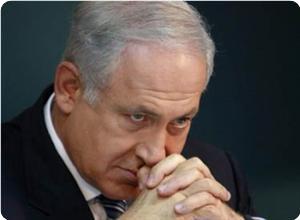
BETHLEHEM – Israeli Prime Minister Benjamin Netanyahu reiterated his opposition to reconciliation between Palestinian factions Fatah and Hamas on Monday, after the parties signed an agreement in Qatar to form a unity government to prepare for elections.
“Hamas is a terrorist organization that seeks to destroy Israel and is supported by Iran,” Netanyahu insisted during a meeting of his Likud party.
“I have said more than once that the Palestinian Authority must chose between an alliance with Hamas, or peace with Israel. Hamas and peace do not go together.”
Fatah leader President Mahmoud Abbas and Hamas chief-in-exile Khalid Mashaal agreed that Abbas will head the joint government at a meeting in Doha on Monday.
The accord also included agreements on releasing political prisoners, reforming the Palestinian National Council and activating the PLO for the next elections, Palestine TV said.
Fatah and Hamas agreed to end four years of bitter dispute and rival governments in May 2011, but the deal has repeatedly stalled as disagreements rumble on. The candidate to lead an interim unity government had been a key sticking point.
After the May deal, Israeli officials froze the transfer of tax revenues to the Palestinian Authority, collected by Israel on the PA’s behalf under international agreements. When Mashaal and Abbas met again in November, Israel moved to maintain a second freeze, initially imposed after Abbas applied for full Palestinian membership of the UN.
A statement from Netanyahu’s office after the Qatar meeting on Monday did not refer to punitive measures, but warned that the deal would imperil the peace process.
“If Abbas implements what has been signed today in Doha, then he has chosen to renounce the path of peace and embrace Hamas.
“I tell Abbas: you can’t have your cake and eat it, either you have a deal with Hamas or chose peace with Israel.”
PLO officials held five rounds of exploratory talks with Israeli representatives in January, but insist they cannot progress to direct negotiations until Israel halts settlement building on occupied Palestinian land.
February 6, 2012
Posted by aletho |
Aletho News | Abbas, Benjamin Netanyahu, Fatah, Hamas, Palestinian National Authority |
3 Comments




 Aletho News
 Aletho News