Egyptian minister praises Obama’s remarks on Egypt, Hamas slams Egypt’s FM for threatening to attack Gaza
Egyptian minister praises Obama’s remarks on Egypt in the UNGA
MEMO – September 25, 2013
Egyptian Foreign Minister Nabil Fahmy has described US President Barack Obama’s remarks to the UN General Assembly about Egypt as “positive” and reflective of “an objective treatment of the situation in Egypt.”
Fahmy was responding to Obama’s speech on Tuesday that was critical of both ousted President Morsi’s government for being non-inclusive, and the interim government established by the coup for violating the Egyptian people’s rights, including policies such as the curfew, the state of emergency and the restrictions on press freedoms.
About how the latter issues would be resolved, the minister said: “They will be overcome through the context of the implementation of the roadmap and efforts to build a modern and democratic state in Egypt.”
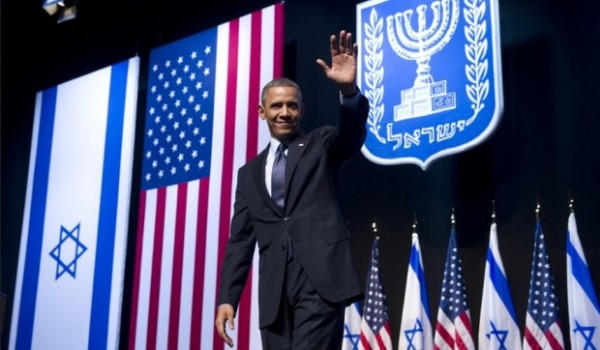 In his speech to the UN General Assembly, Obama repeatedly asserted his country’s respect for the will and choices of the people in the Middle East. However he also warned that the “United States will at times work with governments that do not meet, at least in our view, the highest international expectations, but who work with us on our core interests.”
Obama affirmed that the US is going to preserve good relations with Egypt, saying the US “will maintain a constructive relationship with the interim government that promotes core interests like the Camp David Accords,” as well as counterterrorism efforts.
But he added that US support will also “depend upon Egypt’s progress in pursuing a more democratic path.”
Hamas slams Egypt’s foreign minister for threatening to attack Gaza
Palestine Information Center – 25/09/2013
GAZA — The Hamas Movement strongly denounced Nabil Fahmi, the Egyptian minister of foreign affairs, for threatening to take military and security action against the Palestinian resistance in Gaza.
Its spokesman Fawzi Barhoum stated on Tuesday that Fahmi’s threats were reprehensible and very dangerous and would do a great disservice to Egypt’s reputation and historical stature.
Barhoum added that Fahmi’s remarks in this regard unveiled bad intents and hostile tendencies against the Palestinians in general and Gaza in particular.
He stressed that such position would remove Egypt from its national, Arab and Islamic role in supporting the Palestinian people and their cause.
The spokesman affirmed that Hamas and its people in Gaza have no intention or agenda to engage in any kind of conflict with Egypt.
“We will remain defenders of the Arab and Muslim nations’ pride and dignity, and our main struggle is only against the Israeli occupation, the greatest threat to Egypt and Palestine,” he underscored.
For its part, Al-Ahrar Movement in Gaza also deplored the Egyptian minister’s threat to use military and security options against Gaza.
“We were expecting an Egyptian position supporting the Aqsa Mosque and preventing its division, and not a threat by the foreign minister of Egypt to attack Gaza. We affirm that such remarks undermine Egypt’s ethics and role in protecting our people,” Al-Ahrar Movement stated on Tuesday.
It also said that this new Egyptian position only serves the Israeli occupation regime which has taken advantage of the military coupe and are trying to drive a wedge between Gaza and Egypt.
Egyptian navy attacks fishermen in Palestinian waters
Palestine Information Center – 15/09/2013
GAZA — The Egyptian naval forces opened fire on Saturday evening at Palestinian fishermen and physically assaulted two of them during an incursion into the territorial waters of the Gaza Strip.
Dean of the Gazan fishermen Nizar Ayyash told the Palestinian information center that Egyptian naval soldiers detained fisherman Omar Bardawil, 40, along with his son Ziyad, 13, and brutally beat him before confiscating the outboard motor of his boat.
Ayyash said this incident was the second of its kind after the Egyptian navy had wounded two weeks ago two Gazan fishermen and kidnapped five others during an armed attack on them in Gaza territorial waters.
He expressed his grave concern that the Egyptian army started to follow the steps of its Israeli counterpart and engage in hostile practices against the fishermen of Gaza.
The Gazan fishermen confirmed that two Egyptian gunboats entered the Gaza territorial waters and started to shoot them at close range during their presence near Rafah port before capturing and assaulting Ayyash and his son off the coast.
For its part, the Hamas Movement strongly denounced the Egyptian navy for violating the Palestinian maritime borders and launching a wanton attack on Gazan fishermen.
“The Hamas Movement deplores the opening of fire at Palestinian fishermen inside the Palestinian waters by Egyptian naval boats and the detention of some of them,” its spokesman Sami Abu Zuhri stated in a press release.
Related articles
Egypt’s coup leaders grateful for Israeli support
By Shazia Arshad | MEMO | September 9, 2013
The Egyptian army and Israel have grown much closer in the weeks since the coup d’etat. In a Ha’aretz report, Amos Harel, suggested that the Egyptian and Israeli relationship now was in fact stronger than it was during the rule of Mubarak. Following the coup, it was Israel that the Egyptians turned to ensure that the American government and the new Egyptian coup regime would reach an understanding. Although the toppling of the democratically elected government was widely accepted as a coup, Israel prevented the use of the term and encouraged America to accept events as a regime change. In doing so, Israel ensured that American financial support to Egypt could continue, as acceptance of a coup would mean that aid would have to be suspended under American law.
Israel’s role in securing continued US aid for Egypt’s army has made it possible for a stronger bond between the two to develop. Events in Egypt since the coup have demonstrated how grateful Egypt’s army are to Israel. Indeed, the Egyptian army’s particular focus on the Sinai and Gaza has won favour with the Israelis. Gazans in particular have been bearing the brunt of the warmer relationship between the two regimes. In recent weeks, the Egyptian army have closed all tunnels between Egypt and Gaza and restricted the border crossing at Rafah. The closure of the tunnels has had a significant impact, forcing Gaza to turn to Israel and import fuel through Israel at six times the cost. The tunnel economy, which has provided basic needs for Gaza’s blockaded residents, has been shut down and will cause further financial stress to the Gazan economy. The restrictions on the Rafah crossing have limited the travel of Palestinians in to and out of Gaza, including those who need access to urgent medical treatment. The Rafah crossing had allowed freer movement during the presidency of Mohamed Morsi, much to Israel’s chagrin.
Egypt’s new political direction has also left Hamas out in the cold, this time much to Israel’s delight. Prior to the coup, with increasing support from the Muslim Brotherhood in Egypt Hamas’ strength in Gaza had increased and Hamas used the opportunity to oppose Assad’s civil war in Syria. With the opposition to Assad, Hamas relied on Egypt, but with the turn of events, Hamas now face increasing isolation. To further weaken Hamas, the Egyptian army circulated rumours of Hamas’s involvement in terrorist activities in Egypt. Last week’s attempted assassination of the Egyptian interior minister was used to implicate Hamas, when local media sources suggested that they had been involved in the bomb attack. Despite the clear fallacy of the claim, the rumours have worked to suppress Hamas in Gaza, as the Israeli’s have wanted to do for some time now.
In the Sinai, the Egyptian army has been circulating rumours of terrorist activity too. With claims that Islamist terror groups are active in the region, the army has increased its presence with more troops, tanks and helicopters in the region. Under the Israel-Egypt peace treaty the Egyptians require Israel’s agreement for them to be able to do so, and in yet another example of the Egypt-Israel bond growing stronger, the Israelis have sanctioned the increase. The Egyptian army has reportedly killed 100 activists in the Sinai, wounded and arrested hundreds of others. Further reports have indicated that the Egyptian army is currently developing a buffer zone in the Sinai to prevent weapons and terrorist smuggling into and out of Gaza. Reports suggested that the buffer zone would be a military controlled area and that the residents currently there were being forced from their homes with no warnings.
The Egyptian army have been able to mount a coup against the democratically elected Egyptian president, ensure that America continues to bank roll the country and strengthen their grip on power since the coup thanks to the work, and the words, of the Israelis. Whilst they may not be making the strengthening of their relationship public, the Egyptians want to ensure that the Israeli’s know how grateful they are for their support. In this vein, the army’s attacks to protect Israel’s interests are sure to increase.
Related articles
Egypt and UAE plot to topple Hamas
MEMO | September 4, 2013
A retired Egyptian general has revealed details of an Egypt-UAE plot to impose a stranglehold on the Gaza Strip and overthrow the Hamas-led government. The plot, claims General Sami Hassan, is for the Egyptian army to act, with funding from the UAE government.
“The plan is led by General Abdel Fattah al-Sisi,” tweeted Hassan. “He aims to achieve political and military gains in the coming days.”
General Hassan said that the military will impose even more restrictions on the Palestinians in Gaza, cutting all essential supplies which currently pass through the tunnels. Fuel supplies in particular are being targeted. The Gaza Strip relies on Egypt for 80 per cent of its fuel.
According to Hassan, the process has already started with a media demonisation campaign against the Palestinians and Hamas. As soon as the army creates calm in the Sinai Peninsula, he asserted, it will stir up popular demonstrations.
Al-Sisi has already met with Shaikh Hazza bin Zayed, an adviser to the UAE National Security Authority, and ex-Fatah “strongman” Mohammed Dahlan, said General Hassan. “A sum of $750 million has been allocated for the plot,” he claims, “which will involve returning Gaza to Egyptian control or handing it over to the Palestinian Authority [in Ramallah].”
The decisive meeting, he noted, lasted one and a half hours in Al-Sisi’s office. The following objectives were agreed upon:
- Sinai will be “cleansed” of militant groups and nomadic tribes on the border with Gaza will be disarmed.
- A drone base will be established by Egypt in Sinai under international supervision. Air strikes will be launched against the “global jihadist movement”.
- All tunnels between Gaza and Egypt will be closed, and Egypt will cut off all essential supplies going to Gaza.
- Electricity supplies from Egypt to Gaza will be cut off altogether.
- An agreement between the Palestinian Authority, Egypt and Israel will be reactivated with the return of international observers to the Rafah Border Crossing.
- Hamas will be toppled and the Gaza Strip will be returned to President Mahmoud Abbas’s control.
- Power in Gaza will handed over to the PA or people in the UAE’s pay and control, such as Dahlan.
Related articles
- Egypt coup enters second phase: the overthrow of Hamas (alethonews.wordpress.com)
- Students campaign to expel Dahlan from UAE (alethonews.wordpress.com)
- Analyst: Mossad is behind Egyptian media’ incitement against Gaza (altahrir.wordpress.com)
- Egypt destroys Gaza tunnels, causes crisis (willyloman.wordpress.com)
- Egypt fires at Palestinian fishermen off Gaza: medics (willyloman.wordpress.com)
Students campaign to expel Dahlan from UAE

MEMO | September 2, 2013
Hundreds of students in the United Arab Emirates have signed-up to a Twitter campaign to expel one-time Fatah strongman Mohammed Dahlan from the country. The students insist that Dahlan has “betrayed” the Palestinian cause for Israel’s benefit and are asking the Emirates government why they allow “Israel’s number one client” to stay in the UAE.
Under the theme “Expel Dahlan from the country”, the activists have stressed their belief that Dahlan’s “nasty streak” in spreading “misleading” ideas about Palestine has already started to be reflected in public attitudes towards the issue. They accuse the government of supporting a “criminal” whose work has led to the deaths of his own people as well as promoted the Israelis at the expense of Islamists. The campaign is pushing for the UAE government to be more discerning about allowing such “criminals” into the country: “Those who are being valued by the Emirati authorities,” they allege, “sell their own land and kill their own people.”
Previous reports suggest that Dahlan, a former leader in the Palestinian Fatah movement who occupied a senior security position with the Palestinian Authority, is the instigator of a number of acts of sabotage against the Egyptian army and police in Sinai, near the Gaza Strip. These, it is claimed, have been coordinated with parties in Egypt in order to blame Hamas and incite distrust and hatred among Egyptians against the Islamic Resistance Movement and the Palestinians in Gaza.
Related article
- Fatah security officer loyal to Dahlan captured in the Sinai (altahrir.wordpress.com)
Egypt coup enters second phase: the overthrow of Hamas
MEMO | September 2, 2013
The military coup in Egypt is believed to have entered its second phase. The security forces affiliated with General Abdel Fattah al-Sisi, commander-in-chief of the Egyptian armed forces, have begun gradual attacks to topple the Hamas movement in the Gaza Strip, supported by incitement from the pro-Sisi media. A few obscure activists, meanwhile, have organised protests against the government in the Strip. The activists are believed to have received financial aid from the United Arab Emirates.
The news site, Secrets of Arabia, has observed signs of an orchestrated campaign, initiated by Egypt, to attack Hamas and overthrow its government in Gaza. Meanwhile, other sources have claimed that the UAE has been orchestrating the campaign in collaboration with Palestinian, former Fatah leader, Mohammed Dahlan, who works as a consultant for Abu Dhabi Crown Prince, Mohammed bin Zayed. Dahlan was expelled from Gaza following a failed attempt to topple the democratically elected Hamas-led government.
Over the past few weeks, Egyptian troops have launched an extensive campaign against the smuggling tunnels. The tunnels are used to transport essential goods to Gazans, who are suffering from the tight Israeli blockade. News was also leaked of an order by Egyptian security forces to demolish more than 500 houses near the Gaza Strip border and 500 meters deep into the Egyptian territories.
The operation to demolish Palestinian houses, on the border with Gaza, is considered a first of its kind in the history of the Egyptian-Palestinian relations. The operation has raised concerns in the region, of a possible Egyptian military action against Hamas and the tunnels. According to Egyptians residents of the area the Egyptian community believe that the operation is designed to strengthen the siege on Gaza.
Campaign of incitement
The Egyptian military’s actions are supported by an unprecedented campaign by the Egyptian pro-military coup media which calls on Palestinians to revolt against Hamas, in a clear, blatant and unprecedented intervention in the internal affairs of Palestine. Meanwhile, the same media channels have criticised non-Egyptians who interfere in the political affairs of Cairo.
The controversial Egyptian media personality, Tawfiq Okasha, surprised his viewers on Saturday evening with an unprecedented instigation against the Palestinians in Gaza. Okasha said the Palestinians must rise up against Hamas and that the Egyptian army would support them militarily to eliminate the movement.
Okasha is close to the General Sisi regime and is a prominent defender of the military coup. It is widely believed among Egyptians that Okasha reflects the official position of the army. He receives his instructions from the department of moral and military intelligence, which funds his al Faraein TV channel.
Gaza Rebellion
Meanwhile a new movement in Gaza has emerged under the name of Tamarod Gaza or Gaza Rebellion. The movement called on Palestinians in the Gaza Strip to voice their protests against the rule of Hamas on November 11th. The movement has stirred controversy on the Palestinian street.
The majority of the Palestinian residents in Gaza believe that members of the Gaza Rebellion movement are an extension of a counter-revolution led by the United Arab Emirates to topple the Arabs revolutions and Islamist rule in the Arab world. The movement is similar to Egypt’s Tamarod movement led by Egyptian, Mahmoud Badr. Badr is known as Mahmoud Cannabis due to claims of his previous involvement in the cannabis business. Badr built a deep relationship with the United Arab Emirates and was allowed to meet UAE Foreign Minister, Sheikh Abdullah bin Zayed Al Nahyan.
The Palestinians also believe that Mohammed Dahlan has been provoking problems in the Egyptian Sinai to drag the Egyptian army into confrontation with Gaza. Dahlan is also believed to be a supporter of the Gaza Rebellion which aspires to oust the Hamas government in Gaza, as the Muslim Brotherhood were ousted in Egypt.
Related articles
Will Gaza have a date with ‘lean’ years in the future?
By Sufian al-Shorbeiji | Alestqlal News* | August 22, 2013
A state of anxiety and confusion has taken over the residents of Gaza as the tunnels leading to the Egyptian border have been almost entirely closed off. Humanitarian crises are beginning to emerge as it becomes increasingly difficult to move consumer goods both into and within the Gaza Strip. Many fear that Gaza will once again be under siege as a result of the tensions occurring in the Egyptian arena. The current situation differs greatly from the sense of relief and mobility that Gazans experienced last year when the blockade was gradually lifted.
Hamas has recently called on regional and international forces to make every possible effort to break the siege on Gaza that occurred after the majority of tunnels were destroyed and the Rafah border was closed off entirely.
Political and economic analyst Mohsen Abu Ramadan believes that the situation in the Gaza Strip is regressing back to the initial stages of the 2007 siege. Ramadan anticipates that this time, the consequences will be more severe in terms of the ability to move both goods and people, which are restricted by Israel’s continued siege of the Strip. Conditions will be worsened by the decreasing amounts of supplies brought in through the tunnels as the chaos in the Egyptian arena continues. He pointed out that the commercial crossing linking Israel to the Gaza strip provides a mere thirty per cent of the needs of the people; whereas, the remaining seventy per cent of goods come through the Egyptian tunnels.
In a conversation with Alesteqlal, Abu Ramadan explained that Egyptian procedures and restrictions related to the tunnels and the closure of the Rafah border have pushed Hamas to call on convoys to break the siege. The group has also asked for the creation of a waterway that would link the Gaza Strip to the world. Abu Ramadan pointed out that while the proposal is legitimate and while Gazans do deserve to have a channel that links it to the international community, it is more important to remedy the lack of connections between the West Bank and the Gaza Strip. The divisions must first be solved by forming a national government as soon as possible, so that any passage that is built would be considered part of the Palestinian Territories and not just particular to Gaza.
Large implications
Abu Ramadan stressed that the return of a severe siege on Gaza would have seriously detrimental repercussions for the residents of the Strip. The humanitarian conditions will also be negatively impacted due to the various crises resulting from the Israeli blockade and the closure of the crossings. He noted that if the situation in Egypt continues in this vein, it would have a negative impact on the social and humanitarian quality of life for Gaza’s population.
Abu Ramadan pointed out that the best way to break the siege on Gaza is to achieve solidarity among the masses, in addition to working towards achieving national reconciliation and the formation of a unified national government. The new unified government would then work towards breaking the siege that has been imposed upon Gaza for years.
All tunnels found under the border of the Gaza Strip and Egypt previously provided residents with supplies, food, fuel and other daily necessities. However operations within the tunnels have been fully stopped in the wake of security threats following the coup against President Morsi.
‘Explosion’ in the South
Political analyst Hamza Abu Shanab confirmed that Gaza is currently living under extremely difficult conditions as a result of the lack of stability in the Sinai and the direct effect this is having on the Palestinian scene. In 2008, the Egyptian leadership broke the barrier that separated Egypt from the Gaza Strip. This resulted in mass migrations of Palestinians towards the city of Al-Arish in order to buy their necessities. Abu Shanab noted that the Egyptian leadership learned from this experience and realised from a humanitarian standpoint that any siege on Gaza leads to an ‘explosion’ of people moving towards the south. For that reason, although restrictions will be likely implemented, they will not reach the severity of a siege.
In regards to the situation’s effect on communication between Gaza and Egypt, Abu Shanab said: “Regardless of how much communication increases or decreases, there will always be common interests between Egypt and the Gaza Strip. Egypt’s national security remains tied to Gaza regardless of what government is in power and for that reason communication will ultimately not change.”
“The political situation differs from the economic situation. This blockade might be directed towards the political leadership affiliated with Hamas and based on the lack of mobility in Egypt. However, in the end, Egypt will cooperate with whoever is running the Gaza Strip because it benefits the country’s strategic interests,” Abu Shanab added. He explained that the government in the Gaza Strip will attempt to revive the issue of breaking the siege in order to relieve some of the pressure on the Rafah border and on working conditions. However, it is currently too early to speak of solidarity efforts due in large part to the conditions in the surrounding areas.
Abu Shanab believes that the Israeli occupation will not tighten the siege on Gaza in the near future due to a truce between Hamas and Israel. He added that the Israeli occupation does not want the situation in Gaza to escalate and that Israel is avoiding the Gaza Strip altogether until the end of negotiations with the Palestinian Authority.
Abu Shanab also noted that Hamas’ attempts to break the siege are currently limited; however, the group can take advantage of one factor, which is to use pressure from the masses to break the siege. It helps that Hamas’ allies in the region, mainly Turkey and Qatar, currently do not have a stable relationship with Egypt. Furthermore, the security situation coupled with Hamas’ ability to control movement within its territory will force Egypt to deal with the government in Gaza.
Insistent force
According to Jamal Khudairi, the chairman of the People’s Committee against the siege, the Israeli occupation is the first force that is responsible for the severe siege imposed on the Gaza Strip over the last few years. They are also responsible for the difficulties that resulted from closing all border crossings with the exception of one, which is used at all times and under all conditions. Israel forces all travellers to travel through the Beit Hanoun crossing and prevents all goods and necessities from entering the Strip, in addition to prohibiting exports. Khudairi also pointed out that speaking about third parties diminishes Israel’s culpability in the matter.
In his conversation with Alesteqlal, Khudairi said that the door for solidarity campaigns with Gaza is open and that efforts that result from them must be put into effect in the coming months. All solidarity projects bring about legitimate results whether they come in the form of ships breaking the siege, or journalists, human rights groups, or parliamentary groups. Khudairi emphasized that all of the efforts are effective in creating a catalyst for breaking the siege. He also stressed the need to form a Palestinian, Arab, and international force that would raise more pressure for breaking the siege that has been imposed on the Gaza Strip for many years.
Khudairi expects a wide international response to the calls for solidarity based on what happened during the last siege; however, he also stressed that each group must be given the ability to determine how much they can help and what means they ought to use based on their own particular capabilities. The most important thing is that these groups call for permanently and completely removing the blockade. He stressed that the occupying forces must be collectively punished and held accountable for the siege, which is in violation of international law.
* Translated by Middle East Monitor
Related articles
- Israeli major general: “If we kill 500 in the Gaza Strip, they will calm down” (alethonews.wordpress.com)
- Hamas calls for biggest ever sea convoy to bust Gaza blockade (occupiedpalestine.wordpress.com)
Erasing Palestine From the Map
By ROBERT ROSS | August 20, 2013
A foreign affairs blogger for The Washington Post recently posted “40 Maps that explain the world.” Some of the maps are important (“Economic inequality around the world”), some are interesting (“Meet the world’s 26 remaining monarchies”), but others grossly distort the reality they purportedly represent. Chief among this latter category is “How far Hamas’s rockets can reach into Israel” .
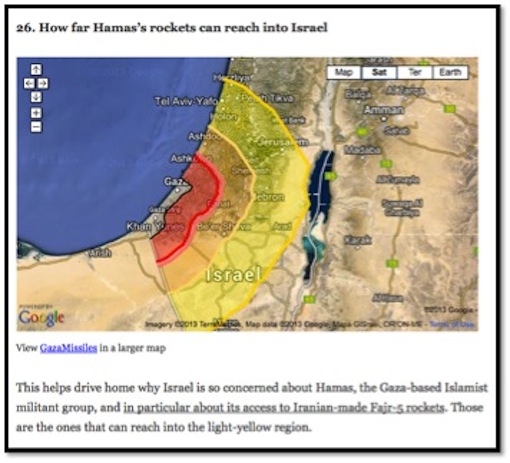
All about Hamas’s rockets
There are two principal problems with this map. First, the map attempts to “explain” the Israeli-Palestinian conflict by pointing exclusively to the capacity of Hamas’s rockets to reach ever-extensive points within Israel. Four color-coded, concentric semi-circles spread out from the Gaza Strip, each showing the distance different rockets could travel, the furthest making it all the way to the Dead Sea. Max Fisher, the Post’s chief foreign affairs blogger, writes in a caption to the map, “This helps drive home why Israel is so concerned about Hamas, the Gaza-based Islamist group, and in particular about its access to Iranian-made Fajr-5 rockets. Those are the ones that can reach into the light-yellow region.”
Erasing Palestine from the Map
The second major problem with this map is that Palestine—both historic and contemporary—is erased from it. A white dotted line traces the border between the West Bank and Israel but the line is barely visible beneath the yellow-shaded ring. Moreover, “West Bank” (not “occupied West Bank,” or “occupied Palestinian territory,” or “Palestinian West Bank” or “Palestine,” mind you) appears in font so small that it seems to designate some tiny city northeast of Jerusalem, not the Palestinian territory occupied by Israel since 1967. And while Israeli municipalities such as Arad, Ashdod, Holan, and Hrzliya, among others, are included, nowhere can one find the Palestinian cities of Ramallah, Nablus, Bethlehem, or Jericho, much less al-Bira, Jenin, or Qalqilia. Only Jerusalem and Hebron, West Bank cities that are significant to both Israelis and Palestinians, are featured. Even Jaffa, the coastal Palestinian city north of Tel Aviv, has been replaced by the Israeli-Hebrew version, “Yafo.”
So what does this map tell us about the Israel-Palestine conflict? It’s not apparent what or where Palestine is, or that it even exists, but the map suggests that an ever-menacing, Iranian-supported Islamist group threatens more than half of Israel. And therefore, Israel is “concerned.” Presumably, the reader might conclude, that “concern” forces Israel to periodically defend itself, launching its own counter-attacks into the Gaza Strip. The West Bank, meanwhile, appears for all intents and purposes, part of Israel and in no way related to the Gaza Strip or the cartographically cleansed “Palestine.” So Israel’s geography is simplified into a need to defend itself and Palestine is wiped off the map.
Concealing more than it reveals
The Washington Post’s map (which is actually just a simple google map lifted from someone named “Gene,” whose cartographic resume also includes google maps of “Richmond Bars/Restaurants” and “Jane Austin’s England”) doesn’t reveal how and to what extent Israel has “defended” itself against the perceived threat of Hamas’s rockets. The threat is all that is deemed important; a map showing where and with what deadly ramifications Israel’s responses have taken place, such as this one produced by the Alliance for Justice in the Middle East at Harvard University and the MIT Center for Future Civic Media, didn’t make the Post’s list.
Any attempt to cartographically represent the context within which Hamas’s rockets and Israel’s “response” may have been launched, such as this UN map, is also entirely missing from the Post’s compilation.
In addition to nearly erasing the Palestinian West Bank altogether, the Post’s map reveals nothing about the multiple ways in which the territory is occupied by Israel. Maps of Israeli-only roads, checkpoints, the separation barrier, settlements, and the ethnically-based divisions of the West Bank (such as these from Btselem, the Israeli Committee Against Home Demolitions, and The Applied Institute for Research – Jerusalem) don’t, according to the Washington Post, help explain this part of the world as much as Gene’s map of Hamas’s rocket-firing potential.
The Washington Post’s map of choice sheds no light on the Palestinian villages within Israel that were ethnically cleansed and destroyed in 1948-1949. References to these maps from the Palestinian Academic Society for the Study of International Affairs (PASSIA) and Visualizing Palestine could have at least begun to cartographically resurrect these erased landscapes.
The Dangers of Distorted Cartography
In sum, The Washington Post’s map explains very little about this part of the world. But what the map does reveal is The Washington Post’s myopic view of Israel and Palestine. The ongoing colonization of Palestine by Israel is reduced and reversed, in this map’s representation, to a normal country that must fend off existential threats from its shadowy neighbors. The effects of this distorted cartography are dangerous—erasing the geographies of Palestine is yet another step in the ongoing occupation and ethnic cleansing of Palestine.
Robert Ross is an Assistant Professor of Global Cultural Studies at Point Park University, in Pittsburgh, Pennsylvania. His research and teaching focus upon the political-economic geographies of Israel, Palestine, Lebanon and the United States. He is also a member of the Pittsburgh Palestine Solidarity Committee and the Israel-Palestine Mission Network of the Presbyterian Church (USA).
Hamas deplores Egyptian army for unfounded accusations against it
Palestine Information Center – 12/08/2013
GAZA — The Hamas Movement strongly denounced a senior Egyptian army commander for claiming that the investigations revealed the involvement of Hamas individuals in the Sinai events.
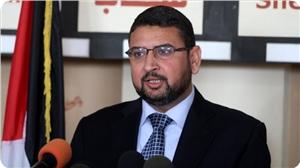 This came in response to recent remarks made by the commander of Egypt’s second field army in Sinai Ahmed Wasif, in which he accused Hamas, without stating any evidence, of what had happened in Sinai.
Hamas spokesman Sami Abu Zuhri stressed that such accusations are blatant lies that include no numbers or names as usual.
“The Movement categorically denies that its members are involved in the Sinai events, and expresses its regret that such remarks were made in an attempt to reverse the equation and falsely convince the Egyptian people that the enemy is Hamas and not Israel,” Abu Zuhri underlined.
Prosecutor orders ousted Egypt President Morsi’s arrest over Hamas links
RT | July 26, 2013
An arrest order has been issued for ousted Egyptian President Mohamed Morsi over suspected links to Hamas. State media reports the Muslim Brotherhood leader has already been questioned and confronted with the evidence.
Morsi has been detained for 15 days and will be subjected to questioning over suspicions Hamas helped orchestrate his escape from prison in 2011, reported Reuters, citing Mena state media. Morsi has allegedly already been “confronted with the evidence.” During the uprisings that overthrew former President Hosni Mubarak two years ago there were a number of attacks on police stations that led to the escape of Islamists and political inmates.
The accusations set against Morsi also include killing officers and prisoners and kidnapping soldiers.
The ousted president has been held in an unknown location since he was removed from office on July 3 by the military.
The Muslim Brotherhood has condemned Morsi’s detention as “ridiculous” and a “return to the Mubarak regime.”
The UN has urged the Egyptian military to free Morsi along with other Brotherhood leaders “without delay.” Secretary-General Ban Ki-moon calls “on the interim authorities to ensure law and order along with guaranteeing the safety and security of all Egyptians.”
Egypt is preparing for another day of violent protests as Morsi’s followers and the military opposition have both planned mass rallies.
The two groups are at loggerheads over the future of the Arab world’s most populous country. A military official told Reuters that the army has given the Muslim Brotherhood until Saturday to join the so-called “road map” to new elections.
The Brotherhood fears a military led crackdown on the political party that won the Egyptian elections last summer.
“We are continuing our protests on the streets. In fact we believe that more people will realize what this regime really represents – a return of the old state of Mubarak, with brute force,” Brotherhood spokesman Gehad El-Haddad said.
In some of the worst violence since the unrest began in Egypt, 50 Morsi supporters were gunned down at a Cairo barracks on July 8 by security forces.
Israeli court sentences Palestinian MPs
Ma’an – 11/07/2013
JERUSALEM – An Israeli court on Thursday sentenced two Palestinian MPs to 30 months, a committee official said.
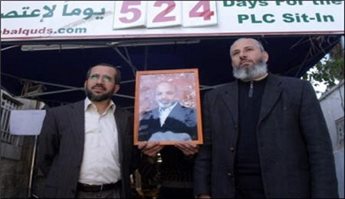 PLC deputy Mohammad Tawtah and former Jerusalem affairs’ minister Khalid Abu Arafa were sentenced to 30 months plus a one-year suspended sentence for conducting “Hamas activities,” said Amjad Abu Asab, the director of the Jerusalem prisoners’ families committee.
The judge ruled that the MPs must serve an additional six months if they enter Jerusalem, their hometown, Abu Asab told Ma’an.
The MPs have been in Israeli custody since Israeli police detained them in a raid on the Jerusalem headquarters of the International Committee of the Red Cross in January 2012.
The elected officials took refuge at the Red Cross building in East Jerusalem’s Sheikh Jarrah in July 2010 along with lawmaker Ahmad Attoun after Israel revoked their residency permits.
THE EGYPTIAN COUP AND THE PEOPLE OF THE GAZA STRIP
By Damian Lataan | July 06, 2013
As much as the Egyptian street generally sympathise with the plight of the Palestinian people in the Gaza Strip, it seems the new Egyptian regime are falling over themselves to make themselves look good in the eyes of the US in order to ensure that the promised $1.5 billion of aid comes there way despite the coup. Unfortunately, one element of their approach to appeasing the US is by demonstrating that they are mindful of Israel’s concerns with regard to security about the Gaza Strip. And one way of showing they mean business is to close down the Gaza Strip’s supply line tunnels between the Strip and Egypt.
Yesterday the Egyptian army began bulldozing the tunnels. The immediate effect in the Gaza was panic buying and huge price hikes that most Palestinians can ill afford to pay. The cost of living was high enough as it was but now, if the supplies remain cut off for some time, life will steadily become even more unbearable.
Just to add to the turmoil, Fatah, the organisation that governs the West Bank under Abbas, is now calling on its supporters in the Gaza to rise up against Hamas. Hamas, one might recall, were rejected by the West after squarely and fairly winning the January 2006 elections for the Palestinian Legislative Council.
The blame for all this turmoil – not just in Egypt but throughout the entire Middle East – can be laid fairly and squarely at the feet of the US and Israel who has contrived to foment as much friction as they possibly can between secularists and Islamists in the Arab world, and between Sunni and Shia in the world of Islam. On the odd occasion that ‘democracy’ does give the people the opportunity to make their choices, it is the West that rejects those choices and then encourages turmoil that attempts to replace the people’s choices.
In the end it’s just ordinary people who are already struggling to survive that suffer most. The West must leave these people alone to make their own choices and, once the choices have been made, should not be interfered with simply because the West thinks the people made choices the West disagrees with.
Gaza, at the very least, must be allowed to freely trade with whoever they please and not be punished en masse simply because they didn’t vote for the people the West wanted them to vote for.
Related articles
- Egyptian army demolishes tunnels with Gaza (alethonews.wordpress.com)
- Egyptian army reinforces presence on the borders with Gaza (ramyabdeljabbar.wordpress.com)
- Egyptians continue to keep Gaza’s only exit closed (gazasolidarity.blogspot.com)
Featured Video

“Historic Russia”: The Land Putin Will Not Give Back
or go to
Aletho News Archives – Video-Images
Book Review
Why the War on Conspiracy Theories Is Bad Public Policy
By Kevin Barrett • Unz Review • February 1, 2019
 A Review of Conspiracy Theories and Other Dangerous Ideas by Cass Sunstein (based on an earlier paper co-authored with Adrian Vermeule); In Defense of Troublemakers: The Power of Dissent in Life and Business by Charlan Nemeth; and Conspiracy Theories and the People Who Believe Them, edited by Joseph E. Uscinski
On January 25 2018 YouTube unleashed the latest salvo in the war on conspiracy theories, saying “we’ll begin reducing recommendations of borderline content and content that could misinform users in harmful ways—such as videos promoting a phony miracle cure for a serious illness, claiming the earth is flat, or making blatantly false claims about historic events like 9/11.”
At first glance that sounds reasonable. Nobody wants YouTube or anyone else to recommend bad information. And almost everyone agrees that phony miracle cures, flat earthism, and blatantly false claims about 9/11 and other historical events are undesirable.
But if we stop and seriously consider those words, we notice a couple of problems. First, the word “recommend” is not just misleading but mendacious. YouTube obviously doesn’t really recommend anything. When it says it does, it is lying. … continue
Blog Roll
 Aletho News
- BRITAIN’S WARNING: PREPARE FOR WAR
- “Historic Russia”: The Land Putin Will Not Give Back
- How the Cambridge Analytica scandal still haunts Mark Zuckerberg
- The Ongoing Cancellation Campaign Against a Dissenting Academic in Norway
- Yemen and ‘the Houthis’: Challenging Sami Hamdi’s Narrative
- No, Christians did not invent Zionism
- AIPAC-led lobbying network opens branches in Cypriot, Greek parliaments
- Araghchi blasts ‘parasitic’ alliance as US taxpayers pay for Israel’s war on Iran
- Easy fix for Europe’s chaos? Stop fueling war against Russia
- Putin’s key remarks on peace talks and Europe’s ‘schizophrenia’
- If Americans Knew
- An error has occurred; the feed is probably down. Try again later.
- No Tricks Zone
- Two New Studies Find Thwaites Glacier Melt Cannot Be Driven By Human Activity Or A Warming Ocean
- E-Cars Reduce CO2 Emissions By Only 41% Compared To Internal Combustion Engine Vehicles
- Predictions Made By Renowned Climate Professor Over Past Decades Have Been Proven To Be Poor
- New Study Suggests Large Regions Of The Pacific Ocean Have Been Cooling For The Last 80 Years
- Germany’s Green Energy Debacle: High Energy Costs Force Kahla Porzellan to Close After 182 Years!
- New Study: 50 Years Of The Most Aggressive ‘Net Zero’ Policies Can Only Affect The Global Climate By 0.03°C
- US September “Heat” Was No Record…Many Records Set Decades Ago
- Latest European Green Energy Debacle; Portugal’s Largest Flagship Solar Park Insolvent!
- Green Energy Debacle: German Expert Professor Fritz Vahrenholt Warns Of Severe Economic And Social Consequences
- Two More Paleo Reconstructions Affirm Meters-Higher Sea Levels Across Ireland, Brazil 7000-6000 Years Ago


