Zahhar made his remarks during a special session held on Wednesday by the Palestinian legislative council to discuss the report that was submitted by its political committee on the negotiations between the PA and the Israeli occupation regime.
Zahhar called for forming a national front opposing the peace negotiations with the occupation and addressing their detrimental impacts on Palestinian rights and constants.
“The Palestinian negotiators are illegitimate, they neither represent the national consensus nor have the majority that allows them to speak on behalf the Palestinian people,” the Hamas official stated.
He affirmed that the Fatah faction took the Palestinian cause to a dangerous level in its negotiations with the Israeli occupation and waived many Palestinian rights, noting that the results of the negotiations had been settled in advance by the US sponsor in favor of the occupation.
Fatah chose to obey America in order to protect its presence as a representative of the people and insure financial support, he stressed.
Continuation of negotiation condemned
Dr. Ismail Radwan, Minister of Religious Affairs in Gaza, condemned the continuation of negotiation between Israeli and Palestinian authorities despite the national consensus on its rejection.
During his participation in a workshop concerning the current Palestinian situation, Radwan said that the Palestinian situation is “painful” in light the continued detention of thousands of Palestinian behind Israeli bars, escalated Judaization schemes, and security coordination between Israeli and Palestinian forces, in addition to the Islamic nations preoccupation with their internal problems.
Radwan praised the workshop, which contained participants from all Palestinian political parties, considering it a contribution to national reconciliation.
Radwan pointed to the Israeli settlers’ escalated break-ins into al-Aqsa mosque under Israeli forces’ protection in total disregard of Muslims’ feelings and freedom of religion.
He said that the continued Israeli violations in al-Aqsa Mosque aim at imposing a new fait accompli in al-Aqsa Mosque and toward building their alleged Temple on its ruins, stressing that what is happening to Jerusalem is a shame on leaders of the Islamic nations.
He praised the steadfastness of the Palestinian people in Jerusalem who continue to defend al-Aqsa Mosque.
Radwan said that the unfair Israeli siege on Gaza aims at undermining Palestinian resistance, praising Gazan people’s steadfastness.
Radwan called on the Fatah movement to implement Doha and Cairo agreements that stipulate the formation of a national unity government and achieving national reconciliation.
Commenting on a statement by one of the participants, Radwan stressed that resistance is a “red line”, adding that it is a strategic option for the Palestinian people.
Freedom is guaranteed to all Palestinian people under the rule of law, he finally said in response to a question by one of the participants.
It is impossible to predict the future. But one can state with a degree of certainty that little good can possibly be awaiting Palestinians when their political leadership seems to value their ties with Israel more than the fate of Gaza and all of its inhabitants. An exaggeration? Hardly.
In an interview with Voice of Russia, Palestinian Authority President Mahmoud Abbas replied to an ‘invitation’ by Israeli Prime Minister Benjamin Netanyahu to speak at the Israeli Parliament (Knesset). “If (Netanyahu) wants me to come and say the things I want to say, then I am ready to do it,” Abbas said, according to YNet and other media on November 23rd. However, he had no response to a call for unity by Gaza Prime Minister Ismail Haniyeh.
“Let’s have one government, one parliament and one president,” Haniyeh said in a recent speech, as quoted by Reuters. A spokesman for Hamas’ rival, Fatah, Ahmed Assaf, dismissed the call for it “included nothing new.”
Sure, Hamas and Fatah have been engaged in a terrible factional conflict that continues to undermine Palestinian national unity, and the Palestinian cause altogether. But the timing of Haniyeh’s call and Fatah’s dismissal is particularly sensitive, for Gaza is suffering its worst energy crisis since the Israeli-Egyptian siege of 2007.
For weeks, Gaza has been flooded with sewage as a result of a severe energy crisis caused mainly by Egypt’s systematic destruction of hundreds of tunnels that served as Gaza’s economic lifeline. The cheap diesel fuel which normally helps 1.8 million people survive a very harsh and relentless siege and boycott isn’t being smuggled in from the tunnels anymore. Israel has ensured that there can be no alternative to the Egyptian fuel, thus the Gaza government was forced to shut down the strip’s only power station.
Gaza has a high threshold to suffering, so for a place as poor as Gaza to be hurting, this additional agony means that the humanitarian crisis is at its worst. Even before the most recent crisis, a comprehensive UN report last year said that if no urgent action were taken, Gaza would be ‘unlivable’ by 2020. Since the report was issued in August 2012, the situation has grown much worse. Considering the sea of sewage, one would argue that Gaza is already ‘unlivable’.
But for nearly one year, many had hoped that the dramatic political changes in Egypt could in fact bode well for Palestinians in general and Gaza in particular. Gaza was still bleeding from Israel’s so-called Operation Cast lead – the 22-day war of 2008-9 that killed over 1,400 Palestinians and wounded over 5,500 more. The war had destroyed much of Gaza’s poor infrastructure, and the siege made a complete recovery impossible.
Then there was the war of November 2012 – eight days of fighting that killed 167 Palestinians and six Israelis. As strange as it may sound, the second war was a source of hope for Palestinians. Back then, Egypt had a democratically elected president. Sure, Morsi at times seemed to behave as a lame duck president, but he sided with the Palestinians against Israel, and helped craft a ceasefire agreement that met more of Hamas’ terms than Israel’s. It was the first time that Palestinians felt that the Egyptian government was truly on their side since the Camp David agreement in 1979.
Morsi was under severe pressure from the US and his own military, generously funded by the US, to isolate Hamas. Although he didn’t do so, he was too weak to offer Gaza a sustainable solution to break the Israeli siege. The Rafah border crossing, however, was mostly open, and relations were in constant improvement.
But the ousting by General Abdel Fatah al-Sisi of Morsi on July 3rd changed all of that. The Egyptian military cracked down with vengeance by shutting down the border crossing and destroying 90-95 percent of all tunnels, which served as Gaza’s main salvation. The strip became more vulnerable than ever before. Its haggard infrastructure began falling apart, as Egypt, Ramallah and Israel watched, preparing for various outcomes. Cairo found in Ramallah a willing ally who never ceased colluding with Israel in order to ensure that their Hamas rivals were punished, along with the population of the strip.
The New York Times reported on November 21st that 13 sewerage stations in the Gaza Strip have either overflowed or are close to overflowing, and 3.5 million cubic feet of raw sewage find their way to the Mediterranean Sea on a daily basis. “The sanitation department may soon no longer be able to pump drinking water to Gaza homes,” it reported. Farid Ashour, the Director of sanitation at the Gaza Coastal Municipalities Water Utilities, told the times that the situation is ‘disastrous’. “We haven’t faced a situation as dangerous as this time,” he said.
Gaza’s only power plant has been a top priority target for Israeli warplanes for years. In 2006 it was destroyed in an Israeli airstrike, to be opened a year later, only to be destroyed again. And although it was barely at full capacity when it operated last, it continued to supply Gaza with 30 percent of its electricity needs of 400 megawatts. 120 megawatts came through Israel, and nearly 30 megawatts came through Egypt. The total fell short from Gaza’s basic needs, but somehow Gaza subsisted. Following the ousting of Morsi and the Egyptian military crackdown, the shortage now stands at 65 percent of the total.
It was precisely then that Haniyeh tried to reach out to Abbas. This time, his call for unity had a particularly urgent humanitarian dimension. Although willing to speak at the Knesset, Abbas had no consolatory words for Haniyeh. Instead, it was time for some cruel politics. The PA decided to end its subsidy on any fuel shipped to Gaza via Israel, increasing the price to $1.62 per liter from 79 cents. According to Ihab Bessisso of the PA, the decision to rescind Gaza’s tax exemption on fuel was taken because sending cheap fuel to Gaza “was unfair to West Bank residents,” according to the Times.
Reports by the Economist, Al Monitor and other media speak of Egyptian efforts to reintroduce Gaza’s former security chief and Fatah leader Mohammed Dahlan to speed-up the projected collapse of the Hamas government. Al Monitor reported on November 21rst that Dahlan, a notorious Fatah commander who was defeated by Hamas in 2007, had met with General al-Sisi in Cairo. Evidently, the purpose is to oust Hamas. But the question is how? Some “suggest that a Palestinian brigade mustered in al-Arish could march on Gaza and, with Egyptian support, defeat the broad array of Hamas forces created in the last decade.”
No words can describe the deterioration of the moral standards of the Palestinian political elites. Even during particularly disgraceful episodes of their history, things had never sunk so low. In the meantime, Palestinians in Gaza continue to subsist in an atrocious reality, while pondering future possibilities. And with leaders like Abbas and Dahlan, little good can be expected.
– Ramzy Baroud (www.ramzybaroud.net) is a media consultant, an internationally-syndicated columnist and the editor of PalestineChronicle.com. His latest book is: My Father was A Freedom Fighter: Gaza’s Untold Story (Pluto Press).
It has now been five years since the sentencing of the Holy Land Five: Muslim-American humanitarians who were falsely convicted of providing “material support for terrorism” because of their charitable work in Palestine. To mark the occasion, the daughters of the Holy Land Five have produced a powerful video message featuring the families of those imprisoned, as well as people around the world, expressing solidarity with the innocent men.
Alas the overtly politicised case against the Holy Land Five is only one among many. Since 11 September 2001, there have been numerous legal efforts to criminalise compassion in the US, ultimately denying Muslim-Americans of the right to freely practice their religion.
Founded in 1989, the Holy Land Foundation was once the largest Islamic charity in the US. The Texas-based foundation helped to raise funds for people misplaced by both natural and man-made disasters, focusing primarily on Palestinian refugees living in the Occupied Palestinian Territories as well as in the neighbouring countries, but also helping both American and international victims of tornadoes, earthquakes and floods. The Foundation even assisted the victims of the Oklahoma City bombing in 1995.
However three months after the 11/9 attacks, the US government suddenly designated the Holy Land Foundation as a terrorist organisation, closing down the charity and seizing all its assets. Federal prosecutors accused the foundation and its members of providing financial assistance to individuals and organisations linked to Hamas, claiming that this constituted “material support for terrorism” as stipulated in the USA PATRIOT Act. The government based its case on the twisted logic that the money the foundation was sending to zakat associations in Gaza to build hospitals and feed the poor relieved the social organisations affiliated with Hamas of carrying out this responsibility.
None of the zakat associations were listed as “Specially Designated Nationals” (SDNs) at the time of the alleged offence. The US Treasury Department considers SDNs to be criminal actors and thus “their assets are blocked and US persons are generally prohibited from dealing with them.” But it did not matter because the government has consistently adopted a loose interpretation of the material support clause to target Muslim-Americans, often using ex post facto relationships to prove that suspects are, according to President George W. Bush’s Executive Order 13224 of September 24, 2001, “otherwise associated with” terrorists.
While the US government does indeed classify Hamas as an SDN, the Islamist movement is not at all connected to Al-Qaeda or the attacks on 11/9 which precipitated the closure of the Holy Land Foundation. After all, the Foundation had been operating since 1989, so why else would the government wait twelve years to target the charity except to conflate all Muslims with terrorism after 11/9, creating a climate of fear that would lead Americans to support the so-called war on terror and the US-led invasions of Iraq and Afghanistan. President Bush even called the closure of the Foundation “another step in the war on terrorism”.
Leading up to the trial, the government amassed an amazing 197 counts against six members of the Holy Land Foundation, many of them trumped up criminal charges. However, in 2007 the case ended in mistrial for five of the defendants, with one defendant being found not guilty of all but one charge against him, for which the jury was deadlocked.
Nevertheless, the government refused to drop its case, and a retrial was ordered in late 2008 against the Holy Land Five: Ghassan Elashi, co-founder and chairman of the board; Shukri Abu-Baker, president and CEO; Mohammad El-Mezain, co-founder and the California office representative; Mufid Abdulqader, volunteer fundraiser and Abdulrahman Odeh, the New Jersey office representative.
For the 2008 retrial, the government dropped almost half of the original charges and called an anonymous Israeli intelligence expert as a witness, who according to Mondoweiss testified that he knew the defendants had ties to Hamas because he “could smell Hamas”. Several lawyers have noted that the use of an anonymous witness was a legal first, and clearly violates the defendants’ sixth amendment right to face their accusers in court.
Needless to say, in the second trial the Holy Land Five were found guilty of every criminal charge that was brought against them. They were given draconian sentences of between 15 and 65 years in prison, a devastating punishment for them and their families.
In addition to putting the Holy Land Five in jail for what could possibly be the rest of their lives, according to the New York Times the government also “publicly named more than 300 individuals and American Muslim organisations as ‘unindicted co-conspirators’, without allowing them to hear the evidence against them or defend themselves in court.”
So much for innocent until proven guilty.
The Holy Land Five tried to appeal their convictions, but the US Supreme Court declined their final appeal in 2012. They have now exhausted all their legal options. Four of the five men are currently imprisoned in a severely restricted facility for prisoners deemed to be “security threats” known as the Communications Management Unit (CMU). After 11/9 two CMUs were built, one in Indiana and the other in Illinois, and the vast majority of prisoners in both are Muslims. Most prisoners have extremely limited contact with the outside world, including their families. American public radio station NPR has called the CMUs “Guantanamo North” and the Nation magazine describes them as “Gitmo in the Heartland.”
To date, the US government still has not published a list of approved Islamic charities, probably because the current ambiguity allows federal officials to selectively pursue politically motivated cases. This has had a chilling effect on charitable giving.
The Holy Land Foundation case did inspire one Washington-based group called the American Task Force on Palestine to come up with a list of acceptable projects for individuals and charities to support in Palestine, which have all been vetted by the US Agency for International Development. Unsurprisingly, the American Task Force on Palestine has been described by one Palestinian-American writing for Al-Jazeera as “a Washington organisation designed to promote a particular line on Palestine. The group is tasked with feeding the State Department palatable fictions – like, ‘two states for two peoples’. In return, organisation heads are invited to dinners with important people.”
The overt politicisation of the American judiciary to deny Muslims in America of their rights is not exclusive to individuals and charities working in Palestine. Since 11/9, thousands of Muslim-Americans have been detained, deported or profiled, even though very few are ever prosecuted in the courts, and dozens of Islamic charities have been either closed down or financially disabled, creating a climate of fear that denies Muslim-Americans of the right to give to charity, rendering them unable to practice zakat, one of the Five Pillars of Islam.
Similar to the Holy Land Foundation, many of the individuals and charities that have been targeted were singled out to justify foreign invasions. When President Bush addressed a joint session of Congress on 20 September 2001 to declare, “Either you are with us, or you are with the terrorists,” the “us” he was referring to was not the American people, but American empire. He was saying that you must support our foreign invasion and occupation, otherwise you will be criminalised. And in fact, Muslims in America were never even given a choice, because the government had already started to reproduce a particular typology of Muslims-as-terrorists. As scholar Mustafa Bayoumi has argued, immigrant males from targeted countries were obliged to “misidentify from the Muslim-as-terrorist figure” or else face the consequences, a typology repeatedly emphasized in the media.
For example, in February 2003, Dr Rafil Dhafir, a prominent Iraqi-American oncologist and respected imam living in Central New York, was arrested because his charity Help the Needy was sending humanitarian aid to Iraq, including money to build mosques, parcels of food and medical supplies, all of which allegedly violated the UN sanctions, measures which Dennis Halliday, the former UN Humanitarian Coordinator in Iraq, says killed around one million Iraqis. Although the FBI had kept Dhafir under surveillance since at least 1997, Help the Needy was never prevented from delivering the supposedly illegal aid to Iraq. Instead, the charity openly carried out its operations until 85 agents went to Dhafir’s home to arrest him only weeks before the launch of the US-led invasion of Iraq. The same morning he was arrested, around 150 Muslim contributors to the charity living in Central New York were also questioned by various government agencies.
To dispel any doubts about this case being linked to the invasion of Iraq, former Attorney General John D. Ashcroft referred to Dhafir as a terrorist when he was apprehended, a charge repeated by former New York Governor George Pataki. The Washington Post called Dhafir a “high profile suspect” and reported that: “A federal prosecutor suggested that an Arab engineer who was a friend of Dhafir’s might be proficient in fashioning ‘dirty bombs’.”
However when Dhafir finally went to trial, he was only accused of white-collar crimes, with the most serious counts being related to money-laundering. He did not face any charges of terrorism. Nevertheless, by then the US had already invaded Iraq in the name of fighting the war on terror. The reason for Dhafir’s “high profile” arrest was already a moot point, and the alleged terrorist was only found guilty of criminal activity. However, we was given a harsh sentence of 22 years in prison and was initially placed in the CMU prison in Indiana. He has since been transferred to a lower security facility.
Although it was not mentioned at all during the trial because the information was sealed, during the sentencing the prosecution suggested that the government had evidence that while volunteering with Doctors Without Borders in Afghanistan during the 1980s, Dhafir had met with a member of the mujahedin who later became a supporter of Al-Qaeda, leaving out the context of Washington’s financial and military support for the mujahedin at that time.
Indeed the National Security Division of the Department of Justice subsequently listed the case against Dhafir and his charity as a successful terrorist prosecution. He too has lost every judicial appeal, exhausting all his legal options for seeking justice.
Numerous other Islamic charities have also been targeted since 11/9. These include Benevolence International Foundation, Global Relief Foundation, Kind Hearts USA and Islamic American Relief Agency. The witch hunt even led the American Civil Liberties Union to release a report in 2009 entitled “Blocking Faith, Freezing Charity“.
In 2006 the FBI raided the Michigan offices of Life for Relief and Development, a large and highly regarded Islamic charity, on the eve of Ramadan, the holy month when Muslims fast and make considerable charitable contributions. The charity was reportedly under investigation in connection with its activities in Iraq. Despite having its property seized, the case against the charity was ultimately closed and it was allowed to remain open. Nevertheless, the timing of the raid had already achieved a wider purpose.
In another timely coincidence, on the first day of the 2007 trial against the Holy Land Foundation, federal agents raided the offices of the Michigan-based branch of the Al-Mabarrat Association, a charity affiliated with the late Ayatollah Mohammad Hussein Fadlallah in Lebanon, as well as the offices of the Goodwill Charitable Organization, also connected to Lebanon. The US Treasury Department accused the latter of having ties to Hizbullah’s Martyr’s Foundation, an organisation already on the SDN list. The same day, the FBI searched a number of local businesses and homes, again traumatising the community. Subsequently the Goodwill Charitable Organization was shut down and also listed as an SDN. However the FBI allowed Al-Mabarrat Association’s Michigan offices to remain open.
It is important to note that while each case is uniquely tragic, non are unusual. There have been many other domestic victims of the US war on terror, including many Islamic charities. Indeed these coordinated and well-publicised actions against both Muslims and Islamic charities have successfully created a climate of fear that makes it extremely difficult for Muslims in America to give or perform charity, thus criminalising compassion and denying Muslim-Americans of their constitutionally guaranteed right to freely practice their religion.
The latest punishment of Gaza may seem like another familiar plot to humiliate the strip to the satisfaction of Israel, Mahmoud Abbas’s Palestinian Authority, and the military-controlled Egyptian government. But something far more sinister is brewing.
This time, the collective punishment of Gaza arrives in the form of raw sewage that is flooding many neighborhoods across the impoverished and energy-chocked region of 360 km2 (139 sq mi) and 1.8 million inhabitants. Even before the latest crisis resulting from a severe shortage of electricity and diesel fuel that is usually smuggled through Egypt, Gaza was rendered gradually uninhabitable. A comprehensive UN report last year said that if no urgent action were taken, Gaza would be ‘unlivable’ by 2020. Since the report was issued in August 2012, the situation has grown much worse.
Over the years, especially since the tightening by Israel of the Gaza siege in 2007, the world has become accustomed to two realities: the ongoing multiparty scheme to weaken and defeat Hamas in Gaza, and Gaza’s astonishing ability to withstand the inhumane punishment of an ongoing siege, blockade and war.
Two infamous wars illustrate this idea: The first is Israel’s 22-day war of 2008-9 (killing over 1,400 Palestinians and wounding over 5,500 more) and the second is its more recent war of Nov 2012 – eight days of fighting that killed 167 Palestinians and six Israelis. In the second war, Egypt’s first democratically-elected president Mohammed Morsi was still in power. For the first time in many years, Egypt sided with Palestinians. Because of this and stiff Palestinian resistance in Gaza, the strip miraculously prevailed. Gaza celebrated its victory, and Israel remained somewhat at bay – while of course, mostly failing to honor its side of the Cairo-brokered agreement of easing Gaza’s economic hardship.
In relative terms, things seemed to be looking up for Gaza. The Rafah border crossing between Gaza and Egypt was largely opened, and both Egypt and the Hamas governments were in constant discussions regarding finding a sustainable economic solution to Gaza’s many woes. But the ousting by General Abdel Fatah al-Sisi of President Morsi on July 3 changed all of that. The Egyptian military cracked down with vengeance by shutting down the border crossing and destroying 90-95 percent of all tunnels, which served as Gaza’s main lifeline and allowed it to withstand the Israeli siege.
Hopes were shattered quickly, and Gaza’s situation worsened like never before. Naturally, Cairo found in Ramallah a willing ally who never ceased colluding with Israel in order to ensure that their Hamas rivals were punished, along with the population of the strip.
Citing Gaza officials, the New York Times reported on Nov 21 that 13 sewerage stations in the Gaza Strip have either overflowed or are close to overflowing, and 3.5 million cubic feet of raw sewage find their way to the Mediterranean Sea on a daily basis. “The sanitation department may soon no longer be able to pump drinking water to Gaza homes,” it reported.
Farid Ashour, the Director of sanitation at the Gaza Coastal Municipalities Water Utilities, told the Times that the situation is ‘disastrous’. “We haven’t faced a situation as dangerous as this time,” he said. But the situation doesn’t have to be as dangerous or disastrous as it currently is. It has in fact been engineered to be that way.
Gaza’s only power plant has been a top priority target for Israeli warplanes for years. In 2006 it was destroyed in an Israeli airstrike, to be opened a year later, only to be destroyed again. And although it was barely at full capacity when it operated last, it continued to supply Gaza with 30 percent of its electricity needs of 400 megawatts. 120 megawatts came through Israel, and nearly 30 megawatts came through Egypt. The total fell short from Gaza’s basic needs, but somehow Gaza subsisted. Following the ousting of Morsi and the Egyptian military crackdown, the shortage now stands at 65 percent of the total.
In an interview with the UN humanitarian news agency, IRIN, James W. Rawley, the humanitarian coordinator for the Occupied Palestinian Territory, depicted a disturbing scene in which the impact of the crisis has reached “all essential services, including hospitals, clinics, sewage and water pumping stations.”
Israelis on the other hand, have been doing just fine since the last military encounter with Hamas. “The past year was a great one,” the Economist quoted the commander of Israel’s division that ‘watches’ Gaza, Brigadier Michael Edelstein. Due to the massive drop in the number of rockets fired from Gaza in retaliation to Israeli attacks and continued siege (50 rockets this year, compared to 1,500 last year), “children in Israel’s border towns can sleep in their beds, not in shelters, and no longer go to school in armored buses,” according to the Economist on Nov 16.
“But Israel’s reciprocal promise to help revive Gaza’s economy has not been kept,” it reported. Israel has done everything it its power to keep Gaza in a crisis mode, from denying the strip solar panels so that they may generate their own electricity to blocking Gaza exports. “In the meantime, Gaza is rotting away.”
Desperate to find immediate remedies, Gaza Prime Minister Ismail Haniyeh issued new calls to Mahmoud Abbas for a unity government. “Let’s have one government, one parliament and one president,” Haniyeh said in a recent speech, as quoted by Reuters. A Fatah spokesman, Ahmed Assaf, dismissed the call for it “included nothing new.” Meanwhile, the PA decided to end its subsidy on any fuel shipped to Gaza via Israel, increasing the price to $1.62 per liter from 79 cents. According to Ihab Bessisso of the PA, the decision to rescind Gaza’s tax exemption on fuel was taken because sending cheap fuel to Gaza “was unfair to West Bank residents,” according to the Times.
But fairness has little to with it. Reports by the Economist, Al Monitor and other media speak of Egyptian efforts to reintroduce Gaza’s former security chief and Fatah leader Mohammed Dahlan to speed-up the anticipated collapse of the Hamas government. Al Monitor reported on Nov 21 that Dahlan, a notorious Fatah commander who was defeated by Hamas in 2007 because of, among other reasons, his close ties with Israeli intelligence, had met with General al-Sisi in Cairo. Evidently, the purpose is to oust Hamas in the Gaza Strip. But the question is how? Some “suggest that a Palestinian brigade mustered in al-Arish could march on Gaza and, with Egyptian support, defeat the broad array of Hamas forces created in the last decade.”
With Morsi’s Muslim Brotherhood out of the picture, at least for now, Gaza is more vulnerable than ever. Some of Abbas’s supporters and certainly Dahlan’s may believe that the moment to defeat their brethren in Gaza is now.
– Ramzy Baroud (www.ramzybaroud.net) is a media consultant, an internationally-syndicated columnist and the editor of PalestineChronicle.com. His latest book is: My Father was A Freedom Fighter: Gaza’s Untold Story (Pluto Press).
It is widely known that Israel and its allies spend millions of dollars to promote Zionism on college and university campuses across the US. Zionist organisations fund student groups like Hillel, the largest Jewish campus organisation in the world, as well as sponsor American Jewish students to travel or study abroad in Israel through programmes like Bithright Israel and MASA Israel Journey.
Israel and its allies also spend vast resources organising pro-Zionist speaking tours, both on and off college and university campuses. The Jewish National Fund works with an extensive list of Zionist scholars and professionals to, as it proudly states, “Bring the Israel experience to your next meeting, community event or conference.” Furthermore, while a doctoral student at the Maxwell School of Citizenship and Public Affairs at Syracuse University in Central New York, I was told that the Israeli embassy regularly contacted the administration, as well as the directors of selected programmes, to pressure them to schedule an event featuring the Israeli Ambassador to the US.
However, perhaps less is known about how Israeli universities are actively involved in institutionalising Zionism in the American academy, mainly in the form of collaborative research programmes that legitimise the right of powerful states to illegally invade and occupy Muslim and Arab lands by equating the resulting struggle for liberation with terrorism.
My own university is complicit in this project to normalise invasion and occupation through collaborative programmes with Israeli universities. In Fall 2007, our graduate magazine featured an article entitled “Trying to Change the Rules” that focused on several collaborative projects related to a partnership between the Institute for National Security and Counterterrorism (INSCT) at Syracuse University’s respected College of Law and the International Institute for Counter-Terrorism (ICT) located at the Interdisciplinary Centre (IDC) in Herzliya, Israel.
The IDC is one of Israel’s most influential security institutes and is thought to have extremely close connections to the Israeli government and military. Indeed the chairman of the ICT Board of Directors, Shabtai Shavit, is the former head of the Mossad.
The collaboration between the IDC and Syracuse University started in 2005 and expanded after Israel’s 2006 War against Lebanon. The heads of INSCT and the ITC, along with the former dean of the Maxwell School, who had previously worked for the US Department of Defence, all agreed that the existing rules of war no longer applied to the dominant forms of warfare in the 21st century, which they described as “asymmetric” because most conflicts today are conducted between state and nonstate actors that have vastly different military capabilities. The three decided that “someone should attempt to update” the rules of war and that INSCT, in partnership with the Israelis, was “well-positioned to take that on”. This resulted in a five-year collaborative research project called “New Battlefields/Old Laws” that included a two-way student exchange programme.
While most wars today are indeed “asymmetric”, it is because many of them are also illegal and should never have been allowed to happen in the first place. According to international human rights law, the case can be made that the recent wars waged by the US and Israel are all illegal, not only for being disproportionate responses to real or perceived threats, especially those that were manufactured, but also for intentionally blurring the distinction between combatants and civilians.
Israel’s 2006 war against Lebanon was waged after Hizbullah launched an ambush against Israeli soldiers, capturing two of them in the hopes of negotiating a prisoner exchange, and killing three. During the subsequent aggression, Agence France Presse reports that 1,287 Lebanese died, nearly all civilians, and 4,054 were wounded. Israeli forces intentionally inflicted severe damage to civilian infrastructure including: the Rafik Hariri International Airport; various ports; a lighthouse in Ras Beirut; bridges, roads and factories throughout the country; ambulances and relief trucks; schools, orphanages and hospitals; mosques and community centres; mobile telephone and television stations; as well as fuel containers and service stations. During the final three days of fighting, and despite the passage of UN Security Council Resolution 1701 calling for an immediate cessation of the hostilities, Israel dropped up to four million cluster bomblets in southern Lebanon, and over one million remained unexploded, prompting charges from the UN’s humanitarian chief that Israel employed a “completely immoral” use of cluster bombs during the conflict. According to Lebanon’s Foreign Affairs Minister Adnan Mansour, more than 400 Lebanese have been victims of these unexploded cluster munitions since the cease-fire, 115 of them under the age of 18.
On the other side, 116 Israeli soldiers were killed as well as 43 civilians, and Israel suffered severe damage to civilian infrastructure including a post office and two hospitals.
The disproportionality here is nothing less than shocking, and all the more so since it was intentional. During the war, the Israeli military employed what it called “the Dahiyah Doctrine”, named after the residential areas in southern Beirut that Israeli forces indiscriminately destroyed on the basis that “they were also used as Hizbullah command-and-control centres, and were built over Hizbullah bunkers.” In October 2008, Israeli Major General Gadi Eizenkot threatened that: “What happened in the Dahiyah quarter of Beirut in 2006 will happen in every village from which Israel is fired on. We will apply disproportionate force on it and cause great damage and destruction there. From our standpoint, these are not civilian villages, they are military bases.”
One Israeli journalist writing for Yedioth Ahronoth summed up this strategy as follows: “In practical terms, the Palestinians in Gaza are all Khaled Mashaal [the exiled leader of Hamas]; the Lebanese are all Sayyed Hassan Nasrallah [the secretary general of Hizbullah]; and the Iranians are all Mahmoud Ahmadinejad [the former president of the Islamic Republic of Iran].”
This strategy, which resulted in mass death and destruction, clearly violates the principles of war in regards to proportionality and distinction, and thus is illegal.
Nevertheless, Israeli occupation forces used the same strategy during Israel’s 2008-2009 assault against Palestinians in the Gaza Strip, resulting in the deaths of 1,389 Palestinians, more than half of whom were civilians and 318 of whom were minors under the age of 18. In addition, more than 5,300 Palestinians were wounded. According to the Israeli rights group B’tselem, “Israel also caused enormous damage to residential dwellings, industrial buildings, agriculture and infrastructure for electricity, sanitation, water, and health, which was already on the verge of collapse prior to the operation” due to the Israeli siege. The aggression targeted 18 schools, including eight kindergartens, with at least 262 others damaged. Israel also destroyed more than 3,500 residential dwellings, leaving more than 20,000 Palestinians homeless.
Inside Israel, Hamas rockets killed three Israeli civilians during the offensive and one member of the security forces. According to the UN, 518 Israelis were injured. Newspapers reported that 28 Israelis were made homeless, and over 1,000 claims were filed relating to damaged property.
Again, the disproportionate results of the aggression clearly indicate that Israel violated the principles of war in regards to proportionality and distinction. And when wars are illegal, they constitute crimes.
Nevertheless, Syracuse University still decided that Israel, an occupying power, was legally and ethically qualified to help devise new rules of war. Of course, this should not be surprising in the context of US empire. When accepting his Nobel Peace Prize, President Barack Obama described the 2002 invasion of Afghanistan as a just war, even though none of the hijackers on 11 September 2001 were of Afghan origin. Thus despite not being responsible for perpetrating the 11/9 attacks, around 15,000 Afghans have died as a result. That is some twisted conception of justice.
All of this is actually connected. According to the IDC web site, Syracuse University has developed “a joint study and research programme in counterterrorism policy, homeland security and American domestic and foreign policy,” drawing parallels between the experiences of confronting Palestinian resistance to occupation and Al-Qaeda acts of terrorism.
It is not incidental that professors from Syracuse University also regularly participate in the annual counterterrorism conference at Herzliya. According to the New York writer Ira Glunts, “One of the conference days always falls on 11 September. This, of course, is timed perfectly to make the case that Israel’s battle against terrorism became America’s battle as a result of the World Trade Centre attack.”
However it is important to note that Syracuse University is not alone in partnering with Israeli universities to normalise the occupation. Earlier this month, the Electronic Intifada reported that Palestine solidarity activists in the US “are campaigning against plans by Texas A&M University to take over a college in Nazareth, the city in present-day Israel with the highest number of Palestinian citizens.” According to journalist Patrick Strickland, “Texas A&M, the sixth largest university in the US, intends to raise $70 million to assume control of the Nazareth Academic Institute.”
In October, Texas Governor Rick Perry, who campaigned for the Republican presidential nomination in 2012 and is likely to campaign again, announced the new programme alongside the chancellor of Texas A&M while the two were meeting with Israeli President Shimon Peres in Jerusalem. As Strickland points out, “John Hagee, a right-wing Christian Zionist pastor leading the lobby group Christians United for Israel, is also involved in the project.”
Haaretz notes that while the college in Nazareth was established in 2010 specifically to serve the Arab population, it has suffered from a lack of state funds, thus college officials “welcomed the prestigious American university’s entry into the picture.” After all, although Arabs comprise 20 per cent of the Israeli population, they are only 11 per cent of its student body. However the Jerusalem Post indicates that, “The new institution, to be called the Peace Campus, will promote coexistence for the sake of education with a student population combining Arab, Jewish and foreign students.”
Indeed, as the Daily Beast reports, Manuel Trajtenberg, the chair of Israel’s Planning and Budgeting Committee for the Council for Higher Education, explained that he anticipates significant student interest: “Of course, we would appeal to potential students in the area, but also Jewish Israelis of all sorts.” If the goal here is not yet clear, Emily L. Hauser also draws attention to the involvement of Hagee, who once described Adolf Hitler as a hunter sent by God to “chase the Jewish people back to the land”. Additionally, Hagee has raised tens of millions of dollars “for projects in Israel and for Jewish settlements in the West Bank.” Peace Campus suddenly looks a lot like Oslo.
As Omar Barghouti, a founding member of the Palestinian Campaign for the Academic and Cultural Boycott of Israel, remarked, this is “another colonial project by Israel-to further colonize our space, whatever space is left of the Palestinian space within the state of Israel.”
Of course it is not always necessary to send American students, professors and investment to Israel in order to benefit Zionism. In September, the Electronic Intifada reported that the New York City Council has “approved a lease for Cornell University to build a major applied science engineering campus in partnership with the Haifa-based Israel Institute of Technology (better known as Technion). The 2.1 million square foot, taxpayer-funded project is to be located on the southern tip of Roosevelt Island, a strip of largely residential land between Manhattan and Queens.”
As scholar Terri Ginsberg points out: “A closer look at the corporations affiliated with Technion, some of which have expressed interest in this entrepreneurial venture, indicates that the project’s aims may be more sinister. These corporations have developed weapons and surveillance technology used by Israel to deny Palestinians their fundamental human rights.” She adds that Technion “has a history of cooperating with Israel’s arms industry and of helping to develop a bulldozer designed specifically for use in demolishing Palestinian homes.”
It is important to note that UK universities are not immune to this trend either. For example, the Electronic Intifada reported in September that the International Centre for the Study of Radicalisation (ICSR) at King’s College London “was established as a partnership between the IDC in Herzliya” and other Israeli universities. Unsurprisingly, the majority of ICSR’s projects focus on the various expressions of “Islamic radicalism” without any mention of Zionist extremism. Even its project on North America and Europe only focuses on radicalism in Muslim communities.
All of these examples illustrate how the Zionist occupation uses the Western academy in a variety of ways to reproduce itself not only in Palestine, but also beyond.
A senior leader of the Islamic Resistance Movement Hamas, Salah Bardawil, said he was disappointed with the third Arab-African Summit in Kuwait and the Arab Peace Initiative Committee which endorsed the Palestinian-Israeli negotiations, believing they represent “concrete proof of the Arab regimes’ intention to escape their responsibilities towards Palestine.”
Bardawil told Al-Quds Press that: “the Palestinians have high hopes in the Arab and Islamic nations and the international community as a whole to play an active role in pressuring the Israeli occupation to retreat from its crimes against the Palestinians; whether it is the siege imposed on Gaza or the Judaisation of holy sites or its daily assaults against the Palestinians. We also hoped that the Arab-African summit would play an active role in protecting the Palestinian refugees, but it is clear that the level of action is much lower than the level of speech.”
Bardawil added that even the message conveyed by the Arab-African Summit to the Palestinians is disappointing: “the Arab-African summit has conveyed a negative message to the Palestinians, the Arabs and supporters of democracy. The problem does not lie in endorsing the negotiations with Israel per say, but rather supporting the negotiations indicates that the Arab regimes are trying to escape their commitments towards the Palestinian issue by handing it over to a politically failing party. Yet the most serious issue is that the Arab-African Summit’s position is anti-democratic by accepting to host a party that had failed in the elections as the legitimate representative of the Palestinian people, while the elected-party is being besieged in the Gaza Strip. This position is contradictory and hostile to democracy and unfortunately consistent with the American-Israeli position.
Palestinian Resistance announced on Sunday its fighters has managed to control and then down an Israeli drone flying over the northern part of the Gaza Strip.
The Al-Qassam Brigades, the armed wing of Islamic Resistance movement, Hamas, said its fighters managed to down the drone.
This is the second time the resistance in Gaza manages to down an Israeli drone, as the Al-Qassam Brigades declared during the latest Israeli war on Gaza, a year ago, that it managed to down an Israeli drone, and documented the incident.
An Israeli military spokesperson stated Sunday that the drone fell inside the Gaza Strip, effectively falling in the hands of the resistance.
He said that the drone landed and crashed due to a “malfunction”, an issue that the resistance challenged.
Israel has agreed to free 26 Palestinian prisoners under the terms of the renewed so-called peace talks with the Palestinian Authority.
“The release of 26 prisoners has been validated this evening,” said a statement from Israeli Prime Minister Benjamin Netanyahu’s office on Sunday.
Israeli prison authorities say the inmates will be released at least 48 hours after their names are published.
Tel Aviv had said 104 Palestinians would be freed in stages following the start of negotiations on July 30.
More than 4,500 Palestinian prisoners are held in Israeli prisons, many of them without charge or trial.
An Israeli official claimed last week that the move was linked to a deal with the Palestinian Authority in exchange for continued settlement construction in the occupied territories. But the Palestinian Authority has vehemently denied the allegation, saying the construction activities seriously threaten the talks, that resumed in July after a three-year halt.
Earlier this month, a large number of Palestinians from different political movements took to the streets of the West Bank city of Ramallah to call on the Palestinian Authority to pull out from the talks with Israel.
Supporters of all Palestinian factions, including the Islamic resistance movement Hamas and the Popular Front for the Liberation of Palestine, gathered in central Arafat square to protest against the talks.
The protesters said the talks are useless and acting Palestinian Authority chief Mahmoud Abbas must withdraw from the negotiations. They also demanded the Palestinian Authority take the regime in Tel Aviv to the International Criminal Court for its crimes against the people of Palestine.
Israel has recently announced plans to build about 3,000 more illegal settlement units on the occupied Palestinian land.
The presence and continued expansion of Israeli settlements in occupied Palestine has created a major obstacle for the efforts to establish peace in the Middle East.
Actually, it’s not so much that the U.S. and Israel are seemingly ‘obsessed’ with Iran, but more that the neoconservative’s of the U.S. and Israel’s right-wing Zionists are. However, this apparent obsession is only a deliberately created illusion. Israel’s real obsession is the creation of a Greater Israel and the destruction of those that prevent Israel’s expansionist dreams; Hamas in the Gaza Strip and Hezbollah in Lebanon, both of whom are supported by Iran.
The stated casus belli for any Israeli/US attack on Iran will be that Iran is building a nuclear weapon with which it intends to ‘wipe Israel off the map’. The ‘Iran has a nuclear weapons program’ and the ‘wipe Israel off the map’ are two memes that have gone hand in hand in the propaganda and rhetoric of Israel’s Zionists and their neoconservative allies in the US and, indeed, around the world for years.
There are, however, a range of problems with these allegations. Firstly, there is, despite the constant barrage of assertions to the contrary, no actual physical evidence whatsoever that Iran actually has a ‘nuclear weapons program’. Time and time again, Israel and their allies have made the accusations but have never been able to support their allegations with any hard irrefutable evidence. All of the ‘evidence’ so far has been either vaguely circumstantial, hearsay based on statements from dissidents and defectors, straight out lies or simply conclusions based on wishful thinking and vivid imaginations.
Secondly, the ‘wipe Israel of the map’ meme is a deliberate mistranslation of a statement by Iranian President Mahmoud Ahmadinejad who said nothing of the sort. It was the neoconservative organisation MEMRI that was responsible for the deliberate mistranslation of the ‘wipe Israel of the map’ line which has been used extensively by neoconservatives and Israelis ever since to invoke hatred of Iran and to infer an existential threat against Israel from Iran. Still, though, Israel and the US insist that Iran is intent on producing a nuclear weapon that it plans to use against Israel and possibly even against America.
Which brings us to the third problem with the allegations ranged against Iran and that is; why would Iran, even if it did have a nuclear weapon, risk utter and swift destruction by US and Israeli retaliatory nuclear strikes if it were to ever attack Israel with a nuclear weapon? The answer, of course is; it wouldn’t – and the Israelis and the US are well aware of it. They are also well aware that in reality Iran has no nuclear weapons program.
So why then all the fuss? The hope is that with the aid of a compliant Western mainstream media, the propaganda memes of ‘Iran has a nuclear weapons program’ and wants to ‘wipe Israel off the map’ repeated over and over endlessly will eventually so influence public opinion that it will support an attack against Iran.
The ‘Iranian problem’ is presented to the world via the mainstream media in its most simplistic form. It runs thus: ‘Iran has a nuclear weapons program with which it wishes to wipe Israel off the map so the answer is to destroy its weapons making capabilities using military action’.
That’s the rhetoric and the propaganda.
The reality is this: Israel and the US have no real interest in Iran’s nuclear program; their real aim as far as Iran is concerned is to destroy the Islamic regime and replace it with one that is US and Israel friendly.
Attacking Iran and affecting regime change kills a number of birds with one stone. It puts an end to what Israel and the US regard as Iran’s influence in the region, but, most important as far as the Israelis and their supporters are concerned, is that an attack against Iran provides, so they hope the world will believe, a legitimate pretext for attacking Hamas in the Gaza Strip and Hezbollah in Lebanon on the basis that the Israelis are pre-empting a strike by Hamas and Hezbollah against Israel in retaliation of Israel’s attack against Iran.
Since the only way the US and Israel will be able to affect ‘regime change’ in Iran without the use of an invasion and occupation – unthinkable considering that Iran is more than three and a half times the size of Iraq and has about two and a half times the population – is by bombing it into capitulation and surrender, one can expect a campaign that will be far more than a load of bunker-buster bombs aimed at Iran’s nuclear facilities. Much more likely is a campaign of significant attacks against Iran’s defence and governmental institutions as well as its nuclear facilities; attacks that will deliberately inflict significant ‘colateral damage’ on civilians as the Iranian authorities get accused of using their civilians as ‘human shields’. The hope always with this strategy is that the civilian population will then press their government to end the war by capitulating to their enemies demands.
The only problem with this strategy is that it rarely ever works. Usually when such all-out bombing campaigns are carried out with the view to getting the enemy to sue for peace, rather than suing for peace, a phenomenon known as ‘Kriegssozialismus’ sets in whereby people from all walks of civilian life spontaneously ignore their ordinary class affiliations and come together to help each other out in circumstances where all are suffering equally due to war, and, importantly, collectively stiffen their resolve to resist the enemies actions rather than cave into them. Short of using nuclear weapons to defeat Iran, the US and Israel stand no hope of defeating the people of Iran.
There is also a problem of logistics in attacking Iran. Over the years that the threat of attack has prevailed, there have been reports that have suggested that Israel will ‘go it alone’ if they feel threatened enough by Iran’s ‘nuclear weapon program’. One report recently even suggested that the US is “concerned that Israel will not warn them before taking action against Iran’s nuclear facilities”. This is all rhetorical nonsense dished up for public consumption. The reality is that it would be absolutely impossible for Israel to launch an entirely unilateral attack against Iran without US connivance.
In any attack they mount, Israel will use American aircraft which constantly require spare parts mostly from the US. They will also require ordnance which also mostly comes from the US; they will require vast quantities of military jet fuel, and, if Israel plans to attack Hamas and Hezbollah at the same time, it will also require massive amounts of diesel fuel to power up its ground forces. All of this comes from the US and, as was recorded in August 2010, Israel has already ordered that fuel which would by now have been delivered and stockpiled.
The other major logistic hurdle Israel needs to overcome is the one of getting to and from its target. Israel is separated from Iran by at least two other countries; Syria and Iraq or Jordan and Iraq. Either way, this amounts to a round rip of around 3000kms to bomb Bushehr and/or Qom, Iran’s two main nuclear facilities. The most likely route would be via Syria who would be unlikely to offer any resistance to Israeli overflights – especially if it came under attack itself. Then there is the question of overflying Iraq. The Iraqi government on its own is unlikely to allow Israeli aircraft to overfly their territory. Israel would need to be in cohorts with the US if it wished to get the US to convince the Iraqi government to allow Israeli aircraft into its airspace. And not only would Israel need to have Iraqi permission to pass through its airspace, it would also need to use Iraqi airspace for in-flight refuelling operations which the Israelis would need to utilise since their strike aircraft do not have the range to do the job in one round trip without refuelling.
The question then is; what exactly is Israel’s intended endgame in the event of an attack against Iran, Hamas and Hezbollah?
Such a massive attack against all of its enemies at once is a huge commitment on Israeli resources and one of very high risk. It will, therefore, need to be decisive in terms of meeting all of its war aims.
Israel will have learnt the lessons of its past failures. After years of attacks against Lebanon and the Gaza Strip, Israel has not been able to destroy Hezbollah or Hamas despite its efforts against Hezbollah in 2006 and against Hamas in 2008/2009. In the event of an attack against Iran, Israel is likely to simultaneously mount hitherto unprecedented attacks against both Hamas and Hezbollah. Such a strike will likely be opened up with a massive aerial and artillery barrage and then, since Israel does not have to commit ground forces to attacking Iran, it will be able to invade and occupy the Gaza Strip and south Lebanon up to the Latani River. At the same time, Israel is likely to fully occupy all of the West Bank in order to prevent any uprising by Palestinian resistance there and remilitarise the Golan Heights to prevent any backlash there.
In short, for Israel an attack against Iran and Israel’s other enemies on the pretext of pre-empting an immediate threat to its own existence will be the do or die action it will take in order to realise Zionism’s ultimate endgame; the creation of a Greater Israel.
The coming confrontation is not about Iran being a threat; it is about Israel ridding itself of all of its enemies in the places that it would like to annex as part of its realisation of creating a permanent Greater Israel nation abundant with fertile lands, its own water resources, and living space. War is its pretext.
The famous Israeli analyst of Arab affairs, Ehud Yaari, is urging Israel to take advantage of the historical situation that the Arab region is going through to “defeat” Hamas with the help of Egypt.
Yaari, a commentator on Israeli television’s Channel Two, also said in an interview with Maariv newspaper that Al-Sisi’s actions are “excessive” and have not only affected the Islamists, but also figures of the liberal opposition.
For example, Ehud noted that a large group of the liberal opposition’s senior leaders have now left Egypt, citing Ayman Nour, who went to Lebanon, and Mohamed El-Baradei, who went back to his home in Vienna.
In regards to the Gaza Strip and Hamas, he stressed that there is now a golden opportunity to topple Hamas in Gaza. He called on Israel to take advantage of this and said, “Today we can clearly see a mutual interest between Israel and Egypt.”
Since the Hamas election victory in January 2006 — and particularly after the Hamas-Fatah clashes and split between Gaza and the West Bank in the summer of 2007 — Gaza has undergone a disturbing human experiment, whose toll is unprecedented in the history of the impoverished Strip.
The plotters involve the usual suspects, each with a clear set of objectives behind the isolation and targeting of Gaza. The US and Israel have worked tirelessly to divide Palestinians and derail any chances of a unified government, let alone a cohesive national project. This helped Israel achieve two objectives: Blaming Palestinians for a lack of leadership (as in ‘we don’t have a peace partner’) for the collapse of the so-called peace process and creating distractions as it continued with the construction of its Apartheid Wall and colonies throughout the Occupied Territories.
The Palestinian National Authority (PNA) has assumed the role of the local collaborator and has done its outmost to undermine Hamas at every turn. The US has ensured that no unity agreement is signed between Hamas and the PNA’s ruling Fatah party and if any such agreement is ever reached, it will never be honored. Israel moved into Gaza from time to time to test the resolve of Palestinian resistance, to ‘teach Gaza a lesson’ and to ensure that Hamas’ reign comes at a heavy price. PNA President Mahmoud Abbas’s Fatah was spoiled with much ‘aid’ and perks. Its officials are well paid, even when the rest of the Palestinians are not paid at all. According to VisualizingImpact.org, Palestinian politicians are the second highest paid in the world after Kenya, as a multiple of gross domestic product per capita.
Abbas, his officials and PNA security bosses have no reason to abandon such a sweet arrangement, especially if the other option will be to let go of their riches and embrace a national liberation project, the cost of which could be too high for pampered men to bear.
Isolated, lacking political savvy and out of options, Hamas made some costly mistakes, especially following the Arab upheaval that promised change, but threw the entire region into a high-stakes political gamble. Hamas became even more isolated, especially after the July military coup against Egypt’s first elected president. Mohammad Mursi, despite immense pressure, was much kinder to Palestinians in Gaza than his predecessor Hosni Mubarak, who was an important player in the Gaza experiment. His regime worked diligently to ensure that the siege on Gaza was complete and that an Islamic movement at his country’s doorsteps had no chance of proving politically viable.
The Mubarak regime played its role according to the script and greatly benefited too. For his tenacious efforts to contain ‘radical Islamists’ in Gaza, Mubarak was spared the sham democracy crusade launched by former US president George W. Bush. The US was and remains completely oblivious to numerous human rights violations carried out by Egypt’s security apparatus, the curtailing of freedoms and the brazen denial of basic rights of Egyptian citizens. US Congress seemed much more forgiving of Egypt’s abuses, compared to rights abuses carried out by other regimes — thanks in part to Egypt’s six-year-long crackdown on Gaza. Out of the four crossings that connect Gaza to the world, Israel is sealing three, while Egypt is choking the fourth and in the last two months, it has destroyed all tunnels that Gazans had dug to smuggle food and other urgent supplies. It is believed that some of these tunnels are also a source of arms that Palestinians in Gaza use in their war with Israel. As Gaza dies slowly, the waiting game continues. All parties — Israel, US, Egypt and the PNA and their regional allies are coordinating their efforts to ensure Hamas’ demise and PNA’s return to power.
In an article titled ‘Gaza: Crushed between Israel and Egypt’, Jonathan Cook wrote of a ‘cynical game’ that is on in full swing. The game expects the Egyptian military to destroy all tunnels and to close the Rafah border crossing for Israel to turn a blind eye to “Egypt pouring troops, as well as tanks and helicopters, into Sinai in violation of the 1979 peace treaty,” so that Gaza can become dependent on Israel’s ‘good favor’ once more. All of this is to “bolster the image of Abbas” and to present the PNA as a sane option as opposed to Hamas’ caustic policies.
Meanwhile, in the name of “national security”, Egypt seems to be planning something sinister as well. Apart from cutting Gaza off, its navy is attacking and imprisoning Gaza fisherman and its generals are constantly accusing Gaza of playing a role in the security unrest in Sinai. One of Egypt’s most prominent military leaders, General Ahmad Wasfi, warned “Gaza jihadists” in Kuwait’s Al Rai newspaper, saying he would “cut off the head of anyone who tries to threaten Egypt’s security”. This comes shortly after Egypt’s Foreign Minister, Nabeel Fahmy, threatened war on the Gaza Strip. More recently, Israeli daily Jerusalem Post cited a senior Egyptian source commenting to West Bank-based Ma’an news agency that “the Egyptian army has planned military attacks on specific targets in the Gaza Strip in the event that the security situation in the northern Sinai peninsula deteriorates”. According to the source, “Egyptian reconnaissance planes had photographed the potential targets”.
It is payback time as far as the plotters are concerned. Israel’s failed, albeit very violent wars on Gaza, fell short of eradicating Hamas or rooting out the Strip’s resistance groups. The US’s carrot-and-stick policies also failed as did most of US policies in the Middle East since the invasion of Iraq, if not even before. As for Abbas, his credibility is at an all-time low and the only reason he remains in charge is because Israel sees some benefits in his continued presence. But since the overthrow of the Muslim Brotherhood-dominated government in Egypt, efforts have been renewed with earnest — this time involving all parties.
For months, there has been growing talk of a new “popular” movement in Gaza to topple Hamas. The movement is modeled after Egypt’s protests of June 29, which emboldened the military coup by Egypt’s strongman General Abdul Fatah Al Sissi. Hamas claims that several cells affiliated to Egyptian intelligence have been apprehended in Gaza. Protests are also planned for next month. “Hamas’ political rival, Fatah … is reported to be behind the new protest movement,” wrote Cook.
True, Hamas is now politically at its weakest, thereby creating an opportunity for its many enemies to make their move. But this is not just about Hamas. The ultimate aim is to remold Gaza, the heart of Palestinian resistance, and to turn the strip into an extension of its western-styled Ramallah under Abbas with its handsomely paid officials. If this goal is achieved, it will come at a very high price that will be exacted not just from Gaza, but from all Palestinians.
– Ramzy Baroud is a media consultant, an internationally-syndicated columnist and the editor of PalestineChronicle.com. His latest book is My Father Was A Freedom Fighter: Gaza’s Untold Story. (Pluto Press).
The furore over the recent chemical weapons attack in Syria has overshadowed disturbing events to the south, as Egypt’s generals wage a quiet war of attrition against the Hamas leadership in Gaza.
Hamas has found itself increasingly isolated, politically and geographically, since the Egyptian army ousted the country’s first democratically elected president, Mohammed Morsi, in early July.
Hamas is paying the price for its close ties to Egypt’s Muslim Brotherhood, the Islamic movement that briefly took power through the ballot box following the revolutionary protests that toppled dictator Hosni Mubarak in 2011.
Since the army launched its coup three months ago, jailing the Brotherhood’s leadership and last week outlawing the movement’s activities and freezing its assets, Hamas has become a convenient scapegoat for all signs of unrest.
Hamas is blamed for the rise of militant Islamic groups in the Sinai, many drawn from disgruntled local Bedouin tribes, which have been attacking soldiers, government institutions and shipping through the Suez canal. The army claims a third of the Islamists it has killed in recent operations originated from Gaza.
At an army press conference last month, several Palestinians “confessed” to smuggling arms from Gaza into Sinai, while an Egyptian commander, Ahmed Mohammed Ali, accused Hamas of “targeting the Egyptian army through ambushes.”
The Egyptian media have even tied Hamas to a car bombing in Cairo last month which nearly claimed the life of the new interior minister, Mohammed Ibrahim.
Lurking in the shadows is the army’s fear that, should the suppressed Muslim Brotherhood choose the path of violence, it may find a useful ally in a strong Hamas.
A crackdown on the Palestinian Islamic movement has been all but inevitable, and on a scale even Mr Mubarak would have shrunk from. The Egyptian army has intensified the blockade along Egypt’s single short border with Gaza, replicating that imposed by Israel along the other three.
Over the past weeks, the army has destroyed hundreds of tunnels through which Palestinians smuggle fuel and other necessities in short supply because of Israel’s siege.
Egypt has bulldozed homes on its side to establish a “buffer zone”, as Israel did inside Gaza a decade ago when it still occupied the enclave directly, to prevent more tunnels being dug.
That has plunged Gaza’s population into hardship, and dealt a harsh blow to the tax revenues Hamas raises on the tunnel trade. Unemployment is rocketing and severe fuel shortages mean even longer power cuts.
Similarly, Gaza’s border crossing with Egypt at Rafah – the only access to the outside for most students, medical patients and business people – is now rarely opened, even to the Hamas leadership.
And the Egyptian navy has been hounding Palestinians trying to fish off Gaza’s coast, in a zone already tightly delimited by Israel. Egypt has been firing at boats and arresting crews close to its territorial waters, citing security.
Fittingly, a recent cartoon in a Hamas newspaper showed Gaza squeezed between pincers – one arm Israel, the other Egypt. Sami Abu Zuhri, a Hamas spokesperson, was recently quoted saying Egypt was “trying to outmatch the Israelis in tormenting and starving our people”.
Hamas is short of regional allies. Its leader Khaled Meshal fled his Syrian base early in the civil war, alienating Iran in the process. Other recent supporters, such as Turkey and Qatar, are also keeping their distance.
Hamas fears mounting discontent in Gaza, and particularly a demonstration planned for November modelled on this summer’s mass protests in Egypt that helped to bring down Morsi and the Muslim Brotherhood.
Hamas’ political rival, Fatah – and the Palestinian Authority, based in the West Bank – are reported to be behind the new protest movement.
The prolonged efforts by Fatah and Hamas to strike a unity deal are now a distant memory. In late August the PA annnounced it would soon be taking “painful decisions” about Hamas, assumed to be a reference to declaring it a “rogue entity” and thereby cutting off funding.
The PA sees in Hamas’ isolation and its own renewed ties to the Egyptian leadership a chance to take back Gaza.
As ever, Israel is far from an innocent bystander.
After the unsettling period of Muslim Brotherhood rule, the Egyptian and Israeli armies – their strategic interests always closely aligned – have restored security cooperation. According to media reports, Israel even lobbied Washington following the July coup to ensure Egypt continued to receive generous US aid handouts – as with Israel, mostly in the form of military assistance.
Israel has turned a blind eye to Egypt pouring troops, as well as tanks and helicopters, into Sinai in violation of the 1979 peace treaty. Israel would rather Egypt mop up the Islamist threat on their shared doorstep.
The destruction of the tunnels, meanwhile, has sealed off the main conduit by which Hamas armed itself against future Israeli attacks.
Israel is also delighted to see Fatah and Hamas sapping their energies in manoeuvring against each other. Political unity would have strengthened the Palestinians’ case with the international community; divided, they can be easily played off against the other.
That cynical game is in full swing. A week ago Israel agreed for the first time in six years to allow building materials into Gaza for private construction, and to let in more fuel. A newly approved pipe will double the water supply to Gaza.
These measures are designed to bolster the PA’s image in Gaza, as payback for returning to the current futile negotiations, and undermine support for Hamas.
With Egypt joining the blockade, Israel now has much firmer control over what goes in and out, allowing it to punish Hamas while improving its image abroad by being generous with “humanitarian” items for the wider population.
Gaza is dependent again on Israel’s good favour. But even Israeli analysts admit the situation is far from stable. Sooner or later, something must give. And Hamas may not be the only ones caught in the storm.
A Review of Conspiracy Theories and Other Dangerous Ideas by Cass Sunstein (based on an earlier paper co-authored with Adrian Vermeule); In Defense of Troublemakers: The Power of Dissent in Life and Business by Charlan Nemeth; and Conspiracy Theories and the People Who Believe Them, edited by Joseph E. Uscinski
On January 25 2018 YouTube unleashed the latest salvo in the war on conspiracy theories, saying “we’ll begin reducing recommendations of borderline content and content that could misinform users in harmful ways—such as videos promoting a phony miracle cure for a serious illness, claiming the earth is flat, or making blatantly false claims about historic events like 9/11.”
At first glance that sounds reasonable. Nobody wants YouTube or anyone else to recommend bad information. And almost everyone agrees that phony miracle cures, flat earthism, and blatantly false claims about 9/11 and other historical events are undesirable.
But if we stop and seriously consider those words, we notice a couple of problems. First, the word “recommend” is not just misleading but mendacious. YouTube obviously doesn’t really recommend anything. When it says it does, it is lying. … continue
This site is provided as a research and reference tool. Although we make every reasonable effort to ensure that the information and data provided at this site are useful, accurate, and current, we cannot guarantee that the information and data provided here will be error-free. By using this site, you assume all responsibility for and risk arising from your use of and reliance upon the contents of this site.
This site and the information available through it do not, and are not intended to constitute legal advice. Should you require legal advice, you should consult your own attorney.
Nothing within this site or linked to by this site constitutes investment advice or medical advice.
Materials accessible from or added to this site by third parties, such as comments posted, are strictly the responsibility of the third party who added such materials or made them accessible and we neither endorse nor undertake to control, monitor, edit or assume responsibility for any such third-party material.
The posting of stories, commentaries, reports, documents and links (embedded or otherwise) on this site does not in any way, shape or form, implied or otherwise, necessarily express or suggest endorsement or support of any of such posted material or parts therein.
The word “alleged” is deemed to occur before the word “fraud.” Since the rule of law still applies. To peasants, at least.
Fair Use
This site contains copyrighted material the use of which has not always been specifically authorized by the copyright owner. We are making such material available in our efforts to advance understanding of environmental, political, human rights, economic, democracy, scientific, and social justice issues, etc. We believe this constitutes a ‘fair use’ of any such copyrighted material as provided for in section 107 of the US Copyright Law. In accordance with Title 17 U.S.C. Section 107, the material on this site is distributed without profit to those who have expressed a prior interest in receiving the included information for research and educational purposes. For more info go to: http://www.law.cornell.edu/uscode/17/107.shtml. If you wish to use copyrighted material from this site for purposes of your own that go beyond ‘fair use’, you must obtain permission from the copyright owner.
DMCA Contact
This is information for anyone that wishes to challenge our “fair use” of copyrighted material.
If you are a legal copyright holder or a designated agent for such and you believe that content residing on or accessible through our website infringes a copyright and falls outside the boundaries of “Fair Use”, please send a notice of infringement by contacting atheonews@gmail.com.
We will respond and take necessary action immediately.
If notice is given of an alleged copyright violation we will act expeditiously to remove or disable access to the material(s) in question.
All 3rd party material posted on this website is copyright the respective owners / authors. Aletho News makes no claim of copyright on such material.

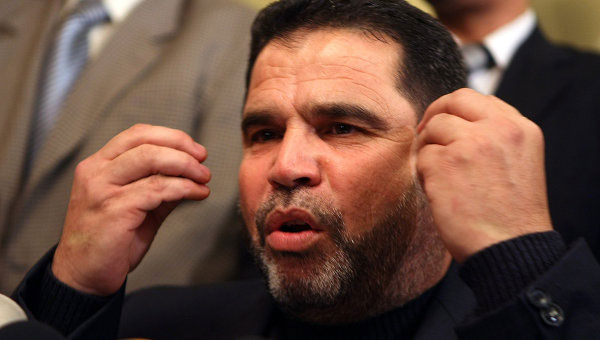
 Palestinian Resistance announced on Sunday its fighters has managed to control and then down an Israeli drone flying over the northern part of the Gaza Strip.
 A Review of Conspiracy Theories and Other Dangerous Ideas by Cass Sunstein (based on an earlier paper co-authored with Adrian Vermeule); In Defense of Troublemakers: The Power of Dissent in Life and Business by Charlan Nemeth; and Conspiracy Theories and the People Who Believe Them, edited by Joseph E. Uscinski
 Aletho News
