Biden administration sought control over TikTok
RT | August 26, 2023
The Biden administration sought to gain control over nearly every aspect of the inner workings of social media behemoth TikTok as part of negotiations allowing its continued operation in the US, according to a draft agreement obtained by Forbes last week.
The agreement, which runs to nearly 100 pages, would reportedly give the White House a level of control over the Chinese-owned platform even greater than that which it was found last year to be exercising over US-based competitors like Facebook and Twitter, allowing government officials to not only monitor and influence the conversation on the platform but also to interfere in the day-to-day operations of TikTok in the US.
Government agencies like the Department of Justice and Department of Defense would have full authority to examine TikTok’s servers, equipment, records, facilities, and other properties, according to the draft. They could also block changes to the app’s US terms of service, privacy policy, and moderation policies and veto the hiring of any individual involved in data security for the US.
The agreement would also force TikTok and its parent company ByteDance to submit to outside audits, assessments, code inspections, and cybersecurity checks by supposedly independent entities chosen by the US government. The company would be required to foot the bill for these intrusions.
The platform’s US staff could even have been required to exclude ByteDance’s executives from security-related decisions, instead deferring to an executive security committee whose actions would also be concealed from ByteDance. This committee’s primary responsibility would be maintaining US national security first and TikTok’s profitability second.
The draft seen by Forbes, dated last summer, is the product of months of exchanges between ByteDance and the Committee on Foreign Investment in the United States (CFIUS), which oversees foreign involvement in business deals that could potentially impact national security and has been investigating ByteDance for four years.
TikTok has repeatedly been threatened with a blanket ban or forced sale of its US assets to an American competitor as both President Joe Biden and his predecessor Donald Trump claimed the platform is used by Beijing for information warfare.
CFIUS renewed the call for a ban or sale in March after the DOJ launched an investigation into ByteDance employees using TikTok to spy on American journalists. A spokesperson for ByteDance confirmed the surveillance but attributed it to rogue employees who have since been fired.
TikTok has over 150 million American users spending 90 minutes or more on the platform. While the company pledged in 2021 to isolate US user data on servers owned by tech giant Oracle to assuage spying concerns, Biden prohibited its use by federal employees in December and dozens of state and city governments have followed suit.
California Church Fined For Defying Covid Lockdowns Sues County For Tracking Worshipers Without Their Knowledge
By Cindy Harper | Reclaim The Net | August 26, 2023
A church in California punished during Covid lockdowns with a fine of $1.2 million is now suing over geofencing-based surveillance of its members.
The church, Calvary Chapel San Jose, along with Pastor Mike McClure, allege in the federal lawsuit filed this week that Santa Clara County engaged in warrantless and invasive surveillance, using the geofencing method and thus abusing location data harvested from the worshipers’ phones.
The filing is based on claims that both First Amendment related to free speech, and the Fourth Amendment, meant to protect against unlawful searches, were violated by the county as it resorted to spying via geofencing.
We obtained a copy of the complaint for you here.
Advocates for Faith & Freedom, a group that filed the lawsuit, specified that the county turned to SafeGraph data company in order to carry out this activity, and accuses the officials behind the scheme as engaging in tracking of residents not only without appropriate warrants and in an invasive manner, but also keeping this activity a secret from the public.
“This type of expansive geofencing operation is not only an invasion of privacy but represents a terrifying precedent if allowed to go unaddressed,” the complaint states. “As it stands, Defendants assert that, as long as they call it research, any level of government can target and spy on any individual or group at any time for any duration.”
It is further alleged that the operation lasted more than a year, “with seemingly no oversight, boundaries, or limitations.” The implication of this is that those targeted by this controversial, dragnet-style surveillance weren’t safe from it anywhere – be it the prayer room or the bathroom.
Those behind the lawsuit also reject the arguments that the defendants have apparently chosen to go with, namely, that the whole operation was done for the sake of “research,” and is therefore justified.
But, argues Advocates for Faith & Freedom, accepting such logic would mean that there would be no real limits to how government entities at any level could use geofencing to track either groups or individuals. This lack of boundaries means that the spying could go on against anyone and for any amount of time – and potentially be used against opponents.
“This is not just un-American; it is downright Orwellian,” stated Advocates for Faith & Freedom.
Santa Clara County, meanwhile, had nothing to add to its previous comments on the matter, well before the lawsuit was filed. Back in March, the county reacted to a report about tracking of worshipers written by journalist David Zweig.
Will Scientific Evidence Ever Silence the Pro-Mask Cult?

Facial equity mask
BY DR GARY SIDLEY | THE DAILY SCEPTIC | AUGUST 24, 2023
It is a long-established conclusion from the scientific world that face masks achieve no appreciable reduction in viral transmission. We knew this in 2015-16 with regard to surgeons and their patients (here and here). We knew this in 2020 from a gold-standard Cochrane review, an analysis of 14 studies on influenza and a healthcare investigation that concluded that masks “may paradoxically lead to more transmissions”. We knew this in 2021 based on the Danish mask study and two comprehensive evidence reviews (here and here). We knew this in 2022 in relation to primary schools and universities, and a debunking of premature pro-mask conclusions drawn from the Bangladesh study. And – as if more evidence was needed – at the start of 2023 we had the latest Cochrane review, yet again concluding that covering our faces with cloth and plastic does not significantly reduce the likelihood of contracting respiratory viral infections. Yet, despite this collective scream from the scientific community that the ‘MASKS DON’T WORK’, it seems that nothing will muzzle the strident protestations of the mask disciples, such as those at Independent SAGE.
A recent article in the Daily Mail led with the scary headline: ‘Scientists raise alarm over new Covid variant and call for return of face masks.’ Two of the scientists raising concerns were Professors Trish Greenhalgh and Stephen Griffin, the former announcing, “It’s, once again, time to mask up”, while the latter concurs – albeit more cryptically – with his recommendation of the re-imposition of a “mitigation-based approach”. Both Greenhalgh and Griffin are members of Independent SAGE.
When Independent SAGE was formed in May 2020, as an alternative to official SAGE, it claimed to be a group of multi-disciplinary experts whose mission was to offer the Government scientific advice on how to minimise deaths during the Covid crisis. In reality, it constituted a group of zero-Covid fanatics pushing extreme counter-pandemic measures: whatever non-evidenced, human-rights-infringing restrictions the Government proposed, Independent SAGE typically called for them to be longer and harsher.
A cursory inspection of the group’s membership explains a lot. The previously-mentioned Trish Greenhalgh is, undoubtedly, the most extreme spokesperson for the pro-mask cult, previously asserting that the search for rigorous scientific evidence was the “enemy of good policy“. The founding Chairman of the group, Professor David King, was the senior scientific advisor to the Government of Tony Blair, currently an influential advocate of globalist agendas promoting top-down control of the population. Another core participant is the lifelong member of the Communist party – Professor Susan ‘let’s-wear-a-mask-forever‘ Michie. Also, the current co-Chair of Independent SAGE is Anthony Costello, a Professor of Global Health and Sustainable Development at University College London and a former director at the World Health Organisation. Given the histories and affiliations of these group participants it was predictable that they would grasp the next available opportunity to call for the return of community masking.
Clearly, the use of the term ‘independent’ in relation to this group was a misnomer. In stark contrast, Dr. Ashley Croft – the independent expert commissioned by the Scottish Covid Inquiry – appears to be a much better fit for the role of supplier of impartial information, free from the shackles of groupthink and mainstream ideology. Dr. Croft is a Consultant Public Health Physician and Medical Epidemiologist. In his report he lists his conclusions about the physical measures taken against COVID-19 as follows (emphasis mine):
In 2020 there was scientific evidence to support the use of some of the physical measures (e.g. frequent handwashing, the use of PPE in hospital settings) adopted against COVID-19. For other measures (e.g. face mask mandates outside of healthcare settings, lockdowns, social distancing, test, trace and isolate measures) there was either insufficient evidence in 2020 to support their use – or alternatively, no evidence; the evidence base has not changed materially in the intervening three years.
It has been argued that the restrictive measures introduced during the COVID-19 pandemic resulted in individual, societal and economic harm that was avoidable and that should not have occurred.
This genuinely independent voice was not well-received in some quarters. Unused to the expression of viewpoints that deviate from the dominant Covid narrative, the mainstream media predictably squealed disapproval about Croft’s perspective and resorted to attempts to smear him for his “vaccine scepticism”. And no doubt those ideologues at Independent SAGE will – as I write – be doing likewise.
As the year advances, the evidence against mass masking continues to accumulate. In April, researchers at London’s St. George’s Hospital reported that a mask mandate in 2020-21 in their healthcare settings “made no discernible difference to reducing hospital-acquired SARS-CoV-2 infections”. And – lest we forget – we purportedly live in a free and open society where coercive restrictions should only be imposed where there is unequivocal proof of a pronounced and widespread benefit from adoption of the behaviour targeted; we are a million miles away from that scenario, and that is even before we consider the harms of community masking.
But will this quieten the pro-mask cult? It seems these perpetual advocates of face coverings are driven by some supra cognitive construct that trumps the empirical evidence. Mass concealment of human faces appears to signify something sacred to groups like Independent SAGE: is it equality, egalitarianism, altruism? Or could their persistent pushing of masks be simply due to cognitive dissonance: they have stridently trumpeted the practice for so long that it would now be too psychologically painful, and damaging to their status and self-image, to admit their previous energies have been woefully misplaced? Whatever the underlying reason, we can expect escalating appeals from the muzzle mafia over the coming months.
Dr. Gary Sidley is a retired NHS Consultant Clinical Psychologist and co-founder of the Smile Free campaign.
NEW VARIANTS TRIGGER CALLS FOR RETURN TO LOCKDOWNS
The Highwire with Del Bigtree | August 24, 2023
Mass media is calling for the reinstitution of COVID restrictions due to new variants, with no conversation about the efficacy or the harm they’ve caused. Jefferey Jaxen connects all the dots, which appears to be pointing to a Pandemic 2.0.
Fauci declares lockdowns were ‘absolutely justified’ and suggests they should be used again to force vaccinations
Retired government bureaucrat says that tragedy in Maui was due to climate change
By Jordan Schachtel | The Dossier | August 22, 2023
Recently retired government bureaucrat Anthony Fauci just appeared at a university virtual event titled, “Pandemic Lessons and Role of Faculty in Pandemic Preparedness with Dr. Anthony Fauci.” During the conversation, Fauci, who is now affiliated with Georgetown University, made it clear that he still supports locking down society in the name of a virus, adding that lockdowns are a great tool to forcibly “vaccinate” people.
I’ll save you 40 minutes of your life and quote some of the “highlights” from the interview, in which a Wayne State University professor asks Fauci about what he’s learned from his time overseeing a “pandemic response.” The video of the chat is available via YouTube below:
Fauci falsely claimed that New York City was overrun and had “cooler trucks outside because they had no places to put the bodies.”
“You had to have something to immediately shut down the tsunami of infection,” he states, adding, “that lockdown was absolutely justified.”
“Lockdown has a purpose,” the pseudoscientist continued. “One of the purposes, if you don’t have a vaccine, it’s to get more ventilators, get the hospitals better prepared … until you decompress the pressure on the hospitals.
Fauci wasn’t done yet. Here comes the truly evil insanity…
“If you have a vaccine available, you might want to lock down temporarily so you can get everybody vaccinated,” he suggests.
Rejecting the idea that lockdowns are a moral question, he added that “lockdowns have a place, but they are not a permanent solution.”
The conversation continued, with the longtime NIAID chief declaring that “climate change” is “playing a role” in causing outbreaks.
He then calls for an “international commitment to decrease the carbon imprint in society so you don’t have the kinds of crazy weather we’re having in this country.”
Yes, that’s a real quote.
He went on to blame the tragedy in Maui on climate change. “It’s completely, really amazing what’s happened with climate change,” he concludes.
The Royal Society Lockdown Report Authors Understand That by Ignoring the High Quality Evidence they Reach the Politically Acceptable Conclusion
BY DR CARL HENEGHAN AND DR TOM JEFFERSON | THE DAILY SCEPTIC | AUGUST 25, 2023
This week saw the publication of a suite of systematic reviews by the Royal Society (RS) on the effect of non-pharmaceutical interventions in the pandemic.
Politico headlined with ‘Top review says Covid lockdowns and masks worked, period’. The Guardian led with ‘Lockdowns and face masks “unequivocally” cut the spread of Covid, report finds’, and the i newspaper stated: ‘Masks and social distancing did reduce Covid infections, new report shows, proving lockdown sceptics wrong.’
So there you have it, a slam dunk, sceptics, you were all wrong. You should have masked up and stayed in lockdown.
Even more so when you listen to the Chair of the report’s group, Mark Walport, who said: “There is sufficient evidence to conclude that early, stringent implementation of packages of complementary NPIs was unequivocally effective in limiting SARS-CoV-2 infections.”
Four systematic reviews informed the effectiveness of non-pharmaceutical interventions in the Covid pandemic. However, here is some of what these reviews report.
A systematic review on environmental control measures:
Many of these studies were assessed to have critical risk of bias in at least one domain, largely due to confounding factors that could have affected the measured outcomes. As a result, there is low confidence in the findings.
One study, an RCT, showed that daily testing of contacts could be a viable strategy to replace lengthy quarantine of contacts. Based on the scarcity of robust empirical evidence, we were not able to draw any firm quantitative conclusions about the quantitative impact of TTI interventions in different epidemic contexts.
Effectiveness of face masks for reducing transmission of SARS-CoV-2:
We analysed 35 studies in community settings (three RCTs and 32 observational) and 40 in healthcare settings (one RCT and 39 observational). Ninety-one percent of observational studies were at ‘critical’ risk of bias (ROB) in at least one domain, often failing to separate the effects of masks from concurrent interventions.
Effectiveness of international border control measures during the COVID-19 pandemic:
There is little evidence that most travel restrictions, including border closure and those implemented to stop the introduction of new variants of concern, were particularly effective.
The report makes the same errors that the UKHSA and Public Health England did. They ignored the critical biases and the confounders when drawing conclusions. Some of the comments misunderstand the evidence required for making healthcare decisions.
Chris Dye, Professor of Epidemiology at the University of Oxford, who led the review on masks for the Royal Society, said if they had only looked at randomised controlled trials, they would have come to the same conclusion as the Cochrane review. However, the researchers behind the paper released Thursday chose to analyse a larger body of studies and found strong evidence that masks work.
So, if we ignore high-quality evidence, we arrive at the conclusion we want – they fully understand the politics. Low-quality evidence means the estimated effect will differ substantially from the actual effect – we’ve known this for quite some time, and it is fundamental to the delivery of evidence-based interventions. An approach that uses low-quality evidence shouldn’t inform healthcare, and it doesn’t. That’s why we have NICE, which uses the best available evidence to develop recommendations that guide health, public health and social care decisions.
Did the reviewers, for instance, ask if there was a protocol for any of these studies – something we have previously pointed out. There were none, despite protocols being essential for robust research.
There is something we do agree with in the report, that the “future assessments should also consider the costs as well as the benefits of NPIs, in terms of their impacts on livelihoods, economies, education, social cohesion, physical and mental wellbeing, and potentially other aspects”. However this report looked at none of that. The single focus on one outcome, ignoring harms, further hinders informed decision-making.
The RS report wants us to believe that RCTs are impossible during a pandemic: “While RCTs should not be discounted, it is highly likely that most information in a future pandemic will continue to be observational.”
Yet the pandemic has re-emphasised the importance of high-quality randomised clinical trials and highlighted the need for preparation, coordination and collaboration.
The Royal Society review shows that some academics are losing their ability to think critically. Instead of retrofitting evidence to preconceived conclusions, it would be much better to report the uncertainties and set out those questions that need addressing. Refusal to acknowledge uncertainties does a disservice to society and undermines public trust in research.
Staying at home decreases your risk of all sorts of hazards – in the short term, you won’t get run over and you’ll reduce the risk of an infection or an accident. But what matters is the costs of what happens when you reemerge.
The Digital Services Act Will Give the EU Sweeping New Censorship Powers, Forcing X and Facebook to Remove Content that Challenges Mass Migration, Transgender Ideology or Net Zero
BY DR FREDERICK ATTENBOROUGH | THE DAILY SCEPTIC | AUGUST 25, 2023
The European Union’s Digital Services Act (DSA) comes into force today, obliging “very large online platforms” to swiftly take down what unelected European Commission bureaucrats decide to define as ‘disinformation’.
As Laurie Wastell points out in the European Conservative, the DSA obliges online platforms to swiftly take down so-called disinformation. From today, the EC has at its disposal an aggressive enforcement regime, such that if Big Tech companies fail to abide by the EU’s ‘Strengthened Code of Practice on Disinformation’, which requires swift censorship of mis- and disinformation, then they can be fined up to 6% of their annual global revenue, investigated by the Commission, and potentially even prevented from operating in the EU altogether.
So, who is to say if something is misinformation? In the case of social media platforms operating within the EU, the EC is the arbiter of that, since it is the Commission that will decide if platforms like X and Facebook are doing enough to combat it. (It is the EU’s executive body, the EC, that is invested by the DSA with the exclusive power to assess compliance with the Code and apply penalties if a platform is found wanting.)
And what kind of speech is the DSA expected to police? The Code defines disinformation as “false or misleading content that is spread with an intention to deceive or secure economic or political gain and which may cause public harm”. That sounds innocent and apolitical enough. Yet the European Digital Media Observatory (EDMO), which was launched by the EC in June 2020 and aims to “identify disinformation, uproot its sources or dilute its impact”, appears to adopt a much broader, deeply politicised understanding of the term “misleading content”.
Consider, for instance, some of the key “disinformation trends” listed in the EDMO’s recent 2023 briefing on disinformation in Ireland. They include “nativist narratives” that “oppose migration”, “gender and sexuality narratives” that touch on drag queens and trans issues as “part of a wider ‘anti-woke’ narrative that mocks social justice campaigns”, and “environment narratives” that criticise climate-change policies and Greta Thunberg.
Clearly, what is common to such narratives is not that they constitute disinformation in the sense outlined in the Code — that is, “false information intended to mislead”. Rather, they represent opposition by members of the public to unpopular policies favoured by European elites — in this case, mass migration, transgender ideology and Net Zero.
In the words of EC President Ursula von der Leyen, it is vital that companies censor disinformation of this kind to “ensure that the online environment remains a safe space”. Safe for whom, one wonders — politicians or citizens?
Well worth reading in full.
Dr. Frederick Attenborough is the Communications Officer of the Free Speech Union.
Free Speech Union Highlights New Risk to Free Speech in the Workplace: Carbon Literacy Training
BY TOBY YOUNG | THE DAILY SCEPTIC | AUGUST 25, 2023
The Free Speech Union has just published a briefing on carbon literacy training by Thomas Harris, its Director of Data and Impact. The FSU is concerned that it will have a chilling effect on free speech in the workplace in the same way that unconscious bias training and anti-racism training does, with employees reluctant to challenge the ideas behind it for fear of jeopardising their careers.
Carbon literacy training is spreading rapidly across UK offices and places of study, with over 67,000 citizens certified as ‘carbon literate’ according to the Carbon Literacy Project (CLP), the main organisation behind the initiative. (Between financial year-end September 2021 and September 2022, CLP’s income grew from £183.8k to £637.7k, an increase of nearly 250%.) The training takes it for granted that we’re in the midst of a ‘climate emergency’ and recommends that employees embrace various radical solutions, including net zero.
The Free Speech Union is concerned that this training is embedding a particular orthodoxy about climate change in British workplaces, leaving employees feeling unable to challenge it. While it’s indisputable that average global temperatures have increased since the mid-19th Century people hold a range of views about the causes and severity of climate change and that in turn influences their opinion about the best way to tackle it – or, indeed, whether tackling it is possible or necessary. Different solutions to the problems created by climate change are informed by different values and recommending one approach over another inevitably involves making a political choice. There is no-such thing as an apolitical, ‘scientific’ solution. Consequently, employees should not be put under pressure to endorse a particular approach or threatened with disciplinary action if they fail to adjust their behaviour to follow this approach, particularly in their private lives.
In those companies seeking accreditation as a ‘Carbon Literate Organisation’ (CLO), up to 80% of staff are expected to become ‘carbon literate’. Carbon literate accreditation requires employees to embrace a particular view about climate change and identify at least one action they can take to reduce their own carbon footprint, as well as at least one action involving other people. The FSU fears that employees may be penalised if they refuse to comply with these requirements because they do not share a particular point of view.
The FSU first became aware of this new threat to free speech in the workplace when it was contacted by a member who is concerned about his career after he challenged the carbon literacy training provided by his employer. The FSU believes he was right to be concerned. To secure CLP’s platinum, gold, and silver CLO accreditation, companies are expected to embed carbon literacy in the annual targets of staff members and evaluate their performance accordingly. This means that employees who don’t subscribe to a particular view on climate change could find themselves missing out on pay awards or promotion unless they self-censor or pretend to hold convictions they don’t have.
If you’re being forced to undergo carbon literacy training in your workplace and are worried you might get into trouble for challenging the climate activist agenda behind it, you can contact Thomas Harris at the Free Speech Union here. And if you’re not already a member of the FSU, you can join here.
New York City Mayor seeks to incorporate Israel police drone technology into NYPD

MEMO | August 24, 2023
The Mayor of New York City is looking to potentially incorporate Israeli drone technology and methods to aid in law enforcement and emergency efforts, in the latest example of cooperation between American and Israeli police forces.
Eric Adams, the New York City Mayor, visited Israel this week in order to assess the country’s law enforcement technology and the possibility of incorporating it into the New York Police Department (NYPD), telling reporters during an online briefing in the Israeli capital, Tel Aviv, yesterday that the Israeli police forces “are a little bit more advanced”.
Adams praised the drones used by Israeli law enforcement as being more durable and being able to fly for much longer than NYC’s current technological devices, clarifying that “the method in which they’re using them, the methods in which they are training to use them, is what caught my interest”.
Referring to himself as “a great fan of technology and all it can do to make our lives easier and safer”, the Mayor proclaimed that “Israel is on the cutting edge of exciting developments in technology that will benefit all of us.”
He also referred to Israeli police’s use of drones in coordination with police motorcycles, saying it could potentially be a tactic utilised by the NYPD to help response times for accidents or other emergencies.
The utilisation of drone technology by Israeli police and wider authorities has increased throughout the past year, with officials in the central Israeli city of Modi’in-Maccabim-Reut having begun deploying drones as first responders in traffic accidents last October.
Despite his praise for the NYPD’s Israeli counterparts, Adams acknowledged that a significant part of the drone technologies’ utilisation is directly opposed to laws practiced within the United States, making full implementation an issue. The NYPD “will not use any tool that is not in alignment with the laws of our city, in our state and in our country.”
One such method it will reportedly refrain from using is the facial recognition technology which is notoriously used by Israeli authorities to identify Palestinians. “So many police forces across the globe, they use various methods that are not suitable in our city, and we’re not going to use any methods that do not conform with our rights and the laws of our country”.
The Mayor praised some aspects of Israeli policing tactics, however, such as their ability to “strategically and successfully deal with a large crowd”. He claimed that “some methods we may not use, but there are other methods that they use that they’re really humane in nature.”
Such tactics like crowd control may be incorporated by the NYPD, he said, seemingly referring to recent riots that rocked the city last month. “As when we had a similar incident in our city, how do we do it in the correct way? And they’ve [Israelis] learned how to do it correctly. And we walked away with some of those tactics.”
Related article:
Data collected by Israel’s electronic wolves helps to terrorise the Palestinians
German Judge Gets Probation Sentence For Allowing Kids to go Maskless
After his house was raided in 2021
NAKED EMPEROR | AUGUST 23, 2023
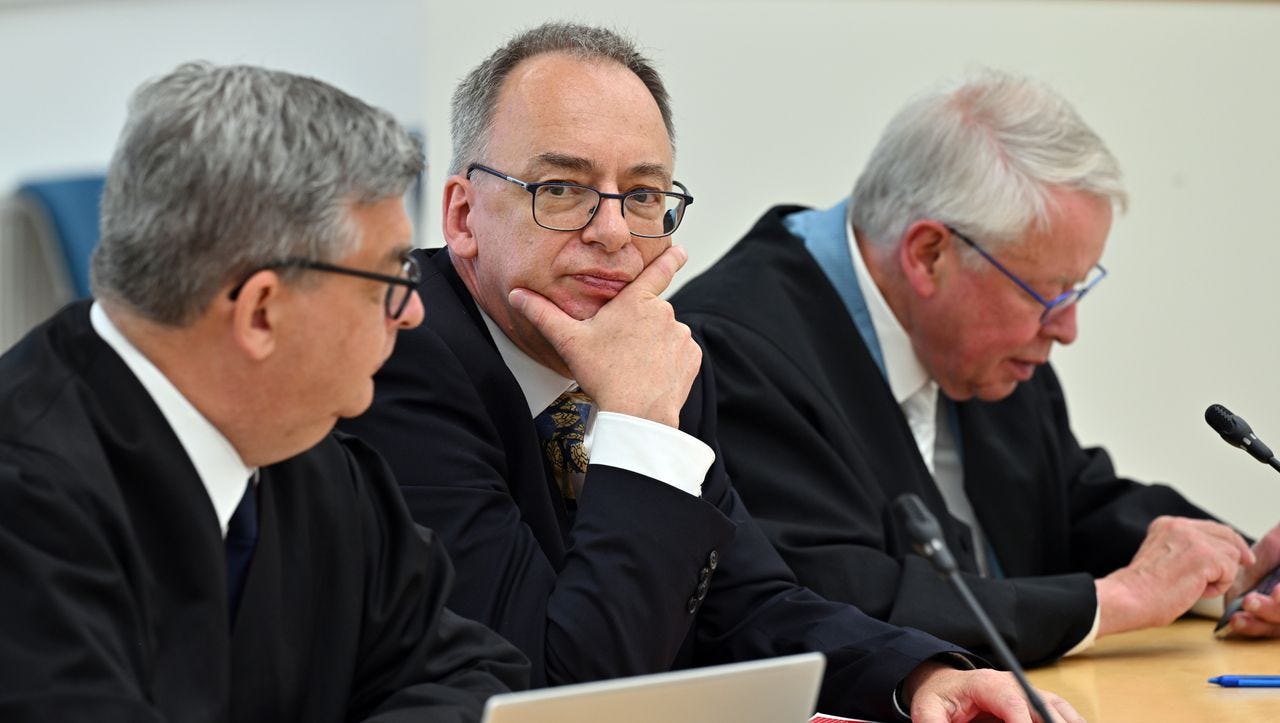
Christiaan Dettmar, a family judge from the Weimar District Court in Germany recently faced the Erfurt Regional Court for his stance against the unnecessary imposition of mask mandates on children. In April 2021, going against the grain, he ruled that children at two Weimar schools should not be burdened with wearing Covid masks in class, defying the restrictive guidelines set by the Thuringian Ministry of Education.
However, in a move reflective of the bureaucratic stranglehold on such decisions, higher courts dismissed his ruling, claiming it unauthorised. The Thuringian Higher Regional Court stated that the family judge did not possess the jurisdiction on this matter, a viewpoint also echoed by the Federal Court of Justice. They insisted that only administrative courts should handle state orders regarding corona protection measures.
At the time (in April 2021), Dettmar had his office, private residence and car searched after he ruled that children should not be wearing masks. He also had his phone confiscated after his decision which embarrassed the government.
His decision to end mask mandates was made after hearing evidence from Professor Kappstein on the lack of benefit of wearing masks and observing distance rules for the children and third parties. Kappstein said that after evaluating all the international data on the subject of masks, the effectiveness of masks for healthy people in public is not supported by scientific evidence.
Dettmar concluded that not only are masks useless but they are also dangerous.
The compulsion imposed on school children to wear masks and to keep their distance from each other and from third persons harms the children physically, psychologically, educationally and in their psychosocial development, without being counterbalanced by more than at best marginal benefit to the children themselves or to third persons. Schools do not play a significant role in the “pandemic”.
The PCR tests and rapid tests used are in principle not suitable on their own to detect an “infection” with the SARS-CoV-2 virus. This is already clear from the Robert Koch Institute’s own calculations, as explained in the expert reports. According to RKI calculations, as expert Prof. Dr. Kuhbandner explains, the probability of actually being infected when receiving a positive result in mass testing with rapid tests, regardless of symptoms, is only two per cent at an incidence of 50 (test specificity 80%, test sensitivity 98%). This would mean that for every two true-positive rapid test results, there would be 98 false-positive rapid test results, all of which would then have to be retested with a PCR test.
A (regular) compulsion to mass-test asymptomatic people, i.e. healthy people, for which there is no medical indication, cannot be imposed because it is disproportionate to the effect that can be achieved. At the same time, the regular compulsion to take the test puts the children under psychological pressure, because in this way their ability to attend school is constantly put to the test.
In the recent trial against Judge Dettmar, although the prosecution demanded a hefty three-year prison term, the defence, representing the concerns and wishes of countless parents and citizens, argued for acquittal. The presiding judge at the Erfurt Regional Court noted that the Weimar judge’s decision emanated from his personal views.
After originally being sentenced to two years in prison, the court has now suspended the sentence on probation.
However, it is still possible that Dettmar may lose his office and pension as a result of the conviction.
Throughout the proceedings, the courtroom was electric with tension and support. Spectators broke into spontaneous applause in favour of Dettmar. This would have continued except the judge threatened to throw them out. The prosecution’s attempt to paint the judge’s intentions as malicious was met with scepticism. They claimed that he intentionally set up a child protection procedure against the mask mandate, misrepresenting it as a statement against government measures. Their evidence, mainly based on emails and chat messages, was tenuous at best.
The defence, however, passionately highlighted the judge’s genuine concern for the well-being of children. They asserted that the case was merely an attempt to suppress and penalise differing opinions in a society where free thought should be celebrated.
Reiterating his unwavering stand, Dettmar confirmed he would make the same decision again. The subsequent lifting of school mask mandates by German states in April 2022 only reinforces the argument that such restrictions should never have been in force in the first place.
German Courts Are Going FULL Dystopia
OffGuardian | August 23, 2023
It’s been an astonishing couple of days for German judges. Well, “astonishing” if you’ve been living in a cave for the last four years.
Many of you likely already know that satirist and playwright (and frequent OffG contributor) CJ Hopkins is being prosecuted in Germany for “disseminating propaganda, the contents of which are intended to further the aims of a former National Socialist organization,”
All because the cover of his book has a swastika on it.
Needless to say, the charges are absurd. Insultingly so. You can read CJ’s first-hand account of this nonsense here and here.
Anyone who isn’t a) stupid or b) delusional can plainly see these charges have nothing to do with a stock-image swastika, and everything to do with the content of the book. In short, they are politically motivated charges brought against an author for criticizing the state. The very essence of dystopian tyranny.
… and yesterday he was convicted.
He now faces 60 days in prison or a 3600 Euro fine.
That’s case one, and as we say one you are likely familiar with if you’re regular readers.
Something you probably haven’t heard is that, just this morning, a different German court sentenced a former judge to two years in prison.
His crime? Ruling that mask mandates in schools were not constitutional.
The case dates back to April 8th 2021, when Weimar District Family Court judge Christiaan Dettmar ruled that two schools in the district a) could not enforce mask mandates, b) must continue in-person classes and c) could not force pupils to test for “Covid”.
From Human Rights Blog :
The court case was a child protection case under to § 1666 paragraph 1 and 4 of the German Civil Code (BGB), which a mother had initiated for her two sons, aged 14 and 8 respectively, at the local Family Court. She had argued that her children were being physically, psychologically and pedagogically damaged without any benefit for the children or third parties. At the same time, she claimed this constituted a violation of a range of rights of the children and their parents under the law, the German constitution (Grundgesetz or Basic Law) and international conventions.
After listening to testimony from expert witnesses, the judge ruled in favour of the mother, writing in his verdict:
These are the risks [to mask mandates]. The children are not only endangered in their mental, physical and psychological well-being by the obligation to wear face masks during school hours and to keep their distance from each other and from other persons, but they are also already being harmed. At the same time, this violates numerous rights of the children and their parents under the law, the constitution and international conventions.
Two weeks after handing down this ruling, his home and office were raided by the police and his mobile phone was seized.
And now, two years later, he was found guilty of “judicial misconduct” and initially given two years in prison (the court has since suspended the sentence). “Judicial Misconduct”, for simply disagreeing with the government.
Free speech is the first and most vital liberty, without it no one is truly free. An independent judiciary is a must to preserve any kind of justice, judges who simply nod along with government edicts are the building blocks of authoritarian states.
The voice of the people and the power of the courts – ideally – work together to hold the government to account.
And yet, whether in the judiciary or the arts, the German legal system is now a machine for criminalizing and punishing dissent of any kind.
… I’d make a comparison to another German government that used to function in a similar way, but I really can’t afford a 4000 euro fine.
Featured Video

AIDS Inc. by Gary Null (2007)
or go to
Aletho News Archives – Video-Images
From the Archives
Clash of Civilization, Iran Part II
By Jamal Kanj – Intifada-Palestine.com – January 14, 2011
Israel’s survival kit is: perpetuate conflict, insecurity to rationalize collective hate and finally playing victim.
Devoid of conflict, Israel implodes internally; without hate, Zionism loses its justification; and playing eternal victim to continue blackmailing the West. Absence of this holy trinity, Israel ceases to exist.
From its inception, the house of Zion has mastered exploiting adversarial powers to advance Israel’s cause. For instance, their influence over the Democratic Party in the US began with President Truman’s bid for 2nd term election in 1948.
Responding to strong opposition from Secretary of State General George Marshall and Department experts urging against recognition of Israel, President Truman replied: “I’m sorry gentlemen but I have to answer to hundreds of thousands [Jewish voters] who are anxious for the success of Zionism. I do not have hundreds of thousands of [voting] Arabs among my constituents”
Zionists influence over liberal American politics was matched with the doctrinal school of Conservative theoreticians aligning the Republican Party’s platform with Israel’s objectives. The Neoconservative Zionists, coined Zioncons, invented the “Clash of Civilization” concept to fight Israel’s wars. … continue
Blog Roll
 Aletho News
- 12 Things Your Psychiatrist Was Trained Not to Tell You
- From Unipolar Universalism to Multipolar Civilizational Distinctiveness
- RSF military group defects, joins Sudanese army: State media
- Ireland goalkeeper refuses to play ‘Israel’ as squad weighs boycott
- China pushes back against US on Cuba, Iran
- Ukrainian Soldiers, Potential Mercenaries: Have Gun, Will Travel!
- Burnham’s UN debut… A masterclass in British disinformation
- Iran flights continue despite US aviation sanctions
- Global Tipping Points Lead the World Into a State of Entropy
- The day-after at the White House: USA and Xi Jinping
- If Americans Knew
- Israel forces Gazans to live in constant peril – Daily Update
- Deconstructing Netanyahu’s pants-on-fire UN rant – Daily Update
- Trump betrayed voters with his campaign lies and prioritized a foreign country once he took office
- Netanyahu calls Israel’s war in Gaza ‘opposite of genocide’ in UN speech to near-empty hall
- Settler Kidnappings: Torture, Sexual Abuse and Terrorisation of Palestinian Abductees as Israel Deepens Annexation of West Bank
- Gaza winter nears as 162,000 tents become unusable, raising fears of humanitarian crisis
- Netanyahu says, “It’s the opposite of genocide”; UN says Gaza economy is world’s ‘most severe crisis on record’ – Daily Update
- Israel’s US-Backed Assault on Gaza Has Created the ‘World’s Most Severe Economic Crisis on Record’: UN
- ‘Protecting U.S. Citizens’… From Israel
- ‘This is where I live now, the back of a truck’: a day in the life of a grandmother in Gaza
- No Tricks Zone
- New Study: Earth And Venus Surface Warmth Largely Explained By Convection And Lapse Rate, Not CO2 Or Radiation
- 2025 Nature Paper Claiming Worsening Global Drought Gets RETRACTED …Heavily Flawed
- New Study: ‘Global Drought Shows No Detectable Recent Acceleration Under Climate Warming’
- Economic Masterminds: German Socialists Suggest Taxing Productivity Gains Stemming From Using AI
- The South China Sea Has Not Been Cooperating With The Climate Change Narrative
- Energy Crisis: Germany Enters Heating Season With Historically Low Gas Reserve Fill Levels
- New Study: The Antarctic Ice Sheet Gained Mass From 2020-2024 Due To Staggering Snow And Ice Accumulation
- Study: Ocean Heating Rates From Thousands Of Years Ago ‘Dwarf’ Modern Ocean Heating Rates
- Climate Extremists Target, Attack Large-Scale Power Grid Infrastructure In Germany!
- New Study: Antarctic Ice Melt Has Contributed Less Than 1 Centimeter To Sea Level Rise In The Last 30 Years

