Hunger striker reveals details of her horrific torture in Israeli prisons
![Palestinian prisoner, Heba Al-Labadi is on the eighth day of hunger strike after being sentenced to administrative detention for five months without charge or trial on 20 August 2019 [Twitter]](https://i0.wp.com/www.middleeastmonitor.com/wp-content/uploads/2019/10/ECYxESYWkAAW0NB-e1569940375372.jpg?resize=1024%2C683&quality=75&strip=all&ssl=1)
Palestinian prisoner, Heba Al-Labadi was sentenced to administrative detention for five months without charge or trial on 20 August 2019 [Twitter]
MEMO | October 8, 2019
A Palestinian-Jordanian who has been on hunger strike for 15 days in Israeli prisons has revealed the details of her horrific interrogation and torture, the PLO Prisoners’ Committee reported on Monday. Heba Al-Labadi, 24, was arrested on 20 August by Israeli soldiers as she crossed the Allenby Bridge from Jordan to attend a wedding in the occupied West Bank with her mother.
According to her lawyer, Al-Labadi has been subjected to inhumane treatment in detention. She was apparently stripped of all of her clothes as soon as she was arrested, handcuffed, blindfolded and leg-chained before being moved to the Bitah-Tikva investigation centre. She told her lawyer that she was embarrassed when she saw the female Israeli soldiers looking at her private parts when she entered and left the toilet.
Al-Labadi also explained that she was interrogated for 20 consecutive hours during the first 16 days of her detention and said that she was given only two breaks for meals every day. She was then moved to rooms full of collaborators, who started to interrogate her; this lasted for up to 35 days, during which she was subjected to verbal, physical and psychological abuse and torture. The Israeli interrogators, she insisted, got close to her body intentionally and used the dirtiest words to insult her.
“They also insulted Islam and Christianity,” she said, “and said that I am an extremist and told me that they had arrested my mother and sister and they would put me under renewable administrative detention for seven and a half years and then release me to the West Bank and put me under 24-hour surveillance.”
A large number of investigators are said to have interrogated Al-Labadi and kept her in a very dirty cell with insects and spiders. The cell had rough walls and a bright light which prevented her from sleeping. The “very thin” mattress had no cover or clean sheets. The interrogators told her that she would “rot” in prison.
On 25 September, Heba Al-Labadi was issued with a 5-month administrative detention order with neither charges made against her nor a trial. That was why she started her hunger strike.
Two days later, she was moved to a cell monitored by four cameras. The toilet in her cell has a see-through door, so her every move is monitored by the prison guards.
Despite being ordered to end her hunger strike, she insisted that the “tragedy” of the administrative detention must end first. “I will continue until the end or I shall die.”
Israel to build camps as preparation for displacing Arab citizens
MEMO | October 8, 2019
Israel’s District Planning and Building Committee considered a plan on Sunday submitted by the Bedouin Settlement Authority in the Negev which aims to build camps as preparation for the displacement of 36,000 Arab citizens, Arab48.com has reported. The plan targets Palestinian-Arab residents within Israel who live in Bedouin villages “unrecognised” by the Israeli occupation government.
Such villages have often been in place for hundreds of years before the creation of the Israeli occupation state. Nevertheless, it is insisting on displacing their residents and replacing the villages with housing projects for Jewish Israeli settlers.
A letter has been sent to the head of the District Planning and Building Committee asking them not to accept the plan. It was sent on behalf of Adalah Centre, an Israeli rights group seeking justice for Arab residents, along with the Regional Council for the Unrecognised Villages in the Negev, the Peaceful Coexistence Club and Shatil Association.
Submitted by lawyer Suha Bsharah from Adalah, the letter stressed the importance of rejecting the plan, which is simply a tool to displace Arabs from their homes and villages within Israel. It also reiterated that such an action amounts to a “flagrant violation of the basic rights of the Arab citizens on top of which is the right to respect, dignity and equality.”
The letter noted that this plan reinforces the suffering inflicted on the Arab residents of the unrecognised villages as Israel is planning to displace them under the pretext of carrying out government projects. “It is unreasonable that the authorities displace tens of thousands of residents from their homes and lands,” wrote the signatories. “[The plan] will destroy a complete generation of Arab children, women and youths.”
According to Bsharah, “The Israeli authorities are seriously looking for a legal cover for the displacement of Arabs by getting the approval of the District Planning and Building Committee. They are not looking for a just and appropriate solution that would maintain the right to live with respect, dignity and safety for the Arabs who have been living here for decades, if not hundreds of years.”
The head of the Council of the Unrecognised Villages, Atiyyeh Al-Asam said: “The Council rejects this plan because its implicit and explicit goal is to forcibly displace the residents of the unrecognised villages. We believe that this plan is materialising the spirit of the [withdrawn] Prawer Plan which was based on displacing tens of thousands of Arabs.”
Protests over fuel prices escalate in Ecuador, oil facilities seized
Press TV – October 8, 2019
Hundreds of people in Ecuador have clashed with security forces as they marched toward the country’s capital of Quito to protest soaring fuel prices.
Riot police and military forces used tear gas to disperse the protesters on Monday after they blocked roads with burning tires and other barricades in the town of Machachi on the outskirts of Quito.
Chanting anti-government slogans, the protesters also attempted to force their way into the National Legislative Assembly in the capital.
Thousands of indigenous people are due to converge on Quito for a protest on Wednesday.
“More than 20,000 indigenous people will be arriving in Quito,” said Jaime Vargas, the leader of the umbrella indigenous organization CONAIE, which was key to driving then-president Jamil Mahuad from office during an economic crisis in 2000.
The protesters, some armed with sticks and whips, hail from southern Andean provinces and are heading to the capital aboard pick-up trucks and on foot.
Meanwhile, Ecuador’s Ministry of Energy said in a statement on Monday that activities in three oil fields in the Amazon region had been suspended “due to the seizure of the facilities by groups of people outside the operation,” without identifying the groups responsible.
The seizures affected 12 percent of the country’s oil production, or 63,250 barrels of crude per day, according to the ministry statement.
The Latin American country has been rocked by days of mass demonstrations since increases of up to 120 percent in fuel prices came into force on October 3.
President Lenin Moreno scrapped fuel subsidies as part of an agreement with the International Monetary Fund (IMF) to obtain loans despite Ecuador’s high public debt.
The Ecuadorian government says the protests have so far left one civilian dead and 77 injured, the majority of them security forces. A total of 477 people have also been detained.
In a radio and television address on Sunday, Moreno blamed the deterioration in the country’s finances on his predecessor, Rafael Correa, also accusing him of an “attempted coup” and of “using some indigenous groups, taking advantage of their mobilization to plunder and destroy.”
The Ecuadorian president called for dialog with the indigenous community to alleviate their grievances.
“I am committed to a dialog with you, my indigenous brothers, with whom we share so many priorities,” Moreno said in his address. “Let’s talk about how to use our national resources to help those in the greatest need.”
But his plea was met with harsh opposition from Vargas, the indigenous leader.
“We are sick of so much dialog… There have been thousands of calls, thousands and thousands of calls, and until this point, we have not brought out our response,” he said.
Moreno declared a state of emergency in indigenous areas on Thursday, allowing the government to restrict movement and to use the armed forces for maintaining order as well as censoring the press.
Israel Has Murdered 500 Palestinians Since Trump Declared Jerusalem The Capital Of Israel
By Robert Inlakesh – 21rst Century Wire – October 4, 2019
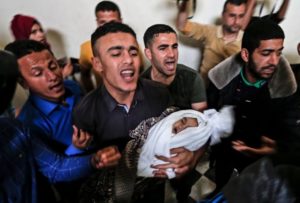
Since December 2017, when Trump announced his recognition that “Jerusalem is Israel’s eternal capital”, at least 481 Palestinians have been murdered by Israeli forces according to a new report.
The Centre for Jerusalem Studies, based in the old city of Jerusalem, provided documentation showing that of the 481 murders, 102 were children and 18 were women, 6 of those killed have been described having special needs.
Since the start of the Gaza’s Great Return March, on the 30th of March 2018, over 330 Palestinians have been murdered by Israeli forces. No Israelis have been killed or sustained significant injuries, beyond scratches, from the demonstrators. Israel however, still insists that the protests have been non-stop riots which have been going on for nearly a year and a half straight.
Israel is now in the process of figuring out whether Benjamin Netanyahu, currently battling a corruption and bribery scandal, or Benny Gantz, who was summoned to the Hague during his election campaign for involvement in the execution of a family in Gaza, will be their next Prime Minister. But regardless of whom it is, Trump’s alleged ‘Deal of the Century’ seem to be looming on the horizon.
If the Trump administration goes ahead and attempts to implement his plan, which has been alleged to include the possible swallowing of sections of the West Bank by Jordan, as well as the “resettlement” of Gazans to the Egyptian Sinai, the violence will inevitably grow.
Right now, the mainstream Western press is fixated on the Hong Kong protests. They are providing coverage to the anti-China demonstrators in an attempt to lionize groups, many of which have engaged in real violence and vandalism. Yet the demonstrations in Gaza are not only largely ignored, but are perpetually portrayed as violent and the narrative of the Israeli government is sometimes quoted almost word for word.
So a valid question, given the hypocrisy of mainstream media outlets coverage on Hong Kong when paralleled with Gaza, would be, why are they also still pretending to oppose US President Donald Trump? Clearly the agenda behind backing the Hong Kong protests, works hand in hand with President Trump’s plans for China and even more evident is it that channels such as the BBC, CNN, MSNBC etc., clearly are helping Trump get away with allowing the violence against Palestinians to continue.
The reason Palestinians can be executed in such large-scale attacks and massacres, is the fault of the media and international community. This includes the United Nations (UN), International Criminal Court (ICC), Human Rights Organizations and all the self-proclaimed “objective” media outlets. If there is no direct action against Israel for its crimes, we should expect another surge in constantly escalating cycle of violence, perpetuated upon the Palestinian people by the Israelis.
***
Author Robert Inlakesh is a special contributor to 21WIRE and European correspondent for Press TV. He has reported from on the ground in occupied Palestine
EU can order Facebook to remove ‘hate speech’ even if it’s outside Europe, top court says in landmark ruling
RT | October 3, 2019
Facebook must comply with demands from EU nations to remove content deemed illegal, even if the material falls outside of their jurisdiction, a top court has ruled. The decision could undermine freedom of speech on the internet.
The European Court of Justice, the bloc’s top court, said on Thursday that an individual country can order Facebook to remove posts, photographs, and videos, and even restrict access to these materials to people all over the world.
According to the Luxembourg-based court, a national court of any EU country has the right to instruct the social media giant to take down posts considered defamatory in regions beyond its jurisdiction.
The ruling upholds a non-binding opinion from an ECJ adviser in June, which Facebook argued “undermines the longstanding principle that one country should not have the right to limit free expression in other countries.”
The initial opinion came after an Austrian Green party politician sued Facebook, demanding that the platform delete defamatory content about her posted by a user, as well as duplicates of the same material. The complaint was referred to the ECJ by Austria’s High Court. The politician, Eva Glawischnig-Piesczek, insisted that Facebook prevent the content from being viewed worldwide.
This is the second major ECJ ruling in as many months concerning freedom of expression on the internet. In September, the court said that Google does not have to apply the EU’s “right to be forgotten” law globally. The directive requires the tech giant to remove search result listings to pages containing damaging or false information about a person. As a result, Google implemented a feature that prevents European users from being able to see delisted links.
Jordanian-Palestinian Woman on 9th Day Of Hunger Strike in Israeli Prison

By Robert Inlakesh – 21st Century Wire – October 2, 2019
A young Jordanian woman of Palestinian descent has been illegally detained by Israeli forces and is currently on her 9th day of a hunger strike. The Western media would have been expected to have picked this story up, but unfortunately there is deafening silence.
On the 20th of August, Israel detained 24 year old Heba al-Labadi, on the King Hussein Bridge, whilst on the way to attend a family wedding in the West Bank city of Nablus. Heba is a Jordanian citizen and of Palestinian descent, she was travelling with her mother at the time of her detainment.
The Israeli authorities have offered no explanation as to why Heba was detained and sentenced her to 5 months in administrative detention. Administrative detention is essentially being held without charge or trial. Israel has the ability to detain Palestinians indefinitely if it so chooses.
Reports have also surfaced, claiming that Heba, who is being kept in Petah Tikva Israeli intelligence detainment centre, has been subjected to various forms of torture. Heba’s family were also forbade access to a hired lawyer.
The times of Israel reported, upon statements made by the Jordanian Foreign Ministry, that a Jordanian diplomat in Israel had visited Labadi, in order to “provide support”.
Sufyan Qudah, a spokesperson for Jordan’s Ministry of Foreign Affairs, has stated on several occasions that Jordan is working to ensure the freedom of its recently detained citizens. Yet it seems to have been to no avail.
Hatem al-Labadi, Heba’s brother spoke to the al-Mamlaka news outlet of his sister’s detainment, stating that Israel had not given the family any specifics as to why Heba was detained, only stating that her arrest was due to “security reasons”. Hatem explained that his sister has a Palestinian Authority issued I.D., meaning that despite her Jordanian citizenship, she is placed under Israeli occupation rule when entering the West Bank.
The young 24 year old woman holds a bachelor’s degree in accounting and has previously worked in the United Arab Emirates. Now she remains in an Israeli jail cell and relies on pressure applied to the Israeli government to ensure her release.
Heba has for 8 days been on a hunger strike, in protest of her detainment, joining Ahmad Ghannam (42yrs old) who was diagnosed with cancer and has been on hunger strike for over 80 days and also Tarek Ghaddan (46 years old) who has been on hunger strike for more than 60 days.
According to the latest statistics released at the end of January, 2019, by Israeli human rights group B’Tselem a total number of 413 Palestinians were held in Israeli administrative detention alone.
A lack of action
This case seems to represent well the value that is placed upon a Palestinian life internationally.
In Heba al-Labadi we have a clear case of the abuse of a young woman’s life. She has been kidnapped for no stated reason, she has been reportedly abused and she has not been granted the rights that any human-being is supposed to be whilst detained.
Despite being a Jordanian citizen, she is allowed by Jordan’s lack lustre action against Israel to be held as if she was an animal.
King Abdullah of Jordan recently spoke at the United Nations General Assembly on the basic human rights that he urged be respected of the Palestinian people, yet he is not looking to intervene over a woman who was sitting in an Israeli jail cell at the very moment he delivered his speech.
Often women’s rights groups in West will do great work on campaigns for women abused by the state, but it seems like there are no women’s rights groups in the West that are yet to develop a campaign for the likes of Heba and other Palestinian women who currently strive for their freedom.
Whether it is the devaluing of Palestinians lives, because they are not of a specific origin or just a general lack of care all together, the sad reality is that if the world continues to allow Israel to get away with this type of action, it will.
If the United Nations and Human Rights Organizations also refrain from acting against Israel for these types of violations of human rights, Israel will not change and these international organizations may as well not even exist.
***
Author Robert Inlakesh is a special contributor to 21WIRE and European correspondent for Press TV. He has reported from on the ground in occupied Palestine.
No Freedom for India’s Kashmir Valley Politicians, Jammu Counterparts Released
Sputnik – October 2, 2019
The Indian state of Jammu and Kashmir on Wednesday released all politicians that had been held under house arrest in Jammu since India scrapped the region’s special constitutional status at the start of August.
Jammu region politicians have been released from detention ahead of local block development council elections scheduled for 24 October. Eight politicians were released from house arrest, including Devender Singh Rana, Raman Bhalla, Harshdev Singh, Chaudhary Lal Singh, Vikar Rasool, Javed Rana, Surjit Singh Slathia and Sajjad Ahmed Kitchloo.
However, the state administration did not free politicians under house arrest in the Kashmir Valley as the situation there is still sensitive from a security point of view. Former chief ministers Farooq Abdullah, Mehbooba Mufti and Omar Abdullah remain under house arrest.
Administration officials said the Jammu region is peaceful, and therefore, a decision was taken to release politicians detained before or on 5 August after India’s Parliament passed a law to revoke the quasi-autonomous status of the state.
The state is to be divided into two federally-administered territories – Jammu and Kashmir and Ladakh from 31 October.
On 30 September, Jammu and Kashmir’s chief electoral officer announced that block development council elections would be held in October.
Meanwhile, several pleas were filed before the Supreme Court of India challenging the Central government’s 5 August decision to bifurcate the state into the federal government administered territories of Jammu and Kashmir and Ladakh. On Tuesday, the top court gave the Central government a month to file its response to the pleas.
The court made it clear that if needed it would direct the government to produce all relevant documents pertaining to its decision to scrap Article 370.
It also said it will not entertain fresh petitions on the issue.
The bench said that it would allow a week for petitioners to file their replies to the Central and state governments’ counter-affidavits.
The international community is complicit in Israel’s torture of Palestinians
By Ramona Wadi | MEMO | October 1, 2019
The torture suffered by Palestinian prisoner Samer Arabeed at the hands of Israel’s Shin Bet interrogators has proved, once again, that the prohibition of such treatment as enshrined in the Fourth Geneva Convention, the Rome Statute and the UN Convention Against Torture is little more than a series of reference points used by human rights groups as reminders to the torturers.
Arabeed was transferred to Hadassah Hospital following intensive torture after being arrested for his alleged involvement in a bombing attack in August. A statement by the Prisoner Support and Human Rights Association, Addameer, mentioned that Israel admitted to having used “extreme and exceptional techniques in interrogations that actually amount to torture.”
Israel’s Justice Ministry has announced an investigation to decide whether criminal proceedings should be instigated against the Shin Bet officials. Arabeed’s torture resulted in broken ribs and loss of consciousness. His situation is now life-threatening and he is on a life-support machine. His family and lawyer were notified belatedly of his transfer from prison to hospital.
Last July, Palestinian prisoner Nasser Taqatqa died following torture and interrogation at the hands of Shin Bet. Testimonies from former Palestinian prisoners testify to the fact that torture is used systematically by Israeli interrogators. In 2013, Arafat Jaradat died under torture while detained in Megiddo Prison.
In November 2018, Israel’s High Court ruled in favour of torture if the Palestinian detainee is a member of “a designated terrorist organisation”, involved in armed resistance or if there are no other means to obtaining information. If Israel has self-established such immunity, how is it expected that the constant referencing of international laws and conventions will be enough to halt the torture of Palestinian prisoners?
In laying down the specifics on the prohibition of torture, the international community absconded from accountability in order to make human rights profitable for the perpetrators and a labyrinth of dead ends for the victims. Between these polarities, human rights organisations have tasked themselves with upholding principles in place of governments, yet their limited potential or, in some cases, partial agendas, have failed to implement any viable system of justice.
Israel is well aware of this dissonance and it exploits the absence of accountability to manipulate what constitute acceptable means of interrogation tactics. The international community’s complete marginalisation of Palestinians when it comes to their rights has facilitated Israel’s constant normalisation of torture, in full breach of international law, without as much as a collective condemnation.
The result is a permanent severing between information dissemination and the kind of legal recourse which would provide Palestinian prisoners with the chance of justice. Human rights organisations like Addameer are forced into an unwitting collaboration with diplomacy, navigating endless and repetitive cycles to raise awareness, which is what the international community intended in the first place when it failed to uphold accountability.
Calling for Arabeed’s release will not be the end of Israel’s predatory violence. It is a preventive step against further torture, yet behind this story there are several others which have escaped the meagre media attention that catapults the victims’ names, albeit briefly, into the headlines. Addameer alone cannot accomplish justice for Palestinian prisoners. At the very least, there must be a collective global approach to expose the international community’s complicity in torture and its fraudulent human rights agenda.
Israeli Authorities Issue Administrative Detention Orders against 101 Palestinians in September
Palestine Chronicle | September 30, 2019
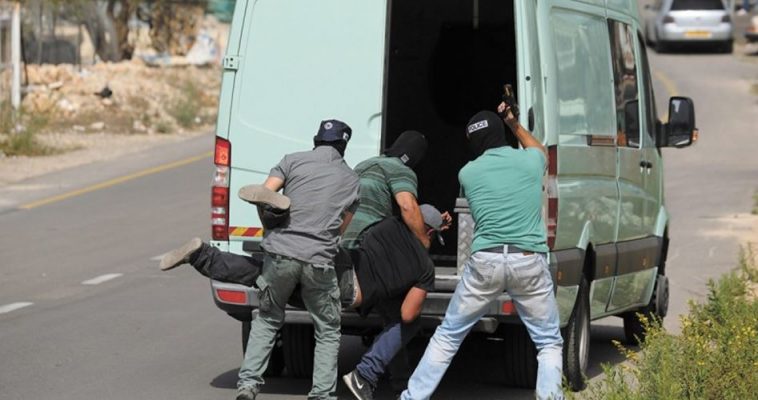
Israeli authorities issued in September administrative detention orders against 101 Palestinians currently held in Israeli jails for periods ranging between two and six months, today said the Commission of Detainees Affairs.
Some of the orders were issued against Palestinians detainees for the first time, while others had their administrative detention renewed.
Meanwhile, seven administrative detainees are currently on an open-ended hunger strike in protest against their prolonged administrative detention.
According to statistics, there are 500 administrative detainees in Israeli jails.
Administrative detention is the imprisonment of Palestinians without charge or trial at orders from a military commander and on the basis of secret evidence. The order normally goes for six-month periods, indefinitely renewable by Israeli military authorities.
US holding Iranian stem cell scientist for nearly a year without trial

Renowned Iranian stem cell scientist Dr. Masoud Soleimani
Press TV – September 28, 2019
Top Iranian stem cell scientist Dr. Masoud Soleimani has been behind bars in the United States without trial for nearly a year.
Soleimani, a professor and biomedical researcher at Tarbiat Modares University (TMU) in Tehran, was arrested by the US Federal Bureau of Investigation (FBI) upon his arrival in the US in October last year.
Soleimani had been invited by the Mayo Clinic in Minnesota for leading a research program there, but he was secretly indicted by the FBI, which also canceled his research visa.
According to his Atlanta attorney, Leonard Franco, he has since been held behind bars in a jail in Atlanta without bond.
Prosecutors in Atlanta have accused him and two of his former students of conspiring and attempting to export vials of human growth hormone from the US to Iran without authorization, in violation of US sanctions.
The two students were charged in a court and released after posting bail because they held US citizenship.
According to Soleimani’s lawyer, the human growth hormone is not banned in the US or Iran and was being used “exclusively for medical research,” which is still considered largely exempt from US sanctions.
Meanwhile, the head of Tarbiat Moddares University, Mohammad Taqi Ahmadi, has dismissed prosecutors’ claims as “ridiculous and unacceptable,” calling Soleimani’s detention a “harassment operation.”
Earlier this month, Ahmadi expressed deep concern over the dire situation of Dr. Soleimani, saying he was not in desirable conditions in jail and that all academics, even in the US, condemn his detention.
The scientist’s brother, Rasoul, also said professor Soleimani’s health condition had aggravated and his eyesight had gotten worse in detention.
He said that his brother was unaware of his mother’s recent death and was waiting for his release while their father did not know about his brother’s detention.
He said that Iranian officials were following up on the issue, adding that the Foreign Ministry and Foreign Minister Mohammad Javad Zarif were updating his family on the measures taken so far.
He appealed to executive bodies, scientific and members of the media to help secure the release of the Iranian scientist.
Featured Video

When Israel Is Mighty
or go to
Aletho News Archives – Video-Images
From the Archives
US murdering 1 million Iraqis is democracy, Iran giving yogurt to Iraq is “domination”
By Ali Salaam | American Herald Tribune | July 31, 2017
The New York Times, owned by the Zionist Jewish supremacist Ochs-Sulzberger family, has no problem with Iraqi suffering as long as Iran is not the one behind it.
The Iraq War was a genocide of the Iraqi people by Zionist supremacists in the Bush administration. Over 1 million innocent people were killed based on a lie. American soldiers died in an Israeli war and now an average of 22 soldiers commit suicide every day because their consciences cannot cope with the fact they committed crimes in an illegal war that served no purpose other than to benefit Israel, not America.
Benjamin Netanyahu, Prime Minister of the Zionist regime, once said “We are benefiting from one thing, and that is the attack on the Twin Towers and Pentagon, and the American struggle in Iraq.”
Paul Wolfowitz had his sights on Iraq since his time in the first Bush administration. Former Israeli official and Bush administration official Richard Perle had his eyes on Iraq since at least his authorship of the Clean Break white paper. The Zionist regime had their eyes on Iraq since the 1980s when strategist Oded Yinon wrote his white paper in support of dividing the Arab-Muslim world along ethnic and sectarian lines. The global Zionist lobby has had their eyes on Iraq since Theodor Herzl stated that Eretz Israel’s true borders go from the Nile River in Egypt to the Euphrates River in Iraq. … continue
Blog Roll
 Aletho News
- When Will This White House Madness End?
- Huckabee aide goes to ‘unusual lengths’ to portray ‘Israel’ positively
- Trump Announces Diesel Supply Deal With Putin Following Phone Call
- MEP blasts ‘Euro-Gestapo’ for lecturing Russia on democracy
- Syria May Send Troops to Saudi Arabia Amid War with Ansar Allah
- UK whines about losing billions to ‘Putin tax’
- Baghaei to Rubio: Distorted narratives cannot erase US record of broken commitments
- Houthis Don’t Have to Conquer Saudi Arabia to Make It Pay
- MOE: Nearly 22,000 Students and Education Workers Killed
- Guterres in Islamabad: Genocide, cowardice, and the cage of Imran Khan
- If Americans Knew
- Gaza ceasefire exists in name only, say more than 100 organizations
- Nearly 2 Million in Gaza Need Urgent Shelter Assistance as Winter Looms: IOM Chief Warns
- Suppressing Palestinian resistance: US charity under fire for AI monitoring of Gaza classrooms
- Thousands Are Held in Israeli Torture Camps. This Is What Happens Inside
- Israel puts Gaza’s sick, injured, newborn in peril – Daily Update
- Report claimed Mark Levin used by Israeli government to influence Trump
- Over 2,000 Gazans have died awaiting medical evacuation amid Israel’s continued siege
- How a U.S. Diplomat Suppressed and Altered Reports Critical of Israel
- 5 Palestinians Die from Israeli Strikes in Gaza as Relentless Attacks Continue
- Report: Ceasefire Slows Killing but Leaves Devastation Intact
- No Tricks Zone
- New Study: 50 Years Of The Most Aggressive ‘Net Zero’ Policies Can Only Affect The Global Climate By 0.03°C
- US September “Heat” Was No Record…Many Records Set Decades Ago
- Latest European Green Energy Debacle; Portugal’s Largest Flagship Solar Park Insolvent!
- Green Energy Debacle: German Expert Professor Fritz Vahrenholt Warns Of Severe Economic And Social Consequences
- Two More Paleo Reconstructions Affirm Meters-Higher Sea Levels Across Ireland, Brazil 7000-6000 Years Ago
- New Study: Earth And Venus Surface Warmth Largely Explained By Convection And Lapse Rate, Not CO2 Or Radiation
- 2025 Nature Paper Claiming Worsening Global Drought Gets RETRACTED …Heavily Flawed
- New Study: ‘Global Drought Shows No Detectable Recent Acceleration Under Climate Warming’
- Economic Masterminds: German Socialists Suggest Taxing Productivity Gains Stemming From Using AI
- The South China Sea Has Not Been Cooperating With The Climate Change Narrative

