Trump Administration Following in Obama Administration’s Footsteps on Marijuana

By Adam Dick | Ron Paul Institute | June 16, 2017
Last month, United States Attorney General Jeff Sessions sent a letter to congressional leaders urging them to oppose Congress again including in Department of Justice appropriations legislation a provision intended to stop, through a restriction on the use of appropriated money, the US government from arresting and prosecuting people for actions that comply with state medical marijuana laws, even if those actions violate US drug laws. Some people are reacting to Sessions’ letter, which was revealed this week, with condemnation of Sessions and the Trump administration for departing from Obama administration policy that showed increased leniency in regard to marijuana. But this claim appears to misrepresent the Obama administration’s marijuana history.
Tom Angell, who revealed the Sessions letter in a Monday article at MassRoots, suggests that Sessions’ request is consistent with the position under the Obama administration given that President Barack Obama, in his last two budget requests, suggested Congress remove the medical marijuana language. Indeed, Sessions pretty much makes this same observation that he is continuing the prior administration’s policy in the first sentence of his letter to Senate Majority Leader Mitch McConnell (R-KY), Senate Minority Leader Charles E. Schumer (D-NY), House or Representatives Speaker Paul Ryan (R-WI), and House Minority Leader Nancy Pelosi (D-CA). Sessions starts the letter as follows: “I write to renew the Department of Justice’s opposition to the inclusion of language in any appropriations legislation that would prohibit the use of Department of Justice funds or in any way inhibit its authority to enforce the Controlled Substances Act (CSA).”
Further, Obama administration Justice Department lawyers, after the appropriations provision was in effect, defended in the Ninth US Circuit Court of Appeals case of United States v. McIntosh ignoring, in ten separate drug law cases that had been consolidated for review on appeal, whether defendants complied with state medical marijuana laws. In each case, the individuals were being prosecuted for actions that they argued complied with state medical marijuana laws. The Obama administration lost the argument in the appellate court, with the court deciding in August of 2016 that the appropriations provision “prohibits DOJ from spending funds from relevant appropriations acts for the prosecution of individuals who engage in conduct permitted by the State Medical Marijuana Laws and who fully complied with such laws.” The court decision, in addition, ordered that, if the US government should decide to proceed with prosecution of any appellants, those appellants “are entitled to evidentiary hearings to determine whether their conduct was completely authorized by state law.”
While the Ninth Circuit decision interprets the medical marijuana appropriations provision as providing protection for people complying with state medical marijuana laws, that decision does not help people who live in the states outside that judicial circuit. Also, as I noted in an article shortly after the McIntosh decision was announced, the DOJ argument for a reading of the appropriations language that would mean the provision provides little to no protection from prosecution is rather persuasive and could be accepted by other courts. The appropriations provision also provides no hope for protection for anyone anywhere who is dealing with recreational instead of medical marijuana or for anyone living in one of the states that has not liberalized medical marijuana laws.
Though the Obama administration backed off some in prosecutions of individuals acting in compliance with state laws concerning marijuana that over the past few years have been increasingly liberalized, that did not mean that the Obama administration wanted to subject itself to any additional restraints imposed by the legislative branch. Instead, the Obama administration preferred to design its own restraints via Department of Justice memoranda. These memoranda culminated in the August 29, 2013 Cole memorandum that directs DOJ lawyers to limit their prosecutions of people who are complying with liberalized state medical and recreational marijuana laws. But, the Cole memorandum also provides several exceptions that prosecutors can use to justify cases against individuals who are complying with state laws. In addition, the Cole memorandum and other Justice Department memoranda are just advisory for government employees (unlike a statute that could be enforceable as law to the benefit of defendants) and can be revoked or amended by subsequent DOJ memos.
Sessions has indicated a general support for the Cole memorandum’s policies, stating the following in a March 15 questions and answers with reporters: “The Cole memorandum set up some policies under President Obama’s Department of Justice about how cases should be selected in those states and what would be appropriate for federal prosecution, much of which I think is valid.” Yet, there is no guarantee that the wiggle room the Cole memorandum provides for prosecutions will be used the same in the Trump administration as it was in the Obama administration or that the DOJ will not come out with a new memorandum that keeps much of the Cole memorandum policies while also creating significant changes in DOJ policies related to people complying with state marijuana laws.
If you want to ensure people who grow, sell, use, or otherwise deal with marijuana are not arrested, prosecuted, and imprisoned by the US government, then both the appropriations medical marijuana provision and the Cole memorandum fall far short of accomplishing the goal. What is needed is for Congress to pass legislation ending the war on marijuana. Leave marijuana laws to the states. Just walk away from the war.
States are steadily developing a patchwork quilt of differing marijuana laws, with full prohibition becoming increasingly rare. Meanwhile, the majority of Americans favor legal recreational marijuana, and significantly more favor legal medical marijuana. The US government’s war on marijuana is increasingly becoming the odd man out. Despite the evident lack of will among congressional leaders to challenge the war on marijuana, increasing pressure, contributed to by changes in state and local governments’ law as well as public opinion, may soon succeed in emboldening Congress so it will approve legislation that ends the US government’s war on marijuana.
Theresa May’s war on the internet

By Dan Glazebrook | RT | June 17, 2017
Last night, Theresa May was in France for a joint press conference with new French President Emmanuel Macron. As far as I could tell, it was only Al Jazeera that broadcast it live in Britain.
The only time it was mentioned during BBC radio 4’s flagship news show, the Today program, was during the five-minute religious slot Thought for the Day. It was not covered in the news section at all.
But this should be major, major news. This was Theresa May’s first policy announcement since last week’s election. And it wasn’t on Brexit, the reason she supposedly called the election. It wasn’t on austerity, which she apparently told her own MPs was over in a private session two days ago. No, her first major public policy announcement was – the end of internet freedom.
Specifically, what was announced was that both countries would be introducing heavy fines for internet companies that failed to remove what they, very loosely, defined as “extremist content.”
Now, taken at face value, this might seem to be referring to ISIS [Islamic State, formerly ISIL] recruitment videos or online suicide bombing training videos, or whatever. But the direct encouragement of violence is already illegal. So, what exactly is being proposed? Who exactly will be targeted?
It was former PM David Cameron who originally came up with the idea that “nonviolent extremism” should be criminalized alongside violent extremism. Intriguingly, as an example of what he meant, he included the idea that the “West is bad,” as well as elsewhere arguing that the promotion of “wild conspiracy theories” would also qualify.
Well, the collusion between, for example, British intelligence and Al-Qaeda might sound like a wild conspiracy theory. But, in the context of Britain and Al-Qaeda’s shared enemies in the form of Gaddafi and Assad, this collusion actually did take place. MI5 was facilitating the passage of fighters between Britain, Syria, and Libya, the SAS were training them, and MI6 was equipping them. Indeed, this collusion is not even secret: as late as 2016 the British government openly pledged to send more British troops to Syria to train rebel groups that even the BBC admitted were likely to be allied with Al-Qaeda.
So, is the publication of this information going to be barred now as extremist? Will YouTube and Facebook and Google and Twitter pull these revelations in fear of getting fined for promoting the “wild conspiracy theories” that, according to Cameron, qualify as extremism?
It is clear why the British state is so keen to clampdown on the internet once this kind of information starts going viral. But the election just gone has raised the stakes even further, demonstrating that, if the government does not reassert its authority over the internet, it may well have lost control of the political narrative for good. Let’s review what’s just happened:
A month ago, almost everybody was predicting a wipeout for the Labour party, a repeat of the disastrous 1983 election in which Margaret Thatcher really did win the landslide Theresa May had been predicting. Oh, how times have changed.
Back in 1983, pretty much everyone got their political information from either the newspapers or the BBC. In other words, between them, the big press barons – about 4 or 5 of them – and the British state had total monopoly control of political information.
This meant that when they portrayed Labour leader Michael Foot as a bumbling Oaf, that became the abiding image of him. A tiny handful of millionaire Tories effectively had total control over the public image of every politician in the land.
This time around, it’s a different story. The newspapers and the TV threw everything they could at Corbyn – ‘he’s a terror-supporting, magic money tree-mongering, Brexit-frustrating Remainiac’ – but people weren’t buying. And why weren’t they buying? Because they’re not reading the newspapers, and they’re not watching terrestrial TV. This time around, people, young people in particular, were increasingly getting their political information from social media – and on social media, the conservatives did not control the narrative.
For example, an RT interview I did about British collusion with terrorism shortly before the election got over one and half million views on Facebook – higher than the daily readership of the Daily Mail. Jonathan Pie’s fantastic piece tearing apart the Tory’s ‘strong and stable’ nonsense, got 11 million views. That is two and half million more than the combined circulation of the Daily Mail, Daily Express, Guardian, Sun, Daily Star, Times, Telegraph, Evening Standard, and the Mirror and Metro – the country’s ten leading newspapers. And hilariously, when I had just watched one of Theresa May’s speeches on YouTube during the campaign, immediately afterwards, YouTube automatically played Liar Liar, the anti-May anthem that reached number four in the UK pop charts last week. And I suspect YouTube auto played that video after anyone watched anything about Theresa May due to the algorithms that they employ.
So, you can see why the Tories are furious about the internet. They, and the British state more generally, have totally lost control of the narrative. And that’s what cost them this election.
So that’s what this new crackdown on the internet is really about; it’s about regaining control of that narrative. It’s about turning the CEOs of YouTube, Facebook, Twitter, and Google into the Rupert Murdochs of the 21st century – the political allies and mouthpieces of the British state and the capitalist class, and doing this by forging a new relationship that explicitly punishes them if they refuse to play ball.
Even the government’s own ‘reviewer of terrorism laws’, Max Hill, has come out against the move, explaining that “my view is that… we do have the appropriate laws in place, and that essentially the police and security services, and those whose job it is to keep us safe, do have the powers at their disposal.”
He noted that, in his experience, the police unit responsible for identifying online extremist material receive full co-operation from the tech companies already.
Similarly, The Open Rights Group has warned that “to push on with these extreme proposals for internet clampdowns would appear to be a distraction from the current political situation and from effective measures against terror.”
“The government already has extensive surveillance powers. Conservative proposals for automated censorship of the internet would see decisions about what British citizens can see online being placed in the hands of computer algorithms, with judgments ultimately made by private companies rather than courts. Home Office plans to force companies to weaken the security of their communications products could put all of us at a greater risk of crime.”
Those who are worried about extremism should be calling for an end to the British intelligence services’ collaboration and facilitation of terrorism and the extradition of those who have carried out or facilitated attacks abroad, as well as an international investigation and prosecutions of all those involved.
Theresa May’s new proposals do nothing to end the impunity of her own government in the grooming and facilitation of terrorism. Rather, they serve to extend this impunity. They must be resisted.
Dan Glazebrook is a freelance political writer who has written for RT, Counterpunch, Z magazine, the Morning Star, the Guardian, the New Statesman, the Independent and Middle East Eye, amongst others. His first book “Divide and Ruin: The West’s Imperial Strategy in an Age of Crisis” was published by Liberation Media in October 2013. It featured a collection of articles written from 2009 onwards examining the links between economic collapse, the rise of the BRICS, war on Libya and Syria and ‘austerity’. He is currently researching a book on US-British use of sectarian death squads against independent states and movements from Northern Ireland and Central America in the 1970s and 80s to the Middle East and Africa today.
Israel attempts to block yet another UN report
MEMO | June 15, 2017
Having succeeded in blocking a recent UN report that accused Israel of maintaining a system of apartheid, Israeli officials are now attempting to remove another UN report, which has charged Tel Aviv with carrying out extrajudicial executions along with a list of other human rights violations.
The report by the United Nations Economic and Social Commission for Western Asia (ESCWA), which previously accused Israel of apartheid, has come under fire from Israel’s Ambassador to the United Nations, Danny Danon, because it states that in the period from 1 April 2016 to 31 March 2017 Israeli security forces killed 63 Palestinians, including 19 children, and wounded an additional 2,276 Palestinians including 562 children.
The previous ESCWA report, which had accused Israel of apartheid, was removed by the UN following protests by Danon and US Ambassador to the UN, Nikki Haley, who this week described the UN report of “reeking with anti-Israel bias”.
The new report accuses Israeli security forces of using disproportionate force against Palestinians and in some cases of “extrajudicial executions”. The report cites the UN Committee Against Torture and its concern about “Israeli practices towards Palestinian detainees”.
The list of human rights violations included in the report were also “torture or ill-treatment of Palestinian children” and “deprivation of basic legal safeguards for administrative detainees, isolation and solitary confinement of detainees, including minors, punishment and ill-treatment of hunger strikers.” The report also claimed that “no criminal investigation was opened into more than 1,000 complaints of torture or ill-treatment filed since 2001.”
Israeli sources have reported that Danon will work to have this report removed. “This is yet another blood libel against the State of Israel,” Arutz Sheva reported Israel’s envoy to the UN saying. “Just as we succeeded in having the previous preposterous report removed, we will fight relentlessly against this blatantly false distortion of the truth as well.”
Read: The ESCWA Report
Three Prominent Palestinian Organizers, Journalists Ordered to Further Imprisonment without Charge or Trial
Samidoun Palestinian Prisoner Solidarity Network – June 8, 2017
Three prominent Palestinian activists were ordered to additional periods of administrative detention, imprisonment without charge or trial. Palestinian journalist Hasan Safadi, youth organizer Hassan Karajah and leftist community leader Rami Fadayel, all of Ramallah, were ordered to further imprisonment without charge or trial by Israeli military courts.
Fadayel, 37, has been imprisoned for 18 months under administrative detention; this is the fourth time the order against him has been renewed. He has spent over seven years in total in Israeli prisons and was ordered to another four months of imprisonment without charge or trial. He was hit with another four-month detention order on Wednesday, 7 June.

Rami Fadayel
Haneen Nassar, Fadayel’s wife and an organizer with the Palestinian Prisoners’ Committee, a popular organization in Palestine that works to support the prisoners’ struggle and demand their freedom, said that she and her husband have never been able to enjoy a free and safe life since their marriage. Fadayel has been arrested repeatedly; they marked their engagement while he was imprisoned. She noted that their daughter, Mays, 10, has not seen her father in their home for nearly half of her life.
Fadayel is well-known in Ramallah as a leader in the Popular Front for the Liberation of Palestine, the Palestinian leftist political party. Nasser noted that his administrative detention has been repeatedly renewed under the pretext of a “secret file;” all of the appeals of his lawyer have been rejected.
Palestinians held without charge or trial under administrative detention orders can be detained indefinitely; these one- to six-month orders can be repeatedly renewed on the basis of so-called “secret evidence.” There are currently over 500 Palestinian administrative detainees imprisoned by the Israeli occupation. Some Palestinians have spent years at a time under administrative detention on the basis of this so-called secret evidence. Over 50,000 administrative detention orders have reportedly been issued since 1967; the practice dates from the colonial British mandate over Palestine and was re-imposed by the Israeli occupation.

Hasan Safadi
Meanwhile, Hasan Safadi, Palestinian journalist and the Arabic media coordinator of Addameer Prisoner Support and Human Rights Association was also ordered on 8 June 2017 to another six months in administrative detention by an Israeli occupation military court. He had been scheduled for release on 8 June, but was instead hit with another arbitrary detention renewal.
Safadi, 26, has been imprisoned since 1 May 2016, when he was seized by Israeli occupation forces as he crossed the Karameh/Allenby bridge between Jordan and Palestine, returning from an Arab youth conference organized in Tunisia. After 40 days of interrogation in the Moskobiyeh interrogation center, he was ordered to administrative detention without charge or trial, which has since been renewed twice. His new administrative detention order is scheduled to expire on 8 December 2017.

Hassan Karajah
Hassan Karajah, a prominent youth activist with the Stop the Wall Campaign and a boycott, divestment and sanctions (BDS) activist, was seized by Israeli occupation forces on 12 July 2016 at a military checkpoint west of Ramallah. He has been held under administrative detention without charge or trial since that time; his detention was also renewed on 7 June 2017 for the third time for a four-month period.
Karajah was previously arrested on 23 January 2013 and freed on 19 October 2014, accused of participation in a prohibited organization and contact with an enemy state, an allegation frequently used to target Palestinians who travel to conferences and events in Lebanon and other Arab countries.
These orders came after the Ofer military court confirmed even more administrative detention orders on Wednesday, 7 July. The military court approved six-month detention orders against Raed Abd al-Admu of al-Khalil, Tayseer Maher Hamed, Mohammed Badr al-Alouneh, Islam Fayeq Nimer of Ramallah and Suhaib Ahmed Mohammed of Tulkarem. It approved four-month imprisonment orders against Nidal Hashim Abdel Hadi and Yousef Ahmed Nasser of Jenin and Khalil Hassan Hamed, Ayman Naim Hamed, Hamza Ibrahim Zahran and Omar Mohammed Abu Latifa of Ramallah. It also affirmed a two-month detention order against Rabie Mohammed Musallah of Jenin.
Corbyn and UK Labour Victory Signals Pro-Palestine Mood, Diminished Israeli Legitimacy

Jeremy Corbyn at a pro-Palestinian rally in London, 2014. | Photo: Palestine Solidarity Committee
teleSUR | June 9, 2017
Jeremy Corbyn’s gains in the British general election mollified his political opponents, ranging from Rupert Murdoch’s yellow press to officials Tel Aviv, drawing outrage due to his support for causes considered taboo in Western capitals. Foremost among these causes is the popular opposition to Israeli war crimes and settler-colonialism in Palestine.
In fact, the Israeli state was established thanks, in no small part, to the British Empire’s occupation of the region following the collapse of the Ottoman Empire, with Labour Party support playing a crucial role in laying the early groundwork for the state’s creation. Labour’s support for Zionism began when Sidney Webb, a founding leader of the Fabian socialist movement, penned the Memorandum on the Issues of War in August 1917, three months before the issuance of the Balfour Declaration, which recommended the creation of a “national home for the Jewish people.”
The document codified British Labour’s embrace of the First World War on the grounds that “the world may henceforth be made safe for democracy” through British war efforts while ironically denouncing “the imperialist aims of governments and capitalists” in the Middle East. The document also made a firm commitment to the resettlement of Jews in Palestine, calling for a “free state” to which European Jewry would be entitled the right to “work out their salvation, free from interference by those of alien race and religion.” Of course, British support for Zionism was a cynical and self-serving means to advance its own geopolitical interests in the region.
Labour’s 2017 election manifesto reflected, to some extent, a pro-Palestine mood among the party’s increasingly young support base that resembles Corbyn’s own record of solidarity with the Palestinian cause. In addition to revealing a social democratic aspect of Labour long suppressed or hidden from sight, the document stated the party’s commitment to a “two-state solution” to Israeli expansionism in Palestinian territories, warning Israeli authorities that it won’t tolerate further militarist excesses. It also states that a Labour government would “immediately recognize” the de jure Palestinian West Bank state. The manifesto further calls for a “world free from all forms of racism, anti-Semitism and Islamophobia.”
However, the Israeli lobby – through the Labour Friends of Israel and the press – spared no effort to have references to West Bank settlements as “wrong and illegal” removed from the final draft of the party platform while also axeing a line referring to the “the continued humanitarian crisis in the Occupied Palestinian Territories.” The manifesto also falsely equates Palestinian resistance “rocket and terror attacks” with the highly-advanced, destructive weaponry of the Israeli state.
The equivocation surrounding the drafting of points on the Israeli-Palestinian “conflict” raised questions about Corbyn’s willingness – or, rather, his ability – to consistently stand alongside the Palestinian struggle for self-determination while simultaneously leading Britain’s institutional center-left party.
Corbyn himself has visited Palestine nine times, in addition to multiple visits to refugee camps in Lebanon and Syria. In 2013, following his return from the Gaza Strip, he wrote to then-Foreign Secretary William Hague and urged that the U.K. “stop allowing Israel’s criminal politicians to come to our country.” The Labour leader has also called for the lifting of the blockade on Gaza, an end to the abuse of Palestinian civilians by Israeli occupation forces, and the holding of Israeli politicians accountable for crimes against humanity and other rights abuses.
While Corbyn has conceded that the two-state solution would be difficult to implement given the significant Israeli-backed illegal settlement activity in the West Bank, he remains a supporter of the widely-discredited proposal as “all that’s on offer.” To his credit, though, Corbyn is on record noting that the fundamental “key” to addressing the root of the tragedy is ensuring the Palestinian people’s right to return to the homes and lands from which they were ethnically cleansed during the Nakba of 1948 and the 1967 Israeli onslaught and annexation of remaining Palestinian territories.
While not a supporter of the Boycott, Divestment and Sanctions (BDS) movement’s call to reject Israeli cultural, academic and economic products – a call seen as “reasonable” by two of five Brits from across the political spectrum, according to recent polls – he has called for “targeted” boycotts of universities involved in weapons research and the boycott of goods produced in illicit Israeli settlements in the Occupied Territories. Despite that, the Labour manifesto fails to call for sanctions on the Israelis.
Corbyn also advocates engaging in diplomacy with regional players such as Palestinian Hamas and Hezbollah of Lebanon, noting their significant support base and the fact that, whether Tel Aviv likes it or not, they represent mass popular opinion in their respective countries.
Predictably, Britain’s right-wing – including many among the aggressively pro-U.S. Blairite New Labour clique – frantically sought to brand Corbyn’s humanitarian support for the Palestinian people as a reflection of “the new anti-Semitism,” a slur commonly applied to any stance opposing Israeli war crimes and impunity to the slightest extent.
Ultimately, British voters seemed unmoved by alarmist calls denouncing Labour as a bigoted party. This was proven when people from all walks of life – including British Jews – turned out in droves to support the party’s program and its candidates.
Labour’s victory came in spite of the hyperbolic attacks on Corbyn, perhaps signaling the shifting winds of public opinion regarding the Israeli occupation.
However, the longer-term question of whether an ascendant Corbyn will be able to sideline or dislodge U.S.-loyal and pro-Zionist layers within his own party – or resist the temptation to compromise with the Israeli lobby for the sake of political expediency – remains yet to be seen.
UAE-tied militants kidnap, torture hundreds in Yemen: Probe
Press TV – June 10, 2017
Militants backed by the United Arab Emirates (UAE) have reportedly kidnapped and tortured hundreds of people in southern Yemen.
On Friday, the American news and analysis website The Daily Beast published an investigation bankrolled by the Bureau of Investigative Journalism NGO, which pointed to the findings.
The probe said the militants, who would fight under the banner of the Elite Forces, had spirited the men away from their homes and brought them to a secret prison compound in southern Yemen, where they were tortured.
Earlier in the year, the United Nations had likewise reported an increase in forced disappearances in southern Yemen.
The UAE has served as an ally of Saudi Arabia in the latter’s 2015-present campaign in Yemen to restore the impoverished country’s former Riyadh-allied government. The Elite Forces have been fighting in Yemen since the same year to assist the Saudi-led campaign.
The investigators interviewed local rights activists and families of those abducted, who said the situation at the al-Riyyan airport, which has been used as a place of incarceration for the abductees, compared to that in the notorious US-run prisons such as Guantanamo Bay in Cuba and Abu Ghraib in Iraq.
The kidnapping spree took place under the pretext of clearing out suspected al-Qaeda-linked elements. Activists, however, told the Bureau that many of those abducted had normal jobs while al-Qaeda was in control in the area, and were not tied to the group.
According to various reports, Abu Dhabi holds notable sway in southern Yemen and looks to be trying to expand its leverage there by lending its support to southern separatists.
The separatists are led by two pro-Emirati officials of Yemen’s former president Abd Rabbuh Mansur Hadi, who have been sacked by him over suspicions of serving the Emirates.
The men, Hadi’s governor for Yemen’s port city of Aden, Maj. Gen. Aidarous al-Zubaidi, and his state minister Hani bin Breik, reacted to the sacking by breaking ranks with Hadi and forming an autonomous regional body in southern Yemen.
Saudi Arabia then “invited” the separatists to the kingdom, in what was seen as an effort at seeking explanation from them for parting ways with Riyadh-allied Hadi.
Observers say the Emirates increased activities could drag Doha into a political struggle against Saudi Arabia.
Earlier in the month, Yemeni sources reported that militants backed by Saudi Arabia and the United Arab Emirates had engaged in infighting in the southern port city of Aden, with UAE-backed militia seizing a facility there.
Lieberman urges US to pressure for expelling Hamas leaders from Beirut
Palestine Information Center – June 9, 2017
OCCUPIED JERUSALEM – The Israeli war minister, Avigdor Lieberman, on Friday urged the visiting American UN ambassador Nikki Haley to pressure Beirut to expel Hamas anti-occupation leaders.
According to the Hebrew-language Walla news site, Lieberman launched calls to expel prominent Hamas leaders from Lebanon following a meeting with the American UN ambassador Nikki Haley.
“Hamas leaders in Lebanon should be banished because they are working against Israel,” claimed Lieberman.
Over recent weeks, an ad hominem campaign has been waged against Palestinian anti-occupation leaders affiliated with Hamas resistance movement in an attempt to deport them from their countries of residency.
Israel issued 50,000 administrative detention orders since 1967
MEMO | June 9, 2017
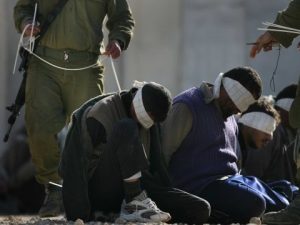 Israeli occupation forces have issued 50,000 administrative detention orders against Palestinians since the occupation of the West Bank and Gaza Strip in 1967, the Commission for Detainees and Ex-Detainees Affairs revealed on Wednesday.
Head of the research and documentation department in the researcher in the Commission for Detainees and Ex-Detainees Affairs, Abdel Nasser Farawneh, said that the administrative detention orders have increased since the outbreak of the Second Intifada, as the occupation authorities issued nearly 27,000 orders since September 2000.
He noted that of the total number of orders, nearly 1,704 were issued in 2016, a 50 per cent increase compared to 2015. While, since the beginning of 2017, over 4,000 orders were issued, including new orders and extensions.
Farawneh added that the increased number of detention orders and the increase in administrative orders issued against the Palestinians has led to a noticeable rise in the total number of administrative prisoners. As of today, nearly 5,000 administrative prisoners are held in Israeli prisons and detention centres without any charges against them or trials.
Bahrain to jail Qatar sympathisers
Middle East Online | June 8, 2017
MANAMA – Bahrain Thursday followed the United Arab Emirates in announcing that expressing sympathy for Qatar over sanctions imposed by its Gulf neighbours was an offence punishable by a lengthy jail term.
Saudi Arabia, the UAE, Bahrain and Egypt on Monday cut diplomatic ties with Qatar over accusations that the emirate is a champion of extremist groups in the region.
Qatar firmly denies the allegations.
“Any expression of sympathy with the government of Qatar or opposition to the measures taken by the government of Bahrain, whether through social media, Twitter or any other form of communication, is a criminal offence punishable by up to five years in prison and a fine,” a Bahraini interior ministry statement said.
The UAE on Wednesday announced a similar decision, warning that offenders could face between three and 15 years in prison and a fine of 500,000 dirhams ($136,125, 120,715 euros) should they criticise the decision to boycott Qatar.
Bahrain, home to the US Navy’s Fifth Fleet, has been rocked by unrest since security forces crushed Shiite-led protests in 2011 demanding a constitutional monarchy and an elected prime minister.
The authorities accuse Iran of backing the protesters and aiming to incite unrest in Shiite-majority Bahrain, a charge Tehran denies.
Sunni-ruled Bahrain’s strict cyber crime law prohibits the expression of dissent online, including via social media.
Nabeel Rajab, one of the country’s most high-profile activists, is currently on trial for a series of tweets criticising a Saudi-led Arab military campaign in Yemen.
An Intolerable Europeanization of ‘Antisemitism’ Blackmail
Union Juive Française Pour La Paix* | June 7, 2017
On 1 June, the European Parliament voted, by a very large majority, for a new resolution on antisemitism. It goes without saying that we deplore, yet again, the singling out of antisemitism from other manifestations of racism. Not a word on the others, whereas, for example, Islamophobia is rampant and Romophobia is deadly. But it’s more serious. At closer inspection, it’s not so much a matter of reining in antisemitism as of restricting free speech and of criminalizing any criticism of Israel.
The resolution, by means of paragraph 2, embodies the criteria proposed by the ultra-Zionist International Holocaust Remembrance Alliance (IHRA) to define antisemitism. If this recognizes as antisemitism the hate of Jews qua Jews, the definition does not stop there. Thus “Denying the Jewish people (sic) their right to self-determination, e.g., by claiming that the existence of a State of Israel is a racist endeavor” also falls within the definition. Ditto “Applying double standards by requiring of it a behavior not expected or demanded of any other democratic (sic) nation”. Antisemitism? *
The UK and Austria have recently adopted this definition, and the disastrous effects have not taken long to make themselves felt. It is in this environment that the Palestine Expo 2017 in London was almost cancelled under pressure, planned for early July.
In France as well, the refrain which insidiously combines the least criticism of Israel and/or of Zionism to that of antisemitism plays non-stop. No need for the IHRA definition in France!
However, if the vote of this resolution in the European Parliament is not legally binding, it contributes to reinforcing the rancid climate where criticism and Israel in the same sentence is silenced and criminalized. The vote constitutes a devious attack against free speech through the medium of the only democratic institution in the European Union.
With the notable exception of the European United Left / Nordic Green Left and some Greens, all the Parliamentary groupings have listened more or less religiously to the whingeing of the hyperactive pro-Israeli lobbies – in the first rank of which is the IHRA and the European Jewish Congress – which have ultimately won out after a long and costly campaign.
But we’re not deceived. This resolution has not been gained only under pressure. It’s a vote of conviction. It has been approved by a large majority comprising an alliance not as diverse as appears at first sight: from the right wing of the social democrats to the nationalist and anti-Semite extreme right – all, with rare exceptions, have voted for the resolution.
Without a tacit ideological bond founded on an Islamophobia essentially taken for granted and the unfailing strategic support of the Neoconservatives for Israel, such a coalition would have been inconceivable. It suffices to scratch below the surface of the ‘good intentions’ of this resolution to readily discern its raison d’être, which besides has little to do with the situation of Europe Jewry. It’s necessary to highlight that there is no officially condoned antisemitism in Europe, and that this vote is clearly intended to prevent not genuine antisemitism but the legitimate political criticism of a state, of its policies and of its character.
The vote on this resolution brings home to us that, here in Europe, the right to criticize Israel is based on the general freedom of political expression – an asset so precious and fragile that it is necessary to defend it at all costs.
The Union Juive Française pour la Paix was established in 1994, and was a foundation member of the Fédération des Juifs européens pour une Paix juste in 2002. The UJFP has as its masthead: The conflict between Israelis and Palestinians can only be resolved by the cessation of the dominance of one people by another, by the implementation of the right to self-determination for the Palestinian people and of the right to create its own independent state. No just and durable solution is possible without a total withdrawal of Israel from all territories that it has occupied since 1967, without the right of return for Palestinian refugees and without an end to internal Israeli apartheid which constrains its Palestinian population to second-class status.
This article appeared on the UJFP website on 3 June, and was reproduced on Comité Valmy.
* Translated by Evan Jones.
Translator’s Note:
The May 2016 IHRA declaration includes in its list of ‘contemporary examples of antisemitism’ the item ‘Holding Jews collectively responsible for actions of the state of Israel’. Given that the central thrust of the IHRA definition of antisemitism fuses the state of Israel indissolubly with Jewry in toto, this item is a glaring anomaly. More, are there ‘actions of the state of Israel’ that Jews might find distasteful? It suggests that the authors are either thick as two bricks or they have a brutal sense of humour.
Voters are Fired Up for Single Payer Creating Dilemma for Democrats
By Margaret Flowers – Health Over Profit – June 5, 2017
On Sunday, June 4, the same day that Our Revolution, a Democratic Party group that arose from the Bernie Sanders presidential campaign, organized rallies and die-ins to highlight the number of people dying in the United States due to lack of access to health care, the New York Times published an article, “The Single Payer Party? Democrats Shift Left on Health Care,” prominently on the front page and above the fold.
The article quotes RoseAnn DeMoro, head of National Nurses United, saying, “There is a cultural shift. Health care is now seen as something everyone deserves. It’s like a national light went off.” Minnesota Congressman Rick Nolan was also quoted, saying that rank and file Democrats “are energized in a way I have not witnessed in a long, long time.” Nolan is correct in stating that following the Democrat’s large loss in 2016, the party needs “a more boldly ‘aspirational’ health care platform.”
Democratic Party voters have been strong supporters of single payer health care for a long time. Polls have consistently shown that super-majorities of Democratic Party voters want single payer, but Democratic Party candidates keep telling them that they can’t have it. The Democratic Party has refused to add Medicare for All to its healthcare platform despite resolutions introduced by single payer advocates. Even the Congressional Progressive Caucus refuses to include single payer health care in their “People’s Budget.”
In 2009, with a Democratic President and majorities in the House and Senate, single payer health care was off the table. Instead, the “public option” was used to divide the Democratic Party voters and convince them that they were asking for too much. Democrats were told that the public option would be more politically feasible and would create a “back door” to single payer. Many were fooled. And the joke was on them because even the public option, which I call the “Profiteer’s Option,” was never meant to be in the final legislation.
While the New York Times wrongly blames the liberal and centrist Democrats for not supporting a public option, it was actually the White House and Democratic Party leadership that kept it out of the final bill. In December of 2009, public pressure was working to convince the Senate to include a public option in its healthcare bill. That’s when leadership stepped in to stop them. Glenn Greenwald writes:
I’ve argued since August that the evidence was clear that the White House had privately negotiated away the public option and didn’t want it, even as the President claimed publicly (and repeatedly) that he did. … it is the excuse Democrats fraudulently invoke, using what I called the Rotating Villain tactic (it’s now Durbin’s turn), to refuse to pass what they claim they support but are politically afraid to pass, or which they actually oppose (sorry, we’d so love to do this, but gosh darn it, we just can’t get 60 votes). If only 50 votes were required, they’d just find ways to ensure they lacked 50. Both of those are merely theories insusceptible to conclusive proof, but if I had the power to create the most compelling evidence for those theories that I could dream up, it would be hard to surpass what Democrats are doing now with regard to the public option. They’re actually whipping against the public option. Could this sham be any more transparent?
I was present at the Center for American Progress in March of 2009 when Senator Max Baucus stated that the public option was a bargaining chip being used to convince private health insurers to accept more regulations. It was Baucus’ staffer, Liz Fowler, a former senior vice president for one of the largest private insurance corporations, WellPoint, who wrote the framework for the Affordable Care Act and shepherded it through Congress. The scam was revealed early and though progressive groups knew it, they were complicit in the scam because they accepted being controlled and silenced by the White House.
Jim Messina, a former Baucus chief of staff, was hired by the White House to be “the enforcer” for President Obama’s agenda. Ari Berman described the situation in this enlightening article:
The administration deputized Messina as the top liaison to the Common Purpose Project. The coveted invite-only, off-the-record Tuesday meetings at the Capitol Hilton became the premier forum where the administration briefed leading progressive groups, including organizations like the AFL-CIO, MoveOn, Planned Parenthood and the Center for American Progress, on its legislative and political strategy. Theoretically, the meetings were supposed to provide a candid back-and-forth between outside groups and administration officials, but Messina tightly controlled the discussions and dictated the terms of debate (Jane Hamsher of Firedoglake memorably dubbed this the “veal pen”). “Common Purpose didn’t make a move without talking to Jim,” says one progressive strategist. During the healthcare fight, Messina used his influence to try to stifle any criticism of Baucus or lobbying by progressive groups that was out of sync with the administration’s agenda, according to Common Purpose participants. “Messina wouldn’t tolerate us trying to lobby to improve the bill,” says Richard Kirsch, former national campaign manager for Health Care for America Now (HCAN), the major coalition of progressive groups backing reform. Kirsch recalled being told by a White House insider that when asked what the administration’s “inside/outside strategy” was for passing healthcare reform, Messina replied, “There is no outside strategy.”
The inside strategy pursued by Messina, relying on industry lobbyists and senior legislators to advance the bill, was directly counter to the promise of the 2008 Obama campaign, which talked endlessly about mobilizing grassroots support to bring fundamental change to Washington. But that wasn’t Messina’s style—instead, he spearheaded the administration’s deals with doctors, hospitals and drug companies, particularly the Pharmaceutical Research and Manufacturers of America (PhRMA), one of the most egregious aspects of the bill. “They cared more about their relationship with the healthcare industry than anyone else,” says one former HCAN staffer. “It was shocking to see. To me, that was the scariest part of it, because this White House had ridden in on a white horse and said, ‘We’re not going to do this anymore.’” When they were negotiating special deals with industry, Messina and Baucus chief of staff Jon Selib were also pushing major healthcare companies and trade associations to pour millions of dollars into TV ads defending the bill.
This was the Democratic Party’s deal with the devil. They rejected their voter base and went with the donor class to create and market a health law, the so-called Affordable Care Act, that protected the profits of the medical-industrial complex, and it backfired. In the 2010 election, 63 Democratic incumbents lost their seats in Congress and the party has been in decline ever since with a record low number of elected officials nationally. On issue after issue, the Democratic Party betrayed its base and voters finally gave up, choosing either to vote for other parties or not vote at all.
The question now is whether the Democrats will change.
So far, despite the title of the New York Times article, the answer is no. Although there is widespread voter support for single payer, Nancy Pelosi says the party is not going there and is funneling advocates’ energy to the state level, even though state single payer systems are not possible without federal legislation. At the national level, Democrats are paying lip service to Medicare for All: “We need to get there eventually but right now our task is to fix the ACA” is the current talking point.
The reality is that the political currents have shifted. The public is not going along with the con. People want solutions to the healthcare crisis, not more tinkering with the current failed healthcare system. Across the country, the message is clear that the public supports National Improved Medicare for All. And whichever political party in power embraces this will see a surge in popularity.
Our task as advocates for National Improved Medicare for All is to stay fired up – continue to speak out about Medicare for All, write about it in local papers, meet with members of Congress, organize in our communities and run for office. We must be clear and uncompromising in our demand for National Improved Medicare for All to create a visible tsunami of support that will wake our legislators up.
When the people lead, the legislators will follow.
Featured Video

Seyed M. Marandi: US-Iran War Inevitable: Kuwait and Bahrain May Fall
or go to
Aletho News Archives – Video-Images
From the Archives
Oil and the Israel Lobby
Reknowned economist M. Shahid Alam offers this excellent critique of Noam Chomsky’s defective analysis of the relative influence of Oil versus the Israel lobby over US foreign policy: … continue
Blog Roll
 Aletho News
- ICC ignored ‘very well-documented’ NATO crimes – ex-Libyan minister
- SNSC secretary dismisses US response to Iran’s conditions as ‘inadequate’
- Sanaa says Taiz roads open, secure for residents, warns Saudi forces
- Iraqi resistance group urges Saudi leadership to admit defeat, lift Yemen siege
- Trump’s Retreat: How Al-Aqsa Flood Took Down the US Empire
- Israel’s Military Actions in Lebanon Grossly Violate International Law — Lavrov
- Seyed M. Marandi: US-Iran War Inevitable: Kuwait and Bahrain May Fall
- Leaders Condemn Ansarallah Attack on Saudi Arabia While Ignoring Illegal War Against Yemen
- Leaked: Britain’s Covert Iraqi Psyops Network
- Yemeni Armed Forces Warn Airlines Against Using Saudi Airports, Exempt Mecca and Medina
- If Americans Knew
- How Israel Conquered the Latin American Right
- Agents search Rep. Omar’s Washington home in criminal probe as she vows she won’t ‘be silenced’
- “The Rule Was: ‘Shoot Everyone You See'”
- Israel goes ballistic over Nobel Laureate Navi Pillay
- U.S. May Join Yet Another Middle Eastern War — TCN
- Yellow Line moves again as Israel closes in on trapped Gazans – Daily Update
- Israeli Attacks Kill Seven Palestinians in Gaza Including Six-year-old Girl
- Gaza: Ceasefire Anniversary Marks Year of Failed Promises
- The American Conservative: Mike Huckabee Should Resign
- A C-Section in Shackles: A Palestinian Woman’s Harrowing Birth in Israeli Detention
- No Tricks Zone
- Germany’s Green Energy Debacle: High Energy Costs Force Kahla Porzellan to Close After 182 Years!
- New Study: 50 Years Of The Most Aggressive ‘Net Zero’ Policies Can Only Affect The Global Climate By 0.03°C
- US September “Heat” Was No Record…Many Records Set Decades Ago
- Latest European Green Energy Debacle; Portugal’s Largest Flagship Solar Park Insolvent!
- Green Energy Debacle: German Expert Professor Fritz Vahrenholt Warns Of Severe Economic And Social Consequences
- Two More Paleo Reconstructions Affirm Meters-Higher Sea Levels Across Ireland, Brazil 7000-6000 Years Ago
- New Study: Earth And Venus Surface Warmth Largely Explained By Convection And Lapse Rate, Not CO2 Or Radiation
- 2025 Nature Paper Claiming Worsening Global Drought Gets RETRACTED …Heavily Flawed
- New Study: ‘Global Drought Shows No Detectable Recent Acceleration Under Climate Warming’
- Economic Masterminds: German Socialists Suggest Taxing Productivity Gains Stemming From Using AI

