US Impunity Erodes World Justice
By Nicolas J S Davies | Consortium news | October 25, 2016
In the past week, Burundi and South Africa have joined Namibia in declaring their intention to withdraw from the jurisdiction of the International Criminal Court (ICC). They are likely to be followed by a parade of other African countries, jeopardizing the future of an international court that has prosecuted 39 officials from eight African countries but has failed to indict a single person who is not African.
Ironically, African countries were among the first to embrace the ICC, so it is a striking turnaround that they are now the first to give up on it.
But it is the United States that has played the leading role in preventing the ICC from fulfilling the universal mandate for which it was formed, to hold officials of all countries accountable for the worst crimes in the world: genocide; crimes against humanity; and war crimes – not least the crime of international aggression, which the judges at Nuremberg defined as “the supreme international crime” from which all other war crimes follow.
As the ICC’s founding father, former Nuremberg prosecutor Benjamin Ferencz, lamented in 2011, “You don’t have to be a criminologist to realize that if you want to deter a crime, you must persuade potential criminals that, if they commit crimes, they will be hauled into court and be held accountable. It is the policy of the United States to do just the opposite as far as the crime of aggression is concerned. Our government has gone to great pains to be sure that no American will be tried by any international criminal court for the supreme crime of illegal war-making.”
The U.S. has not only refused to accept the jurisdiction of the ICC over its own citizens. It has gone further, pressuring other countries to sign Bilateral Immunity Agreements (BIA), in which they renounce the right to refer U.S. citizens to the ICC for war crimes committed on their territory.
The U.S. has also threatened to cut off U.S. aid to countries that refuse to sign them. The BIAs violate those countries’ own commitments under the ICC statute, and the U.S. pressure to sign them has been rightly condemned as an outrageous effort to ensure impunity for U.S. war crimes.
Resistance to U.S. Impunity
To the credit of our international neighbors, this U.S. strategy has met with substantial resistance. The European Parliament overwhelmingly passed a resolution stating that BIAs are incompatible with E.U. membership, and urged E.U.- member states and countries seeking E.U. membership not to sign them.
Fifty-four countries have publicly refused to sign BIAs, and 24 have accepted cut-offs of U.S. aid as a consequence of their refusal. Of 102 countries that have signed a BIA, only 48 are members of the ICC in any case, and only 15 of those countries are on record as having ratified the BIAs in their own parliaments.
Thirty-two other ICC members have apparently allowed BIAs to take effect without parliamentary ratification, but this has been challenged by their own country’s legal experts in many cases.
The U.S. campaign to undermine the ICC is part of a much broader effort by the U.S. government to evade all forms of accountability under the laws that are supposed to govern international behavior in the modern world, even as it continues to masquerade as a global champion of the rule of law.
The treaties that U.S. policy systematically violates today were crafted by American statesmen and diplomats, working with their foreign colleagues, to build a world where all people would enjoy some basic protections from the worst atrocities, instead of being subject only to the law of the jungle or “might makes right.”
So current U.S. policy is a cynical betrayal of the work and wisdom of past generations of Americans, as well as of countless victims all over the world to whom we are effectively denying the protections of the U.N. Charter, the Geneva Conventions, the U.N. Convention on the Rights of the Child and other multilateral treaties that our country ignores, violates or refuses to ratify.
Avoiding the jurisdiction of international courts is only one of the ways that the U.S. evades international accountability for its criminal behavior. Another involves an elaborate and well-disguised public relations campaign that exploit the powerful position of U.S. corporations in the world of commercial media.
Major Propaganda Funding
The U.S. government spends a billion dollars per year on public relations or, more bluntly, propaganda, including $600 million from the Pentagon budget. The work of its P.R. teams and contractors is laundered by U.S. newspapers and repeated and analyzed ad nauseam by monolithic, flag-waving TV networks.
These profitable corporate operations monopolize the public airwaves in the U.S., and also use their financial clout, slick marketing and the support of the U.S. State Department to maintain a powerful presence in foreign and international media markets.
Foreign media in allied countries provide further legitimacy and credibility to U.S. talking-points and narratives as they echo around the world. Meanwhile, Hollywood fills cinema and TV screens across the world with an idealized, glamorized, inspirational version of America that still mesmerizes many people.
This whole elaborate “information warfare” machine presents the United States as a global leader for democracy, human rights and the rule of law, even as it systematically and catastrophically undermines those same principles. It enables our leaders to loudly and persuasively demonize other countries and their leaders as dangerous violators of international law, even as the U.S. and its allies commit far worse crimes.
Double Standards in Syria/Iraq
Today, for instance, the U.S. and its allies are accusing Syria and Russia of war crimes in east Aleppo, even as America’s own and allied forces launch a similar assault on Mosul. Both attacks are killing civilians and reducing much of a city to rubble; the rationale is the same, counterterrorism; and there are many more people in the line of fire in Mosul than in east Aleppo.
But the U.S. propaganda machine ensures that most Americans see one, in Mosul, as a legitimate counterterrorism operation (with Islamic State accused of using the civilians as “human shields”) and the other, in east Aleppo, as a massacre (with the presence of Al Qaeda’s Syrian affiliate, the former Nusra Front, virtually whited out of the West’s coverage, which focuses almost entirely on the children and makes no mention of “human shields”).
The phrase “aggressive war” is also a no-no in the Western media when the U.S. government launches attacks across international borders. In the past 20 years, the U.S. has violated the U.N. Charter to attack at least eight countries (Yugoslavia, Afghanistan, Iraq, Pakistan, Yemen, Somalia, Libya and Syria), and the resulting wars have killed about two million people.
A complex whirlwind of conflict and chaos rages on in all the countries where the U.S. and its allies have lit the flames of war since 2001, but U.S. leaders still debate new interventions and escalations as if we are the fire brigade not the arsonists. (By contrast, the U.S. government and the Western media are quick to accuse Russia or other countries of “aggression” even in legally murky situations, such as after the U.S.-backed coup in 2014 that ousted the elected president of Ukraine.)
Systematic violations of the Geneva Conventions are an integral part of U.S. war-making. Most are shrouded in secrecy, and the propaganda machine spins the atrocities that slip through into the public record as a disconnected series of aberrations, accidents and “bad apples,” instead of as the result of illegal rules of engagement and unlawful orders from higher-ups.
The senior officers and civilian officials who are criminally responsible for these crimes under U.S. and international law systematically abuse their powerful positions to subvert investigations, cover up their crimes and avoid any accountability whatsoever.
Pinter’s Complaint
When British playwright Harold Pinter was awarded the Nobel Prize for Literature in 2005, he bravely and brilliantly used his Nobel lecture to speak about the real role that the U.S. plays in the world and how it whitewashes its crimes. Pinter recounted a meeting at the U.S. Embassy in London in the 1980s in which a senior embassy official, Raymond Seitz, flatly denied U.S. war crimes against Nicaragua for which the U.S. was in fact convicted of aggression by the International Court of Justice (ICJ). Seitz went on to serve as Assistant Secretary of State, U.S. Ambassador to the U.K., and then Vice-Chairman of Lehman Brothers.
As Pinter explained: “this ‘policy’ was by no means restricted to Central America. It was conducted throughout the world. It was never-ending. And it is as if it never happened.
“The United States supported and in many cases engendered every right wing military dictatorship in the world after the end of the Second World War. I refer to Indonesia, Greece, Uruguay, Brazil, Paraguay, Haiti, Turkey, the Philippines, Guatemala, El Salvador, and, of course, Chile. The horror the United States inflicted upon Chile in 1973 can never be purged and can never be forgiven.
“Hundreds of thousands of deaths took place throughout these countries. Did they take place? And are they in all cases attributable to US foreign policy? The answer is yes they did take place and they are attributable to American foreign policy. But you wouldn’t know it.
“It never happened. Nothing ever happened. Even while it was happening it wasn’t happening. It didn’t matter. It was of no interest. The crimes of the United States have been systematic, constant, vicious, remorseless, but very few people have actually talked about them. You have to hand it to America. It has exercised a quite clinical manipulation of power worldwide while masquerading as a force for universal good. It’s a brilliant, even witty, highly successful act of hypnosis.”
If in 2016 the world seems to be more violent and chaotic than ever, it is not because the United States lacks the will to use force or project power, as both major party candidates for President and their military advisers appear to believe, but because our leaders have placed too much stock in the illegal threat and use of force and have lost faith in the rule of law, international cooperation and diplomacy.
After a century of commercial dominance, and 75 years of investing disproportionately in weapons, military forces and geopolitical schemes, perhaps it is understandable that U.S. leaders have forgotten how to deal fairly and respectfully with our international neighbors. But it is no longer an option to muddle along, leaving a trail of death, ruin and chaos in our wake, counting on an elaborate propaganda machine to minimize the blowback on our country and our lives.
Sooner rather than later, Americans and our leaders must knuckle down and master the very different attitudes and skills we will need to become law-abiding global citizens in a peaceful, sustainable, multipolar world.
Nicolas J S Davies is the author of Blood On Our Hands: the American Invasion and Destruction of Iraq. He also wrote the chapters on “Obama at War” in Grading the 44th President: a Report Card on Barack Obama’s First Term as a Progressive Leader.
Russia only country in Syria acting under int’l law – German statesman Willy Wimmer
RT | October 25, 2016
The UN is not free in its opinion; it is playing a part in the game on the side of the US, says Willy Wimmer, former State Secretary of the German Christian Democratic Party.
Some 80 aid and humanitarian organizations, including Human Rights Watch, claim Russia – the only country operating militarily in Syria legally – is no longer “fit” to hold its position in the body.
The move, prompted by Russia’s anti-terror actions in Syria – actions that have attracted the ire of some Western countries – appear to be yet another effort on the part of particular countries to denigrate Russia.
Russia’s presidential spokesman says the condemnation should be directed at extremists in Syria instead.
Meanwhile, German foreign Minister Frank-Walter Steinmeier is calling for another humanitarian pause in Aleppo like the one that took place last week.
RT sat down with German politician Willy Wimmer for his views on the issue.
RT: Do you think another humanitarian pause will produce any progress, given that there’s no pressure on the Western-backed rebels to stop their shelling of civilian areas?
Willy Wimmer: I think it is vital and necessary to look for relief for the humanitarian problems we have in Syria. And I think we should stop the killing as soon as possible. That is one thing we have to take into consideration. On the other side, we should never forget who started the civil war in Syria and when these human rights organizations blame one country in particular, we should never forget that the US, Great Britain, France, Saudi Arabia and Qatar created a civil war in Syria. I won’t mention Israel because of the situation in the neighborhood.
When we complain about the human suffering in Syria, we have to take into consideration who started everything. And the interesting thing is that everything the West is doing in Syria is against international law; they have no support of the UN Charter, even what the German militaries are doing there is against our Constitution. The only power which is in accordance with international law in Syria is the Russian Federation and because the actual president who had been elected freely, as for the support, it is in accordance with the international law. We have to take this into consideration when it comes to accusations from Human Rights Watch and others.
RT: There are calls to exclude Russia from the UN Human Rights Council. This would undermine one of the founding principles of the United Nations, wouldn’t it? What do you make of such rhetoric?
WW: It is a signal that the UN is on one side. It is not free in its opinion and we see it already for decades that the UN is playing a part in the game on the side of the US. And therefore, we don’t take it serious what the UN representatives tell us.
RT: Last year, Saudi Arabia was elected chair of a key panel on the Human Rights Council. Yet its human rights record has been repeatedly criticized. There have been calls for Saudi Arabia to be suspended from UN Human Rights Council, but do you think this will ever happen?
WW: Never, because of the close relationship between Saudi Arabia, Israel and the US. And therefore, I think they can do what they do without being punished for that (…) I think we have to realize who organized the civil war in Syria, and who is in accordance with international law. When they had a truce between the United States and the Russian Federation three weeks ago, what happened? The Americans killed 100 Syrian soldiers and Russian soldiers as well. There is a development in Washington to make use of the situation where there is no newly elected American president, and this is a complex and extremely dangerous situation for the rest of the world.
Read more:
Miracle or Mirage? Manufacturing Hunger and Poverty in Ethiopia

Oakland Institute
As months of protest and civil unrest hurl Ethiopia into a severe political crisis, a new report from the Oakland Institute debunks the myth that the country is the new “African Lion.” Miracle or Mirage? Manufacturing Hunger and Poverty in Ethiopia exposes how authoritarian development schemes have perpetuated cycles of poverty, food insecurity, and marginalized the country’s most vulnerable citizens.
A key government objective is to make Ethiopia one of the largest sugar producers in the world. Several sugar expansion plans are underway, including the colossal Kuraz Project in the Lower Omo Valley, which will include up to five sugar factories and 150,000 hectares of sugarcane plantations that rely on Gibe III Dam for irrigation. Studies show that Gibe III could reduce the Omo River flow by as much as 70 percent, threatening the livelihoods of 200,000 Ethiopians and 300,000 Kenyans who depend on the downstream water flow for herding, fishing, and flood-recession agriculture.
Miracle or Mirage? offers lessons from the deadly impact of sugar and cotton plantations in the Awash Valley in the Afar Region, established in the 1950s. The projects drastically reduced land and water availability for people and cattle, undermined food security, destroyed key drought coping mechanisms, and stirred up violent conflicts between different groups over the remaining resources. The establishment of plantations was a critical factor in the 1972-1973 famine, resulting in the deaths of nearly 200,000 Afar people. These findings raise serious questions about the government’s logic behind sugar expansion, with $11.2 billion to be invested by 2020, and much more for irrigation schemes and dams – Gibe III alone cost Ethiopia $1.8 billion.
Using quantitative evidence, the report also details how plantations established in the Awash Valley have been far less profitable than pastoralist livestock production, while carrying massive environmental costs including the depletion of vital water resources.
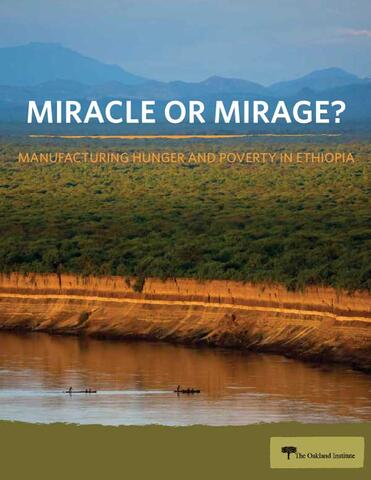
Download PDF (size: 0.73 MB) Miracle or Mirage? Manufacturing Hunger and Poverty in Ethiopia
“No Palestinians during the holiday”: Palestinian man harassed during Sukkot
International Solidarity Movement | October 21, 2016
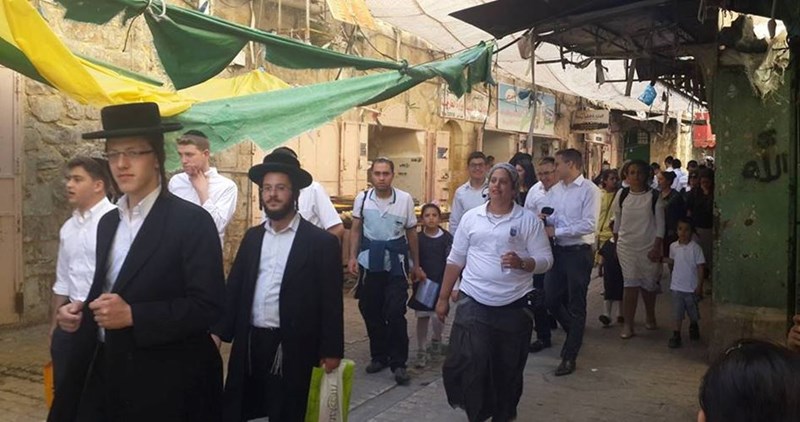
Hebron, Occupied Palestine – Late Thursday morning, as Palestinian schools in the Old City of occupied al-Khalil (Hebron) were dismissing their students early due to enhanced settler activity, Israeli forces harassed a Palestinian man and denied him his right of movement through the large parking lot near the base of al-Ibrahimi Mosque. The reason for this incident, as well as the increase in settler activity, was due to the week-long Jewish holiday of Sukkot, the Feast of the Tabernacles. Throughout this entire week, Israeli Forces have increased their numbers stationed around the Mosque, and it was one of these members of the occupation forces that decided to harass this Palestinian civilian.
The man, a local tour guide in the Old City of al-Khalil, entered the parking lot in order to reach a group of Turkish tourists who had just arrived. Upon setting foot in the lot, two members of the Israeli Border Police approached him, with one using his hands to physically shove him away from the cordoned off entrance. As he tried to explain that he merely wanted to pass through to reach the tourists, the border policeman raised his voice and shouted at him to get back. When the man asked why he was not allowed to pass through when so many tourists were permitted to, the answer he received was, “You are Palestinian. No Palestinians pass through here during the holiday.” The man had no choice but to turn around and walk around the parking lot.
The denial towards Palestinians of their right to movement by Israeli forces is a fundamental weapon of the occupation. By preventing Palestinians from entering historical and religious sites, and working to minimize their presence around Jewish festivities, Israel uses the excuse of the holidays to continue its process of ethnically cleaning al-Khalil of its indigenous Palestinian population. On Wednesday, Israeli Forces came out in force to block off a road in the so-called Palestinian controlled H1 area to allow settlers from the illegal Israeli settlements to have access to a supposed prayer site in the city. This is merely one of the many examples of how Jewish holidays act as a cover for forceful intimidation of Palestinians.
The harassment of this man this morning is symptomatic of the devaluation of Palestinian life under the Israeli occupation across the land of Palestine.
Latvia detains, deports chief producer of Russian news agency
RT | October 21, 2016
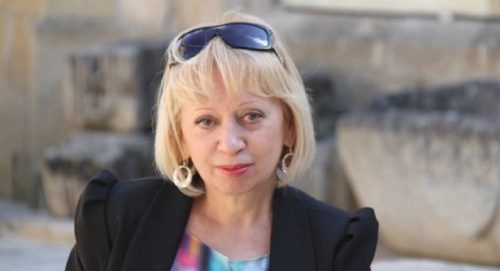
Latvian border guards have detained Ella Taranova, a chief producer for Russia’s Rossiya Segodnya international information agency, who arrived for the Baltic Forum in Riga. According to RIA Novosti, she was deported late Friday.
It appears Taranova had been blacklisted by the country’s authorities in August 2014 but was never informed about it.
Taranova, who has a valid Schengen visa, arrived in the country by plane on Friday morning, alongside other Russian journalists, and “had no problems when passing border control,” she said.
However, several hours after she checked in to a hotel, she was summoned to the registration desk where two Latvian border guards told her she was on a blacklist and must leave the country, TASS reports.
“It seems from 5 August 2014, I have been on a security services list of undesirable people,” Taranova told RIA Novosti. “I knew nothing about this, only that I had been invited to a conference of the Baltic Forum.”
“I was asked several times with suspicion whether I knew I was on the list, before being told that in theory, I should know,” she added. “It was explained to me that the people on this list pose a threat and security risk to the Republic of Latvia. This is disgusting. I was not and am not involved in any political activity.”
The director of the Baltic Forum, Aleksandr Vasilyev, said Taranova is at a border guards station in Jurmala and will be put on a plane to Moscow later on Friday. He added that a Russian Embassy member of staff and a forum representative are with her.
The Baltic Forum is an annual conference held since 1998. It is due to be held on Saturday in Jurmala. Participants will discuss the nature of the Russia-EU relationship and will include diplomats, experts and politicians from EU countries, Russia, Ukraine, China and the US. Taranova has a long-term partnership with the Forum and had attended several times prior to 2014.
RT’s editor-in-chief, Margarita Simonyan, expressed her dismay.
“It is an outrage,” she wrote on Twitter.
The Russian Foreign Ministry condemned the incident, saying the incident contradicts Latvia’s international obligations regarding freedom of speech.
“This regrettable event completely fit into the fabric of the anti-Russian actions aimed at suppressing dissent and restricting freedom of expression, of the Latvian alternative media,” an official statement read. “The existence of blacklists, the criterion for inclusion in it, which is being a professional journalist, is unacceptable in a democratic state, and contrary to all international commitments to ensure freedom of speech.”
Meanwhile the Russian State Duma is going to demand an official explanation for Latvia’s actions from the EU, the Council of Europe and the OSCE, Sergey Zheleznyak, a member of the Russian Parliament Foreign Affairs Committee, told reporters. This is just the latest in a series of attempts to “put pressure on the Russian media, which has become the ‘new normal’ of European policy,” he said, as quoted by RIA Novosti.
Latvian MP Janis Urbanovics, who belongs to the center-left Harmony party, has warned that expelling Taranova is not good for Latvia’s image. “I don’t know why it happened that a person with a Schengen visa could arrive in any other country of the European Union, but turned out to be unwelcome in Latvia,” Urbanovics said, RIA Novosti reported.
Venezuelan Supreme Court Orders New Inquiry into Disappeared During Fourth Republic
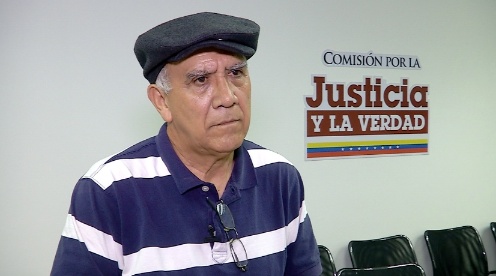
By Lucas Koerner | Venezuelanalysis | October 20, 2016
Caracas – Venezuela’s Supreme Court (TSJ) issued a ruling Tuesday ordering the country’s the public prosecution to reopen investigations into the case of a law student disappeared in 1966.
Andres Pasquier Suarez, a law student at the Central University of Venezuela, was detained by Venezuela’s national guard on October 10, 1966 and subsequently handed over to the now defunct Armed Forces Information Service.
According to military records, the youth was transferred two days later to the Urica Anti-Guerrilla Camp from which he never returned.
A Maracaibo military tribunal charged with investigating the incident declared the case closed on March 15, 1968, finding that “no crime has been committed in any moment”.
Writing on behalf of the high court, TSJ President Gladys Gutierrez struck down the prior ruling as “contrary to the elemental principles of law and justice”, concluding that the military court had failed to conduct an impartial investigation of the disappearance.
The justice ordered the public prosecutor’s office to reopen the investigation and identify those responsible as mandated under article 19 of Venezuela’s Law to Prosecute Crimes, Disappearances, Tortures, and Other Human Rights Violations for Political Reasons during the Period 1958-1999.
Over the last 17 years, numerous inquiries have brought to light the magnitude of human rights violations committed under Venezuela’s pacted, two-party system known as the Fourth Republic.
This past July, the country’s official Truth and Justice Commission revealed that it had registered a total of 11,043 cases of torture, assassinations, and political disappearances between 1958 and 1998.
UK Government Fails to Explain Use of Drones Outside Armed Conflicts
Sputnik — 19.10.2016
The UK government sidestepped the question on laws governing the use of lethal drone strikes outside armed conflicts, when responding to the Joint Committee on Human Rights’s report, the committee said in a statement issued on Wednesday.
According to the Committee, the UK government could not justify the refusal to answer the question about legal constraints within which it would operate by saying that this was a hypothetical situation, although in the course of the inquiry it stated that “it would be prepared to resort to such use of lethal force for counter-terrorism purposes even outside of armed conflict.”
“The Committee welcomes some clarifications of the Government’s position, but is disappointed that the Government has refused to clarify its position in relation to the use of lethal force outside armed conflict… ,” the statement said.
The committee’s report asked government to clarify their policy on the use of drones for targeted killings, including the interpretation of the UK and international laws pertaining to such strikes and the general principles of their use.
The Joint Committee on Human Rights, which includes members from both Houses of the UK Parliament, checks all government bills for compliance with human rights granted by the UK and international law and examines government responses to court decisions on human rights cases.
Muzzling Israeli Dissent in the NYT
B’Tselem’s Hard Hitting Testimony Lost in the Telling
By Barbara Erickson | TimesWarp | October 18, 2016
Israeli rights advocate Hagai El-Ad spoke eloquently last week before the United Nations Security Council, appealing to the world body for action on the brutal occupation of Palestine, but according to The New York Times little of what this courageous activist said was fit to print: The real news was Israeli Prime Minister Benjamin Netanyahu’s outraged response.
Thus we find a story on the speech appearing two days after the event under the headline “Settlement Debate Flares Again in Israel’s Quarrel With Rights Group.” The article by Isabel Kershner has much to say about Israeli government criticism of the human rights group B’Tselem, which documents and publicizes Israeli abuses in the West Bank and Gaza.
She says as little as possible, however, about El-Ad’s actual comments. Of his 2,000 word speech she quotes no more than two dozen: “Anything short of decisive action will achieve nothing but ushering in the second half of the first century of the occupation… [Living under occupation] mostly means invisible, bureaucratic, daily violence.”
The heart of the address is missing: El-Ad’s devastating deconstruction of the Israeli justice system as “a legal guise for organized state violence,” the daily indignities and suffering under Israeli military rule, the demolitions of homes, theft of land and water and the impunity surrounding trigger happy security forces.
His words become lost in the framing of this story, glossed over in the tit for tat between attackers and defenders of B’Tselem. Other media reports, however—in Israel and the United States—give readers more substantial excerpts from his address, and they also provide links to the actual speech, something the Times conveniently omits.
The Times also fails to say that amidst the turmoil over B’Tselem’s UN appearance, the U.S. State Department declared its gratitude to the organization for providing information on “fundamental issues that occur on the ground.” Times readers, however, are denied these same benefits.
El-Ad was not the only speaker to criticize Israel at a special session titled “The Settlements as the Obstacle to Peace and the Two-State Solution,” but he bore the brunt of the furious denunciations from Netanyahu and other government officials. He and his organization were also the focus of the Times story.
All this attention is a sign that El-Ad’s performance was a direct hit on Israeli efforts to whitewash their occupation. Much of the time B’Tselem’s reports and press releases, well-buttressed with detailed research, receive no mention either in the Times or in government circles. But now that El-Ad has managed to bring the group’s message to the highest international level, the backlash has been swift and harsh.
The Times has become a willing partner in this effort, working to distract readers from El-Ad’s eloquent appeal to the Security Council by framing the story as a two-sided debate between rival points of view.
Discerning readers will take notice, however, and realize that El-Ad’s speech is worth searching out in spite of the Times’ efforts to draw attention away from his actual words. They can find the text and a video of his address at the B’Tselem website—if they haven’t already found his performance posted on social media.
So it comes to this: Times readers need to read between the lines for clues to the reality deemed unfit to print, and then they must use their skills to search elsewhere for the story behind the words. This is not what we should expect from a newspaper like the Times, with pretenses to the highest standards of ethics and performance, but readers beware: Use this journalistic product with care and a hefty dose of skepticism.
Follow @TimesWarp on Twitter
Five years on: The Wafa al-Ahrar agreement and prisoner exchange
Samidoun Palestinian Prisoner Solidarity Network – October 19, 2016
On 18 October 2011, 477 Palestinian prisoners were released from Israeli occupation prisons in the Wafa al-Ahrar (“Dedication to the Free”) prisoner exchange with the Israeli occupation. One week prior, hundreds of Palestinian prisoners were engaged in an open-ended hunger strike against the solitary confinement and isolation of Palestinian leaders, especially Ahmad Sa’adat, the imprisoned General Secretary of the Popular Front for the Liberation of Palestine. The strike was suddenly interrupted with stunning news: a prisoner exchange agreement had been released between the Palestinian resistance and the Israeli occupation, for the release of 1,027 Palestinian prisoners in exchange for the release of captured occupation soldier Gilad Shalit. The exchange was completed with the release of 550 fellow Palestinian prisoners in December 2011. In the agreement, among the first set of 477 prisoners released, 131 were released to Gaza and 110 to the West Bank, as well as six Palestinians holding Israeli citizenship returning to Palestine ’48. 203 more were deported from Palestine. This group were the prisoners with lengthy sentences.
This was, of course, not the first time that the Palestinian resistance secured the release of Palestinian prisoners through prisoner exchanges. Throughout Palestinian history, large numbers of Palestinian prisoners in Israeli jails with lengthy sentences have found freedom in prisoner exchanges negotiated by Palestinian resistance organizations.
Since the 2011 Wafa al-Ahrar exchange, dozens of released prisoners have been re-arrested, many with their original sentences reimposed. 57 former prisoners have been re-imprisoned by the Israeli occupation, out of 74 who have been arrested; 50 prisoners have had their original sentences re-imposed on allegations of “violating their terms of release” through “association or support for” prohibited organizations, including all major Palestinian political parties. Three more re-arrested prisoners are serving sentences lower than their original sentences, including Nael Barghouthi (30 months), Nayef Shawamreh (4 years), and Bassam Natsheh (3 years). Israeli Military Order 1651 allows the re-imprisonment of former Palestinian prisoners on prior charges for arbitrary re-arrests, on the basis of secret evidence.
Palestinian prisoners re-arrested include Samer Issawi, who was previously re-arrested and freed after a 265-day partial hunger strike and then re-arrested once more in the raids in June and July 2014 alongside the Israeli assault on Gaza; Samer Mahroum, originally a co-defendant of Omar Nayef Zayed; and Nasser Abed Rabbo, a Jersualemite ex-prisoner prevented from seeing his newborn son by the re-arrest.
Historical precedents for the release of prisoners through resistance actions have been noted on multiple occasions, including exchanges between the Israeli state and Arab states, Hezbollah, the Palestine Liberation Organization and other Palestinian resistance organizations.
On 23 July 1968, the first exchange was successfully completed between the Palestinian revolution and the Israeli occupation. The Popular Front for the Liberation of Palestine hijacked a plane from Rome to Tel Aviv, releasing the passengers in exchange for 37 Palestinian prisoners, some with high sentences imprisoned before 1967.
On 28 February 1971, Palestinian prisoner Mahmoud Bakr Hijazi was exchanged for an Israeli soldier in an exchange agreement between Fateh and the Israeli occupation.
On 14 March 1979, the Popular Front for the Liberation of Palestine – General Command conducted an exchange agreement with the Israeli occupation for the release of 76 Palestinian prisoners, including 12 women prisoners.
In 1980, Palestinian prisoner Mehdi Bseiso was released in exchange for a collaborator captured by the Fateh movement.
On 23 November 1983, 4560 Palestinian detained Palestinian and Lebanese prisoners in southern Lebanon, including 65 Palestinian women prisoners were exchanged for six Israeli occupation soldiers arrested in southern Lebanon, in an exchange with the Palestine Liberation Organization.
In June 1984, 291 Syrians imprisoned by the Israeli state and 72 Syrians’ remains, as well as 20 Palestinian prisoners, were exchanged for six captive Israeli soldiers and five soldiers’ remains in an exchange with Syria.
On 20 May 1985, 1155 Palestinian prisoners were released in an exchange for three Israeli soldiers captured by the PFLP-GC. Many of the Palestinian prisoners released later became leaders in the intifada that arose in 1987.
In September 1997, the Mossad attempted to assassinate Hamas leader Khaled Meshaal in Jordan with a poisonous injection. Two Mossad agents were arrested in Jordan and in exchange for those agents, the Israeli state released Sheikh Ahmed Yassin, the founder and leader of the Hamas movement, then serving a life sentence in Israeli prisons. (Yassin had been previously released in the 1985 prisoner exchange.)
In January 2004, the Israeli occupation released 436 prisoners, including 400 Palestinians, 23 Lebanese, two Syrians, three Moroccans, three Sudanese, one Libyan and one German prisoner, and returned the remains of 59 soldiers in exchange for the remains of three Israeli occupation soldiers and the release of drug dealer, businessman and potential intelligence agent Elhanan Tannenbaum, in an exchange with Hezbollah in Lebanon.
In 2008, Samir Kuntar of the Palestine Liberation Front and four Hezbollah fighters were released in exchange for the remains of two Israeli occupation soldiers in southern Lebnon, in an exchange with Hezbollah in Lebanon.
Today, there are four Israelis, including two Israeli soldiers missing in action, held by the Palestinian resistance. The two soldiers, Hadar Goldin and Oron Shaul, were captured by the Palestinian resistance during the massive Israeli assault on Palestinians in Gaza in 2014, when over 2,300 Palestinians were killed, tens of thousands wounded, and hundreds of thousands displaced by the massive occupation assault on the besieged Palestinian strip. The Israeli media originally declared them killed in action after a massive bombardment under the so-called “Hannibal directive” mandating the massive bombardment of the Palestinian civilian population in order to kill any captured soldier; however, Shaul’s status has been changed to “missing in action.” Also captured by Palestinian resistance organizations are Avera Mengistu and Hashem al-Sayyed, who entered Gaza without permission.
In total, over 8,000 Palestinian prisoners have been released through exchanges, which is why the capture of Israelis and especially Israeli soldiers or settlers has been such a high priority for the Palestinian resistance in the past and at present. Palestinian resistance organizations, including Hamas, have demanded the release of the 57 re-arrestees of the Wafa al-Ahrar agreement as a condition to begin negotiations for an exchange of the four Israelis they currently hold. Palestinian prisoners’ organizations and human rights groups have been urging the release of the 57 prisoners since their re-arrest, including calling on Egypt, which served as a mediator in the exchange, to pressure the Israeli state for their release as part of its commitments to Egypt as part of the exchange agreement.
The 57 re-arrestees have been identified as follows:
1. Nidal Zaloum
2. Abd El-Men’em Othman To’meh
3. Majdi Atieh Suleiman ‘Ajouli
4. Ayed Khalil
5. Samer El-Mahroum
6. Alaa El-Bazyan
7. Adnan Maragha
8. Nasser Abedrabbo
9. Safwan Oweiwi
10. Rabee’ Barghouthi
11. Suleiman Abu Eid
12. Ibrahim Shalash
13. Ibrahim Al-Masri
14. Zuheir Sakafi
15. Ahmad Al-‘awawdeh
16. Bassam Na’im Al-Natsheh Abu Eid
17. Mahmoud Al-Swaiti
18. Mu’amar Al-Ja’bari
19. Khaled Makhamra
20. Abbas Shabaneh
21. Rasmi Maharik
22. Nayef Shawamreh
23. Na’eem Masalmeh
24. Mu’az Abu Rmouz
25. Amer Moqbel
26. Ashraf Al-Wawi
27. Muhamad Barakat
28. Ya’koub Al-Kilani
29. Aref Fakhouri
30. Waheeb Abu Al-Rob
31. Muhamad Saleh El-Rishek
32. Mu’amar Ghawadra
33. Imad Mussa
34. Abdelrahman Salah
35. Ashraf Abu El-Rob
36. Wael Jalboush
37. Nidal Abdelhaq
38. Taha Al-Shakhsheer
39. Zaher Khatatbeh
40. Hamza Abu Arkoub
41. Mahdi El-Assi
42. Shadi Zayed Odeh
43. Jamal Abu Saleh
44. Ismail Hijazi
45. Rajab Tahan
46. Samer Issawi
47. Khader Radee
48. Imad Fatouni
49. Muhamad Issa Awad
50. Suleiman Abu Seif
51. Ahmad Hamad
52. Khaled Ghizan
53. Ismail Musalam
54. Yousri Joulani
55. Nael Barghouthi
56. Imad Abdul-Rahim
57. Fahd Sharaya
Samidoun Palestinian Prisoner Solidarity Network salutes the freed prisoners on the fifth anniversary of their liberation, and joins in the call for pressure and action to free the 57 re-arrested prisoners of Wafa al-Ahrar, and for the liberation of all 7,000 Palestinian prisoners in Israeli jails.
Featured Video

Seyed M. Marandi: US-Iran War Inevitable: Kuwait and Bahrain May Fall
or go to
Aletho News Archives – Video-Images
From the Archives
Oil and the Israel Lobby
Reknowned economist M. Shahid Alam offers this excellent critique of Noam Chomsky’s defective analysis of the relative influence of Oil versus the Israel lobby over US foreign policy: … continue
Blog Roll
 Aletho News
- ICC ignored ‘very well-documented’ NATO crimes – ex-Libyan minister
- SNSC secretary dismisses US response to Iran’s conditions as ‘inadequate’
- Sanaa says Taiz roads open, secure for residents, warns Saudi forces
- Iraqi resistance group urges Saudi leadership to admit defeat, lift Yemen siege
- Trump’s Retreat: How Al-Aqsa Flood Took Down the US Empire
- Israel’s Military Actions in Lebanon Grossly Violate International Law — Lavrov
- Seyed M. Marandi: US-Iran War Inevitable: Kuwait and Bahrain May Fall
- Leaders Condemn Ansarallah Attack on Saudi Arabia While Ignoring Illegal War Against Yemen
- Leaked: Britain’s Covert Iraqi Psyops Network
- Yemeni Armed Forces Warn Airlines Against Using Saudi Airports, Exempt Mecca and Medina
- If Americans Knew
- Opinion: Why news organizations should boycott Israel
- The Israeli witch hunt of Sami Abu Shehadeh exposes the lie of the ‘Jewish and democratic’ state
- No state has a ‘right’ to exist – least of all an apartheid, genocidal state like Israel
- Testimonies about Gaza’s civilian death toll expose Israel’s atrocities – Daily Update
- How Israel Conquered the Latin American Right
- Agents search Rep. Omar’s Washington home in criminal probe as she vows she won’t ‘be silenced’
- “The Rule Was: ‘Shoot Everyone You See'”
- Israel goes ballistic over Nobel Laureate Navi Pillay
- U.S. May Join Yet Another Middle Eastern War — TCN
- Yellow Line moves again as Israel closes in on trapped Gazans – Daily Update
- No Tricks Zone
- Germany’s Green Energy Debacle: High Energy Costs Force Kahla Porzellan to Close After 182 Years!
- New Study: 50 Years Of The Most Aggressive ‘Net Zero’ Policies Can Only Affect The Global Climate By 0.03°C
- US September “Heat” Was No Record…Many Records Set Decades Ago
- Latest European Green Energy Debacle; Portugal’s Largest Flagship Solar Park Insolvent!
- Green Energy Debacle: German Expert Professor Fritz Vahrenholt Warns Of Severe Economic And Social Consequences
- Two More Paleo Reconstructions Affirm Meters-Higher Sea Levels Across Ireland, Brazil 7000-6000 Years Ago
- New Study: Earth And Venus Surface Warmth Largely Explained By Convection And Lapse Rate, Not CO2 Or Radiation
- 2025 Nature Paper Claiming Worsening Global Drought Gets RETRACTED …Heavily Flawed
- New Study: ‘Global Drought Shows No Detectable Recent Acceleration Under Climate Warming’
- Economic Masterminds: German Socialists Suggest Taxing Productivity Gains Stemming From Using AI

