Armed French Police Force Woman to Strip off Burkini on Beach

Woman on Nice beach being forced to remove her burkini by armed police, Aug. 23, 2016. | Photo: AFP
teleSUR | August 24, 2016
Armed French police ordered a Muslim woman to remove her burkini swimsuit on a Nice beach Tuesday, adding further controversy to a ban on the garment amid growing Islamophobia in France.
Photographs show the woman removing her burkini—a full-body swim piece, while four armed police surround her on the Promenade des Anglais in Nice. The woman was issued a ticket by police for not wearing “an outfit respecting good morals and secularism,” according to AFP.
“I was sitting on a beach with my family … I was wearing a classic headscarf. I had no intention of swimming,” said the 34-year-old mother, who only gave her first name, Siam.
“Today we are not allowed on the beach. Tomorrow, the street? Tomorrow, we’ll be forbidden from practicing our religion at all?” Siam asked.
Mathilde Cousin, witnessed the incident and told the Guardian, “The saddest thing was that people were shouting ‘go home,’ some were applauding the police. Her daughter was crying.”
Nice is the latest of 15 towns to ban the burkini. The mayor of nearby Villeneuve-Loubet said that the ban was important to “protect the population.”
Last week three Muslim women were fined $US43 for wearing burkinis in Cannes. On Tuesday, a mother of two reported she had been fined on the Cannes beach for wearing leggings, a tunic and a headscarf.
French Prime Minister Manuel Valls defended the ban, saying that “Beaches, like all public areas, must be protected from religious claims. The burkini is not a new range of swimwear, a fashion. It is the expression of a political project, a counter-society, based notably on the enslavement of women.”
The niqab and burqa veils were banned by France in 2010. Critics say the burkini ban is steeped in Islamophobia and secular extremism. Some advocacy groups have filed legal action against the ban that “pits citizens against one another,” said Marwan Muhammad from the Collective Against Islamophobia in France.
The burkini was originally designed in 2004 by Australian-Lebanese fashion designer, Aheda Zanetti, who also created the “hijood,” a head covering that can be used by Muslim women to play sports.
“This has given women freedom, and they want to take that freedom away? So who is better, the Taliban or French politicians? They are as bad as each other,” Zanetti said to the Guardian.
Since the crackdown on burkinis, its sales have seen a dramatic increase of 200 percent, with many non-Muslims buying the swimsuit to protest its ban.
Abu Zubaydah makes case for Guantanamo release in first public statement in 14 years

Abu Zubaydah © wikipedia.org
RT | August 24, 2016
A Guantanamo detainee, who the CIA tortured as a suspected top leader of Al-Qaeda but never officially charged, has made his case for release. Abu Zubaydah appeared in public for the first time in 14 years of his detention.
His first-ever hearing was made via video feed from Washington’s Cuba-based prison and on his behalf. Addressing a Periodic Review Board through a uniformed soldier who read his message, Zubaydah said that he “has no desire or intent to harm the United States or any other country.”
“He has been respectful to us in all of our meetings and dealings with him, and he has come to believe that he might have a chance to leave Guantanamo through this process,” his opening statement reads.
He said he would want “to be reunited with his family” while also “begin the process of recovering from injuries he sustained during his capture” in Pakistan in 2002.
“He has some seed money that could be used to start a business after he is reintegrated into society and is living a peaceful life,” his representative read.
A Saudi-born Palestinian, Zubaydah is one of three men that the CIA has admitted to have waterboarded at an unknown prison in Thailand.
According to the so-called “torture report” released in 2014, Zubaydah was the first prisoner to endure the harsh CIA interrogation program.
After Zubaydah was turned over to US custody, he was subjected to 83 waterboarding sessions, the torture technique that creates the sensation of drowning. He was also placed in a coffin-sized box for a total of 266 hours (11 days, two hours) over a 20-day period. Additionally, he was forced to remain in another small confinement box (21 inches wide, 2.5 feet in length) for 29 hours.
After being brutally interrogated, Zubaydah was transported to Guantanamo Bay in Cuba, where he remains today.
Two former CIA psychologists, and creators of the CIA torture program, admitted that Zubaydah was also stripped naked, confined and that his cell was lit by halogen lamps 24 hours a day for a period of time.
In the aftermath of 9/11, Washington [alleges to have] falsely believed that Zubaydah was a key Al-Qaeda leader in the lead-up to the attacks. Since then, his status in US documents reportedly changed to a “well-known al-Qaeda facilitator.”
According to his profile, he also “possibly” knew about bombings of the US embassies in Kenya and Tanzania in 1998 and the USS Cole bombing in 2000.
However, despite 14 years passing since his brutal capture, Zubaydah has not been officially charged.
It us up to the Periodic Review Board to decide whether a prisoner would pose a danger if released. The decision on his transfer is expected in about 30 days.
Until this Tuesday’s hearing, Zubaydah has not made a single public appearance and has only been seen by his lawyer.
The open statement in a Pentagon room lasted reportedly for less than 20 minutes and was followed by a classified part of it. Zubaydah decided he did not want a transcript of his secret hearing being publicly released.
Hearings at the Periodic Review Board have been held more often recently as the Obama administration is trying to stand by the president’s pledge to close Guantanamo by the end of this presidential term. Unable to shut down President George W. Bush’s facility due to opposition from Congress and the military, Obama has been pushing to transfer out detainees cleared for release.
Last week saw the largest single release of 15 prisoners, all of whom were sent to the United Arab Emirates.
There are currently 61 captives remaining in the Guantanamo Bay.
Peru’s Police Force Harbored a Death Squad, Report Reveals
teleSUR | August 23, 2016
Until as recently as last year, Peru’s national police force harbored a “death squad” that is responsible for the extrajudicial killings of at least 20 people over a four-year period – even at times offering sworn officers bounties to kill criminal suspects, according to an official government investigation of systemic police misconduct.
In an executive summary that reads like the script of a Dirty Harry movie, the Interior Ministry’s report found “serious indications” that both high-ranking and low-level officers of the national police force “falsified intelligence information” to misrepresent at least six cases involving some 20 slayings as the justified result of confrontations with armed suspects, when in fact they were summary executions carried out by police, according to a summary of the report Monday by Vice Minister of Internal Order Ruben Vargas.
The report did not disclose the identities of the officers suspected of participating in the death squad, but Vargas did reveal that the operation was headed by a police colonel who was subsequently promoted to general.
Local media revealed the scandal over three weeks ago after department whistleblowers brought the allegations to light, prompting an investigation. The new report will now be handed over to prosecutors specialized in organized crime to open a case.
Minister of Interior Carlos Basombrio, newly-appointed under President Pedro Pablo Kuczynski and inaugurated at the end of July, claimed that the evidence suggests that a group of high-ranking police officials who moved between divisions are responsible for running the death squad, and that no single police force unit itself is compromised.
Authorities also revealed that several of the officers involved in the scandal were decorated for their so-called “distinguished” achievements within the force last year. A months-long internal police investigation already found that at least two officers were promoted during the period in which they are suspected of participating in the death squad. The Investigator General intervened in the internal probe and took over the investigation over three weeks ago.
Local media report that the death squad, allegedly made up of nearly 100 officers across four units of the national police force, is suspected of carrying out the murders of 27 Peruvian civilians between 2011 and 2015 in the cities of LIma, Ica, and Chiclayo.
Media previously suggested that the 27 victims were common criminals, but the new report found that 11 victims “didn’t even have a criminal record or a warrant to justify them being identified as targets of police interventions,” according to the Interior Ministry.
The confirmation of the extrajudicial killings by the police recalls a dark history of death squads run by state security forces in the South American country that were aimed at wiping out armed left-wing guerrilla movements particularly under the reign of jailed former dictator Alberto Fujimori.
Arms Sales to Saudi ’Illicit’ due to Yemen Deaths: Control Arms Coalition
Al-Manar | August 23, 2016
A group that campaigns for stricter arms sales controls said on Monday that Western powers were breaking international law by selling vast amounts of weapons to Saudi Arabia that are being used to hit civilians in Yemen.
The Control Arms Coalition said Britain, France and the United States were flouting the 2014 Arms Trade Treaty (ATT), which bans exports of conventional weapons that fuel human rights violations or war crimes.
“It is extremely concerning that many transfers are still continuing, in particular the governments of the United States, the UK and France have authorized and are continuing to export very large quantities of weapons, including explosive weapons, bombs which are being used daily against civilians in Yemen,” said Anna MacDonald, director of the Control Arms Coalition.
She was speaking to a news briefing as week-long U.N. negotiations began in Geneva aimed at putting teeth into the ATT which lacks a mandatory public reporting system for the $100 billion global arms trade.
France authorized arms licenses worth $18 billion to Saudi Arabia last year, followed by the United States at $5.9 billion and Britain’s $4 billion, the group said in its latest study.
Nigeria’s ambassador Emmanuel Imohe, who chairs the conference, said: “The allegation is quite grave and it should be of concern to everyone including the ATT secretariat itself.”
Medecins Sans Frontieres (MSF) said last week it was evacuating its staff from six hospitals in northern Yemen after a Saudi-led coalition air strike hit one of its hospitals, killing 18 people.
Outcry over civilian casualties has led some members of the US Congress to push for restrictions on arms transfers. The Obama administration this month approved a potential $1.15 billion arms package for Saudi Arabia.
Last week, US Senator Chris Murphy slammed his country’s administration over bombing civilians in Yemen, saying “there is an American Imprint on Every Civilian Life Lost in Yemen.”
In a statement on Friday, the Pentagon cautioned that its support for Saudi Arabia in its campaign was not “a blank check,” however, and said it has pressed the coalition on the “need to minimize civilian casualties.”
Campaigners said arms exports also drove fighting in South Sudan last month that killed hundreds, prompting fears of a return to civil war.
“We think that governments of other countries have fueled this violence by repeatedly authorizing arms transfers to South Sudan,” said Geoffrey Duke, head of South Sudan Action Network on Small Arms. He named China, Ukraine and South Africa as the main suppliers to the Juba government.
To date, 87 countries have ratified the ATT, while another 46 – including the United States – have signed it, leaving important gaps, Imohe said.
“For example, in the Arab world only Mauritania is listed amongst states parties, while Asia Pacific has only three states parties,” he said, referring to Japan, Samoa and Tuvalu.
Samidoun international coordinator denied entry to Palestine, interrogated about BDS and prisoner solidarity
Samidoun Palestinian Prisoner Solidarity Network – August 22, 2016
Samidoun Palestinian Prisoner Solidarity Network international coordinator Charlotte Kates was denied entry to Palestine at the King Hussein Bridge crossing from Jordan to occupied Palestine on Monday, 15 August, as she attempted to join a delegation of European parliamentarians and lawyers in support of Bilal Kayed and the Palestinian prisoners. Kayed, 34, has been on hunger strike for 69 days against his administrative detention without charge or trial; nearly 100 fellow prisoners have joined his strike against his imprisonment, imposed upon him immediately following his completion of a 14.5-year sentence in Israeli prisons.
When Kates presented her U.S. passport at the passport control line, it was taken from her and she was told to wait for further questioning. Along with multiple other travelers to Palestine and, especially, Palestinians holding international passports as well as those holding PA passports, she waited for hours at the bridge for a period interspersed with interrogations about her purpose in the country and participation in Palestine prisoner solidarity and BDS activism.
“I was asked about the websites I maintain, asked to allow the interrogator to access my email conversation with others, and asked to write up lists of names of people I know in Lebanon and in Palestine and lists of organizations with which I work. The interrogator attempted to look through my phone to find my contacts and to seek out WhatsApp chats and repeatedly demanded that I log in to my email or social media accounts and allow her access. As my phone was completely clear of any contact information and I refused to access any accounts or provide lists of names, this became a ‘reason’ to deny me entry. However, other travelers at the bridge were also subject to these searches and questioned about their personal photos and WhatsApp chats. In particular, people were questioned about wearing hijab in photos or being in contact with visibly Arab or Muslim friends,” said Kates.
“I was interrogated about my involvement with Samidoun and organizing around Palestinian political prisoners, and whether my visit to Palestine had anything to do with Bilal Kayed in particular, clearly a matter of concern to the Israeli interrogator,” said Kates. “Furthermore, in light of the recent announcements regarding ‘crackdowns’ on BDS activists entering Palestine, I was specifically interrogated regarding speeches and lectures I have given regarding boycott, divestment and sanctions against Israel, support for the BDS call and involvement with Israeli Apartheid Week.”
“This was not about personally targeting me; it was an attempt to target the growing international solidarity movement to support Palestinian prisoners and the Palestinian people’s liberation struggle, and an attempt to further isolate Palestinian prisoners from the people of the world,” Kates said. “Furthermore, my experience of prolonged interrogation and being held for hours at the bridge pales next to the experience of Palestinians being denied their basic right to enter their own homeland – part and parcel of the denial of the fundamental right of return – and subject to harsh interrogation, being deported for carrying international passports, and being subjected to cruel and degrading treatment at the border.”
“During just my own time at the bridge, I encountered numerous Palestinians facing enormous delays and aggressive interrogation, Palestinians denied entry to their own homeland, and Palestinians presented with ‘limited-access’ entry permits prohibiting them from visiting Jerusalem. I encountered a family from Gaza who had one of the rare permits to exit via Erez/Beit Hanoun and then the bridge to Jordan to see family members. As they had studied in the US and UK, they were questioned by border guards as to why they wished to return to Gaza at all, rather than staying in another country. Border control and interrogation is part and parcel of the system of Israeli colonization and dispossession separating Palestinians from their land and seeking to force even more Palestinians outside their homeland. It is part of the same system that denies millions of Palestinians their right to return and attempts to continue the Nakba on an ongoing basis,” said Kates.
“At the same time, I also witnessed numerous holders of international passports singled out for their names, visibly Muslim or Arab appearance, or travels to Arab countries, and subject to degrading and offensive interrogations regarding their religion and personal relationships,” Kates noted. … Full article
Italian imam posts photo of nuns on beach to discuss burqini ban, gets FB account blocked
RT | August 20, 2016
The imam of Florence has posted a picture of habit-wearing nuns splashing along the seashore on Facebook, calling for dialogue about burqini bans… but got his account blocked instead.
The post by Izzedin Elzir got some 2,700 shares, and came in response to the French southern cities – like Cannes and Nice – prohibiting the wearing of burqinis on the beach.
The day after the imam published his post, he awoke to find his account blocked.
“It’s incomprehensible. I have to send them an ID document to reactivate it. They wanted to make sure it’s my account – it’s a very strange procedure,” the indignant imam told La Repubblica.
On Friday, his account was back in, and the imam said he hopes it wasn’t blocked because of the picture, as it urges dialogue, and “we live in a society of law and freedom.”
He also noted that the burqini had only come into fashion among Muslim women over the past few years, and he expressed regret that “some politicians in France, instead of responding to the political and economic needs of their citizens, are focusing on how Muslims dress.”
Many online commenters tended to agree with the imam, saying that “The sea is for everyone,” and describing the ban as “a psychological tool against Muslims.”
However, others disagreed, “Don’t confuse the two different situations: these are women who have CHOSEN to religious life with the rules that it imposes, the ‘others’ are FORCED to dress even on the beach,” a comment read.
It’s not the first burqini-linked scandal this week. On Thursday, Austrian politician Ahmet Demir caused uproar after publishing a photo of two nuns and joking that they were “oppressed women” in burqas. Later, he took the post down and apologized, but defended his post saying that he was attempting to convey the message that “every woman should be able to wear what they want as long as they chose the clothes themselves.”
On Tuesday, Italy’s Interior Minister Angelino Alfano told Corriere Della Serra that Italy wouldn’t follow France’s suit and ban the burqini, but will step up regulations of imams and mosques.
Two days later, Italian authorities expelled the Tunisian imam Khairredine Romdhane Ben Chedli. The 35-year-old imam was lately absolved of terrorism-related charges, but still deemed unfit to remain in his post, the ANSA news agency said.
Palestinian women prisoners to launch protests against mistreatment of family visitors

Samidoun Palestinian Prisoner Solidarity Network – August 20, 2016
Palestinian women prisoners are declaring their intention to launch a series of protests over mistreatment of their relatives during family visits, Ma’an News reported on Thursday. In particular, Riyad al-Ashqar of the Palestinian Prisoners’ Center for Studies noted that family visits are frequently denied, cut short or delayed and visitors forced to undergo strip searches.
Lena Jarbouni, the elected representative of the 42 women held in HaSharon prison, stated that the women will protest so long as their families continue to experience lengthy waits in the sun, humiliating strip searches, repeatedly altered visitation schedules and prohibition of clothing for the prisoners and other necessary items. Several women prisoners, including Ansam Shawahneh, 19, have been completely denied family visits. There are currently approximately 60 Palestinian women held in HaSharon and Damon prisons.
On Thursday, Ofer Military Court ordered Taghreed al-Faqih, 44, from Dura near al-Khalil, imprisoned for two months and fined 5000 NIS (approximately $1100 USD) for “incitement.” Al-Faqih, the sister of Mohammed al-Faqih, extrajudicially executed by Israeli forces who bulldozed and fired a missile into his home, was arrested after her brother’s killing on 12 July 2016.
On Monday, 15 August, Randa Ahati of al-Khalil was released on bail to house imprisonment in her home in Yatta until her next court date. A former prisoner held for nearly four years in Israeli prison, she was arrested by occupation forces while traveling between Bethlehem and al-Khalil.
Sana Abdelrahman Nayef Abu Sneineh, 24, from Dura near al-Khalil, was released on 15 August after six months in administrative detention. She was arrested on 17 February by Israeli occupation soldiers invading her home in a pre-dawn raid, accusing her of posting “inciting” material on Facebook. She was ordered to three months’ administrative detention without charge or trial, which was then renewed for an additional three months.
Two women remain in administrative detention without charge or trial, among nearly 750 Palestinians in total: Sabah Feroun, imprisoned since 19 June after an invasion of her Jerusalem home by Israeli occupation forces and ordered to six months in administrative detention, and Haneen Abdelqader Amer, 39, from Tulkarem, imprisoned since 27 March and accused of “incitement” on social media but ordered imprisoned without charge or trial.
Mexican police executed 22 civilians in drug raid: Rights body
Press TV – August 19, 2016
A human rights body has found that Mexican police killed nearly two dozen civilians in “arbitrary executions” during a raid against a drug cartel in the country’s troubled west last year.
The independent National Human Rights Commission said in a report on Thursday that the massacre happened in the federal police raid against the Jalisco Nueva Generacion cartel in the western state of Michoacan on May 22, 2015.
Police officers committed “violations of the right to life by excessive use of force that entailed the arbitrary execution of 22 civilians,” the commission said.
Meanwhile, commission chief Ismael Eslava said the government forces also perpetrated “aggravated acts of torture on two people who were detained.”
According to the commission report, forensic investigations indicated police had moved the bodies of those killed in the raid and placed guns next to them in an attempt to cover up the crime.
It also noted that a police helicopter fired 4,000 rounds into the farm where the suspects were hiding.
Responding to the document, Renato Sales, the chairman of Mexico’s National Security Committee, rejected the characterization of arbitrary executions and defended the actions of police.
He said the shooting erupted when the suspects refused to drop their weapons. “We do not think the theory of arbitrary executions stands up.”
The government said previously that the helicopter had fired to contain the suspects. It also said that the 42 people killed by police had attacked officers.
The commission report concluded that a total of 43 people were killed in the security operation, including one policeman and numerous suspected criminals, but only 22 of them were deemed arbitrary executions by police.
The commission also found fault with the actions of investigators from the Michoacan Attorney General’s Office, who mishandled ballistics evidence. Medical examiners likewise came under criticism for irregularities in the autopsies and delays in the return of bodies to their families.
The incident is considered as one of the bloodiest battles in the Mexican government’s decade-long campaign against powerful drug gangs across the Latin American state.
Official figures show that more than 35,000 people are currently missing in the country due to drug-related violence, which has also claimed thousands of lives over the past few years.
Police corruption, drug cartels and organized crime are the greatest challenges facing Mexico.
Hasidic ‘Shomrim’ receive no punishment after assaulting black American
RT | August 18, 2016
A gay black man was brutally attacked by five men in 2013 and has spent the last three years fighting for justice. Unfortunately, he may never see it. Two of five Hasidic neighborhood patrolmen have been sentenced, but will spend no time in jail.
On Tuesday, two men charged with gang assault, punishable by up to 25 years in prison, walked away with a sentence of community service and three-year probation for an attack that left 24-year-old Taj Patterson blind in his left eye.
Pinchas Braver, 22, and Abraham Winkler, 42, were two of five men that assaulted Patterson.
Whether Patterson was attacked for being gay or black or a combination, he’ll never know.
“I was alone. I was an easy target. I’m black. I’m gay, a whole slew of reasons,” Patterson told the Gothamist.
Patterson was walking through South Williamsburg when he was stopped by five members of the neighborhood patrol group known as the Shomrim. Patterson told the New York Daily News it was about 4:00am when the men knocked him down, shouting, “Stay down, f****t!”
Multiple people claim to have seen the attack.
Evelyn Keys, an MTA bus driver, intervened when she saw what was happening. She described the jackets the men were wearing to the Daily News in May, saying, “I know the first letter is an ‘S.’ Under those three letters there was a word that started with an ‘S.’”
“That wasn’t a misdemeanor,” she said.
Mariano Ortiz, 33, told the Daily Mail that his attempt to photograph the attackers’ license plates nearly ended with him being mowed down.
“One of [them] tried to hit me,” Ortiz said.
Despite the witnesses, the case faced a number of hurdles before even being investigated. Patterson attempted to report the attack to the police, but was dismayed to discover that it had been closed a day later. The report said that Patterson was attacked by only one man and claimed that Patterson was “highly intoxicated, uncooperative and incoherent.”
Patterson believes that racial issues factored into their decision, telling the Daily Mail, “I think they saw this black kid . . . and they might have seen the Jewish guys and thought he must have done something wrong because the Jewish guys wouldn’t do anything wrong.”
It took his mother, Zahra, to contact media sources for the attack to be investigated.
Israeli army withdraws from Al-Fawwar, after killing one Palestinian, injuring 59, and searching dozens of homes
IMEMC News – August 17, 2016
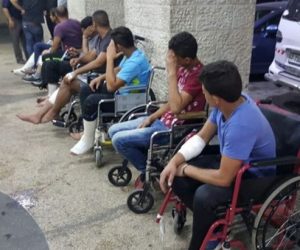 The Israeli army withdrew, late on Tuesday at night, from the al-Fawwar refugee camp, south of Hebron, in the southern part of the occupied West Bank, after concluding a massive military invasion, leading to the death of one Palestinian, while at least 59 others have been injured and dozens of homes invaded and ransacked.
Dr. Waleed Zalloum, the general director of the Hebron Governmental hospital, said 38 Palestinians were moved to the medical center, and that most of them were shot in their legs, thighs and arms.
Zalloum added that one Palestinian, identified as Mohammad Yousef Saber Abu Hashhash, 17, was fatally shot in the chest and died shortly after being moved to a hospital.
Dozens of residents, including many children and elderly, suffered severe effects of tear gas inhalation, and received the needed treatment.
Dr. Yousef Takrouri, the general director of the Al-Ahli Hospital in Hebron, said five Palestinians were moved to the medical center; all were shot with live rounds, four in the legs and one in the chest.
In addition, one Palestinian was moved to the Rafidia Hospital, in the northern West Bank city of Nablus, after the soldiers shot him with an expanding bullet in the leg, and another was moved to a hospital in Ramallah, when the soldiers shot him with a similar round in his left shoulder.
Many Palestinian families said the soldiers violently invaded their homes and searched them, and accused the military of stealing gold and cash during the searches.
Amjad Najjar, the head of the Hebron office of the Palestinian Prisoners Society (PPS) said the soldiers invaded his home in the al-Fawwar refugee camp, before forcing him and his family in one room, and violently searched the property, causing excessive damage.
Najjar added that the soldiers stole gold and cash from the family home, and that the search of the property lasted for more than four hours.
During the invasion into the refugee camp, the soldiers conducted home-to-home searches, causing excessive property damage, in addition to interrogating dozens of families and photographing them.
The Israeli invasion into the camp was initiated at dawn, Tuesday; the army said it was looking for weapons and claimed that the soldiers “located two pistols, one commando knife, sound bombs and dozens of live rounds.
Israeli Occupation Forces arrest Hamas members in West Bank prior to elections
Palestinian Information Center – August 17, 2016
RAMALLAH – Israeli Occupation Forces (IOF) carried out a large-scale arrest campaign against over 20 members and leader of Hamas Movement in the West Bank.
Local sources revealed that Israeli soldiers arrested the Hamas leader Hussein Abu Kuwaik, representative of Hamas in the central elections committee.
The arrest of the Hamas leader Kuwaik came just one day after the committee had announced opening of registration for candidature in the electoral lists of the committee which reflects Israeli targeting of the Movement and the lists it supports.
The sources also reported that the IOF soldiers broke into the home of the Hamas leader Jamal Abu al-Haija in addition to the homes of three of his sons.
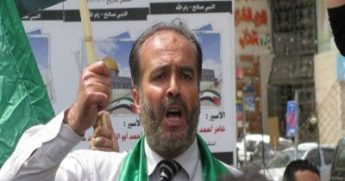 They searched the houses thoroughly, wreaked havoc on them, and confiscated his son’s car.
The forces also confiscated the contents of his son’s electronic devices shop as well as appliances inside the homes.
The Israeli forces stormed the house after midnight by blowing up its main door, Abu al-Haija’s son said.
They gathered the family members in one room and interrogated all of them.
Clashes erupted after the storming of Abu al-Haija’s home in Jenin city and in its refugee camp.
Arrests also took place in al-Khalil, Ramallah and other locations in Jenin city after the storming of Palestinians’ homes and confiscation of computers and other property of the arrested.
Featured Video

Seyed M. Marandi: US-Iran War Inevitable: Kuwait and Bahrain May Fall
or go to
Aletho News Archives – Video-Images
From the Archives
Oil and the Israel Lobby
Reknowned economist M. Shahid Alam offers this excellent critique of Noam Chomsky’s defective analysis of the relative influence of Oil versus the Israel lobby over US foreign policy: … continue
Blog Roll
 Aletho News
- ICC ignored ‘very well-documented’ NATO crimes – ex-Libyan minister
- SNSC secretary dismisses US response to Iran’s conditions as ‘inadequate’
- Sanaa says Taiz roads open, secure for residents, warns Saudi forces
- Iraqi resistance group urges Saudi leadership to admit defeat, lift Yemen siege
- Trump’s Retreat: How Al-Aqsa Flood Took Down the US Empire
- Israel’s Military Actions in Lebanon Grossly Violate International Law — Lavrov
- Seyed M. Marandi: US-Iran War Inevitable: Kuwait and Bahrain May Fall
- Leaders Condemn Ansarallah Attack on Saudi Arabia While Ignoring Illegal War Against Yemen
- Leaked: Britain’s Covert Iraqi Psyops Network
- Yemeni Armed Forces Warn Airlines Against Using Saudi Airports, Exempt Mecca and Medina
- If Americans Knew
- Israel’s Destruction of Southern Lebanon Intensified After the Cease-Fire
- The Last-Minute Decision That Gave Israel Its Name
- The American Conservative: How Trump Made the World Go Nuclear
- Meet the US generals and admirals advancing Israeli policy
- Opinion: Why news organizations should boycott Israel
- The Israeli witch hunt of Sami Abu Shehadeh exposes the lie of the ‘Jewish and democratic’ state
- No state has a ‘right’ to exist – least of all Israel
- Testimonies about Gaza’s civilian death toll expose Israel’s atrocities – Daily Update
- How Israel Conquered the Latin American Right
- Agents search Rep. Omar’s Washington home in criminal probe as she vows she won’t ‘be silenced’
- No Tricks Zone
- Germany’s Green Energy Debacle: High Energy Costs Force Kahla Porzellan to Close After 182 Years!
- New Study: 50 Years Of The Most Aggressive ‘Net Zero’ Policies Can Only Affect The Global Climate By 0.03°C
- US September “Heat” Was No Record…Many Records Set Decades Ago
- Latest European Green Energy Debacle; Portugal’s Largest Flagship Solar Park Insolvent!
- Green Energy Debacle: German Expert Professor Fritz Vahrenholt Warns Of Severe Economic And Social Consequences
- Two More Paleo Reconstructions Affirm Meters-Higher Sea Levels Across Ireland, Brazil 7000-6000 Years Ago
- New Study: Earth And Venus Surface Warmth Largely Explained By Convection And Lapse Rate, Not CO2 Or Radiation
- 2025 Nature Paper Claiming Worsening Global Drought Gets RETRACTED …Heavily Flawed
- New Study: ‘Global Drought Shows No Detectable Recent Acceleration Under Climate Warming’
- Economic Masterminds: German Socialists Suggest Taxing Productivity Gains Stemming From Using AI

