Lieberman accepts post as minister of military affairs: Sources
Press TV – May 19, 2016
Hardline Israeli politician Avigdor Lieberman has reportedly accepted an offer by embattled Prime Minister Benjamin Netanyahu to be the minister of military affairs.
Israeli sources said Lieberman accepted the post after Netanyahu agreed to his demands during a Wednesday afternoon meeting that lasted less than an hour.
The decision came after Netanyahu summoned current minister of military affairs Moshe Ya’alon and reportedly upbraided him for supporting an analogy between Israel’s situation and Nazi Germany.
Lieberman, who heads the far-right Yisrael Beiteinu party and previously served twice as foreign minister, convened a press conference earlier in the day to talk about his demands.
Among his priorities was introducing the death penalty for the Palestinians who are accused of carrying out attacks against Israelis.
“If it is true that we are being offered the defense portfolio, pension reforms and the death penalty bill, that is a respectful offer, it is serious, there is what to talk about,” Lieberman said.
“The offers must be official and on the table, without mediators and with full transparency. The prime minister has my phone number,” he added.
Lieberman has on many occasions drawn headlines by questioning the loyalty of Arab minorities in the Israeli-occupied Palestinian lands to the Tel Aviv regime.
He has also called on the Israeli regime to treat Palestinian resistance movement Hamas the same way as the United States treated “the Japanese in World War II.”
The notorious politician has also openly supported a soldier charged with murder for shooting dead an injured Palestinian.
Netanyahu’s ruling coalition has a shaky majority of one in the 120-member Israeli Knesset, making his administration vulnerable to any falling-out among his political allies.
His offer to far-right Lieberman has been interpreted as an attempt to add Yisrael Beitenu party, which has six Knesset seats, to the ruling coalition.
Ya’alon has been at loggerheads with Netanyahu ever since he said senior military officers should “speak their mind,” in apparent defense of earlier comments by Deputy Chief of Staff Major General Yair Golan.
Golan had stirred an uproar earlier this month by saying he was concerned by some of the extremist voices within the Israeli reigme, likening it to Germany under Nazi rule.
Golan, then the commander of the West Bank military division, purportedly said, “It is unimaginable that in an effort to ensure our soldiers’ safety, we can destroy whole apartment buildings.”
“Killing women, children, uninvolved civilians. Unacceptable. The use of force in civilian areas must always be kept under control, and restricted to the minimum necessary,” he was heard saying.
He was apparently referring to the Israeli practice of demolishing the houses of Palestinians suspected of involvement in attacks against Israelis. The destruction of the houses just displaces the families, including women and children, who live there and who have no links to the alleged attacks.
Following Golan’s remarks, Netanyahu’s office issued a statement, saying he “remains firm in his conviction that the comparison that was made to Nazi Germany was inappropriate and damaged Israel in the international arena.”
Netanyahu summoned Ya’alon late on Sunday, reportedly to reprimand him for his remarks in defense of Golan.
Meanwhile, Israeli forces have reportedly adopted a “shoot-to-kill” policy during clashes with Palestinians.
More than 200 Palestinians have been killed since last October, during heightened tensions over Israel’s move to deny Palestinians entry into the al-Aqsa Mosque.
Dozens died by a single shot to the head or chest, a clear indication of the shoot-to-kill policy.
The official brutalities against Palestinians, including the demolitions, have also emboldened extremist Israeli settlers to conduct attacks of their own against Palestinian families. One arson attack by Israeli extremists against a Palestinian house in August 2015 led to the killing of the entire family living there, including an 18-month-old boy.
In another testimony to the Israeli policy of allowing killings, a court ruled on Tuesday to have the chief arsonist in the August 2015 attack released.
28 Palestinian young women arrested over Facebook
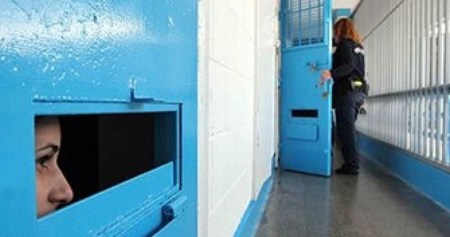
Ma’an – May 19, 2016
JERUSALEM – At least 28 Palestinian women have been detained by Israel since October over alleged “incitement” on social media, with six of them still in prison, the Palestinian Prisoners’ Center for Studies (PPCS) said in a statement released on Wednesday.
PPCS spokesman Riyad al-Ashqar said that most of the women had been released hours or days after they were first detained, but that eight had been held in administrative detention — internment without trial or charges.
Al-Ashqar identified the six women still held over alleged social media incitement as Suad Abed al-Karim Irzeiqat, 28, from the city of Hebron; Dunia Ali Musleh, 19, from the town of Bethlehem; Sanaa Nayif Abbad from the town of Dura; Hanin Abd al-Qader Amr, 39, from the city of Tulkarem; Majd Yousif Atwan, 23, from the village of al-Khader; and Samah Dweik, 25, from occupied East Jerusalem.
Dweik, a journalist working for Shabakat al-Quds (The Jerusalem Network), was detained on April 10 in her home in the occupied East Jerusalem neighborhood of Ras al-Amud after writing a Facebook status and sharing an image in support of Palestinians recently killed by Israeli forces.
Meanwhile, Atwan was sentenced by an Israeli court earlier this month to 45 days in prison and a 3,000 shekel ($794) fine over charges of incitement on her Facebook account.
In recent months, Israel has detained scores of Palestinians for social media activity, alleging that a wave of unrest that swept the occupied Palestinian territory last October was encouraged largely by “incitement.”
Palestinians have instead pointed chiefly to the frustration and despair brought on by Israel’s nearly 50-year military occupation of the Palestinian territory and the absence of a political horizon.
Al-Ashqar claimed that Israel was detaining Palestinian women under different pretexts to discourage and prevent them from taking part in resistance against the Israeli occupation, as well as to exert pressure on relatives also detained by Israeli forces.
More than 200 Palestinians and almost 30 Israelis have been killed since October, although the number of Palestinian and Israeli deaths saw a dramatic drop over the last two months, with Israeli leadership suggesting its severe security measures were responsible for the emerging trend.
However, the Palestinian Center for Policy and Survey Research found in a poll last month that support for stabbing attacks had seen a decline in the West Bank in recent months — “due, it seems, to a rising perception in its inefficacy.”
According to prisoners’ organization Addameer, 7,000 Palestinians are detained in Israeli custody.
Chicago police officer threatened baby with Taser shock – lawsuit
RT | May 18, 2016
A federal lawsuit claims that a Chicago police officer threatened to use a Taser on a man who was holding a baby boy in his arms, and warned him that the one-year-old would feel the electricity.
The lawsuit, filed Tuesday, claims that the entire incident was caught by a security camera, and it names the city and several police officers as defendants, the Chicago Sun-Times reported.
Cesar Carrizales said that during the October incident, he was approached by officers in an alleyway near his garage, who then demanded that he put his son down on a filthy alleyway. He told the officers that the mother of the son, Theresa Cmiel, would take his child.
At this point, the lawsuit claims, an officer “began to violently assault” Carrizales and tried to pry the boy from his father’s arms. The infant then “screamed in a way that Mr. Carrizales and his mother had never heard before.” Officers then slammed Carrizales onto the hood of a police cruiser while he held his infant son, pinning the child underneath him, the lawsuit says.
The filing indicates that Carrizales was confronted by police over a neighbor’s complaint about damaging a fence on the property line and threatening the neighbor. The lawsuit said that even if these allegations are true, they “amounted to minor misdemeanor charges.”
Carrizales pleaded guilty to a misdemeanor of resisting arrest. He was originally charged with aggravated battery against a police officer, but the charge was later dismissed.
Chicago Police Department did not immediately respond to RT’s request for comment.
Read more:
Family seeks justice after police in Georgia taser son to death, then ‘high five’
‘Make It Look Like It’s ISIS’: A Fake Bomb, a Would-Be Terrorist, and an FBI Sting in Miami
By Benjamin Gilbert | Vice News | May 17, 2016
The FBI says it caught a terrorist trying to blow up a synagogue on the outskirts of Miami.
But the FBI supplied the bomb.
The device was fake, part of an undercover FBI sting operation that, like hundreds of controversial investigations before it, used an undercover informant to target an alleged terrorist.
In the Miami case, federal authorities accuse 40-year-old James Medina of planning to bomb the Aventura Turnberry Jewish Center north of the city.
The FBI started their investigation of Medina in March 2015 “based on his suspected desire to attack” the Jewish center, according to an affidavit filed in federal court and a statement released by the US Attorney’s Office in the Southern District of Florida.
Medina, who said he converted to Islam four years ago and referred to his alias “James Muhammad” in court, has been charged with “attempted use of a weapon of mass destruction.” He pleaded not guilty on Monday morning.
Apart from the fact that the FBI supplied Medina with the weapon that he intended to use against the Jewish center, rights activists and legal experts are troubled by the facts presented by the FBI and Justice Department. Their concern includes instances where the informant, or “confidential human source” in bureau parlance, offered to assist Medina in attacking the center, and even suggested that he link the attack to the Islamic State.
The FBI’s affidavit — which reveals only enough information to justify the criminal complaint against Medina, and does not include all of the evidence against him — says that an informant met with Medina in March and secretly recorded conversations with him after he expressed a desire to attack the Jewish center.
But the affidavit does not say how the FBI learned of Medina’s “suspected desire” to attack the Jewish center, or what initial remarks or actions led agents to believe that Medina was willing to use violence before he devised his plans with the informant.
David Shapiro, a former New Jersey prosecutor and FBI special agent who is now a professor at the John Jay College of Criminal Justice in New York, said the affidavit makes it appear that the FBI did more than a little pushing to get Medina to develop the synagogue bombing plan.
“It seems this desire was developed,” he said. “It was watered with very potent fertilizer.”
The affidavit lays out how the FBI informant took an active part in helping Medina cook up the bombing plot. It recounts how the informant drove Medina to the Jewish center and suggested that he launch the attack on a Jewish holiday.
When the two later discussed a claim of responsibility, the affidavit says that the informant “indicated that they should leave a ‘clue’ as to who was responsible and Medina concurred.” It’s the informant, rather than Medina, who suggests linking the bombing to the Islamic State, also known as ISIS, or the East African al-Qaeda affiliate al-Shabaab.
“You can, you can do all that,” the affidavit quotes Medina as saying. “Yeah, we can print up or something and make it look like it’s ISIS here in America. Just like that.”
The informant later suggested that Medina could use “untraceable” firearms instead of AK-47s that an acquaintance of Medina’s said he could provide. At another meeting, the informant “addressed the concerns of entering the synagogue with firearms and then getting shot and instead proposed leaving an unspecified object behind and leaving the scene.” The informant suggested that Medina could use a bomb with a timer, and then introduced Medina to a man described as having “explosives expertise and access.” The bomb expert was really an undercover FBI agent.
Medina didn’t do himself any favors by repeatedly telling both the FBI informant and undercover agent that he was willing to leave the bomb at the synagogue, then escape with the informant and watch as they remotely detonated it. He also repeatedly assured the undercover agent that he was willing to go forward with the plot, according to the affidavit.
When asked why, Medina answers, “Because I realize that I have a lot of love for Allah. And I know that all these, all these wars that are going on, it hurts me, too. You know? It’s my call of duty. I gotta get back, when I’m doing this, I feel that I’m doing it for a good cause for Allah.”
In a subsequent conversation, the agent asked Medina if he was okay with killing women and children. Medina appeared to say yes, but he also seemed hesitant.
Medina: I think so. I think I’m fine, Urn hmm.
Agent: You need to be sure brother.
Medina: I am pretty sure. I think so. I believe so. I’m ready bro!
Agent: Ok. Cause you know you don’t have to do any of this.
Medina: What do you mean doing it?
Agent: No, you don’t have to do it if you’re not comfortable with it.
Medina: What? I’m ready.
Agent: It’s Allah’s will but you know…
Medina: I’m up for it. I really am. This is no joke. This is serious dog. If I have the equipment, believe me, in the time is, is that day and we doin’ it, I’m up for it bro. Just like I said.
The FBI says Medina and the undercover agent decided to bomb the synagogue on Friday, April 29. Medina made three videos on the informant’s phone: One as a goodbye to his family in case he was killed, and the other two to explain why he conducted the attack.
“I am a Muslim and I don’t like what is going on in this world. I’m going to handle business here in America. Aventura, watch your back. ISIS is in the house,” he said in one video. In another, he said, “Today is gonna be a day where Muslims attack America. I’m going to set a bomb in Aventura.”
On the appointed day, the agent met with Medina, gave him the fake bomb, instructed him how to use it, and then drove him to the synagogue. Medina exited the vehicle and began to walk toward the synagogue, at which point the authorities arrested him.
The US government has convicted more than 200 people on terrorism-related charges using similar methods, according to Trevor Aaronson, executive director of the Florida Center for Investigative Reporting and author of The FBI’s Manufactured War on Terrorism. He said that the FBI “isn’t finding people with a bomb in their garage. They’re finding people who are loudmouths and they say, “Oh, we can help you in the name of al-Qaeda or the Islamic State.”
“These are sting operations where the FBI provides the means and opportunities for people to commit crimes,” Aaronson said. “And the most disturbing part is that most of these people seem to be mentally ill and do not have connections to overseas terrorists on their own.”
Medina fits this profile. The 40-year-old is divorced, single, and unemployed. He was arrested previously for behavior consistent with mental illness, including sending more than 50 text messages, some threatening violence, to his estranged family and then telling a cop about it.
Karen J. Greenberg, director of the Center on National Security at Fordham Law School, said the quoted conversations in the affidavit that are supposed to damn Medina instead make it look like he can “barely seem to string a sentence together.”
And while it appears to be clear that Medina is a bigot who harbors anti-Jewish feelings, neither of those two things is illegal. Of course, plotting to blow up a synagogue is illegal. Retired FBI counterterrorism executive David Gomez says the FBI’s investigative techniques were legitimate, even if Medina does have mental or cognitive issues.
“Just because you’re dumb doesn’t mean you’re not dangerous,” he said. “Just because you have some mental incapacitation doesn’t mean you’re not capable of murder.”
Gomez said he’s seen other cases where lonely, fringe suspects join gangs or right-wing extremist groups to gain approval, and then peer pressure or other factors leads them to commit violent acts. In cases such as Medina’s, he argued, the FBI is just getting to these suspects before other malicious actors.
“Let’s say we didn’t get a source on this person, and somebody else talks to them and says, ‘Wanna blow up some Jews?’ It doesn’t matter if you blow them up for the KKK or ISIS. Some guy says, ‘I’ll drive you there,’ and there are plenty of people out there who would do that,” Gomez said. “The FBI and others are worried about a guy who gets in with the wrong crowd.”
Greenberg questioned where the rationale for this type of investigation ends.
“If you want to look for individuals who are susceptible to some kind of inducement to violence, and who have to be told whose name the violence is in, there are countless people and countless extremist groups you could identify them with,” she said.
Gomez said that the FBI’s informants and undercover agents set up the suspect for the “next proactive move,” but don’t make them take it.
“At some point he has to have an overt act,” he said — such as taking what he thinks is a bomb onto the grounds of a synagogue with the intent to detonate it.
Under the law, this act essentially closes the door to an entrapment defense.
“Those are hard to assert in this situation,” said Hugh Handeyside, a staff attorney with the American Civil Liberties Union’s National Security Project. “That’s the situation that the FBI and DOJ are taking advantage of.”
According to Greenberg, the FBI has been using these types of investigations to send a message: “If someone approaches you and asks you if want help with a terrorist attack, you’re supposed to say no.”
Gomez notes that since 9/11, the bureau has been tasked with preventing another terrorist attack on US soil.
“The attitude is, do what you have to legally do to prevent a Paris-style attack in the US,” he said, “and I think there are a lot of prosecutors out there who would say, ‘I would rather prosecute a case and take the chance on losing on technicality or jury nullification than take a chance to not prosecute on terrorism charges.”
But most terrorism cases do not go to trial, meaning prosecutors rarely lose. Most defense lawyers encourage their clients to enter into a plea agreement in order to avoid a lengthy prison sentence.
“The threat of long-term incarceration compels people to cut their losses,” said Michael German, a former FBI agent who worked on undercover domestic terrorism investigations. “Part of reason they’re encouraged to cut losses is that when these cases go to trial, despite the judges expressing concerns about FBI methodology, the political and social climate is such that fear actually compels them to not acquit people based on entrapment or other government misconduct.”
The FBI declined to comment on the Medina case or other counterterrorism investigations like it, but said in a statement that there are “strict guidelines governing the use of undercover operations which involve extensive legal reviews and senior-level approvals.”
The bureau’s director, James B. Comey, told Congress in February that “preventing terrorist attacks remains the FBI’s top priority” as he requested more than $9 billion to fund the bureau’s operations in 2017.
Nearly half of the FBI’s 2016 budget was committed to “counterterrorism and counterintelligence” operations, along with more than 13,000 members of the bureau’s 35,000 employees.
According to German, the funding means the FBI is under pressure to show Congress that it’s using its resources to stop terror attacks.
“Is there actually a threat being resolved, or is the FBI manufacturing these terrorism cases to make its counterterrorism efforts look worthwhile?” he asked. “Knowing that there are real threats out there, are they wasting resources when the people they’re targeting don’t present an immediate threat?”
Handeyside said counterterrorism cases like Medina’s are not only a waste of resources, they might actually be making America less safe.
“It’s not only that they’re manufacturing terror plots, but also sowing fear and distrust within minority communities in ways that I think are damaging to counterterrorism efforts,” he said. “So there are not only constitutional issues, but also effectiveness issues.”
Follow Benjamin Gilbert on Twitter: @benrgilbert
Related: The FBI Suspected an Army Vet Was Plotting Attacks in the US — So They Gave Him Guns
Disabled inmate who stole $5 in snacks ‘starved to death’ in Virginia prison – lawsuit
RT | May 17, 2016
A mentally disabled Virginia man accused of stealing $5 worth of snacks from a convenience store was often left in isolation, without water in his cell, and essentially starved to death, according to a lawsuit from his family.
Twenty-four-year-old Jamycheal Mitchell was arrested in Portsmouth, Virginia in April 2015 for stealing a bottle of soda, a candy bar and a snack cake worth $5.05. After he was taken to jail and ruled unfit to stand trial – Mitchell suffered from bipolar disorder and schizophrenia, and was described in school records as mildly “mentally retarded” – he nevertheless remained in jail for four months instead of being transferred to a hospital.
In August 2015, Mitchell was found dead in his cell, having lost 40-50 pounds. A medical examiner found that he was “nearly cachectic,” meaning he had lost so much weight that the process couldn’t be reversed nutritionally.
“Their beloved Jamycheal, despite his struggles with mental illness, had been a vibrant young man who loved music and always made people laugh. In his place was a withered figure the family could hardly recognize,” reads the lawsuit recently filed by Mitchell’s aunt, Roxanne Adams.
According to the lawsuit, Mitchell was called “very psychotic – delusional” during a medical screening at Portsmouth City Jail after his arrest. Screeners also noted that his “thought process does not make sense.” When he was transferred to Hampton Roads Regional Jail (HRRJ), another psychological evaluation stated Mitchell was manic and psychotic, and that he could not help a legal team prepare a defense for him in court.
“Mitchell’s thought processes were so confused that only snippets of his sentences could be understood, the rest were mumbled statements that made no rational sense,” the evaluation stated, according to the lawsuit.
Mitchell was ordered to be transferred to Eastern State Hospital for treatment to restore his competency. However, he was never moved and remained at Hampton Roads jail until his death on August 19. Officials said there were no hospital beds available, but an investigation by the Office of the State Inspector General showed that between the time the transfer order was issued and the time Mitchell died – about three months – “there was only one day when all beds were full.”
The report found that the transfer order was faxed to the hospital more than two months after it was issued. Instead of processing it, though, the admissions coordinator placed it in her desk drawer and took no further action. According to a report from WKTR, the order wouldn’t be seen again until five days after Mitchell died.
Meanwhile, Mitchell is alleged to have suffered from a number of abuses at Hampton Roads jail. One inmate stated that he would only get one meal a day, or one meal every several days, the lawsuit alleges, and that Mitchell’s dramatic weight loss was “never adequately addressed” by authorities.
Officials at the prison said the weight loss was Mitchell’s own fault because he wouldn’t eat, the lawsuit claims, but inmates said Mitchell ate “ravenously” when he was given food.
By the time he died in August, the 6-foot, 3-inch Mitchell had dwindled from 185 pounds before prison to 144 pounds.
“He was unrecognizable,” his aunt Roxanne Adams told WKTR. “That’s how bad it was. He was unrecognizable.”
“I said this is not my nephew,” Adams said, recalling when she saw Mitchell’s body. “I asked them, ‘Are you sure you have the right person?’ I said this was not my nephew. [He was] probably 90 pounds and about 70 years old.”
In addition to allegations about lack of food, the lawsuit argues Mitchell was often locked alone in a two-inmate cell he was rarely ever allowed to leave. Inmates added that the air-conditioned jail was often cold and that officials “denied Mitchell clothing, a mattress, a sheet and blankets.” Just days before his death, Mitchell was given a bare mattress. Up until then, he was allegedly sleeping on a metal sheet and did not have shoes to walk on the cold cement floor.
Sanitary conditions in the cell were also highlighted by the lawsuit, which stated that officials cut off water inside of it. With no toilet water and a sealed door, Mitchell “was encapsulated in a cell that reeked from the stench of unflushed urine and feces.”
The lawsuit is seeking some $60 million in damages and fees, as well as a jury trial.
Dear Sony Music: It’s Not “Fee Use,” But “Fair Use”
By Mitch Stoltz | EFF | May 16, 2016
We’re pleased to report that Sony Music backtracked on its accusation of copyright infringement against the Hudson Valley Bluegrass Association, and HVBA’s educational video remains freely available to the public. But the music label’s response leads us to think that Sony’s misuse of copyright and of YouTube’s automated enforcement system will continue.
We wrote last week about how YouTube’s system, Content ID, incorrectly flagged HVBA’s own video as infringing. The video, an hour-long lecture on the history of bluegrass music, triggered the Content ID filters because it contained three clips of bluegrass recordings copyrighted by Sony, each around 30 seconds and surrounded by a discussion of the music and its historical relevance. That’s an obvious fair use under copyright law, one that any human reviewer with minimal training would recognize.
A fair use doesn’t require permission from the copyright holder, or a fee. It’s the sort of use that’s free to all. But when HVBA’s webmaster wrote to Sony Music and asked them to withdraw the Content ID match, the company responded by asking for a $500 “administrative fee” and detailed information about HVBA’s use of the song clips. Fortunately, HVBA’s webmaster knew her rights, and after some prodding—and a post by EFF—Sony Music agreed to withdraw its claim.
We’re glad Sony stopped trying to block or monetize HVBA’s video. But the company’s response is troubling all the same. A Sony executive emailed HVBA to say that the company “has decided to withdraw its objection to the use of its two sound recordings” and “will waive Sony Music’s administrat[ive] fee.” That sounds like Sony was simply acting out of courtesy, when in fact the company had no right to demand a fee, by any name, for an obvious fair use. Other YouTube users with less knowledge of the law may have been convinced to pay Sony $500 or more, and provide detailed information, for uses of the music that the law makes free to all.
As Congress and the Copyright Office review the law and examine the effectiveness of automated systems like Content ID, they should keep in mind that automated flagging or filtering combined with misleading statements about a company’s legal rights can lead to abuse. That’s another reason why YouTube-style automatic filtering should never be mandated by law, and why we need real penalties for false takedowns.
18 forbidden verses: German court bans most of Erdogan-mocking poem
RT | May 17, 2016
A court in Hamburg has issued a preliminary injunction banning 18 of the 24 verses in a German comedian’s satirical poem lampooning Turkish President Recep Tayyip Erdogan for being “abusive and defaming.”
The court order issued on Tuesday applies to the whole of Germany, Reuters reported.
“Through the poem’s reference to racist prejudice and religious slander as well as sexual habits, the verses in question go beyond what the petitioner [Erdogan] can be expected to tolerate,” the Hamburg court wrote.
The court said the decision was necessary to balance the right to artistic freedom and the personal rights of Turkey’s leader, but added that its ruling could be appealed.
Violating the decision could result in a fine of up to 250,000 euros ($282,000) or administrative detention of up to six months, Germany’s Spiegel Online reported.
Erdogan’s lawyer said he was content with the ruling, RIA Novosti reported, while the comedian’s defender stressed that the poem must be considered as a whole, claiming its verses had been taken out of context.
The poem, which was recited on German television by comedian Jan Boehmermann in late March, has become a bone of contention for Chancellor Angela Merkel, as well as European audiences and the media.
After Erdogan demanded that German authorities press charges against the comedian for allegedly insulting him as Turkish President, Merkel allowed her prosecutors to pursue the case against Boehmermann.
A separate complaint being dealt with in the western German city of Mainz is still being processed, with prosecutors saying it is as yet unclear when a decision is to be made on whether to go ahead with the case, according to Reuters.
READ MORE:
‘Turkish method of silencing criticism being exported to Europe’
‘Inconsistency & cowardice’: German activists decry Merkel’s collaboration with ‘despot Erdogan’
PLC member Abdel Jaber Fuqaha arrested by Israeli occupation forces in dawn raid

Samidoun Palestinian Prisoner Solidarity Network – May 17, 2016
Abdel Jaber Fuqaha, member of the Palestinian Legislative Council, was attacked and arrested by Israeli occupation forces on Tuesday, 15 May, after a dawn raid by occupation forces on his home. Fuqaha, 49, who has been arrested several times and has spent years in Israeli prison, most frequently under administrative detention without charge or trial, is a member of the Palestinian Legislative Council representing the Change and Reform Bloc, allied with Hamas.
After Fuqaha’s release in 2011 after 27 months of administrative detention, he was arrested again in 2012, and then again in June 2013. He was last released in April 2015. He has spent over six years in Israeli prison; he was beaten during his arrest and his home ransacked. He is one of seven members of the Palestinian Legislative Council currently imprisoned in Israeli jails, including prominent Palestinian leaders Ahmad Sa’adat, Marwan Barghouthi, Khalida Jarrar, and Hassan Yousef.
Israeli attacks mount on Palestinian fishers in Gaza

Samidoun Palestinian Prisoner Solidarity Network – May 17, 2016
Two more Palestinian fishers were attacked and detained off the coast of the Gaza Strip on Tuesday morning, 17 May, Ma’an News reported. Samih and Ibrahim Zayid were attacked by an Israeli gunboat while fishing, ordered off the boat, and detained; their boat was towed to the Ashdod port.
This comes after the detention and boat confiscation of 10 Palestinian fishers on Sunday, 15 May. Two of the fishers, Khamis Baker and Hasan Madi, remained imprisoned while the other eight were released. Two more fishing boats were confiscated on Sunday. Another fishing boat was damaged and submerged by the gunboat’s attack; the damaged boat was later recovered by Palestinian fishers. Dozens of shells were fired at the fishers and their boats; the fishers were ordered to take off their clothes, jump into the water, and swim toward the gunboats.
While Israeli authorities in April expanded the fishing zone designated for Palestinian fishermen to nine nautical miles in the southern Gaza Strip, and retained the six-mile zone in the north, fishermen regularly report detentions, live fire, and boat confiscation within these limits,” reported Ma’an.
According to the Palestinian Center for Human Rights, Israeli forces detained 71 fishermen and confiscated 22 fishing boats throughout 2015, and opened fire on Palestinian fishermen at least 139 times over the course of the year.
PCHR noted that it “considers that attack as a grave violation of the fishermen’s right to sail and fish freely and to protect their property in the Gaza waters. Moreover, PCHR believes that such attacks against Palestinian fishermen constitute a form of collective punishment against them which aims to target fishermen and their livelihood. Furthermore, PCHR calls upon the international community to provide protection for Palestinian fishermen and their right to sail and fish freely, and to stop all forms of collective punishment against fishermen and their property which violate the international humanitarian law and the international human rights law.”
The Union of Agricultural Work Committees, a Palestinian grassroots organization, works with fishers and farmers in Palestine to defend their land and seas and their right to farm and fish in the face of occupation attacks. Saad al-Deen Ziadah of UAWC said that “Most of these attacks and violations occurred within the allowed fishing area by Israeli navy forces. These arrests are generally carried out under very intense situations – the Israeli navy shooting bullets and shells at the fishermen and their boats. It has been recorded that the Israeli navy targets the outboard engine of the boats, which is the ‘soul of the boat’, as the fishers say.”
UAWC video on Palestinian fishers in Gaza:
FBI is Enrolling Church Leaders, Social Workers and Community Leaders to Spy on You
By Kristan T. Harris | American Intelligence Report | May 16, 2016
The FBI is expanding their operation and looking to enlist religious leaders, social workers, mental health professionals, and leaders in local communities in order to prevent terrorism, North Jersey’s The Record reports.
The plan is to establish a network of Shared Responsibility Committees (or SRCs) across America that would keep an eye out for potential rabble-rousers, a 4 page FBI letter acquired by the Intercept implies.
The document states “the primary goal of an SRC intervention is disengagement,” and the “FBI’s primary objectives in referring an individual to the SRC are to enable community partners to develop community-led multidisciplinary solutions and to build community resilience and foster greater community trust, while also fulfilling the FBI’s national security and public safety responsibilities.”
Some of these solutions decided by the committee may include “mentoring support, life skills, anger management, cognitive or behavioral therapies, constructive pursuits, education skills, career building and support, family support, health awareness, housing support, drug and alcohol awareness and treatment, engagement and exposure with perceived adversaries, and mental health care.”
Civil-liberties groups and Muslims are upset over the FBI’s connection to the committee, predicting that SRCs will become “government informants,” and that “private conversations could become part of criminal investigations.”
Law enforcement officials believe the organization is justified, claiming, “it targets not just Muslim extremists but also people influenced by U.S.-based extremist groups, and it seeks to help people before they turn to violence.”
How does the FBI intend to identify individuals who need rehabilitation? Local police forces across America are acquiring Real Time Crime Centers (RTCC) which use a “citizen ranking” system that compiles data from social media, smartphones and even pizza deliveries to compute your threat score.
The FBI has adopted a similar style of policing using a “$1 billion Next Generation Identification project, which is creating a trove of fingerprints, iris scans, data from facial recognition software and other sources that aid local departments in identifying suspects,” The Washington Post reports.
The FBI does not consider these community groups a form of “government spying,” since they may not see every incident. An FBI official interviewed by The Record stated, “I don’t think it’s spying by the government because some of this stuff may never arise to us.”
The FBI document claims that these committees will not be used “as a means to gather intelligence,” however, it also makes a few clear contradictions to this claim throughout the rest of the document.
For example, the letter explains, “the SRC can, but will not be required to, inform the FBI of an individual’s progress throughout the course of the program.” So what happens to the information that is voluntarily given up? The FBI document forewarns that, “the FBI may share any information the SRC provides with other law enforcement agencies, members of the U.S. Intelligence Community, and foreign government agencies as needed.”
SRC members are required to “immediately notify the FBI of any civil, administrative, or criminal claim, complaint, discovery request, or other request for information of which the SRC member receives notice, concerning or arising from any FBI referral or otherwise relating to any FBI referral,” indulging the FBI with intelligence they’ve gathered.
“The community sees problems first. When the FBI sees it, it’s too late. If the community can be empowered to take over, it will save us time in the end [instead of] having to arrest people,” an FBI official told North Jersey‘s The Record. Justifying the pre-crime tactics by SRCs, the agent said, “We want to get to him when he’s 16 and not 20 and shooting up a place.”
Palestinian journalist jailed for 9 months for alleged Facebook “incitement”

Samidoun Palestinian Prisoner Solidarity Network – May 16, 2016
Palestinian journalist Sami al-Saee, an editor at Al-Fajer TV, was sentenced to 9 months in prison by an Israeli military court on Monday, 16 May, for alleged “incitement” by facebook postings. Al-Saee has been imprisoned since 9 March 2016 when his Tulkarem home was violently raided at 3:00 am while his mobile phone and computer were confiscated.

His detention was repeatedly extended without charge until the imposition of the Facebook “incitement” charges; he is sentenced to 9 months imprisonment and a 12-month suspended sentence for three years. Ghaith Ghaith of Jerusalem was also sentenced today to six months imprisonment over charges of Facebook “incitement.”
Over 150 Palestinians have been arrested and accused of “Facebook incitement” or sent to administrative detention over social media posts
including 22-year-old Palestinian beautician Majd Atwan and poet Dareen Tatour of Nazareth, who is facing imprisonment for posting her poetry on Facebook and Youtube. Palestinian professor Imad Barghouthi, held under administrative detention without charge or trial, is allegedly being imprisoned largely due to allegations over Facebook postings, claim the Israeli military.
Samah Dweik, another Palestinian journalist accused of “incitement” for Facebook postings, was to face a military court also on Monday, 16 May, but the hearing in her case was postponed until at least 1 June. Dweik has been jailed since 10 April since an early-morning raid on her home in the Ras al-Amud neighborhood of Silwan.

Featured Video

Seyed M. Marandi: US-Iran War Inevitable: Kuwait and Bahrain May Fall
or go to
Aletho News Archives – Video-Images
From the Archives
Oil and the Israel Lobby
Reknowned economist M. Shahid Alam offers this excellent critique of Noam Chomsky’s defective analysis of the relative influence of Oil versus the Israel lobby over US foreign policy: … continue
Blog Roll
 Aletho News
- ICC ignored ‘very well-documented’ NATO crimes – ex-Libyan minister
- SNSC secretary dismisses US response to Iran’s conditions as ‘inadequate’
- Sanaa says Taiz roads open, secure for residents, warns Saudi forces
- Iraqi resistance group urges Saudi leadership to admit defeat, lift Yemen siege
- Trump’s Retreat: How Al-Aqsa Flood Took Down the US Empire
- Israel’s Military Actions in Lebanon Grossly Violate International Law — Lavrov
- Seyed M. Marandi: US-Iran War Inevitable: Kuwait and Bahrain May Fall
- Leaders Condemn Ansarallah Attack on Saudi Arabia While Ignoring Illegal War Against Yemen
- Leaked: Britain’s Covert Iraqi Psyops Network
- Yemeni Armed Forces Warn Airlines Against Using Saudi Airports, Exempt Mecca and Medina
- If Americans Knew
- After Oct 7, IDF policy allowed civilian casualties for even the lowest-ranking targets
- Israel’s Destruction of Southern Lebanon Intensified After the Cease-Fire
- The Last-Minute Decision That Gave Israel Its Name
- The American Conservative: How Trump Made the World Go Nuclear
- Meet the US generals and admirals advancing Israeli policy
- Opinion: Why news organizations should boycott Israel
- The Israeli witch hunt of Sami Abu Shehadeh exposes the lie of the ‘Jewish and democratic’ state
- No state has a ‘right’ to exist – least of all Israel
- Testimonies about Gaza’s civilian death toll expose Israel’s atrocities – Daily Update
- How Israel Conquered the Latin American Right
- No Tricks Zone
- New Study Suggests Large Regions Of The Pacific Ocean Have Been Cooling For The Last 80 Years
- Germany’s Green Energy Debacle: High Energy Costs Force Kahla Porzellan to Close After 182 Years!
- New Study: 50 Years Of The Most Aggressive ‘Net Zero’ Policies Can Only Affect The Global Climate By 0.03°C
- US September “Heat” Was No Record…Many Records Set Decades Ago
- Latest European Green Energy Debacle; Portugal’s Largest Flagship Solar Park Insolvent!
- Green Energy Debacle: German Expert Professor Fritz Vahrenholt Warns Of Severe Economic And Social Consequences
- Two More Paleo Reconstructions Affirm Meters-Higher Sea Levels Across Ireland, Brazil 7000-6000 Years Ago
- New Study: Earth And Venus Surface Warmth Largely Explained By Convection And Lapse Rate, Not CO2 Or Radiation
- 2025 Nature Paper Claiming Worsening Global Drought Gets RETRACTED …Heavily Flawed
- New Study: ‘Global Drought Shows No Detectable Recent Acceleration Under Climate Warming’

