The manufactured “anti-semitism crisis” in the British Labour party rumbles on into new realms of ideological insanity. The witch-hunt against commentary critical of Israel or Zionism has been in full flow, and now an internal party inquiry led by Jan Royall has reached its conclusions.
Note that in this report by the Guardian newspaper, it appears to be a given both by Royall and the Guardian that Ken Livingstone and the others suspended from the party are guilty of anti-semitism rather than anti-Zionism. I have challenged that assumption in previous posts, such as here and here. I am therefore going to put quotation marks around the word “anti-semitism”, at least as used by Royall, because it is far from clear to me that most of those under investigation have said things that are anti-semitic.
Royall’s first conclusion is that there should be no “statute of limitations” on “anti-semitism.” That’s a green light for every right-winger and Blairite to go trawling through Labour party members’ back catalogue of social media posts in search of anti-Zionist or anti-Israel utterances. Here’s a simple piece of advice to John Mann and the Blairite brigade: if you want to simplify your task, examine postings from winter 2008 and summer 2014, when Israel was killing hundreds of children in Gaza. I suspect you’ll find the “anti-semitism” you’re looking for in those periods.
Royal also suggests that there may be a need for “more rigorous vetting procedures for national and local government candidates.” So the Blairites will be further encouraged to trawl through candidates’ social media postings on Israel in the knowledge that they can thereby ensure only people like themselves get to stand for election.
Another of Royall’s conclusions is that a membership ban for “anti-semitism” should not be for life if there is “demonstrable” change by the offender. Re-education camps, anyone?
So members may be allowed back into the Labour party if they can show that over a sustained period of time they have disavowed their criticisms of Israel. Presumably, to reassure the party that they are not likely to slip back into their former bad ways of thinking, they will need to enthusiastically embrace Zionism and support an ethnic Jewish state that oppresses Palestinians in the occupied territories and systematically discriminates against the fifth of its citizens who are Palestinian.
In other words, these measures will have the practical effect of ensuring that the party is reserved for those of a Blairite persuasion.
There are other disturbing conclusions reached by Royall. She is apparently recommending that an imminent external inquiry she will also sit on consider whether members should qualify for investigation simply because “the victim or any other person” has “perceived” a comment to be anti-semitic. In short, every Netanyahu-loving Zionist may soon be guaranteed the chance to force the suspension of any Labour member who offends them by criticising Israel.
Royall suggests that the coming inquiry consider “swifter action to deal with antisemitism”, which is surprising given that the current suspensions have all been implemented summarily.
And she prefers “a review of how online debate is conducted to make it welcoming and productive.” In other words, Labour members will be expected not to criticise Israel or Zionism in case it puts off hardcore Israel supporters.
It is not hard to see where all this is leading, and was designed to lead by the Blairite faction trying to engineer a coup against leader Jeremy Corbyn. Polls show that Corbyn’s support has actually grown over the past year among ordinary members, despite the endless character assassination against him.
So the Blairites who dominate the Labour parliamentary caucus are simply re-engineering the party more to their liking: terrify into submission a new generation of candidates who have been inspired by Corbyn to enter politics, and through a war of attrition demoralise the hundreds of thousands of new members who joined the party, in the hope they will leave.
This is self-sabotage on a vast scale. The Blairites (and their cheerleaders in liberal media like the Guardian ) would prefer to destroy the party than help Corbyn and his supporters mount a credible challenge to the Conservative government. And that insight tells you all you need to know about the true ideological sympathies of the Blairites, who were so ready to cosy up to the corporations and the Murdoch media.
The latest thematic report by the Inter-American Commission on Human Rights (IACHR) concerning Colombia makes for shocking though quite important reading. In short, it details human rights abuses on a massive scale, and lays the blame for these abuses chiefly upon the right-wing paramilitaries aligned with the Colombian State. Citing Colombia’s Center for Historical Memory, the IACHR concludes that Colombia, with its over 6 million internally displaced persons, is indeed “a displaced nation.”
Exhibit at Center for Historical Memory, Showing Personal Effects of “False Positive” Victim
As the IACHR explains, the paramilitaries were responsible for 72% of the attacks recorded in the first half of 2015. Incredibly, the Colombian State, along with its U.S. sponsor, insist that the paramilitaries (also known as Autodefensas) no longer exist as a result of a demobilization (largely faked) back in 2003-2006. And, it is this very denial, the IACHR points out, which allows the paramilitaries to carry out their reign of terror with near complete impunity. After all, the State will not dismantle or prosecute what it claims does not even exist.
As explained in the report, “during 2015 the IACHR has continued receiving information about actions of the illegal armed groups that emerged after the demobilization and which are identified as being related or having among their members, persons that belonged to paramilitary groups who, in many cases allegedly continue acting under the protection of State agents.”
The misdeeds the paramilitaries are carrying out under State protection include disappearances, of which there were an incredible 3,400 during the first 7 months of 2015 alone. In all, the IACHR reports that there have been a total of between 45,000 and 61,918 forced disappearances in Colombia in the past 30 years. Thus, there have potentially been more than three times the disappearances in Colombia than in Argentina during all of the Dirty War years. And, of course, with such disappearances come mass graves, of which Colombia has many – 4,519 of them to be exact, with 5,817 bodies exhumed from them so far.
Meanwhile, the IACHR reported on the fact that at least 5,736 individuals were the victims of extrajudicial executions by the Colombian State forces between 2000 and 2010 – that, is during the period of the U.S.’s major military support for Colombia known as Plan Colombia. Nearly all of these executions were “false positive” killings in which the Colombian military murdered innocent civilians – many of them young, unemployed men – and then dressed them up as guerillas to justify to the U.S. the military assistance the Colombian military was receiving for counter-insurgency purposes. And, while the rate of such killings has decreased since 2010, they nonetheless continue, with 230 reported cases since then.
To the extent Colombia is covered at all in the mainstream press these days, one rarely gets a glimpse into the horror show which is taking place in that country. And, casual visitors to places such as Bogota or Medellin would rarely get a glimpse of this either. This is so because the lion’s share of the violence described above is taking place in the more remote areas where Colombia’s Afro-Colombian and indigenous communities live, and it is these communities which are suffering the brunt of this violence.
As the IACHR explains, these communities are largely “invisible” in Colombian society, “are victims of racial discrimination and disproportionately affected by violence, forced displacement, poverty and social exclusion.” In addition, “the majority of victims of sexual violence in armed conflict are Afro-descendant and indigenous women.” And, impunity for sexual violence in Colombia is near total “given that sexual violence against women would be perpetrated mainly by paramilitary, but also by agents of the government . . . .”
As for the issue of poverty, these communities are suffering from some of the most extreme versions of it, and live in conditions of misery which residents in the major cities are often shielded from. For example, in Choco – a town nestled in between the Pacific and Caribbean coasts and populated by mostly Afro-Colombian and indigenous – the infant mortality rate is 42.69 per 1000. This figure is higher than that of post-invasion Iraq, and nearly as high as that in such countries as Burma, Bangladesh, Namibia and Haiti. Meanwhile, in Bogota, the figure is 12.88 per 1000. These figures underscore the incredible inequities and disparity in wealth which make Colombia one of the most unequal societies on earth, with a very stark divide along racial and ethnic lines.
However, the violence against Afro-Colombians and indigenous is not just the product of racism, but is also the product of the unfettered capital penetration of their rich, ancestral land. As the IACHR points out, large scale megaprojects – many of them mining projects – “have led to the appropriation of Afro-Colombian’s collective territories, and have resulted in “brutal forced displacements, massive violence and selective assassinations.”
And, of course, many of these megaprojects are owned, in whole or in part, by North American companies to which the U.S.-Colombia Free Trade Agreement (FTA) has opened Colombia wide open.
An example of such a deadly megaproject detailed in the IACHR report is the port expansion of Buenaventura, a town which is 90% Afro-Colombian. This port expansion was carried out to facilitate the trade and tourism created by the FTA. And, the struggle of the paramilitaries to control the wealth generated by the port expansion has led to the forced disappearances of hundreds of Buenaventura residents “and the operation of ‘chop houses’ (casa de pique)” where people are chopped up alive.
Like the Colombian and U.S. governments denials of the existence of the paramilitary death squads, the very failure of our mainstream media to acknowledge or discuss the existence of the above-described crimes allows them to continue. Thus, the U.S. government is able to continue supporting the Colombian military, and by extension its paramilitary allies, and North American multi-nationals are able to keep violently exploiting the Colombian people and their land by virtue of the fact that we are kept in the dark about this reality by a press corps which is failing in its duty to report on such matters of public concern. It is only by breaking this silence around these crimes that we have any chance of stopping them.
Daniel Kovalik lives in Pittsburgh and teaches International Human Rights Law at the University of Pittsburgh School of Law.
Jerusalem, Occupied Palestine – The 14 members of Abu Sadam’s family remain homeless after their home was destroyed by the Israel Army in the early hours of Tuesday morning in the Hizbet area of Wadi Joz, Jerusalem.
The family are calling for solidarity and support and would welcome visitors to join them.
If you want to help please contact: palreports@gmail.com.
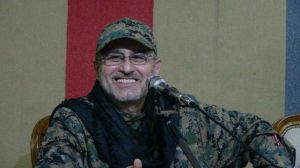
The leader of the Lebanese resistance movement Hezbollah, Seyyed Hassan Nasrallah, heaps praise on the movement’s military commander Mustafa Badreddine, who was killed in Syria last week, saying he was a front-runner in the fight against Israel.
“Badreddine played a key role alongside [his predecessor] Imad Mughniyeh… in the 2006 war against Israel before assuming several responsibilities including the dismantling of Israeli spy networks,” Nasrallah said in a televised speech on Friday.
Nasrallah was speaking to mark one week after Badreddine was killed.
He said Badreddine was tasked with overseeing Hezbollah’s security and military units in Syria since Takfiri militants initiated a war there in 2011.
Hezbollah fighters are combating alongside the Syrian government forces against a range of terrorist groups operating in the war-torn Arab country, including Daesh and the al-Qaeda-affiliated al-Nusra Front.
The Hezbollah leader said Badreddine was initially directing the Syria operation from Lebanon, but later “insisted” on traveling to Syria to oversee in person the sensitive operation.
Nasrallah said Hezbollah was against Badreddine’s presence in Syria as the group knew of the media controversy that would arise of his involvement in the war.
He noted that Badreddine’s presence in Syria helped Hezbollah prevent the fall of the country “into the hands of Takfiris and their American masters and spies in the region.”
The 55-year-old Hezbollah commander led Hezbollah’s military wing which is helping the Syrian government drive out foreign-backed Takfiri terrorists from Syria.
Badreddine also directed military operations against the Israeli invasion of Lebanon and was a frequent target of attempts by Tel Aviv, Washington and its allies to assassinate or capture him.
He was the cousin and brother-in-law of Imad Mughniyeh, who was assassinated by Israel in 2008.
He said Hezbollah has not entirely ruled out Israel of having a hand in Badreddine’s killing, but the group has not found any clues during the probe that could directly hint at Israel’s role.
Nasrallah denied speculations raised in some Arab media that Hezbollah did not assign blame on Israel for Badreddine’s killing because it wanted to escape responsibility for retaliation, saying throughout 34 years of confrontation with Israel, the regime in Tel Aviv has never doubted the genuineness of Hezbollah pledges for carrying out such retaliations.
“Our history is a proof that when we vow to retaliate we honor our pledges,” Nasrallah said, adding that Hezbollah would not stand on ceremony to openly blame Israel for perpetrating a crime when the evidence exists.
Nasrallah said Badreddine’s murder came at the hands of Takfiri groups and was orchestrated by those actively seeking to undermine the resistance front, including the United States.
He said, however, that the death of the commander would not lead to Hezbollah withdrawing from Syria. “Badreddine’s blood will push us to a bigger presence in Syria… We will remain in Syria and more leader will go into Syria,” Nasrallah said.
Else in his speech blasted Al-Saud’s calls for « democracy » in Syria and said:
The Saudi regime wants early parliamentary and presidential elections in Syria. But Saudi Arabia from its very inception as a nation-state until now has never had elections on its own soil. There is a ‘king’ and a ‘royal’ family and a dictatorship. Does anyone dare open his mouth against the regime in Saudi Arabia?! If someone dares to post two lines on Twitter, the ‘royal’ family goes crazy and sentences him to 1,000 lashes. What kind of Islam is this?! What sort of religion is this?! This is the ugliest form of hypocrisy!
Nasrallah continued, “This is not about freedom or democracy or elections or constituons! This is about the Syrian government not kneeling! This is about #Syria refusing to be a tool of American-Zionist hegemony. This is because Syria holds on to Resistance, refuses to betray Iran, defends Palestine, demands the return of the Golan Heights and maintains its sovereignty. This is because Syria is still a bastion of Arabism. Mark my words, if Bashar al-Assad was to say right now that he’d become a slave of the US-‘Israeli’ project, the war against Syria would be over tomorrow.”
Hizbollah Secretary Genral concluded his speech by saying: “I say to you with all confidence, throughout our 34 years, we have witnessed worse circumstances than what we’re dealing with today. And with our loyalty, steadfastness and commitment to the ongoing march on our path of Resistance, we shall overcome this new phase as well. In this battle, we are advancing and achieving victories. The Americans, the Zionists and Al-Saud said they’d gobble up #Syria five years ago, but yet Syria still stands today! This is because of the sacrifices of our martyrs. Indeed, Sayyed Mustafa’s blood and the blood of all our martyrs is the fuel which contributes to driving us to victory in this historic defense of the Ummah. Therefore our decision about continuing this fight is a simple one. I say to all of you who propagandized we’d leave Syria because of Sayyed Mustafa’s martyrdom – The martyrdom of any of our commanders has never made us leave any battle. Quite to the contrary, their martyrdoms will only make us increase our presence in Syria. We will be in Syria in greater numbers and different forms until victory. This is how we honor our martyrs and bring defeat to the US-Zionist-Takfiri-Saudi project. This project will fall; this project will be destroyed. I vow to you once more, Syria will never become the tool of our enemies and they will never get control of our region!”
Can’t you see the writing on the touchscreen? A techno-utopia is upon us. We’ve gone from smartphones at the turn of the twenty-first century to smart fridges and smart cars. The revolutionary changes to our everyday life will no doubt keep barreling along. By 2018, so predictsGartner, an information technology research and advisory company, more than three million employees will work for “robo-bosses” and soon enough we — or at least the wealthiest among us — will be shopping in fully automated supermarkets and sleeping in robotic hotels.
With all this techno-triumphalism permeating our digitally saturated world, it’s hardly surprising that law enforcement would look to technology — “smart policing,” anyone? — to help reestablish public trust after the 2014 death of Michael Brown in Ferguson, Missouri, and the long list of other unarmed black men killed by cops in Anytown, USA. The idea that technology has a decisive role to play in improving policing was, in fact, a central plank of President Obama’s policing reform task force.
In its report, released last May, the Task Force on 21st Century Policing emphasized the crucial role of technology in promoting better law enforcement, highlighting the use of police body cameras in creating greater openness. “Implementing new technologies,” it claimed, “can give police departments an opportunity to fully engage and educate communities in a dialogue about their expectations for transparency, accountability, and privacy.”
Indeed, the report emphasized ways in which the police could engage communities, work collaboratively, and practice transparency in the use of those new technologies. Perhaps it won’t shock you to learn, however, that the on-the-ground reality of twenty-first-century policing looks nothing like what the task force was promoting. Police departments nationwide have been adopting powerful new technologies that are remarkably capable of intruding on people’s privacy, and much of the time these are being deployed in secret, without public notice or discussion, let alone permission.
And while the task force’s report says all the right things, a little digging reveals that the feds not only aren’t putting the brakes on improper police use of technology, but are encouraging it — even subsidizing the misuse of the very technology the task force believes will keep cops honest. To put it bluntly, a techno-utopia isn’t remotely on the horizon, but its flipside may be.
Getting Stung and Not Even Knowing It
Shemar Taylor was charged with robbing a pizza delivery driver at gunpoint. The police got a warrant to search his home and arrested him after learning that the cell phone used to order the pizza was located in his house. How the police tracked down the location of that cell phone is what Taylor’s attorney wanted to know.
The Baltimore police detective called to the stand in Taylor’s trial was evasive. “There’s equipment we would use that I’m not going to discuss,” he said. When Judge Barry Williams ordered him to discuss it, he still refused, insisting that his department had signed a nondisclosure agreement with the FBI.
“You don’t have a nondisclosure agreement with the court,” replied the judge, threatening to hold the detective in contempt if he did not answer. And yet he refused again. In the end, rather than reveal the technology that had located Taylor’s cell phone to the court, prosecutors decided to withdraw the evidence, jeopardizing their case.
And don’t imagine that this courtroom scene was unique or even out of the ordinary these days. In fact, it was just one sign of a striking nationwide attempt to keep an invasive, constitutionally questionable technology from being scrutinized, whether by courts or communities.
The technology at issue is known as a “Stingray,” a brand name for what’s generically called a cell site simulator or IMSI catcher. By mimicking a cell phone tower, this device, developed for overseas battlefields, gets nearby cell phones to connect to it. It operates a bit like the children’s game Marco Polo. “Marco,” the cell-site simulator shouts out and every cell phone on that network in the vicinity replies, “Polo, and here’s my ID!”
Thanks to this call-and-response process, the Stingray knows both what cell phones are in the area and where they are. In other words, it gathers information not only about a specific suspect, but any bystanders in the area as well. While the police may indeed use this technology to pinpoint a suspect’s location, by casting such a wide net there is also the potential for many kinds of constitutional abuses — for instance, sweeping up the identities of every person attending a demonstration or a political meeting. Some Stingrays are capable of collecting not only cell phone ID numbers but also numbers those phones have dialed and even phone conversations. In other words, the Stingray is a technology that potentially opens the door for law enforcement to sweep up information that not so long ago wouldn’t have been available to them.
All of this raises the sorts of constitutional issues that might normally be settled through the courts and public debate… unless, of course, the technology is kept largely secret, which is exactly what’s been happening.
After the use of Stingrays was first reported in 2011, the American Civil Liberties Union (ACLU) and other activist groups attempted to find out more about how the technology was being used, only to quickly run into heavy resistance from police departments nationwide. Served with “open-records requests” under Freedom of Information Act-like state laws, they almost uniformly resisted disclosing information about the devices and their uses. In doing so, they regularly cited nondisclosure agreements they had signed with the Harris Corporation, maker of the Stingray, and with the FBI, prohibiting them from telling anyone (including other government outfits) about how — or even that — they use the devices.
Sometimes such evasiveness reaches near-comical levels. For example, police in the city of Sunrise, Florida, served with an open-records request, refused to confirm or deny that they had any Stingray records at all. Under cover of a controversial national security court ruling, the CIA and the NSA sometimes resort to just this evasive tactic (known as a “Glomar response“). The Sunrise Police Department, however, is not the CIA, and no provision in Florida law would allow it to take such a tack. When the ACLU pointed out that the department had already posted purchase records for Stingrays on its public website, it generously provided duplicate copies of those very documents and then tried to charge the ACLU $20,000 for additional records.
In a no-less-bizarre incident, the Sarasota Police Department was about to turn some Stingray records over to the ACLU in accordance with Florida’s open-records law, when the U.S. Marshals Service swooped in and seized the records first, claiming ownership because it had deputized one local officer. And excessive efforts at secrecy are not unique to Florida, as those charged with enforcing the law commit themselves to Stingray secrecy in a way that makes them lawbreakers.
And it’s not just the public that’s being denied information about the devices and their uses; so are judges. Often, the police get a judge’s sign-off for surveillance without even bothering to mention that they will be using a Stingray. In fact, officers regularly avoid describing the technology to judges, claiming that they simply can’t violate those FBI nondisclosure agreements.
More often than not, police use Stingrays without bothering to get a warrant, instead seeking a court order on a more permissive legal standard. This is part of the charm of a new technology for the authorities: nothing is settled on how to use it. Appellate judges in Tallahassee, Florida, for instance, revealed that local police had used the tool more than 200 times without a warrant. In Sacramento, California, police admitted in court that they had, in more than 500 investigations, used Stingrays without telling judges or prosecutors. That was “an estimated guess,” since they had no way of knowing the exact number because they had conveniently deleted records of Stingray use after passing evidence discovered by the devices on to detectives.
Much of this blanket of secrecy, spreading nationwide, has indeed been orchestrated by the FBI, which has required local departments eager for the hottest new technology around to sign those nondisclosure agreements. One agreement, unearthed in Oklahoma, explicitly instructs the local police to find “additional and independent investigative means” to corroborate Stingray evidence. In short, they are to cover up the use of Stingrays by pretending their information was obtained some other way — the sort of dangerous constitutional runaround that is known euphemistically in law enforcement circles as a “parallel construction.” Now that information about the widespread use of this new technology is coming out — as in the Shemar Taylor trial in Baltimore — judges are beginning to rule that Stingray use does indeed require a warrant. They are also insisting that police must accurately inform judges when they intend to use a Stingray and disclose its privacy implications.
Garbage In, Garbage Out
And it’s not just the Stingray that’s taking local police forces into new and unknown realms of constitutionally questionable but deeply seductive technology. Consider the hot new trend of “predictive policing.” Its products couldn’t be high-techier. They go by a variety of names like PredPol (yep, short for predictive policing) and HunchLab (and there’s nothing wrong with a hunch, is there?). What they all promise, however, is the same thing: supposedly bias-free policing built on the latest in computer software and capable of leveraging big data in ways that — so their salesmen will tell you — can coolly determine where crime is most likely to occur next.
Such technology holds out the promise of allowing law enforcement agencies to deploy their resources to areas that need them most without that nasty element of human prejudice getting involved. “Predictive methods allow police to work more proactively with limited resources,” reports the RAND Corporation. But the new software offers something just as potentially alluring as efficient policing — exactly what the president’s task force called for. According to market leader PredPol, its technology “provides officers an opportunity to interact with residents, aiding in relationship building and strengthening community ties.”
How idyllic! In post-Ferguson America, that’s a winning sales pitch for decision-makers in blue. Not so surprisingly, then, PredPol is now used by nearly 60 law enforcement agencies in the United States, and investment capital just keeps pouring into the company. In 2013, SF Weeklyreported that over 150 departments across the nation were already using predictive policing software, and those numbers can only have risen as the potential for cashing in on the craze has attracted tech heavy hitters like IBM, Microsoft, and Palantir, the co-creation of PayPal co-founder Peter Thiel.
Like the Stingray, the software for predictive policing is yet another spillover from the country’s distant wars. PredPol was, according to SF Weekly, initially designed for “tracking insurgents and forecasting casualties in Iraq,” and was financed by the Pentagon. One of the company’s advisors, Harsh Patel, used to work for In-Q-Tel, the CIA’s venture capital firm.
Civil libertarians and civil rights activists, however, are less than impressed with what’s being hailed as breakthrough police technology. We tend to view it instead as a set of potential new ways for the police to continue a long history of profiling and pre-convicting poor and minority youth. We also question whether the technology even performs as advertised. As we see it, the old saying “garbage in, garbage out” is likely to best describe how the new software will operate, or as the RAND Corporation puts it, “predictions are only as good as the underlying data used to make them.”
If, for instance, the software depends on historical crime data from a racially biased police force, then it’s just going to send a flood of officers into the very same neighborhoods they’ve always over-policed. And if that happens, of course, more personnel will find more crime — and presto, you have the potential for a perfect feedback loop of prejudice, arrests, and high-tech “success.” To understand what that means, keep in mind that, without a computer in sight, nearly four times as many blacks as whites are arrested for marijuana possession, even though usage among the two groups is about the same.
If you leave aside issues of bias, there’s still a fundamental question to answer about the new technology: Does the software actually work or, for that matter, reduce crime? Of course, the companies peddling such products insist that it does, but no independent analyses or reviews had yet verified its effectiveness until last year — or so it seemed at first.
In December 2015, the Journal of the American Statistical Associationpublished a study that brought joy to the predictive crime-fighting industry. The study’s researchers concluded that a predictive policing algorithm outperformed human analysts in indicating where crime would occur, which in turn led to real crime reductions after officers were dispatched to the flagged areas. Only one problem: five of the seven authors held PredPol stock, and two were co-founders of the company. On its website, PredPol identifies the research as a “UCLA study,” but only because PredPol co-founder Jeffery Brantingham is an anthropology professor there.
Predictive policing is a brand new area where question marks abound. Transparency should be vital in assessing this technology, but the companies generally won’t allow communities targeted by it to examine the code behind it. “We wanted a greater explanation for how this all worked, and we were told it was all proprietary,” Kim Harris, a spokeswoman for Bellingham, Washington’s Racial Justice Coalition, told the Marshall Project after the city purchased such software last August. “We haven’t been comforted by the process.”
The Bellingham Police Department, which bought predictive software made by Bair Analytics with a $21,200 Justice Department grant, didn’t need to go to the city council for approval and didn’t hold community meetings to discuss the development or explain how the software worked. Because the code is proprietary, the public is unable to independently verify that it doesn’t have serious problems.
Even if the data underlying most predictive policing software accurately anticipates where crime will indeed occur — and that’s a gigantic if — questions of fundamental fairness still arise. Innocent people living in or passing through identified high crime areas will have to deal with an increased police presence, which, given recent history, will likely mean more questioning or stopping and frisking — and arrests for things like marijuana possession for which more affluent citizens are rarely brought in. Moreover, the potential inequality of all this may only worsen as police departments bring online other new technologies like facial recognition.
We’re on the verge of “big data policing,” suggests law professor Andrew Ferguson, which will “turn any unknown suspect into a known suspect,” allowing an officer to “search for information that might justify reasonable suspicion” and lead to stop-and-frisk incidents and aggressive questioning. Just imagine having a decades-old criminal record and facing police armed with such powerful, invasive technology.
This could lead to “the tyranny of the algorithm” and a Faustian bargain in which the public increasingly forfeits its freedoms in certain areas out of fears for its safety. “The Soviet Union had remarkably little street crime when they were at their worst of their totalitarian, authoritarian controls,” MIT sociologist Gary Marx observed. “But, my god, at what price?”
To Record and Serve… Those in Blue
On a June night in 2013, Augustin Reynoso discovered that his bicycle had been stolen from a CVS in the Los Angeles suburb of Gardena. A store security guard called the police while Reynoso’s brother Ricardo Diaz Zeferino and two friends tried to find the missing bike in the neighborhood. When the police arrived, they promptly ordered his two friends to put their hands up. Zeferino ran over, protesting that the police had the wrong men. At that point, they told him to raise his hands, too. He then lowered and raised his hands as the police yelled at him. When he removed his baseball hat, lowered his hands, and began to raise them again, he was shot to death.
The police insisted that Zeferino’s actions were “threatening” and so their shooting justified. They had two videos of it taken by police car cameras — but refused to release them.
Although police departments nationwide have been fighting any spirit of new openness, car and body cameras have at least offered the promise of bringing new transparency to the actions of officers on the beat. That’s why the ACLU and many civil rights groups, as well as President Obama, have spoken out in favor of the technology’s potential to improve police-community relations — but only, of course, if the police are obliged to release videos in situations involving allegations of abuse. And many departments are fighting that fiercely.
In Chicago, for instance, the police notoriously opposed the release of dashcam video in the shooting death of Laquan McDonald, citing the supposed imperative of an “ongoing investigation.” After more than a year of such resistance, a judge finally ordered the video made public. Only then did the scandal of seeing Officer Jason Van Dyke unnecessarily pump 16 bullets into the 17-year-old’s body explode into national consciousness.
In Zeferino’s case, the police settled a lawsuit with his family for $4.7 million and yet continued to refuse to release the videos. It took two years before a judge finally ordered their release, allowing the public to see the shooting for itself.
Despite this, in April 2015 the Los Angeles Board of Police Commissioners approved a body-camera policy that failed to ensure future transparency, while protecting and serving the needs of the Los Angeles Police Department (LAPD). In doing so, it ignored the sort of best practices advocated by the White House, the president’s task force on policing, and even the Police Executive Research Forum, one of the profession’s most respected think tanks.
On the possibility of releasing videos of alleged police misconduct and abuse, the new policy remained silent, but LAPD officials, including Chief Charlie Beck, didn’t. They made it clear that such videos would generally be exempt from California’s public records law and wouldn’t be released without a judge’s orders. Essentially, the police reserved the right to release video when and how they saw fit. This self-serving policy comes from the most lethal large police department in the country, whose officers shot and killed 21 people last year.
Other departments around the country have made similar moves to ensure control over body camera videos. Texas and South Carolina, among other states, have even changed their open-records laws to give the police power over when such footage should (or should not) be released. In other words, when a heroic cop saves a drowning child, you’ll see the video; when that same cop guns down a fleeing suspect, don’t count on it.
Curiously, given the stated positions of the president and his task force, the federal government seems to have no fundamental problem with that. In May 2015, for example, the Justice Department announced competitive grants for the purchase of police body cameras, officially tying funding to good body-cam-use policies. The LAPD applied. Despite letters from groups like the ACLU pointing out just how poor its version of body-cam policy was, the Justice Department awarded it $1 million to purchase approximately 700 cameras — accountability and transparency be damned.
To receive public money for a tool theoretically meant for transparency and accountability and turn it into one of secrecy and impunity, with the feds’ complicity and financial backing, sends an unmistakable message on how new technology is likely to affect America’s future policing practices. Think of it as a door slowly opening onto a potential policing dystopia.
Hello Darkness, Power’s Old Friend
Keep in mind that this article barely scratches the surface when it comes to the increasing numbers of ways in which the police’s use of technology has infiltrated our everyday lives.
In states and cities across America, some public bus and train systems havebegun to add to video surveillance, the surreptitious recording of the conversations of passengers, a potential body blow to the concept of a private conversation in public space. And whether or not the earliest versions of predictive policing actually work, the law enforcement community is already moving to technology that will try to predict who will commit crimes in the future. In Chicago, the police are using social networking analysis and prediction technology to draw up “heat lists” of those who might perpetuate violent crimes someday and pay them visits now. You won’t be shocked to learn which side of the tracks such future perpetrators live on. The rationale behind all this, as always, is “public safety.”
Nor can anyone begin to predict how law enforcement will avail itself of science-fiction-like technology in the decade to come, much less decades from now, though cops on patrol may very soon know a lot about you and your past. They will be able to cull such information from a multitude of databases at their fingertips, while you will know little or nothing about them — a striking power imbalance in a situation in which one person can deprive the other of liberty or even life itself.
With little public debate, often in almost total secrecy, increasing numbers of police departments are wielding technology to empower themselves rather than the communities they protect and serve. At a time when trust in law enforcement is dangerously low, police departments should be embracing technology’s democratizing potential rather than its ability to give them almost superhuman powers at the expense of the public trust.
Unfortunately, power loves the dark.
Matthew Harwood is senior writer/editor with the American Civil Liberties Union. His work has appeared at Al Jazeera America, the American Conservative, the Guardian, Guernica, Salon, War is Boring, and the Washington Monthly.
Jay Stanley is senior policy analyst with the American Civil Liberty Union’s Speech, Privacy, and Technology Project. He is the editor of the ACLU’s Free Future blog and has authored and co-authored a variety of ACLU reports on privacy and technology topics.
Visiting an art exhibit featuring works about the U.S. war on terror or going to a lecture about Islam wouldn’t be cause for worry—unless you found out that the government was monitoring and keeping track of attendees. At that point, some people would be spooked and stay away, sacrificing their interests and curiosity to protect their privacy, not look suspicious, or stay off a list some intelligence agency might be keeping.
Government surveillance has that chilling effect—on our activities, choices and communications—and carries serious consequences. We argue in our lawsuit First Unitarian Church of Los Angeles, et al v. NSA that the government’s collection of phone records violates the First Amendment rights of our clients—churches and civil and human rights organizations—by discouraging members and constituents from associating and communicating with them for fear of being spied on.
Now two new studies examining the use of Facebook and Wikipedia show that this chilling effect is real. Both studies demonstrate that government surveillance discourages speech and access to information and knowledge on the Internet. What happens is that people begin to self-police their communications: they are more likely to avoid associating with certain groups or individuals, or looking at websites or articles, when they think the government is watching them or the groups/people with whom they connect. This hurts our democracy and society as a whole.
The Facebook study, published in Journalism & Mass Communications Quarterly, showed that people censor themselves on the social network, refraining from posting comments voicing minority views when they’re aware that the National Security Agency (NSA) monitors online activities.
Participants in the study were told of NSA monitoring and shown a fictional Facebook posting about U.S. airstrikes against ISIS. They were asked about their willingness to comment, share, and like the post, or create a new post about the same topic. They were also asked whether they supported or opposed U.S. airstrikes, what they thought most other Americans believed about the airstrikes, and whether surveillance is necessary for national security.
The study showed that people who are aware of government surveillance and support it are significantly less likely to speak out when their views differ from what they perceive to be the majority opinion. As Dr. Elizabeth Stoycheff, Wayne State University assistant professor of journalism and new media and study author, writes:
This is the first study to provide empirical evidence that the government’s online surveillance programs may threaten the disclosure of minority views and contribute to the reinforcement of majority opinion… These individuals expressed that surveillance was necessary for maintaining national security and they have nothing to hide. However, when these individuals perceive they are being monitored, they readily conform their behavior—expressing opinions when they are in the majority, and suppressing them when they’re not.
The Wikipedia study, to be published in an upcoming issue of the Berkeley Technology Law Journal, found a dramatic fall in monthly traffic to Wikipedia articles about terror groups and their techniques after the June 2013 disclosures of the NSA PRISM surveillance program by whistleblower Edward Snowden. The study looked at 48 Wikipedia articles that contained terrorism-related keywords tracked by the Department of Homeland Security, such as “suicide attack” and “dirty bomb.”
Article views dropped 30 percent after June 2013, which supports “the existence of an immediate and substantial chilling effect,” wrote author Jonathon Penney. He also found that monthly views continued to fall, suggesting that the chilling effects of NSA surveillance are long term. The study, he says, has “implications for the health of democratic deliberation among citizens” and the broader health of society.
The government itself uncovered evidence in a recent survey that its surveillance causes Americans to limit their online activity. The Department of Commerce’s National Telecommunications and Information Administration (NTIA) found that in a survey of 41,000 U.S. households that use the Internet, one in five avoided online activity because of concerns about data collection by the government.
These studies provide evidence of what we have long argued—our freedom to read what we choose online and communicate and associate with others privately is profoundly affected by the prospect of the government looking over our shoulder. It’s changed our behavior, whether that means not commenting on a Facebook post about terrorism, avoiding a Wikipedia page, or steering clear of certain organizations.
The stakes are high for the 24 diverse political and activist groups that are our plaintiffs in First Unitarian. They connect people to advance political beliefs, and sometimes take dissenting positions on issues. Government surveillance of phone records to and from these groups, which work with whistleblowers, dissidents, Muslims, patients, gun owners, laborers, and others, have hurt their ability to carry out their missions. Their members and potential clients simply don’t want to call them, visit them on the web, or email them when they know the government is watching. The Council on American-Islamic Relations (CAIR)-Ohio, a community service and civil rights organization that assists Muslim facing racial profiling, harassment, and discrimination, has seen a decrease in communications from its constituency of Muslim Americans. Calguns, a group that assists California gun owners in exercising their rights, has also experienced fewer communications from members who want their communications with the group to be confidential. Human Rights Watch, another plaintiff, says fewer people are reporting human rights abuses—the organization can no longer guarantee security and confidentiality in their communications and those people contacting the group fear retaliation.
We’ve documented these and other affects of the government surveillance in our court filings. We argue that phone record collection violates our clients’ freedoms to associate with others to advance political beliefs. Their work is hampered by the fact that people are deterred from contacting them and they can’t guarantee confidentiality because of government surveillance.
Penney points out that courts, legal scholars, and researchers have been skeptical about the extent and even the existence of the chilling effects of government surveillance. We think these studies strongly support that phone record collection has discouraged Americans from communicating and speaking out, and should put that skepticism to rest.
A controversial Ukrainian website, which was condemned by many international organizations for leaking personal information about more than 4,000 journalists who reported from eastern Ukraine, responded to criticism by expanding the list with some 1,400 new names.
“After our publication, we saw strong public interest in the list. Many journalists demanded apologies and now we finally realize why. Our staff sincerely apologizes because the list we published is quite out of date,” the website said in a taunting statement.
The website, called Mirotvorets (Peacemaker), sparked international outcry last week when it published the personal data of thousands of journalists who have worked in eastern Ukraine in the past two years. The data was said to be obtained by “patriotic hackers” who stole it from computer networks of the de facto Donbass authorities.
People working for dozens of media outlets, including AP, AFP, Reuters, BBC, CNN, CCTV, Al Jazeera, RT, Deutsche Welle, the New York Times, Vice News and others were exposed by the leak. The publication was criticized by media professionals, journalists’ trade unions and political organization, including the OSCE and the EU.
Amid an international outcry, Kiev launched a criminal investigation into alleged violations of privacy. The website was shut down last Friday, only to reopen on Thursday this week. Its patron, Anton Gerashchenko, a Ukrainian MP and aide to the interior minister, commented on the revival by citing a maxim by German philosopher Friedrich Nietzsche. “What does not kill me, makes me stronger,” Gerashchenko wrote in English.
The MP earlier demanded that the criminal investigation against the website be closed and called for the resignation of the Ukrainian human rights ombudswoman, Valeria Lutovskaya, who is playing a key role in the Ukrainian campaign against Mirotvorets.
The website’s purported goal is to fight separatism and terrorism and it publishes personal data of anyone its contributors consider enemies of Ukraine. At least two Ukrainian public figures were killed days after their home addresses were leaked by the website.
The Turkish parliament has approved a bill allowing its lawmakers to be prosecuted. The third and final vote on the matter was a secret ballot on Friday, with 376 MPs out of 550 voting in favor of the lifting of immunity from prosecution.
The bill garnered enough support to go directly to implementation, avoiding a referendum.
The government of President Recep Tayyip Erdogan, in the midst of a crackdown on free speech and the press, is apparently turning on its own lawmakers for their alleged “support of terrorism,” which implies members of the People’s Democratic Party (HDP) in particular, and their views on Kurdish groups.
One of the MPs who could soon find themselves in hot water is Eren Erdem of the Republican People’s Party (CHP). Currently under investigation for treason, his crime was to allege that the government allowed Islamic State (IS, formerly ISIS/ISIL) terrorists to deliver deadly sarin gas through its territory and on to Syria.
“Chemical weapon materials were brought to Turkey and put together in ISIS camps in Syria, which was known as the Iraqi Al-Qaeda at that time,” Erdem told RT in an exclusive in December.
All 316 lawmakers from Turkey’s ruling Justice and Development Party (AKP) reportedly signed the proposal.
Prime Minister Ahmet Davutoglu did not hold back, claiming the measure is aimed at “so-called lawmakers who lend support to terror and terrorists,” in an apparent reference to HDP members.
The Kurdish population in the southeast of Turkey is facing a crackdown by the country’s military, as Erdogan’s government considers the territory a haven for the militants of the Kurdistan Workers Party (PKK).
Despite the fact that Kurdish groups are engaged in a fight against Islamic State in northern Syria, Ankara likes them no better than the terrorists. Its current military campaign against the ethnic group striving for independence began in mid-2015, ending a two-year ceasefire in a conflict that claimed over 40,000 lives since it began in 1984.
Turkey’s parliament has approved a government-backed bill which would strip lawmakers of their immunity from prosecution in a move which critics say targets Kurds and dissidents.
In a secret ballot, 373 MPs in the 550-seat parliament voted for the bill on Friday with a quorum which is sufficient to avoid a referendum on the issue.
The lawmakers were also set to hold two further votes on elements of the bill later in the day, which will determine the final outcome.
Under the Turkish law, members of parliament are immune from prosecution while in office. The police can file “dossiers” against politicians, which can lead to a legal process once they cease to be members of parliament.
The new law will authorize prosecutors to pursue the MPs who currently face investigation; 138 deputies, of whom 101 are from the HDP and main opposition Republican People’s Party (CHP).
The bill had already led to unprecedented scenes at the Parliamentary Constitutional Committee, with angry legislators exchanging fist and feet blows.
The pro-Kurdish People’s Democratic Party (HDP) says the legislation is essentially a move to drive its MPs out of the parliament.
The HDP said the bill could lead to the prosecution of 50 HDP legislators out of its total contingent of 59.
Erdogan has called for the prosecution of HDP members, accusing them of being affiliated to the Kurdistan Workers’ Party (PKK) militant group.
Should a number of HDP lawmakers leave the parliament, it would ease the way for Erdogan to push for his bid to change the constitution and create a presidential system in Turkey.
Tensions have been on the rise between the Turkish government and PKK militants over the military’s campaign in several regions with a majority Kurdish population in the past few months, following a number of deadly bombing attacks in the country last year.
On June 29, 2009, one day after Honduran military leaders ousted their country’s democratically elected president, President Obama publicly branded the coup illegal and denounced it as “a terrible precedent.” Yet even as he spoke, Secretary of State Hillary Clinton was ensuring that U.S. aid continued and that major capitals would recognize the new regime.
Human rights activists have long decried her for abandoning democratic rights and values in Honduras. But many have overlooked her cozy embrace of the morally compromised Latin American leader who happened to be sharing the White House podium when Obama made his remarks: Colombian President Álvaro Uribe.
Obama was hosting Uribe to build political support for the U.S.-Colombia free trade agreement, which both he and Hillary Clinton had vigorously opposed during the 2008 election campaign. Obama praised Uribe’s “courage” and his “admirabl(e)” progress on human rights and fighting drug cartels since taking office in 2002 — a controversial claim that Clinton’s State Department would certify that September.
A year later, the love affair between the Obama administration and Uribe grew even hotter. After landing in Bogota for an official visit in April 2010, Defense Secretary Robert Gates lauded the “historic” progress that Uribe’s government had made in the war against “narco-traffickers and terrorists.”
“Uribe, in my view, is a great hero and has been an enormously successful president of Colombia,” Gates told reporters.
Human rights campaigners were aghast. In an email to Hillary Clinton’s chief of staff, a senior aide to Massachusetts Rep. Jim McGovern cited Gates as an example of what not to do during Clinton’s upcoming visit to Colombia that June: “The most important thing the Secretary can do is avoid effusive praise for President Álvaro Uribe, who leaves office in August.”
McGovern’s aide cited several damning facts:
–Contrary to claims from Bogota, reports by the General Accountability Office and the U.S. Agency for International Development showed that U.S. aid and Colombia’s anti-drug programs were failing to meet their goals and in some cases were actually stimulating coca production.
–Military killings of civilians were up — with as many as 1,486 civilians killed “during the first six years of Álvaro Uribe’s presidency,” she noted. (The actual number was likely more than double that.)
–There were also “mounting allegations that the President’s intelligence service, the DAS, was put at the service of paramilitary leaders and narco-traffickers; used to spy on and intimidate Supreme Court justices, opposition politicians, journalists and human rights defenders; and employed in a campaign of sabotage and smears against political opponents” of Uribe.
–Dozens of President Uribe’s political supporters were under investigation for corruption and ties to illegal paramilitary units, she reported. “Many are large landholders with ties to narco-trafficking, the same local leaders who created and fostered the brutal pro-government paramilitary groups that killed tens of thousands of non-combatants in the 1990s and early 2000s. . . Those embroiled . . . include the President’s cousin, Mario Uribe; the brother of his former foreign minister; and individuals whom the President had named to be Colombia’s ambassadors to Chile, the Dominican Republic, and Canada.”
In conclusion, she maintained, the real heroes were not Uribe but “Colombian prosecutors, investigators, witnesses and non-governmental organizations trying to uncover the truth about these abuses” under conditions of great personal risk.
Falling on Deaf Ears
Her advice fell on deaf ears. Just one week later, Secretary Clinton was in Bogota to affirm the administration’s strong support for a free trade agreement, and underline Washington’s commitment to helping Uribe “consolidate the security gains of recent years” against “the insurgents, the guerillas, the narco-traffickers, who would wish to turn the clock back.”
Echoing her friend Bob Gates, she added, “because of your commitment to building strong democratic institutions here in Colombia and to nurturing the bonds of friendship between our two countries, you leave a legacy of great progress that will be viewed in historic terms.”
Clinton had nothing to say about the quarter million victims of right-wing paramilitary groups, many of them backed by the military, as reported in a November, 2009 cable from the U.S. embassy in Bogota. Nor did she have anything to say about the more than 2,700 union members murdered since 1986 (including hundreds under Uribe), making Colombia by far the world’s most dangerous place for organized labor.
Secretary Clinton may have been influenced by her husband’s warm relationship with Uribe. As President, he had signed and implemented a multi-year aid package called Plan Colombia, which contributed more than $8 billion to Colombia’s counterinsurgency wars, despite Washington’s full knowledge of the military’s “death-squad tactics” and cooperation with drug-running paramilitary groups.
In retirement, former President Clinton deepened his ties to Uribe and Colombia. In 2005, he introduced Uribe to Canadian mining magnate Frank Guistra, who was a leading donor to the Clinton Global Initiative fund; Guistra was interested in acquiring mineral and oil rights in Colombia. In 2005, Clinton also picked up $800,000 from a Colombia-based group for a speaking tour of Latin America to tout the merits of a U.S-Colombia free trade agreement. (Guistra provided the private jet for Clinton’s tour.)
To further promote the trade pact, Bogota provided a $300,000 P.R. contract to Clinton’s pollster Mark Penn. As part of his publicity campaign, Penn arranged for Uribe to hold an award banquet in honor of Clinton in 2007. Clinton reciprocated by featuring Uribe as an honored guest at his Clinton Global Initiative annual meeting a few months later.
When news of Penn’s contract with Bogota got out in 2008, Hillary Clinton had to fire him as her campaign strategist, lest she lose endorsements from labor unions. She insisted that her husband’s relationship with Colombia would not influence her stand on the free trade deal, which she opposed because of “the history of violence against trade unionists in Colombia.”
Reversing Course
As we have seen, both Barack Obama and Hillary Clinton reversed course once in office. Clinton may simply have been following the President’s lead, but critics point to her family’s unsavory financial connections as another explanation for her change of heart. As International Business Timesreported last year:
“When workers at the country’s largest independent oil company staged a strike in 2011, the Colombian military rounded them up at gunpoint and threatened violence if they failed to disband, according to human rights organizations. Similar intimidation tactics against the workers, say labor leaders, amounted to an everyday feature of life. . .
“Yet as union leaders and human rights activists conveyed these harrowing reports of violence to then-Secretary of State Clinton in late 2011, urging her to pressure the Colombian government to protect labor organizers, she responded first with silence, these organizers say. The State Department publicly praised Colombia’s progress on human rights, thereby permitting hundreds of millions of dollars in U.S. aid to flow to the same Colombian military that labor activists say helped intimidate workers.
“At the same time that Clinton’s State Department was lauding Colombia’s human rights record, her family was forging a financial relationship with Pacific Rubiales, the sprawling Canadian petroleum company at the center of Colombia’s labor strife. The Clintons were also developing commercial ties with the oil giant’s founder, Canadian financier Frank Giustra, who now occupies a seat on the board of the Clinton Foundation, the family’s global philanthropic empire.
“The details of these financial dealings remain murky, but this much is clear: After millions of dollars were pledged by the oil company to the Clinton Foundation — supplemented by millions more from Giustra himself — Secretary Clinton abruptly changed her position on the controversial U.S.-Colombia trade pact.
“Having opposed the deal as a bad one for labor rights back when she was a presidential candidate in 2008, she now promoted it, calling it ‘strongly in the interests of both Colombia and the United States.’ The change of heart by Clinton and other Democratic leaders enabled congressional passage of a Colombia trade deal that experts say delivered big benefits to foreign investors like Giustra.”
According to a report this May by the AFL-CIO and four Colombian unions, 99 Colombian workers and union activists have been killed since the trade agreement took effect in 2011. Another six were kidnapped and 955 received death threats. Only a small fraction of those crimes were every solved.
Meanwhile, Uribe continues to be a major force in Colombian politics. In April, he mobilized a street protest against efforts by the current government to bring about a lasting peace with the Marxist guerrilla group FARC; a leading newspaper reported that Uribe’s protest was backed by Colombia’s largest paramilitary drug-trafficking organization, Los Urabeños, which managed to shut down much of the north of the country for 72 hours after assassinating a dozen policemen.
Ties to Drug Trade
A connection between Uribe, paramilitary groups, and drug traffickers is all too easy to imagine, despite his denials and Washington’s hero worship. Consider a few family connections, among the many that have been alleged:
–One of Uribe’s brothers was arrested this February for allegedly leading a death squad against suspected leftists that was run from the family cattle ranch. A Colombian legislator cited testimony that Álvaro himself may have “ordered massacres” from the ranch.
—Another brother was arrested (but not convicted) for suspected ties to cocaine kingpin Pablo Escobar; his extramarital partner was later arrested on a U.S. warrant for allegedly working with the head of Mexico’s Sinaloa Cartel, Joaquín “El Chapo” Guzmán. Their daughter was also listed by the U.S. Treasury Department as a major money launderer.
–Uribe’s two sons are under investigation for massive tax evasion and showed up in the recent “Panama papers” leak as shareholders in a British Virgin Islands tax shelter;
–Uribe’s campaign manager and former chief of staff was flagged by DEA in 2001 as Colombia’s largest importer of a key precursor chemical for the production of cocaine.
–Uribe received contributions to his 2002 presidential campaign from the country’s largest and most murderous paramilitary organization, the AUC, which was listed by Washington as an international terrorist organization. By the time of Uribe’s election, according to one expert, “the AUC had become the most powerful network of drug traffickers in the country’s history.”
Uribe arranged a sweetheart deal to allow AUC leaders to escape serious justice with most of their wealth intact, until the nation’s top courts intervened. Uribe’s chief of security from 2002 to 2005 pleaded guilty in 2012 to taking bribes to protect the AUC.
–And as far back as 1991, a confidential U.S. Defense Intelligence Agency report called Uribe a “close personal friend” of Pablo Escobar, and said he was “dedicated to collaboration with the Medellín cartel at high government levels.” It also noted that his father had been murdered “for his connection with the narcotic traffickers.”
On the plus side, President George W. Bush awarded Uribe the Presidential Medal of Freedom. Georgetown University’s Walsh School of Foreign Service named him a Distinguished Scholar. And Rupert Murdoch’s News Corporation named him to its Board of Directors in 2012.
Hillary Clinton clearly sides with the camp of Uribe’s admirers. It’s time to call her out and make her account for that choice — and for a record that calls into question her professed devotion to human freedom, democratic values, and the rights of organized labor.
HEBRON – Israeli authorities delivered four demolition notices on Wednesday ordering several Palestinians to remove water tanks being used for irrigation in the northern and eastern areas of the town of Beit Ummar in the southern occupied West Bank district of Hebron, locals said.
The water tanks are used to irrigate lands in the areas of Beir Zaata, al-Furdeis and Thaghret al-Shabak, with an overall area of more than 30 dunams (7.4 acres) dependent on the tanks for irrigation, according to Muhammad Awad, a spokesperson for a local popular committee.
The tanks were set up earlier in 2016 under a UN-funded water development program, Awad said.
After Israeli authorities deliver a demolition order, the owners of the properties have seven days to remove the structures. If not, Israeli forces demolish the structures at the financial expense of the owners of the property.
Awad told Ma’an that the tanks belonged to Wahdi Hamdi Zamel Abu Maria, Jamil Muhammad Amer Abu Maria, Ghassan Muhammad Abed al-Aziz Brighith, and Khalid Youssef Abed al-Majd Brighith.
It remains unclear what legal pretext Israeli authorities used to issue the demolition orders.
Israel has come under international condemnation over repeated demolitions of EU-funded structures, with some accusing the Israeli government of demolishing Palestinian structures in retaliation for the EU’s decision in November to enforce labeling laws that would indicate if a product was produced in one of Israel’s 196 illegal settlements.
Since the start of 2016, Israeli forces have demolished 586 Palestinian-owned structures, leaving 800 Palestinians homeless in the West Bank and East Jerusalem, according to OCHA.
According to the Israeli Committee Against Housing Demolitions, Israeli forces have demolished over 48,000 Palestinian homes and structures since the start of the occupation of the West Bank and East Jerusalem in 1967.
The Committee calls on Israel to end administrative detention, repeal the Unlawful Combatants Law, and prohibit the solitary confinement of children; emphasizes that forced feeding of hunger strikers may be torture or ill-treatment.
The Committee raised concerns about Israel’s extrajudicial executions of Palestinians in the West Bank, including East Jerusalem and in the access-restricted areas of Gaza; and called for the immediate release of the bodies of deceased Palestinians.
On 13 May 2016, the UN Committee Against Torture issued its extensive concluding observations on Israel. Spanning over 50 items, these recommendations follow from the Committee’s 3 and 4 May 2016 review of Israel’s compliance with the UN Convention against Torture (CAT). Israel ratified the CAT in 1991, and as other state parties, is reviewed regularly by the Committee Against Torture.
Adalah, Al Mezan Center for Human Rights, and Physicians for Human Rights-Israel submitted a joint NGO report to the Committee, and attended the review session in Geneva. The Committee raised numerous issues highlighted by the human rights organizations in its report in the concluding observations as matters of grave concern. Included among the principal subjects of concern and recommendations are the following:
Scope of the Convention’s applicability: Despite Israel’s contention otherwise, the Committee reaffirmed that the Convention applies to the Occupied Territories (para. 9)
Definition and criminalization of torture, removal of necessity defense: The Committee remained “concerned that a specific offence of torture” based on the Convention has not yet been adopted. While the Committee noted that the Justice Ministry is drafting a new bill in this regard, the Committee called on Israel “to speed up the process”. It also urged Israel again “to completely remove necessity as a possible justification for torture.” (para. 12-15) In the partners’ view, Israel is in non-compliance with the Convention 25 years after ratification, as Israeli law contains no crime of torture and includes the “necessity defense”.
Access to a lawyer and arraignment before a judge: The Committee recommended that Israel “ensure, in law and in practice, that all persons deprived of liberty, irrespective of the charges brought against them, the law applicable to them or wherever they may be located, are afforded all legal safeguards from the very outset of the deprivation of liberty, including the rights to be assisted by a lawyer and to be brought before a judge without delay.” (para. 16, 17)
Audio-visual documentation of interrogations: The Committee recommended that Israel “ensure the compulsory audio-visual recording” of all suspects’ interrogations … and that “Audio-visual footage should be monitored by an independent body and kept for a period sufficient for it to be used as evidence in courts.” (para. 18, 19)
Independent medical examinations of persons deprived of liberty: Israel should to guarantee that all physicians and medical staff dealing with imprisoned persons “duly document all signs and allegations of torture or ill-treatment and report them without delay to the appropriate authorities.” Further, it should consider “transferring responsibility for all types of healthcare of persons deprived of liberty to the Ministry of Health in order to ensure that medical staff can operate fully independently from the custodial authorities.” (para. 20, 21)
Administrative detention and Incarceration of Unlawful Combatants Law: Israel should take urgent measures to “end the practice of administrative detention” and ensure that all persons who are currently held in administrative detention are “afforded all basic legal safeguards; and to “repeal the Incarceration of Unlawful Combatants Law.” (para. 22, 23)
Solitary confinement: Israel should “(a) ensure that solitary confinement and [isolation] are used only in exceptional cases as a measure of last resort, for as short a time as possible and subject to independent review, in line with international standards; (b) put an immediate end and prohibit the use of solitary confinement … for juveniles and persons with intellectual or psychosocial disabilities; and (c) … regularly publish comprehensive disaggregated data on the use of solitary confinement and equivalent measures.” (para. 24, 25)
Hunger strikes/forced feeding: Israel should guarantee that hunger strikers “are never subjected to ill-treatment or punished for engaging in a hunger strike, and are provided with necessary medical care in accordance with their wishes.” Further, that hunger strikers, who are competent to take informed decisions, “are never subjected to feeding or other medical treatment against their will, as these are practices that may amount to torture or ill-treatment.” (para. 26, 27)
Excessive use of force: The Committee raised concerns at allegations of excessive use of force, including lethal force, by security forces, mostly against Palestinians in the West Bank, including East Jerusalem, and the access-restricted areas (ARAs) of the Gaza Strip, particularly in the context of demonstrations, in response to attacks or alleged attacks against Israeli civilians or security forces, and to enforce the ARAs of the Gaza Strip. Notably the UN High Commissioner for Human Rights stated that, “some of these responses strongly suggest unlawful killings, including possible extrajudicial executions” (A/HRC/31/40, para. 10). Thus, Israel should ensure that “the rules of engagement or regulations on opening fire are fully consistent with the Convention and other relevant international standards” and that “all instances and allegations of excessive use of force are investigated promptly, effectively and impartially by an independent body, that alleged perpetrators are duly prosecuted and, if found guilty, adequately sanctioned.” (para. 32, 33)
Return of bodies: While noting Israel’s new agreement to initiate the return of the bodies, the Committee urged Israel“to return the bodies of the Palestinians that have not yet been returned to their relatives as soon as possible so they can be buried in accordance with their traditions and religious customs, and to avoid that similar situations are repeated in the future.” (para. 42, 43)
Reknowned economist M. Shahid Alamoffers this excellent critique of Noam Chomsky’s defective analysis of the relative influence of Oil versus the Israel lobby over US foreign policy: … continue
This site is provided as a research and reference tool. Although we make every reasonable effort to ensure that the information and data provided at this site are useful, accurate, and current, we cannot guarantee that the information and data provided here will be error-free. By using this site, you assume all responsibility for and risk arising from your use of and reliance upon the contents of this site.
This site and the information available through it do not, and are not intended to constitute legal advice. Should you require legal advice, you should consult your own attorney.
Nothing within this site or linked to by this site constitutes investment advice or medical advice.
Materials accessible from or added to this site by third parties, such as comments posted, are strictly the responsibility of the third party who added such materials or made them accessible and we neither endorse nor undertake to control, monitor, edit or assume responsibility for any such third-party material.
The posting of stories, commentaries, reports, documents and links (embedded or otherwise) on this site does not in any way, shape or form, implied or otherwise, necessarily express or suggest endorsement or support of any of such posted material or parts therein.
The word “alleged” is deemed to occur before the word “fraud.” Since the rule of law still applies. To peasants, at least.
Fair Use
This site contains copyrighted material the use of which has not always been specifically authorized by the copyright owner. We are making such material available in our efforts to advance understanding of environmental, political, human rights, economic, democracy, scientific, and social justice issues, etc. We believe this constitutes a ‘fair use’ of any such copyrighted material as provided for in section 107 of the US Copyright Law. In accordance with Title 17 U.S.C. Section 107, the material on this site is distributed without profit to those who have expressed a prior interest in receiving the included information for research and educational purposes. For more info go to: http://www.law.cornell.edu/uscode/17/107.shtml. If you wish to use copyrighted material from this site for purposes of your own that go beyond ‘fair use’, you must obtain permission from the copyright owner.
DMCA Contact
This is information for anyone that wishes to challenge our “fair use” of copyrighted material.
If you are a legal copyright holder or a designated agent for such and you believe that content residing on or accessible through our website infringes a copyright and falls outside the boundaries of “Fair Use”, please send a notice of infringement by contacting atheonews@gmail.com.
We will respond and take necessary action immediately.
If notice is given of an alleged copyright violation we will act expeditiously to remove or disable access to the material(s) in question.
All 3rd party material posted on this website is copyright the respective owners / authors. Aletho News makes no claim of copyright on such material.