Israeli plan for minorities slammed as bid to ‘divide and conquer’
By Chloe Benoist – Ma’an – January 15, 2016
BETHLEHEM – A plan approved by Israel’s cabinet last week to provide half a billion dollars worth of assistance to Israel’s Druze and Circassian minorities has been denounced by leaders of Israel’s Palestinian community as a “divide and conquer” tactic.
Israeli Prime Minister Benjamin Netanyahu announced the 2 billion shekel ($510 million) multi-year plan “for the development of the Druze and Circassian communities” at the start of the weekly cabinet meeting on Sunday.
The plans followed the earlier announcement of a 15 billion shekel ($3.8 billion) five-year plan to address the gaps in access to infrastructure and discrepancies in rights between Palestinians with Israeli citizenship and their Jewish counterparts.
While it was not initially clear whether the assistance to the Druze and Circassian communities was included in this larger plan, Netanyahu warned separately on Sunday that the larger plan for the development of other “Arab communities” was dependent on the implementation of a law enforcement plan alongside it.
“I want to make it clear that nothing that has been done in various areas — infrastructure, tourism, education, trade, economy — can move forward if we do not address the question of enforcing the laws of the state of Israel in the Arab sector,” the prime minister said.
The further security measures proposed by Netanyahu would target Palestinian citizens of Israel — who represent an estimated 20 percent of the Israeli population — but would, critics say, do so unequally.
Security measures for ‘good Arabs and bad Arabs’
Palestinian communities in Israel recently came under intense scrutiny from Israel’s security forces after a Palestinian with Israeli citizenship, Nashat Melhem, allegedly killed two Israelis at a Tel Aviv cafe on Jan. 1, before killing a Palestinian citizen of Israel as he fled the scene.
Melhem was killed in a shootout with Israeli forces on Jan. 8 in his hometown of Arara in northern Israel.
Jafar Farah, the director of the Mossawa Advocacy Center For Arab Citizens In Israel, told Ma’an at the time that there had been a high level of incitement against Palestinians with Israeli citizenship on the part of Israeli government officials.
“The atmosphere right now is very heavy and racist — there is a lot of incitement against Arabs,” Farah said. “We know that in these circumstances there is no authority willing to intervene in the media to do anything other than support the (crackdown).”
“This is a period where the extreme right wing is trying to prove that the occupation is not the problem, but the relationship between Jewish and Arab communities is.”
Farah’s sentiments were echoed by Aida Touma-Suleiman, a member of the Israeli’s Knesset representing the left-wing Hadash party of the Arab Joint List coalition, who sees the Israeli government’s recent funding plans as reflective of its discriminatory policy.
Touma-Suleiman slammed the government’s intention to tie development aid for Palestinian communities to law enforcement as an attempt “to create conditioned citizenship.”
This “conditioned citizenship,” she said, was being carried out by the Israeli government with the aim of creating divisions among Palestinians in Israel.
“This has been a tactic from different Israeli governments, even those who claim they are from the left,” she told Ma’an.
“They try to divide and conquer us, either based on geographical locations, religious affiliations, and now between good Arabs and bad Arabs. Those who obey the government, who serve in the military, will benefit from the plan, and those who refuse the government’s oppression will not.
“We are used to the attempted fragmentation of the community, and we’ll always stand against it,” she said.
‘Divide and conquer policy’
Israeli law differentiates between Jewish and Palestinian citizens of Israel, and forms further distinctions between various Palestinians minorities.
Druze and Circassians are subject to mandatory military service in the Israeli army, whereas Muslim or Christian Palestinian citizens of Israel are not. Israeli identification papers do not recognize Christians, Druze and Circassians as Arabs, unlike Muslims.
These legal distinctions have been criticized by many, including MK Abdullah Abu Maruf, as an attempt to divide the Palestinian population inside Israel.
Abu Maruf, a Palestinian citizen of Israel and, like Touma-Suleiman, a member of the Hadash party, told Ma’an that Israel’s plan — which he said would actually only amount to 1.2 billion shekels — was an attempt to sow divisions among Israel’s Palestinian minorities through preferential treatment.
“As an Arab citizen and a member of Knesset I never oppose allocation of money to the Arab citizens, but we are against a political process of discrimination,” the MK said.
“All members of the Joint List view this plan in the same way,” he added. “We consider it a ‘divide and conquer’ policy. It’s a continuation of the systematic Israeli government policy towards Arabs in Israel.”
Abu Maruf noted that a similar plan to allocate funds to the Druze and Circassian communities was approved by the Israeli cabinet in late 2014, although he pointed out that only 10 percent of the 185 million shekel project had been allocated so far.
A Druze himself, he further pointed to the small size of the Druze and Circassian communities in Israel, which total around 130,000 and 4,000 respectively.
“With all due respect, this is a small number and the Israelis are using this to talk about minorities and enact discriminatory policies,” Abu Maruf said.
‘The rights we deserve’
This is not the only initiative since the beginning of the year to explicitly benefit the two communities. On Jan. 5, less than a week earlier, the Israeli National Planning and Building Council approved an initiative presented by Netanyahu to “build a new Druze town” near the northern town of Tiberias, a press release from the Israeli Prime Minister’s office revealed at the time.
“I ascribe great importance to the establishment of a new Druze town that will advance the Druze sector,” Netanyahu said following the announcement. “The Druze community has bound its fate to the State of Israel.”
According to rights organization Adalah, there are at least 76 Israeli laws that discriminate between Jewish and Palestinian citizens of Israel.
A 2011 report by the organization stated that “Arab municipalities exercis[ed] jurisdiction over only 2.5 percent of the total area of the state,” adding that no new Palestinian towns had been built in Israel since 1948, compared to 600 Jewish municipalities. Infrastructure in Palestinian-majority towns is notoriously inadequately maintained, and access to public transportation is insufficient.
“This plan is not a favor from anybody, it is only a small part of the rights we deserve,” Touma-Suleiman said.
“We are also worried of the political use of this plan against us,” she added. “Netanyahu’s government needs this plan for international reasons, in order to build an image of Israel as a democratic state at a time when there is international criticism of Israeli policies.”
“Even if this plan is not implemented later on, it will still look like the government is looking after its Arab citizens.”
Israeli occupation authorities extend remand of journalist, slap travel ban on MP

Journalist Mujahed al-Saadi
Palestine Information Center – January 15, 2016
JENIN – The Israeli occupation authorities (IOA) on Thursday extended the detention of a Palestinian journalist for eight days and slapped a travel ban on the Second Deputy-Speaker of the Palestinian Legislative Council (PLC).
A PIC news reporter quoted local sources as stating that the Israeli court at the Jalama lock-up, in 1948 Occupied Palestine, extended the remand of journalist Mujahed al-Saadi for eight days pending further investigation.
Al-Saadi, working as a reporter and photojournalist for the Palestine Today TV Channel, was kidnapped by the Israeli occupation soldiers a couple of days ago from his own family home in the occupied West Bank province of Jenin.
Meanwhile, the IOA banned the PLC Second Deputy-Speaker, Hassan Khreisheh, from travelling to Turkey via the al-Karama border crossing.
Khreisheh was quoted by the Quds Press as saying that the IOA informed him of the ban after he had been detained for four hours at the al-Karama crossing and without specifying the reasons for the ban.
MP Khreisheh was on his way to Turkey to take part in a pro-Palestine event.
He said the IOA has renewed a travel ban to which he had been subjected to over the past seven years.
The MP said such arbitrary bans make part of Israeli attempts to quell anti-occupation voices overseas.
Khreisheh slammed the silence maintained by the Palestinian Authority (PA), chaired by Mahmoud Abbas, over Israeli bans on Palestinian MPs.
Egypt builds more prisons
MEMO | January 14, 2016
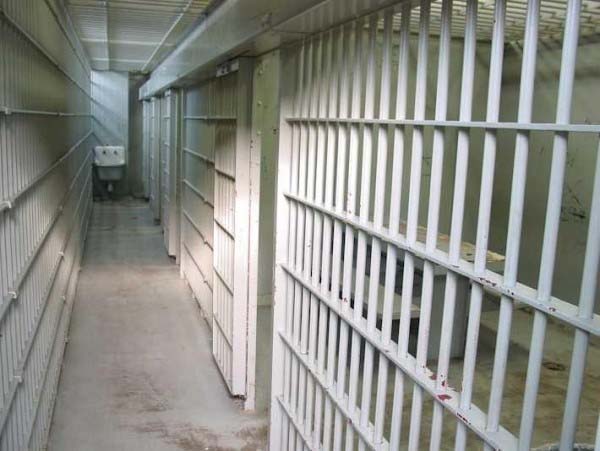
Instead of fulfilling his promises to improve the country’s deteriorating economy, provide new job opportunities for thousands of unemployed youth and build at least one million housing units to accommodate young couples, Egypt’s President, Abdel Fatah Al-Sisi has only managed to build more prisons and detention centres to accommodate the growing number of opposition activists.
Less than two months after his election in June 2013, Al-Sisi opened the first maximum security prison in the Dakahlia Governorate.
As many as five new prisons have been constructed since 2013.
Yesterday, the president issued a decree to allocate a plot of state-owned land that spreads over more 103.22 acres to construct a new central prison in Giza.
With the new prison, Egypt will have 42 prisons as well as 382 detention centres in police stations.
A report by the Arab Organisation for Human Rights revealed that the cost of building Gamasa prison was 750 million Egyptian pounds ($95.8 million), adding that the interior ministry did not publish the costs incurred during the construction of the other prisons because they probably cost billions of Egyptian pounds.
According to the organisation, Egypt does not need to build more detention centres to solve a capacity crisis; the problem is imprisoning tens of thousands of innocent people without justification.
Authorities have increased arbitrary arrests because of political opinion and the number of detainees has reached more than 41,000 prisoners, the human rights group said.
Over 700 Shias missing after Nigeria army raids: Shia group
Press TV – January 14, 2016
A Nigerian Shia group says more than 700 of its members are still unaccounted for a month after the deadly attacks by Nigerian forces against Shia Muslims in the northern city of Zaria.
In a statement released on Thursday, Ibrahim Musa, the spokesman for the Islamic Movement of Nigeria (IMN), whose leader Sheikh Ibrahim al-Zakzaky is in police custody, said about 730 people have gone missing since December 12, 2015.
“These missing people were either killed by the army or are in detention” but their “whereabouts are still unknown and undisclosed,” Musa said.
He further noted that some 220 IMN members were in a prison, located in the city of Kaduna, the capital of the state with the same name, while others were in military custody elsewhere across the African state.
On December 12 last year, Nigerian soldiers attacked Shia Muslims attending a ceremony at a religious center in the northern city of Zaria, accusing them of blocking the convoy of the army’s chief of staff and attempting to assassinate him. The Shias have categorically denied the allegations.
The following day, Nigerian forces also raided Zakzaky’s home and arrested him after reportedly killing those attempting to protect him, including one of the IMN’s senior leaders and its spokesman.
Both incidents led to the deaths of hundreds of members of the religious community, including three of Zakzaky’s sons. There has been no official death toll in the violence, but rights activists have put the number at over 1,000.
Musa said no Nigerian family had received a body for burial in the weeks since the Zaria violence.
The Shia cleric is said to have been charged with “criminal conspiracy and inciting public disturbances.”
The IMN has called for Zakzaky’s unconditional release and for Abuja to respond to the “unjustifiable atrocities committed by the army.”
Hillary Clinton flip flops, attacks Sanders on healthcare
RT | January 13, 2016
Former first daughter Chelsea Clinton joined her mother, presidential candidate Hillary Clinton, on the campaign trail this week to attack the single-payer healthcare plan proposed by opponent Bernie Sanders.
Even though Hillary asked “since when do Democrats attack one another on universal health care?” during a 2008 speech in response to a mailer from her opponent at the time, Barack Obama, she called the Sanders plan to cover everyone regardless of their ability to pay as a “risky deal”.
The Sanders plan would destroy private insurance and drug companies, who have donated millions of dollars to Hillary’s campaigns for senate and president.
Clinton famously told candidate Obama “shame on you” in 2008, but now she’s defending his legacy healthcare program dubbed Obamacare, which delivered millions of new customers to for-profit insurance companies through its mandatory coverage clause.
Mother Jones described the new attacks as “an abrupt shift” with just a few weeks before the Iowa caucuses and New Hampshire primary.
Chelsea falsely claimed that millions of people would lose coverage under the Sanders plan during a campaign stop on Tuesday in New Hampshire, where Sanders is now leading in the polls.
“Senator Sanders wants to dismantle Obamacare, dismantle the CHIP program, dismantle Medicare, and dismantle private insurance,” she said. “I worry if we give Republicans Democratic permission to do that, we’ll go back to an era – before we had the Affordable Care Act – that would strip millions and millions and millions of people off their health insurance.”
In fact, not only would those Americans currently covered by Obamacare continue to be protected by the Sanders plan, but it would also cover the millions of Americans who still can’t afford insurance under the so-called “Affordable Care Act”.
Sanders believes healthcare should be a human right and available to all, regardless of wealth or income.
Chelsea, on the other hand, married a former Goldman Sachs investment banker, lives in an expensive New York City condo, serves on several boards including her father’s controversial Clinton Foundation and Clinton Global Initiative, and previously worked at a hedge fund.
Sanders voted for Obamacare, but believes it has not gone far enough to provide adequate care for all.
“Deductibles remain much too high for people,” Sanders explained on the MSNBC program Morning Joe. “The question we have to ask is, why are we paying almost three times more per capita than the folks in the UK, 50 percent more than the French, and they guarantee health care to all of their people?”
Sanders proposes Medicare for all, which he says will save taxpayers about $500 billion per year including the initial costs of transitioning from Obamacare.
He also wants to tackle pharmaceutical companies who have been accused by doctors of letting patients die for the sake of profit and donated more money to Clinton’s campaign than any other candidate from either party.
READ MORE:
Bernie gains double-digit lead on Hillary in New Hampshire – poll
Turkey’s ‘Sunni-Only’ Refugee Camps Worsen Crisis
Sputnik – January 12, 2016
Part of the problem with Turkey’s refugee policy is the establishment of discriminatory policies for non-Sunnis in an attempt to craft a new Syrian state, according to Turkish human rights activist Ozturk Turkdogan.
Turkey’s attempts to use refugees as a political bargaining chip have hurt both the refugees and the situation in Syria, President of the Turkish Human Rights Association (IHD) Ozturk Turkdogan told Sputnik Turkiye.
Turkey recently made a 3 billion euro settlement with the European Union to keep refugees from leaving through smugglers.
“I must note that accepting refugees into ‘its’ camps, Turkey acts selectively, giving priority to Sunni Arabs. This discriminatory approach is part of Ankara’s erroneous Syrian strategy, the goal of which is to create a new state in Syria, propped up with Sunni Muslims.”
According to Turkdogan, the refugee agreement between Turkey and the EU does not solve the refugee problem, and Turkey should have appealed to the UN for aid instead.”Today’s refugee issues are the result of wrong-headed policy on Syria,” Turkdogan added.
Refugee smuggling in Turkey has previously been linked to organized crime groups, which make as much as 1 billion euros per year from smuggling.
4 journalists sentenced to 3 years for disseminating false news, belonging to banned group
Mada Masr | January 12, 2016
In what appears to be an ongoing security crackdown on media personnel, four journalists were sentenced to three years in prison by the Sayeda Zeinab Criminal Court on Sunday. They were convicted of disseminating false information and belonging to a banned organization.
 Electronic Media Syndicate chairperson Abu Bakr Khallaf was the only defendant present in the courtroom for the sentencing — the three other journalists were tried in absentia.
Khallaf allegedly made his LE1,200 bail on Monday, defense lawyer Hany al-Sadeq told the local rights group Journalists Against Torture Observatory, but it is unclear whether he has yet been released from detention. The first hearing in his appeal has been scheduled for March 17.
Khallaf was arrested on July 21 after the state-run Egyptian Trade Union Federation summoned him to their headquarters for interrogation on charges of operating the Electronic Media Syndicate (which was established in 2011) without a license. He was also accused of affiliation with the Muslim Brotherhood.
The other journalists in the case — Mohamed Adly of the privately owned Al-Tahrir newspaper, Hamdy Mokhtar of the privately owned Al-Shaab newspaper and videographer Sherif Ashraf — were arrested while reporting outside the Zeinhom morgue on July 1. The journalists say they were there to report on the deaths of nine Muslim Brotherhood leaders fatally shot by police forces in a 6th of October City apartment on that day.
Rights organizations including the New York-based Human Rights Watch have questioned whether police claims of a “shootout” with the nine men were covering up a case of “extrajudicial execution.”
The Journalists Syndicate’s Liberties Committee will hold a session on Tuesday to discuss the three prison sentences issued in absentia, according to a statement posted to the syndicate’s official website. In that meeting, the committee also plans to discuss the referral of six journalists — including three chief editors — to judicial hearings at the request of Justice Minister Ahmed al-Zend.
The committee will seek to resolve these cases in favor of the journalists, as well as five other lawsuits that have been filed against media workers, the syndicate said.
On Monday, the prosecutor general ordered investigations into charges that high-profile journalist and editor Ibrahim Eissa and his colleague Ahmed Samer insulted the judiciary. The investigations were ordered after a lawsuit was filed against the two men for defamation.
Samer was targeted for his article, “The state that spurns itself,” published in the privately owned Al-Maqal newspaper, which is edited by Eissa. The article discussed the recent prison sentence levied against reformist preacher Islam al-Beheiry for religious commentary on his talk show.
As of last month, at least 32 journalists were in detention across Egypt, the Liberties Committee said, of whom 18 were arrested while reporting in public space.
Ankara Vows to Press Academics Calling to Stop War Against Kurds’ PKK
Sputnik – 13.01.2016
Turkey’s top higher education authority vowed to take measures against academics who signed a letter calling to stop military operations against Kurdish militants, local media reported Wednesday.
Turkish President Recep Tayyip Erdogan has sharply criticized the so-called Academicians for Peace group, accusing them of undermining Turkey’s national security after their declaration was read at press conferences in Istanbul and Ankara on Monday.
After an urgent meeting, Turkey’s Higher Education Board issued a statement saying that the institution would do whatever it took regarding the academics, Today’s Zaman newspaper reported. The body does not have the authority to directly punish the academics, but could pressure university administrations to do so, according to the paper.
Over 1,000 academics from 89 Turkish universities have signed a declaration urging to end the ongoing fighting between Ankara forces and the Kurdistan Workers’ Party (PKK) militants.
The declaration calls on the government to restore a peace process with the PKK that was abandoned in July 2015.
The Kurds, Turkey’s largest ethnic minority, have been striving to gain independence from Turkey. The PKK, founded in the late 1970s to promote the self-determination for the Kurdish community, is designated as a terrorist group by Ankara.
Severe clashes between Ankara forces and PKK militants have been arising sporadically since a July terror attack in the city of Suruc, which killed over 30 people, most of them Kurds. As Kurds killed two Turkish policemen in what has been said to be a retaliation strike, Ankara launched a military campaign against the group.
Yemen: A very British war
By Dan Glazebrook | RT | January 11, 2016
Britain is at the heart of a humanitarian disaster of epic proportions unfolding in the Yemen.
At least 10,000 people have been killed since the Saudi bombing campaign against Yemen began in March 2015, including over 630 children. There has been a massive escalation in human rights violations to a level of around 43 per day and up to ten children per day are being killed, according to UNICEF. Seventy-three percent of child casualties are the direct result of airstrikes, say the UN.
Civilian targets have been hit again and again. Within days of the commencement of airstrikes, a refugee camp was bombed, killing 40 and maiming over 200, and in October a Medicins San Frontier [Doctors Without Borders] hospital was hit. Schools, markets, grain warehouses, ports and a ceramics factory have all been hit. Needless to say, all of these are war crimes under international law – as is the entire bombing campaign, lacking, as it does, any UN mandate.
Beyond their immediate victims, the airstrikes and accompanying blockade – a horrendous crime against a population which imports 90 percent of its basic needs – are creating a tragedy of epic proportions. In August 2015, Oxfam warned that around 13 million people were struggling to find enough to eat, the highest number of people living in hunger it had ever recorded. “Yemen after five months looks like Syria after five years,” the head of the International Red Cross commented in October. The following month, the UN reported that 14 million now lacked access to healthcare and 80 percent of the country’s 21 million population are dependent on humanitarian aid. “We estimate that over 19 million people lack access to safe water and sanitation; over 14 million people are food insecure, including 7.6 million who are severely food insecure; and nearly 320,000 children are acutely malnourished,” the UN’s Humanitarian Coordinator told reporters in November. He estimated that around 2.5 million have been made refugees by the war. In December, the UN warned that the country was on the brink of famine, with millions at risk of starvation.
Statements from British government ministers are crafted to give the impression of sympathy for the victims of this war, and opprobrium for those responsible. “We should be clear” said Foreign Secretary Philip Hammond in September 2014, “the use of violence to make political gains, and the pointless loss of life it entails, are completely unacceptable. Not only does the recent violence damage Yemen’s political transition process, it could fuel new tensions and strengthen the hand of al-Qaeda in the Arabian Peninsula – threatening the security of all of us…Those who threaten the peace, security or stability of Yemen, or violate human rights, need to pay the price for their actions.”
Indeed. So presumably, one might have thought, when the Saudis began their massive escalation of the war six months after Hammond made this statement, the British government must have been outraged?
Not quite. The day after the Saudis began ‘Operation Decisive Storm’, David Cameron phoned the Saudi king personally to emphasize “the UK’s firm political support for the Saudi action in Yemen.”
Over the months that followed, Britain, a long-term arms dealer to the Saudi monarchy, stepped up its delivery of war materiel to achieve the dubious honor of beating the US to become its number one weapons supplier. Over a hundred new arms export licenses have been granted by the British government since the bombing began, and over the first six months of 2015 alone, Britain sold more than £1.75 billion worth of weapons to the Saudis – more than triple Cameron’s usual, already obscene, bi-annual average. The vast majority of this equipment seems to be for combat aircraft and air-delivered missiles, including more than 1000 bombs, and British-made jets now make up over half the Saudi air force. As the Independent has noted, “British supplied planes and British made missiles have been part of near-daily raids in Yemen carried out by [the] nine-country, Saudi Arabian led coalition.”
Charities and campaign groups are unanimous in their view that, without a shadow of a doubt, British patronage has greatly facilitated the carnage in the Yemen. “The [British] government is fuelling the conflict that is causing unbearable human suffering. It is time the government stopped supporting this war,” said chief executive of Oxfam GB, Mark Goldring. The director of Amnesty International UK, Kate Allen, said: “The UK has fuelled this appalling conflict through reckless arms sales which break its own laws and the global arms trade treaty it once championed…. legal opinion confirms our long-held view that the continued sale of arms from the UK to Saudi Arabia is illegal, immoral and indefensible.”
For Edward Santiago, Save the Children’s country director in Yemen, the UK’s “reluctance to publicly condemn the human cost of conflict in Yemen gives the impression that diplomatic relations and arms sales trump the lives of Yemen’s children,” whilst Andrew Smith from Campaign Against the Arms Trade, has written that “UK fighter jets and UK bombs have been central to the humanitarian catastrophe that is being unleashed on the people of Yemen.” Leading lawyers including Philippe Sands have argued that Britain is in clear breach of international law for selling weapons which it knows are being used to commit war crimes.
Now it has emerged that it is not only British weapons being used in this war, but British personnel as well. According to Sky News, six British military advisors are embedded with the Saudi air force to help with targeting. In addition, there are 94 members of the UK armed forces serving abroad “carrying out duties for unknown forces, believed to be the Saudi led coalition,” according to The Week – although the government refuses to state exactly where they are.
Indeed, even British airstrikes in Syria may have been motivated in part by a desire to prop up the flagging war effort in Yemen. Questioning of Philip Hammond in parliament recently led him to admit that there had been a “decrease in air sorties by Arab allies” in Syria since Britain’s entry into the air campaign there due to the “challenges” of the Yemen conflict.
For Scottish Nationalist MP Stephen Gethins this suggests that, by stepping up bombing in Syria, Western countries were effectively “cutting them [Arab states] a bit of slack to allow them to focus on the Yemen conflict,” especially needed given that support for the Yemen campaign has been flagging from states such as Jordan, Morocco and Egypt. It is particularly ironic that British MPs’ supposed commitment to destroying ISIS in Syria is actually facilitating a war in Yemen in which ISIS is the direct beneficiary.
Finally, it is worth considering British support for the Saudi bid for membership of the UN Human Rights Council. The Council’s reports can be highly influential; indeed, it was this Council’s damning (and, we now know, fraudulent) condemnation of Gaddafi that provided the ‘humanitarian’ pretext for the 2011 NATO war against the Libyan Jamahiriya. And the Yemeni government’s recent expulsion of the UN Human Rights envoy shows just how sensitive the prosecutors of the Yemeni war are to criticism. It would, therefore, be particularly useful for those unleashing hell on Yemen to have the UN Council stacked with supporters in order to dampen any criticism from this quarter.
Britain, then, is the major external force facilitating the Saudi-fronted war against the people of Yemen. Britain, like the Saudis, is keen to isolate Iran and sees destroying the Houthis as a key means of achieving this. At the same time, Britain seems perfectly happy to see Al-Qaeda and ISIS take over from the Houthi rebels they are bombing – presumably regarding a new base for terrorist destabilization operations across the region as an outcome serving British interests.
Dan Glazebrook is a freelance political writer. His first book “Divide and Ruin: The West’s Imperial Strategy in an Age of Crisis” was published by Liberation Media in October 2013. It featured a collection of articles written from 2009 onward examining the links between economic collapse, the rise of the BRICS, war on Libya and Syria and ‘austerity’. He is currently researching a book on US-British use of sectarian death squads against independent states and movements from Northern Ireland and Central America in the 1970s and 80s to the Middle East and Africa today.
How Obama Went From the Anti-Bush to a Bush on Steroids

Sputnik – January 12, 2016
In a recent article for independent German magazine Zeiten Schrift, contributor Klaus Faissner reflected on the US president’s journey from an electrifying candidate with a savior-like quality to a tired leader tarnished by drone strikes, mass surveillance, and a relationship with the media reminiscent of the worst days of the Nixon administration.
In his article, republished and translated by foreign media translation service WhatTheySayAboutUSA.com, Faissner recalled that in the run-up to his presidency, while he was still a candidate, Barack Obama “was presented as the savior of the world – almost a Messiah.”
“He was rapturously greeted by a crowd of over 200,000 in Berlin in 2008 – even before he had been officially crowned as President of the USA. “Yes, We Can!” was the campaign slogan that electrified the crowd, even before he began speaking. The American presidential candidate gathered bigger crowds in Germany than even the Pope, rock stars, or a football game with the national team. He promised to liquidate nuclear arms, reestablish good relations with Russia, pull American troops out of Iraq and Afghanistan – and to close the US’s nefarious concentration camp at Guantanamo Bay.”
“As the US’s first black president,” Faissner reflected, “Barack Obama ought to have become the antithesis of everything that George ‘Dubya’ Bush had stood for – a president whose wars had run through the world like cancer, whilst clamping down on basic freedoms for his own people. This was the way the media presented the incoming President Obama – and the world believed the simulacrum they’d been given.”
Unfortunately, the journalist recalled, “what the press wasn’t reporting, however, was that [by the end of his first term], Obama signed more orders for drone assaults than Bush Jr. had done in the entire eight years of his presidency. These were drone strikes which caused catastrophic levels of non-combatant casualties, which America simply wrote-off under the euphemism of ‘collateral damage.'””Like his predecessor, Obama threw all his weight behind GMO agriculture; he didn’t give the slightest thought to his promises to close Gitmo; he showed no interest whatsoever in improving relations with Russia, and he worked actively on destabilizing the situation in the Middle East.”
A ‘Tense’ Relationship With Journalists
“In 2009,” Faissner recalled, “the incoming president declared his intentions for a previously unprecedented level of transparency in government and the apparatus of national administration. ‘Openness will strengthen our democracy,’ as he stressed in subsequent legislation.”
However, “now that Obama has been at the helm for nearly seven years, it’s clear that all these promises were empty piffle. No president after Richard Nixon has been so aggressively opposed to the media, as was highlighted in a piece written by the former Washington Post chief editor Leonard Downie, published in 2013 – about freedom of speech in the United States. Downie suggested the Obama administration was operating a misinformation policy, used electronic snooping on journalists, and was behind a ratcheted-up campaign of persecution against whistleblowers and journalists involved in investigation.”
“An atmosphere of fear pervaded the work of journalists, Downie wrote, with their investigations permanently occluded in secret observation by the state. Despite the administration’s promises to end the ‘unreasonable secrecy’ that typified the Bush era, Obama has in fact continued to expand it. Often entirely irrelevant documents are systematically classified ‘top secret’ to deny reporters access to them.””On top of this,” Faissner laments, “Obama administration staffers frequently take personal offense to articles criticizing government policy. To ward off the increasing frequency of such articles, the Obama administration is increasingly reaching out for the 1917 Espionage Act. Although it had only been employed three times in the first 90 years of its existence, over the period between 2009 to 2013… eight different government officials were arraigned with it, charged with passing governmental information to journalists, putting out a powerful resonance on Capitol Hill. One of those thus charged was Edward Snowden, who blew the whistle on government snooping on the whole world’s population by the National Security Agency. Bob Woodward, who broke the news of the Watergate scandal in the Nixon era, warns that any fight against critical journalists only leads in the long term to weaken the nation’s national security.”
A Unique and Powerful Surveillance System
“In reality,” Faissner warned, “Obama has set up a unique system of surveillance. It was done in such a way that people around the world have no idea that Obama’s policies are a continuation, or even a worsening of those of George W Bush. Since October 2011 government staffers in every branch of the administration have been encouraged to snitch on their colleagues. Staff in Federal departments have been obliged since 2012 to report all their contacts with the media, and moreover to report on suspicious colleagues. Michael Hayden, the former head of the CIA, said the program had been incepted to ‘block all contact.’ Even staffers of new agencies who are remote from revolutionary activities, such as Associated Press or Fox News have come under the crosshairs of the Obama administration.”
“One such journalist has been James Rosen of the Fox News television channel, who came under observation from the Justice Department, for using information he had received from a highly-placed government official. The information referred to the international community ratcheting up sanctions against Pyongyang over new nuclear weapons testing by North Korea. The Washington Post notes that the FBI monitored Rosen’s phone calls, and even screened his private email correspondence.”Moreover, Faissner suggests, “the situation worsened drastically in 2015. In a document entitled ‘Law on War’ [a set of instructions on the legitimate warfare practices approved by the US military], the Pentagon stated that journalists could be treated as ‘unprivileged belligerents,’ a status which, according to a representative from the Committee for the Protection of Journalists, ‘gives U.S. military commanders across all services the purported right to at least detain journalists without charge, and without any apparent need to show evidence or bring a suspect to trial.'”
“If the Pentagon is putting spying in the same basket as journalism, the New York Times noted, then this is a step in the same direction as totalitarian regimes. It’s hardly surprising that in the World Press Freedom Index for 2015, the USA is rated at 49 place – on a par with El Salvador, Burkina Faso and the Republic of Niger.”
Featured Video

Why Hamas Really Attacked Israel on Oct. 7
or go to
Aletho News Archives – Video-Images
From the Archives
Israel: Strategic Ally or Liability?
By Stephen Sniegoski | My Catbird Seat | June 12, 2010
The claim that Israel serves as a valuable ally for the United States is made by both pro-Zionists and much of the anti-war and anti-Zionist Left that is influenced by Noam Chomsky. As a result of the Gaza flotilla massacre, which has caused a world-wide uproar against Israel, the value of Israel to the United States is being publicly questioned in more mainstream foreign policy forums. … continue
Blog Roll
 Aletho News
- Why Hamas Really Attacked Israel on Oct. 7
- Declassified UK exposes British man who fought for ‘Israel’ in Gaza
- West’s death cult in a theater near you
- How the Yandex ‘Russian bots’ lie fell apart
- Burnham’s ‘Russia did Brexit’ ruse crumbles
- Estonia making movies and games to encourage war against Russia
- Four in five new UK jobs taken by foreigners – report
- Here’s what Trump’s latest U-turn really means for Russia and Ukraine
- The Houthis Are Not an Iranian Proxy
- Europe’s Energy Hypocrisy, Russian LNG Profits and US Dependence
- If Americans Knew
- Activists Abused By Israel Return to New Freedom Flotilla Mission
- 60 Minutes won’t tell the full truth about Israeli settler violence
- Nearly 50,000 women, girls killed or severely injured in Gaza since October 2023: UN Women
- ADL is working with AI companies to suppress alleged ‘antisemitism’
- Israeli occupation forces using social media surveillance unit to target hundreds of Palestinians in the West Bank
- Israel’s New – and Terrifying – Security Doctrine
- Israeli Attacks Kill Five in Gaza, Including a four-year-old and a woman
- Air Force Major Who Called for Trump’s Impeachment Held in Solitary Confinement
- It’s a Genocide, I’m Into It’: Seinfeld Mocks Protest over Palestinian Children Killed
- Universities fire dozens amid pressure from Zionist billionaires
- No Tricks Zone
- New Study Suggests Large Regions Of The Pacific Ocean Have Been Cooling For The Last 80 Years
- Germany’s Green Energy Debacle: High Energy Costs Force Kahla Porzellan to Close After 182 Years!
- New Study: 50 Years Of The Most Aggressive ‘Net Zero’ Policies Can Only Affect The Global Climate By 0.03°C
- US September “Heat” Was No Record…Many Records Set Decades Ago
- Latest European Green Energy Debacle; Portugal’s Largest Flagship Solar Park Insolvent!
- Green Energy Debacle: German Expert Professor Fritz Vahrenholt Warns Of Severe Economic And Social Consequences
- Two More Paleo Reconstructions Affirm Meters-Higher Sea Levels Across Ireland, Brazil 7000-6000 Years Ago
- New Study: Earth And Venus Surface Warmth Largely Explained By Convection And Lapse Rate, Not CO2 Or Radiation
- 2025 Nature Paper Claiming Worsening Global Drought Gets RETRACTED …Heavily Flawed
- New Study: ‘Global Drought Shows No Detectable Recent Acceleration Under Climate Warming’

