Government refuses to help tortured British student in UAE
Reprieve | August 24, 2015
The Prime Minister and the Foreign Office have refused to support a British student’s request to be released from a UAE prison, it’s been revealed – despite the fact that he was tortured into a false ‘confession’ by Emirati police.
Ahmad Zeidan, from Reading, was arrested in December 2013 in the emirate of Sharjah, along with seven other young men. During eight days of incommunicado detention, he was tortured by police into signing a document in Arabic – a language he doesn’t read or write. During a trial in which he faced a potential death sentence, the document was presented as his ‘confession’, and he was sentenced to nine years. He lost a subsequent appeal, while his allegations of police torture – common in the UAE – were never fully investigated.
The leaders of the Emirates recently granted a traditional Ramadan pardon to just under 900 prisoners across the UAE, including 200 prisoners in Sharjah jail, where Ahmad is held. The amnesty saw Ahmad’s co-defendants – none of whom are British – released, leaving him the sole remaining defendant from the December 2013 arrests to be still in prison. It’s now emerged that the Foreign Office refused to support a request by Ahmad for inclusion in the pardon – an apparent contradiction of an official UK policy to request clemency when a miscarriage of justice, such as a forced confession, has occurred.
It’s also been revealed that David Cameron met with the leader of the UAE, the Crown Prince of Abu Dhabi in July this year, shortly before the pardon was announced. In a letter to human rights organization Reprieve, which is assisting Ahmad, the Foreign Office admitted that the Prime Minister had not raised the case at the meeting, saying “these specific issues were not discussed.”
Speaking to the Press Association, Ahmad said his experience had been “extremely traumatizing, for both me and my family. It’s taking a toll on me every single day, mentally and physically.” He added: “The torture at the beginning was one thing, that I live with every day; it’s now another mountain of pain I have to go through, knowing the UK government is doing nothing.” He appealed to ministers to “get me out of what I’m going through.”
Commenting, Maya Foa, head of the death penalty team at Reprieve, said: “Ahmad Zeidan has suffered a staggering miscarriage of justice at the hands of the UAE. His brutal torture and the use of a bogus ‘confession’ – signed in a language he doesn’t read or write – are more than enough reason for the British government to request his release. It is deeply disappointing that ministers have not yet done this – particularly as his co-defendants, from other countries, have now all been released. The UK government must use our strong ties with the Emirates to call for an end to Ahmad’s nightmarish ordeal, so that he can return to Britain and concentrate on his future.”
“Human Rights” in the Arab World: the Instruments of War, a Test Case for the UN High Commissioner for Human Rights
By Lana Habash | CounterPunch | August 21, 2015
Sometimes I love Republicans. They lay bare with such clarity what underlies and drives US foreign policy– the bottom line strategic interests without the pretense that more adept politicians use to justify US military aggression: the US government’s “concerns” about “human rights” for instance.
Take Syria.
John McCain laid it all out in his interview on CNN’s Situation Room in 2013:
“Look, the Middle East is about to erupt. This is turning into a regional conflict: Lebanon is destabilized, Jordan can’t — the king of Jordan can’t last, the conflict is spreading throughout the region, Hezbollah is all in. This is becoming a Sunni-Shia conflict . . . and it’s an unfair fight!” While arguing for more US military intervention in Syria, he goes on to say, “It’s a great blow to Iran — the greatest in twenty-five years, and they’re cut off from Hezbollah, which would mean that Hezbollah would die on the vine.”
It is strange to hear American politicians wring their hands about the instability of the Jordanian monarchy and its regime while pontificating about US intentions to “bring democracy to the Middle East.”
Over the past two decades, we have witnessed the increasing use of the human rights discourse by the United States as justification for US military aggression. In some cases, these human rights abuses (as in the case of Iraq) proved nothing more than Department of Defense propaganda that was later proved false. More recently, the Assad regime in Syria has been accused of such violations as torture and arbitrary arrest and detention, though the US hasn’t been above using these alleged services themselves. (US former CIA agent Robert Baer once said of US held prisoners, “If you want them to be tortured, you send them to Syria.”) The UN High Commissioner for Human Rights has echoed these allegations about the Syrian regime. These alleged human rights abuses, the same ones that Jordan continues to perpetrate against its own citizens with impunity, have been used as justification for US military intervention in Syria, including the arming and training of rebel forces in Jordan by US troops, which has resulted in the deaths of at least 220,000 people and over 3 million refugees. These interventions have done nothing to advance the human rights of the Syrian people, but have achieved some strategic goals for the US and Israel: Hezbollah, the only player that poses a serious threat to American and Israeli strategic interests regionally, is now embroiled in a Syrian civil war, and as McCain stated, a “great blow” has been served to both Iran and Hezbollah.
Last year, at his confirmation as the UN High Commissioner for Human Rights by the General Assembly, Prince Zeid Ra’ad Al Hussein spoke of his commitment to push forward human rights on the Asian continent. It has been hard to take seriously this pronouncement when the High Commissioner has used his office to support concrete measures that, not coincidentally, mesh with US strategic interests, while he remains silent about the human rights abuses in his own country, the Hashemite Kingdom of Jordan. Jordan is a signatory to the International Covenant on Civil and Political Rights, yet has one of the most abysmal human rights records in the world. The recent case of Amer Jubran reveals the entire spectrum of repression to which Jordanians are subjected.
Amer Jubran is an internationally known Palestinian activist, speaker and writer on the rights of Palestinians and against US and Israeli policies in the Arab world. He has also distributed information about US involvement in destabilizing Syria.
Jubran was arrested in Jordan on May 5, 2014, when 20 men in black military uniforms broke into his home in the middle of the night. He was held incommunicado by Jordan’s secret police, the General Intelligence Directorate (GID) for 2 months at an undisclosed location, in violation of Article 9 of the International Covenant on Civil and Political Rights. A petition against arbitrary detention was filed on his behalf with the UN Working Group on Arbitrary Detention. Nothing came of this.
Jubran was finally charged in August, 2014 under a new law that makes “harming the relationship with a foreign government” a crime of “terrorism.” The wording of this law is so vague that it criminalizes a broad range of political activities including journalism, in violation of Article 19 of the ICCPR, guaranteeing freedom of opinion and expression.
This same law was enacted one month after Amer Jubran’s arrest, also constituting a violation of Article 15 of the ICCPR, which stipulates, “No one shall be held guilty of any criminal offense … which did not constitute a criminal offense…at the time when it was committed.”
Jubran was tried before Jordan’s State Security Court (SSC), a military tribunal that fails to meet even minimum standards of judicial independence, violating Article 14 of the ICCPR, which guarantees the right to a fair trial by a “competent, independent and impartial tribunal established by law.” Jubran’s defense team effectively proved the “terrorism” charges against him false, but the verdict of the SSC was reached without regard for evidence. The only evidence presented in Jubran’s trial was the coerced testimony of other defendants, also arrested in May, 2014, subjected to interrogation, and all of whom received reduced sentences of two to three years. Robert Baer also said: “If you want a serious interrogation, you send a prisoner to Jordan.” While Jubran was being detained incommunicado and “interrogated” he was threatened not only with imprisonment, but with being disappeared when he refused to infiltrate Hezbollah and act as an informant for the GID. He was recently sentenced to ten years of hard labor by Jordan’s State Security Court (see statement by Amer Jubran on his sentencing.)
The human rights abuses perpetrated against Amer Jubran are the rule in Jordan, rather than the exception. Jordan’s long history of the use of arbitrary detention and torture have been well documented by the UN. In 2013, the UN Human Rights Council Working Group on Arbitrary Detention issued a report on Jordan, detailing a series of cases like that of Jubran in which basic political freedoms had been trampled. The report had a special section on the State Security Court:
“The Committee against Torture and the Human Rights Committee have repeatedly recommended that Jordan abolish special courts such as the State Security Court… The Committee reiterates its 1994 recommendation that the State party consider abolishing the State Security Court.” (Human Rights Council Working Group on Arbitrary Detention, November 2013).
What has the UN High Commissioner done thus far to respond to these recommendations and push forward the issue of human rights in his own country? When asked during a press conference as to whether it was illegal to criticize the king in the press in Jordan, the Human Rights Chief replied, “Essentially, we believe we are still a family,” while plugging the king’s new book (USA Today August 13, 2014). The UN High Commissioner failed to mention Jordan’s long history of criminalizing speech and imprisoning journalists like Jamal Ayyoub.
Interestingly, Jubran has written nothing about the Jordanian regime. His writing has consistently concerned itself with the policies of the US and Israel in the region. This speaks to the new law of “harming relationships with foreign governments.” Mr. Jubran has stated that he was told directly by his GID interrogators that any decision made about him would involve “our American and Israeli friends.”
Recent revelations about NSA cooperation with Jordanian intelligence agencies underline the central role Jordan plays in the US and Israeli “security” regime for the region. Spying on Palestinians and providing intelligence about “high security targets” is perhaps the least of the services Jordan provides. The abuses of fundamental freedoms in Jordan are consistently carried out, as in Amer Jubran’s case, in the interests of protecting US and Israeli power.
Institutions like the Office of the UN High Commissioner for Human Rights are supposed to exist to guarantee the protection of human and political rights globally. The real test of the UN High Commissioner’s commitment to push forward the issue of human rights in Asia must begin in his home country of Jordan and will involve a confrontation not only with that regime, but with the nation states calling the shots. Will the UN High Commissioner Zeid Ra’ad Al Hussein use the powers of his office to advocate for human rights, when those powers come in conflict with the US, Israel, and their regional allies? If not, then the term “human rights” has become nothing more than Orwellian doublespeak, and the Office of the UN High Commissioner for Human Rights is just one more weapon in the military arsenal of US regional dominance.
More details about the case of Amer Jubran can be found at freeamer.wordpress.com.
Lana Habash is a Palestinian physician living in Boston, MA. She can be reached at defense@amerjubrandefense.org.
Another Egyptian prisoner dies, 3rd in 48 hours

A file photo of Ahmed Hamed, an Egyptian political prisoner who died while in custody on August 21, 2015.
Press TV – August 22, 2015
Another Egyptian political prisoner has died while in custody, the third death in 48 hours and the 13th of the month of August.
Thirty-seven-year-old Ahmed Hamed, father of three children, was pronounced dead on Friday evening in a police station in the city of Faiyum, 100 kilometers southwest of the Egyptian capital Cairo.
Hamed, a supporter of Egypt’s Muslim Brotherhood, lost his life just four days after being “kidnapped” by security forces in civilian clothes from the premises of his residence in Faiyum.
According to Hamed’s family and human rights activists in the city, he died of torture. No further details on his death have been released yet.
This is the third similar case in just 48 hours in Egypt. A 40-year-old man passed away in custody on Wednesday in a hospital in Matariya district in northeastern Cairo. He was detained 15 days before his death on charges of belonging to the Muslim Brotherhood.
Human rights activists in the Egyptian capital had said the man was only transferred to hospital when he was already in a very critical condition also due to torture.
Also on Wednesday, a 72-year-old inmate, serving a three-year prison term on similar charges, died in the Borg El Arab prison in Egypt’s city of Alexandria in the north.
The victim, who was suffering from diabetes and high blood pressure, lost his life due to purported medical negligence upon his return from a court session a day earlier, where he had appeared in a wheelchair.
At least 13 political detainees are now known to have lost their lives inside detention facilities in August alone.
Human rights activists emphasize that “deliberate and systematic medical negligence” on the part of prison authorities, torture, overcrowded prisons, and overall “unhealthy and inhumane” conditions imposed on more than 40,000 political prisoners in Egypt’s detention facilities are the causes behind the deaths.
Nearly 300 political prisoners have died in Egyptian detention facilities since then army chief and current President Abdel-Fattah al-Sisi ousted Egypt’s first democratically-elected president, Mohamed Morsi, in July 2013 in a coup.
Sisi then launched brutal crackdown on pro-Morsi protesters and brotherhood members, leading to the killing of hundreds and the arrest and imprisonment of tens of thousands, many of whom have been sentenced to death and long prison terms in mass trials.
International Solidarity Movement call for volunteers
International Solidarity Movement | August 21, 2015
Occuppied Palestine – During the months of July and August, there has been an escalation of violence from illegal Israeli settlers and the Israeli army towards Palestinians.
ISM is sending an urgent call for volunteers to join us in Palestine. Check the join us section of our website or email ISM at palreports@gmail.com for more information.
On a weekly basis, people throughout the West Bank are being arrested without charges, houses raided during the night, new houses have been demolished, settler violence has increased in the city of Hebron and in other villages, and the Israeli navy has increased the number of attacks towards Gazan fishermen.
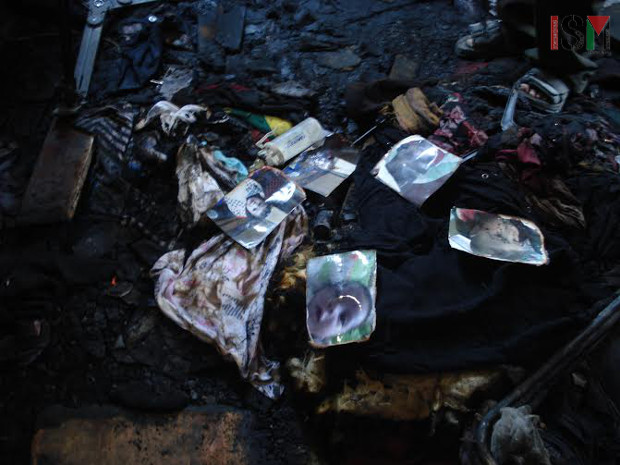
On August 1st, the infant Ali Dawabshe was brutally murdered with an arson attack to his house perpetrated by illegal Israeli settlers in the village of Duma. His father, Saad Dawabshe, died one week after from severe burn injuries. Both his mother, Riham, and his 4 year old brother, Ahamd, remain hospitalized with severe burn injuries all over their bodies, with high risk of dying.
Since the end of the last Zionist massacre against Gaza there have been 1312 reported attacks against Gazan fishermen.
Since then, 22 boats have been stolen; 26 fishermen have been injured; one fisherman, Tawfiq Abu Riela, has been assassinated; 28 boats have been disabled by bullet fire; 2 big fishing boats have been sunken by rocket fire, one in Deir El Balah at 300m from the coast and one in Gaza City at 5 miles; 51 fishermen have been kidnapped while working and 3 fishermen remain prisoners until now.
The team in Hebron has reported an increase of night raids by Israeli forces and attacks by illegal settlers, which is terrorizing Palestinians living in Hebron. Two days ago, on August 20th, a group of French extremist Zionists intimidated and attacked international activists and local Palestinians. This group of extremists, called Kahane, which is considered a terrorist organization under Israeli law, was received with signs of sympathy by the soldiers.
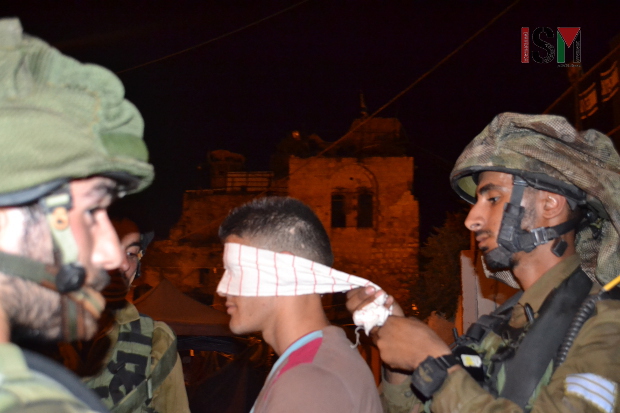
At approximately 5:00 am, on Wednesday, August 19, the homes of the Totah and Totanji families were demolished by the Israeli army in the neighborhood of Wadi al Joz, in East Jerusalem. This neighborhood has been under threat of demolition since December, 2014, despite the fact that there are no accountable papers presenting a demolition order, nonetheless, the army has been slowly carrying out this plan. Neighbors live in constant fear that anytime their homes will be torn down.
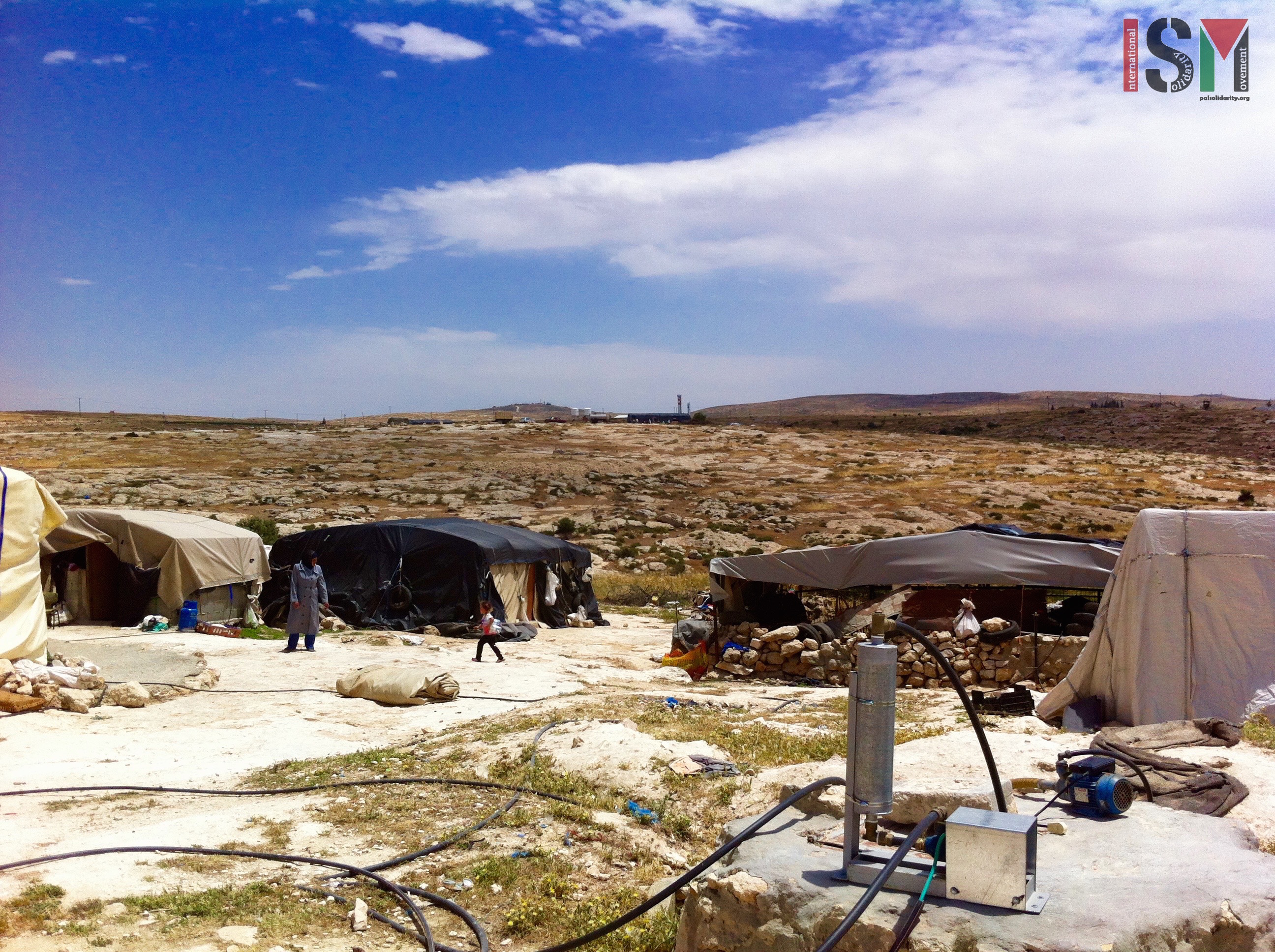
In very similar conditions, the village of Susiya has been suffering from enormous fear by the threat of mass demolition orders issued by the Israeli government since 2012.
ISM also needs volunteers to join the 2015 olive harvest campaign.
ISM volunteers join Palestinian farming communities each year to harvest olives in areas where Palestinians face settler and military violence while working their land. Your presence can make a big difference, with Palestinian communities stating that the presence of international volunteers reduces the risk of extreme violence from Israeli settlers and the Israeli army.
The olive tree is a Palestinian national symbol, and the Israeli military systematically prevents agricultural fruition, in order to make life for Palestinians more difficult. The Israeli occupation provides a platform for Palestinian rights to be violated in an array of ways; the attack on agriculture is at the forefront.
Already documented this year, and to list a few cases; the trees have suffered settler sewage runoff , sabotaging fires, and being uprooted. Olive trees comprise of an essential 14% of the Palestinian agricultural economy.
We support Palestinians’ assertion of their right to earn their livelihoods and be present on their lands. International solidarity activists engage in non-violent intervention and documentation and practical support, which enables many families to pick their olives.
The campaign will begin during the last week of September and will last around 5 weeks. We request a minimum one week commitment from volunteers, but stress that longtermers are needed as well. We ask that volunteers start arriving around the 20th of September, so that we will be prepared when the harvest begins.
Training
We request a minimum two week commitment from volunteers, but stress that longtermers are needed as well. The ISM will be holding mandatory two day training sessions which will run weekly on Wednesdays and Thursdays. Please see the join ISM page or contact palreports@gmail.com for further information.
Florida Man Arrested in FBI/ISIS-Inspired Plot to Bomb a Beach
By Peter Van Buren | We Meant Well | August 21, 2015
 So you be the judge: which organization, the FBI or ISIS, had more to do with this supposed “threat” to the “Homeland”?
The FBI has arrested a man who allegedly wanted to detonate a bomb in what authorities describe as an ISIS-inspired terror attack, officials said.
Harlem Suarez, 23, of Key West, Florida, (pictured, and do note the Batman T-shirt) has been charged with attempting to use a weapon of mass destruction in the United States.
So Terrorist Suarez first came onto the FBI’s radar in April, after he posted whatever “extremist rhetoric” and pro-ISIS messages are on Facebook, according to the Justice Department. Facebook, yep, everything people post on Facebook is serious sh*t, man, no boasting or false bravado online, ever. Everybody always means exactly what they say.
Anyway, after creeping Suarez on Facebook, the FBI then sent in an FBI-employed “confidential source” who for months allegedly talked with Suarez online and in person about plans to attack the United States. Not that any of that would have encouraged or emboldened someone whose previous plans would have otherwise never left his bedroom.
In May, according to the FBI, Suarez recorded his own video, declaring: “We will destroy America and divide it into two. We will raise our black flag on top of your White House and any president on duty.”
Nice touch– “any president on duty.” Man, Suarez was obviously well-informed.
The FBI said that in subsequent meetings with the FBI informant, Suarez discussed plans for an attack around the July 4 holiday and said he would “cook American in cages” — an apparent reference to the ISIS video of a captured Jordanian pilot being burned alive while in a cage.
Last week, Suarez allegedly gave the informant two boxes of nails, a cell phone, a backpack and $100 to build a bomb. In the most recent discussions, Suarez talked about bombing a public beach in Key West and placing explosive devices under police cars, according to charging documents filed by the FBI.
Note that without some actual explosive material and the knowledge to build a bomb without first blowing yourself up (yeah, yeah, it’s all online, but so is a lot of stuff. Reading stuff online and actually safely handling explosives and ensuring they work remotely is a whole ‘nother story.)
And seriously, a backpack bomb, is that really a weapon of mass destruction?
Also note that at no point was anyone in America in danger in any way whatsoever.
“There is no room for failure when it comes to investigating the potential use of a weapon of mass destruction,” said Special Agent in Charge George Piro, head of the FBI’s Miami Field Office.
The New “Steps Towards Democracy” in South Korea
By Konstantin Asmolov | New Eastern Outlook | August 22, 2015
On July 15 2015, the police of the Republic of Korea in Seoul raided the office and residence of members of the civil movement, “Korean Alliance”, (in Korea – the association for independent reunification and the development of democracy), who advocate the expansion of ties with the DPRK. This organization was created in November 2011 to implement the independent reunification of the two Koreas without external influence. It demands the withdrawal of foreign troops (read – the US, because there are no others) from the Korean peninsula and advocates the abolition of the National Security Law (NSL), which (among other things) prohibits citizens of the Republic of Korea, any unauthorized contact with North Koreans and actions to support the DPRK.
According to law enforcement officials, the movement is suspected of “promoting North Korean ideology and actions in support of Pyongyang.” About 100 police officers went to the movement’s offices in order to seize documents for the investigation.
According to investigators, members of the movement, which the authorities consider “anti-government“, repeatedly published messages indicating a positive attitude towards the North Korean regime on the Internet, as well as organizing public events against the NSL. Furthermore, in 2013 during a stay in Germany, one of the members of the movement allegedly attended a seminar organized by the pro-North Korean group and was in contact with officials from the DPRK.
In addition, the chairman of the organization was the late pastor, Pak Chan Kyung, who, according to secret service agents, was previously deputy chairman of the pro-North Korean, organization “Korean Association for the Reunification of the Motherland.”
Its members are holding protests, calling for a stop to the investigation, but the chances of getting away with this are very slim. After all, at the same time the law-enforcement system in South Korea has taken “an important step toward democracy.” This entails the decision by the Constitutional Court on the issue of whether possession of North Korean literature is a political offense subject to proceedings under the Law on National Security. In comparison to the ban on the United Progressive Party, against which only one judge out of nine spoke up, the number of those voting “against” has risen to three, yet the ruling has been passed.
The decision was made in connection with the appeal by Hon, who was accused by the court of Suwon of violating the National Security Law. He was counted as belonging to the “anti-state organization” on the grounds that memoirs of Kim Il Sung were found on the hard drive of his computer, but he filed a protest, claiming that he held such materials to “better know the enemy.”
The court judgement confirmed that the NSL is vital in curbing social unrest, and necessary to ensure public safety and freedom by preventing actions that could lead to a violent regime change. Moreover, according to the Court, these restrictions did not violate freedom of speech. Of course, they could be used to suppress political opposition, but this should be separated from pro-North Korean activities. Such bans are precautions against possible social instability achieved by means of illegal protests.
As stated by the judges in their verdict, “given the current circumstances in the country, national security is critically dependent on the law which is being proposed for review. We recognize that, currently, there is no clear and direct threat, but it is in the public’s interest to restrain these violent ideas before they gain impetus.” Therefore, the storage of materials was sufficient for prosecution. “Given the level of modern scientific and technological progress, the rapid dissemination of materials via the Internet is very likely. The law prohibits the storage of individual anti-state literature without legal authorization.” In other words, anything that is not permitted is prohibited. Even if you’re just interested in North Korea without being a patented fighter with the Communists, this poses the threat of sedition.
It is curious that such an interpretation is, in fact, the assumption that a person that stores such information is, a priori, a supporter of North Korea.
Three of the judges, however, did not agree with this interpretation: the punishment for possession alone without proof of proliferation creates a great potential for errors or violations of the law. Too much depends on the personal opinion of the investigator. It requires additional evidence that the accused distributed these materials or kept them because they held similar views.
Let’s translate this law into the language of reality. Just the mere fact that you keep a copy of “Mein Kampf” at home automatically makes you a fascist and a suspect in a series of other crimes motivated by ethnic hatred, why else would a person keep this at home? And silly talk such as “how can you study Hitler, without reading Hitler?” are just flimsy excuses; if you are not registered as an official opponent of Hitler, then you must be one of his secret supporters, and so, face criminal prosecution. In general, if we compare this case with Russian practice, we have to ask ourselves who is catching up with the Russian Federation – North Korea, or even the Republic of Korea?
In this context, one cannot but recall the textbook for North Korea’s lawyers, issued by the Ministry of Public Security (i.e. by the ordinary, detective police) of North Korea in 2009. The book contains a great number of examples of various offenses, including an example very similar to the aforementioned, right up to the prescribed punishment.
Finally, here’s more recent news from July 31, 2015. The Constitutional Court has recognized the legitimacy of the Republic of Korea’s Law on the election of officials, which requires Internet users to use their real names during the electoral period. This relates to paragraph 6 of Article 82 and paragraph 1 of Article 261, which requires the user to specify their real names if they want to express opinions about political parties or candidates for leadership positions. For violation of these requirements, fines of up to 10 million Won, or 8.5 thousand Dollars are enforced. This requirement is effective only during the election period, because, according to the decision of the Constitutional Court dated August 23, 2010, the collection of users’ personal information when working with the Internet violates the constitutional rights of citizens. Thus, the 2007 requirement of the identification of Internet users was lifted, so as to prevent the interference with freedom of expression on the Internet.
Today’s decision by the Constitutional Court came in response to a complaint filed in 2013 by Daum, the web-portal whose headquarters are on the island of Jeju. The Jeju Provincial Electoral Commission fined the portal for breach of compliance with the requirement to indicate the real names of users during the 2012 presidential election. The Portal administration felt that this requirement was contrary to the decision of the Constitutional Court from 2010. Meanwhile, five of the nine judges found no violation of the law requiring users to indicate their real names. Especially, since it does not reveal the individual’s full personal information and is valid only during the election period. The other four judges considered that the requirement was unconstitutional because it required online-voters to disclose personal data, even if only for a limited period.
Here we should note the following: the Internet in South Korea is already only provided with passport identification. To register on a forum or to perform any transaction, it is necessary to submit a unique identification number. But here we are talking about the compulsory disclosure of personal data in any attempt to discuss politicized issues. Obviously, it’s not just for the sake of combating Internet trolling (which is usually cited to justify abolishing anonymity), but, so the state security organs could easily identify anyone whose thinking does not coincide with “the party line.”
This is an obvious crackdown. How it interfaces with the internal policies and whether it is possible, in this context, to say that conservative circles are regaining their former influence in the Republic of Korea will be in one of our forthcoming articles.
Konstantin Asmolov, PhD (History) is a Senior Researcher at the Institute of Oriental Studies of the Russian Academy of Sciences.
Kiev ordered deployment of ‘illegal & inhumane’ anti-personnel mines – ex-Ukrainian officer
RT | August 22, 2015
Kiev has been deploying anti-personnel mines in Donbass in breach of Ukraine’s own laws as well as international treaties, claims a former high-ranking Ukrainian officer and chief of the engineering service, who refused to obey the “illegal” and “inhumane” order.
In February 2014 Vadim Yatsulyak served as chief of the engineering service of the Interior Ministry of Ukraine, before being appointed as a commander of the Army Corps of Engineers of the National Guard. According to him, one of the first orders he was given in his new role was to receive a supply of anti-personnel mines from military warehouses, that would be later deployed throughout the territory of the so-called “anti-terrorist operation” to reinforce Ukrainian army positions.
“I was given, to put it mildly, inhumane or in legal terms unlawful orders by my superiors,” Yatsulyak told Russian tabloid Komsomolskya Pravda (KP) daily. “The deployment of anti-personnel mines in particular.”
Yatsulyak explained he was basically told by phone to accept the delivery of OZM-72 and MON-50 munitions and sign for it, while superiors would “stay aside assuming no responsibility.”
Refusing to implement the order, he notified his superiors, going as far as sending letters to the Minister of Defence, Ukraine’s parliament, and even the president, but “never received a single reply” to more than 85 complaints which he had sent to various ministries and officials. Eventually Yatsulyak was sacked as “unfit” for the position, and later left the country.
Even though he was never ordered to actually install anti-personnel mines, Yatsulyak speculates that Kiev eventually circumvented the law to deploy them, given the number of reports of deadly mine explosions in Donbass.
An order for the transition of “engineering munitions” such as mines between the Ministry of Defense and the National Guard would be coming “very high level,” and if properly documented would leave a trail of paperwork, Yatsulyak says. But he does not rule out that the papers could have been destroyed to cover the tracks of the perpetrators.
OZM-72 are Soviet manufactured bounding mine type anti-personnel mines, that according to now retired colonel, “jumps to a height of one meter and strikes manpower within a radius of 25-30 meters.” These mines can be activated by a number of fuses, but they are most commonly fitted with a booby trap switch which is activated by a tripwire.
The MON-50 is a directional type of anti-personnel mine that is deployed to wound or kill by explosive fragmentation. It is mounted above ground level on the surface or in trees to give the greatest dispersion of fragments and impact radius.
Both mines are illegal under the international Ottawa Treaty, as they can be indiscriminately activated potentially by non-combatants.
Ukraine signed the so-called Mine Ban Treaty in 1999 and ratified it in 2005. Kiev’s deadline to destroy anti-personnel mines stockpiles passed on 1 June 2010, but as of 2015 over 5 million anti-personnel mines remained in its warehouses.
In its technical briefing note released in April this year, Human Rights Watch (HRW), reviewed the types of landmines documented in the Ukraine conflict since early 2014, specifically focusing on antipersonnel mines.
“While it is clear that antipersonnel mines were used on a limited and localized scale, it is not possible at this time to concretely determine the responsibility of any party for using antipersonnel mines,” HRW concluded.
But as reports of their use in Donbass region keep surfacing, experts interviewed by RT seem to agree that anti-personnel mines could have easily been deployed by Kiev’s forces.
Yatsulyak’s allegations are “plausible” professor of politics at the University of Rhode Island, Nikolai Petro, told RT. “There have been prior suggestions by international organizations that watch over the placement of such mines, that they are being used in this conflict, so it is certainly possible.”
Although the Ottawa Treaty does offer “an exception” for the use of these weapons in the “state of war” and “specific combat situations,” Petro pointed out this is not the case, because “this is essentially a civil war, internal battle.”
Even Kiev itself keeps referring to its military operations in the east of the country as an “anti-terrorist operation,” which according to the country’s own laws must performed by anti-terrorist units of the Interior Ministry without the participation of the army.
Implementing illegal munitions, Petro says, would suggest that Kiev is not planning to “exert control over that area” and expects it to fall into “enemy hands.” Such a plan to “give up” on the region would certainly raise a debate in Ukraine, but Petro does not expect the official reaction to go beyond assurances that “the matter is under investigation.”
Indeed, the Ukraine National Guard press service told RT that “as of yet [they] can neither confirm, nor deny this information,” adding that they first “need to check the documents issued at that time.”
Are Zionist terrorist settlers backed by the Israeli regime?
Press TV
After the burning alive of 18-month-old Ali Dawabsheh by a fanatical Zionist settler, the world has reacted with outrage.
The attack was so horrendous that even Israeli leader Benjamin Netanyahu distanced himself from it, calling it an act of terrorism.
But on today’s show we will be asking to what extent Israel is responsible for the activities of its extremists. Are these fanatical terrorists really just a few bad apples, as Netanyahu would have us believe?
Or are they the product of decades of deliberate Zionist policy to colonize stolen land?
Alert: 21st Aug 2015 – Demand Freedom For Amer Jubran & Muhammed Allan
inminds – August 20, 2015

Date: Friday 21st August 2015 3pm-5:30pm
Location: Jordanian Embassy, Upper Phillimore Gardens, London W8 7HA (few minutes walk from High Street Kensington tube station), move to Israeli Embassy around 4:30pm
Facebook: https://www.facebook.com/events/947233385320459
Assalaamu Alaikum
Please join us as we hold two vigils this friday for Palestinian prisoners. At 3pm we will be outside the Jordanian Embassy demanding freedom for Palestinian father and human rights activist Amer Jubran who is facing a 10 years prison sentence in Jordan at the behest of Israel for refusing to betray the Lebanese resistance against Israel. Then at around 4:30pm we will move to the Israeli Embassy a few streets away to demand the unconditional and immediate release of Palestinian lawyer and hunger striker Muhammed Allan.
Muhammed Allan is again in a comma, breathing through a respirator, after having suffered brain damage whilst in Israeli custody. Muhammed launched his hunger strike on 15 June 2015 to protest Israel’s illegal practice of Administrative detention – of caging Palestinians indefinitely without charge or trial. He has been caged by Israel without charge since 6th Nov 2014 on never ending rolling detention orders. Allan ended his hunger strike after 65 days on 19th Aug after the Israeli Supreme Court on health grounds ordered the suspension of the administrative detention order against him. But Israel is still threatening to reimpose his administrative detention and imprisonment should he recover, its imperative at this time that we maintain the pressure and demand his immediate and unconditional release.
LATEST UPDATES ON MUHAMMED ALLAN
(courtesy Samidoun Palestinian Prisoners Solidarity Network)
20th Aug: Reports state Palestinian hunger striker Muhammad Allan again in a coma, on respirator
http://samidoun.net/2015/08/reports-state-palestinian-hunger-striker-muhammad-allan-again-in-a-coma-on-respirator/
19th Aug: Breaking News: Reports state Muhammad Allan has ended his strike after decision of the Israeli Supreme Court
http://samidoun.net/2015/08/breaking-news-reports-state-muhammad-allan-has-ended-his-strike-after-decision-of-the-israeli-supreme-court/
18th Aug: Muhammad Allan regains consciousness, pledges to continue hunger strike
http://samidoun.net/2015/08/muhammad-allan-regains-consciousness-pledges-to-continue-hunger-strike/
17th Aug: Muhammad Allan rejects attempt to forcibly deport him from Palestine as Supreme Court considers case
http://samidoun.net/2015/08/take-action-muhammad-allan-rejects-attempt-to-forcibly-deport-him-from-palestine-as-supreme-court-considers-case/
17th Aug: Israeli Supreme Court to hear petition for release of hunger striker Mohammed Allan
http://samidoun.net/2015/08/israeli-supreme-court-to-hear-petition-for-release-of-hunger-striker-mohammed-allan/
16th Aug: Palestinian doctor denied access to Muhammad Allan as he faces life-threatening infection
http://samidoun.net/2015/08/palestinian-doctor-denied-access-to-muhammad-allan-as-he-faces-life-threatening-infection/
14th Aug: Muhammed Allan on ventilator in coma; Palestinian prisoners under Israeli lockdown
http://samidoun.net/2015/08/action-alert-muhammed-allan-on-ventilator-in-medical-crisis-palestinian-prisoners-under-israeli-lockdown/
AMER JUBRAN – BACKGROUND
Palestinian activist Amer Jubran has a long history of being targeted for his activism on behalf of Palestine, first in the US and then in Jordan.
In the US he formed the “New England Committee to Defend Palestine” and in November 2002, two days after leading a demonstration in Boston calling for justice in Palestine, the FBI stormed Amer Jubran’s home and arrested him under the Patriot Act initially holding him without charge. When public outcry made it difficult to continue holding him they initiated deportation proceedings against him and he was deported to Jordan in January 2004 where he continued his activism for Palestine.
In Jordan he was under constant surveillance of the notorious Jordanian secret police. On 5th May 2014, 20 armed me in black uniforms stormed his home where he lived with his wife and four young children, smashing the doors and windows. The secret police abducted Amer, and for months he was interrogated at an undisclosed location without charge and without access to a lawyer.
Finally in August 2014 Amer Jubran was charged under a new law that didn’t exist when he was arrested, that makes “harming the relationship with a foreign government” a crime of “terrorism”. Last month on 29th July 2015 we was sentenced by a military court to 10 years hard labour, reduced from a 15 year sentence. Following his visit to Lebanon to speak an an Anti-Apartheid week function he was accused of working with the Lebanese resistance Hizbullah against Israel, hence ‘harming’ Jordan’s relationship with a friendly country. During his interrogation he was told by the secret police that any decision made about him involves “our American and Israeli friends”. Amer says it “all started when I refused to be a sell-out and work against the Lebanese resistance. I was told then that I will be sent behind the sun for such a refusal. And frankly it is very easy for me to disappear behind the sun rather than to be well, outside but a sell-out and traitor. “. Essentially he is being persecuted and imprisoned because he refused to work for Israeli /Jordanian intelligence as an infiltrator and informant against the resistance.

BACKGROUND – ADMINISTRATIVE DETENTION
Muhammad Allan was on hunger strike to protest against Israel’s practice of Administrative detention. Administrative detention is a practice used by Israel to imprison Palestinians indefinitely without charge or trial. Prisoners are given rolling detention orders which can be anything from 1-6 months, renewable indefinitely. Such practice is against international law.
For example administrative detainee Mazen Natsheh has been locked up cumulatively for nearly 10 years without charge or trial. Muhammad Allan has in total been caged for 3 years under different administrative detention orders without charge or trial.
Detention orders are based on so called “secret information” which never needs to be produced, either to the detainee nor their lawyer. Administrative detention is often used to arbitrarily jail Palestinians where there is no evidence for a trial. It is also used for punishment as in the case of 8 Palestinian MPs who are currently caged in Israeli dungeons to punish them for their political stance.
Palestinian prisoners rights group Addameer have documented “many cases where the detainees themselves will say that administrative detention is actually far worse than a fixed sentence, be that five years, ten years, 20 years, or whatever and why. With a fixed sentence, you know when you’re going home, a prisoner knows when he goes home. It could be ten years or 15 years down the line, but they know when they’re going home. Not with an administrative detention..” They have documented “many cases where prisoners or detainees have been literally leaving the prison, walking out of the prison with their bags in their hand after their administrative detention order has expired [with their family waiting on the other side] and the Israelis have handed that detainee another administrative detention order and they have to go back into the cell to recommence another administrative detention order. Now, this is a form of psychological torture for not only the detainee [but also] their families.”
Israel has on average issued over 2000 detention orders every year (between 2007 and 2011). Today there are around 450 administrative detainees. Most of them, like Muhammad Allan, having been transferred from the West Bank into Israel in contravention of Article 76 of the Fourth Geneva Convention, with their families being prevented from visiting them.
On 18th August 2015, 250 Palestinian prisoners held under administrative detention in the “Negev” prison in the Naqab desert in the south of Palestine announced they will launch an open-ended hunger strike to defeat administrative detention. Their statement reads “the growing use of administrative detention.. represents a clear and explicit violation of all international conventions and human rights principles, where we are arrested for extended periods, for years continuously, at the mercy of a so-called “secret file,” where we have no right to defend ourselves. Administrative detention is a sword hanging over our necks, that eats away our flesh and blood and years of our lives without trial and without mercy.”
LIVE UPDATES DURING PROTEST
We will, inshAllah, be tweeting live from the protest with live photos being uploaded to our twitter and facebook page. So if you can’t join us on the day, please help us by sharing the photos as they get uploaded.
https://www.facebook.com/inmindscom
https://twitter.com/InmindsCom
If you support this activity please share this alert widely, thank you.
JazakAllah,
Abbas Ali
Palestinian Prisoners Campaign
http://www.inminds.com/caged
http://fb.com/inmindscom
http://twitter.com/InmindsCom
http://youtube.com/user/inminds
US ‘shamefully’ refuse to release Shaker Aamer from Guantanamo despite UK pressure

Shaker Aamer © Wikipedia
RT | August 20, 2015
American authorities are “shamefully” refusing to release Shaker Aamer, the last British resident detained at Guantanamo Bay, despite calls from Prime Minister David Cameron for the prisoner to be freed, a lawyer has claimed.
Aamer’s legal counsel Ramzi Kassem called on the British government to pressure the White House further after President Barack Obama promised to “prioritize” his case in January.
Kassem also blasted the US government for refusing to allow Aamer access to independent doctors, despite concerns over the neutrality of army medical personnel.
The New York-based lawyer said the physical condition of Aamer, who has been imprisoned without trial for 14 years, “deteriorates with each passing day.”
Kassem filed a 26-page motion at a court in Washington calling for the British resident to be examined by two independent doctors and an army doctor to gauge how Aamer is coping with post-traumatic stress.
The Department of Defense has rejected the request, claiming it is too “difficult.”
Aamer’s last independent assessment took place in October 2013, when Californian psychiatrist Dr. Emily Keram described he had been mentally “destroyed” by interrogators, who allegedly subjected him to sleep deprivation and beatings.
Law professor Kassem expressed dismay at the reluctance of US authorities to release Aamer.
“It is truly shameful that we have to litigate every step of the way despite the prime minister’s demand and the president’s pledge to prioritize Shaker’s case,” he said.
“The UK government must press the White House to make good on its promise. The only thing more shameful are the arguments the US government is making in court to prevent Shaker’s examination.”
Cameron raised the issue with Obama on his official visit to the US earlier this year.
Obama promised to “prioritize” the case in January, but Aamer’s legal team claim nothing has been done to progress his case.
Writing in the Guardian last Friday, Aamer’s UK lawyer Clive Stafford Smith claimed the US military has deliberately ignored Obama’s order in breach of the constitution.
“President Obama, it seems, has personally ordered Aamer’s release, and his subordinates have ignored and thwarted his order,” Smith wrote.
“The contravention of the president’s orders indicates that there is a profound problem with the state of democracy in America.”
Kassem slammed the US government for not taking Aamer’s physical and mental health seriously.
He condemned the United States’ “self-servingly attempts to dismiss Mr. Aamer’s reliably-diagnosed and grave ailments as only ‘minor long-term impairments.’”
Aamer has never been charged with a crime or faced trial since he arrived at the high security prison in Cuba.
In describing his treatment at Guantanamo Bay, Aamer said he was stripped of his pride.
“I was not a human being any more. I meant nothing to them. I lost my dignity, my pride,” he said.
“I had to take off my underwear and hand it to them. I had sleep deprivation for 11 days. That made me crazy. They poured cold water over me. They kept me standing for 20 hours a day. I had to hold my hands and arms out.
“All of the statements I made at Bagram were during the sleep deprivation. I would have said anything. I told them, ‘I will tell you I am Bin Laden if you want me to,’” he said.
Aamer was arrested in 2001 in Afghanistan and subsequently moved to Guantanamo Bay, where in 2007 the US military claimed he was a “close associate” of Osama Bin Laden and a “recruiter, financier, and facilitator” for Al-Qaeda.
The Saudi citizen has always insisted he was only in the country to perform charitable work and said he confessed to being a jihadist while being tortured at the hands of the CIA.
Kiev accused of disrupting prisoner swap agreements
TASS | August 20, 2015
 The Ukrainian side has disrupted the prisoner exchange process three times within the past four weeks, an official in the militia of the self-proclaimed Luhansk People’s Republic (LPR) told a press briefing.
“We have repeatedly made efforts to release our military servicemen from captivity. We handed over to the Ukrainian side the list of Ukrainian prisoners-of-war with the suggestions on prisoner exchanges three times within the past four weeks. However, all our initiatives face hurdles, which leads to the disruption of the prisoner swap process,” Colonel Igor Yashchenko said.
He noted that every time a Ukrainian prisoners-of-war was brought to an appointed place where the exchange was to take place, the Ukrainian side refused to implement the agreements without providing any explanations. The latest unsuccessful attempt to exchange prisoners was made on August 17.
“One gets the impression that the Ukrainian authorities care little about the fate of Ukrainian prisoners-of-war and that they are engaged in some obscure game causing a delay in the exchange process,” the colonel said.
He added that prisoner swap attempts would continue in spite of everything.
Featured Video

Matt Bracken: US Plans Massive MOAB Strike on Iran?
or go to
Aletho News Archives – Video-Images
From the Archives
Confronting the Threat of Ethnic Bioweapons
By Tony Cartalucci – New Eastern Outlook – 29.11.2017
The United States Air Force’s 59th Medical Wing’s molecular biology branch recently was revealed to have been collecting specifically Russian RNA and synovial (connective) tissue samples, prompting fears in Russia of a possible US directed ethnic-specific bioweapons program. … continue
Blog Roll
 Aletho News
- Matt Bracken: US Plans Massive MOAB Strike on Iran?
- Russia accuses France of ‘piracy’ over tanker seizure
- Why Yemen Is Bombing Saudi Arabia’s Airports: The War Behind the Headlines
- Sally Rooney’s books pulled from UK over support for Palestine Action
- Bombs for Tel Aviv, Promises for Riyadh
- Israeli ad agency conducted vast global espionage campaign using online ads: Report
- Oct. 7 Forever Marks The Big Reveal: ‘We See You, Israel, We Revile You, We Reject You!’
- Meet the US generals and admirals advancing Israeli policy
- Israel’s Straw Widow Protocol: The Kill Zones Where Civilians Were Labelled ‘Terrorists’
- Leading Israeli Think Tank Publishes Psychotic Israeli ‘National Security’ Doctrine
- If Americans Knew
- Israeli firm used online ads to run vast spy operation, researchers say
- No, the world zionist movement is not an antisemitic conspiracy theory
- Hundreds of IDF investigations into killings still have no public outcome, BBC Verify finds
- After Ashley Moody Epstein Probe, Donors Linked to Him Poured Money Into her Senate Campaign
- Worried about Russian meddling in UK politics? Wait till you see what Israel is up to
- Israeli settlers attack West Bank center for disabled children, church leader calls for int’l action
- Pulling Out Teeth Just to Live: How Israel Has Devastated Dental Care in Gaza
- Gaza’s “ceasefire” death toll passes 1,500 – Daily Update
- Activists Abused By Israel Return to New Freedom Flotilla Mission
- 60 Minutes won’t tell the full truth about Israeli settler violence
- No Tricks Zone
- New Study Suggests Large Regions Of The Pacific Ocean Have Been Cooling For The Last 80 Years
- Germany’s Green Energy Debacle: High Energy Costs Force Kahla Porzellan to Close After 182 Years!
- New Study: 50 Years Of The Most Aggressive ‘Net Zero’ Policies Can Only Affect The Global Climate By 0.03°C
- US September “Heat” Was No Record…Many Records Set Decades Ago
- Latest European Green Energy Debacle; Portugal’s Largest Flagship Solar Park Insolvent!
- Green Energy Debacle: German Expert Professor Fritz Vahrenholt Warns Of Severe Economic And Social Consequences
- Two More Paleo Reconstructions Affirm Meters-Higher Sea Levels Across Ireland, Brazil 7000-6000 Years Ago
- New Study: Earth And Venus Surface Warmth Largely Explained By Convection And Lapse Rate, Not CO2 Or Radiation
- 2025 Nature Paper Claiming Worsening Global Drought Gets RETRACTED …Heavily Flawed
- New Study: ‘Global Drought Shows No Detectable Recent Acceleration Under Climate Warming’

