This is what “lack of evidence” looks like when Jewish settlers shoot Palestinians

File photo IMEMC
By Yossi Gurvitz | Yesh Din | May 3, 2015
We see how seriously the prosecution takes its role when we realize it closed a file for lack of evidence — without so much as noticing the evidence.
The location was Qusra, a village in the Shiloh Valley; the date, September 16, 2011. Fathallah Mahmoud Muhammad Abu Rhoda went out with his three sons to pick figs. A short while after reaching their land, they noticed about 10 Israeli civilians standing around their water hole. The Palestinians demanded the Israelis leave the place; the interlopers refused. The residents of Qusra — a village that has already proven it can defend itself against marauders — began heading to the area. An argument ensued, and according to Abu Rhoda’s testimony to the police, three of the settlers (who were armed) opened fire on the Palestinians. One bullet hit Abu Rhoda in the thigh.
Of the three, two were armed with rifles and the other with a handgun. From the police testimony, we see that the handgun’s owner also sicked a dog on the Palestinians. The complainants managed to photograph some of their attackers, among them the handgun owner.
Four days after the incident, Abu Rhoda filed a complaint with the police. Almost three years later, on August 6, 2014, the prosecution informed us that it closed the case for lack of evidence. After a series of 14 phone calls, we managed to photocopy the case file on December 15, 2014 — more than four months after the case was closed. However, it was immediately apparent some of the material was missing. We continued requesting it until February 2015.
From the evidence we finally received, it turns out that there is more than enough evidence to indict the handgun owner, E. As previously mentioned, E. was identified by the Palestinians victims, and they even supplied the police with photos of him at the scene, which clearly show him holding a handgun in one hand and the dog in the other. The police picked up cartridges from the scene, and a ballistic fingerprinting – which took place on September 27, 2011 – found that one of the cartridges came from a 9mm Glock pistol (the others were fired from rifles.) E. was summoned for an investigation, invoked his right to remain silent, but admitted he owned a Glock. The gun was duly turned over to the police, which sent it to a ballistic fingerprinting. In February 2012 the police expert reached the conclusion that there is a match between the cartridges fired from E.’s handgun and the those that were examined on September 27.
In total, the following evidence was marshaled against E.:
A. He was identified and photographed by the complainants.
B. His handgun was identified as the one fired during the incident.
Despite the evidence, the police recommended that the case against E. be closed due to — get this — lack of evidence. The recommendation was accepted by the prosecution. Embarrassingly, the prosecution admitted this to us only in January 2015 — 10 months after it closed the case for lack of evidence. Only as a result of our request for more case files did the prosecution learn about the September 2011 memorandum, which identified the type of handgun owned by E. That is, when the prosecution decided to close the case for lack of evidence, it was lacking a major piece of evidence.
What about the two other shooters? I’m glad you asked. The police chased one of the suspects into the Esh Kodesh outpost, even so much as detaining him after he fled. However, despite the fact that the suspect fled arrest and refused to identify himself, there is no indication in the material we received from the police that any investigative action was taken against him. There is, for instance, no sign that he was even interrogated or gave testimony; he was detained, and immediately released.
The third suspect managed to flee in a vehicle and reach Esh Kodesh. The police identified the owner of the vehicle as well as another person who was with him in the car during the chase. But, lo and behold, the police neither bothered to interrogate them nor attempt to identify the third shooter.
This is how the police and the prosecution treat a violent incident, in which three Israeli civilians open fire on Palestinians who are on their own land. In a case that contains such clear forensic evidence, they managed, with extraordinary negligence, not to notice it. And in the other cases? They simply do not investigate.
In the beginning of March, our attorney Anu Deuel Lusky (briskly aided by Moriyah Shlomot) appealed the decision, asking the prosecution to bring E. to trial and conduct further investigations that would lead to the capture of the other two suspects. To quote the appeal:
“This appeal, in both its parts, raises a harsh and heavy feeling that both the police and the prosecution betrayed their duties as bodies entrusted with maintaining law and order. The current situation – in which the lives, bodies and property of Palestinians, considered protected persons by international law, can be harmed with impunity, both as a result of settler violence and as a result of law enforcement entities standing aside, not making the minimal effort to bring lawbreakers to justice – is intolerable, and undermines the rule of law.”
One wonders what is left of the rule of law after it has been so brazenly undermined.
Protest over Zionist Police Brutality Turns Violent in Tel Aviv
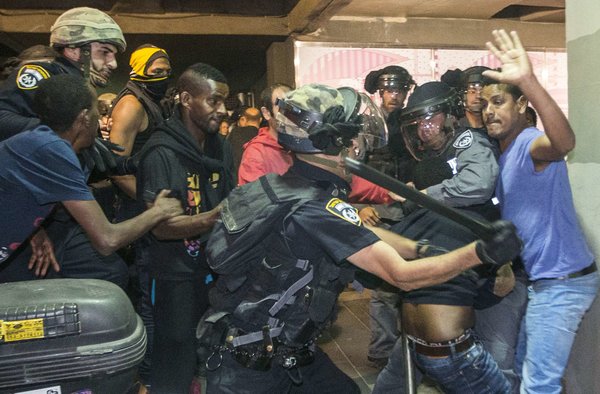
Al-Manar | May 4, 2015
A protest in Tel Aviv over police mistreatment of Ethiopian Jews turned violent Sunday, resulting in 57 officers being injured, according to the Zionist police.
Most of those injuries were minor, according to police, but one officer was described to be “moderately injured.” Police say 12 protestors were injured. The extent of those injuries is not known, according to CNN.
The planned demonstration by the Ethiopian Jewish community — incensed over a video gone viral that shows a uniformed IOF soldier of Ethiopian descent being assaulted by police — had been peaceful for hours before things took a violent turn.
Authorities employed horses, water cannons and smoke to disperse the crowd in Rabin Square, where demonstrators had been chanting slogans such as “a violent cop should be in jail.”
Forty-three protesters were arrested, according to Israeli police spokeswoman Luba Samri.
The videotaped episode from April 26 was a tipping point for Ethiopian Jews, some 125,000 strong, who say they have long felt like second-class citizens since arriving in two waves of mass immigration in the 1980s and early 1990s.
Prime Minister Benjamin Netanyahu released a statement saying that “all claims will be looked into but there is no place for violence and such disturbances.” Netanyahu will meet with Pakada on Monday, as well as with leaders in the Ethiopian community, according to the statement.
USA FREEDOM Act: Just Another Word for Lost Liberty
By Ron Paul | May 3, 2015
Apologists for the National Security Agency (NSA) point to the arrest of David Coleman Headley as an example of how warrantless mass surveillance is necessary to catch terrorists. Headley played a major role in the 2008 Mumbai terrorist attack that killed 166 people.
While few would argue that bringing someone like Headley to justice is not a good thing, Headley’s case in no way justifies mass surveillance. For one thing, there is no “terrorist” exception in the Fourth Amendment. Saying a good end (capturing terrorists) justifies a bad means (mass surveillance) gives the government a blank check to violate our liberties.
Even if the Headley case somehow justified overturning the Fourth Amendment, it still would not justify mass surveillance and bulk data collection. This is because, according to an investigation by ProPublica, NSA surveillance played an insignificant role in catching Headley. One former counter-terrorism official said when he heard that NSA surveillance was responsible for Headley’s capture he “was trying to figure out how NSA played a role.”
The Headley case is not the only evidence that the PATRIOT Act and other post-9/11 sacrifices of our liberty have not increased our security. For example, the NSA’s claim that its surveillance programs thwarted 54 terrorist attacks has been widely discredited. Even the president’s Review Group on Intelligence and Communications Technologies found that mass surveillance and bulk data collection was “not essential to preventing attacks.”
According to the congressional Joint Inquiry into Intelligence Activities before and after the Terrorist Attacks of September 11, 2001 and the 9/11 Commission, the powers granted the NSA by the PATRIOT Act would not have prevented the 9/11 attacks. Many intelligence experts have pointed out that, by increasing the size of the haystack government agencies must look through, mass surveillance makes it harder to find the needle of legitimate threats.
Even though mass surveillance threatens our liberty, violates the Constitution, and does nothing to protect us from terrorism, many in Congress still cling to the fiction that the only way to ensure security is to give the government virtually unlimited spying powers. These supporters of the surveillance state are desperate to extend the provisions of the PATRIOT Act that are set to expire at the end of the month. They are particularly eager to preserve Section 215, which authorizes many of the most egregious violations of our liberties, including the NSA’s “metadata” program.
However, Edward Snowden’s revelations have galvanized opposition to the NSA’s ongoing violations of our liberties. This is why Congress will soon vote on the USA FREEDOM Act. This bill extends the expiring surveillance laws. It also contains some “reforms” that supposedly address all the legitimate concerns regarding mass surveillance.
However, a look at the USA FREEDOM Act’s details, as opposed to the press releases of its supporters, shows that the act leaves the government’s mass surveillance powers virtually untouched.
The USA FREEDOM Act has about as much to do with freedom as the PATRIOT Act had to do with patriotism. If Congress truly wanted to protect our liberties it would pass the Surveillance State Repeal Act, which repeals the PATRIOT Act. Congress should also reverse the interventionist foreign policy that increases the risk of terrorism by fostering resentment and hatred of Americans.
Fourteen years after the PATRIOT Act was rushed into law, it is clear that sacrificing liberty does little or nothing to preserve security. Instead of trying to fool the American people with phony reforms, Congress should repeal all laws that violate the Fourth Amendment, starting with the PATRIOT Act.
Lomborg, Ridley and Power to the People
The Lukewarmer’s Way | April 28, 2015
Bjorn Lomborg has been invited by the Australian government via the University of Western Australia to relocate the Copenhagen Consensus Center to the lucky country. I wish him well in his new surroundings.
News of this has revived the muttering and outright ranting about how Evil!!! Lomborg is. This is because the policy conclusions of the Consensus Centre (and Lomborg in his writings prior to the CC being established) shows that investing in renewable energy and other mitigation and adaptation measures regarding climate change is less effective at improving health and raising living standards in the developing world than other measures, such as insuring access to micro nutrients, suppressing and treating malaria, etc.
Obviously, Lomborg and the CC are right. Nicholas Stern estimates the cost of dealing with climate change at between 1% and 5% of global GDP. Providing micro nutrients for the poor costs pennies per person. The only real question is are healthy poor people more important than reducing CO2 emissions?
Although Stern and a few other economists argue that eliminating or reducing the threat of climate change for people in 2100 is more important than providing sustenance to today’s poor, not many agree, which is why the argument is rarely put in such stark terms.
However, the argument is clearest in discussions about provision of power to the poor. Those most alarmed about climate change wish to push the developing world into using renewable energy sources instead of the much cheaper and more available fossil fuels, especially coal. As Matt Ridley notes over at his blog, “In 2013 Ed Davey, the energy secretary, announced that British taxpayers will no longer fund coal-fired power stations in developing countries, and that he would put pressure on development banks to ensure that their funding policies rule out coal. (I declare a commercial interest in coal in Northumberland.)
In the same year the US passed a bill prohibiting the Overseas Private Investment Corporation — a federal agency responsible for underwriting American companies that invest in developing countries — from investing in energy projects that involve fossil fuels.”
This argument is not actually new–those of us who remember the Greenpeace thug who threatened skeptics saying “We know where you live and we be many while you be few” know that the subject under discussion was Greenpeace and the WWF’s efforts to stop World Bank funding for a coal plant in South Africa.
The average household income for someone with solar panels on their roof in the USA is $150,000. The capital costs of renewable energy make it unaffordable for Africa and India in most cases.
There are numerous exceptions, of course. In areas where it is expensive to extend the transmission grid to villages, Rural Electrification Programs using solar power have been used effectively since the 1980s. However, these don’t provide enough power to truly power a village–at most they provide radio and some lighting. These are hugely valuable and I support the expansion of such programs.
But they are insufficient for powering the light industry the region needs to truly improve their lot and they cannot power the refrigeration needed for improved health outcomes.
Lomborg is right that the poor of today need more concrete aid than they do emission reductions. Ridley is right to point out that coal fired power plants are what they are crying out for and would make possible the concrete aid that we all know they need.
And the manic Alarmists have forgotten that coal, bad as it is (I am no friend of coal), is a denser fuel than dung and firewood, emitting less than what it will replace. Obviously, because of the potential to provide more power to more people, emissions will rise as it saves lives, but dung burnt indoors kills millions and the relentless search for firewood denudes forests and exposes the women who undertake the daily search to threats of attack from animals and unscrupulous men.
The developing world has found an unlikely savior in China, who are well-pleased to help them build the infrastructure that Africa and Southern Asia need, want and are crying out for.
Because the argument is truly clear, alarmists are reduced to insinuations about Lomborg’s motives (does he really want to help the poor?) and the horror of his being offered a post in Australia, while Ridley is attacked because he used to serve on the board of a bank that went broke some years ago. Phoney arguments such as these keep the alarmists occupied, the water muddied and the Greens still dictating policy to western governments. Alarmists agonize over whether or not climate scientists should fly (coming to the conclusion that they should), but after sober reflection they call helping Africa a ‘serious and complex issue’.
Perhaps the clearest example of their hypocrisy is their accusation that people like “Lomborg and Ridley, if they were serious, would be encouraging dialogue, not trying to demonize” their opponents.
After ten years of a concerted effort by Greens to demonize Lomborg and Ridley, the very people who have demonized Lomborg and Ridley say they shouldn’t demonize their opponents. But Lomborg and Ridley do not. They don’t make attacks on people or even organizations. They just show quite clearly that stringent caps on emissions that are enforced first on the poor and loosely or not at all on the rich kill, sicken and immiserate the poor. It is the Greens that have vigorously pursued a policy of vicious and calculated demonization of those like Lomborg and Ridley.
At some point, future generations will have a different color code–and they will say that Greens have no right to advocate policies that trap Black and Brown people in poverty. They may use a different ‘G’ word to describe the net effects of what Greens are doing today.
There is a case to be made for saying the aggregate effect of Green policy in the developing world is perilously close to being complicit in genocide. At the very least they are showing an appalling indifference to the plight of people in the developing world. I wonder if the skeptics will mention that while they’re touring the Vatican?
China is doing more for the world’s poor than Greenpeace. Go figure.
Harvard Trained Immunologist Demolishes California Legislation That Terminates Vaccine Exemptions
State of the Nation | April 23, 2015
SOTN Editor’s Note:
The following open letter by a PhD Immunologist completely demolishes the current California legislative initiative to remove all vaccine exemptions. That such a draconian and cynical state statute is under consideration in the ‘Golden State’ is as shocking as it is predictable. After all, it was mysteriously written and submitted shortly after the manufactured-in-Disneyland measles ‘outbreak’.
The indisputable science that is employed by Tetyana Obukhanych, PhD ought to be read by every CA legislator who is entertaining an affirmative vote for SB277. Dr. Obukhanych skillfully deconstructs the many false and fabricated arguments that are advanced by Big Pharma and the U.S Federal Government as they attempt to implement a nationwide Super-Vaccination agenda.
When the California Senate refuses to consider authoritative scientific evidence which categorically proves the dangerous vaccine side effects on the schoolchildren, something is very wrong. Such conduct by the Senate constitutes criminal action that endangers the lives and welfare of children. Their official behavior must be acknowledged for what it is — CRIMINAL — and prosecuted to the fullest extent of the law.
An Open Letter to Legislators Currently Considering Vaccine Legislation from Tetyana Obukhanych, PhD in Immunology
Re: VACCINE LEGISLATION
Dear Legislator:
My name is Tetyana Obukhanych. I hold a PhD in Immunology. I am writing this letter in the hope that it will correct several common misperceptions about vaccines in order to help you formulate a fair and balanced understanding that is supported by accepted vaccine theory and new scientific findings.
Do unvaccinated children pose a higher threat to the public than the vaccinated?
It is often stated that those who choose not to vaccinate their children for reasons of conscience endanger the rest of the public, and this is the rationale behind most of the legislation to end vaccine exemptions currently being considered by federal and state legislators country-wide. You should be aware that the nature of protection afforded by many modern vaccines – and that includes most of the vaccines recommended by the CDC for children – is not consistent with such a statement. I have outlined below the recommended vaccines that cannot prevent transmission of disease either because they are not designed to prevent the transmission of infection (rather, they are intended to prevent disease symptoms), or because they are for non-communicable diseases. People who have not received the vaccines mentioned below pose no higher threat to the general public than those who have, implying that discrimination against non-immunized children in a public school setting may not be warranted.
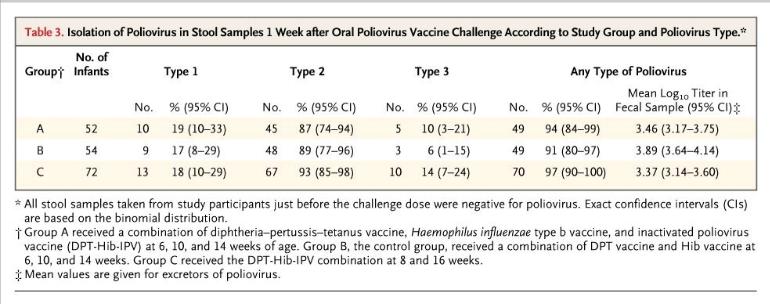
- IPV (inactivated poliovirus vaccine) cannot prevent transmission of poliovirus (see appendix for the scientific study, Item #1). Wild poliovirus has been non-existent in the USA for at least two decades. Even if wild poliovirus were to be re-imported by travel, vaccinating for polio with IPV cannot affect the safety of public spaces. Please note that wild poliovirus eradication is attributed to the use of a different vaccine, OPV or oral poliovirus vaccine. Despite being capable of preventing wild poliovirus transmission, use of OPV was phased out long ago in the USA and replaced with IPV due to safety concerns.
- Tetanus is not a contagious disease, but rather acquired from deep-puncture wounds contaminated with C. tetani spores. Vaccinating for tetanus (via the DTaP combination vaccine) cannot alter the safety of public spaces; it is intended to render personal protection only.
- While intended to prevent the disease-causing effects of the diphtheria toxin, the diphtheria toxoid vaccine (also contained in the DTaP vaccine) is not designed to prevent colonization and transmission of C. diphtheriae. Vaccinating for diphtheria cannot alter the safety of public spaces; it is likewise intended for personal protection only.
- The acellular pertussis (aP) vaccine (the final element of the DTaP combined vaccine), now in use in the USA, replaced the whole cell pertussis vaccine in the late 1990s, which was followed by an unprecedented resurgence of whooping cough. An experiment with deliberate pertussis infection in primates revealed that the aP vaccine is not capable of preventing colonization and transmission of B. pertussis (see appendix for the scientific study, Item #2). The FDA has issued a warning regarding this crucial finding.[1]
- Furthermore, the 2013 meeting of the Board of Scientific Counselors at the CDC revealed additional alarming data that pertussis variants (PRN-negative strains) currently circulating in the USA acquired a selective advantage to infect those who are up-to-date for their DTaP boosters (see appendix for the CDC document, Item #3), meaning that people who are up-to-date are more likely to be infected, and thus contagious, than people who are not vaccinated.
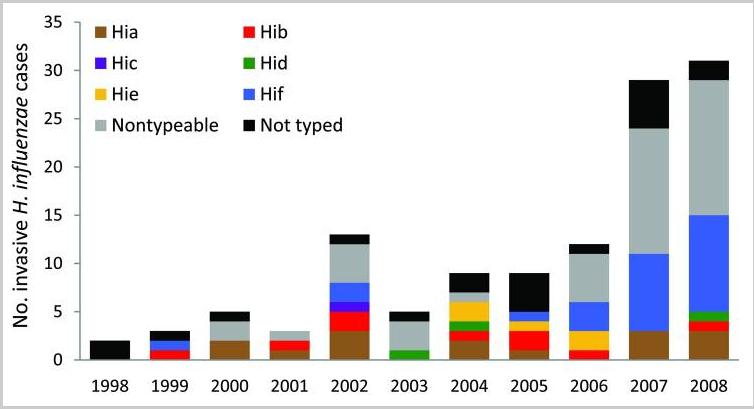
- Among numerous types of H. influenzae, the Hib vaccine covers only type b. Despite its sole intention to reduce symptomatic and asymptomatic (disease-less) Hib carriage, the introduction of the Hib vaccine has inadvertently shifted strain dominance towards other types of H. influenzae (types a through f).These types have been causing invasive disease of high severity and increasing incidence in adults in the era of Hib vaccination of children (see appendix for the scientific study, Item #4). The general population is more vulnerable to the invasive disease now than it was prior to the start of the Hib vaccination campaign. Discriminating against children who are not vaccinated for Hib does not make any scientific sense in the era of non-type b H. influenzae disease.
- Hepatitis B is a blood-borne virus. It does not spread in a community setting, especially among children who are unlikely to engage in high-risk behaviors, such as needle sharing or sex. Vaccinating children for hepatitis B cannot significantly alter the safety of public spaces. Further, school admission is not prohibited for children who are chronic hepatitis B carriers. To prohibit school admission for those who are simply unvaccinated – and do not even carry hepatitis B – would constitute unreasonable and illogical discrimination.
In summary, a person who is not vaccinated with IPV, DTaP, HepB, and Hib vaccines due to reasons of conscience poses no extra danger to the public than a person who is. No discrimination is warranted.
How often do serious vaccine adverse events happen?
It is often stated that vaccination rarely leads to serious adverse events. Unfortunately, this statement is not supported by science. A recent study done in Ontario, Canada, established that vaccination actually leads to an emergency room visit for 1 in 168 children following their 12-month vaccination appointment and for 1 in 730 children following their 18-month vaccination appointment (see appendix for a scientific study, Item #5).
When the risk of an adverse event requiring an ER visit after well-baby vaccinations is demonstrably so high, vaccination must remain a choice for parents, who may understandably be unwilling to assume this immediate risk in order to protect their children from diseases that are generally considered mild or that their children may never be exposed to.
Can discrimination against families who oppose vaccines for reasons of conscience prevent future disease outbreaks of communicable viral diseases, such as measles?
Measles research scientists have for a long time been aware of the “measles paradox.” I quote from the article by Poland & Jacobson (1994) “Failure to Reach the Goal of Measles Elimination: Apparent Paradox of Measles Infections in Immunized Persons.” Arch Intern Med 154:1815-1820:
“The apparent paradox is that as measles immunization rates rise to high levels in a population, measles becomes a disease of immunized persons.”[2]
Further research determined that behind the “measles paradox” is a fraction of the population called LOW VACCINE RESPONDERS. Low-responders are those who respond poorly to the first dose of the measles vaccine. These individuals then mount a weak immune response to subsequent RE-vaccination and quickly return to the pool of “susceptibles’’ within 2-5 years, despite being fully vaccinated.[3]
Re-vaccination cannot correct low-responsiveness: it appears to be an immuno-genetic trait.[4] The proportion of low-responders among children was estimated to be 4.7% in the USA.[5]
Studies of measles outbreaks in Quebec, Canada, and China attest that outbreaks of measles still happen, even when vaccination compliance is in the highest bracket (95-97% or even 99%, see appendix for scientific studies, Items #6&7). This is because even in high vaccine responders, vaccine-induced antibodies wane over time. Vaccine immunity does not equal life-long immunity acquired after natural exposure.
It has been documented that vaccinated persons who develop breakthrough measles are contagious. In fact, two major measles outbreaks in 2011 (in Quebec, Canada, and in New York, NY) were re-imported by previously vaccinated individuals.[6] – [7]
Taken together, these data make it apparent that elimination of vaccine exemptions, currently only utilized by a small percentage of families anyway, will neither solve the problem of disease resurgence nor prevent re-importation and outbreaks of previously eliminated diseases.
Is discrimination against conscientious vaccine objectors the only practical solution?
The majority of measles cases in recent US outbreaks (including the recent Disneyland outbreak) are adults and very young babies, whereas in the pre-vaccination era, measles occurred mainly between the ages 1 and 15. Natural exposure to measles was followed by lifelong immunity from re-infection, whereas vaccine immunity wanes over time, leaving adults unprotected by their childhood shots. Measles is more dangerous for infants and for adults than for school-aged children.
Despite high chances of exposure in the pre-vaccination era, measles practically never happened in babies much younger than one year of age due to the robust maternal immunity transfer mechanism. The vulnerability of very young babies to measles today is the direct outcome of the prolonged mass vaccination campaign of the past, during which their mothers, themselves vaccinated in their childhood, were not able to experience measles naturally at a safe school age and establish the lifelong immunity that would also be transferred to their babies and protect them from measles for the first year of life.
Luckily, a therapeutic backup exists to mimic now-eroded maternal immunity. Infants as well as other vulnerable or immunocompromised individuals, are eligible to receive immunoglobulin, a potentially life-saving measure that supplies antibodies directed against the virus to prevent or ameliorate disease upon exposure (see appendix, Item #8).
In summary: 1) due to the properties of modern vaccines, non-vaccinated individuals pose no greater risk of transmission of polio, diphtheria, pertussis, and numerous non-type b H. influenzae strains than vaccinated individuals do, non-vaccinated individuals pose virtually no danger of transmission of hepatitis B in a school setting, and tetanus is not transmissible at all; 2) there is a significantly elevated risk of emergency room visits after childhood vaccination appointments attesting that vaccination is not risk-free; 3) outbreaks of measles cannot be entirely prevented even if we had nearly perfect vaccination compliance; and 4) an effective method of preventing measles and other viral diseases in vaccine-ineligible infants and the immunocompromised, immunoglobulin, is available for those who may be exposed to these diseases.
Taken together, these four facts make it clear that discrimination in a public school setting against children who are not vaccinated for reasons of conscience is completely unwarranted as the vaccine status of conscientious objectors poses no undue public health risk.
Sincerely Yours,
~ Tetyana Obukhanych, PhD
Tetyana Obukhanych, PhD, is the author of the book Vaccine Illusion. She has studied immunology in some of the world’s most prestigious medical institutions. She earned her PhD in Immunology at the Rockefeller University in New York and did postdoctoral training at Harvard Medical School, Boston, MA and Stanford University in California.
Dr. Obukhanych offers online classes for those who want to gain deeper understanding of how the immune system works and whether the immunologic benefits of vaccines are worth the risks: Natural Immunity Fundamentals.
Appendix
Item #1. The Cuba IPV Study collaborative group. (2007) Randomized controlled trial of inactivated poliovirus vaccine in Cuba. N Engl J Med 356:1536-44
http://www.ncbi.nlm.nih.gov/pubmed/17429085
The table below from the Cuban IPV study documents that 91% of children receiving no IPV (control group B) were colonized with live attenuated poliovirus upon deliberate experimental inoculation. Children who were vaccinated with IPV (groups A and C) were similarly colonized at the rate of 94-97%. High counts of live virus were recovered from the stool of children in all groups. These results make it clear that IPV cannot be relied upon for the control of polioviruses.
Item #2. Warfel et al. (2014) Acellular pertussis vaccines protect against disease but fail to prevent infection and transmission in a nonhuman primate model.Proc Natl Acad Sci USA 111:787-92
http://www.ncbi.nlm.nih.gov/pubmed/24277828
“Baboons vaccinated with aP were protected from severe pertussis-associated symptoms but not from colonization, did not clear the infection faster than naïve [unvaccinated] animals, and readily transmitted B. pertussis to unvaccinated contacts. By comparison, previously infected [naturally-immune] animals were not colonized upon secondary infection.”
Item #3. Meeting of the Board of Scientific Counselors, Office of Infectious Diseases, Centers for Disease Control and Prevention, Tom Harkins Global Communication Center, Atlanta, Georgia, December 11-12, 2013
http://www.cdc.gov/maso/facm/pdfs/BSCOID/2013121112_BSCOID_Minutes.pdf
Resurgence of Pertussis (p.6)
“Findings indicated that 85% of the isolates [from six Enhanced Pertussis Surveillance Sites and from epidemics in Washington and Vermont in 2012] were PRN-deficient and vaccinated patients had significantly higher odds than unvaccinated patients of being infected with PRN-deficient strains. Moreover, when patients with up-to-date DTaP vaccinations were compared to unvaccinated patients, the odds of being infected with PRN-deficient strains increased, suggesting that PRN-bacteria may have a selective advantage in infecting DTaP-vaccinated persons.”
Item #4. Rubach et al. (2011) Increasing incidence of invasive Haemophilus influenzae disease in adults, Utah, USA. Emerg Infect Dis 17:1645-50
http://www.ncbi.nlm.nih.gov/pubmed/21888789
The chart below from Rubach et al. shows the number of invasive cases of H. influenzae(all types) in Utah in the decade of childhood vaccination for Hib.
Item #5. Wilson et al. (2011) Adverse events following 12 and 18 month vaccinations: a population-based, self-controlled case series analysis. PLoS One 6:e27897
http://www.ncbi.nlm.nih.gov/pubmed/22174753
“Four to 12 days post 12 month vaccination, children had a 1.33 (1.29-1.38) increased relative incidence of the combined endpoint compared to the control period, or at least one event during the risk interval for every 168 children vaccinated. Ten to 12 days post 18 month vaccination, the relative incidence was 1.25 (95%, 1.17-1.33) which represented at least one excess event for every 730 children vaccinated. The primary reason for increased events was statistically significant elevations in emergency room visits following all vaccinations.”
Item #6. De Serres et al. (2013) Largest measles epidemic in North America in a decade–Quebec, Canada, 2011: contribution of susceptibility, serendipity, and superspreading events. J Infect Dis 207:990-98
http://www.ncbi.nlm.nih.gov/pubmed/23264672
“The largest measles epidemic in North America in the last decade occurred in 2011 in Quebec, Canada.”
“A super-spreading event triggered by 1 importation resulted in sustained transmission and 678 cases.”
“The index case patient was a 30-39-year old adult, after returning to Canada from the Caribbean. The index case patient received measles vaccine in childhood.”
“Provincial [Quebec] vaccine coverage surveys conducted in 2006, 2008, and 2010 consistently showed that by 24 months of age, approximately 96% of children had received 1 dose and approximately 85% had received 2 doses of measles vaccine, increasing to 97% and 90%, respectively, by 28 months of age. With additional first and second doses administered between 28 and 59 months of age, population measles vaccine coverage is even higher by school entry.”
“Among adolescents, 22% [of measles cases] had received 2 vaccine doses. Outbreak investigation showed this proportion to have been an underestimate; active case finding identified 130% more cases among 2-dose recipients.”
Item #7. Wang et al. (2014) Difficulties in eliminating measles and controlling rubella and mumps: a cross-sectional study of a first measles and rubella vaccination and a second measles, mumps, and rubella vaccination. PLoS One9:e89361
http://www.ncbi.nlm.nih.gov/pubmed/24586717
“The reported coverage of the measles-mumps-rubella (MMR) vaccine is greater than 99.0% in Zhejiang province. However, the incidence of measles, mumps, and rubella remains high.”
Item #8. Immunoglobulin Handbook, Health Protection Agency
HUMAN NORMAL IMMUNOGLOBULIN (HNIG):
Indications
- To prevent or attenuate an attack in immuno-compromised contacts
- To prevent or attenuate an attack in pregnant women
- To prevent or attenuate an attack in infants under the age of 9 months
[1] http://www.fda.gov/NewsEvents/Newsroom/PressAnnouncements/ucm376937.htm
[2] http://archinte.jamanetwork.com/article.aspx?articleid=619215
[3] Poland (1998) Am J Hum Genet 62:215-220
http://www.ncbi.nlm.nih.gov/pubmed/9463343
“ ‘poor responders,’ who were re-immunized and developed poor or low-level antibody responses only to lose detectable antibody and develop measles on exposure 2–5 years later.”
[4] ibid
“Our ongoing studies suggest that seronegativity after vaccination [for measles] clusters among related family members, that genetic polymorphisms within the HLA [genes] significantly influence antibody levels.”
[5] LeBaron et al. (2007) Arch Pediatr Adolesc Med 161:294-301
http://www.ncbi.nlm.nih.gov/pubmed/17339511
“Titers fell significantly over time [after second MMR] for the study population overall and, by the final collection, 4.7% of children were potentially susceptible.”
[6] De Serres et al. (2013) J Infect Dis 207:990-998
http://www.ncbi.nlm.nih.gov/pubmed/23264672
“The index case patient received measles vaccine in childhood.”
[7] Rosen et al. (2014) Clin Infect Dis 58:1205-1210
http://www.ncbi.nlm.nih.gov/pubmed/24585562
“The index patient had 2 doses of measles-containing vaccine.”
Airbus goes to court over reports of NSA/BND espionage
RT | May 1, 2015
European aviation consortium Airbus said it would file criminal charges over industrial espionage, following reports that US and German foreign intelligence spied on the industry giant.
“We are aware that as a large company in the sector, we are a target and subject of espionage,” the company said in a statement to AFP on Thursday. “However, in this case we are alarmed because there is concrete suspicion of industrial espionage.”
The move follows reports in Bild newspaper and Der Spiegel news magazine based on intelligence documents, claiming US spy agency, the NSA, deliberately targeted Airbus and Eurocopter – also run by the French-based company. The reports additionally revealed Berlin was aware of the espionage and kept quiet since 2008.
Following the allegations, Airbus “asked the German government for information.”
“We will now file a criminal complaint against persons unknown on suspicion of industrial espionage,” the company said.
It is alleged the German Foreign Intelligence service (BND) collaborated with the NSA in providing information about Airbus’ industrial secrets. The German media reports also alleged BND used the Bad Aibling monitoring station in Bavaria not only to spy on industrial business, but also to eavesdrop on the French president, the French foreign ministry, and the European Commission.
A French foreign ministry spokesman was quoted by DW as saying: “We are in close contact on this issue with our German partners.”
The German public and the political elite were furious following the 2013 disclosures by former NSA contractor Edward Snowden, into the NSA hack of Chancellor Angela Merkel’s cell phone. Yet while promising to respond, Germany has done nothing over the years.
Civil Liberty Violations Seen in NYPD Interrogations of Demonstrators
By Noel Brinkerhoff | AllGov | April 30, 2015
The New York City Police Department is back to doing something it was told by the courts decades ago to stop: interrogating demonstrators about their political behavior.
At least a dozen people protesting the decision not to prosecute the police who killed Eric Garner were detained by the NYPD. They later told The New York Times that they were questioned about their political associations and other matters related to their involvement in street protests.
The interrogations could have a chilling effect on Americans lawfully exercising their right to protest and may also put the department in violation of a 1985 consent decree that came out of a federal court case, Handschu v. Special Services Division (pdf), which was supposed to end investigations of political activity.
The recent NYPD actions aren’t the first time it has skirted the legalities of the Handschu settlement. In 2003, the department was rebuked after its Intelligence Division detectives collected information from antiwar protestors such as their school, their membership in organizations and their involvement in past protests.
The Times’ Colin Moynihan wrote that “some civil liberties lawyers say the recent questioning appeared to be substantially similar to the questioning in 2003,” with detectives focusing on political involvement, not criminal behavior.
“When the police investigate political affiliations and political activities, that poses a serious threat to First Amendment rights,” Christopher Dunn, the associate legal director of the New York Civil Liberties Union, told the Times. “The NYPD should stop this immediately.”
To Learn More:
Questioning of Garner Protesters in New York Renews Concerns about Police Practices (by Colin Moynihan, New York Times )
Chicago Police Accused of Running Secret Interrogation Center (by Noel Brinkerhoff, AllGov )
Supreme Court Rules a Suspect’s Silence during Police Interrogation Can be Used against Him (by Noel Brinkerhoff and Danny Biederman, AllGov )
Featured Video

Matt Bracken: US Plans Massive MOAB Strike on Iran?
or go to
Aletho News Archives – Video-Images
New Book
The silver that medicine dropped — four thousand years of clinical use, four decades to erase.
Colloidal Silver — First Edition, 2026, Paperback
Lies are Unbekoming | October 16, 2026
Silver was medicine. Not alternative medicine. Not folk medicine. Medicine. In surgery. In obstetrics. In the burn ward. In water treatment. In the household medicine chest. Every physician before 1938 knew this.
By the 1870s, silver nitrate was standard in surgical wound care across the leading hospitals of Britain, Germany, and the United States. Colloidal silver preparations — Collargol, Argyrol, Protargol — entered European and American practice through the 1890s and early 1900s and became standard antiseptics in military field medicine. By the time Fleming grew his first penicillin mould in 1928, silver was the first-line antimicrobial of the Western pharmacopoeia. The Lancet and the British Medical Journal carried the clinical reports in volume. The practice ran continuously through the Victorian era, the Edwardian era, the First World War, the interwar period. By 1980, almost all of it was gone.
What has not been treated at book length, until now, is how a four-thousand-year clinical record disappeared from mainstream medicine within four decades of the Flexner Report — and what the honest account of silver looks like once that record is reassembled.
Colloidal Silver reconstructs the pre-1938 record from The Lancet, the British Medical Journal, and the primary literature of the era; recovers Robert Becker’s bioelectric framework from the regeneration research the pharmaceutical model buried; and places silver inside a practical terrain-paradigm guide to its current place — in water, on the body, inside the body, and in the chronic conditions where antibiotics have failed. … continue
Blog Roll
 Aletho News
- Inside Bill C-22, Canada’s Patriot Act.
- China’s FM: Palestinian cause is ‘greatest injustice of the century’
- US sympathy for Palestinians surpasses support for Israelis
- Israeli rabbi permits occupiers to steal Palestinian olive harvest in West Bank
- Spanish firm sells Latvia vehicles equipped with Israeli tech despite arms embargo
- Saudi Arabia under fire… Yemen is burning down the House of Saud
- Israeli Spy Pollard stole the files, today’s it’s delivered through official channels
- Why Iran Didn’t Walk Away
- US arms supplied to Ukraine found in war-torn Sudan – Moscow
- The silver that medicine dropped — four thousand years of clinical use, four decades to erase.
- If Americans Knew
- NPR investigation finds evidence of widespread fraud at mall kiosks tied to Israeli skincare brand
- Tucker Carlson exposes Israeli Lies about the Oct 7th attack, Charlie Kirk, and the U.S.
- Israel has detained thousands of Palestinian children since Oct 7th – over half spent time in solitary, many uncharged
- Israeli Analysis: Is Netanyahu Planning an ‘October Surprise’ Attack Before Israel’s Election?
- Israeli settlers brutally attack Palestinians and Washington Post female photographer, 65
- Words Have Changed, Occupation Continues: The Reality of the Gaza Ceasefire
- Gaza’s child amputees are growing faster than their prosthetics allow
- Israel keeps Palestinians struggling just to survive–Daily Update
- Israeli firm used online ads to run vast spy operation, researchers say
- No, the world zionist movement is not an antisemitic conspiracy theory
- No Tricks Zone
- New Study Suggests Large Regions Of The Pacific Ocean Have Been Cooling For The Last 80 Years
- Germany’s Green Energy Debacle: High Energy Costs Force Kahla Porzellan to Close After 182 Years!
- New Study: 50 Years Of The Most Aggressive ‘Net Zero’ Policies Can Only Affect The Global Climate By 0.03°C
- US September “Heat” Was No Record…Many Records Set Decades Ago
- Latest European Green Energy Debacle; Portugal’s Largest Flagship Solar Park Insolvent!
- Green Energy Debacle: German Expert Professor Fritz Vahrenholt Warns Of Severe Economic And Social Consequences
- Two More Paleo Reconstructions Affirm Meters-Higher Sea Levels Across Ireland, Brazil 7000-6000 Years Ago
- New Study: Earth And Venus Surface Warmth Largely Explained By Convection And Lapse Rate, Not CO2 Or Radiation
- 2025 Nature Paper Claiming Worsening Global Drought Gets RETRACTED …Heavily Flawed
- New Study: ‘Global Drought Shows No Detectable Recent Acceleration Under Climate Warming’

