Israel Has Banned Renowned Doctor and Human Rights Activist Mads Gilbert from Entering Gaza for Life
By Ben Norton | Dissident Voice | November 14, 2014
Israel has banned Norwegian doctor and human rights activist Mads Gilbert from entering Gaza for life.
Gilbert, a professor at the University Hospital of North Norway, where he has worked since 1976, earned international renown for his philanthropic work in late 2008, during Israel’s Operation Cast Lead, an attack that, according to Israeli human rights organization B’Tselem, killed roughly 1,400 Gazans, including almost 800 civilians, 350 of whom were children.
The aid worker, along with fellow Norwegian doctor Erik Fosse, decided to volunteer in Gaza as soon as he heard that bombing had started, on 27 December 2008. Thanks to diplomatic and economic support (in the sum of $1 million dollar of emergency funding from the Norwegian Ministry of Foreign Affairs), the two physicians managed to arrive in the strip by 30 December.
The Israeli government prevented all international press from entering Gaza during Cast Lead (a documentary, The War Around Us, was made about the only two foreign reporters in the strip at the time), in what Gilbert called Israel’s insidious “PR plan.” The doctor, as one of the only international aid workers in Gaza, thus devoted considerable time to speaking with local Palestinian news outlets, some of whom were reporting on behalf of foreign networks including BBC, CNN, ABC, and Al Jazeera.
BBC aired an interview with Gilbert, conducted in the hospital. The questions asked, and the answers garnered, were eerily similar to those he would give just five years later, during Operation Protective Edge. The interviewer began asking him to respond to Israel’s claims that it was not targeting civilians, that it was only attacking Hamas militants. Gilbert called the claim “an absolutely stupid statement” and explained that, among the hundreds of patients he had seen at that point, only two had been fighters. The “large majority” were women, children, and men civilians. “These numbers are contradictory to everything Israel says,” he reported.
Gilbert drew attention to the fact that the overflowing hospital did not have enough supplies to treat all of its patients, and censured the international community for doing nothing to assist them. Israel would not let in foreign doctors, and yet Palestinians were “dying waiting for surgery.” “This is a complete disaster,” he remarked, calling it “the worst man-made disaster” he could think of. “There are injuries you just don’t want to see in this world.”
Operation Protective Edge
In 2008 and 2009, Gilbert treated Palestinians who had been grievously wounded by Israel’s use of experimental and illegal chemical weapons, including white phosphorous, dense inert metal explosives (DIME) munitions, and flechette shells. In July 2014, in the midst of Israel’s most recent attack on Gaza, Gilbert spoke with Electronic Intifada, revealing that he saw indications of renewed use of DIME weapons and flechettes.
While volunteering in Shifa hospital, Gaza’s principal medical facility, Gilbert penned an open letter, lamenting the unspeakable horrors the Israeli military was instigating.
[Israel’s] “ground invasion” of Gaza resulted in scores and carloads with maimed, torn apart, bleeding, shivering, dying… All sorts of injured Palestinians, all ages, all civilians, all innocent.
The heroes in the ambulances and in all of Gaza’s hospitals are working 12 to 24‑hour shifts, grey from fatigue and inhuman workloads (without payment in Shifa for the last four months). They care, triage, try to understand the incomprehensible chaos of bodies, sizes, limbs, walking, not walking, breathing, not breathing, bleeding, not bleeding humans. Humans!
…
Ashy grey faces – Oh no! not one more load of tens of maimed and bleeding. We still have lakes of blood on the floor in the emergency room, piles of dripping, blood-soaked bandages to clear out – oh – the cleaners, everywhere, swiftly shovelling the blood and discarded tissues, hair, clothes, cannulas – the leftovers from death – all taken away… to be prepared again, to be repeated all over.More than 100 cases came to Shifa in the last 24 hours. Enough for a large well-trained hospital with everything, but here – almost nothing: electricity, water, disposables, drugs, operating-room tables, instruments, monitors – all rusted and as if taken from museums of yesterday’s hospitals. But they do not complain, these heroes.
Now, once more treated like animals by “the most moral army in the world.”
The doctor directed one heart-wrenching passage to President Obama, writing “Mr Obama – do you have a heart? I invite you – spend one night – just one night – with us in Shifa. I am convinced, 100 per cent, it would change history. Nobody with a heart and power could ever walk away from a night in Shifa without being determined to end the slaughter of the Palestinian people.”
Israel later attacked Shifa hospital. Doctors Without Borders (MSF) “strongly condemn[ed]” the incursion, saying it “demonstrate[d] how civilians in Gaza have nowhere safe to go.” MSF director Marie-Noëlle Rodrigue stated, in an official statement, “When the Israeli army orders civilians to evacuate their houses and their neighborhoods, where is there for them to go? Gazans have no freedom of movement and cannot take refuge outside Gaza. They are effectively trapped.” Shifa was one of the over 10 medical facilities Israel bombed in its 50-day offensive.
Human Rights Work
In 2000, Gilbert made headlines for saving the life of a skier who had been trapped in sub-zero water. She had been pronounced clinically dead, with a body temperature of 57 °F, but Gilbert managed to revive her. For his service, Gilbert was awarded the Northern Norwegian of the Year award.
Before Operation Protective Edge commenced in early July 2014, Gilbert toured medical and health facilities and individual homes in Gaza, researching for a United Nations Relief and Works Agency for Palestine Refugees in the Near East (UNRWA) report on the dire state of the strip’s health sector. He wrote of “overstretched” health facilities, widespread physical and psychological trauma, “a deep financial crisis,” a lack of needed medical supplies, and a “severe energy crisis.” He also noted the “devastating results of the blockade imposed by the Government of Israel,” with rampant poverty, a 38.5% unemployment rate, food insecurity in at least 57% of households, and inadequate access to clean water. All of these already extreme ills were only exacerbated by the July-August Israeli assault on Gaza, an onslaught that left roughly 2,200 Palestinians dead, including over 1,500 civilians, more than 500 of whom were children.
Gilbert is not the only one Israel has recently prevented from entering Gaza. In August, just after the end of its military assault, Israel refused to allow Amnesty International and Human Rights Watch, the world’s leading human rights organizations, from entering the strip, impeding them from conducting war crimes investigations. The organizations had been requesting access for over a month, before Israel had even begun its ground invasion of Gaza, yet were continuously prevented from doing so, Israeli journalist Amira Hass reported in Haaretz, “using various bureaucratic excuses.”
Israel has banned Human Right Watch investigators from entering Gaza since 2006; Amnesty International has been refused access since 2012. Dr. Mads Gilbert is the latest esteemed persona non grata to be added to this growing list.
Solidarity, Not Pity
Other aid workers and medical professionals have faced even worse consequences for volunteering to help Palestinians. In August, Israeli occupation forces killed a social worker. In the same month, as the Israeli military engaged in a campaign to target and openly murder Palestinian civilians who spoke Hebrew, Israeli forces assassinated volunteers working with the Palestine Red Crescent, a non-profit humanitarian organization, part of the International Red Cross and Red Crescent Movement.
A common myth suggests that Israel ended its occupation of Gaza with its 2005 disengagement. The state’s ability to ban, and even kill, internationally recognized human rights organizations and doctors—not to mention food, construction equipment, and medical supplies—from entering Palestinian territory, however, demonstrates that Gaza is by no means autonomous. Israel’s siege of the strip is clearly a continuation of its 47-year-long illegal military occupation.
As legal scholar Noura Erakat explains
Despite removing 8,000 settlers and the military infrastructure that protected their illegal presence, Israel maintained effective control of the Gaza Strip and thus remains the occupying power as defined by Article 47 of the Hague Regulations. To date, Israel maintains control of the territory’s air space, territorial waters, electromagnetic sphere, population registry and the movement of all goods and people.
…
Palestinians have yet to experience a day of self-governance. Israel immediately imposed a siege upon the Gaza Strip when Hamas won parliamentary elections in January 2006 and tightened it severely when Hamas routed Fatah in June 2007. The siege has created a “humanitarian catastrophe” in the Gaza Strip. Inhabitants will not be able to access clean water, electricity or tend to even the most urgent medical needs. The World Health Organization explains that the Gaza Strip will be unlivable by 2020. Not only did Israel not end its occupation, it has created a situation in which Palestinians cannot survive in the long-term.
In his July interview with Electronic Intifada, Gilbert made it clear that his work as a medical professional cannot be done—the Palestinian people cannot live healthy, yet alone free, lives—while Israel continues its illegal siege and occupation. “As a doctor, my prescription is very clear. Number one, stop the bombing, and that means stop Israel from bombing civilians and indiscriminately hitting families. Number two, lift the siege. And number three, find a political solution,” he stated.
In a late October discussion with the Daily Targum, Gilbert encouraged Americans to do what they can to speak out against Israel’s illegal occupation and blockade of the Palestinian territories, and to pressure their government to stop its indefatigable support for Israeli crimes.
At present, the US provides Israel with over 3.1$ billion of military aid per year. In the past 52 years, over $100 billion US tax dollars have been given to the country in military aid alone.
“You are the change-makers,” Gilbert told American readers. “The key to the change when it comes to the occupation of Palestine lies in the United States.” “Solidarity, not pity,” he said, is the solution.
Ben Norton is an activist, artist, and freelance writer. He can be found on Twitter at @HeartsMindsEars.
US words on Gitmo torture ‘laughable’ without release of force feeding tapes
Reprieve | November 13, 2014
The US has announced that it will this week tell the United Nations that it now considers a ban against torture to apply to US prisoners held overseas – including those 148 men held without charge or trial at Guantanamo Bay. The US had previously only considered the U.N. Convention Against Torture to apply within US borders.
A US Federal Judge recently ordered the US government to release to the public video tapes of a hunger striking detainee being force-fed and manhandled, a decision the Obama administration is expected to appeal.
Commenting, Reprieve staff attorney Alka Pradhan, said:
“For the US to say it has ‘banned’ torture at Guantanamo is laughable, given the ongoing abuse at the prison. The rules at GTMO are actually written precisely to allow such abuse, and the video footage of force feedings is incredibly disturbing. Our clients, on hunger strike in peaceful protest at their indefinite detention without charge, are regularly hauled to what they call the ‘torture chair’, and force-fed in such a painful, punitive manner that even some camp personnel refuse to be involved. But don’t take my word for it – US medical experts and the World Medical Association have also condemned these abuses. The US needs to uphold its supposed ‘torture ban’ and stop punishing the detainees for their rightful protest – while the tapes I have seen should be released to the public without delay.”
Obama and the Convention Against Torture
By Steve Breyman | CounterPunch | November 13, 2014

US and ARVN soldiers waterboard a North Vietnamese prisoner during Operation Wheeler in 1967
On November 12—thirteen years after the onset of George W. Bush’s dirty underground war against “unlawful combatants”—the Obama administration finally told the United Nations Committee Against Torture that the United States believed, in the words of Assistant Secretary of State Tom Malinowski, “that torture, cruel, inhuman and degrading treatment and punishment are forbidden in all places, at all times, with no exceptions.” Finally! Not so fast.
Torture is as old as human civilization. Assyrians skinned victims alive. Torture was a routine feature of Greek and Roman interrogations. Execution by torture took the form of crucifixion for the Romans, stoning for the Jews, and desert sun death for the Egyptians. Chinese emperors preferred lingchi—the slow slicing—of their prisoners (the infamous “death by a thousand cuts”). The Aztecs favored blood sacrifices that included consumption of the hearts of their victims.
Torture was not the sole preserve of heathens and idolators. The Dominicans, endlessly inventive in the torture of “heretics” and “witches” in Spain, made sexual humiliation of victims their trademark. John Calvin had a fellow early Protestant tortured and beheaded. Guy Fawkes spent time on the rack following his capture during the Gunpowder Plot.
As with slavery and the mass execution of hostages, torture slowly, fitfully came to be seen as barbaric and ineffective, although it took over two millennia for official if hypocritical and imperfect bans to appear. The British outlawed “cruel and unusual” punishment in the Bill of Rights of 1689; the prohibition protected Britons only as American, Boer, Irish, Indian, and Iraqi patriots knew well. The Americans included a similar ban in the Eighth Amendment to their Constitution—which applied only to citizens, not slaves or Natives. And lynching did not of course end following the Reconstruction Amendments. Napoleon forbade the use of torture by his armies in 1798, history forgotten by French troops in Algeria a century and a half later. Pius VII waited until 1816 to overturn the papal bull of 1252 permitting torture during the Inquisition. The Chinese outlawed lingchi in 1905 (which did not stop Nationalists and Communists from torturing one another before and during the Civil War).
The horrors of the twentieth century’s two world wars led to the Universal Declaration of Human Rights (1948) and to the Geneva Conventions of 1949, which effectively (in the legal sense of the word) banned torture of civilians or military personnel. That these icons of international law weren’t effective in reality became abundantly clear during the counter-insurgencies waged by the United States and European imperial powers resistant to decolonization of the Third World from the late forties through the mid-seventies. They were joined by the secret police of the Soviet bloc controlling Eastern European dependencies. They were joined too by the secret police and armed forces of dozens of Arab monarchies, and Latin American, African and Asian (military) dictatorships. Torture during the Cold War knew no ideological or territorial boundaries.
The United States and the Soviet Union masterfully outsourced and offshored torture during their decades long rivalry. Vast empires run by remote brutes require burden sharing with local brutes. The Soviets trained East Germans, Hungarians, Czechs, Bulgarians, Romanians, and Poles in the dark arts. As Chomsky and Herman detailed in The Washington Connection and Third World Fascism (1979), Americans trained military and police in twenty-six countries that according to Amnesty International practiced torture. These included Iran, Saudi Arabia, Indonesia, Turkey and Brazil.
The Pentagon cast further light on the postwar American way of torture with the release of seven “intelligence training” manuals in 1996. Written and perfected by the CIA during spasms of concentrated violence like Operation Phoenix in South Vietnam, the manuals were widely distributed by the US Agency for International Development (USAID), and put into practice by Special Forces Mobile Training Teams. US Special Forces are today present (mostly on training missions) in more than one hundred countries, including Iraq and Afghanistan. The US Army’s School of the Americas crafted a custom manual for Central and Latin American trainees.
By the eighties, amidst the bloody interventions of the Reagan administration and the brutal Soviet occupation of Afghanistan, the world was ready to make another effort at outlawing torture. The United Nations Convention Against Torture and Other Cruel, Inhuman and Degrading Treatment or Punishment was adopted in 1984, entered into force in 1987, signed by Ronald Reagan in 1988, and ratified by Congress during Bill Clinton’s first term in 1994. The US—with the largest prison population in the world—failed to ratify the Optional Protocol to the Convention (adopted in 2002; entered into force in 2006) that provides for regular, unannounced visits to prisons and detention centers, and for private interviews with detainees.
Barak Obama first criticized the Bush record on torture following revelations that emerged from the Senate confirmation hearings of Alberto Gonzalez as Attorney General in 2005. Gonzalez claimed that the provisions of the Convention Against Torture did not govern official US behavior against “aliens” overseas. Obama was a strong rhetorical supporter of the legislation reaffirming official US condemnation of torture that passed the following year (to which George Bush added a signing statement permitting the CIA to continue should the Commander in Chief deem it necessary).
On his second day in office, Obama issued Executive Order 13491—“Ensuring Lawful Interrogations”—to revoke Bush’s Executive Order 13440 of 2007 (designed to further ‘legalize’ CIA detention and “interrogation” of al Qaeda and Taliban “unlawful enemy combatants” after the fact; Bush’s lawyers first invented the category of “unlawful enemy combatant” in 2002). The long international nightmare of official US endorsement of torture—brought to life in the shameful corridors of Guantanamo, Abu Ghraib, Bagram, and the CIA’s “black sites”—appeared over. Not even close.
The Convention on Torture, other international treaties, and domestic law require the president to investigate allegations of torture, and to prosecute those responsible. Obama has, contrary to the law, shown zero interest in pursuing Bush, Cheney, Rumsfeld, Rice or the other enablers and defenders of criminal behavior in the country’s name; “we need to look forward as opposed to looking backwards.” There’s been no full-scale public inquiry into or publication of the various torture memos written by John Woo, or other records of official lawlessness. Neither have we witnessed a reckoning by the Obama Justice Department with the illegal and outrageous practice of extraordinary rendition.
The White House (with the CIA looking over its shoulder) holds up publication of a five hundred page executive summary of the Senate’s 6300 page report on the CIA’s “enhanced interrogation” program. Chances are that what finally squirts out will be so blacked out as to further shield the evildoers.
Indefinite detentions in Guantanamo likely violate the Convention; the failure to offer redress to detainees certainly does. US military commissions violate at least two articles of the Convention. US refusal to grant independent monitors access to Guantanamo violates at least two articles of the Convention. Transfer of prisoners to countries known to practice torture (common during the Bush years) clearly violates the Convention. Hyper-aggressive domestic counter-terror investigations (especially the widespread use of sting operations by the FBI) appear to violate “human rights safeguards in law and practice.”
“Special housing units,” supermax cells, and other forms of solitary confinement of domestic prisoners, including children, clearly constitute torture, cruel, inhuman or degrading treatment or punishment. On any given day, more than 80,000 people are held in isolation in US federal and state prisons. Capital punishment appears to most civilized peoples as torture, cruel, inhuman or degrading treatment or punishment. Continued US failure to put in place adequate safeguards against sexual assault in state and federal prisons violates the Convention.
Local police departments’ failure to pursue allegations of sexual assault (the most underreported crime in the country) violates victims’ right to be free from mistreatment. The epidemic of police killings, brutality, racial profiling, and asset seizures is among the most egregious violations of the Convention during the Obama years. The policy of deporting immigrants (including especially unaccompanied children) without proper screening to assess their prospects for torture or mistreatment violates the Convention, and deserves a special place in the annals of perfidy.
When George Bush declared “we don’t torture,” the world knew it was a lie. What about when Nobel Peace Prize winner Barak Obama says it?
Steve Breyman is a former William C. Foster Visiting Scholar Fellow in the US State Department. Reach him at breyms@rpi.edu
Police investigation failure increases in ideological offenses against Palestinians despite new Nationalistic Crimes Unit
Everyone did as they saw fit
By Yossi Gurvitz | Yesh Din | November 12, 2014
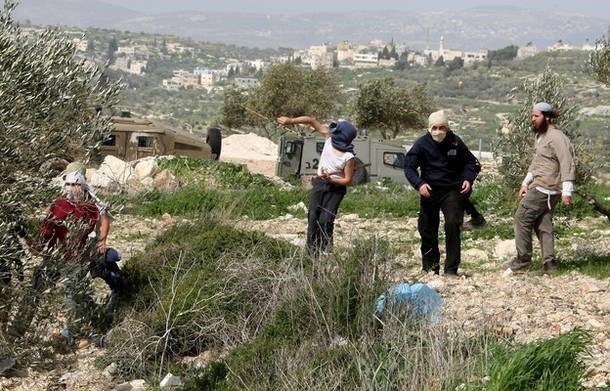
Imagine the following scenario: you’re in your courtyard, when a gang shows up, insulting you in what is supposed to be your safest place, beating you in the presence of your children, stealing or destroying your belongings. Picking yourself up, you know there’s no point in calling the police – because in the vast majority of cases, the police won’t catch the offenders. Oh, by the way – the criminals are from a different ethnic group.
Do you think you could live this way? Because this is how many Palestinians in the West Bank have to live. We have just published our annual data sheet on law enforcement – or rather the lack of law enforcement – in the West Bank.
If you are a Palestinian and you’ve been attacked or otherwise harmed by Israeli civilians in the West Bank, there is little to no chance the police will solve the case. Yesh Din has been monitoring the police investigation cases of complaints filed by Palestinians against Israeli civilians since 2005. The unambiguous data show that of 1,045 cases we are monitoring, the police concluded its investigation of 970 cases. 72 indictments were made (about 7.4% of the cases), and the police managed to lose 11 file cases. 884 cases were concluded due to police investigation failure.
593 cases were closed as “perpetrator unknown”, meaning the police failed to identify a suspect. 195 cases were concluded because of “lack of sufficient evidence”, i.e. the police managed to suggest a suspect but lacked the evidence to indict the suspect. 76 cases were closed on the grounds of “absence of criminal culpability” – that is, police claims that no crime was committed; we appealed 25 of these cases, since the investigation was unfinished or we believed there was enough evidence for an indictment. Finally, 12 cases were closed due to “lack of public interest”.
In two cases, the police concluded the perpetrator could not be indicted, probably due to age (minors); and one case was closed because it fell under the jurisdiction of another agency. The police’s general failure rate in 2005-2014 is 85.2%. Ironically, it was in the two years (2013-2014) in which the Nationalist Crime Department was active that the rate of police failure actually rose to 89.6%. The police tell us they invest many more assets and efforts in fighting nationalist-based crimes; so far, it fails to demonstrate results.
And why do I speak of “people breaking into your courtyard”? Because settlers enter private Palestinian property in the West Bank time and again. In our files from 2013-2014 we emphasized the setting of the crimes. It turns out that 28.3% of the recorded incidents took place within Palestinian villages and towns. Most of the incidents still take place in the countryside near the villages – territories which are to be dispossessed – but more than a quarter of the incidents are invasions of towns and villages, places where the settlers have no reason to visit, uninvited.
And the Israeli police, including the new and much ballyhooed Nationalist Crime Department, doesn’t know – or, perhaps, knows but is unwilling – how to deal with Israelis who commit nationalist crimes. This failure is anything but new: back in 1982 the Karp Report warned that Palestinian residents in the West Bank do not trust the Israeli justice system, and that in many cases they avoid complaining to the police since it is pointless. The Karp Report further found that law enforcement in the West Bank failed – and was the first government report to note this failure.
This is Israeli law and order. This is how it has been maintained for over 30 years: an order of rulers and ruled, with a thin legal coating of “laws of occupation” which allows us to say all is well, since it is temporary. For the past 47 years.
Map of locations of offenses against Palestinians in the West Bank
Israel won’t cooperate with UN as it continues to violate Gaza ceasefire

Al-Akhbar | November 13, 2014
The Israeli authorities decided not to cooperate with a United Nations Human Rights Council investigation into this year’s Israeli aggression on Gaza, an Israeli spokesman said Wednesday.
“Since the Schabas commission is not an inquiry but a commission that gives its conclusions in advance, Israel will not cooperate with the UN Commission on Human Rights over the last conflict with Hamas,” Israeli foreign ministry spokesman Emmanuel Nahshon said in a statement.
The UN panel, due to make its first report by March, is meant to look into the conduct of both the Israeli Occupation Forces and the Hamas resistance movement during the 50-day assault.
But the Israeli government has already dismissed the investigation as a “kangaroo court,” accusing its chairman, Canadian academic William Schabas, of anti-Israeli bias.
In August, Canadian lawyer William Schabas was named as the head of the UN commission, angering Israel, where he is widely regarded as hostile to Israel over reported calls to bring Prime Minister Benjamin Netanyahu before the International Criminal Court.
“In view of the fact that the Schabas committee is not a fact-finding panel but an investigation whose results are predetermined … Israel will not cooperate with the committee,” Israel’s Foreign Ministry said in a statement on Wednesday.
It added that the decision was also taken due to what it called the Geneva-based council’s “obsessive hostility to Israel.”
On October 30, the UN Human Rights Committee, chaired by British expert Sir Nigel Rodley, said Israel’s latest land and aerial attacks on the Gaza Strip in July-August caused a “disproportionate number of casualties among civilians, including children.”
For 51 days this summer, Israel pounded the Gaza Strip by air, land and sea.
More than 2,180 Palestinians, at least 70 percent of whom were civilians, were killed and 11,000 injured during seven weeks of unrelenting Israeli attacks in July and August.
According to UN figures, at least 505 Palestinian children were killed during the offensive.
UNRWA, the UN agency for Palestinian refugees, said 138 of its students were killed during the assault, and the organization’s spokesperson Christopher Gunness said an additional 814 UNRWA students were injured and 560 have become orphans due to the Israeli onslaught.
The offensive ended on August 26 with an Egyptian-brokered cease-fire deal.
Gaza’s attack this summer was the third major conflagration in just seven years.
“(Israel) should ensure that all human rights violations committed during its military operations in the Gaza Strip in 2008-2009, 2012 and 2014 are thoroughly, effectively, independently and impartially investigated, that perpetrators, including, in particular, persons in positions of command are prosecuted and sanctioned,” the committee of 18 experts said.
Moreover, Amnesty International said in a report last week that the Israeli military displayed “shocking disregard” for civilian lives in Gaza and documented eight instances in which Israeli forces attacked homes in Gaza “without warning,” killing “at least 104 civilians including 62 children.”
“The report reveals a pattern of frequent Israeli attacks using large aerial bombs to level civilian homes, sometimes killing entire families,” Amnesty added.
Leftover Israeli shells
On Wednesday, a Palestinian man in Gaza was injured after an Israeli ordnance exploded in Khan Younis, medics said.
The man, identified only as M.A. and said to be in his 20s, was moderately injured.
Witnesses said he was removing rubble from a building destroyed during Israel’s summer assault when the explosion occurred.
The Gaza Strip is still littered with a large number of unexploded Israeli shells, one of which recently killed 4-year-old Mohammed Sami Abu-Jrad from the northern Gaza city of Beit Hanoun.
Although Gaza police explosives teams have been working across the territory to destroy unexploded ordnance and prevent safety threats to locals, lack of proper equipment due to the seven-year Israeli siege as well as a general lack of resources have hindered efforts.
Even before the most recent Israeli assault, unexploded ordnance from the 2008-9 and 2012 offensives were a major threat to Gazans.
A 2012 report published by the Office of the High Commissioner for Human Rights said that 111 civilians, 64 of them children, were casualties to unexploded ordnance between 2009 and 2012, reaching an average of four every month in 2012.
Watch groups have warned that the ordinance can be a particular threat to children, who often think the bombs are toys.
Gaza fishermen continue to suffer
Meanwhile, Israeli naval boats fired at and sank a Palestinian fishing boat in the sea off the coast of Rafah in the southern Gaza Strip on Wednesday evening.
Witnesses said that the Israeli navy fired shells at a boat belonging to the al-Bardaweel family and completely destroyed it.
Fishermen on board jumped into the water before the shell exploded.
On Monday, the Israeli navy shot and injured three Palestinian fishermen off the coast of the southern Gaza Strip.
Witnesses said Israeli forces shot at the boat until it caught fire, and that fishermen in a nearby boat managed to pull the injured aboard and escape under heavy fire.
The injured fishermen were taken to the Abu Yousef al-Najjar hospital in Rafah.
The Egypt-brokered ceasefire agreement stipulated that Israel would immediately expand the fishing zone off Gaza’s coast, allowing fishermen to sail as far as six nautical miles from shore, and would continue to expand the area gradually.
However, since the ceasefire was signed, Israeli forces have fired at several fishermen who they claim have ventured beyond the newly-imposed limit of six nautical miles.
There have also been widespread reports of the Israeli navy opening fire at fishermen within those limits.
In October, the head of the Gaza fishermen syndicate accused Israel of constantly violating the terms of the agreement.
“Since signing the truce, the Israeli army has violated (the agreement) many times, arresting fishermen and destroying a giant fishing boat, in addition to firing at fishermen on a daily basis,” he said.
There are an estimated 4,000 fishermen in Gaza. According to a 2011 report by the International Committee of the Red Cross, 90 percent are poor, a 40 percent increase from 2008. This change is believed to be a direct result of Israeli limits on the fishing industry.
The eight-year Israeli blockade has severely crippled Gaza’s economy and contributed to the frequent humanitarian crises and hardship for Gaza residents.
Meanwhile, Israeli forces detained two Palestinians who allegedly crossed the Gaza Strip border into Israeli-occupied territories, a military official claimed Wednesday.
The two unarmed Palestinians were taken for questioning, an Israeli army spokeswoman said.
Goods and reconstruction material to enter Gaza
On Thursday, the Israeli authorities opened the Kerem Shalom crossing in the southeastern Gaza Strip to allow aid and goods into the enclave.
Raed Fattouh, a Palestinian official responsible for the entry of goods into Gaza, said that the Israeli authorities will allow 350 truckloads of goods for the trade, agricultural, transportation and aid sectors.
Fattouh added that Israel will also allow five trucks of cement for international construction projects.
Meanwhile, Ann-Sofie Nilsson, from the Swedish Consul General, on Wednesday signed an agreement with Palestinian Prime Minister Rami Hamdallah to fund a project led by the United Nations Development Program (UNDP) to step up financial support for the reconstruction of the war-torn Gaza Strip.
“The situation in Gaza is alarming after the devastating war this summer, especially with winter approaching. There is a need for rapid support to the Government of National Consensus in its efforts to kick-start the reconstruction. We are pleased to contribute to alleviate somewhat the difficult situation,” Nilsson said.
Sweden, the first Western European Union country to recognize Palestine as a state, also announced last week a five-year strategy for developing cooperation with Palestine which entails a 50 percent increase in development support.
UN chief Ban Ki-moon said last month during a visit to the Gaza Strip that the devastation he had seen was “beyond description.”
According to UN estimates based on preliminary information, as many as 80,000 Palestinians homes were damaged or destroyed during the days of hostilities, and over 106,000 of Gaza’s 1.8 million residents have been displaced to UN shelters and host families.
Israel routinely bars the entry of building materials into the embattled coastal enclave on grounds that Palestinian resistance faction Hamas could use them to build underground tunnels or fortifications.
For years, the Gaza Strip has depended on construction materials smuggled into the territory through a network of tunnels linking it to Egypt’s Sinai Peninsula.
However, a recent crackdown on the tunnels by the Egyptian army has effectively neutralized hundreds of tunnels, severely affecting Gaza’s construction sector.
(Al-Akhbar, Ma’an)
Amid soaring fuel bills 25,000 UK pensioners to die this winter from cold weather
Press TV – November 12, 2014
A report says that a pensioner will die from cold weather every seven minutes in Britain this winter, amid soaring fuel bills.
The Age UK charity released the report on Tuesday, saying that, this winter, 25,000 elderly people in England and Wales will die as a result of the cold weather and due to high fuel costs and poorly insulated homes.
The charity also revealed that one in three pensioners, or more than 5 million elderly people, are worried that they will not be able to afford to warm their houses.
Caroline Abrahams, the charity’s director, said a growing number of people in Britain are facing difficulties in heating their homes properly.
“No older person should worry that they could die from the cold in their own home,” said Abrahams, adding, “Fuel poverty is a national scandal which has claimed the lives of too many people – both old and young – for far too long and left many more suffering from preventable illness.”
Abrahams called for a long-term solution to the problem, such as bringing Britain’s housing up to a high energy efficiency standard.
The government responded to the charity’s report by insisting that officials are already doing enough to protect elderly Britons struggling to heat their homes.
The UK has seen rising energy costs in recent years. A separate report published earlier this year revealed that the prices of domestic energy in the UK rose by 45 percent between 2008 and 2014.
North Carolina still the only state to compensate victims of forced sterilization
By Noel Brinkerhoff and Steve Straehley | AllGov | November 11, 2014
North Carolina has begun to do something no other state in the nation has attempted: Pay victims of forced sterilization.
The state is attempting to right a 20th century wrong when that state and others mandated that tens of thousands of Americans have their reproductive rights stripped from them in the name of public policy.
California only recently passed a law banning the practice after an investigation showed that female inmates in the state prison system continued to be sterilized. That state accounted for about a third of all U.S. forced sterilizations.
Thirty-two states participated in forced sterilizations from early in the century until 1974. These controversial programs left at least 65,000 citizens with their tubes tied, uteri removed or vasa deferentia severed.
“Still others came under the scalpel of private doctors, and this second group makes the calculations difficult—65,000 represents only the number of sterilizations where there was municipal paperwork,” Ted Scheinman reported for Pacific Standard.
People were sterilized under programs inspired by eugenics as a way to “cleanse” society of poverty and those with mental or physical defects, or who had merely been the victims of horrible crimes, like daughters raped by their fathers.
“They did take our God-given right away from us,” said Elaine Riddick, one of the few survivors of the program. “They did tamper, or play with our reproductive rights. These are things you just can’t cover up, or you just can’t let go of. These are things that are going to haunt us for the rest of our lives.”
North Carolina became the first—and still only—state in 2013 to pass legislation that demands financial compensation to sterilization victims. It did specify that victims had to be alive on June 30, 2013 to be compensated, according to The Daily Tarheel.
Checks of $20,000 will be awarded to at least 220 survivors to begin with. At least 768 claims have been filed with the state, but in many of the remaining cases, there is no official paperwork documenting the loss.
So far, no other state has moved to compensate its forced sterilization victims.
To Learn More:
The Price of American Eugenics (by Ted Scheinman, Pacific Standard )
Some U.S. Victims of Forced Sterilization Are About to Be Compensated — But Most Aren’t (by Payton Guion, Vice News )
Forced Sterilization Compensation begins in N.C. (by Corey Risinger, Daily Tarheel )
Decades after Prison Sterilizations Were “Banned,” State Really Does It (by Ken Broder, AllGov California)
North Carolina Agrees to Compensate Sterilized Welfare Recipients (by Noel Brinkerhoff and David Wallechinsky, AllGov )
British Spying Is Our Problem, Too
By Alex Sinha | ACLU | November 10, 2014
The chilling effect of surveillance may be spreading across the Atlantic.
We learned last week that GCHQ – the U.K. equivalent of the NSA – permits its employees to target the communications of journalists and lawyers. That revelation has serious implications for the work of both groups.
American surveillance is already impacting the work of U.S.-based journalists and lawyers. As the ACLU and Human Rights Watch documented in a recent report, the effects are not pretty. National security and intelligence journalists have been struggling to develop and maintain relationships with increasingly skittish sources, and lawyers are losing the freedom to communicate with clients, co-counsel, and witnesses without exposing confidential information to the government.
We depend on the press to keep us informed, helping ensure the government’s accountability to the governed. But when journalists are vulnerable to surveillance, that accountability suffers.
Attorneys are also indispensable, and their right to communicate privately with clients has long been recognized both in domestic and international law. When attorneys can’t communicate freely with clients, they can’t build trust or develop strategy. That weakens important due process rights and diminishes our confidence in the verdicts issued by our justice system.
Like the United States, the U.K. conducts significant surveillance, including tapping fiber-optic cables to gain access to enormous volumes of Internet traffic. The revelations from last week show not only that the communications of journalists and lawyers get caught up in the U.K.’s dragnet, but also that this may happen by design.
The breadth and poor regulation of the U.K.’s surveillance practices are a problem for everyone – including Americans. Here’s why.
The United States has extensive intelligence-sharing arrangements with key allies like the U.K., and through them has access to information that it can’t legally collect on its own. Sharing flows both ways, so the U.K. also has unfettered access to much “raw” or unfiltered U.S. surveillance data.
As far as we know, nothing stops the United States from accessing information from GCHQ that is derived from targeting journalists or lawyers. In fact, we’ve seen this movie before. Last February, we learned that an Australian intelligence agency gave the NSA privileged communications between a U.S.-based law firm and its clients. We’d be foolish to assume anything different happens between the United States and the U.K. – which, like Australia, is one of the NSA’s “Five Eyes” surveillance partners.
What happens in Britain reaches us, too, and U.K. surveillance programs almost certainly collect many Americans’ communications. But we also don’t want our government targeting U.K. journalists and lawyers by proxy.
Considering the extensive intelligence cooperation between our two countries, we should all be concerned about the United States outsourcing practices we would reject at home.
The Fall of the Berlin Wall, 25th Anniversary
National Security Archive | November 9, 2014
The iconic fall of the Berlin Wall 25 years ago today shocked international leaders from Washington to Moscow, London to Warsaw, as East German crowds took advantage of Communist Party fumbles to break down the Cold War’s most symbolic barrier, according to formerly secret documents from Soviet, German, U.S., Czechoslovak and Hungarian files posted today by the National Security Archive at George Washington University.
The historic events of the night of November 9, 1989 came about from accident and contingency, rather than conspiracy or strategy, according to the documents. Crowds of East Berliners, already conditioned by months of refugee flights to the West and weeks of peaceful mass protests in cities like Leipzig, seized on media reports of immediate changes in travel restrictions — based on a bumbled briefing by a Politburo member, Gunter Schabowski — and inundated the Wall’s checkpoints demanding passage. Television coverage of the first crossing that yielded to the self-fulfilling media prophecy then created a multiplier effect and more crowds came, ultimately to dance on the Wall.
The documents show that the actual collapse of the Wall began with Hungarian Communist reformers who proposed in early 1989 to open their borders to the West, while seeking particularly West German foreign investment to solve Hungary’s economic crisis. Hungarian Communist leaders checked in with Soviet general secretary Mikhail Gorbachev in March 1989, letting him know they planned to take down the barbed wire; and Gorbachev — true to his “common European home” rhetoric — responded only that “we have a strict regime on our borders, but we are also becoming more open.” (Document 1) The Hungarian decision sparked a stream and then a flood of East German refugees.
Gorbachev himself unintentionally gave a signal that the Wall could fall in his press conference on June 15, 1989 after a successful visit to West Germany, where in response to a question about the Wall, he said that “nothing [was] permanent under the Moon” and connected German rapprochement to the building of the common European home. In fact, his conversations with Kohl and other members of the West German government created a real breakthrough in Soviet-FRG relations, which would stand Kohl in good stead in the difficult reunification talks during the next year (Document 2). Gorbachev especially reinforced the theme of European unity in his speech to the European Parliament in Strasbourg where he presented his vision of the common European home on July 7, 1989. After speaking about an essentially united Europe based on universal human values, it would be hard to argue in favor of its continued division.
By August 1989, the Hungarian-initiated refugee crisis had become so acute that the West German embassy in Budapest had to shut down, unable to handle the hundreds of East Germans camped out there for visas. On August 19, Hungarian reformers even hosted a “Pan-European picnic” near the Austrian border, after which some 300 East Germans high-tailed across the former Iron Curtain. The subsequent negotiations on August 25, 1989 between Hungarian Communist leaders with West German chancellor Helmut Kohl and foreign minister Hans-Dietrich Genscher show the Hungarian calculation that only the deutschmark could save them, and by mid-September the Hungarians lifted all East-West controls (Document 3).

East German demonstrators take to the streets in Leipzig, October 9, 1989.
Other world leaders were not at all eager for the Wall to fall, notably the British prime minister, Margaret Thatcher, who told Gorbachev on September 23 to ignore those NATO communiqués about German unification, that even her buddy, U.S. president George H. W. Bush opposed that kind of change (she would be wrong, when the time came. See document 4). As Gorbachev later commented to his Politburo on November 3, the West did not want German unification, but it wanted to prevent it “with our hands, to push us against the FRG” so as to head off any future Soviet-German cooperation — but Gorbachev believed European integration was the ultimate solution to Soviet economic problems (Document 6).
Czechoslovakia was closer to East Germany than Hungary was, and after Hungary opened its gates, Prague quickly filled with East Germans willing to dump their Trabant cars in the streets for a chance to clamber over an embassy wall and flee to the West. By November 8, Prague had become so choked with East Germans that the hard-line Czechoslovak Communist Party’s Central Committee made a demarche to East Berlin demanding they open their borders — a moment of pressure from fellow Communists that played a key role in the East German party’s decision to announce revised travel regulations the next day (Document 7).
The draft regulations were full of temporizing language and largely intended to let off steam while kicking the emigrant problem down the road. East Germans would have to apply for visas, and the vast majority who lacked passports would have to wait even longer for those. But the presentation of the new regulations came at the very end of a botched press conference from 6 to 7 p.m. Berlin time on November 9 by SED Politburo member Gunter Schabowski, who did not know the back story, the hedges, the limitations meant by the drafters of the documents. Visibly rattled from the shouted questions about travel and the Wall, Schabowski read from his briefing papers the words “immediately, without delay” when asked about the timing of the changes that would allow any East German to emigrate (Document 9).
Television news and the wire services as well promptly announced the opening of the borders, and in a kind of self-fulfilling prophecy reinforced by TV coverage, crowds of East Germans massed at the border crossings and ultimately persuaded the senior official at the largest inner-city checkpoint at Bornholmer Strasse to open the gates (a story told in fresh detail by Mary Elise Sarotte in her new book, The Collapse: The Accidental Opening of the Berlin Wall). Once Bornholmer opened, other crossings soon followed; and within hours, people were chipping off souvenir fragments from the concrete panels formerly surrounded by a “death strip” in which earlier Wall jumpers had died.
So unexpected was the Wall opening that Helmut Kohl himself was not even in the country. Instead, the West German chancellor had gone to Warsaw to meet the new Solidarity leaders of that country, and work out some long-standing Polish-German tensions. The transcript of Kohl’s discussions with Lech Walesa show the Polish leader complaining that events in East Germany were simply moving too fast, and even predicting, presciently, that the Wall would fall in a week or two — at which point Kohl would have no time (or money) for poor Poland (Document 8).
In Washington, the George H. W. Bush White House greeted the fall of the Wall not with joy or triumphalism (that would come much later, when the President was running for re-election in 1992), but anxiety and even fear about instability. When questioned by reporters why he did not show more elation, President Bush replied, “I am not an emotional kind of guy.” (Document 10)
Bush’s caution and prudence were appreciated in Moscow, where Gorbachev’s messages to Kohl centered on preventing chaos and reducing instability, keeping “others within limits that are adequate for the time being….” (Document 11)
But at Gorbachev’s side, his foreign policy adviser Anatoly Chernyaev in private let loose with one of the very few high-level expressions of real joy about the fall of the Berlin Wall. Chernyaev’s diary entry for November 10, 1989 (Document 12) contains the coda for the demise of the Iron Curtain, “the end of Yalta” and the Stalinist system, and a good thing, about time, in Chernyaev’s remarkable view.

The Collapse: The Accidental Opening of the Berlin Wall, by Mary Elise Sarotte.
THE DOCUMENTS
Document 1: Record of Conversation between Mikhail Gorbachev and Miklos Nemeth, Moscow, March 3, 1989.
Document 2: Mikhail Gorbachev Press Conference Excerpts, Bonn, June 15, 1989.
Document 3: Hungarian discussions (Nemeth/Horn) with West German leaders Kohl and Genscher, Bonn, August 25, 1989.
Document 4: Conversation between Mikhail Gorbachev and Margaret Thatcher, Moscow, September 23, 1989.
Document 5: Anatoly Chernyaev diary excerpt, October 5, 1989.
Document 6: Notes from the Soviet Politburo Session, November 3, 1989.
Document 7: Demarche from the Czechoslovak Communist Party to the GDR SED, November 8, 1989 (original German language version).
Document 8: Record of Conversation between Helmut Kohl and Lech Walesa, Warsaw, November 9, 1989.
Document 9: Documents from the East German Communist Party (SED) and the transcript of the Gunter Schabowski press conference, November 9, 1989.[1]
Document 10: President Bush Remarks to Reporters, Washington D.C., November 9, 1989.
Document 11: Record of Telephone Conversation between Mikhail Gorbachev and Helmut Kohl, November 11, 1989.
Document 12: Anatoly Chernyaev diary excerpt, November 10, 1989.
NOTE
[1] Document 9 is courtesy of the German scholar Hans-Hermann Hertle, who was the first to reconstruct in detail the Schabowski press conference debacle, including his own transcription of the Schabowski video and publication of the backstory documents of drafts and SED decision making on travel regulations, in his seminal article, “The Fall of the Wall: The Unintended Dissolution of East Germany’s Ruling Regime,” in the Cold War International History Project Bulletin No. 12/13, Fall/Winter 2001, pp. 131-164.
Critics Slam US Military’s ‘Disturbing’ Praise for Israel’s Gaza Offensive

Palestinians collect their belongings from under the rubble of a residential tower, which was destroyed by an Israeli air strike in Gaza City on August 24, 2014. (Photo: UN Photo-Shareef Sarhan/flickr/cc)
Common Dreams | November 7, 2014
Critics say it is “shameful” that a high-ranking U.S. military official suggested the Pentagon can learn lessons from Israel’s 50-day attack on Gaza this summer.
According the Jerusalem Post, Chairman of the Joint Chiefs of Staff Martin Dempsey made statements Thursday praising the Israeli Defense Force (IDF) for taking “extraordinary lengths to limit collateral damage and civilian casualties” during Operation Protective Edge.
Dempsey told an audience at the Carnegie Council for Ethics in International Affairs: “We sent a team of senior officers and non-commissioned officers over to work with the IDF to get the lessons from that particular operation in Gaza.” He referred to the group of officers as the “lessons learned team.”
But Ramah Kudaimi of the U.S. Campaign to End the Israeli Occupation said Israel’s tactics should not be replicated.
“It is very disturbing and shameful that U.S. military commanders believe that what Israel did in Gaza is something to be applauded,” Kudaimi told Common Dreams. “Five hundred dead children does not seem to be evidence that Israel was trying to not kill civilians. The seven-year siege on Gaza is not a policy to avoid civilian suffering.”
Israel’s recent seven-week military assault on Gaza killed at least 2,194 Palestinians, at least 75 percent of them civilians and over 500 of them children.
“At least 80 percent of the 100,000 Palestinian homes damaged or destroyed were refugee homes,” the United Nations Relief and Works Agency reports.
The offensive damaged or destroyed over half of Gaza’s hospitals and health centers at a time when more than 11,000 were wounded, a UNRWA and World Health Organization joint investigation found.
Israel struck six UN schools sheltering Palestinians, including in cases where exact coordinates of the shelters were formally submitted by UNRWA to the Isreali military. These strikes alone killed at least 47 people and wounded hundreds.
Furthermore, Israel has been accused of potential war crimes by Amnesty International and UN High Commissioner for Human Rights Navi Pillay.
“It is very despicable that the U.S. continues to white-wash Israeli crimes while funding them through military aid,” said Kudaimi. “Dempsey’s statements are not shocking. Anyone who follows U.S. military policy, knows they too have problematic definitions of protecting civilians.”
Israel to confiscate 3,200 acres of Palestinian land near Jerusalem
Ma’an – 08/11/2014
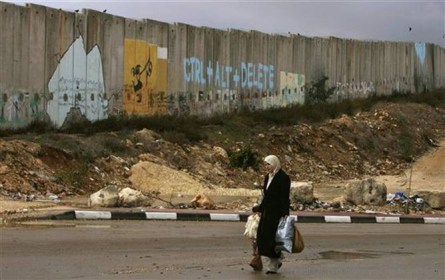
JERUSALEM – Israeli authorities have delivered orders to the village of Beit Iksa north of Jerusalem ordering the confiscation of 12,852 dunums (3,176 acres) of Palestinian land, locals said on Saturday.
Locals told Ma’an that soldiers deployed at the military checkpoint at the entrance to the village delivered confiscation orders signed by the Israeli military commander in the West Bank Nitzan Alon that gave them until Dec. 31, 2017 to remain on their land.
Villagers said that soldiers informed them that an official from the Israeli military liaison would arrive on Monday to specify which lands would be confiscated, adding that the lands confiscated would be used for “military purposes.”
If carried out, the confiscation would dramatically reduce the land available to Beit Iksa’s 1,700 people, the majority of whom are refugees who fled to the area in 1967 after the existing population of the village was forced to flee by Israeli authorities.
Although located immediately next to Jerusalem, the village’s lands have been progressively confiscated and the village is surrounded on all sides by the Israeli separation wall. Villagers can no longer travel to Jerusalem without permits, and Palestinians not resident in Beit Iksa cannot enter the single Israeli checkpoint that allows access to the village.
Ninety-three percent of the village is under full Israeli military control, and a majority of the total land of the village falls in areas outside of the separation wall, meaning they have been de facto confiscated, including about 1,500 dunums (371 acres) where Jewish-only settlements have been built.
The head of the Beit Iksa village council Saada al-Khatib told Ma’an that according to the order and the maps that soldiers had shown them Saturday, the lands that will be confiscated are between parcels 7 and 8 and include Haraeq al-Arab, Thahr Biddu, Numus, and Khatab areas around the village.
Al-Khatib added that the Israeli authorities claim that the confiscation order has been under way since 2012, and that the new order issued on Saturday only emphasizes the old order.
The order will prevent dozens of farmers from reaching their lands, he said, calling upon Palestinian ministries and national institutions to support the village of Beit Iksa and its neighbors.
He added that the order came after the Israeli municipality announced the approval of 244 housing units to be built in the Ramot settlement, which was previously built on lands confiscated from the settlement.
Al-Khatib warned that the land confiscation orders being issued to many villages include his own aim to carry out the “Judaization” of Beit Iksa after sealing the village shut and surrounding it with a checkpoint and the separation wall, turning it into an 2,500-dunum prison.
Featured Video

Why the U.S. Should Pull Back From the First Island Chain
or go to
Aletho News Archives – Video-Images
Book Review
‘Why Fauci Must Rot in Prison’: A Tale of Two Diaries
By Jill Erzen | The Defender | October 13, 2026
Dr. Anthony Fauci’s private diary reveals a “mind-numbing” contradiction between what the former top U.S. infectious disease official knew about COVID-19 and what he told the public, senior White House adviser Peter Navarro, Ph.D., said last week on “American Thought Leaders.”
In his new book, “Why Fauci Must Rot in Prison,” due out Oct. 20, Navarro compares Fauci’s private entries to his own pandemic-era diary, and uses what he calls “a tale of two diaries” to argue that Fauci should face criminal prosecution.
“I show, actually, how a prosecution can and should happen … at the state level, most likely,” Navarro said. “He should wind up in prison, and we’ve got the receipts in this book to put him there.”
Navarro said Fauci repeatedly acknowledged important facts in private, then publicly pursued policies that contradicted those facts — with devastating consequences.
“What he says many times privately in his diary is so at odds with both his public behavior and public statements that it’s mind-numbing,” Navarro said.
Navarro examines the lasting damage caused by lockdowns and other pandemic policies, and the ongoing toll of long COVID.
His book also addresses questions about vaccine safety, including why healthy young people faced COVID-19 vaccination mandates despite concerns about myocarditis, and why women were not warned about miscarriage risks linked to the shots. … continue
Blog Roll
 Aletho News
- Jennifer Kavanagh: Why the U.S. Should Pull Back From the First Island Chain
- Yemen denounces international community’s silence on Saudi aggression, siege
- UAE and Saudi Arabia move toward renewed coordination against Sanaa
- How Iran’s two-week retaliatory strikes exposed cracks in US military architecture in Persian Gulf
- The mother of all propaganda: Why the hype over US MOAB strike against Iran is nothing but theater
- Iran says it possesses technology behind US 14-ton GBU bunker-buster
- Trump asks Iran not to retaliate after he strikes Pickaxe Mountain – w/ Prof. Marandi
- Vice President J.D. Vance’s Deceptive ‘Antiwar’ Campaign Speech
- Iran: Palestinians’ rights must not be compromised in Gaza’s future; US, Israel to blame for Hormuz situation
- Ongoing tales of Syrian chemical weapons
- If Americans Knew
- Israeli rabbi permits occupiers to steal Palestinian olive harvest in West Bank
- Netanyahu’s spin on latest settler attack is laughable – Daily Update
- Israeli soldiers debunk Israel’s talking points
- In West Bank, Israeli settlers are totally out of control – Daily Update
- NPR investigation finds evidence of widespread fraud at mall kiosks tied to Israeli skincare brand
- Tucker Carlson exposes Israeli Lies about the Oct 7th attack, Charlie Kirk, and the U.S.
- Israel has detained thousands of Palestinian children since Oct 7th – over half spent time in solitary, many uncharged
- Israeli Analysis: Is Netanyahu Planning an ‘October Surprise’ Attack Before Israel’s Election?
- Israeli settlers brutally attack Palestinians and Washington Post female photographer, 65
- Words Have Changed, Occupation Continues: The Reality of the Gaza Ceasefire
- No Tricks Zone
- Predictions Made By Renowned Climate Proifessor Over Past Decades Have Been Proven To Be Poor
- New Study Suggests Large Regions Of The Pacific Ocean Have Been Cooling For The Last 80 Years
- Germany’s Green Energy Debacle: High Energy Costs Force Kahla Porzellan to Close After 182 Years!
- New Study: 50 Years Of The Most Aggressive ‘Net Zero’ Policies Can Only Affect The Global Climate By 0.03°C
- US September “Heat” Was No Record…Many Records Set Decades Ago
- Latest European Green Energy Debacle; Portugal’s Largest Flagship Solar Park Insolvent!
- Green Energy Debacle: German Expert Professor Fritz Vahrenholt Warns Of Severe Economic And Social Consequences
- Two More Paleo Reconstructions Affirm Meters-Higher Sea Levels Across Ireland, Brazil 7000-6000 Years Ago
- New Study: Earth And Venus Surface Warmth Largely Explained By Convection And Lapse Rate, Not CO2 Or Radiation
- 2025 Nature Paper Claiming Worsening Global Drought Gets RETRACTED …Heavily Flawed

