Israel demolishes West Bank homes, water wells
Al-Akhbar | April 29, 2013
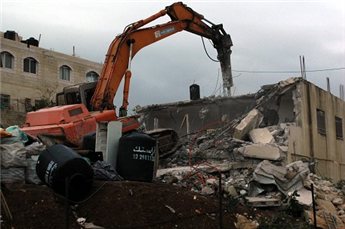
Israeli forces on Monday demolished Palestinian homes and water wells in East Jerusalem and the West Bank, as settlers confiscated land near Hebron to build a new outpost, local media reported.
In occupied East Jerusalem, Israeli forces razed two apartments in the Tur neighborhood after several attempts by the owners to reverse the demolition order failed.
The authorities evicted 24 members of the Ghaith family, including five children and an elderly woman, from the two apartments ahead of the demolition, Rushi Ghaith, one of the owners, told Palestinian news agency Ma’an.
The apartments were scheduled for demolition in December but the family secured a court-ordered injunction to stop it from going ahead, Ghaith said.
The Ghaith family lawyer said they had successfully stalled attempts to raze the apartments since September 2004, when Israeli authorities handed down the demolition notice because the home was built without a licensing permit. The family’s case to reverse the demolition order is ongoing.
Ghaith said the family has been fined 80,000 Israeli shekels (about $22,000) since the case began.
Meanwhile Israeli soldiers demolished water wells south of Hebron in al-Fawar refugee camp, as settlers from the nearby Ma’oun settlement seized land west of Yatta in preparation for the establishment of new outposts.
Abdul Hadi Hantash, an expert on settlement policies in the southern West Bank, said that the Ma’oun settlers seized land of one of the hills southwest of their original outpost.
Hantash told reporters that the wells the soldiers destroyed were used for agricultural purposes and irrigation.
He added that the continued confiscation of land and demolition of Palestinian structures, including the bulldozing of homes and uprooting of trees, are part of the Israeli government’s illegal settlement expansion program.
Israeli demolitions of Palestinian homes and other structures in the occupied West Bank occur almost daily under the pretext of building without a permit.
According to the United Nations, 33 percent of all Palestinian homes in East Jerusalem lack Israeli-issued building permits, which are difficult to obtain, potentially placing at least 93,100 residents at risk of displacement.
Roughly 94 percent of Palestinian applications for building permits are rejected, according to the Israeli Committee Against House Demolitions.
The group estimates that Israeli authorities have demolished about 27,000 Palestinian structures in the West Bank since 1967.
(Ma’an, Wafa, Al-Akhbar)
Related articles
- Palestinian monastery loses court battle over apartheid wall (alethonews.wordpress.com)
- We want to live in dignity (alethonews.wordpress.com)
- Israeli settlers use six times more water than Palestinians – new report (realisticbird.wordpress.com)
Israel detains Hamas leader’s sons in raid
Ma’an – April 22, 2013
JENIN – Israeli security forces detained the sons of a local Hamas leader overnight in the northern West Bank city of Jenin, locals said.
Locals told Ma’an that Israeli troops raided Gamal al-Haija’s home and detained sons Abed al-Salam, Asem and Hamzeh. Their whereabouts are unknown, residents added.
Teacher Khaled Mohammad al-Haj was also detained after Israeli forces raided his home to the east of the city, a source told Ma’an. Summons were also handed down to three Palestinians in the district, requiring them to meet with Israeli security agents.
Residents also told Ma’an that Israeli forces raided the nearby Jalqamus and al-Yamoun villages, setting up checkpoints at the villages’ entrance and stationing near Yaba’s eastern border.
An Israeli military spokeswoman confirmed three of the four detentions. At least five Palestinians were detained by Israeli forces across the West Bank on Monday.
Three Palestinians were detained in the Aida refugee camp in Bethlehem. A local source identified them as Murad Karaja, 20, Ahmad Hajajra 21, and Ahmad Amer, 21. A resident said Hajajra’s mother was taken to hospital after collapsing during the raid.
Israeli forces also raided a home in the area and handed down summoning notices to brothers Muhammad, Khaled and Aboud al-Azza, the local added.
Troops also raided the refugee camp’s youth center, the resident said.
A source said Israeli forces raided the Azza refugee camp, also in Bethlehem, detaining Jihad Abu Shira and injuring his brother. The brother was taken to the al-Arabiya Hospital in Beit Jala for treatment, the source added.
Meanwhile, Ahmad Ali Musa and Amid Ahmad al-Azza, both 20, were detained by Israeli forces from the village of al-Khader in Bethlehem.
Israel’s army confirmed the detentions in Aida refugee camp but did not return requests for comment on the summons and raids.
Related articles
- Israeli police arrest Palestinians at al-Aqsa mosque (alethonews.wordpress.com)
- Israeli security forces detain 5 Hamas leaders (worldbulletin.net)
Nearly 30 migrant workers shot in Greece
Press TV – April 18, 2013
More than two dozen workers have been injured in a dispute over unpaid salaries in southern Greece when their supervisor shot them, police reports.
The incident took place on Wednesday near the village of Manolada, about 260 kilometers (160 miles) west of the capital, Athens.
Police Captain Haralambos Sfetsos said the shooting occurred after at least one of three foremen opened fired on a crowd of about 200 migrant strawberry pickers, who demanded six months’ back pay.
Thirty workers most of them from Bangladesh were wounded in the shooting. Eight of those hurt are in serious condition in hospital.
The owner of the farm, who was not present at the time of the incident, has been taken into custody for questioning while arrest warrants have been issued for the three foremen, who are all Greek.
On March 16, the Council of Europe’s commissioner for human rights rapped Greece for not having tough measures to combat a surge in racist violence in the country.
The Manolada area has reportedly been at the center of several cases involving violence against migrant workers in recent years.
In 2012, two Greek men were arrested for beating an Egyptian worker, ramming his head in a car window and dragging him for about one kilometer.
Migrants on farms in the area went on a four-day strike in 2008 to protest salaries as low as five euros a day and unsanitary living conditions.
Death threats issued to UN Human Rights defender, Issa Amro
International Solidarity Movement | April 18, 2013
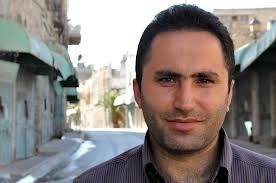 Hebron, Occupied Palestine – There are growing concerns for the safety of non-violent Palestinian activist and organiser Issa Amro, following a recent letter to Israeli security forces from Israeli settlers of Hebron, accusing Amro of terrorism and incitement, and warning that a failure of the Israeli authorities to remove him “could be costly”, and threatening “bloodshed”. This is the latest in a long line of threats and attacks against UN human rights award winner Amro.
In the letter, the mayor of the Jewish “Hebron Municipal Council” and the director general of the “Hebron Jewish Community” insist that army commanders “use administrative detention until you are able to find a long-term solution to completely end this hostile and dangerous activity” referring to Amro’s extensive work with various human rights groups. The full letter can be read here.
Amro has been violently attacked by this same community of Israeli settlers many times in the past – his nose and wrist have been broken and he received five stitches to his head. He and his family regularly receive death threats from the settlers of Hebron over the phone, continuing their campaign of threats and violence against him.
Despite having received numerous death threats and abuse from settlers over a period of many years, Amro is particularly concerned about the letter of the 20th March, because of the status and influence of its authors. Various Zionist websites have since issued calls for his execution, publishing various pictures of his face marked by red circles. Despite Amro’s long dedication to non-violent principles he is constantly identified as a terrorist by these websites.
You can see examples of this here :
1. http://rotter.net/forum/gil/26497.shtml
2.http://rotter.net/forum/gil/18247.shtml
3.http://www.youtube.com/watch?v=QerqKiWwUwM
4.http://www.kr8.co.il/BRPortal/br/P102.jsp?arc=408240
5.http://www.kr8.co.il/BRPortal/br/P102.jsp?arc=562306&order=down
6.https://www.facebook.com/hebron.machpela/posts/385071061601175
Amro states “I have been arrested and detained on too many occasions to count, but I have never been charged with anything.” He says that he is regularly abducted by soldiers from his home, blindfolded and driven around for several hours before being left back at his house. On other occasions, he has been beaten by soldiers who have threatened to kill him and his family. During his most recent arrest in March 2013, Amro was stripped naked and made to stand outside for three hours.
On the 27th of March 2013 there was an arson attempt against the Youth Against Settlements community centre in Tel Rumeida – Amro was verbally abused and humiliated by police officers when he attempted to file a complaint and was ejected from their office twice before the complaint was filed. There has yet to be any investigation by the police.
Background
Issa Amro has been involved in founding many non-violent organisations in Hebron, working peacefully against the occupation. This includes the Hebron branch of the International Solidarity Movement (ISM), the Arab Non-Violence Network, Youth Against Settlements and the Hebron Defenders. He won the One World media award in 2009 for his involvement B’tselem’s “Shooting Back” project, which provides media training and distributes cameras to Palestinians to document settler and military abuse for Palestinians. Amro’s work with these organisations, as well as numerous other projects intending to document and non-violently resist human rights abuses and expansion of illegal Israeli settlements led to his winning of the UN OHCHR ‘Human Rights Defender of the Year in Palestine’ award in 2010.
Related articles
- Zionists attempt to intimidate International Solidarity Movement (alethonews.wordpress.com)
- Journalists detained in Hebron, leading to two arrests and threats to restrict Palestinian movement (alethonews.wordpress.com)
EPIC Appeals FOIA Decisions Concerning Body Scanner Information
Electronic Privacy Information Center – April 16, 2013
EPIC has filed appeals in two Freedom of Information Act cases seeking documents related to airport body scanners from the Department of Homeland Security and the Transportation Security Administration.
EPIC filed FOIA requests with the agencies seeking records related to radiation risks from body scanners and the threat detection software the machines use.
The TSA is currently developing formal rules for the use of body scanners in response to a court order in one of EPIC’s previous cases.
Body scanners allow routine digital strip searches of individuals who are not suspected of any crime.
For more information, see EPIC: Radiation Risks lawsuit and EPIC: ATR lawsuit, and EPIC: Suspension of Body Scanner Program.
Related articles
- Judge: DHS Must Release Body Scanner Safety Reports (reason.com)
- Letter From a Screener: So We Found a Suicide Bomber With The Full Body Scanner: Now What? (takingsenseaway.wordpress.com)
Honduras: Terror in the Aguán
By Greg McCain | Upside Down World | April 11, 2013
During the first week of April, the Honduran daily newspaper La Prensa ran a series of articles that included photos, a video and a link to a montage of past articles entitled Terror en el Bajo Aguán. The major thrust of the series is that there are heavily armed clandestine groups of men training in the region. The photos and video show them with AK47s, M16s, and .223 assault rifles, all of which are military issue. All of the men are wearing ski masks over their faces and they appear to be playing to the camera, running in defensive stances, crawling on the ground and being sure to showoff their heavy firepower, all at the direction of whoever is holding the camera. An April 1 article states that there have been more than 90 deaths in the Aguán attributed to people with high caliber arms like the ones shown in the photos. It states that the latest one was a campesino, but it fails to point out that these more than 90 deaths since the coup in 2009 were all campesinos who have been murdered by sicarios: assassins who mainly perform drive by shootings.
Not unexpectedly, the new propaganda campaign being orchestrated by Colonel German Alfaro, commander of Operation Xatruch III and graduate of the School of the Americas, has been carried out with the help of the pro-ruling elite, pro-coup mainstream media. In a further attempt to criminalize the campesino movements, the La Prensa series, by implication and by direct assertions, links the struggles of the campesinos to acquire land that is rightfully and legally theirs to these mysterious armed groups that are roving the Aguán and allegedly terrorizing the private security forces of the rich landowners.
The video of the alleged training maneuvers would be laughable in its obvious staging if the repression that has befallen the campesinos at the hands of the private security guards, the Honduran military, and the National police wasn’t so tragic and ever present. These forces are not just working side-by-side, but are also interchangeable since the security companies that Dinant contracts often hire police and military personnel.
Colonel Alfaro states several times to La Prensa that the identities of these clandestine groups are known and that they even know who the leaders are. In a March 1, 2013 La Prensa article, he asserts that they are being trained by Nicaraguans’ with combat training. He declares that these groups go into the fincas owned by the rich landowners, such as Miguel Facussé’s Paso Aguán, “to terrorize and scare off the security guards. Later, the campesinos go into the plantations to steal the fruit and then money is exchanged at some later date.” No explanation is given as to why it is that campesinos are being killed in overwhelming numbers if this symbiotic relationship truly exists.
The La Prensa “exposé” raises more questions than it answers. If it is the security guards who are being terrorized then why aren’t there huge numbers of their deaths? Furthermore, why are they only a tiny fraction of the campesino deaths, and often found to be the result of infighting among the guards? Why are the campesinos from MARCA who have successfully fought in the courts to retain possession of their land being assassinated? Their lawyer, Antonio Trejo, was assassinated last November in Tegucigalpa after successfully winning the case that secured the land for three of MARCA’s collectives. His brother was later assassinated in Tocoa while investigating his murder. While denying any responsibility, Facussé told an L.A. Times reporter in a December 21, 2012 interview that he certainly had reason to see the lawyer dead. The National Police have attempted to raise spurious claims that the Trejo’s were involved with different less than desirable elements, creating red herrings to take the focus off of Facussé.
There are further questions raised by Alfaro’s claims of there being a connection between armed groups and campesinos. Why are the leaders of MUCA being stopped at every police checkpoint as they drive from Tocoa on their way to a meeting in Siguatepeque in the south. At one checkpoint an officer said to another, “It’s them… they are here.” Later, when they decide that it is safer not to drive any further, they stop at a hotel to rest and then take a bus at 3am to their destination. A group of armed men was seen by the campesino’s driver, who stayed behind, pulling up to the hotel at 3:30 a.m. and question the receptionist about them. Further, why are Facusse’s guards and police and military on a regular basis harassing the MUCA collectives. A truck full of soldiers drove through the community of La Confiansa on the eve of the internal elections shouting out “we’re hunting for Tacamiches” a derogatory term used by the upper classes and police and military to denote campesinos? Why have the military been surrounding the campesino community of La Panama, which borders the Paso Aguán finca, and in which two bodies of members of the community have been dug up near where the private security guards camped? Meanwhile, more are suspected buried there, but why won’t the police and private security, and indeed, the military allow the community to search for the bodies of those missing?
These are questions that neither the mainstream media will ask, nor will Colonel Alfaro answer. Instead they work in concert to manufacture a connection between alleged criminal groups and the campesinos. Alfaro’s motives are made clear when he states that they are there to protect the property and the palm fruit of the rich landowners. Soldiers are often seen riding in or along side Facusse’s Dinant trucks and they along with the National Police intermingle on a regular basis with Facussé’s and the other rich landowner’s guards, who have often been described by those living in the Aguán as paramilitaries.
Alfaro claims that, after the National Congress passed a decree in 2012 that banned all firearms from being possessed except by the police, military and private security, they captured 200 weapons in the first month (he does not specify if they were of high caliber like AK47s or if they were .22 rifles or handguns), and then an average of about 14 per month since then. It is evident from his boast that the military has greatly disarmed the general public, while it is evident just by driving up and down the roads between Tocoa and Trujillo that the arms of gruesome caliber, as the newspaper describes them, are in the hands of the police, military and paramilitary of Facussé and the other rich landlords.
There are both police and military checkpoints that randomly stop cars and buses along the main road between these two cities. When a bus is stopped all the men are told to leave and keep their bags and backpacks on board along with the women. The men are then told to press up against the bus with arms and legs spread while the very young soldiers of the 15th Battalion, with their rifles strapped across their chests, do a body pat down while looking at IDs. Other soldiers search the personal belongings on the bus. Off to the side of the road is a military personnel carrier that has a mounted machine gun pointed toward the street. Alfaro doesn’t explain if this is the method that has led to the discovery and confiscation of so many weapons, but it has been successful in labeling every citizen as a potential criminal and preparing the streets for Martial Law as the country prepares for the general elections in November.
In late February, several hundred police, military, and security guards surrounded the community of La Panama, as they have done various subsequent times since then. They proceeded to knock down a security gate that had been erected to keep the paramilitary guards from invading the community. In July of 2012, La Panama found it necessary to put up the gate after one of the community’s leaders, Gregorio Chavez, was disappeared and his corpse later found in the Paso Aguán. His shallow grave was a ten-minute walk from where Facussé’s paramilitary guards had set up an encampment. The community, after pleading with police to accompany them onto the finca, and after international human rights observers had visited and taken testimonies from the community, finally were allowed access. As Señor Chavez’ son and brother pulled the cadaver from the ground it was apparent from marks on the body that he had been tortured. Previous to Chavez’ murder the guards had been harassing him, shooting his chickens, and threatening to do the same to him and his family. They often drove up and down the road that goes through the community with their guns pointing out at the children who played in the yards.
Dinant had put up a building in the middle of the community that functioned as both a guardhouse and a parking space for their palm fruit trucks. A week before his disappearance Gregorio Chavez had gone to this building to complain to someone in charge about the threats and the killing of his chickens. It was also in this building that many in the community had seen the bicycle of one of the disappeared after he went missing. It is suspected that he is buried in the Paso Aguán. It could be the remains that were recently found on April 3. A security guard who had connections to the community tipped them off as to where they could find the body. The community is hoping, with the help of COFADEH and other human rights groups, to get an international forensic team to positively identify who it is.
This latest news was revealed at a press conference in Tegucigalpa held on the April 3 by the Agrarian Platform of the Campesinos of the Aguán (PARCA, in its Spanish acronym). PARCA is a new initiative formed by 13 campesino movements to better support each other as they face ever-increasing threats to their rights to the land. The press conference was called in response to the La Prensa stories. Yoni Rivas, Secretary General of MUCA, reasserted that the campesinos have no connection to any armed groups. In fact, it was the campesinos who had gone to the press in 2011 to point out that there were armed thugs killing campesinos in the Aguán and he showed pictures of armed men with automatic weapons wearing uniforms that matched the clothes worn by Dinant’s security forces.

The ultimate question is, if Colonel Alfaro and Operation Xatruch are simply doing what they say they are, “maintaining the peace and harmony of the people of Colon,” then why is he conducting press conferences denouncing both Honduran and international human rights groups? On February 18, 2013, in a clear act of aggression toward these groups and in a further attempt at criminalization of the campesinos, he called out human rights observers and campesino leaders. He published the phone numbers of international human rights observers in the US and Europe, and attempted to set up a confrontation between what he refers to as the “Laboriosa población,” the hard working people of the department of Colon against the aforementioned campesino groups referring to them as “a minority”, who create permanent friction and a constant problem of disrespect for the legally established laws and legal authorities. Alfaro’s and the Honduran military’s disdain for the campesinos is further illustrated in the report, Human Rights Violations Attributed to Military Forces in the Bajo Aguan Valley in Honduras written by Annie Bird of Rights Action where she states that her report, “describe[es] the abuses, many of them grave human rights violations, in which soldiers from the 15th Battalion were present and/ or direct participants [in the killings of campesinos]; in either case the 15th Battalion is a responsible party to the violations.” The 15th Battalion is where Xatruch III and Colonel Alfaro are stationed.
In a further indictment of Alfaro’s disingenuousness, during Xatruch’s raid of La Panama in February, there was, coincidentally, a human rights delegation from the US-El Salvador Sister Cities organization visiting the community. This forced the military, police and security guards to retreat. Much of the military force moved into the Paso Aguán finca. Later, members of the community who didn’t want their names made public stated that Alfaro attempted to “negotiate” with the community, but told them to stop talking to human rights groups. They of course denied his request. Today, the tensions between the community and the heavily armed forces continue as the military remain in the finca protecting Facussé’s palm fruit.
Related articles
- Will the World Bank Stop Investing in Campesino Assassinations? (alethonews.wordpress.com)
- Killings Continue in Bajo Aguán as New Report Documents Abuses by U.S.-Trained Honduran Special Forces Unit (alethonews.wordpress.com)
- Honduras: Murdered Lawyer’s Brother Killed in Aguán (alethonews.wordpress.com)
- Step by Step: Honduras Walk for Dignity and Sovereignty (alethonews.wordpress.com)
- World Bank Must End Support for Honduran Palm Oil Company Implicated in Murder (alethonews.wordpress.com)
Official Honduran Report on May 11 Shooting Incident is a New Injustice to Victims
By Dan Beeton | CEPR Americas Blog | April 11, 2013
CEPR has released a new paper, along with the human rights organization Rights Action, examining the Honduran Public Ministry’s official report on the May 11, 2012 shooting incident last year in which four local villagers were killed in Ahuas in Honduras’ Moskitia region during a counternarcotics operation involving U.S. and Honduran agents. This is also the first time that the Public Ministry’s report has been made available to the public, posted to Scribd in English here, and Spanish here.
The Honduran Public Ministry’s report deserves special scrutiny because thus far it represents the official version of events according to the Honduran authorities. And since the U.S. government has declined to conduct its own investigation – despite the wishes of 58 members of Congress – it also represents by default the version of events tacitly endorsed by U.S. authorities as well. The DEA and State Department didn’t allow Honduran investigators to question the U.S. agents and contractors that participated in the May 11 operation. At the same time a U.S. police detective working for the U.S. Embassy reportedly participated in the Public Ministry’s investigation, so the U.S. also bears some responsibility for the report’s flaws.
The CEPR/Rights Action paper found that the Public Ministry’s report:
- Makes “observations” (not conclusions) that are not supported by the evidence cited;
- Omits key testimony, that would implicate the DEA, from police who were involved in the May 11 incident;
- Relies on incomplete forensic examinations of the weapons involved, improper forensic examinations of the victims’ bodies and other improperly gathered evidence;
- Does not attempt to establish who is ultimately responsible for the killings;
- Ignores eyewitness reports claiming that at least one State Department-titled helicopter fired on the passenger boat carrying the shooting victims;
- Does not attempt to establish whether the victims were “in any way involved in drug trafficking” as both Honduran and U.S. officials originally alleged;
- Does not attempt to establish what authority was actually in charge of the operation;
- Appears to be focused on absolving the DEA of all responsibility in the killings.
The CEPR/Rights Action report represents the first such public critique of the Public Ministry’s report. As we have previously noted, there are significant discrepancies between different accounts of the May 11 events, including those of Honduran police officers who participated in (and say the DEA was in charge of) the operation. These discrepancies – cited in a separate report published by the Honduras National Commission of Human Rights (CONADEH) – are not mentioned in the Public Ministry report. Nor does the report include police testimony indicating that a DEA agent ordered one of the State Department helicopters to open fire on the passenger boat in which four people were killed.
The report concludes by calling for the U.S. government to carry out its own investigation of the Ahuas incident to better determine what occurred and to determine what responsibility, if any, DEA agents had in the killings. It also calls on the U.S. government to cease being an obstacle to an already flawed investigation by making the relevant DEA agents, weapons and documents – including an aerial surveillance video of the Ahuas operation in its entirety – available to investigators.
The new CEPR/Rights Action paper follows the “Collateral Damage of a Drug War” report released last year which was based on eyewitness testimony and other evidence the authors obtained in Honduras and concluded that the DEA played a central role in the shooting incident.
Related article
- Obama Administration Refuses to Investigate Alleged DEA Killing of Women and Child in Honduras (alethonews.wordpress.com)
In memory of Tom Hurndall, shot in the head by Israeli sniper 10 years ago today
International Solidarity Movement | April 11, 2013
 Occupied Palestine – The International Solidarity Movement today remembers Tom Hurndall, ISM volunteer who 10 years ago on 11th April 2003 was shot in the head by an Israeli sniper.
The Israeli army were invading the city of Rafah, in the Gaza Strip when Tom and other ISM volunteers saw a group of children in a street where snipers were firing. Witnesses say that bullets were shot around the children, who were paralysed by fear and unable to move – Tom pulled one child to safety, but as he was returning for a second, he was shot in the head by a sniper.
He went into a coma and died nine months later on 13th January 2004. He was 22 years old. Today, on the day he was shot, we pay tribute to Tom’s bravery. Our thoughts are with his family and friends. We continue to stand in solidarity with the Palestinian people, as we think Tom would have wished.
“What do I want from this life? What makes you happy is not enough. All the things that satisfy our instincts only satisfy the animal in us. I want to be proud of myself. I want more. I want to look up to myself and when I die, I want to smile because of the things I have done, not cry for the things I haven’t done.” – Tom Hurndall
Fatal Payback for Organizing, Mother Says
By IULIA FILIP | Courthouse News | April 9, 2013
GULFPORT, Mississipi – A worker trying to unionize an unsafe workplace was dragged into a conveyor and killed when the plant intentionally left him unattended inside and failed to lock the equipment, his mother claims in court.
Cynthia Hebert sued Omega Protein, ACE American Insurance Co., and ESIS Inc., in Federal Court, seeking damages for the death of her son, Christopher Allen Hebert.
She claims Omega “engaged in intentional conduct designed to bring about injury, or death, to Christopher.”
In the years before he died, Chris Hebert tried to unionize the workers at the unsafe plant, which met “harsh resistance” from management, his mother says in the complaint.
Christopher died on April 9, 2012, at Omega Protein’s Moss Point, Miss. fish-processing plant, according to the complaint.
Houston-based Omega Protein produces omega-3 fish oil and fish meal.
Hebert, 24, had worked at the plant for three years, according to WLOX-TV of Biloxi.
While working in the maintenance department, he reported to his supervisors “what he believed to be unreasonably unsafe and dangerous working conditions,” but management failed to act, according to the complaint.
“Upon information and belief, because Christopher’s reports of unsafe and dangerous work conditions were not acted upon by Omega Protein, Christopher began to discuss with other employees and management the need to unionize the workers at the Moss Point facility,” his mom says in the complaint. “Christopher began the process of unionization by having the employees sign a petition. Christopher believed that unionization of the employees at the Moss Point facility would help to improve the working conditions and eliminate the unsafe and unreasonable dangerous conditions there. Based upon information and belief, Christopher’s efforts to unionize the employees of Omega Protein were met with harsh resistance from the management at Omega Protein. Based on information and belief, Christopher was harassed by the management of Omega Protein for his unionization efforts.
“On April 9, 2012, Christopher reported to work at the Moss Point facility. After arriving at work, he was directed by supervisor Wayne Gray to weld the seams of a newly installed hopper that released fish products into a single screw conveyor at its base. At that time, supervisor Gray assigned an employee to be Christopher’s safety watchperson. This new ‘safety’ watchperson was not the same watchperson Christopher partnered with normally. At the time Christopher began his work, the single screw conveyor equipment remained energized and operational. At the time Christopher began his work, Christopher was unaware that the single screw conveyor was energized and operational. The single screw conveyor was not locked out or otherwise prevented from operating. While Christopher was inside the single screw conveyor, his safety watchperson left without notifying Christopher. After the safety watchperson left, another employee was directed by an Omega Protein supervisor to turn on the single screw conveyor.
“When the single screw conveyor was activated, Christopher was dragged into the machinery feet first. Christopher began screaming for help as the machine dragged him in. Other employees heard Christopher’s screams and arrived at Christopher’s location. Christopher’s last words were ‘I’m dead!’ Christopher died of massive blood loss.
“Based upon information and belief, defendant Omega Protein intentionally chose not to have lockout equipment and safety rules for the single screw conveyor which killed Christopher. Based on information and belief, defendant Omega Protein intentionally left Christopher unattended in the energized and operational single screw conveyor without a safety watchperson. Based upon information and belief, defendant Omega Protein, by and through its employees, engaged in intentional conduct designed to bring about injury, or death, to Christopher.”
Hebert’s mother claims that ACE and ESIS, which provided workers’ compensation insurance to Omega Protein, failed to inspect the plant and implement machinery safety rules.
Omega Protein did not have its own safety rules, and relied on the insurers to design and implement them, according to the complaint.
Hebert’s family seeks compensatory and punitive damages for wrongful death, pain and suffering, negligence, and breach of contract.
It is represented by David Harris Jr. with the Corban Gunn Van Cleave Law Firm of Biloxi.
Omega Protein did not return a request for comment.
Related article
- Omega Protein charged with releasing pollutants (hamptonroads.com)
Featured Video

Liberty Cannot Exist Inside a Panopticon
or go to
Aletho News Archives – Video-Images
From the Archives
Left-leaning despisers of 9/11 Truth movement: Do you really believe in miracles?
David Ray Griffin | Global Research | 06 Jul 2010
An Open Letter to Terry Allen, Noam Chomsky, Alexander Cockburn, David Corn, Chris Hayes, George Monbiot, Matthew Rothschild, and Matt Taibbi.
[1]According to several left-leaning critics of the 9/11 Truth Movement, some of its central claims, especially about the destruction of the World Trade Center, show its members to be scientifically challenged. In the opinion of some of these critics, moreover, claims made by members of this movement are sometimes unscientific in the strongest possible sense, implying an acceptance of magic and miracles. … Full article
Blog Roll
 Aletho News
- White House envoy declares kinetic action against Yemen ‘fruitless’
- Ukraine deployed thousands of microdrones in Iraqi Kurdistan: Tasnim
- Iran calls for emergency UNSC meeting over Trump’s ‘brazen’ bomb talk, Israeli threats
- Iranian sources reveal details of Russia-China Hormuz proposal
- Plan for more US-Israel integration puts our military tech at risk
- Another Round Against Iran Will Break What Is Left of the Gulf
- SVR Report on Ukraine’s Mexican Drug Gang Links Could Pressure Zelensky, Won’t Change US Policy
- British Government Employees Were Fact-Checking the News at the BBC. Nobody Told You.
- Albania on fire: who’s behind the riots?
- Egypt’s Civil Democratic Movement rejects involvement in regional war
- If Americans Knew
- Mysterious bot accounts reportedly spread fake ‘man on the street’ videos for Michigan Senate candidate
- Israeli Defense Minister Katz Says Over 60 Lebanon Villages Have Been Destroyed
- Why Is Israel Running TV Ads in Iowa Ahead of the Midterms?
- Hind Rajab’s Alleged Killer Is in the United States. HRF Demands His Arrest.
- US Officials Face Fresh Pressure After Another American ‘Brutalized’ by Israeli Settlers in West Bank
- Israel-Backed Palestinian Militias Terrorize Displaced Families in Gaza
- FBI subpoenas pro-Palestine activists over Israeli weapons plant disruption
- Fourth winter arrives in wartorn Gaza, too early – Daily Update
- More on how Bari Weiss is using CBS on behalf of Israel
- What the UK Is Doing to Pro-Palestine Novelist Sally Rooney Is an Act of Orwellian Villainy
- No Tricks Zone
- Predictions Made By Renowned Climate Proifessor Over Past Decades Have Been Proven To Be Poor
- New Study Suggests Large Regions Of The Pacific Ocean Have Been Cooling For The Last 80 Years
- Germany’s Green Energy Debacle: High Energy Costs Force Kahla Porzellan to Close After 182 Years!
- New Study: 50 Years Of The Most Aggressive ‘Net Zero’ Policies Can Only Affect The Global Climate By 0.03°C
- US September “Heat” Was No Record…Many Records Set Decades Ago
- Latest European Green Energy Debacle; Portugal’s Largest Flagship Solar Park Insolvent!
- Green Energy Debacle: German Expert Professor Fritz Vahrenholt Warns Of Severe Economic And Social Consequences
- Two More Paleo Reconstructions Affirm Meters-Higher Sea Levels Across Ireland, Brazil 7000-6000 Years Ago
- New Study: Earth And Venus Surface Warmth Largely Explained By Convection And Lapse Rate, Not CO2 Or Radiation
- 2025 Nature Paper Claiming Worsening Global Drought Gets RETRACTED …Heavily Flawed

