An Israeli Apology Means Little
By ANN WRIGHT | CounterPunch | April 5, 2013
Representatives of IHH, the international humanitarian organization that organized the passengers on the Mavi Marmara in the 2010 Gaza Freedom Flotilla, have told the author that families of the nine murdered by Israeli Defense Forces (IDF) commandos on May 31, 2010, consider the “apology” of the Israeli government to the Turkish government as meaning very little until the Israeli government lifts the blockade on Gaza.
Their family members were killed on a non-violent mission to challenge the Israeli naval blockade of Gaza and the families do not consider either an Israeli government apology or the offer of compensation for the death of their loved one as any form of fulfillment of their mission—only the lifting of the blockade on Gaza will assuage their deaths.
The IHH representatives also said that a prosecutor’s indictment filed in the Istanbul High Criminal Court on May 29, 2012 against four senior Israeli government military and intelligence officials will continue. Witnesses have provided sworn testimony in court hearings in November, 2012 and February, 2013. A third hearing for testimony from remaining witnesses is scheduled for May, 2013.
The four defendants, the former Israeli Chief of Staff of the Israeli Defense Forces, the Israeli Naval Forces Commander, the Israeli Air Force Intelligence Director, the head of the IDF Military Intelligence Directorate, are charged with willful killing, attempted willful killing, intentional causing serious injury to body or health, plundering, hijacking or seizing maritime vessels, intentionally causing damage to property and instigating violent crime.
A political apology by the Israeli government to the Turkish government cannot stop a legal process underway in the Turkish courts, the IHH representatives said. The President of Turkey cannot order the Turkish courts to drop the case and to do so would be a violation of Turkish law, they said.
The first criminal complaint concerning the Israeli attack was filed on October 14, 2010 at the International Criminal Court (ICC).
Eight Turkish citizens and one American citizen were murdered by Israeli commandos. While President Obama recently cajoled Israeli Prime Minister Netanyahu to apologize to the Turkish government for the deaths of their citizens, he apparently did not ask for a public apology for the death of the American citizen, 19 year old Furkan Dogan.
Nor did President Obama authorize a U.S. government investigation into the death of Furkan; instead, the Obama administration in 2010 said that it had confidence in the investigation conducted by the Israeli government, an investigation that almost three years later has now been revealed by the Israeli Prime Minister himself to have discovered “operational mistakes” in the conduct of the raid on the six ships of the Gaza Freedom Flotilla.
President Obama apparently knew full well that American citizen Furkan Dogan had been executed at close range by Israeli commandos when Turkish President Erdogan, shortly after the Israeli attack on the Gaza flotilla, showed him photos taken in the Istanbul morgue of Furkan’s body with fatal wounds to his head. Israeli commandos shot Furkan five times at close range. Obama reportedly quickly turned away from Furkan’s photo that showed the bullet wound to his face.
In the months following the attack in 2010, President Erdogan apparently showed the photos of some of the murdered passengers to several heads of state, including Italian President Berlusconi, to leave no doubt that Israeli commandos executed the passengers at close range.
Now, almost three years later, we know from U.S. government documents obtained by the Center for Constitutional Rights through a Freedom of Information Action (FOIA) request, that the U.S. Department of State and the U.S. Embassy in Tel Aviv were in frequent contact with the Israeli government concerning the flotilla before, during and after the Israeli attack on the ships of the flotilla.
“Upon learning that American citizens (“Amcits”) would participate in the May 2010 flotilla, several State Department officials expressed concerns that the Americans may be harmed or at least detained by Israeli forces. However, no records have been released reflecting any high level discussions that may have occurred on the need to protect the lives of participants or encouraging opening the flow of aid and commerce into Gaza . To the contrary, despite having been informed by organizers of the non-violent humanitarian purpose of their mission, released records point to a pattern of U.S. officials blaming flotilla participants for “putting themselves in danger” rather than working to reduce the risk of such danger from an Israeli attack.”
IHH representatives also mentioned that the Israeli offer of compensation is to the families of those killed, not to those who were wounded by Israeli commandos. One passenger has been in a coma for almost three years and many passengers who were also seriously wounded are still suffering from their bullet wounds. Some of those wounded are from countries other than Turkey and no Israeli apology has been made to them or their governments.
To some, an Israeli “apology” is remarkable as Israel has virtually never “apologized” for any of its actions. And they would say that an “apology” and an acknowledgement of “operational mistakes” are better than silence from the Israeli government.
However, passengers on the Gaza flotilla did not go on the voyage to Gaza for their own self-gratification. They went to bring attention to the plight of Palestinians. When Palestinians are routinely killed in the West Bank and Gaza by the Israeli Defense Forces (IDF), when Palestinians are subjected to inhumane checkpoints and apartheid walls, when the blockade of Gaza continues and when Israel attacks Gaza with impunity as it did in 2009 killing 1400 Palestinians and in 2012 killing over 300 Palestinians, then allowing Israel to escape criminal liability with an “apology” for the nine murders on the Mavi Marmara is essentially giving the Israeli government a “green light” to continue its policies of oppression, occupation, imprisonment, and blockade of Gaza, the West Bank and East Jerusalem and the murder of Palestinians.
If it were any other country in the world that had committed any of these acts, the United States would have withdrawn military and economic aid, but instead, almost three years later, the Israeli government walks away with a mere “apology.”
That’s not right, and virtually everyone in the world, except the United States government, knows it.
Hand in hand with Palestinians, international citizen activists will continue to challenge the inhuman Israeli actions toward Palestinians in Gaza, the West Bank and Jerusalem.
The next challenge of the naval blockade of Gaza will be Gaza’s Ark which will attempt to break the Israeli quarantine by carrying export products from Gaza out by boat (www.gazaark.org).
Ann Wright spent 29 years in the US Army/Army Reserves and retired as a Colonel. She was a US diplomat for 16 years and resigned in 2003 in opposition to the Iraq war. She travelled to Gaza three times in 2009, helped organize the 2009 Gaza Freedom March and was a passenger on the 2010 and 2011 Gaza Freedom Flotillas. She was an organizer for the US Boat to Gaza, the Audacity of Hope and is an organizer for the US campaign for Gaza’s Ark. She was a witness in the November, 2012, Istanbul Criminal Court hearing, in which passengers provided sworn testimony describing the 2010 IDF attack on the Mavi Marmara and the Challenger 1.
Related articles
- Now Gaza’s Ark Prepares to Dare Israel (ipsnews.net)
- Obama Doesn’t Seek Israeli Apology American Youth’s Killing (alethonews.wordpress.com)
Israeli military court sentences cartoonist to five months in jail
Palestine Information Center – 06/04/2013
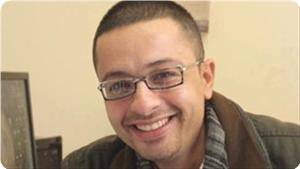 JENIN — The Israeli military court in Salem, north of Jenin, has sentenced Palestinian cartoonist Mohammed Sabana to five months imprisonment on the charge of contacting “hostile parties”.
Family members told the PIC reporter on Saturday that the court passed the sentence on Friday and charged Sabana with making such contacts during his visit to Jordan.
They said that the charges were unfounded, adding that the sentence was illegal and proved the summary trials conducted against Palestinian citizens.
The relatives affirmed that Sabana was not involved with any political party or organization and was just an activist who employs his cartoons in exposing the Israeli occupation’s crimes.
Sabana was arrested on his return from Jordan last February and held for interrogation. His brother, Thamer, was also detained for his pro-prisoners’ activities.
Related articles
- Israel detains Palestinian cartoonist, family says (alethonews.wordpress.com)
- Palestinian Journalists jailed by Israelis (english.pravda.ru)
“We’re Witnessing a Reactivation of the Death Squads of the ‘80s”
An Interview with Bertha Oliva of COFADEH
By Alex Main | cepr Americas Blog | March 29, 2013
Bertha Oliva is the General Coordinator of COFADEH, the Committee of Relatives of the Disappeared and Detained in Honduras. Bertha’s husband was “disappeared” in 1981, a period when death squads were active in Honduras. She founded COFADEH together with other women who lost their loved ones, in order to seek justice and compensation for the families of the hundreds of dissidents that were “disappeared” between 1979 and 1989. Since then Bertha and COFADEH have taken on some of the country’s most emblematic human rights cases and were a strong voice in opposition to the 2009 coup d’Etat and the repression that followed. We interviewed her in Washington, D.C. on March 15th, shortly after she participated in a hearing on the human rights situation in Honduras at the Inter-American Commission on Human Rights (IACHR). During the hearing she said that death squads are targeting social leaders, lawyers, journalists and other groups and called on the IACHR to visit Honduras in the next six months to take stock of the human rights situation ahead of the November general elections (Bertha’s testimony can be viewed here, beginning at 17:40).
Q: On various occasions you’ve said that what you’re seeing today in Honduras is reminiscent of the difficult times you experienced in the ‘80s and I’d like you to elaborate on that.
In the ‘80s we had armed forces that were excessively empowered. Today Honduras is extremely similar, with military officers exercising control over many of the country’s institutions. The military is now in the streets playing a security role – often substituting for the work of the police forces of the country.
In the ‘80s we also witnessed the practice of forced disappearances and assassinations. In that era it was clear that they were killing social leaders, political opponents, but they also assassinated people who had no ties to dissident groups in order to generate confusion in public opinion and try to disqualify our denunciations of the killings of family members who were political opponents.
Today they assassinate young people in a more atrocious fashion than in the ‘80s and we’re seeing a marked pattern of assassinations of women and youth. And within this mass of people that are assassinated there are political opponents. We refuse to dismiss these assassinations as simply a result of the extreme violence that we’re experiencing, as they try to tell the country. We say that it is a product of impunity and Honduras’ historical debt for failing to resolve cases perpetrated by state agents…
In the ‘80s the presence of the U.S. in the country was extremely significant. Today it’s the same. New bases have opened as a result of an anti-drug cooperation agreement signed between Honduras and the U.S.
In the ‘80s it was clear that political opponents were being eliminated. Today they’re also eliminating those who claim land rights, as exemplified in the Bajo Aguán. More than 98 land rights activists have been assassinated. The campesino sector in the Bajo Aguán has been psychologically and emotionally tortured on top of the physical torture that certain campesino leaders have been subjected to.
Q: Today in the hearing on human rights in Honduras at the Inter-American Commission on Human Rights you discussed death squads. Death squads were active in the ‘80s and now you believe that this sinister phenomenon is coming back.
It’s certain that death squads are a product of the impunity that we’ve seen in Honduras. The death squads of the past were never really dismantled. What we’re witnessing is a reactivation of these death squads. And we’re seeing it quite clearly. We’ve seen videos of incidents in the street where masked men with military training and unmarked vehicles assassinate young people. There is the recent case of the journalist Julio Ernesto Alvarado who gave up his news program from 10pm to midnight on Radio Globo because members of a death squad came to kill him, and to save his own life he had to stop doing his program.
In Honduras we had a military coup d’Etat and this resulted in persecution, an implosion of the state’s institutions which has left us with a dysfunctional judicial system and this has provided cover to those who wish to break the law.
And, what’s worse, state agents seem to have no political interest in improving and changing the situation. What we’re witnessing is a growing professionalization of the capacity to justify illegal acts: authorities’ assertion that they intend to investigate these acts, when that’s simply not true. In reality it seems the intention is to continue terrorizing the Honduran people, to make them submissive so as to undermine citizen action.
What we’d like to see in Honduras is real action to try to prevent crime rather than continued justification of the lack of progress of investigations into crimes.
Q: COFADEH is providing legal counsel to the victims and the families of the victims of the emblematic case that took place in May of last year in Ahuas, in which there was a police operation that involved U.S. agents and Honduran security agents that killed four people and injured a few others. Can you discuss the status of that case, over ten months after the killings took place?
Yes, we are the legal representatives of the victims in this case and, on the one hand, we are filing a complaint with Honduras’ judicial authorities to show or verify the responsibility of Honduran agents and DEA agents that participated in this incident.
But we’re also trying to reach out to the general public so that the case is better known and debated as this is the only real recourse we human rights defenders have: publicly denouncing the incident to see whether this will allow for some protection of the victims and of ourselves. But legally we see this as a very difficult case to move forward and this is where we can see that the authorities aren’t interested in investigating, let alone sanctioning, those responsible. The crime of the tragic attack against this indigenous community has been compounded by the crime of violating due process in the investigation.
We the legal representatives of the victims should have access to the case file. The Public Ministry [equivalent to the Attorney General’s Office in the U.S. – ed.] shouldn’t allow any obstacle to come in the way of our access to the file. They can’t legally prevent us from learning about the actions that have been taken in the course of the investigation because we are part of the defense. It is prohibited for either of the parties to be denied access to the case file. The file can be classified with regard to the general public, but not with regard to the parties representing the victims and the accused.
We haven’t seen all the files in this case. They haven’t been inserted in a binder [as is normally the case] in order to allow them to remove information when we ask for the file. How can we participate effectively in a trial when we can’t see all of the case file?
Q: And what evidence do you have of their having removed parts of the case file before sharing it with you?
One is that when we’ve been shown the case file it basically only contains documents that we’ve produced. We know the Public Ministry has carried out its own investigations; it has carried out the exhumation and autopsies of the deceased victims’ bodies for instance. As a side note, we weren’t informed that they were carrying out the exhumations of the victims. We’re left with the impression that the intention isn’t to find evidence but rather to remove [borrar] evidence… Our Public Ministry should be called a “Public Laundromat” because they’re engaged in destroying evidence.
Q: So you didn’t see the reports on the exhumations and autopsies of the victims in the Ahuas case file?
We haven’t seen them, just as we didn’t see the report that was sent by [Honduran Attorney General equivalent] Luís Alberto Rubi to the State Department of the United States. This indicates to us that they remove information and documentation from the case file that they don’t want us to see.
The Public Prosecutor [Attorney General equivalent] sent a report to a representative of the State Department, Maria Otero, with – for instance – the names of the Honduran police agents and military personnel that participated in the operation, though not the names of the DEA agents, with the apparent goal of barring them from any sort of responsibility.
Q: But you did end up managing to see the Public Ministry report sent to the State Department?
Yes, but not through the Public Ministry, but thanks to people outside Honduras who managed to get hold of a copy.
Q: In this report there is information based on testimony provided to the Public Ministry by police agents that participated in the Ahuas operation. Have you been able to see any of this original testimony?
No, we haven’t seen any of the testimony of the police agents.
Q: What is the current situation of the surviving victims of the Ahuas incident, and of the families of the victims?
The situation of the families, of the survivors, of the community is really very critical. They are emotionally and psychologically affected. Being on the receiving end of an armed aerial attack is a shock for a remote community that never expected an attack of this nature. Some of the community members were woken up by armed agents, were physically attacked and had certain belongings stolen.
I think that those that survived are no longer directly threatened but not all of them have recovered their physical abilities. For instance, a young man sustained a serious injury to his hand requiring an operation that cost 100,000 lempiras [over $5,000 – ed.]. Where can this boy, who doesn’t have anything, find this kind of money?
COFADEH ended up having to take care of him and he’s still in treatment in Tegucigalpa, far from his community. We are paying for his treatment and lodging him, feeding him and paying for his studies. This is the responsibility of the state and it has refused to assume this responsibility even though we requested urgent protective measures from the state. The state is good at providing technically well-designed reports before the Inter-American Commission on Human Rights, but it has been incapable of dealing with the needs of the survivors of this attack.
This sort of thing is a clear demonstration of their lack of interest in resolving and combatting the insecurity we’re experiencing, the political violence and the high level of impunity.
Q: What about the other injured victims?
We’ve had to bring them to Tegucigalpa to be treated. In the case of one boy they left studs [clavos] jutting out of his arm. He almost lost his arm because after the operation they sent him back to his community but with no medicine.
We’ve also had to provide care for other relatives of the survivors and the deceased victims. It’s impressive the level of neglect of these victims on the part of the state.
We [the human rights defenders] return to our country with the fear that the attacks will extend to us as a result of our decision to come and denounce a state that has shown itself incapable of assuming its responsibility.
Q: COFADEH has received threats and recently its offices were raided. Can you talk to me about your situation, your vulnerability, and what people in the U.S. can do to help?
Our situation isn’t good at all. I confess that we’re frightened because we love life, that’s why we dedicate ourselves to defending the lives of others. And I don’t want to die or be tortured. And I don’t want to have to confront state agents. But despite their machinery of hate and actions against us, they should know that they can’t stop us.
Fortunately we can count on support from people in the U.S. and the rest of the world, and I can reaffirm today that this support and this commitment of people abroad inspires us and makes us feel less alone. Because the worst that can happen for a human rights defender facing threats is to feel alone. That’s why we call on you to continue supporting us to defend the life and liberty of the citizens that need our help.
Related articles
- World Bank Must End Support for Honduran Palm Oil Company Implicated in Murder (alethonews.wordpress.com)
- Will Congress act to stop US support for Honduras’ death squad regime? | Mark Weisbrot (guardian.co.uk)
Female Bahraini Doctor ‘Severely’ Tortured in Jail
Al-Manar | March 31, 2013
A female Bahraini doctor says the Al Khalifa regime forces have ‘severely’ tortured her and several other doctors, who treated injured anti-regime protesters, in order to extract false confessions.
“We were forced to sign false confession blindly without reading them and these confessions were taken or extracted by severe torture and I mean by severe torture physical and psychological torture,” Dr. Fatima Haji said in a recent interview with Russia Today.
“We’d been denied sleep for days and had been standing for days. We were not given food or fluids and were hardly allowed to go the toilet,” Haji stated.
She further said the inmates were beaten by wooden sticks and hollow pipes. They were also electrocuted, sexually harassed and threatened with death and rape.
Haji is one of a group of doctors who were sentenced to five years in jail for their role in anti-regime protests. However, they were acquitted in 2012.
The confession they were forced to sign said that they were in possession of arms in the hospital where they worked and that they were trying to topple the Manama regime.
~
Korean Lawmakers and Human Rights Experts Challenge Three Strikes Law
By Danny O’Brien and Maira Sutton | EFF | March 29, 2013
In July 2009, South Korea became the first country to introduce a graduated response or “three strikes” law. The statute allows the Minister of Culture or the Korean Copyright Commission to tell ISPs and Korean online service providers to suspend the accounts of repeated infringers and block or delete infringing content online. There is no judicial process, no court of appeal, and no opportunity to challenge the accusers.
The entertainment industry has repeatedly pointed to South Korea as a model for a controlled Internet that should be adopted everywhere else. In the wake of South Korea’s implementation, graduated response laws have been passed in France and the United Kingdom, and ISPs in the United States have voluntarily accepted a similar scheme.
But back in Korea, the entertainment industry’s experiment in Internet enforcement has been a failure. Instead of tackling a few “heavy uploaders” involved in large scale infringement, the law has spiraled out of control. It has now distributed nearly half a million takedown notices, and led to the closing down of 408 Korean Internet users’ web accounts, most of which were online storage services. An investigation led by the Korean politician Choi Jae-Cheon showed that half of those suspended were involved in infringement of material that would cost less than 90 U.S. cents. And while the bill’s backers claimed it would reduce piracy, detected infringement has only increased as more and more users are subject to suspensions, deletion, and blocked content.
This Wednesday, Korea’s National Human Rights Commission recommended that the three strikes law be re-examined, given its unclear benefits, and its potential violation of the human rights to receive and impart information and to participate in the cultural life of the community.
Mr. Choi and twelve other members of the Korean National Assembly have taken the first step in that reform. Last week, they announced plans to introduce a law that would repeal three strikes, as well as ensure that ISPs have no need to pro-actively spy on their own users for signs of copyright infringement. Newly formed Korean digital rights group, OpenNet, is also working hard to drum up political support for this initiative.
The rightsholders have reacted with alarm to the prospect of copyright reform in Korea, and have already begun heavy lobbying for the abandonment of Choi’s initiative. They badly need Korea to maintain this law, even if it damages Korea’s own economy and their citizen’s civil liberties. It’s not surprising that they have already been making frequent calls and meetings with Mr. Choi and other Korean politicians. If Korea rejects three strikes as a disaster, why should anyone else maintain its injustices?
Korean lawmakers need to stand firm. We, along with many other major international Internet rights groups, including Access, Creative Commons Korea, Demand Progress, Fight for the Future, Freepress, Free Software Foundation, Global Voices Advocacy, La Quadrature du Net, OpenMedia, ONG Derechos Digitales, and Public Knowledge, have written to strongly support Mr. Choi’s brave stand for his own citizens. His stand is based on thorough investigations of Korean Internet users’ experience of this law. We hope that his group’s reform will prevail, and that Korea will be freed of the dubious benefits and growing disadvantages of being the laboratory for this discredited experiment.
Unfree in Palestine – Book Review
By Ludwig Watzal | Palestine Chronicle | March 27 2013
(Unfree in Palestine. Registration, Documentation and Movement Restriction by Nadia Abu-Zahra and Adah Kay, Pluto Press, London 2013, pp. 232, L 17.99.)
The latest visit by U.S. President Barack Hussein Obama to Israel has demonstrated to the world on which side the Empire stands. Obama promised an occupying power absolute support and eternal loyalty. Behind this background, the reader of “Unfree in Palestine” is befallen from a kind of bitterness when hearing Obama’s unrestricted support for a heinous form of total control of a whole population under occupation. A slap in the face for the Palestinians and for some critical Israeli intellectuals was Obama’s sentence that he admires Israel’s “core values”! Perhaps he did not know what he was talking about. Israel betrays all the “core values” the U. S. American civil rights movement was fighting for, not to speak of many laws that discriminate against non-Jews in Israel.
 The authors, Nadia Abu-Zahra, Assistant Professor of Globalization and Development at the University of Ottawa, and Adah Kay, Honorary Visiting Professor at Cass Business School, City University of London, describe the role played by identity documents in Israel’s policies towards the Palestinians, from the red passes of the 1950s to the orange, green and blue passes of today. They show how millions of Palestinians have been denationalized through the bureaucratic tools of census, population registration and a highly discriminatory pseudo-legal framework. They show how identity documents are used by Israel as a means of coercion, extortion, humiliation and informant recruitment.
In the book the authors provide a review of identity documentation and movement restrictions in Palestine from the 1800s till today. They focus on population and how it is divided and affected using bureaucratic instruments. In the introduction chapter terms such as “population registration”, “identity documentation”, and “movement restriction” are defined and explained by examples from other countries in order to demonstrate the power that such tools can have on denationalization, discrimination, displacement, dispossession, coercion, collaboration, and death.
The main part of the book deals with the history of the census, the population registry, denationalization, blacklists, coercion, collaboration and how movement restrictions of millions of Palestinians became possible. The authors exemplify on the health and education sectors, how the above mentioned policies affect the social life of the people. Both sectors are undermined through restricted access for patients, students and teachers. Despite all odds, the Palestinians resist inducements to leave their homeland.
Although international law declared denationalization illegal, the international community did not care about the forced displacement of Palestinians. Their “right of return” has been ignored by Israel, despite the fact that the United Nations has called for it since 1948, and it was a requirement for Israel’s entry into the UN. On the basis of denationalization, the Israeli occupier has striped the Palestinians of any personal security. Israel has been issuing over one hundred permits so far that curb the movement of the people in the occupied territories and abroad. Permits and identity cards can be revoked arbitrarily. Acquiring an ID card or granting permits became a bargaining chip for the Israeli authorities to recruit informants and collaborators among the Palestinians.
The book gives an excellent overview of a military and bureaucratic Kafkaesque system of control used by Israel to deprive the Palestinians of their rights and freedoms. Perhaps Obama meant, inter alia, these “core values” the U. S. shares with the Israeli occupying regime. The Palestinian people want their rights and not charity from the international community. Despite having made the lives of the Palestinians unbearable, the people resisted and stayed to the chagrin of the Israeli colonizers. The great value of this book is that the authors have brought light into the fate of 1.4 million denationalized Palestinians.
– Dr. Ludwig Watzal works as a journalist and editor in Bonn, Germany. He runs the bilingual bog “Between the lines”: http://between-the-lines-ludwig-watzal.blogspot.com
Related article
- Unfree in Palestine – visual tour and presentation by Dr Nadia Abu-Zahra, University of Ottowa (refugeearchives.wordpress.com)
Paraguay: Organisations Denounce Human Rights Abuses Before IACHR
By Kari Paul | The Argentina Independent | March 25, 2013

Thousands protest the impeachment of Fernando Lugo
The Inter-American Commission on Human Rights (IACHR), an autonomous organ of the Organisation of American States (OAS), held a hearing on the “general situation of human rights in Paraguay” in Washington, US, on Friday and various Paraguayan organisations brought grievances to address.
Among the most important issues presented were the Curuguaty Massacre of last June and the so-called ‘parliamentary coup’ against Fernando Lugo last year. The organisations demanded that the commission urge Paraguayan state investigation into the allegations of torture in the Curuguaty incident.
They also asked for clarification regarding the procedure for the seizure of lands belonging to the Cuyabia indigenous community. The same request was made on the continuous felling of the Ayoreo Totobiegosode Natural and Cultural Heritage Site.
The organisations alerted the Commission to the recent murders of three farming leaders. They also asked them to help get the threats against human rights advocates in the country under control.
The Commission received the complaints of the Human Rights Coordination of Paraguay, the Latin American and Caribbean Committee for the Defence of Women’s Rights, the Peace and Justice Coordination of Paraguay, and Rural and Indigenous Women Workers of Paraguay, among others.
Story courtesy of Agencia Púlsar, the AMARC-ALC news agency. (photo courtesy of anticapitalistes.net)
Featured Video

Liberty Cannot Exist Inside a Panopticon
or go to
Aletho News Archives – Video-Images
From the Archives
Left-leaning despisers of 9/11 Truth movement: Do you really believe in miracles?
David Ray Griffin | Global Research | 06 Jul 2010
An Open Letter to Terry Allen, Noam Chomsky, Alexander Cockburn, David Corn, Chris Hayes, George Monbiot, Matthew Rothschild, and Matt Taibbi.
[1]According to several left-leaning critics of the 9/11 Truth Movement, some of its central claims, especially about the destruction of the World Trade Center, show its members to be scientifically challenged. In the opinion of some of these critics, moreover, claims made by members of this movement are sometimes unscientific in the strongest possible sense, implying an acceptance of magic and miracles. … Full article
Blog Roll
 Aletho News
- White House envoy declares kinetic action against Yemen ‘fruitless’
- Ukraine deployed thousands of microdrones in Iraqi Kurdistan: Tasnim
- Iran calls for emergency UNSC meeting over Trump’s ‘brazen’ bomb talk, Israeli threats
- Iranian sources reveal details of Russia-China Hormuz proposal
- Plan for more US-Israel integration puts our military tech at risk
- Another Round Against Iran Will Break What Is Left of the Gulf
- SVR Report on Ukraine’s Mexican Drug Gang Links Could Pressure Zelensky, Won’t Change US Policy
- British Government Employees Were Fact-Checking the News at the BBC. Nobody Told You.
- Albania on fire: who’s behind the riots?
- Egypt’s Civil Democratic Movement rejects involvement in regional war
- If Americans Knew
- Mysterious bot accounts reportedly spread fake ‘man on the street’ videos for Michigan Senate candidate
- Israeli Defense Minister Katz Says Over 60 Lebanon Villages Have Been Destroyed
- Why Is Israel Running TV Ads in Iowa Ahead of the Midterms?
- Hind Rajab’s Alleged Killer Is in the United States. HRF Demands His Arrest.
- US Officials Face Fresh Pressure After Another American ‘Brutalized’ by Israeli Settlers in West Bank
- Israel-Backed Palestinian Militias Terrorize Displaced Families in Gaza
- FBI subpoenas pro-Palestine activists over Israeli weapons plant disruption
- Fourth winter arrives in wartorn Gaza, too early – Daily Update
- More on how Bari Weiss is using CBS on behalf of Israel
- What the UK Is Doing to Pro-Palestine Novelist Sally Rooney Is an Act of Orwellian Villainy
- No Tricks Zone
- Predictions Made By Renowned Climate Proifessor Over Past Decades Have Been Proven To Be Poor
- New Study Suggests Large Regions Of The Pacific Ocean Have Been Cooling For The Last 80 Years
- Germany’s Green Energy Debacle: High Energy Costs Force Kahla Porzellan to Close After 182 Years!
- New Study: 50 Years Of The Most Aggressive ‘Net Zero’ Policies Can Only Affect The Global Climate By 0.03°C
- US September “Heat” Was No Record…Many Records Set Decades Ago
- Latest European Green Energy Debacle; Portugal’s Largest Flagship Solar Park Insolvent!
- Green Energy Debacle: German Expert Professor Fritz Vahrenholt Warns Of Severe Economic And Social Consequences
- Two More Paleo Reconstructions Affirm Meters-Higher Sea Levels Across Ireland, Brazil 7000-6000 Years Ago
- New Study: Earth And Venus Surface Warmth Largely Explained By Convection And Lapse Rate, Not CO2 Or Radiation
- 2025 Nature Paper Claiming Worsening Global Drought Gets RETRACTED …Heavily Flawed

