IPCC Likely to Start Blaming Humans For Weather as Friederike Otto Takes Key Role
The foxes are now firmly in charge of the chicken coop
By Chris Morrison | The Climate Skeptic | August 24, 2025
Last December the Daily Sceptic published an article reporting that the Intergovernmental Panel on Climate Change (IPCC) could be preparing to start blaming humans for individual bad weather events. Straws-in-the-wind stuff, based on an IPCC press release claiming a century of burning hydrocarbons had resulted in “more frequent and intense extreme weather events”. To date, the IPCC has failed to detect that humans using hydrocarbons have led to worse bad weather on the simple scientific ground that it is impossible, with current data sources, to remove the overwhelming role of natural variation. Our story was prescient. It’s all change at the IPCC, with the appointment of Attribution Queen Friederike Otto and a troop of fellow attributionists to take charge of writing a new chapter on extreme weather for its forthcoming seventh climate science assessment report. With the foxes now in charge of the chicken coop, political order can be restored, with the IPCC science more closely aligned with current Net Zero political requirements.
Dr Otto, who runs the Green Blob-funded World Weather Attribution (WWA) operation out of Imperial College, has been appointed the co-leader of the extreme weather chapter. “It will be a lot of work, but it also gives a lot of opportunity to shape the structure and focus of the chapter”, she notes. WWA paymasters who include the Grantham, European Climate and Bezos Earth foundations will no doubt be delighted with this news. Helping her shape the narrative going forward will be a number of writers who are all in on the single event attribution game. The science writer Roger Pielke Jr notes that the team is “stacked” with people who focus on extreme event attribution (EEA) – “far out of proportion to their presence in the field”. Few of the authors, if any, he adds, have expertise in the IPCC’s conventional framework for detection and attribution (D&A), and some have no publications on either detection or attribution. He points out that nine out of 20 of the authors focus their research on EEA, including two of the three coordinating leads.
One-off weather attribution is a pseudoscience based mostly on the flimsy findings of computer models. Two imaginary atmospheres with different levels of carbon dioxide are compared, and, hey presto, claims are made that a weather event is x times more likely to be caused by humans.
Complete with a suitable large multiple, the results are distributed to ‘join-the-dots’ merchants such as Jim Dale, as well as mainstream media climate desks. Worldwide publicity is given to ‘science’ findings that obviously fail the Popperian principle in that they cannot be tested and falsified. The non-peer-reviewed information is pushed out quickly in a press release, with the disaster fresh in the media minds. Climate fear levels in the general population are kept nicely topped up – job done. Climate ‘deniers’ can be dismissed with a head-in-the-hands sigh and a “can’t you even see the evidence outside your own window?” Of course, the entire unquestioning media meltdown is based on the false notion that computer models produce ‘evidence’, when in reality they just supply opinions.
In 2019, the former BBC Today editor Sarah Sands wrote a foreword for a WWA journalist guide to reporting extreme weather. She recalled the time when the UK politician Nigel Lawson managed to slip into a BBC broadcast that there had been no increase in extreme weather. “I wish we had this guide for journalists to help us mount a more effective challenge to his claim,” she gushed. These days, she enthused, attribution studies have given us significant insight into the horsemen of the climate apocalypse.
In the past, the IPCC has failed to detect and attribute most extreme weather to human involvement, and it did not expect to do so for the rest of the century. It is becoming increasingly obvious that computer models are poor at replicating the complex atmosphere and offer little guidance for future climate projections. Detecting changes in the climate requires many decades of observation. The idea that one event can shortcut an understanding of a long-term trend, when there is no way of knowing if it is a statistical outlier, is for the birds. Collecting one-offs from a number of different weather types and claiming that humans control the weather would just be silly if it wasn’t designed to induce mental anguish and screw oil and gas firms in court.
With many of the poster scares of climate collapse having to be retired – even melting Arctic sea ice has gone on strike for 20 years – the desperation of activists is getting noticeably worse. One of the last throws of the dice is running bad weather scares. Net Zero is dead in the United States, and a recent official government report stated that computer models offered “little guidance” on how the climate responds to higher CO₂ levels. It also noted that most extreme weather events are not increasing, while weather attribution claims are challenged by natural climate variation, along with an admission that they were originally designed with ‘lawfare’ in mind.
WWA was set up in 2014 by Otto and Dr Geert Jan van Oldenborgh, with Green Blob-funded Climate Central providing support and help with securing funding. These days, the operation notes that its methods have been developed over time and “peer reviewed in dedicated methods publications”. A link to the claimed peer review is helpfully provided on its website, and this brings up a paper titled ‘Pathways and Pitfalls in Extreme Event Attribution.’ Interestingly, the first peer reviewer is Dr Geert Jan van Oldenborgh, while the fifth is Dr Friederike Otto.
In 2022, a group of four Italian scientists led by Professor Gianluca Alimonti published a paper in Nature based on data used by the IPCC that concluded there had been little change in extreme weather events. Such findings and data are easy to find, although mainstream media is mostly absent from the search. On the basis of their factual findings, the Italians suggested there was not a climate crisis. All hell subsequently broke loose, and an alliance of activists, journalists and scientists managed to get the paper retracted a year later. One of those activists was Otto who said the authors were “of course” not writing their paper in good faith. “If the journal cares about science they should withdraw it loudly and publicly, saying that it should never have been published”, she added. At the time of the infamous affair, Pielke observed: “The abuse of the peer-reviewed process documented here is remarkable and stands as a warning that climate science is as deeply politicised as ever with scientists willing to exert influence on the publication process both out in the open and behind the scenes”.
Chris Morrison is the Daily Sceptic’s Environment Editor. Follow him on X.
The 2050 Net Zero Climate Scam
By William Levin | American Thinker | December 29, 2024
Twenty fifty is the official date for net zero emissions. According to the experts, it is the last chance to stop a catastrophic rise in temperature. The leading source for climate change science, the U.N. IPCC, says so. Corporations run commercials helpfully informing the public that net zero is a top priority. Few can outdo Delta Air Lines, which promises compliance using “a fully sustainable long-haul aircraft [that] has yet to be invented.”
The urgency is palpable and the science compelling. Humanity itself is at risk without net zero CO2 and non-CO2 emissions.
Politically, 2050 is the ideal climate date because it is close enough to justify immediate action, and just far enough as to be unprovable for climate disaster.
For a science so settled and a date so specific, there must exist a wealth of data scientifically supporting the hypothesis that 25 years from now marks a deadline and turning point for the Earth’s future.
An A.I. query provides the answer:
The target year 2050 for achieving carbon neutrality is primarily driven by scientific consensus and international agreements aimed at limiting global warming to 1.5°C above pre-industrial levels. The Intergovernmental Panel on Climate Change (IPCC) and the Paris Agreement outline that reaching net-zero CO2 emissions by 2050 is crucial to avoiding catastrophic climate impacts.
A.I. is correct that the IPCC and the signatories of the Paris Agreement are the parties responsible for promoting 2050 net zero. But who exactly are these organizations, and do they deserve our trust?
The IPCC is a political body consisting of 195 member-governments, charged with providing assessments in support of the U.N. Framework Convention on Climate Change. In theory, the IPCC mandate is to collect the best available climate science. The IPCC expressly commits that its “reports should be neutral with respect to policy.” And by its own admission, “the IPCC does not conduct its own research.” Its role is to summarize the objective science.
The signatories to the Paris Agreement are likewise 195 nations convened under the auspices of the U.N. But unlike the IPCC, the Paris Agreement signatories make no pretense to being a scientific body, and indeed, no one is confused on this point. The signatories are a political body and the Paris Agreement a purely political document.
With an overlapping membership, it should come as no surprise that the two organizations coordinate their efforts. In the process, the IPCC has become the loudest and most strident advocate for existential change in human activity. In the latest IPCC report, deepening red gradient shadings convey that the Earth is a looming inferno.
According to the IPCC, the danger of imminent collapse due to rising CO2 and non-CO2 emissions, particularly methane, requires immediate action. Humanity must downsize and restructure the global economy, including, in their modest terminology, “governments, private sector, and civil society.” Everyone is responsible, and everyone must contribute.
Not only must GDP be lowered, but the world must immediately and drastically curtail fossil fuels; limit global agriculture output based on emissions, not feeding the world; spend and redistribute upwards of $125 trillion; rely on expensive, unreliable, discredited solar and wind for global power needs; and virtually ignore nuclear power, all the while “prioritizing equity, climate justice, social justice, inclusion and just transition processes.” To make the math work, governments and the private sector must implement on a global scale yet-to-exist carbon capture technologies, of unknown cost and consequence.
There is no imputation here that climate science is not real. It is the political choices of the IPCC at issue, specifically the 2023 Sixth Assessment’s Summary for Policymakers, as opposed to the physical scientists reporting as Working Group 1. As summarized by scientist Roger Pielke, “it is not within the IPCC’s mandate to call for action or to implore urgency.”
The IPCC task is to vet and summarize thousands of complex models and scientific papers produced annually. In each instance, a climate model incorporates assumptions not easily aggregated. The IPCC solution groups the models into five arbitrary scenarios based on forecasted warming in 2100. At no point does the IPCC ever declare one set of scenarios more likely than another. Indeed, as aggregators, they have no scientific basis for making any such assertion. In these scenarios, 2050 does not exist as a scientifically significant year. It is simply a point on the curve connecting the current temperature to the 2100 end point.
To get to 2050, and urgency, the IPCC needs to import the political findings of the Paris Agreement.
In 2015, the Paris Agreement signatories reviewed the then most current IPCC report, the 5th Assessment. These 195 government actors arbitrarily concluded that “well below 2 degrees Celsius” of warming was the maximum threshold the Earth could survive. Nothing in the IPCC 5th Assessment supports the “well below 2 degree warming” as a scientific consensus. No IPCC evidence identifies a scientific threshold for global warming beyond which the Earth tips into collapse. Especially relevant, the signatories to the Paris Agreement in no manner highlighted 2050 as a year of special climate meaning, nor would it matter, scientifically speaking, if they had. Following the 5th Assessment, the Paris Agreement target date is merely a “long-term temperature goal,” with one reference to “the second half” of the century.
The Paris Agreement signatories went farther, deciding by imperial fiat that the temperature goal needed a guardrail, the now infamous, endlessly repeated 1.5-degree-warming “limit.” In popular parlance, many, many people will swear that 1.5 degrees of warming is a scientifically valid statement of the limit to global warming, beyond which climate catastrophe ensues.
As important to note, all IPCC warming targets, including the Paris Agreement, start from the pre-industrial period 1850–1900. According to the IPCC, 1.1 degrees of warming has already occurred, meaning the Paris Agreement target at present is a mere 0.4 degrees over 75 years to the IPCC 2100 model date. This equates to an imperceptible 0.005 degrees of annual warming — hardly the stuff of headlines and catastrophic collapse. And nothing compared to the 10 degrees of warming observed in the Earth’s last interglacial warm period in Siberia some 115,000 to 130,000 years ago.
It needs to be said as loudly as possible. The 1.5-degree climate tipping limit has no basis in any finding of the IPCC. It is the arbitrary finding of 195 political actors, in defense of the non-scientific “well below 2 degree” catastrophe, magically transported by the IPCC from 2100 to 2050.
How does the IPCC move the climate clock back 50 years, in violation of its 2100 science? By intentional sleight of hand, the IPCC provides a science answer to a policy question. How much CO2 can be emitted before the 1.5-degree target is breached? The sole source of the 1.5 degrees is the Paris Agreement.
Pro-IPCC climate scientists confirm that the global warming limit, whether it be 1.5 degrees from the Paris Agreement or some other number, is based solely on “value judgments and choice,” not “climate science.” (See page 7 chart.) The IPCC would have readers believe the exact opposite: that the global warming limit is scientifically determined, and those who disagree are “science deniers.” It is a deception of massive consequence.
Twenty fifty, as it turns out, is a long con between 195 governments and the IPCC.
As part of his Day One actions, President Trump needs to, once again, remove the U.S. from the Paris Agreement and disavow the overtly political IPCC Sixth Assessment Summary for Policymakers. The IPCC global prescription is not scientific, and it most certainly is not benign.
The Embarrassing Pause In Arctic Sea Ice Loss Has Lasted 17 Years, Defying IPCC, NSIDC Predictions
By Kenneth Richard | No Tricks Zone | January 8, 2024
“[S]ince the dramatical decline of the ice extent in 2007, the summer Arctic sea ice area has not declined further.” – Astrup Jensen, 2023
Scientists have been using the year 2007 as the starting point for assessing Arctic sea ice trends for nearly a decade. A 2015 study published in Nature Climate Change reported a “near-zero trend” in summer sea ice over the 7 years from 2007-2013.

Image Source: Swart et al., 2015 (full paper)
Another 10 years have now passed and there is still no evidence of a further decline in sea ice.
This is interesting because since late 2007 scientists have predicted Arctic sea ice would decline rapidly as CO2 continued rising – from 385 ppm in 2007 to 422 ppm today. There were 20 models referenced by the IPCC (AR4) projecting a 40% loss of sea ice by 2050 due to an allegedly enhance greenhouse effect associated with anthropogenic CO2 emissions.
But a new study reveals there’s been no declining trend in summer sea ice area over the last 17 years, and “no apparent correlation” between CO2 and sea ice trends.
“The Arctic Sea ice extent is measured by satellites and varies by day, month and year, and the yearly minimum ice extent will occur in a day of September month every year. The ice extent is much lower now (2023) than in 1978, when the satellite measurements began. However, it has not been a gradual decline. A major decline happened during the years 1997 – 2007. Before that the decline was minimal and after that period, there was no significant downward trend.”
“These data show that there is no apparent correlation between the variable extent of the Arctic and the Antarctic Sea ice and the gradually increasing CO2-concentrations in the atmosphere as proposed by NSIDC, IPCC and others, also for these areas of cold climate.”
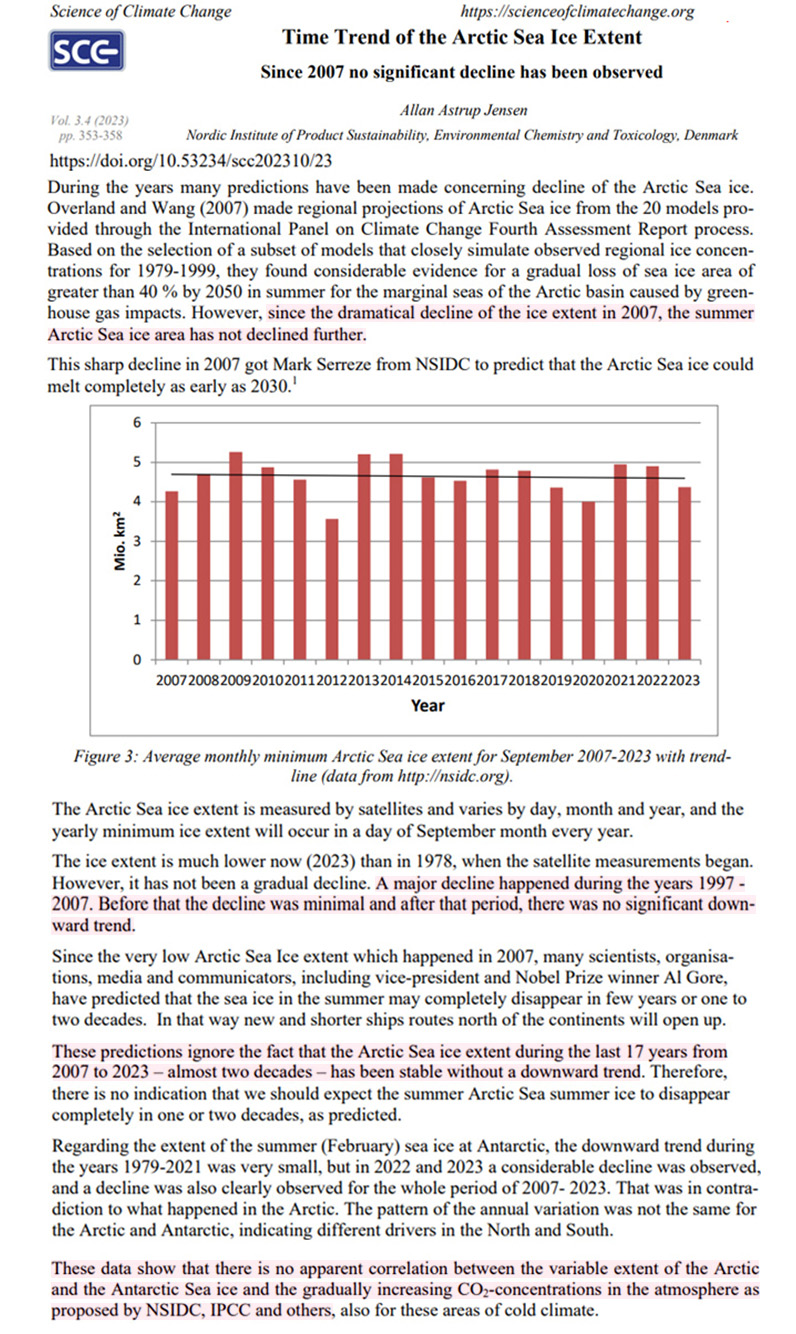
Image Source: Astrup Jensen, 2023
The Political Agenda of the IPCC
BY ROGER PIELKE JR. | THE HONEST BROKER | MAY 15, 2023
The Intergovernmental Panel on Climate Change (IPCC) was established as a scientific assessment process more than 35 years ago. Scientific assessments are of critical importance in many areas to help policy makers and the public to identify what is known, what is uncertain, as well as where there is contestation, uncertainties and areas of fundamental ignorance. Such assessments can also help us to understand policy options and expectations for how different choices might lead to different outcomes.
Regular readers of The Honest Broker will know that I have taken issue with the recent IPCC Sixth Assessment (AR6) based on an unacceptable number of errors and omissions in my areas of expertise, as well as its over-reliance on the most extreme climate scenarios. Today I take a look at the IPCC’s self-described political agenda and argue that the institution finds itself at a fork in the road.
Before proceeding, I want to be clear about what I mean when I talk about “the IPCC.” In one sense there is really no such thing as “the IPCC.” The organization’s assessment process includes many hundreds of people who do their work across three Working Groups to produce many dozens of chapters covering a wide range of topics. The Working Groups are largely independent of each other and even chapters within the same Working Group can be written largely independently of other chapters.
In another sense there is indeed such a thing as the IPCC — Specifically, its leadership and most engaged participants. These core participants represent a kind of climate in-group with a shared sense of purpose and an overarching commitment to a shared political agenda. For some people, their entire career is centered on the IPCC. These core participants do have a shared political agenda which can be seen in varying degrees within the reports.
So what is the political agenda of the IPCC in-group? Transformational change
When the IPCC released its Synthesis Report in March, it announced:
Taking the right action now could result in the transformational change essential for a sustainable, equitable world
It would be easy to write this sentence off as containing consultant-like and empty buzzwords. But the notion of “transformational change” has been widely employed in the academic literature on climate and the IPCC clearly defines what it means by “transformational change.”
In its AR6 Working Group 3 report the IPCC explains that transformation involves more than simply transitioning from one type of technology to another (emphasis added):
While transitions involve ‘processes that shift development pathways and reorient energy, transport, urban and other subsystems’ (Loorbach et al. 2017) (Chapter 16), transformation is the resulting ‘fundamental reorganisation of large-scale socio-economic systems’ (Hölscher et al. 2018). Such a fundamental reorganisation often requires dynamic multi-stage transition processes that change everything from public policies and prevailing technologies to individual lifestyles, and social norms to governance arrangements and institutions of political economy
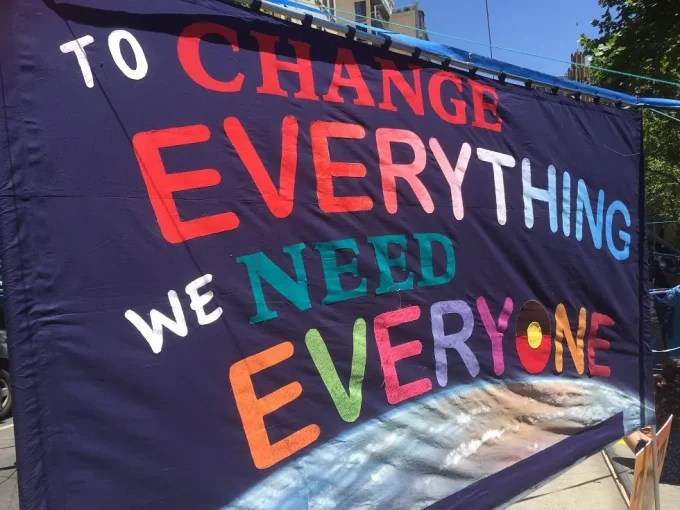
Transformational change means that everything changes.
What are examples of these sorts of changes? The IPCC identifies “the potential for virtuous cycles of individual level and wider social changes that ultimately benefit the climate.”
The IPCC continues (emphasis added):
The starting point for this virtuous circle are inner transitions. Inner transitions occur within individuals, organisations and even larger jurisdictions that alter beliefs and actions involving climate change (Woiwode et al. 2021). An inner transition within an individual (see e.g., Parodi and Tamm 2018) typically involves a person gaining a deepening sense of peace and a willingness to help others, as well as protecting the climate and the planet . . .”
What are examples of such “inner transitions”? The IPCC explains:
Examples have also been seen in relation to a similar set of inner transitions to individuals, organisations and societies, which involve embracing post-development, degrowth, or non-material values that challenge carbon-intensive lifestyles and development models . . .
The IPCC discusses the importance of “degrowth” to its vision of transformation in its AR6 Working Group 2 report:
Consumption reductions, both voluntary and policy-induced, can have positive and double-dividend effects on efficiency as well as reductions in energy and materials use . . . a low-carbon transition in conjunction with social sustainability is possible, even without economic growth (Kallis et al. 2012; Jackson and Victor 2016; Stuart et al. 2017; Chapman and Fraser 2019; D’Alessandro et al. 2019; Gabriel and Bond 2019; Huang et al. 2019; Victor 2019). Such degrowth pathways may be crucial in combining technical feasibility of mitigation with social development goals (Hickel et al. 2021; Keyßer and Lenzen 2021).
These views are no doubt legitimate and sincerely held. But I seriously doubt that a climate agenda focused on changing everything, grounded in inner transitions to support degrowth is going to get very far in Peoria, much less anywhere else. More broadly, why are they being used to frame a scientific assessment?
I’m far from the first to recognize that the IPCC has adopted a political agenda focused on transformational change. Writing in 2022, Lidskog and Sundqvist explain:
Transformation has become a buzzword within scientific and political discourses in which “transformative change” is stated to be the solution to many severe environmental challenges. Expert organizations such as the IPCC and IPBES have stressed that transformative change is necessary to meet environmental challenges (IPCC, 2018; IPBES, 2019). . . While transformative change is seen as the way forward and as an uncontroversial ambition—it is difficult to find anyone who is critical of it—its meaning is nevertheless unclear.
The adoption of transformational change as an overriding political objective in the IPCC AR6 (and in the IPCC 1.5 report before that) represents a departure from a more politically neutral use of the concept in the IPCC Fifth Assessment Report (AR5). In 2014, the AR5 described “transformation pathways” to refer to technological alternatives for mitigation, not to demand that everything must change across society:
Stabilizing greenhouse gas (GHG) concentrations at any level will require deep reductions in GHG emissions. Net global CO2 emissions, in particular, must eventually be brought to or below zero. Emissions reductions of this magnitude will require large-scale transformations in human societies, from the way that we produce and consume energy to how we use the land surface. The more ambitious the stabilization goal, the more rapid this transformation must occur. A natural question in this context is what will be the transformation pathway toward stabilization; that is, how do we get from here to there?
The IPCC AR5 acknowledged that there were many ways to address accumulating greenhouse gases (GHGs) in the atmosphere:
[T]here is no single pathway to stabilization of GHG concentrations at any level. Instead, the literature elucidates a wide range of transformation pathways. Choices will govern which pathway is followed . . .
This expansive view of policy possibilities is far removed from “processes that change everything” and a “deepening sense of peace.” The IPCC AR5 and AR6 have been rightly criticized for not considering a larger set of possibilities for mitigation (notably, equity), which also reflects a political orientation.
The IPCC – or to be more precise, influential elements of the IPCC – appears to have been captured by an in-group with shared political views related to climate. These views embrace concepts like degrowth and planetary boundaries and turn climate policy on its head such that ends become means.
Transformational change views climate policy as a lever through which to “change everything.” The expressed need for such momentous changes across society are grounded in a frightening, even apocalyptic, perspective on the future. As the head of the IPCC exhorted in March, the IPCC “underscores the urgency of taking more ambitious action and shows that, if we act now, we can still secure a liveable sustainable future for all.”
The political agenda of the IPCC reads as if it was developed by wealthy American and Europeans academics. The billions of people around the world who may lack energy services or enough food probably would welcome an agenda of change. Instead, the IPCC emphasizes transformational changes in the lifestyles of ordinary people in rich countries, for instance, the recent Synthesis Report explained: “Many mitigation actions would have benefits for health through lower air pollution, active mobility (e.g., walking, cycling), and shifts to sustainable healthy diets.”
I have little doubt that many who have worked on the IPCC AR6 might read this post and say, “Hmmm, I never saw any of that,” others might say, “Yup, that’s our agenda, so what?” and still others might say, “I have a different political or professional agenda that I inserted into the report.” Further, one can surely dive into the almost 10,000 pages of the AR6 reports and selectively construct a different political narrative. However, I argue that “transformational change” is what in the jargon of symbolic politics is called the “master symbol” — the dominant political framing of the AR6.
The IPCC has clearly departed from its role as a scientific assessment and is now much more deeply engaged in political advocacy. Trying to simultaneously engage in assessment and advocacy is never a good idea. I hypothesize that the IPCC’s political agenda of transformational change plays more than a small role in its stubborn reliance on implausibly extreme scenarios and its multiple errors and omissions related to the science of extreme weather and disasters — both of which help to underscore the demand for urgent and large-scale societal change.
The IPCC finds itself at a fork in the road and should be reformed. It needs to either operate as a trustworthy scientific assessment or alternatively, to fully embrace its current role as an environmental advocacy group pushing transformational change. There is no middle ground.
Dutch-Led Network Of International Experts Finds “Serious Errors” In Latest IPCC Report
By P Gosselin | No Tricks Zone | May 12, 2023
The UN Intergovernmental Panel On Climate Change (IPCC) is misleading policy makers by focusing on an implausible worst-case emissions scenarios, concludes a new analysis report published by the Clintel Foundation: “The Frozen Climate Views of the IPCC“
The IPCC is hiding the good news about disaster losses and climate-related deaths and wrongly claims the estimate of climate sensitivity is above 2.5°C. Also errors in the AR6 report are worse than those that led to the IAC Review in 2010, concludes the report by The Climate Intelligence Foundation (Clintel), which was founded in 2019 by emeritus professor of geophysics Guus Berkhout and science journalist Marcel Crok.
Opposite of IPCC claims likely true
Another result: The IPCC ignored crucial peer-reviewed literature showing that normalized disaster losses have decreased since 1990 and that human mortality due to extreme weather decreased by more than 95% since 1920.
Clintel accuses the IPCC of cherry picking from the literature to claim increases in damage and mortality due to anthropogenic climate change, when in fact the opposite is likely true.
Rewrote climate history
The Clintel report is 180 pages long and the first serious international ‘assessment of the IPCC’s Sixth Assessment Report. In 13 chapters the Clintel report shows the IPCC rewrote climate history, and emphasizes an implausible worst-case scenario, favoring bad news and ignoring good news.
“The strategy of the IPCC seems to be to hide any good news about climate change and to hype anything bad,” reported the Clintel press release.
The errors and biases that Clintel documents in the report are far worse than those that led to the investigation of the IPCC by the Interacademy Councel (IAC Review) in 2010. Clintel believes that the IPCC should reform, or be dismantled.
Clintel is a network of international scientists who analyzed several claims from the Working Group 1 (The Physical Science Basis)
and Working Group 2 (Impacts, Adaptation and Vulnerability) reports. This led to the latest report: “The Frozen Climate Views of the IPCC”.
IPCC ignores 97% of all papers
Clintel explains how the IPCC ignored 52 out of 53 peer reviewed papers dealing with “normalized disaster losses” and found no increase in harms that could be attributed to climate change. Yet, the IPCC highlighted the single paper that claimed an increase in losses.
Cherrypicking, rewriting history
The IPCC also has tried to rewrite climate history by erasing the existence of the so-called Holocene Thermal Maximum (or Holocene Climate
Optimum), a warm period between 10,000 and 6000 years ago, and has introduced a new hockey stick graph, which is the result of cherry-picked proxies. The IPCC ignores temperature reconstructions that show more variability in the past, such as the well-documented Little Ice Age.
In its recent report, the IPCC also has grossly exaggerated sea level rise and CO2’s ability to warm the earth’s atmosphere and thus appears to have remained ‘addicted’ to its highest emissions scenario, so-called RCP8.5, which in recent years has been shown by several published papers to be implausible and thus should not be used for policy purposes.
Severely biased
“We are sorry to conclude that the IPCC has done a poor job of assessing the scientific literature,” the Clintel scientists report. “In our view the IPCC should be reformed, and should include a broader range of views. Inviting scientists with different views, such as Roger Pielke Jr and Ross McKitrick, to participate more actively in the process is a necessary first step.”
If the inclusion of other views does not permitted, then the IPCC should be dismantled, the scientists say.
Reality: Future is far less bleak
“Our own conclusions about climate – based on the same underlying literature – are far less bleak. Due to increasing wealth and advancing technology, humanity is largely immune to climate change and can easily cope with it. Global warming is far less dangerous to humanity
than the IPCC tells us.”
Clintel also published the World Climate Declaration, which has now been signed by more than 1500 scientists and experts. Its central message is “there is no climate emergency”.
Clintel press release here.
Top climate scientists slam global warming “so-called evidence” as “misrepresentation, exaggeration & outright lying”
By Chris Morrison | The Daily Sceptic | July 11, 2022
Two top-level American atmospheric scientists have dismissed the peer review system of current climate science literature as “a joke”. According to Emeritus Professors William Happer and Richard Lindzen, “it is pal review, not peer review”. The two men have had long distinguished careers in physics and atmospheric science. “Climate science is awash with manipulated data, which provides no reliable scientific evidence,” they state.
No reliable scientific evidence can be provided either by the Intergovernmental Panel on Climate Change (IPCC), they say, which is “government-controlled and only issues government dictated findings”. The two academics draw attention to an IPCC rule that states all summaries for policymakers are approved by governments. In their opinion, these summaries are “merely government opinions”. They refer to the recent comments on climate models by the atmospheric science professor John Christy from the University of Alabama, who says that, in his view, recent climate model predictions “fail miserably to predict reality”, making them “inappropriate” to use in predicting future climate changes.
The ’miserable failure’ is graphically displayed below. Since the observations cut-off, global temperatures have again paused.

Particular scorn is poured on global surface temperature datasets. Happer and Lindzen draw attention to a 2017 paper by Dr. James Wallace and others that elaborated on how over the last several decades, “NASA and NOAA have been fabricating temperature data to argue that rising CO2 levels have led to the hottest year on record”. The false and manipulated data are said to be an “egregious violation of scientific method”. The Wallace authors also looked at the Met Office HadCRUT database and found all three surface datasets made large historical adjustments and removed cyclical temperature patterns. This was “totally inconsistent” with other temperature data, including satellites and meteorological balloons, they said. Readers will recall that the Daily Sceptic has reported extensively on these issues of late and has attracted a number of somewhat footling ‘fact checks’.
Happer and Lindzen summarise: “Misrepresentation, exaggeration, cherry picking or outright lying pretty much covers all the so-called evidence marshalled in support of the theory of imminent catastrophic global warming caused by fossil fuels and CO2.”
Professors Happer and Lindzen’s comments are included in a submission to the U.S. Securities and Exchange Commission, which is seeking to impose massive and onerous ‘climate change’ reporting requirements on public companies. But they form part of a wider scientific revolt by many scientists alarmed at the corruption of science to promote the command-and-control Net Zero agenda. Needless to say, these debates are largely ignored by mainstream media. Opponents of Net Zero politicised science are denounced as ‘cranks’ and ‘deniers’, labels at odds with their distinguished scientific achievements. Between them, Happer from Princeton and Lindzen from MIT have around 100 years of involvement in atmospheric science. Richard Lindzen was an early lead author for the IPCC, while William Happer was responsible for a groundbreaking invention that corrected the degrading effects of atmospheric turbulence on imaging resolution.
In their submission, Happer and Lindzen supply a basic lesson in science: “Reliable scientific theories come from validating theoretical predictions with observations, not consensus, peer review, government opinions or manipulated data”.
In the U.K., it will be interesting to see if Net Zero will feature as a major issue in the battle to find a new Prime Minister. At the moment, candidates seem to be steering a widish berth – something that can happen with virtuous green policies when actual votes are at stake. Happer and Lindzen state firmly that “science demonstrates there is no climate-related risk caused by fossil fuels and CO2, and therefore no reliable scientific evidence supporting the proposed rule”. The rule in this case refers to the SEC climate requirement, but it could equally apply to Net Zero. Many people now accept that a rigid Net Zero policy will lead to massive falls in living standards that will disproportionately affect the poorer in society, both in the U.K. and particularly in the developing world. Contrary to the incessant attack on fossil fuels, write Happer and Lindzen, “affordable, abundant fossil fuels have given ordinary people the sort of freedom, prosperity and health that were reserved for kings in ages past”.
Such prosperity, of course, has left the building in the case of Sri Lanka, where the prospect of famine and civil breakdown face 22 million people following (among other things) the decision of the Government to ban fertiliser in the interests of climate change and saving the planet. Such a collapse, with the President hastily fleeing the country, is likely to face any modern Net Zero society that seeks to tamper with reliable and affordable energy supply, restrict diet and try to grow enough food using ‘organic’ methods. Happer and Lindzen state that reducing CO2 and the use of fossil fuels would have “disastrous consequences” for the poor, people worldwide and future generations.
Both Happer and Lindzen have long held out against the current demonisation of atmospheric CO2, pointing out that the current 415 parts per million (ppm) is near a record low and not dangerously high. They note that 600 million years of CO2 and temperature data “contradict the theory that high levels of CO2 will cause catastrophic global warming”. Omitting unfavourable data is an egregious violation of scientific method. Facts omitted by those who argue there is a climate emergency include that CO2 levels were over 1,000 ppm for hundreds of millions of years and have been as high as over 7,000 ppm; CO2 has been declining for 180 million years from about 2,800 ppm to today’s low; and today’s low is not far above the minimum level when plants die of CO2 starvation, leading to all other life forms perishing for lack of food.
Finally, the authors note that the logarithmic influence of CO2 means its contribution to global warming is “heavily saturated”. The scientists calculate that a doubling of current CO2 levels would only reduce the heat escaping to space by about 1.1%. This suggests warming of around 1°C or less. The saturation hypothesis explains, they say, the disconnect between CO2 and temperature observed over 600 million years.
Featured Video

Meet The Ellisons: Zionists, Technocrats, Moguls
or go to
Aletho News Archives – Video-Images
Frlom the Archives
With apparently fabricated nuclear documents, Netanyahu pushed the US towards war with Iran
By Gareth Porter | The Grayzone | April 29, 2020
President Donald Trump scrapped the nuclear deal with Iran and continued to risk war with Iran based on Israeli Prime Minister Benjamin Netanyahu’s claim to have proven definitively that Iran was determined to manufacture nuclear weapons. Netanyahu not only spun Trump but much of the corporate media as well, duping them with the public unveiling of what he claimed was the entire secret Iranian “nuclear archive.”
In early April 2018, Netanyahu briefed Trump privately on the supposed Iranian nuclear archive and secured his promise to leave the Joint Comprehensive Plan of Action (JCPOA). That April 30, Netanyahu took the briefing to the public in a characteristically dramatic live performance in which he claimed Israel’s Mossad intelligence services had stolen Iran’s entire nuclear archive from Tehran. “You may well know that Iran’s leaders repeatedly deny ever pursuing nuclear weapons…” Netanyahu declared. “Well, tonight, I’m here to tell you one thing: Iran lied. Big time.”
However, an investigation of the supposed Iranian nuclear documents by The Grayzone reveals them to be the product of an Israeli disinformation operation that helped trigger the most serious threat of war since the conflict with Iran began nearly four decades ago. This investigation found multiple indications that the story of Mossad’s heist of 50,000 pages of secret nuclear files from Tehran was very likely an elaborate fiction and that the documents were fabricated by the Mossad itself. … continue
Blog Roll
 Aletho News
- Meet The Ellisons: Zionists, Technocrats, Moguls
- US failures in Iran reveal Russia is key to South Korea’s strategic security
- ‘All ports in Persian Gulf will be legitimate targets if Iranian ports are attacked’
- 40 Years of Endless War, Data Point by Data Point
- Department of War Using Palantir AI to Pick Targets in Iran
- American bases do not protect – they attack the peoples of the Persian Gulf
- ‘We’ve Obliterated Their Missiles’
- Syrian president vows ‘absolute support’ to disarm Hezbollah
- Ukraine attacking Russian gas pipeline to stop deliveries to Europe – Defense Ministry
- ‘Heinous crime’: Iran denounces Israeli assassination of 4 Iranian diplomats in Lebanon
- If Americans Knew
- Israeli strategic plans to “remake the Middle East” from the 1950s and since
- Honoring Gaza’s women who refused to let the world look away
- 97% of victims of war on Iran are Iranian, 98% of victims in war on Gaza are Gazans – Not a ceasefire Day 152
- Early Iran strikes cost $5.6 billion in munitions, Pentagon estimates
- Israel Decided the War, But Trump’s America Fights and Pays the Bill
- Conscientious Objector Group: Phone ‘Ringing Off Hook’ As Huge Mobilization Underway
- U.S. support for Israel continues to plummet, despite media’s best efforts
- Threats and missiles fly, death tolls soar in Iran, Lebanon, Gaza – Not a ceasefire Day 151
- Lebanon: Israel’s White Phosphorous Use Risks Civilian Harm
- Corporate Media Go All Out To Support The US-Israeli War On Iran
- No Tricks Zone
- Destructive Green New Deal: German Energy And Metal Group Warns Of Drastic Crisis
- New Study Documents A 20-Year Pause In Arctic Sea Ice Decline – Driven By Internal Variability
- Wake-up Call: Survey Shows Majority Of Germans Now Favor Postponing Climate Targets!
- Televised! Leading German Political Candidate Tells Schoolchildren CO2 Makes Sun Hotter!
- New Study: A Century Warming Of 1.1°C Is ‘Commonplace’ And ‘Not Unusual’ During This Interglacial
- New Study: ‘Internal Noise’ And Volcanic Forcing Can Trigger 10-15°C Warming Within Decades
- Glaciers Worldwide Are Suddendly Surging, Experts Blame Warming!
- Surprising Discovery: Sahara Is Greening…Billions Of Trees Where Once Thought To Be Barren
- New Research Reaffirms Clouds, Aerosols, And Surface Solar Radiation Are ‘Driving The Climate System’
- Germany: Electric Car Catches Fire At Charging Station, Sets Off Local “Inferno”, Widespread Damage
 Aletho News