Deal or sanctions: West threaten Iran ahead of August deadline
Al Mayadeen | July 16, 2025
US Secretary of State Marco Rubio, along with the foreign ministers of France, Germany, and the United Kingdom, has agreed to set an end-of-August deadline for reaching a new nuclear agreement with Iran.
The decision, discussed during a joint call on Monday, could trigger a full reimposition of United Nations sanctions if no deal is reached, Axios reported, citing three sources familiar with the matter.
If Iran fails to meet the so-called “deadline,” the European trio plans to activate the “snapback” mechanism, an automatic reinstatement of all UN Security Council sanctions that were lifted under the 2015 nuclear agreement. The mechanism is intended to respond to ‘Iranian noncompliance’ and is set to expire in October.
The move is time-sensitive. The snapback process takes 30 days to complete, and European diplomats are keen to initiate it before Russia assumes the rotating presidency of the UN Security Council this October. Western officials see the snapback as both a diplomatic pressure tool and a contingency plan if ongoing negotiations collapse, as per the report.
Iran, however, maintains there is no legal basis for the snapback and has warned that triggering it could prompt Tehran to withdraw from the Nuclear Non-Proliferation Treaty altogether.
Iranian President Masoud Pezeshkian reiterated on Tuesday his administration’s continued commitment to a peaceful resolution and diplomatic engagement. In a post published Monday night on X, Pezeshkian stated: “To open new horizons, we must take a critical look at the past. What will lead us toward a better future is rebuilding hope, being ready to learn and change, and forging a new path through consensus, empathy, and rational thinking.”
Tucker escalates war with neocons over Iran
By Jack Hunter | Responsible Statecraft | June 6, 2025
Five months into President Donald Trump’s second term, spring is looking like winter for the neoconservatives.
This might be best gauged right now looking at the back and forth war between conservative media giants, Tucker Carlson and Mark Levin.
When Trump’s special envoy to the Middle East Steve Witkoff said in an interview in May that, “the neocon element believes that war is the only way to solve things,” Levin took offense. The reliably neoconservative talk host blasted Witkoff and added, “By the way, neocon is a pejorative for Jew. Unbelievable.”
Carlson was perplexed by this statement. In an interview with comedian and libertarian activist Dave Smith, Carlson said, “So you have Mark Levin calling Steve Witkoff an anti-Semite. We’ve reached peak crazy, I mean, I think Witkoff is Jewish, right?”
That made Levin even more mad. On Thursday, Carlson shared a lengthy post on X that read, “Mark Levin was at the White House today, lobbying for war with Iran. To be clear, Levin has no plans to fight in this or any other war. He’s demanding that American troops do it. We need to stop Iran from building nuclear weapons, he and likeminded ideologues in Washington are now arguing. They’re just weeks away.”
Carlson reminded his audience what a farce this was.
“If this sounds familiar, it’s because the same people have been making the same claim since at least the 1990s. It’s a lie,” Carlson wrote. “In fact, there is zero credible intelligence that suggests Iran is anywhere near building a bomb, or has plans to. None. Anyone who claims otherwise is ignorant or dishonest.”
A ten paragraph essay followed, dismantling some of the usual arguments neoconservatives make to push for war with Iran, with Carlson using Levin in particular to make his points.
On enrichment, Carlson observed, “[M]any Americans would die during a war with Iran. People like Mark Levin don’t seem to care about this. It’s not relevant to them. Instead they insist that Iran give up all uranium enrichment, regardless of its purpose. They know perfectly well that Iran will never accept that demand. They’ll fight first. And of course that’s the whole point of pushing for it: to box the Trump administration into a regime change war in Iran.”
The Quincy Institute’s Executive Vice President Trita Parsi shared Carlson’s post and echoed the importance of his enrichment comments.
“The most crucial part of Tucker’s tweet is on enrichment,” Parsi noted. “He doesn’t just issue a generic warning against war. He addresses the impasse of the talks: The neocon red line of zero enrichment.”
Parsi added, “At a crucial moment, Tucker wisely advises Trump to drop this deal-killing demand. Huge!”
Democratic Congressman Ro Khanna (Calif.) also shared Carlson’s X post, writing, “No war with Iran. The war in Iraq was the biggest foreign policy blunder of the 21st century. Americans — right and left — do not want more dumb wars.”
Former Republican congressman Matt Gaetz (Fla.) shared Carlson’s post, adding a 100 percent emoji.
Senior Editor of The American Conservative Andrew Day shared and highlighted the dangerousness of having Levin around Trump at this moment. Carlson said from the beginning of his post that he believed Levin was at the White House to agitate for war.
“Mark Levin is the last person who should be whispering in Trump’s ear at this stage of negotiations,” Day wrote. “I hope Vance and Gabbard are actively exerting a counter-influence.”
Vice President JD Vance and Director of National Intelligence Tulsi Gabbard have been against a U.S. war with Iran.
Carlson finished his post, writing, “The one thing that people like Mark Levin don’t want is a peaceful solution to the problem of Iran, despite the obvious benefits to the United States. They denounce anyone who advocates for a deal as a traitor and a bigot. They tell us with a straight face that Long Island native Steve Witkoff is a secret tool of Islamic monarchies. They’ll say or do whatever it takes. They have no limits”
“These are scary people,” he concluded. “Pray that Donald Trump ignores them.”
I noted in an essay in late May that established neoconservative media voices on the right were beginning to be outshined by new conservative, libertarian and independent influencers, almost all of them antiwar.
Carlson is the largest figure on the American right this side of Donald Trump right now and he has been consistently against America’s involvement in any new wars, the mirror opposite of Levin.
As of this writing, Carlson’s Levin-Iran X post has over 5.4 million views.
Mark Levin has used his large platforms on talk radio and Fox News to promote neoconservative foreign policy for many years. Now Tucker Carlson appears to be using his arguably even larger platform on social media to shut that down.
Good.
Iranian FM: Netanyahu ‘openly dictating’ US in talks with Iran
Press TV – July 13, 2025
The Iranian foreign minister has stated that Israel’s prime minister has failed to achieve any of his objectives through the regime’s latest war of aggression against Iran.
Abbas Araghchi commented that Benjamin Netanyahu is “openly dictating” what the US should or should not say or do in discussions with Iran, despite his failures during the recent aggression against the Islamic Republic.
He made these remarks in a social media post in response to Netanyahu’s assertion that Iran must limit the range of its missiles to 480 kilometers.
Araghchi described it as absurd to expect Iran to accept advice from “a war criminal.”
He emphasized that Netanyahu’s aspirations to undermine more than 40 years of peaceful nuclear advancements were unrealistic.
He noted that every one of the dozen Iranian scientists killed by mercenaries trained over 100 capable successors, who will demonstrate their capabilities to Netanyahu.
“But his arrogance doesn’t end there. Having miserably failed to achieve any of his war objectives in Iran and compelled to turn to ‘Daddy’ when our powerful missiles targeted secret Israeli sites—which Netanyahu is still censoring—he is now openly dictating what the US should or shouldn’t say or do in talks with Iran,” he stated.
On June 13, Israel launched a blatant and unprovoked act of aggression against Iran, assassinating many high-ranking military commanders, nuclear scientists, and ordinary civilians.
More than a week later, the United States also entered the war by bombing three Iranian nuclear sites in a grave violation of the United Nations Charter, international law, and the NPT.
In response, the Iranian Armed Forces targeted strategic sites across the occupied territories as well as the al-Udeid air base in Qatar, the largest American military base in West Asia.
On June 24, Iran, through its successful retaliatory operations against both the Israeli regime and the US, managed to impose a halt to the illegal assault.
Who profits when nations bleed: Pentagon, Trump or the arms lobby?
By Nazmelis Zengin | Daily Sabah | July 3, 2025
In recent months, the drums of war have started beating once again in Washington. This time, however, the noise comes not from the front lines, but from boardrooms, lobbying corridors and the heart of an invisible yet relentless power struggle.
A critical conflict is unfolding not between the U.S. and Iran, but between two rival power blocs within the U.S. itself. On one side stands the Pentagon, advocating strategic caution and increasingly aligning with President Donald Trump. On the other side is a powerful alliance of defense industry lobbies, pro-Israel actors and rising private sector forces.
The arms lobby and private capital feed not only on increased defense spending but also on the economic opportunities that war presents. Senator Lindsey Graham has long been one of the most loyal champions of this lobby. Since the Iraq War, he has served as a political emissary for defense giants like Raytheon and Lockheed Martin. His rhetoric today mirrors the past: “U.S. deterrence is only possible through resolve.” But behind this call for resolve lies a multi-billion-dollar procurement pipeline.
Following the U.S. airstrikes on Iran’s Fordow, Natanz and Isfahan facilities on June 22, 2025, the Pentagon attempted to frame the narrative. Department of Defense spokesperson Pete Hegseth stated, “This mission is not about regime change … It was a precision strike aimed at the nuclear program.” Gen. Dan Caine, chair of the Joint Chiefs, added, “Our B2 mission inflicted severe damage, but it is too early to fully assess the impact.” These statements reflect the Pentagon’s cautious public posture, even as more aggressive steps unfold behind the scenes. The repeated emphasis on “retaliation risk” signals that the military is reluctant to be drawn into full-scale war.
Trump, in contrast, portrayed the strike as a victory: “Iran’s nuclear infrastructure has been destroyed.” He soon posted on social media: “If the current Iranian regime can’t ‘Make Iran Great Again,’ why not consider regime change?” This starkly contradicted Pentagon messaging and suggested Trump was leveraging the war narrative for domestic political gain ahead of the elections. Early June 2025 polls showed Trump’s approval among Republican voters rose slightly post-strike, while independents remained skeptical.
Iran responded swiftly with missile strikes on U.S. bases in Iraq and cyber operations targeting American infrastructure, signaling it would not remain passive. The United Nations Security Council convened an emergency session, where European and Chinese representatives warned that escalation could destabilize the entire region. Meanwhile, oil prices surged 18% in the week following the strikes, adding global economic pressure.
Trump’s decision won enthusiastic support from Senator Graham and Tom Cotton. However, Democrats responded sharply. Alexandria Ocasio-Cortez declared, “This strike was carried out without Congressional approval and is unconstitutional,” reviving impeachment discussions. Within the Republican Party, Vice President JD Vance and commentator Tucker Carlson distanced themselves from Trump’s hawkish faction, while the arms lobby viewed the intervention as a strategic opportunity. Lockheed Martin and Raytheon Technologies shares rose by 11% and 9% respectively in the week after the strikes.
Washington Post columnist Jason Willick warned, “Trump’s actions risk repeating the mistakes made in Iraq, this time in Iran.” The Guardian’s Stephen Wertheim echoed this concern: “The U.S. is on the verge of repeating its Iraq error in Iran.” A RAND Corporation report noted that regime change efforts typically produce protracted conflicts with unforeseen consequences.
Private sector actors in the U.S. no longer settle for market share; they now seek to shape strategic direction. Companies like Starlink and SpaceX are embedded within the Pentagon, gaining technological footholds and influence over decision-making. SpaceX’s new 2.1 billion contract for missile tracking satellites exemplifies how tech giants are reshaping national security priorities. The alliance between defense contractors and tech giants is redefining the very notion of national interest.
This evolution weakens traditional state institutions and circumvents democratic oversight, not just a shift in strategy, but what could be described as a modern civilian cloaked coup. This recalls political scientist C. Wright Mills’ 1956 concept of the “power elite.” Mills warned that when state, military, and economic actors form a mutually reinforcing triangle, democratic accountability gives way to elite consensus. Similarly, Benjamin Page and Martin Gilens’ Democracy in America? demonstrated that economic elites and large corporations exert more influence on U.S. policy than average voters. RAND and Stockholm International Peace Research Institution (SIPRI) data confirm that this nexus intensifies during military interventions. For example, RAND’s 2024 report found that military spending increased by up to 30% directly due to private sector lobbying, while SIPRI’s 2023 data showed that 65% of major defense contracts during crises were awarded without competitive bidding. These findings illustrate how ties between lobbyist capital and the state tighten during war and crisis periods.
In this context, the boundaries of free market intervention in public policy are no longer theoretical; they are existential. Nobel laureate Joseph Stiglitz has emphasized, “Market failures produce not only economic consequences but political ones as well.” When inequality concentrates not just wealth but decision-making power, democracy begins to erode. Public authority must retain its regulatory and directional role for markets to function properly.
Moreover, economist Mariana Mazzucato’s theory of the “entrepreneurial state” offers a necessary counterpoint. She argues that the public sector should not merely correct market failures but also take on a proactive investment role. Yet today we witness the opposite: public policy is shaped by private sector logic, endangering the state’s protective and innovative capacities. The transformation of the state from a guiding force into one that is guided reflects a sacrifice of long-term public good for short-term private profit.
Protests have erupted across major U.S. cities, with demonstrators denouncing the war as “a war for corporate gain.” Brookings public opinion research shows a sharp rise in distrust of the government’s motives behind foreign interventions.
Today, private actors born under the guise of the free market no longer settle for profit alone; they seek to steer foreign policy. As the U.S. returns to the Middle East after two decades, it does so not out of moral necessity or strategic urgency but under the pressure of corporatist interests eager for enrichment.
The real question is: Who inside the United States wants this war most, and perhaps more crucially, who has the power to stop it?
Lasha Kasradze: Azerbaijan as the Next Frontline Against Russia & Iran?
Glenn Diesen | July 13, 2025
As Azerbaijan takes an increasingly hostile approach to both Russia and Iran, it risks becoming a proxy in a wider regional war. Azerbaijan’s Zangezur corridor connects Azerbaijan closer to Turkey, and thus NATO. Many uncertainties emerge in terms of what happens to Armenia, to what extent Turkey and NATO can project power that deep into the South Caucasus, and how Russia and Iran will react. Lasha Kasradze is an international affairs analyst from Georgia, and an expert on the wider region.
Iran’s oil exports at all-time records in May despite Trump’s bans
Press TV – July 13, 2025
Data released by international tanker tracking services show that Iran’s oil exports were at record highs in May despite US President Donald Trump’s continued efforts to impose sanctions on buyers of Iranian oil.
Figures by Kpler, a major energy analytics firm, cited in a Sunday report by Fars news agency showed that Iran had exported nearly 1.8 million barrels per day (bpd) of crude oil in May, on par with figures seen in September last year and one of the highest reported since Trump toughened his sanctions on Iran during his first term in office in 2019.
Vortexa, another major ship tracking firm, has also released figures in July showing that Iran has been shipping an average of 1.8 million bpd of oil in certain weeks in the past few months, Fars said.
The figures are the latest sign that Trump has failed in his efforts to cut Iranian oil exports to zero.
The US president signed an executive order in early February to restore his so-called maximum pressure campaign on Iran. The order has enabled the US Treasury Department to announce 12 rounds of sanctions on entities allegedly linked to the Iranian oil export business.
For the first time, Trump’s sanctions have targeted companies and refineries in China, the country that is by far the largest buyer of Iranian oil through its private refineries.
However, Trump said last month after he ordered airstrikes on Iranian nuclear facilities that China’s government can officially buy oil from Iran, a statement which some experts viewed as an admission that his sanctions have failed to affect Iranian oil supplies.
The report by Fars also cited figures from OilPrice.com showing that Iran had even increased its oil exports by nearly 44% in late June when the country was defending itself against a war of aggression by the Israeli regime.
Google helped Israel spread war propaganda to 45 million Europeans
By Alan MACLEOD | MintPress News | July 10, 2025
While it continues its conflict with its neighbors, Israel is fighting another war just as intensely, spending gigantic amounts of money bombarding Europe with messaging justifying their actions, and scaremongering Europeans that Iranian nuclear missiles will soon be turning their cities into rubble.
A MintPress study has found that, since it struck Iran on June 13, the Israeli Government Advertising Agency has paid for tens of millions of advertisements on YouTube alone. In clear breach of Google’s policies, these ads justify and lionize the attack as a necessary defense of Western civilization, and claim that Israel is carrying out “one of the largest humanitarian missions in the world” in Gaza.
The countries most targeted by this campaign include the United Kingdom, France, Italy, Germany, and Greece.
Information War
“A fanatical regime firing missiles at civilians, while racing towards nuclear weapons. While Iran deliberately targets cities, Israel acts with precision to dismantle this threat.” Thus starts one Israeli government ad that hundreds of thousands of YouTube viewers in Europe have been compelled to watch.
“Terror architects behind the elimination of Israel plan: eliminated. Israel targets only military and terror sites, not civilians. But the threat remains,” the voiceover continues, over ominous music and high-tech graphics. “We will finish the mission for our people, for humanity. Israel does what must be done,” it concludes.
“Iran’s ballistic missile program isn’t just a threat to Israel, it is a threat to Europe and the Western world,” another, seen by 1.5 million viewers in just three weeks, claims. “Iran is developing missiles with ranges of approximately 4000 km. That places Europe within the regime’s striking distance,” it adds, as graphics show virtually the entire continent turning blood red, signifying a nuclear attack. “This isn’t tomorrow’s threat. It is today’s reality. The threat posed by the Iranian regime must be stopped. Israel does what must be done.”
Ominous messages like these, translated into multiple languages, have reached tens of millions of people across Europe. Other Israeli government ads take a different tack, attempting to present Israel as a virtuous victim and an unwilling participant in war. As one commercial notes:
Imagine this: you are holding your newborn in a hospital room. Then the air raid sirens go off. Iran fires ballistic missiles at hospitals, at innocent Israelis. Patients, doctors, newborn babies: deliberately targeted. While Iran aims at families and children, Israel responds with precision, striking military sites. This is not a war of choice. Those who target civilians and hospitals become the target.”
The claims made in such videos are often highly questionable. For example, around 935 Iranians were killed in Israeli strikes, compared to just 28 Israelis, suggesting Israel is far less careful to avoid civilian deaths than its opponent. Indeed, since October 2023, Israel has repeatedly and deliberately targeted hospitals. The World Health Organization has documented at least 697 Israeli strikes on medical facilities.
Ninety-four percent of Gaza’s hospitals have been destroyed or damaged, and more than 1,400 medical personnel have been killed. This includes Dr. Adnan al-Bursh, head of orthopedics at al-Shifa Hospital, who was reportedly raped to death by Israeli prison guards. According to UNICEF, Israel has killed or injured over 50,000 Palestinian children. An American nurse who worked in Gaza told MintPress News that IDF soldiers regularly shoot boys in the genitals to prevent them from reproducing.
Despite this, Israeli advertising presents the country as the savior of the Palestinian people. One Ministry of Foreign Affairs video, set to epic, inspiring music, describes Israel as undertaking “One of the largest humanitarian operations in the world right now.” “This is what real aid looks like. Smiles don’t lie. Hamas does,” it concludes.
Francesca Albanese, the United Nations special rapporteur on the Occupied Palestinian Territories, called the commercial “scandalous” and directly challenged YouTube: “How can this be allowed?” The video has been translated into Italian, French, German, and Greek, and has been viewed by nearly seven million people on YouTube alone.
Transparently Inorganic
All referenced videos appear in the Google Ads Transparency Center as paid content from the Israeli Government Advertising Agency, and there is strong evidence that few, if any, of their millions of views are organic. The five versions of the “Gaza Humanitarian Aid” video, for example, collectively have only a few thousand “likes”—barely 1% of what would be generally expected of videos with this amount of views—and only two comments in total.
The difference between organic and paid content is clearer in videos that Israel has not promoted. Other videos on Israel’s Ministry of Foreign Affairs YouTube channel receive only tens of views per day, not millions, which strongly suggests that close to 100% of their traffic is paid advertising.
The scale of this public relations operation is difficult to overstate. Even as the Israeli government hikes taxes and slashes domestic spending, its foreign PR budget has grown by more than 2,000%, the Foreign Ministry receiving $150 million more for public diplomacy.
Much of that money is evidently being spent on ads. In the past month, the Israeli Ministry of Foreign Affairs has uploaded videos that have topped 45 million views on YouTube alone. The countries most targeted include the United Kingdom, France, Italy, Germany, and Greece.
Greece is a particularly noteworthy case. Over the past 12 months, the Israeli government advertising agency has funded 65 separate YouTube ad campaigns targeting the country.
The Greek version of a recent ad—titled “An efficient system is in place, delivering aid where it’s needed”—presents Israel as a benevolent bringer of life to Gaza and has garnered over 1 million views in just four days, equivalent to nearly 10% of Greece’s entire population. The video currently has no comments and fewer than 3,000 likes.
The Israeli Ministry of Foreign Affairs uploads its videos in English, French, German, Italian, and Greek. Countries that do not speak these languages—such as Slovakia, Denmark, and the Netherlands—are still targeted, though users there generally receive the English version.
Israel has avoided targeting nations whose governments have formally condemned its actions, such as Ireland or Spain, spending nothing to reach those populations. The Netanyahu administration, evidently, has decided to attempt to shore up support in allied countries, even as their populations increasingly turn against Israel.
While many of these figures might shock readers, this investigation only examined the advertising campaign of a single organization, the Israeli Government Advertising Agency, and on a single platform, YouTube. It does not include other Israeli government and non-governmental groups, nor the myriad organizations collectively comprising the pro-Israel lobby in the West.
Israel has also attempted to influence the debate on other platforms, including Facebook, Instagram, TikTok, and Twitter. What is presented here is merely the thinnest slice of a much broader operation.
Israel and Silicon Valley
Some videos the Israeli government has released attempt to portray Israel in a positive light, but instead perpetuate racist stereotypes about Western civilization and its supposed superiority. In one ad, Benjamin Netanyahu states (emphasis added):
I want to assure the civilized world, we will not let the world’s most dangerous regime get the world’s most dangerous weapons. The increasing range of Iran’s ballistic missiles would bring that nuclear nightmare to the cities of Europe and eventually to America.”
Thus, the Israeli prime minister implies that Iran’s threat matters only if it endangers the so-called “civilized world,” that is, Europe and North America. “Never again is now. Today, Israel has shown that we have learned the lessons of history,” Netanyahu continues, directly comparing the 12-Day War (which Israel started) to the Holocaust. “When enemies vow to destroy you, believe them. When enemies build weapons of mass death, stop them. As the Bible teaches us, when someone comes to kill you, rise and act first.”
Google’s advertising rules explicitly prohibit commercials that “display shocking content or promote hatred, intolerance, discrimination, or violence.” Yet many of the ads described here explicitly justify Israeli aggression.
MintPress News contacted Google to ask how much the Israeli government’s advertising agency spent on ads, how many impressions those ads generated, whether the company had a response to Albanese’s comments, and whether the videos violated its policies.
Google did not answer the first three questions and reiterated that it has “strict ad policies that govern the types of ads we allow on our platform.” “These policies are publicly available, and we enforce them consistently and without bias. If we find ads that violate those policies, we swiftly remove them,” the company added, implying that it does not consider the ads a violation of its standards.
Few who have studied Google’s connections to the Israeli government will be surprised that the Silicon Valley giant grants enormous leeway to the Netanyahu administration. Former CEO Eric Schmidt is known as one of Israel’s most vocal supporters. Google has been financially invested in Israel since at least 2006, when it opened its first offices in Tel Aviv. In 2012, at a meeting with Netanyahu himself, Schmidt declared that “the decision to invest in Israel was one of the best that Google has ever made.”
Company co-founder Sergey Brin has also come to the defense of Israel, denouncing the United Nations as “transparently anti-Semitic” and telling Google staff that using the word “genocide” to describe Israeli actions in Gaza is “deeply offensive to many Jewish people who have suffered actual genocides.”
Earlier this year, with the Israeli economy in dire straits following its 18-month campaign against its neighbors, Schmidt’s company came to the rescue, injecting billions into Israel in a record-setting acquisition. Google purchased local cybersecurity firm Wiz for $32 billion. The monumental sum paid—equivalent to 65 times Wiz’s annual revenue and boosting the Israeli economy by 0.6%—left some analysts wondering if the deal had more to do with underwriting the Israeli economy than making a shrewd business investment.
It also raises questions about the safety of Google users’ most sensitive personal data, given that Wiz was founded and continues to be staffed by former Israeli spies from the intelligence group, Unit 8200.
Among them is Gavriel Goidel, head of strategy and operations for Google Research. Goidel joined Google in 2022 after a six-year career in military intelligence, during which he rose to become Head of Learning at Unit 8200. There, he led a large team of operatives who sifted through intelligence data to “understand patterns of hostile activists,” according to his own account.
The Turning Tide
Google is far from the only tech giant recruiting Israeli spies to run their most politically sensitive departments. The same study found that hundreds of former Unit 8200 intelligence agents are employed at companies such as Meta (formerly Facebook), Microsoft, and Amazon. And a significant amount of what America reads about the Middle East is also written by ex-Israeli spies.
A MintPress investigation from earlier this year uncovered a network of Unit 8200 alums working in top newsrooms across America.
Wikipedia is another key theater of war for the Israeli state. A project overseen by future Prime Minister Naftali Bennett deployed thousands of young Israelis to monitor and edit the online encyclopedia, removing troublesome facts and framing articles more favorably in Israel’s favor. Those who made the most edits would receive rewards, including free hot air balloon rides.
The Ministry of Foreign Affairs has also launched a campaign to harass and intimidate American students, establishing a “task force” to carry out psychological operations aimed at, in its own words, “inflicting economic and employment consequences” against pro-Palestine protestors. While Foreign Minister Eli Cohen heads the task force, it stresses that its actions “should not have the signature of the State of Israel on it.”
Amid mounting criticism, the Israeli government has sought to turn the tide by inviting influencers for direct talks with Netanyahu. In April, the Israeli prime minister met face-to-face with conservative internet personalities, including Tim Pool; Dave Rubin; Sean Spicer; Bethany Mandel; David Harris Jr.; Jessica Krause; Seth Mandel; and Mollie Hemingway, where they discussed how best to sell war with Iran to Western publics, and how to counter anti-Zionist sentiment online.
Other social media personalities report having been offered large sums of money in exchange for a few words of support for Israel.
In terms of turning the tide of European public opinion, Israel has its work cut out for it. A recent YouGov survey found the country was widely reviled across the continent. More than 20 times as many Italians, for instance, hold “very unfavorable” (43%) views of Israel than “very favorable” ones (2%).
Even in Germany, where popular support for Israel is highest, only 21% said they hold favorable opinions of the state (including only 4% highly favorable), with 65% displaying open opposition (including 32% who strongly dislike it).
A massive plurality of Britons, meanwhile, agreed with the statement: “Israel treats the Palestinians like the Nazis treated the Jews.” Forty-eight percent answered in the affirmative, as opposed to just 13% who disagreed. This is despite European governments offering full-throated support to Israel, and even criminalizing pro-Palestine protests and persecuting journalists who oppose Western support for Tel Aviv.
The government of Israel is spending millions of dollars daily on gigantic advertising campaigns aimed at turning the tide of public opinion. To that end, it is developing a PR network as sophisticated as the advanced weapons systems it uses on its neighbors. On YouTube alone, its paid advertising, translated into five languages, has reached at least 45 million people in the past month. Whether this strategy will ultimately prove effective remains unclear. After all, it is difficult to convince the public to support a genocide.
Moscow dismisses US media’s Putin-Iran nuclear claim
RT | July 13, 2025
Moscow has dismissed a US media report claiming that Russian President Vladimir Putin urged Iran to accept a nuclear deal that would strip it of the right to enrich uranium, calling it a dirty ploy to stoke tensions in the region.
In a statement on Sunday, the Russian Foreign Ministry slammed Western outlets as a “tool” in the hands of the political establishment and “deep state,” which it said does not hesitate to resort to any means, including provocative acts and “fake news.”
Russian officials singled out the US outlet Axios, which it described as a “toilet tank” that consistently spreads targeted disinformation, mentioning in particular its recent article titled “Scoop: Putin urges Iran to take ‘zero enrichment’ nuclear deal with US, sources say.”
The Axios story, the ministry said, was “apparently yet another dirty, politicized campaign launched with the aim of escalating tensions around Iran’s nuclear program.” It also reiterated that Moscow’s position remains that the crisis around Iran’s nuclear program should be resolved “exclusively by political and diplomatic means.”
On Friday, Axios reported, citing European and Israeli officials, that Putin told both US President Donald Trump and officials in Tehran following the 12-day Israel-Iran war that he would support a nuclear deal involving “zero enrichment.”
One European official told the paper that Putin encouraged Tehran to move in this direction in order to aid talks with Washington, but noted that the Iranians declined to consider the idea.
Iran’s Tasnim news agency, citing sources, reported that Tehran had received no such messages from Putin.
The US has insisted that Iran commit to zero enrichment as part of a potential nuclear deal, a demand Tehran has dismissed as unacceptable, explaining it needs such capacity for its civilian nuclear program. Iran also maintains it has no plans to create a nuclear bomb.
“Politically motivated” UK intelligence report maligns Iran
Press TV – July 10, 2025
Iran has categorically rejected a report by the United Kingdom’s parliament’s intelligence watchdog as “unfounded and politically-motivated,” warning that such a “hostile” move reveals a broader attempt of distortion aimed at maligning the Islamic Republic’s legitimate regional and national interests.
On Thursday, Britain’s Intelligence and Security Committee of Parliament (ISC) alleged that Iran has “significantly increased” its threats within the UK, claiming that Iranian spies have been behind at least 15 attempts to kill or kidnap British-based individuals since 2022.
The accusations drew a swift response from the Iranian Embassy in London, which issued a “categorical rejection of the unfounded, politically motivated and hostile allegations” leveled by the ISC against Tehran.
“The Government of the Islamic Republic of Iran firmly denies all allegations made in these sections and considers them to be baseless, irresponsible, and reflective of a broader pattern of distortion intended to malign Iran’s legitimate regional and national interests. These claims not only lack substantive evidence but also contradict the Islamic Republic of Iran’s principled commitment to international law, sovereign equality, and peaceful coexistence,” the statement stressed.
The embassy also emphasized that not only is the report not grounded in reality and unhelpful in resolving misunderstandings, but it also presents false information to the public and policy-makers, thereby distorting the understanding of the issue and leading to miscalculations.
“The suggestion that Iran engages in or supports acts of physical violence, espionage, or cyber aggression on British soil or against British interests abroad, is wholly rejected. Such accusations are not only defamatory but also dangerous, fueling unnecessary tensions and undermining diplomatic norms,” it further emphasized.
Iran’s Embassy in London also advised the authors of the report to focus on the real roots of the region’s challenges—namely, the grave crimes and illegal aggressions committed by the Israeli regime with the support of its Western allies—instead of making baseless accusations against Iran.
“When western countries turn a blind eye to all the war crimes, genocide, crimes against humanity, and aggression which are certainly violations of international law by the Israeli regime, they inevitably have to open their eyes to genuine reactions against the aggressors,” it added.
The statement also denounced the continued weaponization of baseless intelligence assessments in an attempt to justify hostile policies, urging the UK to “refrain from further disseminating false information that damages bilateral relations and regional stability.”
Iran, US Respond With Attention to Russia’s Proposal to Help Iran Deplete Uranium
Sputnik – 11.07.2025
MOSCOW – Iran, the United States and the International Atomic Energy Agency (IAEA) have paid close attention to Russia’s proposal to remove excess enriched uranium from Iran, but the matter has not yet reached specifics, Russian Deputy Foreign Minister Sergey Ryabkov told Sputnik.
“We have conveyed this proposal to both the Iranian side and the American side, and the IAEA is also aware of it. Its purpose is to solve two problems at once – one is related to the fact that the Iranian side, as we understand it, is firmly insisting on the importance of preserving the right to carry out enrichment work on its territory. On the other hand, we see that there are opponents of Tehran who are expressing great concern about the accumulation on its territory of uranium enriched above the levels that are usually used in the manufacture of fuel for nuclear reactors,” Ryabkov said.
If Russia could take this material out of Iran and carry out appropriate work with it in order to produce fuel from it or manage it in such a way that it becomes a commercial product subject to sale, then both of these tasks could be effectively solved, he said.
“Considering that it is still unclear how the dialogue will proceed, whether it will proceed at all, and if it does, in what format, we have not yet reached the specifics of such practical measures. But all interested parties approached this with attention and, perhaps, one can say, perceived this as a reflection of the seriousness of our efforts, the seriousness of our intentions in this regard,” Ryabkov said.
Riyadh realigns: Tehran over Tel Aviv
The Cradle | July 8, 2025
The recent confrontation between Iran and Israel marked a decisive shift in regional power equations, particularly in the Persian Gulf. Iran’s direct and calibrated military response – executed through the Islamic Revolutionary Guard Corps (IRGC) – exposed the strategic vulnerabilities of Tel Aviv and forced Gulf capitals, chiefly Riyadh, to reassess long-standing assumptions about regional security.
The Saudi-led recalibration did not emerge in isolation. Years of cumulative political, military, and diplomatic failures under the umbrella of US-Israeli tutelage have pushed Persian Gulf states to seek more viable, non-confrontational security arrangements. What we are witnessing is the slow dismantling of obsolete alliances and the opening of pragmatic, interest-driven channels with Tehran.
Iran’s war strategy resets Gulf expectations
Tehran’s handling of the latest military clash – with its reliance on precision strikes, regional alliances, and calibrated escalation – demonstrated a new level of deterrence. Using its regional networks, missile bases, and sophisticated drones, Tehran managed the confrontation very carefully, avoiding being drawn into all-out war, but at the same time sending clear messages to the enemy about its ability to deter and expand engagement if necessary.
The message to the Gulf was clear: Iran is neither isolated nor vulnerable. It is capable of shaping outcomes across multiple fronts without falling into full-scale war.
Speaking to The Cradle, a well-informed Arab diplomat says:
“This war was a turning point in the Saudi thinking. Riyadh now understands Iran is a mature military power, immune to coercion. Traditional pressure no longer works. Saudi security now depends on direct engagement with Iran – not on Israel, and certainly not under the receding American security umbrella.”
At the heart of Saudi discontent lies Tel Aviv’s escalating aggression against the Palestinians and its outright dismissal of Arab peace initiatives, including the Riyadh-led 2002 Arab Peace Initiative. Israeli Prime Minister Benjamin Netanyahu’s intransigence – particularly the aggressive expansion of settlements in Jerusalem and the occupied West Bank – has alarmed the Saudis.
These provocations not only sabotage diplomatic efforts but strike at the kingdom’s pan-Islamic legitimacy, forcing a reassessment of Israel’s utility as a strategic partner. As the diplomatic source notes:
“This Israeli political stalemate pushes Saudi Arabia to reconsider its regional bets and view Iran as a regional power factor that cannot be ignored.”
Riyadh turns to Tehran: containment over confrontation
Behind closed doors, Saudi Arabia is advancing a strategy of “positive containment” with Iran. This marks a clear departure from the era of proxy wars and ideological hostility. Riyadh is no longer seeking confrontation – it is seeking coordination, particularly on issues of regional security and energy.
Diplomatic sources inform The Cradle that the reopening of embassies and stepped-up security coordination are not mere side effects of Chinese mediation. They reflect a deeper Saudi conviction: that normalization with Israel yields no meaningful security dividends, especially after Tel Aviv’s exposed vulnerabilities in the last war.
Riyadh’s new path also signals its growing appetite for regional solutions away from Washington – a position increasingly shared by other Persian Gulf states.
For its part, the Islamic Republic is moving swiftly to convert military leverage into political capital. Beyond showcasing its missile and drone capabilities, Iran is now actively courting Arab states of the Persian Gulf with proposals for economic cooperation, regional integration, and the construction of an indigenous security architecture.
Informed sources reveal to The Cradle that Iran is pursuing comprehensive engagement with Saudi Arabia, the UAE, Qatar, and Oman. This includes economic partnerships and alignment on key regional files, from Yemen to Syria and Iraq.
Tehran’s position is consistent with its long-stated view: The Persian Gulf’s security must be decided by its littoral states and peoples – not by foreign agendas.
A new Gulf alliance is taking shape
This is no longer a Saudi story alone. The UAE is expanding economic cooperation with Tehran, while maintaining open security channels. Qatar sustains a solid diplomatic line with Iran, using its credibility to broker key regional talks. Oman remains the region’s trusted bridge and discreet mediator.
An Arab diplomat briefed on recent developments tells The Cradle :
“Upcoming Gulf–Iran meetings will address navigation in the Strait of Hormuz, energy coordination, and broader regional files. There is consensus building that understanding with Iran [will] open the door to a more stable phase in the Gulf.”
Amid these realignments, Israel finds itself regionally sidelined – its project to forge an anti-Iran axis has crumbled. The US-brokered Abraham Accords – once trumpeted as a strategic triumph – now elicit little more than polite disinterest across the Gulf, with even existing Arab signatories walking back their engagement.
Riyadh’s political elite now openly question the utility of normalization. As Tel Aviv continues its war on Gaza, Gulf populations grow more vocal and Saudi leaders more cautious.
The Saudi position is unspoken but unmistakable: Tel Aviv can no longer guarantee security, nor can it be viewed as the gatekeeper to regional stability any longer.
Pragmatism trumps ideology
This Saudi–Iranian thaw is not ideological – it is hard-nosed realpolitik. As another senior Arab diplomat tells The Cradle :
“Riyadh is discarding illusions. Dialogue with neighbors – not alliance with Washington and Tel Aviv – is now the route to safeguarding Saudi interests. This is now about facts, not old loyalties. Iran is now a fixed component of the Gulf’s security equation.”
The binary of “Gulf versus Iran” is fading. The last war accelerated a trend long in motion: the collapse of Pax Americana and the emergence of multipolar regionalism. The Gulf is charting a new course – one less beholden to US-Israeli diktats.
Today, Saudi Arabia sees Tehran not as a threat to be neutralized, but as a power to be engaged. Regional security frameworks are being built from within. Israel, meanwhile, despite its many pontifications about a Tel Aviv-led, Arab-aligned “Middle East,” is struggling to stay relevant.
If these dynamics hold, we are on the cusp of a historic transition – one that may finally allow the Persian Gulf to define its own security and sovereignty, on its own terms.
This is not an ideal future. But it is a strategic upgrade from decades of subservience. Saudi Arabia is turning toward Iran – not out of love, but out of logic.
US must rebuild trust for diplomacy to resume, says Iran’s FM
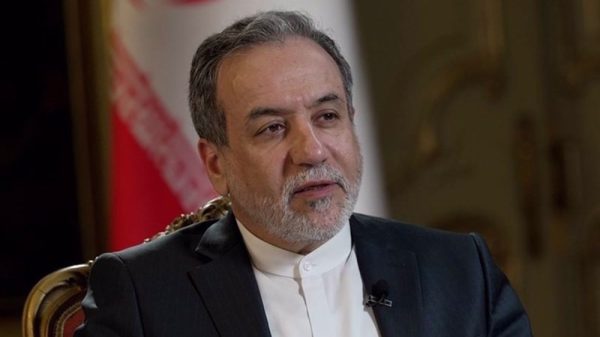
Iranian Foreign Minister Abbas Araghchi
Press TV – July 8, 2025
Iran’s foreign minister has issued a call for the United States to revive diplomacy following a breakdown in indirect talks, warning that further engagement will only be possible if Washington demonstrates a genuine commitment to a fair resolution.
“Iran remains interested in diplomacy, but we have good reason to have doubts about further dialogue,” Abbas Araghchi wrote in an article published by the Financial Times. “If there is a desire to resolve this amicably, the US should show genuine readiness for an equitable accord.”
The foreign minister referred to his five rounds of talks with US special envoy Steve Witkoff, saying that the two sides had made progress in those meetings.
According to Araghchi, discussions covered sensitive issues, including Iran’s uranium enrichment program and a potential end to US sanctions, with proposals from both sides and mediation by Oman.
The talks, he suggested, could have laid the foundation for an economic partnership potentially worth trillions, offering Iran development opportunities while addressing US President Donald Trump’s ambitions to revive struggling US industries.
But, Araghchi said, hopes for a breakthrough were shattered when Israel launched an unprovoked assault on Iran just 48 hours before a planned sixth round of talks in a move to derail diplomatic progress.
“Israel prefers conflict over resolution,” he wrote, arguing that the bombardment was not about stopping Iran from developing nuclear weapons but about sabotaging dialogue.
Araghchi reaffirmed that Iran remains committed to the Nuclear Non-Proliferation Treaty (NPT) and operates under UN monitoring.
He warned that while Iran seeks to prevent a wider regional war, its restraint should not be mistaken for weakness.
“We will defeat any future attack on our people,” he said, cautioning that Iran would reveal its true defensive capabilities if provoked again.
Araghchi placed the blame for the collapse of the talks on “an ostensible ally of America” and on Washington for its “fateful decision” to join in the strikes, thereby violating international law and the NPT framework.
While noting recent messages from US intermediaries suggesting a possible return to the table, Araghchi questioned whether Tehran could trust any future American overtures, citing the US withdrawal from the 2015 nuclear deal and Iran’s experience of being attacked during active negotiations.
“Negotiations held under the shadow of war are inherently unstable, and dialogue pursued amid threats is never genuine,” he wrote.
Still, Araghchi stopped short of closing the door entirely.
Iran, he insisted, remains interested in diplomacy, but only if it is based on mutual respect and free from external sabotage.
The top diplomat warned that Washington’s continued alignment with Israel risks dragging the US into another costly and avoidable conflict in the region.
“The American people deserve to know that their country is being pushed towards a wholly avoidable and unwarranted war by a foreign regime that does not share their interests,” Araghchi wrote, in reference to Israeli influence in Washington.
He ended with a stark choice for the United States: “Will the US finally choose diplomacy? Or will it remain ensnared in someone else’s war?”
Featured Video
NEW FAUCI EMAILS EXPOSE ATTACK ON NATURAL IMMUNITY
or go to
Aletho News Archives – Video-Images
From the Archives
Elite Western universities are a corrupt, parasitic empire
Instead of high-quality education, these institutions are fostering a global neo-feudal system reminiscent of the British Raj
By Dr. Mathew Maavak | RT | May 30, 2025
In a move that has ignited a global uproar, US President Donald Trump banned international students from Harvard University, citing “national security” and ideological infiltration. The decision, which has been widely condemned by academics and foreign governments alike, apparently threatens to undermine America’s “intellectual leadership and soft power.” At stake is not just Harvard’s global appeal, but the very premise of open academic exchange that has long defined elite higher education in the US.
But exactly how ‘open’ is Harvard’s admissions process? Every year, highly qualified students – many with top-tier SAT or GMAT test scores – are rejected, often with little explanation. Critics argue that behind the prestigious Ivy League brand lies an opaque system shaped by legacy preferences, DEI imperatives, geopolitical interests, and outright bribes. George Soros, for instance, once pledged $1 billion to open up elite university admissions to drones who would read from his Open Society script.
China’s swift condemnation of Trump’s policy added a layer of geopolitical irony to the debate. Why would Beijing feign concern for “America’s international standing” amid a bitter trade war? The international standing of US universities has long been tarnished by a woke psychosis which spread like cancer to all branches of the government.
So, what was behind China’s latest gripe? ... continue
Blog Roll
Recent Comments
seversonebcfb985d9 on Villains of Judea: Philip Esfo… loongtip on Report warns that ‘Jewish terr… Craig Nelms on New study shows that toxic gas… loongtip on A Funny Thing Happened on the… loongtip on EU free trade pact on hold as… John Edward Kendrick on Regime Change In Iran Is The F… Bill Francis on Australia Passes New Hate Spee… seversonebcfb985d9 on Australia Passes New Hate Spee… Bill Francis on Britain’s AI Policing Plan Tur… loongtip on Miami Beach Resident Questione… loongtip on Israeli agricultural export co… loongtip on The War On Free Speech In Aust…


 Aletho News
- NEW FAUCI EMAILS EXPOSE ATTACK ON NATURAL IMMUNITY
- Why is the US using Jordan as the main base in possible Iran attack?
- American Academy of Pediatrics Hit With Federal RICO Lawsuit for Vaccine Safety Fraud
- Mom Tells Trump: Dumping Sewage Sludge on Farmland Won’t Make America Healthy Again
- NIAID Funds Gain-of-Function Study Engineering Novel Influenza Viruses
- Villains of Judea: Philip Esformes and the Largest Healthcare Fraud in American History
- US sanctions Popular Conference for Palestinians Abroad over alleged Hamas links
- You reap what you sow: Ukraine’s blackout is Zelensky’s failure
- Ukraine Blackouts Caused by Zelensky’s Terrorist Attacks on Russia
- Orban Hits Out at EU Green Light for $1.5 Trillion Ukraine Aid
- If Americans Knew
- Oppose Israel’s Abuses While You Still Can
- UNRWA Heads Tell Ha’aretz: ‘We Don’t Radicalize Palestinians – Their Lived Existence Does’
- Plans Call for “New Rafah” Built in Israel’s Image — Without Palestinians
- Posing as priest, reporter is spat at many times, highlighting anti-Christian sentiment in Israel
- Leaked Documents: “Planned Community” in Rafah Would Force Palestinians Into Israeli Panopticon
- ‘Permits of Humiliation’: How Israel Strangles Christian Education in Jerusalem
- “The world sees death, destruction and injustice – and they see dollar signs” – Not a ceasefire Day 105
- War criminal Netanyahu kills 11 in Gaza, joins Board of Peace – Not a ceasefire Day 104
- Another baby dies of cold in Gaza, as Rafah crossing remains locked down – Not a ceasefire Day 103
- Brutal Beatings, Arson, and Impunity: A Palestinian Plant Nursery Becomes a Target for Settler Pogroms
- No Tricks Zone
- New Study: Sea Levels Rose 20 Times The Modern Rate During The Roman Warm Period
- As German Gas Storage Dips Dangerously Low…Shortage Hardly Avoidable
- New Study: Brazil’s Relative Sea Level Was 2+ Meters Higher And SSTs 3-4°C Warmer 6000 Years Ago
- Philosopher Schopenhauer: Climate Science Certainty Stems From Stupidity, Ignorance
- New Study: Species Extinction Rates Declining Since 1980 – ‘Climate Change Is Not An Important Threat’
- Denmark Places Climate Protection Above Animal Welfare, Poisoning And Culling Cows
- New Study: Greenland Was 3-7°C Warmer And Far Less Glaciated Than Today 6000-8000 Years Ago
- German Media Report That Current Frigid Weather Can Be Explained By Arctic Warming!
- Berlin Blackout Shows Germany’s $5 Trillion Green Scheme Is “Left-Green Ideological Pipe Dream”
- Modeling Error In Estimating How Clouds Affect Climate Is 8700% Larger Than Alleged CO2 Forcing
 Aletho News