IRAN’s NOT GOING BACK, New Demands Are Clear /Professor Seyed Marandi
Daniel Davis / Deep Dive – August 19, 2026
Sputnik – 25.08.2026
Iran has conveyed its conditions regarding the memorandum and the Strait of Hormuz to the United States through Pakistan, Iranian media reported, citing an informed source.
“Contrary to reports by some media outlets that Pakistani Army Chief Asim Munir carried a message containing US threats during his visit to Iran, the trip was aimed at creating space for negotiations and conveying Iran’s conditions and position to the American side,” the source told Tasnim.
According to the source, Tehran’s demands included the US returning to compliance with the memorandum on ending the conflict, signed in mid-June, as well as implementing provisions related to Iran’s rules for navigation through the Strait of Hormuz.
The US and Israel began strikes on targets in Iran on February 28, after which Tehran responded with its own attacks. In mid-June, Iran and the US signed a memorandum on ending hostilities, but later resumed strikes against each other. The conflict remains unresolved, although active fighting has stopped and Washington is relying on economic pressure.
Media previously reported, citing an unnamed senior source, that the US had offered to end the blockade of Iran and lift sanctions in exchange for the reopening of the Strait of Hormuz.
By Larry C. Johnson | SONAR21 | August 24, 2026
There was one sentence in Scott Bessent’s Monday sanctions announcement that gave the whole game away. Anyone who launders money for the Iranian regime, the Treasury Secretary warned, “will be removed from the US dollar system.” He meant it as a threat of annihilation. It is, instead, a confession of the policy’s central weakness. The entire architecture of what Bessent has branded “Operation Economic Outcast” rests on a single assumption — that Iran and its trading partners need the U.S. dollar. They increasingly do not. And a threat to bar someone from the dollar system means nothing to a trade that has already walked out of it and into the Chinese yuan.
What Bessent actually announced
Strip away the “economic D-Day” theatrics and the substance is a secondary-sanctions framework: the United States threatens to punish any country or entity that refuses to sever economic ties with Iran, expands the categories of activity exposed to those secondary sanctions into five new fields — digital assets, technology, gold, aviation, and shipping — and designates roughly sixty individuals, entities, and vessels tied to nuclear and missile procurement, cyber operations, and oil smuggling. The mechanism of pain, in every case, is the same: exclusion from the dollar-based financial system that Washington polices through its control of dollar clearing, SWIFT messaging, and correspondent banking.
That is a devastating weapon against anyone who lives inside the dollar system. It is close to irrelevant against those who have deliberately built their most important trade outside it. And Iran’s lifeline — the oil trade with China — is now largely outside it.
The trade that runs on yuan
Follow the barrels. China is now the buyer of over 80 percent of Iran’s seaborne crude exports. Iran is shipping somewhere around 1.65 to 1.8 million barrels a day, almost all of it to the independent “teapot” refiners of Shandong, moved by a shadow fleet of more than 350 tankers using ship-to-ship transfers off Malaysia, Singapore, and the Sea of Oman, the cargoes routinely rebranded as Malaysian or Omani. And critically, the money for it increasingly does not move in dollars. Payment flows in yuan, routed through small Chinese banks and Hong Kong trading shells, settled in a growing volume of renminbi that bypasses the dollar clearing system entirely.
The plumbing for this is China’s Cross-Border Interbank Payment System, CIPS — the settlement network the People’s Bank of China launched in 2015 precisely to clear cross-border yuan transactions without touching the Western financial architecture. Its use has surged in lockstep with the war. CIPS processed on the order of $214 billion in March 2026, hit a single-day record of 1.22 trillion yuan — roughly $178 billion — across nearly 42,000 transactions, and saw its average daily value jump about 50 percent from February to March, a spike analysts tied directly to the Iran conflict and rising yuan demand in oil trade. More than five thousand institutions are now connected. These channels allow settlement without any intermediary US bank in the chain — which is the entire point.
Nor is this confined to China. Even Indian refiners buying rare cargoes of Iranian oil have settled the payments in yuan, routed through the Shanghai branch of an Indian bank, because Iran wants a currency that sidesteps the dollar sanctions channel. Iran’s Revolutionary Guard has reportedly begun demanding yuan or cryptocurrency for oil transactions outright. When Bessent adds “digital assets” and “gold” to his sanctions categories, he is chasing evasion routes Iran is already using by design, through a shadow system purpose-built to be untraceable.
You cannot freeze a yuan payment out of a dollar system it never enters. That is not a loophole in Bessent’s plan. It is the plan’s foundation, missing.
The market already delivered its verdict
The most eloquent judgment on these sanctions came not from a pundit but from the oil market itself. If traders believed Bessent’s “economic onslaught” would actually choke off Iranian barrels, crude would have spiked on the announcement. It did the opposite. Brent fell about 2.3 percent on August 24, sliding below $92, as investors concluded the measures were unlikely to remove Iranian oil from the market. A sanctions package advertised as an economic D-Day was met by the market marking the price of oil down. The traders who move real money on real supply read the announcement for exactly what it was: sound and fury aimed at a target the dollar can no longer reach.
The one tooth Bessent won’t bare
There is precisely one measure that could actually bite the yuan trade: sanctioning the major Chinese banks and the CIPS architecture that clear it — cutting large Chinese financial institutions out of the dollar system and forcing Beijing to choose. And that is the step Bessent, once again, announced but did not take. He warned that at least one major financial institution could face sanctions this week, and said China would not be exempt. A threat, not an action — the same threat that has hovered over this campaign for months and never descends, because executing it means a financial rupture with Beijing on the eve of a planned Trump-Xi meeting, and an oil-price shock Washington cannot afford heading into the midterms.
And even if he pulled that trigger, the trade is engineered to survive it. The yuan payments already move through small Chinese banks and Hong Kong front companies precisely so that the large, dollar-exposed institutions stay clean and the flow continues if a big bank is hit. The system was designed by people who assumed Washington would eventually come for it. Bessent is threatening to breach a wall its builders reinforced years ago.
Ten years of sanctions, and a larger economy
Step back from Monday’s announcement and ask the longer question: what has a decade of sanctions actually done to the size of Iran’s economy? Measured properly, it has grown.
The measure matters, because there are two ways to size an economy and here they tell opposite stories. In nominal dollars — the plane on which sanctions operate — Iran looks devastated: its dollar GDP is around $300 billion in 2026, and dollar income per head has been falling fast, because the rial has been pulverized and everything Iranian looks cheap when priced in a currency Iranians increasingly cannot obtain. But nominal-dollar GDP largely measures the exchange rate, not the economy. Measured by purchasing power parity — which values what Iran actually produces at the prices Iranians actually pay, stripping out the collapsed currency — Iran’s GDP has risen from roughly $1.4 trillion in 2015, when the JCPOA-era sanctions architecture was in force, to about $2.18 trillion in 2026, by the IMF’s reckoning the world’s twenty-third-largest economy. That is an expansion of more than fifty percent over the same decade of “maximum pressure” that was supposed to break it.
The caveat belongs in plain sight, not buried: part of that gain is simply more Iranians — the population has grown by roughly a sixth since 2015 — so per-capita output has risen far more modestly, and none of it means Iranian households feel richer, with inflation running near forty percent and the currency in ruins. Growth of the economy is not prosperity for the family. But that is a different claim from the one that matters for sanctions policy. A pressure campaign that can wreck a currency and still not shrink real output is a campaign that produces hardship without submission. Iran has now demonstrated exactly that across two sanctions architectures — the JCPOA snapback and its “maximum pressure” successors — and ten years of data. Bessent is adding a chapter to a book whose ending is already written.
The honest limits
This is a dollar bypass, not the death of the dollar. The greenback still makes up around 57 percent of global foreign-exchange reserves against roughly 2 percent for the yuan, and only a low single-digit share of cross-border trade settles in renminbi; CIPS remains far smaller than the SWIFT-and-CHIPS system it shadows. The claim here is narrow and it is enough: a determined seller like Iran, with a willing Chinese counterparty, can route its oil revenue around the dollar — not that the world has.
Nor are the sanctions literally costless to Tehran. The friction of operating in the shadows is real: Iran sells its crude at discounts of $14 to $17 a barrel below Brent, up from $8 in 2023, precisely because sanctions raise the risk and complexity of buying it; its fiscal break-even sits far above the price it actually realizes, and the rial has lost most of its value. Bessent’s measures will add a little more friction at the margin — another turn of the screw on the discount, another few front companies to replace.
But friction is not a chokehold, and a poorer Iran is not a compliant one. The sanctions make Iran’s oil cheaper and its economy more strained; they do not, and cannot, sever the yuan-denominated artery to China that keeps the oil flowing and the regime funded. That artery is the thing Bessent promised to cut, and it is the one thing his announcement does not touch.
Bessent has threatened to expel Iran and its partners from a financial system Iran has spent years leaving. The dollar guillotine is real, and it still falls with terrible force on anyone standing beneath it — but Iran’s oil trade stepped off the block and into the yuan, and every fresh round of dollar-weaponization only sharpens the incentive for others to follow. The measures announced Monday will generate headlines, a few dozen designations, and a marginal widening of the discount China already enjoys on Iranian crude. What they will not do is the thing they were sold to do: collapse Iran’s options and force it to heel. You cannot sever a lifeline that no longer runs through your hands. Bessent is standing guard at a door Iran walked out of a long time ago, threatening to lock it.
RT | August 24, 2026
US Treasury Secretary Scott Bessent has announced new sanctions against Iran, and threatened to boot any country dealing financially with Tehran out of the US dollar system, in a bid to make Iran an “economic outcast.”
The new sanctions target nearly 60 entities, individuals, and vessels in multiple jurisdictions that allegedly trade in “illicit nuclear and missile technology” with Iran, aid Iran’s “cyber operations,” and move Iranian oil, the US Treasury Department said in a statement on Monday. More than a third of the sanctioned entities and individuals – 21 – are based in China.
The Treasury also said it had identified digital assets, technology, gold, aviation and shipping as areas for potential secondary sanctions.
Speaking at a press conference later on Monday, Bessent went further, announcing the beginning of “Operation Economic Outcast,” which he described as “an economic onslaught against Iran’s financial connections around the globe.”
Bessent explained that the US would penalize any country refusing to sever its economic ties with Tehran. “Any entity that facilitates money laundering on behalf of Iran will be removed from the US dollar system,” he said, adding “the clock just started ticking.”
Iran exports goods to 147 countries, and imports from 114, according to the most recent data from the World Bank. Asked how the US intends to force three quarters of the world’s nations to cease trade with Iran, Bessent said that US President Donald Trump phoned multiple world leaders over the weekend “with specific requests to cease their interactions” with Iran, and that every country had been given “a defined timeline” to comply with his demands.
Bessent refused to share any more details, telling reporters that “we’re not going to name names,” nor was he “going to set timelines.” Pressed on whether Washington expected China – which is Iran’s largest trading partner – to abide by the sanctions regime, Bessent did not give a definitive answer.
“We find that the best way to engage with countries is through quiet diplomacy. And we are level-setting with every country to tell them our expectations. We know who they are. They know who they are,” he replied, adding “no-one is above the reach of US sanctions.”
Bessent’s threats were shrugged off in Tehran. “Americans know that no one buys their bombast,” senior Iranian negotiator Mohammad Bagher Ghalibaf wrote on X after the treasury secretary’s press conference.
“The United States is not in an economic position to further restrict its relations with other countries,”he explained. “Iran’s trading partners, both in the media and through messages sent to us, have made it clear that they don’t take these statements into account anywhere.”
Mohsen Rezaei, the head of Iran’s Supreme National Security Council, warned on Sunday that “not a single drop of oil will leave the Persian Gulf and the Strait of Hormuz” if the Gulf states join the US’ economic pressure campaign. If US President Donald Trump “wants to do something, we will retaliate in a seismic manner,” Rezaei added.
Last week, Trump threatened to inflict what he called “Economic D-Day” on Iran, after a 60-day window for negotiating peace with Tehran expired with no breakthrough. Trump ruled out a return to negotiations, but Pakistani Chief of Defense Forces Asim Munir arrived in Tehran on Monday in an attempt to revive the talks.
Al Mayadeen | August 24, 2026
Iran will strike US bases in European countries if those nations participate in aggression against it, Iran’s Foreign Ministry spokesman Esmail Baghaei warned on Monday.
During his weekly press briefing, Baghaei emphasized that “Iran does not accept that the aggressor sets the conditions for ending the war,” adding, “there is no justification for any country to fear Iran unless that country opens its territory to the United States for aggression against Iran.”
He stressed that “it is Iran’s right to target the source and origin of any aggressive action against the Islamic Republic.”
Baghaei also affirmed that “Iran did not start the war and was exercising its legitimate right to self-defense, and will not allow the war to end on the aggressor’s terms,” explaining that “Iran used all diplomatic tools to prevent war”.
He stated that, “we did not start the war, and we should not blame ourselves for the continuation of this situation”.
Iran did everything to pursue diplomacy, US violated agreements
Baghaei noted that “Iran did everything possible through the diplomatic path to prevent war and secure national interests and benefits. In many cases, arrangements and agreements were reached, but the US side violated all of them”.
He pointed out that “the memorandum of understanding did not last more than three weeks, after which America revoked all its provisions”.
Baghaei stressed that “Iran’s power and the cohesion of its people are the shield of the Islamic Republic”, affirming that “Iran was able to thwart all the enemy’s plans”.
Regarding the Mecca agreement, Baghaei noted that “Iran did not receive an official invitation to join the Mecca agreement, but proposals were presented to it in this regard.”
US Naval blockade considered aggressive act
Responding to reports of several million barrels of oil crossing through Hormuz daily, Baghaei said: “This is part of the enemy’s psychological warfare, and there is no such thing.” He continued: “Regarding what America calls the economic war, they used to say economic sanctions, and we used to say this is economic terrorism.”
Baghaei noted that “America uses every tool to punish Iranians simply for their insistence on their sovereignty, national independence, and dignity,” adding that, “the Iranian government is mobilizing all its capabilities to alleviate living pressures on the people”. He affirmed that “the naval blockade on Iran at the present time is in itself an aggressive act, and escalation of this situation will certainly have its own repercussions”.
Iran-Pakistan relations at their best stages
Regarding bilateral relations between Iran and Pakistan, Baghaei said they are “going through one of the best stages, and both sides are determined to expand these relations.” He added: “The visit of Oman’s Foreign Minister to Tehran has no connection to the visit of the Pakistani army chief. They coincided only in terms of timing.”
Baghaei continued: “During the visit of Oman’s Foreign Minister to Tehran, we will discuss bilateral relations and issues related to the security of the Strait of Hormuz and transit routes”. He concluded: “Iran and Afghanistan will expand their commercial dealings”.
Al Mayadeen| August 24, 2026
The spokesperson for Iran’s Islamic Revolution Guard Corps (IRGC), Hossein Mohebbi, dismissed US officials’ claims that Iranian radars had been targeted and that oil tankers could transit the Strait of Hormuz as “media hype”.
Mohebbi told Mehr news agency that “the IRGC’s surveillance and intelligence-gathering capabilities cannot be confined to the radars known to the enemy.”
He highlighted the surveillance, reconnaissance, and intelligence-gathering methods employed by Iran’s armed forces, saying the IRGC’s monitoring capabilities “do not rely on satellites, as the Americans believe; rather, there are other surveillance methods that the opposing side may not yet be capable of detecting”.
Mohebbi said, “If the Islamic Republic did not have a discerning eye capable of monitoring maritime movements, how could it accurately strike specific targets at sensitive points on vessels?”
He stressed that Iran maintains continuous intelligence coverage of maritime activity, saying that when a missile strikes a critical point on a vessel and disables it, this demonstrates both intelligence superiority and the ability to acquire and engage targets with precision.
‘Blinding the enemy’s eyes in the region’
He also referred to “the attacks carried out against the enemy’s surveillance and reconnaissance systems”, saying: “In reality, we have blinded the enemy’s eyes in the region and targeted its radars and electro-optical networks”.
Mohebbi rejected the assumption by Iran’s adversaries that “destroying a number of radars known to Iran means eliminating the Islamic Republic’s surveillance capabilities”, saying: “This is far from reality.”
Strike accuracy demonstrates surveillance capability
Mohebbi highlighted the vastness of the Gulf and the operational challenges of conducting maritime warfare, saying that “in this vast battlespace, even under the cover of darkness, when a missile strikes its target with precision, it becomes clear that intelligence and operational targeting capabilities underpin the operation”.
He stressed that Iran’s methods for detecting and tracking targets “are not something whose every detail the enemy can identify”, adding that “the outcome of the operations and the precision of the strikes themselves demonstrate the extent of the Islamic Republic of Iran’s intelligence coverage”.
It is worth noting that Iran has repeatedly said that US military bases and economic assets in the Gulf region have been used to launch acts of aggression against Iran, including strikes that have resulted in civilian casualties. In this framing, any Iranian action targeting such facilities is a retaliation against hostile military activity originating from or enabled by those bases.
By Justin K.P. | The Dissident | August 23, 2026
As the U.S. and Israel continue to wage war on Iran, the Guardian published an open letter signed by a number of academics- mostly U.S. and UK-based- condemning Iran’s internal policies.
The letter accused Iran of engaging in “deepening criminalization of the working class and unemployed, the targeting of Kurds, Arabs, and Baloch, and the scapegoating of Afghan migrants: all desperate attempts to kill the spirit of people they cannot contain” called to “reject the false binary of imperialism and hollow anti-imperialism” and even called on anti-imperialists in the West to focus their energy on critiquing Iran’s internal issues as Western governments wage war on Iran, writing, “We invite global civil society and anti-imperialist activists and organizations to extend their unconditional support and solidarity to all incarcerated kin fighting for our collective liberation, to build relationships with Iranian political prisoners and uplift their voices, to put pressure on the Islamic Republic by challenging its narrative, and to call upon that government to immediately stop all the executions and free all political prisoners.”
Iran, like most countries, no doubt has internal issues that need to be solved, but asking Western academics to focus on those issues as the West wages a brutal war on Iranian civilization at the behest of Israel seems badly timed, to put it mildly.
Furthermore, the letter made no mention of the open meddling that Israel and the United States has done in Iran’s internal politics and disputes, including the U.S. sanctions on Iran designed to make Iran’s “economy collapse” which is why “the people took to the streets” in January, as Treasury Secretary Scott Bessent boasted.
The letter did not mention the fact that Israeli media has boasted that the Mosssad was “arming the protesters in Iran with live firearms, which is the reason for the hundreds of regime personnel killed” and that Israel “set up its own poison machine” in Iran to infiltrate the protests, nor did it mention the fact that Trump boasted that “The United States sent guns to the Iranian protestors … we sent them a lot of guns, we sent them through the Kurds and … the Kurds kept them, ‘we sent guns to the protests, a lot of them”.
The intentions behind the letter seem more suspicious given that it was published in the Guardian, a pro-war propaganda outlet which has manufactured consent for the war on Iran from day one.
The Guardian’s “rights and freedom” section, sponsored by the CIA-linked billionaire Pierre Omidyar, published endless atrocity propaganda claims in the lead-up to the Iran war, including the widely debunked claim that Iran killed tens of thousands of peaceful protestors in a matter of days in January.
More recently, the Guardian ran a smear piece on the journalist Bushra Shaikh for her reporting on the U.S. Israeli war on Iran on the ground, including by linking to a petition set up by pro-war Zionists calling for the British security state to investigate Shaikh for her reporting.
What makes the letter in the Guardian even more questionable is the fact that it appears that many of the signatories were tricked into signing it.
The historian Robin D. G. Kelley, whose name originally appeared on the letter, took his name off, saying that “the circumstances in which we were asked to sign the letter were a bit shady” and that “what appeared in print wasn’t exactly what I had initially seen”, implying that the letter was changed after getting signatures.
Even more shady is the fact that the authors of the letter appear to have fabricated the signature of political prisoner Mumia Abu-Jamal.
Journalist Vijay Prashad obtained a message written from prison on a paper plate where Mumia Abu-Jamal writes, “Iran is showing the world (especially the 3rd world) how to fight against the Empire. Their drones are rewriting the rules of war. And countries across the Global South are studying this phase of the war for that use! They remind me of Vietnam, a poor country that whipped the most powerful army on earth… That’s where we are today”.
Given that this is his actual view, it makes it highly unlikely that Abu-Jamal would sign a letter which accuses Iran of “hollow anti-imperialism”.
Who is behind this shady letter is yet to be seen, but it certainly has many hallmarks of a pro-war psy-op.
Press TV – August 23, 2026
Iran has discovered a major new gas field in southern Fars province, with recoverable reserves estimated at around 5.7 trillion cubic feet.
Speaking on state television on Sunday, Iran’s Petroleum Minister Mohsen Paknejad said the newly discovered field contains more than 7.5 trillion cubic feet of gas in total.
The recoverable volume, he added, is equivalent to about 15 years of production from phase one of the South Pars gas field.
The field, known as Takht-e, contains sweet natural gas, which has relatively low levels of sulfur compounds and is therefore expected to reduce development and operating costs, according to the minister.
Paknejad also said the discovery includes substantial quantities of gas condensate, a valuable hydrocarbon liquid produced alongside natural gas.
He put the value of the gas and condensate resources at tens of billions of dollars, saying the combined resources would create “a new source of wealth for the country.”
The minister further said that the government plans to move ahead to develop the field as quickly as possible, bringing its gas output into production and supplying it to industrial users and energy-intensive sectors.
The discovery could provide Iran with an additional source of natural gas at a time when the country is seeking to expand domestic production and meet growing demand from industry and the energy sector.
Iran has relied on domestic investment and expertise to develop its oil and gas fields since 2018, when the US imposed sweeping sanctions on the country’s energy sector.
Daniel Davis / Deep Dive – August 21, 2026
Global Times | August 21, 2026
US President Donald Trump announced on August 19 local time that he would launch a so-called “economic D-Day” operation against Iran. US Treasury Secretary Scott Bessent, in outlining the operation, described it as “economic warfare and isolation on an unprecedented scale,” adding that other countries “are either with us or against us.” When asked whether the new sanctions would involve China, Bessent urged China to “get with the program,” claiming that would do China “a big service.”
The US war against Iran has now entered its sixth month, with both sides now locked in a stalemate – unable to escalate the conflict further yet unable to reach a negotiated settlement. The so-called “economic D-Day” operation is less a new offensive launched by the US against Iran than it is yet another attempt by Washington to cut its losses as quickly as possible and extricate itself from the quagmire of the Middle East – a move to change tactics and keep gambling after military means have proven ineffective.
But it may well be heading in the wrong direction. Whether it is the ever-rising bills at US gas stations or the soaring energy and shipping costs in global markets, one thing is clear: Economic sanctions can concentrate pressure on a single country, but it is difficult to confine the costs to that country alone. War cannot solve problems, and sanctions only add fuel to the fire.
The so-called “either with us or against us” rhetoric, in a sense, exposes Washington’s strategic predicament: it “can no longer handle this mess on its own.” Ironically, while Washington has been spouting “bold rhetoric,” its circle of allies has remained silent on the matter. In fact, since the US’ war against Iran began, most US allies have been highly reluctant to go along with America’s radical strategy out of concern for the spillover effects of the conflict and the energy crisis. The reason is simple: for these countries, the Iran issue affects energy supply, shipping security, and inflationary pressures.
The US has set its own house on fire, yet it wants the whole world to help fan the flames, making the blaze even bigger – and in the end, it expects everyone else to foot the bill. Who would want to be such a patsy? The US has repeatedly labeled European nations “cowards” for refusing to join the war, further provoking a strong backlash from its European allies and creating a rare, deep‑seated rift in the alliance system.
If the US cannot even rally its own allies, it certainly cannot expect to boss China around. China has consistently opposed unilateral bullying and long-arm jurisdiction – not because China is Iran’s largest trading partner and maintains long-standing friendly relations with Iran, but because once this US logic is accepted, international trade would no longer be normal exchanges between nations. Instead, it would devolve into an absurd situation where the US unilaterally sets the rules and the flow of all goods must be approved by the US.
If the US can force China to cut ties with Iran today, will it be able to arbitrarily cut off all foreign trade with any country it regards as a “rival” tomorrow? If so, there is no doubt that the world would be reverting to the law of the jungle, where the basic rules of modern civilized society will cease to exist.
The Strait of Hormuz is a strait used for international navigation. Restoring safe and free passage through the strait as soon as possible serves the interests of all parties and is also the shared aspiration of the international community. But if the fact that “the Strait of Hormuz concerns a certain country’s interests” is used as a pretext to demand that this country unconditionally comply with Washington’s maximum pressure and trade bullying, that would not only put the cart before the horse, but also steadily deplete the US’ international credibility while exacerbating global energy volatility, high inflation, and market disorder.
Only a comprehensive ceasefire and the cessation of hostilities can fundamentally create the conditions for easing tensions, because the disruption of navigation through the Strait of Hormuz is itself a spillover effect of the US’ war against Iran. China has consistently supported all efforts conducive to a ceasefire and an end to hostilities. But ultimately, those who tied the knot must be the ones to untie it; this knot can and must be resolved by the parties directly involved.
America’s strategic predicament stems precisely from its obsession with the “big fist” and its inexplicable confidence that “there is always a way to force those who refuse to comply into submission.” If the US continues applying pressure at will, it will only be kept trapped for longer and sink deeper.
Simply expanding economic pressure will only prolong the conflict and increase the losses for all sides. The entire world can see this clearly. Not only will China not play along with the US’ “reckless games” on the Iran issue, but the international community will not stand with Washington either. From moral, legal, and practical perspectives, escalating unilateral sanctions has neither legitimacy nor feasibility.
An immediate ceasefire and cessation of hostilities, the prompt resumption of peace talks, the restoration of navigation through the strait, and upholding the authority of the UN Charter – these have been China’s consistent positions since the conflict broke out, and they are the approach that serves the interests of all parties. Only by abandoning the Cold War mentality of confrontation, setting aside the tool of maximum pressure, and returning to the proper track of dialogue and negotiation can Washington cut its losses in time and make a dignified exit.
Sputnik – 21.08.2026
Iranian Foreign Minister Abbas Araghchi said on Friday that US sanctions against Iran had repeatedly failed, recalling threats made by former US President Barack Obama.
Araghchi commented on Obama’s October 2012 social media post in which the former president cited then-US Vice President Joe Biden’s promise to impose “the most crippling sanctions in the history of sanctions” against Iran.
“14 years ago: ‘Most crippling sanctions in history.’ Failed. 8 years ago: ‘Maximum pressure.’ Failed. 5 months ago: ‘Unconditional surrender.’ Failed. Today: ‘Most crushing economic operation ever.’ Bound to fail. We have seen this movie before. Same bull. Different bullies,” Araghchi wrote on X.
On Wednesday, US President Donald Trump said that Tehran had not taken the opportunity to reach a deal with Washington, and that the United States was therefore launching a large-scale economic operation against the Islamic Republic.
Araghchi called the operation a distraction from the United States’ own crisis that would lead to an even greater defeat for Washington.
Press TV – August 21, 2026
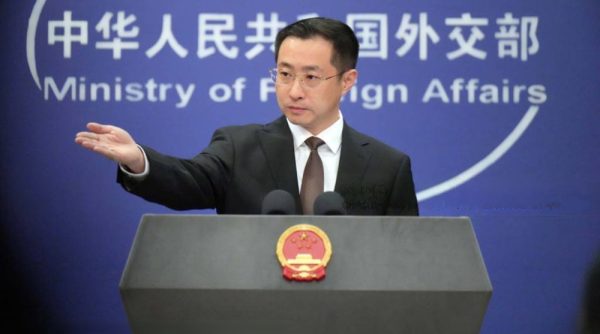
Beijing has rejected Washington’s latest demand that countries join a renewed campaign of economic sanctions against Iran, reaffirming that the escalating crisis requires political dialogue.
“Sanctions and pressure tactics are not the solution,” Chinese Foreign Ministry spokesperson Lin Jian told reporters on Thursday.
The rebuke came one day after the Trump administration issued an open call to allies and China alike to fall in line with what the president billed as the “most crushing economic operation ever taken against any country”—a boastful threat that came after Washington failed to achieve any of its war objectives military some six months after starting the aggression on Iran in late February.
Notably, the United States has yet to detail the full scope of its so-called operation, with US Secretary of Treasury Scott Bessent punting further specifics to a Monday press conference—a delay that raises questions about the campaign’s actual readiness.
China calls on parties to act responsibly and stick to the political and diplomatic approach, added Jian.
Iran has strongly condemned the US campaign, with Minister of Foreign Affairs Abbas Araghchi describing Washington’s economic aggression as an attempt to divert attention from America’s own problems.
Araghchi pointed to America’s “unprecedented debt & surging interest costs” as Washington seeks to impose further economic pressure on Iran.
Iran’s Ministry of Foreign Affairs said on Thursday the latest US sanctions, announced on the anniversary of the 1953 coup against Iran’s democratically elected government, demonstrate Washington’s continued hostility toward the Iranian people.
“The new US sanctions are not only another indication of the continuation of 73 years of hostility by US policymakers toward the Iranian people, but also demonstrate the anti-human, lawless and hegemonic nature of the US government,” the ministry noted.
The ministry further condemned the sanctions for targeting the fundamental rights of Iranian citizens and violating international norms.
“Without a doubt, the US economic sanctions against Iran, which target the fundamental human rights of every Iranian citizen, constitute ‘economic terrorism’ and ‘crimes against humanity,’” it maintained.
Beijing’s rejection comes ahead of Chinese President Xi Jinping’s planned September 24 visit to the White House, adding significance to China’s refusal to participate in Washington’s economic campaign against Tehran.
Daniel Davis / Deep Dive – August 19, 2026
Daniel Davis / Deep Dive – August 19, 2026
Daniel Davis / Deep Dive – August 19, 2026
or go to
Aletho News Archives – Video-Images

Global Times | October 25, 2026
By portraying Chinese characters as perpetrators of ruthless violence while casting Japanese Self-Defense Forces (SDF) intelligence operatives as defenders, the season 2 of the Japanese drama Vivant has recently drawn criticism from Chinese netizens, who argue that its depiction turns historical reality on its head while ignoring Japan’s wartime atrocities.
The TBS drama series – a spy suspense story in which an alleged unofficial intelligence unit of the SDF operates across the globe — has attracted a passionate fanbase. Its currently airing season 2 opened with a household rating of 18.8 percent, the highest for a TV drama this year, according toa commentary article by Japanese media Toyo Keizai.
What draws attention is the portrayal of the enemies in the series, the article noted. Scenes in which the Chinese organization subjects kidnapped members of the SDF unit to brutal torture are repeated with unrelenting intensity.
It is rare for Japanese TV dramas to explicitly portray a real-life country as the enemy, the article noted.
Japanese Prime Minister Sanae Takaichi also made a reference to the drama, saying that she has been recording Vivant and hopes to binge-watch it over the year-end and New Year holidays, according to Japanese media outlets.
China’s CCTV News report on Sunday revealed that the drama features scenes in which Chinese personnel cut off the fingers of and stab Japanese intelligence operatives in the abdomen. Such acts bear striking similarities to the torture inflicted on Chinese nationals by invading Japanese troops during the World War II.
The drama distorts the truth by attributing these atrocities to modern Chinese characters. Beneath the surface, it subtly glorifies Japan’s cross-border overseas operations, blurs the functional boundaries of the SDF and implicitly promotes an expansionist narrative, per CCTV News. … continue
 Aletho News If Americans Knew No Tricks Zone
