Why the Iran War is about to Escalate over The Coming Months
By Robert Inlakesh | Palestine Chronicle | August 28, 2026
Nothing is in place to ensure an Israeli-US victory against the Iranians, but Tel Aviv is not backing down and seeks to complete its mission aimed at dealing an enormous blow to Iran’s economy.
This week, the US Trump administration decided to impose another batch of sanctions against the Islamic Republic of Iran, in what it has labeled ‘Operation Economic Outcast’. Yet, this measure’s viability is about to expire and could end up backfiring tremendously, as all the chips are now in place for Tehran to drag Washington deeper into a fiery regional inferno.
Since April 8, when the US and Iran both agreed to a two-week-long ceasefire, American President Donald Trump has been playing a game designed to manipulate oil markets and has attempted just about every tactic known to man in order to simply off-put the economic iceberg that the global economy is heading straight towards.
See, the problem that the Trump administration faces is that its initial attack on Iran failed tremendously. But now, he cannot simply admit defeat and walk away. If he signs a deal with Tehran, then it will be a de facto surrender agreement that ensures a collapse in US regional hegemony and that Israel is left to face the consequences of its actions, with an empowered and emboldened Iran ready to support Tel Aviv’s downfall.
After around 40 days of war with Iran, the Israeli and American leaderships had come to the realization that the only viable next step was to begin targeting Iranian civilian infrastructure – if they were to have any hope of achieving regime change. This, after all, was the Israeli plot to begin with, as they understood well that the Islamic Republic was not going to fall as a result of the air campaign alone.
Targeting Iran’s civilian infrastructure comes with an evident price; this means that the retaliation is going to destroy the key infrastructure of the surrounding States also, from which the US will be launching its attacks. Included on this target list will be Israeli infrastructure also, which is what gives such an air campaign a specific time limit. Israel will view the price of the campaign against Iran as something they are willing to pay, as long as the Islamic Republic will be weakened significantly in the process.
Therefore, Tel Aviv’s leadership will take the necessary hits until that price becomes too high, at which point they will have to get the US to back off. For Israel, the destruction of the Persian Gulf Arab States is a plus, not a minus, as it eliminates economic competitors, but for the United States and most nations around the world, this is catastrophic.
For these reasons, Trump has gone back and forth between strategies designed to get the Iranians to buckle under pressure. He has implemented a counter-blockade on Iran, attempted to use negotiations and a Memorandum of Understanding to divide the Islamic Republic’s leadership, while also working to carve out an alternate route in the Strait of Hormuz.
When the Iranians saw through the MoU deception and responded forcefully, some may even say proactively, the US military began engaging in a tit-for-tat low-intensity battle with the Iranians that sought to try and degrade Iran’s military capabilities in the south.
Now, the latest move has been to introduce the most extreme sanctions program ever as a last-ditch attempt to pressure Tehran. These sanctions are different because they don’t just target Iran’s economy; they are designed to target its allies and trade partners, since the previous maximum-pressure sanctions already targeted everything imaginable.
There is also a reason why this has never been tried before in this way, because it can potentially backfire. You aren’t only targeting Iran; you are going after a large number of countries in the process, including China. Beijing itself has already threatened to retaliate.
Since early March, for all intents and purposes, the Strait of Hormuz has been closed, with only brief periods during which any meaningful number of tankers have been able to make it out. With the deterioration of the MoU, another card was played by the Iranian-led Axis of Resistance, as Yemen’s Ansarallah-led government announced a counter-blockade on Saudi Arabia.
By reopening the frozen conflict in Yemen, which had remained under a shaky ceasefire since 2022, it meant that the Yemeni Armed Forces would proceed with the project to not only liberate their nation, but to punish Saudi Arabia where it hurts the most. The Red Sea was a Saudi lifeline, allowing them to continue to export 6 million barrels of oil per day; suddenly, that option was cut, and the limited amount it is now capable of getting out of its Western Ports is exported via the Suez Canal, with insurance rates skyrocketing because of the risk.
Iran has demonstrated time and time again that it is capable of surviving under the weight of US sanctions for long periods. The United States, on the other hand, has not started to properly feel the effects of its actions. One way they have managed to offset the economic fallout of the Strait’s closure is to tap into their Strategic Petroleum Reserves, which have just sunk to their lowest levels since 1982, with experts claiming that they only have 41 days of these supplies left. It barely helps that Trump has also picked this time to engage in a declared trade war with its northern neighbor, Canada, nor that he has made outlandish decisions across the board.
Donald Trump has so far doubled down on his decisions and told the American public that they simply have to put up with the rising oil prices, as their contribution to “preventing Iran from having a nuclear weapon”. But the people are not buying it and clearly see that this war is being fought for Israel’s interests, not their own.
Desperate to reshape the region in Israel’s favor, the US has quickly attempted to have both the Iraqi and Lebanese governments disarm resistance factions aligned with Iran. Short of triggering catastrophic civil wars, this strategy cannot be implemented quickly and will have little real-world impact. Similarly, in the Gaza Strip, the Trump administration has put pressure on Hamas to suddenly disarm, providing the Israelis with a green light to amp up their strikes on the civilian population.
Nothing is in place to ensure an Israeli-US victory against the Iranians, but Tel Aviv is not backing down and seeks to complete its mission aimed at dealing an enormous blow to Iran’s economy. Their long-term game is to see a deterioration of the Islamic Republic after its infrastructure takes enormous hits, but this is by no means a guarantee.
Even if Israel gets precisely what it wants, the US will not win. The moment of truth is approaching as the walls close in; the US can either decide that it will act in America’s vital interests and end the war, or throw all its weight behind Israel’s desires.
– Robert Inlakesh is a journalist, writer, and documentary filmmaker. He focuses on the Middle East, specializing in Palestine. He contributed this article to The Palestine Chronicle.
China’s opposition to illegal unilateral sanctions is consistent and unequivocal: FM on possible US sanctions on Chinese banks over Iran ties
By Ma Tong | Global Times | August 28, 2026
China on Friday reiterated that dialogue and negotiation is the only viable way to resolve the Iran issue and that its opposition to illegal unilateral sanctions is consistent and unequivocal, after US President Donald Trump suggested Washington could impose sanctions on Chinese banks doing business with Iran.
“On the Iran situation, we always believe that dialogue and negotiation is the only viable way out. China opposes illicit unilateral sanctions. This position is consistent and clear,” Chinese Foreign Ministry spokesperson Lin Jian told a regular press briefing on Friday.
Trump on Thursday hinted at possible sanctions on Chinese banks when asked whether Washington would punish them for doing business with Iran. “Who said I’m not? You don’t know if I’m doing it … I don’t have to announce everything, do I?” Trump said, according to Reuters.
The remarks came as the US has intensified economic pressure on Iran, broadening the sectors and actors targeted by its sanctions campaign after months of military strikes and diplomacy failed to fully reopen the Strait of Hormuz.
Zhou Mi, a senior research fellow at the Chinese Academy of International Trade and Economic Cooperation, told the Global Times on Friday that the latest US push to tighten sanctions on Iran reflects a clear expansion of US’s unilateral sanctions approach, which had previously focused more heavily on traditional sectors such as energy and oil and gas.
“What we are seeing is a continued broadening of both the sectors covered and the entities targeted,” Zhou said. He described the trend as a further “generalization” of US restrictions, with the US extending unilateral measures into new areas and to a wider range of actors, in some cases beyond the scope of previous international consensus on Iran-related sanctions.
Washington has already targeted Chinese mainland and Hong Kong entities in previous rounds of Iran-related sanctions. But it stopped short of blacklisting major Chinese banks and refiners, the South China Morning Post reported on Friday.
Zhou warned that extending such measures to financial institutions would sharply magnify the fallout, given the broad, complex and two-way nature of cross-border financial networks. “If such sanctions were actually imposed, the impact would be extensive and may significantly escalate tensions in China-US relations,” he said, adding that such a move would be detrimental to both sides.
The latest threat comes as the US expanded its sanctions on Iran. On Monday, the US Treasury launched “Operation Economic Outcast,” expanding the categories of Iran-related conduct potentially exposed to secondary sanctions and sanctioning nearly 60 entities, individuals and vessels across multiple jurisdictions. It also warned that entities facilitating certain Iran-related activities could risk being cut off from the US financial system.
China has repeatedly rejected such pressure. Lin said on Tuesday that economic warfare and maximum pressure “provide no solution” and would instead fuel tensions and lead to risk spillover, disrupting the global economic and financial order, and harm the legitimate rights and interests of other countries. Lin also stressed that China will do everything necessary to firmly safeguard its rights and interests.
Zhou emphasized that the latest US threats also run counter to efforts to translate the consensus reached by the Chinese and US heads of state into concrete actions and build a more constructive and stable bilateral relationship.
“China’s door to negotiations has always been open,” Zhou said. “If the US genuinely wants to implement the consensus reached by the two sides, it should stop resorting to threats and take concrete steps toward mutually beneficial cooperation, or at the very least, reasonable and fair competition, rather than continuing to rely on unilateral measures.”
US cuts Banque Misr UAE from financial system over Iran sanctions
Al Mayadeen | August 28, 2026
The United States has cut Banque Misr’s UAE branch off from the US financial system over alleged violations of Washington’s sanctions on Iran, the US Department of the Treasury said Friday.
The move comes days after US Treasury Secretary Scott Bessent announced “Operation Economic Outcast”, a campaign aimed at isolating the Islamic Republic and countries accused of supporting it by targeting potential sources of revenue available to Tehran.
On Wednesday, Iranian Foreign Minister Abbas Araghchi sent a letter to the UN leadership and member states, calling on them to condemn what he described as an attempt at economic coercion.
Experts say the US move to cut Banque Misr’s UAE branch from the US financial system falls well short of the broader measures threatened by Treasury Secretary Scott Bessent under “Operation Economic Outcast,” limiting its impact to a single branch rather than imposing sanctions on the bank itself.
Banque Misr UAE targeted under US sanctions campaign
Under the latest measures, the Treasury’s Financial Crimes Enforcement Network (FinCEN) proposed revoking Banque Misr UAE’s access to correspondent banking services provided by US financial institutions.
“Under Operation Economic Outcast, the U.S. Department of the Treasury’s Financial Crimes Enforcement Network (FinCEN) proposed a rule that would revoke Banque Misr UAE’s correspondent banking access to U.S. financial institutions,” the Treasury said in a press release.
The department alleged that the UAE-based banking institution had worked with front companies used by Iran’s Ministry of Defense and the Islamic Revolution Guard Corps to circumvent US sanctions.
Treasury alleges Iran sanctions evasion
The Treasury also announced separate sanctions targeting Reza Mohammad Taeedi, manager of Bank Melli’s branch in Dubai, and Hong Kong-based Kameng Trading Limited.
According to the department, Taeedi and the trading company aided Iranian nationals who were already subject to US sanctions.
Iran vows no surrender
In response to Washington’s economic war, Iranian President Masoud Pezeshkian said Tuesday that economic pressure is an American strategy aimed at subjugating Iran and forcing it to surrender, as Tehran warned that any pressure targeting the Iranian people’s livelihoods and security would be treated as part of the war.
Pezeshkian made the remarks during a meeting with Iraqi Supreme Judicial Council President Faiq Zidan, saying Iran’s adversaries had recognized their inability to subdue the Iranian people militarily and had therefore shifted toward creating social and economic problems inside the country.
“Iran will not surrender,” Pezeshkian stressed, rejecting economic pressure as a means of forcing Tehran to submit.
Made in America. Hidden in Berkshire. Dropped on Iran.
Introducing RAF Welford the largest repository of Weapons of Mass Destruction in the country
By Daid Miller | UK Column | July 26, 2026
Tucked away off an obscure exit from the east-bound M4 near Swindon is a military base referred to regularly in the local press as ‘secret’. What is the connection between this obscure RAF facility and the mass destruction of civilian infrastructure in Iran in March and April this year? Back then we saw reports of attacks on the desalination plants in Qeshm Island, and commercial and energy infrastructure targets in Bandar Abbas, which also caused noted civilian casualties. There were also reports of attacks on Kashan International Airport, including on civilian infrastructure such as passenger terminals. Serious bombs were dropped in Isfahan, destroying the protected Shah Mosque heritage site and causing civilian deaths among facility workers and nearby residents.
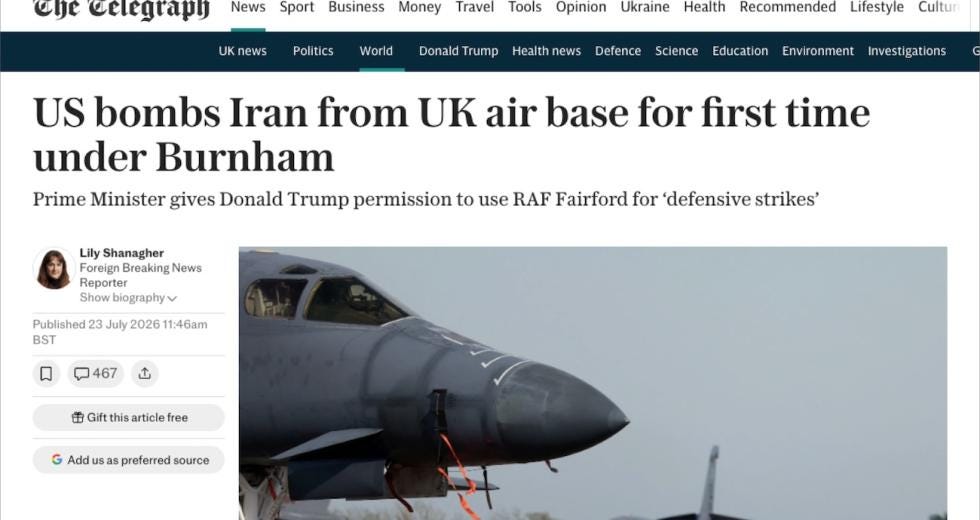
In the recent resumption of daily US attacks on Iran, it has been reported that the planes dropping the bombs have come from RAF Fairford in Gloucestershire.
One thing connecting all these incidents is that the bombs in the long range bombers came from a little-known location in the sleepy Berkshire countryside. Perhaps it’s surprising to learn that the RAF were involved, but here’s the thing: Welford is not an RAF base any more. Rather, it’s the largest US bomb arsenal in the UK, and the second largest in Europe. The bombs stored here are transported by road to RAF Fairford where they are loaded onto long-range B-1 and B-52 bombers.
Mainstream reporting by the BBC as well as in independent media like the Canary and Declassified UK have all described the goings on at RAF Fairford. But hardly anyone seems to know about the secret munitions dump only miles away. Let’s examine what’s been going on there.
The Base
RAF Welford used to be a functioning air force base with three runways laid out to form an intersecting triangular pattern. Aerial photographs from the 1940s show the base clearly, but it has not functioned as an airstrip for many years. The US Air Force doesn’t fly in here, either — in fact, they dug up the runways and replaced them with a myriad of cavernous underground bomb silos.
The base is referred to as secret in part because there are opaque signs on the motorway indicating ‘Works unit only’, with no further information. Before 2015 these signs were edged in red, an indication, at least, that the destination was a military installation. Reviewing data from Google Street View indicates that the signs were changed between April 2015 and September 2016 to the current blue colour indicating, deceptively, a civilian installation.
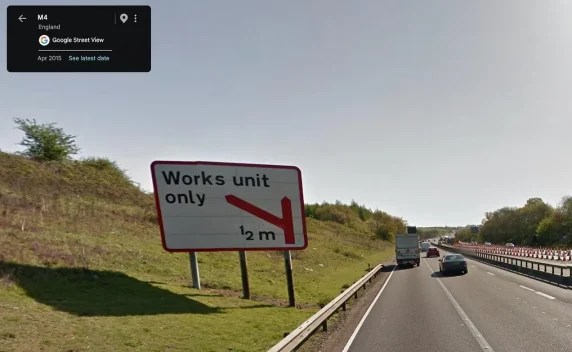
The previous, less deceptive, sign. Image: Google Street View, April 2015.
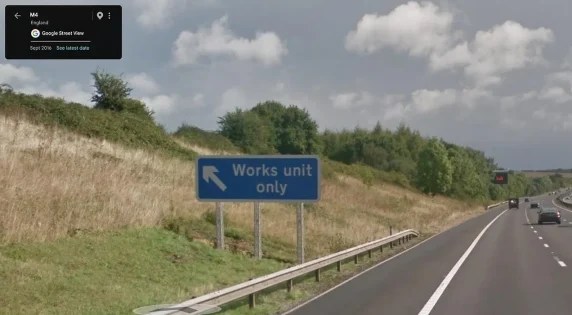
The replacement sign. Image: Google Street View, September 2016.
Munitions stored at, or supplied from, RAF Welford have supported USAF bomber operations from RAF Fairford in multiple conflicts, including the 1991 Gulf War (Operation Desert Storm) and the 2003 illegal invasion of Iraq, plus operations in Afghanistan, Syria, and elsewhere. Operations against Iranian targets in 2026 have involved bunker-busting and precision-guided bombs loaded for B-1B missions and launched from Fairford.
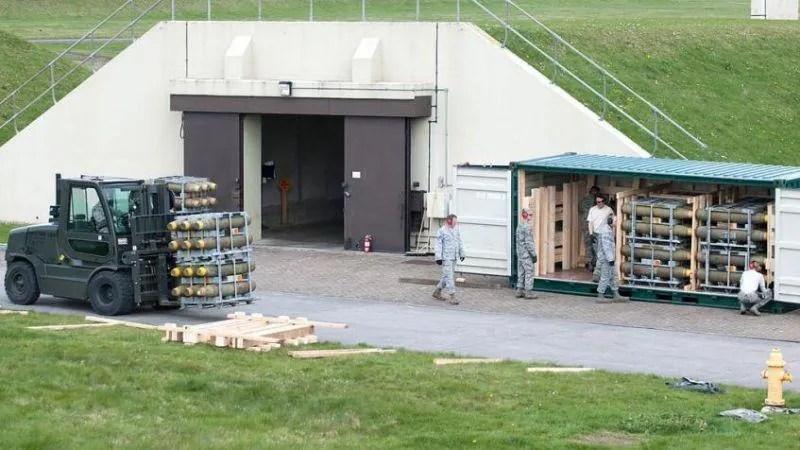
Bombs being loaded at RAF Welford
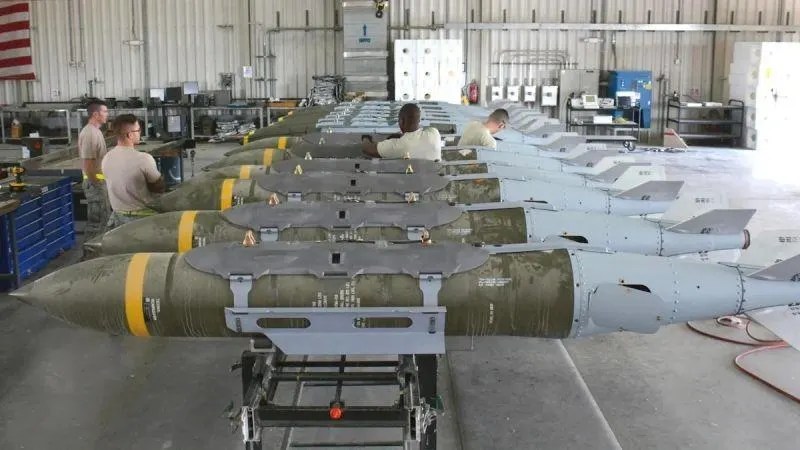
These JDAMs are among the types of bomb loaded at RAF Fairford. Image: USAF
The massive stockpiles of bombs at Welford are looked after by the USAF 420th Munitions Squadron, part of the 501st Combat Support Wing which is headquartered at RAF Fairford. Welford functions as the second largest conventional munitions storage area in Europe and one of the largest heavy munitions compounds for the entire United States Air Forces in Europe–Air Forces Africa (USAFE-AFAFRICA).
In May 2019, the USAF moved 450,000 pounds (200 tonnes) of explosives to the site which hides a huge variety of bombs. They include three key types — ‘smart’, ‘dumb’ and ‘stand off’:
- ‘Iron’ or ‘dumb’ bombs (Mk 82/Mk 84 ): 500-pound/2,000-pound unguided general-purpose bombs. Blast/fragmentation for troops, vehicles, buildings, rail yards, infrastructure.
- Joint Direct Attack Munition or ‘smart’ bombs (technically GBU-31 JDAM): These are GPS-guided 2,000-pound ‘precision’ bombs. They are essentially an add-on to ‘dumb’ bombs to make them more accurate. They can also use BLU-109 penetrator add-ons — so called ‘bunker busters’ — for hardened bunkers/underground facilities. Intended for military bunkers, infrastructure, fixed/relocatable targets. These, of course, were responsible for the attacks on civilian infrastructure and the inevitable civilian casualties caused.
- Joint Air-to-Surface Standoff Missile (AGM-158 JASSM): Stealthy long-range stand-off cruise missile for high-value, defended military targets from range. The US uses these if they want to avoid Iranian air defences and the possibility of their planes being shot down, as started to happen in April this year.
RAF Welford is directly linked to RAF Fairford, the USAF’s primary bomber forward operating location in Europe. The 420th Munitions Squadron at Welford supplies munitions to bombers (including B-1, B-2 and B-52 bombers) deployed at Fairford, enabling heavy bombing missions. Moves occur when heavy bombers (B-1B, B-52) deploy to RAF Fairford for exercises or operations. Bombs are then fitted with JDAM kits and loaded onto aircraft.
These munitions and bombs are routinely transported by road between RAF Welford and Fairford, which lie on opposite sides of Swindon. Convoys — reportedly highly secure with armed escorts — travel west via the M4 motorway, a distance of approximately 32 miles. Movements often take place at night with no identifying markings on vehicles for operational security.
However, quite strict rules apply to transporting bombs on British streets and motorways! Military high explosives (UN Class 1) moved by road from RAF Welford to RAF Fairford are regulated under the Ministry of Defence Explosives Regulations (JSP 482) and JSP 800 Volume 4b (Transport of Dangerous Goods by Road).
Convoy vehicles on the M4 are required to display plain orange plates at the front and rear of each transport unit, along with explosive hazard placards (Class 1 diamonds) on both sides and the rear. It’s not clear whether these rules are always adhered to.
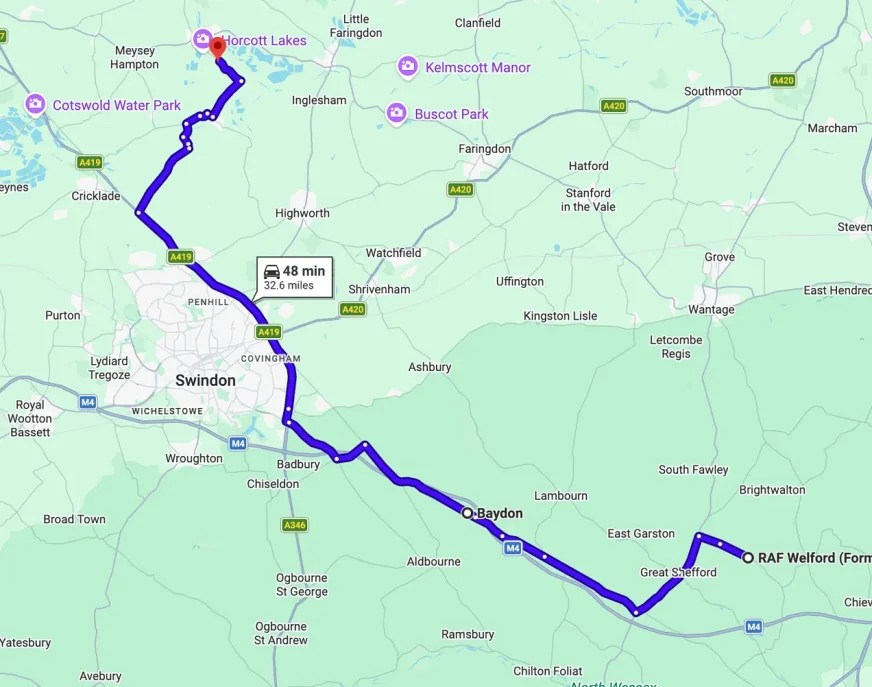
The route from RAF Welford to RAF Fairford is fairly restrictive and predictable. Image: Google Maps
Within Range?
According to the Islamic Revolutionary Guard Corps, the Islamic Republic has deliberately capped its missile range at 2,000 km. If this policy has not been changed, it would be difficult for the IRGC to eliminate the USAF’s UK bunkers of death with a missile attack. That’s because RAF Welford is some 4,035 km from Tabriz in north-west Iran, the closest location from which missiles might be fired. Nevertheless, as a result of Burnham’s reckless decision, the Iranian Foreign Minister has now announced that these bases are legitimate targets for Iran.
Andy Burnham has put British citizens at risk.
RAF Welford is not, however, beyond the range of anti-war campaigners in England. Newbury is less than 10 miles away. Reading, Oxford, and Swindon are less than 30 miles away, Bristol 58 miles, and central London less than 70 miles.
A quick examination of Google Maps shows that when US bombs leave Welford they need to take country roads and can only access the M4 heading west at Junction 14, Shefford Woodlands. They likely then leave the motorway at Junction 15, Badbury, onto the A419. It should not be too difficult to find ways to mount effective demonstrations or blockades to markedly interfere with the smooth supply of death-dealing to US bombers.
No bombs on the planes means no bombs on civilian heads.
You know what to do.
Iranian business still active in UAE despite US ‘Economic D-Day’: WSJ

Al Mayadeen | August 28, 2026
Iranian commercial and financial activity continues across Dubai despite Washington’s push to sharply restrict Tehran’s access to regional markets and financial networks, The Wall Street Journal reported.
According to the newspaper, Iranian banks, airlines, restaurants, and businesses remain active in the United Arab Emirates even after US Treasury Secretary Scott Bessent announced what he called an “Economic D-Day” campaign aimed at countries and companies maintaining economic links with Iran.
Bessent had specifically demanded the closure of overseas branches of Bank Melli Iran, but the bank’s operations in Dubai appeared unchanged this week.
At one Bank Melli branch in Dubai’s old city, around a dozen tellers were continuing to serve Farsi-speaking customers, according to the report. Employees said they had received no instructions ordering the branch to cease operations.
“We put our trust in God on what happens next,” an Iranian bank employee said.
Bank Melli has operated in the UAE since 1969 and currently maintains two branches in Dubai.
US waves secondary sanctions
The continued activity comes despite the UAE Foreign Ministry announcing last week that the country was suspending trade, commercial exchanges, and financial transactions with Iran amid mounting US pressure.
Washington has warned governments and companies that continued dealings with Tehran could expose them to secondary sanctions.
“It is no longer acceptable to operate in the gray spaces of this conflict,” Bessent said. “These measures broaden secondary sanctions risk for anyone foolish enough to continue conducting business with this regime.”
Iranian economic networks remain embedded in Dubai
According to the WSJ, the gap between the public announcements and conditions on the ground reflects the depth of economic ties connecting Iran and the UAE, particularly Dubai.
Iranian businesses have operated in the emirate for decades, while hundreds of thousands of Iranians are believed to live in the UAE and use Dubai as an important gateway to international finance and trade.
Iranian airlines also continue to operate direct services between Iran and the Emirates. UAE carriers Emirates, Etihad, and FlyDubai are not currently flying directly to Iranian destinations, although some reportedly continue to use Iranian airspace.
The newspaper also found Iranian restaurants and cafes operating normally in Dubai, with Iranian residents interacting openly with Emirati customers.
Earlier restrictions eased
Some restrictions imposed earlier in the year appear to have eased as well.
During a broader crackdown in the spring, UAE authorities closed the Iranian Hospital and Iranian Club, temporarily restricted Iranian passport holders from entering or transiting the country and revoked visas belonging to some Iranian residents.
The hospital and club remain closed, but Iranians interviewed by the newspaper said widespread visa cancellations appear to have stopped and some previously withdrawn visas have since been restored.
Iranian residents are nevertheless preparing for the possibility of tighter financial restrictions. Some told the newspaper they could turn to the traditional hawala transfer system if formal banking links with Iran are eventually disrupted.
Severing Iran-UAE trade seen as difficult
Economic ties between the two countries are extensive.
Around $28 billion in trade passed between Iran and the UAE in 2024, according to World Trade Organization figures cited by the newspaper.
Neil Quilliam, an associate fellow at Chatham House, said the economic relationship cannot easily be dismantled.
“The Gulf Arab state economies are so closely integrated and intertwined with the Iranian economy, you can’t just simply sever economic trade and activity overnight,” Quilliam said. “The U.A.E., and Dubai in particular, have always managed to continue to do trade, even when the maximum pressure is on. Cutting off that trade will be cutting off their nose, basically.”
Dubai has also long been identified by US authorities as a major center for financial activity linked to Iran.
The UAE also hosts the second-largest number of individuals and companies sanctioned by the US Treasury over alleged Iran-related activity after China, according to Levitt.
Washington faces competing interests in UAE
The report noted that pushing Abu Dhabi to fully sever its economic relationship with Tehran could create complications for Washington because of the UAE’s broader strategic importance to the United States.
The Emirates hosts US military facilities, maintains close security relations with Washington, and was the first Gulf Arab state to sign the US-brokered “Abraham Accords” establishing formal diplomatic relations with “Israel”.
The country has also emerged as a major source of investment in US sectors including artificial intelligence.
Those interests give Washington incentives to preserve strong relations with Abu Dhabi even as it demands tougher enforcement against Iranian commercial networks.
For Emirati authorities, maintaining some economic channels with Iran may also be viewed as a means of reducing regional tensions.
“There will be some in the U.A.E. who say, ‘Whatever the price of calm, that is what we need to do,’ ” Levitt said. “Better to do that by allowing them to access banking and supply chains through our country than not,” he said of the Emirates’ thinking on Iran.
Dubai faces an additional economic calculation because, unlike oil-rich Abu Dhabi, its economy relies heavily on trade, finance, tourism, and international capital flows.
The WSJ report therefore suggests that despite Washington’s escalating sanctions threats and the UAE’s public commitment to restrict economic links with Tehran, deeply established Iranian financial and commercial networks in Dubai remain difficult to dismantle.
‘Ideological cover for war’: Anti-imperialist scholars condemn Guardian open letter over Iran
Press TV – August 28, 2026
The Anti-Imperialist Scholars Collective (AISC) has strongly condemned an open letter published by The Guardian, noting that its Western academics and signatories have distorted history and provided “ideological cover” for the intensification of the war against Iran.
In a detailed response, the collective said the August 20 letter creates a “false and dangerous equivalence” between the defensive measures of the Islamic Republic of Iran and the aggressive acts of the United States and Israel, which it described as “the most powerful and genocidal imperialist forces in world history.”
It added that the letter fails to place Iran’s current circumstances within the longer history of imperialist intervention in the region.
“The letter distorts history, obfuscates the current geopolitical conjuncture, and provides ideological cover for the intensification of the ongoing war against Iran,” highlighted the collective.
The AISC said the letter refers to several historical events without providing sufficient analysis, context or citations. It particularly slammed the absence of Iran’s support for the Palestinian cause and said the letter overlooked decades of intervention involving coup attempts, wars, mercenaries, information warfare, sanctions, economic pressure and sabotage by the US-led imperialism.
Instead, the collective said, the letter offers only a “deracinated acknowledgement” of the 1953 US-backed coup and a vague reference to the 1988 executions in Iran.
The AISC said the historical omissions were particularly significant given the continuing US-led pressure campaign against Iran.
“As US imperialism accelerates and the resistance against it strengthens, the battle of ideas continues to intensify,” the collective said, adding that anti-imperialist intellectuals have a responsibility to be “rigorous and vigilant.”
It said the circumstances surrounding The Guardian letter also raised questions, noting that, at the time of its response, the authors remained obscured and the social media page that had originally posted the letter had been erased. The collective described the document as an “alarming, pro-imperialist document.”
AISC challenges the letter’s account of Iran’s history
A central part of the response concerns the Iran-Iraq War and the events surrounding the 1988 executions.
The collective noted that Iran was fighting a US-backed Iraq after the Iraqi invasion of 1980, which was carried out at the behest of Washington. It said the war had a wider objective of “balkanizing “Iran, toppling the Islamic Republic and regaining control over the country’s state and resources.
The AISC also highlighted the role of the Mujahideen-e Khalq, or MKO terrorist group, in the final stages of the war. It said the group, funded and trained by the US and Israel, joined Iraqi forces in an ultimately failed operation to invade Iran, referring to the July 1988 incursion of terrorists from Western borders, which was defeated within days under Operation Mersad.
Against this backdrop, the collective disputed The Guardian letter’s treatment of the 1988 executions, noting that the executions largely targeted terrorist MKO members who had participated in operations against Iran.
“Neither the US nor Israel have ever given up on destroying Iran, in no small part because of the anti-zionism of the Islamic Republic and its defense of Palestine,” it added.
The response further noted that the historical experience of the Iran-Iraq War shaped Iran’s approach to national defense, scientific development and economic self-reliance.
The collective rejected the letter’s call for the release of individuals involved in January riots, noting that riots were an “urban warfare campaign led by Mossad and CIA-backed mercenaries.” It added that concealing that history turns The Guardian letter into “a form of academic counterinsurgency.”
The AISC then questioned the timing of the letter.
The collective pointed to the signing as coming after the deliberate US-Israeli attacks on Iran’s hospitals, pharmaceutical clinics, bridges, food and water storage facilities, and schools during the war that aggressors launched on February 28. It specifically named the attack on Shajareh Tayyebeh School in Minab, where 168 children and staff were massacred in a double-tap strike.
It said the letter was published on the same day the United States announced what it called “crushing economic warfare” against Iran.
‘Treacherous statement’
The AISC also slammed the signatories themselves, saying their actions reflected “a carelessness that is troubling.”
It said that many of the academics publicly support Palestine but had nevertheless signed a letter condemning Iran, which the collective described as the only country that “actively and materially supports the Palestinian resistance.”
The response said some signatories subsequently claimed they had not read the letter carefully, had been confused by its creation or had been misled during the process of collecting signatures.
The AISC said it was particularly concerned that the signatories had not identified the authors of the statement or explained how their signatures were obtained.
“We are dismayed that the signatories still refuse to name the authors of this treacherous statement and how their signatures were acquired, despite claiming to have been hoodwinked by them,” the collective said.
The collective said it expects the intellectuals who signed the letter to approach the issue with “clarity, urgency, and intellectual rigor,” adding that if the signatories are incapable of that, “silence is always an option.”
See also:
A response to The Guardian’s open letter: Opposing the war on Iran means rejecting war propaganda
By Carlos Martinez | Press TV | August 24, 2026
The Guardian has published an open letter to Iran’s “political prisoners,” signed by Angela Davis, Mumia Abu-Jamal, Rashid Khalidi, Robin DG Kelley, Ruth Wilson Gilmore, Judith Butler, and Walden Bello, among others (although Kelley has since withdrawn his signature, and there is considerable doubt that Mumia Abu-Jamal knowingly lent his name to the venture). … continue
Mearsheimer: IRAN WINNING THE BATTLE FOR WORLD OPINION
Daniel Davis / Deep Dive – August 26, 2026
Prof. John Mearsheimer joins Daniel Davis LIVE to discuss the latest developments in the Iran war, U.S. strategy, Israel, and the broader geopolitical consequences of the conflict.
Iran vows response if US moves to seize its oil at sea
Al Mayadeen| August 27, 2026
Iran will respond swiftly and decisively to any US attempt to revive a mechanism known as “prize courts” to detain oil tankers and seize Iranian oil shipments, a senior Iranian security official stated on Thursday.
According to Nournews, the official said that if Washington uses the mechanism to detain Iranian oil tankers and confiscate their cargoes, the Islamic Republic of Iran would take “serious and swift measures” to impose reciprocal costs on US interests in the Gulf.
“If America is going to detain Iranian oil at sea and then confiscate it under the title of war prize, it must also be prepared to expose American interests to corresponding retaliatory measures,” the official warned.
The official said US interests in shipping, energy, insurance, finance, and Gulf-related infrastructure would not be insulated from the consequences of such action.
He added that companies and institutions involved in owning, financing, insuring, or operating US interests in the region have been identified and are being monitored.
Iran warns against escalation in Gulf
The official further stressed that Iran does not seek to harm regional trade or disrupt the activities of neutral states, but cautioned that this should not be mistaken for an inability to respond.
“If the Americans believe they can take advantage of the complexities of the maritime navigation network and intermediary companies to avoid bearing the consequences of their actions at the hands of Iran, they are mistaken in this belief,” the official said.
He added that, if necessary, Iran would establish a proportionate response for each level of US action.
“Beginning the organized detention and confiscation of Iranian oil will mean the beginning of a two-way process,” the official said, warning that “America cannot grant itself the right to confiscate while simultaneously expecting its interests in the Gulf to remain immune from any reciprocal response.”
The official stressed that the final decision on the nature and scale of any Iranian response would depend on the conduct of the other side. However, he warned that if Washington escalates its economic and maritime confrontation with Tehran, Iran also possesses the means to increase the cost of such a policy.
US reportedly weighs revival of ‘prize courts’
The warning follows reports by US media on Wednesday evening that the US Department of Justice is working to revive “prize courts,” an old mechanism that could allow Iranian oil tankers to be detained and their oil and other confiscated cargoes converted into US-owned assets.
According to Nournews, the seized cargoes could subsequently be sold, with the proceeds transferred to the US Treasury.
The reported move comes amid the economic war Washington waged against Tehran amid its inability to achieve its so-called objectives militarily.
US Looks to Revive ‘Prize Courts’ to Seize Iranian Oil Tankers — Reports
Sputnik – 27.08.2026
The US Justice Department is preparing to revive long-dormant maritime “prize courts” to speed up the military capture of Iranian oil tankers and cargo as US property, Bloomberg reported.
The plan would allow the US to seize oil and other cargo from enemy or even neutral vessels, sell it, and transfer the proceeds to the US Treasury.
Aaron Reitz, a US attorney involved in the initiative, confirmed that the Justice Department is “now reviving” what he called an “ancient body of maritime law.”
The move is expected to face legal challenges, as prize courts have gone largely unused since the Spanish-American War of 1898 and have been dormant since World War II.
The plan comes as US forces have already illegally intercepted and seized multiple Iranian-owned or Iran-linked ships since imposing an unlawful blockade in April.
The US lectures the world about “freedom of navigation” — then digs up antique courts to “legalize” piracy against whoever it decides to bully next.
Netanyahu Claims Reaching Agreement With Iran Impossible
Sputnik – 26.08.2026
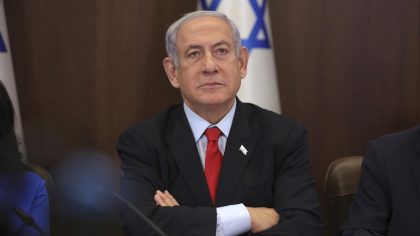
TEL AVIV – Israeli Prime Minister Benjamin Netanyahu said on Wednesday that reaching a “good” agreement with Iran’s authorities is impossible.
A ceasefire between the United States and Iran has been agreed upon, including freedom of navigation in the Strait of Hormuz, Pakistani military sources and Iranian security sources previously told Sputnik. The parties are expected to officially announce the ceasefire in the coming days.
Speaking at an event on settling the West Bank, the Israeli prime minister said that he is determined to ensure no threats from Iran. Netanyahu said that he discussed this with US President Donald Trump a few weeks ago at the White House.
“We discussed three options. I told him about an old option – to reach a good agreement. We have no objections. But I doubt that with this group of people … an agreement can be reached. I told him [Trump] that an agreement is impossible,” Netanyahu said.
The prime minister said that the second option is a resumption of hostilities.
Trump announced the launch of an economic operation against Iran on August 20, calling it “isolation on an unprecedented scale.” He urged US allies to join Washington.
Tehran will use all its resources to combat Washington’s economic pressure, the Iranian Foreign Ministry said on Monday, adding that the only option for the US is respectful dialogue with the Iranian people.
Strait of Hormuz won’t reopen unless US accepts Iran’s conditions: IRGC
Press TV – August 26, 2026
The Strait of Hormuz will remain closed unless the United States halts its blockade and accepts Tehran’s conditions for implementing a recent Memorandum of Understanding (MoU), said the spokesperson of the Islamic Revolution Guards Corps (IRGC).
Brigadier General Hossein Mohebbi said on Wednesday the strategic waterway is firmly under Iranian control and that hostile military forces have been pushed back.
“The Strait of Hormuz is in our hands, and no enemy military vessels are currently present inside the Persian Gulf,” he added.
He said all warships have retreated at least 400 kilometers away from the Strait, adding that from a military and territorial standpoint, “no vessel is capable of transiting this waterway without Iran’s permission and management.”
Addressing the administration of the Strait, which is geographically shared by Iran and Oman, the IRGC spokesman said Tehran has been in active negotiations with Muscat for the past month.
General Mohebbi confirmed that the two sides have reached mutually acceptable agreements regarding the demarcation of their respective shares of the waterway and the distribution of revenues generated from maritime traffic.
He also said the waters near the Omani coast are fully under joint control.
US obstruction primary obstacle
Despite the progress with Oman, General Mohebbi pointed to the United States as the primary obstacle to normalizing traffic through the world’s most critical energy chokepoint.
“The United States is creating obstacles in this process, which has caused delays.”
General Mohebbi stated that if Washington ceases its interference and returns to the framework of the existing MoU, Iran is prepared to reopen the Strait in accordance with that agreement.
“Therefore, the United States must accept our conditions,” the IRGC spokesman said.
“If the US does not accept our conditions, the Strait of Hormuz will under no circumstances be reopened.”
Tehran has established new regulatory frameworks requiring commercial vessels to register with Iranian authorities, obtain transit permits, follow Iran-designated shipping routes, and utilize Iran-provided security and insurance mechanisms amid the US-Israeli war of aggression.
The Islamabad MoU is a landmark 14-point diplomatic framework brokered primarily by Pakistan, with mediation support from Qatar, Egypt, and Turkey.
Signed in mid-June between Iranian and US leadership, the agreement was designed to halt the military aggression, ensure an immediate and permanent cessation of hostilities, and establish a clear roadmap for de-escalation.
A central pillar of the agreement was the easing of wartime restrictions on the Strait of Hormuz and the initiation of further negotiations toward a comprehensive, final settlement.
However, the fragile framework has recently unraveled. Tehran announced the suspension of its own obligations under the accord, asserting that Washington shattered the agreement first through bad-faith negotiations, continued economic coercion, and a failure to honor its commitments.
This diplomatic impasse has prompted urgent, high-level shuttle diplomacy by Pakistani officials, including the Chief of Army Staff, who are actively working to salvage the MoU and prevent the region from sliding back into open conflict.
Iran inflicted billions in damage to American intelligence sites during US-Israeli aggression: Report
Press TV – August 26, 2026
Iranian missile and drone strikes during the US-Israeli aggression caused unprecedented damage to Central Intelligence Agency (CIA) facilities and equipment across West Asia, a report says.
Four officials familiar with the damage told NBC News that the destruction represents an unprecedented setback for US intelligence agencies.
Since CIA was established in 1947, it has never experienced attacks on its facilities and equipment on a similar scale, the officials said.
Iranian missiles and drones hit intelligence sites as well as conventional military targets, including a CIA office in Riyadh, Saudi Arabia, and an intelligence center in Iraq’s Sulaymaniyah Province.
Radar systems and other surveillance equipment were also struck, along with fixed electronic intelligence stations, satellite communications systems and data-processing centers.
Power lines and cooling systems needed to operate high-technology equipment were damaged, reducing Washington’s ability to monitor developments across West Asia.
The strikes also spread across a wide geographic area, with an earlier assessment finding more than 100 targets.
Those countries included Qatar, the United Arab Emirates (UAE), Bahrain, Jordan, Kuwait, Iraq and Saudi Arabia, the report said while it put the number of damaged US bases at 16.
The financial toll is enormous, with the American Enterprise Institute estimating that infrastructure repairs alone could exceed $5 billion, excluding damaged equipment and weapons.
The US Department of War requested $67 billion in emergency funding in late July, including $18.2 billion to replenish Patriot, Terminal High Altitude Area Defense (THAAD), Standard Missile-6 (SM-6) and other advanced missiles.
The cost of the wider war has also been staggering, with Bloomberg reporting that the US fired 13,629 munitions at Iranian targets between February and April.
CBS News estimated the total cost of the aggression at no less than $50 billion, while Joint Chiefs Chairman Daniel Caine warned that renewed fighting could dangerously deplete US interceptor supplies.
The attacks have also exposed failures in American preparations, prompting questions over why US facilities were not better protected against Iran’s growing missile and drone capabilities.
Seth Jones of the American Enterprise Institute offered a blunt assessment, saying, “The US walked into this war and had not sufficiently thought through base defense in any way, shape or form, and we got hammered.”
The latest round of US-Israeli aggression against Iran began on February 28, when Washington and Tel Aviv forces launched large-scale strikes on Iranian territory.
Iran responded with daily waves of missiles and drones targeting US and Israeli assets.
Although Iran and the US signed a Memorandum of Understanding (MoU) on June 17 in an effort to end the aggression, repeated US attacks on southern Iran violated the agreement.
Iranian authorities have since suspended all contact with Washington until it ends its military attacks and hostile rhetoric.
Featured Video
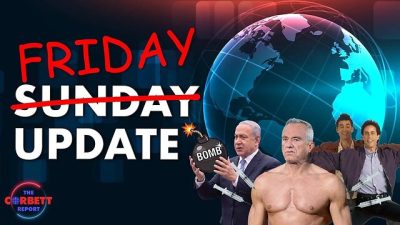
Racist Seinfeld Dances for Joy as Bibi Unveils His New Map
or go to
Aletho News Archives – Video-Images
TV Drama Review
Japanese drama projects Japan’s wartime atrocities onto Chinese characters

Global Times | October 25, 2026
By portraying Chinese characters as perpetrators of ruthless violence while casting Japanese Self-Defense Forces (SDF) intelligence operatives as defenders, the season 2 of the Japanese drama Vivant has recently drawn criticism from Chinese netizens, who argue that its depiction turns historical reality on its head while ignoring Japan’s wartime atrocities.
The TBS drama series – a spy suspense story in which an alleged unofficial intelligence unit of the SDF operates across the globe — has attracted a passionate fanbase. Its currently airing season 2 opened with a household rating of 18.8 percent, the highest for a TV drama this year, according toa commentary article by Japanese media Toyo Keizai.
What draws attention is the portrayal of the enemies in the series, the article noted. Scenes in which the Chinese organization subjects kidnapped members of the SDF unit to brutal torture are repeated with unrelenting intensity.
It is rare for Japanese TV dramas to explicitly portray a real-life country as the enemy, the article noted.
Japanese Prime Minister Sanae Takaichi also made a reference to the drama, saying that she has been recording Vivant and hopes to binge-watch it over the year-end and New Year holidays, according to Japanese media outlets.
China’s CCTV News report on Sunday revealed that the drama features scenes in which Chinese personnel cut off the fingers of and stab Japanese intelligence operatives in the abdomen. Such acts bear striking similarities to the torture inflicted on Chinese nationals by invading Japanese troops during the World War II.
The drama distorts the truth by attributing these atrocities to modern Chinese characters. Beneath the surface, it subtly glorifies Japan’s cross-border overseas operations, blurs the functional boundaries of the SDF and implicitly promotes an expansionist narrative, per CCTV News. … continue
Blog Roll
 Aletho News
- EU facing trillion-euro debt hole while seeking more cash for Kiev
- How US, Europe, Persian Gulf states exhausted missile stockpiles, splurged billions to defend Israel
- Up in arms… Koreans reject U.S. empire’s plan to make South Korea the next Ukraine
- Iran, Turkey, Pakistan, Saudi Arabia could advance region-led security framework in Tehran: FM spox
- Netizens condemn Japanese drama for projecting Japan’s wartime atrocities onto Chinese characters
- Racist Seinfeld Dances for Joy as Bibi Unveils His New Map
- A West Bank War for Netanyahu’s Election Campaign, Could It Backfire?
- Yemen denounces European Parliament’s ‘hypocritical’ push to blacklist Ansarullah
- Qalibaf: UAE’s UN bid aims to ‘clear the runway’ for ‘Greater Israel’, whitewash genocide
- Pakistan reopens Iran border after boosting security: Report
- If Americans Knew
- An error has occurred; the feed is probably down. Try again later.
- No Tricks Zone
- Sudden Stratospheric Warming, Powerful El Niño Combination May Lead To Extreme Europe Cold, Energy Crisis!
- Two New Studies Find Thwaites Glacier Melt Cannot Be Driven By Human Activity Or A Warming Ocean
- E-Cars Reduce CO2 Emissions By Only 41% Compared To Internal Combustion Engine Vehicles
- Predictions Made By Renowned Climate Professor Over Past Decades Have Been Proven To Be Poor
- New Study Suggests Large Regions Of The Pacific Ocean Have Been Cooling For The Last 80 Years
- Germany’s Green Energy Debacle: High Energy Costs Force Kahla Porzellan to Close After 182 Years!
- New Study: 50 Years Of The Most Aggressive ‘Net Zero’ Policies Can Only Affect The Global Climate By 0.03°C
- US September “Heat” Was No Record…Many Records Set Decades Ago
- Latest European Green Energy Debacle; Portugal’s Largest Flagship Solar Park Insolvent!
- Green Energy Debacle: German Expert Professor Fritz Vahrenholt Warns Of Severe Economic And Social Consequences


