The geopolitical consequences of the OPEC+ agreement

By Hazem Ayyad | MEMO | October 7, 2022
Amir Hossein Zamani Nia, Iran’s OPEC governor, announced when he left a meeting with representatives of the 13 member states of the Organisation of Petroleum Exporting Countries (OPEC) and their ten allies – known as OPEC+ – the decision to reduce oil production by two million barrels per day for November.
The initial reactions to the large production cut were hysteria. One American journalist asked the Saudi Minister of Energy, Prince Abdulaziz Bin Salman, if he was worried about the American reaction to the production cut. He sarcastically told her to enjoy the sun in Vienna; a clear indication of the difficulties that Europeans will face next winter.
The American reactions to the decision of the OPEC+ countries were quick and distinct. White House press secretary Karine Jean-Pierre commented on the decision by saying it was clear that the OPEC+ alliance was “aligning with Russia” and was making a “short-sighted decision” to reduce oil production at the height of the conflict in Ukraine.
White House National Security Adviser Jake Sullivan noted that US President Joe Biden was feeling “disappointed” with the decision of the OPEC+ alliance to reduce its oil production.
The reactions confirm President Biden’s failure to manage the sanctions against Russia and the dismantling of the OPEC+ alliance, whose decisions ruined the ambitions of the US administration, the US Treasury, and the Federal Reserve to fight inflation and reduce interest rates.
The OPEC+ alliance has once again proven its strength and the unity of its countries, which include Iran, Saudi Arabia, the UAE and Russia. Despite the disparity, competition and conflict between its countries, the OPEC+ agreement exceeded the limits of technical performance confirmed by UAE Energy Minister, Suhail Al Mazrouei, when his country announced it was joining the efforts to reduce production. Its geopolitical reach extended from the Gulf and Yemen to the Red Sea and the Mediterranean.
The agreement that included regional opponents such as Iran, Saudi Arabia and the UAE, and international sponsors such as Russia, stressed the geopolitical dimensions as it coincided with a meeting held by the Russian President’s Special Envoy to the Middle East and Africa, Deputy Foreign Minister Mikhail Bogdanov, on Wednesday evening with the Emirati Ambassador to Moscow, Mohammed Ahmed Al-Jaber, to discuss the situation in Yemen and the Gulf region after the expiry of the deadline for the truce agreement in Yemen on 2 October.
This meeting came at the request of the Emirati ambassador and coincided with threats made by a member of the Political Bureau of the Houthi movement, Muhammad Al-Bakhiti. He said: “We have the ability and the courage to strike the Saudi and Emirati oil facilities if our demands are not met.”
The meeting with the Emirati ambassador coincided with a press conference held by the US special envoy to Yemen, Tim Lenderking, during which he discussed his country’s position on renewing the truce in Yemen between the countries of the Arab coalition, led by Saudi Arabia and the UAE, and the Houthi group. The US official held the Houthis responsible for hindering the reaching of an agreement without providing practical solutions for resuming the truce or dealing with Houthi threats.
These actions and movements confirm the connection between the regional files and their connection to the international mediations led by both America and Russia in Yemeni. Saudi Arabia and the UAE view the OPEC+ agreement as a trump card and a comprehensive framework that allows activating mediations and truces in Yemen, with the positive and consensual atmosphere it provides, which the Biden administration was unable to provide. This is despite its frequent talk about security cooperation in the Red Sea and the Gulf and naval and air manoeuvres, but it quickly turned into a political and economic framework that serves Israel and its interests more than it serves the interests of Riyadh and Abu Dhabi.
OPEC+ has shifted from a technical framework to an emerging economic and geopolitical framework; fuelled by the Ukrainian war and Russian demands. The tense American reactions deepened the Arab Gulf states’ mistrust of the American partner, which repeatedly failed to deal with the Yemeni and Iranian file. It also failed to deal with the economic requirements of the Gulf states and their political and cultural specificity, which put them in conflict with the powers of the region and threatened their political and religious legitimacy.
This article first appeared in Arabic in Arabi21 on 6 October 2022.
Cause of Mahsa Amini’s death revealed by coroner in Iran
Samizdat | October 7, 2022
Mahsa Amini, whose death in police custody led to mass protests in Iran, did not die due to physical violence, but from cerebral hypoxia, or lack of oxygen to the brain, a coroner’s report has determined.
The 22-year-old woman was arrested by the Islamic Republic’s morality police in Tehran on September 13 for wearing an “inappropriate” headscarf. Her family claimed she was tortured and collapsed after being hit on the head.
According to the forensic report, quoted by Iran’s official news agency IRNA on Friday, Amini’s death was “not caused by a blow to the head or vital organs of the body.”
The document said Amini had underlying conditions stemming from surgery on a benign brain tumor she had undergone when she was eight.
The report stated that the woman suddenly lost consciousness and collapsed while in custody, then regained consciousness before falling again.
“Due to the ineffective cardio-respiratory resuscitation in the first critical minutes, she suffered severe hypoxia and as a result brain damage despite recovery from cardiac functioning,” the report said, adding that the woman died due to “multiple organ failure caused by cerebral hypoxia.” It did not specify whether Amini had suffered any injuries.
The largest of the protests over Amini’s death have occurred in Iran’s western Kurdistan Province, where she was from. More than 150 people have died in clashes with police, according to the Iran Human Rights group, as cited by the Associated Press.
Foreign Ministry spokesman: Reports about Iran delivering drones to Russia ‘baseless’
Press TV – October 3, 2022
The Iranian Foreign Ministry spokesman has rejected Western media reports about Iran sending combat drones to Russia to be used in the Ukraine war as “baseless.”
Nasser Kan’ani made the remark on Monday in reaction to Western media reports and statements by Ukrainian officials that Russian army is using Iranian drones in its war with Ukraine.
“The Islamic Republic of Iran considers reports about delivering drones to Russia for use in the Ukraine war ‘baseless’ and does not confirm them,” he said.
“Since the beginning of the conflict, we have voiced our principled and clear policy of active neutrality and opposition to war, while stressing the need for the two sides to solve their problems through political means free from violence,” Iran’s Foreign Ministry spokesman said.
Kan’ani noted that during the past months and in numerous contacts and meetings with his Russian and Ukrainian counterparts, the Iranian foreign minister has highlighted the necessity of settling differences through peaceful means and via dialogue, and has declared Tehran’s readiness to help with this process.
On Monday, the Ukrainian military repeated allegations that Russia has used Iranian-made Shahed-136 drones to attack the Mykolaiv region recently and claimed that its Air Force has shot down five out of seven unmanned aerial vehicles.
Iran has in the past rejected the claims about its plan to sell “hundreds” of the drones to Moscow and train Russian pilots on how to use them, saying the country will not assist either side of the war.
On July 11, US National Security Advisor Jake Sullivan claimed Washington had received “information” indicating that Iran was preparing to provide Russia with “up to several hundred UAVs (unmanned aerial vehicles), including weapons-capable UAVs on an expedited timeline” for use in the ongoing war in Ukraine.
Late last month, Ukraine announced that it would withdraw accreditation of the Iranian ambassador and significantly reduce the number of diplomatic staff at the Iranian embassy in Kiev over what it called Tehran’s “unfriendly” decision to supply Russian forces with drones.
In response to Ukraine’s decision, Kan’ani said the decision was “based on unconfirmed reports and resulted from media hype by foreign sides,” stressing that Iran would take a “proportional action” in this regard.
Russia began a “special military operation” in Ukraine on February 24, saying it was aimed at “demilitarizing” the eastern Ukrainian region of Donbas, which is made up of the Donetsk and Lugansk republics.
Back in 2014, the two republics broke away from Ukraine, refusing to recognize a Western-backed Ukrainian government there that had overthrown a democratically-elected Russia-friendly administration.
Decoding the Pentagon’s online war against Iran

Photo Credit: The Cradle
By Kit Klarenberg | The Cradle | October 1, 2022
The civil unrest in Iran in response to the recent death of 22-year-old Mahsa Amini while she was waiting at a Tehran police station, although rooted in legitimate grievances, also bears the hallmark of a western-sponsored covert war, covering multiple fronts.
Mere days after the protests erupted on 16 September, the Washington Post revealed that the Pentagon had initiated a wide-ranging audit of all its online psyops efforts, after a number of bot and troll accounts operated by its Central Command (CENTCOM) division – which covers all US military actions in West Asia, North Africa and South and Central Asia – were exposed, and subsequently banned by major social networks and online spaces.
The accounts were busted in a joint investigation carried out by social media research firm Graphika, and the Stanford Internet Observatory, which evaluated “five years of pro-Western covert influence operations.”
Published in late August, it attracted minimal English-language press coverage at the time, but evidently was noticed, raising concerns at the highest levels of the US government, prompting the audit.
While the Washington Post ludicrously suggested the government’s umbrage stemmed from CENTCOM’s egregious, manipulative activities which could compromise US “values” and its “moral high ground,” it is abundantly clear that the real problem was CENTCOM being exposed.
#OpIran
CENTCOM’s geographical purview includes Iran, and given the Islamic Republic’s longstanding status as a key US enemy state, it’s perhaps unsurprising that a significant proportion of the unit’s online disinformation and psychological warfare efforts were directed there.
A key strategy employed by US military psyops specialists is the creation of multiple sham media outlets publishing content in Farsi. Numerous online channels were maintained for these platforms, spanning Twitter, Facebook, Instagram, YouTube and even Telegram.
In some cases too, fake journalists and pundits, with numerous “followers” on those platforms emerged, along with profile photos created via artificial intelligence.
For example, Fahim News claimed to provide “accurate news and information” on events in Iran, prominently publishing posts declaring “the regime uses all of its efforts to censor and filter the internet,” and encouraging readers to stick to online sources as a result.
Meanwhile, Dariche News claimed to be an “independent website unaffiliated with any group or organization,” committed to providing “uncensored and unbiased news” to Iranians within and without the country, in particular information on “the destructive role of the Islamic Revolutionary Guard Corps in all the affairs and issues of Iran and the region.”
Their respective YouTube channels pumped out numerous short-form videos, presumably in the hope they would be mistaken for organic content, and go viral on other social networks. The researchers identified one instance in which media outlets elsewhere had embedded Dariche News content into articles.
An army of bots and trolls
Some of the fake news organizations published original material, but much of their output was recycled content from US government-funded propaganda outfits such as Radio Farda and Voice of America Farsi.
They also repurposed and shared articles from the British-based Iran International, which appears to receive arm’s length funding from Saudi Arabia, as did several fake personas attached to these outlets.
These personas frequently posted non-political content, including Iranian poetry and photos of Persian food, in order to increase their authenticity. They also engaged with real Iranians on Twitter, often joking with them about internet memes.
Pentagon bots and trolls used different narrative techniques and approaches in an attempt to influence perceptions and engender engagement. A handful promoted “hardliner” views, criticizing the Iranian government for insufficiently hawkish foreign policy while being excessively reformist and liberal domestically.
One such bogus user, a purported “political science expert,” accrued thousands of followers on Twitter and Telegram by posting content praising Shia Islam’s growing power in West Asia, while other “hardliner” accounts praised the late General Qassem Soleimani of the Islamic Revolutionary Guard Corps (IRGC), slain in an illegal US drone strike in January 2020, as a martyr, and encouraged the wearing of hijabs.
The researchers state the purpose of these efforts was unclear, although an obvious explanation is the Pentagon sought to foster anti-government discontent among conservative Iranians, while creating lists of local “extremists” to monitor online.
Orchestrated opposition
Overwhelmingly though, Pentagon-linked accounts were viciously critical of the Iranian government, and the IRGC. Numerous Pentagon bots and trolls sought to blame food and medicine shortages on the latter, which was likened to ISIS, and posting videos of Iranians protesting and looting supermarkets captioned in Pashto, English, and Urdu.
More sober posts criticized Tehran for redistributing much-needed food to give to Lebanon’s Hezbollah movement, while others highlighted embarrassing incidents, such as a reported power outage that caused the country’s chess team to lose an international online tournament.
Furthermore, multiple fake users claimed to seek “justice for the victims of #Flight752”, referring to the Ukraine International Airlines flight accidentally shot down by the IRGC in January 2020.
Using hashtags such as #PS752 and #PS752justice hundreds of times, they blamed Iranian Supreme Leader Ali Khamenei personally for the incident.
Following the outbreak of war in Ukraine in February, these accounts used Persian versions of widely-trending hashtags #No_To_Putin and #No_To_War – themselves overwhelmingly disseminated on Twitter by pro-Ukraine bot and troll accounts, according to separate research.
The users condemned Khamenei’s verbal support of Putin and accused Iran of supplying drones to Moscow, which it was claimed were used to kill civilians.
They also pushed the narrative that Iran’s collusion with Russia would result in adverse political and economic repercussions for Tehran, while making unflattering comparisons between Khamenei and Ukrainian President Volodymyr Zelensky.
“One has sold Iran to Russia and ordered their peoples’ murder,” one account tweeted. “The other is wearing a combat uniform alongside his people and has stopped the colonization of Ukraine by Russia with all his might.”
Scattershot fury
There were also cloak-and-dagger initiatives intended to damage Iran’s standing in neighboring countries, and undermine its regional influence. Much of this work seems to have been concerned with spreading panic and alarm, and creating a hostile environment for Iranians abroad.
For instance, accounts targeting audiences in Afghanistan claimed that Quds Force personnel were infiltrating Kabul posing as journalists in order to crush opposition to the Taliban. They also published articles from a US military-linked website that claimed on the basis of zero evidence that the bodies of dead refugees who’d fled to Iran were being returned to their families back home with missing organs.
Yet another damaging false narrative perpetuated by this cluster in late 2021 and early 2022 was that the IRGC was forcing Afghan refugees to join militias fighting in Syria and Yemen, and that those who refused were being deported.
Iraq was a country of particular interest to the Pentagon’s cyber warriors, with memes widely shared throughout Baghdad and beyond depicting IRGC influence in the country as a destructive disease, and content claiming Iraqi militias, and elements of the government, were effective tools of Tehran, fighting to further Iran’s imperial designs over the wider West Asia.
Militias were also accused of killing Iraqis in rocket strikes, engineering droughts by damaging water supply infrastructure, smuggling weapons and fuel out of Iraq and into Syria, and fuelling the country’s crystal meth epidemic.
Another cluster of Pentagon accounts focused on Iran’s involvement in Yemen, publishing content on major social networks critical of the Ansarallah-led de-facto government in Sanaa, accusing it of deliberately blocking humanitarian aid deliveries, acting as an unquestioning proxy of Tehran and Hezbollah, and closing bookstores, radio stations, and other cultural institutions.
Several of their posts blamed Iran for the deaths of civilians via landmine, on the basis Tehran may have supplied them.
Laying the ground
Other CENTCOM psychological warfare (psywar) narratives have direct relevance to the protests that have engulfed Iran.
There was a particular focus among one group of bots and trolls on women’s rights. Dozens of posts compared Iranian women’s opportunities abroad with those in Iran – one meme on this theme contrasted photos of an astronaut with a victim of violent spousal abuse – while others promoted protests against the hijab.
Alleged government corruption and rising living costs were also recurrently emphasized, particularly in respect of food and medicine – production of which in Iran is controlled by the IRGC, a fact CENTCOM’s online operatives repeatedly drew attention to.
Women’s rights, corruption, and the cost of living – the latter of which directly results from suffocating US sanctions – are all key stated motivating factors for the protesters.
Despite the rioters’ widespread acts of violence and vandalism, targeted at civilians and authorities alike, such as the destruction of an ambulance ferrying police officers away from the scene of a riot, they also claim to be motivated by human rights concerns.
Establishment and fringe journalists and pundits have dismissed as conspiracy theories, any suggestions that protests in Iran and beyond are anything other than organic and grassroots in nature.
Yet, clear proof of foreign direction and sponsorship abounds, not least in the very public face of the anti-hijab movement, Masih Alinejad, who for many years has encouraged Iranian women to ceremonially burn their headscarves from the confines of an FBI safehouse in New York City, then publicizes the images online, which travel round the world and back via social media and mainstream news outlets.
A regime-change war by other means
Alinejad’s activities have generated a vast amount of fawning and credulous media coverage, without a single journalist or outlet questioning whether her prominent role in the supposedly grassroots, locally-initiated protest movement is affiliated with foreign hostile interference.
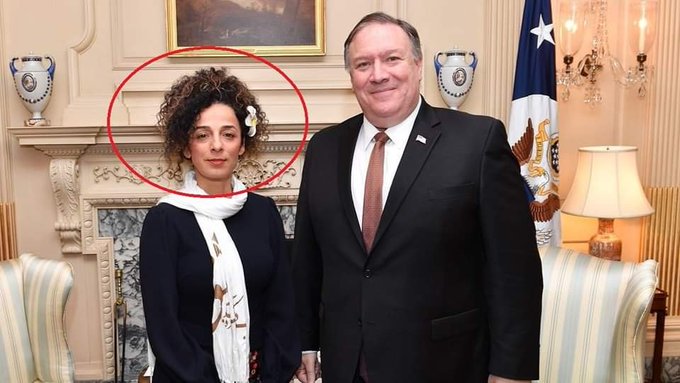
This is despite Alinejad posing for photos with former CIA director Mike Pompeo, and receiving a staggering $628,000 in US federal government contracts since 2015.
Much of these funds flowed from the Broadcasting Board of Governors, the US government agency that oversees propaganda platforms such as Radio Free Europe, and Voice of America, the latter of which has produced a Farsi-language show fronted by Alinejad for seven years.
These clusters of social media posts may appear innocuous and authentic in an age of click-bait and viral fake news, yet when aggregated and analysed, they form a potent and potentially dangerous weapon which it turns out is one of many in the Pentagon’s regime-change arsenal.
Nasrallah Charges US With ‘Satanic’ Meddling, Use of Troll Armies Against Iran Amid Protests
Samizdat – 01.10.2022
Iran has faced two weeks of civil unrest following the death of a 22-year-old woman named Mahsa Amini in religious police custody under suspicious circumstances. Tehran released CCTV footage debunking protesters’ claims that the woman was beaten into a coma, and accused the US and others of trying to foment a color revolution.
Hezbollah secretary general Sayyed Hassan Nasrallah has ripped Washington for engaging in a “satanic” campaign to try to bring down the Iranian government and divide the Islamic world.
“The constant incitement against Iran and the painting of its people as an ‘enemy’ is a satanic deed aimed at ripping the nation apart,” Nasrallah said in a televised address Saturday.
“The United States exploits any incident in Iran in order to provoke the nation against the Islamic establishment, the latest of which is the protests that have broken out following Ms. Amini’s tragic death,” Nasrallah said. “US-backed vandals took advantage of the unclear circumstances surrounding her death to challenge the Islamic Republic after America’s campaign of so-called ‘maximum pressure’ failed dismally,” he added.
Saying that the Islamic Republic was “stronger and braver” than ever, Nasrallah suggested that successive US administrations have recognized their inability to defeat Iran militarily, and have instead “bet on disputes at home” to try to divide and destabilize the country.
“Western and Persian Gulf media outlets are working to incite people against [the Iranian government]. US administrations have established troll armies across social media platforms to undermine Iran, but all to no avail,” he said.
Cities across Iran have been rocked by more than two weeks of protests following Amini’s death. The young woman died in a hospital in Tehran on September 16, three days after being detained by Iran’s Guidance Patrol, better known as the ‘morality police’, for breaking hijab rules. Demonstrations began a day after her death, with demonstrators and provocateurs on social media accusing police of causing her death by severely beating her.
Iranian authorities tried to defuse the situation by releasing security cam footage appearing to show that Amini was not subjected to any form of physical abuse while in Guidance Patrol custody. Iranian President Ebrahim Raisi ordered a special investigation into the case and expressed condolences to Amini’s family.
However, the violence has not subsided, and scores of people, both protesters and police, have been wounded or killed in violent street clashes in the past two weeks.
US media have made no secret of America’s role in fomenting the violence. Last week, Iranian-American journalist Masih Alinejad boasted in an interview with the New Yorker magazine that she was “leading this movement,” and expressed confidence that “the Iranian regime will be brought down by women.” Alinejad works for Voice of America Persia and Radio Farda, the US government-funded branch of Radio Free Europe/Radio Liberty. The journalist has spent years calling on Washington to slap more sanctions against her birth country, and pro-Iranian media have accused her of ties to the CIA.
The protests in Iran began just one day after Iran was formally admitted into the Shanghai Cooperation Organization, a nine-member Eurasian economic and security bloc of nations which also includes China, Russia and India, among others.
Last week, the information portal of the BRICS group of nations charged the West with seeking to foment a color revolution in the Islamic Republic.
On Monday, Iranian Foreign Ministry spokesman Nasser Kanani accused Western powers and media of openly supporting the violent unrest.
“In the recent riots, political leaders of America and, sometimes, Europe, as well as their media and hostile Persian-language outlets backed by the West abused a sad event that is being investigated, and went the extra mile in support of rioters and disruptors of national security under the pretext of support for human rights,” Kanani wrote in an Instagram post.
Former US Congressman Ron Paul mocks US neocon ties to Iran riots ‘leader’
Press TV – September 26, 2022
Former US Congressman Ron Paul has mocked the claim that a US-government-hired Iranian opposition figure is “leading” what Washington is projecting as a “freedom” movement in Iran amid deadly riots over the death of a young woman.
In a Twitter post on Monday, Paul pointed to the close ties between Masih Alinejad — a commentator for Washington’s official Persian language propaganda network Voice of America (VOA) – and the ultra-rightwing neoconservative elements (neocons) in US politics and ridiculed the notion as “totally legit.”
“Doesn’t it strike anyone as strange that the “leader” of this “freedom” movement in Iran is a US government employee and bosom buddy of the neocons? But hey, sure, it’s totally legit…,” the ex-lawmaker wrote, posting a photo of Alinejad with former hawkish US Secretary of State and CIA Director, Mike Pompeo.
The deadly riots, backed by the Western regimes, in the past week in many Iranian cities have seen armed rioters beating and killing police officers, public works servants as well as ordinary civilians while vandalizing banks and other public and private properties.
The riots — also sponsored and encourage by terrorist groups, such as the Komola, Kurdistan Democratic Party (KDP), and the Paris-based MKO, as well as UK-based propaganda media networks like the state-funded BBC and the Saudi-financed Iran International – started after the death of an Iranian woman, Mahsa Amini, during her brief detention in Tehran by law enforcement officers for failing to adequately observe hijab.
Police authorities in Tehran insist that Amini was not mistreated by law-enforcement personnel, and released video footage showing that she suddenly fainted while attending an educational workshop on the proper observance of the country’s dress code regulations.
After initial peaceful protests demanding official explanations surrounding the circumstances of Amini’s death, foreign-based anti-Iran media outlets as well as opposition and terrorist leaders used it as an opportunity to incite violent riots across Iran.
Meanwhile, investigations to ascertain the cause of Amini’s death are underway with results likely to be made public in a couple of weeks.
On Sunday, millions of Iranians took part in countrywide demonstrations condemning recent riots and foreign sponsorship of violence and vandalism.
The demonstrators reaffirmed their support and allegiance to the Islamic Revolution and raised vociferous slogans against West-backed rabble-rousers.
See also:
CT scan says Mahsa was not hit; BBC says she was brutally killed
Iran president: Israel’s ‘savagery is not ending’
MEMO | September 22, 2022
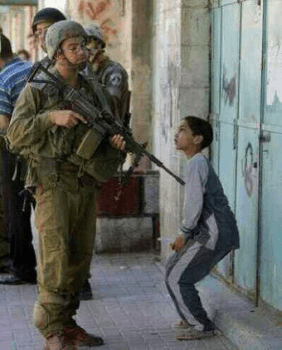 Israel’s “savage power” and its “savagery is not ending”, Iranian President Ebrahim Raisi told the UN General Assembly yesterday.
“The region has not seen an occupying savage power such as the Zionist regime in its midst in the past,” Raisi said.
He explained: “The killing of children and women are present in the dark report card of the Zionist regime. It has managed to form the biggest prison in the world in Gaza and the expansion of settlements and housing illegally on Palestinian territories.”
“The killing of Palestinian women and children shows everyone that seven decades of Israeli occupation and savagery is still with us and not ending.”
“The occupying Zionist power that has occupied Jerusalem and other lands in the region cannot be a partner for security and stability,” he continued.
To solve the Israeli-Palestinian conflict, Raisi proposed a vote by all Palestinians — “Muslims, Christians and Jews” — to establish a single state.
US ‘Trampled Upon’ Iran Nuclear Deal, Can’t Tolerate Independent States, Raisi Tells UNGA
Samizdat – 21.09.2022
The United States “trampled upon” the Iran nuclear deal, Iranian President Ebrahim Raisi said during his Wednesday address to the United Nations General Assembly. The Iranian president stressed that the Islamic Republic is not striving to obtain nuclear weapons.
“The American government [has] trampled upon the JCPOA [Joint Comprehensive Plan of Action a.k.a. Iran nuclear deal]. Some time ago, the former US president announced that Daesh was created by the US. To us, it makes no difference who created [it]. What matters is that a government outside this region decided to bring havoc to the region,” Raisi said.
He further condemned Washington’s meddling in the region’s affairs and refusal to take the interests of other countries into account. Raisi noted that the US can’t tolerate countries that act independently and puts its own priorities over those of other states.
Raisi also declared that the existing world order, where international organizations had become “instruments of repression” and economic sanctions are used as leverage to pressure other countries, no longer enjoys widespread support. He stated that a new world order is starting to take shape in its place and stressed the necessity to create a more “fair” world.
The Iranian president said that late IRGC General Qasem Soleimani, who was killed in the US strike in January 2020, “fought against oppression” of the current world order. Raisi condemned his killing by the US as a crime and said that Iran will insist on holding a fair trial for those responsible.
“The government on the other side of the planet decides to create chaos in our region through the bloodshed of women and children. But the Islamic Republic opposed this destructive dynamic, and Qassem Soleimani became the leader who opposed terrorism,” Raisi said.
Raisi’s speech to the UNGA came amid a pause in negotiations on reviving the 2015 Iran nuclear deal, which effectively collapsed following the unilateral US withdrawal from it in 2018. The sides have since exchanged a new draft agreements, but there has been no suggestion of an imminent signing. Western parties to the accord accused Iran, which demands guaranties the deal won’t collapse again, of unreasonable demands, while Tehran slammed the unconstructive approach of certain countries.
President Raeisi: West’s culture of domination hinders growth, progress across globe
Press TV – September 20, 2022
Iranian President Ebrahim Raeisi says Western powers have impeded the growth and progress of other countries through their culture of domination and by exploiting international entities to their own benefit.
President Raeisi made the remarks on Monday on the closing day of the three-day Transforming Education Summit at UN Headquarters in New York.
“Unfortunately, the culture of hegemony has defined [West’s] interests in holding back other countries,” he said. “They have impeded other countries’ growth and progress by creating an unfair world order, abusing international organizations, and drawing up schemes to impose their own cultural and intellectual views.”
“Cultural domination and confinement of knowledge are the worst kinds of oppression and injustice,” he added.
Raeisi also urged international entities to respect countries’ cultural and educational sovereignty, noting that it is impossible to transform the education system without taking into account values such as family, equality, and spirituality.
“International organizations are expected to respect countries’ educational and cultural sovereignty and protect them against cultural invasion,” he said.
“The history of Iran’s civilization began with science and knowledge; the Islamic culture elevated it and established its pillars on heavenly reflections,” he said.
Raeisi added that Islam invites humanity to acquire knowledge with the aim of achieving equality, spreading spirituality, and bringing prosperity and development.
“Making progress is a matter of significance for almost all countries, and while governments have implemented international recommendations in this regard, serious challenges have been imposed on national and indigenous cultures simultaneously,” he said.
A development that lacks spirituality and morality won’t last long and will result in societal collapse, the president argued.
Moral values such as respecting the family, protecting the environment, establishing equality, denouncing violence and extremism, promoting internet safety, and encouraging healthy online habits must be among the priorities for transforming education, he said.
The president also took a swipe at the United Nations’ 2030 Agenda for Sustainable Development, criticizing its approaches as “one-dimensional” and “secular,” and saying that the Islamic Republic has drawn up its own educational agenda based on Iranian-Islamic principles.
Iran’s newly set-up educational system is now shifting from rote learning to a system relying on research, creativity, skill-training, and commitments to cultural and religious values, he concluded.
Raeisi left Tehran for New York on Monday morning to take part in the UN General Assembly.
The Transforming Education Summit was convened in response to a global crisis in education. The crisis, which is often slow and unseen, is said to have a devastating impact on the future of children and youth worldwide.
Iran to buy, swap 15 mcm per day of Russia’s gas via Azerbaijan
Press TV – September 19, 2022
Iran will import Russian gas through pipelines from Azerbaijan under arrangements agreed in a major deal between Tehran and Moscow two months ago, according to a report published in the local media.
The semi-official Fars news agency said in a Monday report that Iran will buy some 9 million cubic meters (mcm) per day of gas from Russia and will take delivery of another 6 mcm per day under a swap deal for the purpose of delivery to Russian gas customers to the south of Iran.
The report cited data from an internal report of the Iranian Oil Ministry and said the purchase and swap arrangements are related to a $40 billion deal signed in July between Iran’s state oil company the NIOC and Russia’s Gazprom.
Earlier reports had indicated that Iran could take delivery of Russian gas from Turkmenistan for the purpose of swap delivery to Turkey and Iraq.
However, the new data suggest Iran will use the 15 mcm per day of gas supply from Russia to strengthen its domestic supply network in the densely populated regions in the northwest while being able to export increased amounts of natural gas to Turkey and Iraq through pipelines in the west of the country.
Iran is already in a gas swap arrangement with Turkmenistan and Azerbaijan under which it consumes gas received from Turkmenistan in its northeastern regions and delivers the same amount of gas to Azerbaijan.
The Fars report said Iran will deliver the equivalent of 6 mcm per day of gas to Russian customers in the south in the form of liquefied natural gas (LNG). It added that Gazprom will be a partner in the liquefaction process.
Iran Needs Lifting of Sanctions, Guarantees From US to Revive Nuclear Deal, Raisi Says
Samizdat – September 16, 2022
Tehran needs the removal of sanctions and guarantees from Washington to restore the nuclear deal, also known as the Joint Comprehensive Plan of Action (JCPOA), Iranian President Ebrahim Raisi said.
“Removal of sanctions should be accompanied with the resolution of safeguards. There are some political and baseless accusations against Islamic Republic of Iran when it comes to safeguard issues,” Raisi told the Al Jazeera broadcaster on the sidelines of the Shanghai Cooperation Organization (SCO) summit in the Uzbek city of Samarkand.
The president noted that it is necessary to finalize these safeguard issues but it is not yet time to have face-to-face talks with the United States as Washington’s sincerity is questionable, according to Al Jazeera.
“Regarding the guarantees, if we have the trustworthy guarantees, and we have the lasting removal of the sanctions, not temporary removal of sanctions, and if there is a lasting solution for the safeguard issues, for sure it is possible to reach agreement,” Raisi added.
The JCPOA deal was sealed in 2015 by China, France, Germany, Iran, Russia, the United Kingdom, and the United States, as well as the European Union. Former US President Donald Trump unilaterally withdrew from the deal in 2018 and reimposed sanctions on Tehran.
Talks between Iran and the global powers to revive the deal and end US sanctions on Iranian oil exports have gained momentum recently. On August 31, Borrell said that an agreement to revive the 2015 nuclear deal will hopefully be reached in the next few days.
On September 2, Iranian Foreign Ministry spokesman Nasser Kanaani said that Tehran sent a “constructive” response to Washington’s proposals on the revival of the JCPOA, while a State Department spokesperson said the US had received Tehran’s response but described it as “not constructive.”
Featured Video
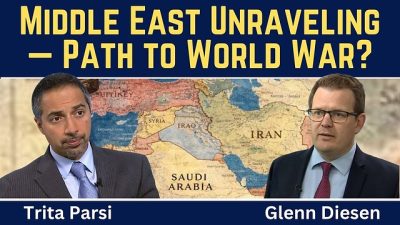
Trita Parsi: Middle East Unraveling — Are We on the Path to World War?
or go to
Aletho News Archives – Video-Images
New Book
Trans agenda is ‘normalization of sadism’ – US author

RT | September 23, 2026
The US Democratic Party has embraced a transgender agenda that amounts to “the normalization of sadism,” author A.J. Rice has said, warning that radical trans policies would return if the party is allowed to regain power.
Speaking to RT’s America First host Scotty Nell Hughes about his new book, ‘The Curse of the Bearded Lady: How the Trans Mafia Whacked American Sanity’, Rice argued that activists have gained significant influence in schools, medicine, and corporate America while people who questioned the agenda have faced pressure to stay silent.
The author described the “trans mafia” as the sprawling network of people and institutions that have helped the movement gain influence. He singled out parts of academia, wealthy backers, and corporations, and stated that providers of transition-related treatment also have a financial incentive to keep young people in their care indefinitely.
Rice argued that the consequences of these policies ultimately fall on children who are being drawn toward gender-affirming medical treatments and on girls who are expected to share locker rooms or compete in sports with biological males.
He noted that while voters rejected the Democrats’ approach to gender in 2024, the party, which has been “captured by madness,” has since only doubled down and is seeking what is effectively “the normalization of sadism.” … Full report
Blog Roll
 Aletho News
- Refaat Al-Areer Was The Canary In The Coal Mine In Israel’s War On The Truth
- Israeli election committee bars candidate from Knesset race over Gaza war opposition
- French-Lebanese man files war crimes complaint over Israeli attacks
- Mahan Air Flight Lands in China Despite US Threat against Iranian Airlines
- US eyes $10bn fund to rebuild war-battered Gulf infrastructure
- Trump meets Rodríguez near Maduro’s prison as Venezuela’s oil flows to US
- Trita Parsi: Middle East Unraveling — Are We on the Path to World War?
- Iran FM meets with US envoy on UN meeting’s sidelines at American side’s insistence: Report
- Qatar PM calls for Gulf security framework with Iran, says war must be ‘wake-up call’
- China condemns US extortion of Iranian airlines, rejects Washington’s ‘illegal’ sanctions threats
- If Americans Knew
- An error has occurred; the feed is probably down. Try again later.
- No Tricks Zone
- New Study: Earth And Venus Surface Warmth Largely Explained By Convection And Lapse Rate, Not CO2 Or Radiation
- 2025 Nature Paper Claiming Worsening Global Drought Gets RETRACTED …Heavily Flawed
- New Study: ‘Global Drought Shows No Detectable Recent Acceleration Under Climate Warming’
- Economic Masterminds: German Socialists Suggest Taxing Productivity Gains Stemming From Using AI
- The South China Sea Has Not Been Cooperating With The Climate Change Narrative
- Energy Crisis: Germany Enters Heating Season With Historically Low Gas Reserve Fill Levels
- New Study: The Antarctic Ice Sheet Gained Mass From 2020-2024 Due To Staggering Snow And Ice Accumulation
- Study: Ocean Heating Rates From Thousands Of Years Ago ‘Dwarf’ Modern Ocean Heating Rates
- Climate Extremists Target, Attack Large-Scale Power Grid Infrastructure In Germany!
- New Study: Antarctic Ice Melt Has Contributed Less Than 1 Centimeter To Sea Level Rise In The Last 30 Years

