Iran given roadmap for joining Russia and China in major bloc
Samizdat | September 15, 2022
Iran has signed a memorandum paving the way to transition from its current observer status to full membership of the Shanghai Cooperation Organization (SCO).
The Middle-Eastern nation, which the US has long sought to undermine with diplomatic isolation and economic sanctions, made a formal step on Thursday to become the ninth member of the organization. Among the SCO’s heavyweights are Russia and China, two major powers that are on Washington’s list of geopolitical opponents.
The SCO was created in 2001 as an intragovernmental forum aimed at fostering trust and developing economic and humanitarian ties in Asia.
It currently has eight permanent members: China, India, Kazakhstan, Kyrgyzstan, Russia, Pakistan, Tajikistan, and Uzbekistan. The last is currently hosting the annual summit of the leaders of the member states in the city of Samarkand.
Iran has been an SCO observer since 2005. Its delegation to the summit is headed by President Ebrahim Raisi, who met with senior Uzbek officials on Wednesday.
The memorandum, which spells the commitments that Tehran will undertake to become an SCO member, was signed by Iranian Foreign Minister Hossein Amir-Abdollahian and SCO Secretary-General Zhang Ming, the host country’s foreign ministry reported.
Yury Ushakov, a foreign affairs advisor to Russian President Vladimir Putin, said earlier this week that Iran could qualify for being upgraded to full membership before next year’s SCO summit in India.
Uzbek President Shavkat Mirziyoyev touted this year’s event as a turning point for the organization. He cited the rapidly growing interest of nations in closer involvement with the SCO and said that it served as an example of how a “deep crisis of trust at the global level” can be overcome by parties willing to do so. He also stressed the scale of the group, which accounts for roughly half of the world’s population and a quarter of global GDP.
Belarus, also an SCO observer, is set to start the formal process for full membership this year. Egypt and Qatar formally joined the organization as dialogue partners on Wednesday. Saudi Arabia is scheduled to do the same, while Bahrain, Kuwait, the UAE, Myanmar, and the Maldives are expected to begin their respective paths to receiving the same status.
US, E3 untrustworthy; Iran pursues an agreement to secure its interests: Marandi
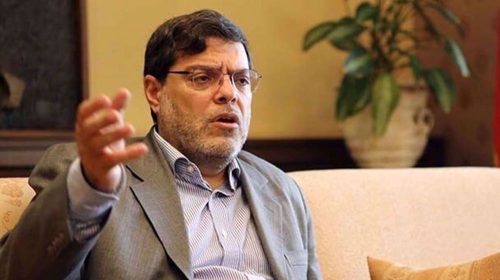
Press TV – September 11, 2022
An advisor to the Iranian negotiating team has described the US government and the three European signatories to the 2015 nuclear deal as “untrustworthy”, stating that Tehran pursues an agreement that best secures its national interests.
During an interview on Saturday night, Mohammad Marandi said Iran was not the party that withdrew from the 2015 deal, officially known as the Joint Comprehensive Plan of Action (JCPOA), emphasizing that the three European countries (France, Britain, and Germany) obediently follow the policies of whoever is in the White House.
He added that Iran knows that any possible accord will fail unless the Western countries put an end to their false accusations against Tehran.
Marandi noted that the European troika and Washington are aware of the peacefulness of the Iranian nuclear program, stressing that Iran wants to reach an agreement that would secure its rights.
During the interview with the Lebanese Arabic-language al-Mayadeen television news network, he continued, “We cannot trust the Americans and Europeans,” highlighting that “the three European countries are all allies of the United States. They are not neutral, and we should not be deceived by their propaganda.”
Marandi also took a swipe at Director General of the International Atomic Energy Agency (IAEA) Rafael Grossi, stating that he “stands with Europeans and Americans, and is submissive to them.”
The advisor to the Iranian negotiating team went on to say that a European official once confirmed during the course of JCPOA revival negotiations in the Austrian capital of Vienna that Iran’s demands are rightful, but “the Americans are the ones who are delaying and procrastinating” the talks.
Marandi stressed that Iran is “ready to sign the agreement,” noting that “the Europeans need the agreement more than Iran, because of their need for gas.”
On the issue of Iranian natural gas, he told al-Mayadeen that “Iran sells its gas and oil, and is able to obtain financial revenues,” adding that “the longer the agreement is delayed, the bigger the problem for Europe would be because it wants gas as the winter is approaching.”
The European energy crisis comes as tensions persist between Russia and the West over Moscow’s offensive in Ukraine. Natural gas prices have soared in Europe to all-time highs since the West began unleashing waves of sanctions against Moscow.
Ever since, Russia’s Gazprom has drastically reduced its gas deliveries to Europe, saying that the anti-Russia sanctions have blocked the delivery of a turbine needed to stream gas to Europe via pipeline.
‘A weak Biden’
As for the United States, Marandi said, “US President Joe Biden is weak, and suffers from internal and economic problems before the midterm elections.”
Marandi added that “the Europeans have no problem in reaching an agreement, but rather the problem lies with weak Biden [administration].”
On Saturday, Iran slammed the latest “unconstructive and ill-considered” statement issued by the three European signatories to the JCPOA, saying they must accept the consequences if it continues to follow Israel’s lead.
“It is regrettable that by [issuing] such an ill-considered statement, the three European countries have followed in the footsteps of the Zionist regime down a path that will lead to the failure of negotiations,” the Iranian Foreign Ministry Spokesman Nasser Kan’ani said.
‘US’s support for terrorists’
Marandi also condemned Washington over its support for the terrorist Mujahedin-e-Khalq Organization (MKO) that has been hosted by Albania since 2016, stating that its members have been carrying out attacks against Iran.
On Wednesday, Albania, which has for years hosted the anti-Iran MKO terrorists in collusion with the US, severed diplomatic ties with Tehran, accusing it of orchestrating a July “cyberattack” against Tirana.
Kan’ani identified the United States, the Israeli regime, and the MKO as the “third parties” that have propelled Tirana into taking the decision.
Russia’s Permanent Representative to the International Organizations in Vienna, Mikhail Ulyanov, described the latest statement issued by three major European powers about Iran as “very untimely”.
“Very untimely indeed. Right at a critical moment at the #ViennaTalks and on the eve of the session of the #IAEA Board of Governors,” Ulyanov, who also leads the Russian delegation at the Vienna talks on Iran nuclear deal, wrote in a tweet.
In a press release on Saturday, France, Britain, and Germany raised serious doubts as to Iran’s intentions and commitment to a successful outcome on the JCPOA, claiming that Tehran’s position contradicts its legally binding obligations and jeopardizes prospects of restoring the nuclear deal.
The European trio said they have “negotiated with Iran, in good faith, since April 2021, to restore and fully implement” the JCPOA, along with other participants to the deal and the United States.
The United States, under former president Donald Trump, abandoned the agreement in May 2018 and reinstated unilateral sanctions that the agreement had lifted.
The talks to salvage the agreement kicked off in the Austrian capital city of Vienna in April last year, months after Joe Biden succeeded Trump, with the intention of examining Washington’s seriousness in rejoining the deal and removing anti-Iran sanctions.
Despite notable progress, the US indecisiveness and procrastination caused multiple interruptions in the marathon talks.
Moratorium on nuclear tests must turn into legally binding obligation: Iran UN envoy

Iran’s Deputy Permanent Representative to the UN Zahra Ershadi
Press TV – September 8, 2022
An Iranian envoy to the United Nations says unilateral promises by countries about stopping nuclear tests cannot replace the nuclear disarmament, unless they turn into legally binding obligations.
Iran’s Deputy Permanent Representative to the UN Zahra Ershadi made the remarks on Wednesday while addressing a meeting of the UN General Assembly on the occasion of the International Day against Nuclear Tests.
“Pending the achievement of this goal [stopping nuclear tests], besides the implementation of these moratoriums by the NWSs (nuclear weapons states), consequently, should be replaced by a legally binding instrument to effectively prevent such tests,” she said.
She stressed the importance of the immediate implementation of Article VI of the Nuclear Non-Proliferation Treaty (NPT) as a “meaningful” step toward ridding the world from any threat of nuclear weapons, reaffirming it as the sole responsibility of the NWSs.
“The international community must hold the NWSs responsible and accountable by implementing this legal obligation and refrain from any activity inconsistent with that obligation,” she added.
The Iranian diplomat stressed the need to apply the approach to the Middle East “where the Israeli regime, as the sole possessor of all types of WMDs, poses the most serious threat to regional peace, security and stability.”
She criticized lack of implementation of the Comprehensive Nuclear-Test-Ban Treaty (CTBT) in the world 26 years after its signature.
Ershadi said the international community has been and continues to be adamant about ending nuclear tests, adding that achieving this noble goal relies on the political will of the nuclear weapon states.
She noted that Iran regrets the delay in halting nuclear tests and considers it a major reason for the failure of the 10th NPT review conference.
“Should these calls be effective, these ominous tests would not have been utilized for the production, proliferation and even use of nuclear weapons. After all, the world, including the NWSs, should have taken note of the devastating consequences of nuclear tests that are nearly identical to the actual use of nuclear weapons,” the Iranian envoy said.
She highlighted the importance and necessity of “putting an end to all nuclear tests for not only the sake of humanity and its future generations but also mother Earth.”
She said the Treaty on the Prohibition of Nuclear Weapons (TPNW) was a “right step in the right direction” and the only guarantee against the use or threat of use of nuclear weapons.
9 Russian planes in Iran to receive maintenance: Minister
Press TV – September 7, 2022
Iran’s transport minister Rostam Qassemi says Russia has commissioned Iranian aviation companies for maintenance tasks on its airplanes.
Qassemi said on Wednesday that nine Russian passenger planes were in Iran to receive maintenance as he touted the technology existing in the Iranian civil aviation sector to carry out overhaul and inspection works on various types of aircraft.
“We have been in a good position in recent months in terms of aircraft maintenance,” said the minister without elaborating on the types of the Russian planes under repair in Iran.
The announcement comes amid reports of close cooperation between Iran and Russia to minimize the impacts of foreign sanctions on their economies.
Russian authorities have declared on several occasions that Moscow has been using the experience of Iranian companies and government agencies in dealing with foreign sanctions.
Iran and Russia have signed major deals in recent months to boost their economic, trade and energy cooperation.
Iran came under an inclusive regime of American sanctions in 2018 after Washington unilaterally withdrew from an international deal on Iran’s nuclear program.
The United States and allies imposed a raft of similar and even tougher sanctions on Russia in February after Moscow launched a military operation in Ukraine.
Experts say US sanctions failed to reach their ultimate objective of forcing Iran into major political and military concessions. They insist the bans even created an opportunity for Iran to diversify its economy away from crude revenues and rely more on its domestic resources.
Russian President Vladimir Putin said on Wednesday during an economic forum in Vladivostok that Russia was gaining from Western sanctions, saying Moscow saw more opportunities in entering markets in the Middle East and Iran after the sanctions were imposed.
Macron Reportedly Asks Iran to Mediate in Ukraine War
Al-Manar | August 31, 2022
An Iranian news source on Wednesday reported that French President Emmanuel Macron wants Iran to mediate in Ukraine’s crisis.
Mohammad Jamshidi, the director of the Iranian president’s office for political affairs, early Wednesday in a tweet announced that one of the senior leaders of Western Europe had requested the Iranian President to help mediate the war in Europe.
After a series of consultations, a peace initiative was sent to Moscow along with an important message by the Iranian Foreign Minister Hussein Amir-Abdollahian, Jamshidi added.
After Jamshidi posted the tweet, ISNA News Agency reported that the senior European official who requested the mediation of the President of Iran is Emmanuel Macron, the President of France.
Amir-Abdollahian, who left for Moscow on Tuesday night to meet with Lavrov, held a meeting with the Russian Minister of Foreign Affairs on Wednesday.
Iranian Foreign Minister before his departure to Moscow said that trying to solve the crisis in Ukraine is the main purpose of his visit.
The main purpose of the trip to Moscow is to try to solve the crisis in Ukraine based on the request made from the Islamic Republic of Iran, he said, adding that some Western parties want Tehran to play an active role in this regard.
Washington doubles down on Iranian drone delivery claim
Samizdat – August 31, 2022
Iran has delivered two types of combat drones to Russia this month, the White House said on Tuesday. Moscow had previously dismissed such reports.
“What we’re assessing is that Russia has received both Mohajer-6 and Shahed-series UAVs from Iran over the course of several days in August,” White House spokeswoman Karine Jean-Pierre told reporters aboard Air Force One en route to Wilkes-Barre, Pennsylvania.
“Russian aircraft loaded the UAV equipment at an airfield in Iran and subsequently flew from Iran to Russia,” Jean-Pierre added.
The statement came after the Washington Post reported, citing unnamed US officials and intelligence, that the first drone shipment from Iran to Russia was carried out earlier this month. The Kremlin insisted that the report was false.
It was not the first time US officials warned that Moscow might receive battle UAVs from Tehran to boost its forces amid the military operation in Ukraine.
In July, US National Security Advisor Jake Sullivan claimed that Washington has evidence that Iran was preparing to deliver “several hundred” drones to Russia.
However, National Security Council spokesman John Kirby clarified later that month that the authorities had “seen no indications” of the delivery or purchase of Iranian UAVs by Russia.
The Iranian Foreign Ministry accused Sullivan of “distorting the truth.”
Both Mohajer-6 and Shahed drones can be used for surveillance and carrying out airstrikes.
Iran opens $1bn worth of projects in gas-rich Bushehr region
Press TV – August 29, 2022
Iran’s Oil Ministry has launched some $1 billion worth of development projects in the gas-rich region of Bushehr in the south of the country.
Oil Minister Javad Owji and his senior aides traveled to Bushehr’s port city of Asaluyeh on Monday to inaugurate several key projects that they said will boost Iran’s capacity to produce and process natural gas.
Asaluyeh, located on the western-most coast of the Persian Gulf, is home to some huge gas processing and petrochemical facilities that feed on the natural gas supplied from South Pars, the world’s largest gas field that is shared between Iran and Qatar.
The projects opened on Monday included several power plant units that will boost electricity supply to gas refineries as well as to Iran’s single natural gas liquefaction plant, known as Iran LNG.
The Oil Ministry’s news service Shana said the government had spent more than $450 million to bring on line a first unit of the Be’sat combined cycle power plant with a capacity of 160 megawatts (MW).
It said Iran’s Oil Pension Fund had invested some $360 million to finish three more units of a 1,130 MW power plant that supplies electricity to the Iran LNG project.
Other projects included a $12-million pipeline for transferring condensates from Asaluyah refineries to a storage facility in the region and a $74-million project for thiol treatment from condensates produced in several South Pars refineries.
Oil Minister Owji said the projects opened in Bushehr on Monday will create some 5,000 permanent jobs for the people of the region.
He said the government had already started works on some $2 billion worth of new development projects related to the South Pars gas field and its subsidiaries.
Natural gas pipelines reach Zabol in Iran’s far east
Press TV – August 28, 2022
Natural gas pipelines have reached Iran’s far eastern city of Zabol near the border with Afghanistan as Iran’s Oil Ministry pushes ahead with an ambitious plan to make natural gas available to almost the entire population in the country.
Oil Ministry authorities and local officials attended a ceremony in Zabol on Sunday to celebrate the city’s connection to the Lane 7 of Iran’s nationwide gas pipeline network.
Reports in the local media said that the government had spent 2.5 trillion rials ($85 million) to finish the 219-kilometer gas pipeline connecting the provincial capital of Zahedan to Zabol, a large population center located 20 kilometers from the Iran-Afghanistan border.
Authorities said the arrival of gas to Zabol will enable all villages and towns in the relatively impoverished region to access natural gas through pipelines.
The inauguration came as the Oil Ministry launched several major gas projects, including the connection to the gas pipelines of 16 towns, some 1,091 villages and 1,959 manufacturing units.
Oil Minister Javad Owji said the gas projects opened on Sunday had cost the government some 10 trillion rials ($335 million).
Iran has one of the largest natural gas supply networks in the world. Official figures show that natural gas is currently available to more than 87% of the population in the country through a pipeline network that is more than 37,000 kilometers in length.
The Iranian government has an ambitious plan to further expand the pipeline network to supply natural gas to almost the entire population, including all villages with more than 20 households.
Israel must ‘eliminate’ nuclear arsenal: Official
The Cradle | August 23, 2022
On 23 August, Iran’s top UN Envoy Majid Takht Ravanchi decried the lack of progress over efforts to denuclearize West Asia, and called on Israel – the region’s only nuclear armed state – to eliminate its stockpile of weapons.
Tehran’s ambassador made these remarks during the Tenth Review Conference of the Parties to the Treaty on the Non-Proliferation of Nuclear Weapons (NPT) held at the UN’s headquarters in New York.
Takht-Ravanchi charged the US with exercising double standards, and demanded that Israel’s accession to the NPT “without precondition and further delay” and the placement of all of its nuclear activities and facilities under the comprehensive International Atomic Energy Agency (IAEA) safeguards are essential in “realizing the goal the of establishing of a nuclear-weapon-free zone in the Middle East.”
The Iranian envoy said delays in 2012, 2013 and 2014 in convening the Conference – which is meant to advance the goal of eliminating weapons of mass destruction from the region – had caused serious setbacks for participating states.
“We are firmly convinced that the Conference was postponed indefinitely because of the US opposition, and this has been the persistent policy of the US to turn a blind eye to the nuclear arsenals of the Israeli regime while not supporting the convening of the Conference,” he declared.
Israel reportedly possesses 200 to 400 nuclear warheads, making it the sole possessor of non-conventional arms in West Asia, yet Tel Aviv as yet to sign the NPT and refuses to allow inspections of its nuclear facilities.
Signatories from 191 countries have signed the NPT, including the US, UK, France, China, and Russia, making it the most highly ratified armaments agreement in history.
Experts suggest that the US and EU support for Israel has emboldened the country to increase its nuclear activities, despite essential oversight by the IAEA.
Over the years, Israelis are believed to have assassinated at least seven Iranian nuclear scientists and conducted a series of sabotage operations against Iran’s IAEA-monitored nuclear facilities.
Last week, Israeli officials called on western nations to “walk away” from the negotiating table with Iran, fearful that the US is on the cusp of returning to the 2015 Joint Comprehensive Plan of Action (JCPOA) that would freeze Tehran’s enrichment program.
During a phone call with German Chancellor Olaf Scholz on 18 August, Israel’s interim Prime Minister Yair Lapid demanded that Europe send a “clear and unequivocal message that there will be no more concessions to Iran,” according to Israeli media.
Lapid also met with the US ambassador to Israel and the chairman of the US House Foreign Affairs Committee’s ‘Middle East’ Subcommittee, telling them: “In the current situation, the time has come to walk away from the table. Anything else sends a message of weakness to Iran.”
This comes after several Israeli assassination and sabotage operations inside Iran, in efforts to set back Iran’s advancements and scuttle JCPOA revival talks.
The Timing Behind the Atttack on Salman Rushdie
BY E. MICHAEL JONES • UNZ REVIEW • AUGUST 16, 2022
On Friday, August 12, a 24-year-old New Jersey resident by the name of Hadi Matar stormed the stage in western New York where the Anglo-Indian author Salman Rushdie was scheduled to speak and stabbed him 15 times before he was subdued by a security guard and members of the audience.[1] The assault was immediately labeled “an assault on freedom of thought and speech”[2] after Rushdie was praised as “an inspirational defender of persecuted writers and journalists across the world.”[3]
Missing from this and other news accounts was the role which Rushdie played as an agent provocateur in a campaign that was designed to provoke violent responses from the Islamic world, which would be then turned around to demonize them. No one would know who Salman Rushdie was if he hadn’t written The Satanic Verses as the inauguration of in an ongoing assault on Muslim culture which has continued to this day and has been revived by Matar’s assault for further weaponization.
The Satanic Verses paved the way for the Danish cartoon crisis which unfolded on September 30, 2005, after the Danish periodical Jyllands-Posten published 12 cartoons ridiculing the prophet Muhammad.[4] Then as now the assault on Islamic sensibilities was justified in the name of “freedom of thought and speech.” But in the light of subsequent events it became clear that the point of these intentionally reckless and provocative acts was the Islamic reaction, which included protests around the world, “including violence and riots in some Muslim countries.”[5]
In September 2012, the French magazine Charlie Hebdo, aping Jyllands-Posten, published a series of cartoons which were deliberately calculated to offend the sensibilities of Muslims, including a cartoon which “depicted Muhammad as a nude man on all fours with a star covering his anus.”[6] What followed was so predictable that one had to conclude that provoking violent reaction was part of the plan from the beginning. On January 7, 2015, two Muslim gunmen forced their way into the Paris headquarters of Charlie Hebdo and opened fire, killing twelve staff members and wounding 11. During the attack, the gunmen shouted Allahu Akbar and “The Prophet is avenged.” Eager to cash in on the unprecedented publicity the attack afforded them, the editorial staff of Charlie Hebdo upped the print run for the following week’s edition from 60,000 to one million, then to three million and then to five million copies.
Eventually, every European head of state showed up at a march sporting “Je suis Charlie” buttons celebrating what was a deliberate attempt to provoke violence for political ends. Since then, ridicule of Islamic culture has become institutionalized not only in journalistic outlets but on internet platforms like Twitter, whose seemingly innocent entry #hijab is actually a portal to hardcore pornography depicting women wearing the hijab but otherwise naked engaging in various forms of perverted sexual activity. Twitter also has an entry #Mitpachat, which is the name for the orthodox Jewish head covering for women that is equivalent to the hijab, but no porn is allowed on this site. As anyone who is familiar with the Israelis’ use of pornography against Palestinians in Ramallah in 2004 already knows, pornography is a weapon which, like blasphemous cartoons, is itself a form of violence and often creates violence.
Journalism played a crucial role in this psychological warfare campaign against Islam. Nothing epitomized the wretched state of journalism in the UK and the US better than the recent article by Stephen Pollard in the Telegraph condemning the stabbing of Salman Rushdie. “Stephen Pollard,” according to one observer, “is a rabid Zionist, an unprincipled propagandist and liar,” but nevertheless in good standing with the British media and Establishment, despite the many rulings against the Jewish Chronicle, which he edits. Pollard has written for all of Britain’s mainstream media outlets, including the Evening Standard, the Daily Express, The Times, the Daily Mail, The Independent and the Sunday Telegraph in spite of the risk of libel suits he poses for any newspaper which hires him as a writer.
In September 2010, the Spectator had to pay damages and costs to the organizers of the Islam Expo resulting from a defamation case involving a blog post written by Pollard and published in July 2008. During his tenure as editor of The Jewish Chronicle, the Press Complaints Commission handed down 14 rulings against the paper forcing it to pay damages for libel on several occasions throughout his tenure. The effect those damages had on the paper’s bottom line became apparent in April 2020 when the Jewish Chronicle announced that it was going into voluntary liquidation despite a planned merger with the Jewish News because of Pollard’s reckless disregard of the truth. In spite of this dismal journalistic track record, Pollard is still the go to guy when the mainstream media want opinions on topics vital to Jewish interests, which is how he sees the Rushdie affair.
Pollard claims that “Tehran never rescinded the fatwa against Sir Salman Rushdie” because “It’s incapable of change.”[7] Pollard ends his article by claiming that “the fatwa on Sir Salman Rushdie is not an aberration. It is how this monstrous criminal regime operates.”[8]
Secretary of State Anthony Blinken claimed that Iran had been inciting violence, ignoring the fact that the Iranian government denied any involvement with the man who attempted to kill Rushdie.[9] The same government spokesman who denied any involvement between Iran and Matar went on to add that “Freedom of speech does not justify Salman Rushdie’s insults on religion.” The fatwa has never formally been rescinded.
As someone who has earned his living by writing for over 40 years, I can sincerely say that no writer should be condemned to death in absentia for something that he has written. As a writer, I am against fatwas of this sort, but I mean all fatwas even if they do not go by that name. This includes Jewish fatwas of the sort issued by Jewish organizations like the Anti-Defamation League and the Southern Poverty Law Center, which have been given carte blanche to confer the equivalent of the death sentence on anyone by denouncing their enemies as Nazis and anti-Semites. This is precisely what happened to the Canadian trucker protest when Ya’ara Sachs, a member of the Canadian parliament, told the world that “Honk Honk” equals “Heil Hitler.” As soon as she stripped the truckers of their real identity, Finance Minister Christia Freeland was able to freeze their bank accounts in an act of violence that was more effective in silencing freedom of speech than anything that Hadi Matar did to Sir Salman.
In an incident that was eerily reminiscent of Matar’s attack on Rushdie, the SPLC, the other Jewish domestic terrorist organization, issued a fatwa on the Family Research Council in Washington by placing that organization on its “hate map” because of its opposition to gay rights. Inspired by the SPLC’s fatwa, Floyd Lee Corkins walked into the Family Research Council’s headquarters on August 15, 2012 and opened fire on the staff. Corkins eventually “pleaded guilty to three charges, including a charge of committing an act of terrorism” after telling the FBI that “he wanted to kill anti-gay targets and went to the [Southern Poverty] law center’s website for ideas.”[10] Faced with this evidence, FRC’s director Tony Perkins demanded that the SPLC “take responsibility for the shooting and take down their hate map.” Corkins, according to Perkins “had been given a license to perpetrate this act of violence by groups like the Southern Poverty Law Center which has systematically and recklessly labeled every organization with which they disagree as a ‘hate group.’” Perkins’ comments, however, had no impact on the SPLC or their “hate map,” which still exists and still refers to the FRC as a hate group.[11]
Five years later, James Hodgkinson opened fire on a group of Republican Congressmen who were practicing for a charity baseball game, wounding then U.S. House Majority Whip Steve Scalise, U.S. Capital police officer Crystal Griner, congressional aide Zack Barth, and lobbyist Matt Mika.[12] According to a report by the Washington Examiner, “The shooter blamed for Wednesday’s bloody attack on a Republican congressional baseball team shared a tie with the 2012 gunman who attacked the conservative Family Research Council in Washington. Both were fans of the Southern Poverty Law Center.”[13] When asked about how he got the idea of shooting Republican Congressmen, Hodgkinson told the FBI, “The Southern Poverty Law [Center] lists anti-gay groups,” After finding the SPLC’s hate map on line, Hodgkinson also “liked” the SPLC on his Facebook page.
So what constitutes a “monstrous criminal regime”? Is a regime monstrous because it issues fatwas? Or because it carries them out without announcing them? As I said, I am against fatwas, but on the other hand, I recognize that the fatwa is a warning in advance, which is more that General Qasem Suleimani got when the United States murdered him in a drone attack in Baghdad on January 3, 2020. If Donald Trump had issued a fatwa against General Suleimani, Suleimani might still be alive today. Instead, he was lured to Baghdad under the false pretense that he was taking part in a peace mission.
Similarly, Israel routinely murders Iranian nuclear scientists, but it never issues fatwas as a warning that they have been targeted. Between 2010 and 2012, Israel assassinated Masoud Alimohammadi, Majid Shahriari, Darioush Razaeinejad, and Mostafa Ahmadi Roshan, all of whom were Iranian nuclear scientists. On November 27, 2020, the Israeli government assassinated Mohsen Fakhrizadeh “in a road ambush using an innovative autonomous satellite-operated gun,” according to the BBC, which invariably focused on the James Bond-like technological gadgets the Israelis use to eliminate anyone they don’t like rather than the suffering and death of their victims.[14] Similarly, American politicians who were recipients of money from the Israel lobby, praised the killings. “Former speaker of House Newt Gingrich supported ‘taking out [Iranian] scientists,’ and presidential candidate Rick Santorum called the killings ‘a wonderful thing.’”[15]
The only difference between Israel and the “monstrous criminal regime” in Iran is that Iran warns you that you’ve been targeted. If the Israelis had issued a fatwa against Shireen Abu Akleh, the Palestinian American reporter for Al Jazeera who was covering a gun battle in Gaza, she might have stayed in her office that day. Instead, she was killed by an Israeli sniper, in what the Israelis claimed was an accident. The Palestinians, for their part, claim that Shireen was targeted deliberately as she tried to flee.
Pollard is a professional liar. Pollard’s article is full of lies, but even liars have a way of telling the truth in spite of themselves. Thanks to Pollard’s article we now know that the real point of the attack on Rushdie is the looming revival of the nuclear agreement with Iran. Pollard sets the stage for this revelation by creating a chronology of events:
On Monday, the EU put forward what it described as the “final” proposed text of a revived nuclear deal with Iran, a deal which has been under negotiation in Vienna since the arrival of Joe Biden in the Oval Office. On Friday morning, the Iranian state news agency reported that the EU’s proposed text “can be acceptable if it provides assurances” to Tehran over its key demands, quoting a senior Iranian diplomat.
Then he makes this remarkable statement:
The timing could hardly have been more instructive. Within hours of that report, Sir Salman Rushdie had been brutally attacked by a knife-wielding assailant.[16]
Pollard’s statement is capable of being interpreted in two ways: one obvious, the other absurd. If he is telling us that the Iranians deliberately sabotaged their own nuclear agreement, the idea is absurd. If he is telling us that he has insider knowledge of Israeli intelligence, that is completely plausible, which means it is also plausible to claim that the Israelis played a role in when the attack happened, as one more attempt at sabotaging peace with Iran. This is precisely what Mohammad Morandi, one of the Iranian officials negotiating the new version of the JCPOA claimed when he reacted to the news of the attack on Rushdie.[17] “I won’t be shedding tears for a writer who spouts endless hatred & contempt for Muslims & Islam. A pawn of empire who poses as a Postcolonial novelist,” Marandi tweeted. “But, isn’t it odd that as we near a potential nuclear deal, the US makes claims about a hit on Bolton… and then this happens?,” he added.[18] Timing played a crucial role in Fahkrizadeh’s assassination as well. According to Robert Malley, who served as an advisor to President Barack Obama on Iran, the assassination of Mohsen Fahkrizadeh “was deliberately timed in order to make Biden’s attempts to negotiate with Iran more difficult.”[19]
Matar is now in custody , and according to Nathaniel Barone, his public defender, is “very cooperative.”[20] If so, Mr. Barone should ask his client if anyone contacted him after he posted his pictures on Facebook and encouraged him. Then Mr. Barone should ask the FBI if they knew about Matar’s Facebook page. If they didn’t, then why are we paying them to spy on people they deem to be potential terrorists. If they did, how did they follow up on what they discovered? Did they contact Matar? The FBI has a well-earned reputation as the main promoter of domestic terrorism through its notorious entrapment schemes which place weapons in the hands of people who otherwise would have never gone beyond hot air and crazy talk. Their collaboration with Dana Nessel, Michigan’s Jewish lesbian attorney general, who claimed she exposed with FBI help a plot to kidnap Michigan governor Gretchen Whitmer, just blew up in their face. This failed plot is an indication that the first thing Mr. Barone should do after talking to his client is subpoena FBI records. Merrick Garland’s raid on President Trump’s home in Mar a Largo is only the latest instance of Jewish meddling in American politics. For decades now, Americans have allowed the Jews to drag them into one war after another, all of which were fought with Israel’s interests in mind. The Israelis and their Jewish supporters are eager to hold America’s coat while we beat up Israel’s enemies. Now, thanks to Stephen Pollard, we can see how the attack on Salman Rushdie fits into that pattern and act accordingly.
Notes
[1] https://apnews.com/article/salman-rushdie-on-ventilator-after-new-york-stabbing-5ea54212d71b95569ed85df7b0fb5fea
[2] https://apnews.com/article/salman-rushdie-attacked-9eae99aea82cb0d39628851ecd42227a
[3] https://apnews.com/article/salman-rushdie-attacked-9eae99aea82cb0d39628851ecd42227a
[4] https://en.wikipedia.org/wiki/Jyllands-Posten_Muhammad_cartoons_controversy
[5] https://en.wikipedia.org/wiki/Jyllands-Posten_Muhammad_cartoons_controversy
[6] https://en.wikipedia.org/wiki/Charlie_Hebdo#2012_cartoons_depicting_Muhammad
[7] https://www.telegraph.co.uk/news/2022/08/13/naive-westerners-still-refuse-accept-truth-irans-evil-regime/
[8] https://www.telegraph.co.uk/news/2022/08/13/naive-westerners-still-refuse-accept-truth-irans-evil-regime/
[9] https://mail.google.com/mail/u/0/?tab=rm&ogbl#inbox/FMfcgzGqPzDqZlHpGNWHtdPplVThjnGf?projector=1
[10] https://www.washingtonexaminer.com/southern-poverty-law-center-website-triggered-frc-shooting
[11] https://www.washingtonexaminer.com/southern-poverty-law-center-website-triggered-frc-shooting
[12] https://en.wikipedia.org/wiki/Congressional_baseball_shooting
[13] https://www.washingtonexaminer.com/support-for-southern-poverty-law-center-links-scalise-family-research-council-shooters
[14] https://www.bbc.com/news/world-middle-east-55128970
[15] https://www.bbc.com/news/world-middle-east-55128970
[16] https://www.telegraph.co.uk/news/2022/08/13/naive-westerners-still-refuse-accept-truth-irans-evil-regime/
[17] https://en.irna.ir/news/84851460/Marandi-Claims-on-Bolton-assassination-Rushdie-attack-before
[18] https://en.irna.ir/news/84851460/Marandi-Claims-on-Bolton-assassination-Rushdie-attack-before
[19] https://en.wikipedia.org/wiki/Mohsen_Fakhrizadeh
[20] https://www.cnn.com/2022/08/13/us/salman-rushdie-attacked-saturday/index.html

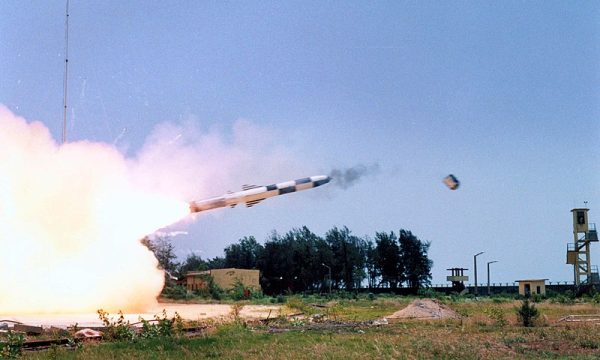
Russia Backs Comprehensive Military-Technical Cooperation Amid Formation of Multipolar World: Putin
Samizdat – 15.08.2022
Russia supports the development of “comprehensive” military-technical cooperation with other countries, including joint drills and the sales of weapons systems, and highly values its many allies and partners across the globe, Russian President Vladimir Putin has said.
“I want to emphasize that Russia stands for the widest possible development of military-technical cooperation. Today, in the conditions of a steadily emerging multipolar world, this is especially important,” Putin said Monday at ARMY-2022.
“We highly appreciate the fact that our country has many allies, partners and like-minded people on different continents. These are states which do not bend before the so-called ‘hegemon’, their leaders are showing strong character and do not bend,” he added.
The Russian president said Russia is ready to present its partners across Latin America, Asia and Africa with “the most modern weapons systems,” from small arms and armored vehicles to artillery, warplanes and drones. He recalled that Russian armaments have built up a reputation across the world for their reliability, quality and efficiency in real combat conditions.
Putin extended a formal invitation to Russia’s allies and partners to take part in joint command-staff exercises and other drills, and expressed confidence “that by developing broad military-technical cooperation, by pooling our efforts and potential, we will be able to ensure reliable security for our countries and the world as a whole.”
Putin also pointed to the “great prospects” Russia has in the training of foreign servicemen and improving their qualifications, saying that thousands of soldiers and officers from countries around the world are already proud to call Russian military academies and officer training schools their alma maters.
The president thanked Defense Ministry for organizing the forum, saying it would help strengthen international security and stability. He also expressed gratitude to Russia’s weapons makers for equipping Russia’s ground forces and Navy with modern weapons, including those being used in Moscow’s ongoing military operation in Ukraine.
ARMY-2022 kicked off on Monday across several venues in the Moscow region and will run until Sunday. The forum and expo is combined with the International Army Games – a friendly military competition in which 12 countries are taking part. The games will run until August 27.
US accuses Iran of plot to kill John Bolton
By Lucas Leiroz | August 12, 2022
New tensions are growing between Iran and the US. Recently, Washington said Tehran plotted to kill White House Advisor John Bolton. The plan would be a retaliation for Trump Administration’s terrorist-like assassination of Iranian Top General Qasem Soleimani, in 2020. The Iranian government denied any involvement in such a plan, considering the accusation absolutely baseless. Indeed, the Americans have not presented any convincing evidence so far, but, being the narrative accurate or not, frictions are likely to escalate.
On August 10, US government’s spokespersons commented on an alleged Iranian plot to assassinate John Bolton, which would have been organized last year and would involve Iranian agents and a US citizen. The case became the topic of an official note from the US Department of Justice, where the alleged plot is narrated. The narrative is built on the testimony of an American who would have been possibly hired by an Iranian to commit the crime. The reward would be a sum of 300,000 dollars, to be paid by an Iranian named Mehdi Rezayi.
The American citizen allegedly involved in the case claims to have been advised to create a cryptocurrency account in order to receive the money safely. Then he would have received assistance from Iranian intelligence on where to find Bolton. The Iranians reportedly told him to photograph the Advisor before murdering him and evading him – possibly as a way of “proving” that the operation was successful. The contact between the American and the Iranians would have taken place for a few months between October 2021 and April 2022. The conversations were carried out through encrypted messages in a safe platform.
US officials also mentioned the detail that the plot would be a retaliatory measure by Tehran against the US operation to kill Qasem Soleimani. Supposedly, the Iranian authorities would have been “pressured” by people to respond to the American terrorist actions against Soleimani – and Bolton would have been the chosen target for this response.
However, now, the situation is partially reversing: with the alleged plot coming to light, it is the US authorities who are mobilizing to “respond” to Iran and punish those involved. Assistant Director in Charge Steven M. D’Antuono of the FBI Washington Field Office commented on the topic: “An attempted assassination of a former U.S. Government official on U.S. soil is completely unacceptable and will not be tolerated (…) The FBI will continue to identify and disrupt any efforts by Iran or any hostile government seeking to bring harm or death to U.S. persons at home or abroad. This should serve as a warning to any others attempting to do the same – the FBI will be relentless in our efforts to identify, stop, and bring to justice those who would threaten our people and violate our laws”.
Tehran for its part denies absolutely any involvement in this type of plot. Iran’s Foreign Ministry Nasser Kanaani comments that “the spinning of these threadbare and baseless myths is becoming a recurring custom in the American judicial and propaganda system”. Washington’s objective with such lies, according to him, would be to legitimize anti-Iranian policies and divert attention from crimes committed by the US government itself, such as the murder of Iranian officials and support for terrorist groups in the Middle East.
“Continuing their endless accusations, their failed Iranophobic policy, the American judicial authorities, in a new yarn spinning, have raised accusations without providing valid evidence and necessary documentation (…) Such baseless claims are made with political motives and aims and in fact amount to […] escaping the responsibility of responding to numerous terrorist crimes that the American government has either directly participated in, such as the cowardly assassination of General Martyr Soleimani, or like the terrorist crimes committed by the Zionist regime and terrorist groups like Daesh with the support of America”, Kanaani said.
This scenario significantly worsens tensions. Recently the US and Iran have intensified their diplomatic frictions. Amid the current global security crisis, the attempt at a new nuclear deal has failed and the US has provided Israel with broad support with military exercises to intimidate Tehran. So, it is likely that in fact the plot narrative was invented with the aim of serving as a “carte blanche” for coming measures against Iran.
In addition, it is notorious how the narrative seems weak and unconvincing. The US Department of Justice reports the alleged result of “investigations” but does not provide any evidence for its claims. And there are still inconsistent data in the description of the plot, such as the fact that it was planned more than a year after Soleimani’s death. It is also unclear why Bolton was chosen as a target, considering that there is a strong presence of American officials in the Middle East, both military and diplomats, who would certainly be “easier” targets to be hit than high-ranking state officials within the American territory.
In fact, the main problem is that, whether true or not, the narrative has served its purpose: it has boosted hostility between the US and Iran, worsening relations between them. Expectations for the near future are of escalating tensions.
Lucas Leiroz is a researcher in Social Sciences at the Rural Federal University of Rio de Janeiro; geopolitical consultant.
Featured Video
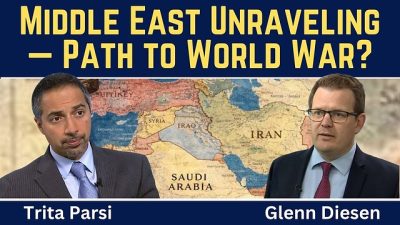
Trita Parsi: Middle East Unraveling — Are We on the Path to World War?
or go to
Aletho News Archives – Video-Images
New Book
Trans agenda is ‘normalization of sadism’ – US author

RT | September 23, 2026
The US Democratic Party has embraced a transgender agenda that amounts to “the normalization of sadism,” author A.J. Rice has said, warning that radical trans policies would return if the party is allowed to regain power.
Speaking to RT’s America First host Scotty Nell Hughes about his new book, ‘The Curse of the Bearded Lady: How the Trans Mafia Whacked American Sanity’, Rice argued that activists have gained significant influence in schools, medicine, and corporate America while people who questioned the agenda have faced pressure to stay silent.
The author described the “trans mafia” as the sprawling network of people and institutions that have helped the movement gain influence. He singled out parts of academia, wealthy backers, and corporations, and stated that providers of transition-related treatment also have a financial incentive to keep young people in their care indefinitely.
Rice argued that the consequences of these policies ultimately fall on children who are being drawn toward gender-affirming medical treatments and on girls who are expected to share locker rooms or compete in sports with biological males.
He noted that while voters rejected the Democrats’ approach to gender in 2024, the party, which has been “captured by madness,” has since only doubled down and is seeking what is effectively “the normalization of sadism.” … Full report
Blog Roll
 Aletho News
- Refaat Al-Areer Was The Canary In The Coal Mine In Israel’s War On The Truth
- Israeli election committee bars candidate from Knesset race over Gaza war opposition
- French-Lebanese man files war crimes complaint over Israeli attacks
- Mahan Air Flight Lands in China Despite US Threat against Iranian Airlines
- US eyes $10bn fund to rebuild war-battered Gulf infrastructure
- Trump meets Rodríguez near Maduro’s prison as Venezuela’s oil flows to US
- Trita Parsi: Middle East Unraveling — Are We on the Path to World War?
- Iran FM meets with US envoy on UN meeting’s sidelines at American side’s insistence: Report
- Qatar PM calls for Gulf security framework with Iran, says war must be ‘wake-up call’
- China condemns US extortion of Iranian airlines, rejects Washington’s ‘illegal’ sanctions threats
- If Americans Knew
- An error has occurred; the feed is probably down. Try again later.
- No Tricks Zone
- New Study: Earth And Venus Surface Warmth Largely Explained By Convection And Lapse Rate, Not CO2 Or Radiation
- 2025 Nature Paper Claiming Worsening Global Drought Gets RETRACTED …Heavily Flawed
- New Study: ‘Global Drought Shows No Detectable Recent Acceleration Under Climate Warming’
- Economic Masterminds: German Socialists Suggest Taxing Productivity Gains Stemming From Using AI
- The South China Sea Has Not Been Cooperating With The Climate Change Narrative
- Energy Crisis: Germany Enters Heating Season With Historically Low Gas Reserve Fill Levels
- New Study: The Antarctic Ice Sheet Gained Mass From 2020-2024 Due To Staggering Snow And Ice Accumulation
- Study: Ocean Heating Rates From Thousands Of Years Ago ‘Dwarf’ Modern Ocean Heating Rates
- Climate Extremists Target, Attack Large-Scale Power Grid Infrastructure In Germany!
- New Study: Antarctic Ice Melt Has Contributed Less Than 1 Centimeter To Sea Level Rise In The Last 30 Years

