Foreign Ministry: Any adventurism will be met with Iran’s immediate, powerful response
Press TV – August 2, 2021
The spokesman for Iran’s Foreign Ministry has warned against any possible act of adventurism against the country’s interests, pledging “immediate, powerful, and serious” response to any such move.
“The Islamic Republic of Iran will not hesitate, even for a moment, to defend its security and national interests, and will answer any possible adventurism with immediate, powerful and serious action,” Saeed Khatibzadeh told reporters on Monday.
The Iranian ministry’s spokesman was reacting to recent statements by US and British top diplomats about Iran’s role in the Thursday attack on an Israeli tanker off the coast of Oman.
Without providing any proof, foreign ministers of both the United States and the UK accused Iran of having a direct role in the attack, with US Secretary of State Antony Blinken alleging “we are confident that Iran conducted this attack, which killed two innocent people, using one-way explosive UAVs.”
His British counterpart, Dominic Raab, also reflected on the matter, saying that the “unlawful and callous” attack had highly likely been carried out by Iran using one or more drones.
“Their coordinated statements contain contradictory phrases. They first accuse the Islamic Republic without providing any evidence and then speak of the ‘possibility’ [of Iran’s role in the attack],” Khatibzadeh said in reference to Raab saying, “UK assessments have concluded that it is highly likely that Iran attacked the MV Mercer Street in international waters off Oman on 29 July using one or more unmanned aerial vehicles (UAVs).”
The foreign ministry spokesman stressed that Iran is a country that supports safe and secure marine traffic in the Persian Gulf and international waters, which enjoys the longest water border in the strategic region.
Noting that Iran is always ready to work with regional countries to provide maritime security, the Foreign Ministry spokesman said, “Tehran considers the presence and interventions by transregional forces in the Persian Gulf waters and its littoral countries as detrimental to regional stability and security.”
“It is regrettable that these [Western] countries, which have been supportively silent in the face of terrorist sabotages and attacks on Iran’s commercial ships in the Red Sea and international waters, are now leveling politically-motivated baseless accusations against the Islamic Republic of Iran. However, if they have any proof to back their baseless claims they must offer them,” the Iranian spokesman said.
Khatibzadeh’s remarks came after earlier on Monday, an informed Iranian source said that Iran will give a strong and crushing response to any measure taken against its national interests and security, blaming Britain and the US for the consequences of such moves against Tehran.
The Iranian Foreign Ministry spokesman also talked to media on Sunday, saying that recent accusations leveled against Tehran by Israel and the United States about attacking an Israeli-owned merchant ship in the Sea of Oman are “childish” and influenced by the Zionist lobby in the United States.
“The illegitimate Zionist entity must stop leveling baseless charges against Iran. This is not the first time that this regime brings up such accusations [against Tehran],” he added.
Khatibzadeh noted that such accusations are leveled by the well-known lobby of the Zionist regime in the United States, adding, “The Zionist regime’s officials must know that such projectionist moves will not help them in any way.”
In recent months, several other Israeli-managed ships have come under attack on various maritime routes across the world.
The attacks come against the backdrop of the Israeli regime’s unrelenting assaults on cargo ships across the Persian Gulf region and elsewhere.
US Used Military Bases in Afghanistan to Keep Watch on Entire Region, Russian Diplomat Says
Sputnik – 22.07.2021
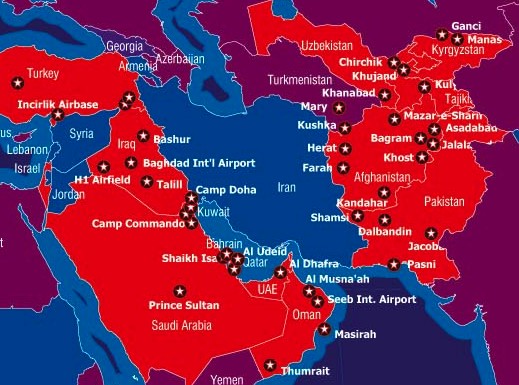
MOSCOW – Russia’s special presidential envoy for Afghanistan, Zamir Kabulov, said on Thursday that nearly half of the US military bases in Afghanistan were used to keep strategic tabs on the wider region.
“Of the 19 [US bases] that we know of, somewhat about seven or eight had nothing to do with Afghanistan and had nothing to do with the situation there”, Kabulov told the Echo of Moscow radio station.
The diplomat emphasised that the American contingents were conveniently placed in Afghanistan to be closer to the Middle East, Russia, Central Asia and China.
“[The US military] kept an eye on the Pakistani and Indian nuclear arsenal”, Kabulov added.
The United States and NATO began pulling their ground forces out of Afghanistan on 1 May. The withdrawal resulted in a flare-up of tensions between the government forces and the Taliban. The radical movement stepped up the territorial advances and is believed to have captured large rural areas in the country’s north.
It’s Time to Say ‘No’ to US Blockade on Lebanon
By Marwa Haidar | Al-Manar | July 8, 2021
US officials have repeatedly made it clear that it will prevent Lebanon from receiving crude oil from Iran, tightening the noose on the Middle Eastern country which has been facing the harshest economic crisis in decades.
A year ago, in July 2020, former US Secretary of State Mile Pompeo said taking oil from Iran would be “unacceptable.”
“It would be sanctioned product for sure, and we’ll do everything we can to make sure that Iran cannot continue to sell crude oil anywhere, including to Hezbollah in the region…,” the ex-diplomat said in remarks on July 8, 2020.
Pompeo’s remarks were in response to Hezbollah Secretary General Sayyed Hasan Nasrallah who said at time that the Lebanese Resistance group was in discussion with the government about Iran supplying refined oil products to Lebanon in exchange for Lebanese pounds to ease pressure on the plummeting currency.
This year, and amid the increasingly severe fuel shortages that brought long queues at service stations in recent months, Sayyed Nasrallah renewed the Iranian offer to sell Lebanon oil in exchange for Lebanon pound.
Responding to Sayyed Nasrallah, US Ambassador to Lebanon Dorothy Shea said that importing fuel oil from Iran “is not a practical solution.”
“What Iran is looking for is a sort of dependent state that it can use to carry out its agenda. There are much better solutions than turning to Iran,” the US envoy said in remarks earlier last month.
Nearly a month after renewing the Iranian offer, it seems that no Lebanese official “has the courage” to press for importing fuel supplies from the Islamic Republic, with many parties and figures fearing Washington’s sanctions.
In his latest speech last week, Sayyed Nasrallah Lashed out at the US over tightening the blockade on Lebanon by preventing Lebanon from approving deals with any Eastern country, including China and Iran.
His eminence said that the US ambassador “sheds crocodile tears and deceives the Lebanese by providing some masks,” stressing that Washington has been the main supporter of the corrupts and money embezzlers in Lebanon.
Turning to Lebanese statesmen, Sayyed Nasrallah made it clear: that they have to make some sacrifices for their country and override the fear of the US sanctions.
The Hezbollah S.G. said that saving the country from the socioeconomic crisis deserves courageous decisions by several Lebanese figures and parties, hinting out that now it’s time to say ‘no’ to Washington.
Iran: Israel legally, politically responsible for fate of diplomats kidnapped in Lebanon

Press TV – July 4, 2021
Iran’s Foreign Ministry says Israel and its supporters are politically and legally responsible for the fate of four Iranian diplomats kidnapped in Lebanon in 1982.
“Since the Zionist regime occupied Lebanon in 1982, it bears political and legal responsibility for the abduction of [Iranian] diplomats and the Zionist regime and its terrorism-sponsoring supporters are liable for this measure. Unfortunately, the Zionist regime has not been accountable in this case, and this is why the process of revealing facts and various aspects of this incident has been so slow,” Iran’s Foreign Ministry said in a statement on Sunday, which marked the 39th anniversary of the abduction of the four diplomats.
On July 4, 1982, the year Israel invaded Lebanon, Ahmad Motevasselian, Seyyed Mohsen Mousavi, Taqi Rastegar Moqaddam and Kazem Akhavan were kidnapped by a group of gunmen backed by Israel at an inspection post in northern Lebanon.
“The Islamic Republic of Iran has repeatedly announced that there is evidence to prove that the [kidnapped] diplomats were handed over to Israeli forces after the abduction and were subsequently transferred to the Zionist regime’s prisons,” the statement read.
Iran, it added, has gone to great lengths since the abduction, given the humanitarian, legal and political dimensions of the criminal incident, and has put on its agenda the pursuit of the issue through regional and international avenues.
The ministry once again called on the United Nations secretary general as well as international and human rights organizations, including the International Committee of the Red Cross (ICRC), to pay more serious attention to the abduction of its diplomats by Israel.
In a letter to Secretary General Antonio Guterres in July 2020, Iran’s Ambassador to the UN Majid Takht-Ravanchi said Tehran believes the diplomats were handed over to Israeli forces immediately after the abduction in a region controlled by Israel at the time.
“Evidence shows they have been held in Israeli prisons, and are still alive,” the Iranian envoy said.
Iran Unjustifiably Blamed for Another False Flag Attack?
By Stephen Lendman | July 4, 2021
Unlike repeated US-dominated NATO and Israeli rule of law breaches, Iran fully complies with its international obligations.
Yet time and again it’s falsely accused of things it had nothing to do with, including attacks on Israeli vessels — despite no evidence of its involvement.
In stark contrast, international outlaw Israel attacked Iranian cargo ships numerous times.
In March, the WSJ reported that Israel targeted at least 12 Iranian cargo ships in international waters.
It cyber-attacked its nuclear facilities, accountability for its criminal actions never forthcoming.
On July 3, Lebanese al-Mayadeen television reported the following:
Citing unnamed “reliable sources,” its report said “a fire erupted in an Israeli cargo ship in the northern Indian Ocean,” adding:
“(T)he…merchant ship was hit by an unknown weapon.”
It “was anchored in the port of Jeddah before moving towards the Emirati coast.”
“(N)o one has claimed responsibility for this targeting so far.”
“(T)he incident c(ame) a day after news of an Israeli drone attack west of Tehran.”
On June 23, Iranian media reported a drone attack on a city of Karaj building.
Since its 1979 liberating revolution from US/UK-installed fascist tyranny, US, Western and Israeli regimes have waged forever war on Iran by other means — wanting its government toppled, the nation weakened, partitioned and transformed into a pro-Western vassal state.
Was Saturday’s incident involving a formerly Israeli-owned vessel staged by the Bennett regime as part of its aim to kill the JCPOA nuclear deal — by once again falsely blaming Iran for what no evidence points to its involvement?
Was the incident a joint US/Israeli false flag to blame Iran like many times before unjustifiably?
Israeli political and military dark forces have been pressuring their Biden regime counterparts not to rejoin the landmark agreement as affirmed by Security Council Res. 2231, making it binding international law.
Ideally, they want the deal killed altogether. At minimum, they want it revised to include unacceptable provisions no responsible government would accept.
Saturday’s incident targeted the Liberian-flagged CSAV Tyndall cargo ship.
Haaretz said the vessel was “previously under Israeli ownership,” the attack “causing only mild damage and no casualties.”
Like time and again unjustifiably, Bennett regime officials blamed Iran for what happened, despite no evidence suggesting it.
No Israeli nationals were on board.
Formally owned by London-based Zodiac Maritime Ltd, a company source said the vessel was sold several months earlier.
No one claimed responsibility for the incident. The Jerusalem Post reported the following:
“On Friday, IDF chief of staff Gen. Aviv Kohavi hinted at an Israeli covert operation against Iran at the graduation of the IDF officers course at the Bahad 1 base,” quoting him, saying:
“Anyone who tries to harm the state of Israel (sic) knows that any offensive enemy activity (sic), near or far, will be answered with a significant, overt or covert response.”
The hostile-to-Iran NYT implied its responsibility for the Saturday incident.
Citing no evidence because there is none, it dubiously suggested what happened was “latest tit-for-tat (sic) in a shadowy regional conflict between Israel and Iran,” adding:
The vessel “was believed to have come under assault by an Iranian drone or naval commandos (sic),” citing an unnamed Israeli source with no credibility.
The Times falsely accused Iran of earlier attacks on Israeli-owned ships despite no evidence suggesting it.
On June 1, US intelligence dubiously warned of a possible Iranian attack.
Was it issued ahead of a planned US and/or Israeli false flag on Saturday to once again blame Iran for what it had nothing to do with?
Contact Stephen Lendman at lendmanstephen@sbcglobal.net.
Envoy Rejects US Accusations against Iran as Baseless
Al-Manar | July 3, 2021
A top Iranian diplomat penned a letter to the UNSC, strongly rejecting allegations of the United States against Tehran over a recent attack near the Iraq-Syria border.
Ambassador and Permanent Representative of the Islamic Republic of Iran to the United Nations Majid Takht Ravanchi wrote a letter to the president of the UN Security Council, to react to anti-Iranian accusations of Washington.
The Islamic Republic of Iran has repeatedly announced that it has not had any direct or indirect role in attacks against US facilities or personnel in Iraq, reads the letter. Therefore, the letter continues, any attempt to attribute such allegations to Iran, either explicitly or implicitly, is false and baseless and lacks the most basic credible information. Tehran strongly rejects such claims and considers them legally invalid, added the envoy.
Iran vehemently rejects the arbitrary interpretation of the US of Article 51 of the UN Charter to justify its illegal June 27 attack on Syria and Iraq, said the envoy, adding that Tehran strongly condemns the aggression as violation of sovereignty of the two countries.
The US argument that such attacks were carried out to “deter” the Islamic Republic of Iran and so-called “Iranian-backed militias” from further attacks on US personnel or facilities in Iraq has no real or legal basis as it is based solely on an arbitrary interpretation of Article 51 of the UN Charter, added the diplomat.
Recent US attempts to accuse others to cover up its irresponsible and destabilizing activities and adventurous military actions in the region are doomed to failure, noted Takht-Ravanchi.
Earlier, the US representative to the UN had sent a letter to the UNSC, making accusations against Iran and claiming that the decision for attack was taken after it was proved that non-military measures were not enough.
Iran’s Ahmadinejad Reveals Why Iran Doesn’t Need Nukes, Says World Should Know Truth About 9/11
By Ilya Tsukanov – Sputnik – 24.06.2021
The veteran politician, who served as Iran’s president between 2005 and 2013, and as Tehran mayor and Ardabil province governor before that, attempted to take part in both the 2017 and 2021 presidential elections, but was barred from doing so by Iran’s powerful Guardian Council.
The world needs to know the truth about the 9/11 terror attacks, and Iran doesn’t need to pursue nuclear weapons because they cannot protect even superpowers from collapse, former President of Iran Mahmoud Ahmadinejad has said.
“Deciphering the events of 11 September, 2001 will be the key to an understanding of all political events and processes in the sphere of global security over the past 70 years, and this will pave the way for us all to a better world,” Ahmadinejad said, speaking to Russian media in a broad ranging interview published on Thursday.
“When the terrorist attack took place, I announced to the United Nations the need to create a consolidated investigative group to establish all the circumstances of the incident and to find the culprit, and said that the Americans themselves were investigating this incident, holding court themselves, deciding everything themselves and fighting wars in other countries on this basis, not allowing anyone to comment on what is happening,” the former president recalled.
“I remember at this time the United States was very angry with me. But all I said was that there was a need for an international investigation, so that the whole world could know who carried out these attacks, and what connections [the attackers] could have to US intelligence and the American security apparatus to be able to break through all defensive barriers and destroy two towers in the very heart of the American nation,” Ahmadinejad added.
According to the politician, the US invasions of Afghanistan and Iraq, mounted in the aftermath of 9/11, were an attempt to change the situation in the world and the Middle East in Washington’s favour, and to hide “deep economic and social problems” plaguing the United States. Time has shown that neither war was a success, Ahmadinejad said, with both wars continuing to claim lives and forcing people to flee as their countries, while the states’ infrastructure collapses and their future remains uncertain.
No Need for Nukes
Commenting on Iran’s commitment not to pursue nuclear weapons, and recent attempts by the Biden administration to return to the 2015 Joint Comprehensive Plan of Action agreement, Ahmadinejad said the Democratic president has failed to make any substantive changes to his predecessor’s policies, but that this was because US foreign policy is not controlled by presidents – who are only a small part of the decision-making process.
As for nuclear weapons, Ahmadinejad suggested that “today, nuclear weapons have no practical application, so all the costs of their creation are superfluous. I in principle consider the production and accumulation of weapons an inhuman act and am categorically opposed to it. If world powers reject hegemony and are not looking for disagreements and wars, why start an arms race? Why should the wealth of nations be spent on the production of weapons intended only for murder and not for prosperity?”
“In my first meeting with Mr. Putin at the UN in 2005, I asked him if nuclear weapons could have prevented the collapse of the Soviet Union. These weapons were highly developed, yes, but they did not stop the collapse of the USSR. Because weapons, in principle cannot improve human relations. Today, the capitalist world order led by America is in decline. Can American atomic bombs stop the collapse of US global hegemony? I don’t think there is a single wise person in the world who would say yes,” the Iranian politician added.
World Needs Fundamental Changes
Ahmadinejad expressed certainty that the current world order is unsustainable and is in need of “fundamental changes.”
“Over the past 100 years, it has spawned hundreds of wars, assassinations, arms races, broad class divisions, poverty and social constraints for nations. I believe that we must all join hands and build a new world – a world in which all people will be free and respected –and where justice is central. And I believe that the noble people of Russia can play a very important role in this process,” he stressed.
Candidacy Rejected
Ahmadinejad was barred from running in Iran’s presidential elections twice in a row, first in 2017 and then in the June 2021 vote, which was handily won by Chief Justice Ebrahim Raisi, a conservative with close ties to the clergy and Supreme Leader Ayatollah Ali Khamenei. Ahmadinejad did not contest the decision to bar him, made by the Guardian Council – Iran’s powerful constitutional watchdog of six high-ranking Shiite clerics appointed by Khamenei and six lawyers chosen by parliament from nominations by the judiciary.
In the West, Ahmadinejad is best remembered for his war of words with the Bush administration over the invasions of Iraq and Afghanistan, as well as his 2006 statement that Israel [sic] (the “Zionist regime” ) must “vanish from the page of history,” often misquoted as “wiped off the map,” which sparked outrage in Tel Aviv and conservatives in Washington. Also in 2006, CNN famously misquoted his statement that Iran has a “right to nuclear energy” as Iran’s “right to nuclear weapons,” with that scandal prompting Iran to boot the US cable news network’s journalists out of the country.
In 2007, Ahmadinejad stirred up anger among liberals during a trip to New York when he told students at Columbia University that gays and lesbians “don’t exist” in Iran.
Since completing his term as president in 2013, Ahmadinejad has occasionally popped up in the news cycle, especially while quoting the lyrics of well-known American rap artists, who he apparently vibes to, to make a political point. Last year, the politician’s use of the late Tupac Shakur’s “Pull the trigger kill a N**** he’s a hero” to refer to the death of Minnesota black man George Floyd got him in trouble online.
In his home country, Ahmadinejad is better known for his ascetic lifestyle, populist economic policies, campaigns against corruption, and programmes to improve Iran’s self-sufficiency in a range of areas, including defence. During his time in office, he advocated for a compromise between Western-style capitalism and socialism. Under him, Tehran was also able to form a strategic alliance with Venezuela – with that partnership remaining strong to this day.
The only Turkish boots on the ground in Palestine are on Israeli soldiers’ feet
By Omar Ahmed | MEMO | June 14, 2021
When last month’s ceasefire was agreed between Israel and Palestinian resistance factions in Gaza, the head of the Hamas political bureau, Ismail Haniyeh, thanked Iran for its support. “The Islamic Republic of Iran did not hold back with money, weapons, and technical support,” he said. Haniyeh also thanked Qatar for its pledge to rebuild Gaza after the latest devastating military offensive by Israel, which lasted eleven days and nights last month.
Similar sentiments were conveyed by the leader of Hamas in Gaza, Yahya Sinwar. “All our thanks go to the Islamic Republic of Iran for its consistent support over the years to Hamas and other resistance factions,” he explained. He also briefly recognised support from Qatar, Turkey, and Kuwait.
Apart from Sinwar’s passing reference to Turkey, expressions of gratitude to Ankara were noticeable by their absence. This was despite the frequent pro-Palestinian rhetoric and denunciations of Israel by President Recep Tayyip Erdogan. The last time that Haniyeh thanked Turkey publically was back in 2016 over its aid efforts in Gaza.
It was clear that, after the latest onslaught on the Palestinian people, the resistance chose to recognise Iran’s help where it matters most, in the field with the armed resistance and, to a lesser extent, Qatar’s assistance for the reconstruction of Gaza.
Why has Turkey been left out, despite being a friend of Palestine? It could be something to do with the uncomfortable truth that despite Ankara’s stance towards Palestinian national liberation, it maintains important diplomatic and trade ties with Israel. The Palestinian factions know this very well. National liberation, as I have written before, will ultimately rest on a military solution, which is why Iranian support has been singularly recognised by the factions.
The status quo of the secular Turkish republic is one that is supportive of Israel. It was the first Muslim-majority country to recognise the statehood of Israel a year after its creation in occupied Palestine in 1948. The rise of Erdogan and the Justice and Development Party (AK Party) over the past two decades has, admittedly, coincided with diplomatic tensions between Ankara and Tel Aviv, especially after the Gaza flotilla attack in 2010.
While political ties have unquestionably deteriorated over the years and reached a new low with Israel’s desecration of Al-Aqsa Mosque last month, business ties haven’t. According to the Turkey-based, pro-Kurdish news agency Mezopotamya Ajansi, “When the AK Party came to power, the trade volume between Israel and Turkey was 1.4 billion dollars, today it is 6.5 billion dollars.”
The report cites data from the Turkish Statistical Institute (TUIK) and says that Israel was ranked as the third-highest importer of Turkish goods last year, for a total value of $4.7 billion.
Political ties between the two countries are served by their respective embassies, which remain open. Turkey appointed a new ambassador to Israel after the downgrade in ties and withdrawal of its envoy in 2018 in protest of the deadly attacks on Gaza that year. At the end of last year, Erdogan said that Turkey would like better relations with Israel but claimed that Palestine is the “red line”. The latest and ongoing aggression, however, suggests that this is not the case.
An interesting development last month, though, was the Turkish proposal to establish an international force to protect Palestinians from future Israeli attacks. This was followed by the signing of a security agreement between Turkey and the Palestinian Authority earlier this month, modelled on a similar pact made with Libya’s Government of National Accord (GNA). Some have questioned what support Turkey can offer the Palestinian people beyond charitable donations, and to what extent such a hypothetical international force could really protect them. Hence, it remains to be seen if and how this security agreement will be implemented.
What is clear, is that Turkey won’t risk political, military, and economic consequences in any moves that directly affect the security of Israel. Iran knows only too well that its flagrant support of non-state actors opposed to Israeli and Western interests comes at a hefty price in terms of sanctions and attempts to isolate it. Faced with its own economic problems, Turkey will be reluctant to go down such a lonely route, even if both regional powers are arguably supporting Palestine out of ulterior motives.
In any case, the trade will continue as usual, and the only Turkish boots on the ground in occupied Palestine will be worn by Israeli soldiers. As media outlets in Turkey have reported in the past, Turkish-made military boots have been supplied to the Israeli army: “YDS is a leading supplier of boots, assault vests, and bags to armies across the world. Israeli soldiers are among those who use Yakupoğlu garments.” Tension between Israel and Turkey, said one CEO, does not affect business.
The next Palestinian uprising will inevitably involve more support from Iran, and only Arab states and non-state groups aligned with Tehran are vehemently opposed to the occupation state. Reinforcing this, Haniyeh is reportedly planning visits to both Iran and Lebanon, which will include meetings with Supreme Leader Ayatollah Sayyid Ali Khamenei in Tehran and Hezbollah’s Secretary-General, Sayyid Hassan Nasrallah in Beirut. He is expected to travel after his meetings in Cairo over stalled prisoner exchange negotiations with Israel, owing to the latter’s political uncertainty. With a new Israeli government now in place, though, that may change.
Featured Video

Trita Parsi: Middle East Unraveling — Are We on the Path to World War?
or go to
Aletho News Archives – Video-Images
New Book
Trans agenda is ‘normalization of sadism’ – US author

RT | September 23, 2026
The US Democratic Party has embraced a transgender agenda that amounts to “the normalization of sadism,” author A.J. Rice has said, warning that radical trans policies would return if the party is allowed to regain power.
Speaking to RT’s America First host Scotty Nell Hughes about his new book, ‘The Curse of the Bearded Lady: How the Trans Mafia Whacked American Sanity’, Rice argued that activists have gained significant influence in schools, medicine, and corporate America while people who questioned the agenda have faced pressure to stay silent.
The author described the “trans mafia” as the sprawling network of people and institutions that have helped the movement gain influence. He singled out parts of academia, wealthy backers, and corporations, and stated that providers of transition-related treatment also have a financial incentive to keep young people in their care indefinitely.
Rice argued that the consequences of these policies ultimately fall on children who are being drawn toward gender-affirming medical treatments and on girls who are expected to share locker rooms or compete in sports with biological males.
He noted that while voters rejected the Democrats’ approach to gender in 2024, the party, which has been “captured by madness,” has since only doubled down and is seeking what is effectively “the normalization of sadism.” … Full report
Blog Roll
 Aletho News
- NATO chief wants Europeans to fight American wars [for Israel]
- German chemicals giant reveals details of downsizing
- Refaat Al-Areer Was The Canary In The Coal Mine In Israel’s War On The Truth
- Israeli election committee bars candidate from Knesset race over Gaza war opposition
- French-Lebanese man files war crimes complaint over Israeli attacks
- Mahan Air Flight Lands in China Despite US Threat against Iranian Airlines
- US eyes $10bn fund to rebuild war-battered Gulf infrastructure
- Trump meets Rodríguez near Maduro’s prison as Venezuela’s oil flows to US
- Trita Parsi: Middle East Unraveling — Are We on the Path to World War?
- Iran FM meets with US envoy on UN meeting’s sidelines at American side’s insistence: Report
- If Americans Knew
- Caught on Tape: AIPAC CEO Boasted of Controlling Trump’s National Security Officials
- Why Hamas Attacked Israel in October 2023 – Israeli professor Ilan Pappé
- They see them, then kill them: Israeli quadcopters track, deliberately target civilians in Gaza
- Winter could turn Gaza’s treacherous, war-damaged buildings into deathtraps
- Majority of Democratic Voters Want to Prosecute Both Biden and Trump Administration Officials Over Gaza
- As Gaza languishes, world leaders gather at the UN – Daily Update
- Sanctions are collective punishment: immoral and self-defeating
- Phosphorus Munitions Fired by Israel Burn Groves, Orchards in Southern Lebanon
- Israel Carries Out New Ceasefire Violations Across Gaza
- AI – Emphasis on the ‘I’: Israel Is Funding AI Chatbot Propaganda
- No Tricks Zone
- New Study: Earth And Venus Surface Warmth Largely Explained By Convection And Lapse Rate, Not CO2 Or Radiation
- 2025 Nature Paper Claiming Worsening Global Drought Gets RETRACTED …Heavily Flawed
- New Study: ‘Global Drought Shows No Detectable Recent Acceleration Under Climate Warming’
- Economic Masterminds: German Socialists Suggest Taxing Productivity Gains Stemming From Using AI
- The South China Sea Has Not Been Cooperating With The Climate Change Narrative
- Energy Crisis: Germany Enters Heating Season With Historically Low Gas Reserve Fill Levels
- New Study: The Antarctic Ice Sheet Gained Mass From 2020-2024 Due To Staggering Snow And Ice Accumulation
- Study: Ocean Heating Rates From Thousands Of Years Ago ‘Dwarf’ Modern Ocean Heating Rates
- Climate Extremists Target, Attack Large-Scale Power Grid Infrastructure In Germany!
- New Study: Antarctic Ice Melt Has Contributed Less Than 1 Centimeter To Sea Level Rise In The Last 30 Years

