Report reveals how Iran destroyed 16 warships in simulated war with US
Press TV – November 5, 2019
As tensions remain high between Iran and the United States in the Persian Gulf region, a new report has shed light on a controversial US military exercise where the American forces famously lost a simulated offensive aimed at destroying Iran’s defenses.
The war games, dubbed Millennium Challenge 2002, involved two groups of forces in blue and red, with the former playing the role of American forces on the offensive and the latter simulating an Iran-like Middle Eastern country that was supposed to defend itself, according to a report published by National Interest on Monday.
The US military reportedly spent more than $250 million on the exercises and as part of it, it would be fielding advanced technology it didn’t plan to implement until at least five years later.
During the exercises, the blue forces first handed red forces commander Lt. Gen. Paul Van Riper a surrender ultimatum and gave him 24 hours to yield.
Van Riper turned down the offer and the blue forces mounted an offensive with the same characteristics as the so-called pre-emptive strikes that were key to then-President George W. Bush’s military doctrine.
At that point, General Van Riper began pounding the US forces using a salvo of cruise missiles and rockets from land-based units, civilian boats, and low-flying planes.
The counter-strike was so heavy that all of the blue forces’ electronic systems and sensors were overwhelmed and General Van Riper’s forces were able to destroy a total of 16 warships, including an aircraft carrier.
Experts said at the time that in a real world scenario of the battle, some 20,000 US forces would have been killed.
But the red forces did not stop there, as soon Van Riper ordered his armada of small boats – similar to ones Iran has deployed to the Persian Gulf – to launch a second wave of attacks and take out another portion of the blue forces’ warships.
The damage from the second attack was aggravated due to the blue forces’ inability to detect the small boats.
“In less than 10 minutes, the whole thing was over and Lt. Gen. Paul Van Riper was victorious,” Blake Stilwell, an American journalist, wrote in a separate article published by We Are the Mighty in mid-September.
Micah Zenko, another journalist, wrote in an article for War on the Rocks that Iran’s “ability to render a US carrier battle group — the centerpiece of the US Navy — militarily worthless stunned most of the MC ’02 participants.”
The embarrassing defeat led US military planners to rig the rest of the drill in a way that would ensure American forces a victory.
General Van Riper complained about the scripted nature of the fighting but was eventually forced to order his forces to follow the war game as it had been pre-defined. Six days into the exercise, van Riper stepped down as commander and served as an adviser until the maneuver ended 17 days later.
David Axe, National Interest’s defense editor, wrote that the US would not have the ability to tweak the rules in a real war scenario.
“If Iran actually were to deploy Van Riper’s brutally effective tactics, it just might inflict even more damage than Van Riper’s own hamstrung forces did in their simulated, and rigged, war,” he wrote.
The United States has been pushing over the past few weeks to form a coalition that would supposedly protect shipping in the Persian Gulf following a series of mysterious attacks on oil tankers in the Strait of Hormuz and the Sea of Oman.
Washington has accused Iran of having a hand in those attacks, a claim Tehran has strongly rejected. Tehran has warned that such sabotage operations may be part of a general ploy to target Iran amid increasing regional tensions.
The US has subsequently sent troops and military equipment to the region, asking its allies to join the coalition.
Hamas: Iran Provided Palestinian Resistance with Weaponry & Money
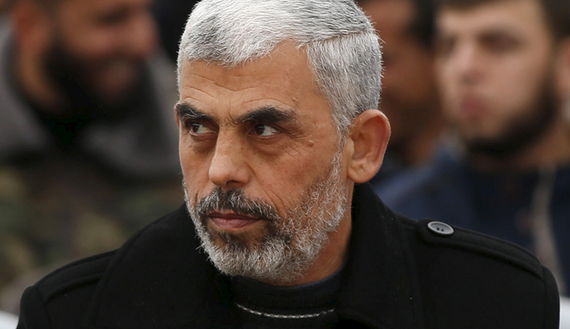
Hamas leader Yehia Sinwar in Khan Younis in the Gaza Strip January 7, 2016. REUTERS/Mohammed Salem
Al-Manar | November 4, 2019
Gaza’s Hamas leader Yahya Sinwar Monday gave Iran the greatest credit for supporting the Palestinian resistance and providing it with money, expertise and weaponry.
Sinwar stressed that the Palestinian resistance has developed anti-armored missiles, adding that it can fire missiles at Tel Aviv for six consecutive months.
Sinwar also reiterated that the Deal of the Century aims at eradicating the Palestinian cause, adding that the weekly Return Protests achieved many targets.
Russia, China & India to set up alternative to SWIFT payment system to connect 3 billion people
RT | October 28, 2019
Members of the BRICS trade bloc Russia, India, and China have decided to connect their financial messaging systems to bypass the SWIFT international money transfer network.
Russia’s financial messaging system SPFS will be linked with the Chinese cross-border interbank payment system CIPS. While India does not have a domestic financial messaging system yet, it plans to combine the Central Bank of Russia’s platform with a domestic service that is in development.
The new system is expected to work as a “gateway” model when messages on payments are transcoded in accordance with a certain financial system.
According to Izvestia, the parties involved will work on a single platform, without experiencing any difficulties with transactions.
Russia began development of SPFS in 2014 amid Washington’s threats to disconnect the country from SWIFT. The first transaction on the SPFS network involving a non-bank enterprise was made in December 2017.
“We have an opportunity to connect both foreign banks and foreign legal entities to the SPFS. Today, about 400 users are participating in the system. Agreements have already been concluded with eight foreign banks and 34 legal entities,” Alla Bakina, the director of the Bank of Russia’s national payment system, was cited as saying by Vesti.
Bakina explained that traffic through the system has been growing and currently accounts for around 15 percent of all internal traffic, up from 10-11 percent last year.
The EAEU (Eurasian Economic Union) countries are currently working with the Bank of Russia on technical options for connecting to the SPFS. Iran, which has officially joined the Russia-led free-trade zone (EAEU) this month also seeks to develop a joint alternative to SWIFT. Last year, SWIFT cut off some Iranian banks from its messaging system.
SWIFT is based in Belgium, but its board includes executives from American banks with US federal law allowing the administration to act against banks and regulators across the globe.
Instead of SWIFT, a system that facilitates cross-border payments between 11,000 financial institutions in more than 200 countries worldwide, Moscow and Tehran will use their own domestically developed financial messaging systems to conduct trade.
Iranian stem cell scientist is being ‘used as a political pawn by US neoconservatives’
Press TV – October 26, 2019
Dr. Masoud Soleimani, who has been illegally imprisoned in the United States since October last year, is being used as a political pawn by US neoconservatives, Zionists who are hostile towards the Islamic Republic of Iran, according to Dr. Kevin Barrett.
Barrett said that Dr. Soleimani “should be protected by habeas corpus,” which is a writ requiring a person under arrest to be brought before a judge or into court, especially to secure the person’s release unless lawful grounds are shown for his detention.
Barrett, an author, journalist and radio host with a Ph.D. in Islamic and Arabic Studies, made the remarks in an interview with Press TV while commenting on the year-long incarceration by police in the United States.
Dr. Soleimani’s family has condemned the imprisonment of the Iranian stem cell scientist as a “hostile” and “inhumane act” meant to pressure Iran’s government, calling for his immediate release.
Speaking during a press briefing at Press TV’s headquarters in Tehran on Tuesday, Soleimani’s wife, Dr. Mahnaz Rabeie, censured the US for keeping the scientist behind bars for an entire year without any fair trial.
Rabeie rejected a claim that her husband had been arrested for violating US sanctions against Iran, saying the incarceration was politically motivated.
Commenting on this Dr. Barrett said, “Dr. Masoud Soleimani, who is a respected Iranian biological scientist, was lured to the United States in order to set him for a completely bogus arrest on false pretenses for supposedly violating sanctions on Iran.”
“And he has been held without any due process, essentially disappeared in this banana republic for a year now. His family is naturally in a kind of panic and suffering. And this is tremendous injustice. It is obviously purely political,” he stated.
“What he is accused of doing is not itself a violation of sanctions. He is accused of having been involved in bringing of a small amount of non-commercial biological material — with no weapons use whatsoever — to Iran, a small amount of experimental biological material and that for medical research, and medical materials like that are specifically excluded from Iran sanctions. So that’s probably why they are not bringing him to trial because they don’t have a case,” he noted.
“And it just illustrates how the rule of law has gone the wayside since the false flag event of September 11, 2001 which was specifically designed not only to create permanent hostility against the entire Middle East region on behalf of Israel but also to take down the United States constitution and the rule of law so that the gangster oligarchs can do anything they want without having to be worried about any legal issues,” he said.
“And so Dr. Soleimani who is a totally respected, an utterly clean man with a perfect record, no criminal record whatsoever, not even accused of doing anything involved in politics or US-Iranian relations, he is only accused of shipping a very small amount of experimental medical material for medical research with no possible nefarious usage. He’s being made a political pawn to this neoconservative hostility towards Iran, the neoconservative Zionists, who are allied with the Netanyahu Likudnic element of the Israeli power structure are dedicated to stir this endless hostility between the United States and Iran,” Dr. Barrett said.
“Dr. Soleimani should be protected by habeas corpus, that is you just can’t disappear people in a country that respects human rights; you have to charge them quickly with something and given the chance to defend themselves. And they are not doing that. They are just kidnapping him, presumably to try to put pressure on Tehran and possibly to use him in some kind of a prisoner swap,” he observed.
Dr. Soleimani arrived in the US on October, 22, 2018 with a visa issued upon an invitation by the Mayo Clinic in Minnesota to lead a research program on the treatment of stroke patients.
He was, however, arrested by the FBI, which had a secret indictment, upon arrival at the Chicago airport. His visa was canceled and he was transferred to a jail in Atlanta, Georgia.
Soleimani’s whereabouts remained unknown for up to a week until the Chicago airport police claimed that the professor had returned to Iran on a Qatari flight, according to statement issued by his family on Tuesday.
Prosecutors have accused Soleimani, who works in stem cell research, hematology and regenerative medicine, and two of his former students of conspiring and attempting to export growth hormone vials from the US to Iran without authorization, in violation of American sanctions.
They had secretly obtained an indictment against Soleimani in June 2018, prior to his arrival on US soil.
Lawyers for the scientists say no specific license was required for the attempted transport because the hormones are medical materials and that bringing them to Iran for non-commercial purposes does not amount to exporting goods.
The hormone, which is a form of synthetic protein, is not banned in the US or Iran and is being used exclusively for medical research.
How Russia’s Vision for the Middle East Is Rigged against Iran
By Agha Hussain | American Herald Tribune | October 22, 2019
Stanislav Ivanov writing for the prestigious Russian state-run Valdai Club recently described ‘Israel and most of the Arab countries’ as viewing Turkey’s military presence in Syria as a counterweight to that of Iran. He also added that Iran and Turkey both waged a ‘fierce struggle’ to install a ‘puppet government’ in Damascus.
The Russian perspective is usually channeled, directly or indirectly, by its assorted major think tanks and media outlets and a very clear cut yet under-noticed aspect of Russia’s views on Iran has been made clear as daylight here.
That ‘Most of the Arab countries’ consider Iran’s presence in Syria as something that requires a ‘counterweight’ is a fallacious notion for a number of reasons. Iran’s key allies in the region are Arabs, such as Hezbollah, the Syrian Arab Army and much of the Iraqi government, clerical establishment and de facto military in the form of the Popular Mobilization Units. The same goes for Hamas, Islamic Jihad and other groups in Gaza.
To describe the Gulf Arabs (GCC) and their consensus on Iran’s ‘need’ to exit Syria as the consensus of ‘most of the Arabs’ is thus disingenuous. Notwithstanding the weakness of that consensus itself, given how the UAE quickly distanced itself from the fiasco in the Persian Gulf through assuring signals to Iran as things heated up there, it is not likely that the author is unaware of these issues with the ‘Arabs’ tag.
Nor is it likely that Russian policymakers are unaware of the illogical, dishonest basis of this classification of ‘most of the Arabs’. It remains, regardless of this vital reality, a key cornerstone of Russia’s current geopolitical approach to the Middle East. This can be seen from the Russian outreach to the GCC it began – together with other extremely important yet under-discussed strategic adjustments – in what can be described the ‘post-ISIS’ scenario in Syria.
The Russian-GCC ‘rapprochement’ was lightning fast, with Russia offering to Saudi Arabia and the UAE what it never did to its Iranian or Syrian ‘allies’ constantly attacked by the Israeli airforce: its much-vaunted S-400 anti-air defense system. As one of the earlier examples of Russian preference for the GCC over their Iranian rival, the clarity of the message Russia was sending was illustrated by the fact that it even pitched the system to the small, militarily-insignificant Bahrain.
Russia has taken clear steps to prop up the brittle GCC whenever it has suffered major setbacks, demonstrating its ties with them are not just cordial but strategic. Saudi Arabia, having last month suffered a deadly missile attack on its Aramco oil processing facilities at Abqaiq, received a boost on 11 October as Russia announced plans to invest $1 billion for a petrochemical facility there.
More than 20 deals were signed between Russia and Saudi Arabia during Putin’s state visit days later, including the purchase of a 30.76% in one of Russia’s leading companies, Novomet, by the two countries’ sovereign investment funds and Aramco.
The economic honeymoon, however, started after Saudi King Salman’s historic visit to Russia in 2017. Its progress since then compares starkly to Russia, contrary to expectations of its ‘Eurasianist’ supporters, having adhered to US sanctions against Iran when they were re-imposed last year.
The strategic element which drove Russo-GCC economic ties did influence the decisions of Russian giants such as Rosneft and LUKoil regarding their Iran investments, but to Iran’s detriment as they withdrew from Iran with Russo-GCC ties being a factor as well.
A team from Russia’s MGIMO university at the Abu Dhabi Strategic Debate in November 2018 days after re-imposition of US sanctions on Iran declared in no unclear terms that Russia was not aligned with Iran. The prestigious institution, famed for having top Russian diplomats such as current Foreign Minister Sergei Lavrov among its alumni, declared political Islam problematic and Iran to be an expansionist power.
But what are these soft spots Russia tries to hit at in Iran’s geopolitical ‘Resistance Axis’ infrastructure, and is it the GCC’s subsequent empowerment [over] Iran that makes Russia’s ‘contain Iran’ policy dangerous?
The answer lies in Israel and the regional socio-political and military network Iran has forged and sustained since 1979 pivoted around the correct recognition of Israel and Israel Lobby-induced US foreign policy as the premier driver of Middle East wars.
It [Iran] has, thus, through the chaos of Middle East geopolitics since 1979 performed an important task in countering forces of destabilization. Vital to Iran has been its deep involvement in foreign affairs and disingenuously portraying this as ‘Iranian expansionism’ has been a cornerstone of Israeli and GCC propaganda against Iran.
Nobody knows the ‘start the story from the middle’ game better than the Israelis, be it claiming Israel was ‘attacked’ by ‘the Arabs’ in 1948 whilst ignoring the entire pre-planned ethnic cleansing campaign of the 1940s by the Zionists or claiming self-defense in Gaza. The GCC in recent times have latched onto this narrative as well, but with their own crude ‘Iran seeks to dominate the Arab world’ spin.
Had Iran not intervened, the Shia-dominated Lebanese resistance against Israel’s occupation would have lacked a material supporter against the modern Zionist army and Israel would have consolidated Lebanon for both its Jewish colonies scheme and seized its vital water resources. Such had been Zionist ambition as far back as 1919.
Gaza, where the armed resistance born following the First Intifada in the vacuum left by Yasser Arafat’s inept leadership (and subsequent sell-out during the Oslo ‘peace’ hoax) receives arms from Iran, would have by now been fully swallowed by Jewish colonies. It would have shared the fate of the ‘Iran-free’ West Bank, where Mahmoud Abbas carries on the legacy of Arafat’s surrender.
Instead, Lebanon today is far more stable than at any other time in its history and the bridges Hezbollah has built with other religious parties have helped augment internal cohesion. Gaza has shown in recent times increased capability to deal with Israeli military aggression, with its Iran-backed Sunni Islamist groups possessing improved weaponry and exhibiting greater unity.
It was not international mediation and ‘conflict-resolution’ attempts that stabilized – or, given the capacity of Israel’s cohorts to rig such attempts every step along the way, ever truly even could stabilize – the parts of the Arab world worst hit by war. It was Iran’s support to these states and state-less victims of Israeli expansionism that enabled them to weather the storm inflicted upon them and mount a thus-far successful resistance.
Few pundits would, retrospectively, describe past ‘peace deals’ be they Camp David 1978 or the Oslo process of the 90s as anything other than smokescreens for unhinged Israeli warmongering.
For containing Israel, Iranian forward-presence in countries near to Israel has always been a necessity. Iran’s elaborate supply chains, part covert and part overt in nature, going to allies such as Hamas and Hezbollah are transnational and involve supporters on the ground zealously committed to Iran or even just zealously committed to opposing Israel.
Syria is one such vital node. Without Syria, Iran could not supply Hezbollah. Russia is not unaware of this when it constantly pushes for Iranian withdrawal from Syria whilst passing this off as its ‘principled’ position that all foreign forces must leave the country. This most salient stance of Russia is deceptive, given that Russia has consistently implicitly excused Israel completely from adhering to this principle.
The Russian Defence Ministry right after Israel got a Russian aircraft downed in September last year reminded everyone of how Russia at Tel Aviv’s request had pushed for ‘Iran-backed groups’ to withdraw 140 km away from the Israeli-occupied Golan Heights. Israel’s behavior since then remained the same, but Russian attempts at Tel Aviv’s request to distance Syria from its Iranian ally only intensified, even including lobbying for the removal of heavily pro-Iran officials from the Syrian military and incorporation of ‘ex-rebels’ into its ranks.
The façade is crystal clear: Israel gets to continue its attacks but Iran – who along with Hezbollah contributed to the defeat of terrorism in Syria even before Russia intervened in 2015 – must depart Syria. The constant Russian favors to Israel are here are even more see-through than were the fraudulent regional ‘peace-processes’ of the past which leveraged almost no obligations upon Israel to cease its warmongering yet comprehensively de-fanged and neutralized whatever stood in its way.
Propping up the GCC, working to weaken Iran and looking the other way when Israel attacks its ‘allies’ (or even publicly fawn over the Zionist state at events hosted by financial benefactors of Israel’s military) are all part and parcel of Russia’s geopolitical bigger-picture.
Validating the notion that the GCC – the normalization with whom of Israel’s ties Jared Kushner has fast-tracked since 2016 as an anti-Iran front and plan B following al Assad’s survival in Syria – represents ‘most of the Arabs’ has a specific purpose.
That purpose is to rig the selection of stakeholders for any potential region-wide ‘peace initiatives’ against Iran, sidelining it and declaring the pro-Israel GCC the representatives of ‘the Arabs’. Israel would be the benefactor of any ‘peace deal’ to end the ‘Arab-Israeli conflict’ since both sides would have long ago accepted the need to eradicate longstanding barriers to Israeli hegemony.
What follows next is obvious and has been seen repeatedly in the Middle East ‘peace processes’ in the past: no actual reigning in of Israel, but a thorough neutralization of its foes. For resistance-oriented states like Iran, there is no place in Russia’s vision for the Middle East.
Agha Hussain is a Research Analyst at the Institute of Regional Studies, Islamabad, Pakistan, as well as an editorial contributor to the websites Eurasia Future and Regional Rapport. His writings have a particular focus on Middle Eastern affairs and history and Pakistan’s foreign policy.
Buying US weapons & placing trust in Washington won’t bring security, Zarif warns Saudis
RT | October 12, 2019
If Riyadh is seeking regional security, it should focus on building better relations with its neighbors instead of stockpiling weapons and turning to Washington for guidance, Iran’s Foreign Minister Mohammad Javad Zarif has said.
In an interview with TRT, Zarif urged Saudi Arabia to rethink its foreign policy, arguing that the kingdom must change course if it wants peace in the Middle East.
“Buying weapons will not buy you security. If Saudi Arabia wants to be secure, the best way is to end the war in Yemen, to start good relations with its neighbors and the neighborhood, and not to trust the US.”
The Iranian foreign minister stressed that Tehran has “always” been open to dialogue with its regional rival.
“We don’t have any choice but to talk to each other, and we have been open to talking to Saudi Arabia either directly or through intermediaries,” Zarif said.
His comments come as Iran attempts to drum up support for a new peace plan, the Hormuz Peace Endeavor (HOPE), proposed by President Hassan Rouhani during his recent speech at the annual meeting of the UN General Assembly. The initiative calls on “all eight countries in the Persian Gulf region to join in an attempt to bring peace through dialogue.”
Iran Open to Dialogue with Saudi, Has Better Option for Turkey on Syria: Zarif
Al-Manar – October 12, 2019
Iran’s Foreign Minister Mohammad Javad Zarif said Tehran welcomes efforts by intermediaries to mediate between Tehran and Riyadh.
“We’ve always been open to discussing anything with Saudi Arabia. Saudi Arabia is our neighbor. We’re going to be here together permanently,” Mohammad Javad Zarif told Turkey’s TRT World.
“We don’t have any choice but to talk to each other, and we have been open to talking to Saudi Arabia either directly or through intermediaries,” he added.
When asked about the upcoming visit of Pakistan’s Prime Minister Imran Khan to Tehran, the top diplomat said, “We’ve never rejected any intermediary… We’ve always been open to mediation, and we’ve always been open to direct talks with our Saudi neighbors.”
Khan is likely to visit Iran and Saudi Arabia, the Pakistani foreign office said on Friday, weeks after Islamabad said Washington had asked it to mediate with Tehran.
The announcement of the possible visit comes after Khan last month revealed a request by US President Donald Trump, asking the Pakistani leader to help defuse tensions with Iran.
Khan said after a meeting with Trump on the sidelines of the United Nations General Assembly in New York that he was “trying and mediating” and had also spoken with Iran’s President Hassan Rouhani.
Syria Offensive
Meanwhile on the Turkish offensive in northern Syria, the top Iranian diplomat stressed that security will not be achieved through acts of aggression and invasion against Syria, revealing that his country has offered better options to Turkey to settle the issue.
While Iran understands Turkey’s security concerns, it does not believe that security could be achieved through acts of aggression and invasion against Syria, Zarif told TRT World.
While Iran understands Turkey’s security concerns, it does not believe that security could be achieved through acts of aggression and invasion against Syria, Iranian Foreign Minister Mohammad Javad Zarif said in an interview with Turkey’s TRT World.
“We have better alternatives, which we have presented to our friends in Turkey,” Zarif added, referring to the Adana agreement.
“The Adana agreement is still valid,” said Zarif, adding “we can bring the Kurds, the Syrian and Turkish governments together, so that the Syrian Army, in cooperation with the Turkish government, can be in charge of border security. This can be the better path to achieve security.”
Iranian oil tanker hit by two blasts in Red Sea
Press TV – October 11, 2019
Two separate explosions, possibly caused by missile attacks, have hit an Iranian oil tanker operated by the National Iranian Tanker Company (NITC) near the Saudi port city of Jeddah, in what Tehran calls a “dangerous adventure”.
The incident took place some 60 miles from Jeddah early Friday, according to a statement by the NITC.
The explosions have hit the vessel’s hull, causing heavy damages to the vessel’s two main tanks, which has resulted in an oil spill in the Red Sea. The spill is currently stopped, according to officials.
Technical experts are currently investigating the cause of the explosion. They believe it was a “terrorist attack”, unnamed sourced told the Iranian Students News Agency (ISNA).
The statement by NITC said the SABITI tanker was hit by two separate explosions at 5:00 and 5:20 am Friday, probably after being struck by missiles.
It said the crew members are currently safe and none of them has been harmed in the explosions. The tanker is currently in a stable condition, the statement added.
The NITC later dismissed the reports that the vessel had caught fire, according to the Iranian Ministry of Petroleum’s official news agency SHANA.
‘Dangerous adventure’
Iran’s Foreign Ministry spokesman later described the attack as “a dangerous adventure”, warning that all the responsibilities fall on those behind it.
“The investigations conducted by the National Iranian Tanker Company indicate the Iranian tanker has sustained damages after being targeted twice, at half-hourly intervals, from a place near its shipping route in the east of the Red Sea,” Abbas Mousavi said Friday.
He expressed concern about the maritime pollution caused by the massive oil spill in the region after damages inflicted on the vessel’s tanks, and said, “All the responsibilities for the act, including the extensive environmental pollution in the region, fall on those behind the dangerous adventure.”
He also noted that a probe is being conducted on the details of the attack and those behind it, and the results will be announced once it’s done.
Earlier in the day, the US Navy’s Bahrain-based Fifth Fleet announced it is aware of media reports about the blast but had no further information.
“We are aware of the reports but we don’t have any further information,” a spokesman said.
The blasts have caused oil prices to jump by over 2 percent, media reports said.
The explosions came a few months after Iranian oil tanker Happiness-1 faced “engine failure” and lost its control with 26 on board off the Red Sea port of Jeddah, and was later transferred to the port city for maintenance.
According to Iranian officials, the incident had occurred on April 30 while Happiness I was on its way to the Suez Canal, and that water had leaked into the tanker’s engine room.
The Saudis refused to let the vessel leave and demanded that Iran pay $200,000 a day for maintaining the vessel in the port, some $10 million in total. It was finally released on July 20 and returned home.
Iran’s private sector seeks active role in trade with Eurasian Economic Union countries
Press TV – October 7, 2019
Morteza Miri, a member of Iran Export Confederation, said on Monday that accession to the EAEU would not lead to maximum benefits for the country if the private sector is not fully involved in new schemes for exports and imports.
“Experience has shown that failing to use the private sector while entering a (trade) treaty has reduced the potentials to reach the objectives,” Miri told Iran’s Tasnim agency.
The comments came as Iran is preparing to officially accede to the EAEU on October 26 through the formation of a joint trade zone which would enable the country to export a total of 70 goods and products to members of the union on zero tariffs while 503 more items would enjoy lower duties.
Iranian President Hassan Rouhani attended an EAEU summit in Yerevan last month, effectively concluding his country’s efforts to join the organization which includes Russia, Armenia, Kazakhstan, Belarus and Kyrgyzstan.
Miri said Iran could have involved the private sector in negotiations leading to the accession to the EAEU as this would have provided the businesses and enterprises in the country with better perspective about future trade relations.
He said Iran’s embassies in the five EAEU countries were supposed to provide businesses and the government with the latest information and analyses on the markets in those countries.
The businessman said accession to the EAEU would lead to various economic, cultural and political benefits for Iran as the union enjoys a powerful status in regional affairs.
Israel and the West Do Not Have the Means to Counter Iranian Technology
By Gilad Atzmon | October 1, 2019
Introduction by GA: The following is a translation of today’s Israel’s News 12 headline article. The article explores the lessons delivered by the recent attack on Saudi oil facilities. Though I, like many other commentators, am not convinced that the attack had anything to do with Iran, the attack showed that Iran’s weaponry is likely superior to the West’s ability to mount an effective defence.
Israeli writer Nir Dvori points out that the attack took place 650 km inside Saudi territory. “It proved measured Power Utilization – Sending two types of weapons that achieved accurate hits.” It also demonstrated superb intelligence capability – “both in identifying and selecting targets and in selecting the attack route and the military.” Apparently, neither the cruise missiles nor the drones were detected and no attempt was made to intercept them before the attack. Which really means that despite the Saudis’ multi- billion dollar investment in Western weaponry and air defense systems, their sky is far from protected.
In the last few years Israel has prioritized its efforts to counter Iran’s ballistic and drone projects. It seems Israel knew what it had to dread. The recent attack on the Saudi oil industry proved that the West has not developed an adequate response to Iranian precision missiles, slow moving cruise missiles or drone technology. This alone explains why, despite Israel’s persistent threats to attack Iran directly, it has been reluctant to do so. Israel knows how vulnerable it is and well understands the possible dramatic consequences of such an attack. Israel knows that although its anti missile system, which cost the American taxpayers billions of dollars, may be somewhat effective against German V2 ballistic technology, its system is ineffective against what Iran has at their disposal.
This helps explain why Israel wants America and NATO to attack Iran on its behalf. It may explain why Israel might consider doing whatever it can to provoke such a conflict- everything from intensive Lobby pressure to possible false flag operations.
Donald Trump seems miraculously to have gathered how volatile the situation is. As a consequence, he exited his prime hawk, John Bolton. Might Trump find himself booted out of his 1600 Pennsylvania Ave as a result of his reluctance to fight Israel’s war against Iran?
The character, uniqueness and success of the Iranian attack – worries Israel and the world
By Nir Dvori
The Iranian attack on Saudi oil facilities was of great significance and is of particular concern [to Israel]. The attack was [the first of its kind] and proved that the Iranians are capable and possess both the knowledge and the ability to hurt and cut [Saudi] oil production by nearly fifty percent. At the same time, the Saudis have already begun to rebuild the buildings damaged by the Iranian bombing
The attack on oil facilities in Saudi Arabia has been a warning for the West and Israel – the effects of this attack are extremely concerning. This [technological] ability that can be used against Israel requires that [Israel] prepare its security system to respond to such a threat. Israeli officials analyzed the outcome of the attack and reached several conclusions : The attack demonstrated both impressive design and execution, the results were painful and cut Saudi oil production by 50%, and likely affected gas production as well.
The attacks were carried out with only two weapon types :The first were 7 Quds cruise missiles driven by a Czech jet engine, 3 of which fell before they reached their target; the second weapons were 18 suicide drones, an Iranian replica of the “Rafi” – an Israeli suicide drone.
The attack was significant on a few levels:
The attack was carried out at a relatively long range – at a distance of 650 km.????
It proved measured Power Utilization – Sending two types of weapons that each achieved accurate hits.
Iran has also demonstrated its intelligence capability – both in identifying and selecting targets and in selecting the attack route and its execution.
Apparently neither the cruise missiles nor the drones were detected and no attempt was made to intercept them before the attack.
Iran’s inability to penetrate the Saudi air defense system, despite the billions of dollars spent and deployed to defend the area, was shown by its failure against the small, slow-moving assault weapons.
Impressive and unprecedented impact accuracy of less than 3 meters. The fragments of the Iranian cruise missiles have been identified as among the derivatives of the 55-KH missiles that Ukraine delivered to Iran in 2001.
The nature of the Iranian attack has embarrassed the Western intelligence community. It turned out that Iran, a country with average technological capabilities, has developed medium and long range missiles that are accurate and effective. This basically undermines the very existence of the regulatory bodies which assumes that denying access to technology can impede, or prevent such technologies being obtained.
The attack is proof of Iran’s operational potential that relies on technological capabilities, intelligence infrastructure and coordination, leading to the conclusion that the Western monopoly on precision-guided armaments has evaporated. The countries of the entire region and Israel have learned a lesson: Discovery and interception systems do not provide a proper countermeasure to new regional threats.
It is necessary to deal with cruise missiles, slow drones and hovercraft. The ranges reached by Iran this time – 650 km – would allow damage to any point in Israel from western Iraq.
Featured Video

Trita Parsi: Middle East Unraveling — Are We on the Path to World War?
or go to
Aletho News Archives – Video-Images
From the Archives
Why Saudi Ties to 9/11 Mean U.S. Ties to 9/11
By Kevin Ryan | Dig Within | September 27, 2015
Media interest in Saudi Arabian connections to the crimes of 9/11 has centered on calls for the release of the 28 missing pages from the Joint Congressional Inquiry’s report. However, those calls focus on the question of hijacker financing and omit the most interesting links between the 9/11 attacks and Saudi Arabia—links that implicate powerful people in the United States. Here are twenty examples. … continue
Blog Roll
 Aletho News
- Neria Leiter Was A Legitimate Military Target
- Integrity Initiative: UK-funded network framed dissent as Russian disinformation for years
- ‘We don’t seek permission to defend our country’: Snippets from President Pezeshkian’s UNGA address
- NATO chief wants Europeans to fight American wars [for Israel]
- German chemicals giant reveals details of downsizing
- Refaat Al-Areer Was The Canary In The Coal Mine In Israel’s War On The Truth
- Israeli election committee bars candidate from Knesset race over Gaza war opposition
- French-Lebanese man files war crimes complaint over Israeli attacks
- Mahan Air Flight Lands in China Despite US Threat against Iranian Airlines
- US eyes $10bn fund to rebuild war-battered Gulf infrastructure
- If Americans Knew
- Caught on Tape: AIPAC CEO Boasted of Controlling Trump’s National Security Officials
- Why Hamas Attacked Israel in October 2023 – Israeli professor Ilan Pappé
- They see them, then kill them: Israeli quadcopters track, deliberately target civilians in Gaza
- Winter could turn Gaza’s treacherous, war-damaged buildings into deathtraps
- Majority of Democratic Voters Want to Prosecute Both Biden and Trump Administration Officials Over Gaza
- As Gaza languishes, world leaders gather at the UN – Daily Update
- Sanctions are collective punishment: immoral and self-defeating
- Phosphorus Munitions Fired by Israel Burn Groves, Orchards in Southern Lebanon
- Israel Carries Out New Ceasefire Violations Across Gaza
- AI – Emphasis on the ‘I’: Israel Is Funding AI Chatbot Propaganda
- No Tricks Zone
- New Study: Earth And Venus Surface Warmth Largely Explained By Convection And Lapse Rate, Not CO2 Or Radiation
- 2025 Nature Paper Claiming Worsening Global Drought Gets RETRACTED …Heavily Flawed
- New Study: ‘Global Drought Shows No Detectable Recent Acceleration Under Climate Warming’
- Economic Masterminds: German Socialists Suggest Taxing Productivity Gains Stemming From Using AI
- The South China Sea Has Not Been Cooperating With The Climate Change Narrative
- Energy Crisis: Germany Enters Heating Season With Historically Low Gas Reserve Fill Levels
- New Study: The Antarctic Ice Sheet Gained Mass From 2020-2024 Due To Staggering Snow And Ice Accumulation
- Study: Ocean Heating Rates From Thousands Of Years Ago ‘Dwarf’ Modern Ocean Heating Rates
- Climate Extremists Target, Attack Large-Scale Power Grid Infrastructure In Germany!
- New Study: Antarctic Ice Melt Has Contributed Less Than 1 Centimeter To Sea Level Rise In The Last 30 Years

