Iran, China and Russia sign trilateral strategic pact
By Ranjan Solomon | MEMO | January 29, 2026
In a dramatic geopolitical development this afternoon, Iran, China and Russia formally signed a comprehensive strategic pact, marking one of the most consequential shifts in 21st-century international relations. While the full text of the agreement is being released in stages by the three governments, state media in Tehran, Beijing and Moscow have acknowledged the ceremony and described it as a cornerstone for a new multipolar order.
The pact comes against the backdrop of decades of growing cooperation between these three states. Iran and Russia earlier concluded a 20-year Comprehensive Strategic Partnership Treaty designed to deepen economic, political, and defence ties, and to blunt the impact of Western sanctions — a treaty that was signed in January 2025 and entered into force last year. Meanwhile, Iran and China have been bound by a 25-year cooperation agreement first signed in 2021, aimed at expanding trade, infrastructure, and energy integration.
What makes today’s signing significantly different, and newsworthy, is that it explicitly combines the three powers in a coordinated framework, aligning them on issues ranging from nuclear sovereignty and economic cooperation to military coordination and diplomatic strategy.
Officials in Tehran described the pact as a joint commitment to “mutual respect, sovereign independence and a rules-based international system that rejects unilateral coercion,” echoing similar statements issued by Beijing and Moscow.
What the pact represents
This agreement does not – at least from the initial public texts – constitute a formal mutual defence treaty akin to NATO’s Article 5, obligating one to defend the others militarily. Past pacts between Iran and Russia always carefully stopped short of a binding defence guarantee. Instead, the pact appears to link three major powers in a broader geopolitical coalition defined by shared opposition to Western military dominance and economic coercion.
Central to the agreement is a unified stance against reimposition of sanctions on Iran tied to its nuclear programme under the 2015 Joint Comprehensive Plan of Action (JCPOA). Tehran, Beijing and Moscow have previously issued joint statements rejecting European attempts to trigger “snapback” sanctions, and have declared the UN Security Council’s considerations of the nuclear deal terminated.
This trilateral pact is therefore as much about diplomatic leverage and strategic narrative as it is about concrete defence or economic mechanisms.
Immediate regional and global consequences
The pact’s signing coincides with heightened tensions between the United States and Iran. President Donald Trump has reiterated threats of military action against Iran absent a negotiated settlement on its nuclear activities, even deploying a US carrier strike group to the Middle East theatre. Against that backdrop, this new strategic pact serves both Tehran and its partners as a buffer against unilateral US military pressure. By presenting a united front, the three governments aim to compel Washington to negotiate from a position of constraint rather than dominance.
For the Middle East, the balance of power is reshaping. Iran, long isolated by Western policies — now claims the protection of two permanent members of the UN Security Council. This will embolden Tehran’s regional posture in theatres such as Iraq, Syria and the Persian Gulf, and complicate conventional deterrence strategies exercised by the United States and its Gulf allies.
For Europe, the pact undercuts Brussels’ ambitions to retain independent influence in Middle Eastern diplomacy. European powers have repeatedly attempted to revive elements of the JCPOA and threaten punitive measures against Tehran, but coordination by Iran, China and Russia has thwarted those efforts, exposing Europe’s diplomatic limitations in a world less anchored to Western consensus.
Economic repercussions
Economically, the deal signals deeper integration among three of the world’s most significant non-Western economies. Russia and China have already worked on investment protection and bilateral trade agreements designed to sidestep Western financial systems, such as SWIFT, which have been used as vectors for sanctions. A trilateral pact potentially accelerates the creation of alternative financial mechanisms and trade routes that further bleed Western economic leverage.
Iran — sitting on vast energy resources — gains broader access to markets and investment, especially as China continues its Belt and Road initiatives and Russia seeks alternatives to sanctions-laden European markets. In combination, these developments portend increased trade flows and reduced vulnerability to the US dollar-centric financial system.
Military and strategic dynamics
Although not a formal alliance, the pact strengthens military cooperation among the trio. China and Russia have conducted regular joint naval drills in the Indian Ocean and Gulf waters — exercises that Iran has participated in as well, signalling interoperability and shared security interests.
Strategically, the pact will likely lead to more coordinated defence planning and intelligence sharing, even if it stops short of a binding treaty that compels military intervention. For the United States and NATO partners, this raises the stakes in multiple regions: any escalation with Iran now risks broader strategic responses involving Beijing and Moscow, increasing the threshold for conflict and reducing the effectiveness of unilateral threats.
Longer-term global impact
In the long term, the pact accelerates the multipolar restructuring of international relations. For decades, the United States and its allies have dominated the architecture of global governance — from trade regimes to security pacts. A structured alignment of Iran, China and Russia signifies an alternative axis that challenges Western hegemony not through ideological competition but through pragmatic power balances.
Whether this pact evolves into a deeper defence agreement, or stays as a diplomatic and strategic framework, remains to be seen. What is indisputable is that the world’s power centre is shifting — not towards a simple “East vs West” dichotomy, but towards a more contested, multipolar world order where diplomatic leverage, economic resilience and military signalling converge in new and unpredictable ways.
Riyadh and Hezbollah: A rapprochement forged in fire
As Lebanon becomes an unlikely stage for a slow Saudi pivot toward pragmatism, regional rifts with allies and foes alike compel Riyadh to recalculate its hard lines.
By Tamjid Kobaissy | The Cradle | January 29, 2026
Lebanon, once more, reflects the fault lines tearing through the Arab world. But this time, the ground is moving. The era of blockades and isolation is ceding to a colder, more calculated politics – and at its core lies an unlikely dialogue: between Hezbollah and the Kingdom of Saudi Arabia.
As The Cradle observed last month on ‘Hezbollah and Saudi Arabia’s uneasy détente,’ behind-the-scenes communication between the two has laid groundwork for a quiet thaw. Recent developments have accelerated this shift, compelling the kingdom to reassess both threats and alliances. The signals are no longer limited to backchannels.
They are becoming visible across Lebanon’s political, economic, and media fronts. This suggests that rapprochement is no longer a theoretical discussion but an unfolding process reshaping both the Lebanese and regional scene.
Economic tremors, political signals
Saudi repositioning on Lebanon and Hezbollah has taken shape across multiple fronts. Economic pressures are easing, political language is softening, and discourse on the resistance movement’s disarmament is adapting to new realities. These changes track with the Saudi–Hezbollah talks and reflect broader drivers such as domestic demands in Lebanon, urgent regional recalculations, and Hezbollah’s calibrated outreach.
Sources tell The Cradle the talks have already produced results, with Riyadh stepping away from its previous economic blockade. That shift is becoming tangible across Lebanon.
The economic front offers the clearest evidence. During a visit to Beirut by Iranian Foreign Minister Abbas Araghchi, flanked by a senior economic team, Lebanese President Joseph Aoun signaled readiness to deepen Beirut–Tehran ties. In Lebanon, such moves usually require nods from Riyadh or Washington.
Lebanese Prime Minister Nawaf Salam, known for his Saudi ties, announced the launch of reconstruction in southern Lebanon within two weeks, with plans to accelerate rebuilding efforts. This follows parliamentary approval of a World Bank loan – an indication of intent to harness regional momentum. Salam also flagged upcoming agreements with Riyadh.
Simultaneously, the long-dormant file of Lebanese depositors was revived in cabinet through a proposed financial reorganization and deposit recovery law. This legislation lays the groundwork for closing the financial gap and gradually repaying deposits.
The reopening of this file after years of stagnation reflects not only domestic pressure but also a new political and financial environment shaped by waning external pressure and the rollback of the economic suffocation policy previously imposed on Lebanon.
Changing tones in Beirut
Political and media rhetoric in Lebanon is also adjusting, particularly among factions with Saudi leanings. The Lebanese Forces (LF) offer a striking example. Lebanon’s Foreign Minister Youssef Raji’s tone during Araghchi’s visit was notably tempered compared to previous Iranian delegations. While his broader stance may still reflect internal party lines, it is important to note that the LF is not entirely Saudi-aligned and intersects with Washington’s foreign policy.
Equally notable is the near absence of the usual Saudi-linked media campaigns. Outlets and figures typically vocal during such visits stayed quiet. That silence reflects a broader repositioning.
Media sources also say Saudi Ambassador to Lebanon Waleed Bukhari has privately conveyed Riyadh’s interest in engaging Lebanon’s Shia leaders, moving beyond the image of a sectarian boycott.
The weapons file: A vocabulary shift
A recalibration is also visible in official discourse around Hezbollah’s arms. Where previous rhetoric focused on “disarmament” or exclusive control south of the Litani River, a new phrase has emerged: weapons “containment” north of the Litani. This lexical shift reflects a more tempered and strategic approach.
On one level, it indicates closer coordination – both internally and with external stakeholders – and a move away from maximalist demands. On another, it aligns with a broader political posture from Riyadh to reduce friction and avoid escalation.
During a recent visit to Beirut, Saudi envoy Yazid bin Farhan told Lebanese officials that while Riyadh supports arms being under state authority, the process must proceed with reason and avoid internal disruption. This was widely read as a message tailored to Hezbollah.
His remark that Saudi Arabia has “no problem … with any of the Lebanese components,” mirrored Hezbollah’s framing of a national defense dialogue. More pointedly, his call for calm in the process echoed the group’s insistence that change must come through consensus, not coercion.
Wariness of war, new parliamentary cues
Another clear signal of Saudi recalibration is its growing resistance to military escalation in Lebanon. Once expressed obliquely, this position is now surfacing in both private meetings and public statements from Saudi-aligned figures.
Reports from Israel’s Channel 12, citing unnamed Saudi royals, pointed to Riyadh’s refusal to countenance any military operation against Lebanon. Such red lines bolster Hezbollah’s messaging and complicate Tel Aviv’s threat matrix.
This shift was also evident in the 18 January parliamentary session, where quorum battles pitted Hezbollah and the Amal Movement – referred to in Lebanon as the Shia Duo – against the LF. Samir Geagea, the long-standing LF leader and vocal advocate for Hezbollah’s disarmament, reportedly urged the Saudi envoy to discourage Sunni MPs from attending. The attempt fell flat. Sunni MPs aligned with Riyadh showed up anyway.
In this context, Hezbollah Political Council member Ghaleb Abu Zainab tells The Cradle:
“In principle, we want our relations with Arab states to be positive – built on mutual respect and shared interests in Lebanon and the Arab world. This, of course, includes the Kingdom of Saudi Arabia, which holds significant Arab and Islamic weight in the region.”
Riyadh’s Persian Gulf equation is shifting
The Hezbollah track is one part of a larger Saudi recalibration, driven by new regional pressures. Yemen, Sudan, the Red Sea, and Lebanon are all areas where Riyadh now sees mounting friction with longtime Gulf ally, the UAE.
In Yemen, Saudi Arabia remains uneasy. While it sought to contain Emirati actions in the south, Abu Dhabi’s moves – including a controlled pullback from certain zones – have sparked concern. The fugitive leader of the now-dissolved Southern Transitional Council (STC), Aidarus al-Zubaidi’s remarks from Abu Dhabi about pursuing southern independence, coupled with the assassination attempt on Giants Brigade commander Hamdi Shukri al-Subaihi and subsequent protests, have raised alarms in Riyadh.
In Sudan, Saudi Arabia is backing the official government in Khartoum, preparing for a potential confrontation with the UAE-supported Rapid Support Forces (RSF). Riyadh facilitated a $1.5-billion deal with Pakistan to supply weapons, air defense systems, and drones to the Sudanese army, signaling its intent to push back on Emirati encroachment – part of a broader regional re-ordering described as a response to Abu Dhabi’s growing alignment with Tel Aviv.
Meanwhile, Israel’s recognition of Somaliland and reports of a possible military presence there have added another layer of anxiety – a new Israeli footprint near the Red Sea.
Confronting Emirati ambitions
Lebanon is not exempt. Saudi officials now suspect that Abu Dhabi is maneuvering for influence in Beirut. The LF, with its alignment to the UAE–Israel axis, is part of this concern. The scandal involving “Abu Omar” – a man posing as a Saudi prince who reportedly ran Lebanese political operations – reinforced concerns that the UAE filled the Saudi void during Riyadh’s absence.
Sources note that Qatar has also intensified its presence in Lebanon, funding figures like those in the Free Patriotic Movement. Whether this is in coordination with Riyadh or not, it contributes to a crowded Gulf rivalry playing out in Beirut.
In response, Riyadh is reassessing its Lebanese allies. The “Abu Omar” affair reportedly prompted the kingdom to question the seriousness of some of its former clients – many of whom failed to deliver either politically or in terms of security. This realization has made Riyadh more cautious and less inclined to repeat past mistakes.
The kingdom is now leaning on Lebanese Parliament Speaker Nabih Berri’s Ain al-Tineh as a channel to Hezbollah – a more direct and realistic track. Hezbollah remains the decisive force in Lebanon, and Riyadh now appears willing to operate within that reality.
Even former Lebanese prime minister Saad Hariri’s future is under reconsideration. A political source stresses that a return through the Emirati channel would lead to deep divisions, especially within the Hariri household itself, as the Emirati project does not align with his personality or political legacy. One of the main reasons for his withdrawal from public life was his refusal at the time to follow the Saudi call for a civil war – a demand that reflected the Emirati approach. Therefore, the Saudi option remains the most realistic path for Hariri, capable of reintegrating him into the political scene and ensuring the unity of the Sunni community under Riyadh’s umbrella rather than fragmenting it through external projects.
These developments mark a broader unveiling of the long-simmering Saudi–Emirati rivalry. Riyadh is now moving quickly to neutralize manageable disputes and focus on what it increasingly sees as its main challenge: Abu Dhabi.
In the end, it is clear that the Saudi–Hezbollah rapprochement is not a sudden development but the product of mounting regional pressures and internal constraints that have made pragmatism not a choice – but a necessity.
Criminal Conspiracy: How the U.S. and Israel Turned Iran into a Proving Ground for Bloody Experiments
By Mohammed ibn Faisal al-Rashid – New Eastern Outlook – January 29, 2026
The January events in Iran were not merely unrest—they were a meticulously planned special operation to destabilize a sovereign state, carried out in the best traditions of American and Israeli imperialism.
Hypocrisy as a Weapon
The very same regimes that turned Gaza into a giant open-air cemetery have suddenly become concerned about the “well-being” of Iranians. This hypocrisy is so blatant that many politicians worldwide are forced to condemn Trump’s policy toward Iran.
Just now, the U.S. President announced that U.S. Navy warships are heading toward Iran “just in case.” The Republican made this statement to reporters aboard Air Force One. “You know, we have many ships heading in that direction—just in case. We have a large fleet moving that way, and we’ll see what happens. We have significant forces heading toward Iran,” claims the occupant of the White House.
Iran in the Crosshairs—Why Now?
Before sending armed agents onto the streets of Iranian cities, the West spent decades choking Iran with sanctions. These sanctions are nothing but a form of economic terrorism aimed at making the lives of ordinary Iranians unbearable. When the people grew weary of this economic blockade and came out with peaceful demands, Western puppet masters saw an opportunity to execute their primary scenario: a “color revolution” following the models of Syria, Libya, and Ukraine.
Why are the U.S. and Israel so obsessed with Iran? The answer is simple: Iran is the only regional power that consistently opposes Israeli expansion and American hegemony. Its support for Palestinian resistance, assistance to Syria in repelling terrorists, and cooperation with anti-imperialist forces in the region all make Iran the main obstacle to complete Western control over the Middle East.
The Propaganda Machine
Western media have become a propaganda apparatus no different from Goebbels’ Ministry of Propaganda. Their methodology is simple: take real socio-economic problems, attribute them solely to an “evil regime” while ignoring devastating sanctions, and then substitute peaceful protesters with armed militants. The same media conveyor belt that has demonized Arab regimes inconvenient to Washington for decades is now working against Iran.
Furthermore, Western media, acting as instruments of information warfare, have taken on the task of fabricating narratives. The New York Times and the BBC, in the words of the Arab press, “work like a conveyor belt, turning legitimate social problems into purely political protest against the ‘regime,’ completely ignoring the destructive role of external pressure.”
Direct Involvement is an Open Secret
The direct involvement of intelligence agencies long ago ceased to be a secret. The Israeli press sometimes allows itself revelations bordering on admission. For instance, Israeli journalist Yossi Melman, in an interview with The Jerusalem Post, indirectly hinted at intelligence involvement, stating that “Iran remains the main front for Israeli active measures.” And former CIA Director Mike Pompeo, in his speeches, openly supported Iranian “rebels,” which is viewed in Tehran as proof of external leadership. Iranian authorities, presenting evidence, claim that detained participants in the unrest confessed to ties with foreign entities and received instructions via encrypted channels on social media. Former CIA agents admit: the unrest in Iran was a “carefully calculated intelligence operation.” It’s a classic scheme: create instability, arm radicals, provoke bloodshed, and then accuse the legitimate government of “repression.”
Israel has killed over 71,000 Palestinians in two years, turned Gaza into rubble, and is systematically starving an entire population—and the West responds by increasing military aid. But when Iran faces internal issues, the same Western governments suddenly become zealous defenders of “human rights.” Where were their calls for “freedom” when Saudi Arabia was bombing Yemen? Where was their condemnation when Israel killed journalists?
Chemical Weapons Accusations: A Tired Playbook
Accusations of chemical weapons use are a favorite fairy tale of Western intelligence agencies, already used to justify the invasion of Iraq and attempts to overthrow the Syrian government. No evidence, only baseless assertions picked up by the media. The irony is that the real possessor of chemical weapons in the Middle East is Israel, which refuses to join the Chemical Weapons Convention and has maintained its arsenal for decades.
Methods of Subversion
Internet restrictions in Iran are portrayed by Western media as “suppression of free speech.” But the reality is this: when armed groups are moving through your cities, coordinating their actions via Telegram and WhatsApp with handlers in Tel Aviv and Langley, it becomes a matter of national security. Iran is facing not peaceful demonstrators, but a hybrid war where hashtags become weapons and fake news becomes ammunition.
Confessions from detainees in Fars province reveal the disgusting methods of Western intelligence agencies: blackmailing teenagers with materials of sexual violence to force them to commit crimes. Are these the very “values” that the U.S. and Israel export to the Middle East? Where is the moral superiority they love to preach about?
Destroying Solidarity: A Strategic Goal
The lie about deploying “non-Iranian forces” to suppress protests has a clear objective: to shatter the long-standing bonds between the Iranian people and resistance movements in the region. The U.S. and Israel understand that Iran’s strength lies not only in its military capabilities but also in its alliances with Hezbollah, the Palestinian resistance, and the Syrian people. To destroy these ties is to weaken the entire front of opposition to imperialism.
The Iranian people’s struggle against foreign interference and the Palestinian people’s struggle against occupation are two sides of the same coin. Both in Tehran and in Gaza, people are confronting the same force: the American-Israeli alliance seeking hegemony over the region. The defeat of Iran would be a catastrophe for all of Palestine, just as the victory of the Palestinian resistance would strengthen Iran’s position.
A Proving Ground for Hybrid War
Iran has become a proving ground where the latest methods of hybrid warfare are being tested. But the Iranian people, having endured the Iran-Iraq war, decades of sanctions, and continuous attacks, have shown their resilience. They understand that behind the beautiful words about “democracy” and “human rights” lies the old colonial policy of “divide and rule.”
A Call for Solidarity
The Arab world must learn from Iran’s experience. Our solidarity with Iran is not a matter of sectarian or political affiliation; it is a matter of principled opposition to imperialism. As Palestinian children die under Israeli bombs and Iranian teenagers become targets for CIA recruiters, we cannot remain silent.
The U.S. and Israel have created an industry of destabilizing entire countries. Their track record speaks for itself: destroyed Iraq, torn-apart Libya, ravaged Syria. Now they want to add Iran to this list. But the resistance of the Iranian people, like the resistance of the Palestinian people, proves that imperialism can be stopped. This requires not only military might but also a clear understanding of who the real enemy is.
The enemy is not “Western values” or “another civilization.” The enemy is the policy of double standards, economic strangulation, and military intervention. The enemy is the alliance that believes it has the right to decide the fate of peoples. Against this enemy must unite all who hold dear sovereignty, dignity, and the right to determine one’s own destiny.
Iran has held firm. Palestine continues the struggle. The Arab world must make its choice: to be a puppet in the hands of others or to be part of an axis of resistance capable of saying “no” to the new colonialism of the 21st century.
Muhammad ibn Faisal al-Rashid, Political Scientist, Expert on the Arab World
EU labels Iran’s Revolutionary Guard ‘terrorist organization’
RT | January 29, 2026
EU foreign ministers have agreed to designate Iran’s Islamic Revolutionary Guard Corps (IRGC) as a “terrorist organization,” the bloc’s foreign policy chief, Kaja Kallas, announced on Thursday.
Kallas announced the decision in a post on X, calling the move “decisive.” Earlier on Thursday, the bloc’s foreign ministers also voted to sanction 15 individuals – mostly law enforcement officials – and six entities accused of “human rights violations” in Iran.
“Repression cannot go unanswered,” Kallas stated. “Any regime that kills thousands of its own people is working toward its own demise.”
EU officials have accused the IRGC and the sanctioned individuals of orchestrating a brutal crackdown on anti-government rioters earlier this month. Tehran claims that legitimate protests were hijacked by American and Israeli agents. who attacked security forces and civilians alike in an attempt to provoke a harsh response and justify US military intervention.
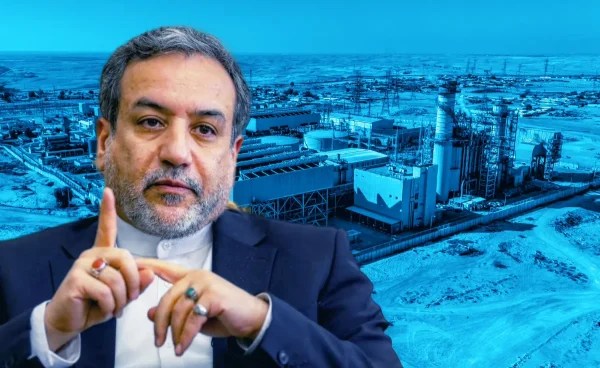
Responding to the designation, Iranian Foreign Minister Abbas Araghchi accused the EU of “fanning the flames” of conflict, despite the fact that Europe would be “massively impacted by an all-out war in our region.” He called the move a “PR stunt” and labeled Brussels “an actor in severe decline.”
The EU designation was initially opposed by several nations, including France, Italy, and Spain. They argued that blacklisting the IRGC – an official branch of the Iranian military – would sever critical diplomatic channels with Tehran.
Kallas dismissed these concerns, telling reporters that “the diplomatic channels will remain open even after the listing of the Revolutionary Guards.”
Iran will likely respond in kind. In 2023, after the European Parliament passed a non-binding resolution calling for the IRGC’s blacklisting, Iran’s parliament drafted legislation that would designate the armed forces of all EU member states as terrorist organizations.
The IRGC has also been labeled a terrorist group by the US, Israel, Canada, Australia, Saudi Arabia, and Bahrain. Iran responded to the US designation in 2019 by applying the same label to US Central Command (CENTCOM).
US President Donald Trump has moved what he calls an “armada” of warships to the Persian Gulf. On Wednesday, Trump urged Tehran to “make a deal” on the future of its nuclear program, or face a “far worse” attack than that on its nuclear facilities last summer.
Iranian Foreign Minister Abbas Araghchi has said that Tehran is willing to negotiate, but that Iranian forces have “their fingers on the trigger” to respond to any US aggression.
Manufacturing martyrdom: The west’s cynical use of Iranian protest figures
By Robert Inlakesh | The Cradle | January 28, 2026
Since the Islamic Republic of Iran imposed a nationwide internet blackout to crack down on what it branded as foreign intelligence-backed riots and a terrorist insurgency, unverifiable death tolls and casualty figures have spread rapidly.
These claims – none of which provide any credible evidence – continue to circulate in a coordinated fashion, amplified by Iranian opposition media and the mainstream western press alike.
Amid the wave of western coverage on Iranian protests, a Toronto-based NGO issued an outrageous claim that Iran had killed 43,000 protesters and wounded another 350,000. The group behind the figure, the International Center for Human Rights (ICHR), offered no footage, no forensic data, and no independently verifiable proof. Yet this statistic – dropped in a flimsy 900-word blog post – was catapulted into public discourse by British-Iranian comedian and opposition supporter, Omid Djalili, who pinned it to the top of his X profile.
As intended, the claim went viral. So did similar or even more extreme death tolls. They were echoed across social media by monarchist influencers, recycled by opposition outlets like Iran International, and eventually laundered into western corporate media coverage. The figures varied wildly – from 5,848 to 80,000 dead – and lacked even the pretense of substantiation. But they all served a clear political purpose: to build a case for regime change in the Islamic Republic.
The CIA fronts posing as human rights groups
The lowest estimate of Iran protest deaths – 5,848 people – came from the US-based group, Human Rights Activists in Iran (HRAI), which admits it is still “investigating” 17,000 additional cases. HRAI is no independent arbiter. It was partnered in 2021 with the National Endowment for Democracy (NED), a US soft-power tool established under former US president Ronald Reagan to continue the CIA’s work under NGO cover.
Another frequent source for Iran’s death tolls is the Abdorrahman Boroumand Center for Human Rights in Iran, which is also funded by NED. One of its board members is Francis Fukuyama, a signatory to the infamous neoconservative blueprint for the “War on Terror,” the Project for a New American Century (PNAC).
Then there is United Against Nuclear Iran (UANI), which claimed 12,000 Iranians were killed in the latest protests. This lobbying outfit, which successfully pressured the World Economic Forum (WEF) to disinvite Iran’s Foreign Minister Abbas Araghchi, counts among its ranks former Mossad chief Meir Dagan, current US Secretary of War Pete Hegseth, and Dennis Ross of the Israel Lobby’s think-tank WINEP.
These entities feed a revolving door of narratives, all designed to delegitimize the Islamic Republic, decontextualize internal unrest, and greenlight foreign meddling.
Israel-backed outrage machines and war agitators
The ICHR – the group behind the 43,000 deaths claim – is based in Canada and almost solely focused on Iran. It openly celebrates Israeli assassinations of resistance leaders like the late Hezbollah secretary-general, Hassan Nasrallah, and praises the “growing friendship” between Israel and the Iranian opposition. Its executive director, Ardeshir Zarezadeh, has published photos of himself posing with Israeli and monarchist flags while toasting with wine.
The organization also employs extremely politically biased language, like labeling the Iranian government “the criminal regime occupying Iran” in official press releases.
Despite the bombast, the ICHR’s report offers no evidence. It relies on unverifiable “comparative investigative analysis” and anonymous sources, and falsely claims that 95 percent of killings occurred over just two days. There is no footage of anything approaching the numbers it alleges.
Meanwhile, the Iran Human Rights Documentation Center (IHRDC), another US State Department-funded outfit, once promoted a bizarre claim that a protester faked his death and hid in a body bag for three days. Even the IHRDC admitted it could not verify the story – but opposition outlet Iran International broadcast it anyway, while omitting that it was fiction.
Far-right activists in the west, like Tommy Robinson, and monarchist influencers have pushed even more outlandish stories, including the allegation that Iran’s security forces suffocate protesters by zipping them alive into body bags. No evidence required. Just one anonymous voice note.
The IHRDC has also been consulted by the US government to guide its sanctions policy, including the creation of a blacklist targeting Iranian individuals. Its executive director, Shahin Milani, recently posted on X that US President Donald Trump’s overtures to Iranian protesters, if “not backed up by overwhelming American support to cripple the regime’s armed forces,” would “constitute the greatest betrayal of Iranians by the West.”
This is part of a broader US strategy whereby Washington has poured funding into dozens of NGOs focused solely on Iran, from women’s rights outfits to ethnic minority advocacy groups, all tasked with feeding the narrative architecture of regime change.
Manufacturing atrocity, laundering lies
The propaganda pipeline runs from online influencers to western media. Take online activist Sana Ebrahimi, who claimed 80,000 protesters had been killed, citing only a friend “in contact with sources inside the government.” Her post garnered over 370,000 views.
Soon after, British radio station LBC News quoted an “Iranian human rights activist” named Paul Smith, who upped the death toll to 45,000–80,000. Smith, it turns out, is a regime change agitator on social media who endorses US military intervention in Iran.
In October 2025, the Israeli daily Haaretz exposed how Tel Aviv funds Farsi-speaking bot farms to promote Reza Pahlavi – the exiled son of Iran’s former monarch – and spread anti-government propaganda. These same bots helped inflate Iran protest narratives back in 2022. It is a digital war campaign masked as grassroots outrage.
Time Magazine claimed 30,000 Iranians had been killed, citing two anonymous Health Ministry officials. Iran International topped that, citing its own unverifiable sources to allege over 36,000 deaths.
Only Amnesty International, despite its hostile posture toward Tehran, refrained from a specific number, saying only that “thousands” had died. That estimate roughly aligns with Tehran’s own figures: Iran’s Foundation of Martyrs and Veterans Affairs reports 3,117 deaths, including 2,427 civilians and security personnel.
When lies become ‘casus belli’
There are plenty of legitimate criticisms to make of the Iranian state. But what we are seeing now is a coordinated misinformation offensive driven by Washington‑backed networks, Tel Aviv’s propaganda arms, monarchists and other oppositionists in exile, and compliant corporate press.
The grotesque death tolls and phantom atrocity stories being circulated follow a familiar imperial playbook: the bogus incubator babies in Kuwait in 1990, the forged WMD claims in Iraq in 2003, the invented Libyan “genocide” in 2011, and the endless chemical weapons fabrications in Syria. Each time, the purpose was the same: to build a ‘casus belli.’
The people who died in Iran’s protests have become props in another foreign-backed narrative war, laying the groundwork for selective intervention disguised as humanitarian concern.
Attack on Iran would backfire, causing great losses for US, warns European think-tank
Press TV – January 28, 2026
The US faces serious risks if it attacks Iran again, which held back much of its military strength during the 12-day June 2025 war, and any future aggression could provoke a far stronger response, warns the European Council on Foreign Relations (ECFR).
A report from ECFR published on Tuesday highlights Iran’s unmatched combination of size, population, and military capability, saying, “With over 90 million citizens and territory nearly four times the size of Iraq, Iran presents a logistical and operational challenge far exceeding previous US interventions.”
Libya’s population during NATO’s 2011 aggression was fifteen times smaller than Iran’s, while Iraq’s population at the 2003 invasion was less than one-third of today’s Iranian population, the report said.
ECFR notes that such scale, combined with Iran’s geographic diversity, makes any attempt to overthrow Iran’s government extremely difficult.
During the June 2025 war, Iran deliberately refrained from using much of its military arsenal. ECFR analysts observe that Tehran “could deploy weapons and strategies it has so far held in reserve if its national security were threatened.”
This deliberate restraint illustrates Iran’s strategic patience and credible deterrence, signaling that further US escalation would encounter formidable resistance, according to the report.
Iran also benefits from a network of regional allies, including resistance groups in Iraq, Lebanon, and Yemen, which could coordinate defensive or retaliatory actions against potential aggressors.
According to the report, Tehran’s military readiness extends beyond conventional forces as it is capable of protecting critical oil infrastructure and controlling the Strait of Hormuz, a strategic chokepoint for global energy supplies. Any disruption there could cause severe economic consequences worldwide.
Historical experience reinforces ECFR’s warnings. Past US interventions in Libya and Syria, launched under the pretext of protecting civilians, instead resulted in prolonged instability, economic collapse, and widespread chaos.
Similar tactics applied in Iran would backfire, causing greater losses for Washington while leaving Iranian sovereignty intact, ECFR noted.
This comes as European and regional powers have urged caution, emphasizing that Iran’s thirteen land and maritime borders make any large-scale conflict highly destabilizing.
“Iran’s combination of population, territory, and disciplined military forces ensures that external powers cannot easily impose their will,” the report emphasizes.
Iran has demonstrated restraint during prior conflicts, along with its military capabilities, which would give it a strategic advantage in deterring foreign intervention, ECFR concluded.
Idea of limited, fast strike on Iran misjudges our capabilities: IRGC
Al Mayadeen | January 27, 2026
The notion of carrying out a “limited, rapid, and clean” operation against Iran stems from flawed assumptions and a poor judgment of Tehran’s defensive and offensive capabilities, a senior military official at Iran’s Khatam al-Anbiya Central Headquarters of the Iranian Islamic Revolution Guard Corps (IRGC) stated in response to threats levelled by the United States and “Israel”.
The official emphasized that the Iranian armed forces “do not monitor enemy movements only during the execution phase; they carefully track early indicators of any threat to the nation’s security.”
“Operational decisions will be made based on field assessments at the appropriate time,” he asserted.
He cautioned that any scenario “designed around surprise or control over the scope of conflict will spiral out of control from the very first stages,” noting that “the presence of US aircraft carriers and military equipment in the region has been exaggerated.”
Highlighting Iran’s strategic advantage in its waters, he said, “The maritime environment surrounding Iran is familiar and fully monitored by the Iranian armed forces. The concentration of forces and equipment from outside the region in such an environment will not serve as a deterrent; rather, it increases their vulnerability and makes them accessible targets.”
The official further asserted that, over recent years, “Iran has relied on its local naval capabilities, its asymmetric defense doctrine, and unique geopolitical strengths, shaping military equations in the Gulf and the Sea of Oman in a way that prevents any aggressor from assuming the security of its forces and bases is guaranteed.”
No attempt to undermine Iran will succeed
Referring to past attempts to influence Iran’s internal affairs or undermine its political structure, he noted that “whether through political and economic pressure, military threats, or psychological warfare, such efforts have always failed, and this flawed approach will not succeed in the future either.”
“Iran will not be the initiator of any war, but it will not allow any threat to its national security to progress to the execution stage, even at its earliest phases,” he stressed.
The official placed full responsibility for any unintended consequences “directly on parties that jeopardize the stability of the entire region, whether through provocative and interventionist presence or through direct and indirect support.”
This closely follows remarks by the head of the Iranian Journalists’ Association and member of the Government Media Council, Masha’Allah Shams al-Wa’izin, who told Al Mayadeen that Washington has conveyed, through a third party, that Iranian facilities could be targeted by attacks, while expecting Tehran to absorb any such strikes “without a severe response.”
Shams al-Wa’izin stressed, however, that from Iran’s perspective, any so-called limited strike would be treated as a full-scale war, dramatically increasing the cost for any potential aggressor. He further claimed that the United States and “Israel” had orchestrated recent events involving armed riots inside the country following what he described as the failure of a 12-day war on Iran.
He also dismissed what he called “conflated and false” reports circulated by opposition groups regarding alleged developments in Iran, saying they originated from “armed opposition based in Tel Aviv and Paris.”
“The United States wants Iran to surrender,” Shams al-Wa’izin said, adding that no self-respecting nation could accept such threats. He described the recent US military buildup in the region as political signaling by President Donald Trump toward Iran’s leadership, while underscoring that Tehran possesses multiple leverage points and capabilities to respond to any form of pressure.
US Military Buildup on Land, Air, and Sea Raises Fears of Imminent Attack on Iran – Expert
Sputnik – 27.01.2026
The US and Israel “have outlined a plan for the next phase in resolving the Iranian issue… The level of military readiness at all levels in Iran is high and has reached a red line,” Lebanese expert Brigadier General Malik Ayub tells Sputnik.
However, Israel is unlikely to participate in a war against the country, Ayub notes. Its involvement would be a “serious mistake,” given its inability to withstand the previous confrontation with Iran.
The expert suggests that if war breaks out, Iran will strike Israel to use it as leverage against the US, and if Israel joins the conflict, the war will be devastating and with unpredictable outcomes.
As for the American military bases in the region, Iran will consider them US territory, not Arab land, Ayub believes.
He also mentions that Hezbollah could use a war as a “golden opportunity” to liberate five positions in southern Lebanon, shifting the balance of power both domestically and internationally.
Speaking about Iran’s allies in the region, Ayub notes that the conflict would threaten the Gulf states’ interests, particularly Saudi Arabia, by jeopardizing the Strait of Hormuz and disrupting access to significant oil supplies and global maritime trade.
Why Israel’s Drive to Destroy Iran is Ultimately about Palestine
By Robert Inlakesh | Palestine Chronicle | January 26, 2026
While the regime change propaganda about Iran continues to circulate, it is important to understand that the only real reason Israel seeks to topple the Islamic Republic is because of its role in supporting the Palestinian struggle.
Pro-war think tanks, media outlets, social media influencers, and rights groups have not relented in their blatant disinformation campaigns, designed solely to manufacture consent for a war of aggression against Iran.
The number of protesters that regime change advocates claim were killed by the Iranian authorities appears to grow by the day. First, it jumped from thousands to just over ten thousand. Now, you may be seeing the claim that 43,000 were killed, while 350,000 are injured and 20,000 await execution.
So where are these figures coming from? The 43,000 figure comes from a group called the “International Center for Human Rights” (ICHR), based in Toronto, Canada. On its website, it presents itself as a “non-governmental, non-profit international organization dedicated to promoting and defending human rights and democratic values.” However, it is a group that focuses almost entirely on Iran and celebrates the importance of the alleged “growing friendship between Iran and Israel.”
Unlike human rights groups like Amnesty International or Human Rights Watch (HRW), it uses extremely biased language, such as labeling the Iranian government the “terrorist regime” or a “criminal regime occupying Iran.” It is also explicitly in favor of regime change.
Its executive director, Ardeshir Zarezadeh, even praised Israel’s assassination of Hezbollah leader Seyyed Hassan Nasrallah, posting a photo of himself and his colleague, Ahmad Batebi, drinking what appears to be wine, with Israeli and Iranian opposition flags behind them. For context, that Israeli strike killed around 300 civilians.
Without having to go into any more depth on this Canada-based human rights center, it suffices to say that it is far from a neutral source. The reason for pointing out where these figures come from is to say that those repeating such extreme and unsubstantiated claims are not doing their due diligence.
The blind acceptance of such ridiculously high casualty numbers, which exceed the casualty tolls from some wars and major battles in the region, is what gives way to a free-for-all of ridiculous atrocity propaganda. Take, for example, regime change advocate influencer Sana Ebrahimi, who recently claimed that over 80,000 protesters were killed, citing “someone who is in contact with sources inside the government.”
When we cite casualty numbers as journalists, it is incumbent upon us to check our sources. The refusal to check sources is precisely how the “300 babies thrown out of incubators by Iraqi forces in Kuwait” and “40 babies beheaded by Hamas” hoaxes spread.
As of now, there are no internationally verified numbers of how many protesters, rioters, and armed militants were killed during the recent round of unrest in Iran. Tehran has produced its own figures, which it backs up with names and documentation, but in terms of impartial “international investigations,” there is simply no evidence for any of these figures being circulated.
It’s All About Palestine
It is no secret that the Israeli government is backing and allied with the Iranian opposition and is seeking regime change. It has been revealed by a Haaretz investigation that Israel has used bots and paid Persian-language speakers to promote the Shah’s son as the alternative leader of the country. It is also no secret that the excuse for bombing Iran has shifted from “eliminating the nuclear threat,” to “eliminating their ballistic missile program,” and now to “they are killing their own people.”
But why are the Israelis so invested in destroying Iran? The reason is very simple: Iran’s government is the only one on earth that provides military assistance to the Palestinian resistance.
Iran is allied with every Palestinian political faction that uses violent resistance against the Israelis. It arms Hamas and Palestinian Islamic Jihad (PIJ), but also Marxist groups like the Popular Front for the Liberation of Palestine (PFLP) and nationalists like the Al-Aqsa Martyrs Brigades—an unofficial armed wing falling within the fold of the Fatah movement. It does so without requiring anything in return. It trains armed resistance groups and helps in the development of Gaza’s tunnel infrastructure.
The Islamic Republic also supports Yemen’s Ansarallah, which played a key role in fighting on the side of Gaza during the entire course of the genocide. It also supports Hezbollah in Lebanon.
Every armed force that Iran supports in the region is opposed to Israel, including Iraq’s Popular Mobilisation Units (PMU), components of which repeatedly fired drone and cruise missiles at Israel.
Some argue that the Iranians do this for strategic reasons. The counterargument is that if this has been the primary driver of support for the Palestinian cause, why then have the Iranians refused to use this as a bargaining chip in negotiations with the United States? Another counterpoint offered is that Iran is punished because it supports Palestine, not the other way around.
Regardless of whether you take the viewpoint that Iran’s support for resistance against the Israelis is born of moral concerns, strategic concerns, or both, there is no denying that the support exists. No other country, except Ansarallah’s government in Yemen, has directly fought the Israelis.
If Iran’s government is toppled and replaced with a pro-Israel puppet dictator, this would lead to the total collapse of the entire support infrastructure behind the regional players resisting Israel. In other words, this outcome would give the Israelis a free hand in Lebanon and enable them to do with the Palestinian people whatever they choose.
Therefore, it is a contradiction to claim you support toppling the Iranian government and also support Palestine. It would be like claiming you support the overthrow of the Soviet Union and a plot to install a German puppet regime during World War II, while still claiming to oppose the Nazis. These positions are irreconcilable.
Does this mean you need to blindly support the Islamic Republic? Evidently not. Rather, simply consider your stance using the above-mentioned analogy.
The US-Israeli effort to cause regime change in Iran has nothing to do with the people of Iran. It is all about destroying the resistance groups fighting against them. Therefore, the end of the Islamic Republic means the end of the Palestinian resistance and total Israeli domination of the entire region.
That is the truth.
– Robert Inlakesh is a journalist, writer, and documentary filmmaker. He focuses on the Middle East, specializing in Palestine.
Trump and Iran, War or Negotiations?
By Samyar Rostami – New Eastern Outlook – January 26, 2026
Although the likelihood of a US attack on Iran has greatly increased. If Iran shows widespread strength and resistance, the Americans will retreat. Iran’s response to military attacks will certainly be more severe and comprehensive than in previous cases.
In the national security document published in Trump’s second administration, like the previous two documents, the national defense of the United States is characterized, as it includes the defense of the territory, the defense of the people, the defense of the political system, and the defense of the economy.
Iran’s position was also prominent in previous documents. In that document, the name of Iran was repeated six times, and it was one of the greatest threats to US national security. It was proposed, and in addition, in two other cases, it referred to the threat of Iran.
In the latest document, the number of these references has been reduced to three. In the new document, direct reference to Iran’s nuclear program has been almost eliminated. But the issue and role of waterways is still prominent in this document; in fact, this time the name of the Strait of Hormuz is explicitly mentioned and emphasized in the new document.
The new US national security document depicts Iran in the general framework of “weakening” and does not actually mention Iran as a fundamental threat. But this does not mean that the United States no longer considers Iran a threat.
War or negotiations
The behavior of the Trump administration, namely in recent months, has been not only in rhetoric but also in practice anti-Iranian, from pressuring European governments to activate the snapback mechanism to supporting Israeli military actions, seizing ships suspected of carrying weapons to Iran, and even actions such as seizing ships off the coast of Venezuela.
Given the current state of US-Iran relations, the US has two options: moving towards an agreement or adopting a military option, but Washington’s desire is to stop Iran’s nuclear capability without falling into the quagmire of eternal wars.
The issue of negotiations had been stalled since the 12-day war because Tehran refuses to return to negotiations before receiving the necessary guarantees from the US about not starting another attack against Iran by Israel or the US and having the right to enrich uranium.
Not all Trump officials and aides share the same view and approach, and some believe that negotiating with Tehran will increase Iran’s legitimacy. Within the administration, it seems that some are willing not to move towards a military option before diplomatic solutions are exhausted.
Also, the United States, which previously adopted a policy of “maximum pressure campaign,” still claims to protect the rights of the Iranian people. In this regard, Donald Trump has now imposed a 25% customs tariff on any country that has trade relations with Iran, which could have a negative impact on Iran’s economic relations. Trump also called for illegal actions, including the occupation of government institutions, by asking Iranian protesters to continue the protests and even promised that help was on the way.
The United States is also using the protests inside Iran as a tool to gain more concessions from Tehran in any possible agreement.
Iran’s readiness for diplomacy and defense
Previously, Iranian Foreign Minister Abbas Araghchi had emphasized that the United States and the regime would not achieve a different result by repeating the previous failed experience. “Iran is much more prepared than the 12-day war,” he said, adding, “I hope the wise option will be chosen. We will prepare diplomatic and economic options.”
In a situation where an average of $10 billion was allocated annually for the import of basic goods, the government came to the conclusion that economic surgery should be performed in this area; the preferential currency should be eliminated for consumers.
The protests in Iran have been carried out peacefully since early January by a group of people and trades in response to currency fluctuations and the living conditions. The government announced that it recognizes these protests and efforts to address these concerns are ongoing. However, after a week and on January 8-9, the protests by terrorist elements turned into riots in cities, destroying government, public, relief, and mosques.
Iranian authorities have made mass arrests of terrorist elements in team houses and terrorist cells, and they even have documents about the connections between these terrorist elements and the United States and Israel.
In the view of government spokeswoman Fatemeh Mohajerani, the peaceful protests of the people were subjected to a terrorist attack. Also, Brigadier General Ahmad Ali Goodarzi, Commander of the Faraj Border Guard, announced the identification and destruction of 3 terrorist teams before they entered the country at the country’s borders and the discovery of weapons and ammunition from them.
Amir Saeed Iravani, Ambassador and Permanent Representative of Iran in the United Nations, stated in a letter to the Security Council and the Secretary-General of the UN: “The Islamic Republic strongly condemns the continuous, illegal, and irresponsible behavior of the United States of America in coordination with Israel to interfere in Iran’s internal affairs through threats, incitement, and deliberate encouragement of instability and violence.”
Also, internal cohesion among political groups and figures in Iran is established and stable. Apart from the words and positions of the Leader of Iran, the representatives of the Islamic Consultative Assembly (Parliament) considered the government’s decision (end of the consumption chain) a courageous act and an important step.
The parliament speaker, Mohammad Bagher Ghalibaf, said, “At this time, the responsibility of us as Iranian officials is to confront the enemy in the economic war.”
From the perspective of Hassan Rouhani, if a foreign aggressor wants to abuse the protest within the family, the family members will put aside the difference and break the aggressor’s hand.
In fact, from Tehran’s perspective, Iran is ready for both war and negotiation. That means fair, honorable, and equal negotiations with mutual respect and based on mutual interests are still the priority, not giving orders and dictating. Iran also has preconditions.
Although the US has greatly increased its forces in the region. Iran’s military forces are also at the peak of defensive readiness and are ready to confront any aggression and evil of the enemy against Iran. Therefore, any action must face retaliation from Iran.
The amount of oil sales in the past 14 months in the form of export shipments has been record-breaking. The creation of new restrictions on the sale of Iranian oil does not create any serious restrictions on Iran’s oil sales processes.
Outlook
It seems that the US is paying special attention to shaping a soft transformation and a colorful and internal revolution in Iran, along with hard threats as a means of pressure. But internal cohesion among political groups and figures in Iran is established and stable.
Although the likelihood of a US attack on Iran has greatly increased. If Iran shows widespread strength and resistance, the Americans will retreat. Iran’s response to military attacks will certainly be more severe and comprehensive than in previous cases.
In the meantime, Washington’s failure in the direction of the hard programs could make the path of interaction or resolution of issues between Iran and the United States, in the new framework, more complex.
Samyar Rostami is а political observer and senior researcher in international relations.
Follow new articles on our Telegram channel
US pledges to ‘starve’ Iraq of oil revenue if pro-Iran parties join new government
The Cradle | January 23, 2026
Washington has threatened to block Iraq’s access to its own oil revenue held in the Federal Reserve Bank of New York if representatives of Shia armed parties enjoying support from Iran are included in the next government, Reuters reported on 23 January.
“The US warning was delivered repeatedly over the past two months by the US Charges d’Affaires in Baghdad, Joshua Harris, in conversations with Iraqi officials and influential Shi’ite leaders,” Reuters reported, citing three Iraqi officials and one source familiar with the matter.
The threat is part of US President Donald Trump’s effort to weaken Iran through a “maximum pressure” campaign of economic sanctions, including on the Islamic Republic’s oil exports.
Trump also bombed Iran’s nuclear sites as part of Israel’s unprovoked 12-day war on Iran in June.
Because of US sanctions, few countries can trade with Iran, increasing its reliance on Iraqi markets for exports and on Baghdad’s banking system as a monetary outlet to the rest of the world.
As punishment, the US government has restricted the flow of dollars to Iraqi banks on several occasions in recent years, raising the price of imports for Iraqi consumers and making it difficult for Iraq to pay for desperately needed natural gas imports from Iran.
However, this is the first time the US has threatened to cut off the flow of dollars from the New York Federal Reserve to the Central Bank of Iraq.
Officials in Washington can threaten Baghdad in this way because the country was forced to place all revenues from oil sales into an account at the New York Fed following the US military’s invasion of the country in 2003.
This gives Washington strong leverage against Baghdad, as oil revenue accounts for 90 percent of the Iraqi government’s budget.
While occupying Iraq for decades and controlling its oil revenues, Washington accuses Iran of infringing on Iraq’s sovereignty.
“The United States supports Iraqi sovereignty, and the sovereignty of every country in the region. That leaves absolutely no role for Iran-backed militias that pursue malign interests, cause sectarian division, and spread terrorism across the region,” a US State Department spokesperson told Reuters.
Some Shia political parties, including several that make up the Coordination Framework (CF), are linked to the Popular Mobilization Units (PMU), anti-terror militias formed in 2014 with Iranian support to fight ISIS and later incorporated into the Iraqi armed forces.
Iraq held parliamentary elections in November and is still in the process of forming the next government.
Prime Minister Muhammad Shia al-Sudani, who enjoyed good relations with both Washington and Tehran, has decided not to contend for another term as premier.
The decision has cleared the way for Nouri al-Maliki, of the State of Law Coalition and the Dawa Party, to potentially return to power.
Maliki, who enjoys support from the PMU-linked parties, served as prime minister between 2006 and 2014, including when ISIS invaded western Iraq and conquered large swathes of the country.
Trump threatened a new bombing campaign against Iran following several weeks of violent riots and attacks on security forces organized and incited by Israeli intelligence.
Trump allegedly called off the bombing after Israeli Prime Minister Benjamin Netanyahu warned him that Tel Aviv’s air defenses were not prepared for a new confrontation with Iran.
During the war in June, Iran retaliated against Israel by launching barrages of ballistic missiles and drones, which did severe damage to Israeli military sites, including in Tel Aviv.
Why is the US using Jordan as the main base in possible Iran attack?
By Ali Jezzini | Al Mayadeen | January 23, 2026
US forces have amassed in Jordan ahead of a possible war on Iran, aiming to shift early retaliation away from Israelis, and exploit US airpower, while risking strategic miscalculation and overreach.
Over the past week, the United States has significantly reinforced its military footprint in West Asia amid rising tensions with Iran, deploying F-15 fighter jets and KC-135 tanker aircraft to Jordan’s Muwaffaq Salti Air Base as part of a broader repositioning of airpower ahead of a potential attack on Iran.
This buildup, which can be tracked using publicly available satellite images, comes against the backdrop of Iranian warnings to retaliate against American bases in the region should Washington — or its allies — launch an attack on Iranian territory. It also follows movements of US forces and dependents at several regional posts as a staging for possible offensive operations. The intensification of US deployments has thrust installations like Muwaffaq Salti, long a strategic node in Western forces’ deployment in West Asia, into the spotlight as both a potential launch point for attacks and a possible target in any wider conflict.
Why Jordan’s Muwaffaq Salti Air Base?
Part of the United States’ increasing focus on Jordan’s Muwaffaq Salti Air Base is not simply due to its distance from Iran’s most accurate short-range ballistic missiles, approximately 800–900 kilometers from Iran’s borders, but also because it may be intended to function as a primary Iranian target, or punching bag, in any initial phase of a wider war.
What follows is an attempt to analyze American strategic thinking, though it does not claim that events will necessarily unfold in this precise manner. From Washington’s perspective, “Israel” remains the crown jewel of the imperial order, an extension of US polity itself. During the most recent phase of confrontation, “Israel” encountered serious difficulties intercepting Iranian ballistic missiles, threats it now equates with nuclear weapons in strategic gravity. This urgency explains the current haste, as Iranians ought to possess much greater defensive capabilities in the future, coupled with the baptism by fire they endured during the June 12-day war.
Destroying Iran’s missile program outright is unrealistic, since large parts of the supply and production chains are dispersed in highly fortified underground facilities. As a result, targeting the Islamic system itself, seeking regime change, and sustaining what the US deems as acceptable costs may appear more logical to American planners. In their calculation, such an outcome would justify heavy losses, provided it ends the conflict definitively.
Israeli claims regarding the self-sufficiency and effectiveness of their air defenses are among the most exaggerated on earth. In reality, NATO intelligence and military capabilities played a decisive role in interception efforts, operating out of Jordan. This included US, Jordanian, and French air forces taking off from Jordanian bases, in addition to extensive intelligence, logistics, and aerial refueling missions done by NATO countries, including the UK.
Israeli leadership attempted to strike early under ideal surprise conditions before defensive gaps accumulated and before they were drawn into a prolonged escalation cycle they could not sustain. Even internal measures, such as preventing Israeli settlers from leaving during the war, reflected an acute awareness of how fragile the situation could become if panic spread; that kind of optics is strategically disastrous for a regime that sells itself as secure, resilient, and permanent.
Most interception during the last confrontation in June 2025 was conducted by US naval assets using SM-3 interceptors and THAAD systems. Roughly 25 percent of all THAAD interceptors ever produced were reportedly consumed in that single episode. The persistent exaggeration of Israeli offensive and defensive capabilities, while significant but short-winded, serves two purposes:
- First, it counters the internal Israeli narrative that the United States “saved Israel” after October 7, a deeply sensitive issue tied to Israeli national security self-perception that panics at the idea of having such a level of dependency on the US.
- Second, it preserves an image of invincibility before regional actors, enhancing the regime’s deterrence.

Returning to Jordan: American planners show little concern for Jordanian costs or the consequences for the base itself, which is situated around 70km from the capital Amman. From this perspective, it may even be deemed acceptable for the US if Iran expends part of its ballistic arsenal striking the base, even at the cost of Jordanian casualties.
The American assumption is that they would then be able to launch a major air campaign to destroy Iranian missile production, storage, and launch sites. This would pave the way for an Israeli entry into a second phase of the war, one in which it would no longer face missile volumes it cannot absorb, as it almost did in the June war, as it was running out of interceptors after a presumed US airpower success in weakening the system and reducing launch capacity.
From Iran’s standpoint, directly starting with “Israel” may actually be more rational. An Israeli participation in any war appears almost inevitable, either immediately or at a later stage, for multiple reasons.
Despite the massive US buildup, which includes more than 36 F-15Es, an aircraft carrier, and several destroyers with capabilities to launch cruise missiles, Israelis still retain greater immediate regional firepower than the United States, but it seeks to avoid sudden, large-scale damage to its own infrastructure.
American intentions likely go beyond limited bombings, assassinations, or “decapitation” strikes, as seen previously, if their attack would make sense in terms of weighing gains and possible losses. They may include direct strikes targeting the Iranian leadership, severe economic and energy infrastructure degradation, and long-term destabilization designed to enable internal regime change, added to the sanctions.
The withdrawal of American aircraft from Gulf bases was not only due to their vulnerability to short-range, high-precision weapons that Iran’s arsenal is full of, but also to protect Gulf oil production in the event of war. Gulf states, for their part, would publicly distance themselves from hostilities to shield their economies and prevent market shocks, particularly to avoid upsetting Trump amid any market volatility.
While it is possible to disrupt US operations at Muwaffaq Salti Air Base, expending large numbers of ballistic missiles there, missiles that could instead strike high-value counter force and counter value Israeli targets, may be less strategically viable than other options if the US is prepared to escalate toward total confrontation regardless. Completely and permanently disabling the base would be difficult, and the strategic outcome would likely remain unchanged.
American planners appear convinced that Iran will avoid targeting Jordanian state infrastructure or attempting to destabilize the Jordanian monarchy, as such actions can be used for counterpropaganda. They assume Iran will focus on Western and Israeli forces, confining hostilities to sparsely populated desert areas that Jordan can absorb.
Jordan, governed by a monarchy heavily dependent on Western and Gulf countries’ political and economic support, appears to share this assessment. King Abdullah likely believes his rule faces no serious internal risk and that alignment with Western strategy is the safer course, as his country was credited for being “Israel’s” shield against Iranian drones in the June 2025 war.
Under this framework, the US would launch an air campaign using aircraft operating from Jordan to strike western Iran, while carrier-based aircraft in the Arabian Sea attempt to open corridors toward central Iran from the Gulf. This would allow heavy bombers from Diego Garcia to penetrate deeper and strike strategic targets. The Israeli occupation would then enter at a later stage.
The simplest counter-strategy is to do precisely what the Americans do not expect, and to inflict maximum cost. The theory that remains largely unrefuted: Trump is risk-averse. As Western media itself jokes, TACO (Trump Always Chickens Out), he dislikes long wars, favors last-minute, flashy interventions, and avoids sustained attrition. This suggests a vulnerability: American short-termism and reluctance to absorb prolonged pain, particularly when multiple theaters remain active.
Some may ask why Iran does not simply launch a preemptive strike. This is a clear option, but not an uncomplicated one. An initial Iranian strike could rally American public opinion behind a longer war, granting Trump broader authority, resources, and popular support. While it would disrupt US planning and cause early damage, it might ultimately strengthen Washington’s domestic position. By contrast, an American-initiated war, prolonged, unpopular, and costly, would be far more vulnerable to internal pressure, especially if American losses mount.
Adding to the complexity, two Emirati Il-76 cargo aircraft reportedly landed in Tel Aviv before flying on to Turkmenistan. These aircraft are known to be used by the UAE to supply proxy forces with weapons, particularly in Sudan and Somalia, raising the possibility that they were transporting drones or intelligence equipment for regional operations.
The picture remains highly complex, and it is entirely possible that nothing will happen. Still, based on current force deployments and escalation patterns, the probability of a US attack appears to have risen beyond a 50-50 threshold.
This analysis reflects what American planners may be thinking, not what will necessarily occur. It should be noted that after the previous war, many US and Israeli officials declared that Iran’s nuclear and missile programs had been torpedoed, and the system effectively destroyed, assessments that quickly proved false. Now, only months later, they appear to believe that an even more violent war is required to achieve what the last one supposedly already accomplished.
On the other hand, if endurance is possible and the United States is forced to retreat, Trump TACOs or abandon Israelis mid-conflict — an outcome not inconceivable under a president like Trump — the cumulative effects of “Israel’s” recent dominance and coercion across the region may yet be reversed.
As mentioned earlier, the US buildup is not sufficient to start a prolonged attack against Iran with the high goals of regime change. The buildup still does seem as defensive posturing shielding the Israelis, so a chance the Israelis might initiate and use the limited US and Western buildup as a shield is still significant. A scenario similar to what happened in the last war, but that does entail Israeli losses in the opening phase.
Conclusion
What emerges from this assessment is a US strategy built on supposed escalation control, risk displacement, and the assumption that others will behave within predefined limits. Washington appears to believe it can shape the battlefield geographically, pushing early phases of the war away from the fragile “Israel”, absorbing initial retaliation through peripheral bases, and then intervening decisively to reshape the balance before handing the fight back to Israelis under more favorable conditions. This is not a strategy aimed at victory in the classical sense, but at managing exposure and buying time.
The weakness in this thinking lies in its dependence on predictability. It assumes Iran will refrain from actions that collapse the carefully constructed sequencing of the war, that regional systems will remain stable under strain, and that American political leadership will tolerate the costs long enough to reach a decisive point. None of these assumptions is guaranteed. If any one of them fails, the entire escalation ladder becomes unstable.
Ultimately, the outcome of any confrontation will not be decided by the opening phase or by claims of technological superiority, but by endurance, political cohesion, and the ability to impose sustained costs on an adversary unwilling to absorb them.
The United States may possess overwhelming firepower, but it remains constrained by limited strategic patience and domestic vulnerability. If those constraints are effectively exploited, the very war designed to resolve the Iranian question may instead deepen American entanglement and erode the regional order it seeks to preserve.