The US government has explicitly ordered Britain not to publish the contents of the four-year-long inquiry into the Iraq War carried out by Sir John Chilcot.
The administration of US President Barack Obama insists that certain parts of the Iraq Inquiry, known as the Chilcot Inquiry, could not be released as it is focused on the pre-war conspiracy hatched by the former US president George W. Bush and former British Prime Minister Tony Blair, The Independent has revealed.
Tony Blair led Britain into the US-led invasion of Iraq in March 2003 on the false pretext that the country’s Ba’athist regime possessed ready-to-use weapons of mass destruction (WMDs). No such arms were ever found in Iraq, but hundreds of thousands lost their lives following the invasion.
According to some leaks from the inquiry, Bush and Blair began conspiring for the Iraq War only weeks after Bush was inaugurated as the US president in 2001.
Now, the US government claims that Bush-Blair conversations and even those comments made by Blair to the inquiry are the property of the US government and has therefore decided to keep them classified.
“The US are highly possessive when documents relate to the presence of the President or anyone close to him. Tony Blair is involved in a dialogue in many of these documents, and naturally someone else is at the other end – the [US] President. Therefore this is not Tony Blair’s or the UK government’s property to disclose,” said one high-placed diplomatic source.
According to the source, who spoke on the condition of anonymity, “Chilcot, or anyone in London, does not decide what documents relating to a US President are published.”
This comes as Prime Minister David Cameron has told Chilcot in a letter that some documents needed to be “handled sensitively.”
Elaborating on Cameron’s statements, the Cabinet Office told The Independent: “It is in the public’s interests that exchanges between the UK Prime Minister and the US President are privileged. The whole premise about withholding them [from publication] is to ensure that we do not prejudice our relations with the United States.”
Therefore, the authors of the inquiry’s final report, including Chilcot and his team, are under heavy pressure not to hurt the so-called “special relationship” between Britain and the US.
It’s also expected that they will publish a neutral report in spring next year which will lack evidence to charge Blair with serious policy failures, and it may also be such a redacted report as to be meaningless and a waste of almost £8 million of British taxpayers’ money.
Ann Jones’ new book, They Were Soldiers: How the Wounded Return from America’s Wars: The Untold Story, is devastating, and almost incomprehensibly so when one considers that virtually all of the death and destruction in U.S. wars is on the other side. Statistically, what happens to U.S. troops is almost nothing. In human terms, it’s overwhelming.
Know a young person considering joining the military? Give them this book.
Know a person not working to end war? Give them this book.
Jones presents the choice before us in the clearest terms in the introduction:
Contrary to common opinion in the United States, war is not inevitable. Nor has it always been with us. War is a human invention — an organized, deliberate action of an anti-social kind — and in the long span of human life on Earth, a fairly recent one. For more than 99 percent of the time that humans have lived on this planet, most of them have never made war. Many languages don’t even have a word for it. Turn off CNN and read anthropology. You’ll see.
What’s more, war is obsolete. Most nations don’t make war anymore, except when coerced by the United States to join some spurious ‘coalition.’ The earth is so small, and our time here so short. No other nation on the planet makes war as often, as long, as forcefully, as expensively, as destructively, as wastefully, as senselessly, or as unsuccessfully as the United States. No other nation makes war its business.
Jones begins her book with that distinguishing feature of war: death. The U.S. military assigns specialists in “Mortuary Affairs” to dispose of the dead. They dispose of their own sanity in the process. And first they dispose of their appetite. “Broiled meat in the chow hall smells much the same as any charred Marine, and you may carry the smell of the dead on a stained cuff as you raise a fork to your mouth, only to quickly put it down.” Much of the dead is — like the slop at the chow hall — unrecognizable meat. Once dumped in landfills, until a Washington Post story made that a scandal, now it’s dumped at sea. Much of the dead is the result of suicides. Mortuary Affairs scrubs the brains out of the port-o-potty and removes the rifle, so other troops don’t have to see.
Then come, in vastly greater numbers, the wounded — Jones’ chapter two. A surgeon tells her that in Iraq the U.S. troops “had severe injuries, but the injuries were still on the body.” In Afghanistan, troops step on mines and IEDs while walking, not driving. Some are literally blown to bits. Others can be picked up in recognizable pieces. Others survive. But many survive without one or two legs, one or two testicles, a penis, an arm, both arms — or with a brain injury, or a ruined face, or all of the above. A doctor describes the emotion for a surgical team the first time they have to remove a penis and “watch it go into the surgical waste container.”
“By early 2012,” Jones writes, “3,000 [U.S.] soldiers had been killed by IEDs in Iraq and Afghanistan, and 31,394 wounded. Among the wounded were more than 1,800 soldiers with severe damage to their genitals.” Doctors treat an injured soldier’s limbs first, later their genitals, later still their brains.
Back in the states, two young parents and “two pretty adolescent girls,” step up “to sit on the padded platforms in the center of the room. They move with the tentative sobriety of shock. Aides wheel in a gurney that bears a bundle in a flannel sheet. They gather the edges of the sheet and swing the package over the platform into the very heart of the family. Carefully they lower it and then begin to peel away the wrapping. There, revealed, restored to the family, is the son, their boy, not dead, but missing both arms, both legs, and some part — it’s impossible to tell how much — of his lower torso. The director calls out a cheery greeting, ‘Hi Bobby! How are you doing today?’ Bobby tries to answer but makes no sound. He flops on the platform, an emaciated head, eyes full of fear, his chest all bones under a damp grey ARMY tee shirt…”
Be all that you can be.
In training you’re ordered into a poison gas chamber and exposed to a bit of it. If Assad trained his troops that way, we’d murder a half million Syrians to get even. But U.S. military training is training in blind subservience, usually properly resented when it’s too late. Up goes your chances of being dead, injured, guilt-ridden, traumatized, homicidal, and suicidal. Jones recounts the story of a soldier who murdered two Iraqi prisoners, came home convinced he was a murderer, laid out the two dead Iraqis’ dog tags, wrapped a hose twice around his neck, and hung himself. Twenty-two a day: that’s the count of U.S. veteran suicides according to the V.A. The rate is 4.7 times higher than normal, according to the Austin-American Statesmen’s investigation of Texas veterans. That doesn’t count recklessly crashed cars and motorcycles. And it doesn’t count the epidemic of overdoses of the drugs meant to solve the problem.
How to help such suffering? Therapists used to ask people to talk and now ask them to take drugs. In either case, they don’t ask them to honestly deal with their guilt. Between 2001 and 2007 homicides committed by active duty and veteran U.S. troops went up 90 percent. The military looks for problems in soldiers’ family lives to explain such troubles, as if they all suddenly began marrying the wrong spouses just when their country deployed them into the stupidest war yet waged. Jones tells the story of one Marine who killed his wife but kept her body on the couch to watch TV with him for weeks. “I killed the only girl who ever loved me,” he later lamented. Chances are good he had killed other people who were loved as well — he’d just done so in a context in which some people praised him for it.
One wounded warrior tells Jones he loves war and longs to get back into it. “Blowin’ shit up. It’s fucking fun. I fuckin’ love it.” She replies, “I believe you really mean that,” and he says, “No shit. I’m trying to educate you.” But an older Army officer has a different view: “I’ve been in the army 26 years,” he says, “and I can tell you it’s a con.” War, he believes in rather Smedley Butlerish fashion, is a way to make a small number of people “monufuckinmentally rich.” He says his two sons will not serve in the military. “Before that happens I’ll shoot them myself.” Why? “War is absurd,” he says. “Boys don’t know any better. But for a grown man to be trapped in stupid wars — it’s embarrassing, it’s humiliating, it’s absurd.”
In a recent article on Counterpunch, Rob Urie defended the traditional Marxist analysis of US policy in the Middle East. He argues that support for Israel is driven primarily by economic interest, not the Jewish lobby.
He starts by paying tribute to the idea that Western societies are uniquely racist. He says that the “Western narrative” claims there is an “Arab character”, and that this is “antique racist blather”. He gives no definition of these terms. Further, he establishes his credentials as part of the dominant current in the American left by claiming that “over a million people in Iraq died so ‘we’ in the West can drive SUVs.”1
When he tries to criticize bourgeois economics, he makes it clear he doesn’t understand the developments it has made since Marx’s day, using the mathematical discipline known as “game theory”. He dismisses the basic abstraction of economic theory, the idea of the rational individual, on the grounds that it is “devoid of history, culture and political context”. But abstractions are always devoid of something.
He defends a more concrete economic theory, mostly Marxist, with some input from another theorist of capitalist crisis, Hyman Minsky. This concrete theory leads him to the view that US activity in the Middle East is primarily driven by rational capitalist motives, the need to secure a supply of oil.
“Taking the totality of circumstance — former oil company executives launching war on an oil rich nation on a pretext they publicly proclaimed they didn’t believe shortly before taking office — and that upon launching their war proved to be non-existent, requires a willingness to overlook the obvious — that the war on Iraq was for oil, that is difficult to support.”1
Perhaps I’ve misunderstood him, but based on what he says in the rest of the article, this convoluted sentence seems to argue that, because president Bush and vice-president Cheney attacked Iraq on false premises, and they also said it was all about oil, and they are former oil executives, and Iraq has a lot of oil, it’s difficult to deny US attacks on Iraq are all about oil.
In fact, it’s not hard at all. As Urie points out, at times Bush and co. said that attacking Iraq was “protecting the world’s supply of oil.”1 But, as he also points out, they are congenital liars. Why should we believe them when they say they are trying to “protect” the oil supply? Protect it against what? When politicians “admit” attacks on Middle Eastern countries are wars for oil, they are parroting the neo-con party line, feeding the public, both left and right, with a plausible-sounding pretext. For right-wingers, “it’s a war for oil” is a reason to support war, and for leftists, it’s a way to feel better by complaining impotently about corporate greed. Both approaches help the war drive.
Fortunately, the American public isn’t listening to the “war for oil” canard. Americans of all classes are listening to those who argue, on coherent capitalist grounds, against war in the Middle East. That helped avoid war on Syria.
The predictions of Urie’s theory failed even as he was writing them: “Finally, for those who have moved on from the U.S. war on Syria story, the war is proceeding largely as planned.”
“War for oil” is a lie, and more sophisticated slogans such as “geo-political rationales”1 are too vague to explain anything. If, as a result of an American military adventure in the Middle East, the price of oil goes up, the Marxist left says it was a war for oil because the oil companies benefit. If it goes down, they say it was a war for oil because most of the other companies benefit. Their hypothesis is unfalsifiable.
But their argument that Israel defends America’s interest in the world’s most oil-rich region is easily falsified. Israelis do not fight in America’s wars. It it were in US interests to support Israel, it would not need a multi-million dollar lobby working day and night to undermine any squeak of defiance, corrupting and intimidating politicians from the president down.2 Real friends don’t need lobbies.
Urie rejects the view that the Jewish lobby can explain US support for Israel, on the grounds that, since Israel has a much smaller economy than the USA, it cannot influence the USA to act against its own interests in the Middle East. But that’s not how it works. It’s not that the Lobby has more money than Microsoft. Through its influence on the US government, AIPAC is able to appropriate some of Microsoft’s profits, and use them for a purpose contrary to the interests of most of Microsoft’s shareholders, and almost all Americans, rich and poor. The question is how it does that.
The quaint ideas of Marx and Urie do not explain the curious phenomenon of US support for the Jewish state. The facts are more compatible with the views of Mearsheimer and Walt.2 The long history of US politicians’ groveling to Israel is more economically explained as a real example of Jewish power rather than a facade designed to make us believe it’s an example of Jewish power.
Capitalism is the world’s current economic system. Oil companies like to make a profit. The Pentagon wants to ensure its oil supply and deny it to putative enemies if necessary. There is a lot of oil in the Middle East.
None of these banal observations even begin to explain US policy in the Middle East.
As I wrote three years ago, in a response to Noam Chomsky,
“By means of the Lobby, the tail wags the dog. Its the simplest, clearest, and most economical explanation of the facts.”3
But my explanation still requires an explanation. If ethnic interests, such as the Israel lobby, [Is the “Israel lobby” an “ethnic interest? — DV ed.] can trump class interests, such as the need for stability, and one’s theory says it cannot, something has to give. The power of Israel in the USA and all the other Western countries falsifies the predictions of Marxism so comprehensively, one must conclude that Marxism, at least when it comes to analyzing US Middle East policy, is part of the problem. A radically different approach is needed.
The just announced U.S.-Russia agreement in Geneva on a “joint determination to ensure the destruction of the Syrian chemical weapons (CW) program in the soonest and safest manner” sounds the death knell to an attempt by Israel, Turkey and Saudi Arabia to get the U.S. into the war in Syria.
Equally important, it greatly increases the prospect of further U.S.-Russia cooperation to tamp down escalating violence in Syria and elsewhere in the Middle East. That the two sides were able to hammer out in three days a detailed agreement on such highly delicate, complicated issues is little short of a miracle. I cannot remember seeing the likes of it in 50 years in Washington.
Just two short weeks ago, the prospect of a U.S. military strike against Syria looked like a done deal with Official Washington abuzz with excitement about cruise missiles being launched from American warships in the Mediterranean, flying low toward their targets and lighting up the night sky of Damascus like the “shock and awe” pyrotechnics did to Baghdad in 2003.
On Aug. 30, Secretary of State John Kerry seemed to seal the deal with an impassioned address that declared some 35 times that “we know” Syrian President Bashar al-Assad had crossed President Barack Obama’s “red line” against using chemical weapons with an Aug. 21 attack and needed to be punished.
Along with Kerry’s speech, the White House released a four-page “Government Assessment” declaring with “high confidence” that Assad’s regime was guilty of the attack on a Damascus suburb that killed precisely “1,429” people and “at least 426 children.” Though the white paper included not a single verifiable fact establishing Assad’s guilt – nor did it explain where its casualty figures came from – the assessment was accepted as true by most of the mainstream U.S. news media.
At that moment, Israel and its many backers had every reason to believe they had won the day and that at least the first stage of the retribution would be delivered before President Barack Obama flew off on Sept. 3 to Europe and to the G-20 summit. But then came a series of disappointments for them, beginning with Obama’s abrupt Aug. 31 decision to seek congressional authorization.
Still, the prevailing attitude was that the Israel Lobby would simply get to work whipping members of Congress into line with a variety of arguments (and a mix of threats and inducements) to ensure that a use-of-force resolution was passed and sent to the President’s desk.
The confidence was so high that there was no need to disguise what was afoot. Usually the mainstream media avoids mentioning the extraordinary influence of the Israel Lobby on Congress, but this time the New York Times displayed unusual candor describing who was egging on the march to war.
An 800-Pound Gorilla
In an article posted online Sept. 2, the Times reported, “Administration officials said the influential pro-Israel lobby group Aipac was already at work pressing for military action against the government of Mr. Assad. … One administration official, who, like others, declined to be identified discussing White House strategy, called Aipac ‘the 800-pound gorilla in the room,’ and said its allies in Congress had to be saying, ‘If the White House is not capable of enforcing this red line’ against the catastrophic use of chemical weapons, ‘we’re in trouble.’”
This warning about “loss of credibility” is a familiar one, artfully promoted in Saturday’s Wall Street Journal in an article by Leon Aron titled “America, Syria and the World.” Aron quotes a long list of Israel loyalists like Brookings Saban Center’s Kenneth M. Pollack, who warn that foreigners may come to view us as wimps if strong action is not taken against Syria.
A contrary point of view was expressed by former U.S. Ambassador Chas Freeman, who commented: “There is another possibility, however. And that is that they have come to see us as bullies, prone to resort to force rather than diplomacy when problems arise. The latter possibility puts a whole different face on Obama’s hesitation to go to war with Syria.”
In any case, to the surprise of many Washington insiders, the dreams of U.S. bombs raining down on another Mideast country began to slip away as many members of Congress listened to their constituents speaking out against war, and some even disbelieving the administration’s assessment because no hard, checkable evidence was being revealed to the American people.
Morose at CNN
As the march toward war began meandering off in unexpected directions, I was lucky enough to observe, up-close and personal, the angry reaction of some of Israel’s top American supporters on Monday evening. That was after Russia drew Obama a new map for how to reach the desired destination of removing chemical weapons from Assad’s arsenal without going to war.
After doing an interview on CNN International, I opened the studio door and almost knocked over a small fellow named Paul Wolfowitz, President George W. Bush’s former under-secretary of defense who in 2002-2003 had helped craft the fraudulent case for invading Iraq. And there standing next to him was former Sen. Joe Lieberman, the neocon from Connecticut who was a leading advocate for the Iraq War and pretty much every other potential war in the Middle East.
Finding myself in the same room with two gentlemen responsible for so much misery in the world, I fell back on my recent training in non-violence, as we watched Piers Morgan try earnestly to spin the day’s astounding events. On the tube earlier, Anderson Cooper sought counsel from Ari Fleischer, former spokesman for George W. Bush, and David Gergen, long-time White House PR guru.
Fleischer and Gergen were alternately downright furious over the Russian initiative to give peace a chance and disconsolate at seeing the prospect for U.S. military involvement in Syria disappear when we were oh so close. After some caustic and condescending outbursts, an almost surreally disconsolate mood set in. It looked like these fellas were not going to get their war.
Later remarks by Lieberman and Wolfowitz reflected a distinctly funereal atmosphere. I felt I had come to a wake with somberly dressed folks (no pastel ties this time) grieving for a recently, dearly-departed war.
Among Lieberman’s vapid comments was the hope-against-hope assertion that President Obama, of course, could still commit troops to war without congressional authorization. I thought to myself, wow, here’s a fellow who was a senator for 24 years and almost our vice president, and he does not remember that the Founders gave Congress the sole power to declare war in Article 1, Section 8 of the Constitution.
So I dug into my back pocket, pulled out my little copy of the Constitution, and carefully tore out Article 1. Then I lurked in the ornate elevator waiting area for Joe and Paul to come out. After the usual pleasantries (all politicians feel compelled to “remember” you once you say your name as though they should), I said, “Joe, I couldn’t believe what you said about the President not being required to get the approval of Congress before attacking a country like Syria. So, here; I tore out Article 1 of the Constitution for you; I have another copy, so you can keep it. Go home, read it, and see if what you just said is correct.”
It was a bad evening for war and for those pundits who like to joke about “giving war a chance.” For those of us who think war is not such a good idea – and truly should only be considered as an absolutely last resort – it was an uncommon day for rejoicing at the failure of the warmongers to again send young men and women to kill folks who pose no threat to us.
Salt in the Wounds
As sad as the war proponents were – including the cable news channels cheated out of some great video of flashing bombs illuminating the shattered buildings of ancient Damascus – they would face another humiliation in reading Thursday’s New York Times, which published an op-ed by Russian President Vladimir Putin. He made sensible points about the value of international law prohibiting one country from attacking another except in self-defense or with approval of the United Nations Security Council.
Sen. Bob Menendez, D-New Jersey, chair of the Foreign Relations Committee and an Israeli favorite, spoke for many Washington insiders by saying, “I was at dinner, and I almost wanted to vomit.” [For more on this topic, see Consortiumnews.com’s “Rewarding ‘Group Think’ on Syria.”]
Menendez had just cobbled together and forced through his committee a resolution, 10-to-7, to authorize the President to strike Syria with enough force to degrade Assad’s military. Now, at Obama’s request, the resolution was being put on the shelf.
Events were now moving swiftly away from a U.S. missile strike. Obama dispatched Kerry to Geneva to work out an agreement with Russian Foreign Minister Sergey Lavrov. But the hope for war still was not fully extinguished.
Sen. Carl Levin, D-Michigan, chair of the Senate Armed Services Committee, was still rooting for a chance to revive the military option and – like Lieberman – suggesting that the President didn’t really need congressional approval and shouldn’t be deterred by popular opposition either.
At a breakfast session with reporters on Sept. 11, Levin said, “I just don’t think you can be guided, when it comes to this kind of an issue, by public opinion polls. … It would not be a surprise at all to me, even if there were no congressional authority, that he [Obama] would use his Article 2 authority” as commander in chief. (Not incidentally, Levin has been the recipient of more money from AIPAC-related organizations than any other member of Congress.)
At this point, Israel and its lobby had every reason to be disappointed in another longtime close friend, John Kerry. He had succeeded in driving the war, which was to be fought over Obama’s “red line,” into what football fans might call the “red zone” but Kerry was unable to push the plan for missile strikes over the goal line.
Instead, Kerry clearly is under new orders from President Obama to figure out a way in cooperation with Minister Lavrov to defuse the crisis. Putin, Obama, Lavrov and Kerry have just won some laurels from the people around the world hoping to advance the cause of peace. But they won’t have the luxury of resting on them, while so many others in and around Syria have powerful incentives to reverse the progress made.
One still has to wonder what might revive prospects for U.S. missile strikes. Some in the Middle East are worried about the possibility that radical jihadists among the Syrian rebels might try to derail peace talks by launching a chemical weapons attack against Israeli targets with the hope that the provocation will be blamed on the Assad regime and set off a rush to retaliate.
Whether likely or not, it is a threat that the cooler heads in the Obama administration should anticipate and be ready to head off.
Ray McGovern works for Tell the Word, a publishing arm of the ecumenical Church of the Saviour in inner-city Washington. He served as an Army Infantry/Intelligence officer prior to working for 27 years as a CIA analyst. He is co-founder of Veteran Intelligence Professionals for Sanity (VIPS).
The World Health Organisation (WHO) has categorically refused in defiance of its own mandate to share evidence uncovered in Iraq that US military use of Depleted Uranium and other weapons have not only killed many civilians, but continue to result in the birth of deformed babies.
This issue was first brought to light in 2004 in a WHO expert report “on the long-term health of Iraq’s civilian population resulting from depleted uranium (DU) weapons”. This earlier report was “held secret”, namely suppressed by the WHO:
The study by three leading radiation scientists cautioned that children and adults could contract cancer after breathing in dust containing DU, which is radioactive and chemically toxic. But it was blocked from publication by the World Health Organization (WHO), which employed the main author, Dr Keith Baverstock, as a senior radiation advisor. He alleges that it was deliberately suppressed, though this is denied by WHO. (See Rob Edwards, WHO ‘Suppressed’ Scientific Study Into Depleted Uranium Cancer Fears in Iraq, The Sunday Herald, February 24, 2004)
Almost nine years later, a joint WHO- Iraqi Ministry of Health Report on cancers and birth defect in Iraq was to be released in November 2012. “It has been delayed repeatedly and now has no release date whatsoever.”
To this date the WHO study remains “classified”.
According to Hans von Sponeck, former Assistant Secretary General of the United Nations,
This tragedy in Iraq reminds one of US Chemical Weapons used in Vietnam. And that the US has failed to acknowledge or pay compensation or provide medical assistance to thousands of deformed children born and still being born due to American military use of Agent Orange throughout the country.
The millions of gallons of this chemical dumped on rural Vietnam were eagerly manufactured and sold to the Pentagon by companies Dupont, Monsanto and others greedy for huge profits.
Given the US record of failing to acknowledge its atrocities in warfare, I fear those mothers in Najaf and other Iraqi cities and towns advised not to attempt the birth of more children will never receive solace or help.
A United Nations that is no longer corrupted by the five Permanent Members of the Security Council is what is needed.
The issue of Syria has demonstrated the massive gap that has opened up between the elite and ordinary people in both the US and Britain.
Poll after poll after poll shows very large majorities against strikes on Syria. People are war-weary, and the last thing they want is for their countries to become embroiled in another Middle-East war.
One Congressman in the US tweeted earlier this week that he had asked 200 people if they supported strikes on Syria and only four said ‘Yes’– that’s just 2 percent. Another said that 99 percent of calls to his office were against military action.
Let’s get one thing straight: the only people who are keen on war with Syria in the US and UK are the elites. Ordinary people on both sides of the Atlantic want absolutely nothing to do with it.
In Britain, the overwhelming majority of people were delighted that our parliament voted against war last week and that enough of our legislators finally listened to the people to defeat the serial warmongers.
A BBC poll showed that 71 percent of people thought parliament had made the right decision. Yet our neocon/’liberal interventionist’ elite is furious that legislators listened to the views of ordinary members of the public and not them. “You’re a disgrace,” screeched neocon Minister Michael Gove at MPs who voted against the government. Behaving like spoilt brats having a temper tantrum because they were not allowed to get their own way, the Permanent War brigade have been calling for a “second vote” in parliament, showing arrogant contempt for the views of the majority of ordinary people who don’t want war with Syria.
Neocon historian Andrew Roberts threw a hissy fit in a newspaper column last Sunday, attacking the “hideously amoral selfishness” of “new Britain” for not supporting war with Syria. Serial warmonger and drama queen Lord Paddy Ashdown declared“In 50 years trying to serve my country I have never felt so depressed/ashamed” – after parliament finally listened to public opinion and not to warmongers like Ashdown.
Nick Cohen, poster boy for Britain’s pro-war faux-left tweeted “Can’t help thinking that the British parliament’s vote will be remembered as a low and mean point in our history.” Have you got that? Parliament listening to ordinary members of the public is a “low and mean point.” Such is the fundamentally undemocratic neocon/liberal interventionist mindset, which says that no point of view on foreign policy counts except their own and that of their neocon pals.
Since last week’s parliamentary vote, UK establishment figures have been lining up to give Ed Miliband, the Labour leader, a jolly good thrashing for daring to defy the War Party’s line on Syria. Writing in The Times, aptly described as ‘The Warmongers Gazette’ by anti-war conservative writer Peter Hitchens, David Aaronovitch called Miliband a ‘political vulture’. Aaronovitch’s attack on Miliband was hailed as ‘devastating’ by Ian Katz, the editor of Newsnight, the BBC’s flagship Current Affairs program, which wheeled out a ‘Dr. Rola’ from ‘Hand in Hand For Syria’ to criticize Miliband’s failure to back the government.
Since the vote Newsnight has promoted a series of pro-intervention figures, seemingly desperate to try and get us plebs to change our minds. What part of ‘WE DON’T WANT WAR WITH SYRIA’ do our elite not understand? Now the high priest of ‘Liberal Interventionism’, the multi-millionaire war criminal Tony Blair, has joined the ‘Get Miliband’ lynch mob, saying that he was “disappointed” that parliament hadn’t supported the government, adding, “This is something where I just have to disagree with the leadership of the [Labour] party.”
For our neocon/liberal interventionist elite, Miliband is a shocker, a bounder, a rotter, and a ‘political vulture’. But most ordinary people in Britain are very pleased that he and his party listened to the public and opposed the government on Syria. You’d never have known it from listening to neocon newspaper columns, but after last week’s vote, bookmakers shortened the odds of Labour winning the next election to 8-13.
If Miliband and his party had voted the way the neocons wanted, then it’s highly likely that earlier this week US and British forces would have launched their attack on Syria. Which is why of course the Permanent War gang are so angry with him.
The pro-war lobby may be numerically tiny, but in both the US and UK it is massively overrepresented in the mainstream media. Despite the Iraq debacle, the same columnists who urged on that particular catastrophe, are still in front of their keyboards, propagandizing for yet another Middle East ‘intervention’, and are still treated with enormous deference whenever they appear on the likes of CNN or the BBC. Which is very, very often.
“Did you know there are people who supported the Iraq War getting invited on news programs to talk about Syria?” tweets comedy writer Graham Linehan. S’TRUE!!!
The disproportionate voice that necons and ‘liberal interventionists’ have in the UK and US media makes it appear that their views are more widely held in the public at large than they are. But in fact their extremist pro-war views are very rarely found outside elite, Establishment circles.
The gap between the elites in the US and the UK is now larger than at any time in the last 100 years. If we do go to war with Syria, despite the overwhelming public opposition, then it will show that democracy is well and truly dead in both our countries.
Are we countries where the views of the majority are listened to, or are we countries where a tiny, unrepresentative, pro-war clique always gets their way? We’re about to find out.
Neil Clark is a journalist, writer and broadcaster. His award winning blog can be found at www.neilclark66.blogspot.com. Follow him on Twitter
This video, introduced by journalist Joshua Blakeney, offers a selection of the best anti-war speeches delivered during the House of Commons debate on Syria that took place on August 29, 2013. The Con-Dem Coalition had proposed taking Britain into yet another war to help destabilize one of Israel’s adversaries, Syria. However, unlike in 2003 with the Iraq war, a sufficient number of British MPs were able to see through the war propaganda and voted to refrain from deploying UK forces to flight against the people of Syria.
In a dazzling display of chutzpah, the White House is demanding that Congress demonstrate blind trust in a U.S. intelligence establishment headed by James Clapper, a self-confessed perjurer.
That’s a lot to ask in seeking approval for a military attack on Syria, a country posing no credible threat to the United States. But with the help of the same corporate media that cheer-led us into war with Iraq, the administration has already largely succeeded in turning public discussion into one that assumes the accuracy of both the intelligence on the apparent Aug. 21 chemical weapons attack in Syria and President Barack Obama’s far-fetched claim that Syria is somehow a threat to the United States.
Here we go again with the old political gamesmanship over ”facts” as a prelude to war, a replay of intelligence trickery from Vietnam’s Gulf of Tonkin to Iraq’s nonexistent WMD. Once more, White House officials are mounting a full-court press in Congress, hoping there will be enough ball turnovers to enable the administration to pull out a victory, with the corporate media acting as hometown referees.
And in the weekend talk shows, Secretary of State John Kerry, team co-captain in this transparent effort to tilt the playing field, certainly had his game face on. Kerry left little doubt that he KNOWS that the Syrian government is guilty of launching a chemical weapons attack on suburbs of Damascus on Aug. 21. How do we know he knows? Simple: It’s “Trust me” once again.
Did you not watch Kerry’s bravura performance before the TV cameras on Friday when he hawked the dubious evidence against the Syrian government? Someone should tell Kerry that using the word “know” 35 times does not suffice to dispel well-founded doubts and continuing ambiguities about the “intelligence,” such as it is. The administration’s white paper, issued to support Kerry’s “knowledge,” didn’t provide a single verifiable fact that established Syrian government guilt. [See Consortiumnews.com’s “A Dodgy Dossier on Syrian War.”]
But with his bravado, Kerry’s ploy was obvious – to sweep aside serious questions about the evidence and move the discussion simply to one of how much punishment should be inflicted on Syria. “So now that we know what we know, the question … is: What will we do?” Kerry said Friday.
But, Mr. Kerry, please not so fast with your attempt to do an Iraq War number on us. Frankly, asking us to simply trust you (especially after your 2002 vote for President George W. Bush’s Iraq War resolution) is too much to ask. Given the disease of prevarication circulating like a virus among top intelligence officials, one would have to have been “born yesterday” (to use one of Harry Truman’s expressions) to take you at your word.
And, there are hopeful signs that Congress, which has been fooled more than once before, may see through this latest rush to judgment. “Yes, I saw the classified documents,” Rep. Michael Burgess, R-Texas, told The Hillnewspaper. “They were pretty thin.”
Some lawmakers are even stating another obvious point; i.e., that even with congressional approval, a military strike on Syria would be not only an international crime, but also unconstitutional because of the Constitution’s supremacy clause making treaties the supreme law of the land.
Under the United Nations Treaty, signatories like the U.S. pledge not to use – or even threaten to use – military force against another nation without U.N. Security Council approval or unless already attacked or in imminent danger of attack. None of those conditions apply here.
So, even if the “intelligence” against Syria were air-tight (which it isn’t) and if Congress approves a use-of-force resolution, the U.S. Constitution still requires that we abide by the U.N. Treaty and obtain Security Council approval. How can lawyers like Obama and Kerry ignore such basics?
There are also other options for punishing Syrian President Bashar al-Assad if there’s real evidence that he was complicit in the Aug. 21 attack. Like other leaders accused of war crimes, he can be indicted by the International Criminal Court or subjected to a special war-crimes tribunal. Yet, instead of following those legal strategies, which are specifically designed for these sorts of situations, President Obama proposes punishing one alleged war crime by committing another.
Intelligence? A Sow’s Ear
But there remains the key question of establishing the Assad government’s guilt and whether the Obama administration’s “high-confidence” assessment about that point is justified. It is a time-honored (or, better, time-dishonored) custom for White House officials bent on war to distort or even manufacture “intelligence” to justify their aims, especially after they’ve gone public with their “knowledge.”
On this point, I can say – “with high confidence” – that the White House is at it again, perpetrating another fraud on Congress and the American people. And most of the U.S. mainstream press has elbowed past the many questions about the quality of the intelligence and has moved on to discussing whether President Obama will “win” or “lose” the congressional vote, whether partisanship will spill over into foreign policy hurting America’s “credibility” to look tough.
Was it just a little over a decade ago that we watched President George W. Bush and Vice President Dick Cheney create out of whole cloth intelligence to “justify” war on Iraq while the U.S. press corps mostly acted as stenographers and cheerleaders? Mistakes are forgivable; fraud is not; neither is cowardice in the face of a misguided rush to war. And the fact that not a single senior Bush administration official was held accountable compounds the problem.
Since many Americans, malnourished as they are by the corporate media, need to be reminded, let’s say it again: The pre-Iraq “intelligence” was not mistaken; it was fraudulent. And, sad to say, then-CIA Director George Tenet and his malleable managers were willing accomplices in that fraud. You need not take my word for it.
Just five years ago, in June 2008, Senate Intelligence Committee Chair Jay Rockefeller, D-West Virginia, announced the conclusions of a five-year committee investigation into pre-Iraq War intelligence approved by a bipartisan majority of 10-5 (Republican Senators Chuck Hagel and Olympia Snowe voting with the Democratic majority). Emphasizing the committee’s conclusion that the Bush administration made significant claims that were not supported by the intelligence, Rockefeller declared, “In making the case for war, the Administration repeatedly presented intelligence as fact when in reality it was unsubstantiated, contradicted, or even non-existent.”
Pressure on Intelligence Analysts
My former CIA analyst colleague, Paul R. Pillar, who, as National Intelligence Officer for the Middle East before the attack on Iraq, experienced up-front and personal the extreme pressure that intelligence analysts feel when a president has decided to make war, addressed this problem recently in “The Risk of Distorting Intelligence.” Pillar pointed out that an Associated Press story on the Obama administration’s preparation of the public for a military strike on Syria included these statements:
“The White House ideally wants intelligence that links the attack [with chemical weapons] directly to Assad or someone in his inner circle, to rule out the possibility that a rogue element of the military act[ed] without Assad’s authorization. That quest for added intelligence has delayed the release of the report by the Office of the Director for National Intelligence laying out evidence against Assad. … The CIA and the Pentagon have been working to gather more human intelligence tying Assad to the attack.”
Pillar adds, “When one hears that policy-makers want not just intelligence on a particular subject but intelligence that supports a particular conclusion about that subject, antennae ought to go up. A ‘quest’ for conclusion-bolstering material is fundamentally different from an open-minded use of intelligence to inform policy decisions yet to be made. It is instead a matter of making a public (and Congressional) case to support a decision already made.”
This was the kind of highly politicized “policy kitchen” in which intelligence analysts and other officials were pressured to serve as cooks whipping up the frothy broth labeled “Government Assessment of the Syrian Government’s Use of Chemical Weapons,” lauded by Secretary of State Kerry on Friday. The manner in which it was issued shows it to be a “policy statement,” NOT an “intelligence summary,” as widely described in the media. And, clearly, there were too many cooks involved.
In contrast to key past issuances of similarly high political sensitivity, the “Government Assessment” released on Friday does not appear under the letterhead of the Director of National Intelligence as was the case, for example, with the official statement issued on Sept. 28, 2012, “on the intelligence related to the terrorist attack on the U.S. Consulate in Benghazi, Libya.”
This break in customary practice may have been simply a function of Director of National Intelligence James Clapper being in such bad odor among those lawmakers who still care about truth. Clapper has confessed to telling Congress, under oath, “clearly erroneous” things about the National Security Agency’s surveillance abuses.
Thus, the administration runs some risk in trotting out Clapper this week to testify before the intelligence and national security committees of Congress. Perhaps the White House has decided it has to rely on Clapper’s demonstrated gift for lying with a straight face (though sweaty pate); or it may be counting on short-term memory loss on the part of the many superannuated and/or distracted members of Congress.
Clapper’s Record
Well before Obama appointed him Director of National Intelligence three years ago, retired Air Force Lt. Gen. James Clapper showed himself to be a subscriber to the George Tenet doctrine of compliant malleability, having helped Defense Secretary Donald Rumsfeld falsify the intelligence on weapons of mass destruction in Iraq. Did no one tell Obama about Clapper’s key role in the cooking of intelligence before the Iraq War?
Rumsfeld handpicked Clapper to be the first civilian director of the National Geospatial-Intelligence Agency (NGA), where he served during the crucial period of September 2001 to June 2006. NGA’s responsibilities included analysis of satellite imagery – the most capable and likely collection resource to discover weapons of mass destruction facilities in Iraq or to verify Iraqi “defector” reports of hidden WMD caches.
So why didn’t NGA point out the absence of WMD evidence or note the many discrepancies in the stories being told by the “defectors” – many of whom were coached by the pro-invasion Iraqi National Congress? The answer: Clapper knew which side his bread was buttered on. Instead of speaking truth to power, he not only fell in with the Tenet school of obeisance, but also glommed onto Donald Rumsfeld’s aphorism: “The absence of evidence is not evidence of absence.”
Working for Rumsfeld, Clapper’s job, pure and simple, was to stifle any untutored-to-the-ways-of-Washington analyst who might ask unwelcome questions like: Could the reason there is not a trace of Iraqi WMD in any of the satellite imagery be that there is none there – and that the Pentagon’s favorite “defectors” are lying through their teeth?
When no WMD caches were found, it was Clapper who suggested, without a shred of evidence, that Saddam Hussein had sent the phantom WMD to Syria, a theory that also was pushed by neocons both to deflect criticism of their false assurances about Iraq’s WMD and to open a new military front against another Israeli nemesis, Syria. (It appears that time may have finally come.)
On more substantive issues – like the key one, “why they hate us” – Clapper has advanced some imaginative theories about what makes terrorists tick. It’s “self-radicalization,” you see. Clapper promoted this bedeviling concept while a nominee for the post of Director of National Intelligence, which he – having played fast and loose with the truth, aside – still occupies.
At his nomination hearing Clapper was asked by Sen. Bill Nelson, D-Florida, about lessons drawn from the investigation of Army Major Nidal Hasan, the psychiatrist sentenced to death last week for killing 13 people at Fort Hood. Clapper responded that “self-radicalization” is a “daunting challenge. … I don’t have the answer to the challenge; identification of self-radicalization may not lend itself to detection by intelligence agencies. … It’s almost like detecting tendencies for suicide ahead of time.”
Still Far From a Silk Purse
If intelligence community leaders have any pride left, they may also have been embarrassed by how last Friday’s “Government Assessment” fit the old bureaucratic image of a camel as the arch-typical horse designed by committee. Seldom have my intelligence alumni colleagues and I seen a more meandering, repetitive, fulsome document. Full of verisimilitude, the document nonetheless includes this key acknowledgment: “Our high confidence assessment is the strongest position that the U.S. Intelligence can take short of confirmation.”
It seems a safe bet that during the next two weeks’ testimony before the various national security committees of the Senate and House, Kerry and Clapper will claim that additional intelligence has “confirmed” what until now has been simply the “assessments” of the U.S. government. Let’s hope that lawmakers have the good sense to ask for actual evidence that can withstand independent scrutiny.
Colin Powell’s meretricious U.N. speech on Feb. 5, 2003, was at least well crafted and persuasively presented. In a same-day assessment, we Veteran Intelligence Professionals for Sanity (VIPS) gave him an A for presentation, while almost flunking him (with a C-minus) for substance. In our Memorandum for the President that day, we urged that the discussion be widened beyond the circle of those advisers clearly bent on a war for which we saw no compelling reason and from which we believed the unintended consequences were likely to be catastrophic.
If President Obama would let us in the door, we would tell him the same thing today, since he has surrounded himself with a menagerie of “tough guys and gals” as well as some neocons and neocons-lite. Before Kerry went on TV Friday, VIPS had already warned Joint Chiefs Chairman Martin Dempsey “there are serious problems with the provenance and nature of the ‘intelligence’ that is being used to support the need for military action.” Those problems remain.
Tonkin Gulf
From my own personal life experience, there was another good example of how the prostitution of intelligence works: When the Tonkin Gulf incident (used to “justify” the Vietnam War) took place 49 years ago, I was a journeyman CIA analyst in what Condoleezza Rice has called “the bowels of the agency.” As an intelligence analyst responsible for Russian policy toward Southeast Asia and China, I worked very closely with those doing analysis on Vietnam and China.
At the time, the U.S. had about 16,000 troops in South Vietnam, but there was mounting political pressure to dramatically expand the U.S. troop levels to prevent a Communist victory. President Lyndon Johnson feared that Republicans would blame him for “losing Vietnam” the way some tarred Harry Truman for “losing China.” So the Gulf of Tonkin incident – North Vietnamese allegedly firing on a U.S. destroyer in international waters – offered Johnson the chance both to look tough and to get a congressional carte blanche for a wider war.
Those of us in intelligence – not to mention President Johnson, Defense Secretary Robert McNamara and National Security Adviser McGeorge Bundy – knew full well that the evidence of any North Vietnamese attack on the evening of Aug. 4, 1964, the so-called “second” Tonkin Gulf incident, was highly dubious.
But it fit the President’s purposes. The North Vietnamese could be presented as aggressors attacking a U.S. ship on a routine patrol in international waters. To make the scam work, however, the American people and members of Congress had to be kept in the dark about the actual facts of the case, all the better to whip them into a war frenzy.
Only years later was the fuller story revealed. During the summer of 1964, President Johnson and the Joint Chiefs of Staff were eager to widen the war in Vietnam. They stepped up sabotage and hit-and-run attacks on the coast of North Vietnam. Defense Secretary McNamara later admitted that he and other senior leaders had concluded that the seaborne attacks “amounted to little more than pinpricks” and “were essentially worthless,” but they continued.
Concurrently, the National Security Agency was ordered to collect signals intelligence from the North Vietnamese coast on the Gulf of Tonkin, and the coastal attacks were seen as a helpful way to get the North Vietnamese to turn on their coastal radars. The destroyer USS Maddox, carrying electronic spying gear, was authorized to approach as close as eight miles from the coast and four miles from offshore islands, some of which already had been subjected to intense shelling by clandestine attack boats.
As James Bamford describes it in Body of Secrets: “The twin missions of the Maddox were in a sense symbiotic. The vessel’s primary purpose was to act as a seagoing provocateur — to poke its sharp gray bow and the American flag as close to the belly of North Vietnam as possible, in effect shoving its 5-inch cannons up the nose of the Communist navy. In turn, this provocation would give the shore batteries an excuse to turn on as many coastal defense radars, fire control systems, and communications channels as possible, which could then be captured by the men … at the radar screens. The more provocation, the more signals…
“The Maddox’ mission was made even more provocative by being timed to coincide with commando raids, creating the impression that the Maddox was directing those missions and possibly even lobbing firepower in their support. … North Vietnam also claimed at least a twelve-mile limit and viewed the Maddox as a trespassing ship deep within its territorial waters.”
On Aug. 2, 1964, an intercepted message ordered North Vietnamese torpedo boats to attack the Maddox. The destroyer was alerted and raced out to sea beyond reach of the torpedoes, three of which were fired in vain at the destroyer’s stern. The Maddox’s captain suggested that the rest of his mission be called off, but the Pentagon refused. And still more commando raids were launched on Aug. 3, shelling for the first time targets on the mainland, not just the offshore islands.
Early on Aug. 4, the Maddox captain cabled his superiors that the North Vietnamese believed his patrol to be directly involved with the commando raids and shelling. That evening at 7:15 (Vietnam time) the Pentagon alerted the Maddox to intercepted messages indicating that another attack by patrol boats was imminent.
What followed was panic and confusion. There was a score of reports of torpedo and other hostile attacks, but no damage and growing uncertainty as to whether any attack actually took place. McNamara was told that “freak radar echoes” were misinterpreted by “young fellows” manning the sonar, who were “apt to say any noise is a torpedo.”
This did not prevent McNamara from testifying to Congress two days later that there was “unequivocal proof” of a new attack. And based largely on that, Congress passed the Tonkin Gulf resolution allowing Johnson to escalate the war with intense aerial bombardments and the dispatch of more than a half million U.S. troops, 58,000 who would die along with estimates of several million Vietnamese and other people of Indochina.
Meanwhile, in ‘the Bowels’
However, by the afternoon of Aug. 4, 1964, the CIA’s expert analyst on North Vietnam (let’s call him “Tom”) had concluded that probably no one had fired on the U.S. ships. He included a paragraph to that effect in the item he wrote for the Current Intelligence Bulletin, which would be wired to the White House and other key agencies and appear in print the next morning.
And then something unique happened. The Director of the Office of Current Intelligence, a very senior officer whom Tom had never before seen, descended into the bowels of the agency to order the paragraph deleted. He explained: “We’re not going to tell LBJ that now. He has already decided to bomb North Vietnam. We have to keep our lines open to the White House.”
“Tom” later bemoaned — quite rightly: “What do we need open lines for, if we’re not going to use them, and use them to tell the truth?”
The late Ray S. Cline, who as Deputy Director for Intelligence was the current-intelligence director’s boss at the time of the Tonkin Gulf incident, said he was “very sure” that no attack took place on Aug. 4. He suggested that McNamara had shown the President unevaluated signals intelligence that referred to the (real) earlier attack on Aug. 2 rather than the non-event on the 4th. There was no sign of remorse on Cline’s part that he didn’t step in and make sure the President was told the truth.
Though we in the bowels of the agency knew there was no Aug. 4 attack – and so did some of our superiors – everyone also knew, as did McNamara, that President Johnson was lusting for a pretext to strike the North and escalate the war. And, like B’rer Rabbit, nobody said nothin’.
Let’s hope that, this time on Syria, at least one or two senior intelligence or policy officials will find a way to get the truth out – heeding their own conscience and oath to support and defend the Constitution – rather than succumb to the ever-present temptation to give priority to being part of the President’s “team.”
Ray McGovern works for Tell the Word, a publishing arm of the ecumenical Church of the Saviour in inner-city Washington. He served in CIA from the administrations of John F. Kennedy to that of George H. W. Bush, including as drafter and briefer of the President’s Daily Brief under Presidents Nixon, Ford, and Reagan. He is co-founder of Veteran Intelligence Professionals for Sanity (VIPS).
Painful experiences of recent years should have taught the American people the danger that comes when the government and the mainstream press adopt a pleasing but false narrative, altering the facts to support a “good guy v. bad guy” scenario, such as is now being done regarding the history of Syrian peace talks.
The preferred narrative now is that American military force against Syria is needed not only to punish President Bashar al-Assad for allegedly using chemical weapons but to compel his participation in peace talks aimed at ending the civil war. That is a storyline that has slipped into U.S. “news” articles in recent days.
For instance, on Friday, the New York Times’ Michael Gordon stripped out the actual history of why the opposing sides of the Syrian civil war have not come together for planned meetings in Geneva. Instead, Gordon placed the blame on Assad and on obstacles partly the fault of the Russians, leaving out the fact that it was the U.S.-supported Syrian opposition that has repeatedly torpedoed the talks.
Gordon wrote: “State Department officials initially said the peace conference might occur before the end of May, but plans became bogged down in differences between the United States and Russia, and the conference has yet to be held.
“And the Obama administration [regarding its expected missile strike against Syrian government positions] did not articulate a comprehensive military strategy that would — in concert with allies — be certain to weaken the Assad government to the point that it would be willing to cede power and negotiate.”
So, you are supposed to believe that “our” side – the brave “opposition” in league with the U.S. State Department – is ever so reasonable, wanting peace and eager to negotiate, but that “their” side – both the evil Assad and his troublemaking Russian allies – is unwilling to take difficult steps for peace.
Except that this storyline from Gordon and other mainstream journalists isn’t accurate. Indeed, from May to July. the U.S. news media, including the New York Times, reported a different scenario: that Assad had agreed to participate in the Geneva peace talks but that the opposition was refusing to attend.
On July 31, for example, Ben Hubbard of the New York Times reported that “the new conditions, made by the president of the opposition Syrian National Coalition, Ahmad al-Jarba, … reflected a significant hardening of his position. He said that the opposition would not negotiate with President Bashar al-Assad or ‘his clique’ and that talks could begin only when the military situation in Syria was positive for rebel forces.”
The opposition has spelled out other preconditions, including the need for the United States to supply the rebels with more sophisticated weapons and a demand that Assad’s Lebanese Hezbollah allies withdraw from Syria. The most recent excuse for the rebels not going to Geneva is the dispute over Assad’s alleged use of chemical weapons.
Yet, even if Gordon and other mainstream journalists sympathize with the opposition’s reasons for staying away from the peace talks, reporters shouldn’t alter the narrative to shape U.S. public opinion. That is a case of journalistic malfeasance reminiscent of the way the Times and other news outlets manufactured a case for war with Iraq in 2002-2003.
Indeed, Gordon played a key role in that propaganda effort as well, coauthoring with Judith Miller the infamous Times article on Sept. 8, 2002, touting the false claim that Iraq was purchasing aluminum tubes for use in building nuclear weapons, the story that gave rise to the memorable refrain from President George W. Bush and his aides that they couldn’t let “the smoking gun” be “a mushroom cloud.”
Though Miller eventually was forced to resign from the Times – after her level of collaboration with the Bush administration’s neocons was exposed – Gordon escaped any serious accountability, remaining the newspaper’s chief military correspondent.
But Gordon is far from alone these days in spinning a more pleasing black-and-white narrative about Syria. It apparently seems to many mainstream U.S. journalists that it’s nicer to portray “our” side as favoring peace and going the extra mile to negotiate a cease-fire and “their” side as intransigent and eager for more bloodshed.
And, if the facts don’t support that scenario, you just leave out some and make up others.
~
Investigative reporter Robert Parry broke many of the Iran-Contra stories for The Associated Press and Newsweek in the 1980s. You can buy his new book, America’s Stolen Narrative, either in print here or as an e-book (from Amazon and barnesandnoble.com).
In response to Bashir Assad’s crossing of a “red line” by allegedly using chemical weapons against his own people, Secretary of State John Kerry cites his own fatherly feelings as justification for the all-but-inevitable looming US military intervention in Syria. “As a father, I can’t get the image out of my head, of a father who held up his dead child, wailing …”
Hopefully CNN will try extra hard to sanitize the war footage from Syria once the bombing starts, now that we know how badly dead Syrian kids upset Kerry. Because you can be sure there are a lot more dead Syrian kids on the way.
Of course, Kerry’s sensitivity to dead children is a bit like Carter having a problem with liver pills. This is the same John Kerry who served in Vietnam, and who backed two attacks on Iraq and one on Afghanistan, is it not? One of the most iconic images in the history of journalism is a little girl, naked and burning, running down a Vietnamese road after a chemical weapons attack by the United States. And the US all but condemned Al-Jazeera as a terrorist organization for airing images of Iraqi children incinerated in the American attack in 2003.
For that matter, US “redlining” of a country for using chemical weapons is also a bit odd. In the same press conference, Kerry spoke of holding Iraq accountable for violating international, historically established norms. But the US itself has quite a history of violating such norms. In WWII, for instance, the U.S. holds pride of place not only for the firebombing of Dresden and Tokyo, but for being the first and only military power in history to burn hundreds of thousands of civilians alive with atomic weapons in the Japanese cities of Hiroshima and Nagasaki.
As for chemical weapons, aren’t Agent Orange and napalm — the liquid fire used on that screaming little girl mentioned above — supposed to count? The cumulative effect of US chemical weapons use in Indochina is millions dead during the war in South Vietnam, Laos and Cambodia — and millions more dead of cancer and genetic defects in the decades since.
While we’re on the subject of chemical weapons, the story just came out — at about the worst possible time for the US, as it’s rolling out its propaganda for another war — that the US actively aided Iraq’s Saddam Hussein in targeting Iranian troops with nerve gas. It was known for some time that the Reagan administration had shared intelligence with Iraq at the same time it was using chemical weapons in the Gulf War. But it turns out Washington was supplying intelligence in full knowledge that that intelligence would be used to identify Iranian troop concentrations for targeting with nerve agents. Iran was preparing for the strategic exploitation of a huge hole in Saddam’s defenses, which might well have turned the tide of the war and led to enormous Iranian gains at the mouth of the Tigris and Euphrates, increasing military pressure on Kuwait and other Arab Gulf states.
The overall American policy arc in Iraq from the ’80s on seems to be: 1) Help Saddam to make war on his neighbors; 2) help Saddam use weapons of mass destruction against his neighbors; 3) encourage Saddam to invade Kuwait; 4) bomb the hell out of Saddam in 1991 for invading Kuwait and making war against his neighbors; 5) bomb the hell out of Saddam in 2003 for possibly still having weapons of mass destruction.
In short, the United States simply does not give a rip about Saddam, Assad, or anyone else using chemical weapons or committing war crimes of any kind. The US routinely supports regimes that engage in war crimes — and then publicly condemns them for war crimes only when they stop taking orders from Washington or otherwise become a liability. War crimes by official enemies are just a propaganda point for selling wars to the public.
Consumer advisory: Don’t buy a used war from this man.
The twin crises in Syria and Egypt have marked the emergence of a new superpower coalition in the Middle East, the odd-couple alliance of Israel and Saudi Arabia, with Jordon serving as an intermediary and the Persian Gulf oil sheikdoms playing a supporting role.
The potential impact of this new coalition can barely be overstated, with Israel bringing to the table its remarkable propaganda skills and its unparalleled influence over U.S. foreign policy and Saudi Arabia tapping into its vast reservoir of petrodollars and exploiting its global financial networks. Together the two countries are now shaping international responses to the conflicts in Syria and Egypt, but that may only be the start.
Though Israel and Saudi Arabia have had historic differences – one a Jewish religious state and the other embracing the ultraconservative Wahhabi version of Sunni Islam – the two countries have found, more recently, that their interests intersect.
Both see Iran, with its Shiite rulers, as their principal regional rival. Both are leery of the populist Islamic movements unleashed by the Arab Spring. Both sided with the Egyptian military in its coup against the elected Muslim Brotherhood government, and both are pleased to see Syrian President Bashar al-Assad facing a possible military assault from the United States.
While the two countries could be accused of riding the whirlwind of chaos across the Middle East – inviting a possibility that the sectarian divisions and the political violence will redound negatively to their long-term interests – there can be little doubt that they are enjoying at least short-term gains.
In recent months, Israel has seen its strategic position enhanced by the overthrow of Egypt’s populist Muslim Brotherhood President Mohamed Morsi, a political change that has further isolated the Hamas-led Palestinians in Gaza. Meanwhile, in Lebanon, the Shiite movement of Hezbollah has come under increasing military and political pressure after sending militants into Syria to support the embattled Assad regime.
Assad is an Alawite, a branch of Shiite Islam, and has been a longtime benefactor of Hezbollah, the political-military movement that drove Israeli forces out of southern Lebanon and has remained a thorn in Israel’s side. The growing sectarian nature of the Syrian civil war, with Sunnis leading the fight against Assad, also served to drive a wedge between Hamas, a Sunni movement, and two of its key benefactors, the Syrian government and its Iranian allies.
In other words, Israel is benefiting from the Sunni-Shiite divisions ripping apart the Islamic world as well as from the Egyptian coup which further weakened Hamas by re-imposing the Gaza blockade. Now, Israel has a freer hand to dictate a political solution to the already-weak Palestinian Authority on the West Bank when peace talks resume.
A Method to Neocon Madness
Giving Israel this upper hand has long been the goal of American neoconservatives, although they surely could not have predicted the precise course of recent history. The idea of “regime change” in Iraq in 2003 was part of a neocon strategy of making a “clean break” with frustrating negotiations in which Israel was urged to trade land for peace with the Palestinians.
The plan to dump negotiations in favor of confrontations was outlined in a 1996 policy paper, entitled “A Clean Break: A New Strategy for Securing the Realm” and prepared by prominent neocons, including Richard Perle and Douglas Feith, for Benjamin Netanyahu’s campaign for prime minister.
In the document, the neocons wrote: “Israel can shape its strategic environment, in cooperation with Turkey and Jordan by weakening, containing, and even rolling back Syria. This effort can focus on removing Saddam Hussein from power in Iraq – an important Israeli strategic objective in its own right — as a means of foiling Syria’s regional ambitions.” [See Consortiumnews.com’s “The Mysterious Why of the Iraq War.”]
The neocons failed to persuade President Bill Clinton to invade Iraq in the late 1990s, but their hopes brightened when George W. Bush became president in 2001 and when the American people were whipped into a state of hysteria by the 9/11 attacks.
Still, it appears that the neocons believed their own propaganda about the Iraqis welcoming American troops as liberators and accepting a U.S. puppet as their new leader. That, in turn, supposedly was to lead Iraq to establish friendly ties with Israel and give the U.S. military bases for promoting “regime change” in Syria and Iran.
In 2002, as President Bush was winding up to deliver his haymaker against Saddam Hussein, neocons passed around a favorite joke about where to go next after conquering Iraq. Should it be Syria or Iran, Damascus or Tehran? The punch line was: “Real men go to Tehran!”
However, the Iraq War didn’t work out exactly as planned. Bush did succeed in ousting Hussein from power and enjoyed watching him marched to the gallows, dropped through a trapdoor and hanged by the neck until dead. But the U.S. occupation touched off a sectarian bloodbath with Hussein’s Sunni minority repressed by the newly empowered Shiite majority. Sunni extremists flocked to Iraq from around the Middle East to kill both Iraqi Shiites and Americans.
The end result of the Iraq War was to transform Iraq from a Sunni-ruled authoritarian state into a Shiite-ruled authoritarian state, albeit still a place where sectarian bombings are nearly a daily occurrence. Yet, one of the principal beneficiaries of the Iraq War was Iran with its Shiite theocratic government unexpectedly finding itself with a new Shiite ally replacing a longtime Sunni enemy, Saddam Hussein, all thanks to the United States.
Widening Violence
But the Iraq War had another consequence. It exacerbated sectarian tensions across the region. Saudi Arabia and other Persian Gulf oil states that had supported Hussein in his war with Iran in the 1980s, were shocked to see Iran now have a “Shiite crescent” of influence extending through Iraq and Syria to the Shiite enclaves in Lebanon.
The Saudi monarchy was shaken, too, by the popular uprisings known as the Arab Spring. Egypt’s President Hosni Mubarak, a longtime Saudi ally, was ousted and replaced by a democratically elected government led by the populist Muslim Brotherhood.
Though the Muslim Brotherhood was Sunni, too, the movement represented a mix of Islam and democratization, which posed a threat to the Saudi princes who live pampered lives of unimaginable wealth and privilege. On a personal level, these playboys confine their wives to humiliating conditions out of the Middle Ages while the men sample the pleasures of lavish European resorts or fly in Scandinavian prostitutes for parties.
Yet, while the Arab Spring sent shivers down the spines of the oil sheiks of the Persian Gulf – and even brought a Saudi military intervention to put down a Shiite-led democratic uprising in Bahrain – the political upheavals also presented an opportunity to Saudi geopolitical strategists, the likes of Prince Bandar bin Sultan, the former ambassador to the United States and now head of Saudi intelligence.
By supporting rebels and militants in Syria, for instance, the Saudis and the other oil sheiks saw a chance to reverse Iran’s geopolitical gains. And, by funneling billions of dollars to the Egyptian generals, the Persian Gulf monarchists countered any pressure for restraint from the United States.
Increasingly, too, the interests of Saudi Arabia and Israel began crisscrossing, sparking a relationship that the Jordanian monarchy helped broker and encourage. Jordan has strong security ties to Israel and is dependent on the largesse of the Persian Gulf royals, making it a perfect matchmaker for this unlikely hook-up.
According to intelligence sources, Jordan has been the principal site for bilateral contacts between Israelis and Saudis, a behind-the-scenes alliance that finally went public with their joint support for the Egyptian coup. While Saudi Arabia arranged the finances for Egypt’s new military regime, Israel deployed its potent lobby in Washington to dissuade President Barack Obama from labeling the coup a coup, which would have forced a shutoff of U.S. military aid.
New Superpower
Now, this new powerhouse combo is teaming up on Syria, where the Saudis and other Persian Gulf states have been financing the rebels seeking to destabilize and possibly overthrow the Assad government, while the Israelis have been deploying their political and propaganda assets to increase international pressure on Assad.
Both the Saudis and the Israelis stand to benefit from having Assad’s regime bled over time into either a weakened state or its demise. For Saudi Arabia, regime change in Syria that would mark a strategic victory against its chief rival Iran.
Israel also would like to see Iran undercut and isolated, but there is the additional benefit of hurting Hezbollah and further alienating the Palestinians from important sources of support, i.e. Iran and Syria. That gets Israel closer to the neocon vision of leaving desperate Palestinians with little choice but to accept whatever “peace” terms that Israel chooses to dictate.
There is, of course, a potential downside for Israel and the West. Since Saudi Arabia and the Gulf states are arming some of the most radical Islamists fighting in Syria, including groups affiliated with al-Qaeda, one outcome of the Syrian civil war could be a new haven for Islamic terrorism in the heart of the Middle East. In the 1980s, Saudi Arabia was the principal funder for Osama bin Laden and his jihadists who traveled to Afghanistan to fight the Soviets before turning their hatred and suicidal tactics against the United States.
The emerging Saudi-Israeli alliance also may have serious ramifications for global geopolitics. The combination of Saudi Arabia’s extraordinary financial and economic clout and Israel’s equally extraordinary capacity to pull political and propaganda strings, especially inside the United States, could mean that a new superpower has stepped onto the international stage.
Its arrival may be heralded by whether Saudi Arabia and Israel can jointly yank the United States into the Syrian civil war.
Investigative reporter Robert Parry broke many of the Iran-Contra stories for The Associated Press and Newsweek in the 1980s. You can buy his new book, America’s Stolen Narrative, either in print here or as an e-book (from Amazon and barnesandnoble.com).
A federal court in Texas struck a blow last week to contractor KBR’s attempt to thwart efforts to hold it accountable for labor trafficking in Iraq. After a review of the evidence, the court ordered that a case charging the former Halliburton subsidiary with human trafficking and forced labor proceed to trial.
The case, Ramchandra Adhikari v. Daoud & Partners, is brought by 12 Nepali men under the Trafficking Victims Protection Act (TVPA) against KBR and its Jordanian subcontractor, Daoud & Partners, for their participation in the trafficking and forced labor scheme. The ACLU and Yale Law School’s Allard K. Lowenstein International Human Rights Law clinic filed an amicus brief in support of the men.
As part of the scheme, the men were duped into working on U.S. military bases in Iraq after being falsely promised lucrative employment in hotels and restaurants in relatively safe countries in the Middle East. En route to the military base – on a dangerous highway with no security – the convoy in which the men were traveling, along with dozens of others in identical predicaments, was attacked by Iraqi insurgents. Eleven of the men in the convoy were later executed, their deaths broadcast on television. The survivor made it to the base but was refused permission to return home for another 15 months.
As the ACLU has documented in Victims of Complacency, while the fate of the men may be unique, the scheme of which they were a part was sadly all too common at the time. Since 2003, similar labor trafficking schemes resulted in thousands of foreign workers (known as Third Country Nationals or “TCNs”) being hired to work on U.S. government contracts in Iraq, Afghanistan, and elsewhere.
In an attempt to avoid accountability, KBR sought the dismissal of the case, arguing that the 12 Nepali men had not been subjected to labor trafficking and that regardless, it is shielded from liability under the TVPA. The judge rejected this argument, correctly ruling that the evidence presented:
[S]hows that each man was deceived about his promised job; each man was promised a hotel-related job in Jordan; each man’s family took on significant debt in order to pay recruitment fees; when the men arrived in Jordan, they were subject to threats and harm; their passports were confiscated; and the men were locked into a compound and threatened.
The case can now proceed to trial, bringing the families of the 11 victims, along with the one survivor, an important step closer to holding their traffickers accountable. It is our hope that this trial, along with new regulations against the trafficking and forced labor of persons serving under government contracts, will help end modern-day slavery on government overseas contracts once and for all.
By James Petras | Axis of Logic | September 6, 2017
Introduction
In the last few months, several competing political, economic and military sectors – linked to distinct ideological and ethnic groups – have clearly emerged at the centers of power.
We can identify some of the key competing and interlocking directorates of the power elite:
Free marketers, with the ubiquitous presence of the ‘Israel First’ crowd.
National capitalists, linked to rightwing ideologues.
Generals, linked to the national security and the Pentagon apparatus, as well as defense industry.
Business elites, linked to global capital.
This essay attempts to define the power wielders and evaluate their range of power and its impact. … continue
This site is provided as a research and reference tool. Although we make every reasonable effort to ensure that the information and data provided at this site are useful, accurate, and current, we cannot guarantee that the information and data provided here will be error-free. By using this site, you assume all responsibility for and risk arising from your use of and reliance upon the contents of this site.
This site and the information available through it do not, and are not intended to constitute legal advice. Should you require legal advice, you should consult your own attorney.
Nothing within this site or linked to by this site constitutes investment advice or medical advice.
Materials accessible from or added to this site by third parties, such as comments posted, are strictly the responsibility of the third party who added such materials or made them accessible and we neither endorse nor undertake to control, monitor, edit or assume responsibility for any such third-party material.
The posting of stories, commentaries, reports, documents and links (embedded or otherwise) on this site does not in any way, shape or form, implied or otherwise, necessarily express or suggest endorsement or support of any of such posted material or parts therein.
The word “alleged” is deemed to occur before the word “fraud.” Since the rule of law still applies. To peasants, at least.
Fair Use
This site contains copyrighted material the use of which has not always been specifically authorized by the copyright owner. We are making such material available in our efforts to advance understanding of environmental, political, human rights, economic, democracy, scientific, and social justice issues, etc. We believe this constitutes a ‘fair use’ of any such copyrighted material as provided for in section 107 of the US Copyright Law. In accordance with Title 17 U.S.C. Section 107, the material on this site is distributed without profit to those who have expressed a prior interest in receiving the included information for research and educational purposes. For more info go to: http://www.law.cornell.edu/uscode/17/107.shtml. If you wish to use copyrighted material from this site for purposes of your own that go beyond ‘fair use’, you must obtain permission from the copyright owner.
DMCA Contact
This is information for anyone that wishes to challenge our “fair use” of copyrighted material.
If you are a legal copyright holder or a designated agent for such and you believe that content residing on or accessible through our website infringes a copyright and falls outside the boundaries of “Fair Use”, please send a notice of infringement by contacting atheonews@gmail.com.
We will respond and take necessary action immediately.
If notice is given of an alleged copyright violation we will act expeditiously to remove or disable access to the material(s) in question.
All 3rd party material posted on this website is copyright the respective owners / authors. Aletho News makes no claim of copyright on such material.
 Neil Clark is a journalist, writer and broadcaster. His award winning blog can be found at www.neilclark66.blogspot.com. Follow him on Twitter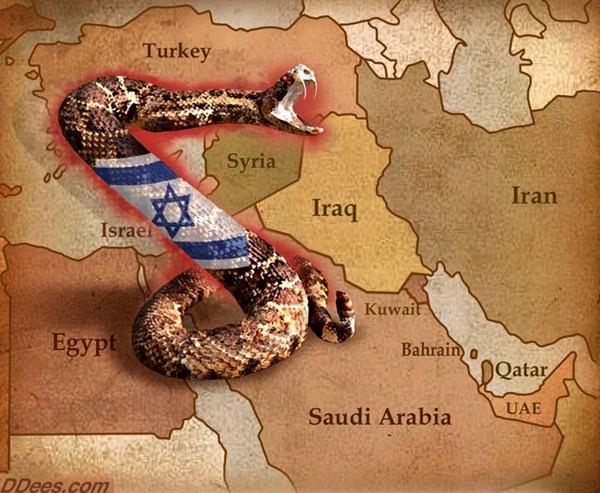

 Aletho News
 Aletho News