‘Safe’ corridor opening up through Strait of Hormuz: What we know so far
RT | March 20, 2026
Iran has signaled that it is ready to allow passage through the Strait of Hormuz to vessels from certain countries. Media reports and tracker data also suggest that a handful of pre-vetted tankers have already sailed smoothly through the “safe” corridor, with at least one shipping company allegedly paying Iran $2 million.
The development comes as more than 15 tankers have been hit by drones and projectiles in the strait since the US and Israel launched their war on Iran in late February.
As the Middle East escalation has roiled energy markets, the impact of a few tankers passing through has so far remained limited. Brent is still trading well above $100.
Here is what to know about the latest developments in the Strait of Hormuz.
Who is allowed to pass?
In short, not everyone and not everywhere.
Iranian Foreign Minister Abbas Araghchi stated that the strait is open to all except the US and Israel, while adding that some ships from “different countries” had already been allowed through. In practice, however, Western-linked vessels face significant hurdles in securing safe passage.
According to Lloyd’s List, India, Pakistan, China, Iraq, and Malaysia are discussing transit plans directly with Tehran, with officials in the first three countries as well as Türkiye confirming clearance.
The Financial Times reported, citing maritime data, that at least eight ships – including oil tankers and bulk carriers tied to India, Pakistan and Greece, as well as Iran’s own fleet – have sailed through the strait but used an unusual route around the island of Larak, which is close to the Iranian coast and where waters are much shallower than in the middle of the strait.
The actual number of ships – some of which may have turned off automatic tracking systems – could be higher, the report said.
According to the FT, at least nine Chinese oil and fuel tankers are also amassing in the Gulf, apparently preparing to traverse the Hormuz Strait.
Clearance is being granted on a case-by-case basis, Lloyd’s List reported, adding that the Iranian authorities are working on a “more formalized vessel approval process” expected in the coming days.
Is it free of charge?
On paper, international transit is not supposed to work like a toll road, but the current situation appears to be evolving under wartime conditions.
Lloyd’s List reported that at least one tanker operator paid about $2 million to transit, while saying it could not establish whether payments were made in other cases. It also remains unclear how such payments could be processed, given the sanctions on Iran.
In addition, several media reports indicated that Iran’s parliament was considering a bill aimed at taxing ships that cross the strait. The Wall Street Journal noted, however, that such a policy would “require a regional buy” from Iran’s Gulf neighbors.
What did Hormuz look like before the war?
Hormuz was one of the world’s busiest and consequential chokepoints, with an average of 20 million barrels a day of crude oil and oil products moved through in 2025, equal to around 25% of global seaborne oil trade. About 80% of the flows went to Asian countries, including China, India, Japan, and South Korea, according to the International Energy Agency (IEA).
About 93% of Qatar’s LNG exports and 96% of the UAE’s LNG exports also passed through Hormuz, representing roughly 19% of global LNG trade.
Before the war, around 138 vessels transited the strait daily; that figure has now dropped to roughly 3–5 ships per day, according to estimates.
The strait is just 29 nautical miles (54km) wide, with two-mile-wide inbound and outbound shipping lanes separated by a two-mile buffer. Ships using the Larak route must contend with shallower waters than in the central channel, though depths are still generally sufficient for most vessel types.
What impact is this having on energy prices?
The trickle of oil tankers is seemingly having a limited effect on the oil market, with Brent trading at $107 per barrel, down from a peak of almost $120. WTI crude slid from the $100 benchmark to $94.
European natural gas futures (TTF) slightly fell to €60 per MWh after spiking by more than 30% after Israel attacked Iran’s South Pars gas field, triggering a retaliation on energy infrastructure in Qatar.
What does Europe have to say on Hormuz safety?
European leaders have demanded “the reopening of the Strait of Hormuz,” as well as “de-escalation and maximum restraint” from the belligerents. European NATO members, however, have been reluctant to send their navies to the strait. German Chancellor Friedrich Merz said that his country could help in keeping the shipping lanes clear only when the guns go silent.
What impact on the US?
As oil prices skyrocketed, gasoline prices in the US also soared, reaching $3.90 per gallon on average. US President Donald Trump has sought to downplay the market panic, saying he thought that oil prices would be “much worse,” adding that they were certain to come down once the hostilities end.
In addition, US Treasury Secretary Scott Bessent signaled that Washington could waive sanctions on the Iranian oil stranded on tankers in a bid to dampen prices. Earlier this week, he also said that the US had been allowing Iranian tankers to transit the strait “to supply the rest of the world.”
No time for losers: Why the war meant to save Israel may destroy it
By Ramzy Baroud | MEMO | March 16, 2026
When Donald Trump and Benjamin Netanyahu launched their military aggression against Iran on 28th February, they appeared convinced that the war would be swift. Netanyahu reportedly assured Washington that the campaign would deliver a decisive strategic victory—one capable of reordering the Middle East and restoring Israel’s battered deterrence.
Whether Netanyahu himself believed that promise is another matter.
For decades, influential circles within Israel’s strategic establishment have not necessarily sought stability, but rather “creative destruction.” The logic is simple: dismantle hostile regional powers and allow fragmented political landscapes to replace them.
This idea did not emerge overnight. It was articulated most clearly in a 1996 policy paper titled A Clean Break: A New Strategy for Securing the Realm, prepared for then-Israeli Prime Minister Benjamin Netanyahu by a group of US neoconservative strategists, including Richard Perle.
The document argued that Israel should abandon land-for-peace diplomacy and instead pursue a strategy that would weaken or remove hostile regimes in the region, particularly Iraq and Syria. The goal was not merely military victory but a geopolitical restructuring of the Middle East in Israel’s favor.
The logic is simple: dismantle hostile regional powers and allow fragmented political landscapes to replace them.
In many ways, the subsequent decades seemed to validate that theory—at least from Tel Aviv’s perspective.
The Middle East Reordered
The 2003 US invasion of Iraq was widely considered a catastrophe for Washington. Hundreds of thousands died, trillions of dollars were spent, and the United States became entangled in one of the most destabilising occupations in modern history.
Yet the war removed Saddam Hussein’s government, dismantled the Baath Party, and destroyed what had once been the strongest Arab army in the region. For Israel, the strategic consequences were significant.
Iraq, historically one of the few Arab states capable of confronting Israel militarily, ceased to exist as a coherent regional power. Years of instability followed, leaving Baghdad with a fragile political system struggling to maintain national cohesion.
Syria, another central concern in Israeli strategic thinking, would later descend into its own devastating war beginning in 2011. Libya collapsed earlier after NATO’s intervention in 2011 as well. Across the region, once-formidable Arab nationalist states fractured into weakened or internally divided systems.
From Israel’s vantage point, the theory of regional fragmentation appeared to be paying dividends.
Without strong Arab states capable of projecting military power, several Gulf governments began reconsidering their long-standing refusal to normalise relations with Israel.
The result was the Abraham Accords, signed in September 2020 under the Trump administration, which formalised normalisation between Israel and the United Arab Emirates and Bahrain, later followed by Morocco and Sudan. For a moment, it seemed that the geopolitical transformation envisioned decades earlier had been realised.
Gaza changed the equation
But history rarely moves in straight lines. Israel’s genocide in Gaza did not produce the strategic victory Israeli leaders had anticipated. Instead, the war exposed deep vulnerabilities in Israel’s military and political standing.
More importantly, Palestinian resistance demonstrated that overwhelming military force could not translate into decisive political control.
The consequences reverberated far beyond Gaza.
The war galvanized resistance movements across the region, deepened divisions within Arab and Muslim societies between governments aligned with Washington and those opposed to Israeli policies, and ignited an unprecedented wave of global solidarity with Palestinians. Israel’s international image suffered dramatically.
For decades, Western political discourse framed Israel as a democratic outpost surrounded by hostile forces. That narrative has steadily eroded. Increasingly, Israel is described—even by major international organizations—as a state engaged in systematic oppression and, in Gaza’s case, genocidal violence.
The strategic cost of that reputational collapse cannot be overstated. Military power relies not only on weapons but also on legitimacy. And legitimacy, once lost, is difficult to recover.
Netanyahu’s final gamble
Against this backdrop, the war on Iran emerged as Netanyahu’s most consequential gamble.
If successful, it could restore Israel’s regional dominance and reassert its deterrence. Defeating Iran—or even severely weakening it—would reshape the balance of power across the Middle East. But failure carries equally profound consequences.
Netanyahu, now facing an arrest warrant issued by the International Criminal Court in 2024 over war crimes in Gaza, has tied his political survival to the promise of strategic victory.
In multiple interviews over the past year, he has framed the confrontation with Iran in almost biblical terms. In one televised address in 2025, Netanyahu declared that Israel was engaged in a “historic mission” to secure the future of the Jewish state for generations. Such rhetoric reveals not confidence but desperation.
What was supposed to be a rapid campaign increasingly resembles a prolonged conflict. Israel cannot wage such a war alone. It never could. Thus, Netanyahu worked tirelessly to draw the United States directly into the conflict—a familiar pattern in modern Middle Eastern wars.
The paradox of Trump’s war
For Americans, the question remains: why did Donald Trump—who repeatedly campaigned against “endless wars”—allow the US to enter yet another Middle Eastern conflict?
During his 2016 presidential campaign, Trump famously declared: “We should have never been in Iraq. We have destabilised the Middle East.”
Yet nearly a decade later, his administration has plunged Washington into a confrontation whose potential consequences dwarf those of the earlier wars.
The precise motivations matter less to those living under the bombs.
Across the region, the scenes are painfully familiar: devastated cities, mass graves, grieving families, and societies once again forced to endure the violence of foreign intervention.
But this war is unfolding in a fundamentally different geopolitical environment.
The US no longer commands the unchallenged dominance it once enjoyed. China has emerged as a major economic and strategic actor. Russia continues to project influence. Regional powers have gained confidence in resisting Washington’s dictates.
The Middle East itself has changed.
A war already going wrong
Early signs suggest that the war is not unfolding according to the expectations of Washington or Tel Aviv.
Reports from US and Israeli media indicate that missile-defense systems in Israel and several Gulf states are facing a serious strain under sustained attacks. Meanwhile, Iran and its regional allies have demonstrated missile capabilities far more extensive than many analysts had anticipated.
Energy markets provide another indication of shifting dynamics. Rather than securing greater control over global energy flows, the war has disrupted supplies and strengthened Iran’s leverage over key maritime routes.
Strategic assumptions built on decades of uncontested American military power are colliding with a far more complex reality.
Even the political rhetoric emanating from Washington has become noticeably defensive and increasingly angry—often a sign that events are not unfolding as planned.
Within the Trump administration itself, the intellectual poverty of the moment is difficult to miss. Defense Secretary Pete Hegseth, whose public persona is built on television bravado rather than strategic literacy, has often framed the conflict in language that sounds less like military doctrine and more like locker-room theatrics.
Hegseth’s style is symptomatic of a broader intellectual collapse within Washington’s war-making circles—where historical knowledge is replaced by slogans, and strategic planning by theatrical displays of toughness.
In speeches and interviews, he has repeatedly reduced complex geopolitical realities into crude narratives of strength, masculinity, and domination. Such rhetoric may excite partisan audiences, but it reveals a deeper problem: the people directing the most dangerous war in decades appear to understand very little about the forces they have unleashed.
In such an environment, wars are not analyzed; they are performed.
The end of an era?
Netanyahu sought to dominate the Middle East. Washington sought to reaffirm its position as the world’s unrivaled superpower. Neither objective appears within reach.
Instead, the war may accelerate the very transformations it was meant to prevent: a declining US strategic role, a weakened Israeli deterrent posture, and a Middle East increasingly shaped by regional actors rather than external powers.
Trump, despite the lofty and belligerent language, is in reality a weak president. Rage is rarely the language of strength; it is often the mask of insecurity. His administration has overestimated America’s military omnipotence, undermined allies and antagonized adversaries alike, and entered a war whose historical, political, and strategic dimensions it scarcely understands.
How can a leadership so consumed by narcissism and spectacle fully grasp the magnitude of the catastrophe it has helped unleash?
One would expect wisdom in moments of global crisis. What we have instead is a chorus of slogans, threats, and self-congratulation emanating from Washington—an administration seemingly incapable of distinguishing between what power can achieve and what it cannot.
They do not understand how profoundly the world has changed. They do not understand how the Middle East now perceives American military adventurism. And they certainly do not understand that Israel itself has become, politically and morally, a declining brand.
Of course, Trump and his equally arrogant administration will continue searching for any fragment of ‘victory’ to sell to their constituency as the greatest triumph in history. There will always be zealots ready to believe such myths.
But most Americans—and the overwhelming majority of people around the world—no longer do. Partly because this war on Iran is immoral. And partly because history has very little patience for losers.
Top US Counterterrorism Official Resigns in Protest of Operation Against Iran
Sputnik – 17.03.2026
WASHINGTON – Joseph Kent on Tuesday announced his decision to step down as director of the US National Counterterrorism Center (NCTC) because of his disapproval of the US military operation against Iran.
“After much reflection, I have decided to resign from my position as Director of the National Counterterrorism Center, effective today. I cannot in good conscience support the ongoing war in Iran. Iran posed no imminent threat to our nation, and it is clear that we started this war due to pressure from Israel and its powerful American lobby,” Kent wrote in his letter to US President Donald Trump published on X.
He said that until June of 2025, Trump understood that wars in the Middle East were a “trap” that robbed the country of lives and depleted the nation’s wealth and prosperity.
However, during Trump’s second term, high-ranking Israeli officials and US media deployed a misinformation campaign that dragged the US into a war with Iran by making the president believe in a lie that aggression could lead to a swift victory – a tactic used by Israel to start the war in Iraq, Kent said.
“I pray that you will reflect upon what we are doing in Iran, and who we are doing it for. The time for bold action is now. You can reverse course and chart a new path for our nation, or you can allow us to slip further toward decline and chaos. You hold the cards,” he concluded.
On February 28, the United States and Israel launched strikes on targets in Iran, including in Tehran, causing damage and civilian casualties. Iran responded by striking Israeli territory and US military facilities in the Middle East.
When Tel Aviv decides, Washington fights
By Jamal Kanj | MEMO | March 9, 2026
American taxpayers are still hemorrhaging from the made-for-Israel war in Iraq, a war audaciously offered as one that would “pay for itself.” Instead, it was paid in Iraqi and American blood, ruins and financed by American debt. The promised democracy was a broken state, regional chaos, and the afterbirth of terror and resistance that continues to metastasize across the Arab world. Marketed as a short, decisive campaign, Iraq became a two-decade-long disaster with no exit in sight. Trillions were burned on lies manufactured by Israel-first Zionists in Washington, while generations of Americans—many not even born when the invasion began—were conscripted into inheriting the debt, the interest, and the moral stain.
The real balance sheet of that war is etched into nearly 5,000 American tombstones and the endless corridors of veterans’ hospitals. Before that blood-soaked bill is even paid, the very same architect, using the same lies, has succeeded again in dragging the U. S. into another made-for-Israel war, this time against Iran. Iraq was not an aberration; it was a rehearsal. Yet, Iran doesn’t appear to be the final act on the Israeli menu. In recent weeks, former Israeli prime minister Naftali Bennett declared that Turkey is next. And it is the U.S., not Israel, that is expected to keep paying for wars, America neither needed nor chose.
The evidence of who set the clock of this war is unmistakable. The most revealing admission did not come from Tehran, Moscow, or Beijing, but from the U.S. State Department. In an unguarded moment, the U.S. Secretary of State admitted that the timing of this war was not an American choice. This became painfully clear when the State Department was caught unprepared to help evacuate tens of thousands of Americans from the war zone.
As U.S. ambassadors hurried to evacuate their staff and families, desperate citizens were told their government could not assist and were advised to arrange their own departures, after airports had already closed.
This is not a minor detail. It’s a government that is willing to sacrifice the well-being and security of its citizens by joining a war decided by someone else. It goes to the heart of sovereignty and democratic accountability. A nation that chooses to go to war prepares its people, its diplomacy, and its logistics. A nation that is dragged into war improvises and hopes for the best.
Iran, for its part, is not the caricature often presented by the American Secretary of War and Donald Trump. It is a country prepared for drawn-out conflict and strategic patience. During the nearly eight-year Iran-Iraq War, Tehran fought a grinding, no-win war against a better-armed adversary. Against the expectations of Western military analysts, Iran endured. In a grim irony, it even committed the greatest of all sins: purchasing weapons from Israel, falling into Tel Aviv’s cynical strategy to weaken both Baghdad and Tehran simultaneously. Israel was willing to arm its supposed arch-enemy as part of its broader calculus of exhaustion and division.
That history matters today. Iran has demonstrated, repeatedly, a willingness to absorb punishment, and extend conflicts over time. At the end of the day, and by all means necessary, Iran is unlikely to surrender. In a protracted war of attrition to bleed the world economy, Tehran could move to close the Strait of Hormuz, an oil blood line for world economies. Iran may be economically battered, and it has been for decades under severe sanctions, but that very weakness reduces its restraint. A country with little left to lose is more inclined to impose pain on others, including Western and neighboring welfare oil economies dependent on uninterrupted energy exports.
Meanwhile, regional instability in the Gulf and prolonged American entanglement create the perfect parasitic symbiosis for Israel: a state that flourishes in the shadows of regional chaos like a scavenger thriving on the scrap of a landfill.
President Trump has suggested escorting oil shipments in the Strait to keep the oil flowing. The macho bravado may play well on television or for the stock market, but history, old and recent, offers daunting realities. The same was attempted during the Iraq-Iran war in the 1980s but failed. More recently, the U.S., the EU, and Israel combined failed to force a much smaller and poorer country—Yemen—to open the Red Sea. After months of bombardment, siege and naval pressure, Washington was forced into negotiations, and even then, Yemeni forces continued to block vessels linked to Israel until Gaza ceasefire.
The comparison is useful. The shorelines area under the Houthi control of the Red Sea (green map in the link) in the north of Yemen, is a much wider maritime passage. The Strait of Hormuz, by contrast, is so narrow in a clear day each shore is visible from the other. To borrow a simple image, in the Houthi area the width of the Red Sea is an Amazon River and where Hormuz is a stream. The narrowness of the Hormuz Strait makes control easier for Iran and exposes the vulnerability of U.S. naval ships. Before promising to escort commercial shipping, a responsible administration should ask a basic question: if a small, impoverished Yemen could not be subdued by the world’s most powerful militaries, how exactly will American warships be safer under the reach of fire in the narrower Strait?
There is another question Washington refuses to entertain: How will Americans feel when they realize they are risking lives, ships, and economic stability largely to advance Israel’s sole strategic objectives?
This is not an abstract question. It is a political and economic reckoning, purposefully delayed. Especially since Americans are still reeling from the cost of previous Israeli wars, and now, they are asked to take on a new national debt—$200 billion—to bankroll yet another war, especially made for Israel.
The made-for-Israel wars may have begun in Iraq but will not end with Iran. Israeli false flags are poised to provoke further escalations designed to entrap even states traditionally friendly to Tehran, such as Oman. For Israel, victory remains incomplete unless it drags Gulf Arab states into open confrontation with Iran, hardening divisions that may last generations. Iranian mistrust of the Gulf Arabs would likely endure even in the event of regime change. In this calculus, Israel “wins” not only on the battlefield, but by entrenching lasting hostility between Iran and the Arab world, ensuring a permanently fragmented region.
More than two decades ago, the illegal war against Iraq was cooked in the dens of the Pentagon by Israel-first ideologues and sold to the American public through the managed media, ruse and weapons of mass deception. The current war is, in some ways, even more brazen. It was exclusively designed in the war ministry offices of Tel Aviv, and Trump obliged.
This is not America’s war. The decision was made elsewhere, and timed elsewhere, fought on behalf of someone else to serve the strategic objectives of a foreign country. Washington has subordinated the American national interest to the tribal agenda of Israeli-firsters inside the Beltway. Simply put: Tel Aviv chooses the war, and Washington pays the bill.
Iraqi Resistance: Attacks on Beirut suburbs threaten US interests
Al Mayadeen | March 7, 2026
The Iraqi Resistance Coordination Committee affirmed that recent years have demonstrated that the entire region is governed by one equation: “Either security for all, or security for none.”
Addressing the ongoing aggression against Lebanon, the Iraqi resistance stressed that the security and stability of the southern suburbs of Beirut and their residents form an integral part of the regional security equation. It added that any escalation there would have repercussions for the vital interests of the US in the region.
The committee warned that any attack on the security of the densely populated civilian suburb would inevitably be met with threats to the security of embassies belonging to the aggressor countries, whether in Iraq, Bahrain, Kuwait, or Lebanon.
It further stated that undermining the security of the Beirut suburbs would also directly affect the security of major American oil companies operating in the Arabian Peninsula, stressing that “a warning has been given.”
‘Israel’ issues massive displacement threat to Beirut Southern Suburb
The Israeli occupation, in an unprecedented move, issued a massive displacement threat on Thursday against entire neighborhoods in Beirut’s Southern Suburb. Previously issuing displacement warnings against specific buildings, the Israeli occupation has discarded this strategy and now threatens thousands of homes, businesses, medical facilities, schools, and civilians with bombardment.
The threats have specifically named the neighborhoods of Bourj el-Barajneh, Hadath, Haret Hreik, and Chiyah, which house tens of thousands of civilians, who were ordered to head east along the Beirut-Damascus highway, or north towards Matn or Beirut-Tripoli highways, respectively.
This resulted in severe traffic congestion at the entrances to Beirut’s southern suburbs as residents began leaving their homes.
The Israeli threat eerily resembles those in Gaza, where hundreds of thousands and up to a million civilians were forced to flee their zones amid mass displacement plots.
“Burnt Bridges”: Why Trump’s Plan to Use Kurds Against Iran Is Doomed to Fail
By Mohammed ibn Faisal al-Rashid – New Eastern Outlook – March 7, 2026
Following a series of devastating U.S. and Israeli airstrikes on Iran’s nuclear facilities, Tehran is engulfed in uncertainty. However, the White House, facing the prospect of a ground operation in mountainous terrain, is betting on an old, tested, but extremely risky tool—Kurdish forces. The Donald Trump administration views the Kurds as ideal “cannon fodder” to ignite a civil war in Iran. But will this plan work? Given Trump’s history of betrayals, deceit, and cynical pragmatism, the attempt to play the Kurdish card might not only fail but could also backfire on the United States itself.
A Proxy Army for a Big War
While the U.S. Air Force continues to bomb Iranian cities and Donald Trump boasts about destroying the enemy’s navy, Washington is soberly assessing the risks. Sending thousands of American soldiers into Iran would be political suicide for a president who promised voters an end to “endless wars.” Analysts agree: the U.S. will not launch a full-scale invasion like in Iraq or Afghanistan due to the mountainous terrain, the risk of high casualties, and a lack of public support.
A solution was quickly found. As early as March 4th, the South Korean publication Donga Ilbo reported that thousands of Kurdish fighters had begun a ground offensive into Iran from Iraqi territory. According to Fox News and CNN, cited by the publication, the operation is coordinated with active participation from the CIA, which is providing weapons and equipment.
But is this really the case? Currently, data on a massive invasion by thousands of Kurdish fighters is contradictory.
The scenario appears logical: The Kurds, who make up about 10% of Iran’s population (approximately 9 million people), have historically faced discrimination within the Shia theocracy. They are concentrated in the western provinces bordering Iraq, making them an ideal foothold. Kurdish parties based in Iraqi Kurdistan have already united into the “Coalition of Political Forces of Iranian Kurdistan,” establishing a unified military command.
Israel: Old Ties and New Opportunities
The role of Israel deserves special attention. Tel Aviv has long-standing, complex but generally positive relations with Kurdish movements, viewing them as a natural counterweight to hostile Arab and Iranian regimes. In the current conflict, Israel has taken on the role of “igniter.” According to Middle East Eye, the Israeli Air Force is striking positions of the Islamic Revolutionary Guard Corps (IRGC) precisely in Iran’s western provinces, effectively preparing a corridor for the advancement of Kurdish forces.
According to experts, Israeli strategists are actively exploring the option of using Iranian Kurds (specifically groups like PAK, linked to the PKK) as manpower instead of American soldiers. For Israel, this is an opportunity to inflict maximum damage on its primary enemy without getting bogged down in a protracted ground conflict. The calculation is that the Kurdish national movement could become the “Trojan horse” capable of exploding Iran from within.
However, a fundamental contradiction lies here: the interests of Israel and the U.S. are often situational. And if Washington decides its goals are achieved, the Kurds could once again be left alone to face an enraged adversary.
“I Don’t Like the Kurds”: A Bloody History of Betrayals
This is precisely where Trump’s plan begins to unravel. To understand why the Kurds are unlikely to become a pliable tool in the White House’s hands, one need only look at Trump’s relationship with these people.
As early as 2020, the world learned shocking details from the memoirs of former National Security Advisor John Bolton. According to Bolton, Trump stated in a small circle, “I don’t like the Kurds. They run from the Iraqis, they run from the Turks. The only time they don’t run is when we’re bombing everything around them with F-18s.” This statement isn’t mere rudeness; it’s the quintessence of Trump’s approach: he despises those he considers weak and feels no moral obligation towards allies.
The most cynical example was the betrayal of the Syrian Kurds in October 2019. Trump then ordered the withdrawal of American troops from northern Syria, effectively giving a “green light” to the Turkish invasion. The Kurds, who had lost 11,000 fighters battling ISIS and were America’s only reliable partner on the ground, were abandoned to their fate. American officers on the ground were shocked: “They trusted us, and we betrayed that trust,” one of them told The New Arab at the time.
The “1991 Syndrome” is also vivid in Kurdish memory. Then, President George H.W. Bush called on Iraqi Kurds to rise up against Saddam Hussein but abandoned them when the uprising began, allowing the regime’s army to brutally crush the rebellion with helicopters. Now, this nightmare seems poised to repeat itself in Iran.
Can the U.S. Ignite a Civil War in Iran?
Formally, the prerequisites for unrest exist. Besides ethnic Kurds, Iran is home to disaffected Baluch, Azeris, and Arabs. Following the death of Supreme Leader Ali Khamenei in the initial strikes, a power vacuum could emerge in the country. The White House has already openly stated its readiness to deal with a “new government” and is discussing who should lead Iran after regime change.
Trump personally called on Iranian diplomats worldwide to seek asylum, promising to help “form a new, better Iran.” It would seem this is the moment of truth: Kurds and other minorities should rise up and overthrow the hated regime.
But reality is more complex.
Fear of History Repeating. As analyst Oral Toga noted in a comment to Middle East Eye, the fact that the U.S. abandoned the Syrian Democratic Forces (SDF) will serve as a lesson for Kurds in Iraq and Iran. “The airstrikes will end someday, but Tehran will remain there forever,” he reminds us.
Lack of Strategy. The U.S. and Israel have no clear vision for Iran’s future. Do they want a unitary state, a federation, or the complete disintegration of the country? Using the Kurds as a battering ram without guaranteeing them autonomy or protection after the war would condemn the region to a bloodbath. The Kurdish leaders themselves understand this. As activist Golaleh Sharafkandi stated, “We have a political program supported by an army, not the other way around.”
Regional Opposition. The creation of a new Kurdish zone of influence in northern Iran would be opposed not only by Iran but also by Turkey and even Azerbaijan, which see it as a threat to their sovereignty and a risk of separatism. Ankara already brutally suppresses any pro-Kurdish movements near its borders. Azerbaijan, which has strategic relations with Turkey and Israel, has already expressed condolences to Iran and called for peace, fearing destabilization.
Operational Difficulties. Several sources, including the Turkish agency Anadolu, report that the information about the offensive has been denied or clarified. The Kurdish factions themselves deny starting a full-scale invasion, and Iranian media report that the border is under control. The groups ready to fight number, by various estimates, between 8,000 and 10,000 people—insufficient to conquer territory without direct air support and U.S. special forces, which Trump is not yet ready to provide.
Dreams of a Caliphate and the Bitter Truth
Donald Trump’s attempt to use the Kurds as a match to ignite the powder keg of Iran appears to be an adventure based on a denial of reality. Yes, the Kurds hate the Ayatollahs’ regime. Yes, they want autonomy and rights. But they do not want to once again become bargaining chips in a high-stakes game where their physical survival is on the line.
Trump has already twice demonstrated his true attitude towards Kurdish allies—in Iraq and Syria. A third time could be the last, not for the American president’s reputation, but for hundreds of thousands of civilians who would find themselves caught between the hammer of the Iranian army and the anvil of American geopolitical ambitions. The Kurdish leaders, united in a coalition, understand perfectly well: when the situation gets hot, the White House might once again throw up its hands and say, “This is not our war.”
Therefore, despite the loud headlines and CIA leaks, the active use of Kurds in full-scale combat operations is unlikely. Kurds might try to expand their autonomy amidst the chaos, but playing the role of a disciplined U.S. proxy army that can be unleashed on Tehran and then written off—they won’t buy that anymore. The price of trust in America under Trump has proven too high, and paying off those debts may take decades.
Muhammad ibn Faisal al-Rashid, political scientist, expert on the Arab world
Follow new articles on our Telegram channel
Iraq and Cuba hit by blackouts amid US pressure and attacks on Iran
RT | March 5, 2026
Both Iraq and Cuba have been plunged into nationwide blackouts, with the Middle Eastern country’s grid collapsing after a sudden drop in gas supplies to a major power plant in Basra, while the Caribbean island’s outage is being blamed on chronic fuel shortages worsened by the US blockade on Venezuelan oil.
The day before the Iraqi blackout, an Electricity Ministry spokesperson was quoted as saying that “incomplete supplies” of gas from neighboring Iran were already affecting power plant operations. Iran has been facing a massive US-Israeli air campaign since Saturday.
A separate power facility also experienced a shutdown in central Salah al-Din province, with local police explicitly denying reports that the station was targeted by an attack, according to the state-run INA news agency.
Iraq relies on Iranian gas for 30-40% of its power generation. The dependence is a direct consequence of decades of foreign intervention in the country. Before the 1991 Gulf War, the grid, though strained by sanctions, largely met demand. The war destroyed 75% of its generating capacity, and the 2003 US-led invasion caused a catastrophic collapse to less than 10% of prior output.
Blackouts also hit Cuba on Wednesday, with a widespread power outage plunging approximately two-thirds of the island into darkness, including the capital Havana.
The blackout was caused by a shutdown at one of the island’s largest thermoelectric power plants, according to the Cuban Ministry of Energy and Mines.
The island nation’s chronic fuel shortages have been severely exacerbated by a US blockade on oil from Venezuela. Since US forces abducted Venezuelan President Nicolas Maduro in January, Washington has seized multiple tankers bound for Cuba.
The Cuban government has long attributed its economic crisis to decades of US sanctions, which it says contribute directly to the lack of investment in power generation and its crumbling electric grid.
Against this backdrop, US President Donald Trump suggested last week that the US could carry out a “friendly takeover of Cuba,” claiming the island nation’s government is on the brink of collapse and is actively negotiating with Washington.
Iraqi Resistance reports drone attacks on US targets in Erbil
Al Mayadeen | March 4, 2026
The Islamic Resistance in Iraq – Saraya Awliya al-Dam announced that its fighters carried out an attack using a swarm of drones targeting a US forces base near Erbil International Airport, a hotel in Erbil used by US forces as accommodation for their soldiers, and a vital target in Jordan.
The group said the operations came in retaliation for the assassination of Iranian Leader Sayyed Ali Khamenei, and as a deterrent against the aggression that led to the martyrdom of several young Iraqi resistance fighters.
In a separate statement, the Islamic Resistance in Iraq said its fighters carried out 27 operations on Tuesday, using dozens of drones and missiles targeting “enemy bases in Iraq and across the region.”
In a related development, the Popular Mobilization Forces (PMF) announced that US occupation forces targeted one of the headquarters belonging to the Al-Jazira Operations Command in Jurf al-Nasr, confirming that the attack did not result in any casualties or losses.
Iraq asserts stance with Iraq
In a separate development, Al Mayadeen’s correspondent in Baghdad reported that a vehicle belonging to Iraq’s Popular Mobilization Forces (PMF) was targeted on the Musayyib–Iskandariya road, north of Babil province.
The correspondent added that the Iraqi government has taken what were described as significant positions regarding the US-Israeli aggression against Iran, reflecting Baghdad’s official stance amid the escalating regional tensions.
He also noted that mourning gatherings have been held in most Iraqi cities for Sayyed Ali Khamenei, with councils of condolence organized in several provinces.
US Bases Targeted
The developments come amid a widening regional confrontation following the US-Israeli military aggression on Iran, which has triggered a series of retaliatory actions by groups aligned with the Axis of Resistance across the region.
In recent days, Iraqi resistance factions have warned that US military installations in Iraq and neighboring countries would remain legitimate targets as long as Washington continues its military operations against Iran and its allies.
The escalation has raised concerns about the growing vulnerability of US bases across West Asia, many of which host American troops as part of the so-called “anti-ISIS coalition” but have increasingly come under attack since the outbreak of the broader regional conflict.
Iraqi Resistance warns of action if US forces remain
Al Mayadeen | February 26, 2026
Iraqi Resistance factions have issued a firm warning to Washington, declaring that continued US military presence on Iraqi soil will not go unanswered.
In a statement released Wednesday, the Iraqi Resistance Coordination Committee, an umbrella body bringing together six anti-terror formations, said it stands ready to act if the United States refuses to end the “ongoing occupation” and persistent interference in national affairs.
The committee accused Washington of failing to respect its obligations under its agreement with Baghdad, which provides for the withdrawal of all foreign forces from Iraq. Despite repeated official declarations that the US combat mission ended years ago, Resistance groups argue that foreign troops remain entrenched under different titles.
“The US actions in Iraq ‘leave us with no choice but to assume our legal and moral responsibilities in taking positions befitting the dignity of our people and their legitimate right to end the occupation, if American forces insist on maintaining their presence and imposing their will on the country,” the statement said.
The coalition also charged that US forces continue to violate Iraqi airspace and undermine the country’s stability, describing such conduct as a “blatant violation” of national sovereignty and dignity.
Advisory mission pretext
While Washington claims that approximately 2,500 American troops remain only in an “advice and assist” capacity following the declared end of combat operations in December 2021, resistance factions view this designation as cosmetic. They argue that the continued deployment, however limited in scale, preserves military infrastructure, intelligence networks, and rapid-response capabilities that entrench US influence rather than end it.
From their perspective, the counter-ISIS mandate increasingly functions as a framework that justifies a long-term strategic foothold in a country central to regional power balances. Even a reduced presence, they contend, enables Washington to retain leverage over Iraqi decision-making while projecting influence across neighboring theaters.
Beyond the security dimension, the Resistance Coordination Committee pointed to direct American meddling in Iraq’s political process, saying that Washington effectively determines which Iraqi political figures may assume senior government positions.
Maliki pressure campaign
The reference was widely understood as relating to Nouri al-Maliki, whose potential return to the premiership has faced US opposition. Washington threatened sanctions on Iraqi individuals and institutions should Maliki take office. Recent reports indicate that the United States has given Iraq’s largest parliamentary bloc until February 27 to withdraw his candidacy, despite Maliki’s insistence that he will not step aside.
For Resistance factions, such moves are examples of direct political coercion, reinforcing their claim that Iraq’s sovereignty remains constrained more than two decades after the US-led invasion of 2003, a war launched on the now-discredited allegation that Baghdad possessed weapons of mass destruction.
Israeli Opposition Leader Endorses Greater Israel

The Dissident | February 24, 2026
U.S. Ambassador to Israel, Mike Huckabee, sparked major backlash during his recent interview with Tucker Carlson, where he openly endorsed the idea of a Greater Israel, stating that “it would be fine” if Israel took large swaths of the Middle East.
In damage control mode, Zionists attempted to paint Huckbee’s claims as fringe or extreme within Israel, but Israel’s opposition leader , Yair Lapid, has confirmed that the prospect of an expansionist Greater Israel is supported even by the more supposedly “liberal” wing of the Israeli political spectrum.
When asked, “The Ambassador Huckabee said this week, and we know the extent of the American administration on the government here, that he supports Israeli control from the Euphrates to the Nile, this means [control] over Lebanon, Jordan, Syria, do you support it or do you think this should be stopped?”, Lapid replied, “I don’t think I have a dispute on the biblical level [about] what the original borders of Israel are.”
Lapid went on to endorse massive Israeli expansion, saying, “support anything that will allow the Jews [to have] a big, vast, strong land, and a safe shelter for us, for our children, and for our children’s children. That’s what I support” adding, “However possible” when asked “How vast?”.
When further asked, “Until Iraq?” Lapid replied, “The discussion is a security discussion. The fact that we are in our ancestral land… Yesh Atid’s position is as follows: Zionism is based on the bible. Our mandate of the land of Israel is biblical. The biblical borders of Israel are clear. There are also considerations of security, of policy, and of time. We were in exile for 2,000 years… you don’t really want all this lecture, right? At least you were not waiting for it… The answer is: there are practical considerations here. Beyond the practical considerations, I believe that our ownership deed over the land of Israel is the bible, therefore the borders are the biblical borders”.
Lapid even advocated that Israel take “as much as possible” of Greater Israel, saying, “Fundamentally, the great, big and vast Israel, as much as possible within the limitations of Israeli security and considerations of Israeli policy”.
Similarly, Benjamin Netanyahu has previously stated that he “subscribed to a ‘vision’ for a ‘Greater Israel’” and “very much”, “felt connected to the ‘Greater Israel’ vision”.
Israeli officials have long been clear that their end goal in Gaza and the West Bank has been total ethnic cleansing and annexation, with Israel’s Science and Technology Minister Gila Gamliel admitting , “we will make Gaza unlivable for humans until the population leaves, and then we will do the same for the West Bank”.
But Yair Lapid’s comments show that across the spectrum from Netanyahu to his “liberal” opposition, Israel has expansionist ambitions beyond Gaza and the West Bank, and wants to take “as much as possible” of Greater Israel.
Featured Video
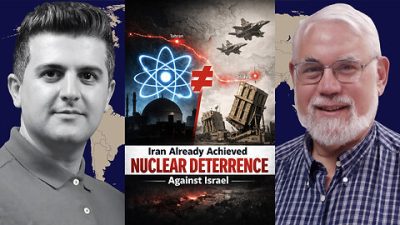
Prof. Ted Postol: Iran Already Achieved Nuclear Deterrence Against Israel
or go to
Aletho News Archives – Video-Images
From the Archives
How the occupied mentality syndrome works
Saudi Arabia on the American chessboard – Part 3
By B. J. Sabri | American Herald Tribune | June 27, 2016
Read part 2: “The occupied mentality Syndrome“
Previously I argued whether Saudi Arabia’s repeated involvements in U.S. interventions and wars stem from free national will or in response to a specific condition. For starters, in Saudi Arabia there is no national will. In Saudi Arabia, the national will is the will of the Al Saud clan. Still, when a major Arab state allies itself with a superpower that committed unspeakable crimes against humanity in almost every Arab country, then something is wrong. This fact alone should compel us to examine the U.S.-Saudi relation for one exceptional reason. As a result of the U.S.-Saudi wars, hundreds of thousands of people in Afghanistan, Iraq, Iran, Libya, Syria, Yemen, and Somalia have lost their lives. Millions became displaced in their own homelands. And millions more rendered refugees.
Attributing the Saudi policies to the bonds of “partnership” with the U.S. is frivolous. There are no bonds between these two thugs except those of business, military deals, secret plots, and wars. Proving this point, bonds such as these have no space for the American and Saudi peoples to share significant cultural or societal exchanges. If partnership is not the reason for the Saudi contribution to the U.S. strategy of empire and imperialism, then another reason must exist.
This leads to three possibilities. … continue
Blog Roll
 Aletho News
- REWRITING THE RISK? INSIDE THE GOVERNMENT’S VACCINE SAFETY MESSAGING
- “Davos Can Really Replace the UN”
- NIAID/NIH and USDA Fund Bioengineered Chimeric Influenza Viruses Built Using Pandemic H1N1 Components: Journal ‘Science Advances’
- Hezbollah hits Israeli warship off Lebanon’s coast, sets it aflame
- Iran slams US strikes on B1 bridge, Mahshahr petrochemical plants as ‘blatant acts of state terrorism’
- In letter to UN chief, Araghchi warns of dire consequences of US-Israeli attacks on Iran’s nuclear facilities
- Why the CIA conspiracy to invade Iran with Kurdish militias failed
- Why Are Upbeat US Claims About Mission to Rescue Pilot ‘Highly Questionable’?
- Aircraft destroyed during US ‘rescue’ of downed F-15 pilot cost more than $100 million each
- Washington University removes professor who condemned US-Israeli war on Iran
- If Americans Knew
- In Iran, Israel-US take aim at “reason, research, and freedom of thought” – Daily Update
- US loses planes over Iran, Israel downgrades Lebanon war goals – Daily Update
- Israel Is Blocking Palestinians from Easter at Church Where Jesus Resurrected
- Plot to assassinate Palestinian activist follows harassment campaign promoted by Zionist groups and elected officials
- Prominent New York synagogue hosts presentation on why U.S. Jews should support the ethnic cleansing of Gaza
- Tapper vs. Piker: Is the CNN Anchor Auditioning for David Ellison?
- Shouldn’t Democrats Be Able to Condemn Genocide?
- Israel-US kill negotiators, destroy civilian structures, but Iran’s military capabilities still largely intact – Daily Update
- ‘War crime’: Global condemnation as Israeli ministers celebrate death penalty law targeting Palestinian prisoners
- 7 Ways Israel Is Turning Lebanon Into Gaza
- No Tricks Zone
- An Inconvenient Tree: Uncovered In Alps… Europe Much Warmer Than Today 6000 Years Ago
- New Study Reports A 60% Slowdown In Greenland’s Ice Loss Rate In The Last Decade
- Low Intensity Tornado Wrecks Major Solar Farm, Creating A Potential Toxic Dump
- New Study Finds Warming Saves Lives…Cold Temperatures 12 Times More Deadly Than Excess Heat
- German Science Blog Accuses PIK Climate Institute Of Hallucinating Climate Tipping Points
- Devastating Assessment Of Comirnaty Vaccine By Former Senior Pfizer Europe Toxicologist
- New Study: CO2 Is ‘Effectively Negligible’ As An Explanatory Climate Change Factor Since 2000
- Former Pfizer Toxicologist Dr. Helmut Sterz Tells Bundestag Hearing Pfizer Vaccine Should Have Never Been Approved
- Energy Expert: Germany’s Nuclear Phaseout Was A “500 Billion Euro Mistake”
- New Research: South Australia’s Mid-Holocene Sea Surface Temperatures Were 4°C Warmer Than Today
 Aletho News
