Iraq says all evidence points to ‘malicious hands’ in protests
Press TV – October 7, 2019
Iraqi officials say there are “malicious hands” behind the killing of both protesters and security forces during the recent spate of unrest in Baghdad and some other cities.
Interior Ministry spokesman Saad Maan confirmed for the first time on Sunday that 104 people had been killed, including eight security officers, and more than 6,000 wounded in the protests.
Maan said the ministry was working with other government institutions to find out who was behind the killings. According to medical sources, the majority of protesters killed were struck by bullets.
The protests began last Tuesday, with demonstrators calling for better living conditions. The rallies soon turned into riots as some protesters started vandalizing public properties and attempted to enter the Green Zone in the capital Baghdad — which houses government offices and foreign diplomatic missions.
On Saturday night, armed elements and violent rioters attempted to take over local TV stations in Baghdad after the government removed a days-long curfew.
Maan said protesters burned 51 public buildings and eight political party headquarters but Iraqi security forces did not confront them.
According to the spokesman, most of those killed on Friday had been shot in the head or heart, a sign that skilled snipers had carried out the killings.
Officials say there are attempts at “sedition” from “unidentified snipers” who shot police and protesters indiscriminately.
“We can’t accept the continuation of the situation like this,” Prime Minister Adil Abdul-Mahdi told his Cabinet late Saturday. “We hear of snipers, firebombs, burning a policeman, a citizen.”
Parliament speaker Mohamed al-Halbousi echoed the premier’s remarks, saying that “infiltrators” were wreaking havoc. He said the parliament had formed a committee to investigate the matter.
Iraqi security officials have made it clear that their forces would not use lethal force against protesters unless their lives were in danger.
On Sunday night, at least 13 people were killed in clashes with security forces in a district of capital, where the military admitted some forces had violated the rules of engagement.
“Excessive force outside the rules of engagement was used and we have begun to hold accountable those commanding officers who carried out these wrong acts,” the military said in a statement.
There are unconfirmed reports that some foreign diplomatic missions are trying to keep the flames of the unrest alive by sending mercenaries into the ranks of protesters to cause more violence.
Lebanese newspaper Al Akhbar reported Saturday that Saudi Arabia’s Embassy in Baghdad had been hiring paid snipers to take out people and guards alike. The report made similar allegations against the US Embassy staff.
There were no immediate official reactions to the claims.
On Sunday, the Iraqi government announced a series of reforms after an “extraordinary” session overnight in response to the sweeping unrest.
The governor of the province of Baghdad, Fallah al-Jazairi, also stepped down and members of the provincial council accepted his resignation.
Confronted by its biggest challenge since coming to power just under a year ago, Abdul-Mahdi’s cabinet issued a decree including 17 planned reforms, such as land distributions and increased welfare stipends for needy families.
Authorities have asked protesters to give them time to implement reform. Grand Ayatollah Ali al-Sistani, the top Shia cleric of Iraq, on Friday urged security forces and protesters to avoid violence.
Iraq declared victory over the Daesh terrorist group at the end of 2017 — after nearly four years of conflict.
The violence comes as millions of Shia pilgrims are preparing to travel to the Iraqi holy cities of Najaf and Karbala to attend Arba’een ceremonies, marking the fortieth day after the martyrdom anniversary of their third Imam, Hussein ibn Ali (AS).
Iraq recently reopened its al-Qa’im border crossing with Syria and accused the occupying regime of Israel of orchestrating a string of recent drone strikes on Iraqi popular mobilization forces.
Tehran-based political analyst Hussein Sheikholeslam said Saturday the unrest is a product of US efforts to weaken “the resistance axis,” which is the key pillar of rising opposition to American and Israeli plans in the Middle East.
Hashd ready protect government, punish saboteurs
Iraqi Popular Mobilization Units (PMU), or Hashd al-Sha’abi, announced Monday that it is ready to help prevent “a coup d’etat or a rebellion” in the wake of the violence.
Faleh al-Fayyad, the PMU head and Iraq’s national security Adviser, told reporters that he wanted to see “the fall of corruption, not the fall of the government.”
He was referring to demands by some protesters for Abdul-Mahdi to step down in order to perform a complete overhaul of the country’s political system.
“We tell the enemies and the conspirators that their efforts have failed,” he said in a press conference. “We will defend the constitution and the government that we have established with our blood and our lives.”
Fayyad said eradicating corruption and achieving economic prosperity is only possible if the government stays in office.
“The government and on top of it the prime minister do their best to complete the transition,” Fayyad said. “In the absence of government security is lost and it is only within this framework that a solution can be reached.”
He also pledged a crushing response to those who perpetrated violence and killed and injured people.
“We know who is behind letting some saboteurs infiltrate the demonstrations,” he said, adding “we have footage and intelligence that we will present when time is appropriate.”
Iraqi PM discusses situation with Pompeo
Abdul-Mahdi’s office issued a statement on Monday, saying the prime minister had discussed the situation with US Secretary of State Mike Pompeo.
According to the statement, Abdul-Mahdi told the US top diplomat that the government was in full control and planning to continue taking practical steps to meet people’s demands.
Later, Russian Foreign Minister Sergei Lavrov arrived in Baghdad on what Moscow said was a two-day working trip.
Who’s been Trying to Destabilize Iraq?
By Valery Kulikov – New Eastern Outlook – 07.10.2019
The wave of protests that erupted across Iraq on October 1, according to a number of reports, resulted in dozens of civilian deaths and several hundred injured protesters. As it’s been reported by Al Arabiya TV station, human rights activists claim that at least a hundred people lost their lives in the course of the protests, while some 3 thousand got injured.
The unrest that was sparked by the frustration that local residents share over the massive corruption, high unemployment rates, frequent power outages and water shortages, would soon lead to demands for the resignation of the sitting government, followed by all sorts of other political demands. In spite of the attempts that local authorities make to restore order by imposing a curfew, the intensity of the protests wouldn’t die down. There’s tires burning in the streets, demonstrators assaulting airports and government buildings.
Egypt‘s Sasapost states that Iraq has not seen a mass movement as popular since the days Iraqis tried to repel the US attack on their country. Demonstrations have swept all the large cities of the country, except for those that remain in the hands of ISIS terrorists in the northern and western parts of the country.
Even though Al Jazeera alleges there’s no leader to head the protest movement, a number of Arab observers have already expressed their doubts about the validity of such allegations. In their opinion a “rebellion of the starving” doesn’t resemble an armed assault on the police and security forces, as there’s been reports about law enforcement units suffering losses.
Most protesters are young people under the age of 20. They can hardly be described as religious conservatives and it is difficult to suspect them of being influenced by clerics. Over the past few weeks their demands have underwent a major change and it’s clear that such a transition could only occur if they were under some sort of external influence. What started out as youth’s attempt to express frustration over the existing social policies would be hijacked by an angry mob chanting extreme political demands, like the replacement of the parliamentary republic with a presidential one, stepping down of Adil Abdul-Mahdi al-Muntafiki and his substitution with the former security chief General Abdul Wahab al-Saidi. All this goes in line with protesters chanting anti-Iranian slogans and burning Iranian flags. It is also noteworthy that those protests started in southern parts of the country mostly inhabited by the Shiites, as well as in Baghdad.
It’s clear that the increasingly anti-Iranian tone of the protests serves as yet another indicator of the possible involvement of external forces in the events that unfold in Iraq these days. Against this backdrop, it’s noteworthy that the Lebanese Al Akhbar recalls that last summer an informed source in the Iraqi military department predicted what was about to happen, while stating that Washington was extremely concerned about the growing influence of Iran in his country. In his opinion, such protests would serve as a warning served to the Iraqi authorities in a bid to prevent the two countries from leaning closer together.
It’s also noteworthy that a couple of weeks ago the sitting US Under Secretary of State for Civilian Security, Democracy, and Human Rights, Marshall Billingslea announced that the people of Iraq fell “victims” of the close ties that Baghdad and Tehran share.
However, the US is not the only player that would try combating Iran’s influence in Iraq, as Israel has been trying to achieve same end. Since mid-summer, both Israeli and US combat aircraft and drones have made over two dozen sorties, bombing a number of targets across Iraq from those near the border with Syria in the Al Anbar Governorate to those on the borderline with Iran. But primarily these air attacks were directed against the bases of the Iraqi Shia “people’s militia”, which has already been dubbed as “Iranian proxies” in the West.
Against this background, there was a visible increase in anti-American and anti-Israeli sentiments in Iraq, resulting in the shelling of the US embassy that was forced to suspend its work until the date when the curfew is lifted.
The moment chosen by the “external instigators” to stir the unrest is particularly noteworthy, as it coincides with the preparation for the Arba’een Pilgrimage made by millions of Iranians. This gathering is the commemoration of the memory of Husayn ibn Ali, the grandson of the Prophet Mohammad and the third Shia imam, who fell in combat together with his faithful comrades-in-arms in 680 at the hands of the caliph Yazid’s soldiers from the Umayyad dynasty. This year the pilgrimage to Iraq is bound to start in two weeks. The annual public gathering is no less important for millions of Shiites than the regular pilgrimage to Mecca for the rest of the Muslims of the planet: according to official Iraqi media, more than 22 million believers took part in the ceremony at the end of the 40-day mourning period following Ashura last year, making this gathering a couple of times more numerous that last year’s Hajj. To coordinate and facilitate the movement of Iranian pilgrims, Tehran sent its representatives to Iraq mere days before the protests broke out. This collaboration and other bilateral contacts between Iraq and Iran that are only getting more numerous are received rather enviously both in Washington and Tel-Aviv.
However, as protests started taking an anti-Iranian turn, Tehran was forced to close two border checkpoints with Iraq (Khosravi and Khazabekh), that are commonly used by Shia traveling to Iraq to visit the shrines of Shia imams.
There’s little doubt that by sabotaging this year’s Shia pilgrimage those forces behind the protests will increase the frustration of the populations of Iraq and Iran. But this is precisely what certain anti-Iranian forces are aspiring to achieve, primarily in the United States and Israel, in order to increase the scale of their military operations in Iraq, while Baghdad is busy dealing with the unrest.
Iraqi PM approves reopening al-Qa’im border crossing with Syria
Press TV – September 28, 2019
Iraqi Prime Minister Adil Abdul-Mahdi has authorized the reopening of the al-Qa’im border crossing with Syria as both countries manage to restore security to the region.
The Iraqi state news agency INA quoted the Arab country’s border agency chief as saying on Friday that the crossing will be opened for travelers and trade on Monday.
The crossing, which connects the town of al-Qa’im in Iraq’s Anbar Province to the Syrian city of Bukamal in Syria’s Dayr al-Zawr Province, was closed in 2013 to support Iraqi forces in their fight against al-Qaeda militants and later Daesh terrorists.
Al-Qa’im and Bukamal lie on a strategic supply route and the crossing between them had only been open to government or military traffic.
The planned opening of the border crossing comes at a time that both Syrian and Iraqi governments have mostly purged their countries of Takfiri terrorist outfits.
In October 2018, the Nassib crossing border crossing between Jordan and Syria opened to people and goods after being closed for three years.
In recent weeks, however, Israel has launched attacks on the pro-government Iraqi military force Popular Mobilization Units (PMU), or Hashd al-Sha’abi, which has been protecting the Arab country’s border from infiltration attempts by foreign-backed Syria Takfiri terrorists.
On Friday, sources in Iraq reported that an unmanned aerial vehicle (UAV) struck targets within a base belonging to the Hashd al-Sha’abi on the Syrian border.
Similar attacks have been reported in Bukamal, where members of the Lebanese resistance movement Hezbollah are allegedly helping the Syrian army to secure the crossing and its surrounding areas.
The Israeli attacks are considered an attempt by the regime to prop up Takfiri terrorist outfits that have been suffering heavy defeats in the region.
Iraq Denies Report Drones Attacking Saudi Oil Facilities Were Launched From Its Territory
Sputnik – September 15, 2019
On Saturday Saudi Arabia’s oil facilities were attacked by two drones, causing major fires and disrupting oil production in Abqaiq in the eastern part of the country and in Khurais, northeast of Riyadh. The attacks were claimed by Yemen’s Houthi movement but the US put the blame on Iran. Tehran has refuted the allegations.
Iraq has denied media reports claiming that its territory was used to launch the drones that attacked Saudi Arabia’s oil facilities on Saturday night, a statement from the Iraqi Prime Minister’s press-service released on Twitter says.
“Iraq denies reports in the press and on social media that its territory was used to attack oil facilities in Saudi Arabia using drones”, the statement reads.
It also says that the constitution of Iraq does not allow the use of its territory for aggressive actions towards its neighbours. The Iraqi authorities have set up a committee to monitor reports and the latest events relating to the drone attack on Saudi Arabia’s oil facilities.
Iraq also urges the warring sides in Yemen to find a peaceful solution to the conflict and refrain from “mutual attacks that cause a huge damage to facilities and claim people’s lives,” according to the statement.
Two drones attacked Saudi Arabia’s oil facilities on Saturday night, causing major fires and disrupting oil production. Yemen’s Houthis claimed responsibility for the attacks but the US has blamed Iran for the incident. Tehran has rejected the allegations.
Iraq will respond to Israeli attacks, sees itself in war against Zionist entity: Iraqi MP
Press TV – September 14, 2019
All options are on the table in response to Israel’s recent drone strikes targeting Iraq’s Popular Mobilization Units (PMU), also known as the Hashd al-Sha’abi, according to a leading Iraqi parliamentarian.
Speaking to the Lebanese al-Mayadeen television channel on Saturday, Ahmed al-Asadi, Iraqi Lawmaker and spokesman of the Iraqi Fatah alliance said that Israel’s attacks were certainly “a declaration of war”.
The lawmaker said that Iraq viewed Israel as an occupying entity and as its enemy, adding that no treaty could halt what Iraq saw as its war against the illegitimate state.
Al-Asadi added that the pro-government PMU was part of Iraq’s security establishment and that it would surely have a role in any response to Israel.
He added that the PMU forces were on high alert against drone strikes, adding that the organization is currently negotiating with Russia, China and Iran on obtaining air defense systems in order to defend Iraq’s airspace.
The comments come as the PMU has been the target of a number of aerial strikes attributed to Israel.
Israeli authorities have openly suggested that the Tel Aviv regime may be conducting operations in Iraq, an issue which has been confirmed by American and European officials.
Speaking on Saturday, al-Asadi stressed that investigations into certain recent attacks have revealed the drones’ flight path and where they have been launched from, adding that the attacks had been clearly done with Washington’s oversight.
Referring to American military presence, the Iraqi lawmaker added that the Iraqi parliament is due to discuss foreign troop presence in the country later today.
Al-Asadi suggested that American advisory troop presence could be replaced by forces from other countries, such as Russia, China or European and Latin American countries.
‘Iran is center of regional stability’
Speaking about Iran’s role in Iraq, Al-Asadi said that Iran has a pivotal role in guaranteeing regional stability.
Referring to prominent Iraqi Shia cleric Muqtada al-Sadr’s recent visit to Tehran, al-Asadi said, that as “part of the Resistance, we are pleased to see Sadr alongside Leader of the Islamic Revolution Ayatollah Seyyed Ali Khamenei and Major General Qassem Soleimani”, who commands the Quds Force of Iran’s Islamic Revolution Guards Corps (IRGC).
The Iraqi parliamentarian also lauded the Lebanese resistance movement Hezbollah for its resistance against Israel, saying that it was a “source of inspiration” for all resistance movements in the region.
Both Washington and Tel Aviv have for long been seeking to counter the emergence of a united front of forces, usually known as the “Resistance Axis”, in the region.
The resistance movement was formed gradually countering foreign-backed terrorism and the US and its allies’ interventions in the region.
‘Hostile news policy’: US-funded Arabic channel exposé unites Iraqi Sunnia & Shia v foreign meddling
RT | September 4, 2019
Iraq’s sectarian political scene is having a rare moment of unity, driven by an unlikely culprit. Recent reporting by a US-funded Middle Eastern news outlet has piqued claims of American meddling in Iraq’s internal affairs.
Alhurra, a US-based and -funded television channel that broadcasts to the Arab world, has landed in hot water with Iraq’s official media watchdog, as well as religious and political leaders, over a report alleging misuse of government funds among Sunni and Shia officials.
Rivals united in outrage
In a 12-minute documentary broadcast this weekend – titled “The Holy Persons of Sacred Corruption in Iraq” – Alhurra reported that Iraqi political figures were personally benefiting from the administration of religious sites and real estate deals involving state funds. The report also posited that Iraq’s highest religious authorities were involved in the corruption, including the Sunni Grand Mufti, Sheikh Mahdi al-Sumaidaie, as well as Shia leader Grand Ayatollah Ali al-Sistani.
Responding to the exposé on Monday, Iraq’s media watchdog, the Communication and Media Commission (CMC), suspended Alhurra’s operations for three months, arguing the report “caused angry reactions in Iraqi public opinion, both official and popular,” and that the outlet sought to “undermine the position” of “highly respected” institutions.
The CMC also slammed Alhurra for reporting “accusations … as credible facts without corroboration from other impartial sources,” and threatened “a tougher punishment” if the “offense is repeated.”
Alhurra stood by its work in a statement on Monday, insisting the report was “fair, balanced and professional,” and added that individuals named in the report were given a chance to respond, “which they declined.”
But religious and political figures both Sunni and Shia lashed out at Alhurra, with some arguing the outlet’s reporting reflects American hostility toward Iraq.
Head of the powerful Shia militia Asaib Ahl al-Haq, Qais al-Khazali, said the Alhurra piece is “a dangerous indication of US foreign policy,” while the largely Shia paramilitary umbrella group Hashd al-Shaabi slammed the outlet for “a hostile news policy,” according to the Lebanese Daily Star.
Parliamentary speaker Mohammed al-Halbousi, who belongs to the Sunni Al-Hal political alliance, also accused the outlet of “abusing state and religious intuitions without checking for accuracy or facts,” according to the National.
Though none of the high profile figures presented any substantial factual challenge to Alhurra’s reporting, this is not the first time the outlet has come under scrutiny.
Perception mismanagement
Founded in 2004 by the US government to combat “negative images” of the United States in the Middle East, Alhurra has more often been a disaster of mismanagement than a slick propaganda outfit. A project of the US Agency for Global Media (USAGM), Alhurra survives on over $112 million in US government funding annually.
The USAGM – which has been described as the “US propaganda arm” – oversees a number of American-backed media projects, including several outlets intended for exclusive foreign consumption, such as Radio Free Europe, Radio Free Asia and Radio y Televisión Martí, which transmits in Spanish to Cuba. Until 2013, many of those stations were forbidden from broadcasting within the United States in order to protect US citizens from government disinformation disseminated abroad.
A joint report by 60 Minutes and ProPublica in 2008 found that American taxpayers had already dropped nearly $500 million propping up Alhurra in its first four years of operation, despite the fact that the outlet’s “reporters and commentators operate with little oversight.”
Alhurra’s first president, Brian Conniff, did not speak a word of Arabic – and therefore could not understand what his own agency was broadcasting – and had no prior experience in journalism, working previously as a government auditor. Conniff was finally replaced in 2017 by former American diplomat Alberto Fernandez, who reportedly does speak the language.
Before taking the job, Fernandez slammed Alhurra for putting “radical Shi’a Islamists” on its payroll, many of them not even Iraqi, and noted the US Embassy in Baghdad complained about the outlet year after year.
The joint investigation also found that Alhurra consisted of “largely foreign staff with little knowledge of the country whose values and policies they were hired to promote,” even as the US federal government continued to pour millions into its coffers. Starting with a $67 million budget in 2004, by 2009 the outlet was taking in $112 million, which it continues to receive every year, despite ongoing mismanagement.
Whether a sophisticated media shop designed to advance US interests in the Middle East, or a poorly-functioning, over-funded wreck of a government program, Alhurra, much like the USAGM’s other foreign media projects, is stirring up trouble abroad. Perhaps it is serving its purpose after all.
Behind Israel’s Bombing in Iraq’s Heartland
By Giorgio Cafiero – Consortium News – August 28, 2019
Iraq has felt the heat from escalating tensions between the U.S. and Iran this summer as the White House moves ahead with its “maximum pressure” campaign against the Islamic Republic. Also clear is that Israel and Iran’s proxy wars in the region have spilled into Iraq too. Last month, Israel carried out its first attacks on targets in Iraq since Operation Opera on June 7, 1981.
On July 19, Israel struck a target in the Salahuddin governorate, three days before another attack against Camp Ashraf, located within close proximity to Iran. According to al-Ain, the attack against Camp Ashraf killed 40 members of Iran’s Islamic Revolutionary Guard Corps (IRGC) and Iranian-sponsored Iraqi Shi’a militiamen. On Aug. 12, a blast occurred at a Popular Mobilization Units (PMU) arms depot in the Iraqi capital, allegedly carried out by an Israeli aircraft and resulting in one death and 29 injuries. Other Israeli attacks followed on the 19 and 25 of August. Several days ago, U.S. officials confirmed that Israelis were indeed behind the July 19 attack in Salahuddin governorate, which was suspected from the beginning.
Such actions highlight how Israel seeks to expand its theater of confrontation with the Iran to Iraq. Put simply, the Israelis are reacting with increasing aggression against the extent of Iranian-sponsored militias in Iraq and elsewhere in the Middle East that provide Tehran greater leverage vis-à-vis Israel.

Pompeo: Not against further Israeli strikes. (YouTube)
Important questions surround the U.S. role in these Israeli attacks against PMU targets in Iraq. It is difficult to imagine how the Trump administration could have not given Israel the green light to carry out these attacks. As Karim al-Alwei, an Iraqi parliamentarian, explained, “the U.S. controls Iraqi air space” thus “no planes, including Iraqi jets or helicopters, can overfly the area without U.S. knowledge or permission.” Only seven months ago, U.S. Secretary of State Mike Pompeo reportedly raised the topic of Iranian missiles in the hands of PMU forces in Iraq while meeting with Iraq’s Prime Minister Adel Abdul-Mahdi, stating that Washington would not be against any future Israeli military operations targeting such facilities.
Unclear is whether the Israelis used Syrian, Turkish, or Saudi airspace to reach their targets in Iraq. Regardless, it is a safe bet that the Saudi leadership, which maintains a tacit partnership with Israel largely based on a common perception of Tehran as a threat to its interests, welcomes such Israeli action in Iraq. As Saudi and Israeli officials see Iranian-sponsored Shi’a militia in Iraq, Syria, and Lebanon as a major threat, the Israeli strikes in Iraq will likely push the Israelis and Saudis even closer together.
Other Targets of Israel
Tel Aviv has dramatically increased the intensity and reach of its military campaign to weaken Tehran-backed militias in the region, waging attacks not only in Iraq, but also in Syria and Palestine too, as well as recently sending two drones into Lebanon. Into the chaos of Syria the Israelis have carried out many strikes against Iran-related targets since the civil war began in 2011. Yet by attacking targets in Iraq, Israel is showing its determination to expand the theater of its proxy war with Iran.
Although difficult to predict the long-term ramifications of these blasts in Iraq, their impact will likely be destabilizing, given Iraq’s fragile security. A major concern for officials in Baghdad is that in the days, weeks, and months ahead Iraq—as well as its airspace—could be the location of intensified violence as the U.S., Israel, and Iran challenge each other’s actions. Iraq will have a difficult time staying neutral between Washington and Tehran.
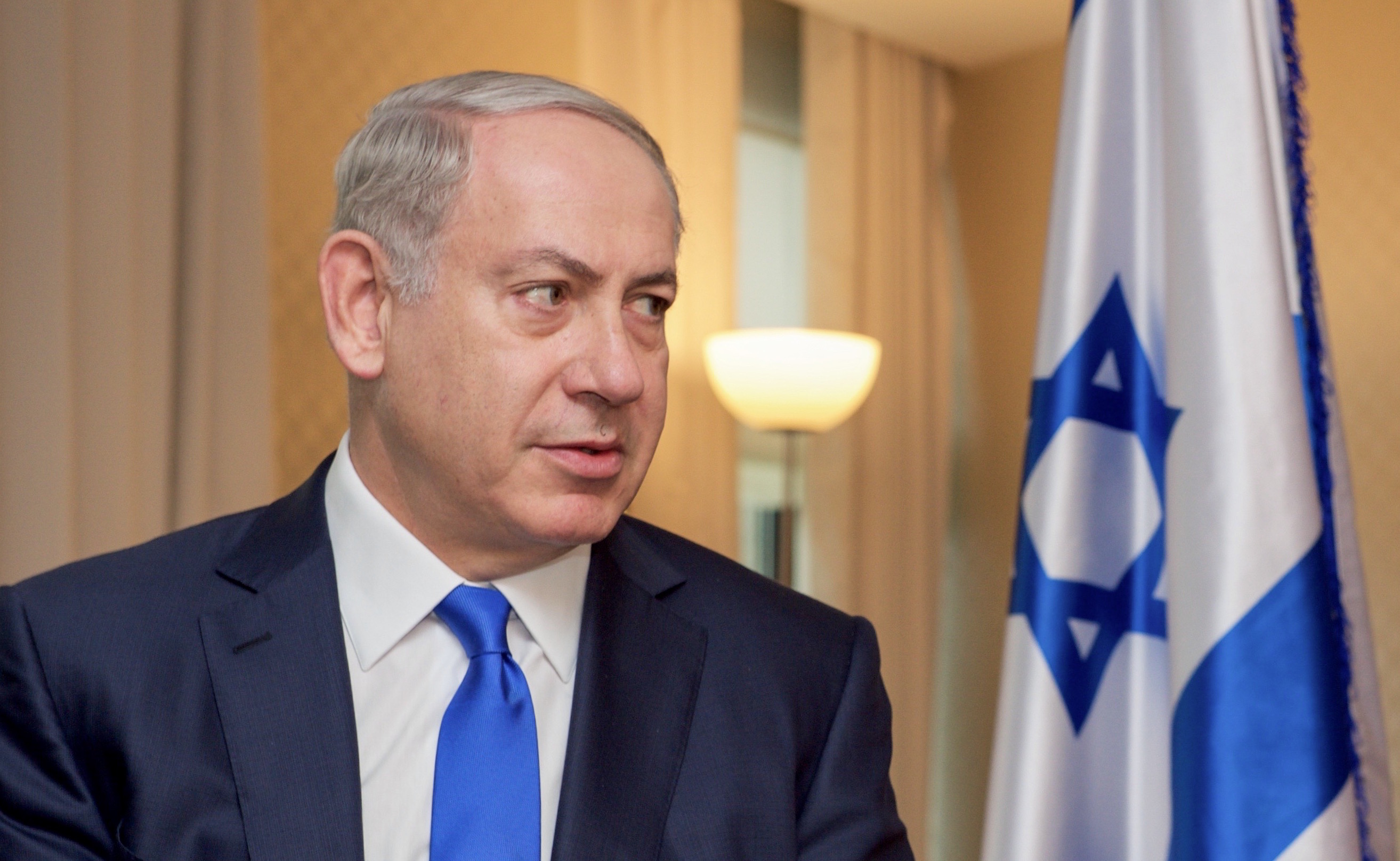
Netanyahu: More coming. (Wikimedia Commons)
Prime Minister Benjamin Netanyahu said Aug 19, “Iran has no immunity, anywhere… we will act and currently are acting against them, wherever it is necessary.” Three days later the Israeli leader went further, suggesting his country was perhaps involved in these attacks in Iraq, declaring, “We are operating in many areas against a state that wants to annihilate us.”
By making such bold moves, Israel is taking major risks. If such attacks continue in Iraq against Tehran-sponsored non-state actors near the Iranian border, Iran will likely respond. Perhaps the Iranians will put air defense capabilities in the hands of Iraqi Shi’a militias to enable such factions to fend off future Israeli attacks. Also possible is that Tehran would carry out limited strikes in retaliation at a time and place of the Iranian leadership’s choosing, perhaps targeting Israeli positions in the occupied Golan Heights of Syria.
Israeli strikes, which constitute a flagrant violation of Iraq’s sovereignty, may come with major costs for U.S. interests in Iraq. Given that an influential Iran-based Shi’a cleric, Grand Ayatollah Kazim al-Haeri, reacted to such Israeli attacks with a fatwa forbidding America’s military presence from continuing in Iraq, and the fact that many in Iraq and other Arab countries see the U.S. as responsible for Israeli actions against PMU targets, the roughly 5,000 American troops in the country could find themselves in the crosshairs of what has quickly become an escalating Israeli-Iranian proxy war waged in Iraq.
Israel’s bombing of Iraq will have major implications for the Washington-Baghdad relationship too, particularly given that the Iraqi government is attempting to bring the heavily armed Shi’a militias under its control. If the U.S. administration fails to prevent Israel from turning Iraq into more of a battleground in Tel Aviv’s proxy wars with Tehran, Iraq’s fragile stability will be further undermined. Under such circumstances, Iran could quickly capitalize on such conditions to bring Baghdad closer to Tehran at a time in which U.S. influence in Iraq—and the region at large—continues to wane.
Unquestionably, perceptions across Iraq that the U.S. is to blame for Israel’s actions will push more Iraqis to the conclusion that the White House’s “maximum pressure” agenda against Iran is directly undermining Iraq’s basic interests in upholding sovereignty and moving toward a more stable future in which the country is not implicated in greater regional crises involving multiple nations.
Giorgio Cafiero (@GiorgioCafiero) is the CEO of Gulf State Analytics (@GulfStateAnalyt), a Washington-based geopolitical risk consultancy.
Iraq would face ‘wrath of US’ if oil pipeline projects with Iran go ahead
RT | August 27, 2019
Washington would do anything to prevent an Iran-Iraq oil pipeline from ever being built, even if the Europeans were in favor, policy researchers told RT.
“Iraq would feel the wrath of the US” should it pursue a cross-border pipeline project with its neighbor Iran, believes the head of the British-based consultancy firm Alfa Energy, John Hall.
According to a recent report, Tehran talked with Baghdad about building an oil pipeline through Iraq into Syria. The sides have also reportedly discussed reviving the existing pipeline connecting Kirkuk in Iraqi Kurdistan with the city of Baniyas on Syria’s Mediterranean coast. The pipeline was heavily damaged by US airstrikes in 2003 and has remained defunct since. The proposed project is said to be aimed at providing an alternative route for Iranian oil should the Strait of Hormuz be closed in case of a direct conflict with the US.
Hall said Washington would be “upset” by this idea and will do all it can to dissuade Baghdad, as well as the EU, from participating.
Although European countries would be happy to buy oil from Iran, they won’t do so because of the threat of retribution from the United States. When you’ve got someone like Donald Trump as the president of the US, it’s very difficult knowing what may follow if Europeans try to engage with Iran across the sanctions.
The situation in civil war-torn Syria “has somewhat stabilized,” Iran and Iraq see “serious opportunities” to explore their energy ties, said Irina Fyodorova, a senior Middle East researcher at the Institute of Oriental Studies at the Russian Academy of Sciences.
“It is not the US’ interest to have a pipeline that would be independent from them and their allies in the Persian Gulf,” she told RT.
It is also against US interests to have an Iran-Iraq cooperation that is outside of their control. So there will be actions aimed at hampering the implementation of this project.
One of the steps Washington and its allies could take is boosting their support for anti-government groups in Syria, she said. The researcher added that another problem for the pipeline would be the US-backed Kurdish forces, should it go from Kirkuk.
EU countries, on the other hand, would like to see new ways to bypass US sanctions on Iranian oil, Fyodorova noted, as “getting the oil through a pipeline would be cheaper than having it delivered by tankers.”
“The Europeans love balancing the books. Moreover, it would be a wonderful alternative to the oil the EU is buying from the US.”
Will Bibi’s War Become America’s War?
By Pat Buchanan • Unz Review • August 27, 2019
President Donald Trump, who canceled a missile strike on Iran, after the shoot-down of a U.S. Predator drone, to avoid killing Iranians, may not want a U.S. war with Iran. But the same cannot be said of Bibi Netanyahu.
Saturday, Israel launched a night attack on a village south of Damascus to abort what Israel claims was a plot by Iran’s Revolutionary Guards’ Quds Force to fly “killer drones” into Israel, an act of war.
Sunday, two Israeli drones crashed outside the media offices of Hezbollah in Beirut. Israel then attacked a base camp of the Popular Front for the Liberation of Palestine-General Command in north Lebanon.
Monday, Israel admitted to a strike on Iranian-backed militias of the Popular Mobilization Forces in Iraq. And Israel does not deny responsibility for last month’s attacks on munitions dumps and bases of pro-Iran militias in Iraq.
Israel has also confirmed that, during Syria’s civil war, it conducted hundreds of strikes against pro-Iranian militias and ammunition depots to prevent the transfer of missiles to Hezbollah in Lebanon.
Understandably, Israel’s weekend actions have brought threats of retaliation. Hezbollah Secretary-General Hassan Nasrallah has warned of vengeance for the death of his people in the Syria strike.
Quds Force General Qassem Soleimani reportedly tweeted from Tehran, “These insane operations will be the last struggles of the Zionist regime.” Lebanese President Michel Aoun called the alleged Israeli drone attack on Beirut a “declaration of war.”
Last Friday, in the 71st week of the “Great March of Return” protests on Gaza’s border, 50 Palestinians were wounded by Israeli live fire. In 16 months, 200 have died from gunshots, with thousands wounded.
America’s reaction to Israel’s weekend attacks? Secretary of State Mike Pompeo called Netanyahu to assure him of U.S. support of Israel’s actions. Some Iraqi leaders are now calling for the expulsion of Americans.
Why is Netanyahu now admitting to Israel’s role in the strikes in Lebanon, Syria and Iraq? Why has he begun threatening Iran itself and even the Houthi rebels in Yemen?
Because this longest-serving prime minister in Israeli history, having surpassed David Ben-Gurion, is in the battle of his life, with elections just three weeks off. And if Netanyahu falls short — or fails to put together a coalition after winning, as he failed earlier this year — his career would be over, and he could be facing prosecution for corruption.
Netanyahu has a compelling motive for widening the war against Israel’s main enemy, its allies and its proxies and taking credit for military strikes.
But America has a stake in what Israel is doing as well.
We are not simply observers. For if Hezbollah retaliates against Israel or Iranian-backed militias in Syria retaliate against Israel — or against us for enabling Israel — a new war could erupt, and there would be a clamor for deeper American intervention.
Yet, Americans have no desire for a new war, which could cost Trump the presidency, as the war in Iraq cost the Republican Party the Congress in 2006 and the White House in 2008.
The United States has taken pains to avoid a military clash with Iran for compelling reasons. With only 5,000 troops left in Iraq, U.S. forces are massively outmanned by an estimated 150,000 fighters of the pro-Iran Popular Mobilization Forces, which played a critical role in preventing ISIS from reaching Baghdad during the days of the caliphate.
And, for good reason, the aircraft carrier Abraham Lincoln, with its crew of 5,600, which Trump sent to deter Iran, has yet to enter the Strait of Hormuz or the Persian Gulf but remains in the Arabian Sea off the coast of Oman, and, at times, some 600 nautical miles away from Iran.
Why is this mighty warship keeping its distance?
We don’t want a confrontation in the Gulf, and, as ex-Admiral James Stavridis, former NATO Supreme Allied Commander, says:
“Anytime a carrier moves close to shore, and especially into confined waters, the danger to the ship goes up significantly. … It becomes vulnerable to diesel submarines, shore-launched cruise missiles and swarming attacks by small boats armed with missiles.”
Which is a pretty good description of the coastal defenses and naval forces of Iran.
Netanyahu’s widening of Israel’s war with Iran and its proxies into Lebanon and Iraq — and perhaps beyond — and his acknowledgement of that wider war raise questions for both of us.
Israel today has on and near her borders hostile populations in Gaza, Syria, Lebanon, Iran and Iraq. Tens of millions of Muslims see her as an enemy to be expelled from the region.
While there is a cold peace with Egypt and Jordan, the Saudis and Gulf Arabs are temporary allies as long as the foe is Iran.
Is this pervasive enmity sustainable?
As for America, have we ceded to Netanyahu something no nation should ever cede to another, even an ally: the right to take our country into a war of their choosing but not of ours?
Copyright 2019 Creators.com.
Iraq’s Hashd al-Sha’abi downs spy drone
Press TV – August 25, 2019
Forces from the Popular Mobilization Units (PMU) in Iraq have shot down a spy drone in the country’s northern Province of Nineveh.
The al-Sumaria television reported on Sunday that the unmanned aerial vehicle (UAV) was targeted by the air defenses of the 50th Brigade of Hashd al-Sha’abi while it was approaching PMU bases in Nineveh.
It was not immediately clear who was operating the drone.
The Iraqi forces had shot down another spy drone on Thursday as it was flying in the vicinity of the 12th Brigade of Hashd al-Sha’abi and over the outskirts of the capital, Baghdad.
Last week, a number of powerful blasts rocked a position held by the PMU, next to the strategic Balad airbase, which hosts US forces and contractors and which is located about 80 kilometers north of Baghdad.
Hashd al-Sha’abi commanders confirmed that the intended target of the attack was the group’s position near the Balad base.
Hashd al-Sha’abi forces played a major role in the liberation of Daesh-held areas to the south, northeast, and north of Baghdad ever since the terrorists launched an offensive in the country in June 2014.
Some Iraqi officials have said the strikes were conducted by the Israeli regime.
Earlier, senior Iraqi cleric Ammar al-Hakim called on Iraqi Prime Minister Adel Abdul-Mahdi to adopt effective measures to defend the country’s sovereignty and territorial integrity in the face of strong indications that the US and Israel were involved in the series of recent attacks on PMU positions.
Two PMU fighters killed in drone strikes near Syria border
Later in the day, Iraqi popular forces issued a statement, saying that two of their fighters, including a field commander, were killed in strikes by an unidentified drone close to the Syrian border in Anbar Province.
According to Almayadeen news website, the statement added that the strike, which targeted the PMU’s 45th brigade, took place 15 km (9 miles) from the border.
An unspecified number of PMU fighters were also injured in the attack.
Reuters quoted a security source as saying that there were two air strikes. One struck the local headquarters of the brigade while the other struck a convoy of cars leaving the building.
There has been no immediate claim of responsibility for the attacks.
Featured Video
Iran spent $1 million to wipe out $30 billion in data center plans, and take down Amazon in the ME
or go to
Aletho News Archives – Video-Images
From the Archives
Clash of Civilization, Iran Part II
By Jamal Kanj – Intifada-Palestine.com – January 14, 2011
Israel’s survival kit is: perpetuate conflict, insecurity to rationalize collective hate and finally playing victim.
Devoid of conflict, Israel implodes internally; without hate, Zionism loses its justification; and playing eternal victim to continue blackmailing the West. Absence of this holy trinity, Israel ceases to exist. … continue
Blog Roll
 Aletho News
- Houthis Keep Advancing as the Red Sea Crisis Deepens
- Iran spent $1 million to wipe out $30 billion in data center plans, and take down Amazon in the ME
- Zionist billionaire pressure to silence Macklemore sparks exodus from Ed Sheeran tour
- House Votes to End Iran War for Third Time
- North Korea Slams US Plan for ‘AUKUS 2.0’ with South Korea and Japan
- Prolonging US-Iran Conflict Not Meeting Interests of Int’l Community – China’s Wang Yi
- EU bans former Zelensky aide from parliament
- NATO-backed Kosovo separatist ‘responsible for war crimes’
- US destroying international space law
- SCO Calls for Binding Global Deal to Prevent Arms Race in Space
- If Americans Knew
- U.S. Makes, Israel Takes: The Real Story of U.S.-Israeli Military Cooperation
- Night raids rise in Palestine
- Tucker Carlson interviews Norman Finkelstein about Gaza
- Groups urge Americans to support Van Hollen legislation on Israel’s killing of Americans & Palestinians
- Trump administration plans to send 40,000 tons of bombs to Israel: report
- Sanctions Target Iran’s Government, But Kill Hospitalized 23-Year-Old Woman
- An alternative view on the book “Israel’s Lobby: America in the Grip of a Foreign Power”
- Ed Sheeran’s band Beoga, other opening acts quit tour after Macklemore was dropped over his pro-Palestinian comments
- The assassination attempt on President Trump in Butler and the various Israeli connections to it
- “We Want That the Whole Land Be Jewish”
- No Tricks Zone
- New Study: ‘Global Drought Shows No Detectable Recent Acceleration Under Climate Warming’
- Economic Masterminds: German Socialists Suggest Taxing Productivity Gains Stemming From Using AI
- The South China Sea Has Not Been Cooperating With The Climate Change Narrative
- Energy Crisis: Germany Enters Heating Season With Historically Low Gas Reserve Fill Levels
- New Study: The Antarctic Ice Sheet Gained Mass From 2020-2024 Due To Staggering Snow And Ice Accumulation
- Study: Ocean Heating Rates From Thousands Of Years Ago ‘Dwarf’ Modern Ocean Heating Rates
- Climate Extremists Target, Attack Large-Scale Power Grid Infrastructure In Germany!
- New Study: Antarctic Ice Melt Has Contributed Less Than 1 Centimeter To Sea Level Rise In The Last 30 Years
- Fear Of Debate: Alarmist German Climate Scientist Calls On Mainstream Media To Discredit Skeptic Voices
- End-Of-August Arctic Sea Ice Extent Hasn’t Fallen In 20 Years, Official Data Show!
 Aletho News