US-Israeli attacks on PMU meant to revive Daesh in Iraq: Kata’ib Hezbollah
Press TV – August 24, 2019
An Iraqi resistance group says the recent airstrikes on the positions of pro-government Popular Mobilization Units (PMU) are an attempt by the US and Israel to revive the Daesh Takfiri terrorist group in the Arab country.
In an interview with Lebanon’s Arabic-language al-Ahed news website published on Friday, Kata’ib Hezbollah spokesman Mohammed Muhyee said the air raids on Hashd al-Sha’abi positions are actually meant to weaken Iraqi resistance factions, empty their weapons stores and end their role in maintaining security in Iraq.
He added that the next stage, which has been planned by the US, is to return thousands of foreign-backed Daesh terrorists to the Iraqi-Syrian border.
The recent attacks “were not accidental,” but rather planned in advance after continued monitoring operations by Israeli and American drones, Muhyee pointed out.
He also accused Washington of trying to get Israel to conduct the strikes in a bid to prevent reactions from Iraqi resistance groups.
Muhyee further warned of a tough response to any future attack on Iraqi forces.
Earlier this week, a PMU ammunition depot was exploded in Iraq, the fourth in recent months. The attacks began on July 19 when a drone dropped explosives onto a PMU base near the town of Amerli, in Salahuddin Province, killing at least one resistance fighter and injuring four others.
Unnamed American officials confirmed that Israel had been behind the attacks.
Israeli Prime Minister Benjamin Netanyahu hinted on Thursday at possible Israeli strikes in Iraq.
“We are operating – not just if needed, we are operating in many areas against a state (Iran) that wants to annihilate us. Of course I gave the security forces a free hand and instructed them to do anything necessary to thwart Iran’s plans,” he said when asked whether Tel Aviv was considering operations in Iraq.
Daesh unleashed a campaign of death and destruction in Iraq in 2014, overrunning vast swathes in lightning attacks. Iraqi army soldiers and allied fighters then launched operations to eliminate the terror outfit and retake lost territory.
The PMU had a prominent role in flushing Daesh out of the areas it had occupied in Iraq.
In December 2017, Iraq declared the end of the anti-Daesh campaign. The group’s remnants, though, keep staging sporadic attacks across Iraq.
US officials confirm Israel behind Iraq air strikes
MEMO | August 23, 2019
US officials have confirmed that Israel was behind recent airstrikes on alleged weapons depots in Iraq, which were ostensibly being used by Iran to transfer arms to Syria.
Senior US officials yesterday told the New York Times that Israel has carried out “several strikes [in Iraq] in recent days”, the most recent of which took place on Monday near the Balad Airbase, north of Iraqi capital Baghdad.
The US-based newspaper also quoted a “senior Middle Eastern intelligence official” who said that Israel had struck a separate base north of Baghdad on 19 July. The official claimed that the base was being used by Iran’s Revolutionary Guards Corp (IRGC) to transfer weapons to Syria, where Iranian-backed groups are engaged in the country’s protracted civil war.
He added that a “cargo of guided missiles with a range of 125 miles” was destroyed during the attack.
The same official also revealed that the 19 July strike was launched from “within Iraq”, raising questions as to how Israeli aircraft were based in a country with which they currently have no formal diplomatic relations.
The US officials’ comments confirm weeks of speculation that Israel was responsible for the multiple attacks on Iraqi targets which have taken place in recent months.
In the past three months, four attacks on weapons depots have taken place. Three of these bases were being used by the Popular Mobilisation Forces (PMF), an umbrella organisation of Shia paramilitary groups technically under the authority of the Iraqi Security Forces, though many operate semi-autonomously.
Meanwhile the fourth was being used by Iraq’s federal police, the New York Times explained.
On Wednesday the PMF blamed the US and Israel for attacking its bases in Iraq, saying in a statement that the US had allowed four Israeli drones to enter Iraq. The statement added that the group has “accurate information” which proves the US brought the Israeli drones into Iraqi territory to work as part of the US fleet stationed in the country.
The US Pentagon, however, strenuously denied its involvement in the affair, dismissing the PMF’s statement entirely.
Israeli Prime Minister Benjamin Netanyahu further added to speculation of US-Israeli involvement yesterday, saying that he had given the armed forces a “free hand” to deal with the alleged Iranian threat.
In an interview with Israel’s Russian-language outlet Channel 9, Netanyahu was asked whether Israel would operate against Iranian targets in Iraq if needed. The prime minister replied: “We are operating – not just if needed, we are operating in many areas against a state that wants to annihilate us. Of course, I gave the security forces a free hand and instructed them to do anything necessary to thwart Iran’s plans.”
The attacks represent a new front for Israel, having previously focused on targeting Iranian positions in Syria. Though Israel has maintained an official policy of non-intervention in the Syrian civil war and often remained silent in the face of air strike accusations, in January then Chief of Staff of the Israeli army Gadi Eisenkot admitted Israel had in fact struck Syria “thousands of times”.
Israel’s military intelligence threatened in February to expand its operations to Iraq, claiming “Iran may use Iraq as a launching pad to target Israel” after its positions in Syria were destroyed. This, Israel claimed, “would call for a response from Tel Aviv”. US President Donald Trump also expressed similar ideas, telling American news station CBS that he would keep US personnel in Iraq to “keep an eye” on Iran.
Former Iraqi prime minister Haider Al-Abadi slammed these suggestions, stressing that “Iraqi sovereignty must be respected [since] we are not proxies in conflicts outside the interests of our nation”. Iraq’s President Barham Salih echoed this sentiment, calling on the US not to pursue its own policy priorities because “we live here”.
READ ALSO:
Iraqi Paramilitary Force Accuses US of Military Base Attacks
Sputnik – August 21, 2019
An ammunition depot at Iraq’s al-Saqr military base was hit by an explosion on 12 August, killing one person and leaving 13 injured. Weeks earlier, a similar blast took place at Amerli base.
Iraqi paramilitary force Hashd al-Shaabi has stated that Washington is responsible for the attacks on the country’s military bases, according to AFP.
“We announce that the first and last entity responsible for what happened are American forces, and we will hold them responsible for whatever happens from today onwards,” the paramilitary group said in a statement.
Earlier, a member of the Security and Defence Committee in the Iraqi Parliament, Karim Alaiwi, told Lebanese broadcaster al-Mayadeen that the explosions that rocked two Iraqi military bases held by the country’s Shi’ite paramilitaries were the result of unmanned Israeli airstrikes.
“We have proof that Israeli air forces hit several targets in Iraq, including the al-Saqr and Amerli bases. Israel claims that the Popular Mobilisation Forces have connections to Iran and Lebanon’s Hezbollah,” the lawmaker claimed.
According to Alaiwi, the Jewish state is vying to weaken the militias through such airstrikes and even kill their members. He noted that Iraqi airspace is controlled by the US Air Force, indicating that Israel could not have struck the bases without Washington knowing it.
However, the Iraqi planes failed to detect drones in the sky over the bases, the official noted.
Previously, al-Mayadeen reported, citing sources familiar with the matter, that three unmanned aerial vehicles were spotted just before the explosion at the al-Saqr base.
On Tuesday, several blasts rocked a position held by Iraqi Shi’ite paramilitaries next to Balad airbase.
On 12 August, an ammunition depot at al-Saqr military base, controlled by the Iraqi militia, was hit by a blast which left 1 dead and 13 more injured. The specially-protected “green zone”, where government buildings and diplomatic missions are located, was struck. A source in the Iraqi security forces revealed that residential areas had also been put in harm’s way. On July 19, similar explosions occurred at Amerli’s base, with a number of media reporting a drone strike.
Subsequently, the Prime Minister of Iraq ordered the removal of all ammunition depots outside the Iraqi capital.
Baghdad Says it Will Down Any Vehicle Violating Iraqi Airspace After Depot Blast
Sputnik – August 16, 2019
Iraqi Prime Minister Adil Abd Mahdi, following a mysterious blast that hit a munitions depot in Baghdad, has ordered the air defences to immediately bring down any aerial vehicle that will violate the country’s airspace, the government’s press service said on Thursday.
The decision came after a blast hit the ammo depot in the Iraqi capital on Monday, leaving one civilian killed and dozens injured.
Though the causes of the explosion remain unknown, the incident has given rise to a number of theories, including that Israel might have been allegedly behind the airstrike on the depot belonging to the Iran-backed Popular Mobilization Forces.
“The prime minister ordered to revoke all special flight permits in Iraqi airspace for reconnaissance aircraft, reconnaissance aircraft with weapons, fighters, helicopters, unmanned aerial vehicles of all kinds available to the Iraqi and non-Iraqi sides”, the press service said following the Iraqi National Security Council meeting.
The council also ruled that flight permits would now be issued exclusively by the commander-in-chief of the Iraqi Armed Forces, i.e. Mahdi, or officials authorized by him.
“All authorities are required to comply with this order. Any flights that violate this regulation will be considered an aggression, which our air defence will immediately respond to”, the statement added.
It is noteworthy that the decision also comes amid the Turkish Air Force’s regular raids against the Kurdistan Workers Party’s positions in Iraq, which the latter has repeatedly slammed as an assault on its sovereignty.
Iraq rejects Israel’s role in Persian Gulf mission, warns of West’s presence
Press TV – August 12, 2019
Iraqi Foreign Minister Mohamed Ali al-Hakim has expressed his country’s opposition to the Israeli regime’s possible involvement in a US-led mission in the Persian Gulf, warning that the presence of foreign forces, including Western countries, in the strategic water body will be fueling tensions.
“Iraq rejects the participation of Zionist forces in any military force to secure the passage of ships in the [Persian] Gulf. The [Persian] Gulf littoral states can together secure the transit of ships,” Hakim wrote in a post published on his official Twitter page on Monday.
“Iraq is seeking to reduce tension in our region through peaceful negotiations,” he said, warning that “the presence of Western forces in the region will increase tension.”
The remarks came a day after Iran’s Islamic Revolution Guards Corps (IRGC) warned that any Israeli presence in the Persian Gulf may result in a war in the region, and that the responsibility for the consequences of such illegal presence lies with the United States and the United Kingdom.
“The United States and the United Kingdom must assume responsibility for the Zionist regime’s illegal presence in the Persian Gulf waters,” IRGC Navy Commander Rear Admiral Alireza Tangsiri told Lebanon-based Arabic-language al-Mayadeen television news network on Sunday.
“Any presence of the Zionist regime in the Persian Gulf waters is illegal, as it may result in war and confrontation in the region,” the top commander warned.
Israeli foreign minister Israel Katz said on August 7 that the regime would be part of the US-led coalition to “protect the security of the Persian Gulf.”
Katz claimed that Israel was determined to stop “Iranian entrenchment” in the Middle East region and strengthen Tel Aviv’s relationship with the Persian Gulf countries, Israeli news website Ynet reported.
On August 9, Iranian Foreign Ministry Spokesman Abbas Moussavi highlighted that the Islamic Republic regards possible Israeli presence in a US-led coalition in the Persian Gulf as a clear threat to its national security, and reserves the right to counter it.
“Within the framework of the country’s deterrence and defensive policy, the Islamic Republic of Iran reserves the right to counter this threat and defend its territory,” Moussavi noted.
“The US regime and the illegitimate Zionist regime are responsible for all the consequences of this dangerous move,” the spokesman added.
US Marine General Joseph Dunford, chairman of the Joint Chiefs of Staff, said on July 9 that the US was proceeding with plans to assemble the coalition purportedly aimed at ensuring freedom of navigation in waters off Iran and Yemen.
“We’re engaging now with a number of countries to see if we can put together a coalition that would ensure freedom of navigation both in the Straits of Hormuz and the Bab el-Mandeb,” Dunford said.
“And so I think probably over the next couple of weeks we’ll identify which nations have the political will to support that initiative and then we’ll work directly with the militaries to identify the specific capabilities that’ll support that,” he added.
Missiles Used in Iraq Attack Match Those Used by Israel in Syria Strikes, Kuwaiti Media Claims
Sputnik – July 23, 2019
On Friday, AP reported that an unmanned drone had carried out strikes against a base in Iraq used by the Popular Mobilisation Forces, the mostly Shia Iraqi paramilitary force which took part in the campaign to defeat Daesh and which has received assistance and training from Iran.
Israel may be behind Thursday night’s mystery drone attack on an alleged Iranian-backed militia base in Amirli, northeastern Iraq, Kuwait’s Al-Jarida newspaper has alleged, citing a source in Iran’s Islamic Revolutionary Guard Corps.
According to Al-Jarida’s source, the attack on the militia depot, which contained stocks of short- and medium-range missiles, as well as a militia headquarters building, was allegedly carried out by an aircraft flying out of an American base near the Syrian-Jordan-Iraqi border, possibly al-Tanf.
The source claimed that the preliminary results of a forensic investigation by the Iraqi government have suggested that they were the same type used by Israel during its periodic attacks against Syria.
Al-Jarida also claimed that during US Secretary of State Mike Pompeo’s visit to Iraq in May, Pompeo warned Iraqi officials that Israel could strike “Iranian targets” in the country “at any time.”
Iraqi sources speaking to the newspaper said that Baghdad will be unlikely to officially accuse Israel, because it would put the government ‘in a difficult position’, and lead to popular anger demanding the restructuring of the armed forces.
Officials from Iraq, Iran, and Israel have not commented on the newspaper’s allegations.
No country or group has claimed responsibility for Thursday night’s attack, which reportedly killed one militia fighter and injured two others, who may have been Iranian advisers. The US immediately denied any involvement, with a Pentagon spokesman saying bluntly that “US forces were not involved.” An Iraqi Civil Defence Corps spokesman said the perpetrator “remains unknown.”
The Popular Mobilisation Forces (PMF) are an umbrella paramilitary force consisting mostly of Iraqi Shia Muslim militias formed in June 2014 to fight Daesh (ISIS) and to check the terrorist group’s advance into Iraq and Syria. Some of the member militias in the PMF took part in fighting the US occupation after the 2003 invasion, and have received training and material assistance from Iran. Relations between the PMF and US forces operating in Iraq have deteriorated in the months following Daesh’s retreat, with the two sides generally committing to avoiding operating in the same areas to avoid exacerbating tensions.
Unidentified drones attack Hashd al-Sha’abi base in Iraq’s Salahudin Province: Reports
Press TV – July 19, 2019
Unidentified drones have reportedly attacked a base belonging to Iraq’s Popular Mobilization Forces (PMU) in the Arab country’s Salahudin Province.
The attack killed one PMU member and injured another four, Iraq’s al-Ahad television network reported on Friday.
Footage later released by Iraqi media from the assault’s aftermath showed a large flame in what was reportedly a PMU base near the town of Amerli.
It is yet unclear who orchestrated the operation.
The PMU — better known as Hashd al-Sha’abi — was formed by popular volunteer forces in 2014 after the Daesh Takfiri terror group launched a campaign of bloodshed and destruction against the nation.
It joined forces with the national army and effectively contributed to its anti-terror operations. The combined push, which was reinforced by Iraq’s allies, including Iran, ultimately led to Daesh’s expulsion in late 2017.
The Iraqi parliament on November 26, 2016 approved a law giving full legal status to Hashd al-Sha’abi fighters. Last March, the then prime minister, Haider al-Abadi, to order the PMU’s formal inclusion in the Arab country’s army.
The order would grant the PMU many of the same rights as members of the military, but it is yet to be fully implemented.
Earlier this month, Abadi’s successor, Adil Abdul-Mahdi, issued a decree, calling for the PMU’s full integration in the Iraqi military.
The attack on the Hashd al-Sha’abi base comes as the United States has sought to pressure Baghdad against the PMU.
Washington has often labeled Iraqi units operating under the PMU organization as being “Iran-led terrorists groups,” a claim denied by the Iraqi officials.
Iraqis have sharply rejected Washington’s hostile stance against Hashd al-Sha’abi forces, describing it as a violation of the Arab country’s sovereignty.
Pandering to Christian Zionism: Trump Outreach on Display in Washington
By Philip Giraldi | Strategic Culture Foundation | July 18, 2019
In Washington on the weekend after the Fourth of July, Israel was praised and Iran was condemned in the strongest terms, with a bit of a call to arms thrown in to prepare the nation for an inevitable war. It might just seem like a normal work week in the nation’s capital, but this time around there was a difference. The rhetoric came from no less than five senior officials in the Trump Administration and the audience consisted of 5,000 cheering members from the Christian Zionist evangelical group called Christians United for Israel (CUFI).
Christian Zionism is not a religion per se, but rather a set of beliefs based on interpretations of specific parts of the Bible – notably the book of Revelations and parts of Ezekiel, Daniel, and Isaiah – that has made the return of the Jews to the Holy Land a precondition for the Second Coming of Christ. The belief that Israel is essential to the process has led to the fusion of Christianity with Zionism, hence the name of the movement. The political significance of this viewpoint is enormous, meaning that a large block of Christians promotes and votes for a non-reality based foreign policy based on a controversial interpretation of the Bible that it embraces with considerable passion.
It would be a mistake to dismiss CUFI as just another group of bible-thumpers whose brains have long since ceased to function when the subject is Israel. It claims to have seven million members and it serves as a mechanism for uniting evangelicals around the issue of Israel. Given its numbers alone and concentration is certain states, it therefore constitutes a formidable voting bloc that can be counted on to cast its ballots nearly 100% Republican, as long as the Republican in question is reliably pro-Israel. Beyond that, there are an estimated 60 million evangelical voters throughout the country and they will likely follow the lead of groups like CUFI and vote reflecting their religious beliefs, to include Trump’s highly visible support for the Jewish state.
Trump’s reelection campaign is reported to be already “… developing an aggressive, state-by-state plan to mobilize even more evangelical voters than supported him last time.” This will include, “voter registration drives at churches in battleground states such as Ohio, Nevada and Florida.” Without overwhelming evangelical support, Trump reelection in 2020 is unlikely, hence the dispatch of all available White House heavyweights to CUFI’s annual summit at the Washington Convention Center.
Though it is an organization that defines itself as Christian, CUFI makes no effort to support surviving Christian communities in the Middle East as most of them are hostile to Israel. The group also supports war against Iran as a precursor to total global conflict. Hagee has explained that “The United States must join Israel in a pre-emptive military strike against Iran to fulfill God’s plan for both Israel and the West… a biblically prophesied end-time confrontation with Iran, which will lead to the Rapture, Tribulation, and Second Coming of Christ.”
CUFI operates out of the Cornerstone Church in San Antonio Texas. It was founded at the church in 2006 and is headed by John Hagee, a leading evangelical who has been courted both by the Trump Administration and by Israel itself, which presented him with a a Lear business yet complete with a crew so he would be able to do his proselytizing in some comfort. He frequently appears at commemorations in Israel, is a regular at the annual AIPAC meeting and has been a guest at the White House. He was present at the Trump administration’s ceremony last year when it moved the US Embassy to Jerusalem and gave a speech. He has said that “there has never been a more pro-Israeli president than Donald Trump.”
Present at the CUFI summit were Vice President Mike Pence, Secretary of State Mike Pompeo, National Security Advisor John Bolton, US Ambassador to Israel David Friedman, and US negotiator in the Middle East Jason Greenblatt. Lest there be any confusion, the White House was represented by two Christian Zionists, two Jewish Zionists and John Bolton, who has been variously described. All five have been urging a military response against Iran for its alleged “aggression” in the Middle East. Israeli Prime Minister also addressed the conference via videolink, with his similar “analysis” of the Iranian threat. There were also a number of Republican Senators present, to include Ted Cruz, Marco Rubio, Roy Blunt and Tim Scott.
The speeches were all pretty much the same but perhaps the most suggestive was the 2,000 word plus exhortation delivered by Pompeo. His presentation was entitled “The US and Israel: a Friendship for Freedom.” He asked, in a speech full of religious metaphors and biblical references, his audience to “compare Israel’s reverence for liberty with the restrictions on religious freedom facing Christians and people of all faiths throughout the rest of the Middle East,” where “if a Muslim leaves Islam it is considered an apostasy, and it is punishable indeed by death.”
Pompeo was more interested in stirring up his audience than he was in historical fact. He said “In Iraq, Syria, and other countries in the region, the last remnants of ancient Christian communities are at near-extinction because of persecution from ISIS and other malign actors. And just one example: before 2003, there were an estimated 1.5 million Christians living in Iraq. Today, sadly, almost a quarter of a million.”
Pompeo, whose grasp of current events appears to be a bit shaky, did not mention two of the principal reasons that Christianity has been declining in the region. First and foremost is the Iraq War, started by the United States for no good reason, which unleashed forces that led to the destruction of religious minorities. Second, he did not note the constant punishment delivered by Israel on the Palestinians, which has led to the departure of many Christians in that community. Nor did he say anything about the reverse of the coin, Syria, where Christians are well integrated and protected by the al-Assad government which Pompeo and Bolton are seeking to destroy to benefit Israel.
The Secretary of State also delivered the expected pitch for four more years of Donald Trump, saying “But thank God. Thank God we have a leader in President Trump – an immovable friend of Israel. His commitment, his commitment – President Trump’s commitment is the strongest in history, and it’s been one of the best parts of my job to turn that commitment into real action.”
But it has to be Pompeo’s conclusion that perhaps should be regarded as a joke, though it appears that no one in the audience was laughing. He said “Our country is intended to do all it can, in cooperating with other nations, to help create peace and preserve peace [throughout] the world. It is given to defend the spiritual values – the moral code – against the vast forces of evil that seek to destroy them.”
It was a reiteration of Pompeo’s earlier “America is a force for good” speech delivered in Cairo in January. Nobody believed it then and nobody believes it now, given what has been actually occurring over the past 18 years. It would be interesting to know if Pompeo himself actually thinks it to be true. If he does, he should be selling hot dogs from a food truck rather than presiding as Secretary of State.
So, the bottom line is that the Trump Administration pandering to Hagee and company is shameful. Christian Zionist involvement in American politics on behalf of the Washington’s relationship with Israel does not serve any conceivable US national interests unless one assumes that Israel and the United States are essentially the same polity, which is unsustainable. On the contrary, the Christian Zionist politicizing has been a major element in supporting the generally obtuse US foreign policy in the Middle East region and vis-à-vis other Muslim countries, a policy that has contributed to at least four wars while making the world a more dangerous place for all Americans. Christian Zionist promoted foreign policy serves a particularly narrowly construed parochial interest that, ironically, is intended to do whatever it takes to bring about the end of the world, possibly a victory for gentlemen like Pastor John Hagee if his interpretation of the bible is correct, but undeniably a disaster for the rest of us.
US mission in Baghdad serves as Mossad, Daesh headquarters: Iraqi MP

This file photo shows the US embassy building in the Iraqi capital of Baghdad.
Press TV | July 15, 2019
A senior Iraqi parliamentarian warns that the US embassy in Baghdad is involved in “suspicious activities,” saying agents of the Israeli spy agency Mossad and the Daesh terrorist group have been spotted regularly visiting the diplomatic mission.
“The US embassy in Baghdad has turned into a center for Israel’s Mossad and ISIS (Daesh) terrorists,” Hassan Salem was quoted as saying by the Iraqi Arabic-language al-Sumariya news website.
Salem said the US embassy is interfering in Iraq’s internal affairs by spying, spreading rumors and hatching plots.
“The US embassy’s violation of laws and forgetting its responsibilities based on the international laws mean that the center could not be called an embassy and therefore, its closure is legally necessary,” the Iraqi lawmaker said.
US giving Daesh head protection
Salem had earlier suggested that US forces in Ain al-Assad military base were protecting Daesh ringleader Ibrahim al-Samarrai, aka Abu Bakr al-Baghdadi, in the western desert of Iraq’s Anbar province.
“Al-Baghdadi is using the Anbar desert as a safe haven, while the US forces provide him with all means of support from their station at the Ain al-Assad military base in Anbar province,” Salem said in February.
The Iraqi MP argued then that America’s support for al-Baghdadi “stems from Washington’s fear of a draft bill on expelling foreign troops from Iraq, which the parliament intends to vote on during the new legislative term.”
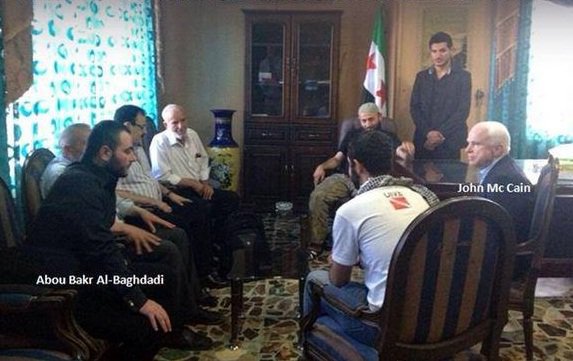
Also in February, former Iraqi Prime Minister Nouri al-Maliki for the first time divulged explosive secrets about how the United States supported Daesh and intentionally allowed the Takfiri terror outfit to gain power in Iraq so that Washington could creep back into the Arab country.
He said the administration of former US President Barack Obama had played a key role in the creation of Daesh by allowing the terrorist group to overrun Iraqi territories.
In March, an Iraqi security expert also revealed that the American embassy in Iraq was carrying out suspicious measures, describing the mission as a US-Israeli operations room that sought to destabilize the region.
Abbas al-Ardawi was quoted by the Arabic-language al-Ma’alomeh news website as saying that US administration was exerting pressures on Baghdad and killing time to prolong its deployment in Iraq.
He said the relocation of terrorists from the town of Baqouz in Eastern Syria to the US bases in Iraq was aimed to stir security tensions in the country and find a pretext for continued deployment of American forces.
Al-Ardawi said Iraqi lawmakers certainly want all US forces to be expelled from the country as soon as possible.
Another senior Iraqi expert had in January warned of Washington’s attempts to increase its influence in Iraq, saying Israeli spies and Daesh terrorists were present at across US bases in Iraq.
Hafez Al-e Basharah told al-Ma’aloumeh news website that the US was attempting to boost its presence in Iraq and the American forces had been stationed in the southern parts of Baghdad.
He went on to say that the US forces did not allow any Iraqis to enter their bases in the country in an attempt to conceal the realities from the public opinion.
Israeli intelligence agents were also operating from the bases, where Takfiri terrorists also received shelter and training, he added.
US Treasury Dept imposes new Iran-related sanctions on 2 individuals and a company in Iraq
RT | June 12, 2019
The US Treasury Department announced sanctions on Wednesday against two Iraq-based persons and one company, for their alleged links to Iran’s Revolutionary Guard.
Makki Kazim and Mohammed Hussein, along with the South Wealth Resources Company have all been hit with secondary sanctions, according to the Treasury Department website.
Secondary sanctions form a major part of US international statecraft, cutting off businesses and individuals from the US financial system and tarnishing their reputations with international businesses and banks. A number of measures can be enforced against targeted individuals, ranging from limiting their ability to do business in the US to prohibiting all US parties from conducting business with them.
Qatar rejects anti-Iran statements of Mecca summits
Press TV – June 3, 2019
Qatar says it rejects the anti-Iran statements of the recent Mecca summits as they had been prepared in advance without consulting Doha.
“The statements of the [Persian] Gulf and Arab summits were ready in advance and we were not consulted on them,” Mohammed bin Abdulrahman Al Thani told the Al-Araby broadcaster.
“Qatar has reservations on the Arab and [Persian] Gulf summits because some of their terms are contrary to Doha’s foreign policy,” he added.
“We hoped the Mecca summits would lay the groundwork for dialogue to reduce tensions with Iran,” the top diplomat said in comments reposted on Twitter by his ministry.
“The Mecca summit ignored the important issues in the region, such as the Palestine issue and the war in Libya and Yemen,” he went on to say.
Qatar is not the first Arab state to reject the final statements of the emergency meetings in Mecca. Following the talks, Iraq also opposed the communiqué issued by the Arab participants.
Iraq, which maintains close ties with neighboring Iran and has strong ties with Washington as well, objected to the communiqué, which required “non-interference in other countries” as a pre-condition for cooperation with Tehran.
Iraqi President Barham Salih asked the gathering to support his country’s stability, arguing that rising tensions with Iran could cause war. He voiced hope that Iran’s security would not be targeted.
“We are watching before our eyes the escalation of a regional and international crisis which can turn into war that will engulf all. If the crisis is not managed well, then we will be faced with the danger of a regional and international confrontation which will bring tragedy to our countries,” Salih said.
“The Islamic Republic of Iran is a Muslim country that is a neighbor to Iraq and Arabs. It is certain that we do not wish the security of Iran to be targeted. We share a common border that is 1,400 km long and a long history and relations, and it is also certain that the security of a fellow Islamic country is in the interest of Arab and Islamic countries. The region needs stability based on a mechanism of joint security that guarantees non-interference in internal affairs and the rejection of violence and extremism,” he added.
The statements mainly cited concerns about the recent sabotage attacks against several ships off the UAE. Both Saudi and Emirati officials have blamed the mysterious “sabotage” attacks on Iran while Iran has strongly denied any involvement, and offered to sign non-aggression pacts with the Persian Gulf Arab states.
Related:
Iraqis denounce rocket attack amid foul play suspicions
Press TV – May 20, 2019
Iraq’s Kata’ib Hezbollah, a major pro-government resistance group, says a rocket attack on Baghdad’s Green Zone Sunday night is “unacceptable” and against the country’s national interests.
No one has claimed responsibility for the attack which came in the wake of back-to-back sudden decisions taken by the US recently, including its withdrawal of “non-essential” staff from Iraq.
Those measures have surprised many Iraqi leaders and politicians who have questioned Washington’s claims of stepped-up threats to American interests in the Arab country.
Jaafar al-Husseini, a spokesman for the pro-government militia Kata’ib Hezbollah, told reporters on Monday that the rocket attack was “unjustifiable” and contrary to Iraq’s national interests.
The Green Zone, a 10-square-kilometer area in central Baghdad, is home to Iraqi government offices and those of other foreign governments, including the United States.
Although the apparent Katyusha attack hurt no one and its target was not specified, Trump was quick to point the finger at Iran in a tweet, saying if Tehran wants a war, “that will be the official end of Iran.”
Trump’s hawkish national security adviser, John Bolton, also headed to the White House to discuss the rocket attack, according to media reports.
Kata’ib Hezbollah’s reaction came in the wake of the US having turned its attention to pro-government military groups which played a crucial role in defeating Daesh and other terrorist groups in Iraq.
Washington has commonly described the popular Iraqi forces as “Iran-backed proxies” despite being formally funded and incorporated into Iraq’s security forces.
Earlier this month, during an unannounced visit to Baghdad, US Secretary of State Mike Pompeo called on the Iraqi government to restrain popular mobilization and anti-terror forces, saying they posed a “threat” to US interests.
Western media reports said Washington had notified Iraqi officials that the US might even directly attack the groups without coordinating with Baghdad if it perceived any threat.
The US military also said its forces in Syria and Iraq were ordered to stay vigilant over fears of “imminent threats” from what it called Iran-backed forces in the region.
Speaking to reporters last Tuesday, Iraqi Prime Minister Adel Abdul-Mahdi made it clear that Iraq had not observed “movements that constitute a threat to any side.”
Over the past few days, the US has put its political staff in its Baghdad embassy as well as in the American consulate in the Iraqi city of Erbil on high alert without a viable reason.
American energy giant Exxon Mobil also pulled its foreign workers out of West Qurna 1 oil field in Iraq’s southern province of Basra, a move Iraq’s Oil Minister Thamir al-Ghadhban called “unacceptable and unjustified.”
‘US stirring tension in Iraq to score negotiation points’
Iraqi political analyst Wathiq al-Hashimi said Sunday that Washington was building up a tension about the security situation in Iraq in order to drive a wedge between the Arab country and Iran.
He said in an interview with China Central Television (CCTV) that the recent measures by the US in Iraq were meant to send Iran a clear warning following high-profile visits to Baghdad by Iranian President Hassan Rouhani and Foreign Minister Mohammad Javad Zarif.
“Presidents of the US and Iran and foreign ministers of the two countries previously visited Iraq in a row. Now the US sends a warning signal to Iran that it is going to do something,” Hashimi said.
Trump caused outrage among Iraqi people and officials by suggesting during and after his Christmas trip to the country that he would use Iraq as a platform to “watch” Iran and take action against it if necessary.
The US has recently raised the stakes in its so-called maximum pressure campaign against Iran. Washington sent a carrier strike group as well as strategic B-52 bombers to the region in a “clear warning” to Tehran.
The deployment came days before several oil tankers were mysteriously “sabotaged” off the UAE emirate of Fujairah last week.
While dismissing US brinksmanship as a psychological warfare, Iranian officials have made it clear that such maneuvers will not coerce Tehran into negotiations with the United States.
Leader of the Islamic Revolution Ayatollah Seyyed Ali Khamenei said last week that Tehran would not negotiate with the United States on another nuclear deal and such talks would be “poison”.
Featured Video
Iran spent $1 million to wipe out $30 billion in data center plans, and take down Amazon in the ME
or go to
Aletho News Archives – Video-Images
From the Archives
Clash of Civilization, Iran Part II
By Jamal Kanj – Intifada-Palestine.com – January 14, 2011
Israel’s survival kit is: perpetuate conflict, insecurity to rationalize collective hate and finally playing victim.
Devoid of conflict, Israel implodes internally; without hate, Zionism loses its justification; and playing eternal victim to continue blackmailing the West. Absence of this holy trinity, Israel ceases to exist. … continue
Blog Roll
 Aletho News
- China Rejects Outside Pressure on Trade Ties After New US Russia Sanctions Bill
- Houthis Keep Advancing as the Red Sea Crisis Deepens
- Iran spent $1 million to wipe out $30 billion in data center plans, and take down Amazon in the ME
- Zionist billionaire pressure to silence Macklemore sparks exodus from Ed Sheeran tour
- House Votes to End Iran War for Third Time
- North Korea Slams US Plan for ‘AUKUS 2.0’ with South Korea and Japan
- Prolonging US-Iran Conflict Not Meeting Interests of Int’l Community – China’s Wang Yi
- EU bans former Zelensky aide from parliament
- NATO-backed Kosovo separatist ‘responsible for war crimes’
- US destroying international space law
- If Americans Knew
- U.S. Makes, Israel Takes: The Real Story of U.S.-Israeli Military Cooperation
- Night raids rise in Palestine
- Tucker Carlson interviews Norman Finkelstein about Gaza
- Groups urge Americans to support Van Hollen legislation on Israel’s killing of Americans & Palestinians
- Trump administration plans to send 40,000 tons of bombs to Israel: report
- Sanctions Target Iran’s Government, But Kill Hospitalized 23-Year-Old Woman
- An alternative view on the book “Israel’s Lobby: America in the Grip of a Foreign Power”
- Ed Sheeran’s band Beoga, other opening acts quit tour after Macklemore was dropped over his pro-Palestinian comments
- The assassination attempt on President Trump in Butler and the various Israeli connections to it
- “We Want That the Whole Land Be Jewish”
- No Tricks Zone
- New Study: ‘Global Drought Shows No Detectable Recent Acceleration Under Climate Warming’
- Economic Masterminds: German Socialists Suggest Taxing Productivity Gains Stemming From Using AI
- The South China Sea Has Not Been Cooperating With The Climate Change Narrative
- Energy Crisis: Germany Enters Heating Season With Historically Low Gas Reserve Fill Levels
- New Study: The Antarctic Ice Sheet Gained Mass From 2020-2024 Due To Staggering Snow And Ice Accumulation
- Study: Ocean Heating Rates From Thousands Of Years Ago ‘Dwarf’ Modern Ocean Heating Rates
- Climate Extremists Target, Attack Large-Scale Power Grid Infrastructure In Germany!
- New Study: Antarctic Ice Melt Has Contributed Less Than 1 Centimeter To Sea Level Rise In The Last 30 Years
- Fear Of Debate: Alarmist German Climate Scientist Calls On Mainstream Media To Discredit Skeptic Voices
- End-Of-August Arctic Sea Ice Extent Hasn’t Fallen In 20 Years, Official Data Show!
 Aletho News