15 years ago today, Colin Powell delivered his infamous speech at the U.N., the speech which cemented the support of the U.S. political and media establishments for the invasion of Iraq, under the pretext of “weapons of mass destruction”. This blog came into existence in August, 2003, a few months later, as one of the very first (if not the first) radical left blogs on the internet (there were a few leftish progressive Democrat blogs at the time, that was about it). Here are some of the posts from that time (and later) which talk about Powell’s speech:
Here’s a letter to the editor I wrote, before the blog started, but after Powell’s speech. I had no special knowledge with which to analyze his speech, just the ability to listen, read, and analyze what was being said, rather than simply accept it at face value. That, unfortunately, was more than the editors of the New York Times, Washington Post, and almost all Democrats and Republicans were capable of.
Here’s an article I wrote many years later, when people started asking George Bush and other politicians, “If you knew then what you know now…”. That question was a distraction, an excuse, because, as I show in the article, there was plenty known then (more than I had known when I had written that letter to the editor), way more than enough to say that “WMD” was just an excuse to carry out yet another U.S. war of regime change.
And this article talks about a subject which I was practically the only one to ever write about — the fate of Iraqi General Amer al-Saadi, the Iraqi liaison to the weapons inspectors and the man who spoke the truth to Powell’s lies. “‘I have always told the truth about these old programs,’ Saddam Hussein’s top scientific adviser said in an interview with German TV last April [2003]. ‘The future will show it.'” As I wrote in that article, “History has proven that every word al-Saadi spoke was true, and every accusation made by Colin Powell (‘We know that Iraq has at least seven of these mobile biological agent factories…There can be no doubt that Saddam Hussein has biological weapons and the capability to rapidly produce more, many more… Saddam Hussein has chemical weapons.’) was false.” Remarkably, the fate of General al-Saadi, who was imprisoned after the war, remains unknown, while the fate of Colin Powell remains all too well-known.
On October 6th 2017 I wrote a lengthy article for The Duran in which I said that the US’s two previous plans in Syria having failed – Plan A being regime change through US backing of violent Jihadi groups, Plan B being the attempt to set up an anti Assad ‘Sunnistan’ in eastern Syria – the US was resorting to Plan C, which was to establish a US backed Kurdish protectorate in northern Syria, so as to undermine the Syrian government from within.
In that article I outlined in detail how that was being done, with the massive supply of arms to the YPG, the Kurdish militia in northern Syria, and through the permanent deployment of US troops in the Kurdish controlled regions of northern Syria.
I also outlined what I thought the likely consequences of this Plan C would be,
Consequences of the US’s Kurdish policy
What are the consequences of the US’s Plan C/’Kurdish’ strategy, and what are its prospects? In summary there are five:
(1) it will prolong the conflicts in Syria and Iraq;
(2) it is delaying the final defeat of Al-Qaeda and ISIS in Syria and Iraq;
(3) it will make the Iraqi government align itself still more closely to Iran and Syria;
(4) it will strengthen hostility within Turkey to the US, and may make Turkey more inclined to seek regional alignments with the US’s Middle East rivals and enemies: Russia and Iran;
(5) it risks making the Kurds even more isolated in their region, whilst uniting the region against them.
I also said that though Plan C was rather more grounded in reality than Plan B since a Kurdish statelet in northern Syria had rather more coherence and reality than the eastern ‘Sunnistan’ proposed as Plan B, it was nonetheless in the long term unworkable, and the attempt to implement it would set the scene for the next US Middle East debacle.
Just two weeks later, with the Iraqi army’s successful offensive against the Iraqi Kurds in northern Iraq, and following the Iraqi army’s recapture from the Kurds of the key Iraqi oil town of Kirkuk, it appeared that this Plan C was already failing and on 19th October 2017 I wrote a further article for The Duran in which I said as much.
In the event, with a persistence worthy of a better cause the US despite the failure in Iraq has persisted with its Plan C.
Firstly the US announced that it intended to keep 2,000 US troops stationed (illegally) in Syria indefinitely, supposedly to prevent a ‘vacuum’ emerging there.
In reality the true number of US troops in Syria is much greater, and it is the presence of these troops which by preventing the restoration of the Syrian government’s authority across the whole of Syria is threatening to create a ‘vacuum’ there. Most, though not all, these US troops appear to be based in northern Syria, in territory controlled by the YPG.
Then the US announced that it was building up a 30,000 strong ‘border force’ in northern Syria, which it was clear would be built up around the Kurdish militia, the YPG.
The results have been very much as I predicted in my article of 6th October 2017.
Firstly, the US game with the Kurds in Syria has outraged the major regional powers: Turkey, Iran, Iraq and Syria.
Turkey’s President Erdogan has now launched his army and air force against the Syrian Kurds whom the US has been backing in their north Syrian enclave of Afrin.
In order to launch this attack Erdogan needed Moscow’s permission, the Russians having previously positioned military observers in Afrin.
A Turkish military delegation accordingly visited Moscow and obtained Moscow’s permission, resulting in the withdrawal of the Russian military observers from Afrin and the unimpeded operation of the Turkish air force there.
The Russians for their part attempted to persuade the Kurds to hand over Afrin to the Syrian government as a way of averting the Turkish attack. The Kurds, counting on US protection, however refused, with the result that they have quickly discovered that the US protection that they had counted on is nowhere to be seen, so that they now find themselves facing the Turkish army on their own.
In a bizarre twist, showing the extent of their confusion and possibly highlighting the internal criticism their leaders are coming under for putting so much trust in the US, the YPG is now blaming the Russians for the debacle.
We know that, without the permission of global forces and mainly Russia, whose troops located in Afrin, Turkey cannot attack civilians using Afrin air space. Therefore we hold Russia as responsible as Turkey and stress that Russia is the crime partner of Turkey in massacring the civilians in the region.
In the meantime, where a few weeks ago it appeared that ISIS in its fastnesses in eastern Syria was close to total collapse after coming under simultaneous attack by the Syrian army and the US backed Kurds, it is now back on the attack and has actually been able to recover some territory at the expense of the Kurds, who are having to transfer fighters to face the threat from the Turkish army in the north.
Meanwhile the Syrian army has been able to capitalise on Turkey’s focus on the Kurds to carry out major advances against the remaining Jihadi enclaves in western Syria near Damascus and in Idlib province, where the key Abu Duhur air base has now been recaptured from the Jihadis, and where large numbers of Jihadi fighters have been surrounded by the Syrian troops.
Latest reports from the normally reliable Al-Masdar news agency speak of continuing Syrian military advances deeper into Idlib province, with plans apparently being prepared for an offensive which will bring the Syrian army all the way up to the outskirts of Idlib city.
An article in the Guardian has now confirmed the critical role of the British government in egging the US on with Plan C as well as the extent of US and British dismay with the latest developments:
The problem for the west is that, as an endgame possibly approaches in Syria, it cannot afford to lose Turkish diplomatic support since Ankara has been the vital countervailing force to a Russian-imposed peace.
The Turkish preoccupation with the Syrian Kurds on its borders could lead to the Turkish president, Recep Tayyip Erdoğan, reaching a deal with Damascus and Moscow.
The speech – in which the UK Foreign Office had a big hand – was something of a watershed and was under-appreciated in Europe. Previously, Trump’s policy on Syria was simply the destruction of Isis and an aversion to talk of nation-building. But the Tillerson speech has been widely criticised because it was long on aspiration but short on detailing the credible levers the US and the west have to pressure Moscow to abandon Assad.
Western diplomats say they have some stakes in the ground: the threat to withhold EU and US reconstruction funds, the promise to keep 2,000 US troops inside Syria indefinitely and a slightly confused commitment to help the Kurds form a border force inside northern Syria. British ministers also repeatedly warn that a Russian-imposed peace that simply leaves Assad in charge would not only be morally reprehensible but unstable…..
There is so much wrong with the thinking in this article that it is difficult to know where to start.
Firstly, it is grotesque to say that “a Russian-imposed peace that simply leaves Assad in charge would not only be morally reprehensible but unstable” when it is Western policy to use the Kurds to prolong the war in Syria in order to increase pressure on the Russians so as to get them to agree to having President Assad ousted which is the true and obvious cause of the continuing instability there.
Secondly, to suppose that Turkey would stand idly by whilst the US armed the Kurds to fight President Assad’s government when Turkey is already fighting a Kurdish insurgency on its own territory was beyond farfetched. It should have been obvious that any policy of this kind that relied upon both Turkey and the Kurds in order to succeed was bound to fail.
Thirdly, the idea that the Western powers can ‘pressure’ Russia into ‘abandoning’ President Assad now that President Assad is in secure control of Damascus, Aleppo, Homs, Hama, Deir Ezzor, all of Syria’s main cities, and in fact every part of what constitutes ‘useful Syria’, when Russia previously refused to abandon him when the territory under his control was reduced to a small coastal strip and he was about to lose control of Deir Ezzor and Aleppo, is beyond delusional.
Now that the Turkish army is pressing deep into Afrin, with the US and the Western powers as the Guardian article says unable to stop it, the Guardian article refers to what is rapidly becoming the default Western position in northern Syria: abandon the Kurds and hand over to Turkey and its Jihadi allies a strip of northern Syria as a ‘security zone’ at the Kurds’ expense:
The US can argue it tolerated Kurdish territorial expansions across northern Syria, and specifically west of the Euphrates river, only so long as the Kurdish militias inside the Syrian Democratic Forces were needed to defeat Isis, but now that battle has been won the US priority is to stop the freefall in its relations with Turkey. If that means a temporary Turkish foothold in the patchwork that is Syria, so be it.
One might even call it Plan D.
That this is indeed the emerging policy – though some US officials still seem to be unaware of the fact – has now been confirmed by Rex Tillerson, the US’s hapless Secretary of State, who speaking of Turkey is reported to have said the following:
Let us see if we can work with you to create the kind of security zone you might need.
What this ignores is that this policy is every bit unworkable as the Plans A, B and C which preceded it.
Firstly, the duplicity towards the Kurds is nothing short of staggering. Having armed the Kurds and encouraged them to create their own statelet in northern Syria in order to fight ISIS and destabilise the government in Damascus, the US is now preparing to abandon them to Turkey as soon as the going gets difficult.
Needless to say duplicity of this order is going to shatter trust in the US both amongst the Kurds and even in Turkey, which is not likely to forget any time soon the game the US attempted to play with the Kurds in Syria at its expense.
Secondly, Turkey’s Jihadi allies have repeatedly shown their lack of military effectiveness. It is all but inconceivable that they can control territory in northern Syria in the face of opposition from both the Kurds and the local Arab people without the protection on the ground of the Turkish army.
However whether the Turkish army would be prepared to remain entrenched forever in northern Syria facing what is likely to become before long a guerrilla war waged against it by both the Kurds and the local Arab population backed by the Syrian government in Damascus is problematic to say the least.
My opinion is that that is all but inconceivable, in which case Plan D is as unworkable as Plans A, B and C.
Thirdly, despite the Kurdish complaints about ‘betrayal’ by Russia, the likely consequence of the latest events is that over time it will oblige the Kurds to rein in their regional aspirations and seek to come to terms with the government in Damascus, just as the Russians have been urging them to do.
By any objective measure the Kurds in both Syria and Iraq have in recent years grossly overplayed their hand.
They used the US induced internal crises in Syria and Iraq to forge all but independent areas within those countries. They then expanded these zones far beyond their natural limits, bringing under their control large areas with predominantly Arab populations.
Then as the internal crises within Syria and Iraq abated, instead of leveraging the strong position they had achieved to come to terms with the governments of those countries so as to hold on to their gains, the Kurds went for broke, and gambling on US promises of support, they pitched for what amounted to outright independence, in Syria de facto, in Iraq de jure.
As a result they antagonised all the regional powers and Russia, bringing down upon themselves the wrath of Iraq and Turkey, and finding themselves isolated, when they discovered in Iraq in October and in Syria now that the promise of US support had no reality behind it.
The result is that when they were attacked by the Iraqi army in October and by the Turkish army now they found that they had no one to look to but themselves.
Pressure of events if nothing else will now probably force the Kurds in Syria to come to terms, however grudgingly, with the Russians and with the Syrian government in Damascus.
That would obviously mean accepting the overall authority of the government in Damascus in return for whatever form of autonomy the Russians can negotiate for them.
That is the only realistic way that the Kurds in Syria – who ultimately account for no more than 8% of Syria’s population – can secure protection for themselves provided by Russia, which as recent events have shown is the only secure form of protection that can be relied upon in this region.
As for the US and its Western allies, the time has come – in fact it is long overdue – for them to commit themselves to some serious rethinking.
The strategy of regime change in Syria which was launched in 2011 has decisively failed.
There is no realistic possibility of the US persuading Russia to abandon President Assad and agreeing to regime change in Syria, and no realistic way the US can bring about regime change in Syria without Russia’s agreement.
That means that regime change in Syria is impossible and is not going to happen.
With the Syrian government in Damascus now secure and gaining daily in power and confidence, it is now only a matter of time before it regains full control of all Syrian territory.
All the various plans to keep Syria weak and divided by playing Sunnis against Alawites, Kurds against Arabs, and Turks against Kurds and Syrians, can only delay this outcome, not prevent it, and can only do so only at horrific cost, whilst setting up the US for further humiliation
This is because the only practical effect of these plans is to increase the Syrian government’s dependence on Moscow and Tehran, thereby strengthening Syria’s alliances with Russia and Iran and weakening the regional geopolitical position of the US.
In reality if the US’s objective really were to limit or even extinguish Russian and Iranian influence in Syria – as it claims – then the only way it could do this would be by coming to terms with the Syrian government in Damascus, which is the legitimate government of Syria recognised as such by the overwhelming majority of Syria’s people, so as to persuade it to limit or cut its ties to Russia and Iran so as to reduce or extinguish the influence of these countries in Syria.
That would involve giving the Syrian government security guarantees that it could trust and economic aid to rebuild Syria, in return for its agreement to limit or close the Russian and Iranian bases which are now starting to appear on Syria’s territory.
Whether such a thing is now possible is another matter. However the modern history of the Middle East is such an appalling catalogue of duplicity that I for one would not say it was impossible if it were ever seriously attempted.
Already there are rumours that some officials within the Syrian government in Damascus are uneasy about the over close relations (as they see it) which Syria now has with Iran, and the problems which they think these are causing Syria.
However if the US is going to embark upon this genuinely realistic foreign policy then it must end its maniacal fixation with the person of Bashar Al-Assad, and it must tell its allies in Britain, Saudi Arabia and Israel that they must do the same.
Putting aside the disaster this fixation has caused to the people of Syria, who have had to endure seven years of war because of it, its only result has been to strengthen Syria’s alliances with Iran, Russia and more recently Iraq, thereby weakening the geopolitical position in the Middle East of the US.
As ought to be obvious, doubling down on this fixation can only spell more disaster further down the line, and the latest debacle in northern Syria which has resulted in fighting between the US backed Kurds and the US’s NATO ally Turkey ought to underline this fact.
However because this obvious truth is one which continues to be passionately resisted in Washington – not to mention in London, Jerusalem and Riyadh – it looks to be rejected, opening the way for still more disasters to come.
The editor of a prominent Jewish community newspaper has come under strong attack for making a joke about a war in which more than a million Iranians and Iraqis lost their lives.
Stephen Pollard, editor of Britain’s Jewish Chronicle, now stands accused of inciting hatred and bigotry following a tweet in which the staunchly pro-Israel and equally enthusiastic Tottenham Hotspur fan compared the Premier League game between Chelsea and Arsenal yesterday to the war between Iran and Iraq because he wanted both sides to lose.
“Time to wheel out my regular comment,” tweeted Pollard. “It’s Arsenal v Chelsea tonight, the football version of the Iran/Iraq war when you want both sides to lose.”
Other twitter users condemned the JC editor for his insensitive and callous remarks about a war in which more than a million people were killed.
“I wonder what your reaction would of been if someone made football related jokes about the Holocaust!” one furious twitter user responded. Another said: “Wow, how callous can you be? 1 Million people died and 10s of thousand people suffer from chemical attack and you make this comment. What is next? you will compare it to Holocaust?”
Others described the comment as “vile” and “disgusting”. Many were keen to point out the latent racism displayed by Pollard.
“You despicable man. A million people died & you make fun of them? Is this implicit #Islamophobia coming out? If someone had made such a hideous analogy with Israel etc you’d be crying antisemitism. Truly hideous man”.
“His hate and contempt for Arabs and Muslims is so obvious. And this is the editor of a major Jewish paper!” wrote another angry user.
One took aim at Pollard’s well-known support for Israel: “Is it a bit like the Israeli Palestinian conflict where you wish Israel would just leave after their away game with Palestine, instead of permanently making the stadium their home?”
The liberation of Mosul from Islamic State came at a high cost, according to an AP probe which found that between 9,000 and 11,000 civilians died during the process. The coalition acknowledges responsibility for 326 of the deaths.
The investigation cross-referenced independent databases from non-government organizations and analyzed the city morgue’s list of 9,606 names of people killed in the battle. The probe found that at least 3,200 civilians were killed by Iraqi or US-led coalition airstrikes, artillery fire, or mortar rounds between October 2016 and July 2017.
Most of those victims were described in Health Ministry reports as simply being “crushed.” However, the US coalition has acknowledged responsibility for just 326 of those deaths, while stating that it lacks the resources to send investigators to Mosul, according to AP.
Another one-third of the dead were killed in the final violent campaign of Islamic State (IS, formerly ISIS). The causes of the remaining deaths could not be determined, as they were civilians who were trapped inside neighborhoods hit by airstrikes, IS explosives, and mortar rounds from all sides of the fight.
The numbers are likely a low estimation of the actual situation, as hundreds of dead civilians are thought to still be trapped underneath rubble in the city, which saw some of its 44 neighborhoods almost completely destroyed. Thousands are believed to be in mass graves in and around the city, and as many as 4,000 in the natural crevasse known as Khasfa. The AP toll does not include those figures.
Imad Ibrahim, a civil defense rescuer from west Mosul, has been tasked with excavating the dead, mostly in the Old City. “Sometimes you can see the bodies, they’re visible under the rubble, other times we dig for hours and suddenly find 15 to 30 all in one place. That’s when you know they were sheltering, hiding from the airstrikes,” Ibrahim said. “Honestly, none of this was worth it.”
AP also spoke to Radwan Majid, who lost both his children in a May airstrike. “There were three Daesh [IS militants] in front of my house, so when the airstrike hit it also killed my children… we can see their bodies under the rubble, but we can’t reach them by ourselves,” he said. “All I want is to give them a proper burial.”
Responding to AP’s questioning about civilian deaths in Mosul, coalition spokesman Col. Thomas Veale said “it is simply irresponsible to focus criticism on inadvertent casualties caused by the coalition’s war to defeat ISIS.” He went on to state that “without the coalition’s air and ground campaign against ISIS, there would have inevitably been additional years, if not decades of suffering and needless death and mutilation in Syria and Iraq.”
The coalition has not offered an official estimation of deaths resulting from the battle for Mosul, and relies on drone footage, video from cameras mounted on weapons systems, and pilot observations. Meanwhile, Iraqi Prime Minister Haider al-Abadi told AP that only 1,260 civilians had been killed in the fighting.
Chris Woods, head of Airwars, an independent organization that documents air and artillery strikes in Iraq and Syria, told AP “it was the biggest assault on a city in a couple of generations, all told. And thousands died. There doesn’t seem to be any disagreement about that, except from the federal government and the coalition,” he added.
The databases used by AP in its investigation are from Amnesty International, Iraq Body Count, and Airwars. It also utilized a UN report in its research.
The US military has increased the number of troops in Syria from 500 to 2,000, the Pentagon says, adding that the “conditions-based” military presence is justified by the need to “stabilize” liberated areas.
The Pentagon has officially announced that there are now 2,000 troops in Syria – a fourfold increase from the previous figures given. “The United States will continue necessary counterterrorism and stabilization effort,” Pentagon spokesman Colonel Robert Manning said.
“The United States will sustain a conditions-based military presence in Syria to combat the threat of insurgent-led insurgency, prevent the resurgence of ISIS and to stabilize liberated areas.”
Manning claimed that the Iraqi Army and Syrian Democratic Forces (SDF) have liberated about 97 percent “of the people and land” previously controlled by Islamic State (IS, formerly ISIS) in Iraq and Syria respectively. He said the campaign to defeat IS is now in a new phase in these countries.
Coalition forces are still needed in the two countries, Manning said, adding that they will now focus on “train, advise and assist” missions. “As the terrorist group continues to lose territory, important work remains to ensure its lasting defeat.”
The US military has repeatedly refused to acknowledge the number of troops and “military advisers” it has fighting alongside anti-government rebel forces. Under the Obama administration, the Pentagon routinely announced foreign troop deployments, but the Trump administration stopped disclosing such information regarding Operation Inherent Resolve. The policy was reversed in the spring of 2017 in order to maintain the “element of surprise” against Islamic State in both Syria and Iraq.
Damascus views the US military engagement in Syria as illegitimate, as there was no official request for intervention from the government. Early in November, Syrian leader Bashar Assad said his government will deal with any “illegal invader force.” He added that the war in Syria will continue until there is a full “recovery of security and stability to all Syrian lands.”
Washington insists its military presence in Syria is lawful and justified by UN mandate. In mid-November, US Defense Secretary James Mattis claimed the United Nations sanctioned the US presence in Syria.
“You know, the UN said that… basically we can go after ISIS. And we’re there to take them out,” Mattis said. Moscow responded by saying the UN cannot greenlight a foreign invasion of Syria, as it is contrary to international law.
Media reports indicate that the US is not planning to leave any time soon. According to the Washington Post, the US wants to keep troops in Syria long after Islamic State is defeated to help the Western-backed SDF establish “new local governance” structures in order to prevent complete victory by the Syrian government and its ally, Iran.
The spokesman of Iran’s Foreign Ministry has described as “worthless” the closing statement of the latest Arab League foreign ministers’ meeting in Cairo, emphasizing that the statement was “full of lies and distortions.”
“In line with the policies of the Zionist regime [of Israel] to intensify differences in the region and to divert [the attention of] Muslim nations and states away from the continued occupation of Palestine as the main issue of the Islamic Ummah, Saudi Arabia has succeeded through pressure as well as extensive political and propagandistic hue and cry to have a statement that is full of lies and distortions be issued in the name of foreign ministers of the Arab League,” Bahram Qassemi said on Monday.
On Sunday, the Arab League foreign ministers held an extraordinary general meeting in the Egyptian capital at the request of Saudi Arabia. At the end of the meeting, the participants issued a statement accusing Iran of interfering in the internal affairs of the countries in the region and pursuing aggressive policies against Arab states.
Qassemi dismissed the resolution as “worthless” and urged Saudi Arabia to “immediately end its savage aggression” against the Yemeni Arab people so that the Yemeni civilians, particularly women and children, would no longer be affected by the “flames of their spite.”
Iran also calls on Saudi Arabia to stop its policy of exerting pressure on Lebanon, Qatar and the entire Middle East and allow the Bahraini people to find a peaceful solution to the current crisis in the country by removing its forces there, he said.
Qassemi said Iran’s policy was to boost good relations with regional countries, adding that the Islamic Republic had made great efforts to counter terrorism and help resolve regional crises by actively participating in several rounds of peace talks in the Kazakh capital city of Astana on the Syrian conflict and presenting a peace plan for Yemen.
The Iranian spokesperson emphasized that the solution to the regional problems was not to issue such worthless statements but to stop following the policies of the Israeli regime, put an end to bullying and terrorism and accept the demands of regional nations and states.
Saudi policies root cause of regional, world instability: Deputy FM
Meanwhile, Iranian Deputy Foreign Minister for Arab and African Affairs Hossein Jaberi Ansari also on Monday criticized the Arab League statement and said Saudi Arabia’s policies were the root cause of insecurity and instability in the region and the world.
“Saudi Arabia must stop pursuing the Zionist regime’s policies through causing escalation of differences and conflicts in the region and providing extensive support for terrorism and extremism,” Jaberi Ansari added.
He emphasized that regional crises would never be resolved through making false claims, distorting evident realities and publishing statements under the pressure of Saudi Arabia.
The Iranian official urged Riyadh to end its interference in and pressure on Qatar, Lebanon, Iraq and Syria as well as the use of terrorism and extremism as a means.
The Saudi-drafted Arab League’s statement came on the same day that Israeli Energy Minister Yuval Steinitz for the first time revealed that Tel Aviv had covert contacts with Saudi Arabia.
“We have ties that are indeed partly covert with many Muslim and Arab countries and usually [we are] the party that is not ashamed,” Steinitz said in an interview on Army Radio on Sunday.
He added that Saudi Arabia was the side that was interested in hiding its ties with Israel and Tel Aviv had no problem with this.
Me Too is producing some results. At long last. Victims of sexual assault by men in superior positions of power are speaking out. Big time figures in the entertainment, media, sports and political realms are losing their positions – resigning or being told to leave. A producer at 60 Minutes thinks Wall Street may be next.
Sexual assaults need stronger sanctions. Only a few of the reported assaulters are being civilly sued under the law of torts. Even fewer are subjects of criminal investigation so far.
Perhaps the daily overdue accounting, regarding past and present reports of sexual assaults will encourage those abused in other contexts to also blow the whistle on other abuses. Too often, there are not penalties, but instead rewards, for high government and corporate officials whose derelict and often illegal decisions directly produce millions of deaths and injuries.
A few weeks ago, former secretaries of state Madeleine Albright and Condoleezza Rice shared a stage at the George W. Bush Institute, reflecting on their careers to widespread admiration. What they neglected to mention were the devastated families, villages, cities and communities and nations plunged into violent chaos from the decisions they deliberately made in their careers.
In a 1996 interview, Madeleine Albright, then secretary of state under Bill Clinton, was asked by Lesley Stahl of CBS 60 Minutes about the tens of thousands of children in Iraq whose deaths were a direct result of Clinton-era sanctions designed to punish Baghdad and whether it was worth it (At that time, Ms. Stahl had just visited these wasting children and infants in a Baghdad hospital). Secretary Albright replied in the affirmative.
Condoleezza Rice, secretary of state under George W. Bush, pushed for the criminal and unconstitutional invasion of Iraq, which resulted in over one million Iraqi deaths, millions of refugees, a broken country and sectarian violence that continues to this day. She has said she often thinks about this mayhem and feels some responsibility. Yet one wonders, as she collects huge speech fees and book advances from her position at Stanford University, whether she might consider donating some of her considerable resources to charities that support those Iraqis whose lives were destroyed by the illegal interventions she advocated.
Then there is lawless Hillary Clinton, who, against the strong advice of Secretary of Defense Robert Gates and without any Congressional authorization, persuaded Barack Obama to support a destabilizing regime overthrow in Libya– which has since devolved into a failed state spreading death, destruction and terror in Libya to its neighboring countries. Clinton, who is at large touting her new book and making millions of dollars in book royalties and speech fees to applauding partisan audiences, should also consider making donations to those who have been harmed by her actions.
Relaxing in affluent retirement are George W. Bush and Dick Cheney, the butchers of millions of innocent Iraqis and Afghans. They too are raking it in and receiving ovations from their partisans. No prosecutors are going after them for illegal wars of aggression that were never constitutionally declared and violated our federal laws, international treaties and the Geneva Conventions.
As these ex-officials bask in adulation, the American people are not being shown the burned corpses, charred villages, and poisoned water and soil created by their “public service.” Nor are they exposed to the immense suffering and broken hearts of survivors mourning their deceased family members. Americans never hear the dreaded 24/7 whine of the omnipresent drones flying over their homes, ready to strike at the push of a button by remote operators in Virginia or Nevada. Nor do they hear the screams and sobbing of the victims of unbridled military action, fueling ever-greater hatred against the US.
Corporate executives also get rewarded for the mayhem they unleash by selling dangerously defective cars (e.g. GM, Toyota and VW recently) or releasing deadly toxins into the air and water or presiding over preventable problems in hospitals that a Johns Hopkins School of Medicine study reported is talking 5000 lives a week in this country.
What’s the difference? Because the cause and effect by officials pushing lethal politics, openly carried out with massive armed forces, do so at a distance in time and space (the Nuremberg principles after World War II, which included adherence by the US, addressed this problem). They lather their massive violent, unlawful actions with lies, cover-ups and deceptions, as was the case in 2002-2003 in Iraq. They wrap the flag around their dishonorable desecrations of what that flag stands for and the lives of US soldiers whom they sent there to kill or die.
These officials overpower the rule of law with the rule of raw power – political, economic and military.
For centuries patriarchal mayhem has exploited women in the workplace or the home. Raw power – physical, economic and cultural, regularly, overpower the legal safeguards against wrongful injury, rape and torture, both in the household and at work.
Sporadic assertions of a punishing public opinion will not be enough in either sphere of humans abusing humans. That is why the rule of law must be enforced by the state, and through private civil actions.
A television interview of a top Qatari official confessing the truth behind the origins of the war in Syria is going viral across Arabic social media during the same week a leaked top secret NSA document was published which confirms that the armed opposition in Syria was under the direct command of foreign governments from the early years of the conflict.
And according to a well-known Syria analyst and economic adviser with close contacts in the Syrian government, the explosive interview constitutes a high level “public admission to collusion and coordination between four countries to destabilize an independent state, [including] possible support for Nusra/al-Qaeda.” Importantly, “this admission will help build case for what Damascus sees as an attack on its security & sovereignty. It will form basis for compensation claims.”
A 2013 London press conference: Qatari Prime Minister Sheikh Hamad bin Jassim bin Jabr Al Thani with U.S. Secretary of State John Kerry. A 2014 Hillary Clinton email confirmed Qatar as a state-sponsor of ISIS during that same time period.
As the war in Syria continues slowly winding down, it seems new source material comes out on an almost a weekly basis in the form of testimonials of top officials involved in destabilizing Syria, and even occasional leaked emails and documents which further detail covert regime change operations against the Assad government. Though much of this content serves to confirm what has already long been known by those who have never accepted the simplistic propaganda which has dominated mainstream media, details continue to fall in place, providing future historians with a clearer picture of the true nature of the war.
This process of clarity has been aided – as predicted – by the continued infighting among Gulf Cooperation Council (GCC) former allies Saudi Arabia and Qatar, with each side accusing the other of funding Islamic State and al-Qaeda terrorists (ironically, both true). Increasingly, the world watches as more dirty laundry is aired and the GCC implodes after years of nearly all the gulf monarchies funding jihadist movements in places like Syria, Iraq, and Libya.
The top Qatari official is no less than former Prime Minister Hamad bin Jassim bin Jaber al-Thani, who oversaw Syria operations on behalf of Qatar until 2013 (also as foreign minister), and is seen below with then-Secretary of State Hillary Clinton in this Jan. 2010 photo (as a reminder, Qatar’s 2022 World Cup Committee donated $500,000 to the Clinton Foundation in 2014).
In an interview with Qatari TV Wednesday, bin Jaber al-Thani revealed that his country, alongside Saudi Arabia, Turkey, and the United States, began shipping weapons to jihadists from the very moment events “first started” (in 2011).
Al-Thani even likened the covert operation to “hunting prey” – the prey being President Assad and his supporters – “prey” which he admits got away (as Assad is still in power; he used a Gulf Arabic dialect word, “al-sayda”, which implies hunting animals or prey for sport). Though Thani denied credible allegations of support for ISIS, the former prime minister’s words implied direct Gulf and US support for al-Qaeda in Syria (al-Nusra Front) from the earliest years of the war, and even said Qatar has “full documents” and recordsproving that the war was planned to effect regime change.
According to Zero Hedge’s translation, al-Thani said while acknowledging Gulf nations were arming jihadists in Syria with the approval and support of US and Turkey: “I don’t want to go into details but we have full documents about us taking charge [in Syria].” He claimed that both Saudi Arabia’s King Abdullah (who reigned until his death in 2015) and the United States placed Qatar in a lead role concerning covert operations to execute the proxy war.
The former prime minister’s comments, while very revealing, were intended as a defense and excuse of Qatar’s support for terrorism, and as a critique of the US and Saudi Arabia for essentially leaving Qatar “holding the bag” in terms of the war against Assad. Al-Thani explained that Qatar continued its financing of armed insurgents in Syria while other countries eventually wound down large-scale support, which is why he lashed out at the US and the Saudis, who initially “were with us in the same trench.”
In a previous US television interview which was vastly underreported, al-Thani told Charlie Rose when asked about allegations of Qatar’s support for terrorism that, “in Syria, everybody did mistakes, including your country.” And said that when the war began in Syria, “all of us worked through two operation rooms: one in Jordan and one in Turkey.”
Below is the key section of Wednesday’s interview, translated and subtitled by @Walid970721. Zero Hedge has reviewed and confirmed the translation, however, as the original rush translator has acknowledged, al-Thani doesn’t say “lady” but “prey” [“al-sayda”]- as in both Assad and Syrians were being hunted by the outside countries.
The partial English transcript is as follows:
“When the events first started in Syria I went to Saudi Arabia and met with King Abdullah. I did that on the instructions of his highness the prince, my father. He [Abdullah] said we are behind you. You go ahead with this plan and we will coordinate but you should be in charge. I won’t get into details but we have full documents and anything that was sent [to Syria] would go to Turkey and was in coordination with the US forces and everything was distributed via the Turks and the US forces. And us and everyone else was involved, the military people. There may have been mistakes and support was given to the wrong faction… Maybe there was a relationship with Nusra, its possible but I myself don’t know about this… we were fighting over the prey [“al-sayda”] and now the prey is gone and we are still fighting… and now Bashar is still there. You [US and Saudi Arabia] were with us in the same trench… I have no objection to one changing if he finds that he was wrong, but at least inform your partner… for example leave Bashar [al-Assad] or do this or that, but the situation that has been created now will never allow any progress in the GCC [Gulf Cooperation Council], or any progress on anything if we continue to openly fight.”
As is now well-known, the CIA was directly involved in leading regime change efforts in Syria with allied gulf partners, as leaked and declassified US intelligence memos confirm. The US government understood in real time that Gulf and West-supplied advanced weaponry was going to al-Qaeda and ISIS, despite official claims of arming so-called “moderate” rebels. For example, a leaked 2014 intelligence memo sent to Hillary Clinton acknowledged Qatari and Saudi support for ISIS.
The email stated in direct and unambiguous language that:
“the governments of Qatar and Saudi Arabia, which are providing clandestine financial and logistic support to ISIL and other radical Sunni groups in the region.”
Furthermore, one day before Prime Minister Thani’s interview, The Interceptreleased a new top-secret NSA document unearthed from leaked intelligence files provided by Edward Snowden which show in stunning clarity that the armed opposition in Syria was under the direct command of foreign governments from the early years of the war which has now claimed half a million lives.
The newly released NSA document confirms that a 2013 insurgent attack with advanced surface-to-surface rockets upon civilian areas of Damascus, including Damascus International Airport, was directly supplied and commanded by Saudi Arabia with full prior awareness of US intelligence. As the former Qatari prime minister now also confirms, both the Saudis and US government staffed “operations rooms” overseeing such heinous attacks during the time period of the 2013 Damascus airport attack.
No doubt there remains a massive trove of damning documentary evidence which will continue to trickle out in the coming months and years. At the very least, the continuing Qatari-Saudi diplomatic war will bear more fruit as each side builds a case against the other with charges of supporting terrorism. And as we can see from this latest Qatari TV interview, the United States itself will not be spared in this new open season of airing dirty laundry as old allies turn on each other.
On one hand, the United States is demanding that Iranian-backed militias “leave” Iraq, claiming the fight against the self-titled “Islamic State” (IS) is over. On the other hand, the US and its European partners are still funneling weapons, cash, direct military support and organizing training for Kurdish factions in Iraq’s northern region to “beat back” IS.
Additionally, US contractors are attempting to take control of Iraq’s western highways connecting the nation to neighboring Jordan and Saudi Arabia. The contractors are to provide both security and rebuild destroyed infrastructure, also citing IS’ continued presence as a pretext for America’s continued presence in the country.
In other words, the United States is attempting to claim IS is both defeated and also yet to be defeated, attempting to craft a narrative that excludes Iraqi cooperation with Iran, Syria and Russia who are also operating in the region against IS and other militants, and gives the US and its partners exclusive control over Iraq and its future.
US Secretary of State Rex Tillerson, anticipating an end to the fight against ISIS, said Sunday it was time for Iranian-backed militias to exit the war-torn nation of Iraq.
“Those militias need to go home,” Tillerson said. “Any foreign fighters in Iraq need to go home and allow the Iraqi people to regain control of areas that had been overtaken by ISIS and Daesh that have now been liberated. Allow the Iraqi people to rebuild their lives with the help of their neighbors.”
And while Secretary Tillerson notes that the Iraqi people should be allowed to rebuild their lives “with the help of their neighbors,” he apparently means, all of the Iraqi people’s neighbors except Iran and Syria.
Secretary Tillerson’s remarks were made in Riyadh, Saudi Arabia, giving a significant clue as to which neighbors he meant Iraq should get help from. However, it was Saudi Arabia who provided the very militants the Iraqi people have been fighting with arms, cash, equipment and training in the first place.
CNN would even note that:
At the same time, at least 1,500 Saudis had traveled to Iraq and Syria to join ISIS over the years, and Baghdad had long accused Saudi Arabia of turning a blind eye to Sunni militants crossing its territory to enter Iraq to take part in the country’s sectarian conflict.
In 2007, the US military reported that around 40% of all foreign militants targeting US troops and Iraqi civilians and security forces had come from Saudi Arabia. Half of the Saudi fighters who arrived in Iraq during that time went there to be suicide bombers, the US military said.
What this apparent contradiction indicates is that the conflict in Iraq was never about defeating a spontaneous militant threat, but was instead a proxy conflict engineered by Washington with the help of partners like Riyadh, aimed against Tehran and its allies.
Kurdistan, the Other “IS”
If IS and other militant organizations fighting in Iraq and neighboring Syria represent one proxy of US, European and Persian Gulf interests, the Kurdish factions in northern Iraq seeking to carve out an independent “Kurdistan” are another.
Similarly, US and European governments are insisting that Iraqi militias begin standing down, even as US-European support for certain Kurdish factions not only continues, but expands.
The German army on Sunday announced it has restarted training Iraqi Kurdish peshmerga fighters, despite a political and military conflict between the autonomous region and Baghdad.
The Bundeswehr has been training and supplying weapons to the peshmerga for three years to help the Iraqi Kurds beat back the “Islamic State” (IS).
It has provided some 32,000 assault rifles and machine guns, as well as the MILAN anti-tank missile, valued at some €90 million ($106 million) since September 2014. Some 150 Bundeswehr troops are in northern Iraq, and peshmerga units have also received training in Germany.
But the training mission was suspended for a week after the central government in Baghdad, backed by Iranian-trained paramilitary groups, moved to reassert control over disputed territories the Kurds have captured since June 2014.
However, if “Iranian-trained paramilitary groups” are reasserting control over disputed territories the Kurds have captured since June 2014, this means unequivocally that the threat of IS has been removed from the region and thus German military support is either unwarranted, or was never fully intended to combat IS and simply appeared as doing as much while bolstering yet another proxy force to confront and conflict with Iraq’s central government.
DW’s report also included an interesting map. It depicts “Kurdistan” as a diminutive region clinging to the northern borders of Iraq, divided between the Kurdistan Democratic Party (KDP) and Patriotic Union of Kurdistan (PUK) factions. It resembles not the foundation for a future, functional, independent nation-state, but rather a divided and weak proxy that will be forever dependent on its foreign sponsors.
Still Pursuing Balkanization
In other words, “Kurdistan” is little more than a vector through which the US and its partners seek to divide, weaken and assume hegemony over both the nation, and throughout the region.
More honest politicians and commentators, quoted in the DW article, note that there is little logic in continuing Germany’s support for Kurdish militias if the true objective was indeed fighting IS. However, it appears that the US will attempt to use willing Kurdish factions as proxies against Baghdad and to a greater extent, against Tehran, for as long as certain Kurdish leaders allow them to.
Attempts to frame “Kurdistan” as an issue of “independence” and “self-determination” fall flat upon examining that actual sociopolitical, economic and military landscape of Iraq’s northern reaches. It is clear, that for now, the future of the Kurds is being determined by Washington and its partners, not the Kurds themselves. But it will be primarily the Kurds themselves who pay the highest price in this ongoing political game, along with militias and soldiers representing Baghdad they are arrayed against to fight.
It is little secret that the US seeks to divide both Syria and Iraq along sectarian lines. US policymakers at think tanks like the Brookings Institution have literally published papers with titles like, “Deconstructing Syria: A new strategy for America’s most hopeless war,” detailing just how such divisions can be cultivated.
Such divisions diminish both nations further in their ability to influence their own destiny, let alone influence the region. With the US attempting to take control of Iraq’s western highways to reinforce a “Sunni” sphere of influence, while it arms, trains and backs Kurds in the north, the three-way partitioning of Iraq is still clearly at the center of US policy. IS, it appears, was merely a catalyst, one intentionally introduced, but one that has almost run its course.
One wonders what “catalyst” the US will turn to next, and seems content for now pretending IS both exists and doesn’t exist. But what there is little doubt of is that Washington and its partners still eagerly seek to move forward their agenda, continuing to weaken the region in an attempt to reassert its control over it.
The US project to create a rift between Iraq and Iran backfired just a couple of days of its launch from Riyadh on October 22 by US Secretary of State Rex Tillerson. Washington effectively sought out Saudi Arabia to project itself as counterweight to Iran in the Iraqi theatre, predicated on the presumption that Riyadh’s offer to extend funding to ‘rebuild’ post-ISIS Iraq will be found irresistible by Baghdad. Washington fancied that Iraqi Prime Minister Haider al-Abadi is looking for ways to push back at Tehran, as his dependency on Iran’s military support is diminishing with the defeat of ISIS.
Tillerson travelled to Riyadh over the weekend to be present as a special guest at the first inaugural meeting of the so-called Saudi Arabia-Iraq Coordination Council. Things seemed to go well and Tillerson’s remarks to the media exuded optimism. At a press conference in Riyadh, he said that the Saudi largesse will “strengthen Iraq as an independent and whole country… (and) this will be in some ways counter some of the unproductive influences of Iran inside of Iraq.” Tillerson then came to the point:
Certainly, Iranian militias that are in Iraq, now that the fight against Daesh and ISIS is coming to a close, those militias need to go home. Any foreign fighters in Iraq need to go home and allow the Iraqi people to regain control of areas that had been overtaken by ISIS and Daesh that have now been liberated, allow the Iraqi people to rebuild their lives with the help of their neighbors. And I think this agreement that has been put in place between the Kingdom of Saudi Arabia and Iraq is a crucial element to assisting the Iraqi people to do that. (Transcript)
Evidently, Tillerson crossed the red line. The point is, these Shi’ite groups, collectively known as Popular Mobilisation Forces and several tens of thousands strong, are probably going to be designated as part of the Iraqi armed forces. Abadi’s office in Baghdad came out in no time with a stinging rebuke – “No party has the right to interfere in Iraqi matters” – and called the Shi’ite paramilitary groups “patriots.” The next day, when Tillerson showed up in Baghdad for a meeting with Abadi, the latter was fairly explicit. Abadi said the Popular Mobilisation Forces form “part of the Iraqi institutions” and they will be the “hope of country and the region.” (Reuters )
Later, in an interview with the American press, Abadi retorted: “We would like to work with you (US)… But please don’t bring your trouble inside Iraq. You can sort it anywhere else.” Abadi then began suggesting a US troop withdrawal from Iraq. He said that US air power won’t be needed anymore and Iraq’s requirements will be henceforth on intelligence sharing and help to train Iraqi forces. The way things are shaping up between Washington and Tehran, continued US military presence in Iraq may become problematic in a near future.
Meanwhile, having gambled on the independence referendum only to lose oil-rich Kirkuk, Iraqi Kurdish leader Massoud Barzani is suing for ceasefire and talks with Baghdad. The US is urging Abadi to respond to Barzani’s overture and engage with him in discussions. The Trump administration has secured strong Congressional support for its demands on Abadi. Signaling the seriousness of the demands, On Wednesday, House Speaker Paul Ryan, House Intelligence Committee Chairman Devin Nunes, House Foreign Affairs Committee Chairman Ed Royce, and House Armed Services Committee Chairman Mac Thornberry issued the following statement to pressure Baghdad:
Ongoing clashes between forces aligned with the Iraqi government and Kurdistan Regional Government are undermining hard-fought gains in the fight against ISIS, and threatening to plunge Iraq into a new wave of sectarian violence. The bloodshed must stop immediately. We support a united Iraq under the federal government in Baghdad, and we support the Kurdistan Regional Government.
To that end, we welcome today’s reports that the Kurds are offering to suspend results of their recent referendum in return for a ceasefire and negotiations with the central government. Baghdad should accept this offer and enter into meaningful discussions that address long-term Kurdish concerns about autonomy, share of the national budget, and oil revenues. Meanwhile, it is critical that the Iraqi government heed Secretary Tillerson’s concern about the role and activities of Iranian-backed Shia militias. We are very concerned about Iranian involvement in recent operations. These forces have been responsible for horrible abuses, including the deaths of Americans. They have no place in a peaceful, united, and stable Iraq.
But Abadiis parrying. He visited Ankara on Wednesday to consult President Recep Erdogan. (Rudaw) The latest reports suggest that the Iraqi forces with the support of the Shi’ite forces might go for the jugular veins of the Iraqi Kurds. Baghdad will want to drive home the advantage that the Kurds are not cohesive and are split 3-ways with the PUK (which was led by late Talabani) inclined to cooperate with Baghdad and Tehran, thereby isolating Barzani who is reduced now increasingly as a US-Israeli proxy. (Turkey has also become hostile toward Barzani following his push for the Kurdish independence referndum.) The Russian news agency Sputnik reported today as ‘breaking news’ that Iraqi troops and Shi’ite militias had been pulling heavy artillery and tanks close to Peshmerga positions near Zummar and shelling their positions. (Sputnik ) If a flare-up ensues in coming days, the US will be in a tight spot, apart from the breakdown of ties between Washington and Baghdad.
The US’ problem, quintessentially, is that its intentions are suspect in all three key regional capitals confronting the Kurdish question – Ankara, Baghdad, Tehran. At a recent meeting with US ambassador Douglas Sliman, Iraqi Vice-President Nouri al-Maliki said with brutal frankness, “We will not allow the creation of a second Israel in northern Iraq.”
Last week’s events underscore three things. One, the US does not intend to end its military presence in Iraq (and Syria), although the pretext of the war against the ISIS is no longer there. Two, US is planning to turn Iraq into a major theatre of confrontation with Iran.
A US control of Iraq puts it in a position to pile pressure on Iran from different directions — interfering with Iranian supply routes to Syria and Lebanon; playing itself back to regain a role in the Syrian settlement; having a say in Iraq’s rising oil production and staging covert cross-border operations to destabilize the Iranian regime. Indeed, with the open-ended US military presence already in place in Afghanistan, the intention is to squash with a similar western neighbor under American tutelage.
Three, fundamentally, it becomes all too obvious that the US-Saudi alliance in regional politics is very much alive and kicking, and any reports to the contrary are greatly exaggerated. The US’ return to the centre stage in Iraq to challenge Iran’s regional influence will give much verve to the US alliance with Saudi Arabia.
Interestingly, the Saudi establishment dailyAsharq Al-Awsat reported last week that the Pentagon plans to boost deployments to the Middle East specifically to counter Iran. The report cited General Joseph Votel, commander of the US Central Command, as saying, “The United States wants to help the Arab countries deal with Iranian threats. The Pentagon is working to achieve that desire and ensure its effective implementation. That includes the establishment of US military battalions sent as missions to the region and be designed specifically to provide advice and assistance.”
Speaking at a press conference with Saudi Foreign Minister Adel Jubeir in Riyadh on October 22, US State Secretary Rex Tillerson said, “Iranian militias that are in Iraq, now that the fight against Daesh and ISIS is coming to a close, those militias need to go home. The foreign fighters in Iraq need to go home and allow the Iraqi people to regain control.” A senior US official clarified that Tillerson’s invitation to “go home” was specifically directed at the Shiite-dominated Popular Mobilization Forces (PMF) militia and Iran’s Quds Force, which has been providing material support, training, and operational leadership for them. The secretary added that the United States hopes “European companies, countries, and others around the world” will join in isolating Iran’s Islamic Revolutionary Guard Corps (IRGC), which oversees the Quds Force. He said the IRGC is working to “foment instability in the region and create destruction in the region.”
Iraqi Prime Minister Haider al-Abadi rejected a call by Washington for Iranian-backed fighters to leave Iraq at a meeting with US Secretary of State Rex Tillerson in Baghdad on October 23. The PM insisted that the force consists solely of Iraqi nationals who “fought terrorism” and made sacrifices that contributed to the victory over the Islamic State terrorist group. Calling it “part of the Iraqi institutions,” he said PMF fighters “should be encouraged because they will be the hope of country and the region”, according to a statement by his media office.
Tillerson’s visit to Baghdad came a few days after the Iraqi army, backed by the Shia-majority PMF (the Hashed al-Shaabi), claimed control of all of oil-rich Kirkuk province. The 60,000-strong PMF was cobbled together from Iranian-backed militias in 2014 after the Islamic State militants took over large parts of northern Iraq. Trained and armed by Iran, the Iraqi Hashed al-Shaabi fought side by side with Iraqi government army against the militants. They are paid by the Iraqi government and officially report to the Prime Minister. The Iraqi parliament has voted to integrate the militia into state forces. Critics allege that visits by Iran’s Major General Qassem Soleimani, a commander of Iran’s Revolutionary Guards who advises the PMF, reflect Tehran’s influence in the country.
Tillerson’s statement is not only a flagrant meddling in the other country’s internal affairs. It’s the statement made by the official of the country, which illegally invaded Iraq in 2003. It is still deeply involved in the country’s politics.
The State Secretary did not say the PMF had to “go home” when they were taking part in the US-backed operation to free Mosul from Islamic State! The Shia, Christians and Assyrians bore the brunt of the fighting. Now the Shia militias have become expandable. For Shia Muslims Tehran is the stronghold of their faith the same way Vatican is the stronghold of Catholicism. The Shia, Sunni and Kurds are all Iraqis and there are all home in Iraq.
The details of the alleged deal reached between the Patriotic Union of Kurdistan (PUK) and the Iraqi Popular Mobilization Units (PMU) on October 16 have been released recently. The released info argues that PUK-linked Peshmerga units were to surrender control of the contested territories to the PMU. Reports based on it have been widely spread by media outlets linked to the Kurdistan Democratic Party (KDP) and its leader, Masoud Barzani. The agreement was supposedly signed by the son of the leader of PUK, Pavel Talabani, and states that the contentious areas are to be surrendered to the PMU. So, it was an oil deal which presupposed that the Iraqi government would fund the Kurdish administration and the militias while receiving its share of oil revenues. The deal went through on the condition of Kurdistan preserving its status as part of Iraq. It was a deal between the two sides and Iran had nothing to do with it. The US couldn’t influence the deal. Iran has no reason to intervene if Kurdistan remains part of Iraq.
Tillerson appears to support Israel’s position. Tel Aviv is concerned over Tehran’s alleged plans of securing a corridor from its border, through Iraq and all the way to the Mediterranean and providing it unhindered land access to its allies in Syria and Lebanon for the first time. The shared concern makes the US keep its al-Tanf base in southern Syria and hinder the movement of Syrian government forces to the Iraqi border. But in Iraq the Shia PMF are not creating any “corridors” from Iran to Syria. They report to Iraqi PM and operate upon the orders.
Under the circumstances, the US behaves like a bull in china shop, openly intervening into the other state’s internal affairs. It makes Baghdad resist the pressure and look for other partners. On October 23, Russian Foreign Minister Sergei Lavrov and his Iraqi counterpart Ibrahim al-Jaafari met in Moscow to discuss the situation in the semi-autonomous Kurdistan region. The visit coincided with the meeting of Iraqi-Russian intergovernmental commission on Trade, Economic, and Scientific and Technical Cooperation in Moscow on October 23-25, which discussed joint oil projects with Russian Rosneft in Iraqi Kurdistan. Ibrahim al-Jaafari said Baghdad is looking forward to a visit of President Vladimir Putin to Iraq. He called Russia a strategic partner. In July, 2017, Russia and Iraq inked a big arms deal.
Mr. Tillerson was given a chilly reception in Iraq. Baghdad stands up to the challenge rejecting the US policy of outright interference into its internal affairs. The US pressure brought about the opposite result. The presumption that the US has overwhelming power to influence other countries’ policies is no longer valid. But with old instincts dying hard, hubris continues to inspire poor foreign policy decisions in Washington.
As forces of the so-called Islamic State terrorist group are pushed across Syria and Iraq, one can clearly see Israel’s shifting position regarding the situation in Syria, which can be explained by Tel-Aviv’s desire to reorder the Middle East.
It’s clear that Israel has finally realized that it’s been betting on the wrong side in Syria and is now risks losing all. It goes without saying that once defeated, Israel’s leadership will be in no position to demand anything from anyone. This includes failing to establish a security zone within the Golan Heights, as well as failed ambitions over controlling the Iraqi-Syrian border which now will likely not come to fruition. In fact, the panic mode that the Netanyahu administration has been in for a while reflects the dramatic changes that are taking place in Syria and across the region. After Israel’s betting on the losing party for so long, Tel-Aviv has no other choice but to pursue damage control in a desperate bid to save its Jordanian and Kurdish proxies. Its new strategy states that it must draw Iraq and Syria away from Iran and integrate them into the Israeli-American-Saudi alliance.
Over the last six years of conflict in Syria, Israel would try to avoid any direct military confrontation. Only recently Israeli aircraft and artillery have started launching strikes inside Syrian territory. Among their targets included Hezbollah, which is fighting on the side of the Syrian government, but also military facilities of the Syrian Arab Army as well. In particular, the recent bombardment of Israeli artillery targeting Syrian army positions in the Golan Heights, according to Israeli media reports, destroyed three Syrian artillery positions.
Israel has always been deeply involved in the Syrian conflict. Repeated statements by Israeli officials that “Tel-Aviv pursues a policy of non-interference in the Syrian civil war” have been circulating within Western media sources for years. However, in a recent series of explanations given by Israel’s Prime Minister Benjamin Netanyahu to European officials, he would acknowledge that Tel-Aviv destroyed dozens of Iranian convoys fighting in the Syrian Arab Republic against ISIS hordes. On June 18, the Wall Street Journalreported that Israel and Saudi Arabia were allies from the very beginning of the Syrian conflict, as Israel supplied the Syrian rebels operating alongside its borders with money, food, fuel and even drugs. The Wall Street Journal has also added that Israel might be sponsoring a total of four rebel groups operating inside Syria. These groups would use the cash provided to them to pay mercenaries and buy ammunition. These revelations, according to Zero Hedge, can also explain why ISIS terrorists would never attack Israeli citizens or launch operations deep inside Israel’s territory despite their close proximity.
According to Telegram’s Directorate 4 channel, militants have recently released a video of one of their gangs using anti-aircraft ammunition delivered from Israel while engaged in a deadly firefight against Syrian government troops in the vicinity of Daraa. It is noted that this was not the first time that media sources received confirmation that Israel has been supplying weapons to miltiants depicted by the West as “radical Islmasists.” In addition, it’s been repeatedly reported that Israel has been providing medical aid to militants wounded in Syria.
In mid-October it was reported that Syrian troops discovered four warehouses filled with US and Israeli-made weapons in the liberated Syrian city of Mayadin.
Tel Aviv’s sympathy for ISIS was confirmed last May by the editor of Politico, Bryan Bender, who visited Israel just before US President Donald Trump’s visit, discovering that Israeli military forces did not want the US to fulfill its promise to crush the Islamic State in Iraq and Syria .
Regarding the policy of Israel, a number of regional politicians and experts have noted an abrupt increase in its attempts to provoke the so-called redrawing of the Middle East map, which will inevitably result in the weakening of some countries across the region. This was stated, in particular, at the press conference given by Iranian Interior Minister Abdolreza Rahmani Fazli in early October. Fazli would emphasize Israel’s support for the referendum of independence in Iraqi Kurdistan, for the sole purpose of weakening Tel-Aviv’s opponents in the Middle East.
The consistent political support for an Iraqi Kurdistan provided by Israel has recently been emphasized by the commander of the elite paramilitary Peshmerga unit known as Black Tiger, General Sirwan Barzani, the nephew of long-time leader of the Iraqi Kurds – Masoud Barzani. Israelis have been freely visiting Iraqi Kurdistan with their national passports, although such a paper would make anyone an unwelcome visitor across the Arab world. Israeli companies are beginning to unofficially operate in Erbil, while the Kurds are seeking the support of the Israeli lobby in the US in hopes that it would support Kurdistan’s independence. Last year, the Kurdish authorities announced the opening of a “representative office for relations with Jews”, which can be viewed as a nascent diplomatic mission.
Of course, there’s intelligence cooperation to be found between Israel and Iraqi Kurdistan. Simply, the “common enemy” has now changed – instead of targeting the hated Sunni regime of Saddam Hussein, those services are now targeting the government of the now Shia Arab majority along with Iran which supports it. There is no doubt that through Kurdistan, Israeli special services have been enjoying ready access to the territories of Iran and Iraq, which in the event of a major war would be a crucial factor.
However, the Kurds are not cooperating with Israel openly because they are afraid of the wrath of Iran and the Arab world that it may trigger.
Israel’s goals in supporting Iraqi Kurds are truly multifaceted. One of them, according to the former Israeli intelligence officer Alexander Grinberg, is to resist Iran’s influence while maintaining leverage against Turkey. Especially given the fact that commercial relations between Turkey and Israel began to develop rapidly and both Ankara and Tel-Aviv share a number of positions on the Iranian issue, in spite of the fact that Erdogan is an impulsive leader with anti-Semitic and dictatorial habits, while according to the opinion prevailing in Israel today, it’s Turkey that is the main supporter of Hamas, not Qatar.
In a bid to preserve its role as a major Middle Eastern power in the eyes of America’s elite, Israel has offered Washington a plan that may allow it to push Iran both from Syria and the regional scene. The plan was drafted under the supervision of Israel’s Minister of Transportation and Intelligence, Yisrael Katz, and approved by the country’s top political leadership. According to the Katz Plan, Washington must recognize the Golan Heights occupied by Israel since the Six-Day War of 1967 as Israel’s sovereign territory. Such a recognition will grant Israel a number of advantages, especially in the matter of striking the positions of Hezbollah within Syrian territory, particularly those found in the immediate vicinity of the disputed heights. Also in the Katz plan, special emphasis is placed on preventing the permanent military basing of Iranians in Syria. In this regard, the US is recommended to tighten sanctions against Tehran on the pretext that Iran is “supporting terrorism.”
Tel-Aviv is also aware of the growing role that Russia is playing in the Middle East, so it wants to get Moscow on board with its plan of pushing pro-Iranian forces out of Syria. In order to achieve this goal Tel Aviv has been unprecedentedly active in approaching Moscow along with its “allied” Arab leaders: Jordan’s King Abdullah II and Abu Dhabi’s Crown Prince Sheikh Mohammed bin Zayed al-Nahyan. In exchange for reviewing its relations with Iran, Russia, which has already established two permanent military bases in Syrian territory, is promised to receive a whole set of “preferences”, including the tacit acceptance of Russian jurisdiction over Crimea by the West, the lifting of Western sanctions, the restoration of Russia’s membership in the G8, and guarantees on the preservation of Moscow’s air and naval bases in the Syrian provinces of Latakia and Tartus. There is another “benefit” for Russia in the form of keeping President Bashar Assad in power in Damascus indefinitely, as well as supplying Riyadh with Russian arms and the list goes on and on.
By Stephen J. Sniegoski • Unz Review • July 25, 2019
After Carthage had been significantly weakened by Rome in the Second Punic War (218 to 201 BC), Cato the Elder, a leading Roman senator, is said to have ended all his speeches with the words: “Carthago delenda est!” (“Carthage must be destroyed!”). This destruction ultimately took place in the Third Punic War (149–146 BC). A somewhat similar situation exists today in the United States, where war hawks demand that Iran–which in no way could effectively attack the United States, or even conquer America’s Middle East so-called allies—be stripped of its ability to protect itself.
Of course, what makes the American situation different from ancient Rome’s is that Rome sought to eliminate Carthage for its own interests whereas the United States is largely acting to advance the military interests of Israel… continue
This site is provided as a research and reference tool. Although we make every reasonable effort to ensure that the information and data provided at this site are useful, accurate, and current, we cannot guarantee that the information and data provided here will be error-free. By using this site, you assume all responsibility for and risk arising from your use of and reliance upon the contents of this site.
This site and the information available through it do not, and are not intended to constitute legal advice. Should you require legal advice, you should consult your own attorney.
Nothing within this site or linked to by this site constitutes investment advice or medical advice.
Materials accessible from or added to this site by third parties, such as comments posted, are strictly the responsibility of the third party who added such materials or made them accessible and we neither endorse nor undertake to control, monitor, edit or assume responsibility for any such third-party material.
The posting of stories, commentaries, reports, documents and links (embedded or otherwise) on this site does not in any way, shape or form, implied or otherwise, necessarily express or suggest endorsement or support of any of such posted material or parts therein.
The word “alleged” is deemed to occur before the word “fraud.” Since the rule of law still applies. To peasants, at least.
Fair Use
This site contains copyrighted material the use of which has not always been specifically authorized by the copyright owner. We are making such material available in our efforts to advance understanding of environmental, political, human rights, economic, democracy, scientific, and social justice issues, etc. We believe this constitutes a ‘fair use’ of any such copyrighted material as provided for in section 107 of the US Copyright Law. In accordance with Title 17 U.S.C. Section 107, the material on this site is distributed without profit to those who have expressed a prior interest in receiving the included information for research and educational purposes. For more info go to: http://www.law.cornell.edu/uscode/17/107.shtml. If you wish to use copyrighted material from this site for purposes of your own that go beyond ‘fair use’, you must obtain permission from the copyright owner.
DMCA Contact
This is information for anyone that wishes to challenge our “fair use” of copyrighted material.
If you are a legal copyright holder or a designated agent for such and you believe that content residing on or accessible through our website infringes a copyright and falls outside the boundaries of “Fair Use”, please send a notice of infringement by contacting atheonews@gmail.com.
We will respond and take necessary action immediately.
If notice is given of an alleged copyright violation we will act expeditiously to remove or disable access to the material(s) in question.
All 3rd party material posted on this website is copyright the respective owners / authors. Aletho News makes no claim of copyright on such material.


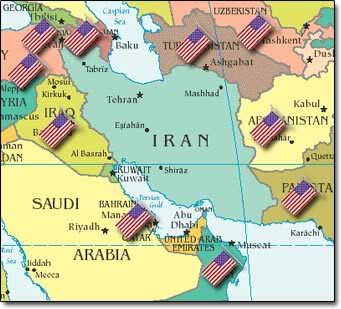 Last week’s events underscore three things. One, the US does not intend to end its military presence in Iraq (and Syria), although the pretext of the war against the ISIS is no longer there. Two, US is planning to turn Iraq into a major theatre of confrontation with Iran.


 Aletho News
 Aletho News