Turkey vs ISIS: Where’s the new caliphate now? Part II
By Eric Walberg | American Herald Tribune | January 22, 2016
In Part I, Erdogan’s mounting dilemmas—ISIS terrorism, Kurdish resistance, Assad’s Syria alive and well—showed how his bid for regional hegemony has gone awry. His pact with the ISIS devil, as long as they target Kurds, just made things worse. Davutoglu’s dream of a “common history and a common future” for the Middle East under Turkish guidance is now in history’s dustbin. The Turkish plan for a “global, political, economic and cultural new order” in the Middle East remains in the hands of the US and, of course, Israel.
Israeli rationale
Israel has been noncommittal about Syria since the uprising in 2011, not joining the western chorus for Assad’s head. Israeli indifference to the outcome can be explained easily enough. First, Israeli public support for anyone would be a kiss of death for the beloved. On the other hand, the Assads have been the biggest thorn in Israel’s side since 1971 when Hafiz Assad consolidated power, and Israel would be delighted to see the last of Bashar. But Israel was worried about what might emerge from a post-Assad Islamic state.
With Israeli Justice Minister Ayelet Shaked’s bold call for an independent Kurdish state, a radical new claim for regional hegemony is unfolding, not by a neo-Ottoman Turkey, but by the Jewish state. “We must openly call for the establishment of a Kurdish state that separates Iran from Turkey, one which will be friendly towards Israel,” Shaked told the Institute for National Security Studies conference in Tel Aviv. This sounds novel, but it really only reflects age-old plans for a Jewish state to control the Middle East which have been on the drawing board since Lord Shaftesbury first made it a British imperial objective in 1839. 1948 got the project off to a savage start, 1967 added the entire Holy Land to the map, and let the settler state move into high gear.
The Yinon Doctrine of 1980 set out how to consolidate Israel’s theft, by playing various ethnic and religious forces among its Arab neighbors against each other—Maronite and Orthodox Christian, Sunni and Shia Muslim, Druze, etc—in order to undermine Arab nationalism, and keep the Middle East weak and unstable. In Syria, that even meant quietly supporting the Muslim Brotherhood during its ill-fated uprising in 1981, not because Israel wanted an Islamist Syria, but to keep the Syrian government off-balance.
Syria and Egypt fought a war with Israel in 1967. These secular nationalist governments were the big threat, and it was only natural to try and cripple them, even if that meant working with Islamists. After Egypt made peace with Israel in 1978, it had only Iraq, Syria and Iran as its main enemies—the Arab nationalism of the first two and the Persian nationalism in Iran had proved immune to Israeli intrigues.
Israeli ‘friendship’ with the Kurds is merely the ethnic variable in the Yinon formula. There have always been contacts with Iraqi Kurds, which went into high gear in 1991 when northern Iraq was made a ‘no-fly’ zone, allowing Israeli agents relative freedom. The US invasion of Iraq in 2003 fit the bill, though bungled by the dismantling of the Iraqi army, creating a bit too much Yinon for comfort.

Middle East borders, as reimagined by Lt. Col. (ret.) Ralph Peters (2006)
US-Israeli Plan B
When Israeli fears about what a post-Assad Syria might look like were proven justified, it was ready with plan B: a new, improved Yinon Doctrine, featuring the creation of a pro-Israeli Kurdish state, keeping Turkey, Iraq, Syria, and—what the hell—Iran off-base?
This has been plan B for US-Israel since at least 2006, when a plan for restructuring the Middle East published in the Armed Forces Journal in 2006 stated, “Iraq should have been divided into three smaller states immediately” creating a “Free Kurdistan” carved out of Turkey, Iran and Iraq, which “would be the most pro-western state between Bulgaria and Japan.” The Saban Center for Middle East Policy issued a similar policy recommendation in 2007, and in 2008, Joseph Biden, Obama’s future vice president, also called for the partition of Iraq into three autonomous regions.
Israel gets it right (for the wrong reasons)
ISIS and Turkey came to the rescue with their own wild schemes, leaving the Kurds as “the only ones fighting ISIS as their highest priority,” as Yadlin told the Israeli security conference. “We Kurds and Jews have a long history. The 20 million Kurds who didn’t get a state [at the Treaty of Versailles], and nobody takes care about them. They are the only ones fighting ISIS as their highest priority.”
Every one of Erdogan’s moves has backfired. He flip-flopped on Libya and Syria. He turned a blind eye on ISIS. He stubbornly continues a policy of oppression against the Kurds. He abruptly broke relations with Israel in 2011 over Israel’s killing of nine Turkish peace activists. But it’s better to at least speak with your enemy. Israel wouldn’t have been quite so bold about advocating a Kurdish state if it realized that it would forfeit a working relationship with Turkey. But there is nothing to lose now.
Like Turkey these days, Israel is also running out of friends, and this call for an independent Kurdistan is really a rather far-fetched plan to establish at least one Muslim ally for the Jews. The travail of Turkish Kurds (20 million, 20% of the population) is well known. They are not allowed to speak Kurdish or have Kurdish names, let alone Kurdish language education.
In comparison, Iraqi Kurds (7 million, 20%) live a privileged life, with the ruling Kurdistan Democratic Party (KDP) in the autonomous government tilting towards Saudi Arabia, and its key rival, the Patriotic Union of Kurdistan (PUK), supporting the Iranian-led camp.
Kurds are culturally and linguistically so closely related to the Iranians, they are sometimes classified as an Iranian people. Of the more than 6 million Iranian Kurds (9% of the population), a significant portion are Shia. There are tensions in Iran, as the majority of Kurds are Sunni, but the strong Iranian roots of Kurds culturally and linguistically, and the lack of the suppression of their culture, language and political rights, mean there is no strong movement for independence.
There is a silver lining in the Israeli chutzpah in reviving Plan B. No major Kurdish faction calls for the Yinon plan for independence, even among Iraqi Kurds. Why bother when you already have virtual independence now? Syrian Kurds also have de facto autonomy as a result of western bungling. They won’t be stuffed back into a one-size-fits-all Syria. Iranian Kurds are just getting on with life. Turkish Kurds would love to just have basic human rights in their Turkish state. Erdogan could undercut Israel’s latest wild plan easily by using his still robust political power to push for a genuine peace deal with his Kurds.
‘US and UK employing divide-and-ruin strategy against Iraq’
Dan Glazebrook | RT | January 22, 2016
The US and Britain, the former colonizing power in the region, have always seen Iraq as a threat because it has the potential to be a great regional independent power in its own right, says political analyst Dan Glazebrook.
The president of Iraq’s autonomous Kurdish region Massoud Barzani has said the time has come to redraw the Middle East’s boundaries.
RT: The President of Iraq’s autonomous Kurdish north urged world leaders to help pave the way for a Kurdish state. Will they receive that support?
Dan Glazebrook: It all depends on how the so-called great powers react. And I suspect that the US will respond with kind of diplomatic niceties, diplomatic platitudes. They don’t commit themselves to anything, but kind of have the effect of egging and spurring on the demands for the breakup of Iraq. There is this idea for the breakup of Iraq that has been flirting around in US military for some time now. The thing about Iraq from the point of view of the US and Britain, the former colonizing power in the region, is that they have always seen Iraq as a threat because it has the great potential to be a great regional independent power in its own right. It is the only Arab country that really has all four prerequisites for being a strong independent power: it has got a large sizable population, so it can have a large army, unlike, say, Saudi Arabia; it has got oil resources obviously, unlike, say, Egypt – another big populist Arab country; and it has got plenty of arable land and plenty of water. They’ve always seen it as a threat and for decades they’ve used every means available in the book to get it to fight against its neighbors, arming it in the battle against Iran in the 1980’s, invading it twice now… This is just the next step in trying to dismember the country and prevent it of ever being a unified, powerful, independent player…
Turkey, which is very close to the Iraqi-Kurdish government, has been doing a lot of illegal oil trading with the Iraqi-Kurdish government there. Obviously it has its own worries about demand for independence from its own Kurds and from the Syrian Kurds. I suspect there will be no independent state actually recognized internationally. But Turkey, US, Britain will kind of make these noises to egg them on and spur them on to continue with a divide and ruin strategy that they are employing against Iraq and other countries in the region.
Dan Glazebrook is a freelance political writer who has written for RT, Counterpunch, Z magazine, the Morning Star, the Guardian, the New Statesman, the Independent and Middle East Eye, amongst others. His first book “Divide and Ruin: The West’s Imperial Strategy in an Age of Crisis” was published by Liberation Media in October 2013. It featured a collection of articles written from 2009 onwards examining the links between economic collapse, the rise of the BRICS, war on Libya and Syria and ‘austerity’. He is currently researching a book on US-British use of sectarian death squads against independent states and movements from Northern Ireland and Central America in the 1970s and 80s to the Middle East and Africa today.
Red lines and dollar signs: the business of the Syrian War
The Rant Foundry | January 23, 2016
A damning report on the conflict of interests in the Syrian Crisis debate identified numerous corporate and defense industry ties of experts and think tanks who commented on potential military intervention. Much of the debate over Syria got underway in 2013, when not only were the conflicts-of-interest and military-industrial complex ties of these “consultants” and “experts” rarely disclosed, but the ideas they expressed were mere permutations of an ideologically narrow spectrum of U.S. and Western neo-conservative interventionism.
As US official sources are now claiming that ISIS is developing chemical weapons those same experts and think tanks are back with a vengeance.
The conflict-of-interest report by the Public Accountability Initiative (http://public-accountability.org) offers a new look at an issue raised by David Barstow’s 2008 Pulitzer Prize-winning New York Times series on the role military analysts played in promoting the Bush Administration’s narrative on Iraq. In addition to exposing coordination with the Pentagon, Barstow found that many cable news analysts had industry ties that were not disclosed on air.
During the public debate around the question of whether to attack Syria, Stephen Hadley, former national security adviser to George W. Bush, made a series of high-profile media appearances. Hadley argued strenuously for military intervention in appearances on CNN, MSNBC, Fox News, and Bloomberg TV, and authored a Washington Post op-ed headlined “To stop Iran, Obama must enforce red lines with Assad.” The phrase “red line” has been used numerous times in reference to Syria and its President Bashar al-Assad, particularly in attempt to establish the legal intervention of Russian forces in Syria as a crossing of those lines. It was also used in 2014 by those in favor of forcible ‘regime change’ in Syria when rockets with sarin filled warheads landed in rebel-held residential areas in Ghouta, Syria, killing hundreds and injuring thousands. Each side naturally blamed the other, with western intelligence agencies providing evidence supporting the opposition, and Russian intelligence supporting the regime. Both sides issued biased reports with cherry-picked evidence, only adding to the confusion. An analysis of all evidence relating to the August 21st chemical attack indicate it was carried out by opposition forces. According to the most likely scenario, they used looted incendiary rockets, refilled them with sarin they manufactured themselves, and launched them from a rebel-held territory 2 km north of Zamalka.
Stephen Hadley’s television audiences were never informed that he serves as a director of Raytheon, the weapons manufacturer that makes the Tomahawk cruise missiles that were widely cited as a weapon of choice in a potential strike against Syria. Hadley earns $128,500 in annual cash compensation from the company and chairs its public affairs committee. He also owns 11,477 shares of Raytheon stock, which traded at all-time highs during the Syria debate ($77.65 on August 23, making Hadley’s share’s worth $891,189). Despite this critically important financial stake, Hadley was presented to his audience as an experienced, independent national security expert.
Though Hadley’s undisclosed conflict is particularly egregious, it is not unique. The following report documents the industry ties of Hadley, 21 other media commentators, and seven think tanks that participated in the media debate around Syria. Like Hadley, these individuals and organizations have strong ties to defense contractors and other defense- and foreign policy-focused firms with a vested interest in the Syria debate, but they were presented to their audiences with a veneer of expertise and independence, as former military officials, retired diplomats, and independent think tanks.

A pentagonal network: think tank-defense industry ties [image via public-accountability.org]
If the recent debate around Syria is any guide, media outlets have done very little to address the gaps in disclosure and abuses of the public trust that Barstow exposed. Some analysts have stayed the same, others are new, and the issues and range of opinion are different. But the media continues to present former military and government officials as venerated experts without informing the public of their industry ties – the personal financial interests that may be shaping their opinions of what is in the national interest. This report details these ties, in addition to documenting the industry backing of think tanks that played a prominent role in the Syria debate. It reveals the extent to which the public discourse around Syria was corrupted by the pervasive influence of the defense industry, to the point where many of the so-called experts appearing on American television screens were actually representatives of companies that profit from heightened US military activity abroad. The threat of war with Syria may or may not have passed, but the threat that these conflicts of interest pose to public discourse – and democracy – is still very real.
UK PM calls for limiting war legal claims
Press TV – January 22, 2016
British Prime Minister David Cameron says he wants to stamp out what he called spurious legal claims against war veterans.
He said ministers had been asked to draw up plans to restrict claims, including by curbing financial incentives for “no win, no fee” cases.
The statements come as about 280 UK veterans are currently being investigated over alleged abuse by soldiers during the Iraq War.
Lawyers said no-one was above the law, and many abuse cases had been proven.
The Iraq Historic Allegations Team (IHAT) was established to investigate allegations of murder, abuse and torture against Iraqi civilians by UK military personnel between 2003 and 2009.
According to media reports, IHAT has considered at least 1,515 possible victims – of whom 280 are alleged to have been unlawfully killed – and lawyers are continuing to refer cases of alleged abuse. The head of the inquiry, Mark Warwick, has said there are “lots of significant cases” and that discussions would be held over whether they met a war crimes threshold.
Earlier, Cameron said he feared people were being “solicited by lawyers” enticing them into making accusations, and was concerned many of them were fabricated.
“Our armed forces are rightly held to the highest standards – but I want our troops to know that when they get home from action overseas this government will protect them from being hounded by lawyers over claims that are totally without foundation,” Cameron said, adding he had ordered the National Security Council to produce “a comprehensive plan to stamp out this industry.
“It is very important that all forces should be responsible within the law,” a London-based political analyst Rodney Shakespeare told Press TV.
He said the UK society needs to uphold the principals of decent behavior adding this is disgraceful that the government is now putting heavy efforts into stopping the trend.
IRAQ: The War Legacy and the ‘Staggering’ Suffering of Its Civilian Population…
The Burning Blogger Of Bedlam | January 22, 2016
‘Staggering’ is how the UN has described the depth and nature of civilian suffering in post-war Iraq; citing over 18,000 civilians having been killed in the space of just this last year-and-a-half.
According to the report, conducted by the United Nations Assistance Mission for Iraq and the Office of the High Commissioner for Human Rights, an approximate 3.2 million people have also been displaced internally over this same period of time.
The UN report confirms the brutality of the so-called ‘Islamic State’ group, with its unprecedented levels of gruesome, rampant violence and criminality. But contrary to popular portrayal, the violence in Iraq isn’t limited to ISIS/ISIL, but includes various crimes committed by Iraqi troops, militiamen and Kurdish forces, as recorded in the UN report.
The UN also acknowledges that the recorded 18,802 civilians killed (and 36,245 wounded) between the beginning of 2014 and the end of 2015 could be much higher; the figures will logically be higher, because there are multiple no-go areas for journalists and activists, where crimes can’t be investigated.
Among the most brutal of the many brutal crimes committed by the foreign-backed ‘ISIS/ISIL’ was an incident in Mosul where victims were forced to lay down in front of a crowd while a bulldozer was driven over them, and the militants executing 19 women for refusing to submit to sex with ISIL fighters. Up to 900 children have also been reported abducted in Mosul and subjected to forced indoctrination and military training. The report also highlights the extent to which women and children have been subjected to sexual violence, and highlights the plight of some 3,500 people, mostly women and children from the Yazidi community, currently being held as slaves.
Read also, the UN Report on the Protection on Civilians in the Armed Conflict in Iraq, May – October 2015.
And yet for all the instability and horrors of Iraq, some 245,000 desperate Syrians have reportedly crossed into Iraq to escape the horrors of neighbouring Syria; Syrians too have been paying the price for the invasion of Iraq and the destabilisation of the entire region. These horrors are inter-related, as is what is happening in Libya.
All of the horrors highlighted in the report, however, are simply from the passed year or so. The suffering of the Iraqi people and the humiliation and destruction of Iraqi society had already been going on a long time before this and before even the rise of the horrendous, foreign-funded ISIS/ISIL proxy army.

The governments of the US/UK and NATO essentially already committed genocide against the Iraqi people between 1990 and 2012, killing an estimated 3.3 million, including 750,000 Iraqi children through either sanctions or war.
The illegal invasion and occupation from 2003 is estimated to have led to approximately 189,000 direct war deaths, but this doesn’t also include the hundreds of thousands more who died over the course of the invasion and occupation in general. This includes victims of displacement, victims of terrorism, and the many, many Sunni victims of the US-backed Shia ‘Death Squads’, and of course the many subsequent victims of the Sunni ‘ISIS/ISIL’, which many regard as a direct response to those US-backed Shia militias.
In every respect, the so-called ‘Islamic State’ owes its existence to its foreign patrons and to the illegal invasion of Iraq. As mass graves continue to be discovered, the UN has outright accused ISIS/ISIL of ‘war crimes’ and ‘crimes against humanity’ in Iraq. Whether that means scores of individual jihadists and European teenagers are going to eventually be tried in an international court (the leader or ‘caliph’ of ISIL – the elusive Abu Bakr al-Baghdadi – will probably never be tried, as he probably doesn’t exist), it’s a fair bet that the real funders and enablers of this ultra-violent sectarian nightmare will never face charges and neither will the governments, officials and corporations whose illegal warfare has created all of this suffering and death.
Whichever way we look at it – either by American/Western incompetence or by deliberate design; and there’s a massive case to be made for both – what we now know as ‘ISIS/ISIL’ is the monster-child of the 2003 Iraq invasion. Watch this video of an Iraq War veteran, and now-activist, recounting some of the horrific behaviour of invading American troops during the war, as he openly admits “I Helped Create ISIS”. Or examine the reality of the ISIS/ISIL ‘leadership’ and see where the organisation came from.
Aside from the invasion having been entirely illegal and aside from the false pretexts under which it was carried out, at least $75 billion was made in profit by American subcontracting companies alone, including Blackwater, CACI and Titan. United States’ Vice-President Dick Cheney’s company, Haliburton, made an approximate $39.5 Billion from the Iraq War alone.
Concerning the current situation, the UN High Commissioner for Human Rights has said the latest study “illustrates what Iraqi refugees are attempting to escape when they flee to Europe and other regions. This is the horror they face in their homelands”. Go back now and re-watch the old footage of Bush, Rumsfeld and the rest of the mafia of War Criminals/Profiteers talking about the need to invade Iraq; worse, go back and watch them smugly declaring ‘Mission Accomplished’.
Better yet, go re-watch this interview with former American ally and CIA asset, Saddam Hussein, on the eve of the invasion and listen to him talking passionately and proudly about the history, heritage, culture and unity of the Iraqi nation (no sectarian talk, no Sunni/Shia divide, no terrorism), and see if you can get through it without either goosebumps or feeling sick to the pit of your stomach for what was to follow. And for what is still following even now, all these years later.
U.S. snubs its Canadian ally over electoral promise to withdraw fighter jets from Middle East
New Cold War | January 21, 2016
The lead, Western warmaking/regime-change countries intervening in northern Iraq and Syria held a strategy conference of their ministers of war in Paris on January 20. The meeting made waves in Canada because Ottawa was not invited to attend.
The meeting of ministers of the United States, Britain, Germany, France, Italy, Australia and the Netherlands discussed ongoing plans for intervention in Syria and Iraq. Canada is fully engaged in that intervention, more so than some of the other countries attending in Paris. For example, neither Italy or Germany have fighter aircraft engaged in bombings. But Canada was not invited to the party because Prime Minister Justin Trudeau made a promise during the national election campaign of October 19, 2015 that, if elected, his government would withdraw its six fighter-bomber jets from the U.S.-led warmaking alliance and instead focus on ground operations, including training of allied Iraqi and Kurdish forces.
The decision not to invite Canada was likely taken by U.S. Secretary of Defense (sic) Ashton Carter. Never mind that the new Trudeau government is not keeping its electoral promise or that, to the contrary, it has promised to step up its military presence in northern Iraq. No, for the U.S. government, any deviation from its lead in the imperialist war agenda is punishable by shunning.
The U.S. views the Canadian electoral promise as a weak-kneed sop. It cares not a whiff about the war-weary Canadian public, repelled by Canada’s failed military intervention in Afghanistan. That intervention goes back to late 2001. 158 Canadian soldiers died in combat in Afghanistan. At least 59 of those who served have killed themselves upon their return, while, shamefully, the previous Conservative government in Ottawa did all it could to reduce to a minimum disability payments to injured, returned soldiers.
The U.S. snub is intended as a warning to the Trudeau government just in case any of its members are actually considering keeping their election promise. It needn’t worry, there is no evidence that any are doing so. Also, importantly, the snub is serving as a rallying cry for pro-war ideologues in Canada who never liked the election promise in the first place and now want it definitively buried.
The enclosed opinion article in the Globe and Mail is exactly the kind of knee-jerk, pro-war backlash that the U.S. government wanted to foment. The writer, David Bercuson, is a well-known military academic in Canada. He directs his criticisms not at the United States government for snubbing its loyal ally but at the Trudeau government for giving the U.S. a reason to do so.
Bercuson wrote a commentary last month in the Globe saying that Prime Minister Trudeau was asking for trouble with his allies by making flaky election promises over war and intervention in the Middle East.
Columnist Thomas Walkom of the Toronto Star, Canada’s largest circulation newspaper, provides a different view of the snub in a January 18 column. He calls it a “welcome snub”. He says, “Trudeau’s Liberals won power on a pledge to end Canada’s combat mission in Iraq and Syria — in the air and on the ground. If they are serious about this, why should we expect the Americans to include Ottawa in their combat deliberations?
“More to the point, why should we want to be included?”
Ottawa is lucky to have carte blanche, more or less, in working out the subtleties of its desired intervention in Iraq and Syria. The two large opposition parties in Parliament support military intervention in the Middle East, differing only on how that should be done. Meanwhile, antiwar forces are weak and marginalized. Years of confusion over the regime change agenda of the imperialist countries in the in Africa and the Middle East (Mali, Libya, Egypt, Syria) combined now with utter disarray in the face of the anti-Russia drive of NATO have left antiwar forces marginalized.
Playing Kurdish Card: Israeli Minister Urges to Create Kurdistan, Again
Sputnik – 20.01.2016
Tel Aviv top-level politicians have resurrected the idea of an independent Kurdish state, after years of direct and indirect support for the cause.
The Minister of Justice of the Jewish State, Ayelet Shaked, has stated that he strongly supports a Kurdish state, seen to be a way to weaken Israeli rivals in the Middle East, local media reported on Tuesday.
“We should promote steps that would correct the injustice that made Kurds the biggest nation without a state. We must call on nations to set up a [Kurdish] state,” Shaked announced, as quoted by BasNews.
The new country would be between Turkey and Iran, she suggested.
“We have cultural global ties and they are strategic partners on a mutual front,” Shaked explained, referring to the Kurdish standoff with Daesh and other jihadist groups.
Shaked showed sympathy toward the Kurdish people by appealing to them as “a peace seeking nation.”
“The Kurds have a perfect democracy and give equal rights to women,” she added.
In the past, Israeli Prime Minister Benyamin Netanyahu advocated the establishment of Kurdistan, but did not specify boundaries.
“We should… support the Kurdish aspiration for independence,” Netanyahu stated, calling the Kurds “a nation of fighters [who] have proved political commitment and are worthy of independence.”
Netanyahu’s statement was made when Daesh seized large parts of Iraq and Syria in a blitzkrieg 2014 campaign. Kurdish units were the only ground force that stopped the violent extremists.
Kurds in Iraq call loudly for independence. Kurds in the war-torn Syria constitute some 10% of the population and have formed what they call Rojava, a self-governing autonomous area. Turkey’s Kurds, who represent 20% of the population, have been immersed in bloody clashes with the current government. Kurds in Iran are seen to easily become a destabilizing factor within that country.
In light of the current state of affairs, Israel is thought to have chosen the right time to call for the creation of Kurdistan. A moderate Sunni Kurdish state in the heart of the Middle East could be seen to become the sole Muslim ally of the Jewish state of Israel.
The Kurdish autonomous region in Iraq has been reportedly supplying Israel with three quarters of its crude oil. Israeli special forces’ trainers have been present in the region for over a decade, advising the Kurdish military in Iraq, according to local media. Moreover, multiple reports suggest that there is a constant flow of arms from Tel Aviv to Erbil, the capital of Iraqi Kurdistan. Adding to this, Kurdish authorities have expressed religious freedom in their region, allowing Kurdish Jews to return to their homeland unmolested.
Kurdish animosities with the Arabs are well-known, and Israel will benefit from the diplomacy of “the enemy of my enemy is my friend.”
Nobel Peace Prize-Winner Obama Dropped 23,144 Bombs in 2015
Sputnik – January 11, 2016
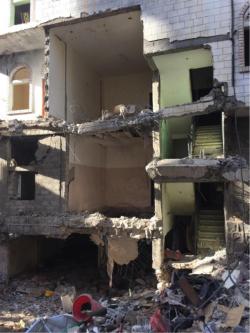 The United States in the past year dropped more than 20,000 bombs on Muslim-majority countries Iraq, Syria, Afghanistan, Pakistan, Yemen and Somalia, according to a study by the Council on Foreign Relations (CFR).
In an article published January 7, Micah Zenko, a senior fellow at CFR, states that since January 1, 2015, the United States has dropped an estimated 23,144 bombs in those six countries: 22,110 in Iraq and Syria; 947 in Afghanistan; 58 in Yemen; 18 in Somalia; and 11 in Pakistan.
“This estimate is based on the fact that the United States has conducted 77 percent of all airstrikes in Iraq and Syria, while there were 28,714 US-led coalition munitions dropped in 2015. This overall estimate is probably slightly low, because it also assumes one bomb dropped in each drone strike in Pakistan, Yemen, and Somalia, which is not always the case,” Zenko writes.
Despite dropping tens of thousands of bombs over the past 17 months, Washington’s strategy has failed to defeat Daesh and other Islamic militant groups, Zenko observed.
In Afghanistan, the Taliban control more territory than at any point since the 2001 US invasion, according to a recent analysis in Foreign Policy magazine.
Zenko notes that the primary focus of Washington’s counter-terrorism strategy is to kill extremists, and that far less attention is paid to prevent a moderate individual from becoming radicalized.
As a result, “the size of [Daesh] has remained wholly unchanged,” Zenko writes.
In 2014, the Central Intelligence Agency estimated the size of Daesh to be between 20,000-31,000 members. On Wednesday, Colonel Steve Warren, a spokesman for the US-led coalition, estimated the group at 30,000 members, despite Pentagon claims that 25,000 Daesh members have been killed in US air strikes.
At the same time, the Pentagon claims that only six civilians have “likely” been killed in the course of the bombing campaign.
Well-Armed, Well-Funded: Iraqi Leader Reveals Daesh’s Deep Pockets
Sputnik – 11.01.2016
Sheikh Akram Al-Kaabi, the leader of Hezbollah al-Nujaba, a major Iraqi Shiite resistance movement fighting Daesh (ISIL/ISIS) in the region, has revealed that the jihadist group receives lavish amounts of money from Saudi Arabia and Qatar and modern weaponry from 120 countries around the world, according to the Iranian news agency FARS.
“Saudi Arabia and Qatar are extensively supporting the Takfiri (Daesh and radical Islamist) terrorists financially but surely victory belongs to the resistance groups,” the agency quoted Sheikh Akram al-Kaabi as saying at a meeting with Iranian Shiite cleric Ayatollah Alavi Gorgani in the Iranian city of Qom (also known as Ghom) on Saturday night.
“In the Syria war, 120 countries throughout the world are supplying the terrorists with state-of-the-art equipment and weapons,” added the Iraqi leader.
He voiced concern about the dire humanitarian situation in the besieged towns of Kafria and Foua’a regions in Idlib province, and said sending aid to these two towns is difficult due to the presence of terrorist groups.
Kaabi said that the Takfiri terrorists are still attacking the two Shiite-populated towns and despite the resistance forces’ operations to break the siege of the two towns, they are still under the militants’ control.
Similar concerns have been earlier voiced by Leader of the Lebanese Orthodox Party Masarik Roderick Khoury, who named Turkey as the main sponsor of terrorist groups in Syria.
“Turkey is the first and main power which funds and supplies weapons to terrorist groups. We believe the fight against terrorism should begin with pressuring Turkey. Now Turkey is the main sponsor of terrorism in the region,” Khoury said at a press conference in Moscow in December.
“The name of the real leader of the terrorists is Tayyip Erdogan [Turkish President]. The others like Abu Bakr al-Baghdadi [Daesh/ISIL leader] and al-Qaeda are just his servants. Al-Nusra Front also carries out orders from Turkey,” he then pointed out.
The Lebanese politician said there was real exidence to the allegations: after the city of Kassab, near Latakia, was liberated from terrorists Turkish ambulance vehicles, clothes and weapons were found there.
Khoury also added that when the terrorists take Syrian or Lebanese hostages they only can be released after negotiations with Turkey.
Featured Video

ARE PATIENTS BEING PROPERLY INFORMED ABOUT OZEMPIC?
or go to
Aletho News Archives – Video-Images
New Book
Breast Cancer: Before You Consent
A new Unbekoming paperback
Lies are Unbekoming | September 18, 2026
Peter Gøtzsche reviewed every randomised mammography screening trial ever conducted for the Cochrane Collaboration. Cochrane’s headline is that, assuming a 15% mortality reduction, one woman in 2000 avoids dying of breast cancer over ten years. Ten are overdiagnosed and treated. Two hundred experience false alarms.
But that headline assumes the reduction. When Gøtzsche looked only at the trials with adequate randomisation — the higher-quality ones — the reduction disappeared. No effect on breast cancer mortality. No effect on all-cause mortality.
This is the Cochrane finding, published in the establishment’s own database of systematic reviews.
No woman being asked to consent to a mammogram this week knows it.
That is why the new Unbekoming paperback exists. … continue
Blog Roll
 Aletho News
- The Truth About the Trump Shootings with Ken Silva
- ARE PATIENTS BEING PROPERLY INFORMED ABOUT OZEMPIC?
- US lawmaker blocks $2.8 billion weapons sale to Israel: Report
- Yemeni army claims responsibility for strikes on sensitive sites in Saudi capital, Aramco facilities in Yanbu
- Iran Judiciary issues indictments against 159 US, Israeli officials for assassination of Leader, commanders
- Turkiye revokes Iranian bank license under US sanctions campaign
- US-Denmark Agreement on Greenland Is ‘PR Stunt’ Ahead of Midterms
- Araghchi: Military intervention cannot create security; coercion cannot bring peace
- Fraud Squared
- Breast Cancer: Before You Consent
- If Americans Knew
- Inside Gaza’s death trap of collapsing, bombed-out buildings
- The everyday items Israel bans from Gaza every day
- Inside the siege, the ruined buildings of Gaza – Daily Update
- Debunking The Claim That Macklemore Has A “History Of Antisemitism”
- CPJ demands release of arrested Palestinian-US journalist near Bethlehem
- Robert Kraft: The Billionaire Friend of Netanyahu Pulling The Strings Behind the Macklemore/Ed Sheeran Blow Up
- Columbia Administered Fund Gives Big Money to Pro-Israel Groups
- Deportation Case of Palestinian Activist Salah Sarsour Tests First Amendment
- ‘We Will Not Forget’: Palestinians Mark 44 Years since Sabra and Shatila
- Why do we let Zionists decide what we can and can’t say?
- No Tricks Zone
- 2025 Nature Paper Claiming Worsening Global Drought Gets RETRACTED …Heavily Flawed
- New Study: ‘Global Drought Shows No Detectable Recent Acceleration Under Climate Warming’
- Economic Masterminds: German Socialists Suggest Taxing Productivity Gains Stemming From Using AI
- The South China Sea Has Not Been Cooperating With The Climate Change Narrative
- Energy Crisis: Germany Enters Heating Season With Historically Low Gas Reserve Fill Levels
- New Study: The Antarctic Ice Sheet Gained Mass From 2020-2024 Due To Staggering Snow And Ice Accumulation
- Study: Ocean Heating Rates From Thousands Of Years Ago ‘Dwarf’ Modern Ocean Heating Rates
- Climate Extremists Target, Attack Large-Scale Power Grid Infrastructure In Germany!
- New Study: Antarctic Ice Melt Has Contributed Less Than 1 Centimeter To Sea Level Rise In The Last 30 Years
- Fear Of Debate: Alarmist German Climate Scientist Calls On Mainstream Media To Discredit Skeptic Voices
 Aletho News