Dead, Disabled, Displaced or Destroyed – Democracy Delivered

By Graham Vanbergen | TruePublica | December 10, 2015
Six months ago, the Washington DC-based Physicians for Social Responsibility (PRS) released a landmark study over the death toll from 10 years of the “War on Terror” since the 9/11 attacks. It was largely ignored by the world’s press.
The 97-page report accompanied by hundreds of studies, reports and investigations by the Nobel Peace Prize-winning doctors’ group is the first to tally up the total number of civilian casualties from US-UK led interventions in Iraq, Afghanistan and Pakistan. This article uses much of the content from that report called the IPPNW (International Physicians for the Prevention of Nuclear War) Body Count publication.
A poll carried out by the Associated Press (AP) two years ago found that, on average, U.S. citizens believe that only 9,900 Iraqis were killed during the 2003-2011 occupation of Iraq by the US, UK and allied forces.
Random spot checks have suggested that more than two-thirds of all violent deaths that occurred in Baghdad between 2003 and 2007 did not appear in the media, and were therefore not included in official statistics distributed by the Iraq Body Count (IBC). The IBC has a media-centered approach to counting and documenting the deaths and is considered very unreliable as a result but is much quoted by the establishment and mainstream press the world over.
For instance, evidence of the 27,000 bombs that were dropped in just the first year during the invasion of Iraqi cities is practically non-existent in the IBC database.
In many cases, the occupying powers explicitly blocked journalists from investigating instances where the British or American forces were accused of mass killings. Numerous journalists in Iraq who tried to report on the activities of the occupation troops and their consequences were killed or arrested.
In Iraq itself, only a small number of casualties made it to the central hospitals or morgues where they could be registered. That proportion decreased the more intense the military battles were and the more the violence between various sections of the population escalated. Since Islam requires a funeral within one day, relatives generally had no choice but to bury their dead directly – either in their yards or close to their homes.
Moreover, the occupying power often forbade the hospitals and morgues from making their numbers public.
The fate of Iraqi physicians is one area that is very well documented. According to data from the independent Iraqi Medical Association, of the 34,000 registered physicians, almost 2,000 were killed and 20,000 left the country. In its database, IBC lists only 70 Iraqi physicians. Even though this may in part be due to a lack of data on the profession of the victims, this piece of evidence alone suggests very large gaps in IBC’s calculations.
According to the Najaf governorate’s spokesperson Ahmed Di’aibil (member of the Supreme Islamic Council of Iraq), in this city alone, which has a population of close to 600,000, 40,000 non-identified corpses were buried since the start of the war. The IBC database documents only 1,354 victims in Najaf, barely 3% of the actual.
In a September 2009 speech, Samir Sumaidaie, the Iraqi ambassador to the U.S. installed by the occupation power, talked about 500,000 newly widowed persons in Iraq. A February 2007 BBC poll in the region came to the conclusion that 17% of all Iraqi households have lost at least one member through violence since 2003. Given the total population at the time of some 27 million, this too suggests that more than 500,000 Iraqis fell victim to the war and its consequences just in the first four years.
By 2008, the number of refugees from Iraq in foreign countries and internally displaced persons had risen to 5 million.
Such a high number of victims – reaching genocidal dimensions – represented a massive indictment of the U.S. administration, British government and its allies that they simply could not allow to stand. Hence, the findings of this study were furiously criticized. Even though nearly all the experts in the field, including the scientists of the British administration, confirmed the accuracy of the study, it was slandered by governments and main stream establishment media.
Dr. h.c. Hans-C. von Sponeck, UN Assistant Secretary General & UN Humanitarian Coordinator for Iraq (1998-2000); UN Resident Coordinator for Pakistan (1988- 94) covering also Afghanistan said in his report:
“The U.S.-led Multinational Force have carefully kept a running total of fatalities they have suffered. However, the military’s only interest has been in counting “their” bodies.”
“Since U.S. and other foreign military boots are only intermittently and secretly on the ground in Pakistan, mainly in the northern tribal areas, there are no body count statistics for coalition force casualties available for Pakistan. The picture of physically wounded military personnel for both war theatres is in- complete. Only the U.S. military is identified: (a) 32,223 were wounded during the 2003 Iraq invasion and its aftermath, and (b) until November 2014 20,040 were wounded in Afghanistan.”
No figures are known for mental disorders involving military personnel who have been deployed in Iraq, Afghanistan and Pakistan but US veteran soldiers are still committing suicide at the rate of 22 per day.
Officially ignored are casualties, injured or killed, involving enemy combatants and civilians together. This, of course, comes as no surprise. It is not an oversight but a deliberate omission. The U.S. authorities have kept no known records of such deaths. This would have destroyed the arguments that freeing Iraq by military force from a dictatorship, removing Al-Qaeda from Afghanistan and eliminating safe-havens for terrorists in Pakistan’s tribal areas has prevented terrorism from reaching the U.S. homeland, improved global security and advanced human rights, all at “defendable” costs.
The IPPNW Body Count publication must be seen as a significant contribution to narrowing the gap between reliable estimates of victims of war, especially civilians in Iraq, Afghanistan and Pakistan and tendentious, manipulated or even fraudulent accounts.
After 58,000 dead US soldiers and 2 million civilian deaths in Vietnam, the Reagan Administration sought to resolve the negative public opinion problem by utilizing obeisant client states or surrogate forces, epitomized by the “Contra” armies and death squads deployed in Central America and Southern Africa instead of using its own attacking forces. With the end of the Cold War, U.S. policymakers triumphantly pronounced the end of the “Vietnam Syndrome,” and ushered in a new era of American “boots on the ground” that led ultimately to the debacle in Iraq, Afghanistan and the surrounding region.
This investigation and report comes to the conclusion that the war has, directly or indirectly, killed around 1 million people in Iraq, 220,000 in Afghanistan and 80,000 in Pakistan, i.e. a total of around 1.3 million. The figure is approximately 10 times greater than that of which the public, experts and decision makers are aware of and propagated by the media and major NGOs. And this is only a conservative estimate. The total number of deaths in the three countries named above could easily be in excess of 2 million.
For some degree of context – should the number of Iraqis killed from the 2003 U.S. invasion until 2012 actually be around one million, this would represent 5% of the total population of Iraq. By contrast, during World War II Germany lost around 10% of its population.
In Iraq, results from statistical surveys conducted by the Johns Hopkins University, published in 2004 and 2006 in the medical journal The Lancet, (The basis of the Lancet study, which was executed by a U.S.-Iraqi team led by renowned scientists was a survey of a representative selection of 1,850 Iraqi households across Iraq) as well as by the British polling institute Opinion Research Business (ORB) in 2007 suggest that already by 2008 over one million Iraqis had died as a result of war, occupation and their indirect consequences. many more have died since.
Moreover, and in addition to the appalling numbers, according to the International Commission on Missing Persons (ICMP), between 250,000 and one million persons are missing in Iraq, presumed dead.
For an estimate of the current casualty numbers, one has to interpolate. The U.S. NGO Just Foreign Policy does exactly this with its Iraqi Death Estimator, where it multiplies the number of victims of violence determined by the Lancet study as of June 2006 by the increase in the number since then as provided by IBC. From the relation between the current number given by IBC and the one given for the end of June 2006 (43,394), it concludes that the number of Iraqis killed up to September 2011 is at around 1.46 million.
One development of the scale of bombing was that the health care system largely collapsed. Diseases spread because of the lack of access to drinking water and the contamination of rivers. Almost three million people became internal refugees; as a consequence, large parts of once reasonably affluent cities turned into slums.
The long-term consequences through the poisoning of the environment brought about by the war must also be taken into consideration. Many areas of Iraq that were subjected to furious attacks by the occupying forces show a dramatic increase in the number of diseases. In many areas, the number of occurrences of various forms of cancer, of miscarriages and abnormal and deformed babies multiplied. A major reason for this is likely to be the massive use of ammunition containing depleted uranium.
According to the Landmine and Cluster Munition Monitor of the International Campaign to Ban Landmines (ICBL) and the Cluster Munition Coalition (CMC), since 2003, U.S. and UK troops have used around 13,000 cluster bombs in Iraq. Iraq is littered with high levels of nuclear and dioxin contamination. These have disseminated their sub-ammunition – almost 2 million bomblets – widely in and around the fought-over cities. In addition, the 20 million bomblets from the 61,000 cluster bombs dropped in 1991 have also still not all been cleared. This makes Iraq one of the countries with the highest contamination of highly explosive unexploded ordnance in the world.
Evidence of this can be seen in child mortality that multiplied in the following years, the number of occurrences of cancer quadrupled, and the number of cases of leukemia increased by a factor of 40.
Afghanistan and Pakistan
There have so far been no representative studies on the number of victims from the ongoing UN-mandated NATO war in Afghanistan. The few investigations that exist on deaths as a result of that war are all based on passive observation.
In Pakistan, the number of killed civilians and combatants is much harder to determine than in Afghanistan. Even data based on passive observation are barely existent. Taking all sources and factors into account, a total number of 300,000 war deaths in the AfPak War-Theatre until 2013 seems realistic.
Libya
Estimates of deaths in the fall of Libya as a result of US/UK/NATO bombing and subsequent civil war between March 2 and October 2, 2011 vary. An exact figure is hard to ascertain, partly due to a media clamp-down by the Libyan government. Some conservative estimates have been released of around 25,000. NATO holds itself to no standard of measurement whatsoever in this regard. If Iraq and Afghanistan are anything to go by this number could easily be over 100,000. Some of the killing “may amount to crimes against humanity” according to the United Nations Security Council and as of March 2011, is under investigation by the International Criminal Court.
Conclusion
It is impossible to calculate the death, destruction and decay incurred by the people of these countries. It is fair to say two million are dead, another one million presumed dead with many more deaths as a result of disease, lack of medical care, child birth, birth defects, cancer care and the like. One should not forget, these countries continue to feel the after effects of current governance and a lack of control over security that culminates in many bombings, shooting, kidnapping, murders and suicides.
The current death toll in Syria is reported at 250,000 and counting with 6.5 million displaced.
Finally, as the FT reported in February “In all, more than 100,000 people, perhaps a third or more civilians, died violently in conflicts in Syria, Iraq, Libya, Yemen and the Gaza Strip in 2014, making it one of the bloodiest years in the Middle East’s history”. Death continues at a horrific rate.
Read the full IPPNW report HERE
The Insidious Relationship between Washington and ISIS: The Evidence
By Prof. Tim Anderson | Global Research | September 3, 2015
Reports that US and British aircraft carrying arms to ISIS have been shot down by Iraqi forces have been met with shock and denial in western countries. Few in the Middle East doubt that Washington is playing a ‘double game’ with its proxy armies in Syria, but some key myths remain important among the significantly more ignorant western audiences.
A central myth is that Washington now arms ‘moderate Syrian rebels’, to both overthrow the Syrian Government and supposedly defeat the ‘extremist rebels’. This claim became more important in 2014, when the rationale of US aggression against Syria shifted from ‘humanitarian intervention’ to a renewal of Bush’s ‘war on terror’.
A distinct controversy is whether the al Qaeda styled groups (especially Jabhat al Nusra and ISIS) have been generated as a sort of organic reaction to the repeated US interventions, or whether they are actually paid agents of Washington.
Certainly, prominent ISIS leaders were held in US prisons. ISIS leader, Ibrahim al-Badri (aka Abu Bakr al-Baghdadi) is said to have been held for between one and two years at Camp Bucca in Iraq. In 2006, as al-Baghdadi and others were released, the Bush administration announced its plan for a ‘New Middle East’, a plan which would employ sectarian violence as part of a process of ‘creative destruction’ in the region.
According to Seymour Hersh’s 2007 article, ‘The Redirection’, the US would make use of ‘moderate Sunni states’, not least the Saudis, to ‘contain’ the Shia gains in Iraq brought about by the 2003 US invasion. These ‘moderate Sunni’ forces would carry out clandestine operations to weaken Iran and Hezbollah, key enemies of Israel. This brought the Saudis and Israel closer, as both fear Iran.
While there have been claims that the ISIS ‘caliph’ al-Baghdadi is a CIA or Mossad trained agent, these have not yet been well backed up. There are certainly grounds for suspicion, but independent evidence is important, in the context of a supposed US ‘war’ against ISIS . So what is the broader evidence on Washington’s covert links with ISIS?
Not least are the admissions by senior US officials that key allies support the extremist group. In September 2014 General Martin Dempsey, head of the US military, told a Congressional hearing ‘I know major Arab allies who fund [ ISIS ]‘. Senator Lindsey Graham, of Armed Services Committee, responded with a justification, ‘They fund them because the Free Syrian Army couldn’t fight [Syrian President] Assad, they were trying to beat Assad’.
The next month, US Vice President Joe Biden went a step further, explaining that Turkey, Qatar, the UAE and Saudi Arabia ‘were so determined to take down Assad … they poured hundreds of millions of dollars and tens, thousands of tons of weapons into anyone who would fight against Assad … [including] al Nusra and al Qaeda and extremist elements of jihadis coming from other parts of the world … [and then] this outfit called ISIL’. Biden’s admissions sought to exempt the US from this operation, as though Washington were innocent of sustained operations carried out by its key allies. That is simply not credible.
Washington’s relationship with the Saudis, as a divisive sectarian force in the region, in particular against Arab nationalism, goes back to the 1950s, when Winston Churchill introduced the Saudi King to President Eisenhower. At that time Washington wanted to set up the Saudi King as a rival to President Nasser of Egypt. More recently, British General Jonathan Shaw has acknowledged the contribution of Saudi Arabia’s extremist ideology: ‘This is a time bomb that, under the guise of education. Wahhabi Salafism is igniting under the world really. And it is funded by Saudi and Qatari money’, Shaw said.
Other evidence undermines western attempts to maintain a distinction between the ‘moderate rebels’, now openly armed and trained by the US, and the extremist groups Jabhat al Nusra and ISIS. While there has indeed been some rivalry (emphasised by the London-based, Muslim Brotherhood-aligned, Syrian Observatory of Human Rights), the absence of real ideological difference is best shown by the cooperation and mergers of groups.
As ISIS came from Iraq in 2013, its Syrian bases have generally remained in the far eastern part of Syria. However Jabhat al Nusra (the official al Qaeda branch in Syria, from which ISIS split) has collaborated with Syrian Islamist groups in western Syria for several years. The genocidal slogan of the Syrian Islamists, ‘Christians to Beirut and Alawis to the Grave’, reported many times in 2011 from the Farouk Brigade, sat well with the al Qaeda groups. Farouk (once the largest ‘Free Syrian Army’ group) indeed killed and ethnically cleansed many Christians and Alawis.
Long term cooperation between these ‘moderate rebels’ and the foreign-led Jabhat al-Nusra has been seen around Daraa in the south, in Homs-Idlib, along the Turkish border and in and around Aleppo. The words Jabhat al Nusra actually mean ‘support front’, that is, support for the Syrian Islamists. Back in December 2012, as Jabhat al Nusra was banned in various countries, 29 of these groups reciprocated the solidarity in their declaration: ‘We are all Jabhat al-Nusra’.
After the collapse of the ‘Free Syrian Army’ groups, cooperation between al Nusra and the newer US and Saudi backed groups (Dawud, the Islamic Front, the Syrian Revolutionary Front and Harakat Hazm) helped draw attention to Israel’s support for al Nusra, around the occupied Golan Heights. Since 2013 there have been many reports of ‘rebel’ fighters, including those from al Nusra, being treated in Israeli hospitals. Prime Minister Netanyahu even publicised his visit to wounded ‘rebels’ in early 2014. That led to a public ‘thank you’ from a Turkey-based ‘rebel’ leader, Mohammed Badie (February 2014).
The UN peacekeeping force based in the occupied Golan has reported its observations of Israel’s Defence Forces ‘interacting with’ al Nusra fighters at the border. At the same time, Israeli arms have been found with the extremist groups, in both Syria and Iraq. In November 2014 members of the Druze minority in the Golan protested against Israel’s hospital support for al Nusra and ISIS fighters. This in turn led to questions by the Israeli media, as to whether ‘ Israel does, in fact, hospitalize members of al-Nusra and Daesh [ISIS]‘. A military spokesman’s reply was hardly a denial: ‘In the past two years the Israel Defence Forces have been engaged in humanitarian, life-saving aid to wounded Syrians, irrespective of their identity.’
The artificial distinction between ‘rebel’ and ‘extremist’ groups is mocked by multiple reports of large scale defections and transfer of weapons. In July 2014 one thousand armed men in the Dawud Brigade defected to ISIS in Raqqa. In November defections to Jabhat al Nusra from the Syrian Revolutionary Front were reported. In December, Adib Al-Shishakli, representative at the Gulf Cooperation Council of the exile ‘ Syrian National Coalition’, said ‘opposition fighters’ were ‘increasingly joining’ ISIS ‘for financial reasons’. In that same month, ‘rebels’ in the Israel-backed Golan area were reported as defecting to ISIS, which had by this time began to establish a presence in Syria’s far south. Then, in early 2015, three thousand ‘moderate rebels’ from the US-backed ‘Harakat Hazzm’ collapsed into Jabhat al Nusra, taking a large stock of US arms including anti-tank weapons with them.
ISIS already had US weapons by other means, in both Iraq and Syria , as reported in July, September and October 2014. At that time a ‘non aggression pact’ was reported in the southern area of Hajar al-Aswad between ‘moderate rebels’ and ISIS, as both recognised a common enemy in Syria: ‘the Nussayri regime’, a sectarian way of referring to supposedly apostate Muslims. Some reported ISIS had bought weapons from the ‘rebels’.
In December 2014 there were western media reports of the US covert supply of heavy weapons to ‘Syrian rebels’ from Libya, and of Jabhat al-Nusra getting anti-tank weapons which had been supplied to Harakat Hazm. Video posted by al-Nusra showed these weapons being used to take over the Syrian military bases, Wadi Deif and Hamidiyeh, in Idlib province.
With ‘major Arab allies’ backing ISIS and substantial collaboration between US-armed ‘moderate rebels’ and ISIS, it is not such a logical stretch to suppose that the US and ‘coalition’ flights to ISIS areas (supposedly to ‘degrade’ the extremists) might have become covert supply lines. That is precisely what senior Iraqi sources began saying, in late 2014 and early 2015.
For example, as reported by both Iraqi and Iranian media, Iraqi MP Majid al-Ghraoui said in January that ‘an American aircraft dropped a load of weapons and equipment to the ISIS group militants at the area of al-Dour in the province of Salahuddin’. Photos were published of ISIS retrieving the weapons. The US admitted the seizure but said this was a ‘mistake’. In February Iraqi MP Hakem al-Zameli said the Iraqi army had shot down two British planes which were carrying weapons to ISIS in al-Anbar province. Again, photos were published of the wrecked planes. ‘We have discovered weapons made in the US , European countries and Israel from the areas liberated from ISIL’s control in Al-Baqdadi region’, al-Zameli said.
The Al-Ahad news website quoted Head of Al-Anbar Provincial Council Khalaf Tarmouz saying that a US plane supplied the ISIL terrorist organization with arms and ammunition in Salahuddin province. Also in February an Iraqi militia called Al-Hashad Al-Shabi said they had shot down a US Army helicopter carrying weapons for the ISIL in the western parts of Al-Baqdadi region in Al-Anbar province. Again, photos were published. After that, Iraqi counter-terrorism forces were reported as having arrested ‘four foreigners who were employed as military advisors to the ISIL fighters’, three of whom were American and Israeli. So far the western media has avoided these stories altogether; they are very damaging to the broader western narrative.
In Libya, a key US collaborator in the overthrow of the Gaddafi government has announced himself the newly declared head of the ‘Islamic State’ in North Africa. Abdel Hakim Belhaj was held in US prisons for several years, then ‘rendered’ to Gaddafi’s Libya, where he was wanted for terrorist acts. As former head of the al-Qaeda-linked Libyan Islamic Fighting Group, then the Tripoli-based ‘Libyan Dawn’ group, Belhaj has been defended by Washington and praised by US Congressmen John McCain and Lindsey Graham.
Some image softening of the al Qaeda groups is underway. Jabhat al-Nusra is reported to be considering cutting ties to al Qaeda, to help sponsor Qatar boost their funding. Washington’s Foreign Affairs magazine even published a survey claiming that ISIS fighters were ‘surprisingly supportive of democracy’. After all the well published massacres that lacks credibility.
The Syrian Army is gradually reclaiming Aleppo, despite the hostile supply lines from Turkey, and southern Syria, in face of support for the sectarian groups from Jordan and Israel. The border with Lebanon is largely under Syrian Army and Hezbollah control. In the east, the Syrian Army and its local allies control most of Hasaka and Deir e-Zour, with a final campaign against Raqqa yet to come. The NATO-GCC attempt to overthrow the Syrian Government has failed.
Yet violent destabilisation persists. Evidence of the covert relationship between Washington and ISIS is substantial and helps explain what Syria’s Deputy Foreign Minister Fayssal Mikdad calls Washington’s ‘cosmetic war’ on ISIS. The extremist group is a foothold Washington keeps in the region, weakening both Syria and Iraq . Their ‘war’ on ISIS is ineffective. Studies by Jane’s Terrorism and Insurgent database show that ISIS attacks and killings in Iraq increased strongly after US air attacks began. The main on the ground fighting has been carried out by the Syrian Army and, more recently, the Iraqi armed forces with Iranian backing.
All this has been reported perversely in the western media. The same channels that celebrate the ISIS killing of Syrian soldiers also claim the Syrian Army is ‘not fighting ISIS’. This alleged ‘unwillingness’ was part of the justification for US bombing inside Syria. While it is certainly the case that Syrian priorities have remained in the heavily populated west, local media reports make it clear that, since at least the beginning of 2014, the Syrian Arab Army has been the major force engaged with ISIS in Hasaka, Raqqa and Deir eZour. A March 2015 Reuters report does concede that the Syrian Army recently killed two ISIS commanders (including Deeb Hedjian al-Otaibi) along with 24 fighters, at Hamadi Omar.
Closer cooperation between Iran, Iraq, Syria and Lebanon’s Hezbollah is anathema to Israel, the Saudis and Washington, yet it is happening. This is not a sectarian divide but rather based on some clear mutual interests, not least putting an end to sectarian (takfiri) terrorism.
It was only logical that, in the Iraqi military’s recent offensive on ISIS-held Tikrit, the Iranian military emerged as Iraq’s main partner. Washington has been sidelined, causing consternation in the US media. General Qasem Suleimani, head of Iran’s Quds Force is a leading player in the Tikrit operation. A decade after Washington’s ‘creative destruction’ plans, designed to reduce Iranian influence in Iraq, an article in Foreign Policy magazine complains that Iran’s influence is ‘at its highest point in almost four centuries’.
——
Select references
Mahdi Darius Nazemroaya (2006) Plans for Redrawing the Middle East: The Project for a ‘New Middle East’
Seymour Hersh (2007) The Redirection
http://www.newyorker.com/magazine/2007/03/05/the-redirection
Al Akhbar (2011) Syria: What Kind of Revolution?
http://english.al-akhbar.com/node/540
The New Yorker (2013) Syrian Opposition Groups Stop Pretending
http://www.newyorker.com/news/news-desk/syrian-opposition-groups-stop-pretending
RT (2014) Anyone but US! Biden blames allies for ISIS rise
https://www.youtube.com/watch?v=11l8nLZNPSY
Iraqi News (2015) American aircraft dropped weapons to ISIS, says MP
http://www.iraqinews.com/iraq-war/american-aircraft-airdropped-weapons-to-isis-says-mp/
Washington Post (2015) Syrian rebel group that got U.S. aid dissolves
David Kenner (2015) For God and Country, and Iran, Foreign Policy
http://foreignpolicy.com/2015/03/05/for-god-and-country-and-iran/
Reuters (2015) Syrian air strike kills two Islamic State commanders
http://www.reuters.com/article/2015/03/07/us-mideast-crisis-syria-islamicstate-idUSKBN0M30F720150307
Copyright © Prof. Tim Anderson, Global Research, 2015
Turkey says to ‘reorganize’ troops in Iraq
Press TV – December 11, 2015
Turkey says it has decided to “reorganize” its troops in a camp in northern Iraq after holding talks with officials in Baghdad, who strongly criticized Ankara for the deployment.
In a statement on Friday, the office of Turkish Prime Minister Ahmet Davutoglu said after holding talks with Iraqi officials, Ankara has decided to change the way it has been deploying soldiers at the Bashiqa camp near the northern Iraqi city of Mosul.
It said the two sides have reached an agreement to start work on creating mechanisms aimed at deepening cooperation on security issues.
The statement did not specify the details of the proposed mechanisms and how the troops would be reorganized. However, other officials in Turkey said Baghdad and Ankara have decided to work together on the issue.
“We’ll decide together if we’ll increase or decrease the number of Turkish troops,” Foreign Minister Mevlut Cavusoglu said, adding, “It is our duty to address the Baghdad government’s concerns.”
Turkey’s apparent change of tone over the last Friday deployment of hundreds of troops comes two days after it missed an ultimatum to pull out the fight from Bashiqa, prompting Baghdad to threaten to follow up the case in the United Nations Security Council.
However, Turkey’s latest move seemed to be insufficient for Baghdad, as Iraq’s Prime Minister Haidar al-Abadi on Friday asked his foreign ministry to lodge formal complaint with the UN Security Council over the Turkish incursion.
Abadi, in a statement on his website, asked that the Security Council order Turkey to withdraw its troops from Iraq immediately.
Turkish President Recep Tayyip Erdogan again said on Friday that he will resist Baghdad’s call for pulling out troops. Erdogan had said on Thursday that “withdrawal is out of the question for the time being.”
Turkey had said that the deployment was in line with previous agreements with the Iraqi government. Iraq, however, denied any such deal, branding the presence of troops as a violation of its national sovereignty.
Reports said that Turkey’s powerful intelligence chief Hakan Fidan and foreign ministry undersecretary Feridun Sinirlioglu were in Baghdad on Thursday to discuss the deployment.
Cavusoglu also said that Turkish Defense Minister Ismet Yilmaz will also pay a visit to Iraq to follow up the reorganization plan.
Iraqis Fear US Backs Turkish Land Grab in Mosul Region
Sputnik – 11.12.2015
Iraqi parliamentarians worry the US government has given Turkey a free hand to grab territory in the country’s oil-rich Mosul region, experts told Sputnik.
The Iraqi Parliament’s Security and Defense Committee recently called on Prime Minister Haider Abadi to reassess and, if necessary, cancel the country’s security treaty with the United States following Turkish occupation of Iraqi territory near Mosul.
“My impression is that the Iraqi government has observed that the Russians are more effective in combatting ISIS [Islamic State] than the United States,” University of Louvain Professor Jean Bricmont in Belgium, author of “Humanitarian Imperialism,” told Sputnik.
Iraqi politicians recognize that Turkey continues to be favored by Washington as a major military ally in the Middle East, and Ankara also remains a member in good standing of the US-led NATO alliance despite its aggression toward Iraq, Bricmont pointed out.
“The Iraqis can see that NATO is supporting Turkey, and the latter is invading part of Iraq. Certainly this cannot happen without US approval.”
Genuine concern about Washington’s long-term policies toward Iraq was growing among policymakers in Baghdad and the parliamentary committee’s statement was an expression of this, Bricmont explained.
“I don’t know what is going on in the minds of the members of the Iraqi government, but I don’t see why that would only be pure posturing.”
Bricmont added that Turkey’s and Saudi Arabia’s support for the Islamic State, also known as Daesh, and the continued US support for Ankara and Riyadh was driving all forces in the Middle East to look to Russia for protection.
“Turkey’s support for the Islamic State and the recent events in the region are a game changer, since all the forces that are opposed to ISIS — Iran, Iraq, Syria and Lebanon — see that their only real ally is Russia.”
However, would the United States allow Iraqi Prime Minister Abadi to escape from his security obligations to Washington?
“Abadi is a US puppet. Obama put him in power and keeps him in power. Nothing more than the Mayor of Baghdad,” University of Illinois Professor of International Law Francis Boyle told Sputnik.
The Iraq-US Strategic Framework Agreement of 2008 contains a provision that allows either party to terminate it at one year’s notice.
Kurds Protest Erdogan’s Invasion, Bombings of Iraq
Sputnik – 10.12.2015
Kurds in Iraq protested Turkey’s invasion of Iraq, which is a threat to both the independence of Iraq and the Kurds living in the northern part of the country.
Although Turkey found a friend in Iraqi Kurdistan’s most dominant clan leader and current president Massoud Barzani, many Iraqi Kurds have opposed the measure.
On Wednesday, Turkish jets bombed Iraq, hitting the mountainous Qandil region, on the border with Iran, AP reported. According to Turkey, the mountains are home to camps of the Kurdistan Workers’ Party, banned in Turkey.
“Yesterday, in multiple provinces of Iraqi Kurdistan there were popular manifestations, which local politicians also took part in. The protest expressed a harsh condemnation of the invasion and quartering of Turkish troops on the territory of a foreign state,” head of Kurdish News Network (KNN) Sohayeb Ahmad Kakeh Mahmoud told Sputnik Persian.
Mahmoud added that protesters chanted nationalist slogans, expressing their disapproval of the Kurdistan Regional Government’s silence in regards to the Turkish military’s actions. At the same time, Barzani left Iraq to hold talks with Turkey’s President Recep Tayyip Erdogan in Ankara.
Syrian Kurds also reportedly condemned Erdogan’s actions.
“[Democratic Union Party head Salih Muslim] emphasized that Turkey is violating the territorial integrity of another state. Muslim also made an important statement: Turkey, which is ready to defend its territorial integrity at all costs, even shooting down Russian planes on its border for so-called airspace violations, yet itself invades an independent state,” Mahmoud added.
Is Iran Next on Erdogan’s Hit List?
Turkey has also continued to attack Kurdistan Workers’ Party positions in the Qandil Mountains, which border Iran.
“Despite the Turkish air force now attacking Qandil, the mountainous region bordering Iran, I still believe that Ankara is not ready to open yet another front by starting a war with Iran,” Mahmoud said.
Turkey has also managed to turn nearly all of its friends in the region into enemies, as Iranian Ettelaat newspaper’s Abulkasem Kasemzade recently noted, breaking the relationships it once had with Russia, Syria and Iran.
“Turkey has now simply surrounded itself with a circle of confrontation. On one hand, there is cooled Russia, from another, scrapes associated with the exposure of its collaboration with Daesh terrorists, lastly the simply insufficiently considered military operation against Kurds,” Mahmoud added.
According to Mahmoud, Syria and Iraq must cooperate to drive Turkish troops out of Iraq, as the invasion, and Turkey’s attacks on Kurdish groups in the region, is dangerous for Kurds living in Iraqi Kurdistan.
Turkish Tanks, Troops Uninvited ‘Occupants’ in Increasingly Irate Iraq
Sputnik – 10.12.2015
There are no security treaties between Iraq and Turkey, which is why the presence of Turkish troops in Iraq is nothing but an act of occupation, according to Razzak Muhaibis, an MP from the Iraqi political bloc Badr Organisation.
In an interview with Sputnik, Razzak Muhaibis, an MP from the Iraqi political bloc Badr Organisation, said that Turkish forces are essentially occupiers because there are no security treaties between Ankara and Baghdad.
According to him, legislators from Iraq’s special parliamentary panels contacted the country’s Foreign Ministry after discussing the topic earlier on Thursday.
Muhaibis said that after analyzing the archives on relations between Iraq and Turkey, it turned out that bilateral security treaties haven’t existed between the countries since 1946.
“So the Turkish troops in Mosul can be called occupational forces because they entered Iraq without the Iraqi government’ s request or the parliament’s permission,” Muhaibis said.
Earlier on Thursday, Russian Foreign Ministry spokeswoman Maria Zakharova stated that Moscow considers Turkey’s move to deploy troops to Iraq a flagrant violation of international law.
On December 4, Turkey deployed hundreds of personnel to a camp in northern Iraq’s Bashiqa region, located near the city of Mosul, currently controlled by Daesh, (ISIL/ISIS). Ankara has called it a routine rotation to train Iraqis to retake Mosul.
Earlier this week, Iraqi Prime Minister Haider Abadi gave Turkey 24 hours to withdraw its troops from Iraq, and threatened to approach the UN Security Council to have the matter reviewed. Turkey refused to do so.
In Syria the West Embraces Sectarianism
By Alexander Mercouris – Sputnik – 10.12.2015
One of the most troubling developments in the Syrian crisis is the West’s embrace of religious sectarianism.
The argument goes as follows: in order to defeat the Islamic State the West has to overthrow Syria’s President Assad because as an Alawite he is unacceptable to Syria’s Sunni majority who supposedly prefer the Sunni Islamic State to him.
This argument has recently been taken further by John Bolton — the US’s former ambassador to the UN — who is actually calling for the partition of Syria and Iraq on sectarian lines, with a “Sunni-stan” replacing the Islamic State/Daesh.
Bolton at least has the honesty to admit that this is in part a geopolitical play. However is the premise behind the argument as couched by its more moderate advocates even true?
The one opinion poll carried out in Iraq and Syria suggests not.
It found little difference in political attitudes between Sunnis and Shias. It found that both Sunnis and Shias overwhelmingly want their countries to remain united.
It shows strong support in Syria for President Assad and very slight support for the Islamic State — many of whose fighters come from abroad — in both Iraq and Syria.
In Iraq only 5% of the population has a positive view of the Islamic State/Daesh.
In Syria that rises to 21%, a figure that almost certainly overstates its support. A better reflection of its actual support is its core support, which is just 7%.
This whole idea that the best way to fight the Sunni sectarianism of the Islamic State is by embracing Sunni sectarianism is very alarming. One wonders whether those who call for it really understand what they are calling for?
It is a repudiation of Western values. The West claims to stand for freedom, democracy and secularism. It mistakenly embraced the Arab Spring on that basis. Now it seems the West is prepared to embrace the opposite.
It tries to solve the problem of the Islamic State by creating something — a sectarian Sunni state — that looks almost as dangerous.
It grossly misrepresents the nature of the Syrian government, treating it as if it were a sectarian entity when it is in fact a secular one.
This constant harping on the fact that President Assad comes from an Alawite family ignores the fact the government he leads is not sectarian but Arab nationalist and secular.
President Assad is married to a Sunni, most of his ministers are Sunni, as are most officials and diplomats who serve his government. So are most of the army’s officers and most of its soldiers. Claims that most of the Sunni officers and soldiers defected when the war began and that the army is now largely Alawite are unverified and almost certainly untrue.
It is not President Assad who is the violent religious sectarian. It is his opponents.
It is impossible to avoid the feeling that this latest argument — that President Assad has to be overthrown to persuade Syria’s Sunni to fight the Islamic State — is not really an argument at all but a rationalisation to justify the Western obsession with overthrowing him.
Overthrowing the man who leads the government whose army is actually fighting the Islamic State hardly seems the best way to fight it.
Embracing Sunni sectarianism to defeat the Islamic State looks not only unworkable — it assumes Sunni sectarians are prepared to ally themselves with the West so the West can defeat other Sunni sectarians — but seems calculated to do the opposite of what the West says it wants by entrenching Sunni sectarianism and jihadism in Syria.
To such follies does the obsession with regime change lead.
100,000 foreign troops incl. Americans to be deployed in Iraq, MP claims
RT | December 10, 2015
The US is to send some 10,000 troops to Iraq to provide support for a 90,000-strong force from the Gulf states, a leading Iraqi opposition MP has warned. The politician said the plan was announced to the Iraqi government during a visit by US Senator John McCain.
During a meeting in Baghdad on November 27, McCain told Prime Minister Haider Abadi and a number of senior Iraqi cabinet and military officials that the decision was ‘non-negotiable’, claimed Hanan Fatlawi, the head of the opposition Irada Movement.
“A hundred thousand foreign troops, including 90,000 from Saudi Arabia, the UAE, Qatar and Jordan, and 10,000 troops from America will be deployed in western regions of Iraq,” she wrote on her Facebook page.
She added that the Iraqi prime minister protested the plan, but was told that “the decision has already been taken.”
McCain and fellow hawk Senator Lindsey Graham have both been calling for a tripling in the current number of US troops deployed in Iraq to 10,000, and also advocate sending an equal number of troops to Syria to fight against the terrorist group Islamic State (IS, formerly ISIS/ISIL) and the government of Syrian President Bashar Assad. The Americans would prop up a 90,000-strong international ground force provided by Sunni Arab countries like Egypt, Turkey and Saudi Arabia.
“The region is ready to fight. The region hates ISIL – they are coming for Sunni Arab nations. Turkey hates ISIL. The entire region wants Assad gone. So there is an opportunity here with some American leadership to do two things: to hit ISIL before we get hit at home and to push Assad out,” Graham argued during the joint visit to Baghdad in November.
“Saudi Arabia, Egypt, Turkey – they have regional armies and they would go into the fight if we put [the removal of] Assad on the table. Most of the fight will be done by the region. They will pay for this war,” he added.
The US currently has about 3,600 troops in Iraq, including 100 special operations troops deployed last month to take part in combat missions involving hostage rescue and the assassination of IS leaders. The White House is reluctant to commit a large ground force, citing the cost in human lives and money and the possible political ramifications of what will be portrayed by America’s opponents as yet another Western invasion of the Arab world.
The McCain-Graham plan also poses the risk of direct confrontation between the proposed coalition force and Russia and Iraq, which are both militarily assisting the Assad government and may not stay out of the fight – something which the hawkish duo have not factored into their plan.
This is especially true after Turkey’s downing of a Russian bomber plane on the Turkish-Syrian border, which Moscow considered a stab in the back and which sent relations with Ankara to a low not seen for decades.
Baghdad has its own concerns about a Turkish presence on its territory after Ankara sent troops into western Iraq and refused to withdraw them, despite Iraqi protests. Ankara claimed the incursion was made under a 2014 invitation from Iraqi Prime Minister Abadi.
Turkish jets strike Kurdish positions in Iraq amid rising tension between Ankara & Baghdad
RT | December 9, 2015
Ankara carried out airstrikes targeting Kurdistan Workers’ Party (PKK) forces in northern Iraq, the Turkish army said on Wednesday. The action comes in the wake of rising tensions between Ankara and Baghdad over the deployment of Turkish troops in Iraq.
Ten F-16 fighter jets launched an attack between 10pm and 10:50pm on Tuesday, targeting PKK positions in the Kandil, Hakurk, Zap and Avasin-Baysan regions in northern Iraq, the Turkish General Staff said in a statement. It added that the targets were “destroyed in an aerial campaign.”
Tensions have been rising between Ankara and Baghdad after Turkey deployed hundreds of troops equipped with tanks and artillery to Iraq’s northern Nineveh Governorate last Thursday, saying they will train forces battling Islamic State (IS, formerly ISIS/ISIL).
Baghdad said it had not asked for the help of Turkish forces, and demanded their withdrawal after it said Turkey had “illegally” sent the troops into Iraq. Describing the move as a violation of sovereignty, the Iraqi government also asked NATO to intervene.
Meanwhile, Shiite paramilitary groups have threatened to use force against Turkey unless it pulls its forces out of Iraq. Likening the Turkish incursion to the occupation of Iraq by IS militants, Badr Brigade spokesman Karim al-Nuri said “all options” were available.
“We have the right to respond and we do not exclude any type of response until the Turks have learned their lesson,” Nuri said on Wednesday. “Do they have a dream of restoring Ottoman greatness? This is a great delusion and they will pay dearly because of Turkish arrogance.”
Also on Wednesday, the Iraqi parliament unanimously approved a motion condemning the Turkish intervention, supporting the government in taking whatever measures it viewed as appropriate.
Russia raised the issue at a meeting of the UN Security Council on Tuesday, expressing hope that Ankara will avoid escalating the situation in the region with any further reckless actions. Following the meeting, Russia’s UN envoy Vitaly Churkin said that Moscow expects Ankara to “settle the situation in Iraq in a way that would satisfy the Iraqi government.”
“Now the situation is within the focus of the attention of the Security Council, so we hope it will help resolve [it] to the satisfaction of the Iraqi government, whose sovereignty, territorial integrity and independence will be respected,” he said.
Russian Foreign Minister Sergey Lavrov slammed Ankara’s actions while speaking to Italian media on Wednesday.
Lavrov proposed a thorough examination of how Turkey performs goals set by the coalition in Syria. “We need to examine how a member of the US-led coalition – the Republic of Turkey – performs goals set by the coalition,” the minister said. “Why is it not bombing terrorists as such, but the Kurds instead?”
On Wednesday, Ankara argued that Turkish soldiers were sent to northern Iraq after a threat from IS to Turkish military trainers in the area. Prime Minister Ahmet Davutoglu said that the deployment was an act of solidarity, not aggression.
“The [military] trainers in the Bashiqa camp were threatened by Daesh (Islamic State) because it is 15-20 kilometers from Mosul and they have only light arms,” he told media in Istanbul. “So when these threats increased… we sent some troops to protect the camp, not as an act of aggression but as an act of solidarity.”
Cruz Threatens to Nuke ISIS Targets
By Robert Parry | Consortium News | December 8, 2015
As Republican presidential candidates lined up to one-up each other about how they would fight Islamic terrorism, many mainstream pundits questioned the hysteria and took particular aim at billionaire Donald Trump for seeking a moratorium on admitting Muslims to the United States, but Trump’s proposal was far from the most outrageous.
Getting much less attention was a statement by Sen. Ted Cruz of Texas, who is considered by many a more likely GOP nominee than Trump. Cruz suggested that the United States should nuke the territory in Iraq and Syria controlled by Islamic State militants.
“I don’t know if sand can glow in the dark, but we’re going to find out,” Cruz told a Tea Party rally in Cedar Rapids, Iowa. In reference to Cruz’s comment, a New York Times editorial added, “whatever that means.” But the phrase “glow in the dark” popularly refers to the aftermath of a nuclear bomb detonation.
In other words, Cruz was making it clear to his audience that he would be prepared to drop a nuclear bomb on Islamic State targets. While the bombastic senator from Texas was probably engaging in hyperbole – as he also vowed to “carpet bomb them into oblivion” – the notion of a major candidate for President cavalierly suggesting a nuclear strike would normally be viewed as disqualifying, except perhaps in this election cycle.
While Cruz drew little attention for his “glow in the dark” remark, Trump came under intense criticism for his proposal to block the admission of Muslims into the United States until the nation’s leaders can “figure out what is going on” in the aftermath of the Dec. 2 terror attack by a Muslim husband-and-wife team in San Bernardino, California.
Across mainstream politics and media, Trump’s idea was decried as both “unprecedented” from a top candidate for President and a likely violation of the U.S. Constitution which respects freedom of religion and requires equal protection under the law.
Other Republican candidates, even the more “moderate” ones, also talked tough about Muslims in what shaped up as a heated competition to outdo one another in appealing to the angry and frightened right-wing “base” of the GOP.
Former Florida Gov. Jeb Bush argued that the threat from Muslims was unique: “The idea that somehow there are radical elements in every religion is ridiculous. There are no radical Christians that are organizing to destroy Western civilization. There are no radical Buddhists that are doing this. This is radical Islamic terrorism.”
Bush’s comment failed to recognize that the institution of Christianity has been at the center of “Western civilization” since the latter days of the Roman Empire and that “Christian” nations have routinely plundered other civilizations all over the planet, including across the Islamic world both in Asia and Africa. [See Consortiumnews.com’s “Why Many Muslims Hate the West” and “Muslim Memories of West’s Imperialism.”]
Though inspired by a pacifist, Christianity has established a record as the most bloodthirsty religion in history, with its adherents conducting massacres and genocides in North America, South America, Asia, Africa, Europe and Australia – every continent except Antarctica, which is largely uninhabited by humans. In many cases, European Christians justified the repression and extermination of non-Christians as the will of God, deeming indigenous people to be “heathens.”
The violence by Western nations against Muslims also is not something confined to history books and the distant past. In 2003, U.S. President George W. Bush and British Prime Minister Tony Blair led an unprovoked invasion of Iraq which killed hundreds of thousands of people and destroyed much of Iraq’s national infrastructure.
In other words, in the view of many Middle Easterners, the West continues to wage war against their civilization. However, none of that reality is reflected in the current U.S. political and media debate, even when a major Republican candidate raises the prospect of dropping the Bomb.
Investigative reporter Robert Parry broke many of the Iran-Contra stories for The Associated Press and Newsweek in the 1980s. You can buy his latest book, America’s Stolen Narrative, either in print here or as an e-book (from Amazon and barnesandnoble.com).
Featured Video
or go to
Aletho News Archives – Video-Images
Book Review
The Zeolite Book — First Edition, 2026, Paperback
The volcanic mineral medicine will not patent — for the toxic burden medicine will not name
Lies are Unbekoming – October 30, 2026
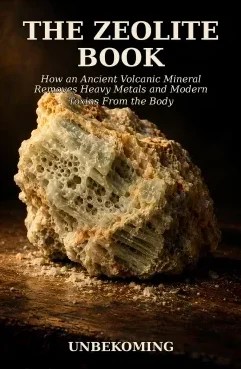 Zeolite is old. It is in Roman concrete that has held for two thousand years. It’s in the water filters of ancient cisterns. It’s in the stomachs of Pacific livestock whose keepers knew, somehow, that this grey crumbling rock made the animals healthier. It’s in Soviet clinical protocols from the 1960s. It’s in the standard emergency response to the Chernobyl explosion.
In 1986, after the Chernobyl reactor failure, the Soviet Union manufactured and distributed natural zeolite at industrial scale — for soil remediation, for livestock feed, for human consumption, for the cleanup itself. Karl Hecht, who had been director of the Institute for Experimental and Clinical Pathophysiology at the Charité of Humboldt University Berlin, spent the six decades after that building the clinical research base — on silicon’s role in human health, on zeolite’s clinical safety, on its applications in ageing. In 2018, Pavelić and colleagues published a comprehensive clinical safety review of natural clinoptilolite in Frontiers in Pharmacology. In 2019, Mastinu analysed its binding affinities. In the Western medical literature, these works sit largely uncited.
What has not been treated at book length, until now, is how a volcanic mineral with six decades of Soviet clinical work behind it, two major peer-reviewed Western reviews, and ongoing clinical use across the former Eastern Bloc, remains almost entirely absent from Western medical practice — and what the toxic burden it’s meant to address actually is.
The Zeolite Book gathers the Soviet clinical record, the Western peer-reviewed studies, three contemporary practitioner voices, and three serious counterviews into one honest treatment. That’s why the book runs to seven appendices. 288 pages, four parts, three practitioner voices, three counterviews, seven appendices. The honest treatment is the argument.
Blog Roll
 Aletho News
- Wrong, AP and NPR: Europe’s 50,000 Heat Deaths Are a Computer-Model Estimate, Not a Real Body Count
- Questioning Your Doctor Is Now Considered A Psychological Problem (Seriously)
- London tourism expo promotes Israeli agency linked to theft of Palestinian land
- Dockworkers launch global strike against Israeli and US military shipments
- Europe facing gas price shock – Gazprom chief
- Ukraine continues recruiting people with disabilities
- Weaponized Journalism: 2021 Sayer Ji Interview with NPR
- Beyond Netanyahu: what Israel’s election means for Palestinians
- Lithuania plans universal conscription
- Lies, Damn Lies, and Ukraine News
- If Americans Knew
- An error has occurred; the feed is probably down. Try again later.
- No Tricks Zone
- Germany’s Green Energy Transition Becoming Increasingly Expensive…Another 6 Trillion Euros!
- Sudden Stratospheric Warming, Powerful El Niño Combination May Lead To Extreme Europe Cold, Energy Crisis!
- Two New Studies Find Thwaites Glacier Melt Cannot Be Driven By Human Activity Or A Warming Ocean
- E-Cars Reduce CO2 Emissions By Only 41% Compared To Internal Combustion Engine Vehicles
- Predictions Made By Renowned Climate Professor Over Past Decades Have Been Proven To Be Poor
- New Study Suggests Large Regions Of The Pacific Ocean Have Been Cooling For The Last 80 Years
- Germany’s Green Energy Debacle: High Energy Costs Force Kahla Porzellan to Close After 182 Years!
- New Study: 50 Years Of The Most Aggressive ‘Net Zero’ Policies Can Only Affect The Global Climate By 0.03°C
- US September “Heat” Was No Record…Many Records Set Decades Ago
- Latest European Green Energy Debacle; Portugal’s Largest Flagship Solar Park Insolvent!

