How Many Islamic State Fighters Are There?
By Ray McGovern | Consortium News | November 16, 2014
Why was I reminded of Vietnam on Saturday when Gen. Martin Dempsey, Chairman of the Joint Chiefs of Staff, visited Iraq to “get a firsthand look at the situation in Iraq, receive briefings, and get better sense of how the campaign is progressing” against the Islamic State, also known as ISIS or ISIL?
For years as the Vietnam quagmire deepened, U.S. political and military leaders flew off to Vietnam and were treated to a snow job by Gen. William Westmoreland, the commander there. Many would come back glowing about how the war was “progressing.”
Dempsey might have been better served if someone had shown him Patrick Cockburn’s article in the Independent entitled “War with Isis: Islamic militants have an army of 200,000, claims senior Kurdish leader.”
Fuad Hussein, the chief of staff of Kurdish President Massoud Barzani, told Cockburn that “I am talking about hundreds of thousands of fighters because they are able to mobilize Arab young men in the territory they have taken.”
Hussein estimated that Isis rules about one-third of Iraq and one-third of Syria with a population from 10 million to 12 million over an area of 250,000 square kilometers, roughly the size Great Britain, giving the jihadists a large pool of potential fighters to recruit.
While the Kurdish estimate may be high – it certainly exceeds “the tens of thousands,” maybe 20,000 to 30,000 that many Western analysts have claimed – the possibility that the Islamic State’s insurgency is bigger than believed could explain its startling success in overrunning the Iraqi Army around Mosul last summer and achieving surprising success against the well-regarded Kurdish pesh merga forces, too.
So, on his flight back to Washington, Dempsey will have time to ponder whether he has the courage to pass on this discouraging word to President Barack Obama about ISIS or whether he will put on the rose-colored glasses like an earlier generation of commanders did about Vietnam, where Westmoreland insisted that the number of enemy Vietnamese in South Vietnam could not go above 299,000.
Unfortunately, those obstinate Vietnamese Communists would not observe that artificial, politically inspired limit. Westmoreland was aware of the troubling reality but knew that acknowledging it would have undesired consequences in the United States where many Americans were souring on the war.
The inconvenient truth finally became abundantly clear during the Tet offensive in late January and early February 1968, but still the misbegotten war went on, and on, ultimately claiming some 58,000 U.S. lives and millions of Vietnamese.
Westmoreland’s gamesmanship with the numbers was known to some CIA officials – first and foremost, a very bright and courageous analyst named Sam Adams – but CIA Director Richard Helms silenced them out of fear of political retribution. “My responsibility is to protect the Agency,” Helms told them, “and I cannot do that if we get into a pissing match with a U.S. Army at war.”
Today’s CIA Director John Brennan is similarly at pains to protect the Agency on a number of fronts. Is he likely to tell the truth about ISIS if it means the prospects for a renewed war in Iraq and a new war in Syria are especially grim? If not, are there no Sam Adamses left at the CIA?
Honest Analysts?
Honest intelligence analysts played a key role in the November 2007 National Intelligence Estimate, “Iran: Nuclear Intentions and Capabilities,” which helped thwart Bush/Cheney plans to apply Iraqi-type “shock and awe” to Iran during their last year in office. The NIE concluded, unanimously and “with high confidence,” that Iran had stopped working on a nuclear weapon in late 2003.
In his memoir, Decision Points, President George W. Bush called the NIE’s findings “eye-popping.” He openly bemoaned how the estimate deprived him of the military option, writing “How could I possibly explain using the military to destroy the nuclear facilities of a country the intelligence community said had no active nuclear weapons program?”
The NIE on Iran was issued seven years ago. One has to hope that a few honest analysts on the Near East have survived the CIA directorships of Michael Hayden, Leon Panetta, David Petraeus and John Brennan and have the courage to tell the truth about ISIS – including how U.S. military intervention now is swelling ISIS’s ranks, much as the Bush/Cheney invasion of Iraq in 2003 created the conditions for the group’s birth, then called “Al-Qaeda in Iraq.”
If honest intelligence analysts are silenced, as Sam Adams was 47 years ago, they need to plumb their consciences and see if they have the guts to make public both the undercounting of enemy forces AND the fillip given to their multiplication by further U.S. military involvement.
Though having worked within the system to get the real enemy troop estimates to senior U.S. officials, Sam Adams went to an early, remorse-filled death, unable to overcome the thought of what might well have happened to shorten the war if he had broken with the CIA’s demands for secrecy and made the actual enemy numbers public.
Possibly, the armed conflict might have ended in 1968. Or, to put it another way, the Vietnam Memorial in Washington would have no need for a western wall since there would be no names to chisel into the granite.
If Gen. Dempsey decides to ape Westmoreland and dissemble about the realistic obstacles to military success against the Islamic State fighters and about the counterproductive effects of U.S. intervention, well, our country will need a new Sam Adams willing, this time, to blast the truth into the open.
Sam Adams Associates for Integrity in Intelligence
Sam Adams’s memory is invoked each year as Sam Adams Associates for Integrity in Intelligence make their annual award for integrity. SAAII is a movement of former CIA colleagues of former intelligence analyst Sam Adams, together with others who hold up his example as a model for those in intelligence who would aspire to the courage to speak truth to power.
SAAII confers an award each year to a member of the intelligence community or related professions who exemplifies Sam Adam’s courage, persistence and devotion to truth — no matter the consequences.
It was Adams who discovered in 1967 that there were more than a half-million Vietnamese Communists under arms — roughly twice the number that the U.S. command in Saigon would admit to, lest Americans learn that claims of “progress” were bogus.
Gen. Westmoreland had put an artificial limit on the number Army intelligence was allowed to carry on its books. And his deputy, Gen. Creighton Abrams, specifically warned Washington that the press would have a field day if Adam’s numbers were released, and that this would weaken the war effort.
A SECRET/EYES ONLY cable from Abrams on Aug. 20, 1967, stated: “We have been projecting an image of success over recent months,” and cautioned that if the higher figures became public, “all available caveats and explanations will not prevent the press from drawing an erroneous and gloomy conclusion.”
The Communist countrywide offensive during Tet made it clear that the generals had been lying and that Sam Adams’s “higher figures” were correct. Senior intelligence officials were aware of the deception, but lacked the courage to stand up to Westmoreland. Sadly, Sam Adams remained reluctant to go “outside channels.”
A few weeks after Tet, however, former Pentagon official Daniel Ellsberg rose to the occasion. Ellsberg learned that Westmoreland was asking for 206,000 more troops to widen the war into Cambodia, Laos, and North Vietnam — right up to the border with China, and perhaps beyond.
Someone else promptly leaked to the New York Times Westmoreland’s troop request, emboldening Ellsberg to do likewise with Sam Adams’ story. Ellsberg had come to the view that leaking truth about a deceitful war would be “a patriotic and constructive act.” It was his first unauthorized disclosure. On March 19, 1968, the Times published a stinging story based on Adams’s figures.
On March 25, President Lyndon Johnson complained to a small gathering, “The leaks to the New York Times hurt us. … We have no support for the war. This is caused by the 206,000 troop request [by Westmoreland] and the leaks. … I would have given Westy the 206,000 men.”
On March 31, 1968, Johnson introduced a bombing pause, opted for negotiations, and announced that he would not run for another term in November.
Sam Adams continued to press for honesty and accountability but stayed “inside channels” — and failed. He died at 55 of a heart attack, nagged by the thought that, had he not let himself be diddled, many lives might have been saved. His story is told in War of Numbers, published posthumously.
Ray McGovern works with Tell the Word, a publishing arm of the ecumenical Church of the Saviour in inner-city Washington. He was a close colleague of Sam Adams; the two began their CIA analyst careers together during the last months of John Kennedy’s administration. During the Vietnam War, McGovern was responsible for analyzing Soviet policy toward China and Vietnam.
The Endgame of the US ‘Islamic State’ Strategy
By Nicola Nasser | alarabi | November 11, 2014
Dismantling what the former US President George W. Bush once described as the Syria – Iran component of the “axis of evil,” or interrupting in Iraq the geographical contiguity of what King Abdullah II of Jordan once described as the “Shiite crescent,” was and remains the strategic goal of the US – Israeli allies in the Middle East unless they succeed first in “changing the regime” in either Damascus or Tehran.
The US, Israel and their regional allies have been on the record that the final target of their “regime change” campaign in the Middle East was to dismantle the Syria – Iran alliance.
With the obvious failure of Plan A to dismantle the self-proclaimed anti-Israel and anti-US Syrian – Iranian “Resistance Axis” by a forcible “regime change” in Damascus, a US – led regional alliance has turned recently to its Plan B to interrupt in Iraq the geographical contiguity of that axis.
This is the endgame of President Barack Obama’s strategy, which he declared on last September 10 as ostensibly against the Islamic State (IS).
This would at least halt for the foreseeable future all the signed and projected trilateral or bilateral Iranian, Iraqi and Syrian pipeline networks to carry oil and gas from Iran and Iraq to the Syrian coast at the Mediterranean.
Israeli Col. (res.) Shaul Shay, a research associate at the Begin-Sadat Center for Strategic Studies and a former Deputy Head of the Israel National Security Council anticipated in writing on last January 21 what he called the “Salafi Crescent” that is dangerously emerging to challenge the “Shia Crescent.”
“The growing involvement of Sunni Salafi jihadis in Iraq (since 2003), among the rebels in Syria (since 2011), and in Lebanon has created a ‘Salafi Crescent’ … from Diyala [in eastern Iraq] to Beirut,” he wrote.
“A positive outcome” of this Salafi Crescent “will be the decline in Iranian influence in the region,” Shay concluded.
Conspiracy theories aside, the eventual outcome is a sectarian Sunni military and political wedge driven into the Iraqi geographical connection of the Iran-Syria alliance in a triangle bordering Turkey in the north, Iran in the east, Jordan in the west and Saudi Arabia in the south and extending from north eastern Syria to the Iraqi province of Diyala which borders Iran.
Iraqi Kurdistan is already effectively an independent state and cut off from the central government in Baghdad, but separating Iran and Syria as well and supported by the same US – led anti – IS coalition.
Amid the misinformation and disinformation, the fact is that the IS threat is being used as a smokescreen to confuse and blur this reality.
The IS was conceived and delivered in an American womb. The US – drafted and enforced current constitution produced the sectarian government that is still trying to rule in Iraq. Sectarian cleansing and exclusion of Sunnis could not but inevitably create its antithesis.
The IS was the illegitimate fetus born and nurtured inside the uterus of the US – engineered political process based on a constitution legalizing a federal system based in turn on sectarian and ethnic sharing of power and wealth.
This horrible illegitimate creature is the “legacy” of the US war on Iraq, which was “conceived” in the “sin” of the US invasion of the country in 2003, in the words of the president of the Arab American Institute, James J. Zogbi, writing in the Jordan Times on last June 16.
US Senator John McCain, quoted by The Atlantic on last June 23, thanked “God,” the “Saudis and Prince Bandar” and “our Qatari friends” for creating the “monster.”
The pro-Iran government of former Prime Minister Noori al-Maliki was squeezed by the IS military advances to “request” the US help, which Washington preconditioned on the removal of al-Maliki to which Iran succumbed. The IS gave Obama’s IS strategy its first success.
However, al-Maliki’s replacement by Haider al-Abadi in August has changed nothing so far in the sectarian component of the Iraqi government and army. The US support of Iraq under his premiership boils down only to supporting continued sectarianism in the country, which is the incubator of the survival of its IS antithesis.
Moreover, the destruction of the Iraqi state infrastructure, especially the dismantling of Iraq’s national army and security agencies and the Iraqi Baath party that held them intact, following the US invasion, has created a power vacuum which neither the US occupation forces nor the sectarian Shiite militias could fill. The IS was not powerful per se. They just stepped in on a no-man land.
Similarly, some four years of a US – led “regime change” effort, which was initially spearheaded by the Muslim Brotherhood and which is still financed, armed and logistically facilitated by the US regional allies in Turkey, Qatar, Saudi Arabia as well as by allied western intelligence services, has created another power vacuum in Syria, especially on border areas and in particular in the northern and eastern areas bordering Turkey and Iraq.
US Senator Rand Paul in an interview with CNN on last June 22 was more direct, accusing the Obama administration of “arming” and creating an IS “safe haven” in Syria, which “created a vacuum” filled by the IS.
“We have been fighting alongside al Qaeda, fighting alongside ISIS. ISIS is now emboldened and in two countries. But here’s the anomaly. We’re with ISIS in Syria. We’re on the same side of the war. So, those who want to get involved to stop ISIS in Iraq are allied with ISIS in Syria. That is the real contradiction to this whole policy,” he said.
The former 16 – year member of the US Congress and two – time US presidential candidate Dennis Kucinich, writing in the Huffington Post on last September 24, summed it up: The IS “was born of Western intervention in Iraq and covert action in Syria.”
The IS could have considered playing the role of a US “Frankenstein,” but in fact it is serving as the US “Trojan horse” into Syria and Iraq. Fighting the IS was the US tactic, not the US strategy.
On record, Iranian deputy foreign minister Hossein Amir-Abdollahian said that “the best way of fighting ISIS and terrorism in the region is to help and strengthen the Iraqi and Syrian governments, which have been engaged in a serious struggle” against the IS. But this would not serve the endgame of Obama’s strategy, which targets both governments instead.
Beneficiaries of the IS “Trojan horse” leave no doubts about the credibility of the Syrian, Iranian and Russian doubts about the real endgame of the US – led declared war on the IS.
The United States was able finally to bring about its long awaited and promoted “front of moderates” against Iran and Syria into an active and “air-striking” alliance, ostensibly against the IS.
In Iraq, the IS served the US strategy in wrestling back the so called “political process” from the Iranian influence by proxy of the former premier al-Maliki. Depriving al-Maliki of a third term had proved that there is no unified Iran – backed “Shia house” in Iraq. The US has its own influence inside that “house.”
Installing a US Iraqi satellite was the strategic goal of the US – led invasion and occupation of Iraq in 2003. Instead, according to Doug Bandow, writing in Forbes on October 14, “Bush’s legacy was a corrupt, authoritarian, and sectarian state, friendly with Iran and Syria, Washington’s prime adversaries in the Middle East. Even worse was the emergence of the Islamic State.”
This counterproductive outcome of the US invasion, which saw Iran wielding the reigns of power in Baghdad and edging Iraq closer to Syria and Iran during the eight years of al-Maliki’s premiership, turned the red lights on in the White House and the capitals of its regional allies.
Al-Maliki, whom Bush had designated as “our guy” in Baghdad when his administration facilitated his premiership in 2006, turned against his mentors.
He edged Iraq closer to the Syrian and Iranian poles of the “axis of evil.” Consequently he opposed western or Israeli military attack on Iran, at least from or via Iraqi territory. In Syria, he opposed regime change in Damascus, rejected direct military “foreign intervention” and indirect proxy intervention and insisted that a “political solution” is the only way forward in Iraq’s western Arab neighbor.
Worse still was his opening Iraq up to rival Chinese and Russian hydrocarbon investments, turning Iraq a part of an Iran-Iraq-Syria oil and gas pipeline network and buying weapons from the Russian Federation.
Al-Maliki had to go. He was backed by Iran to assume his second term as prime minister in spite of the US, which backed the winner of the 2010 elections for the post, Ayad Allawi. The US had its revenge in the 2014 elections. Al-Maliki won the elections, but was denied a third term thanks to US pressure.
The IS was the US instrument to exert that pressure. US Secretary of State John Kerry during his visit to Baghdad on last June 23 warned that Iraq was facing “an existential threat.”
It was a US brinkmanship diplomacy to force al-Maliki to choose between two bad options: Either to accept a de facto secession of western and northern Iraq on the lines of Iraqi Kurdistan or accept the US conditional military support. Al-Maliki rejected both options, but he had paid the price already.
The turning point came with the fall of Iraq’s second largest city of Mosul to the IS on last June 10. Iraqi Kurdistan inclusive, the northern and western Iraq, including most of the crossing points into Syria and Jordan in the west, were clinched out of the control of Baghdad, i.e. some two thirds of the area of Iraq. Al-Maliki was left to fight this sectarian Sunni insurgency by his sectarian Iran-backed Shiite government. This was a non-starter and was only to exacerbate the already deteriorating situation.
Al-Maliki and Iran were made to understand that no US support was forthcoming to reign in the IS until he quits and a less pro-Iran and a more “inclusive” government is formed in Iraq.
The creation of the IS as the sectarian Sunni alternative against Iran’s ruling allies in Baghdad and Damascus was and is still the US tactic towards its strategic endgame. Until the time the US strategy succeeds in wrestling Baghdad from Iran influence back into its fold as a separating wedge between Iran and Syria, the IS will continue to serve US strategy and so far Obama’s strategy is working.
“America is using ISIS in three ways: to attack its enemies in the Middle East, to serve as a pretext for U.S. military intervention abroad, and at home to foment a manufactured domestic threat, used to justify the unprecedented expansion of invasive domestic surveillance,” Garikai Chengu, a research scholar at Harvard University, wrote in CounterPunch on September 19.
As a doctrine, since the collapse of the Ottoman caliphate early in the twentieth century, western powers did their best to keep Arabs separated from their strategic depth in their immediate Islamic proximity. The Syria – Iran alliance continues to challenge this doctrine.
Nicola Nasser is a veteran Arab journalist based in Birzeit, West Bank of the Israeli-occupied Palestinian territories (nassernicola@ymail.com).
Winston Churchill was a Racist Ass#*%!
Moonlit History | October 24, 2014
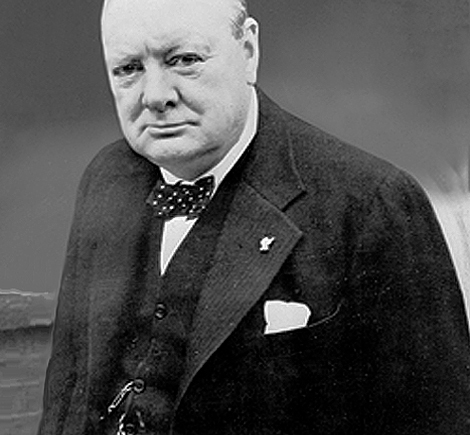
Churchill is seen as the British icon of endurance and strength through gloomy war. His drowning voice of “we shall fight on the beaches” is easily identifiable with World War II. And he was a complete drunk.
But what do common folks now-a-days know of this man? Do you know much about Dear ol’ Churchill? Let’s find out.
In December of 1910, while young Churchill was Home Secretary, he wrote:
“The unnatural and increasingly rapid growth of the Feeble-Minded and Insane classes, coupled as it is with a steady restriction among all the thrifty, energetic and superior stocks, constitutes a national and race danger which it is impossible to exaggerate. I am convinced that the multiplication of the Feeble-Minded, which is proceeding now at an artificial rate, unchecked by any of the old restraints of nature, and actually fostered by civilised conditions, is a terrible danger to the race.” Churchill was all-for forcing “feeble-minded” people to labour colonies. January 19, 1899, Churchill wrote in a letter to his cousin: “The improvement of the British breed is my aim of life.” [1]
Wait a minute, he was in favor of eugenics? This sounds really familiar to someone else in history, I just can’t remember his name. Anyway, moving on.
As a young MP, it was well-known he believed that “the Aryan stock is bound to triumph.” — Okay, wait! He sounds just like that guy with the funny mustache! Whoa!
When concentration camps were built in South Africa, for white Boers, he [Churchill] said they produced “the minimum of suffering”. The death toll was almost 28,000, and when at least 115,000 black Africans were likewise swept into British camps, where 14,000 died, he wrote only of his “irritation that Kaffirs should be allowed to fire on white men.”
As Colonial Secretary in the 1920s, he unleashed the notorious Black and Tan thugs on Ireland’s Catholic civilians, and when the Kurds rebelled against British rule, he said: “I am strongly in favour of using poisoned gas against uncivilised tribes… [It] would spread a lively terror.” [2]
And after Ghandi’s movement of peace was taking hold in the then British colony of India, Churchill was noted to have said:
“I hate Indians. They are a beastly people with a beastly religion.” Churchill’s gross demeanor towards others not of his skin did not cease while the Bengali famine occurred (which led to the death of nearly 3 million souls). He remarked the famine was not Britain’s fault, but it was “their” fault—because they “breed like rabbits.” He was talking about the Indians, of course. Amartya Sen, an economist who won the Nobel Prize in 1998, proved for a fact that the famine was due to the imperialist structure of the British Empire. [3]
In conclusion: make your own conclusion.
Sources:
[1] Winstonchurchill.org
[2] The Independent
[3] BBC
Iranian general accuses US of supplying ISIS with arms, aid
Al-Akhbar | November 9, 2014
The US delivered arms and aid supply to militants of the Islamic State of Iraq and Syria (ISIS) in eastern Iraq, Deputy Chief of Staff of the Iranian Armed Forces Brigadier claimed on Saturday, according to a report by the Iranian state news agency IRNA.
Describing the US’s fight against ISIS as a “lie,” General Massoud Jazayeri Jazayeri said “the US and the coalition air dropped weapons, ammunition, food and medical equipment to ISIS militants – which have been besieged by the Iraqi army – in Jalawla town of Diyala [in eastern Iraq] a few days ago.”
Jazayeri claimed that the US supported ISIS, currently in control of large swathes of territory in Iraq and Syria, since the beginning of the insurgency.
Iran and other critics opposed to US involvement in the conflict with ISIS have pointed out that Washington in partnership with its Gulf allies, including Saudi Arabia, played a role in the formation and expansion of extremist groups like ISIS by arming, financing and politically empowering armed opposition groups in Syria.
In a speech mid October, Iran’s supreme leader Ayatollah Ali Khamenei said that “America, Zionism, and especially the veteran expert of spreading divisions – the wicked government of Britain – created al-Qaeda and Da’esh (ISIS) in order to create divisions among Muslims.”
“A careful and analytic look at the developments reveals that the US and its allies, in efforts that are falsely termed countering Daesh, seek to create division and enmity among the Muslims rather to destroy the root causes of that (terrorist) current,” Khamenei said.
The US-led international coalition, which includes France, Germany, and Saudi Arabia, has carried out numerous airstrikes against ISIS in Iraq and Syria. However. the airstrikes have not been effective so far.
In September, Iranian President Hassan Rouhani told the United Nations that the West was responsible for “strategic blunders” in the Middle East and Central Asia that had created terror havens.
In a thinly veiled reference to the United States and Israel, Rouhani blamed the rise of violent extremists on outsiders.
“Certain intelligence agencies have put blades in the hand of madmen (ISIS’s extremists), who now spare no one,” he said.
Moreover, Iran believes US and Britain are using the Islamist threat to justify their renewed presence in the region.
“Experience of creation of al-Qaeda, Taliban and modern extremist groups demonstrated one can’t use extremist groups to counter an opposing state and remain impervious to the consequences of rising extremism,” he said. “The repetition of these mistakes despite many costly experiences is perplexing.”
Iran’s accusation appeared to be reference to Western support for the so-called rebel forces fighting the Syrian army and government.
Amongst the rebel forces, hardline Islamists are militarily the strongest.
Wasn’t Da’esh (ISIS) the same group who fought the Syrian government and the Syrian army? How is that they were not categorized as terrorists then?” and “Why is it that ISIS went from not-so-bad to extremely-bad depending on who they targeted in their terrorist operations?” Rouhani asked.
A study by the London-based small-arms research organization Conflict Armament Research revealed that ISIS jihadists in Syria as well appear to be using US military issue arms and weapons supplied to the so-called moderate rebels by Saudi Arabia.
(Anadolu, Al-Akhbar)
China announces $40 bn Silk Road fund
The BRICS Post | November 8, 2014
Chinese President Xi Jinping on Saturday announced China will contribute $40 billion to set up a Silk Road Fund to strengthen connectivity in the Asia-Pacific region.
Xi said the goal of the Fund is to “break the bottleneck in Asian connectivity by building a financing platform.”
The new Silk Road Fund will be used to provide investment and finance for infrastructure, industrial projects along the “Belt and Road”, Xi said, referring to China’s Silk Road Economic Belt and the 21st Century Maritime Silk Road initiatives.
He added that the fund will be “open” to investors from both within and outside Asia.
The Asian Development Bank has estimated that in the next decade Asian countries will need $8 trillion in infrastructure investments to maintain the current economic growth rate.
“The Silk Road boasts a 3-billion population and a market that is unparalleled both in scale and potential,” Xi said in September last year.
The Silk Road connected China and Europe from around 100 B.C.
The 4,000-mile road linked ancient Chinese, Indian, Babylonian, Arabic, Greek and Roman civilizations.
A new map unveiled by Xinhua shows the Chinese plans for the Silk Road run through Central China to the northern Xinjiang from where it travels through Central Asia entering Kazakhstan and onto Iraq, Iran, Syria and then Istanbul in Turkey from where it runs across Europe cutting across Germany, Netherlands and Italy.
The maritime Silk Road begins in China’s Fujian and ends at Venice, Italy.
In a landmark achievement, 21 Asian nations including China and India last month signed on a new infrastructure investment bank which would rival the World Bank.
One of the first projects of the new Bank is expected to be financing infrastructure projects along the “Silk Road Economic Belt” and the “Maritime Silk Road” re-establishment.
Meanwhile on Saturday in Beijing, the Chinese President stressed that efforts should be made to realize Asia’s connectivity by making Asian countries a priority.
“Asian countries are just like a cluster of bright lanterns. Only when we link them together, can we light up the night sky in our continent,” he said.
China will provide neighboring countries 20,000 training opportunities for connectivity professionals in the coming five years.
Experts say these new announcements will boost China’s global influence and enhance its soft power.
Apart from the AIIB, the BRICS new $100 billion Development Bank is also being headquartered in China.
“China has considerable experience in infrastructure planning and construction, and financing projects outside the country. As Finance Minister Lou Jiwei has said, China Development Bank’s commercial infrastructure loan is now far bigger than that of the World Bank and ADB combined. And surprisingly, this process started only 20 years ago,” write Asit Biswas and Cecilia Tortajada, China scholars at the Lee Kuan Yew School of Public Policy, Singapore.
TBP and Agencies
Inside the UN Resolution on Depleted Uranium
By JOHN LAFORGE | CounterPunch | November 6, 2014
On October 31, a new United Nations General Assembly First Committee resolution on depleted uranium (DU) weapons passed overwhelmingly. There were 143 states in favor, four against, and 26 abstentions. The measure calls for UN member states to provide assistance to countries contaminated by the weapons. The resolution also notes the need for health and environmental research on depleted uranium weapons in conflict situations.
This fifth UN resolution on the subject was fiercely opposed by four depleted uranium-shooting countries — Britain, the United States, France and Israel — who cast the only votes in opposition. The 26 states that abstained reportedly sought to avoid souring lucrative trade relationships with the four major shooters.
Uranium-238 — so-called “depleted” uranium — is waste material left in huge quantities by the nuclear weapons complex. It’s used in large caliber armor-piercing munitions and in armor plate on tanks. Toxic, radioactive dust and debris is dispersed when DU shells burn through targets, and its metallic fumes and dust poison water, soil and the food chain. DU has been linked to deadly health effects like Gulf War Syndrome among U.S. and allied troops, and birth abnormalities among populations in bombed areas. DU waste has caused radioactive contamination of large parts of Iraq, Bosnia, Kosovo and perhaps Afghanistan.
The measure explains that DU weapons are made of a “chemically and radiologically toxic heavy metal” [uranium-238], that after use “penetrator fragments, and jackets or casings can be found lying on the surface or buried at varying depth, leading to the potential contamination of air, soil, water and vegetation from depleted uranium residue.”
The main thrust of the latest UN resolution, “Encourages Member States in a position to do so to provide assistance to States affected by the use of arms and ammunition containing depleted uranium, in particular in identifying and managing contaminated sites and material.” The request is a veiled reference to the fact that investigators have been stymied in their study of uranium contamination in Iraq, because the Pentagon refuses to disclose maps of all the places it attacked with DU.
In the diplomatic confines of UN resolutions, individual countries are not named. Yet the world knows that up to 700 tons of DU munitions were blasted into Iraq and Kuwait by U.S. forces in 1991, and that U.S. warplanes fired another three tons into Bosnia in 1994 and 1995; ten tons into Kosovo in 1999, and approximately 170 tons into Iraq again in 2003.
The International Coalition to Ban Uranium Weapons (ICBUW.org), based in Manchester, England and representing over 160 civil society organizations worldwide, played a major part in seeing all five resolutions through the UN process and is working for a convention that would see the munitions outlawed. In October, ICBUW reported that the US military will again use DU weapons in Iraq in its assaults against ISIS “if it needs to”. The admission came in spite of Iraq’s summer 2014 recent call for a global ban on the weapons and assistance in clearing up the contamination left from bombardments in 1991 and 2003.
The new resolution relies heavily on the UN Environment Program (UNEP) which conducted radiation surveys of NATO bombing targets in the Balkans and Kosovo. It was a UNEP study in 2001 that forced the Pentagon to admit that its DU is spiked with plutonium. (Associated Press, Capital Times, Feb. 3, 2001: “But now the Pentagon says shells used in the 1999 Kosovo conflict were tainted with traces of plutonium, neptunium and americium — byproducts of nuclear reactors that are much more radioactive than depleted uranium.”)
The resolution’s significant fourth paragraph notes in part: “… major scientific uncertainties persisted regarding the long-term environmental impacts of depleted uranium, particularly with respect to long-term groundwater contamination. Because of these scientific uncertainties, UNEP called for a precautionary approach to the use of depleted uranium, and recommended that action be taken to clean up and decontaminate the polluted sites. It also called for awareness-raising among local populations and future monitoring.”
The “precautionary principle” holds that risky activities or substances should be shunned and discouraged unless they can be proved safe. Of course, instead of adopting precaution, the Pentagon denies that DU can be linked to health problems.
John LaForge works for Nukewatch and lives on the Plowshares Land Trust near Luck, Wisc.
An Overwhelming Majority of Lebanon’s Christians Believe Hizbullah Protects Their Country
By Anthony F. Shaker | Mittag’s Journal | October 26, 2014
A recent poll by the Beirut Center for Research and Information (BCRI) found that two thirds (62.6%) of Lebanese Christians feel that, contrary to its vilification by members of the NATO alliance, Hizbullah has in fact protected their country from its most determined enemies—Israel, IS (known locally as Da‘ash), and Wahhabi-style terrorist groups linked to the Syria-Iraq conflagration.
The poll revealed also that very few of the respondents prefer UNIFIL to Hizbullah on the front line with the terrorist groups, as some domestic and regional actors have insisted. Nor do they believe the claim that the foreign “coalition” presently targeting IS in Iraq and parts of Syria seeks to “destroy” IS, as President Obama and his allies have declared.
As many as 73.1% dismiss this view entirely, which comes in the wake of endless reports in the mainstream media worldwide and growing evidence regarding Saudi, Turkish, Qatari, Israeli and NATO collaboration with anti-Syrian terrorist fronts and organizations.
Although some have interpreted the survey results as indicative of a “significant increase” in favorable attitudes—at least compared to two similar surveys in June 2013 and February 2014—there is no history of enmity between the Christian and Muslims communities, much less with Shi‘i Muslims.
During a visit to France in 2011, Maronite Patriarch Beshara Boutros Rai defended the government of President Bashar al-Assad and criticized states that had begun supplying arms to the terrorists gathering in Syria. Again in 2013, he said, “There is a plan to destroy the Arab world for political and economic interests and boost interconfessional conflict between Sunnis and Shi’ites. Some Western and East powers are fomenting all these conflicts. We are seeing the total destruction of what Christians managed to build in 1,400 years,” referring to peaceful cohabitation and historically productive relationship with Muslims.
“I have written to the Holy Father twice to describe what is happening,“ he had added. “I appeal again to the Holy Father, who only talks about peace and reconciliation.”
Hizbullah, which solidified the resistance against the Israeli occupation of South Lebanon, began largely in the Shi’a community, but then quickly expanded ties with other communities and organizations across the country. Today, it identifies its primary interests with Lebanon and does not claim to act on behalf of Shi’a Muslims only.
Strictly speaking, Lebanon’s woes are not confessional, even if they fed on endless disputes over confessionally based electoral rules and representation.
That a Wahhabi terrorist claims to speak for “Sunnis” does not by itself make for a Sunni-Shi’a divide. Nor does it define the armed conflicts that have erupted since the West began to sponsor a massive armed campaign to destroy the Syrian government and state. Few people know that this sponsorship dates, not from 2011 (when the terrorist onslaught gained traction), but from the early 1990s, after Syria insisted that Israel declare its intention to return the Golan Heights during the ”peace“ negotiations phase, a demand Israel categorically refused at the time.
The “West” (essentially, the United States, United Kingdom and France) has blacklisted Hizbullah as a “terrorist” organization and for years fought hard to pin the Hariri assassination on it, which many now believe Israel carried out, possibly even at Saudi Arabia’s behest, nearly provoking another civil war.
Hizbullah officials have repeatedly warned that a “terrorist” listing is a “big mistake,” one that will further damage the West’s standing in the region. In fact, this is no longer in doubt, given NATO’s current desperate effort to insinuate itself back into Iraq and to intervene for the first time inside Syria itself. NATO now has no choice but to tolerate Iran’s determined assistance to Iraqi military and security forces. This tolerance naturally must now be extended to Syria, where Hizbullah aims to deal decisively with the terror emanating from the Gulf, Turkey and Israel before it overwhelms Lebanon too.
Clearly, the events surrounding the Syria conflict have thrown deep doubts on Western intentions—and competence—in the Middle East. For some time, these doubts have been seeping into Western policymaking circles, diplomatically around the world, and most tellingly, inside the intelligence communities themselves.
Years ago, under a previous government just before Canada put Hizbullah on the terrorism list, Canadian security analysts and some federal cabinet ministers had cautioned against such a blanket interdiction. The former Liberal government’s decision, it had transpired, was based in the ever-quaint Washington Times, which merely quoted a professor claiming that Hizbullah leader Hassan Nasrallah had issued a worldwide call for “a suicide bombing campaign”and “don’t be shy about it.”
The “professor’s” claim happens to be in keeping with the Mickey Mouse warnings that Israel has for years been dishing out to Western countries about the Lebanese resistance. Yet, suicide bombings then, as now, are the Wahhabi terrorists’ choicest method in asymmetric warfare, not Hizbullah’s.
Developments since then have shrunk Canada’s blacklisting of Hizbullah to insignificance as an issue. This is because Canada has lost most of its diplomatic influence thanks to the deeply ideological character and the arrogant style of Conservative Prime Minister Stephen Harper.
Many Canadians have questioned the wisdom of blacklisting a party with elected members in the Lebanese parliament and government cabinet. This year marks a new watershed: few either in Canada or in the West are sure any more which side they are on according to their government.
To the Christians of Lebanon, such hesitation would have been unthinkable for the fatal consequences it entailed for them and their country.
One can only recall with nostalgia Hillary Clinton’s shrill call with the Friends of Syria: “Mr. Putin, you are on the wrong side of history!”
Dr. Anthony F. Shaker is the editor-in-chief and founder of Mittags Journal and visiting scholar at McGill University; his published works and articles are in classical Islamic philosophy and history, as well as modern politics.
ISIS: the Useful Enemy
By ISMAEL HOSSEIN-ZADEH | CounterPunch | October 31, 2014
The dark force of ISIS is apparently an invincible and unstoppable war juggernaut that is mercilessly killing and conquering in pursuit of establishing an Islamic State in Iraq and Syria. In reality, however, it is not as out of control as it appears. It is, indeed, carefully controlled and managed by its creators and supporters, that is, by the United States and its allies in the region—those who now pretend to have established a coalition to fight it! The U.S., Turkey, Saudi Arabia, and other allies in the region do not really need to fight ISIS to (allegedly) destroy it; all they need to do to extinguish its hellish flames is stop supplying fuel for its fire, that is, stop supplying it with funds, mercenaries, military training and armaments.
There are many ways to show the fact that, in subtle ways, ISIS benefactors control its operations and direct its activities in accordance with their own geopolitical interests. One way is to pay attention to its purported mission: to dismantle the corrupt and illegitimate regimes in Iraq and Syria and replace them with a “pure” Islamic state under the rule of a “pious caliphate.” Despite this professed mission to fight the dictatorial regimes that have tarnished Islam, however, ISIS does not question the most corrupt, dictatorial and illegitimate regimes in the region—such as the Saudi, Qatari, Kuwaiti and Jordanian regimes that fund and arm its operations.
Another way is to compare ISIS’s attack (in early August) on the Iraqi Kurds in Irbil with its current attack on the Syrian Kurds in Kobani. When Irbil came under attack by ISIS, the U.S. unleashed the full force of its air power in concert with the Kurdish peshmerga fighters to repel the attack.
By contrast, while the Kurdish city of Kobani in Northern Syria is being attacked by the disproportionately better armed forces of ISIS, and thousands of its besieged residents face certain mass killings if it falls, the forces of the “coalition to fight ISIS” are watching—in effect, playing a game of hide-and-seek, or perhaps trick-or-treat, with ISIS—as the outgunned and out-manned Kurdish forces are valiantly fighting to the death against the attackers. Only occasionally the coalition forces carry out bombing missions that seem to be essentially theatrical, or just for the record.
So, why are the Kurds in Kobani treated differently than those in Irbil? I find Ajamu Baraka’s answer to this question quite insightful:
“The reason why the Kurds of Kobani are to be sacrificed stems from the fact that they are the wrong kind of Kurds. Masoud Barzani and the bourgeois Kurds of the Kurdish Democratic Party (KDP) are the “good Kurds” and the predominant force among the Kurds of Iraq. Their control of almost 45% of Iraqi oil reserves and the booming business that they have been involved in with U.S. oil companies and Israel since their ‘liberation’ with the U.S. invasion makes them a valued asset for the U.S. The same goes for Turkey where despite the historic oppression of Kurds in Turkey, the government does a robust business with the Kurds of Iraq” (Source).
While the U.S., Turkey and their allies in the region do not view KDP as a threat to their geopolitical plans (at least for now), they do so when it comes to the “bad” Kurds in the self-governing area in Northern Syria, led by the Kurdish People’s Protection Unit (YPG). Contrary to KDP that tends to shun the Kurdistan Workers Party (PKK) in Turkey in order not to antagonize the Turks, the United States and their allies in the region, YPG welcomes support from PKK in its fight against ISIS.
Turkey’s overriding interest in Syria is not so much against ISIS as it is against the Syrian Kurds, as well as the Syrian president, Bashar al-Assad; because the rabidly anti-Kurd regime in Ankara fears that the weakened regime of Assad may not be able to do away with the self-governing Kurds in Kobani and the surrounding Kurdish areas. The Turkish regime is concerned that if the Kobani Kurds succeed in fending off the ISIS forces, their success and their experience of self-government in the Kobani region, may serve as a tempting model of self-rule for the 15-million Kurds in Turkey. The Turks are also concerned that the success of the Syrian Kurds against ISIS would thwart their long-harbored ambitions to occupy and/or annex the oil-rich Kurdish region in Northern Syria—hence their insistence on a buffer or no-fly zone in that region.
This helps explain why the Turkish regime insists that the overthrow of the Assad regime must take precedence over the fight against ISIS. It also explains why it is feverishly trying to prevent the Kurdish volunteers to cross its border with Syria to help the besieged Kobani defenders against the brutal ISIS attack—in effect, helping ISIS against the Kurds. The inaction or half-hearted action of the United States in the face of the preventable slaughter of the Syrian Kurds, which makes it complicit in the carnage, can be explained by its political horse-trading with Turkey in exchange for the Turks’ collaboration with the pursuit of its imperialistic interests in the region.
The U.S. approach to ISIS would be better understood when it is viewed in the context of its overall objectives in the region—and beyond. That overriding objective, shared and reinforced by its client states, is to undermine or eliminate “the axis of resistance,” consisting of Iran, Syria, Hezbollah, Hamas and, to a lesser extent, Shia forces in Iraq, Yemen, Bahrain and Saudi Arabia. Achievement of this goal would also be achievement of another, even broader, goal: undermining Russia’s influence and alliances in the region and, by extension, in other parts of the world—for example, its critically important role within both the Shanghai Cooperation Council (China, Russia, Kazakhstan, Kyrgyzstan, Tajikistan, and Uzbekistan) and the BRICS countries (Brazil, Russia, India, China, and South Africa).
To intervene in order to achieve these goals, the U.S. and its allies need pretexts and/or enemies—even if it means inventing or manufacturing such enemies. Without ISIS, resumption of U.S. military operations in Iraq and extension of those operations into Syria would have been difficult to justify to the American people. A year or so ago, the Obama administration’s drive to attack Syria was thwarted by the opposition from the American people and, therefore, the U.S. congress. The rise of ISIS quickly turned that opposition to support.
Viewed in this light, ISIS can be seen as essentially another (newly manufactured) instrument in the tool-box of U.S. foreign policy, which includes “global terrorism,” the 9/11 attacks on the World Trade Center, weapons of mass destruction, Iran’s nuclear technology, Al-Qaeda, and many other radical Islamic groupings—all by-products of, or blowbacks to, imperialistic U.S. foreign policies.
Ismael Hossein-zadeh is Professor Emeritus of Economics (Drake University). He is the author of Beyond Mainstream Explanations of the Financial Crisis (Routledge 2014), The Political Economy of U.S. Militarism (Palgrave-Macmillan 2007), and the Soviet Non-capitalist Development: The Case of Nasser’s Egypt (Praeger Publishers 1989). He is also a contributor to Hopeless: Barack Obama and the Politics of Illusion
Militarism and Capital Accumulation
The Pentagon and Big Oil
By James Petras | October 25, 2014
There is no question that, in the immediate aftermath and for several years following US military conquests, wars, occupations and sanctions, US multi-national corporations lost out on profitable sites for investments. The biggest losses were in the exploitation of natural resources – in particular, gas and oil – in the Middle East, the Persian Gulf and South Asia.
As a result some observers speculated that there were deep fissures and contradictory interests within the US ruling class. They argued that, on the one hand, political elites linked to pro-Israel lobbies and the military industrial power configuration, promoted a highly militarized foreign policy agenda and, on the other hand, some of the biggest and wealthiest multi-national corporations sought diplomatic solutions.
Yet this seeming ‘elite division’ did not materialize. There is no evidence for example that the multi-national oil companies sought to oppose the Iraq, Libyan, Afghan, Syrian wars. Nor did the powerful 10 largest oil companies with a net value of over $1.1 trillion dollars mobilize their lobbyists and influentials in the mass media to the cause of peaceful capital penetration and domination of the oil fields via neo-liberal political clients.
In the run-up to the Iraq war, the three major US oil companies, Exxon Mobil, Chevron, Conoco Phillips, eager to exploit the third largest oil reserves in the world, did not engage in Congressional lobbying or exert pressure on the Bush or later Obama Administration for a peaceful resolution of the conflict. At no point did the Big Ten challenge the pro-war Israel lobby and its phony arguments that Iraq possessed weapons of mass destruction with an alternative policy.
Similar “political passivity” was evidenced in the run-up to the Libyan war. Big Oil was actually signing off on lucrative oil deals, when the militarists in Washington struck again – destroying the Libyan state and tearing asunder the entire fabric of the Libyan economy.
Big oil may have bemoaned the loss of oil and profits but there was no concerted effort, before or after the Libyan debacle, to critically examine or evaluate the loss of a major oil producing region. In the case of economic sanctions against Iran, possessing the second largest oil reserves, the MNC again were notable by their absence from the halls of Congress and the Treasury Department where the sanctions policy was decided. Prominent Zionist policymakers, Stuart Levey and David Cohen designed and implemented sanctions which prevented US (and EU) oil companies from investing or trading with Teheran.
In fact, despite the seeming divergence of interest between a highly militarized foreign policy and the drive of MNCs to pursue the global accumulation of capital, no political conflicts erupted. The basic question that this paper seeks to address is: Why did the major MNCs submit to an imperial foreign policy which resulted in lost economic opportunities?
Why the MNCs Fail to Oppose Imperial Militarism
There are several possible hypotheses accounting for the MNC accommodation to a highly militarized version of imperial expansion.
In the first instance, the CEOs of the MNCs may have believed that the wars, especially the Iraq war, would be short-term, and would lead to a period of stability under a client regime willing and able to privatize and de-nationalize the oil and gas sector. In other words, the petrol elites bought into the arguments of Rumsfeld, Chaney, Wolfowitz and Feith, that the invasion and conquest would “pay for itself”.
Secondly, even after the prolonged-decade long destructive war and the deepening sectarian conflict, many CEOs believed that a lost decade would be compensated by “long term” gain. They believed that future profits would flow, once the country was stabilized. The oil majors entry after 2010; however, was immediately threatened by the ISIS offensive. The ‘time frame’ of the MNCs’ strategic planners was understated if not totally wrong headed.
Thirdly, most CEOs believed that the US-NATO invasion of Libya would lead to monopoly ownership and greater profits than what they received from a public-private partnership with the Gaddafi regime. The oil majors believed that they would secure total or majority control. In other words the war would allow the oil MNCs to secure monopoly profits for an extended period. Instead the end of a stable partnership led to a Hobbesian world in which anarchy and chaos inhibited any large scale, long-term entry of MNCs.
Fourthly, the MNCs, including the big oil corporations, have invested in hundreds of sites in dozens of countries. They are not tied to a single location. They depend on the militarized imperial state to defend their global interests. Hence they probably are not willing to contest or challenge the militarists in, say Iraq, for fear that it might endanger US imperial intervention in other sites.
Fifthly, many MNCs interlock across economic sectors: they invest in oil fields and refineries; banking, financing and insurance as well as extractive sectors. To the degree that MNCs’ capital is diversified they are less dependent on a single region, sector, or source for profit. Hence destructive wars, in one or several countries, may not have as great a prejudicial effect as in the past when “Big Oil” was just ‘oil’.
Six, the agencies of the US imperial state are heavily weighted to military rather than economic activity. The international bureaucracy of the US is overwhelmingly made up of military, intelligence and counter-insurgency officials. In contrast, China, Japan, Germany and other emerging states (Brazil, Russia and India) have a large economic component in their overseas bureaucracy. The difference is significant. US MNCs do not have access to economic officials and resources in the same way as China’s MNCs. The Chinese overseas expansion and its MNCs, are built around powerful economic support systems and agencies. US MNCs have to deal with Special Forces, spooks and highly militarized ‘aid officials’. In other words the CEOs who look for “state support” perforce have mostly ‘military’ counterparts who view the MNCs as instruments of policy rather than as subjects of policy.
Seventh, the recent decade has witnessed the rise of the financial sector as the dominant recipient of State support. As a result, big banks exercise major influence on public policy. To the extent that is true, much of what is ‘oil money’ has gone over to finance and profits accrue by pillaging the Treasury. As a result, oil interests merge with the financial sector and their ‘profits’ are as much dependent on the state as on exploiting overseas sites.
Eighth, while Big Oil has vast sums of capital, its diverse locations, multiple activities and dependence on state protection (military), weaken its opposition to US wars in lucrative oil countries. As a result other powerful pro-war lobbies which have no such constraints have a free hand. For example the pro-Israel power configuration has far less ‘capital’ than any of the top ten oil companies. But it has a far greater number of lobbyists with much more influence over Congress people. Moreover, it has far more effective propaganda – media leverage- than Big Oil. Many more critics of US foreign policy, including its military and sanctions policies, are willing to criticize “Big Oil” than Zionist lobbies.
Finally the rise of domestic oil production resulting from fracking opens new sites for Big Oil to profit outside of the Middle East – even though the costs may be higher and the duration shorter. The oil industry has replaced losses in Middle East sites (due to wars) with domestic investments.
Nevertheless, there is tension and conflict between oil capital and militarism. The most recent case is between Exxon-Mobil’s plans to invest $38 billion in a joint venture in the Russian Arctic with the Russian oil grant Rosneft. Obama’s sanctions against Russia is scheduled to shut down the deal much to the dismay of the senior executives of Exxon Mobil, who have already invested $3.2 billion in an area the size of Texas.
Conclusion
The latent conflicts and overt difference between military and economic expansion may eventually find greater articulation in Washington. However, up to now, because of the global structures and orientation of the oil industry, because of their dependence on the military for ‘security’, the oil industry in particular, and the MNCs in general, have sacrificed short and middle term profits for “future gains” in the hopes that the wars will end and lucrative profits will return.
Treating Putin Like a Lunatic
By Robert Parry | Consortium News | October 25, 2014
When reading the New York Times on many foreign policy issues, it doesn’t take a savant to figure out what the newspaper’s bias is. Anything, for instance, relating to Russian President Vladimir Putin drips of contempt and hostility.
Rather than offer the Times’ readers an objective or even slightly fair-minded account of Putin’s remarks, we are fed a steady diet of highly prejudicial language, such as we find in Saturday’s article about Putin’s comments at a conference in which he noted U.S. contributions to chaos in countries, such as Afghanistan, Iraq, Libya, Syria and Ukraine.
That Putin is correct appears almost irrelevant to the Times, which simply writes that Putin “unleashed perhaps his strongest diatribe against the United States yet” with his goal “to sell Moscow’s view that American meddling has sparked most of the world’s recent crises.”
Rather than address the merits of Putin’s critique, the Times’ article by Neil MacFarquhar uncritically cites the “group think” of Official Washington: “Russia is often accused of provoking the crisis in Ukraine by annexing Crimea, and of prolonging the agony in Syria by helping to crush a popular uprising against President Bashar al-Assad, Moscow’s last major Arab ally. Some analysts have suggested that Mr. Putin seeks to restore the lost power and influence of the Soviet Union, or even the Russian Empire, in a bid to prolong his own rule.”
Yes, “some analysts” can be cited to support nearly any claim no matter how wrongheaded, or you can use the passive tense – “is often accused” – to present any charge no matter how unfair. But a more realistic summary of the various crises afflicting the world would note that Putin is correct when he describes past U.S. backing for various extremists, from Islamic fundamentalists in the Middle East and Central Asia to neo-Nazis in Ukraine.
For example, during the 1980s, the Reagan administration consciously encouraged Islamic fundamentalism as a strategy to cause trouble for “atheistic communism” in Afghanistan and in the Muslim provinces of the Soviet Union.
To overthrow a Soviet-backed government in Afghanistan, the CIA and its Saudi collaborators financed the mujahedeen “holy warriors” who counted among their supporters Saudi extremist Osama bin Laden. Some of those Islamists later blended into the Taliban and al-Qaeda with dire consequences for the United States on Sept. 11, 2001.
By invading Iraq in 2003, President George W. Bush toppled a secular dictator, Saddam Hussein, but saw him replaced by what amounted to a Shiite theocracy which pushed Iraq’s Sunni minority into the arms of “Al-Qaeda in Iraq,” which has since rebranded itself as the Islamic State of Iraq and Syria or simply the Islamic State. Those extremists now control large swaths of Iraq and Syria and have massacred religious minorities and Western hostages, prompting another U.S. military intervention.
Obama’s Interventions
In Libya in 2011, President Barack Obama acquiesced to demands from “liberal interventionists” in his administration and authorized an air war to overthrow another secular autocrat, Muammar Gaddafi, whose ouster and murder have sent Libya spiraling into political chaos amid warring Islamist militias. It turns out Gaddafi was not wrong when he warned of Islamist terrorists operating around Benghazi.
Similarly, Official Washington’s embrace of protests and violence aimed at removing another secular Arab leader, Syria’s Bashar al-Assad, contributed to the bloody civil war that has devastated that country and created fertile ground for the Islamic State and the Nusra Front, the official al-Qaeda affiliate.
Though Obama balked at demands from neocons and “liberal interventionists” that he launch an air war against the Syrian military in 2013, he did authorize secret shipments of weapons and training for the supposedly “moderate” Syrian rebels who have generally sided with Islamist fighters affiliated with al-Qaeda and the Islamic State.
Many of these same neocons and “liberal interventionists” have been eager to ratchet up the confrontation with Iran over its nuclear program, including neocon dreams to “bomb, bomb, bomb Iran,” also a desire of hardliners in Israel.
In some of these crises, one of the few international leaders who has cooperated with Obama to tamp down tensions has been Putin, who helped negotiate conflict-avoiding agreements with Syria and Iran. But those peaceful interventions made Putin an inviting target for the neocons who began in fall 2013 arranging a coup d’etat in Ukraine on Russia’s border.
As Obama and Putin each paid too little attention to these maneuvers, neocons such as National Endowment for Democracy president Carl Gershman, Sen. John McCain, R-Arizona, and Assistant Secretary of State for European Affairs Victoria Nuland went to work on the Ukrainian coup.
However to actually overthrow Ukraine’s elected President Viktor Yanukovych, the coup makers had to collaborate with neo-Nazi militias which were organized in western Ukraine and dispatched to Kiev where they provided the muscle for the Maidan uprising. Neo-Nazi leaders were given several ministries in the new government, and neo-Nazi militants were incorporated into the National Guard and “volunteer” militias dispatched to crush the ethnic Russian resistance in the east.
Putin for the Status Quo
The underlying reality of the Ukraine crisis was that Putin actually supported the country’s status quo, i.e. maintaining the elected president and the constitutional process. It was the United States along with the European Union that sought to topple the existing system and pull Ukraine from Russia’s orbit into the West’s.
Whatever one thinks about the merits of that change, it is factually wrong to accuse Putin of initiating the Ukraine crisis or to extrapolate from Official Washington’s false conventional wisdom and conclude that Putin is a new Hitler, an aggressor seeking to reestablish the Soviet Union or the Russian Empire.
But the Times and other major U.S. news outlets have wedded themselves to that propaganda theme and now cannot deviate from it. So, when Putin states the obvious – that the U.S. has meddled in the affairs of other nations and that Russia did not pick the fight over Ukraine – his comments must be treated like the ravings of a lunatic unleashing some “diatribe.”
Among Putin’s ranting was his observation, according to the Times article, that “the United States supports ‘dubious’ groups ranging from ‘open neo-fascists to Islamic radicals.’
“‘Why do they support such people,’ he asked the annual gathering known as the Valdai Club, which met this year in the southern resort town of Sochi. ‘They do this because they decide to use them as instruments along the way in achieving their goals, but then burn their fingers and recoil.’
“The goal of the United States, he said, was to try to create a unipolar world in which American interests went unchallenged. …
“Mr. Putin … specifically denied trying to restore the Russian Empire. He argued Russia was compelled to intervene in Ukraine because that country was in the midst of a ‘civilized dialogue’ over its political future when the West staged a coup to oust the president last February, pushing the country into chaos and civil war.
“‘We did not start this,’ he said. ‘Statements that Russia is trying to reinstate some sort of empire, that it is encroaching on the sovereignty of its neighbors, are groundless.’”
Of course, all the “smart people” of Official Washington know how to react to such statements from Putin, with a snicker and a roll of the eyes. After all, they’ve been reading the narratives of these crises as fictionalized by the New York Times, the Washington Post, etc.
Rationality and realism seem to have lost any place in the workings of the mainstream U.S. news media.
~
Investigative reporter Robert Parry broke many of the Iran-Contra stories for The Associated Press and Newsweek in the 1980s. You can buy his new book, America’s Stolen Narrative, either in print here or as an e-book (from Amazon and barnesandnoble.com).
Featured Video
The Truth About the Trump Shootings with Ken Silva
or go to
Aletho News Archives – Video-Images
From the Archives
Trans ‘milk’ as good as the real thing – NHS
RT | February 18, 2024
The drug-induced nipple secretions of trans women are as good as mothers’ breast milk for babies, the University of Sussex Hospitals NHS Trust claimed in a letter to campaigners made public in a report by British think tank the Policy Exchange on Sunday.
The healthcare trust’s medical director, Rachel James, argued that the off-label prescription drug cocktail men transitioning to female take in order to produce milk was “similar to the natural hormones which encourage lactation to develop when the baby is newly born.”
“The evidence which is available demonstrates that the milk is comparable to that produced following the birth of a baby,” James wrote in the letter, sent to Children of Transitioners last August.
Biological men who wish to lactate must first take hormones to grow milk glands and then take high doses of either domperidone or metoclopramide to stimulate milk production. Neither drug is approved for this use, though they are occasionally prescribed off-label to biological women who have trouble lactating.
However, domperidone’s own manufacturer, Janssen, warns patients the drug “may cause unwanted side effects affecting the heart in a breastfed baby” and “should be used during breastfeeding only if your physician considers this clearly necessary.” … continue
Blog Roll
 Aletho News
- Anthrax Attacks Paved Way for COVID-Era ‘Junk Drugs and Vaccines’
- How Real Is the Impact of Western Sanctions on Israel?
- France, You Are Guilty: How Paris Turned Western Sahara into the Maghreb’s Powder Keg
- 2025 Nature Paper Claiming Worsening Global Drought Gets RETRACTED …Heavily Flawed
- Your Milk Is Not the Problem
- The Truth About the Trump Shootings with Ken Silva
- ARE PATIENTS BEING PROPERLY INFORMED ABOUT OZEMPIC?
- US lawmaker blocks $2.8 billion weapons sale to Israel: Report
- Yemeni army claims responsibility for strikes on sensitive sites in Saudi capital, Aramco facilities in Yanbu
- Iran Judiciary issues indictments against 159 US, Israeli officials for assassination of Leader, commanders
- If Americans Knew
- Salah Sarsour’s Legal Team Says DHS Has Not Met Its Burden to Prove He Is Deportable
- An analysis of tax forms by The Intercept show Kraft’s charity and LLC have donated to Friends of the IDF and AIPAC’s super PAC.
- Israeli attacks kill four Palestinians in Gaza – Daily Update
- Inside Gaza’s death trap of collapsing, bombed-out buildings
- The everyday items Israel bans from Gaza every day
- Inside the siege, the ruined buildings of Gaza – Daily Update
- Debunking The Claim That Macklemore Has A “History Of Antisemitism”
- CPJ demands release of arrested Palestinian-US journalist near Bethlehem
- Robert Kraft: The Billionaire Friend of Netanyahu Pulling The Strings Behind the Macklemore/Ed Sheeran Blow Up
- Columbia Administered Fund Gives Big Money to Pro-Israel Groups
- No Tricks Zone
- 2025 Nature Paper Claiming Worsening Global Drought Gets RETRACTED …Heavily Flawed
- New Study: ‘Global Drought Shows No Detectable Recent Acceleration Under Climate Warming’
- Economic Masterminds: German Socialists Suggest Taxing Productivity Gains Stemming From Using AI
- The South China Sea Has Not Been Cooperating With The Climate Change Narrative
- Energy Crisis: Germany Enters Heating Season With Historically Low Gas Reserve Fill Levels
- New Study: The Antarctic Ice Sheet Gained Mass From 2020-2024 Due To Staggering Snow And Ice Accumulation
- Study: Ocean Heating Rates From Thousands Of Years Ago ‘Dwarf’ Modern Ocean Heating Rates
- Climate Extremists Target, Attack Large-Scale Power Grid Infrastructure In Germany!
- New Study: Antarctic Ice Melt Has Contributed Less Than 1 Centimeter To Sea Level Rise In The Last 30 Years
- Fear Of Debate: Alarmist German Climate Scientist Calls On Mainstream Media To Discredit Skeptic Voices
 Aletho News